March is the month Málaga stops feeling like a winter city and starts filling its diary.
The days push past twelve hours, the terraces reopen, and the events calendar goes from quiet to busy.
The Film Festival has red carpets on Calle Larios and, in years when Easter falls early, Semana Santa brings processions past my window from dawn.
Most visitors assume nothing much happens before summer. But they’re wrong.
This guide covers everything on in Málaga in March: the festivals and concerts worth planning around, the markets and museums, and the outdoor days that are better now than they’ll be in July.
Is It Worth Going to Malaga in March?
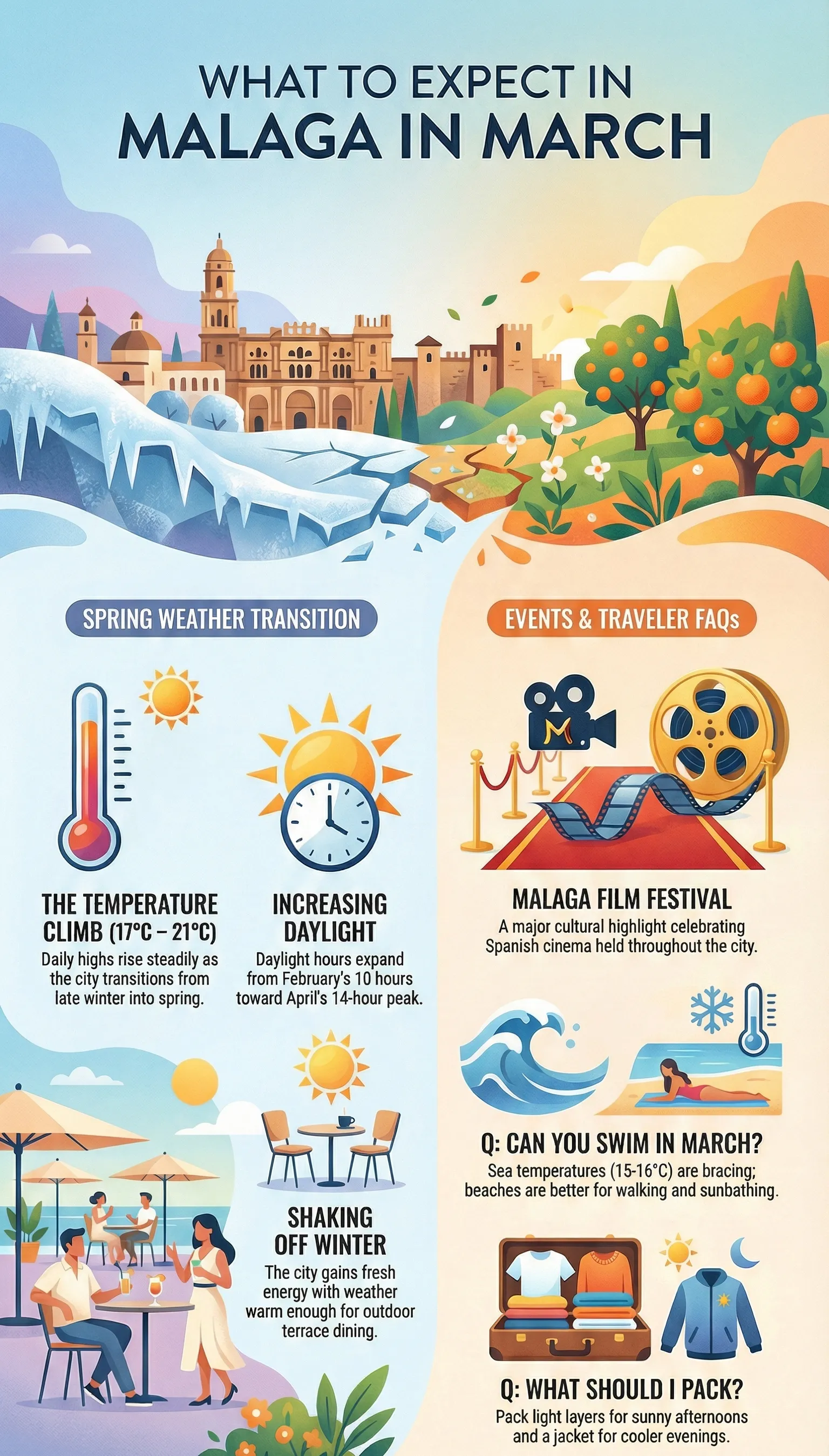
Yes, it’s an excellent month for a visit. Daytime temperatures reach 18-21°C with around seven hours of sunshine, the crowds are a fraction of summer, and the events calendar is fuller than at almost any other time of year outside August.
Hotels and flights cost noticeably less than in peak season. The queues at the Alcazaba are short, Calle Larios is walkable on a weekday, and the city still feels lived-in rather than overrun.
The catch is the sea, which sits at around 15-16°C in March, cold enough that most people won’t swim, so this is a month for sunbathing and terraces rather than beach holidays.
The other thing to check is your dates against Easter. When Semana Santa falls in March, accommodation books out months ahead and the centre gets busy, which is worth planning around rather than being surprised by.
For a full month-by-month comparison, my guide to the best time to visit Málaga has the detail, and if you’re still deciding, is Málaga worth visiting makes the wider case.
What Is There to Do in Malaga in March?
Plenty, and it splits neatly into two halves. There’s the events side, the Film Festival, Semana Santa, flamenco nights, spring markets and the half marathon, and there’s the everyday side, the museums, the old town, the beaches and the day trips that all work better now than in the heat.
March is genuinely the best hiking month of the year here, which surprises people who come expecting a beach city. The Caminito del Rey and the hills around Málaga are at their green, comfortable best.
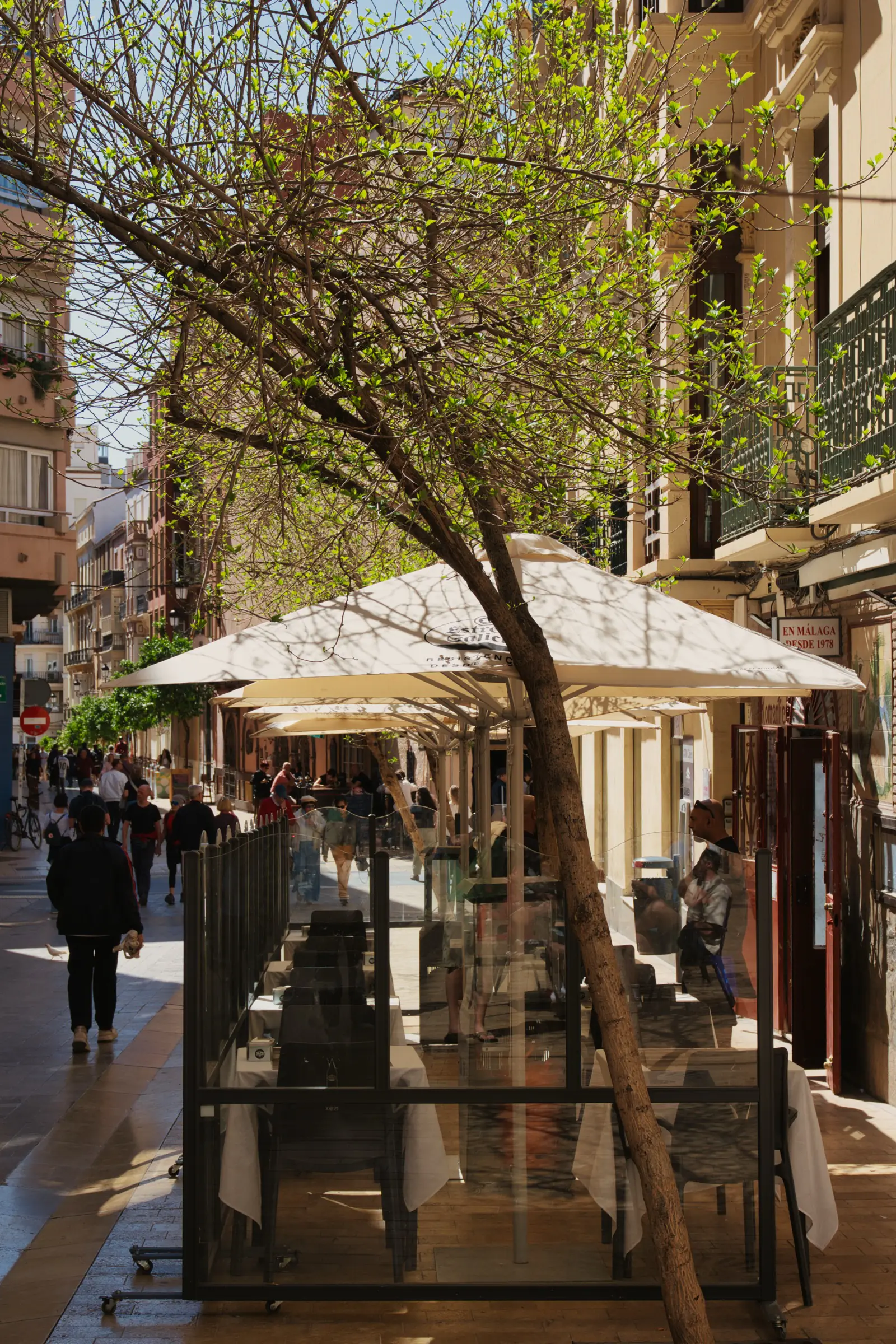
It’s also when the terraces come back. Sometime in late February or early March the outdoor tables fill up again, and the whole city moves back outside.
The rest of this guide runs through all of it in order, starting with the events that define the month and finishing with the practical stuff like weather, what to pack, and whether you can get on the beach.
The Malaga Film Festival
The Festival de Málaga is the event that defines March here, and it takes over the city for about ten days early in the month.
It screens roughly 200 Spanish-language films across venues including the Teatro Cervantes, the Albéniz cinema and the Echegaray, and the whole centre shifts up a gear while it runs.
The gala nights and red carpets happen at the Teatro Cervantes, and I can hear the crowd from my balcony when the cars pull up. Now in its 29th edition, it’s one of the most important events in the Spanish-language film calendar.
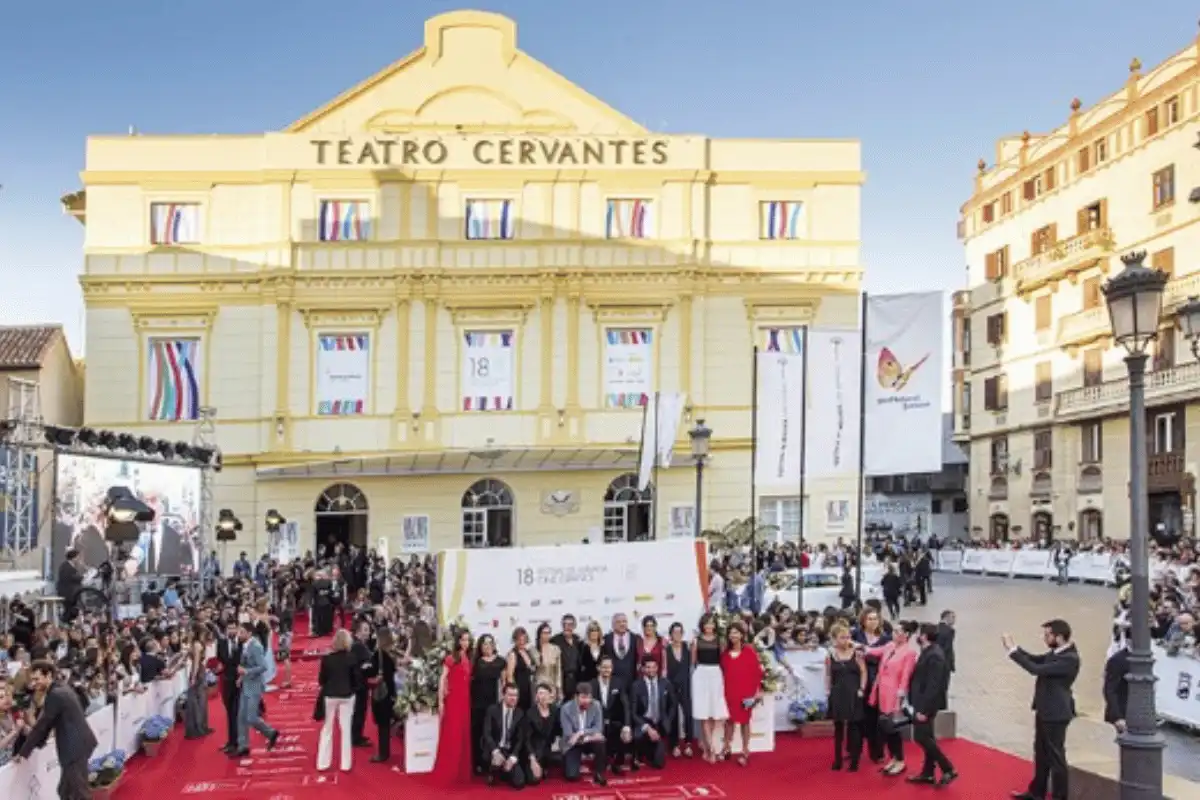
A lot of screenings are open to the public and tickets are affordable. Check the programme before you travel, because the opening and closing galas sell out fast.
What most people don’t realise is how much runs alongside the films for free. The La Villa del Mar stage on La Malagueta beach puts on free concerts most evenings during the festival, running through jazz, flamenco, soul and pop with local musicians.
There’s also Vinomascope, the festival’s wine route, where local restaurants serve a Málaga wine alongside a dish made for the occasion. Check the festival programme for the participating venues and prices.
Go for the free events even if you don’t buy a single film ticket. The atmosphere around the theatre after dark is the actual draw.
Semana Santa and the Run-Up to Easter
Semana Santa doesn’t fall in March every year, but when Easter comes early the processions run through the last week of the month.
In 2026, Holy Week runs from 29 March to 5 April, so the final days of March are pure procession.
Pre-Easter transfers called traslados move religious images between churches, and the city’s brotherhoods hold Lent and Easter concerts at venues like the Teatro Cervantes in the weeks beforehand.
The processions themselves go past my window, and I’ve stood in the street watching them at ground level too. The experience changes completely when you’re down among it rather than looking down on it.
In Málaga the processional floats are called tronos, and the people who carry them are known as hombres de trono. Bands accompany many of them through the streets.
Málaga has more than 30 active brotherhoods, which means processions running almost continuously through Holy Week, morning and night.
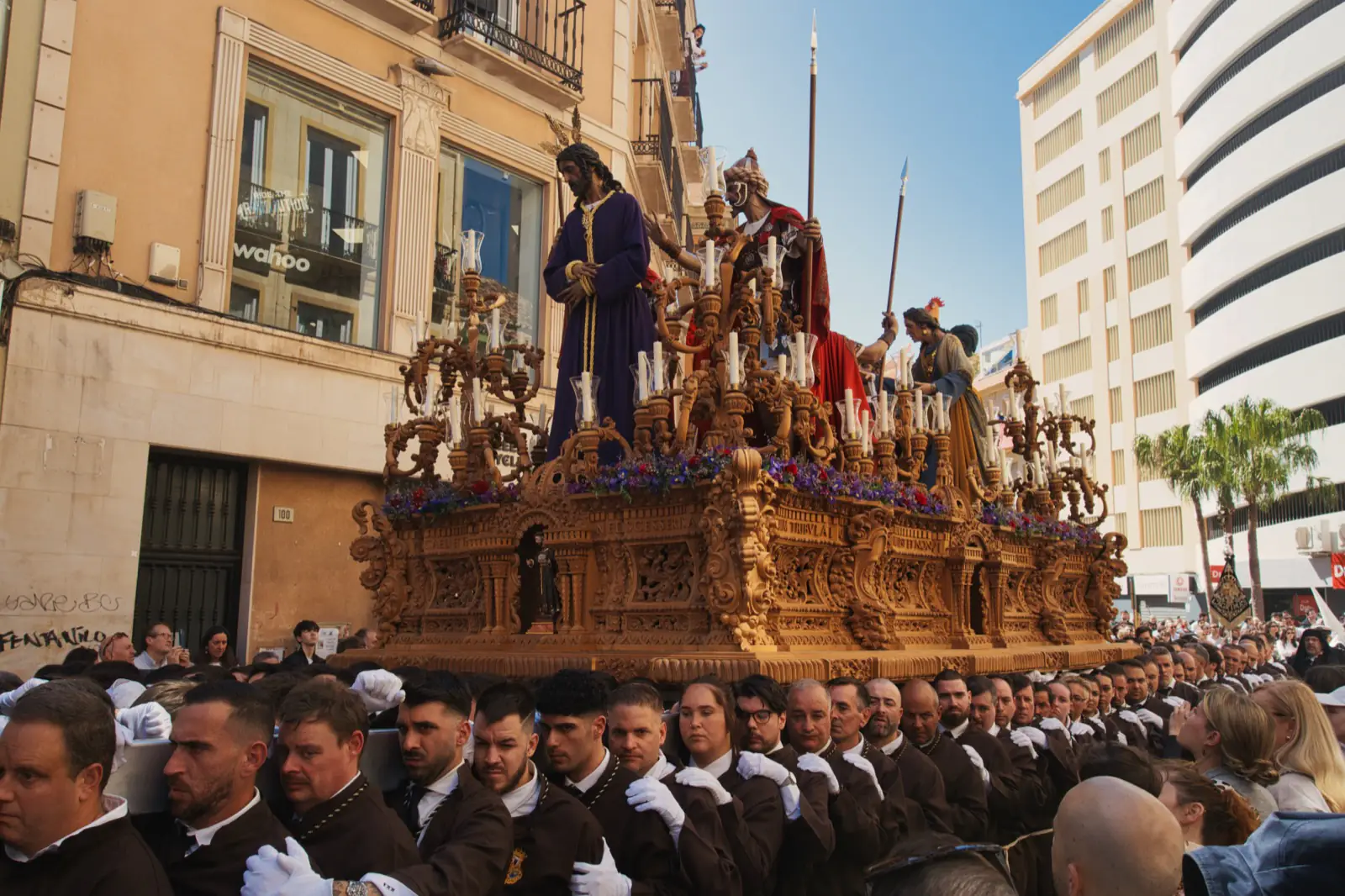
If your trip overlaps Holy Week, book your accommodation the moment your dates are confirmed. The city fills entirely and the best spots on the procession routes fill up hours before the floats appear.
One practical thing to factor in. The streets close when processions pass, so getting across the centre can take far longer than you expect, which matters when you’re holding a restaurant booking.
Live Music and Concerts in March
Beyond the Film Festival, March is one of the strongest months for live music in Málaga, and a lot of it is free.
Between the pre-Easter concerts, the flamenco season and a run of festivals, there’s something on most nights if you know where to look.
Flamenco on stage and for free
Flamenco steps up in March, partly because it feeds into the Semana Santa mood.
The Teatro del Soho regularly programmes big flamenco names through the month, with tickets usually from around €20, and touring artists like Marina Heredia have played its March bill.
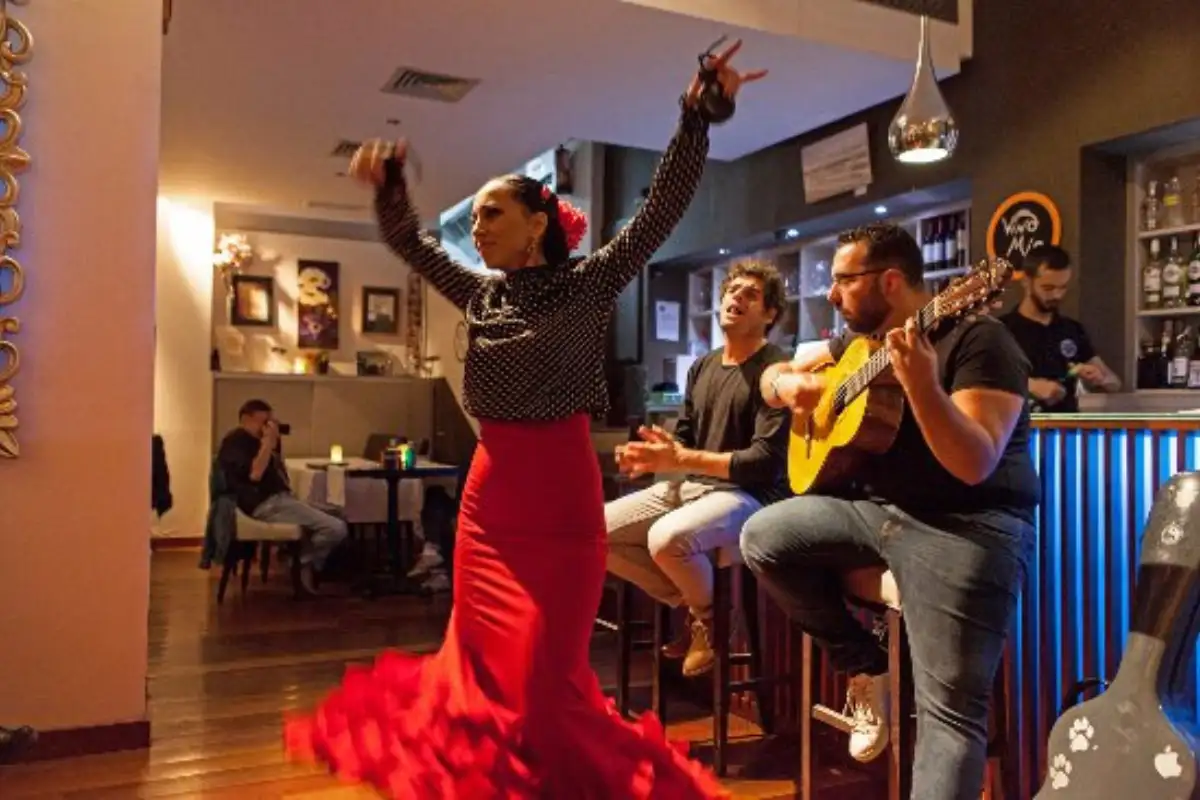
For the price-conscious, the city also runs free flamenco concerts.
Singers of the calibre of Antonia Contreras have performed free evenings at municipal venues like the MVA auditorium on Calle Ollerías, with tickets handed out in advance rather than sold.
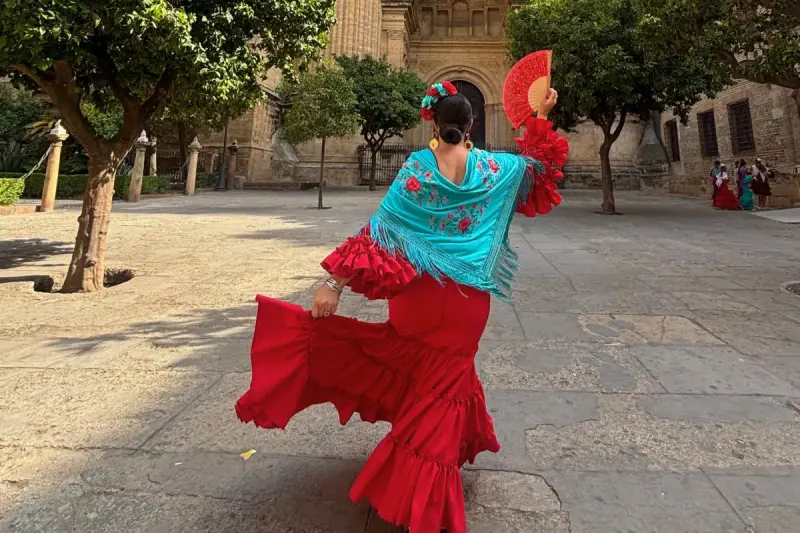
If flamenco is why you’re coming, the costume side of it is its own rabbit hole, and I’ve written about the flamenco dress in Málaga separately.
For the music, check the Soho and Cervantes listings the week before you travel.
Candlelight concerts
The Candlelight series is an option for a special evening.
These are classical concerts played by string ensembles in rooms lit entirely by candles, held at venues like the María Cristina concert hall, the Carmen Thyssen Museum and the Gran Hotel Miramar.
The programmes are built around crowd-pleasers rather than pure classical, so a typical March run might include tributes to Queen, ABBA or Coldplay alongside Vivaldi’s Four Seasons.
Tickets vary by venue and programme, and the popular nights sell out, so book once you’ve fixed your dates.
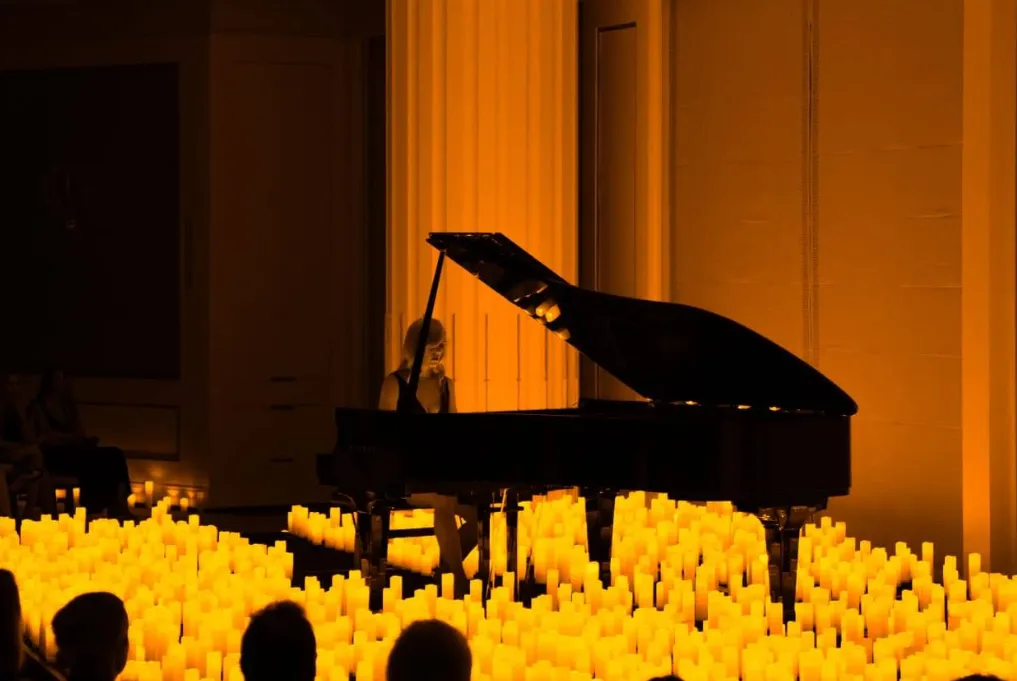
The setting is the appeal here: an hour of live strings by candlelight in a historic room, even if the tribute act isn’t quite your taste.
Aeternum and the free city concerts
At the end of the month, the Aeternum festival of sacred music from around the world takes over some of Málaga’s more unusual venues.
Concerts run in late March, typically the 21st to the 28th, in spots including the English Cemetery and the San Miguel Cemetery, with tickets around €15.
The English Cemetery is worth the visit on its own. Founded in 1831, it was the first Protestant cemetery in mainland Spain, and the Aeternum concerts make it an unusual place to hear choral music.
March also brings a steady run of free concerts as Holy Week approaches.
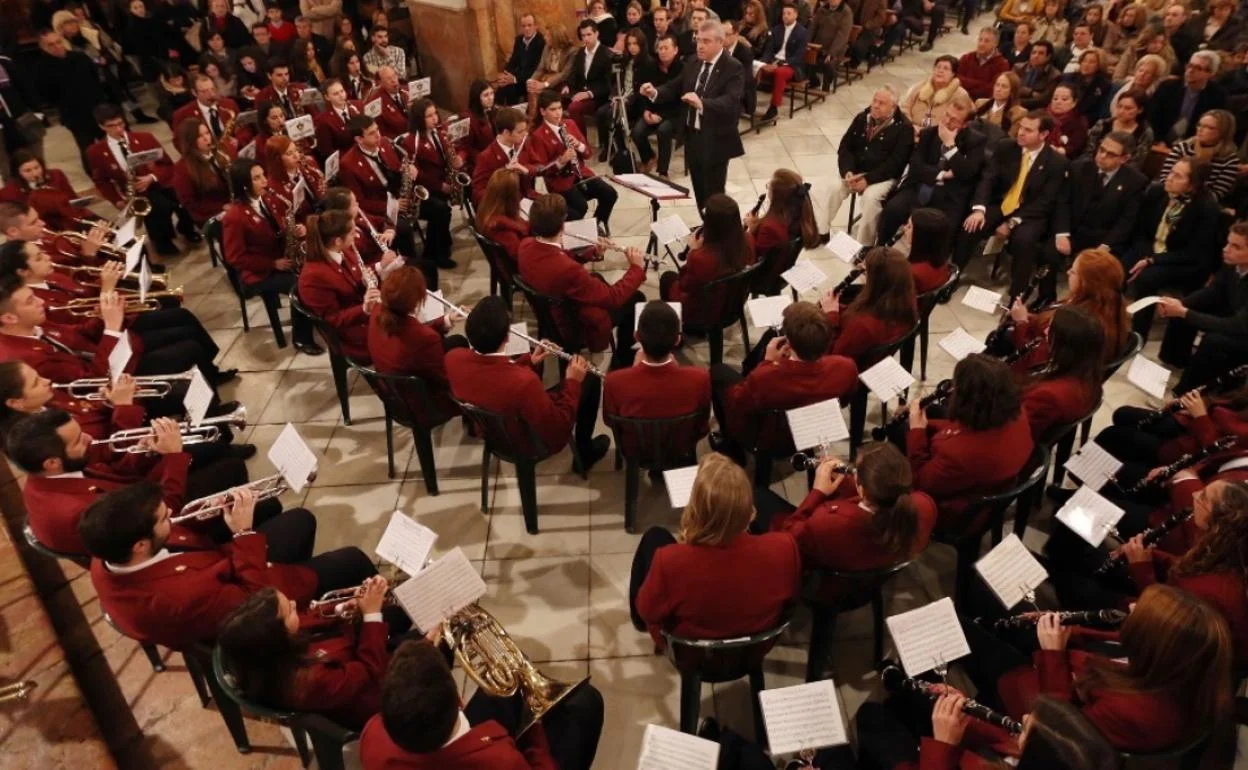
The Municipal Band plays free sets in spots like the Museo de Málaga courtyard, and the Cathedral hosts free pre-Easter concerts by the Málaga Symphony Orchestra, though you’ll want to arrive a good half hour early for a seat.
Museums and Spring Exhibitions
Málaga has one of the highest concentrations of museums in Spain, and March is a good month to work through them before the summer queues build.
The temporary exhibitions rotate constantly, so there’s usually something new on at the Picasso Museum, the Carmen Thyssen, the Pompidou and the Russian collection.
The Picasso Museum is easily the most famous, housed in the 16th-century Buenavista Palace with a permanent collection of works spanning his full career. It’s the most-visited museum in southern Spain, so book ahead even in March.
The Centre Pompidou Málaga is a branch of the Paris Pompidou, opened in 2015 inside a glass cube topped with a coloured grid, and the contemporary collection is genuinely strong.
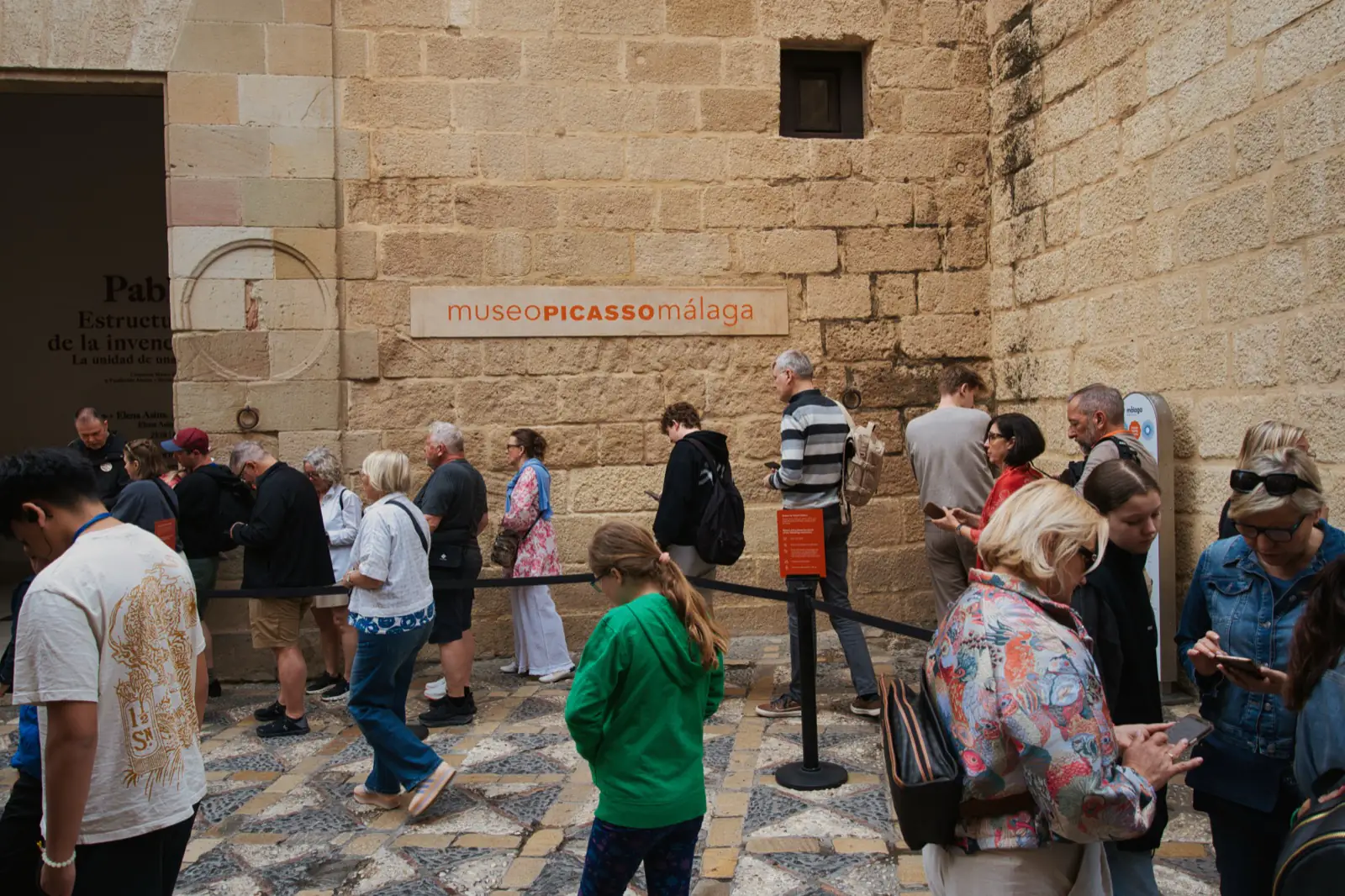
The smart move in March is to time your visits around the free hours.
Most of the state and municipal museums, including the Alcazaba, open for free on Sunday afternoons, and I’ve mapped the full schedule in my free things to do in Málaga guide.
For opening times, current prices and which ones to prioritise if you’re short on time, my museums in Málaga guide covers the lot. If it rains, and March does get the odd wet afternoon, the museum quarter is where I’d spend it.
Markets in March
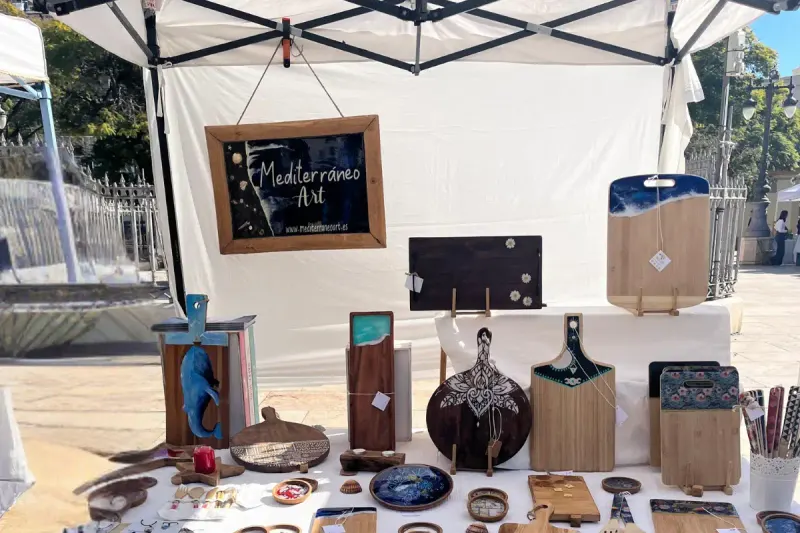
Plaza de la Merced, where Picasso was born, hosts the Mercado Artesanal La Merced on the first Sunday of the month from late morning. The stalls run to ceramics, jewellery, crafts and food, and the terraces around the square fill up fast on a sunny March morning.
The Urban Market Soho runs on the fourth Sunday down in the arts district, with a younger, more design-led mix of stalls. The street art around it makes the walk worth it even if you buy nothing.
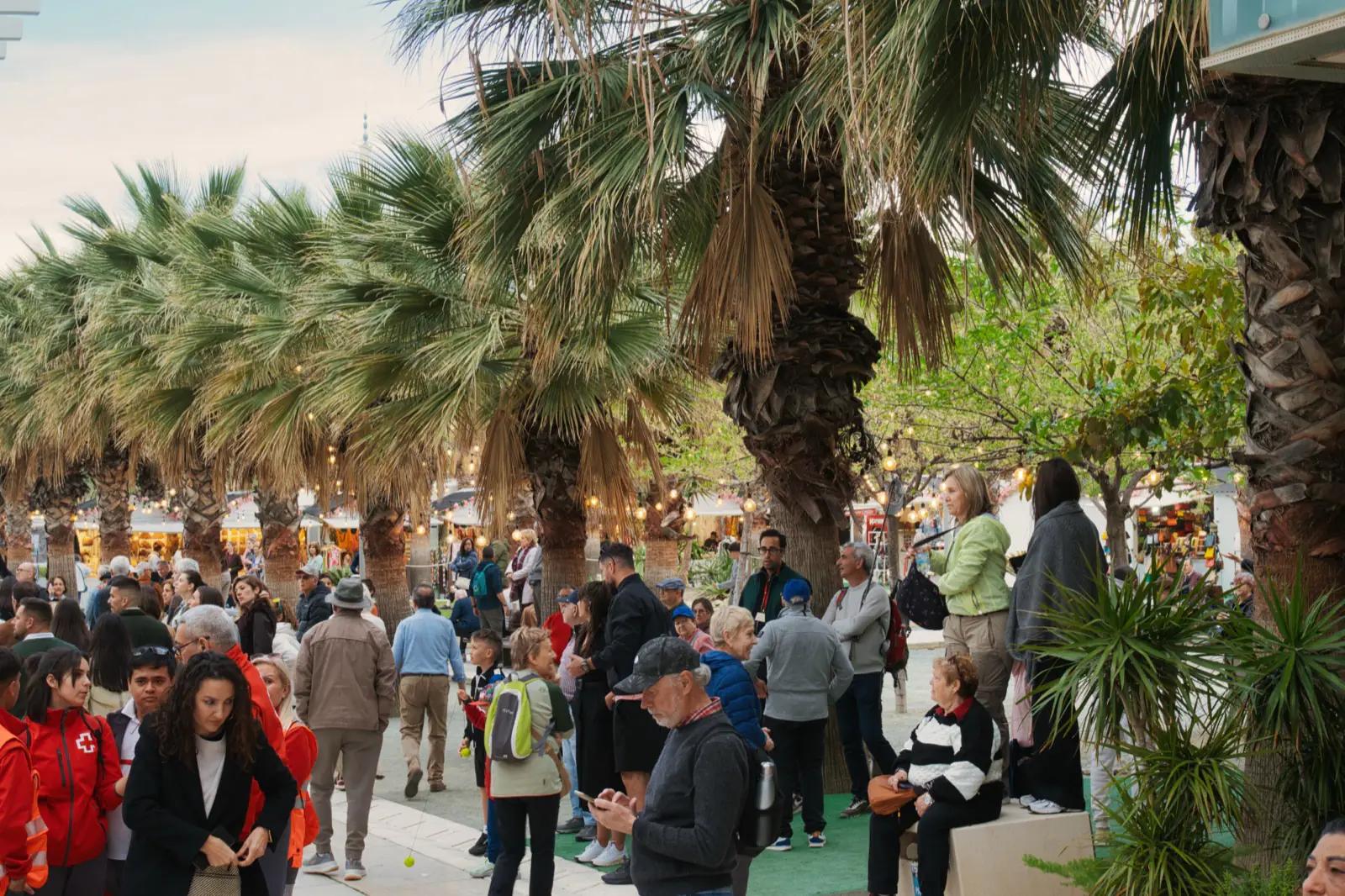
For fresh produce, the Atarazanas covered market is the one I use week to week, and March is when the local strawberries really start appearing. They’re smaller than the ones grown further north but the flavour is far more intense.
Buy from the stalls at the back rather than the tourist-facing ones near the entrance, and bring cash, because plenty of the craft-market stalls still don’t take cards.
My full markets in Málaga guide has the rest of the monthly and weekly ones.
The Malaga Half Marathon and Spring Sport
If you run, the Zurich Málaga Half Marathon is the sporting highlight of the month, usually held on a Sunday in the middle of March. The course is a fast, flat 21.097km loop that runs along the Paseo del Parque, out to the port and lighthouse, and back along the western seafront.
Even if you’re not running, it’s a good morning to be on the seafront. The route is easy to watch from the Paseo del Parque, and the city has a real buzz to it before nine on race day.
Smaller charity races dot the month too, including a women’s race against cancer, usually a shorter loop near the sports stadium with a small entry fee.
Check the city’s sports calendar the month before if you want to enter one.
St Patrick’s Day and Events Along the Costa del Sol
The most reliable is St Patrick’s Day on 17 March, celebrated hard along the coast at spots like Benalmádena’s Plaza de la Mezquita and Marbella’s Parque de la Constitución, with live music, beer and food stalls.
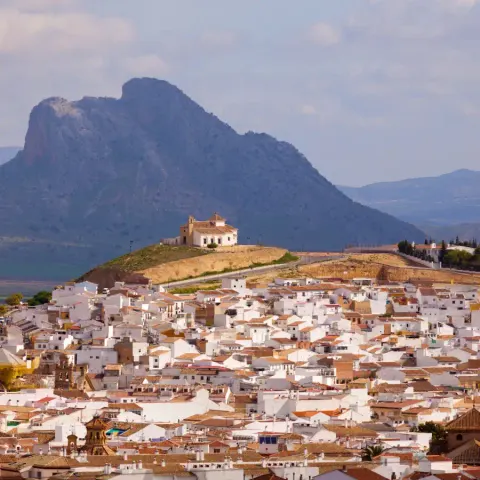
Up in Antequera, the Cantaquera International Choral Festival brings a run of choirs from around the world to the Royal Collegiate Church over a few days mid-month.
The coast also does big themed events in March.
Benalmádena hosts a large Harley-Davidson meet with free entry and live concerts, and Marbella runs its Design and Art fair, while a string of villages hold gastronomic days built around one local dish.
These food days are the ones I’d chase if I had the time. Villages in the Axarquía hills east of Málaga run routes and tastings around Lenten specialities, from salt-cod dishes to wild-thistle stews, and they’re about as far from the tourist trail as the province gets.
Hiking and the Outdoors in March
March is genuinely the best hiking month around Málaga, and I’d rank it above any other for getting out on foot. Summer heat makes most routes unpleasant from late morning, but in March you can start at nine and still be walking comfortably at midday.
The Caminito del Rey is the obvious target. It’s a 7.7km path built along the cliffs of the El Chorro gorge, roughly an hour north of the city, and March conditions are close to perfect: cool air, clear skies and a gorge still green from the winter rain.
The daily visitor cap keeps it from ever feeling crowded, but it also means it sells out. Book weeks ahead even outside high season, because March is popular precisely because the weather is this good.
Closer in, the Montes de Málaga natural park sits just 7km from the centre and sees a fraction of the visitors. It covers around 5,000 hectares of Mediterranean forest, and in March the hillsides are green rather than the dry brown they turn by July.
A short walk from the park entrance is enough to feel genuinely far from the city.
The Alcazaba, Gibralfaro and the Old Town
The big monuments are at their best in March, when the queues are short and the climb doesn’t leave you drenched.
The Alcazaba dates from the 11th century and ranks among the best-preserved Moorish fortresses in Spain, and on a March morning you can usually walk straight in.
Directly below it sits the Roman Theatre, which dates to the 1st century BC and is always free to enter, though it’s closed on Mondays.
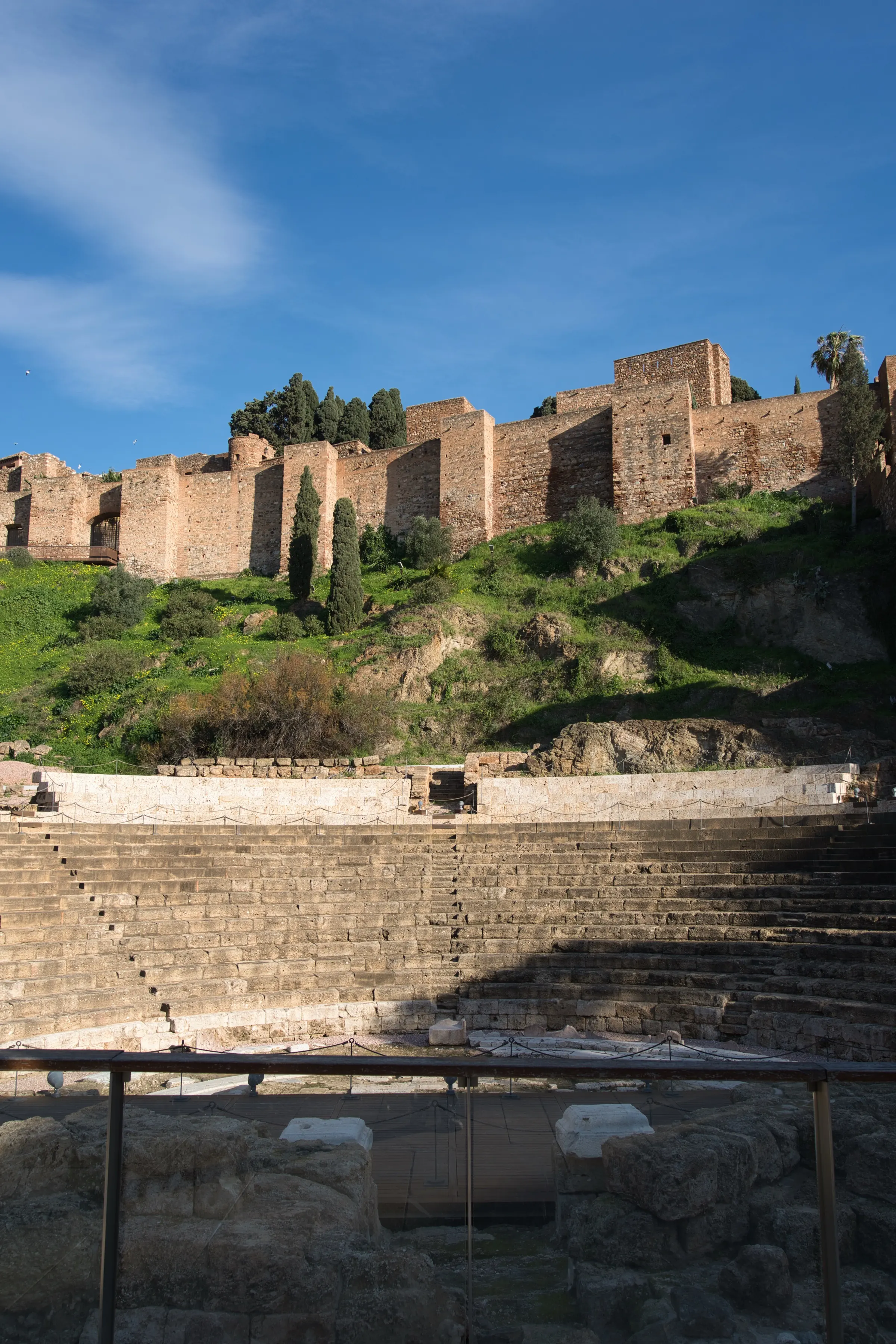
Above the Alcazaba, the Gibralfaro castle is worth the climb for the views alone, and on a clear March day you can see across the bay to the mountains one way and along the coast the other.
Both monuments are free on Sunday afternoons, which makes Sunday the day to plan your climb.
From the top, walk back down through the old town rather than retracing the tourist route.
Beaches, Chiringuitos and Espetos
The beaches are worth your time in March, just not for swimming.
Sitting on La Malagueta on a warm afternoon in the middle of March, with something from a chiringuito, is honestly one of my favourite ways to spend a few hours here.
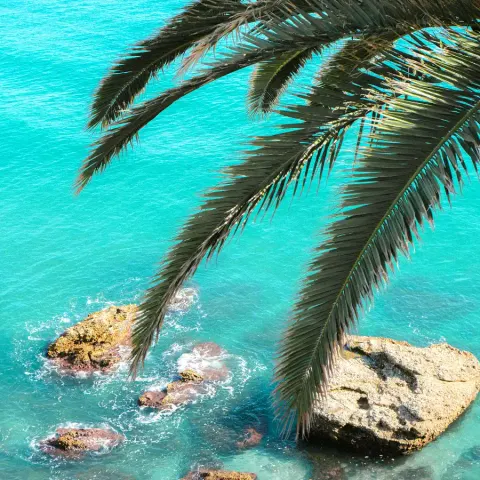
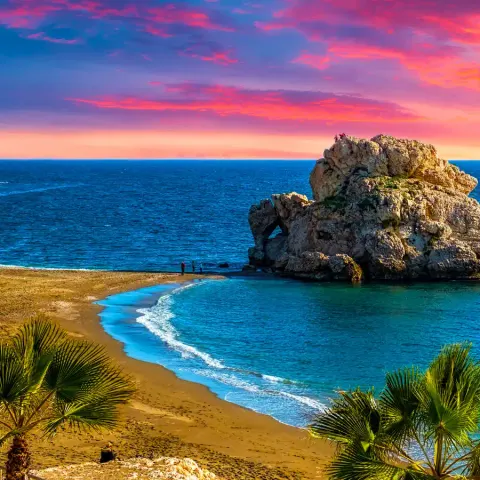
The sea holds at around 15-16°C, cold enough that you won’t be tempted in, but the sand is quiet and the sun has real warmth from midday. By March most of the beach bars along the coast have reopened for the season, so lunch on the sand is back on.
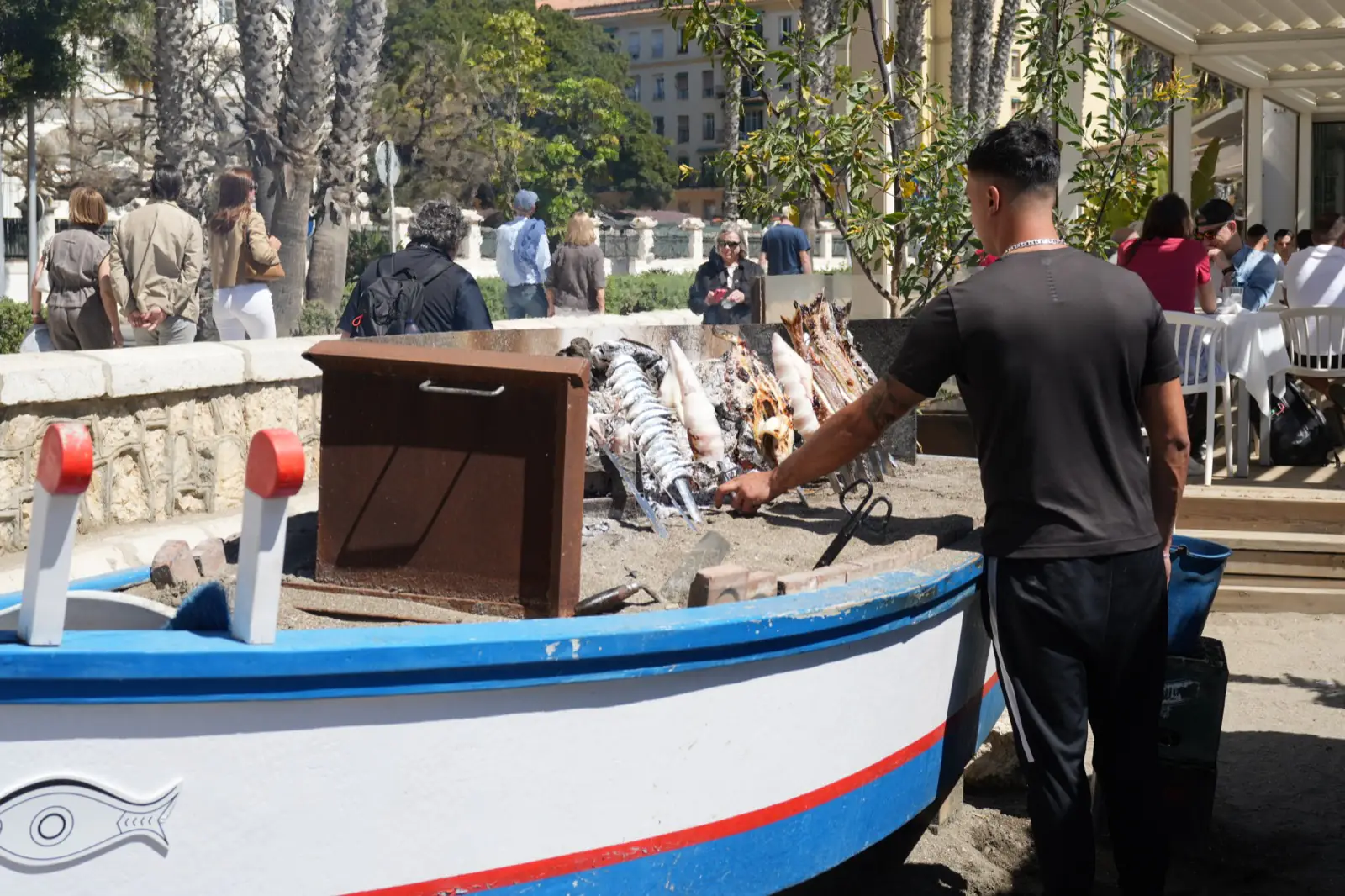
For a quieter, more local stretch, I’d head east to Pedregalejo or El Palo rather than stay on La Malagueta. My best beaches in Málaga guide covers which ones are worth the trip and what to expect month by month.
Day Trips from Malaga in March
March is one of the best months for day trips from Málaga. The main routes are quieter than they’ll be in a few months, the countryside is at its greenest, and you don’t need to book restaurants weeks ahead.
Ronda
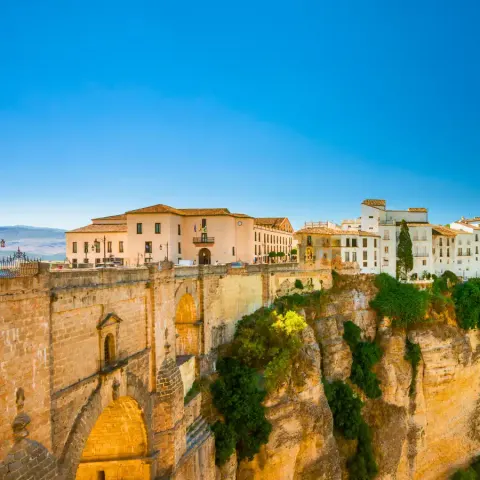
Ronda is the obvious first choice, about 90 minutes from the city and sitting at 750 metres, which makes it cooler and often clearer than the coast.
In March the viewpoints along the El Tajo gorge are accessible without queuing, and the old town feels like it belongs to the people in it rather than the coaches outside.
A day is enough to walk the old town, cross the Puente Nuevo and have a long lunch.
Nerja and Frigiliana
Nerja and Frigiliana work well as a single day out.
Nerja is about 55km east along the coast, and Frigiliana another 7km up into the hills, close enough to combine but each good enough to justify its own visit.
In March the Balcón de Europa in Nerja is pleasant rather than shoulder-to-shoulder, and the drive up to Frigiliana is at its best when the hills are green.
Frigiliana is the more striking of the two in spring, all white walls and steep flower-lined lanes.
El Torcal de Antequera
The Torcal de Antequera natural park sits above 1,200 metres, about 50km north of the city, and its rock formations are unlike anything else in the province. The Ammonites Route is around 4.5km and takes roughly 2.5 to 3 hours, passing fossil ammonites preserved in the rock along the way.
At that elevation March can run 5-6°C colder than Málaga even on a warm day, so pack a proper layer. Pairing Torcal with the choral festival in Antequera town makes for a full and unusual day.
What Festivals Are in Malaga in March?
March’s festivals span the city and the province, and which one headlines depends on when Easter falls.
- Málaga Film Festival. Early March, the biggest thing on the calendar and the one to build a trip around: it lifts the whole city for ten days.
- Semana Santa. Only lands in March in years when Easter is early, so check the dates against your trip. When it does, it’s the single most atmospheric thing you can witness in the city.
- Aeternum sacred music festival. At the end of the month.
- Flamenco season and the Candlelight concert series, running through March.
- St Patrick’s Day, 17 March, celebrated along the coast.
- Province events. The Cantaquera choral festival in Antequera and a run of village gastronomic days.
For the carnival that comes just before all this, in February, my Málaga Carnival guide covers that one separately.
Can You Sunbathe in Malaga in March?
Yes, you can sunbathe in Málaga in March on warmer afternoons, but you won’t want to swim. With daytime highs of 18-21°C and around seven hours of sun a day, the middle of the day is warm enough to lie on the sand with a book, especially out of the wind.
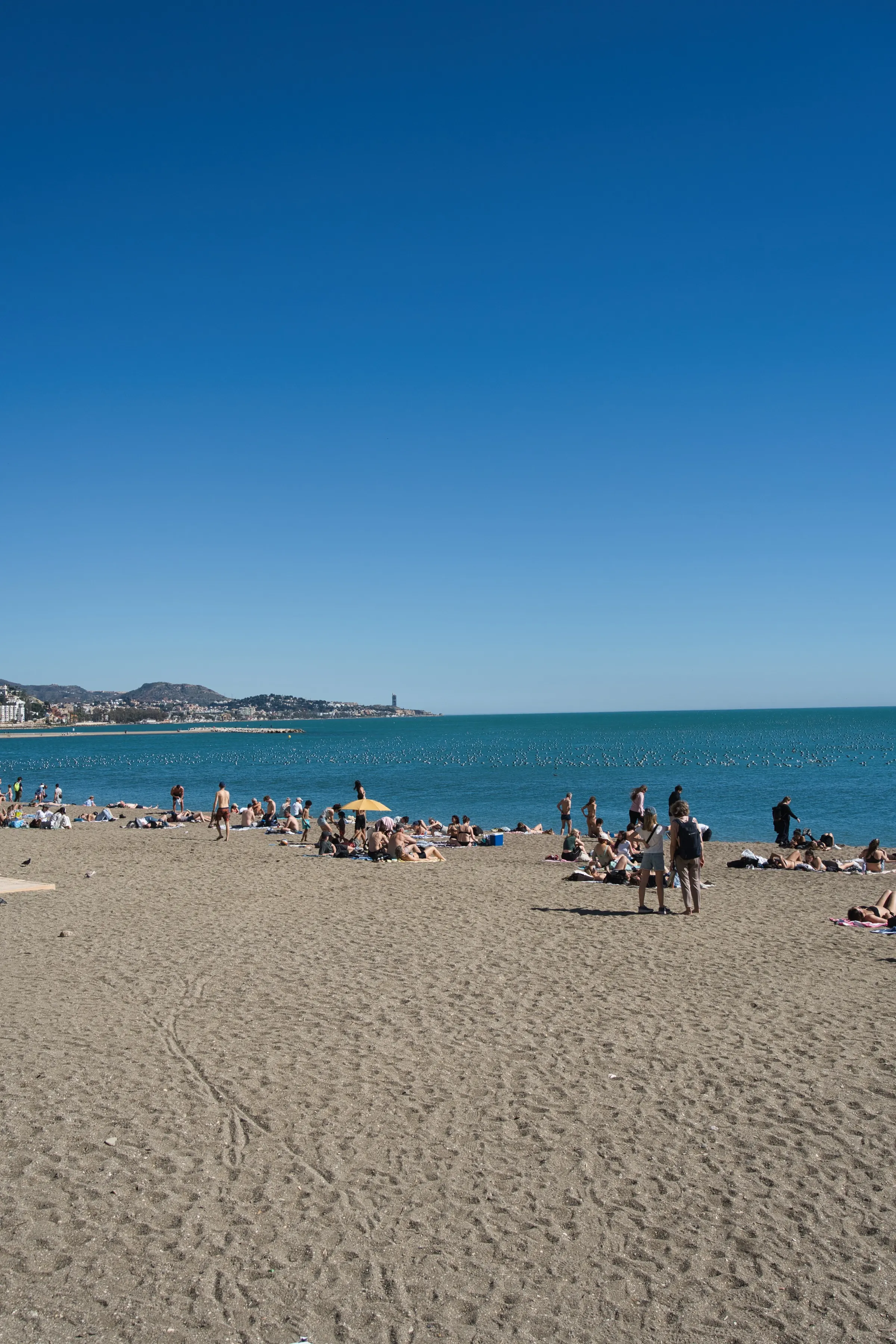
I’ve had plenty of March beach afternoons here in shorts, and the sun genuinely has heat in it by midday. The catch is the sea at 15-16°C, which is cold enough that getting in is a quick dare rather than a swim.
If sunbathing is the plan, pack a light layer for when the breeze picks up in the afternoon. The chiringuitos are open again by March, so you can make a proper half-day of it with lunch on the sand.
Weather and What to Pack
March weather in Málaga is mild and mostly sunny, with daytime temperatures of 18-21°C and around seven hours of sunshine a day. It gets the occasional short, sharp shower rather than all-day rain, so a packable rain jacket earns its space.
Evenings drop to 9-11°C, so layers matter. A light jacket or jumper is enough for most March nights in the city, but pack something warmer for higher ground like Ronda, Torcal or the Caminito.
The UV index sits at 5-6, higher than most people expect for March, so sunscreen from midday is worth it even on cloudy days. Comfortable shoes matter more than anything, because the old town is cobbled and you’ll walk further than you plan to.
One quirk to know. The clocks change to summer time on the last Sunday of March, which adds an hour of evening light overnight, so evenings are noticeably longer by the end of the month than the start.