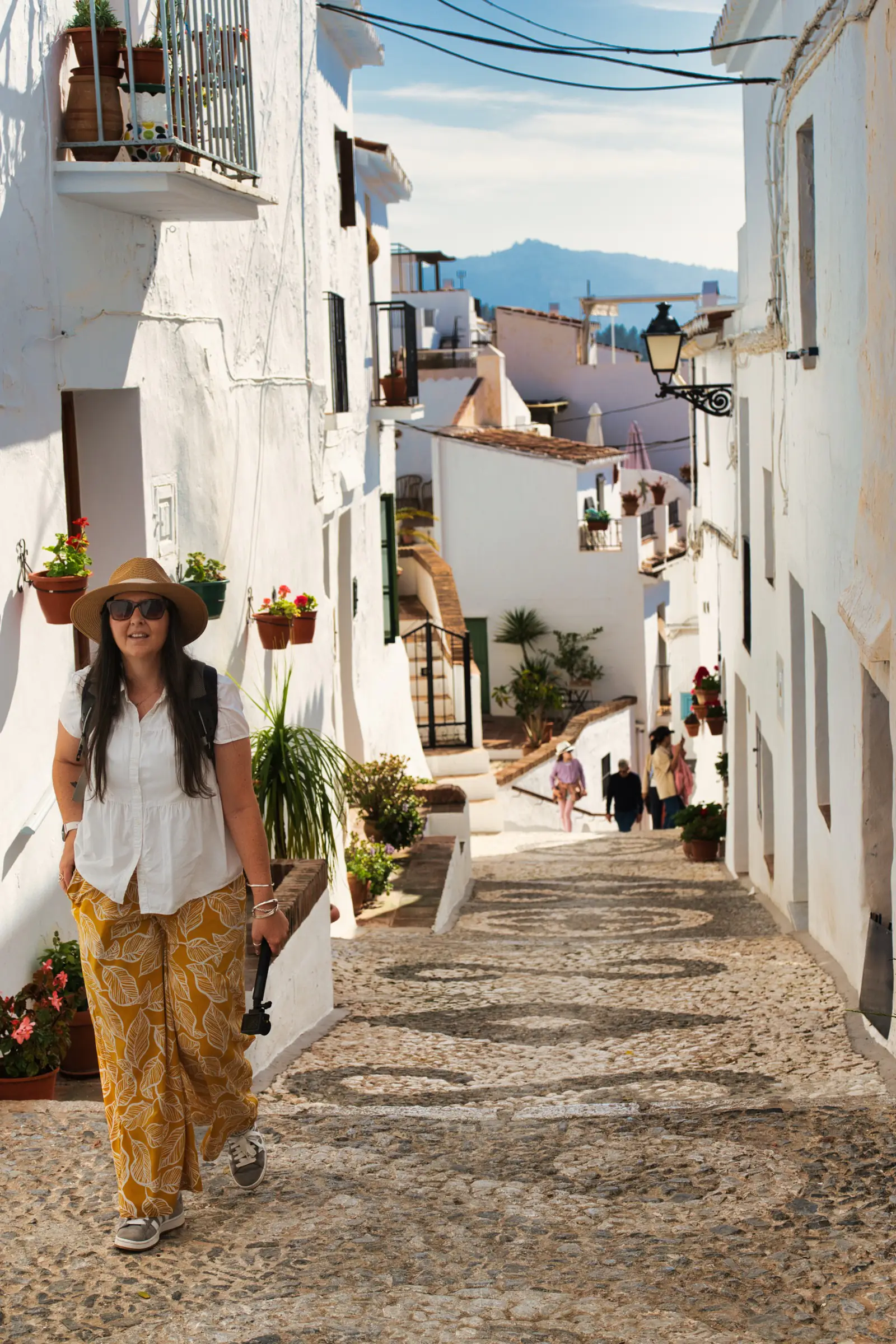
There’s no shortage of white villages near Malaga, and I could point you to a dozen. I’d only actually send you to three.
I live in Malaga and love exploring new spots, but Mijas Pueblo, Setenil de las Bodegas and Frigiliana are the ones I keep coming back to. I get to Mijas about once a year, I’ve lost count of how many times I’ve been to Setenil, and Frigiliana, with its blue doors against all that whitewash, is my favourite of the three. These are the villages I’d tell people visiting Malaga not to miss, but this isn’t a ranking of every pretty village in the region, just the three I’d send you to, and Frigiliana isn’t the easiest of them to reach.
Here’s what’s worth your time in each, and whether they combine into one day out.
All three work as day trips from a Malaga base, so that’s where I’d sort accommodation first.
⭐ Don’t miss >> Where to stay in Malaga, my neighbourhood guide
Mijas Pueblo
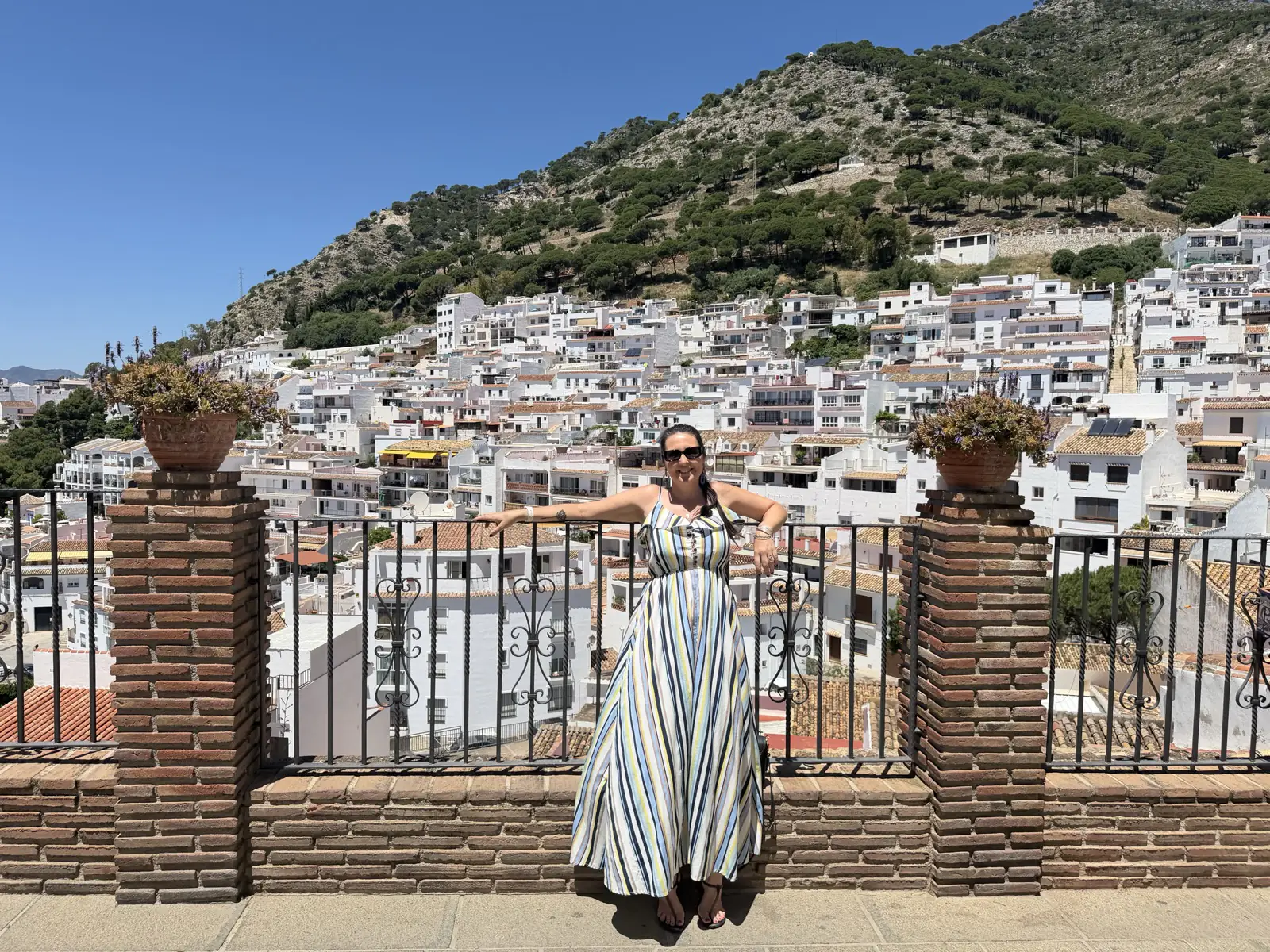
I make it up to Mijas Pueblo maybe once a year, and every time I forget how good it actually is until I’m standing in it again. It’s about a 30 minute drive from Malaga, and it’s the kind of quaint, whitewashed hill village that could easily get away with just being pretty.
Instead it’s a proper art town, full of working studios, galleries and artists who actually live and paint there, and the most leather shops I’ve ever seen in one town, all at once. It’s not just a stop for a postcard, and I’ve gone deeper on what else there is to do in Mijas Pueblo separately.
Timing matters more here than in most of the villages on this list, though. It’s absolutely worth visiting. Worth visiting at noon on a Saturday in August is a different question, and I’d steer you well away from that combination if you can help it. If you’d rather not deal with parking yourself, a guided half-day trip from Malaga handles all of that for you.
Skipping the donkey taxis
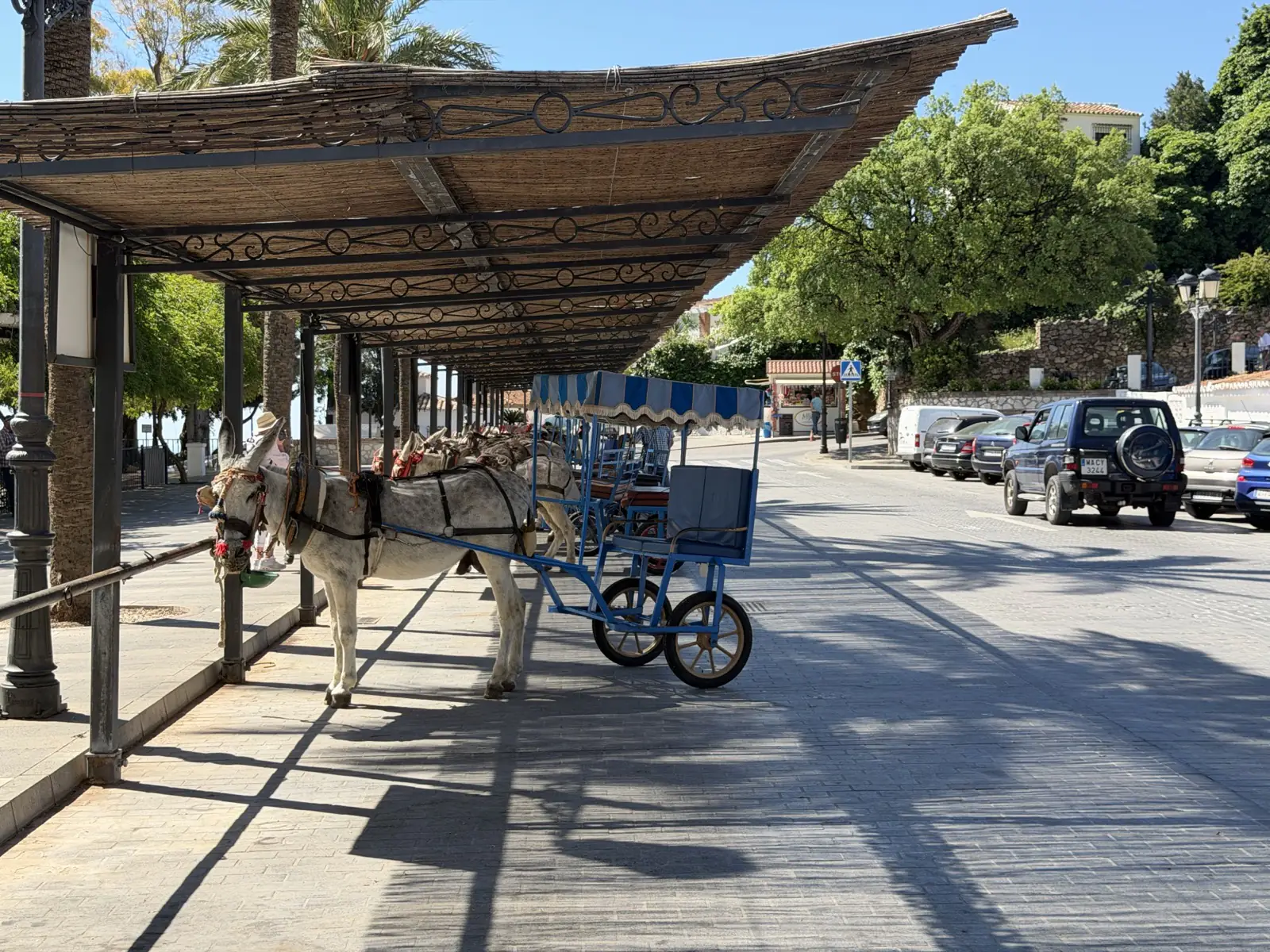
You’ll spot them the moment you arrive, lined up near the entrance, and they’ve been a Mijas cliché for as long as anyone can remember. I don’t ride them.
This isn’t just me being squeamish, either. It’s a real, ongoing fight, PETA has pushed the Mijas mayor to ban the trade outright, and local groups including PACMA and Free Mijas Donkeys and Horses have filed formal complaints over how the animals are kept. There have been protests outside the town hall as recently as this year.
New heat-warning rules now stop the taxis running on the worst days, which tells you the concern is being taken seriously somewhere, even though the town hall’s own position, as of its last word on it, is that the trade isn’t going anywhere for years yet. Euro Weekly News has covered the fight at the town hall in more depth than I can here, if you want the fuller picture before you decide how you feel about it.
The only thing that gives me pause, beyond all of that, is watching them stand there all day in the heat regardless. I’m not going to pretend I’ve got a tidy answer, because I haven’t. I just walk past and get on with the village.
Where to eat
Skip anywhere sitting directly on Plaza de la Constitución. It’s the prettiest square in the village and it knows it, and the prices are there to prove it rather than the food.
The same goes for the “free tapas with drinks” signs, they’re rarely the good kind of free. And if someone tries to sell you tickets for the flamenco show, know that it gets cancelled at short notice often enough that I wouldn’t plan my afternoon around it.
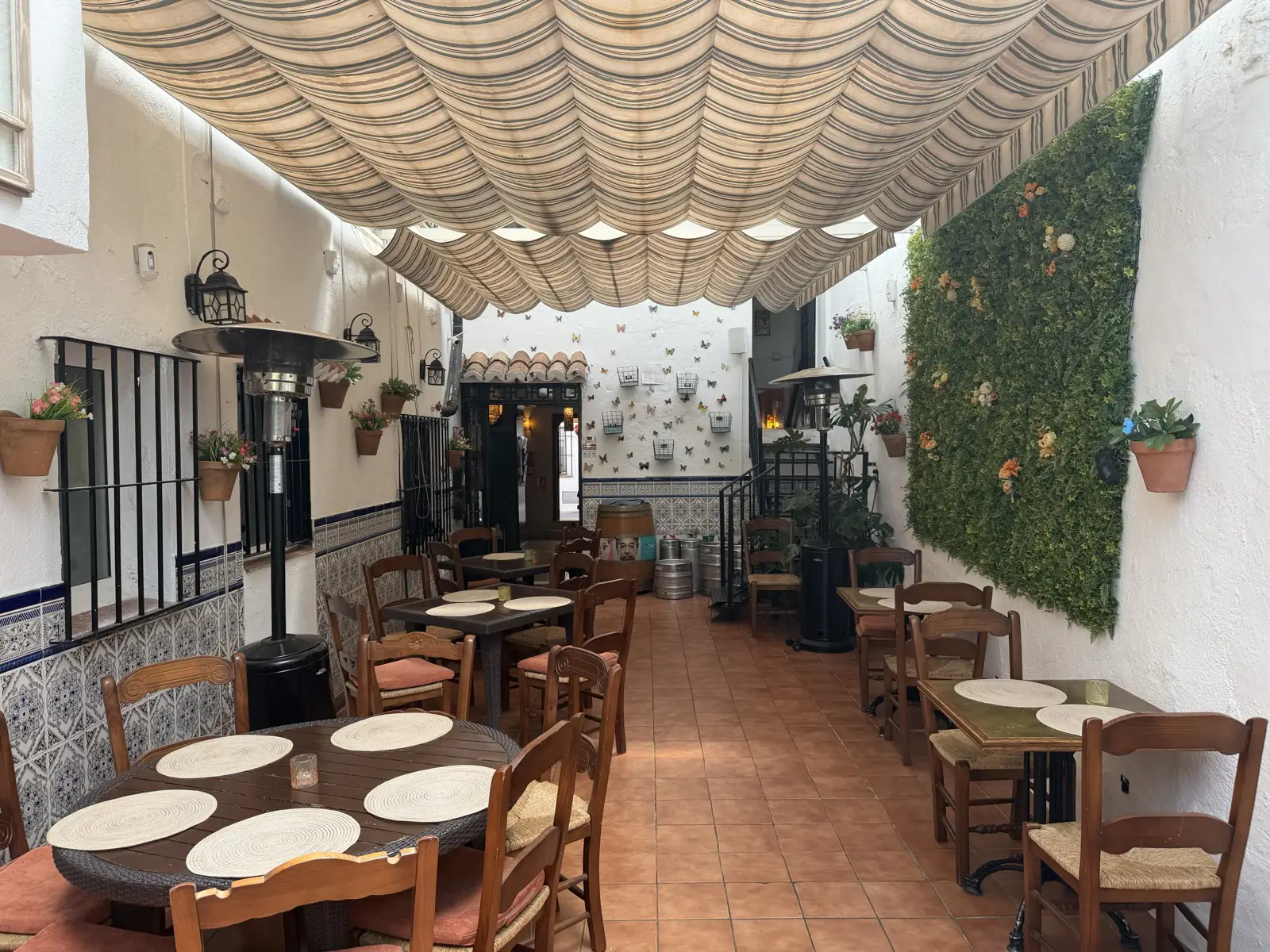
What I would actually go for is Alboka Gastrobar, family-run since 1940 and now on its fourth generation, with tapas running €6 to €12. It’s the kind of place that’s been doing this so long it doesn’t need to try.
The Secret Garden is the one I’d go back for, food-wise.
Sort your reservation before you go, not after, and go in knowing the welcome might not match the food.
Doing all three villages as day trips means you need a base, and I’d stay in Malaga itself. A few of my favourite picks:
⭐ Old Town >> Palacio Solecio, central and walkable
⭐ Old Town, cathedral views >> Molina Lario
⭐ Beach and city both >> Gran Hotel Miramar GL
⭐ Travelling with kids >> Hotel La Chancla, right on the sand in Pedregalejo
Setenil de las Bodegas
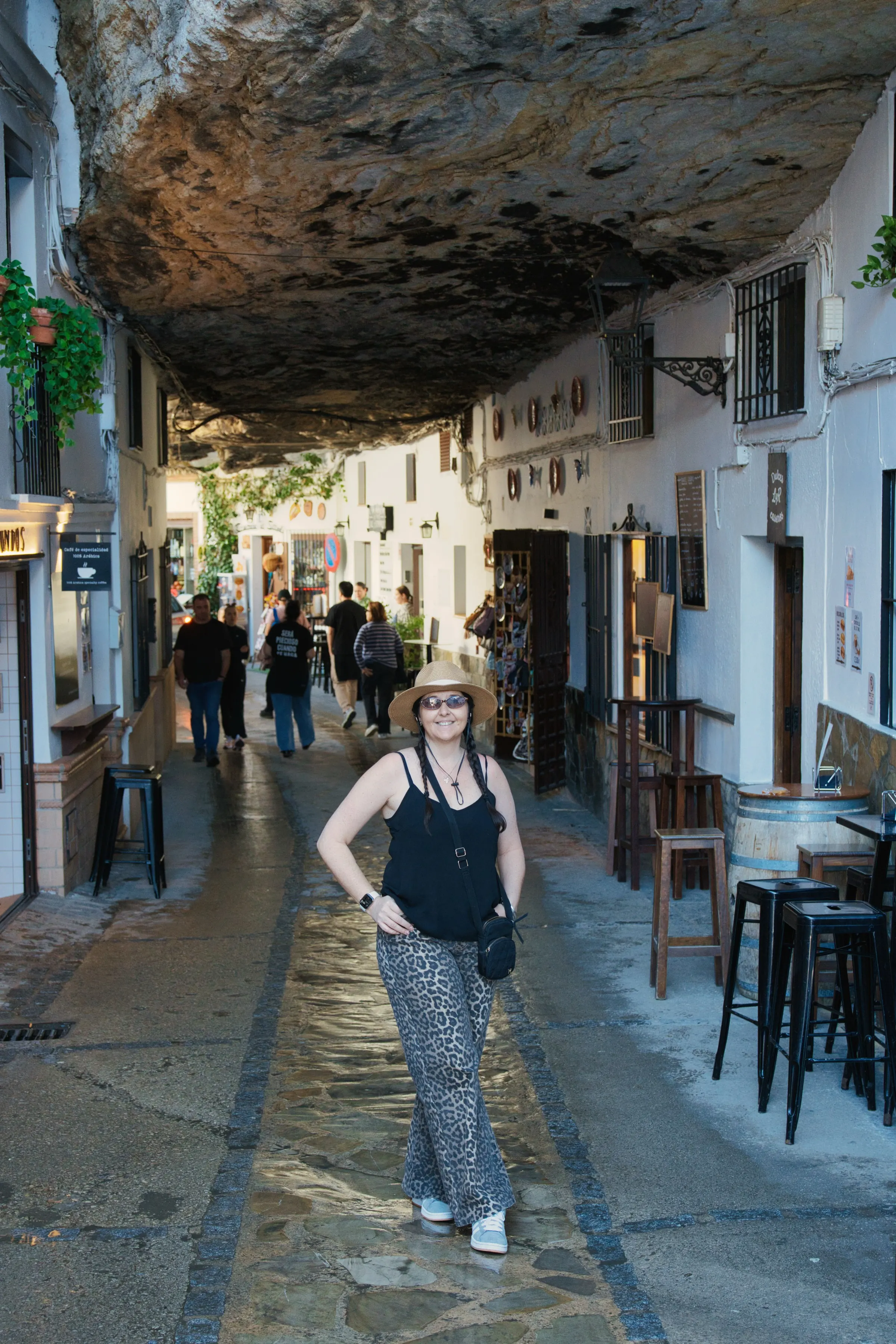
I’ve lost count of how many times I’ve made this drive now, out past Ronda and into hills that keep folding in on themselves the closer you get. It’s genuinely not a quick trip from Malaga, so budget the full hour and a half each way, but this is one of the villages I’d send you to even if it ate your whole day.
Here’s the thing almost nobody gets right about Setenil, including plenty of the guides that send people here. The houses aren’t carved into the rock. I believed that too, for longer than I’d like to admit, until I stood close enough to actually look.
What’s really happening is far cleverer. These are ordinary houses, built with a front wall and side walls like a house anywhere else, and whoever built them just used the huge rock overhang above as the roof and the back wall already done.
The mountain had you covered, so why build one.
Once you see it that way the whole village clicks into place, and somehow it’s more impressive, not less.
Every visit before my last one, I made this harder on myself than it needed to be, wandering in from the wrong end, missing the shade, turning up right as the buses did. On my last visit I finally did it right, parked further out, walked in early, and had half the street to myself before it filled up. I’ve written up exactly where I park now, so you don’t have to go through the years of trial and error I did.
Don’t just do the one street
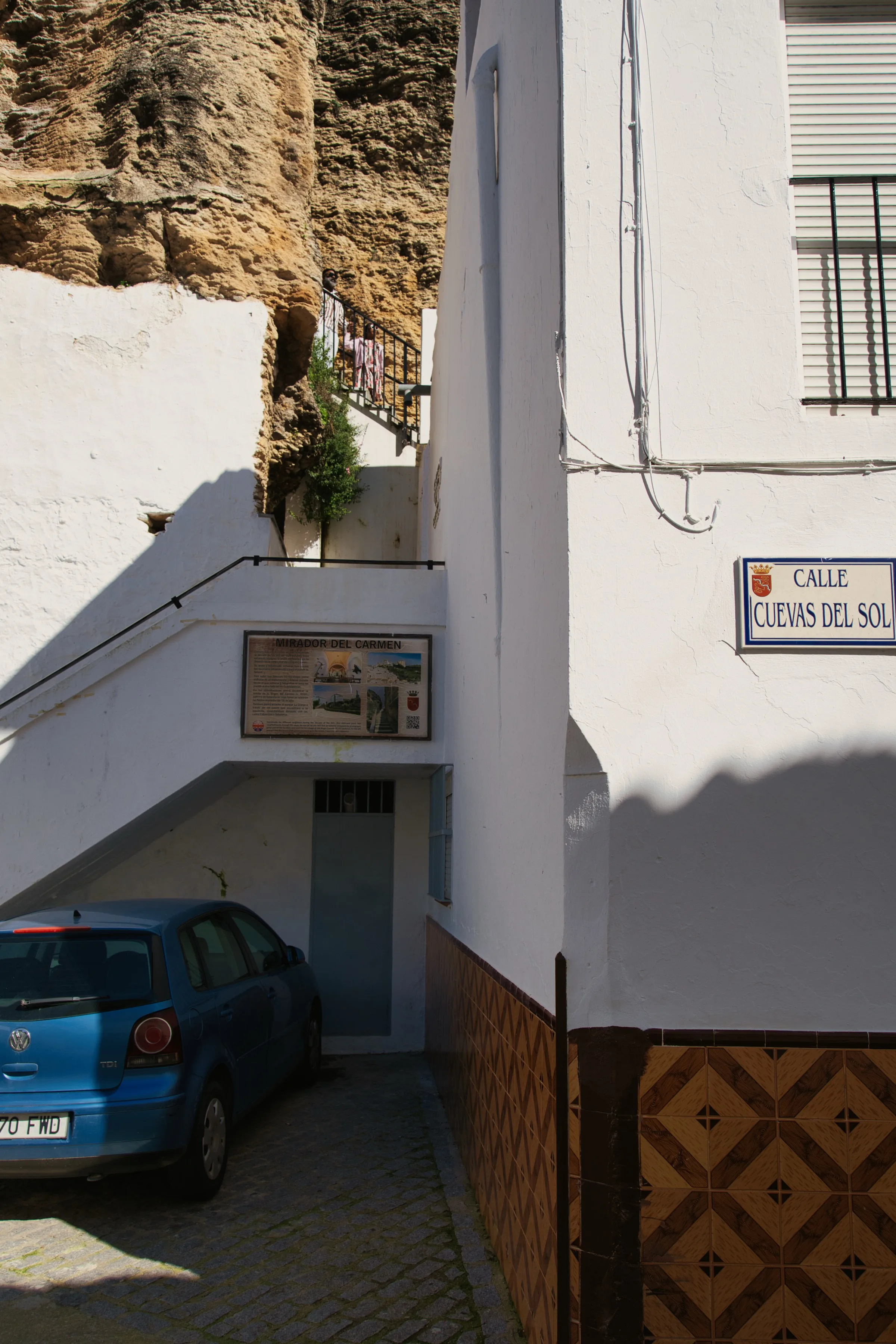
Calle Cuevas del Sol gets all the attention, and fair enough, it’s the single best place to stand still and actually look up at how these houses sit under the rock instead of in it. But it’s not the whole village, and I’d be doing Setenil a disservice if I let you think it was.
🚗 This is the one village on the list you really do need your own car for, it’s genuinely not a quick trip and public transport doesn’t make it easy. I always book through Discover Cars, they compare all the major rental companies so you’re not stuck with whoever has a desk at the airport.
Walk up to the church, Nuestra Señora de la Encarnación, while you’re there. And lower down, past where most day-trippers turn back, there’s an old street where the village’s soap factories used to stand, quiet now, but a reminder that Setenil was a working town long before it was a photo stop.
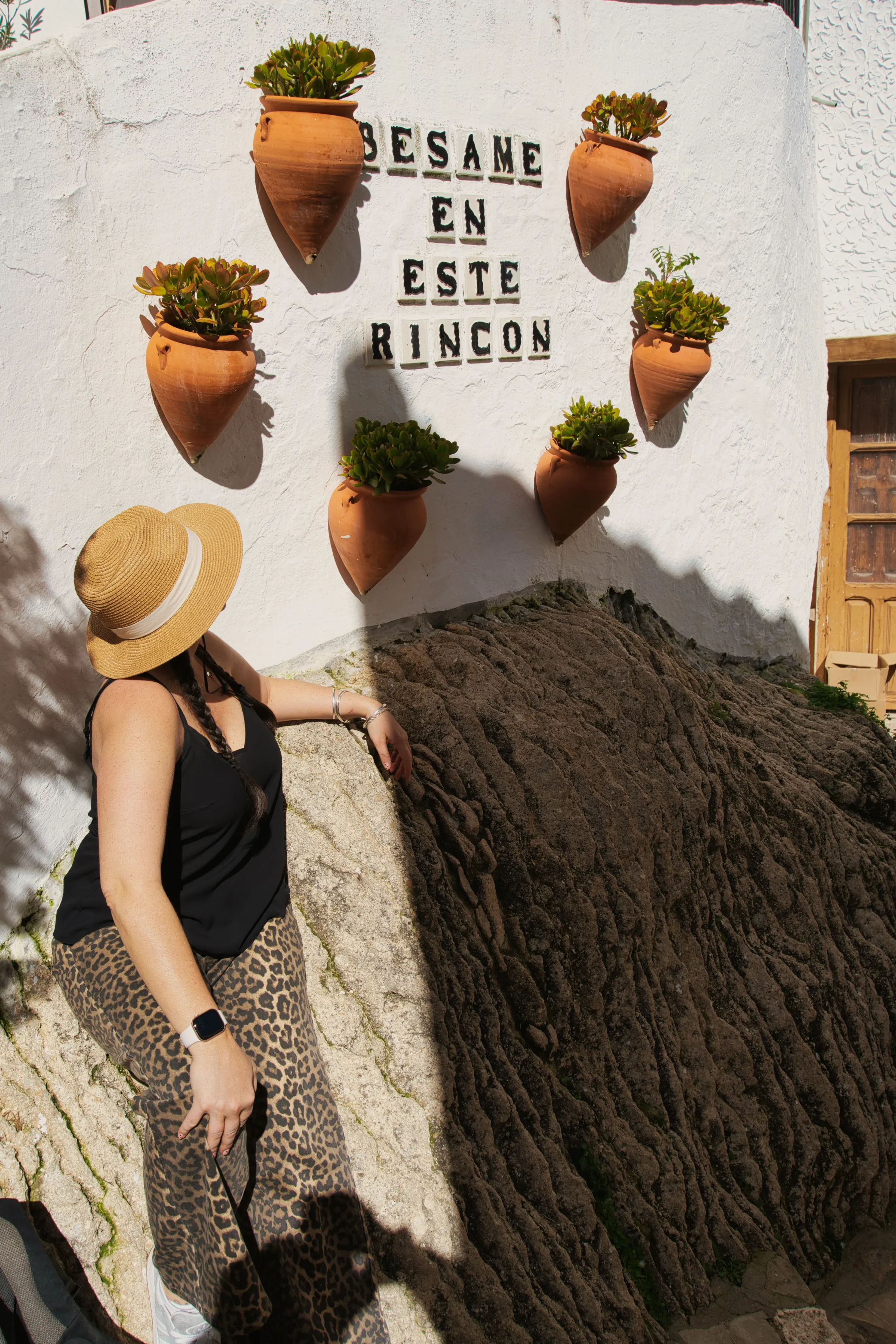
Keep an eye out on Calle Herrería, the oldest street in the village, for a tile that reads “bésame en este rincón.” The literal translation is closer to “kiss me in this corner” than “kiss me in this street,” rincón means corner or nook rather than a whole street, but the sentiment lands the same either way.
Grab a table at Bar Frasquito while you’re on Calle Cuevas del Sol itself. It’s a proper local haunt on this same street, and in all my visits I’ve never once felt tourist-taxed, which after a while in Spain is something you learn to notice and appreciate.
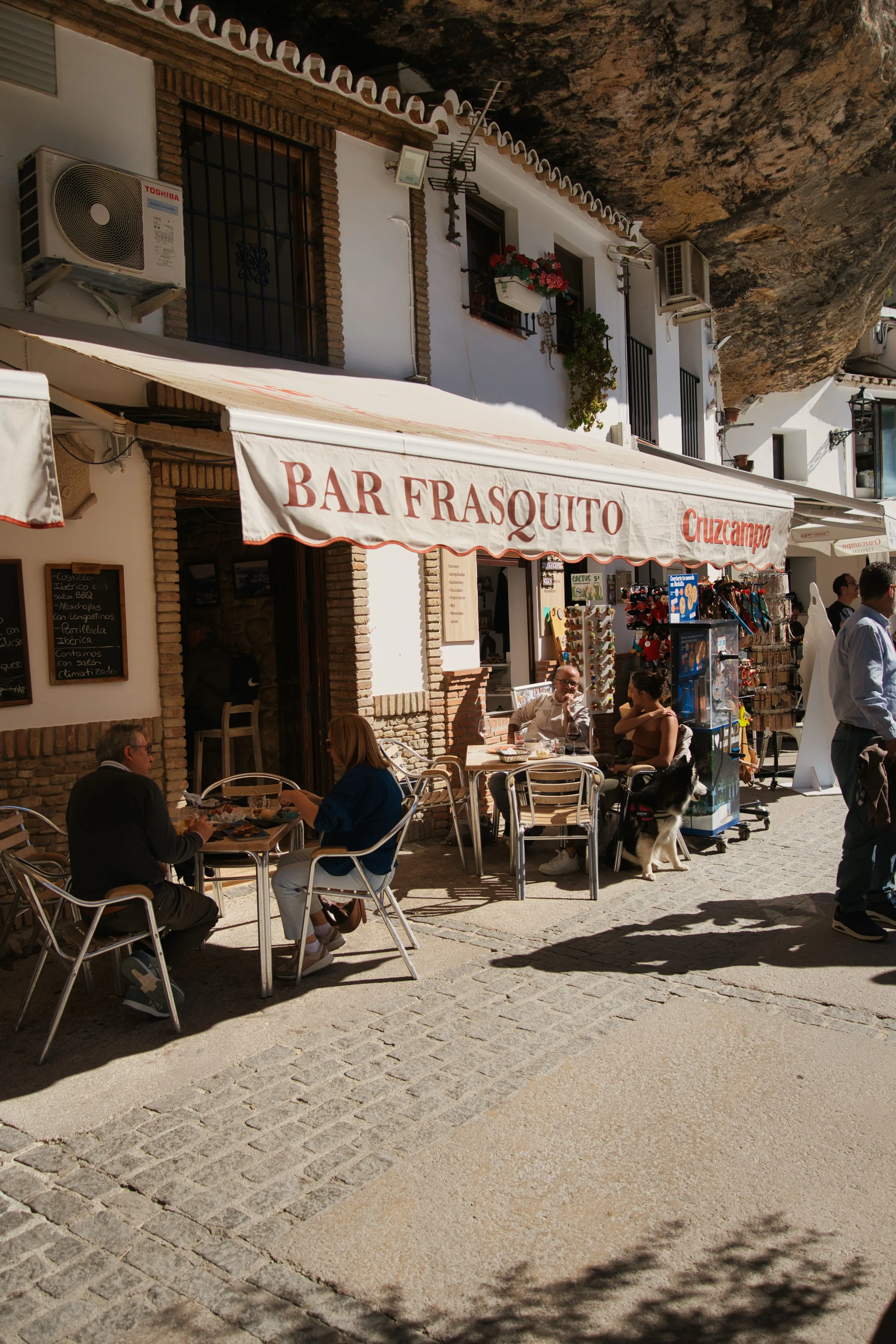
Time this street badly and you’ll regret it. Tour buses roll in from about 11am to 2pm, and the little restaurants along here clog up fast along with the parking, so either beat them to it or wait until they’ve cleared out again.
Before you leave, walk up to the Mirador El Lizón. There’s a plaque up there that reads “lo mejor de Setenil está aquí, y eres tú” (the best thing in Setenil is here, and it’s you), which sounds a bit much until you’re actually looking out over that gorgeous tangle of white rooftops and rock, and then it just feels true.
One more thing, don’t trust the map on this one. Parking spots that look like they’re right by the caves are often just narrow residential streets where you’ll do more reversing than sightseeing.
I once watched Jethro nearly send our camera clattering down a set of dusty stone steps near Plaza de Andalucía, his foot going one way and the camera strap swinging the other. The camera survived. My nerves, less so.
I’ve laid out the rest of what’s worth seeing, plus where to actually park, in my fuller Setenil de las Bodegas guide.
READY TO PLAN YOUR OWN VILLAGE-HOPPING TRIP?
🚗 Rent a car: I use Discover Cars
🎟️ Guided tours instead: I use GetYourGuide
🏨 Accommodation in Malaga: Find hotels in Malaga
🚆 Trains and buses: I book through Omio
🛡️ Travel insurance: I use SafetyWing
Frigiliana
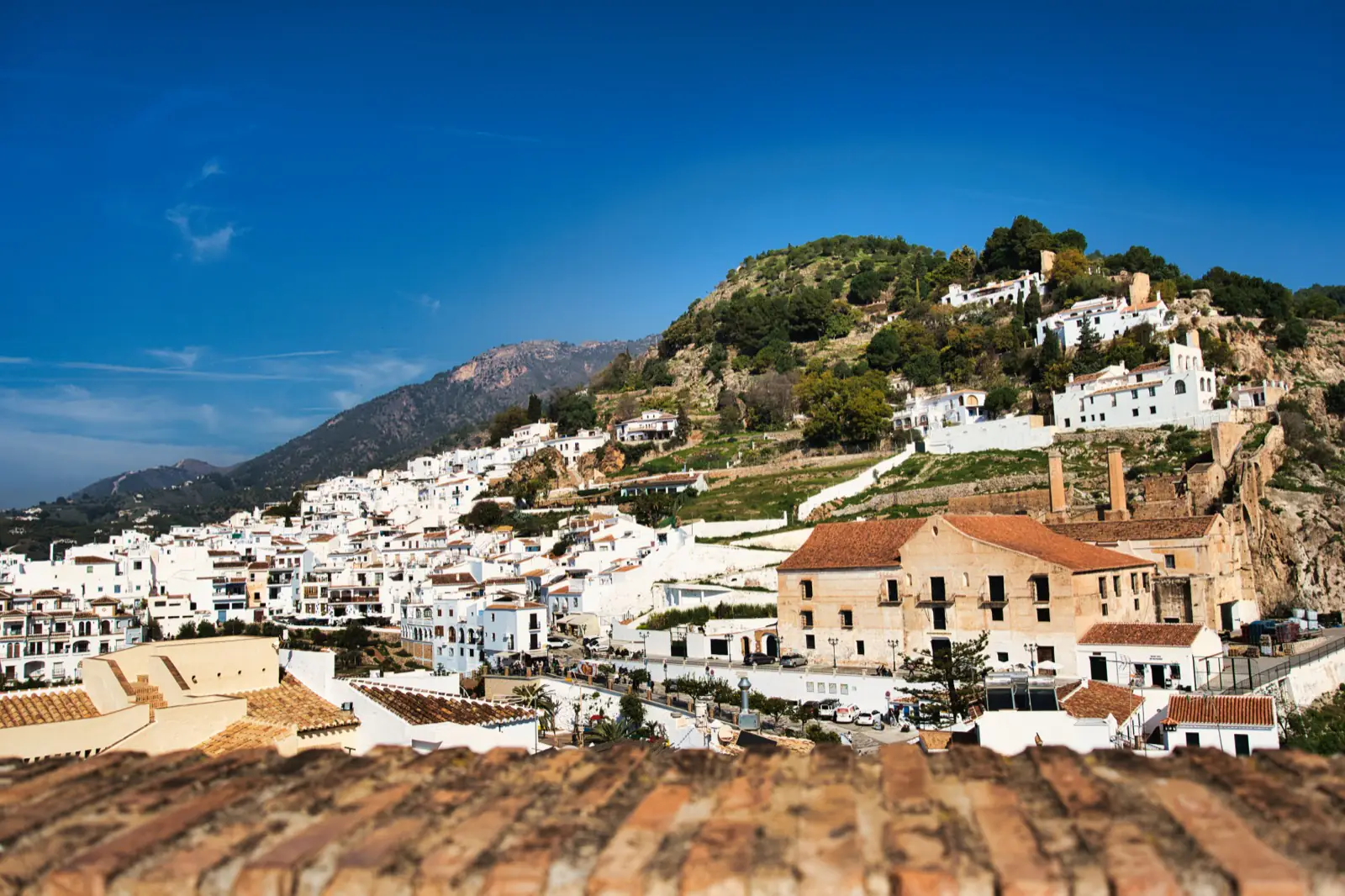
Frigiliana is my favourite of the three, and it’s not close. It’s about 55 to 60 minutes from Malaga, further out than the other two, but I’d make that drive for one reason alone: the doors. I’ve covered the rest of what’s worth doing there in my full Frigiliana guide. If you’d rather have someone else handle the logistics, a Frigiliana and Nerja day tour from Malaga covers both in one go.
Chasing the blue doors
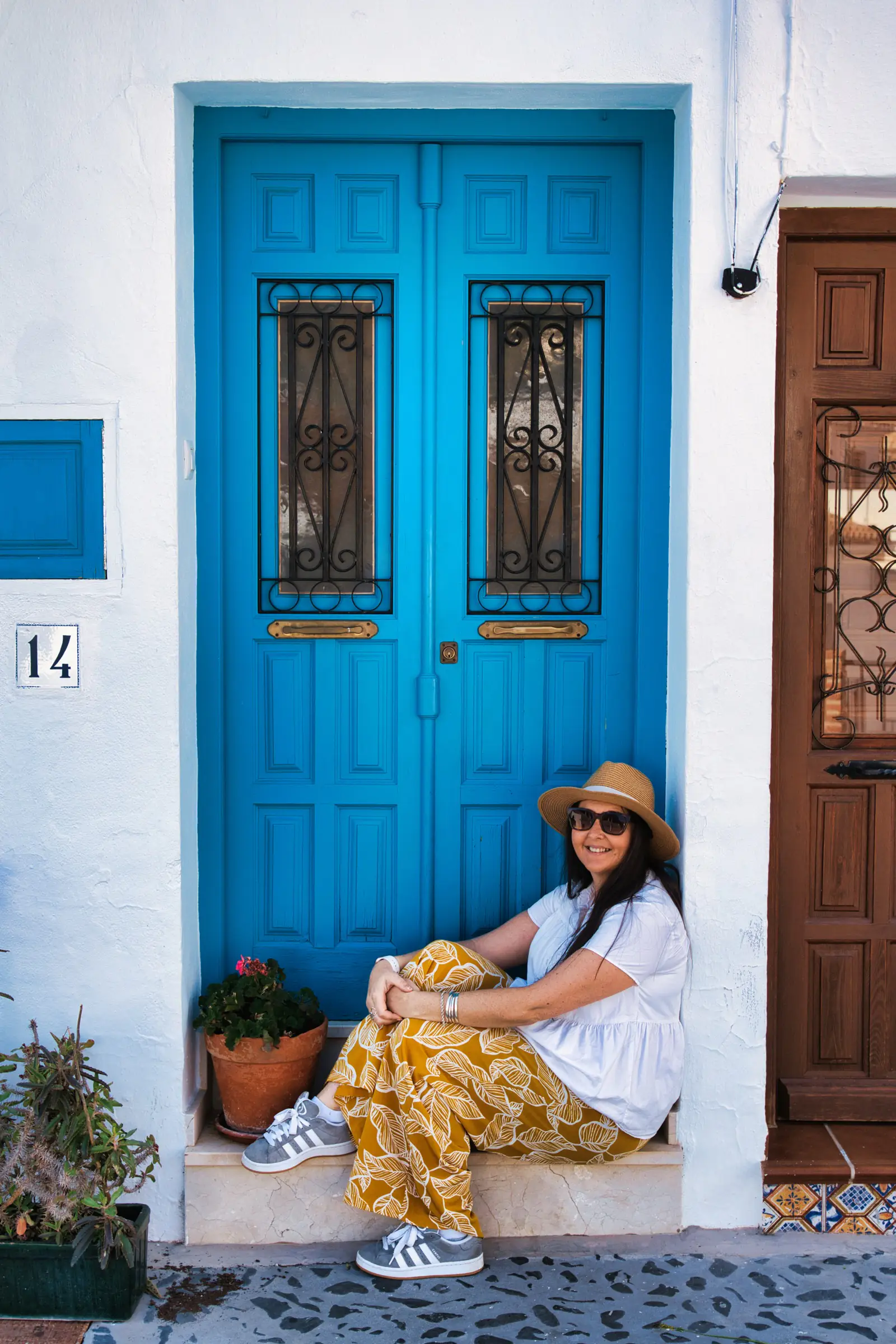
Every door in the old town gets painted the same deep blue against the whitewash, and it’s not just one street doing it for the cameras, it runs through the whole village, corner after corner. I’ve never once walked through without stopping every few metres for another photo.
I’ve got a phone full of nearly identical shots by now, the same blue door from a slightly different angle in slightly different light, and I still don’t feel like I’ve got the one. Against that much white, the colour does something to a photo I can’t get anywhere else nearby. It’s a genuinely gorgeous combination and somehow it never gets old.
The old coin-operated shows
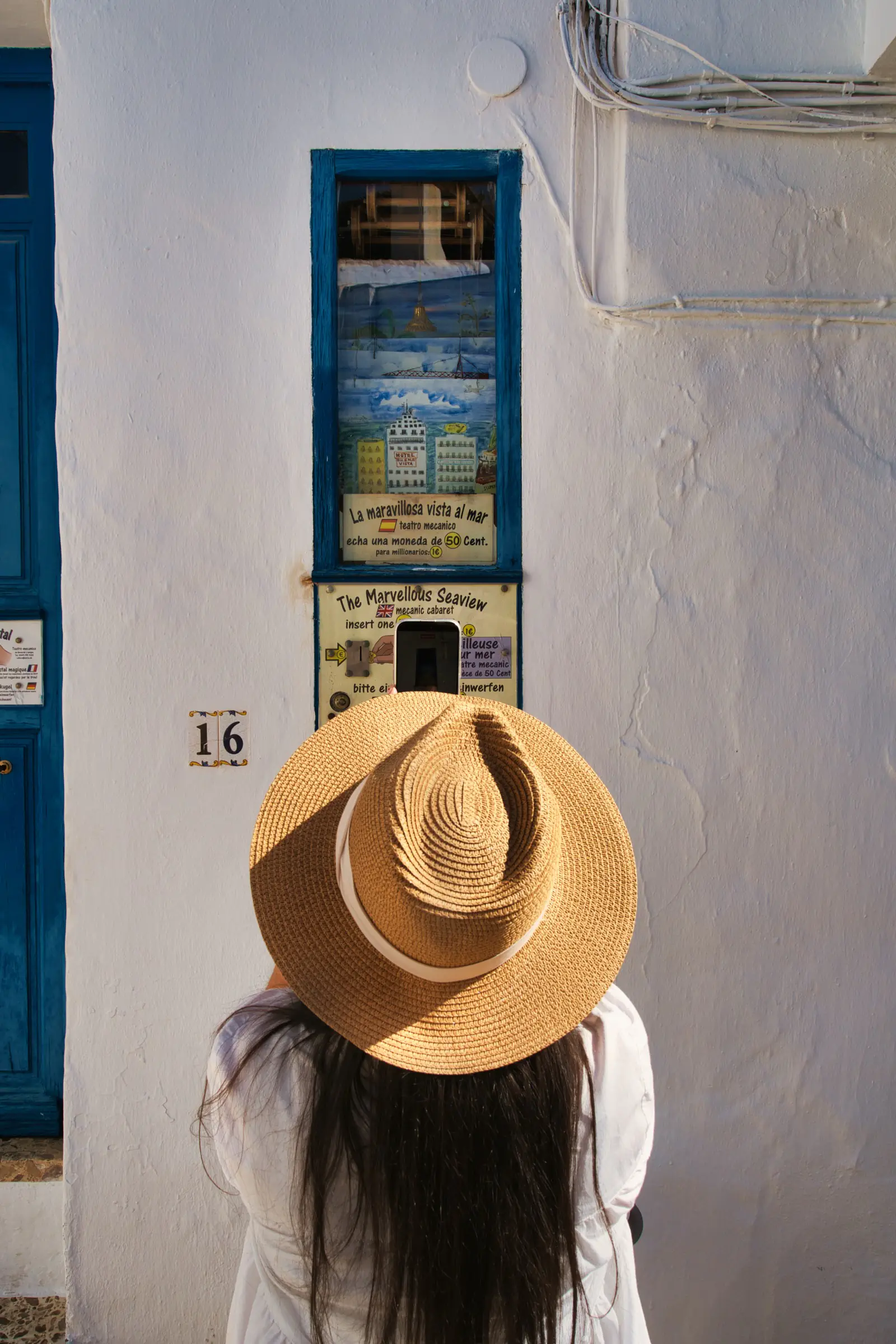
Frigiliana’s also dotted with old coin-operated machines, tucked into random corners of the village. Drop a coin in, 50 cents for the sea-view machine, 5 cents each for the five mechanical wonders inside Casa Fantasia, and a little scene plays out behind the glass.
They’re all over the place once you start noticing them, and the miniature scenes inside Casa Fantasia are the ones I’d tell you not to miss.
Here’s the part I haven’t made peace with. Frigiliana has somewhere around 3,000 residents and gets close to a million visitors a year, and in high summer you feel every single one of them on the same handful of streets.
Some visits I love the buzz of it and barely notice the crowds. Other times I feel genuinely rushed, shuffling along behind someone’s selfie just to get past a doorway I’ve already photographed twice. There’s no clean verdict here and I’m not going to pretend there is one. It’s stunning, and it can also feel like a lot, sometimes within the same hour.
If the crowds are what’s putting you off, the fix isn’t complicated, the buses mostly clear out by 5pm and the village empties with them. Staying the night rather than doing it as a day trip is the one thing that actually solves it, and Beneste Frigiliana Hotel is the closest thing to a proper hotel in the village itself.
What I will say is that with numbers like that, I fully expected the food to have gone the way it usually does in villages this popular, watered down and overpriced for the view. It hasn’t.
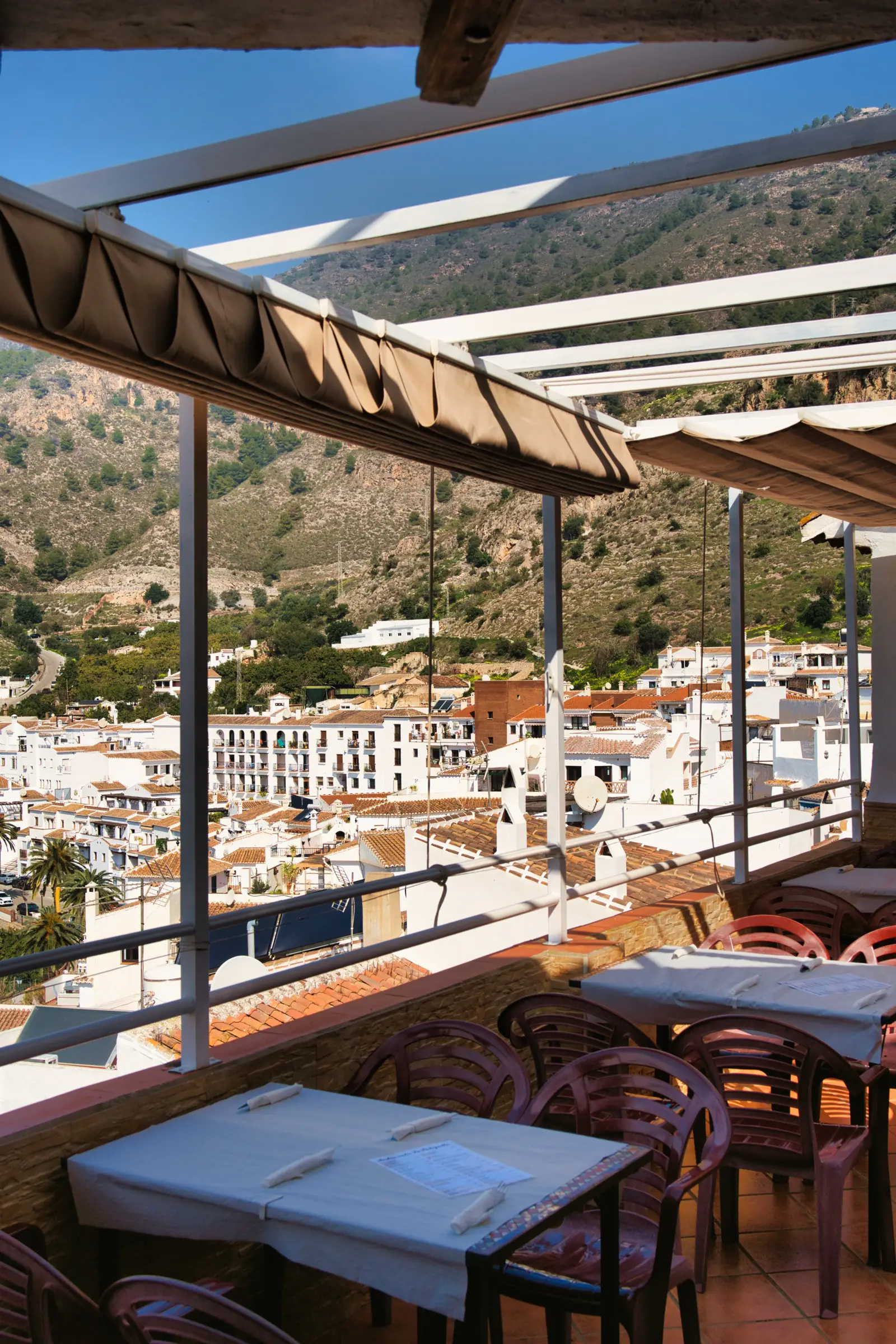
La Bodeguilla is where I go. The patatas a lo pobre are seven euros, which caught me off guard the first time, given the view that comes with them.
Skip the restaurant tucked into the church square, it’s fine but you’re mostly paying for the courtyard, not the food. And if you’ve seen Restaurante El Jardín or La Taberna del Sacristán recommended everywhere else, they’re not wrong exactly, they’re just not where I’d send you first.
Bring a full battery. You’ll need it for the doors.
Which is prettier, Mijas or Frigiliana?
Frigiliana wins this one for me, mostly because of the blue doors against the whitewash. Out of every white village I’ve wandered around near Malaga, that’s my single favourite detail, full stop.
Mijas has real charm too, and I don’t want to undersell it. It’s a genuine art town, with working artists and galleries tucked into the white streets, and it’s much easier to get to, about 30 minutes from Malaga against Frigiliana’s roughly hour.
But if you’re choosing on looks alone, Frigiliana takes it. There’s something about that blue and white combination that just photographs, and lives in memory, better than anything Mijas has going for it.
Prettier village, longer drive, worth it. If you want the longer, more exhaustive version of this argument, I’ve written the full Mijas versus Frigiliana comparison separately, this is just my honest gut call.
Can you do more than one in a day?
No, and I’ll be honest, I’ve never actually combined two of these three villages into one day myself. The short answer is that each one pairs better with something nearby than it does with each other, so trying to chain two together just means more driving and less time actually enjoying either place.
Frigiliana is the easy one. It sits right next door to Nerja’s old town, so I always fold it into that trip rather than trying to squeeze in Setenil or Mijas the same day.
Setenil de las Bodegas works the same way with Ronda, which is about 20 minutes further along the road, and there’s easily enough in Ronda to fill the rest of your day. Setenil ends up as the perfect stop on the way in or out rather than a destination you’d bolt onto Frigiliana or Mijas. There’s also a combined Setenil and Ronda tour if you’d rather not drive the whole loop yourself.
Mijas Pueblo is the odd one out because it doesn’t need pairing at all. It’s only about 30 minutes from Malaga, so it works perfectly well as its own little half-day trip.
I haven’t tested pairing Mijas with either of the other two, so I won’t pretend to know how that drive works. Three villages, three separate days, and that’s honestly how I’d keep doing it.