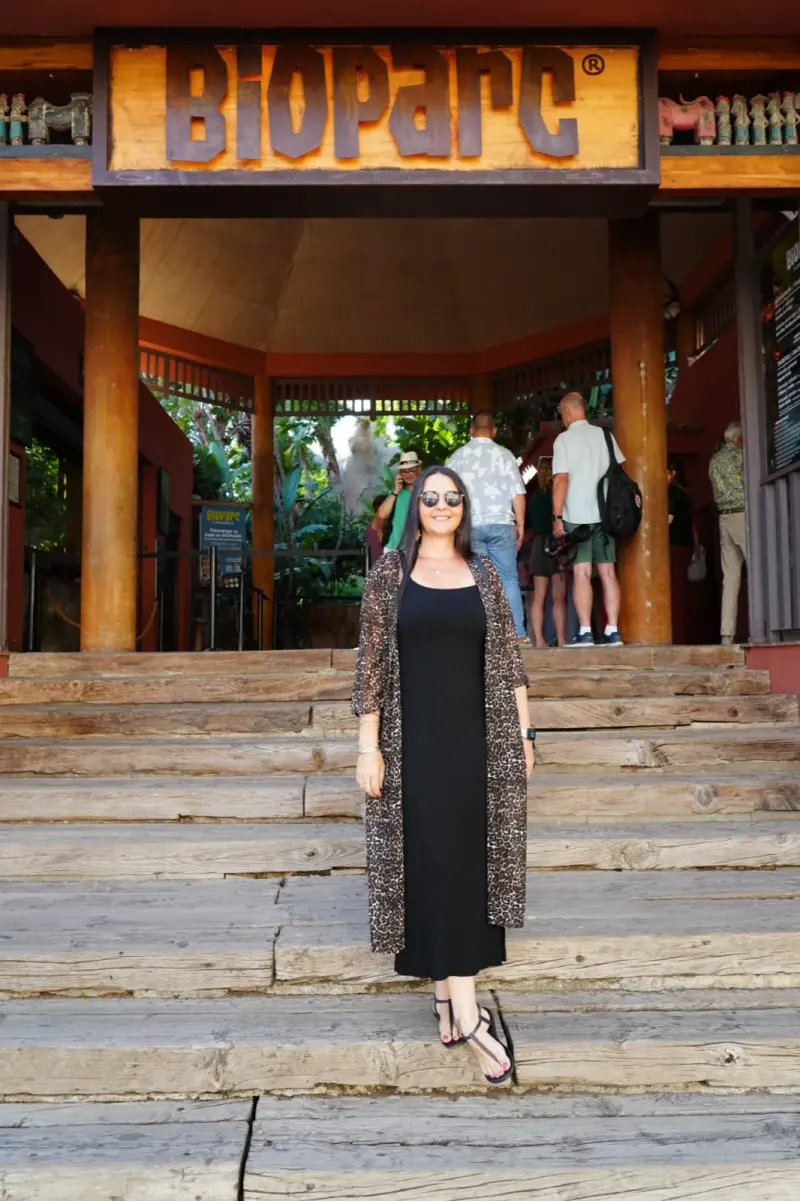
Bioparc Fuengirola is a zoo where none of the enclosures look like a cage, and I’d go in the evening. I’ve been twice, on a hot afternoon in 2023 with my in-laws and on a July night this year with Jethro, and the July night won easily: the heat had gone and the animals were out and about.
One caveat. The July evening was a Costa Press Club event with a set timetable, so I felt rushed.
You don’t need a club to do it, though, because in July and August the park is open until 23:00. Below is the walk I did, then tickets, parking and how it works with kids.
Day or evening?
Evening, and summer especially. In 2023 I went in the daytime and it was hot.
On 7 July 2026 the heat had gone and the animals were mostly out and about, though some were still sleeping. It was nice to see them more active, and it’s the reason I’d take kids on a summer evening.
Here’s how I got in. The visit was an evening organised by the Costa Press Club, which I belong to, and I paid a set price that covered entry, canapés and drinks.
A guide took us round and she was very informative.
You can do the same evening without the club, because the park opens at 10:00 and stays open until 23:00 in July and August.
The way I walked it
Bioparc is built as five habitats (Equatorial Africa, Madagascar, Southeast Asia, Indo-Pacific, and Central and South America), and you drift from one continent to the next without noticing.
There are a few ways round. I started at the flamingos on one side, the crocodiles are on the other, and when you cross the bridge over the divide you see both. This is the order I walked it on my July evening.
Flamingos and the forest boardwalks
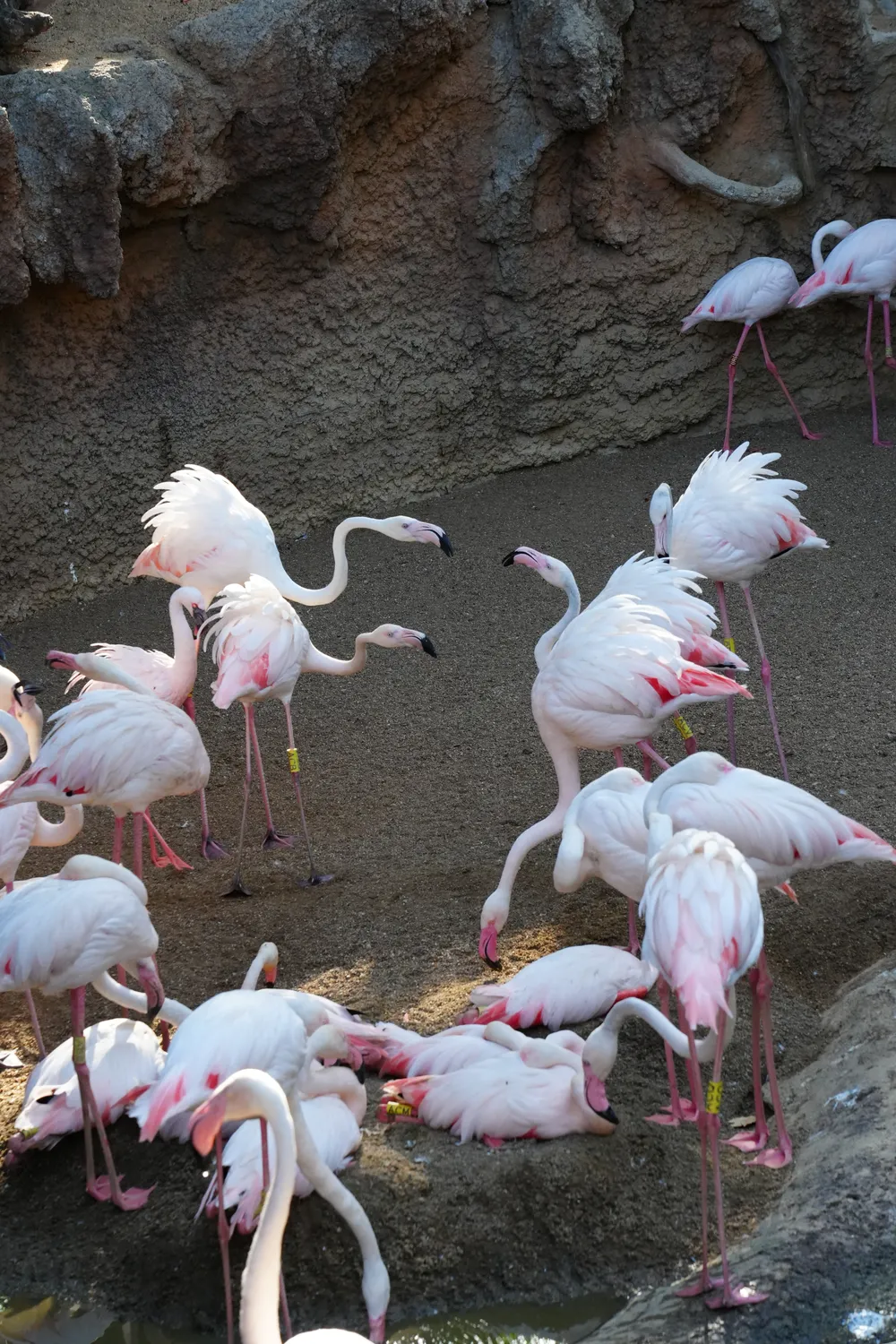
The first thing I noticed wasn’t a bird, it was that none of the enclosures look like a cage. They look folded into a forest, even though every one is a secure environment for the animals.
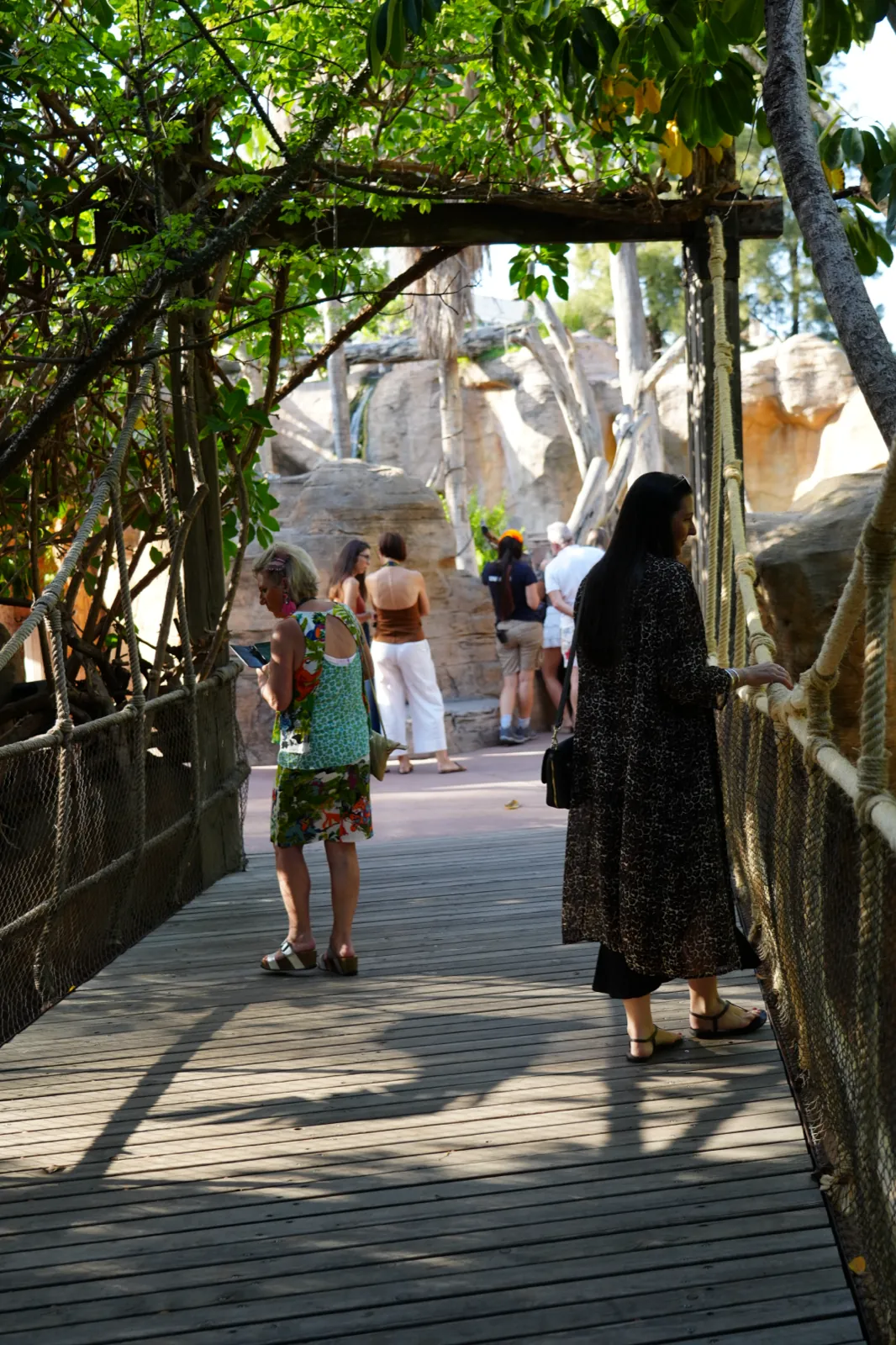
Boardwalks take you in under the trees and it feels like you’re walking through a forest, one habitat easing into the next like a progression. All the animals looked happy and well fed.
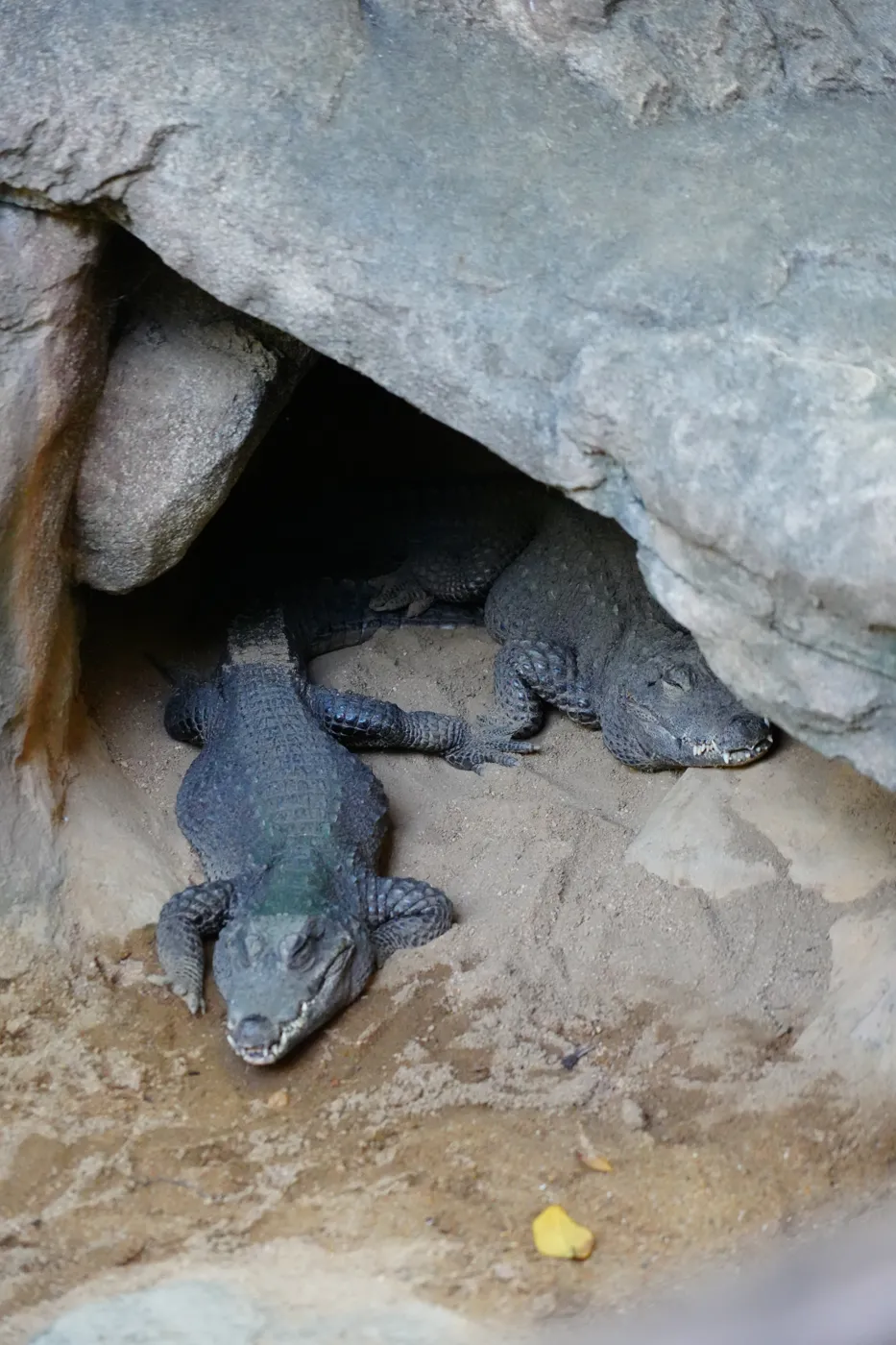
The crocodiles are over on the far side. The two curled in this den were small, so my guess is African dwarf crocodiles.
Meerkats and the pygmy hippo
The meerkats are just past the flamingo bridge, and they were my highlight. They’re super cute, and I loved them.
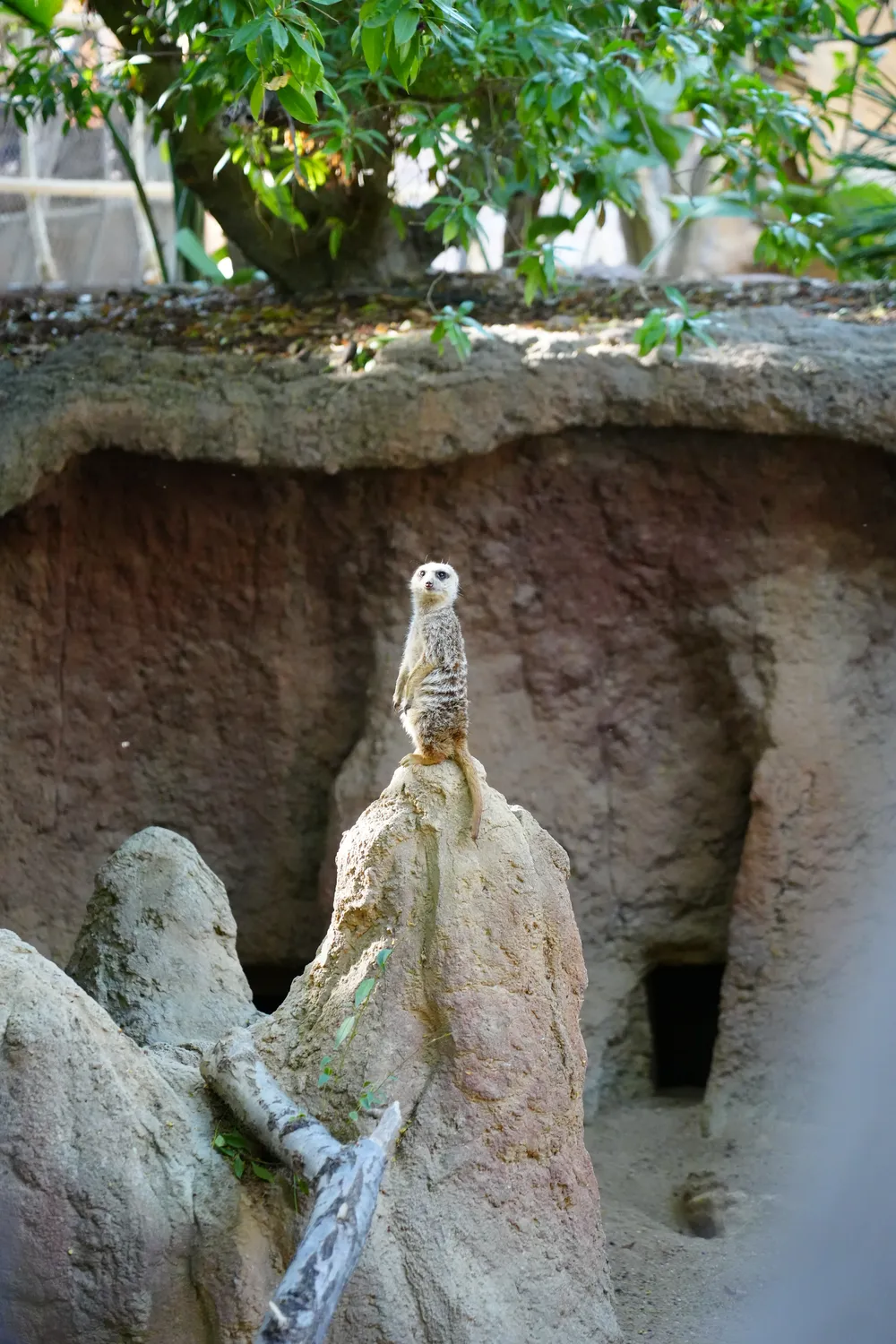
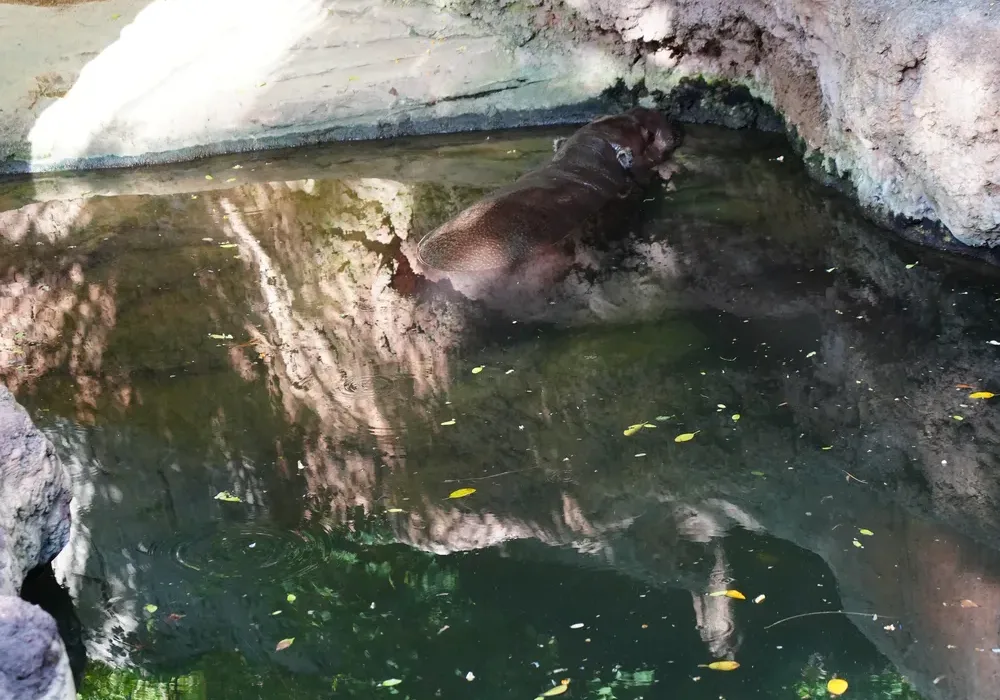
The pygmy hippo is off to the left, with the meerkats in the middle. It was half-submerged in a dark pond, so all I saw was its back and head, but it’s adorable.
The explorer hall and the walk under the pond
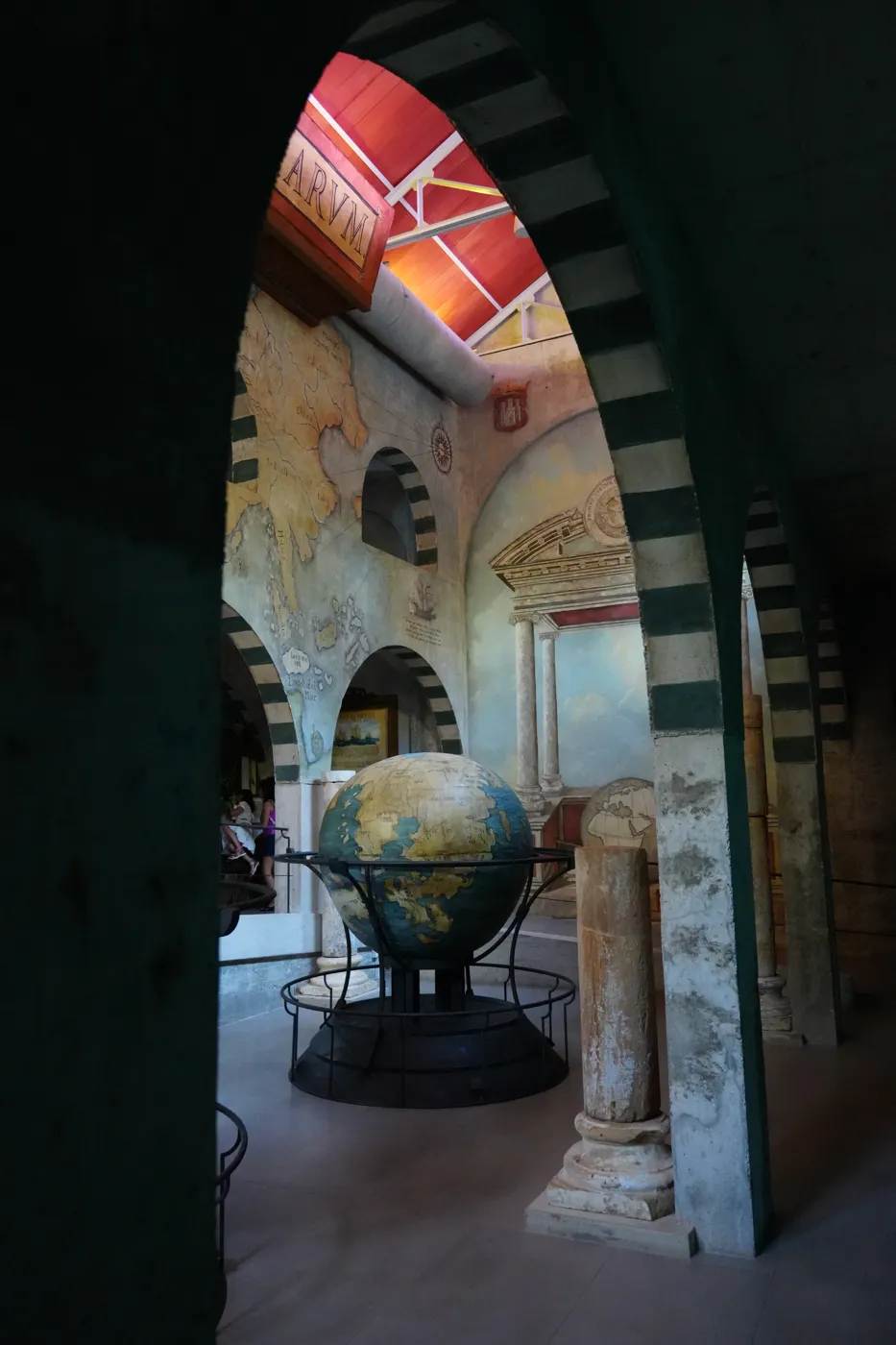
Next comes the indoor aquarium hall, and it’s built like an explorer’s study. A big antique globe stands under stone arches, with fish tanks glowing blue behind it.
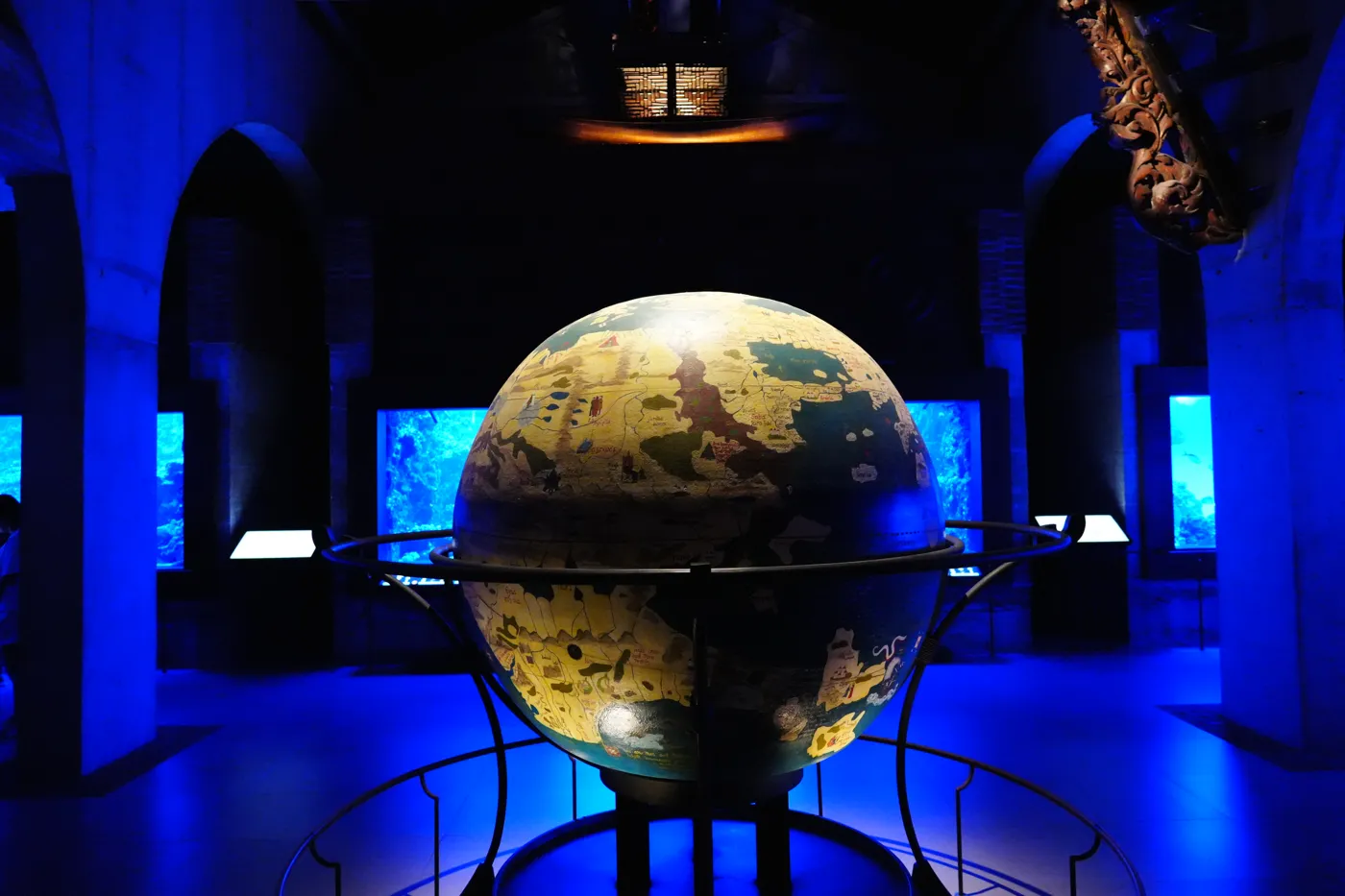
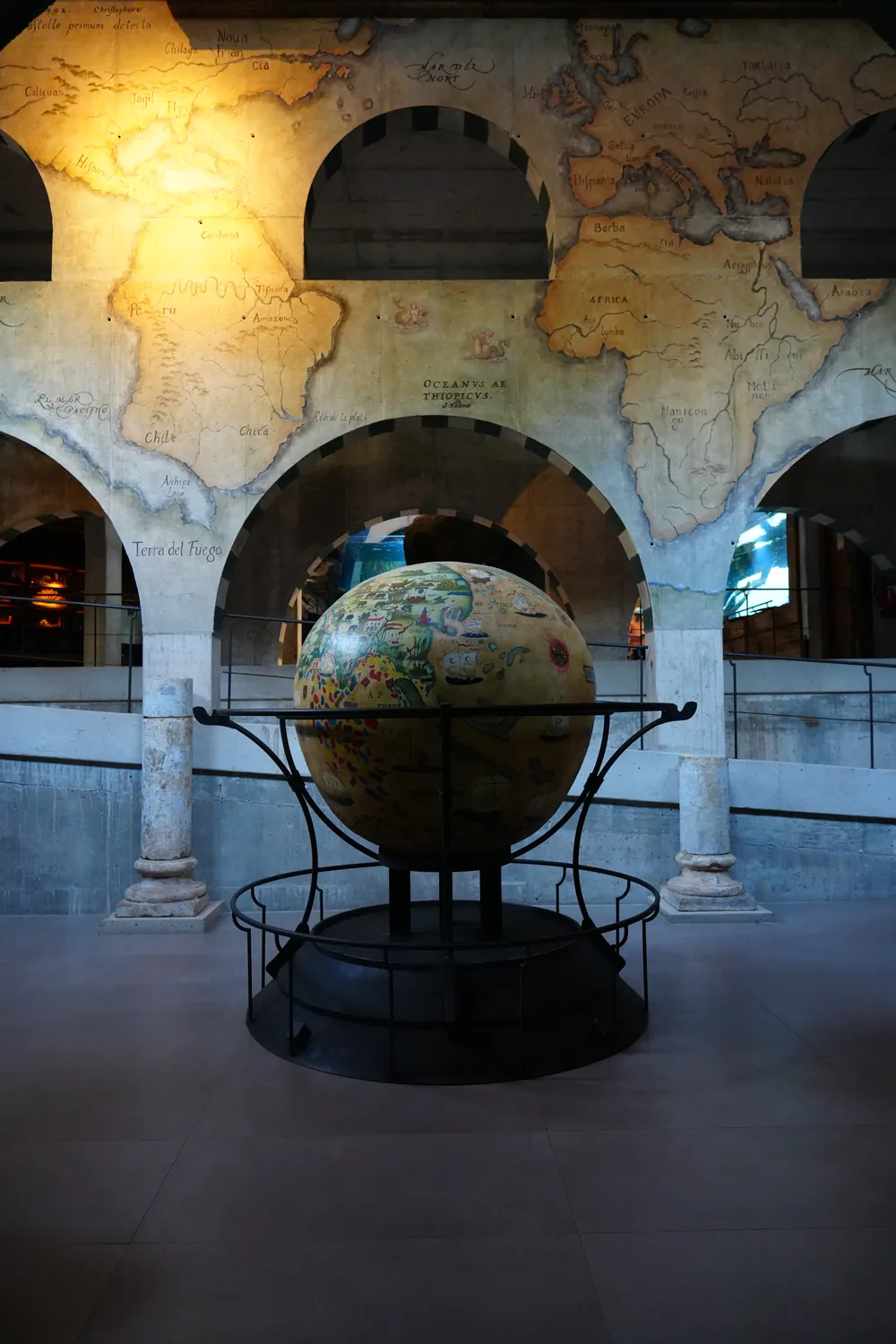
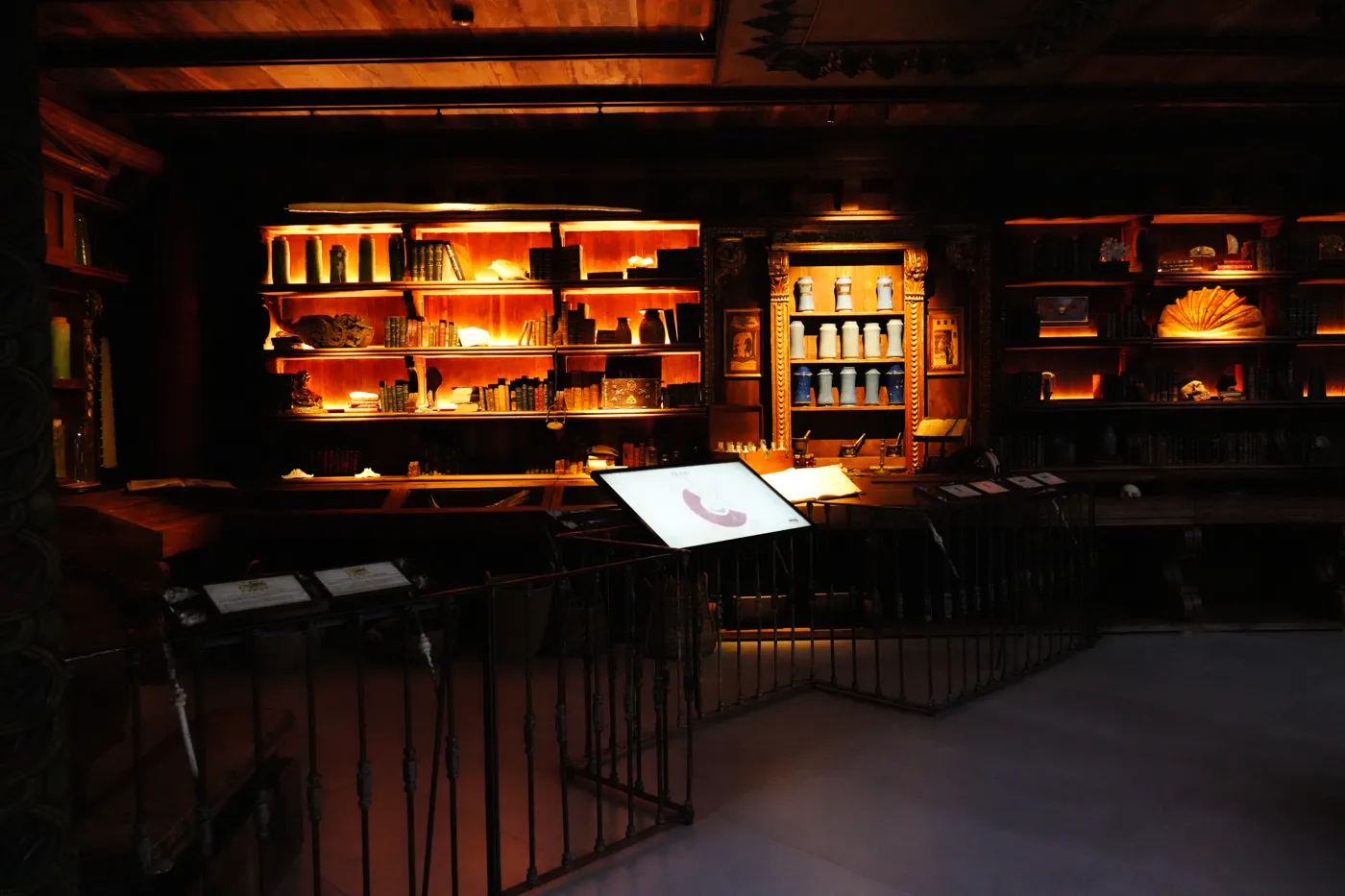
The shelves of old books, jars and shells are lit like a museum cabinet.
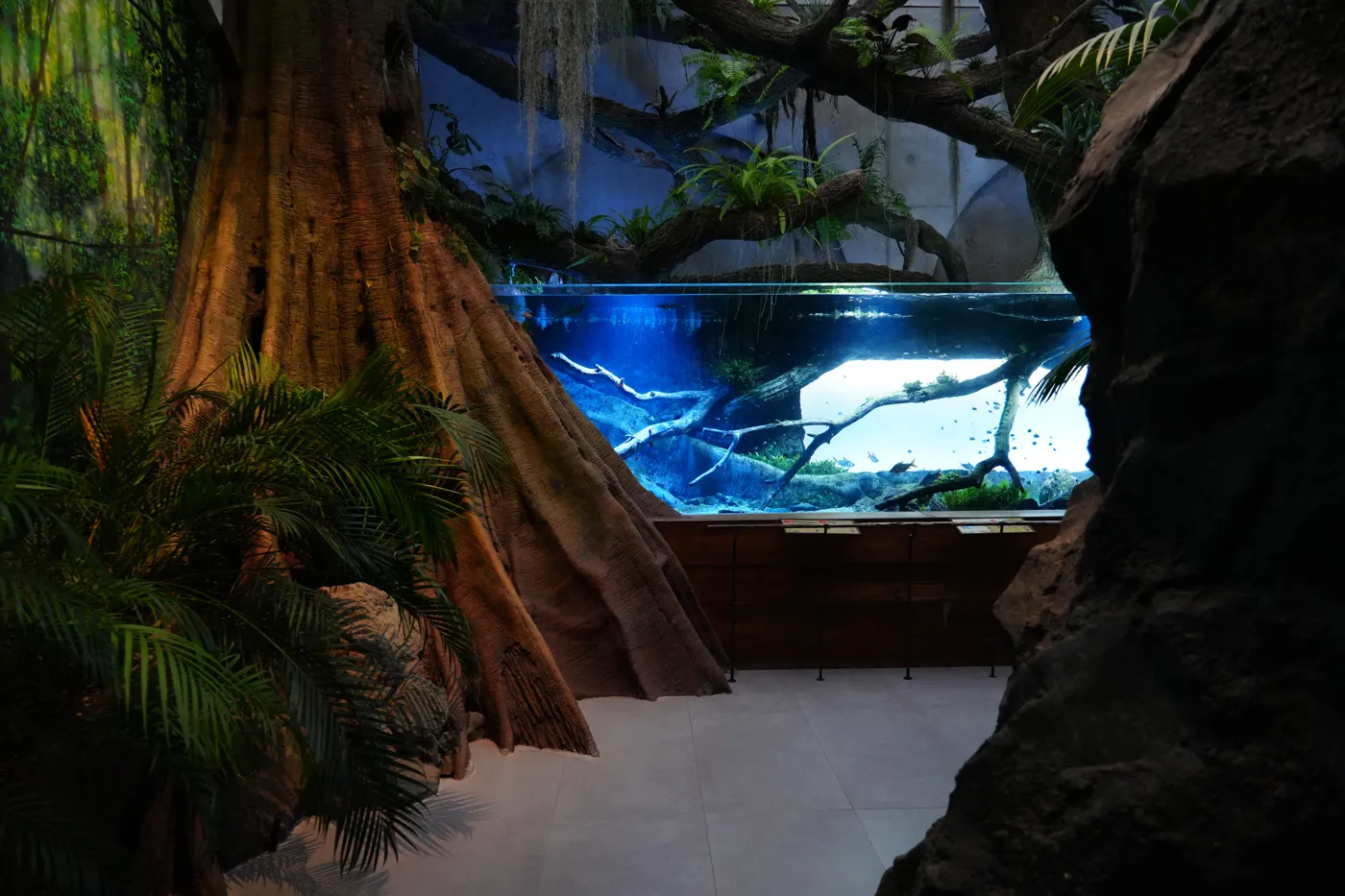
Beside the aquarium glass a huge tree trunk rises through the hall, with roots spreading across the floor and branches running up toward the glass roof. It looks completely natural, and it’s the kind of detail that makes the whole place feel like a forest rather than a zoo.
Then you walk under a pond, with big fish overhead. They had whiskers and looked like barbel or catfish to me.
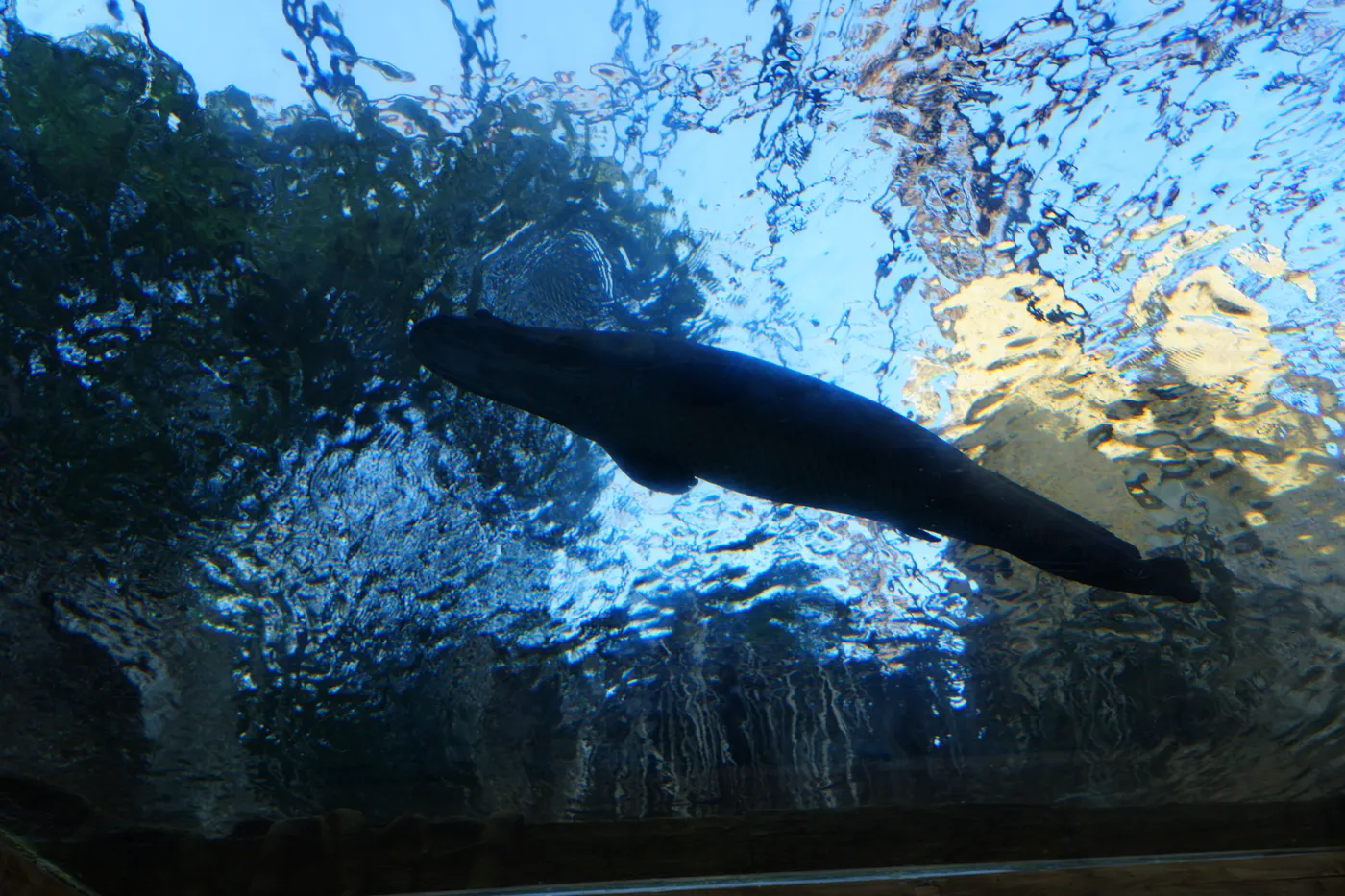
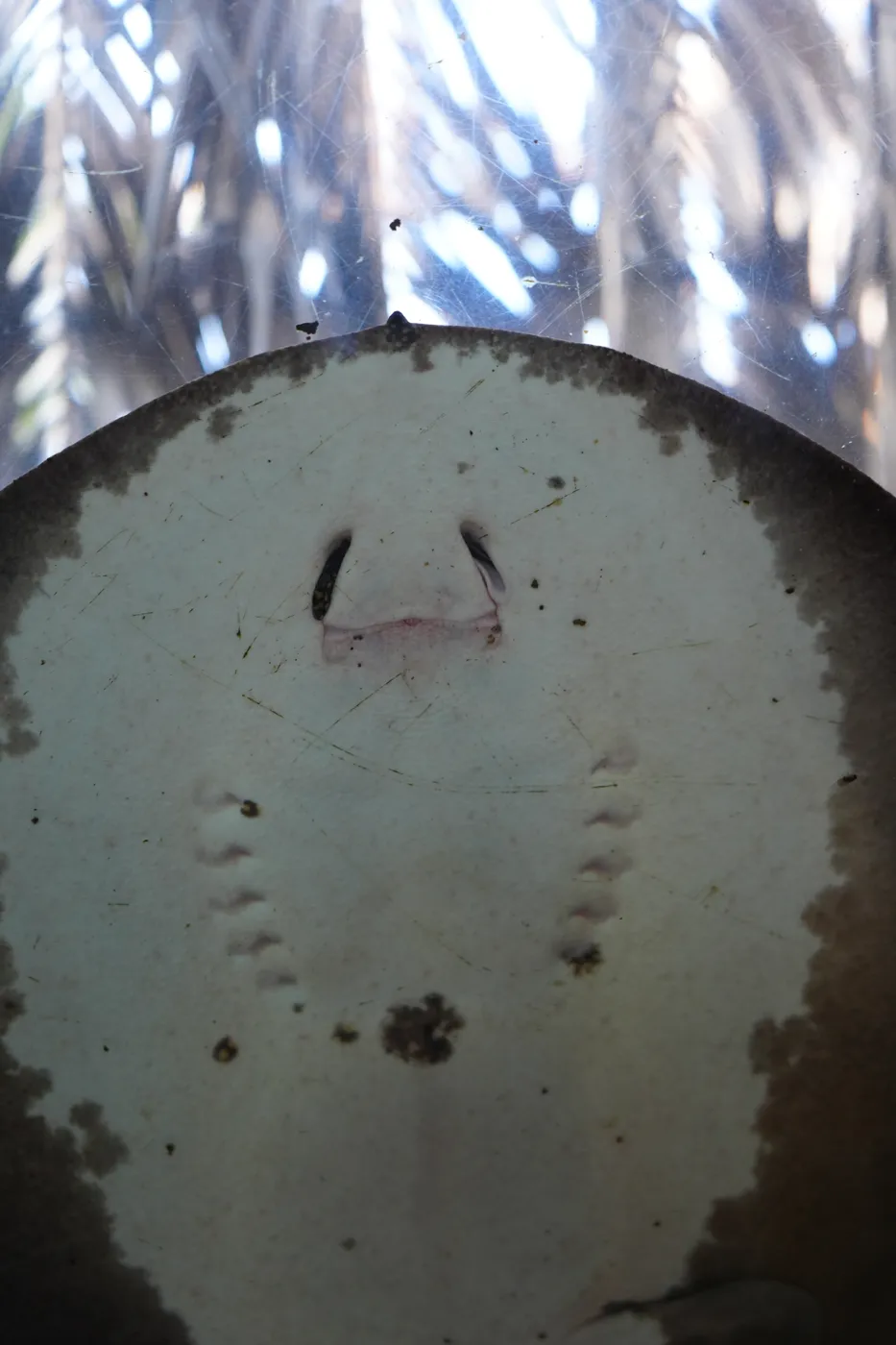
From underneath you also get a stingray’s belly.
Tamarins, a sloth and the giant otters
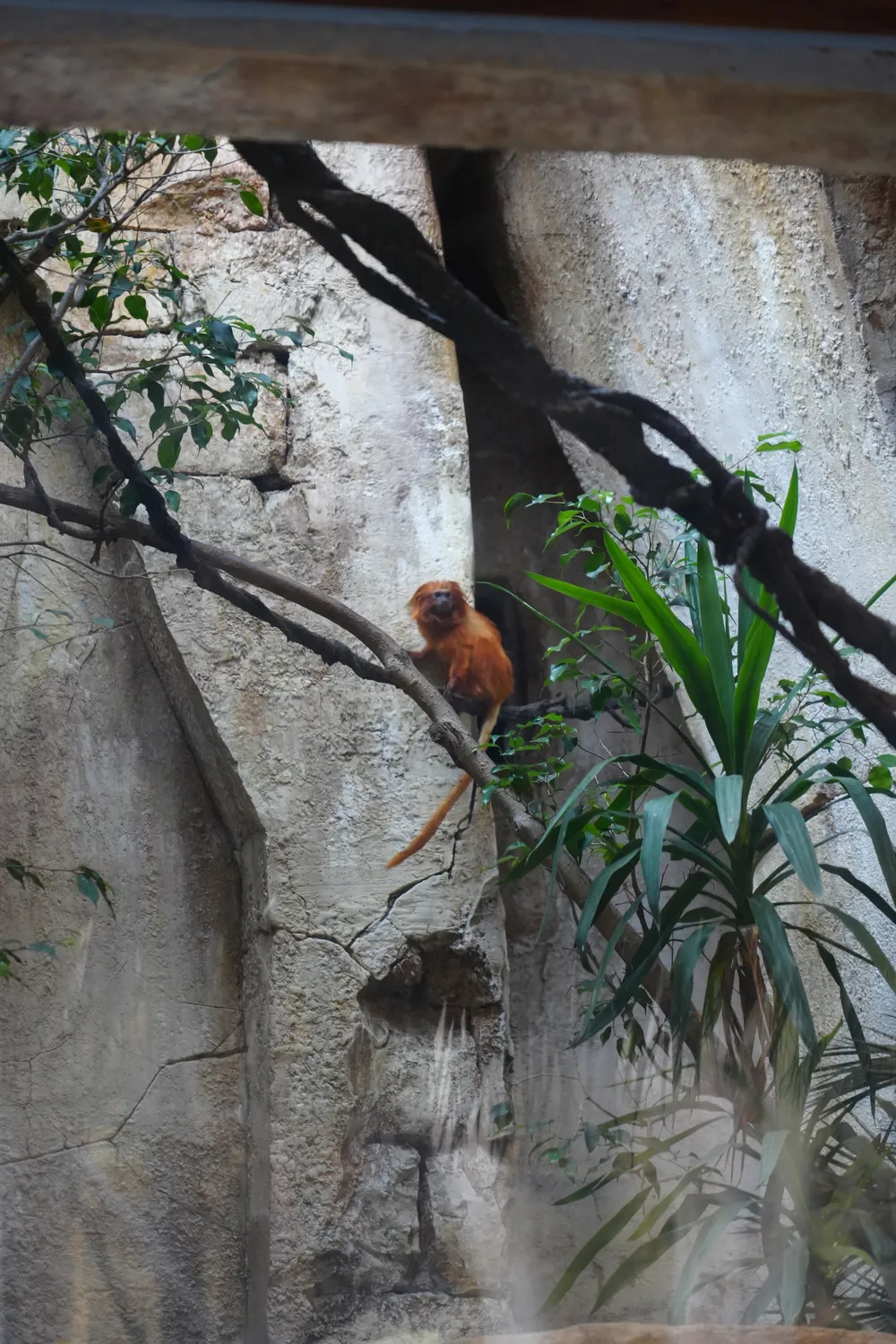
The tamarins are tiny monkeys, and the orange one I photographed looks like a golden lion tamarin.
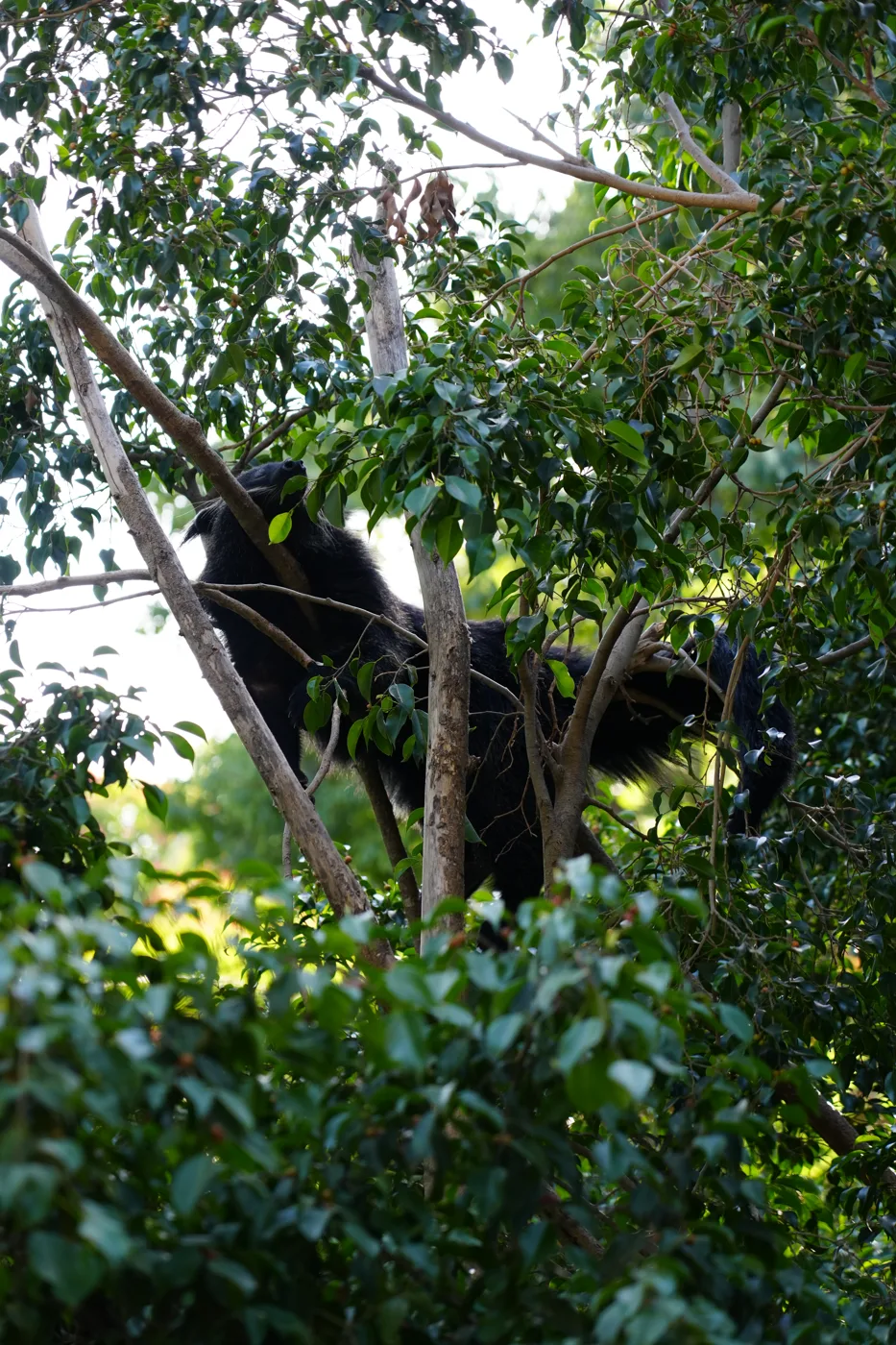
Jethro pointed out a sloth high in a tree, and it looked nothing like the sloths I’m used to from Costa Rica, which have an almost squashed face. This is a two-toed sloth, with a pointy snout, and it was black rather than grey.
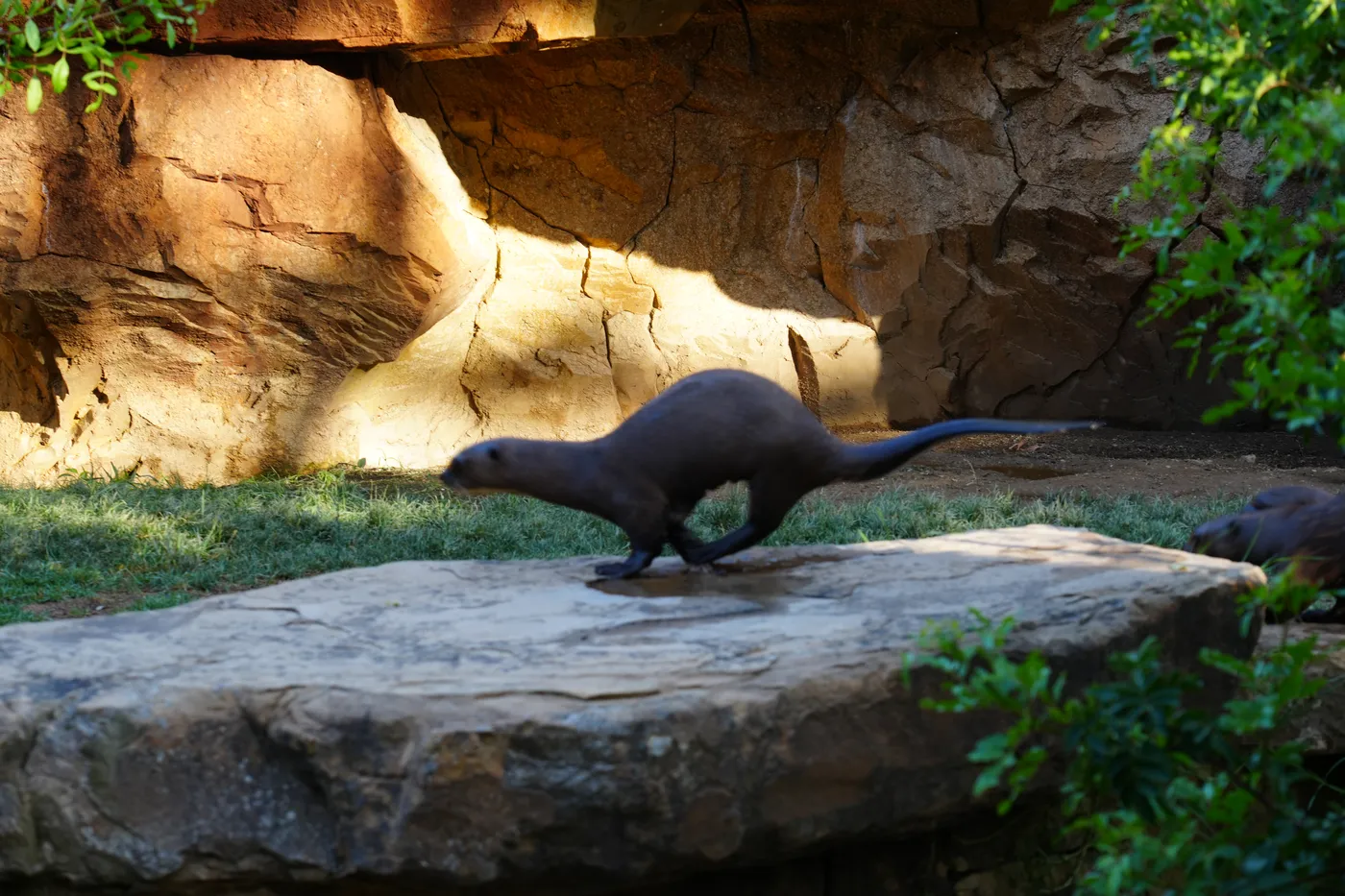
Then down to the giant otters, which were hilarious. They kept running around and swimming.
Gorillas
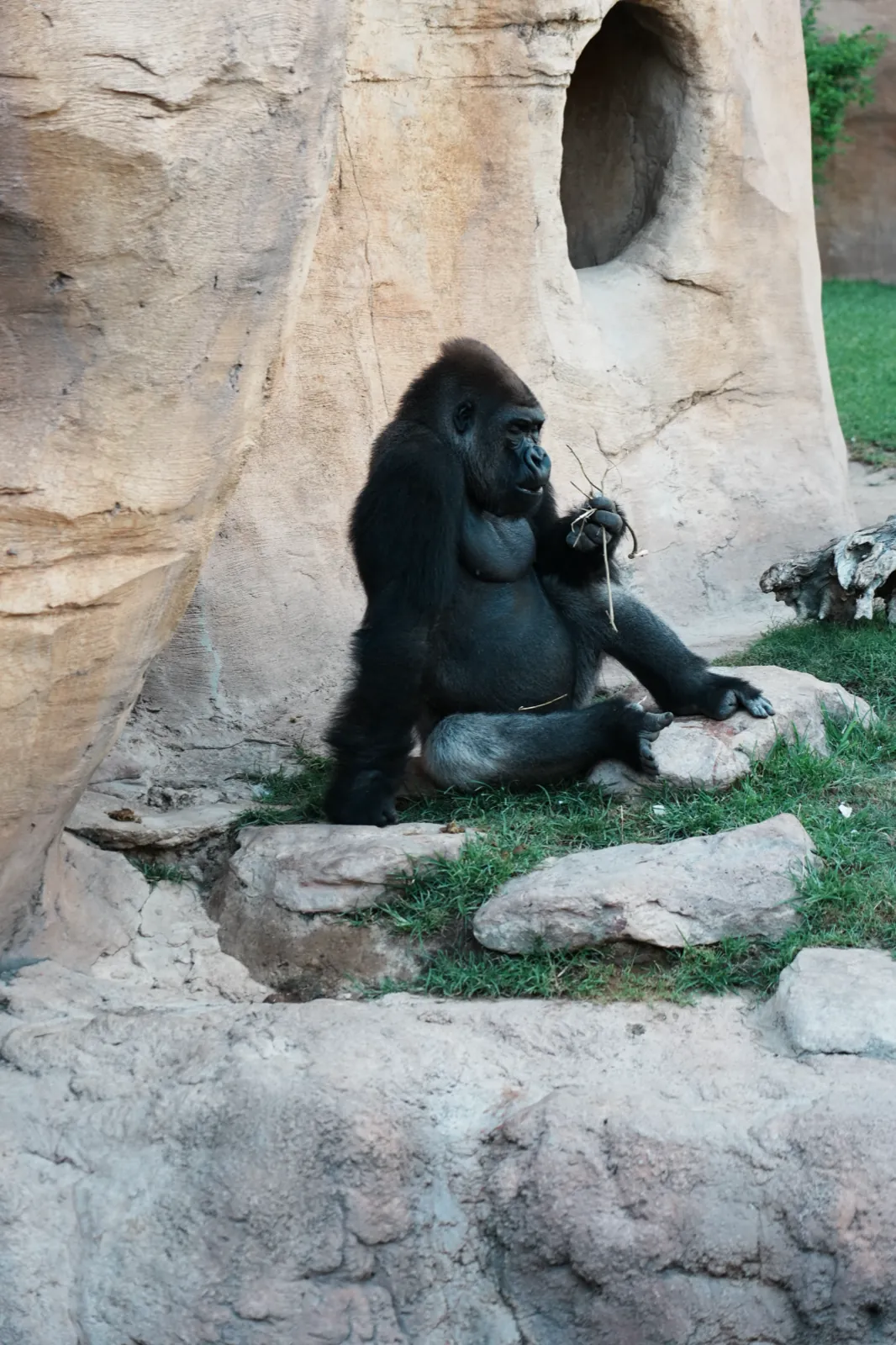
The gorillas are western lowland gorillas, and I watched them from a bridge. This one was sitting against the rock holding a twig.
The tigers and the tapir
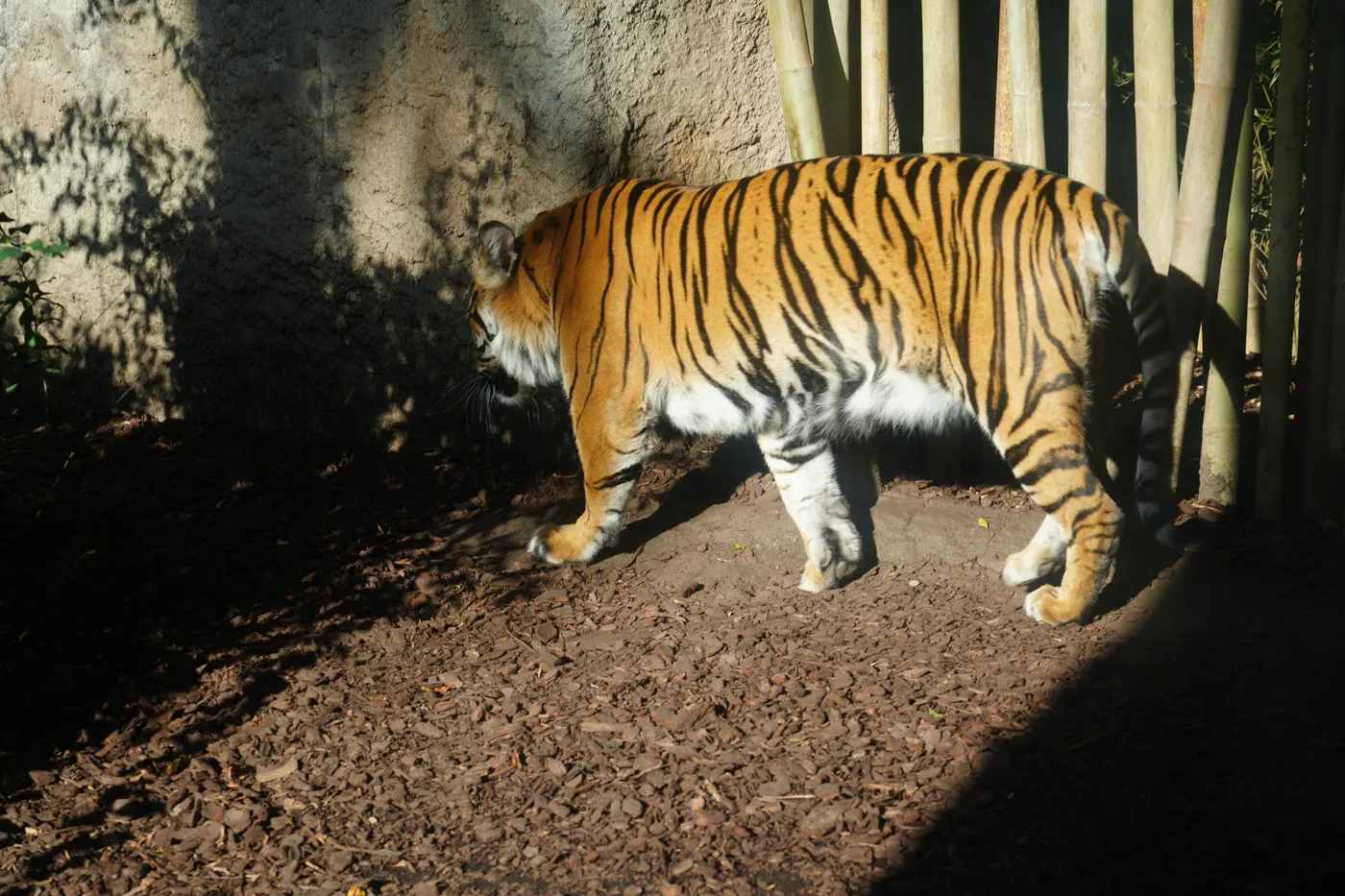
The tigers are Kerinci and Harau, a pair of Sumatran tigers that the park says belong to the European breeding programme for their subspecies. Sumatran tigers are critically endangered, so a zoo pair like this is part of keeping the population going.
In the evening light one of them was walking the length of a bamboo fence.
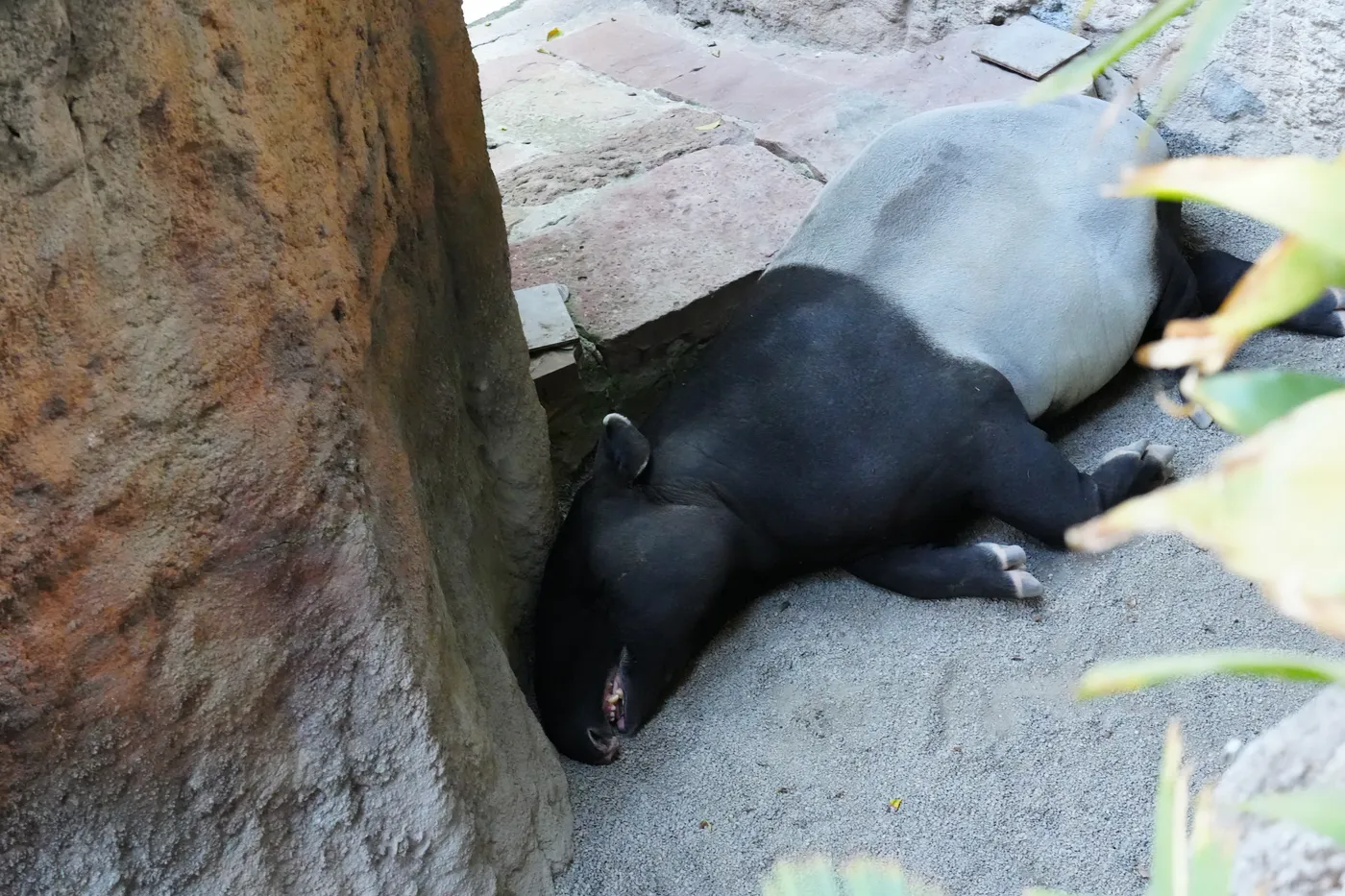
The tapir was fast asleep with its head tucked against a rock. I’d have called it an anteater, and it still looks like one to me.
Hornbills, pelicans and an iguana
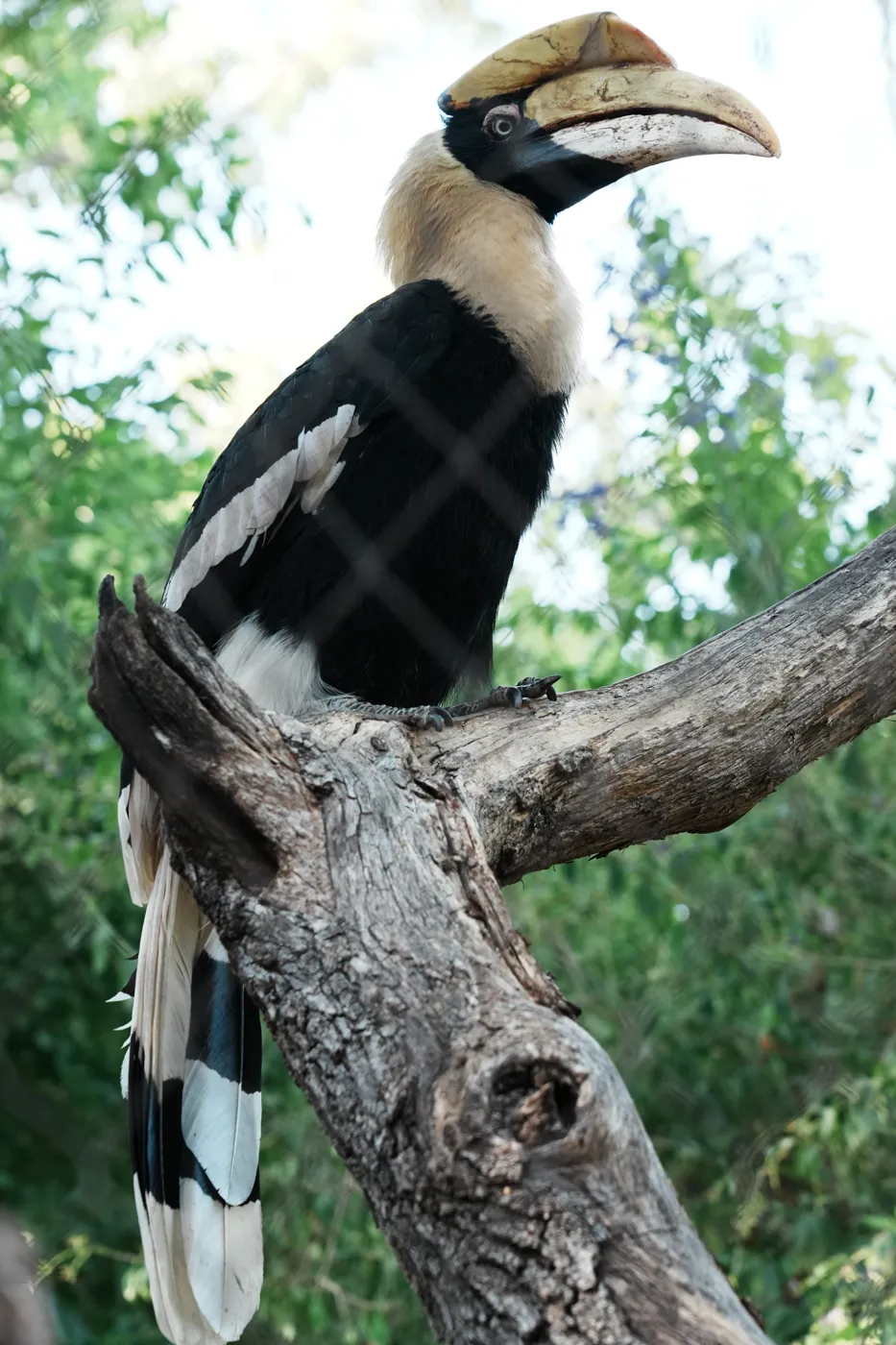
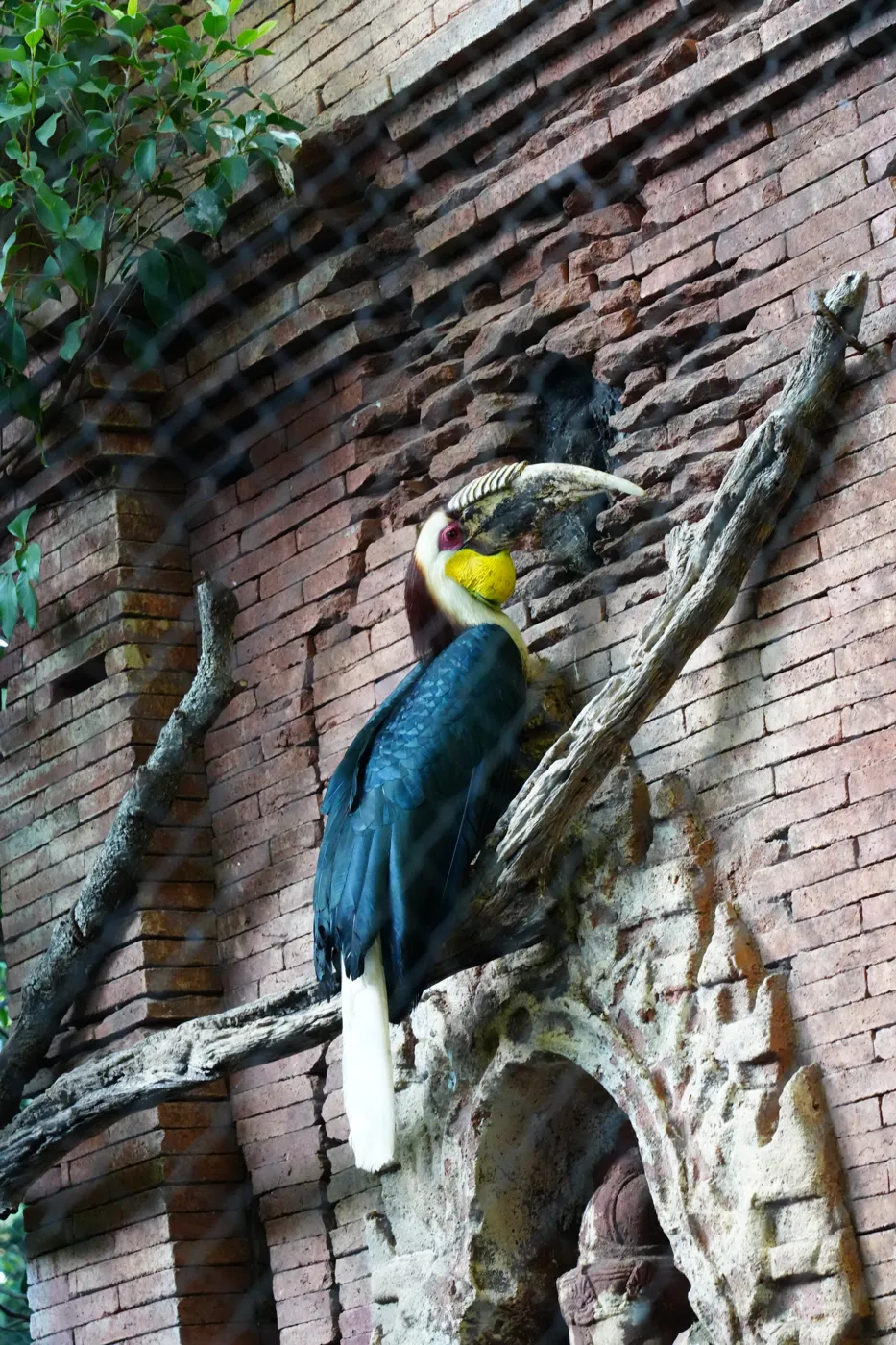
The hornbills are the birds to look for, with beaks so big they look borrowed from a cartoon. One had a tan neck and a tall ridge on top of its bill, and the other was blue-black with a bright yellow throat, perched against a brick wall.
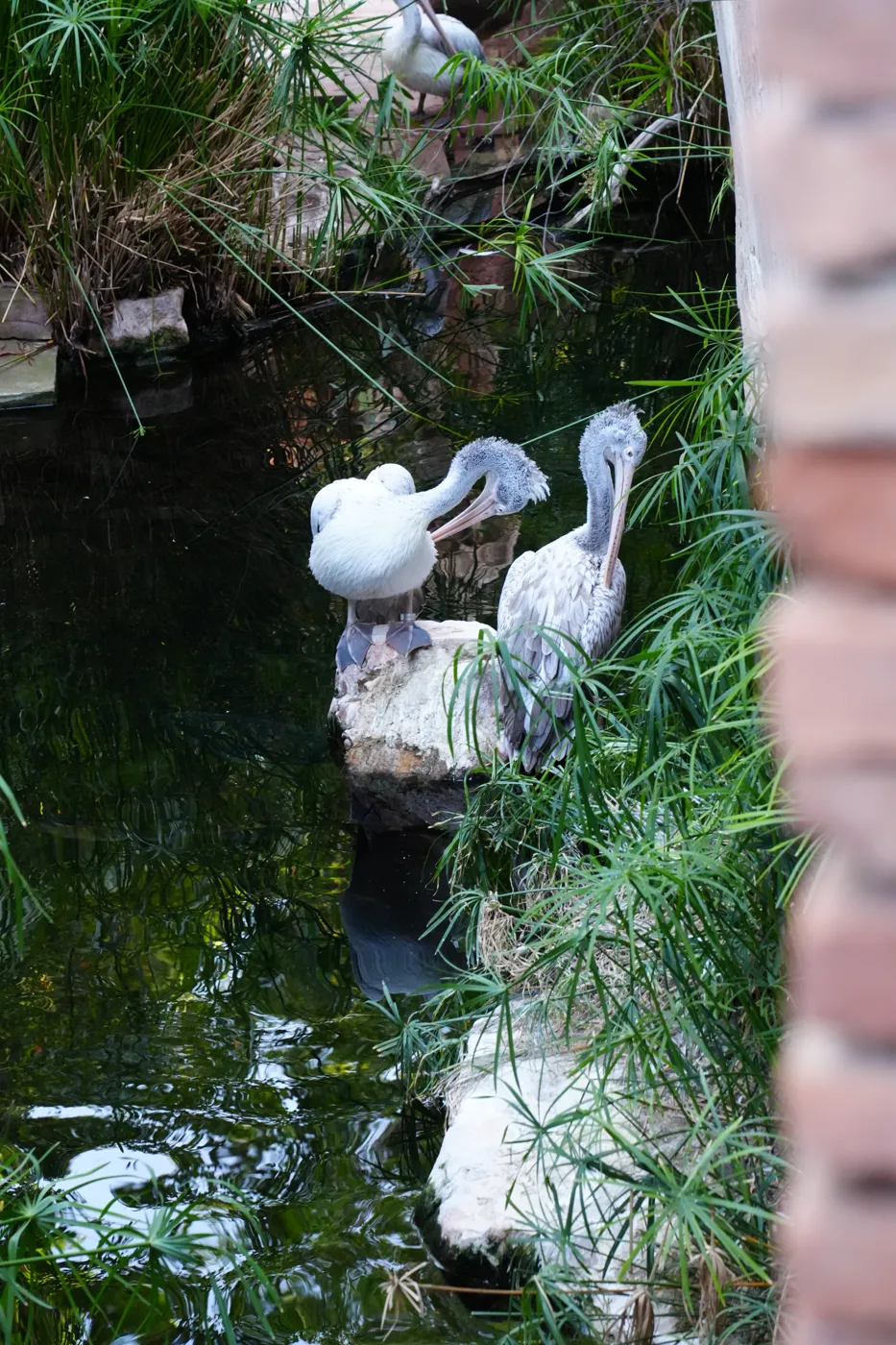
There were pelicans too, sitting on rocks beside a pond.
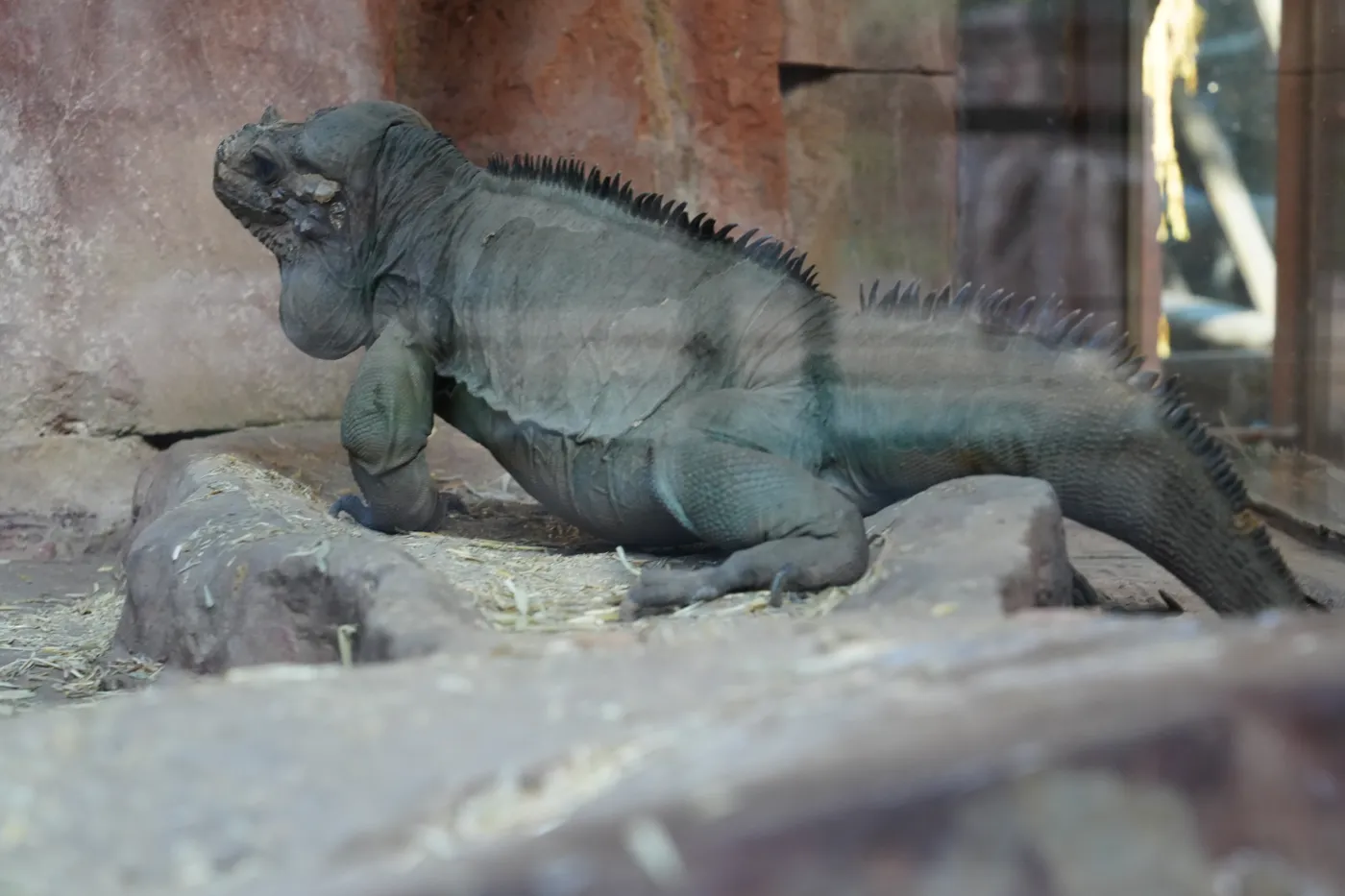
There were iguanas too. This one is a rhinoceros iguana, named for the horn-like bumps on its nose, and I only got it through glass.
Orangutans and a baby
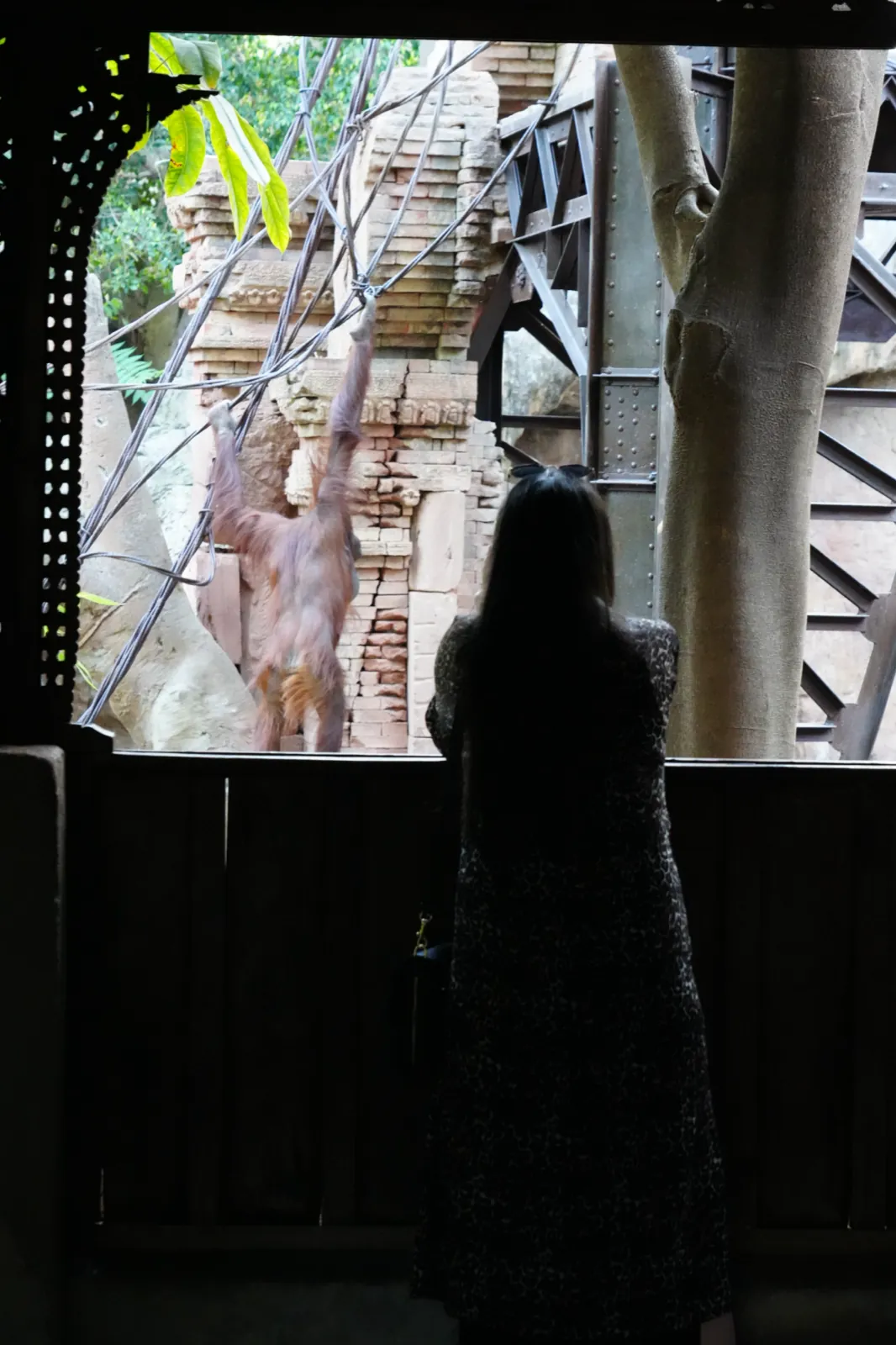
The orangutans come last: two adults and a baby, watched through a carved wooden window. Smaller otters share their enclosure and were playing in the water.
Orangutan means “person of the forest” in Malay, and watching one swing along a rope hand over hand, you see why. These are Bornean orangutans, and only about 104,700 are left in the wild because their forest keeps being cleared for palm oil, mining and fires.
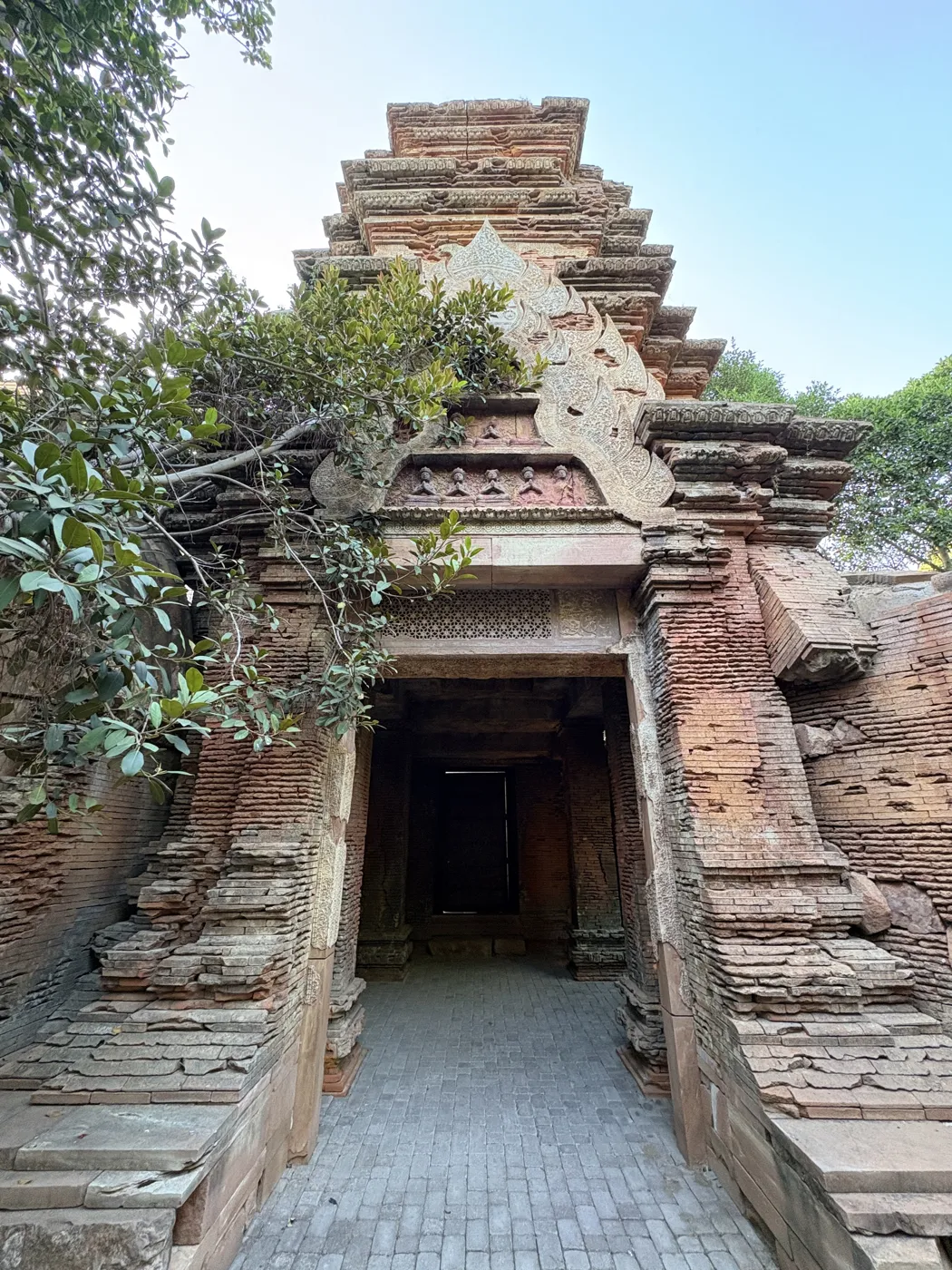
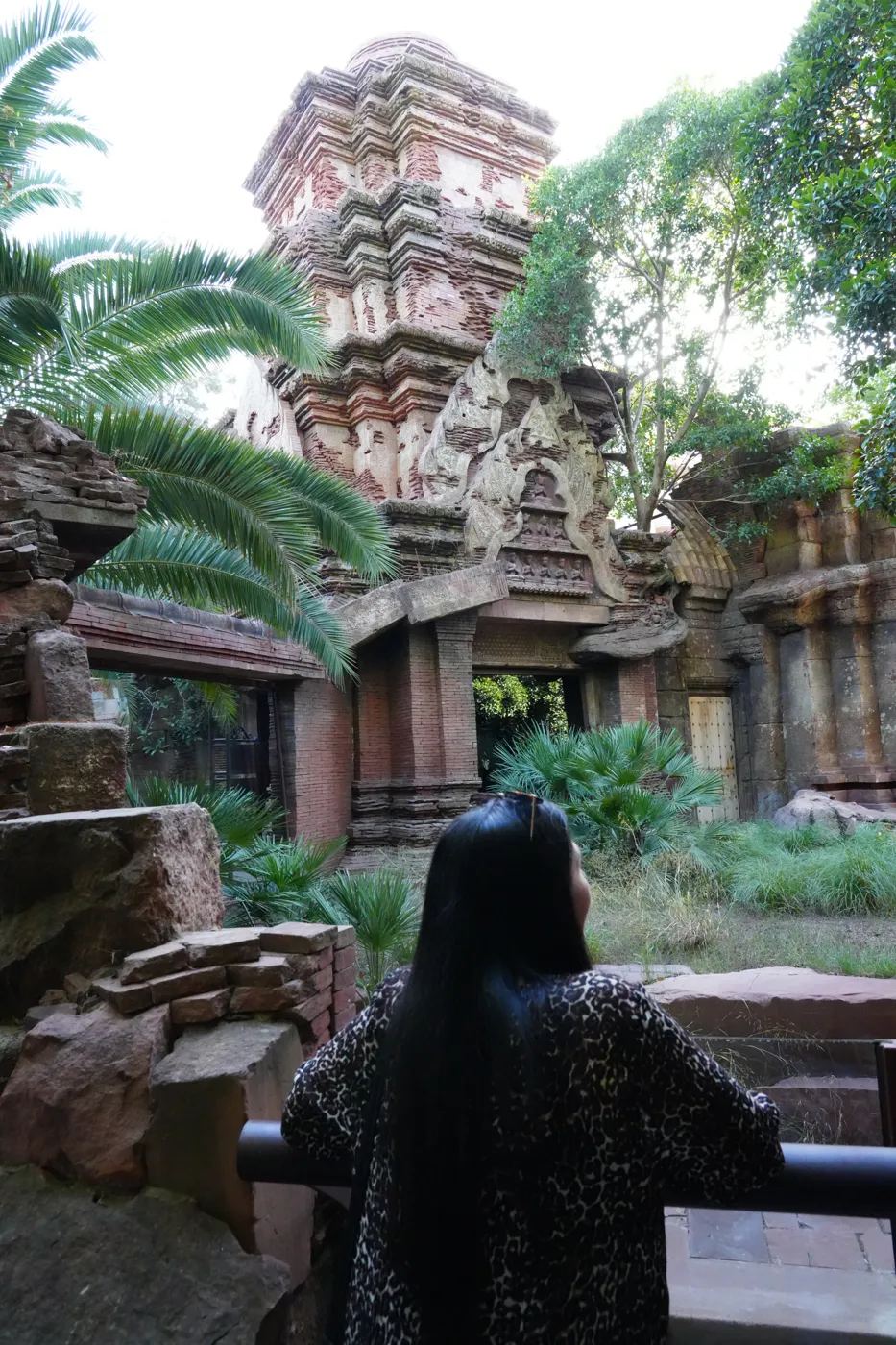
The window looks out on a brick temple ruin, the park’s take on Angkor in Cambodia, where small monkeys wander through 12th-century ruins. Here it’s the orangutans climbing over the stones.
The gateway is stepped red brick with a carved stone pediment over the doorway and trees growing through the side of it, like a ruin the jungle has taken back.
From the railing you can see the tiered tower behind it.
Ending at the restaurant
From there it was out to the restaurant for our drinks and canapés.
I had no idea there was such a lovely restaurant inside the park, and I only found it at the end of the evening. They have ice cream and all sorts to eat and drink, coffee and cakes.
Eat in there, because you can’t come back in once you leave.
Tickets and prices in 2026
I checked the official site on 26 October 2026.
A general ticket is €29.50, children aged 3 to 9 and over-65s pay €23.00, people with disabilities pay €16.00, and under-3s go in free. Book on the park’s site at least 24 hours ahead and each ticket is €1 cheaper, or if you’d rather have it sorted before you land you can book Bioparc tickets through GetYourGuide.
I didn’t pay any of that in July, because the Costa Press Club set price covered entry, canapés and drinks, so I can’t tell you how the normal ticket feels at the till.
The park opens at 10:00 every day. On the 2026 timetable it closes at 23:00 in July and August, and at 18:00 through most of the winter, with the shoulder months in between.
The ticket office shuts an hour before the park does, so in July the last tickets go at 22:00. Plan on about 3 hours.
Pets aren’t allowed, only assistance dogs, and the park is fully accessible.
Getting there from Málaga
In July I drove, because it was an evening event and I had to get back to Málaga afterwards, and if you need a car for the coast I use Discover Cars. Otherwise the C1 train is the easier way (my day trips from Málaga by train guide has the rest of that line): it runs from Málaga Centro-Alameda to Fuengirola in about 45 minutes, then it’s roughly a ten-minute walk.
For an evening visit, the trains back matter. From Fuengirola they run every 20 minutes until about 22:20, then every 30 minutes, and the last one to Málaga leaves at about 00:20.
The park closes at 23:00 in July, so you can still catch the 23:20 or the 23:50. Check the Renfe app on the day, because times change.
The park is next to the town hall, at C/ Camilo José Cela 6-8. If you’re still choosing where on this coast to base yourself, I compared Fuengirola with Mijas Pueblo and you can browse hotels in Fuengirola, and from Marbella it’s one of the family days out in my day trips from Marbella guide.
Parking at Plaza España
The park has no car park of its own. The one I used, and the one I’d suggest, is the large underground Plaza España car park, about five minutes’ walk away.
Bioparc visitors get 50% off the parking. Ask for the voucher at the ticket office or the shop once you’ve bought your ticket, and you pay at the garage.
Going with kids
Yes, I’d take a toddler. I wasn’t there with children myself, but the evening was full of families with kids of different ages, and the animals were livelier, which suits little ones.
My Málaga with kids guide has more days out for small people.
What I’d do differently
I’d go at my own pace. On the club evening we were on a timetable and I felt rushed, so give yourself the full three hours.
I’d also stay until closing. I was invited to the 10pm bird show and missed it, because we had the drive back to Málaga and it was already very late.
I regret that one.
And I’d do what I skipped. Check the times on the park’s site first.
- Madagascar: you walk in through the big baobab tree and among the lemurs with no barrier. They may come right up to you, but you can’t touch them. It starts at 11:00, so it’s a daytime thing.
- DISCOVER tours: short free guided tours, morning and afternoon, each covering one area.
- The Last Frontier: a virtual reality room. I saw the sign and didn’t go in.
- The park app: a map and your own itinerary.
I loved Bioparc. It’s a lush, cage-free zoo where the meerkats are adorable, the giant otters are hilarious and every animal looked happy and well fed.
Go on a summer evening, and stay for the bird show.