The first time I tried to figure out train travel from Málaga, I nearly gave up and just booked a taxi instead. Renfe’s website looks like it was built for train nerds, not tourists, and there are two stations, several train types, and a dozen destinations that all sound similar if you don’t know the region.
But living in Málaga, I’ve leaned on the trains a lot. I got to know which station to use, which trains need booking weeks ahead, and which you can just turn up and tap in for. It’s not perfect. Some routes still make more sense by car, but for day trips out of the city, it’s genuinely one of the best things about living here.
This guide covers how Málaga’s train network actually works, plus eight of the best day trips from Málaga by train, from an hour-long hop to Córdoba to a 20-minute dash to the beach.
How Málaga’s train system works
Once you’ve worked out the basics, using the trains here is straightforward. There’s just one thing to sort out first: which station you actually need, because Málaga has two, and they’re not interchangeable.
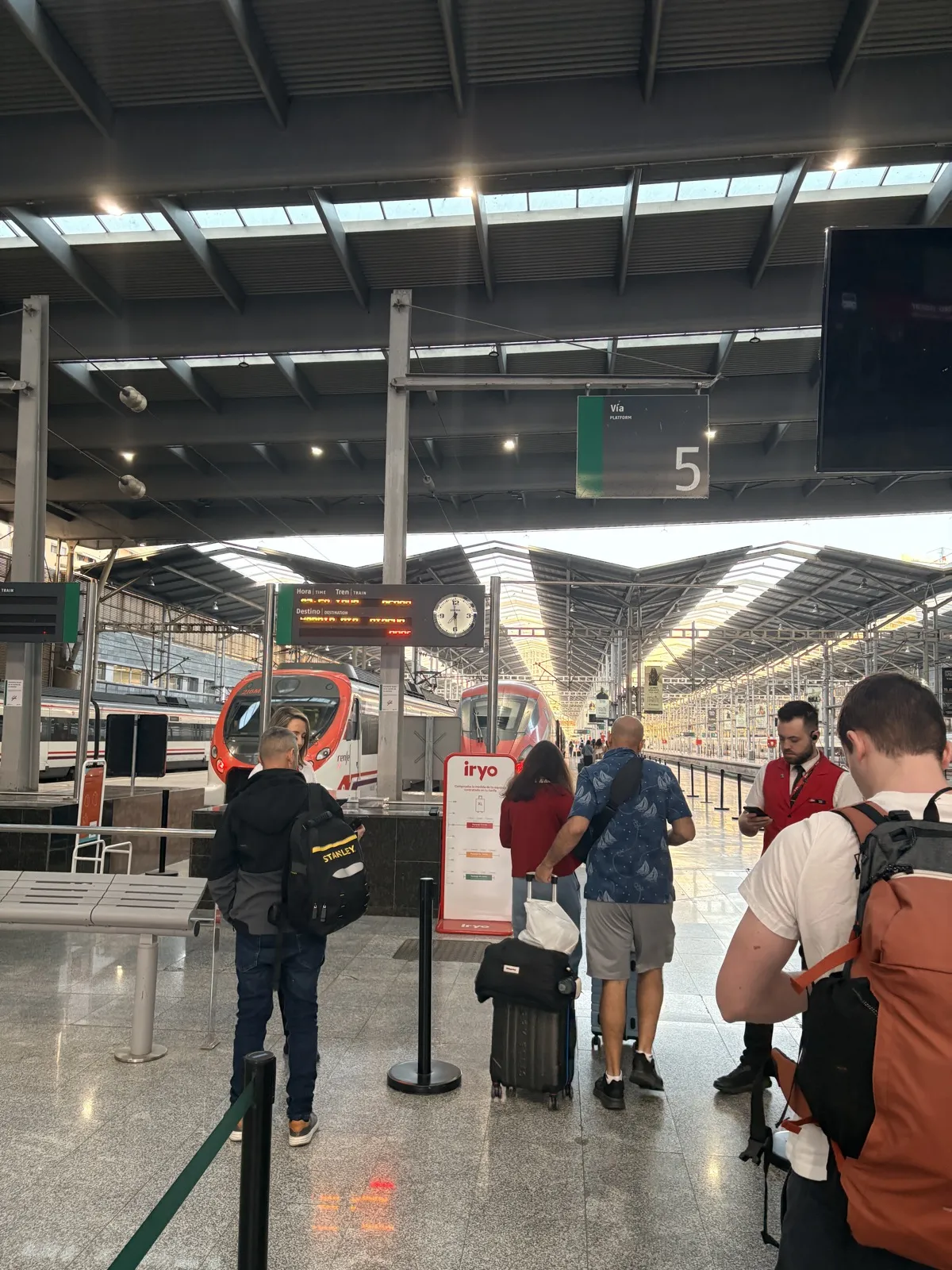
Most of what you’ll use is María Zambrano, the main station for anything beyond the city. AVE high-speed trains to Córdoba and Seville leave from here, along with Avant trains to Granada, regional trains towards El Chorro and Ronda, and the local Cercanías. It’s connected to the centre by metro and bus, and it’s walking distance from the port if you’re coming off a cruise.
If you’re staying in the old town, though, Málaga Centro Alameda is the one to know. It’s a much smaller station, but it’s right in the centre, and it’s handy for Cercanías C1 trains along the coast to places like Fuengirola or Torremolinos without trekking out to María Zambrano first. Worth bearing in mind when you’re picking where to stay in Málaga, a hotel near Alameda saves you a walk every time you head to the beach towns.
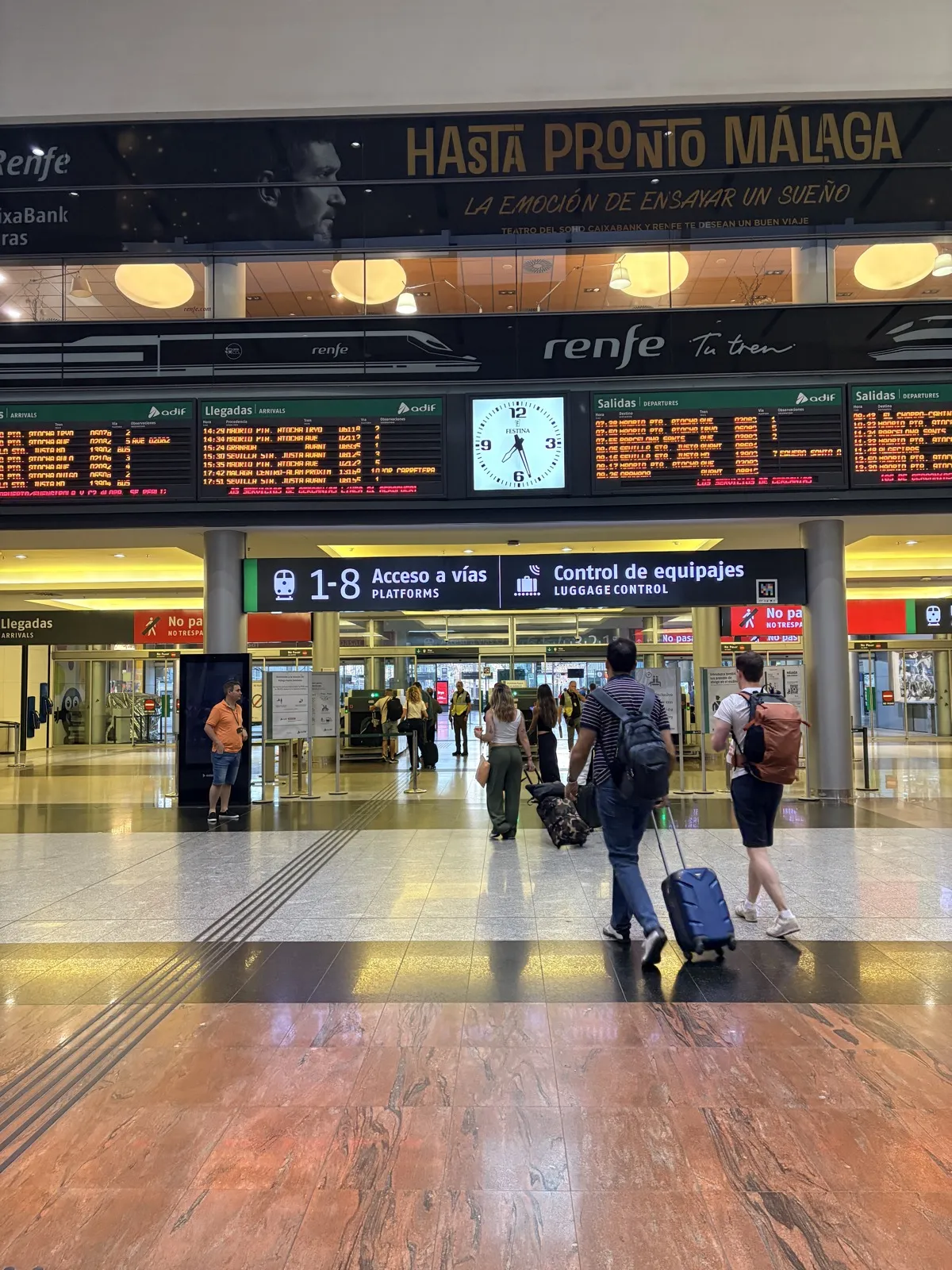
The trains themselves break down into three types:
- AVE (Alta Velocidad): high-speed, up to 300km/h, running to Córdoba, Seville and Madrid. Book ahead at Renfe.com, these seats sell out.
- Avant and Media Distancia (MD): Avant runs direct to Granada, and the regional MD trains serve El Chorro and, with a change, Ronda. Book online or just buy at the station.
- Cercanías C1/C2: local commuter trains to Fuengirola, Torremolinos and Álora. No booking needed, just tap in.
One thing that made life easier once I found it: the Renfe Cercanías app lets you buy local tickets on your phone and scan a QR code at the barriers, so you can skip the ticket machines entirely.
Taking a dog or other pets on the train
Until this summer, a big dog could not ride a Renfe train at all.
Since 21 July 2026, Renfe has let dogs up to 40kg ride most of its trains without a carrier. They sit in the window seat next to you, for €40 extra on AVE, Avlo and Larga Distancia, and you book at least 24 hours ahead. Cats and other small pets up to 10kg still travel in a carrier.
Travelnuity’s guide to pets being allowed on trains in Spain has the full details. Iryo and Ouigo set their own, so check before you book either.
Córdoba
I still haven’t made it to Córdoba, and if you asked anyone who lives on this coast, they’d probably tell you the same thing I keep telling myself: it’s overdue. Everyone who’s been talks about it like it’s the best day trip in Andalucía, and it’s firmly on my own list.

What makes it such an easy trip is the AVE. It takes just one hour from Málaga, quicker than driving, so you could leave after breakfast and be standing in front of the Mezquita-Catedral before lunch.
The reason everyone goes is the Mezquita-Catedral, a mosque with over 850 columns and a Renaissance cathedral built right inside it. Arrive at opening, 10am, to beat the crowds. Monday mornings are free (book online first). The Jewish Quarter and the Roman Bridge are worth the rest of your time.
Trains run multiple times a day from María Zambrano, 55 minutes to an hour, and tickets run 25 to 45 euros each way. Book the cheapest Promo fares up to 60 days ahead on Renfe.com. Just don’t miss the last AVE back, it leaves around 9:30pm.
If you’d rather not queue for the Mezquita on your own, a skip-the-line guided tour sorts that out for you.
Seville
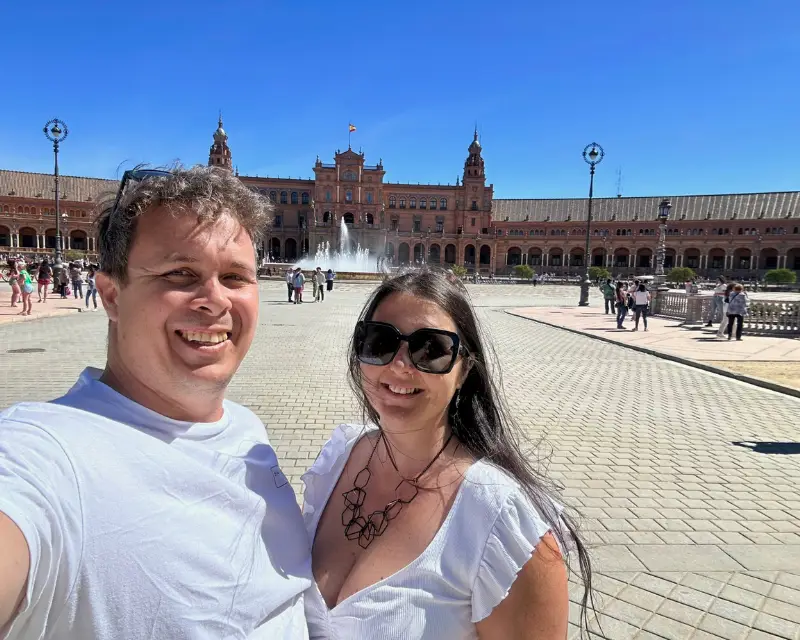
The AVE gets you from Málaga to Seville in about two hours, frequent enough that you can treat it as a day trip without much planning.
Alcázar and the cathedral are the two you shouldn’t skip. Book Alcázar tickets online, the queue can stretch past two hours in peak season. The easiest way to see both without wasting your limited day in a queue is a skip-the-line combined tour.
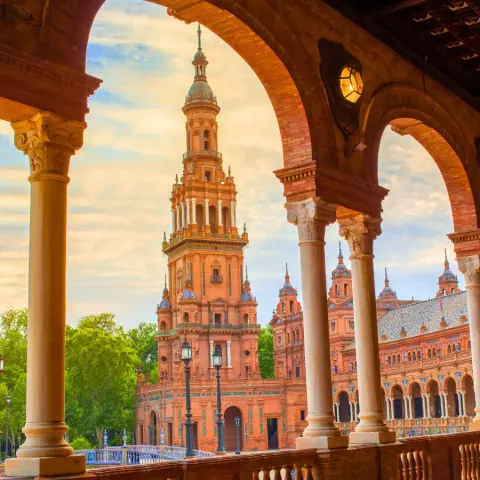
Plaza de España is the one that ends up on everyone’s camera roll, and it’s worth the stop.
Just plan around the trains. They run often through the day, but the last one back to Málaga leaves around 10pm, and tickets run 35 to 55 euros each way.
Granada
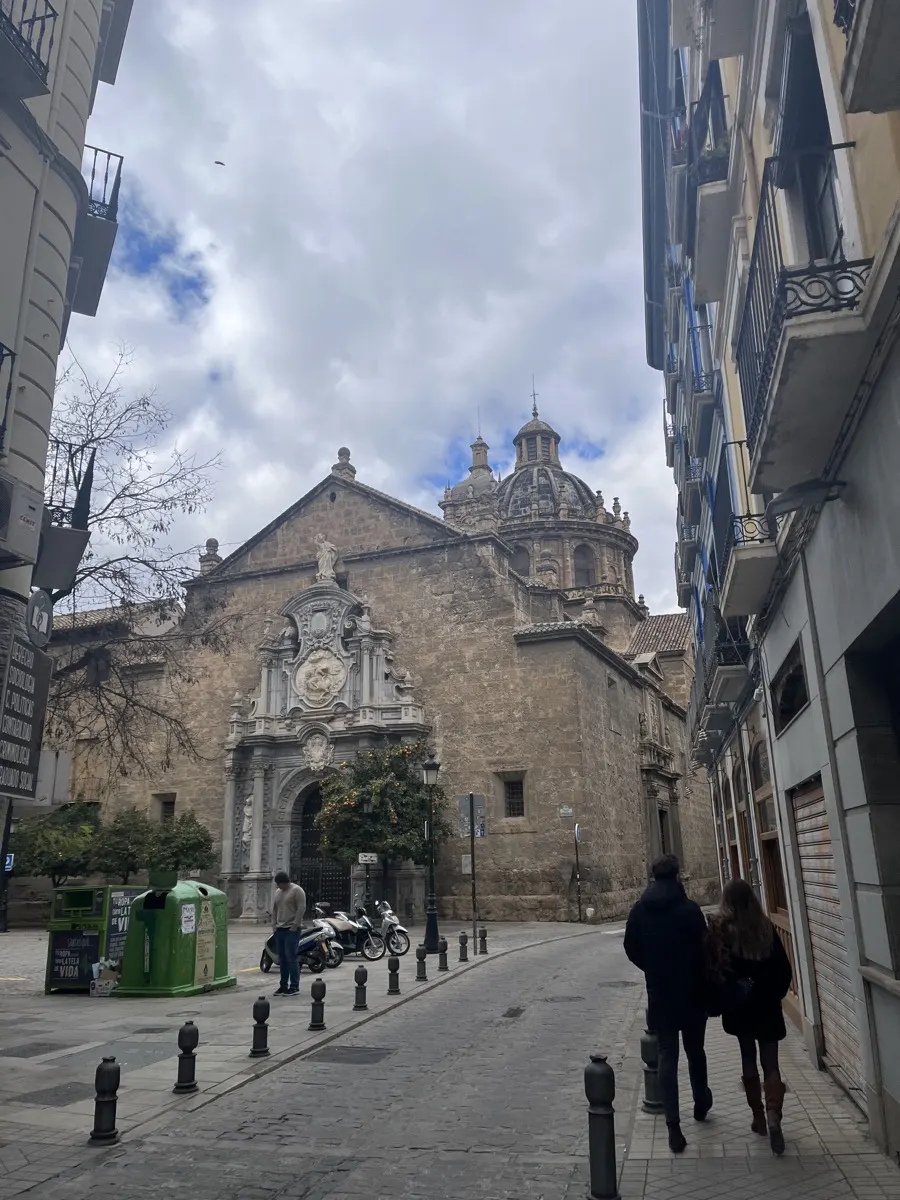
The train to Granada climbs through the mountains, and somewhere around the hour mark you stop checking your phone and just watch it go by. The direct Avant takes about an hour and twenty minutes, with three a day each way on the current timetable, and yes, you can absolutely do this as a day trip from Málaga. Plenty of people do.
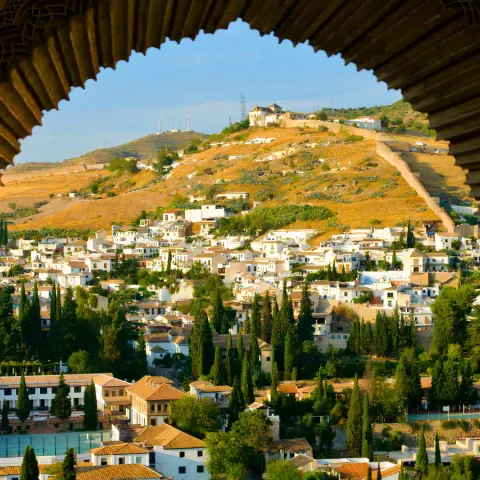
Here’s how I’d plan it. Book your Alhambra ticket for the afternoon, from 2pm onwards, at alhambra-patronato.es, at least two or three weeks ahead. The Nasrid Palaces sell out fast. If the official site is fully booked for your date, a guided Alhambra tour is the usual backup, since operators hold their own ticket allocations. That frees your morning for the Albaicín, the old Moorish quarter where the streets still wind the way they did centuries ago. Climb up to the Mirador de San Nicolás and you get the whole Alhambra laid out across the valley, a beautiful first look, better than walking in the front gate.
The morning train gets you about seven hours in the city, enough for the Albaicín, lunch and an afternoon Alhambra slot without feeling rushed. The last direct train back to Málaga leaves around 6:30pm, so pick an early afternoon Alhambra slot rather than a late one. Tickets run 20 to 30 euros each way.
Ronda

Ronda is the one I love without reservation. The Puente Nuevo really is magnificent, an 18th-century bridge slung 120 metres over the El Tajo gorge, exactly the kind of thing that photos undersell.
The journey there is part of it, one of the most scenic train rides in Spain, cutting through the Serranía de Ronda mountains. Sit on the left side if you can, that’s where the views open up. There’s no direct train on the current timetable: you change at Antequera-Santa Ana, where the 10:15 to Ronda gets in around midday, and the whole trip from Málaga takes two and a half to three hours. Check the Renfe timetable carefully before you commit. If the timing doesn’t work, there’s an ALSA bus, or you could just stay the night.
The new Camino del Desfiladero del Tajo gorge walkway, which only opened in September, is firmly on my list for next time.
For the fuller rundown of what to see and do while you’re there, I’ve put together a proper Ronda guide, worth a look before you plan the day.
Antequera
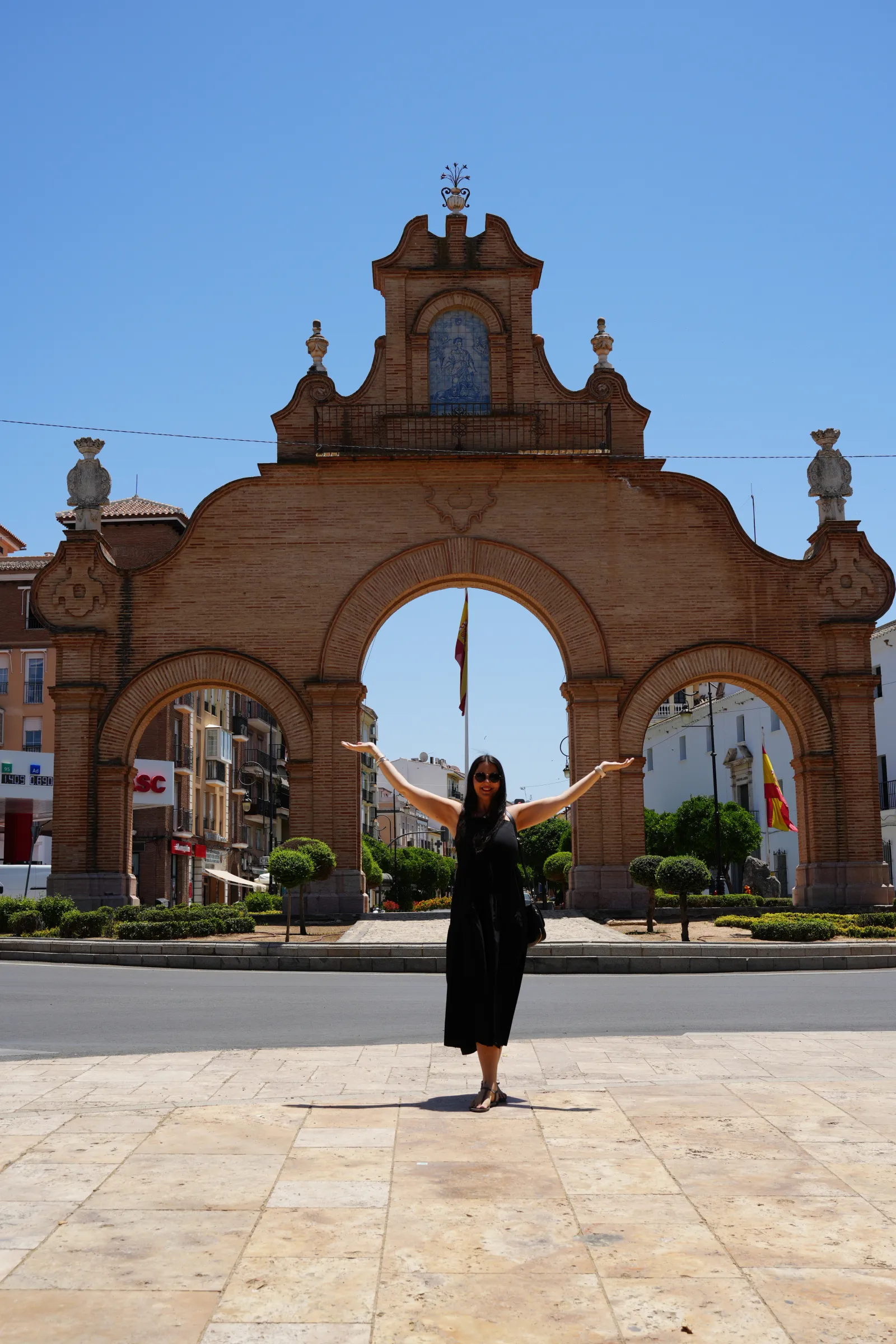
I got to the dolmens soon after they opened and there was already a line forming. Tour groups can fill the narrow entrances fast, so don’t leave this one for the afternoon.
The one everyone comes for is Menga, the largest dolmen in Europe, with a capstone that weighs around 180 tonnes. Entry is free, and the site has held UNESCO World Heritage status since 2016, which feels about right once you’re standing under that capstone wondering how anyone moved it without machinery.
You can technically do Antequera without a car, but I’ll be honest, it’s limiting. El Torcal and getting around efficiently really call for one. If you’re tempted to turn this into a proper Antequera day rather than just the dolmens, I always book through Discover Cars for the days I need one.
If you’re coming by train, pay attention to which one you book. The high-speed AVE gets you here from Málaga in about half an hour, but it drops you at Antequera-Santa Ana station, a good 17km outside town. You’re looking at a taxi or a connecting bus just to reach anywhere.
A few Avant trains a day, on the Málaga to Granada line, stop at Antequera AV instead, about 2km from the centre, so time your day around those if you’d rather skip the taxi. Some AVE services stop here on the way to Córdoba or Granada, so it’s an easy add if you’re already headed that direction.
For more on making a full day of it, one day in Antequera has the rest of the route, and things to do in Antequera covers what to add if you’ve got longer.
Just don’t leave the dolmens for last, once the first tour bus pulls in, you’re sharing that narrow entrance with fifty people instead of five.
Caminito del Rey (El Chorro)

If I had to send you on one full day trip from Málaga, this would be it. By the time you’ve done the walk, had lunch or browsed the market at the end, and caught the train back, you’ve had a proper day out, not just a stop you tick off.
The regional train from María Zambrano drops you at El Chorro station, at the end of the walk, and the ride back is half the reason I’d tell you to do this one. It’s a lovely trip in its own right, not just a way to get home.
Book your walking ticket weeks ahead, these sell out, and check the shuttle times against your train before you pick your walking slot.
Only about five trains run the route a day, and the times change by day, so check the Renfe timetable and plan around them. The journey takes about 55 minutes, and tickets are around €5 to €6 each way. For everything else you need to plan the walk itself, the Caminito del Rey guide has the details. If you’d rather have transport and a guide sorted for you, a guided Caminito del Rey day trip handles the whole thing, transport included.
It’s a full day, easily, but it’s the kind of full day that makes the rest of the trip feel slower by comparison.
Both the Caminito del Rey and the Alhambra sell out weeks ahead in high season. If your dates are fixed, book those two first and build the rest of the week around them, this is where I check availability for both.
Fuengirola & Torremolinos

These two get lumped together because they’re both a quick hop west on the same Cercanías line, though they’ve got pretty different personalities.
Fuengirola has the space. The beaches are wide, sandy, and a lot less packed than Málaga’s city beaches, which is reason enough to love it on its own. Bring kids and the Bioparc is worth a morning. Sohail Castle up above the town hosts concerts through summer, and the promenade runs all the way to Benalmádena, so you can just keep walking.
One stop back on the train, the Teleférico cable car climbs Monte Calamorro for gorgeous panoramic coastal views, an easy add-on either side of a Fuengirola day. Trains leave every 20 minutes from María Zambrano or Centro Alameda, take about 45 minutes, and cost around 2.70 euros each way.
Want the hills instead? There’s an M-122 bus from Fuengirola up to Mijas Pueblo. I’ve got a full guide to getting from Málaga to Mijas Pueblo if that’s the plan.
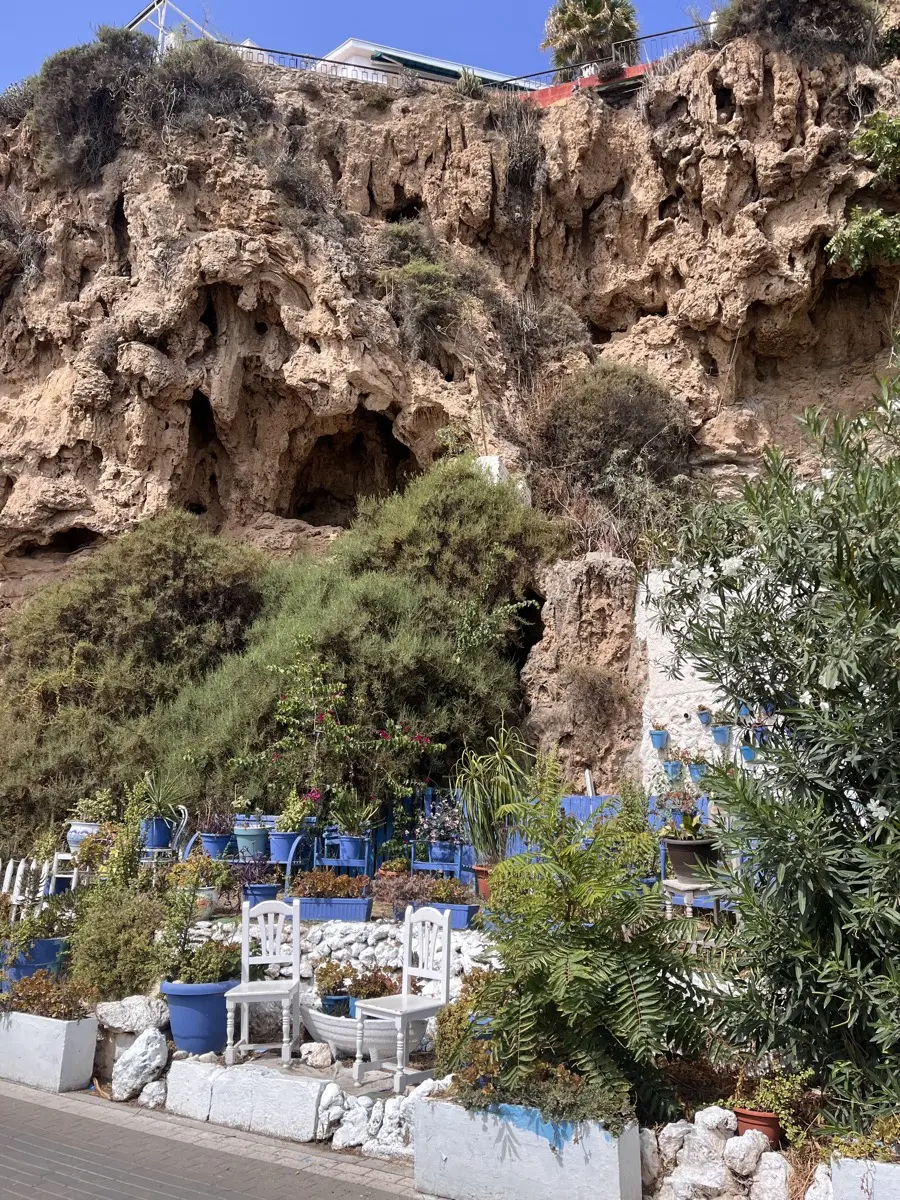
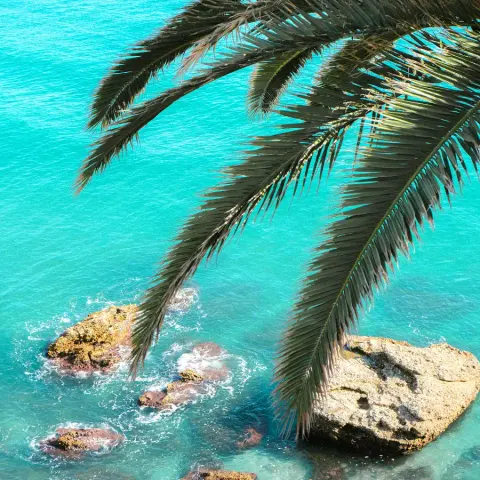
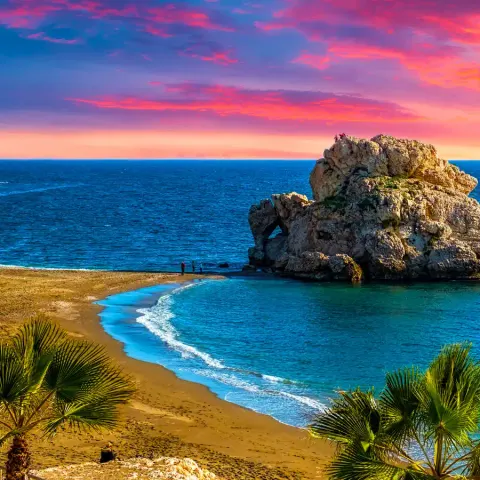
Torremolinos is quicker again, just 20 minutes and about 2 euros, dropping you almost on Playa del Bajondillo, one of the best beaches on this coast. Soft sand, calm water, chiringuitos serving fresh seafood right along the back of it. Push into La Carihuela, the old fishing quarter, for more of the same at a slower pace.
Getting from the airport to the station
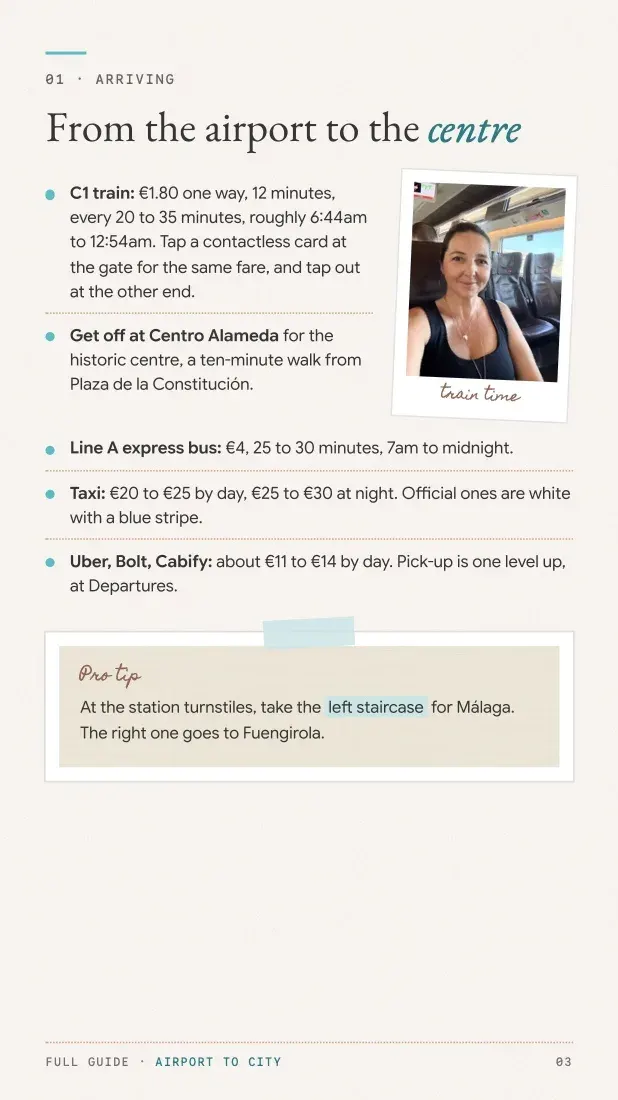
Land at Málaga Airport and the train’s right there, one of the best-kept secrets for a smooth start to the trip. The Cercanías C1 runs straight to María Zambrano and on to Centro Alameda, takes 12 minutes, and costs 1.80 euros (tap a contactless card in and out at the barriers), with departures every 20 to 35 minutes from 6:44am to 12:54am, so you’re rarely waiting long (here’s the full guide to getting from Málaga Airport into the city if you want the details).
If you’ve landed late or you’re hauling too much luggage for a train platform, just grab a taxi. It’s about 10 to 12 euros to the station and a lot less hassle.
Booking and saving money

For AVE and Media Distancia, book through Renfe.com, or Omio, which I use whenever I want to compare train and bus options in one place, ideally 60 days out if you can. That’s when the “Promo” fares show up at roughly half what you’ll pay walking up.
Under 30? The Renfe Tarjeta Joven knocks 50% off. Doing a lot of local trips, a Bonotren pass discounts a 10-journey Cercanías ticket, and it adds up fast.
Cercanías itself needs no booking at all, just buy at the machine or use the Renfe Cercanías app and go. Get to María Zambrano at least 20 minutes early for AVE departures, and tap in at the barriers to validate your Cercanías ticket. If you can help it, skip the local trains between 5 and 7pm, that’s rush hour and it shows.
Which one would I actually do first
If someone only had one day and asked me to pick, I’d send them to the Caminito del Rey. It’s a full day, not a quick add-on: the hike itself takes about three hours, then there’s food or the market waiting at the end, and the ride back by train is part of the day rather than just the way home.
If a hike isn’t what you’re after, Fuengirola or Torremolinos win easily, 20 to 45 minutes away with trains every 20 minutes, zero planning required, just show up and lie on the sand.
The one I still haven’t done myself is Córdoba. Everything I’ve read says the Mezquita is genuinely one of the world’s great buildings, so it’s staying on my list.
If you’d rather explore further afield with a car, my day trips from Málaga guide covers the places these trains can’t reach.