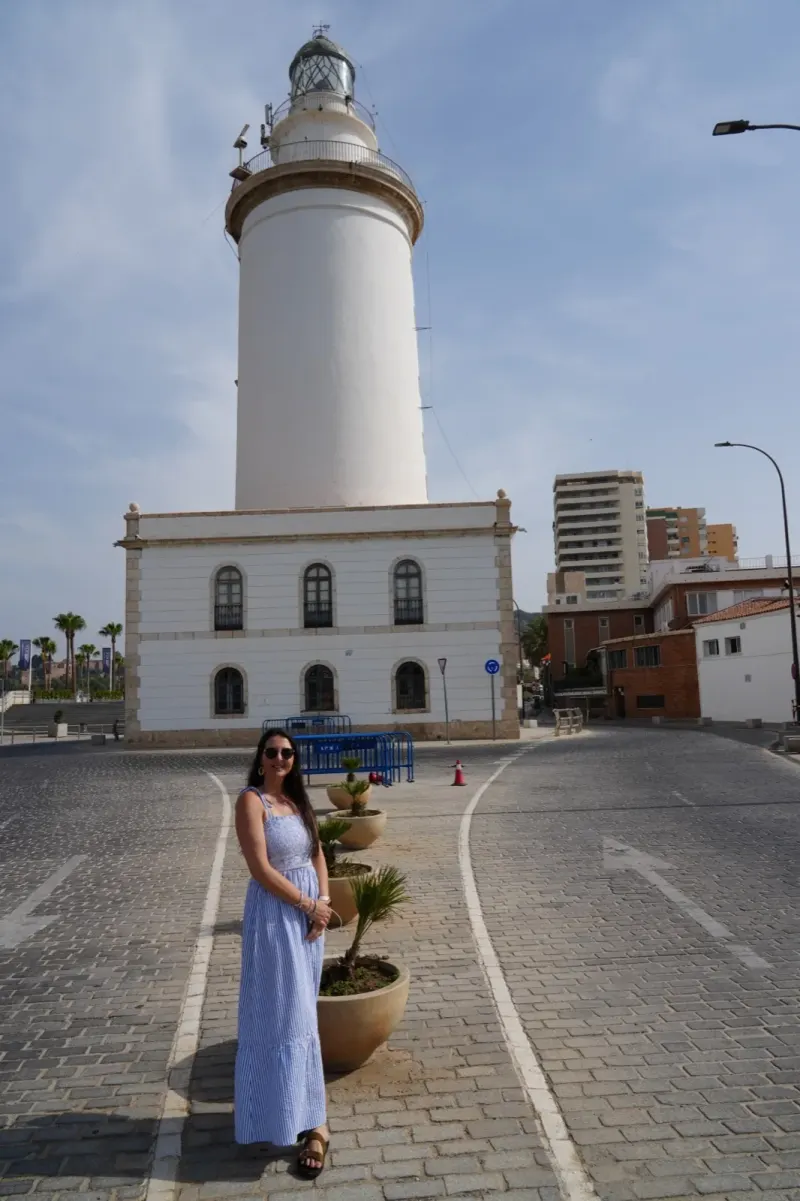
There’s a version of me that spent a whole summer showing up to Málaga’s best views at exactly the wrong moment. Sweaty at the mirador, wedged in among a crowd of selfie sticks. Or waiting for a rooftop table and getting handed one that looked straight at somebody’s back instead of the sea.
A few years of living here fixed that. Turns out timing matters more than which spot you pick.
Get to Mirador de Gibralfaro before 9am and it’s a different city to the midday crush, and rooftop bars work exactly the same way.
Here’s the best free hilltops, the paid viewpoints actually worth handing over money for, and the rooftop bars I’d go back to tomorrow, plus straight answers on timing and cost.
Once you’ve had your fill of the views, my Málaga Old Town guide has plenty more to fill out your trip.
What Is the Best Viewpoint in Málaga?
Mirador de Gibralfaro, and it’s not close. It sits 130 metres above the city, and the payoff is the whole panorama at once: the bullring, the port, the Mediterranean coast. Access is free.
It’s roughly a 25 minute walk up from the city centre. The steps are steep enough that you’ll feel it in your legs, no getting around that, but the climb rewards you early: the views start opening up long before you reach the top.
It’s crowded for most of the day, not just at sunset, so in summer get there before 9am or accept you’ll have company. Going for sunset specifically? Arrive 30 to 40 minutes before sundown or you won’t get a spot worth having.
Best Viewpoints in Malaga City
Mirador de Gibralfaro
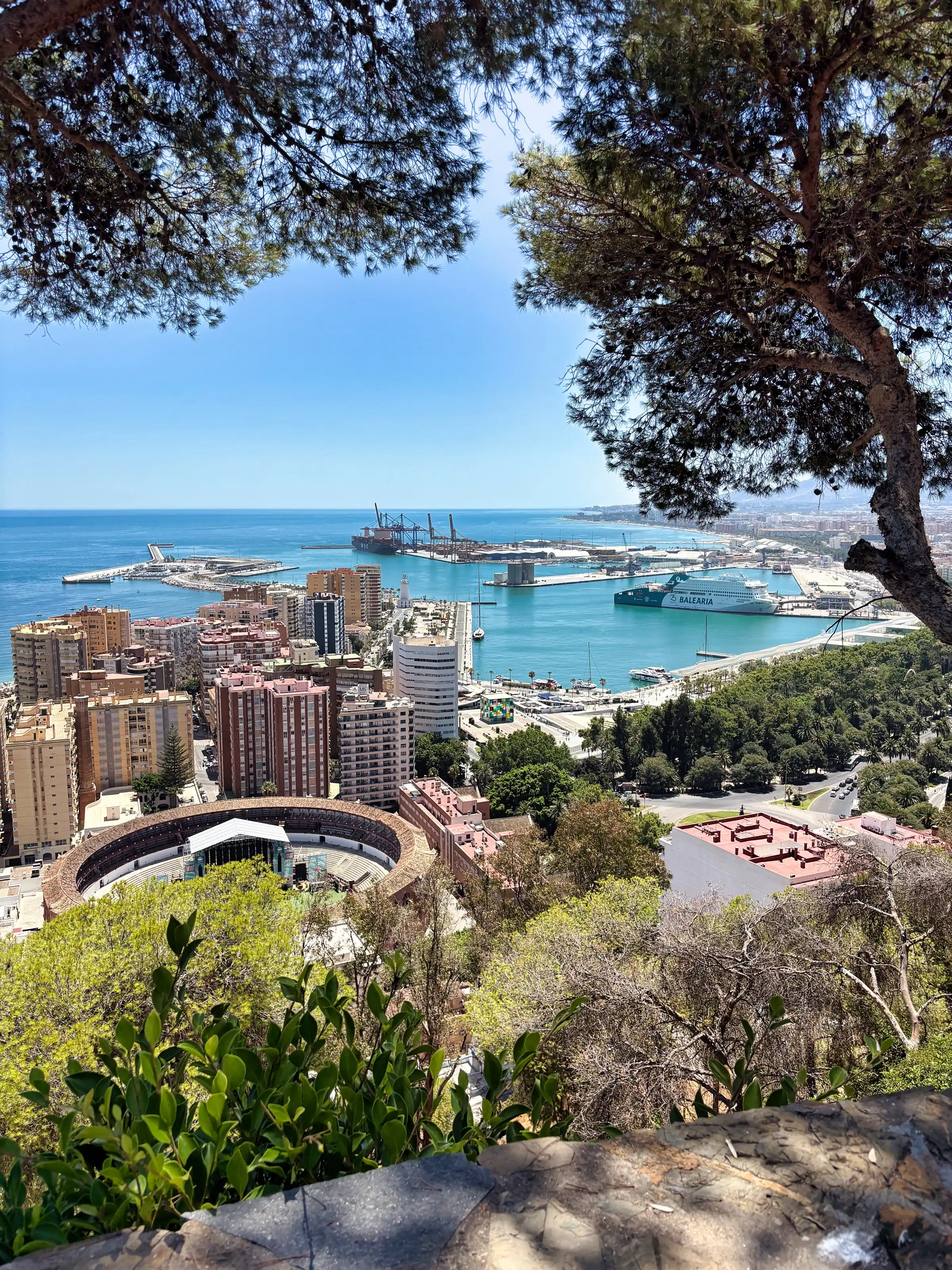
I’ve climbed up to the Mirador de Gibralfaro more times than I can count, taking both routes, and which one you pick genuinely changes the experience.
The official path starts near the Museum of Contemporary Art and climbs steadily uphill, past a restaurant about halfway up with its own gorgeous views back over the city. Good excuse to stop, catch your breath, have a coffee. The shortcut goes through the tunnel by Plaza de la Merced, quicker and easier on the legs, though you’ll miss the scenery on the way.
Either way you won’t be walking alone. Buskers play at intervals up the hill, and there’s always someone selling cold water if you didn’t think to bring your own.
When you finally get to the top, nobody’s in a rush. People just sit down and take it in rather than dashing around for the perfect photo. The coast curves away on both sides, with the bullring, the Paseo del Parque and the port laid out below. One of my favourite views in the city, easily.
If the walk puts you off, bus #35 runs up from the city centre for €1.40. And if this kind of climb is your thing, my walking in Málaga guide has plenty more routes worth exploring on foot.
Castillo de Gibralfaro
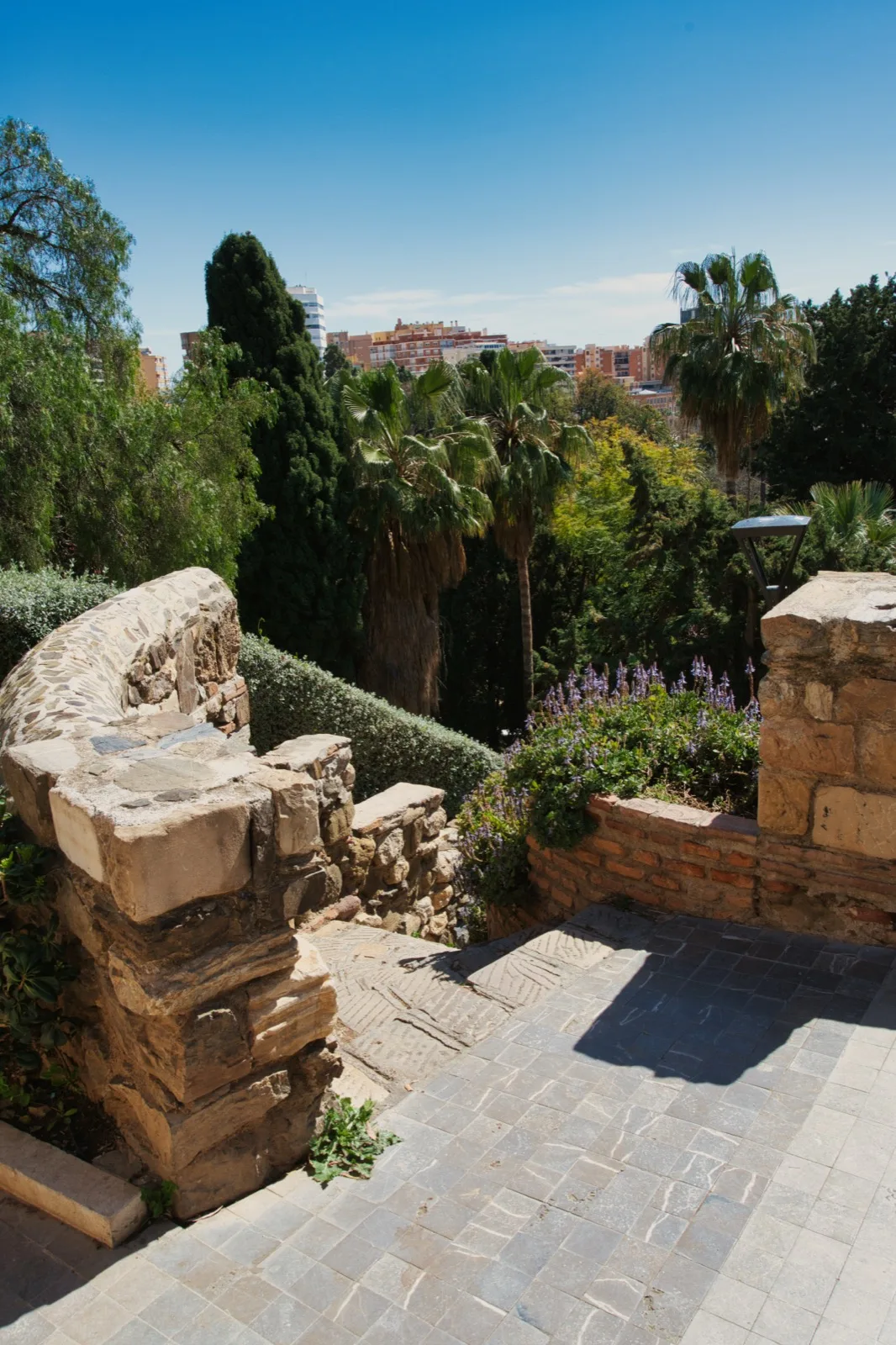
Climb past the mirador and Castillo de Gibralfaro is the next stop up. Built in the 14th century to defend the city from attack by sea, it’s the highest point in Málaga you can actually visit.
The walk up from the mirador below isn’t too bad, it’s really just one more steep slope to the top of the hill, then it eases off once you’re inside the castle.
Tip: take a taxi up and walk back down. The views are the same, and the descent lets you wander through the walls at your own pace.
Entrance costs €7, or €10 for a combined ticket with the Alcazaba, and it’s free on Sundays after 2pm. Open daily 9am to 8pm (9am to 6pm in winter).
There’s also a seasonal night tour, and it’s worth booking the moment you see availability, because it doesn’t run year-round and sells out fast when it does. Walking the old walls with the whole city lit up below is a different experience entirely from the daytime visit.
Málaga Cathedral Rooftop
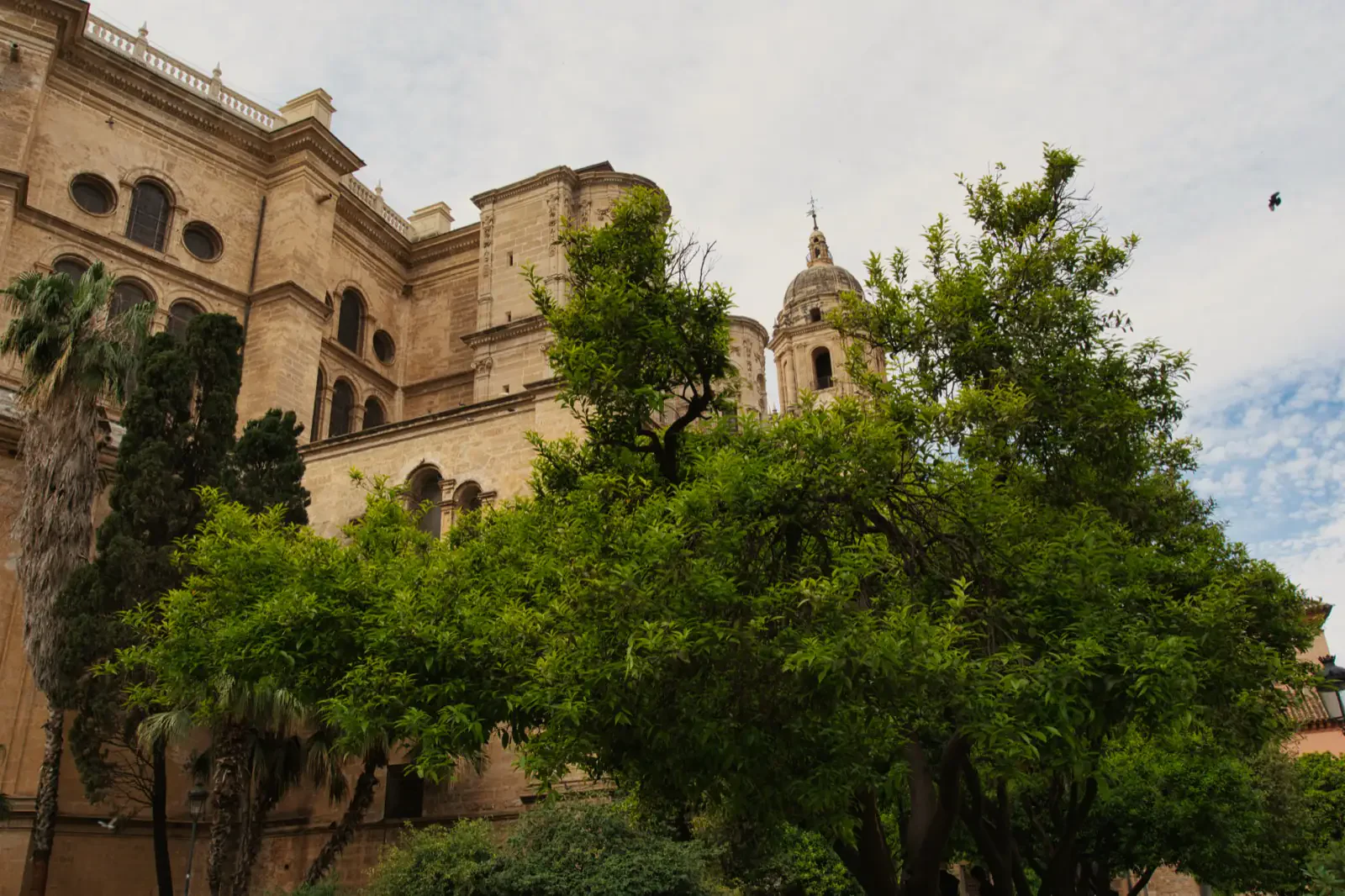
Up on the cathedral rooftop, you get something Gibralfaro can’t give you: a close-up of the domes themselves, with the old town laid out beneath you instead of across from you.
Getting there means about 200 stairs to 50 metres of elevation, and the combined ticket costs €10. That can feel like a lot, and it sometimes does. If you love architecture or history, the detail up close earns the price back quickly. If you’re purely after a view, there are cheaper ways to get one.
There’s a genuine silver lining, though. Once it reopens, there’ll be a brand-new walkable path built into the roof space itself, letting visitors walk between the outer roof and the historic stone domes at close range. That’s a version worth waiting for.
Before the closure, visits ran Monday to Saturday, 10am to 6:30pm. That’s the old schedule, so check again once 2027 comes around.
Two hotel terraces nearby give you the view instead. Hotel Molina Lario puts you face to face with the towers, close enough to trade the missing 200 stairs for a cold drink and still feel like you earned it. The AC Hotel Málaga Palacio, a few streets over, sits high enough to see the whole roofline spread out beneath you instead. Same cathedral, two completely different angles on it.
The Alcazaba Viewpoint
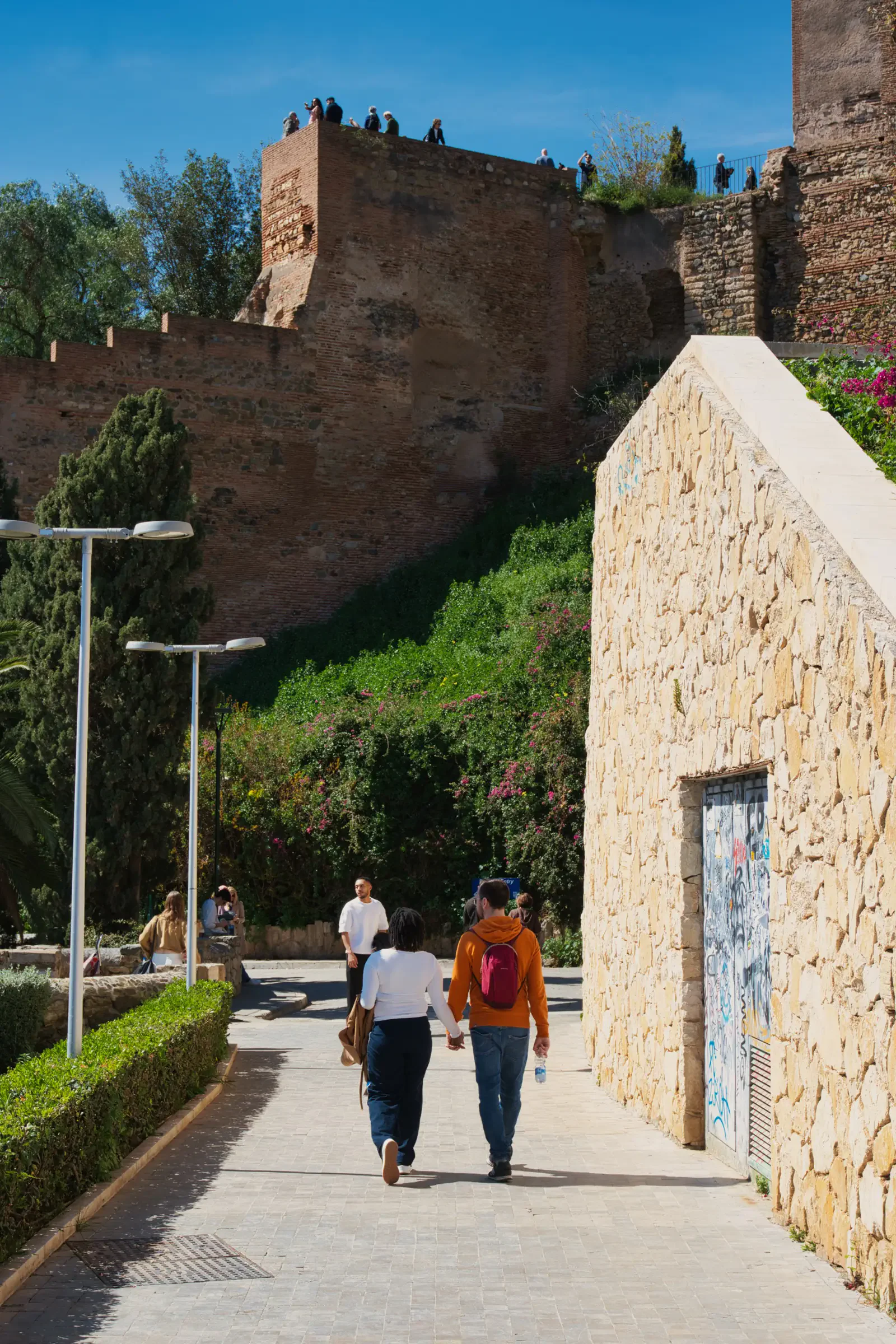
Wandering the Alcazaba is where you actually slow down. Built in the early 11th century, it’s the older of Málaga’s two hilltop fortresses, and of the original structure, 110 towers are still standing, more than most visitors expect to find.
From the walls you look straight down onto the Roman Theatre, out to the cathedral’s silhouette, and further still to the port. It’s a different angle from Gibralfaro entirely, lower down and closer to the old city, and it’s the best spot on this list for understanding how these buildings actually relate to each other.
If you’d rather have someone walk you through 1,000 years of history than piece it together from plaques, a guided tour covering the Alcazaba and Gibralfaro together does both fortresses in one outing.
Entry is €7, or €10 for a combined ticket with the Castillo de Gibralfaro, free on Sundays after 2pm. Open daily, 9am to 8pm (9am to 6pm from November to March).
If you’d rather skip the ticket, the Pasarela-Mirador de la Alcazaba is a free elevated walkway just outside the entrance, with good views over the Roman Theatre without setting foot inside.
Victoria Hill (Monte Victoria)
Up here the views turn quiet, and that’s the whole point. This is where people from the La Victoria neighbourhood actually come on weekend afternoons, food and a blanket, nowhere particular to be.
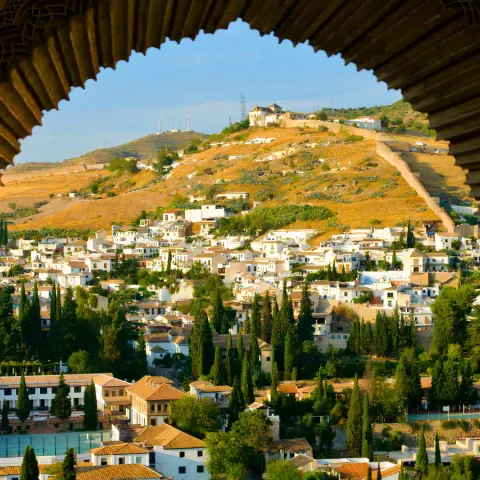
Seen through a frame of trees, the city looks different from up here: less dramatic than the big hilltop views, but more intimate. You get a real sense of Málaga sitting inside a ring of hills, sea just visible at the far edge.
It’s about a 40-minute walk from the city centre through the lovely El Limonar neighbourhood, and at the top there’s open ground and gorgeous light in the hour before sunset.
Done Gibralfaro already and want a second view with a different feel? Head here. It’s free, there are no queues, and the crowd is mostly local.
Best Rooftop Bars with Views in Málaga
The hotel rooftops give you a different kind of view from the hills, with a drink in your hand, and I’ve put them all in my guide to the best rooftop bars in Málaga, with booking links. The ones I’d send you to first for the views are AC Hotel Málaga Palacio, which has the best view of any of them, and La Terraza Molina Larios, right beside the cathedral. For the Alcazaba lit up at night, book a table at Hotel Alcazaba Premium. The Parador de Málaga Gibralfaro terrace is the natural finish after the walk up to the Mirador de Gibralfaro.
Highest Viewpoints Near Málaga
A short drive out of the centre opens up several more options, most of them higher and quieter than anything in town.
A few of these are easiest with your own wheels. I always book through Discover Cars, they compare all the major rental companies so you’re not stuck with whatever the airport counter has left.
Mount San Antón
I spotted the twin peaks long before I got anywhere near them, that white cross sitting right between the two summits, visible from half the city. Mount San Antón rises to 250 metres on the eastern edge of Málaga, and it’s a proper hike to get up there, not a walk.
The route starts down in El Candado, on the eastern side of the city, and climbs steadily from the first step. About halfway up there’s a 17th-century Hermitage, which gives the climb somewhere to aim for beyond just the views.
And the views are something else. The full arc of Málaga’s bay, the coast stretching east towards Nerja, the city laid out below in a way that makes its geography click. Gibralfaro’s view faces the sea, but here you get the city just as much as the water.
The summit’s quieter than any of the viewpoints back in the centre. Go on a weekday and you’ll often have it almost entirely to yourself. Bring water, there’s none to be found once you start climbing.
Botanical Gardens Viewpoint (La Concepción)
Walking up the path inside La Concepción, the view at the top is one of my favourites in Málaga: the Alcazaba, the cathedral and the port all sitting in one gorgeous frame.
The Jardín Botánico Histórico La Concepción sits just north of the city. Getting there on foot takes around 90 minutes, most of it uphill, so pace yourself, or drive it in about 15 minutes with parking near the entrance.
Entry costs €5.20, and it’s free on Sunday afternoons (2pm to 5:30pm October to March, 4:30pm to 8:30pm April to September). Every plant inside is labelled with its name and origin, which makes walking the grounds feel as much like an outdoor reference guide as a garden. Open Tuesday to Sunday.
Benalmádena Cable Car (Teleférico Benalmádena)
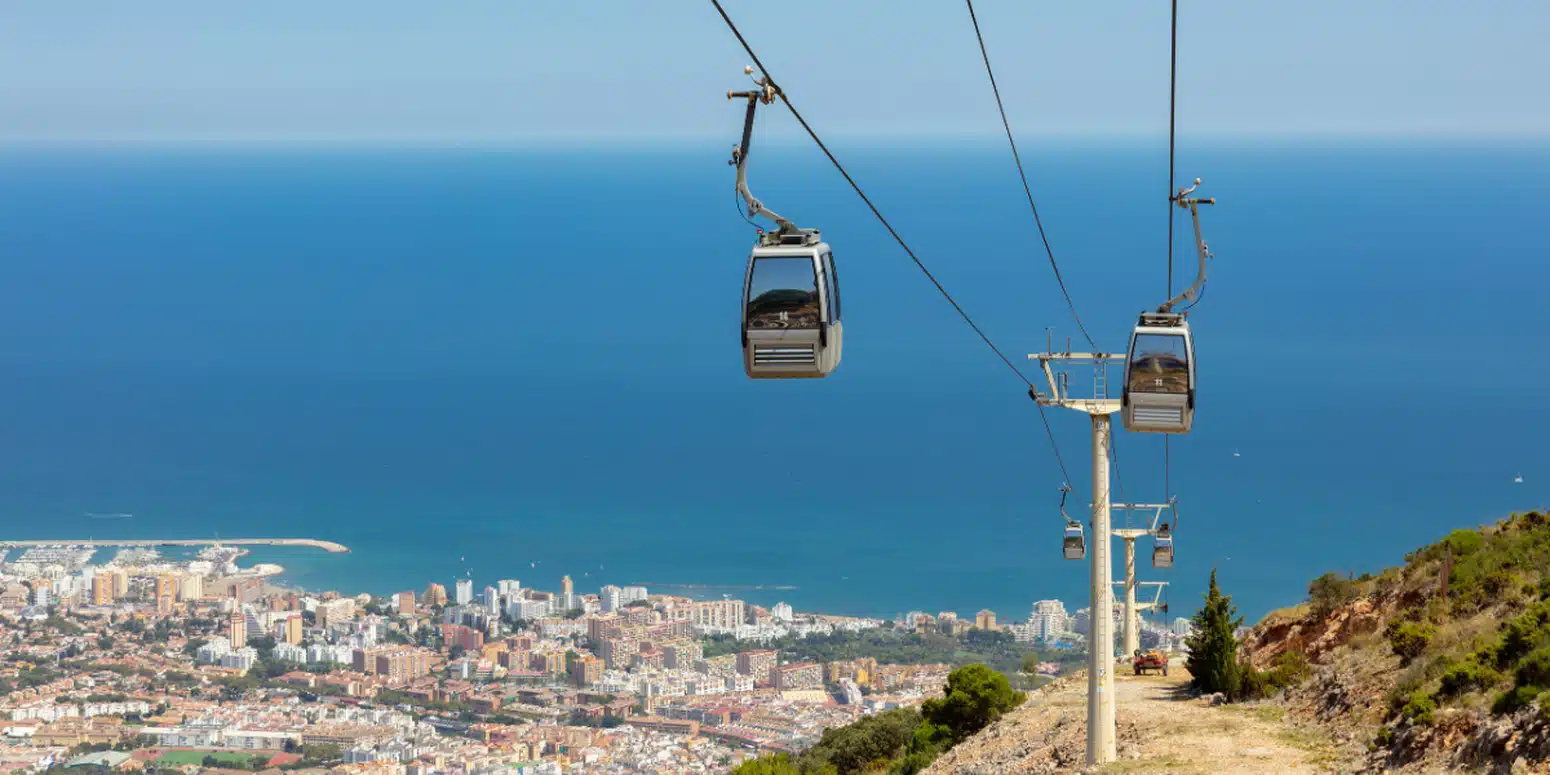
Watching the ground drop away as the cable car climbs from Arroyo de la Miel up to the summit of Mount Calamorro is one of the more thrilling ways to gain 770 metres in 15 minutes.
On a clear day the views run from the Sierra Nevada inland all the way to Gibraltar on the horizon, and on the really clear days you can make out the coast of North Africa. It’s not for everyone on a windy day, the cabins move and the drop below is very visible.
Benalmádena is about 20 minutes from Málaga by Cercanías train, an easy half-day trip. The cable car runs daily, though it closes in strong winds, so check ahead.
El Cochino Viewpoint
By the time I reached the top of El Cochino, my legs were done. The trail starts at the entrance to Montes de Málaga Natural Park, about 12km north of the city centre, and climbs the whole way through pine forest before opening out at the summit.
At 750 metres, it’s the highest point anywhere near Málaga, and nothing else on this list asks as much of you to get there. The payoff: the bay opens up in full, the coastline runs out along the horizon, and the city sits small in the distance, barely more than a pale smudge against the sea.
You can drive in from the road towards Colmenar if you’d rather skip the climb, but doing it on foot from the park entrance is the way. Take plenty of water.
Balcony of Europe (Balcón de Europa, Nerja)
Standing on the promenade at the Balcón de Europa, Mediterranean wrapping around you on three sides, it’s easy to see why this spot lands on every Costa del Sol itinerary. About an hour’s drive from Málaga.
Worth driving here just for the viewpoint? No.
As part of a day trip to Nerja, old town and beaches and caves included, it earns its place easily. It’s free and accessible all day, but the town around it is what earns the trip, so build the day trip to Nerja around more than just this one spot. If you’d rather not drive it yourself, a guided day trip to Nerja takes care of the logistics.
Best Times to Visit Málaga Viewpoints

The pattern holds across all of them: early mornings and late afternoons win, midday loses.
Sunset is the big one. Gibralfaro, Victoria Hill, and the Parador terrace all do their best work as the sun goes down over the port, and if you want a spot instead of someone else’s shoulder, get there 30 to 40 minutes before sundown. In summer that’s later than you’d think, sunset doesn’t come until 9 or 9:30pm, so a walk up to the mirador followed by drinks at the Parador is a genuinely doable evening, not a rushed one.
If crowds bother you more than heat, mornings are your answer. Weekday mornings before 10am at Gibralfaro and the Alcazaba are about as quiet as this city gets.
July and August, the midday heat turns those uphill walks into something you’ll regret. Save the climb for either end of the day and thank yourself later.
One more thing: the Castillo de Gibralfaro closes at 6pm in winter and 8pm in summer, so check the season before you decide sunset there is the plan.
Free vs Paid Viewpoints in Málaga
Most of the best ones don’t cost a cent. The Mirador de Gibralfaro, Victoria Hill, Monte San Antón, the Pasarela-Mirador de la Alcazaba, and El Cochino out in the Montes de Málaga Natural Park are all free to walk up to and free to linger at for as long as you want. (For more, I’ve rounded up free things to do in Málaga.)
The paid ones earn their keep too. Castillo de Gibralfaro and the Alcazaba each cost €7, or €10 combined, and the Cathedral rooftop is closed until the roof works finish. The trick: both the castle and the Alcazaba are free on Sundays after 2pm, so time it right and a Sunday afternoon gets you both for nothing.
Rooftop bars are technically free to walk into, but don’t push your luck, none of them will look kindly on you claiming a table without ordering. Budget €5 to €12 depending on where you land.
Between the free hills and the paid rooftops you end up with more angles on this city than you know what to do with, which, if you’re still deciding where to stay in Malaga or wondering if Malaga is worth visiting at all, might just be your answer.