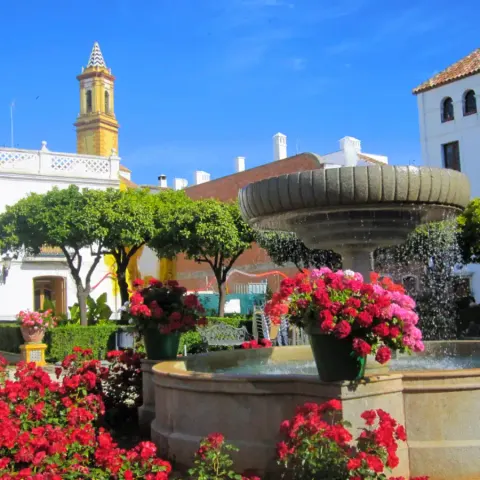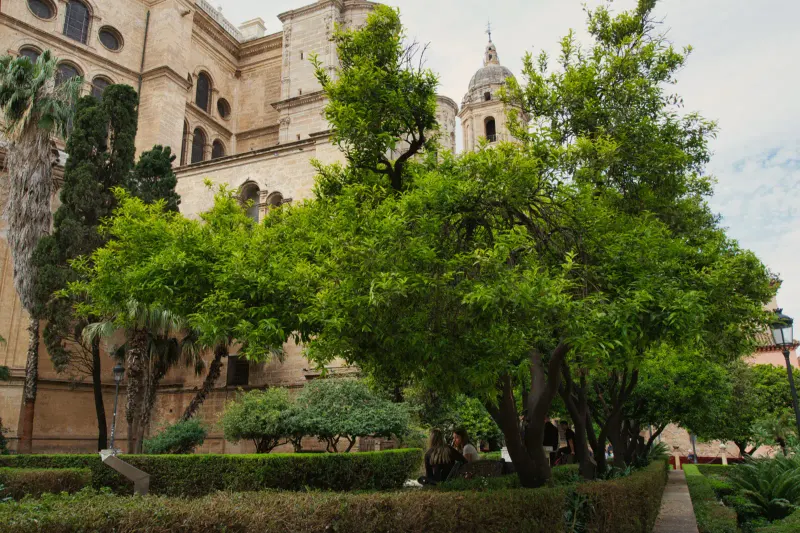
I live on the edge of Málaga Old Town (the Centro Histórico), about five minutes from Plaza de la Merced, and I walk some part of it almost every day.
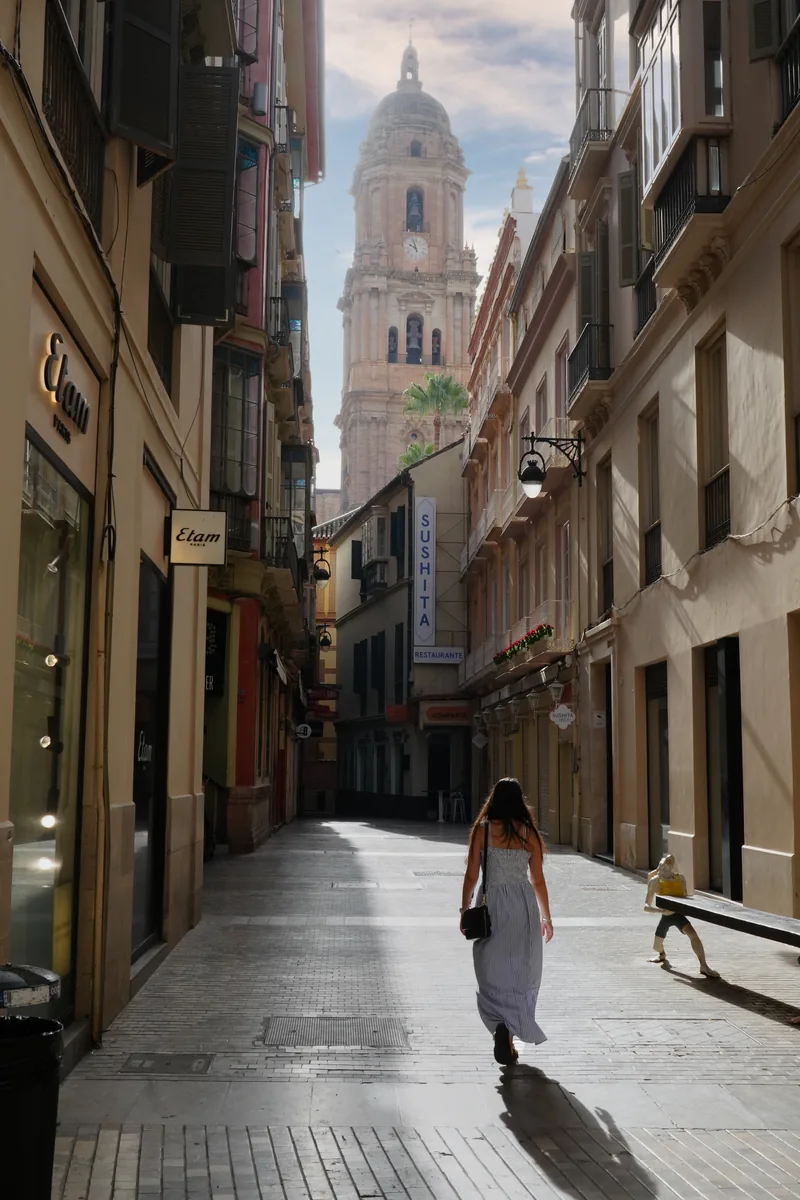
It’s a wonderful place to live and a slightly noisy one. During Semana Santa the processions go past with drums and trumpets, and some nights the last band is still going at 4am.
If you only have one day, this is how I’d spend it: the Alcazaba, the Roman Theatre and Gibralfaro, a long lunch, a wander through the old town, and a rooftop in the evening. Everything else in the old town is further down, for a second day or for time left over.
Is Malaga Old Town Worth Visiting
Yes. The Alcazaba, Gibralfaro Castle, the Roman Theatre, the Cathedral and the Picasso Museum are all within a few minutes’ walk of each other on flat streets. If you want more of the city in 24 hours, my one day in Málaga itinerary covers more ground.
One Day in Málaga Old Town
This is the day I’d give a friend who only has one. It’s a castle day, because the Alcazaba and Gibralfaro are the two stops in the old town that can’t be rushed. Allow two to three hours for each, which includes getting there and the wait at the ticket desk.
Morning: the Alcazaba
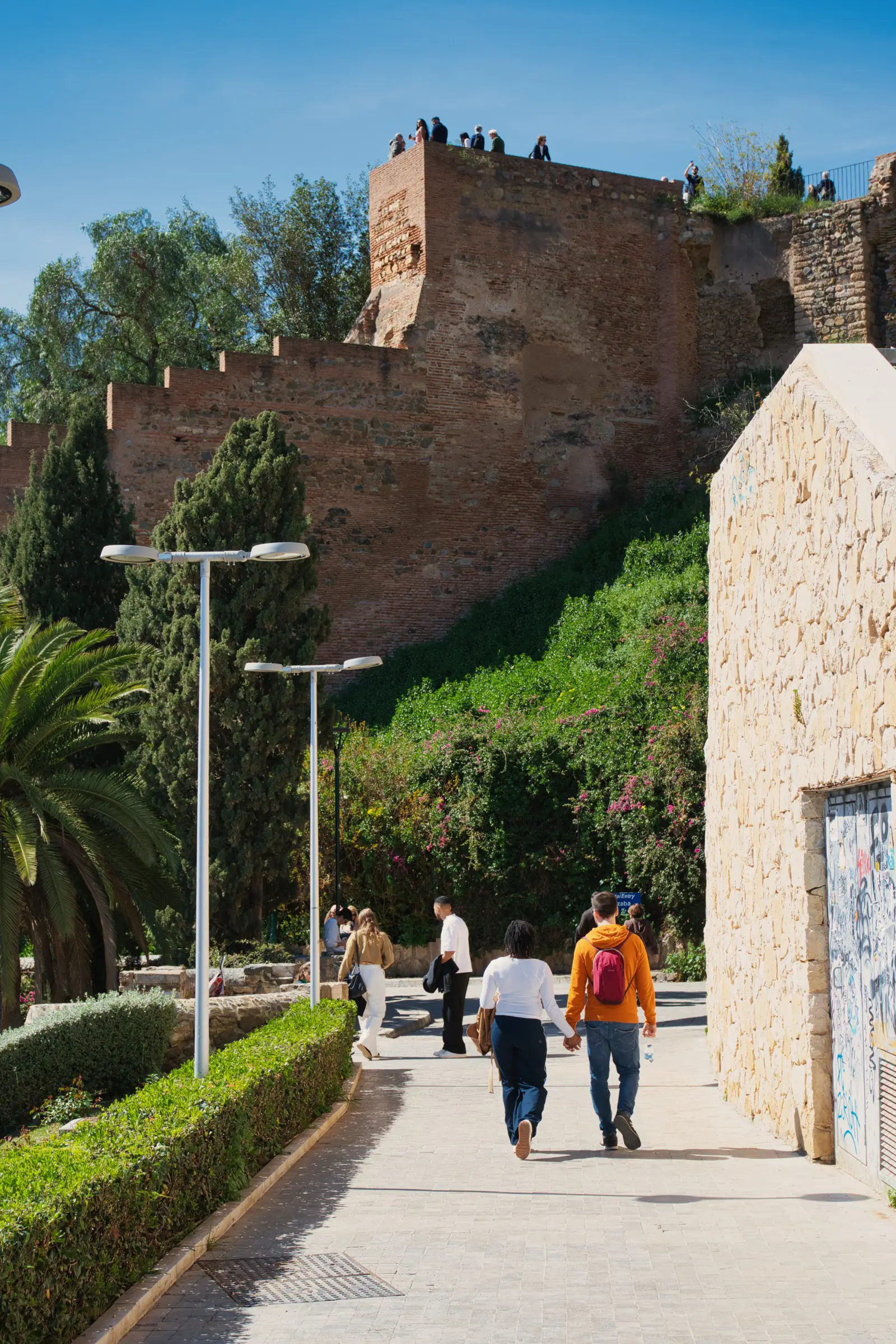
The Alcazaba made me feel like a princess in a castle, and it’s my favourite of the two. The gardens are my favourite part, and I also love walking along the castle walls, with the city and the port spread out below. Inside, the palace is the highlight, with its Moorish arches, tiled courtyards and fountains, and jasmine in the air. The Hammudid dynasty built it in the 11th century, and the name comes from al-qasbah, “citadel”.
There’s a lift that takes wheelchairs and pushchairs up into the Alcazaba, so you can skip the climb. You find it in a tunnel on Calle Guillén Sotelo, next to City Hall, and it goes up to the Casa Palacio inside the monument. It has broken down in the past, so check it’s working before you set off with a pushchair or wheelchair. Both castles open at 9am, so go early. From April to October they close at 8pm with last entry at 7pm, and from November to March they close at 6pm with last entry at 5pm. The combined ticket for the Alcazaba and Gibralfaro is €10 general and €5 reduced, and it’s valid for 48 hours, so if your legs have had enough you can come back for the second castle the next day. Both sites are free on Sundays after 2pm. Free guided tours sometimes run on weekends, and the noticeboard at the entrance will tell you. You can also book a guided visit.
Next to it: the Roman Theatre
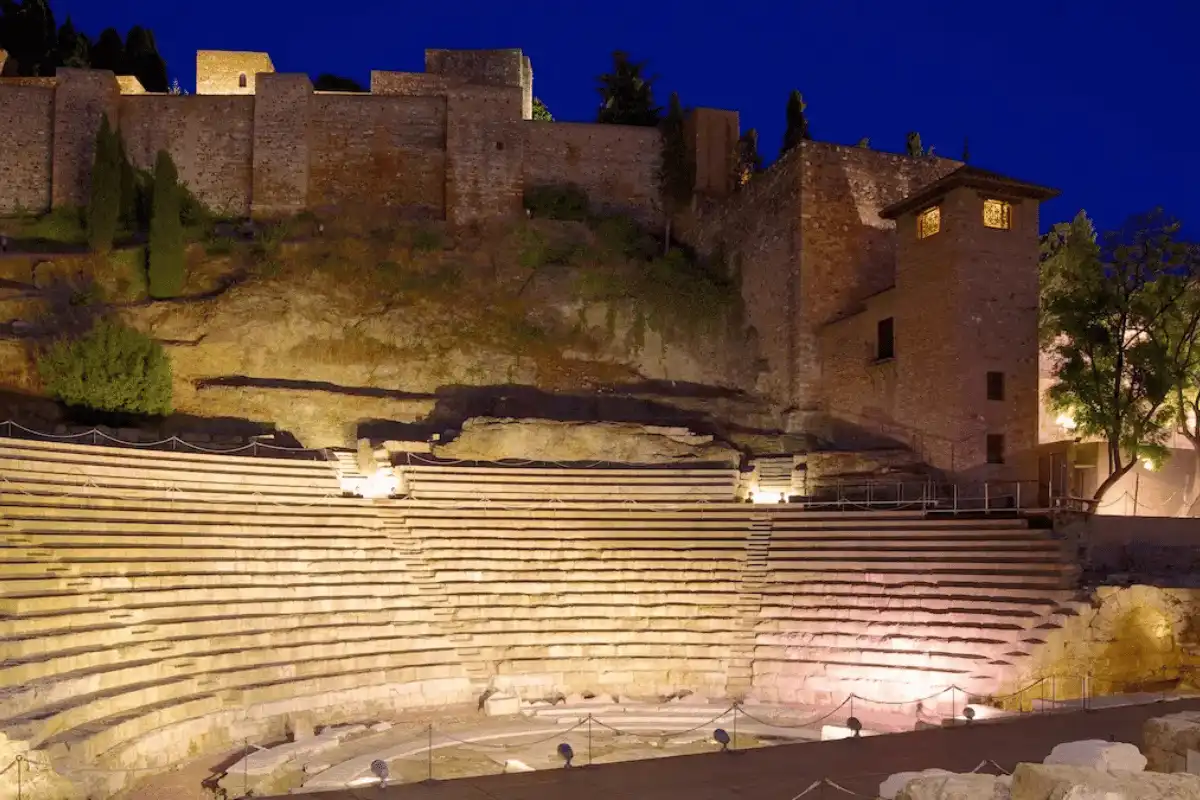
The Roman Theatre sits at the foot of the Alcazaba, so do it as part of the same stop. Anyone can walk in and it costs nothing, and walking through it is wonderful. It dates from the 1st century BC, when the city was Malaca, and it stayed buried until 1951, when workers digging for the old Casa de la Cultura hit it.
It opens at 10am, an hour after the Alcazaba, so go in on your way out or on your way back down. The hours are Tuesday to Saturday 10am to 6pm and Sundays and holidays 10am to 4pm, and it’s closed on Mondays. The last entry is 30 minutes before closing, and numbers inside are capped, so there can be a short wait. On Noche en Blanco it was open in the evening, and walking through it at night felt completely different, with the Alcazaba walls glowing above the stage.
Then walk up to Gibralfaro
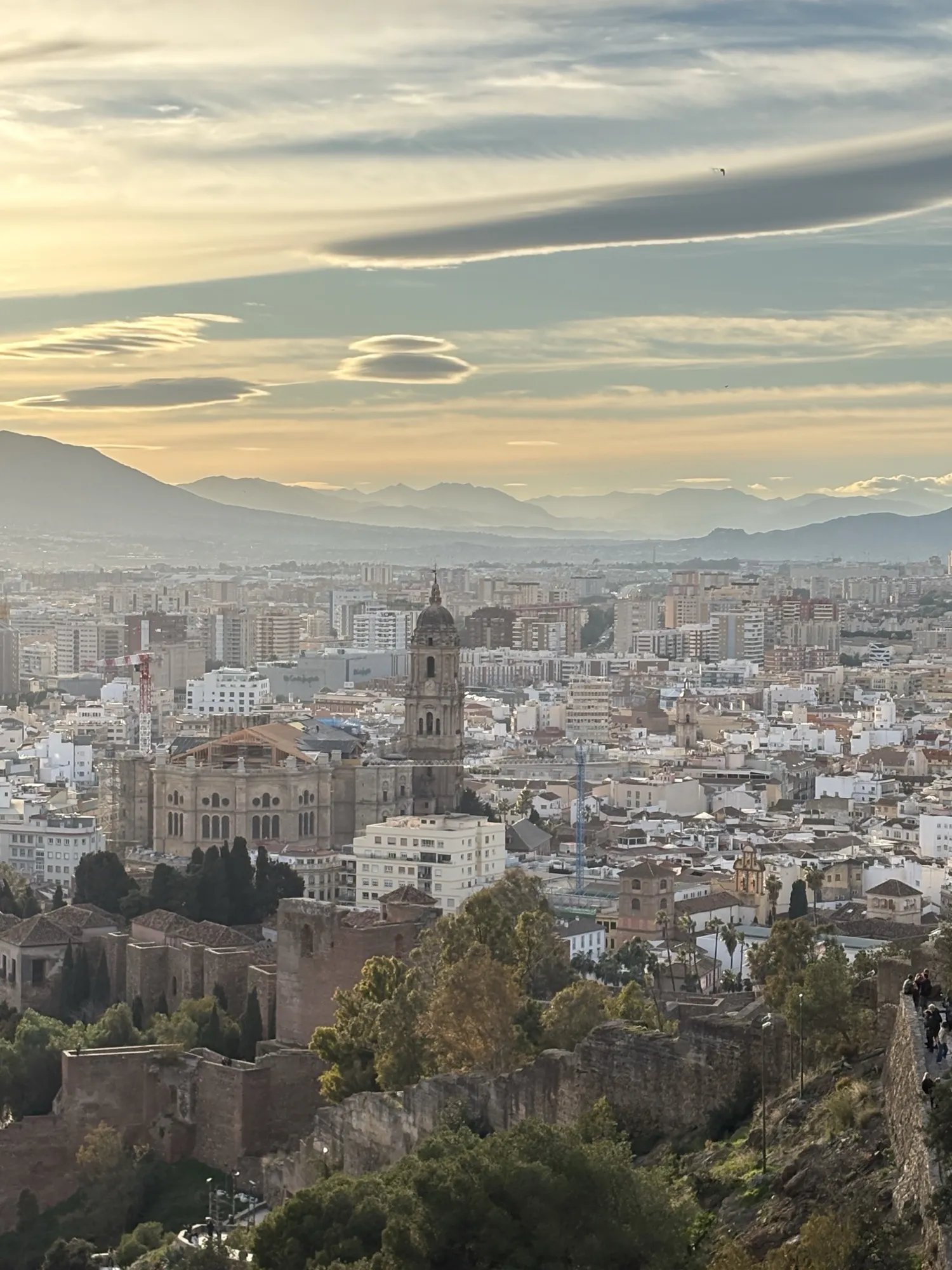
Once you’ve finished the Alcazaba, take a slow walk up to Gibralfaro, the 14th-century castle that once protected it. It’s a steep cobbled climb and I’ve done it enough times to have a routine. Allow another two to three hours, which includes the climb and the wait at the entrance. Bring water and shoes with grip, because I once tried it in cute sandals and regretted every step down. The view is 360 degrees, from the Montes de Málaga to the sea, and it’s one of the best viewpoints in Málaga. The small museum inside covers the castle’s part in the Reconquista. If you’d rather not climb, bus 35 runs from the centre up to the castle roughly every 30 minutes (my Málaga public transport guide has the rest of the network), and a taxi up is about €10.
The Parador de Málaga Gibralfaro is on the side of the hill, and its terrace is a good spot for a drink or lunch if you’re feeling peckish (it’s in my restaurants with a view in Málaga guide). You won’t pass it on the path up from the Alcazaba. Once you’re at the castle, you need to walk down the opposite side of the hill to find it.

Lunch: Casa Lola, or the beach
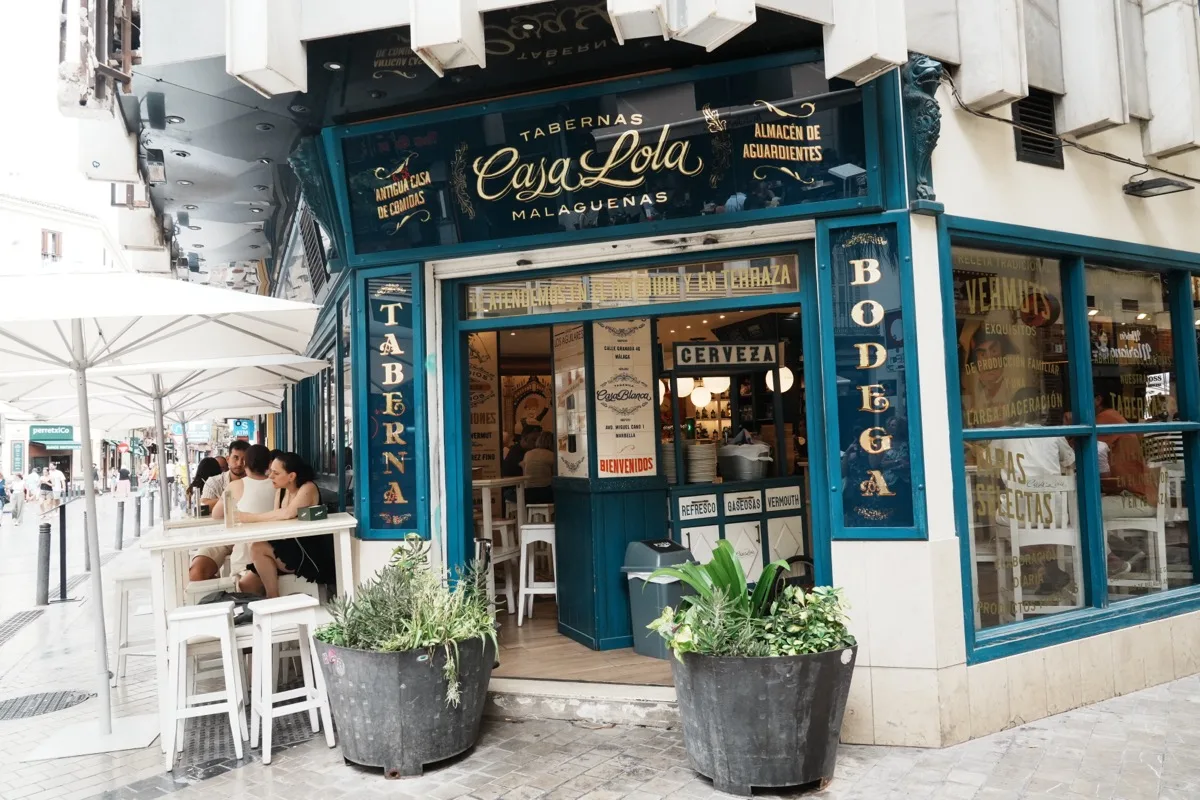
Walk back down into the centre for lunch. I’d go to Casa Lola, which is very famous in Málaga and has great tapas. It’s the first place I take visitors, and the menu is huge. If you’d rather sit on the sand, La Malagueta beach is about a 15-minute walk from the centre, and my restaurants with a view in Málaga guide has the chiringuito I’d pick. For more old town bars, see my best tapas bars in Málaga.
Afternoon: wander the old town
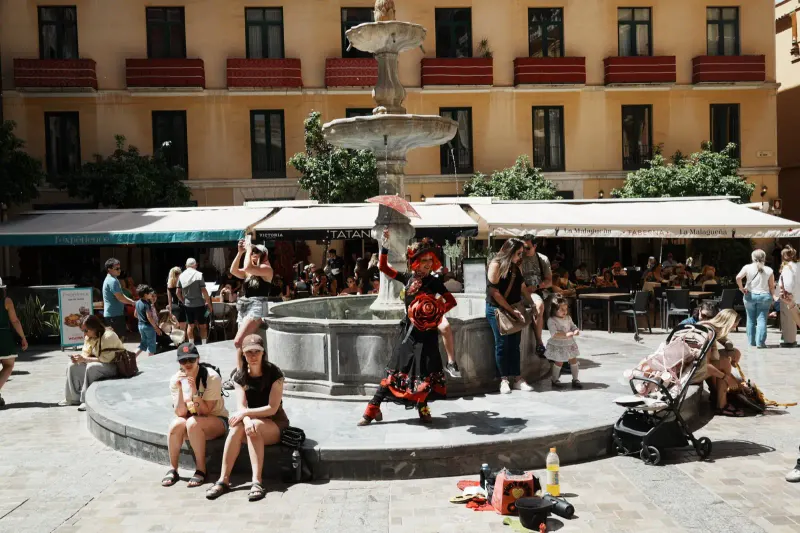
After lunch I’d wander through the old town with no fixed plan. The most popular street is Calle Larios, which has loads of shops, so it’s a good place to do some shopping or just enjoy an ice cream. The famous ice cream shop on Calle Larios is Casa Mira, at number 5, known for its turrón and crema tostada flavours. I’m a Martonela person myself, and they always have helado de Málaga, made with raisins soaked in sweet Málaga wine.
If you want to take something home for yourself, a friend or family, I’d start at Mapas y Compañía on Calle Compañía, where hot air balloons hang from the ceiling and the globes are lit from the inside. I came out with a 3D puzzle. The other shops I recommend are in my unique souvenir shops in Málaga guide.
Evening: choose a rooftop

If you’re still here in the evening, pick a rooftop. La Terraza Alcazaba has the best view of the lit-up Alcazaba, so I’d go after dark. It serves cocktails and beer, and if you arrive early there are loungers with an uninterrupted view.
For harbour views instead, try La Terraza Molina Lario, Trocadero de Las Botes or Lolita Skyview. Every rooftop I know is in my best rooftop bars in Málaga list.
How to Get to Málaga Old Town
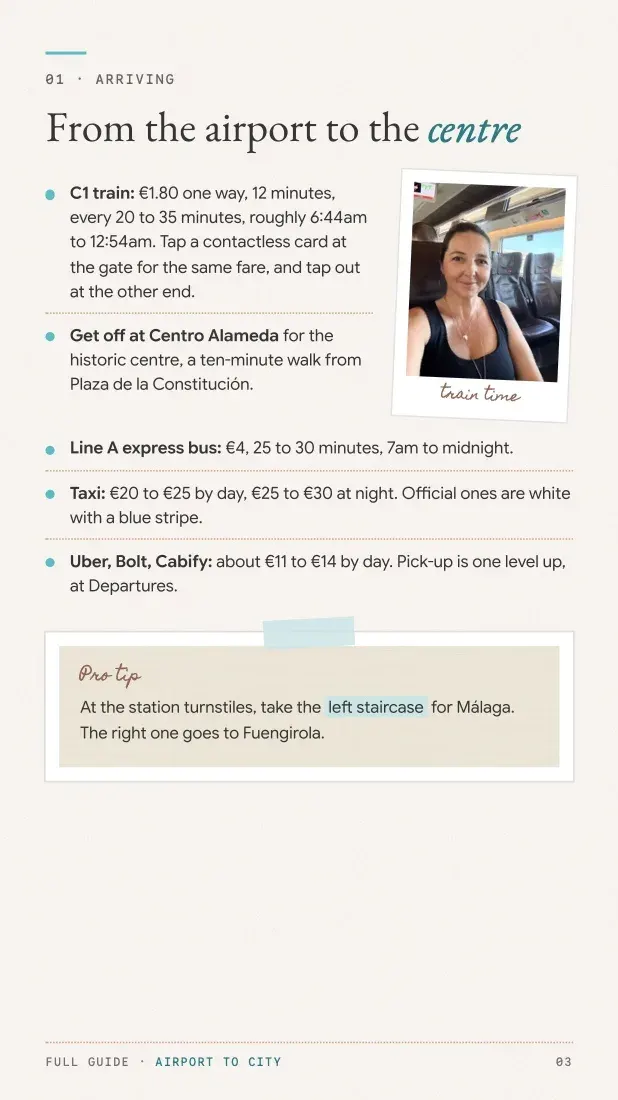
From Málaga Airport, take the C1 Renfe train to María Zambrano or to Málaga Centro Alameda, the end of the line. It takes about 12 minutes and costs €1.80.
Centro Alameda is a 5 to 10 minute walk from the old town and María Zambrano is closer to 20. My Málaga airport to city centre guide covers every other option.
Coming from the coastal resorts, the same C1 line takes about 22 minutes from Torremolinos, 30 from Benalmádena and 46 from Fuengirola. A single ticket is €2.05 to €2.70 depending on the zone. A taxi from the airport is around €20 to €25 and takes about as long as the train, so it’s worth it only if you’d rather skip the walk from the station.
Once you’re in, forget about transport. Everything here is within a 20-minute walk, and many of the streets are pedestrian only. If you’d like routes, walking in Málaga has them.
Where to Stay in Malaga Old Town
The trick is to avoid the noisy corners. By day you won’t notice, but at night a lot of plain-looking buildings turn out to have clubs in them. My first month here was in an Airbnb above one, and it was the worst night’s sleep I’ve had. Later I took a hotel that seemed a steal for the price, and the first night showed me why.
Stay at least three floors up if you can, and check the map for clubs before you book. Here are three well-known hotels in the old town:
My where to stay in Málaga guide covers every neighbourhood and who it suits.
Where to Park in Malaga Old Town
Don’t drive in if you can help it. The streets are narrow and mostly pedestrian, and spaces are almost non-existent unless your hotel has a garage. Budget around €30 per night for a central car park.
The best free option is El Ejido, just north of the old town, an open area where locals park long-term. It’s about ten minutes on foot to the centre and fairly safe. It fills up, though, and my daughter Cameron and I have circled it for around 35 minutes on a monthly shop.
If your accommodation has parking, take it. If not, lock up at El Ejido and don’t touch the car until you leave. My free parking in Málaga guide has more options.
How Long Do You Need in Malaga Old Town
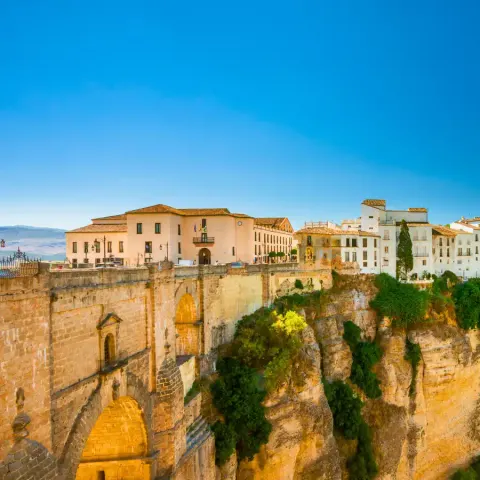
One day covers the Alcazaba, the Roman Theatre, Gibralfaro, lunch, a wander and a rooftop, which is the itinerary above. Add the Cathedral, the Picasso Museum and the other museums and you need two or three days. If it rains, my what to do in Málaga when it rains guide has indoor plans, and the old town is a good base for day trips from Málaga to Ronda and Nerja.
Is Malaga Old Town Free on Sundays
Several attractions are free on Sundays after 2pm. The Alcazaba and Gibralfaro Castle both are, saving you €10 on the combined ticket, and the Picasso Museum and most other museums are free in the last two hours of Sunday opening. The Roman Theatre is always free, except on Mondays when it’s closed. The Cathedral charges €10 all year with no free Sunday afternoon, but entry is free from 8:30 to 9am Monday to Saturday and until 9:30am on Sundays. My free things to do in Málaga guide has 25 more ways to save across the city.
More to Do in Málaga
If you have another day, these guides cover the rest:
- The whole city: things to do in Málaga
- Museums: the Picasso Museum, Carmen Thyssen and Museo de Málaga are all in the old town, and my museums in Málaga guide covers them
- Markets: the Atarazanas market and the others are in markets in Málaga, and SpanishLocalMarkets has a complete list
- Coffee: the nine ways to order one were invented on Plaza de la Constitución
- The cathedral: the rooftop is closed until the end of 2027, so check the official site before you plan around it
- A free walking tour: Explora Malaga and Free Tour Malaga both leave from Plaza de la Constitución