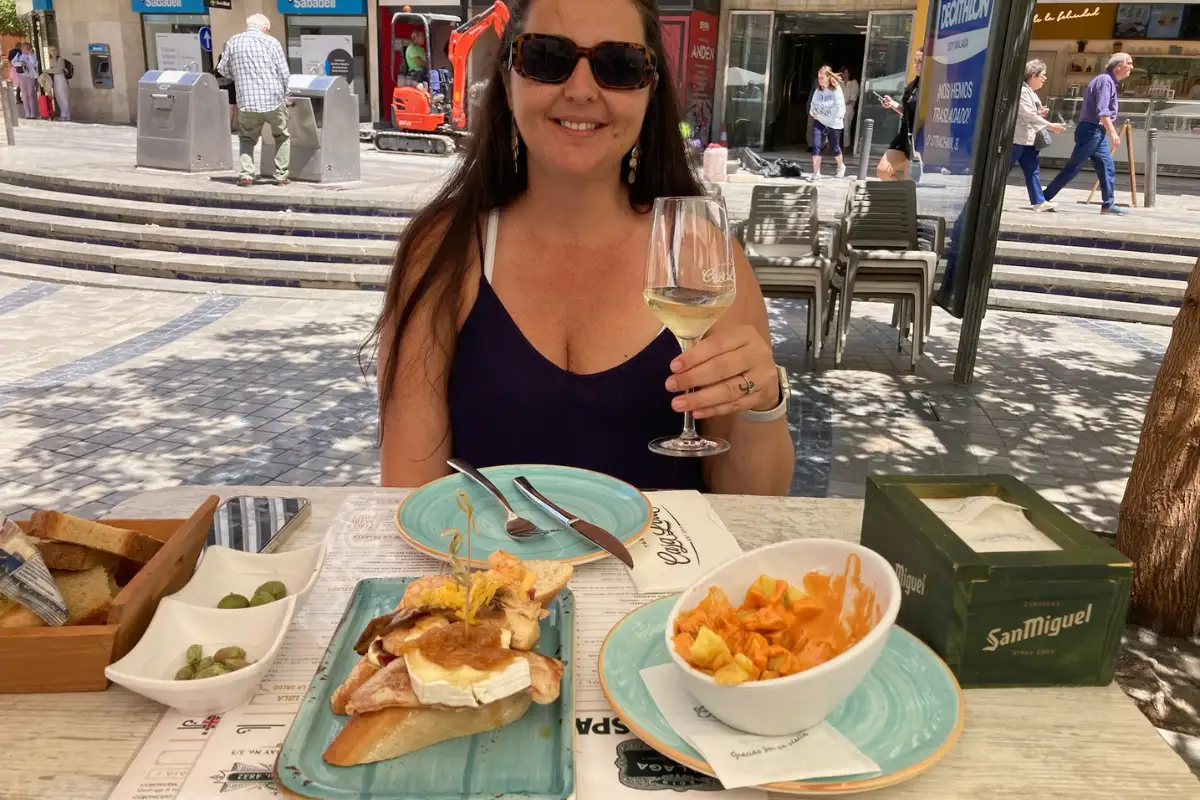
I plan most of my days around what I’m going to eat, and I stopped apologising for it a long time ago. Ask me what I did yesterday and you’ll hear about the lunch before you hear about anything else. So a list of the best tapas bars in Málaga, the ones I’d send a friend to, was always going to happen, and honestly, I’ve been writing it in my head every time I walk out of my front door.
I live just off Plaza de la Merced, in the old town, which for someone like me is a risky address. Picas Bar is barely outside my front door. El Tapeo de Cervantes is two blocks away, La Tranca a block further than that, and all three of them are on this list, which I’d like to tell you is a coincidence.
The good news for you is that the bars worth your time are squeezed into a handful of streets around the centre, and nothing on this list is more than a fifteen-minute walk from anything else, or from anywhere you’d stay in the old town. Málaga sits on the sea, so fish and shellfish take up most of the menus, but the cooking here has Moorish and Andalusian roots as well, and you’ll eat well even if fish isn’t your thing.
I order the same two things almost everywhere. Croquetas de jamón and berenjenas con miel, at nearly any bar in the centre, because they’re cheap and they never last long, and I’ve yet to regret it.
One thing I should admit before we start: the packed, elbow-to-elbow bars everyone raves about aren’t where I end up most nights. Several of them are on the list anyway, because they’re the ones you came here looking for.
So here’s what you’ll get: fifteen bars in three groups, a ten-stop tapas route from lunch to dinner, how ordering and portions work, what to tip, what to order and what to drink.
Is tapas free in Málaga?
No. Tapas cost money in Málaga, and you pay for each plate as it comes. If you’ve been to Jaén or Granada, where a free tapa turns up with every drink, forget what you learnt there, because Málaga doesn’t do it.
There are still a few bars that’ll put a little plate down beside your beer, but they’re rare, and the plate is a gesture, not a meal. Think of it as the bar saying thanks. The one I liked most for this closed recently, and I miss it.
At €3 to €4 a tapa in the centre, though, you’re not going to spend much either way.
Where the good bars are (& where they aren’t)
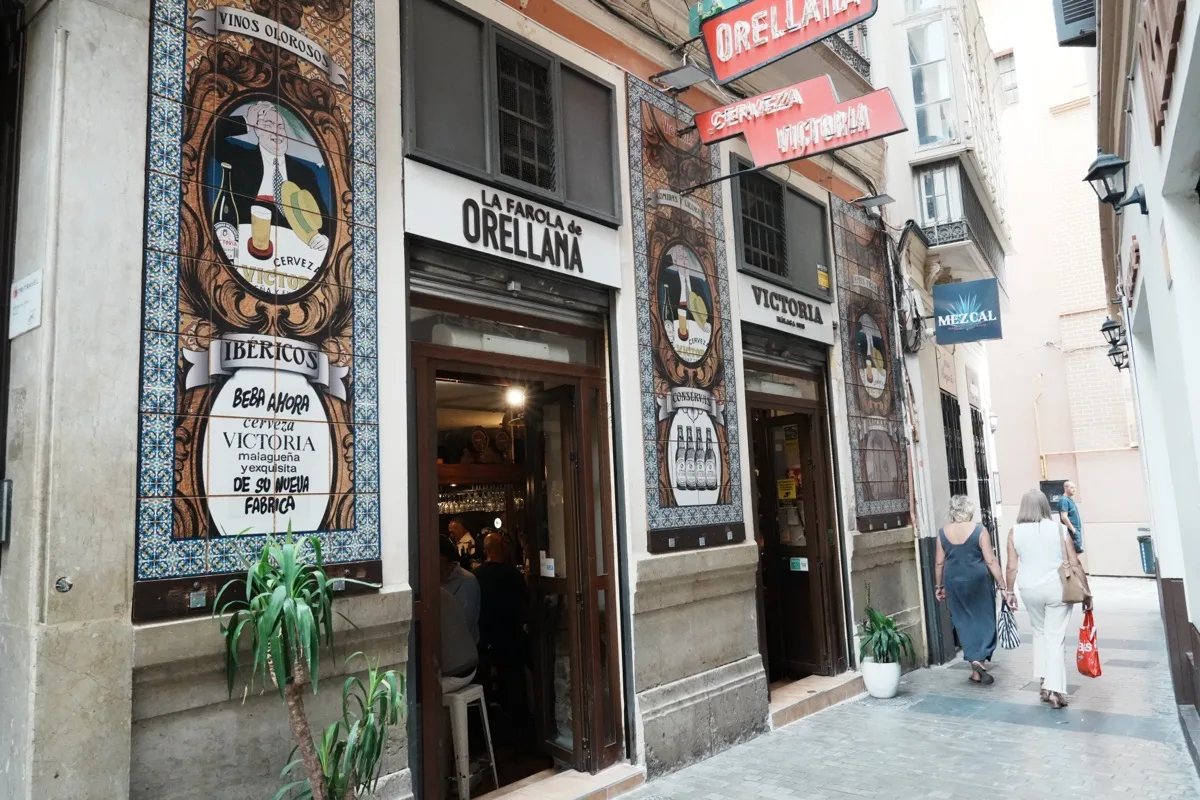
I don’t eat on Calle Marqués de Larios. It’s the main shopping street, and the bars there charge more and give you less for it. Step into any side street off it, left or right, it doesn’t matter, and the bars get better.
The crowds thin, the menus stop being in English, and that’s the signal you’ve gone far enough. If a place only has a Spanish menu and the regulars look like they’ve been coming for twenty years, sit down.
Some of the bars on this list are down alleys you’d walk straight past.
Standing room only: the old-school bars
You won’t get a table at any of these. You stand at the counter, get your order in over the noise, and either leave after one round or you’re still there at the end of the night.
1. Bar La Tranca
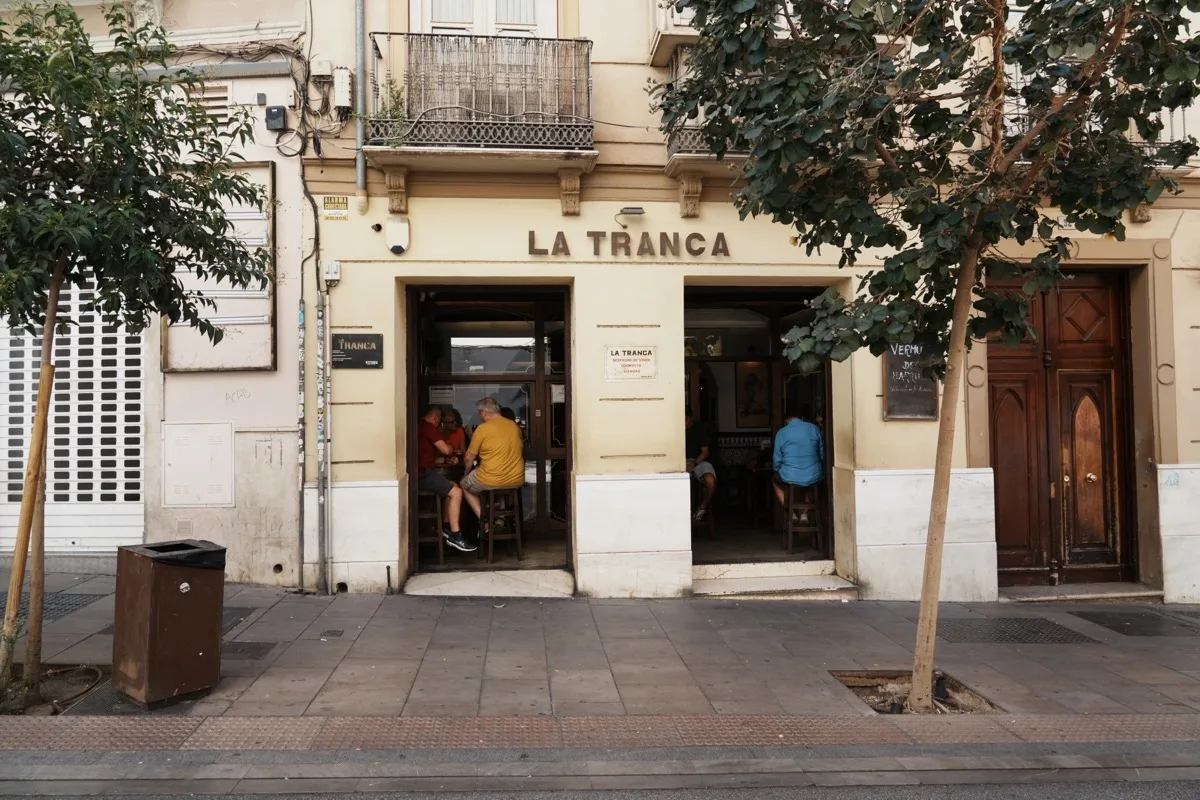
Three blocks from my flat, so I’m in Bar La Tranca a lot, and I’ve never walked in and found anyone with room to move. Most afternoons and just about every night there isn’t a seat in the place. It’s at Calle Carretería 92.
The walls are old Spanish record sleeves, every last inch of them. Vermouth comes out of a tap. At some point the whole room is singing along to old Spanish songs.
They do croquetas de jamón and empanadas, and there’s an ensaladilla rusa. You’ll pay about €3 or €4 for a tapa and less than that for the drink. Service is loud, and it doesn’t take long.
Worth getting squashed for.
2. La Farola de Orellana
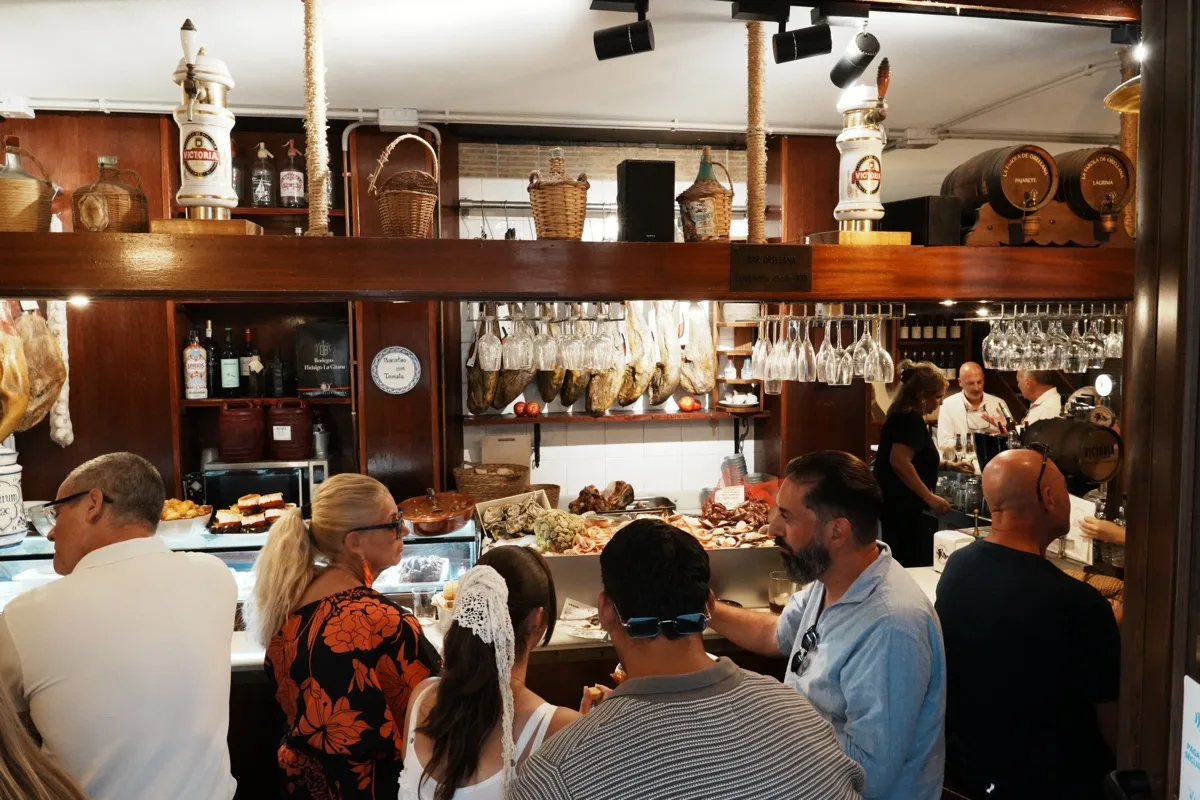
Come off Calle Larios into Calle Moreno Monroy, which doesn’t run far, and go in at number 5. That’s La Farola de Orellana, and it’s been going since 1938. By evening it’s full of locals, and you’ll be squeezing in among them.
It’s a small room, and once it fills up it gets loud. Nothing inside has been modernised.
Don’t look for a menu, because there isn’t one. The platters sit in a row along the counter, you point at what you want and the waiter heaps it onto a plate for you.
The regulars go for the bartolos, which are little sandwiches. The lamb ribs are some of the best things on that counter, and the pork cheeks are right up there with them. A plate costs about €3 or €4.
3. Las Merchanas
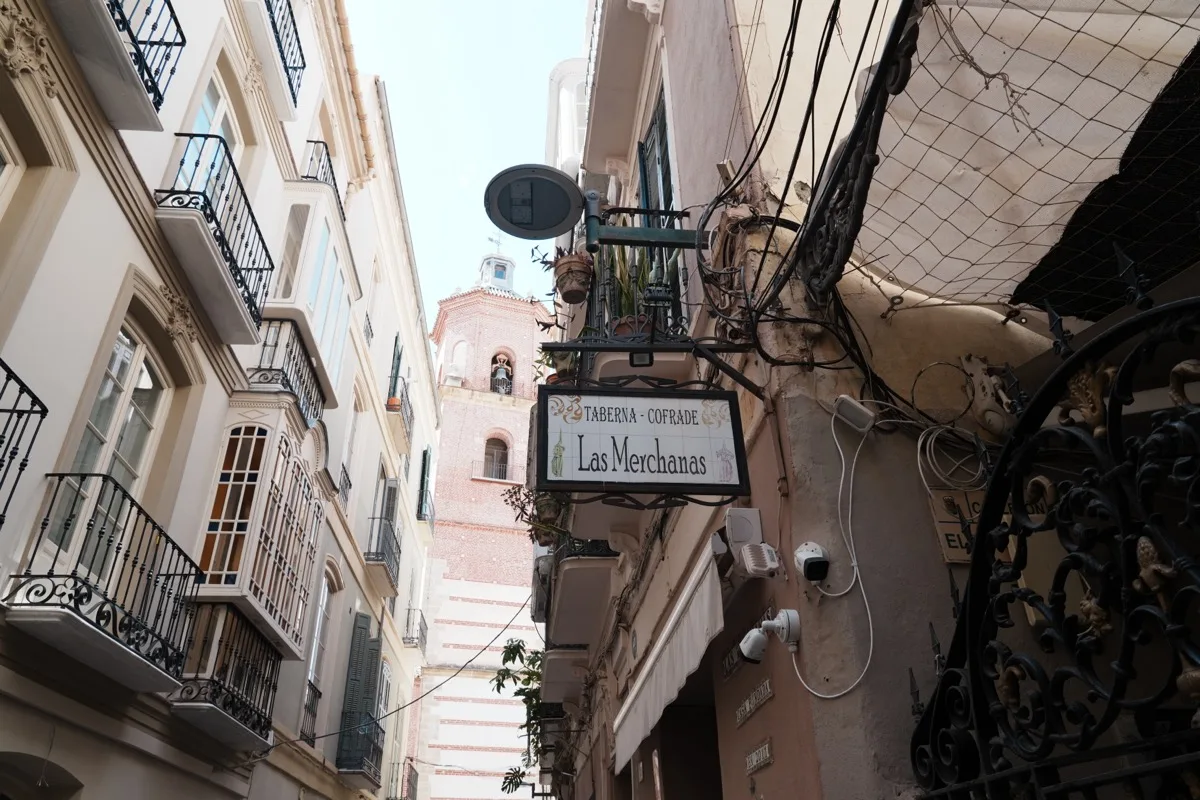
Walk into Las Merchanas and it’s Semana Santa in every direction. Robes, candles, religious icons, framed photographs from decades of Holy Week processions, floor to ceiling on every wall. There isn’t a bare patch anywhere.
It’s on Calle Mosquera 5, a narrow street off Calle Carretería, and the food is as traditional as the walls: patatas bravas, croquetas, montaditos. You’ll pay less here than at most of the bars nearby, too.
It isn’t somewhere for a long sit-down meal, and nobody treats it like one. The locals come in for a quick beer and a couple of plates and then carry on somewhere else.
For the old town, it’s one of the cheaper stops going.
4. Colmado 93
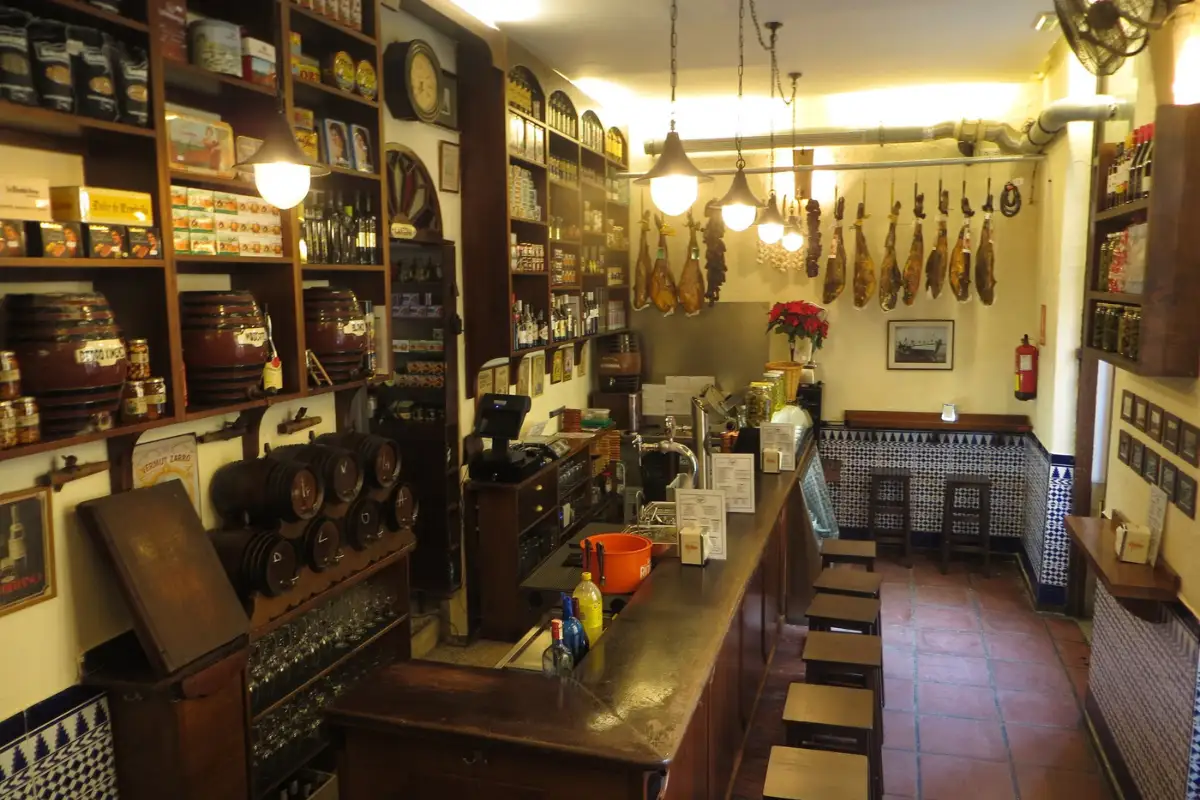
Cross the street from La Tranca and you’re at Colmado 93, Calle Carretería 93, half tapas bar and half deli. The shelves are stacked with tins, bottles and local produce, so it looks more like somewhere you’d shop than somewhere you’d drink.
It’s tiny. The bit of floor around the bar fills up fast, so you won’t have it to yourself for long.
A vermut on tap with plates of jamón and cheese is what I’d recommend. The menu’s short and there isn’t a weak line on it.
Most people have one round and move on, and so do I.
5. Antigua Casa de Guardia
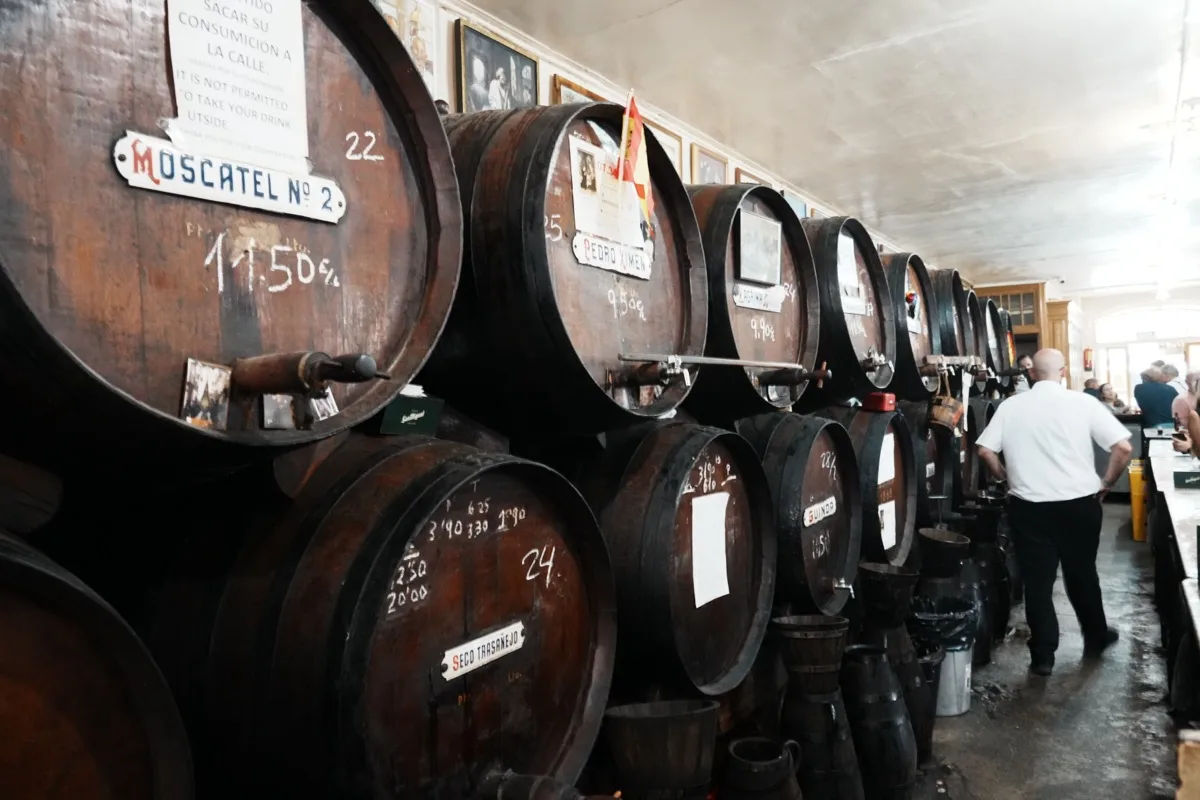
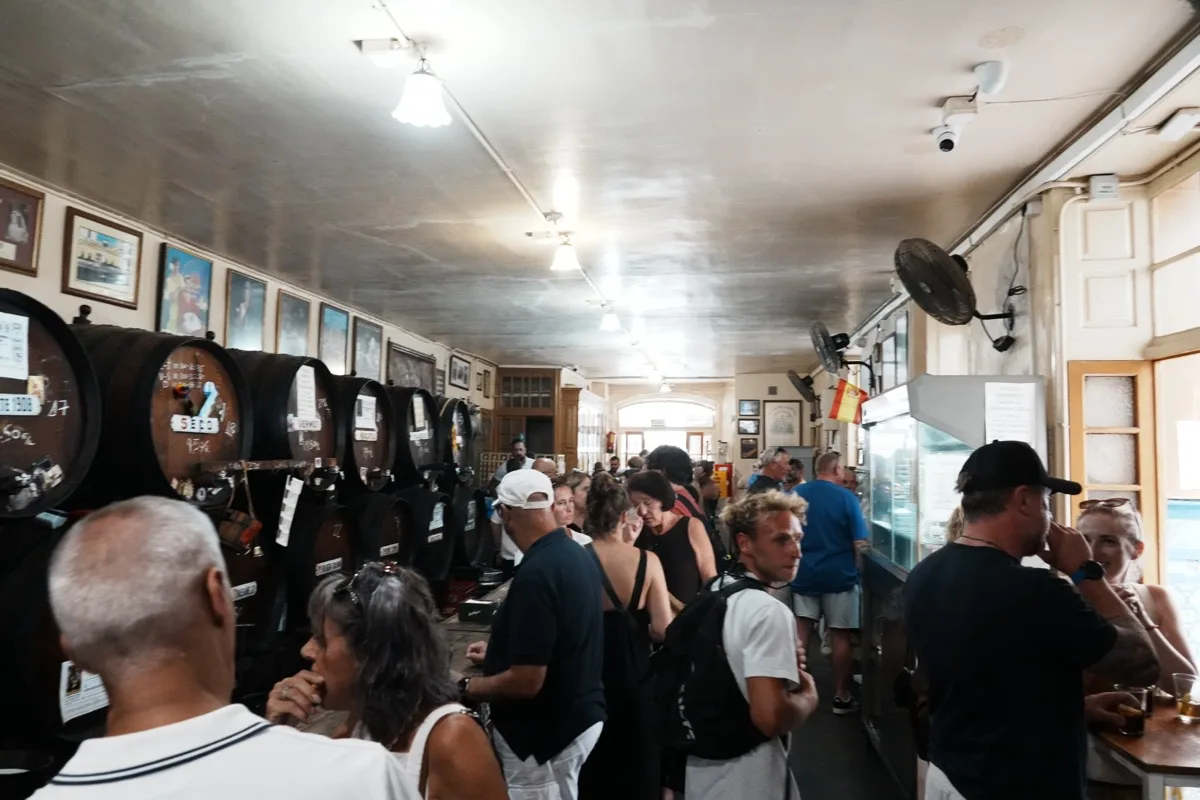
I’ve walked every friend who’s visited me down Alameda Principal to number 18 and stood them at the worn wooden bar of Antigua Casa de Guardia. Twenty-four barrels along the wall behind the counter, you point at one, and they pour a sweet wine or a dry sherry straight out of it in front of you.
It’s the oldest bar in Málaga, open since 1840, and the wine has come out of the Axarquía hills for centuries. A glass is under €3. There are a few simple tapas but nobody’s here for them; it’s a drinking stop, and it’s on the tapas route further down this post.
Pajarete or seco, twenty minutes at the bar, then move on. If you want the long version, it’s in my guide to the best bars in Málaga.
6. El Yerno, inside Atarazanas market
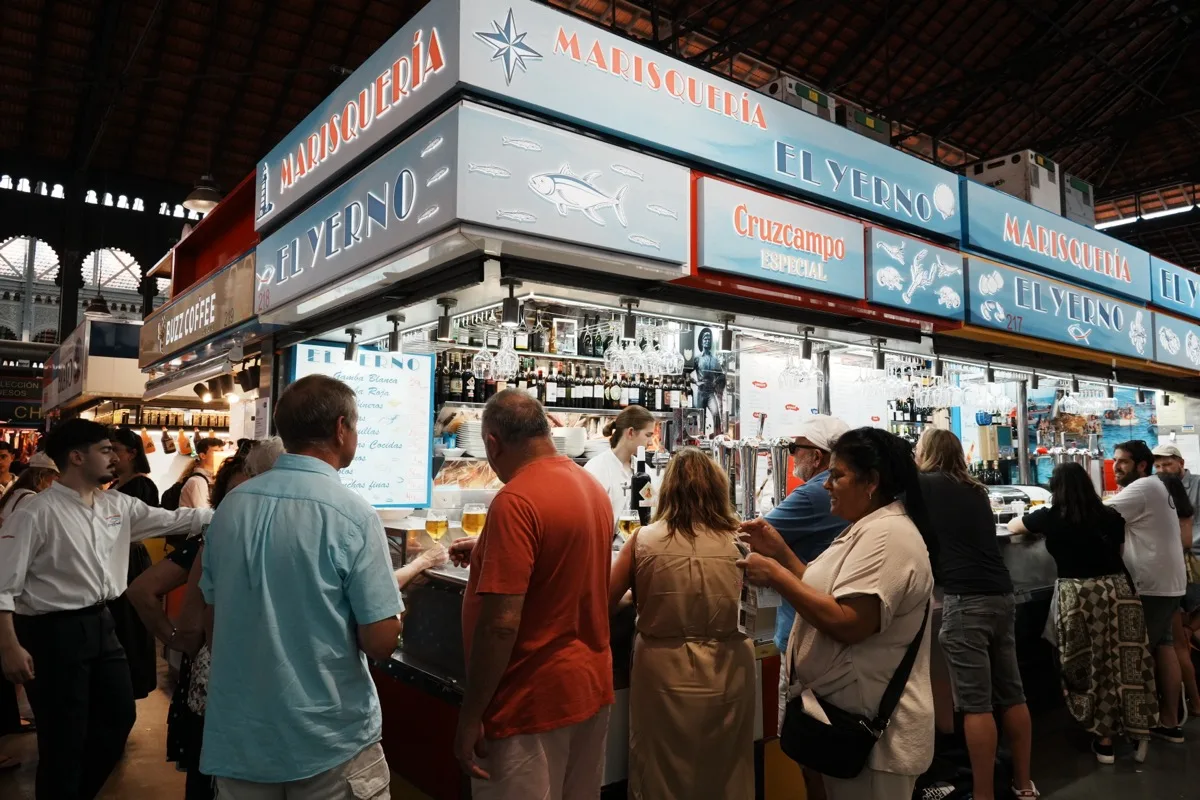
You pick the seafood, and a few minutes later it’s on the grill. Prawns, anchovies, octopus, whatever was landed that morning, and it’s on your plate by lunchtime. Marisquería El Yerno is a stall inside Atarazanas market, the busiest market in the city, so there’s nowhere to sit, it’s loud, and it’s a bit chaotic.
It keeps the market’s hours, which means mornings only, Monday to Saturday. Turn up on a Sunday and it’s shut.
One warning. Once you’ve eaten seafood this fresh, most of the other tapas bars in town start to feel like second best, and I’d rather tell you now than have you find out on your own.
If you want the walk home to be as short as mine, these are the places from my where-to-stay guide nearest the bars:
⭐ Right off Plaza de la Merced >> Anahita Boutique Hotel
⭐ La Merced, but quiet >> Palacete de Alamos
⭐ The old town, in an 18th-century palace >> Palacio Solecio
⭐ On a budget, still in the old town >> Urban Jungle Hostel
Sit down & eat
Pull up a chair for these. They’re the ones with tables, and once you’re at one, two hours have a way of disappearing.
7. Casa Lola
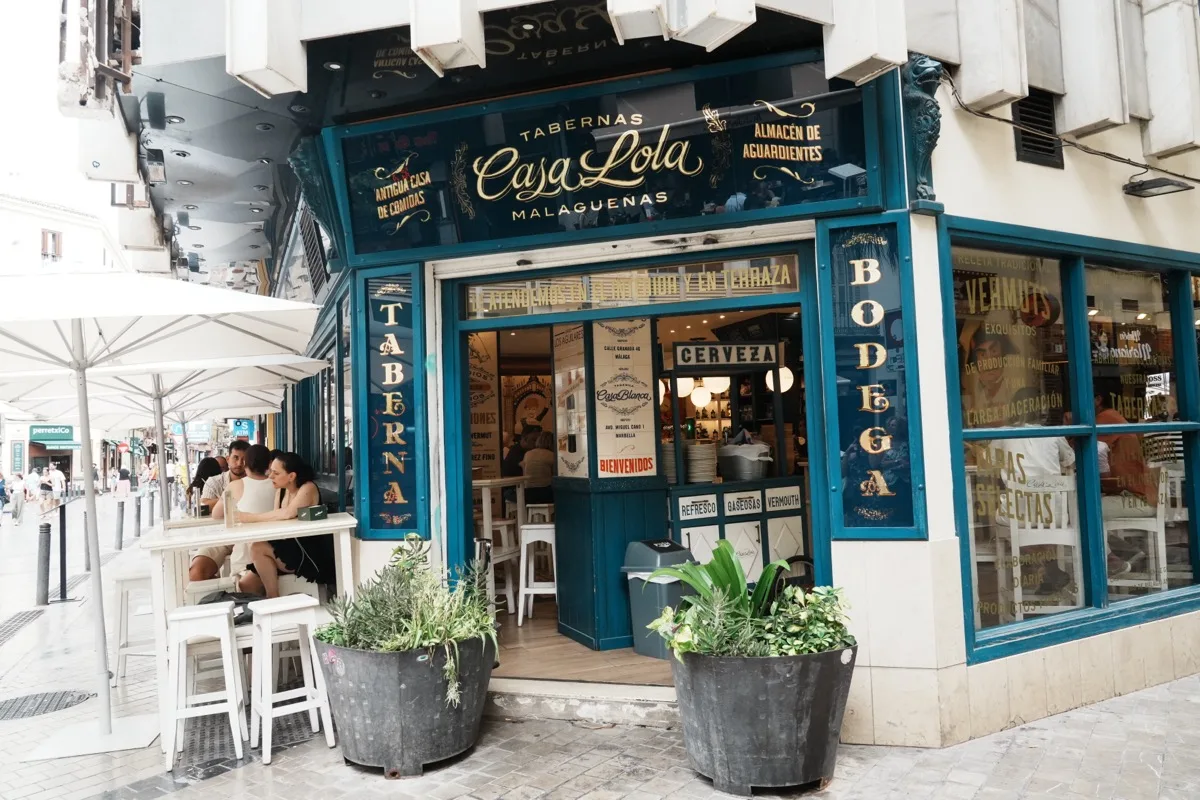
Look for the queue. Walk down Calle Granada and when you hit a knot of people waiting on the pavement outside number 46, you’ve found it.
What I like about that queue is who’s in it. As many malagueños as tourists, all waiting for the same thing.
Once you’re through the door, the menu is one you’ll recognise: croquetas, patatas bravas, berenjenas con miel (aubergine fried and finished with cane honey). The plates come out quickly, and most of them are €3 to €4, which for a bar this busy I think is fair.
The waiting is the only difficult part. Get there early, or accept that you’ll be standing outside for a bit.
It’s also a stop on my tapas route, which I’ll walk you through further on.
8. Picas Bar
Crawford will probably be the one who finds you a table. He’s Welsh, he’s been in Málaga since 2015, and the way he runs the front of house at Picas is as much of a reason to come back as the food. And the food is a good reason.
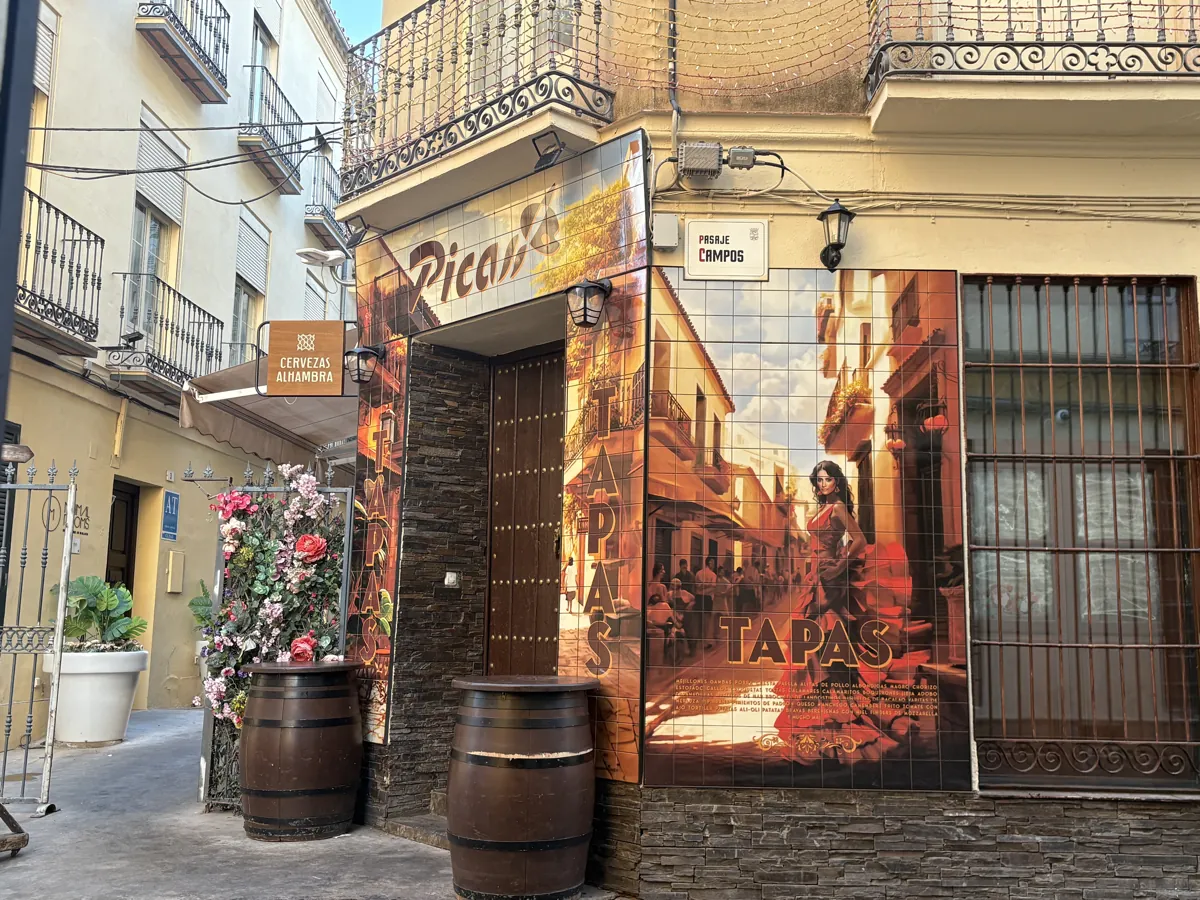
The bar is on Plaza de la Merced, a few steps from my flat. It does classic tapas with no fuss, more than 30 of them, and it’s one of my favourite places in the city for exactly that.
Garlic prawns, boquerones, big raciones of tortilla, and a Chef’s Choice of five tapas that rotates, for anyone who’d rather hand the decision over. Order the sangría, which is great here. The plates come quickly, and one more always turns into two.
My own order doesn’t change. Gambas al pil pil, prawns in oil that’s still sizzling with garlic when it arrives, then the octopus leg on its sweet potato purée. Jethro and I call it the best octopus we’ve eaten in Spain, and we’re not being polite.
One lunchtime a crew of breakdancers took over the square halfway through our meal. If you want more than a paragraph on the place, there’s a full write-up of Picas Bar elsewhere on the site.
The practical bits:
- Two of us pay about €30 to €40 with drinks.
- Booking isn’t usually needed. It’s busy at peak times, but tables turn over fast.
- A set breakfast of toast, coffee and fresh orange juice is around €5, and the terrace catches the sun in the mornings, winter included. Ask for the coffee by name, because this city grades everything from nube to solo.
Families are welcome, and there’s a real choice of vegetarian tapas and salads.
9. El Tapeo de Cervantes
I’ve been here exactly once, which for somewhere two blocks from my house takes some explaining.
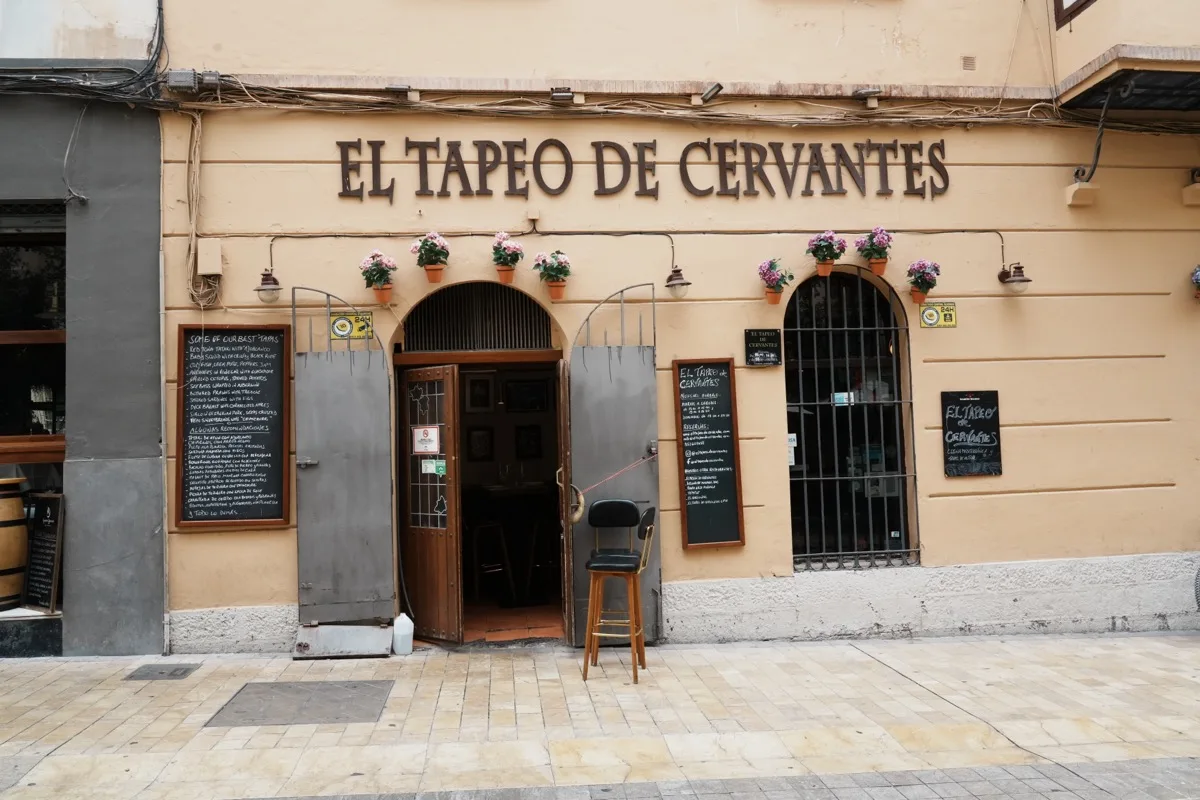
El Tapeo de Cervantes is tucked into Calle Cárcer 8, just off the main streets, and it’s tiny. The room seats around 28, every seat taken, and you sit close enough to the next table that you could reach across and help yourself to their plate.
The kitchen plays with the classics, Andalusian dishes with a fusion twist, and you won’t always be sure what it was you ordered when it lands. I enjoyed it. But it’s the buzz in the room, more than what’s on the plate, that people come back for.
And that buzz is exactly why I’ve only been the once. Elbow-to-elbow eating is something I do now and then rather than as a habit. If that energy is your thing, you’ll be in heaven here.
It’s closed on Mondays. The rest of the week it’s lunch from 1pm to 3:30pm and dinner from 7:30pm to 11:30pm. Here it is on the map.
READY TO BOOK YOUR TRIP TO MÁLAGA?
🎟️ Best guided tours: I use GetYourGuide
🏨 Accommodation: Find hotels in Málaga
🚆 Trains and buses: I book through Omio
🛡️ Travel insurance: I use SafetyWing
10. Mesón Lo Güeno
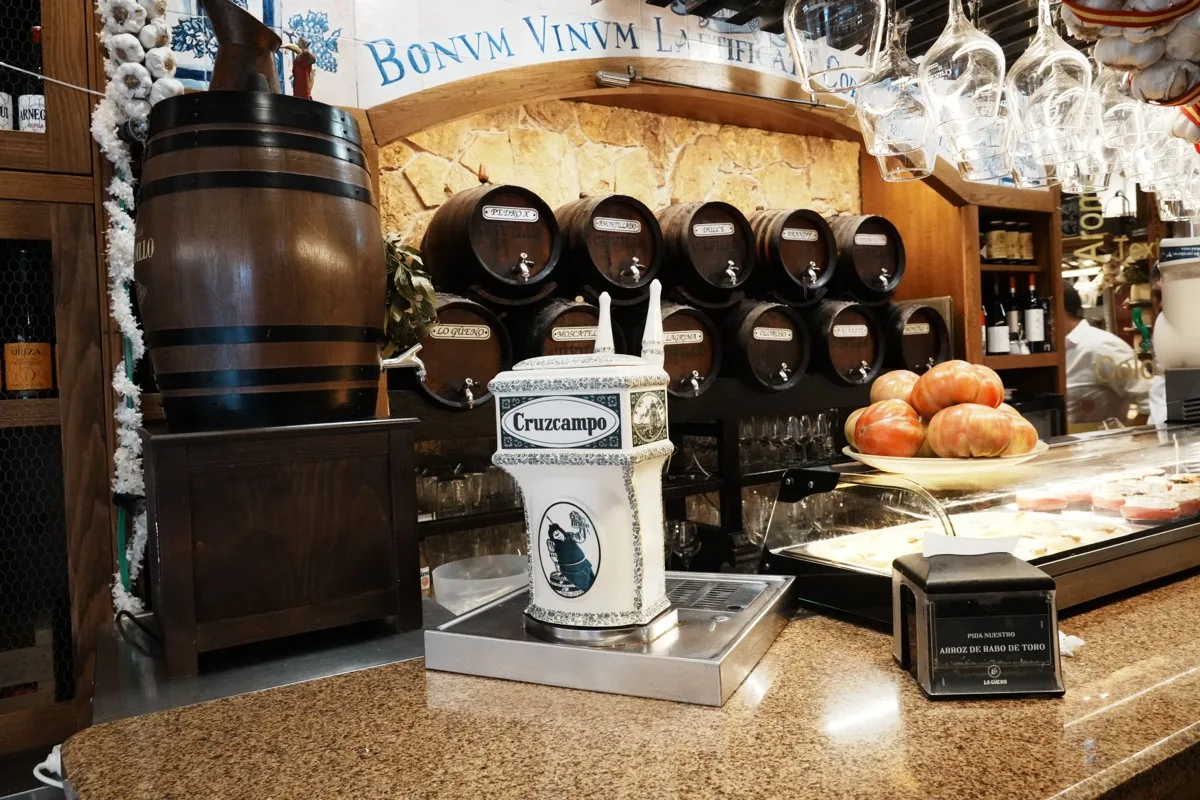
Turn off Calle Larios into Calle Marín García and you’re at a bar that’s been feeding people since 1967 and hasn’t seen a reason to change.
Nobody here is plating things with tweezers. There’s no decor to speak of, and nothing on the menu is trying to be clever. What you get is Andalusian cooking the old way: hearty stews, fried peppers, the classic raciones.
Around €3 to €4 a tapa, and you’ll walk out full.
11. Cortijo de Pepe
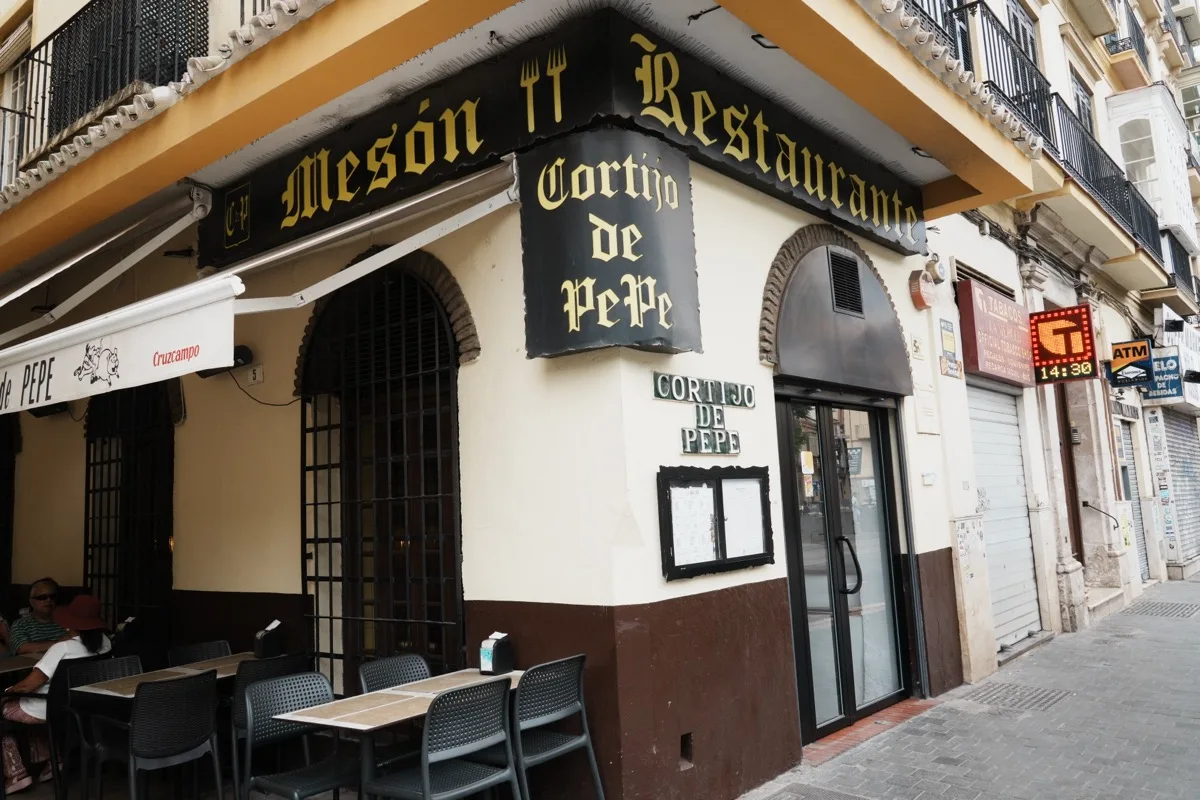
Cross my square, Plaza de la Merced, to the corner at number 2, and you’ll find a bar that’s been there since 1971.
Order for the table rather than for yourself. Grilled meats, big raciones built for sharing, and porra antequerana, the thicker version of gazpacho.
Most tapas are €3 to €5, the portions are generous, and on a square where you’d expect to pay more, that counts for something.
Map.
12. Mesón Ibérico
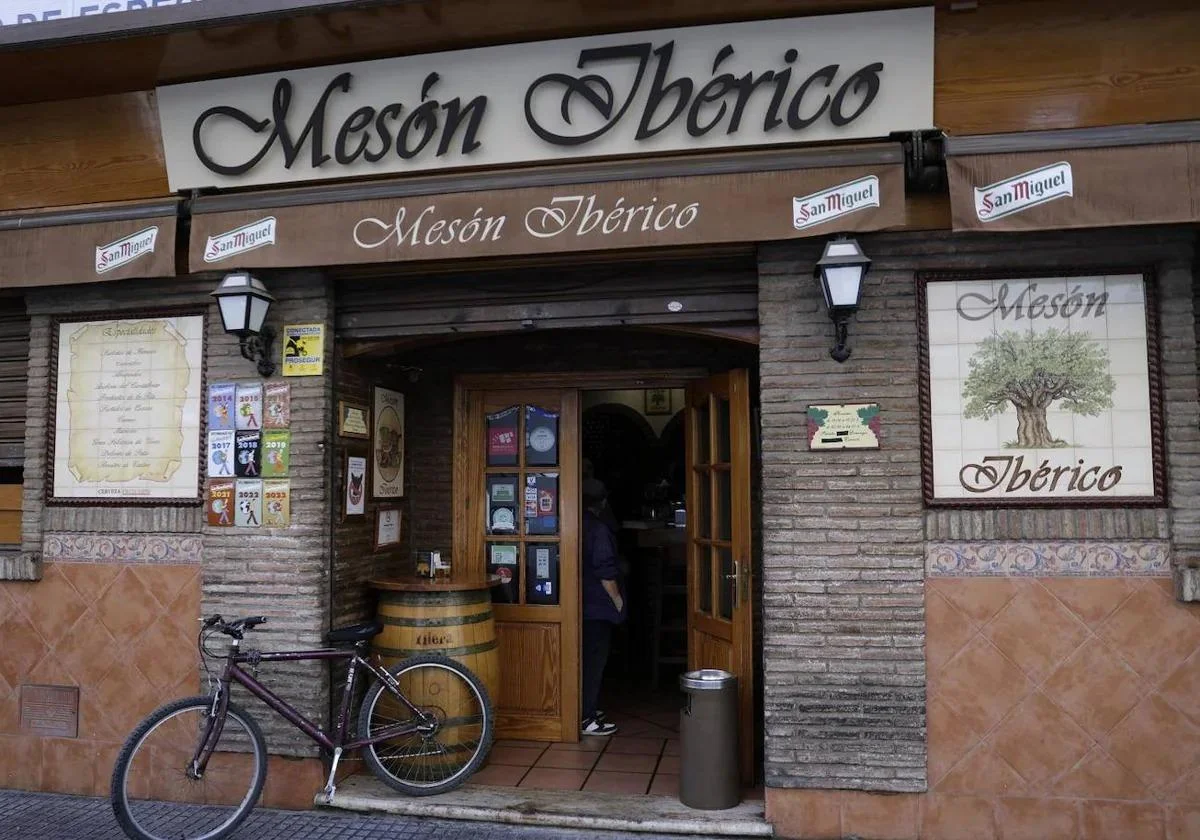
Head west over the Alameda into Soho and you’ll leave every other bar on this list behind. Mesón Ibérico, at Calle San Lorenzo 27, is the only one I’ve included that isn’t in the old town itself.
Inside it’s a tavern in the old sense: nothing fancy, a lot of noise, and a menu that hasn’t changed its mind about anything.
Iberian pork and charcuterie are the point. Hearty tapas, served fast, in portions that don’t hold back.
Map.
🎟️ If you’d rather someone else picked the bars and did the ordering for one night, book a guided tapas tour, then do my route further down on your own the day after.
When the food isn’t the point
None of these three made the list for what’s on the plate. You’re here for the building, the flamenco or the surprise of the menu, and the food tags along behind.
13. Bodega Bar El Pimpi
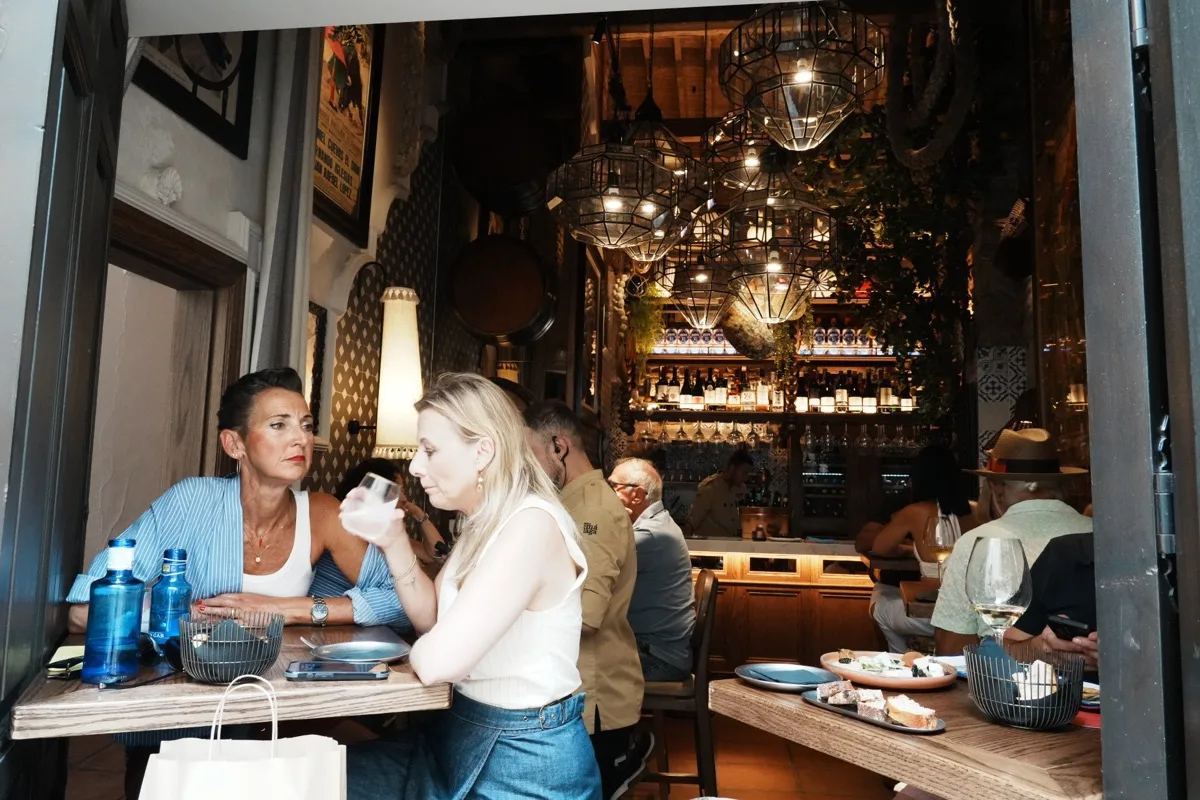
I’ll get the complaint in first: El Pimpi is touristy, and there’ll be a crowd. I’m still telling you to go once.
You’ll find it at Calle Granada 62, near the Picasso Museum, in a building that dates from the 18th century. The bodega itself only opened in 1971. Inside is a warren of tiled rooms and courtyards, and the wine barrels have been signed by celebrities. Framed photographs of famous visitors hang on the walls. Antonio Banderas has had a drink in here.
The menu is raciones, jamón ibérico, salmorejo, fried fish. I wouldn’t call the food anything more than solid, and you’re there for the building anyway.
Even with the crowd, I can usually find a quiet corner somewhere inside. Order the Pedro Ximénez, the sweet wine the place is known for.
My tapas route stops here for a glass of sweet wine in the courtyard.
14. El Gallo Ronco
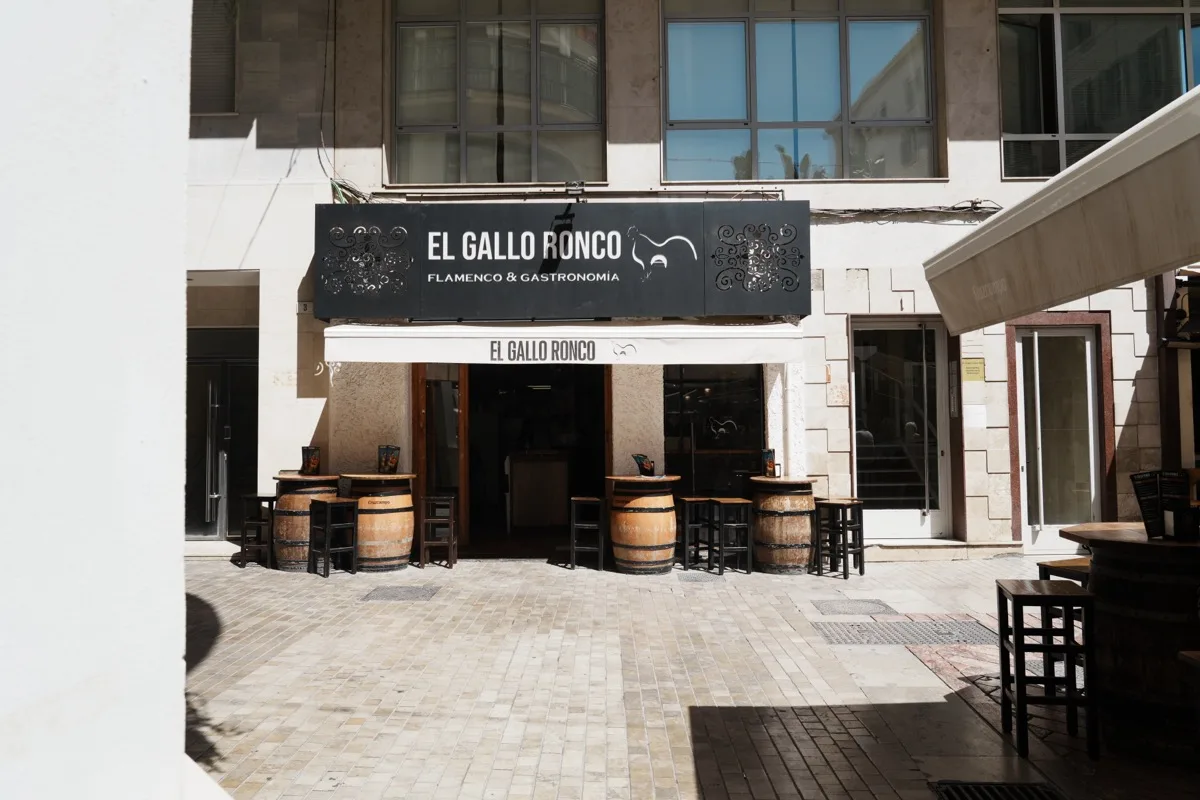
Treat the bill as a ticket with food attached. Thursday, Friday, Saturday and Sunday nights there’s a tablao show on while you eat, live flamenco in the room, and that’s the part you’re paying for.
The kitchen keeps it simple and filling. Grilled meats, croquetas, raciones to split, the sort of cooking that’s there to keep you fed while you watch.
For a spot on Plaza de las Flores, with the show included, the prices are fair. You’d pay for the flamenco somewhere anyway, and here it comes with dinner.
Come on one of the other three nights and you get music with your tapas, but not the show. It’s at Plaza de las Flores 1.
15. Perro Viejo
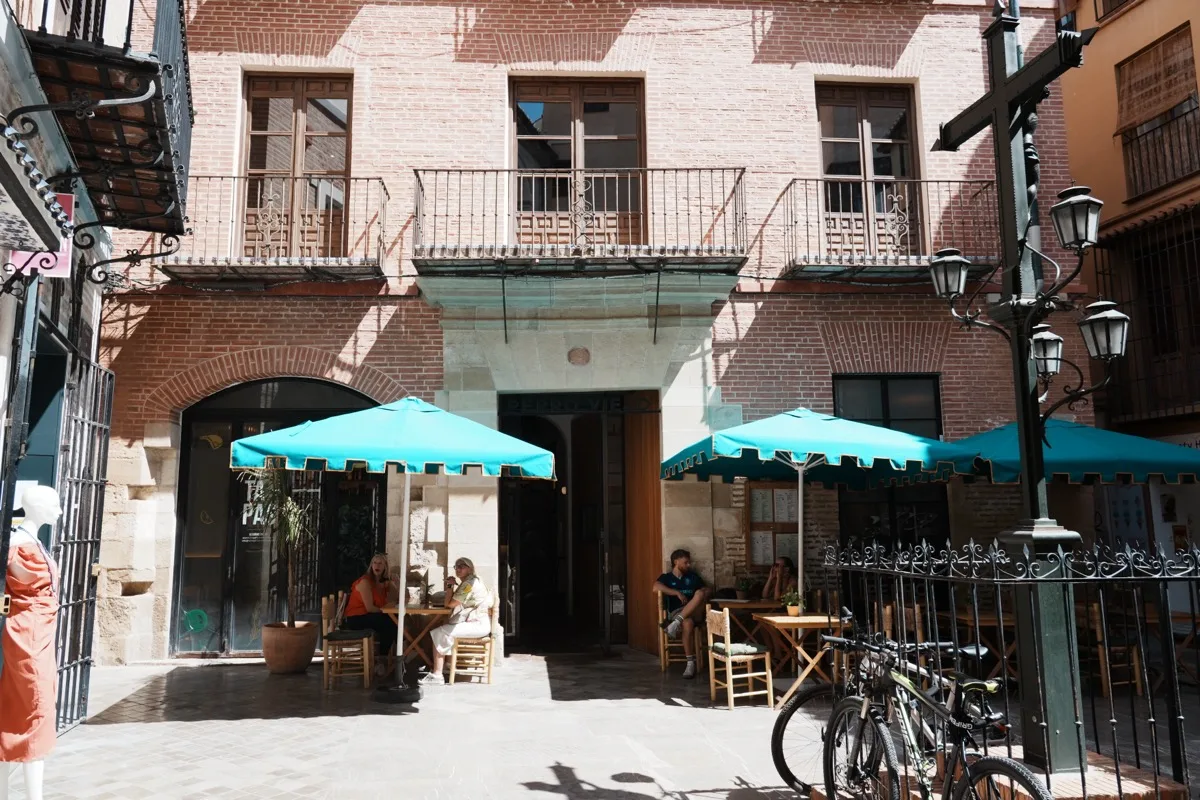
Read the menu twice. First pass, it looks like the same tapas list you’ve seen all week. Then there’s a bao bun with Iberian pork in it, and a smoky octopus plate that looks like it wandered in from a cocktail bar.
That’s the appeal. Everything’s a notch more polished than the usual old town tapas bar, and it’s built for a night when the usual won’t do. It isn’t really a bar, more of a sit-down meal kind of place, just so you know.
Bring a date. Or bring the friends who’ve done the classic bars already and want something they haven’t had yet.
It’s not bargain tapas, but the portions are a fair size for what you pay, and the drinks list is having as much fun as the kitchen. Find it at Calle Mártires 15, not far from Calle Larios.
The tapas route I’d walk, bottom of Larios to Perro Viejo

If you’ve got one day in Málaga and want to eat it the way I would, this is the walk, and it starts at the bottom of Calle Larios. El Yerno keeps market hours, so it’s a day that begins around lunch and ends with dinner, and everything is inside the old town apart from one hop across the Alameda for the first stop. The whole thing is on one Google Map as a walking route, all ten stops in this order.
Stop 1
Mesón Ibérico, Calle San Lorenzo
Across the Alameda in Soho. The pork and the charcuterie, then walk back to the bottom of Larios.
Stop 2
El Yerno, inside Atarazanas market
Point at the prawns. It's mornings only, which is why the route starts here and not at night.
Stop 3
Antigua Casa de Guardia, Alameda Principal
Sweet wine straight from the barrel, standing up. Twenty minutes, then move on.
Stop 4
Mesón Lo Güeno, Calle Marín García
A stew or the fried peppers at the bar that hasn't changed since 1967.
Stop 5
El Gallo Ronco, Plaza de las Flores
Croquetas and a ración to share on the square.
Stop 6
La Farola de Orellana, Calle Moreno Monroy
Two plates off the counter and a cold beer. Point, don't ask for a menu.
Stop 7
Casa Lola, Calle Granada
Join the queue. Berenjenas con miel, and at least one round of croquetas.
Stop 8
El Pimpi, Calle Granada
A glass of Pedro Ximénez in the courtyard. You're here for the building.
Stop 9
La Tranca, Calle Carretería
A tapa and a vermut, standing at the bar with the noise around you.
Stop 10
Perro Viejo, Calle Mártires
Dinner. It isn't really a bar, more of a sit-down meal kind of place, so end here and stay.
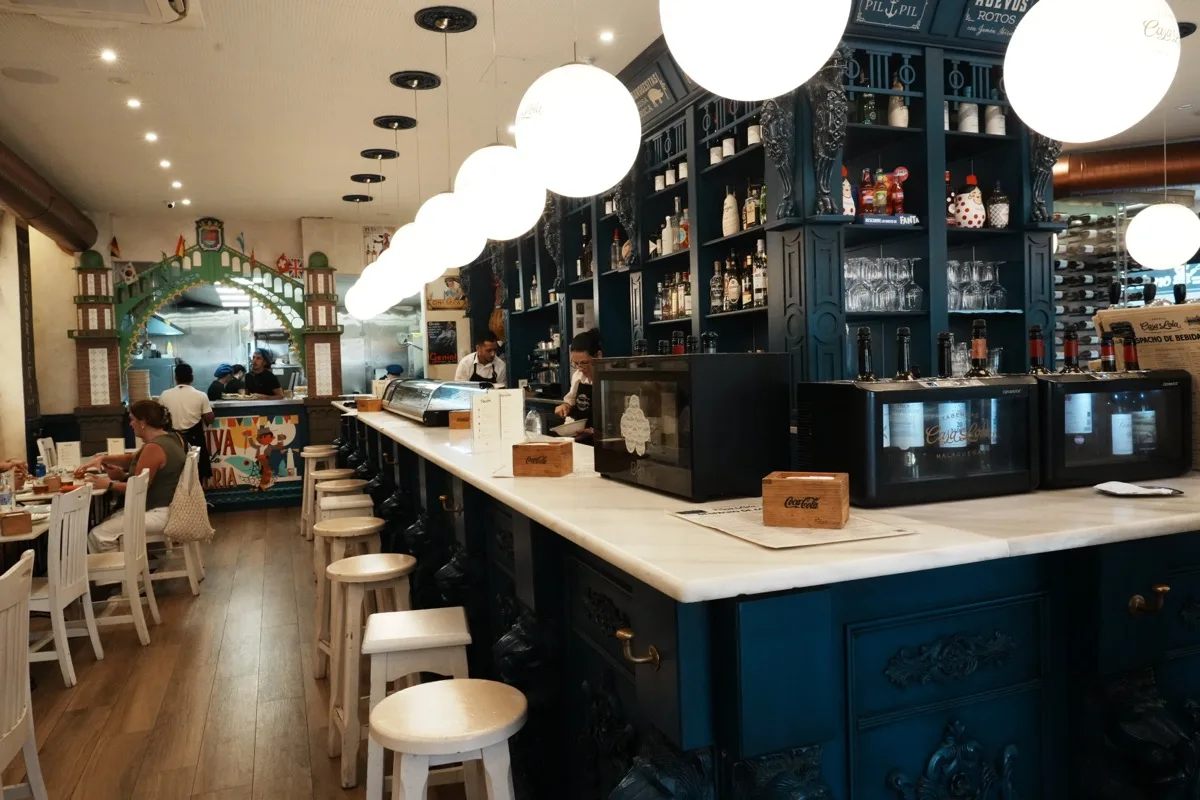
Five stops of this, drinks included, come to about €35 to €50 a head. If you’d rather not do the navigating, a guided tapas tour exists for exactly this.
How ordering works
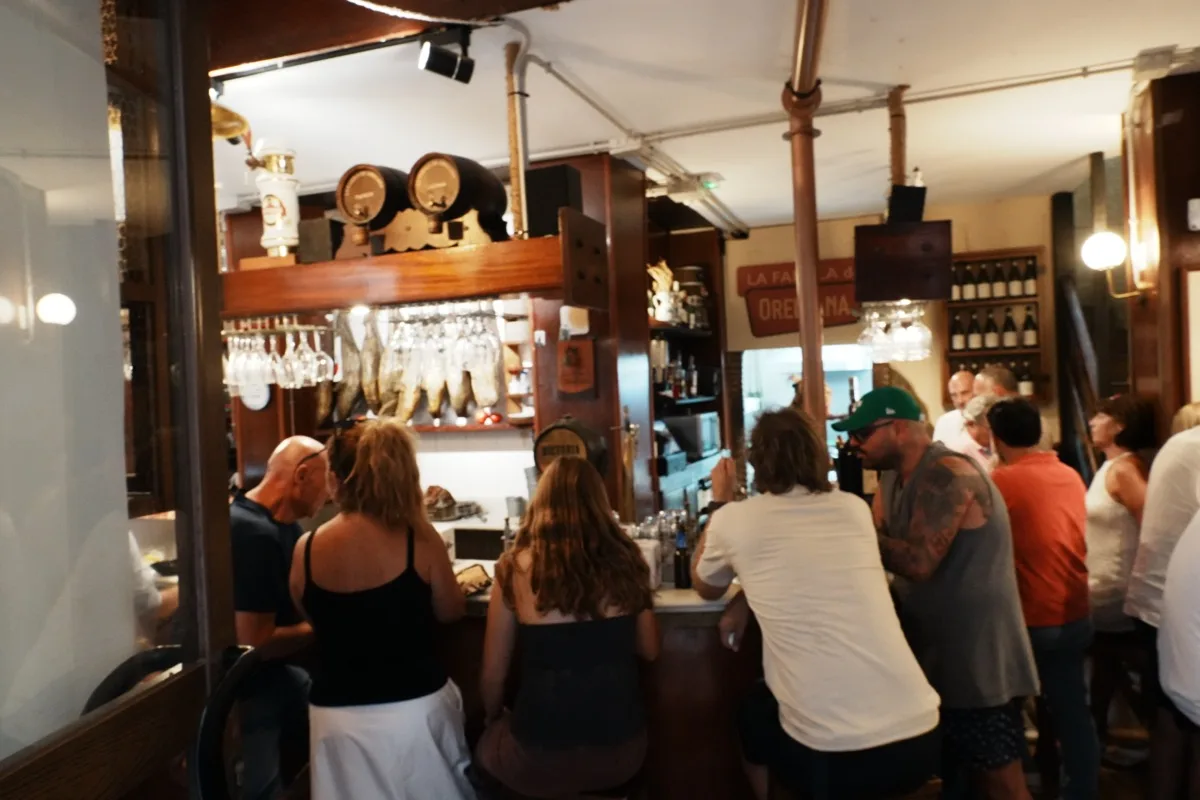
Look up before you look down. In nearly every bar the menu is on the wall, or on a card someone hands you, or both, and the cold tapas are sitting in a glass case along the counter where you can see exactly what you’re getting.
If your Spanish gives out halfway through, point at the case. Nobody’s bothered.
The sizes matter more than the dish names do. A tapa is a little plate, enough for one person to pick at. A media ración is half a portion and works for two. A ración is the whole plate, and that one’s for everyone.
Not every bar bothers with all three, though nearly all of the ones in the old town do.
Don’t try to order the whole wall in one go. I ask for one or two tapas each, watch what turns up, and decide from there. There’s nearly always a second round.
Lunch runs from about one until four, and the kitchens come back from half past eight. A few bars lock up between the two. Arrive at six expecting the works and there’ll be almost nothing to eat.
Tipping & paying
You pay when you’re done, not as you go. The waiter keeps a running tab for you, which might be a scribble on a torn bit of paper or might just live in their head.
Nobody expects a tip at the bar, though it’s always welcome. What the locals do is leave the small coins from their change on the counter, €0.50 or €1 after a round of drinks.
If you’ve sat down to a full meal, rounding the bill up or adding 5 to 10 per cent counts as generous. Leave nothing and no one will give you a second glance. Bring some cash too, because the traditional bars still run on it, even if most places take a card these days.
What to order
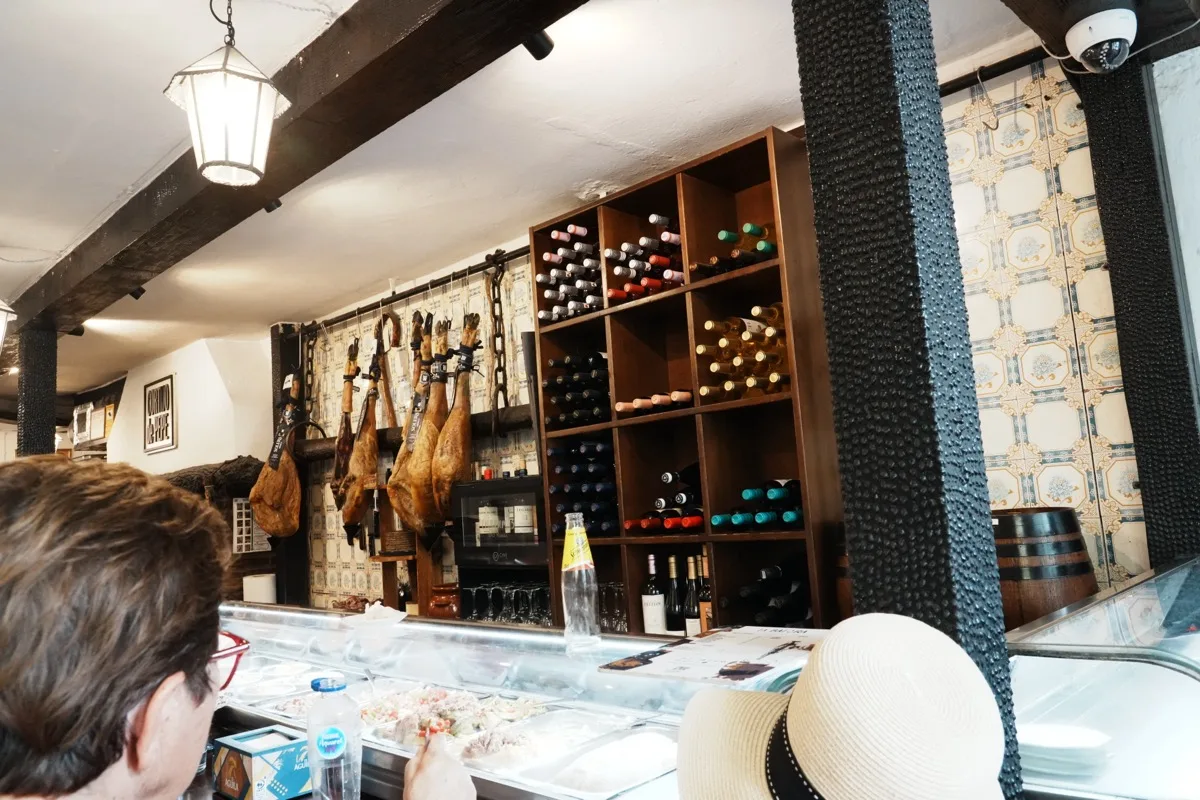
I’ve got my two regulars and I’m not giving them up, but if you’ve only got a few nights here, these are the plates I’d steer you towards.
- Gambas al pil-pil Prawns in a small clay dish of oil that’s still bubbling when it reaches you, thick with garlic and chilli. Get bread with it, because the oil is what you’re really there for.
- Tortilla de patatas The potato omelette. A good one stays soft in the centre and comes cut into wedges you’ll want to split.
- Berenjenas con miel Aubergine slices, fried and finished with cane honey. Salty and sweet in the same mouthful.
- Cazón en adobo Dogfish, marinated first and then deep-fried until it’s golden. People up and down this coast are devoted to it.
- Croquetas Béchamel that’s nearly runny inside a crunchy coat. Jamón is what you’ll get by default; when a bar lists oxtail or cod, get those.
- Pimientos de Padrón Little green peppers blistered in hot olive oil. Most are mild. Now and then one bites back.
- Ensaladilla malagueña Potato salad the Málaga way, with cod, orange and olives in it. Odd on paper, refreshing on the plate.
- Flamenquín Meat rolled around ham, breaded and fried. It’s heavy, so split it.
- Rabo de toro Oxtail stewed slowly until it gives up. One for a sit-down restaurant rather than a bar counter.
- Secreto ibérico A cut of pork that people here prize, cooked with nothing more than coarse salt. Comes out juicy and tender.
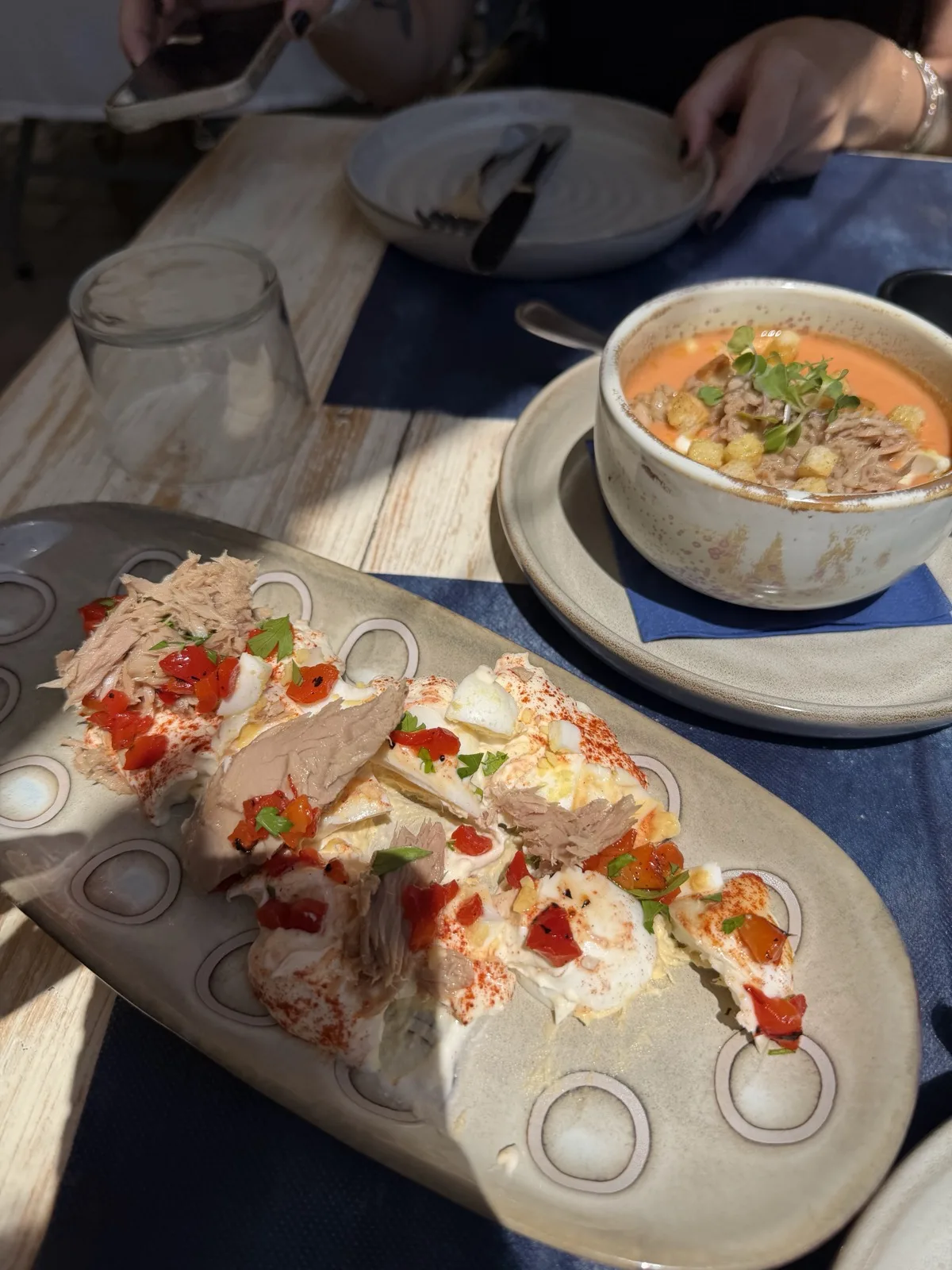
- Gazpacho and salmorejo Both cold tomato soups. Gazpacho is the lighter of the two; salmorejo is thick and creamy and usually arrives with a scattering of jamón on top.
What to drink with it
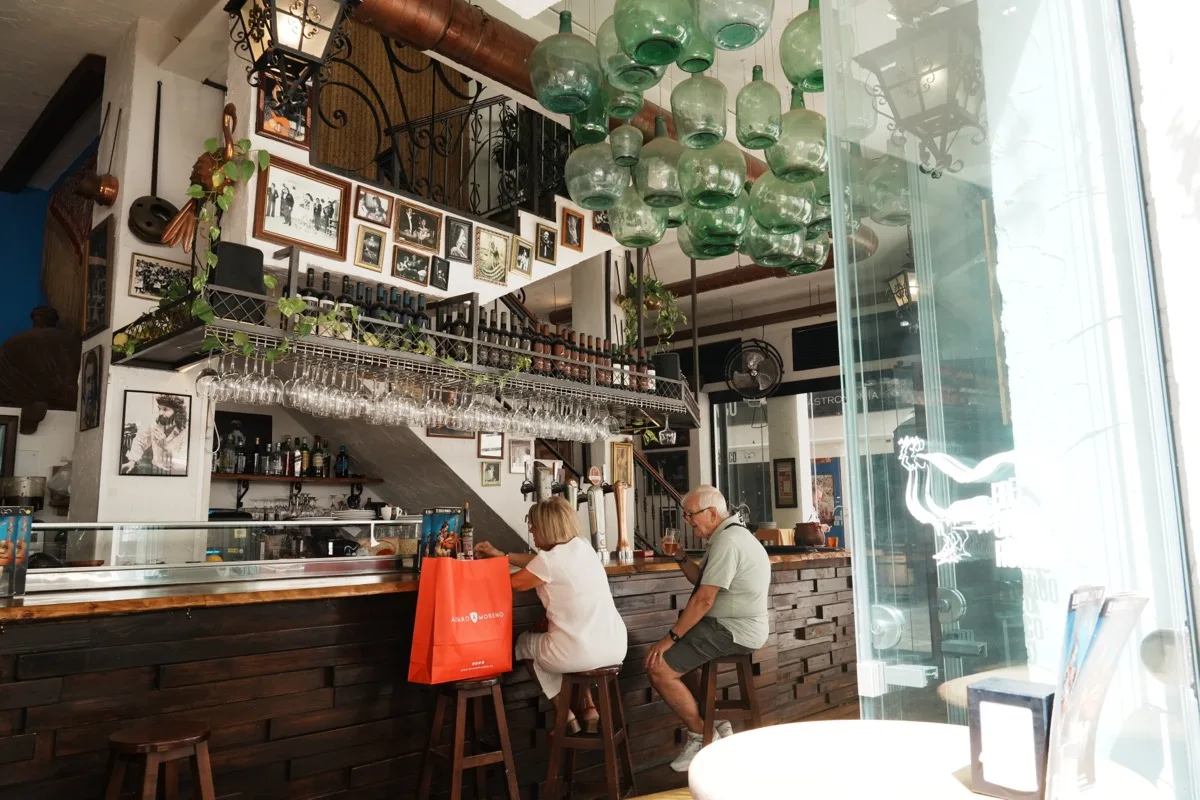
Start with a caña. It’s the small draught beer, and it’s what nearly everyone orders first. A tubo gets you a bigger glass. A jarra is a jug, meant to be shared.
Tinto de verano is what I’d hand you on a hot afternoon: red wine, topped up with lemon soda. Lighter than sangría, and the thing locals actually drink through summer.
Vermut on tap is back in fashion. At Colmado 93 it comes out cold, and it belongs next to jamón and olives.
And the sweet one, Málaga’s own. Vino dulce has been made in the Axarquía hills east of the city for centuries. El Pimpi pours it by the glass; Antigua Casa de Guardia pulls it from the barrel.
Then throw the list away
I’d be suspicious of anyone who told you these are the fifteen best tapas bars in Málaga, me included. They’re the fifteen I’d send you to. The old town has far more, and this list is my taste and nothing else: I’m opinionated about food and I don’t apologise for it.
So use it the way you’d use any friend’s list. Try a few, throw it away, and go find the bars that end up being yours.
And if the budget’s deciding where you eat, I’ve got a guide to eating cheaply in Málaga for exactly that.