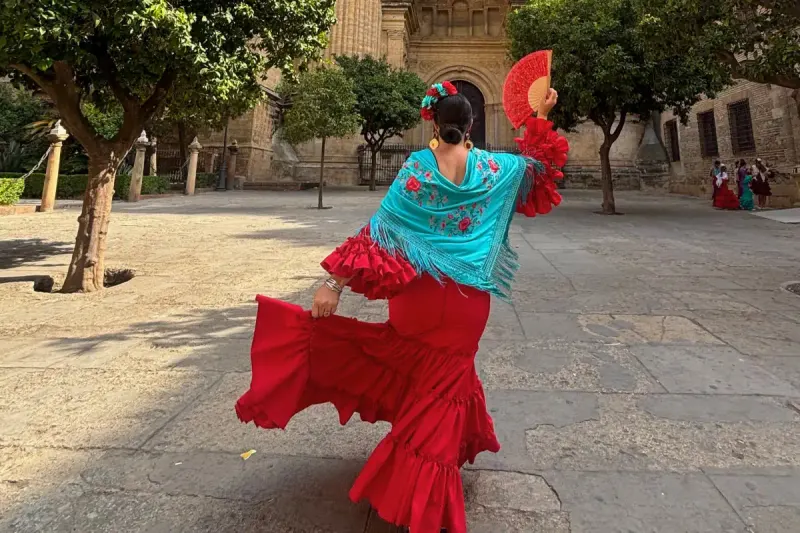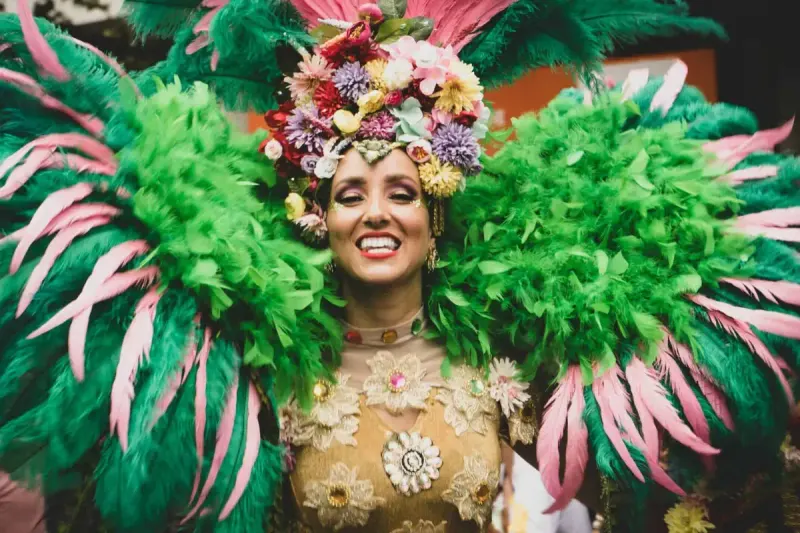
I went to a couple of days of Málaga Carnival in 2026, and the first day and the last were the two I’d go back for. Everything in between is good, but those two have the crowds, the food and the best free food of the week.
The Burial of the Anchovy is the reason to come. Málaga holds a mock funeral for a giant fish, and the whole city turns out in black to wail over it.
When is Málaga Carnival in 2027?
Carnival is tied to Lent, so the dates shift. In 2026 it ran for nine days, from Saturday 7 February to Sunday 15 February, and always ends on the Sunday before Ash Wednesday. For 2027 that works out at roughly 30 January to 7 February, but the council hasn’t published the programme yet, so confirm on the official carnival website before you book.
Everything below is the 2026 programme. The big events keep their slots from year to year, and the small ones move by a day or two.
The weeks before: COAC and the first stew
The carnival starts well before the official opening, with the COAC (Concurso Oficial de Agrupaciones de Canto), the singing contest where the murgas and comparsas compete for the year’s title. In 2026 the preliminary rounds ran from 23 to 30 January at 8pm at ESAD, the drama school, and they’re free.
The semi-finals (1 to 4 February) and the grand final (6 February) were at Teatro Cervantes, and those sell out, so buy tickets early through the official site.
On 31 January there was the Berza Perchelera, a free tasting of the traditional stew in El Perchel at 1pm. I didn’t make it to this one.
Opening weekend: paella and the grand parade
The opening gala on Saturday 7 February was postponed because of the weather. The Gala of the Gods and Goddesses moved to Thursday 12 February at 8pm, and the Pregón, the opening proclamation, moved to Saturday 14 February at 5pm, both in Plaza de la Constitución.
Sunday 8 February had the better plan anyway. The carnival paella in Palma-Palmilla started at 1pm, free, and it’s a neighbourhood event rather than a tourist one, so go around 12:30 or the pot will be empty. In the afternoon the Grand Parade set off at 5:30pm from Paseo del Parque, down Calle Larios to Plaza de la Merced.
The evening shows
The murgas and comparsas perform Monday to Thursday from 7pm at the Tribuna de los Pobres and in Plaza del Carbón, and the evening shows were my favourite part of the week. Murgas are the satirical groups, who go after politicians, celebrities and whatever the city is annoyed about that month, in thick Andalusian. Comparsas are more musical, with harmonised singing and bigger costumes.
Come early. Plaza de la Constitución gets busy fast, and by the time the main shows start you’ll be watching from the back if you arrive on time rather than early. Arriving 30 to 60 minutes ahead gets you somewhere you can see.

The peak weekend
Friday 13 February was the Drag Queen Gala at 8pm in Plaza de la Constitución, with some of the most elaborate costumes of the week.
Saturday 14 February was the biggest day. The fideos a la parte noodle tasting in El Palo started at 1pm, and the Battle of Flowers followed at 8pm, on Calle Larios and Plaza de la Constitución. It runs until around 9:30pm, so it’s a short one: decorated floats come down the marble street while people throw flowers at the crowd, and it’s chaotic in the best way.
After that comes the big costume party in the city centre at 9pm, with live music and street dancing that carries on late. Saturday also happened to be Valentine’s Day, so book dinner well ahead.

The last Sunday: free anchovies and a funeral
At noon on Sunday 15 February, Plaza de la Constitución fills for the Gran Boqueroná. The fried anchovies, Málaga’s signature fish, are handed to you in a paper cone, and they’re free when you buy something to drink at the beer tent. It’s the best free snack in Málaga, so be there before the queue gets long.
The Burial of the Anchovy (Entierro del Boquerón) is Málaga’s own twist on the Burial of the Sardine that ends carnival across Spain. It started at 5pm from Calle Larios. People in black play the mourners, the wailing is theatrical, and a giant anchovy goes through the streets surrounded by irreverent jokes, before it’s burned on Malagueta Beach to mark the start of Lent.
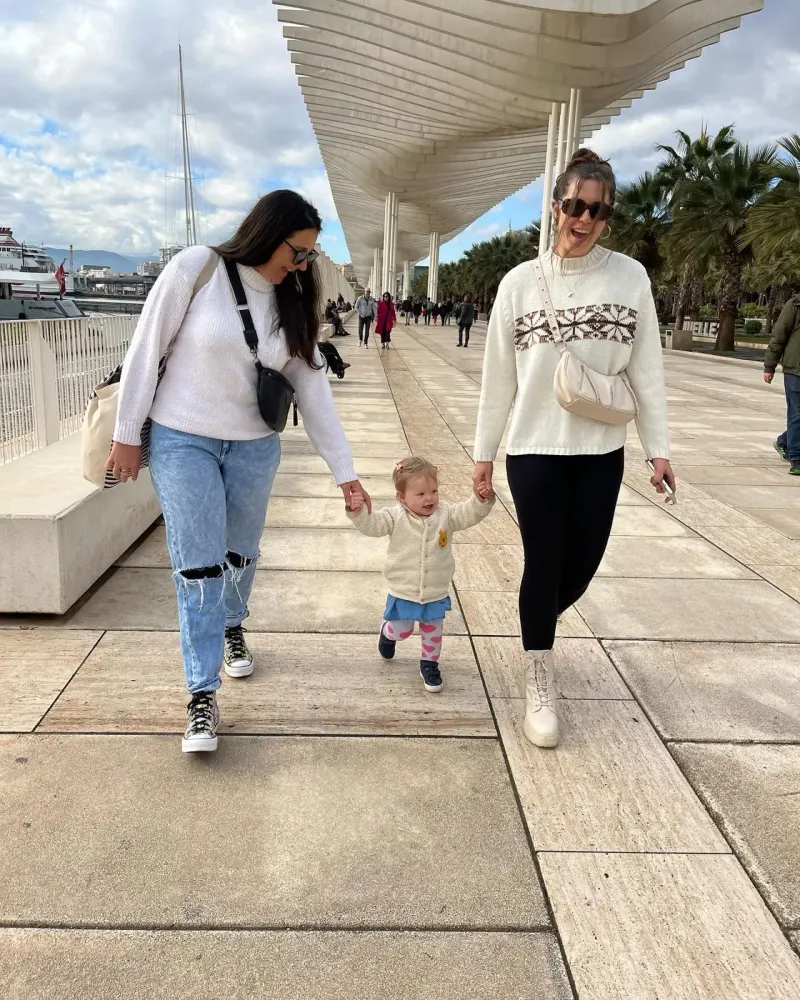
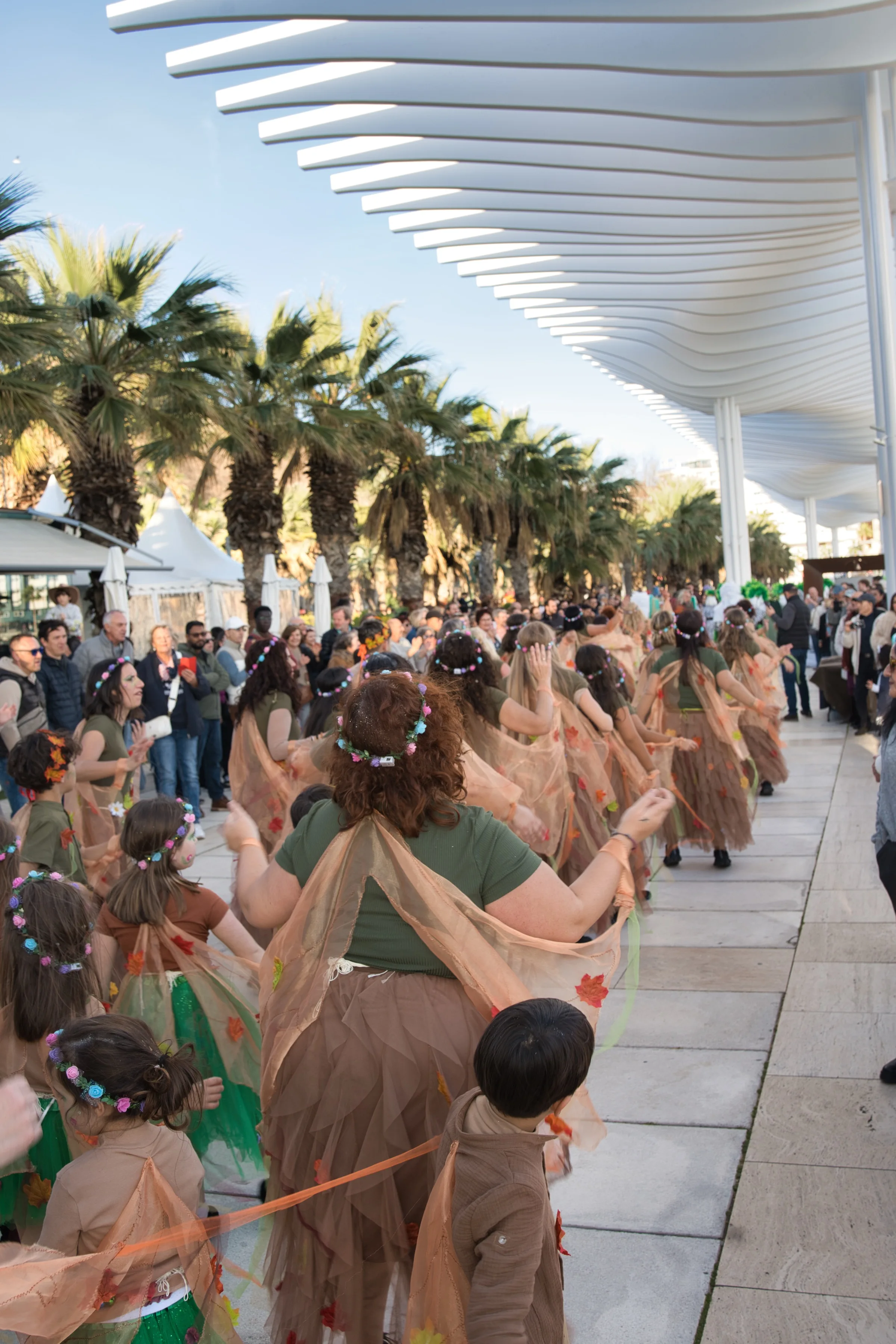
I watched the procession from under the white pergola at the port, on the way to the beach, and I never made it to Malagueta, so I can’t tell you what the bonfire is like. Go further than I did.
Burial of the Anchovy route in Málaga (Entierro del Boquerón)
The procession leaves Calle Larios at 5pm and follows this route:
- Start: Calle Larios
- Plaza de la Marina
- Palmeral de las Sorpresas (the port)
- Muelle Uno
- Finish: Playa de la Malagueta, where the anchovy is burned
Allow two to three hours if you follow it the whole way, because it stops for performances. Calle Larios fills up early, so stand along the route in good time. The white pergola at the port is where I watched from.
Bad weather is the one thing that changes it. In 2025 the rain cancelled the procession and the anchovy was burned straight away on the beach, so check the official site on the day.
Free neighbourhood tastings
The best-kept secret of the week is the free food in the neighbourhoods, which locals go to and visitors almost never do. In 2026 there were three:
- Berza Perchelera, 31 January, 1pm, El Perchel: traditional Málaga stew
- Carnival paella, 8 February, 1pm, Palma-Palmilla: Valencian-style paella
- Fideos a la parte, 14 February, 1pm, El Palo: seafood noodles
Portions run out. Arrive half an hour early and bring your own plate and cutlery if you want to be sure of a serving. If you’re staying for the food, my guide to tapas culture in Málaga will keep you fed in between.
What to wear
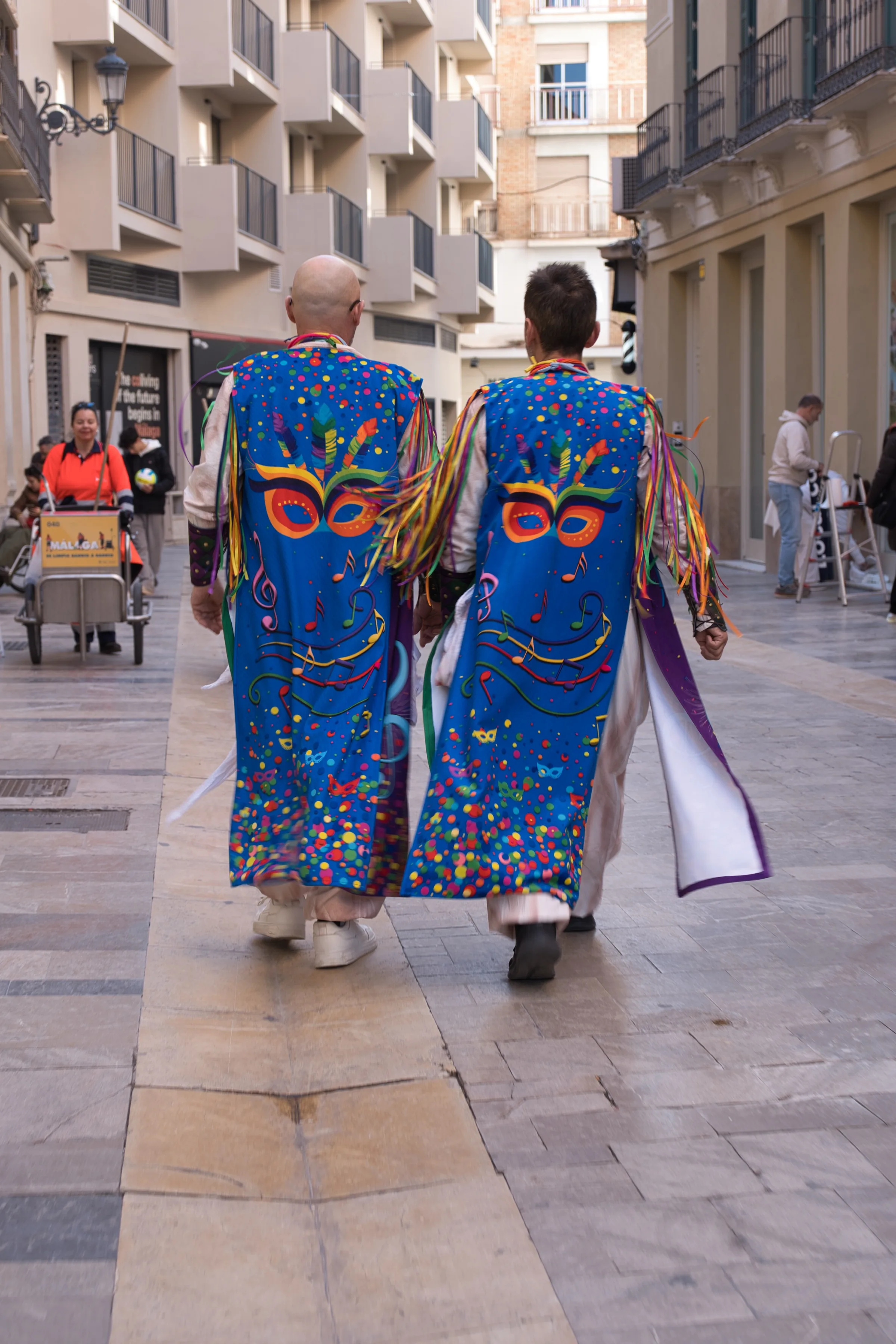
Costumes are optional, but you’ll feel underdressed on Saturday night without one. A wig, mask or face paint from any local shop is enough. For a full outfit, Luis Carrasquilla is a Málaga costume shop.
Going with kids
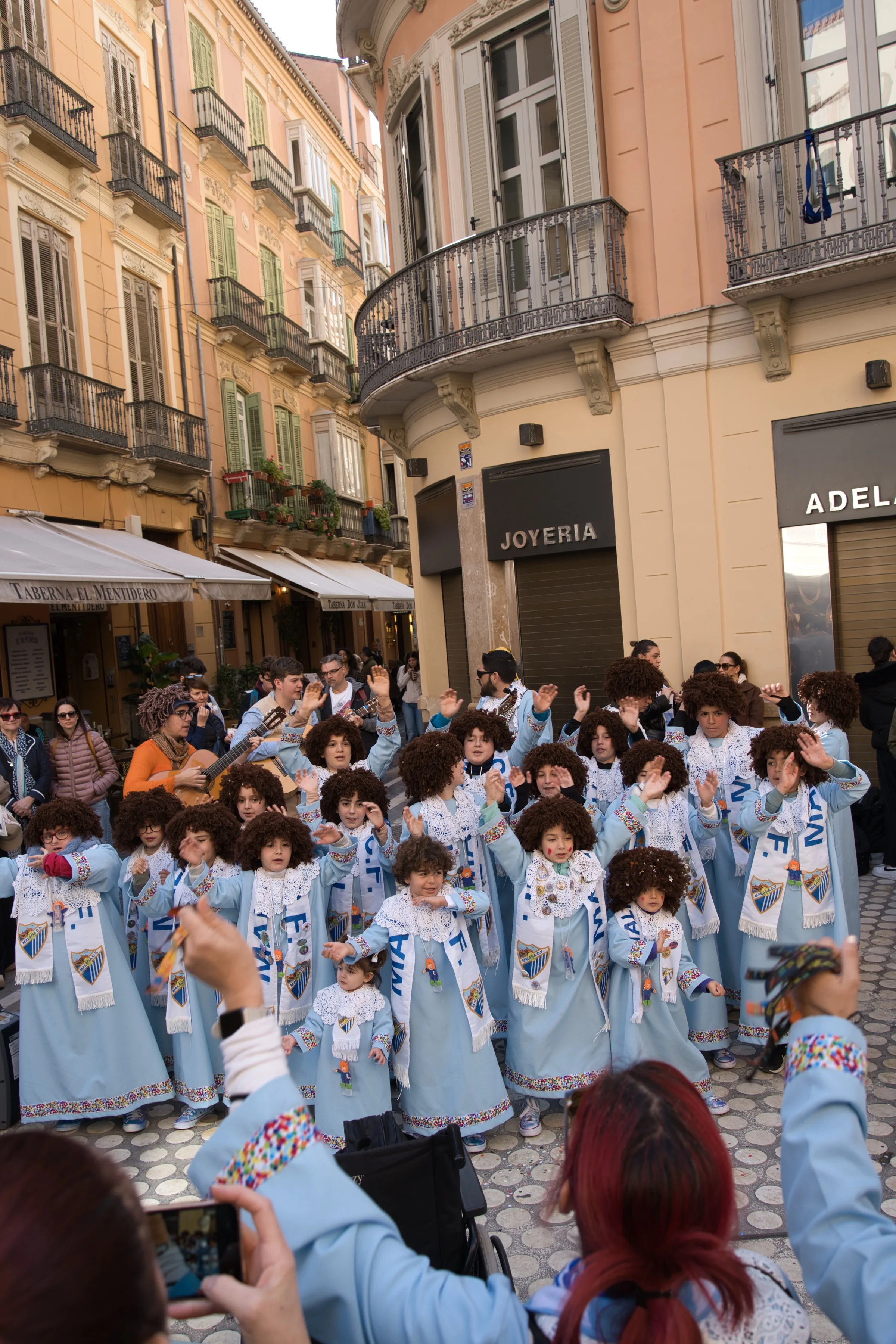
Stick to daytime: the Children’s Proclamation was at noon on Sunday 8 February in Plaza de la Constitución, and the Gran Boqueroná and the parade suit kids. Evenings get loud and the Saturday party runs into the small hours. My Málaga with kids guide covers the rest of the year.
How to plan your visit
For a weekend, take the last one: Friday for the Drag Queen Gala, Saturday for the Battle of Flowers, Sunday for the Gran Boqueroná and the Burial of the Anchovy. For one day, make it Sunday. Monday to Thursday is quieter, with the murgas and comparsas performing in the evening.
- Bring cash for street food and drinks
- Pack a layer. February evenings are cool, with daytime highs of around 16 to 17 degrees
For the weather and what else is on that month, see my best time to visit Málaga guide.
Getting around and where to stay
The centre is closed to traffic during the big events, so walk. The Bus A Express runs from the airport to Alameda Principal every 20 to 30 minutes, and the Málaga Metro only helps for El Perchel. Don’t plan on parking in the centre.
Hotels fill up and prices rise that week, so book early. The centre is walkable to everything but noisy on Saturday night. Soho is a short walk from Calle Larios. El Palo suits the neighbourhood tastings and is further out. My where to stay in Málaga guide covers the neighbourhoods.
Day trips during carnival week
These sell out that week, so book ahead: the Caminito del Rey with transport from Málaga, a tapas and wine walking tour for an evening, or the Nerja and Frigiliana day tour (Nerja, Frigiliana). More in day trips from Málaga.