Let me save you some disappointment: the Enchanted Forest in Parauta isn’t really a forest. It’s a wide, pale gravel road lined with chestnut trees, so you’re walking along a road rather than through any woods. I’d still go back in a heartbeat.
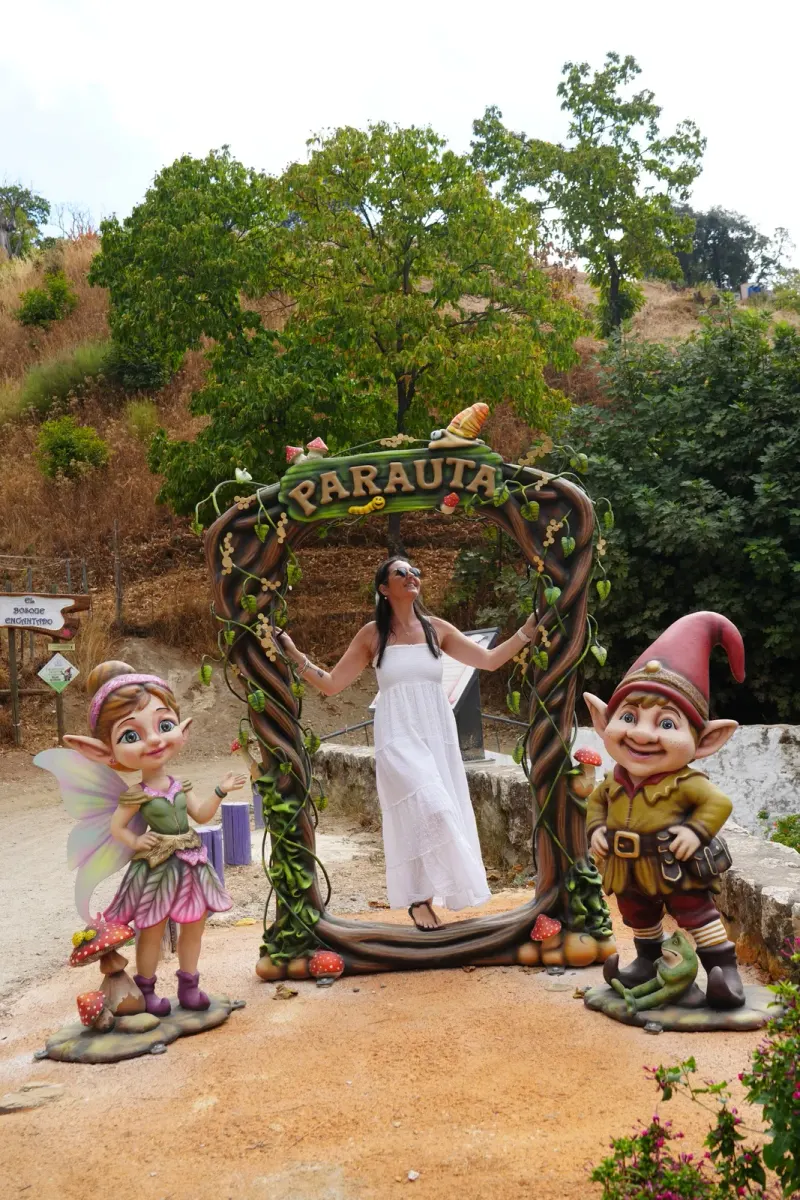
I went on Saturday 3 October 2026 with Jethro. It’s free and there’s nothing to book, you just turn up and start walking. At the start there’s a carved wooden Parauta arch with a fairy statue on one side and a red-hatted gnome on the other, and that set the tone for the walk.
I only did about 45 minutes, out and back, before it looked like rain and I turned round.
What the Enchanted Forest actually is
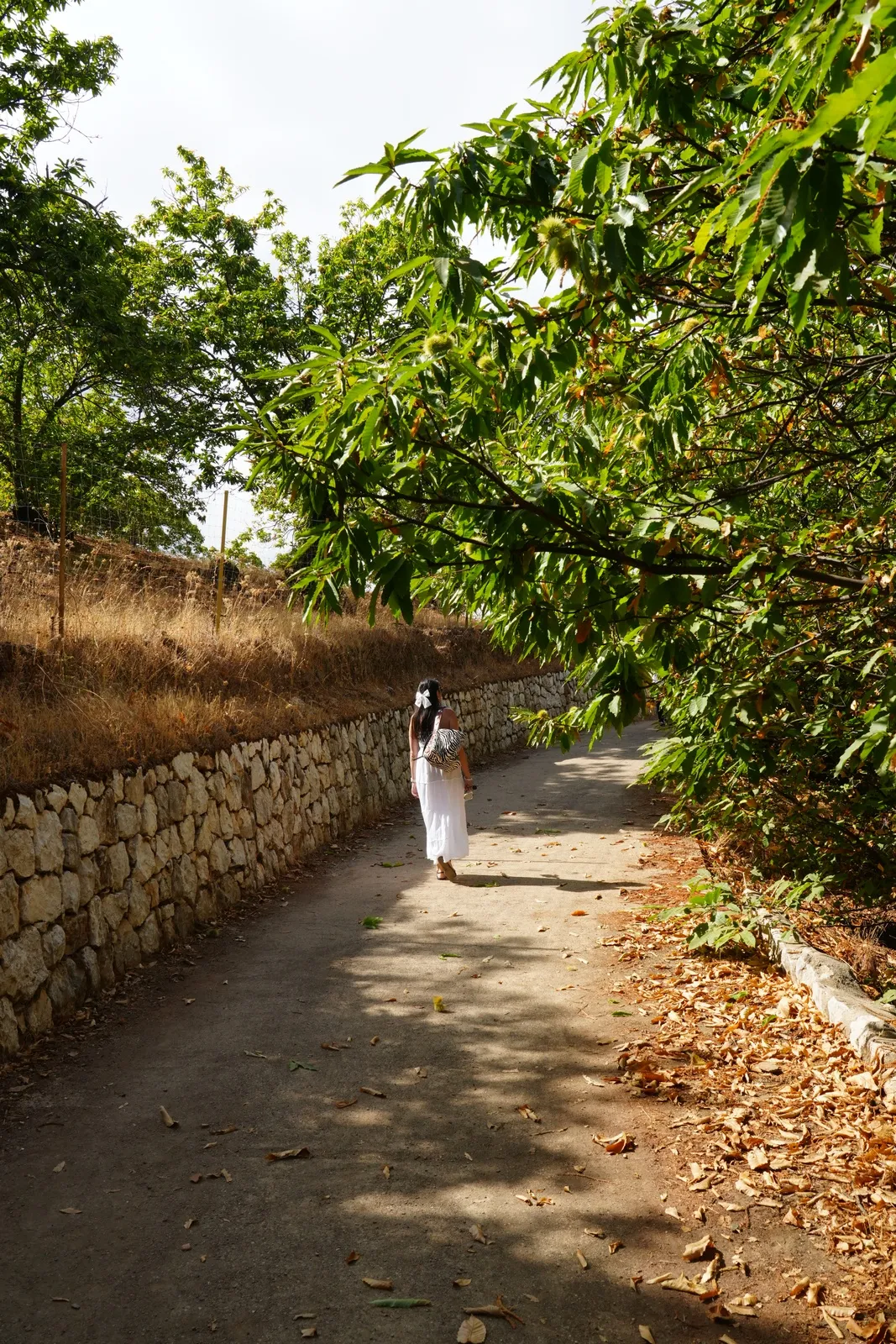
It is on a road covered by chestnut trees, so you aren’t really walking through a forest. If you’re picturing deep woods and a trail that disappears into the trees, that isn’t what this is.
I enjoyed the walk anyway. The track runs under the chestnuts and the wooden figures are carved along the way.
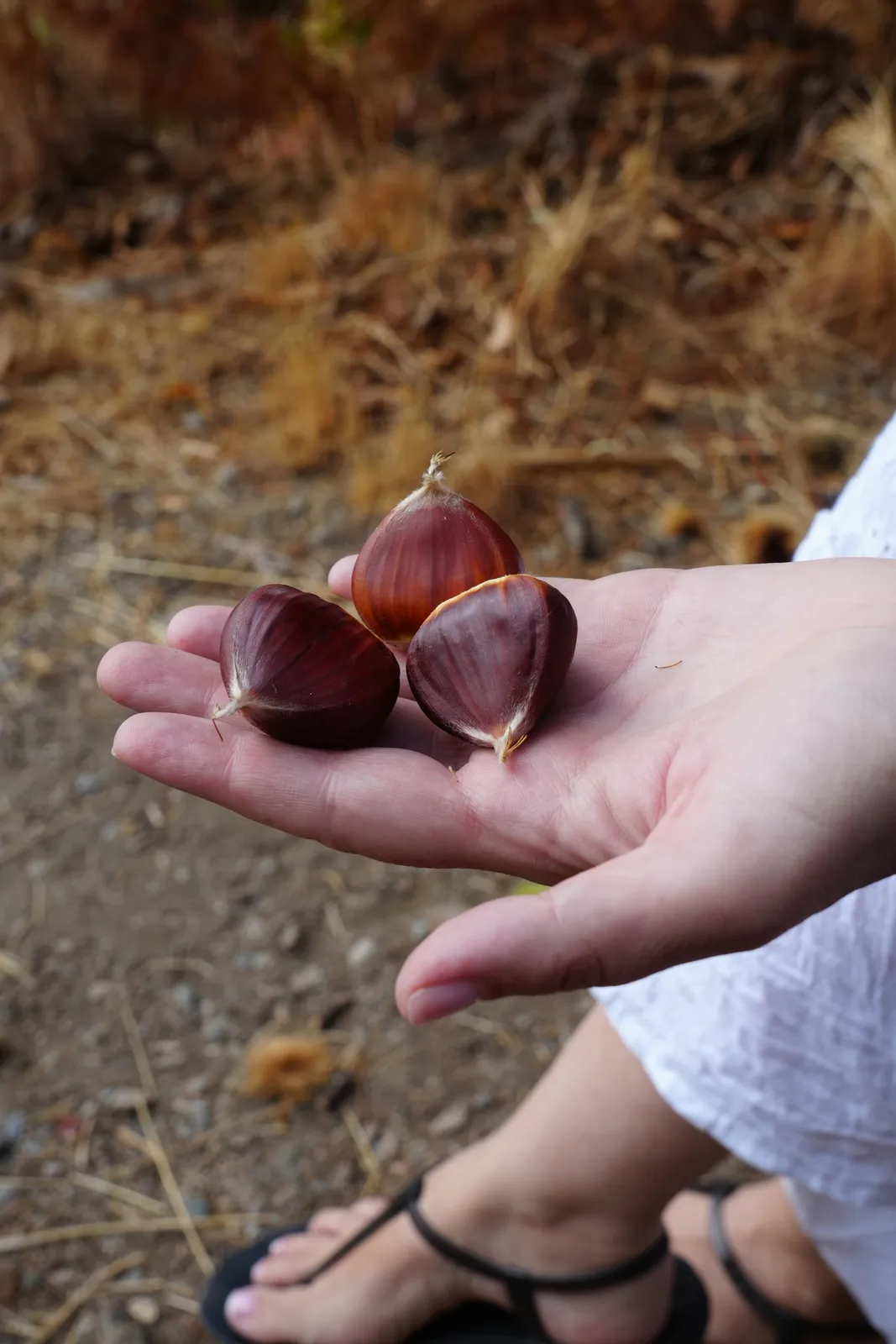
The chestnuts were a big part of that for me. It was the first time I’d seen chestnut trees, and the first time I’d seen actual chestnuts, and I thought it was amazing. I’m aware that’s a very small thing to get excited about, but there it is.
It’s also not a quiet, you-alone-with-the-trees kind of place. There were lots of families with pushchairs and plenty of people walking their dogs, so it’s a gentle outing and not a hike.
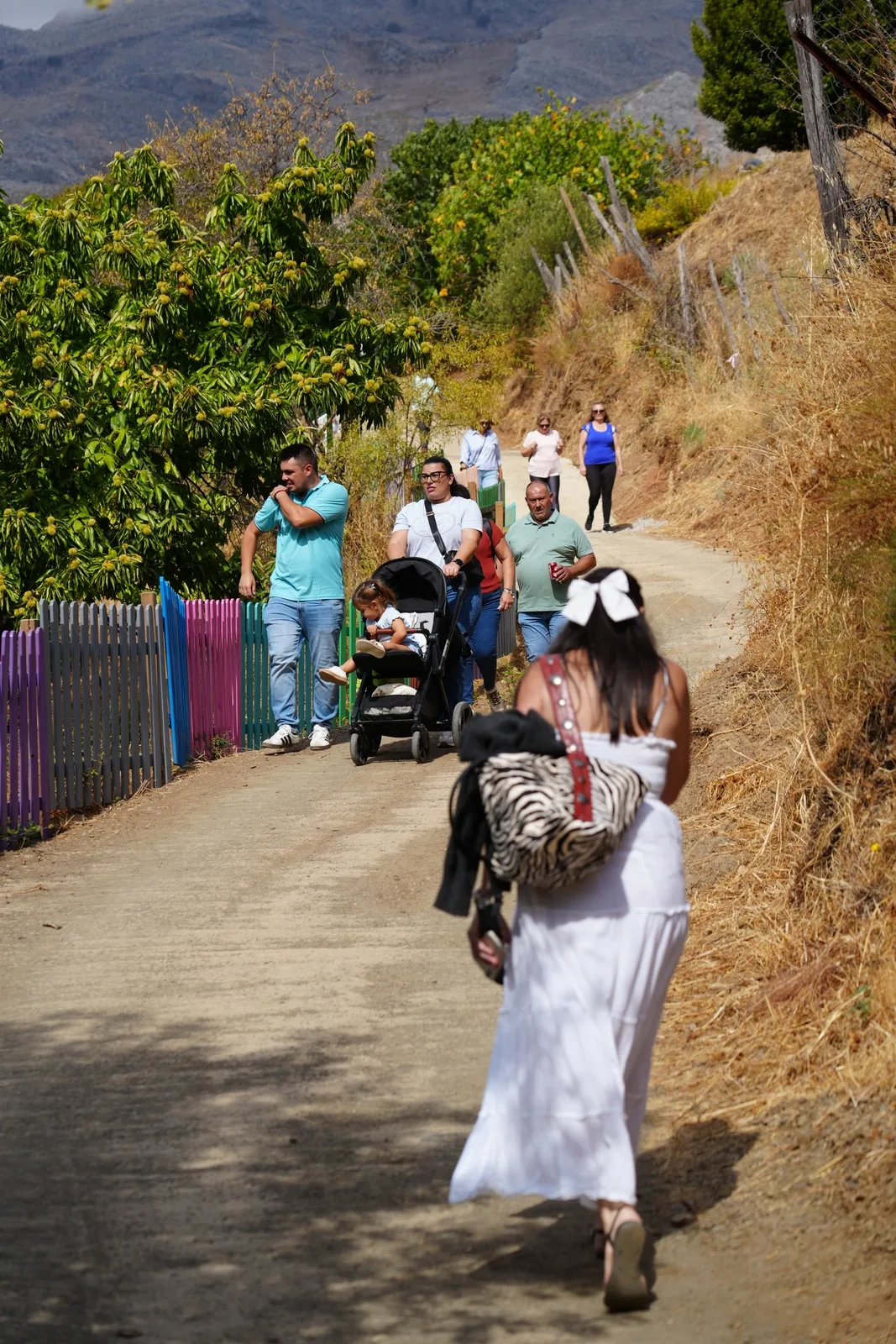
The path was open the day I went, and it was fine underfoot. I mention it because it had been reported closed earlier after heavy rain damage, and it has since reopened. If you’re going soon, it’s worth a quick check before you drive up.
⭐ Don’t miss >> Things to do in Ronda, since you’ll be out that way
Getting to Parauta from Málaga
From Málaga, I drove. I did the olive oil mill near Ronda first and then headed on to Parauta, which was pretty close to the mill, so the second leg didn’t feel like a big extra trip.
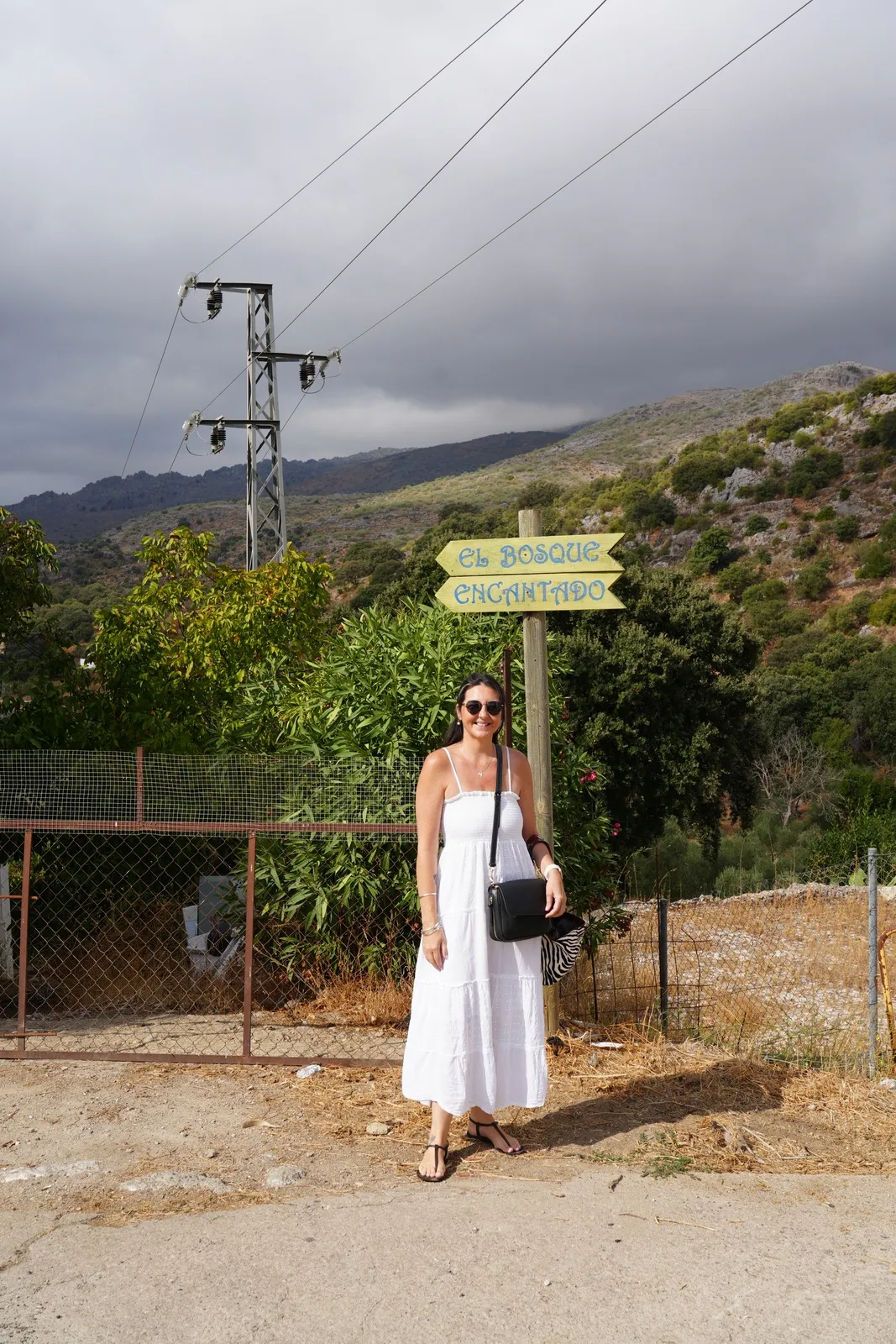
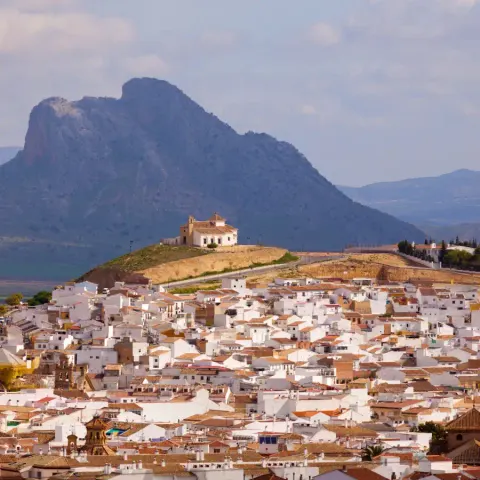
I didn’t time it, so I can’t tell you how long it takes. Parauta is a mountain village in the Serranía de Ronda, in Málaga province, and since I had the car, I haven’t looked into buses or any other way of getting there. If you don’t drive, that’s worth a quick search before you plan the day around it.
PLANNING YOUR DAY OUT TO PARAUTA?
🚗 Rent a car: I use Discover Cars
🎟️ Tours around Ronda: I use GetYourGuide
🏨 Accommodation: Find hotels in Ronda
🛡️ Travel insurance: I use SafetyWing
Parking at the bottom of the village
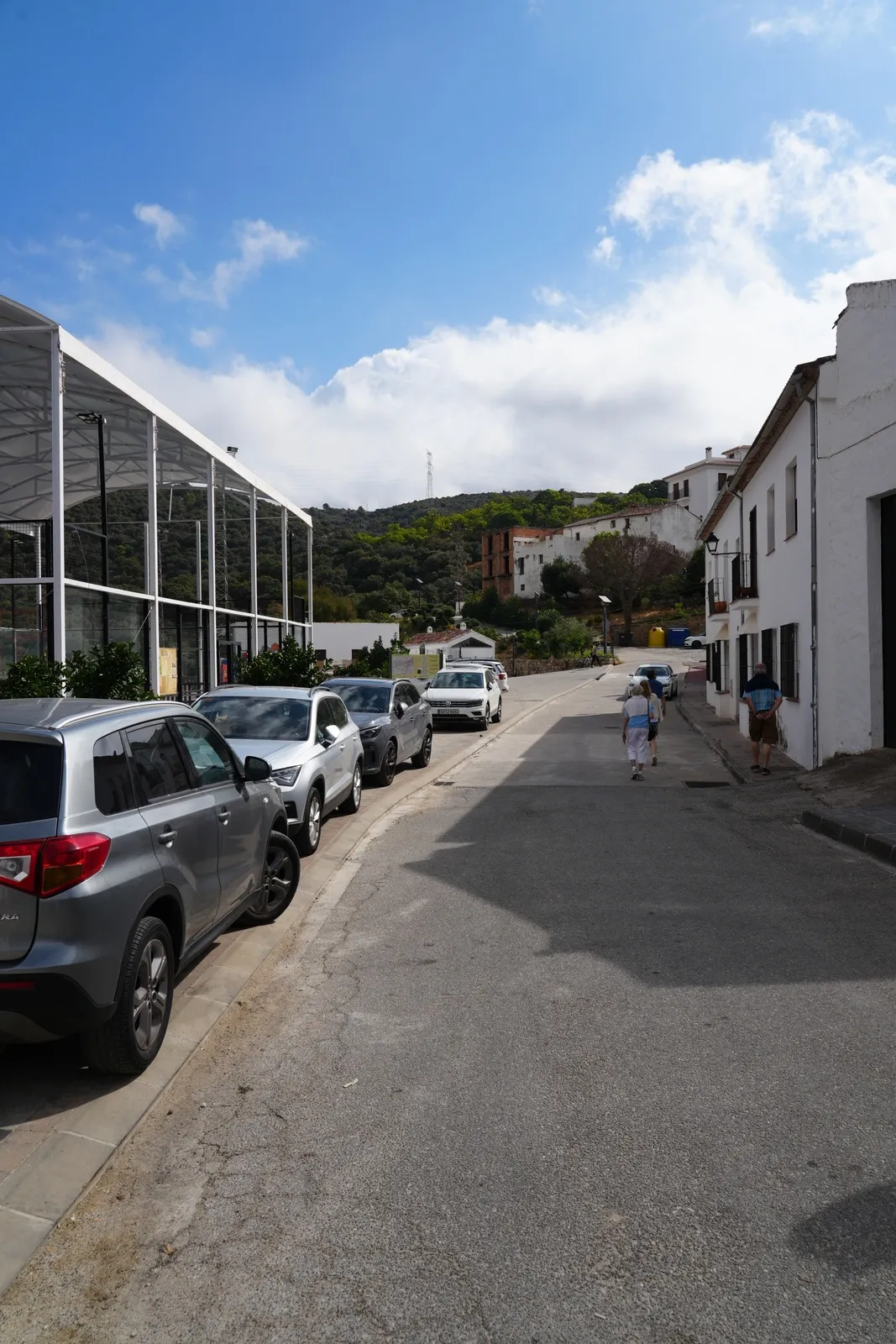
Drive right down to the bottom of Parauta. That’s where I found a space, and I paid the parking assistant €2 to keep an eye on the car and went off to start the walk. Have a couple of coins ready. It’s about a ten-minute walk up to the stalls at the start of the path, with a few photo stops along the way.
Walking to the man with the bow and arrow
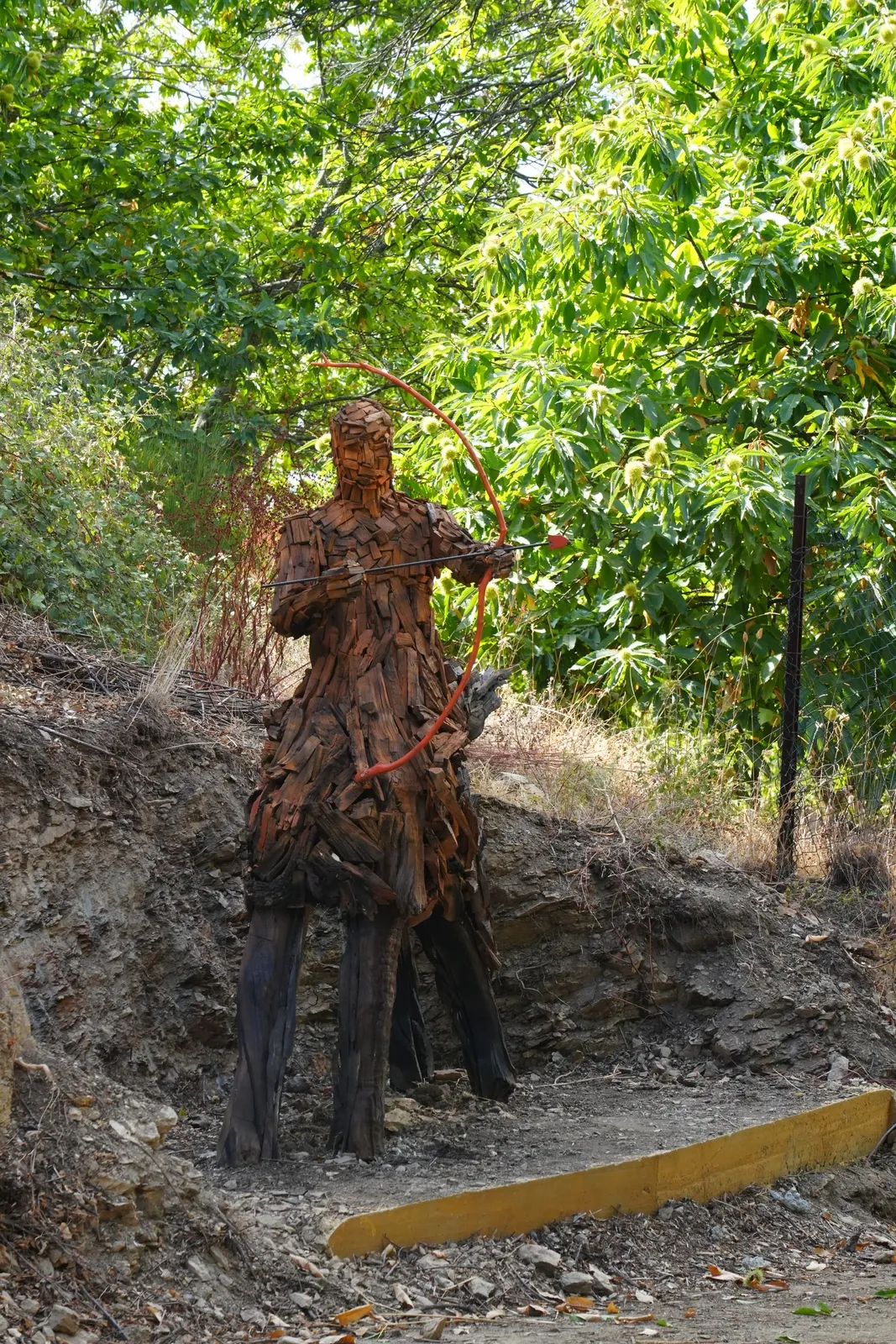
The first one I stopped for was an old man carved into a tree. Further along there’s a fairy above your head on the walkway, so look up as well as ahead. Then I reached the man with the bow and arrow, and that’s where I turned around.
I walked for about 45 minutes in total and I did not walk the whole trail. I’m saying that plainly because I don’t want you to read this thinking I’ve seen all of it. I haven’t, and I can’t tell you what’s past the archer. The official listing for the trail puts the whole route at about 3 km out and back.
The reason I turned back is that it looked like rain, and I hadn’t thought about that at all. The village is in the mountains, so it probably rains often.
The path is out and back, so you walk back the same way you came, which is also how you leave the village. That meant passing the carved figures a second time on the way to the car.
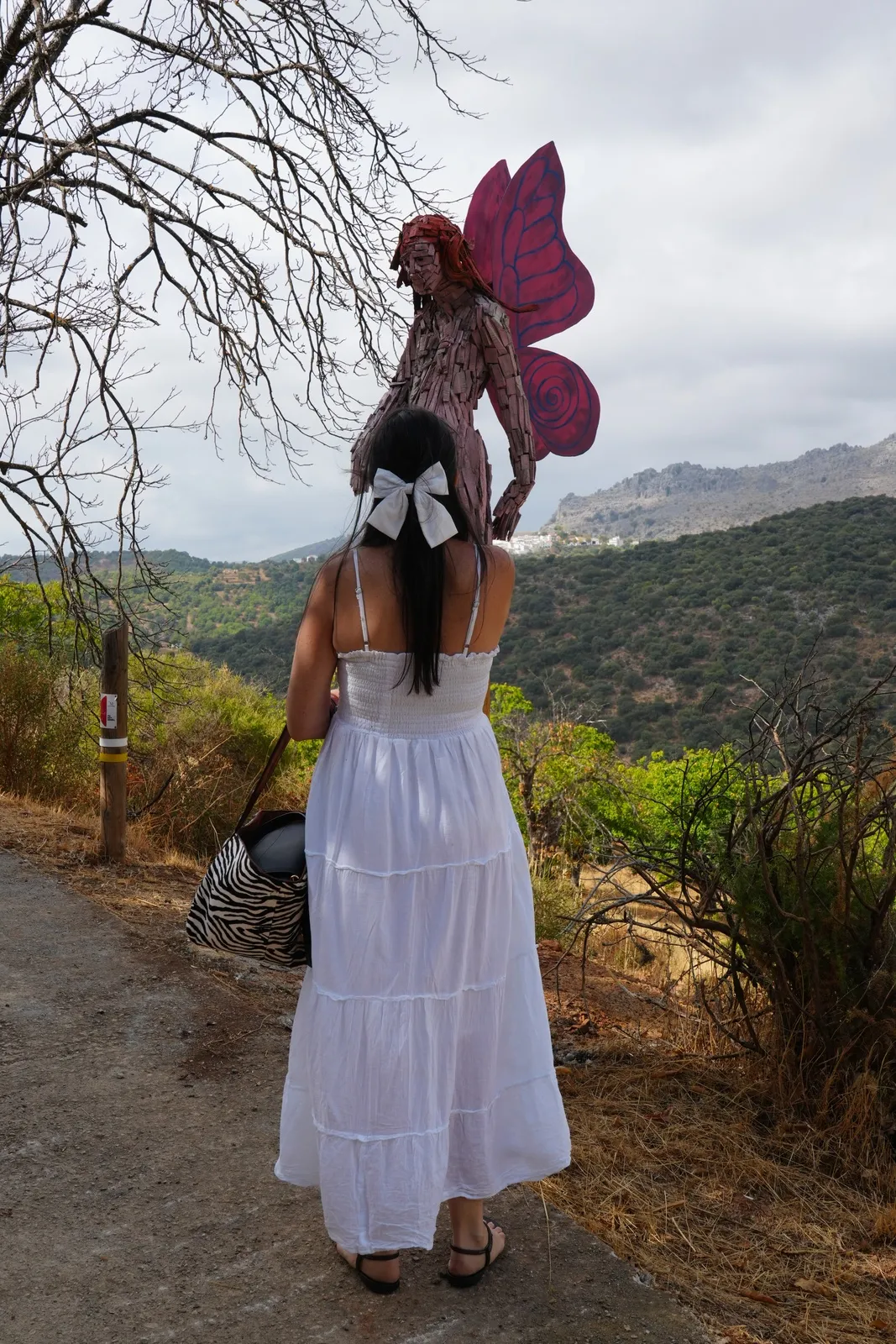
Parauta has more than the path, too. There are other statues and fairies, plus snails and other figures, placed around the town. I didn’t go looking for them, so I can’t tell you where they all are.
The carvings and the story behind them
The route opened in the summer of 2022, and the carvings are the work of Diego Guerrero, a sculptor with a workshop in Parauta. Several guides say he carves in winter, between November and February, when the sap in the trees is dormant, and then treats the cuts so the wood heals.
There’s a story behind them too. According to the guides, a woman called La Escalereta guards a magic portal between worlds, and on certain nights fairies, elves and wizards cross over to look after the four elements. In July the village holds a festival for it, lit by 3,000 candles.
I couldn’t find out who made the painted statues, like the gnome and the fairy on the arch at the start, so I won’t guess. These are the figures I passed, in the order the guides list them.
The butterfly wings bench
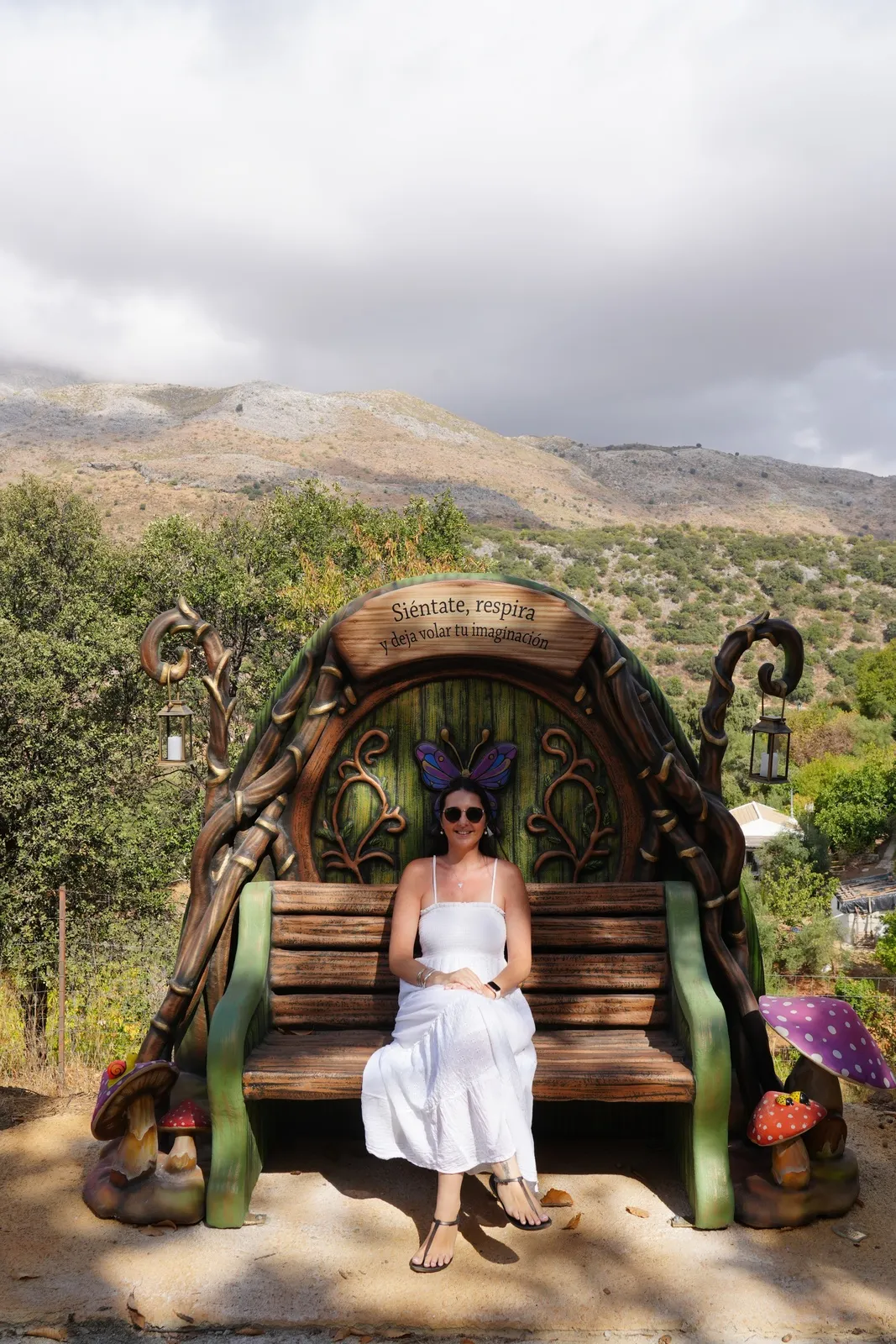
One guide lists this as the first figure after the start. It’s called Alas de Mariposa, butterfly wings, and the idea is to sit for a moment as a butterfly. The sign above it says “Siéntate, respira”, which is Spanish for sit down and breathe, so I did.
The gnome houses in the trees
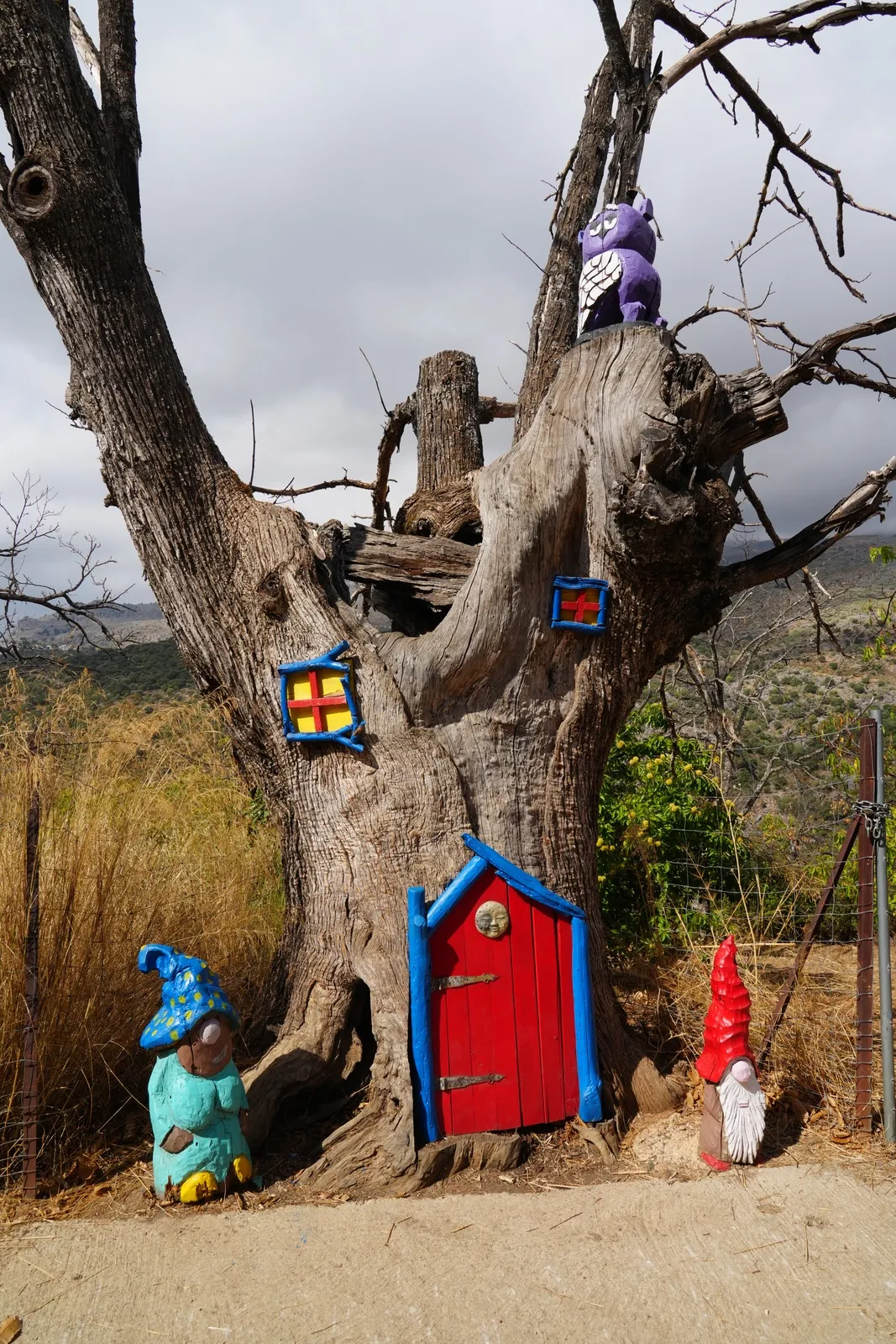
The gnomes have taken over a couple of trees, with doors, little windows and gnomes waiting by the entrance. This one has a red door, and there’s a second a bit further on up a few earth steps with a green door.
The bearded man with blue eyes
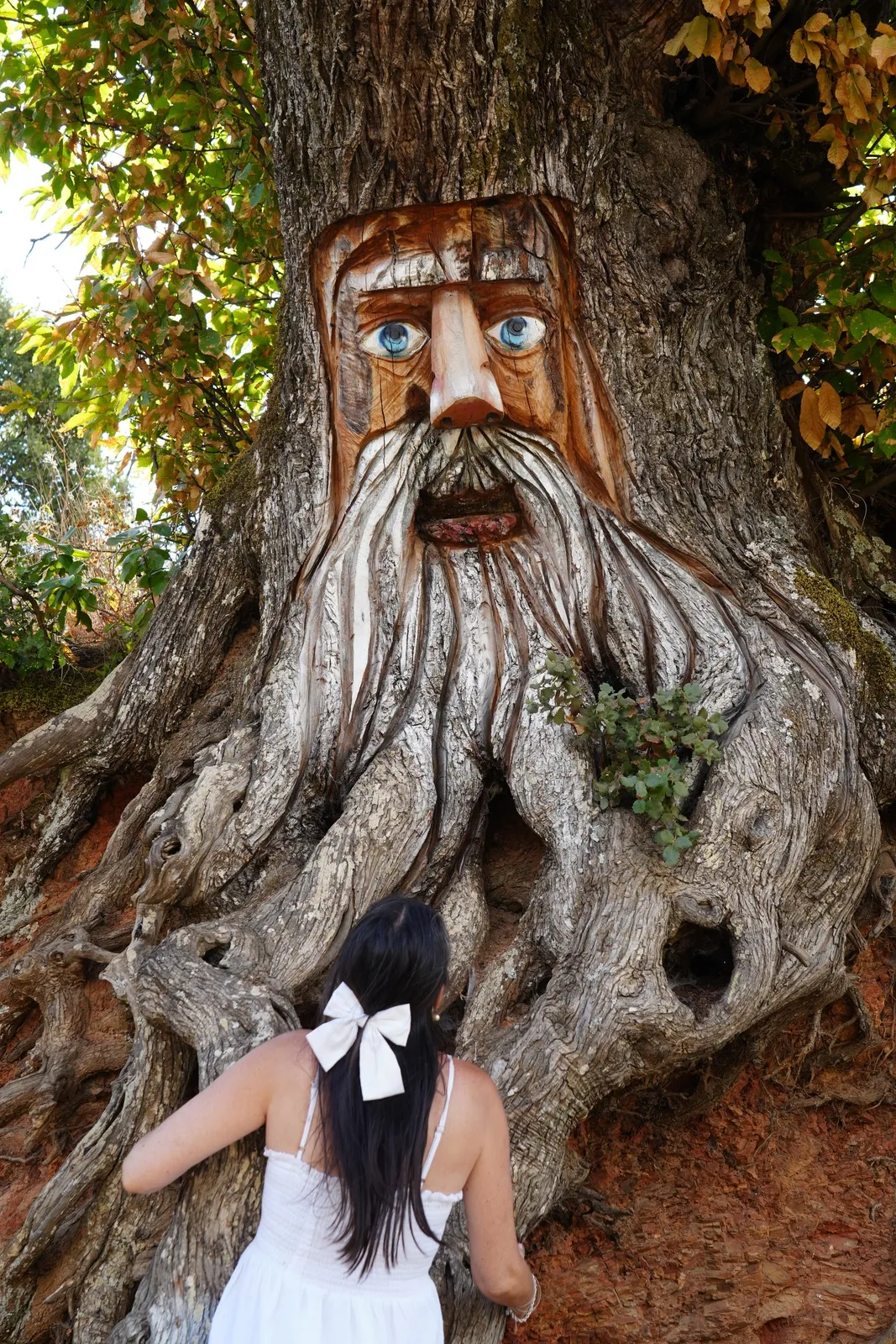
El Barbudo Blanco is the first of the big carved trees. The roots that show above the ground have become the long white beard that gives it its name, and it has bright blue eyes. This is the old man carved into the tree that I mentioned.
The wishing fountain
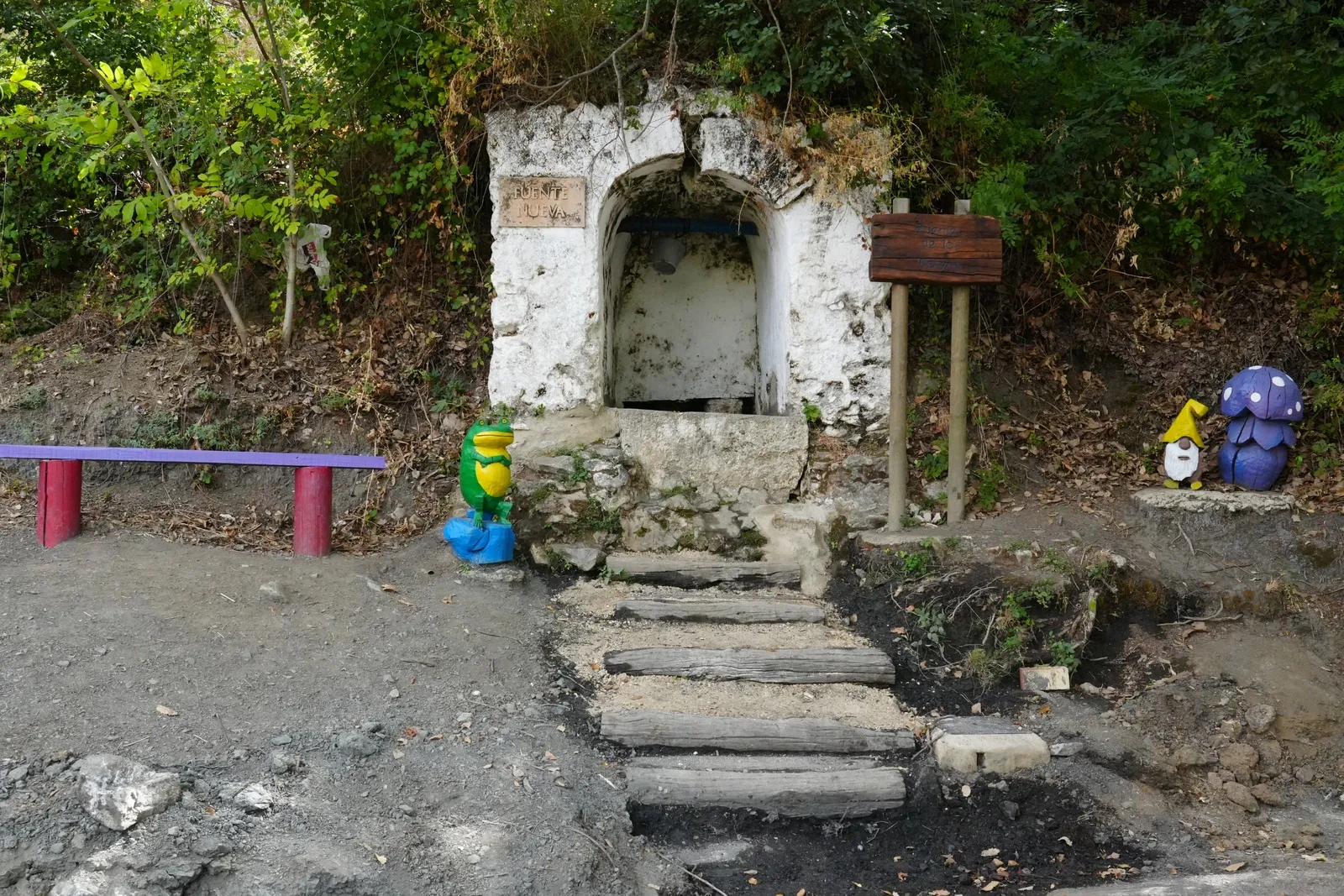
La Fuente de los Deseos is a little stone fountain guarded by a green frog. The idea is that you make a wish and throw it deep into the fountain.
The fairy on the moon
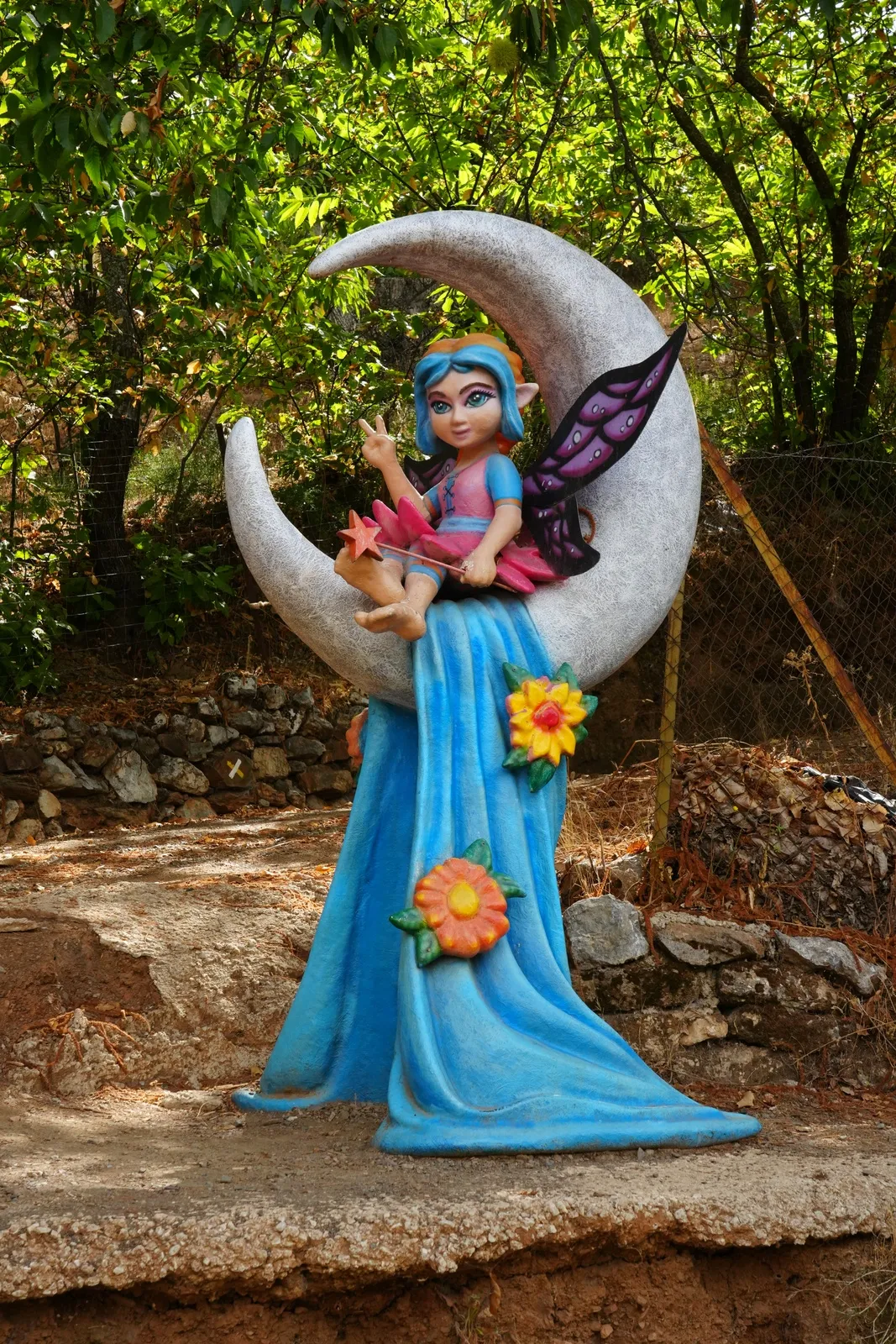
Hada en la Luna is a small fairy who has found the crescent moon a good place to sit.
The face with the blue beard
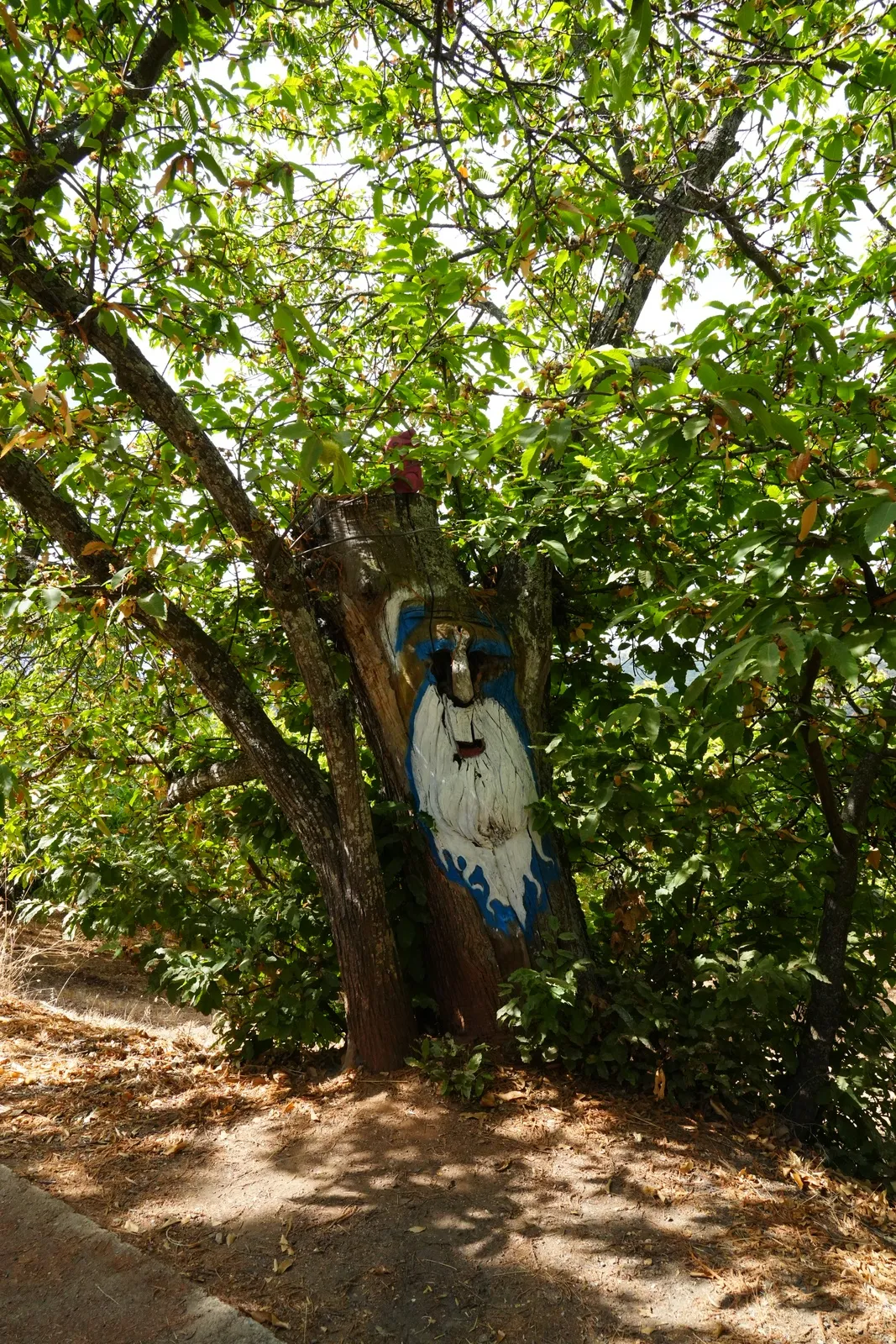
El Barbudo Azul is a face with a blue beard, camouflaged in a tree trunk, so keep an eye on the trunks as you walk.
The yellow house and the picnic spot
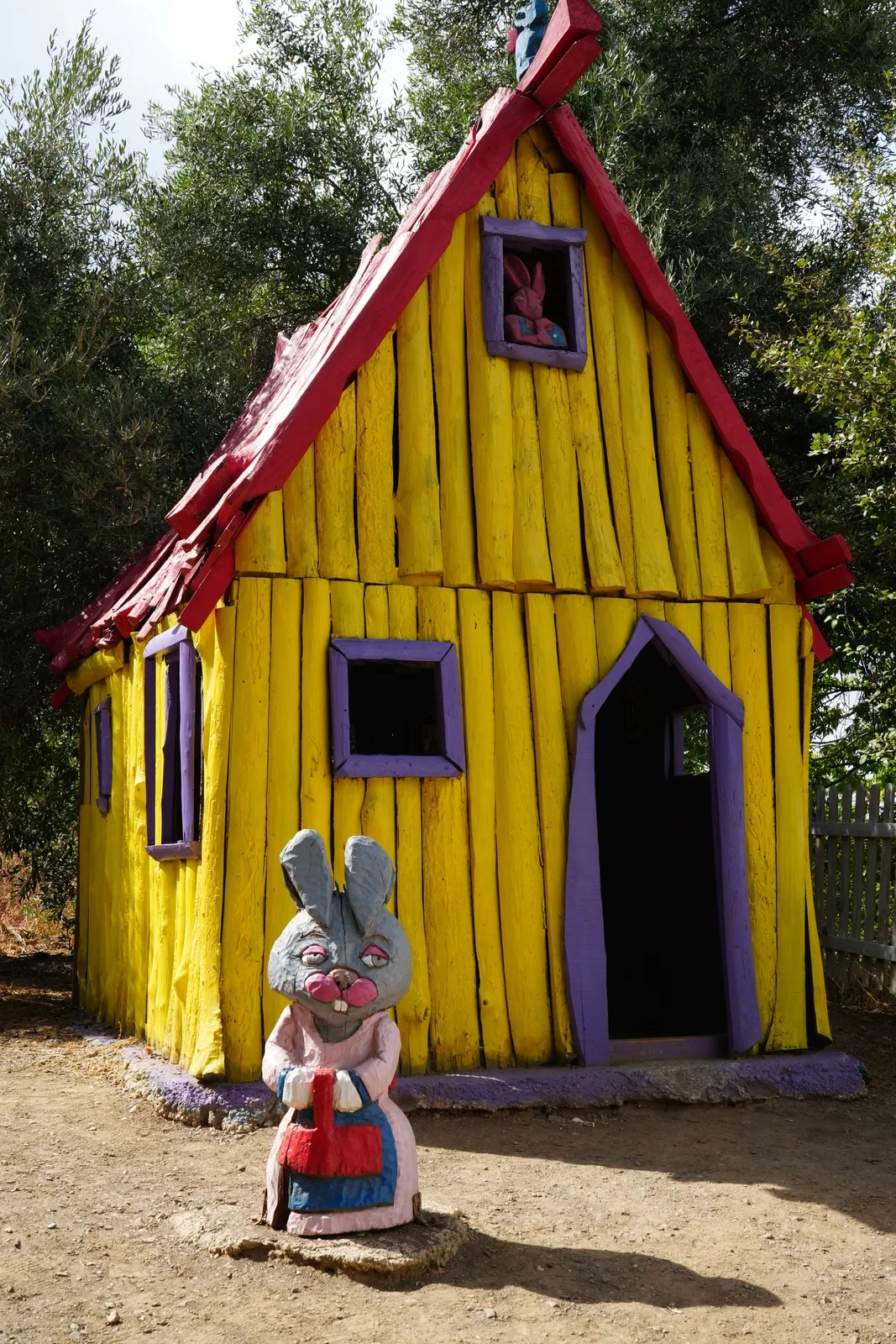
La Casa de los Enanos, the dwarves’ house, is a small colourful wooden house guarded by two rabbits. It’s down a short fork off the main path, before you reach the archer, so it’s easy to miss if you stay on the main track.
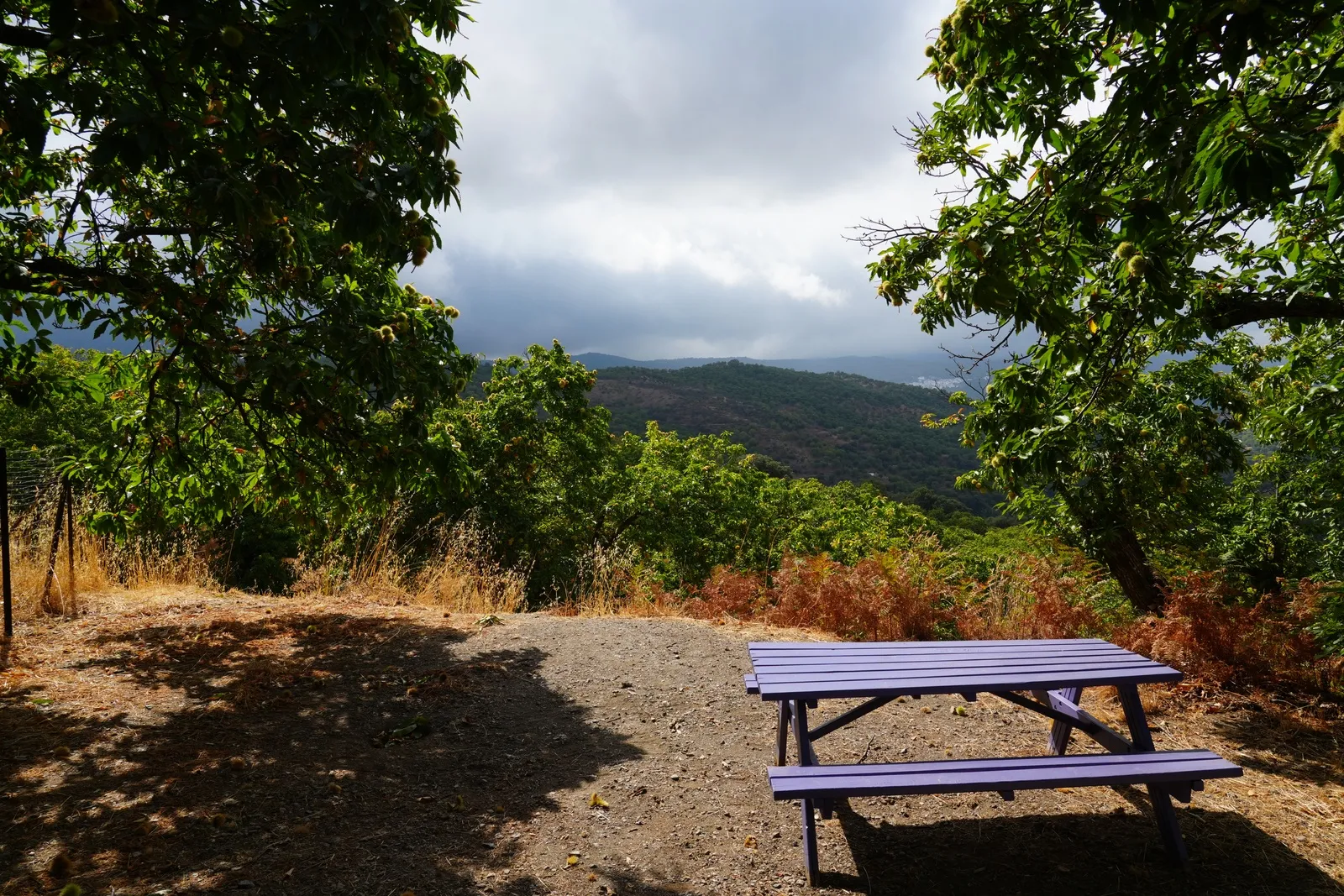
The fork also leads to a purple picnic table with a view over the valley.
Further on, the guide I read lists a double bench with a view over Cartajima and Pujerra, a bee, a satyr playing a flute while sitting on a mushroom, and at the end a winged horse, Pegasus. I haven’t seen those, so I can’t tell you more.
The stalls by the entrance
There’s one set of stalls by the entrance to the path. You walk past them on the way in, and again on the way back, so you get two goes at deciding what to buy.
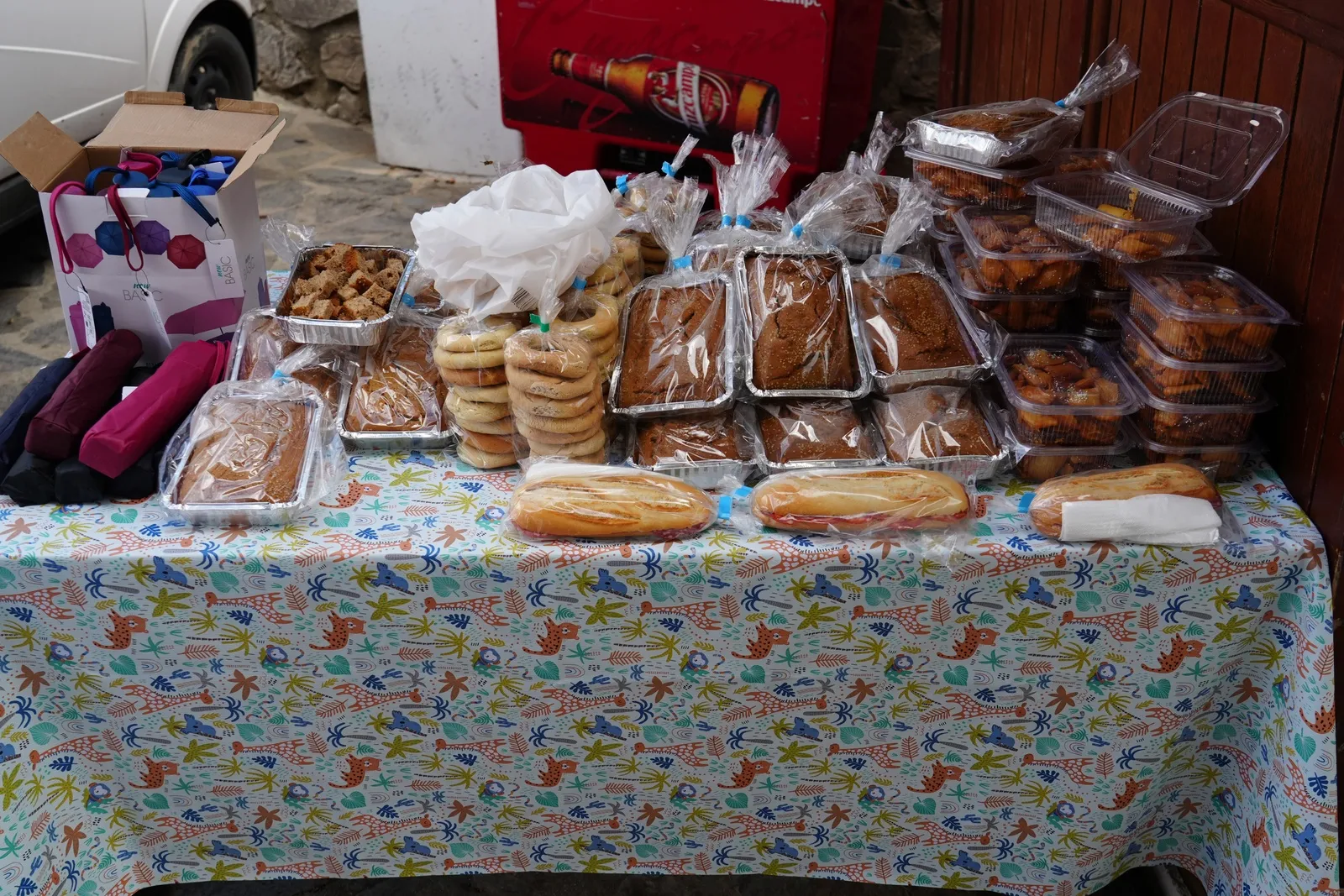
One of them is a refreshment stall with home-baked goods: cakes and treats, cold drinks and coffee. I bought traditional sweets covered in a sugary syrup. I don’t know what they’re called, and I’m not going to guess. I also had a cake that tasted of aniseed, and we got cold drinks. The board at the stall listed a sandwich at €2.00 and a bocadillo at €2.50 when I went.
Then there was a lady with a stall of homemade wooden gifts. I bought a Pinocchio puppet for my niece, and it was €15. It fits the place, since everything on the path is carved wood too.
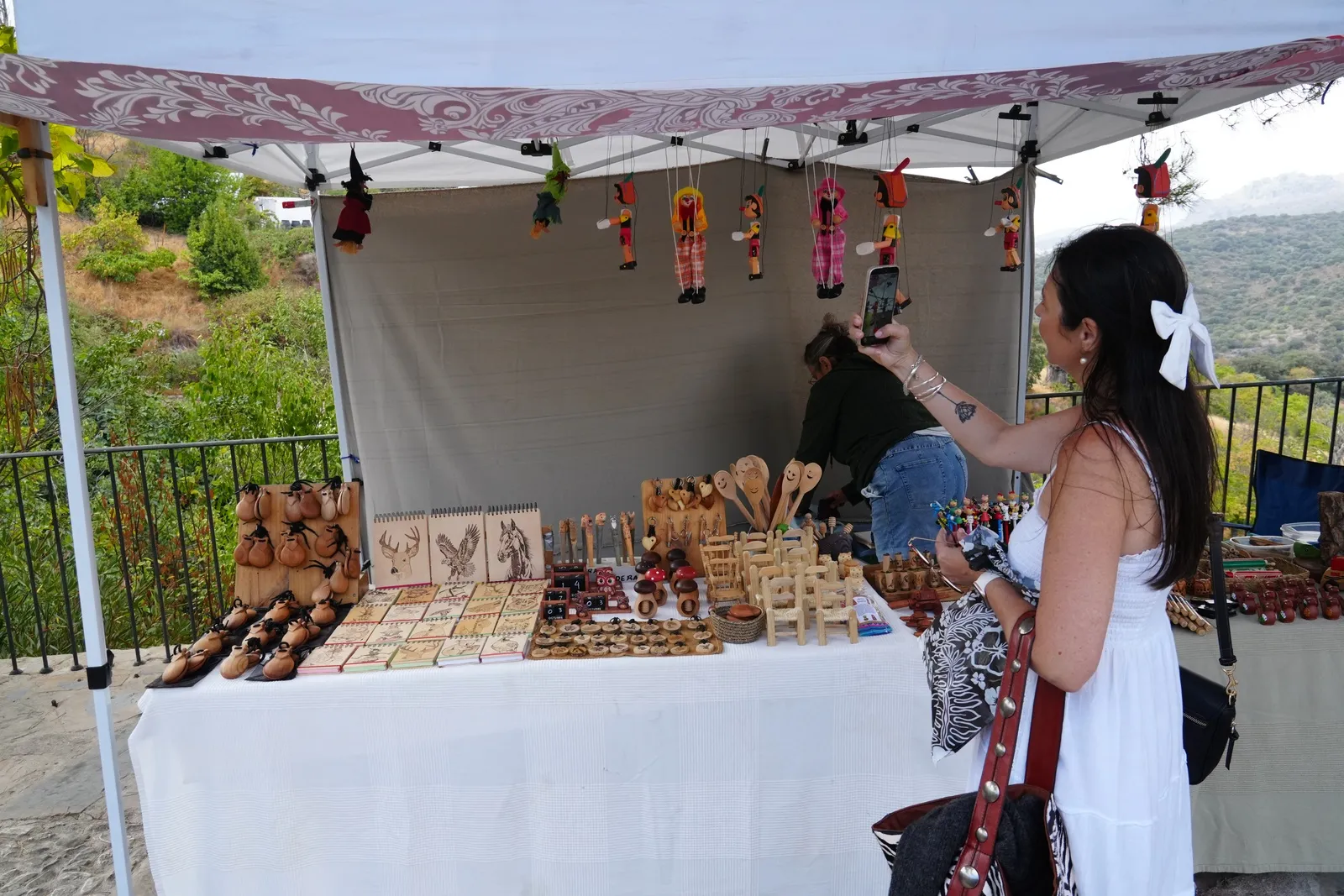
I don’t have prices for the cakes or the drinks, so I can’t tell you what they cost. If you’d rather not carry anything along the path, buy on the way back.
Pair it with the olive oil mill
Mill first, Parauta second. That was my order, and it worked.
I started at the olive oil mill near Ronda, where the museum took me about five minutes to walk through, and I’d hoped for more. Then it was a short hop to Parauta, which was pretty close. Jethro and I never felt rushed, and the walk under the chestnut trees made up for the mill. It was a lovely day out, start to finish.
Is it worth the drive?
Yes, if you go in knowing what it is. It’s a free, easy walk under chestnut trees with carved figures to find, and a stall at the entrance for something sweet.
It isn’t a forest, and it isn’t a hike. If you’re picturing deep woods and silence, you’ll be disappointed, because it’s a road under chestnut trees with families, dogs and pushchairs. I did it as part of a bigger day, and that’s how I’d suggest it to a friend. If you’re putting a day together, my list of day trips from Málaga has more to mix with it.
I’d bring family and friends with kids next time. The children I saw on the path looked like they loved it, and it fits with the other things to do with kids around Málaga.
Bring a jacket and a couple of euros for the parking.