Málaga Today
Short notes from my walks around Málaga and my adventures further afield. Something I came across, what was going on, and the address in case you want to see it yourself. Newest first.
what Notes from my walkslatest 15 November 2026
Craft stalls around the obelisk in Plaza de la Merced
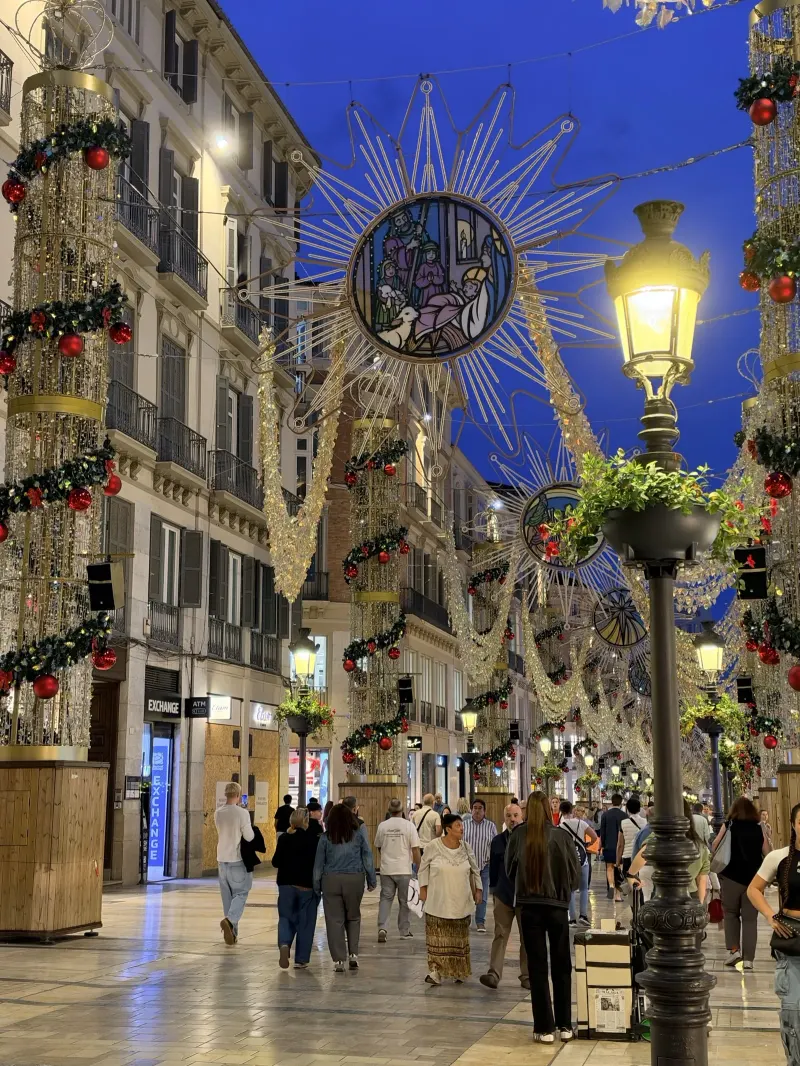
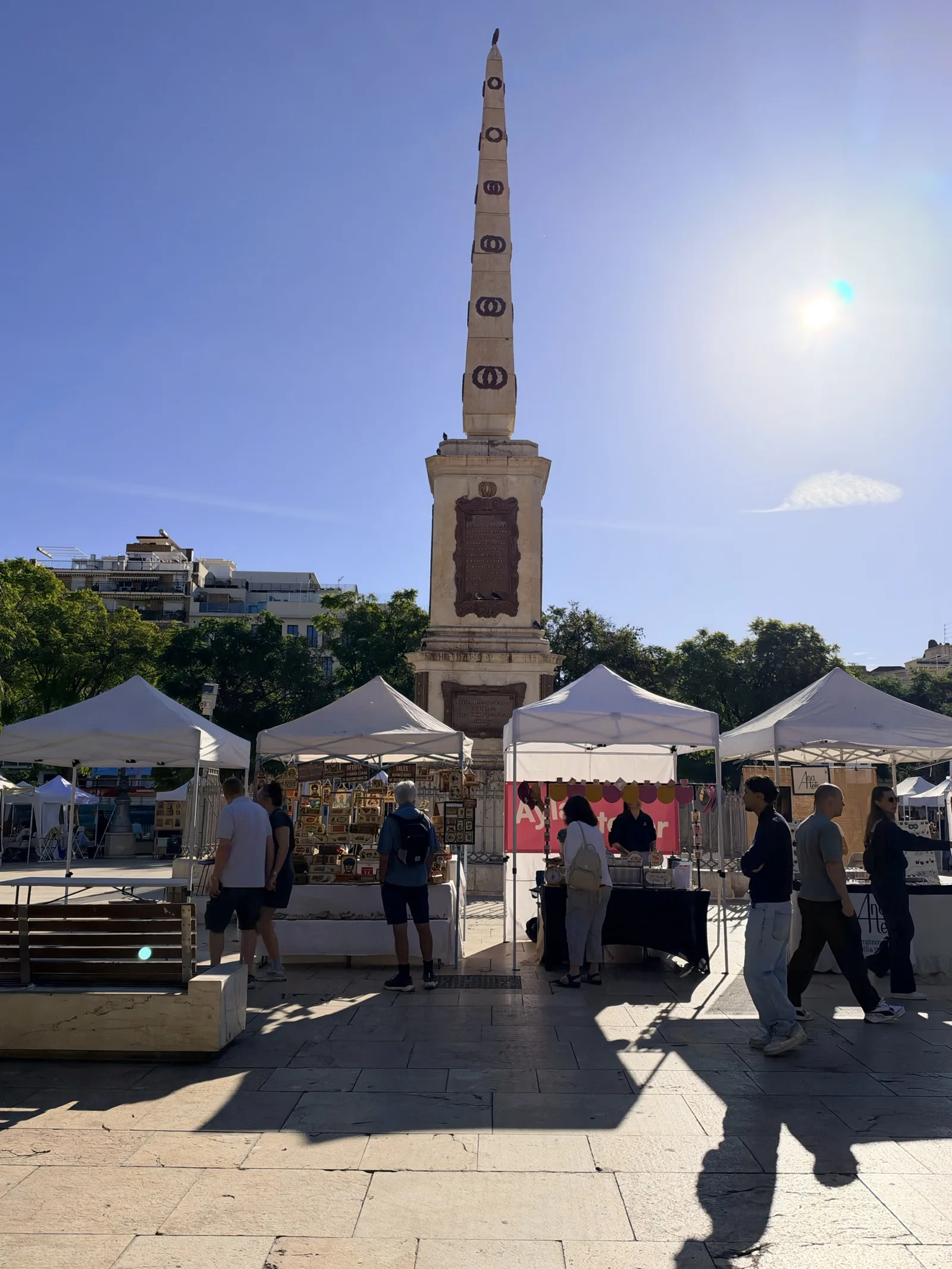
The white tents are up in Plaza de la Merced this morning, with the craft stalls ringing the obelisk in the middle of the square. I took this at 10:44, with people already browsing the wooden signs, prints and jewellery.
Times: 11am to 7pm, free to wander. It's run by CATs Markets with Málaga City Council, capped at around 50 stalls, mostly local makers. Come before midday if you want room to browse, because it's packed by early afternoon. There's no cash machine on the square, but there are banks on Calle Carretería and Calle Victoria.
How long it's been running: the earliest record I can find is a City Council notice from October 2022. It already lists the Merced market as a first-Sunday event, with a date on 4 December that year. So at least four years, though I couldn't find the very first edition. Today, 15 November, isn't a first Sunday, so check the date before you make a special trip.
Full guide: Mercado Artesanal La Merced. For a different feel, try the Soho market (22 November), and the food halls are in markets in Málaga. The obelisk has its own story in my earlier note.
Plaza de la Merced, 29012 Málaga
Read more: Mercado Artesanal La Merced, Markets in Málaga
Christmas decorations are up on Calle Larios
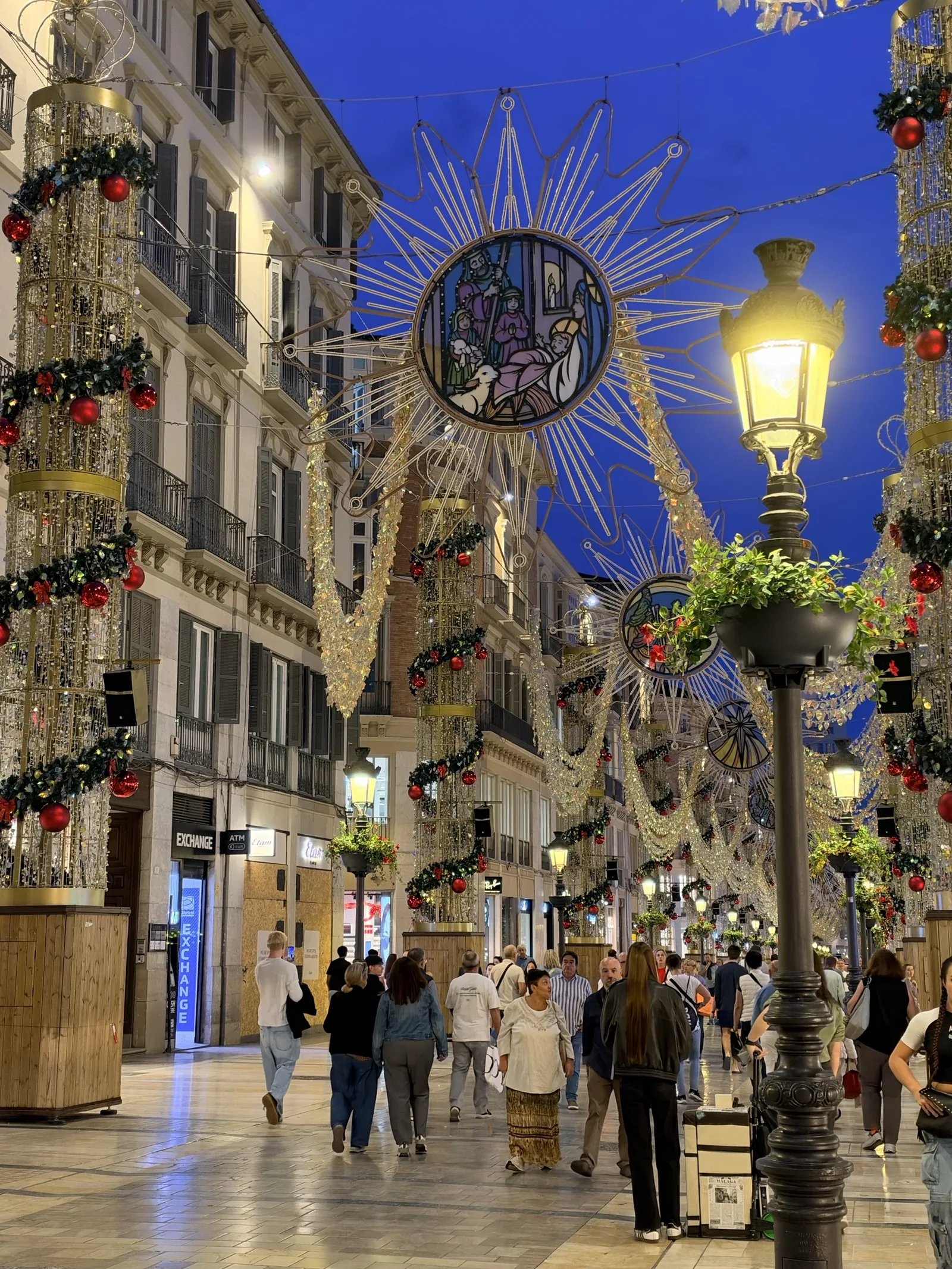
The Christmas decorations on Calle Larios are up and they look fantastic. Nativity scenes sit inside glowing stars over the street, and the columns are wrapped in gold lights and red baubles. When I took this on 10 November there were already plenty of people strolling underneath. A few days ago the crews were still installing.
Official switch-on: Friday 27 November 2026. The official switch-on is at 6:30pm on Calle Larios, with the singer El Kanka performing. The council has now published the lighting details: the light-and-sound show runs at 6:30pm, 8:30pm and 10pm until 4 January, except 24 and 31 December.
More in my Christmas in Málaga guide and what's on in Málaga in November.
Calle Marqués de Larios, 29005 Málaga
Read more: Christmas in Málaga, What's on in Málaga in November
Have you booked your Málaga accommodation yet?
See what is free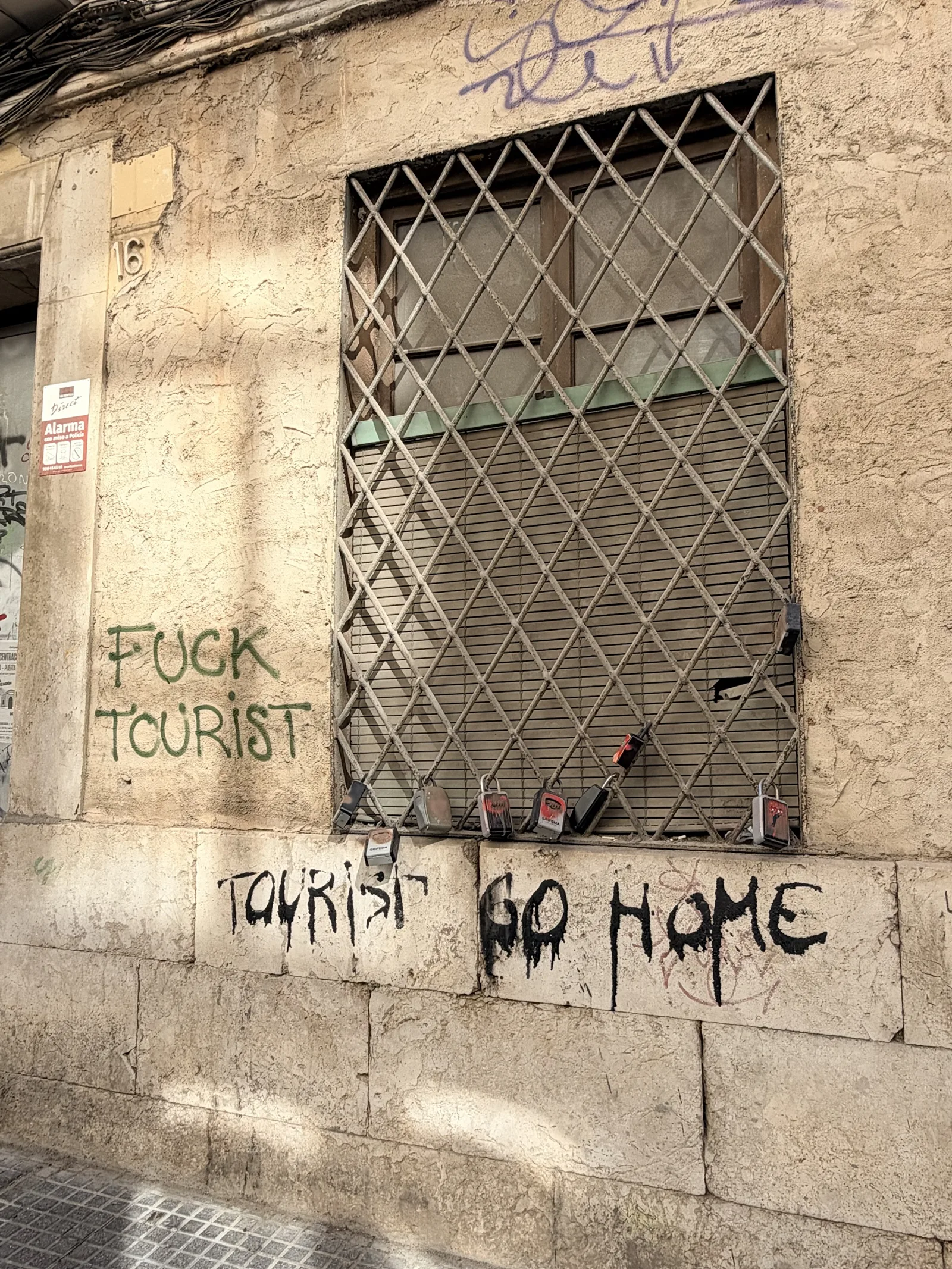
"Tourist go home" and key boxes sprayed so you can't read the codes
I came across this on Calle Peña today. "Tourist go home" in black paint on the stone below a barred window, and "F*** tourist" in green on the wall beside it. Along the bottom of the grille hang a row of key boxes, the kind holiday rentals use for self check-in.
Someone has spray painted over them so the numbers can't be seen, which means a guest can't open the box and get the key.
Locals here are angry about the housing being taken for tourist rentals, and this wall isn't the only place that says so.
Málaga has around 12,600 licensed tourist flats. Since January 2025 no new ones can be registered in 43 neighbourhoods, Centro included, and the council has frozen new licences for three years.
The freeze has a gap, though. The council has still signed off around 100 tourist apartments in the last two months, because the applications were filed before the ban. If you're staying in the centre, my guides to Málaga old town and where to stay in Málaga cover how to pick a place that suits the street too.
Read more: Málaga old town: the one day itinerary, Where to stay in Málaga
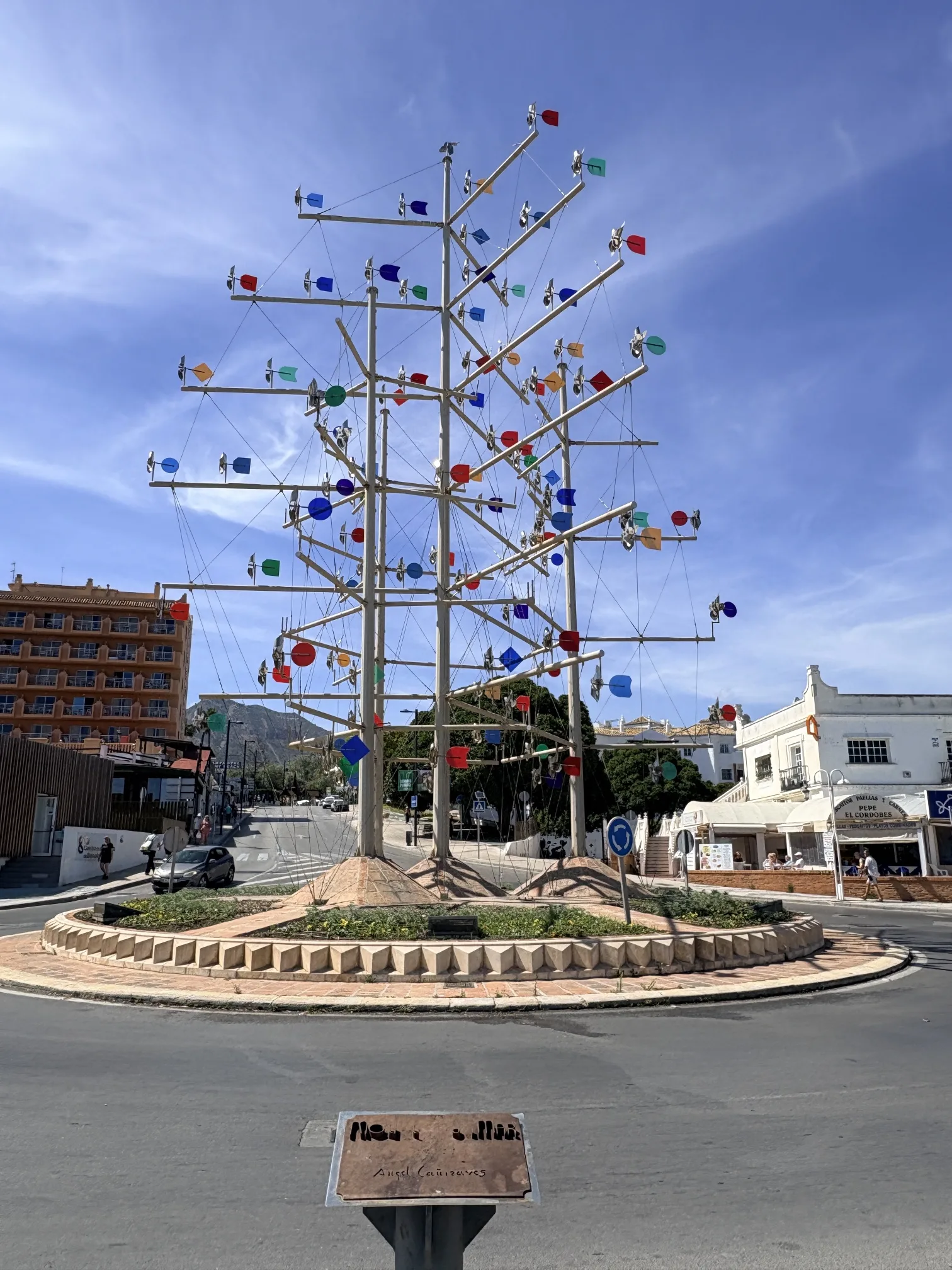
The windmill roundabout in Benalmádena Costa
I was in Benalmádena Costa today and had to stop at this roundabout. It's the Rotonda de los Molinillos, and the middle of it is taken up by a huge sculpture of tall poles and arms covered in little pinwheels, with red, blue, green and yellow shapes on the ends.
The plaque at the edge of the road says Ángel Cañizares. He's the man who built the sets for big film productions, including The Fall of the Roman Empire, and this one stands about 18 metres tall. You'll find it by Santa Ana beach, where the road starts to climb towards Parque de la Paloma.
Los Molinillos means "the little windmills", so the name makes sense once you see it. The Roman ruins of the same name are just behind it, and I've written about them in my things to do in Benalmádena guide.
On the way towards the marina there were roadworks all over the place today. I don't know what's being done or when it will finish. If you do, tell me. If you're coming by car, my guide to parking in Benalmádena might help.
Rotonda de los Molinillos, Avenida Antonio Machado, Benalmádena Costa
Read more: Things to do in Benalmádena, Parking in Benalmádena
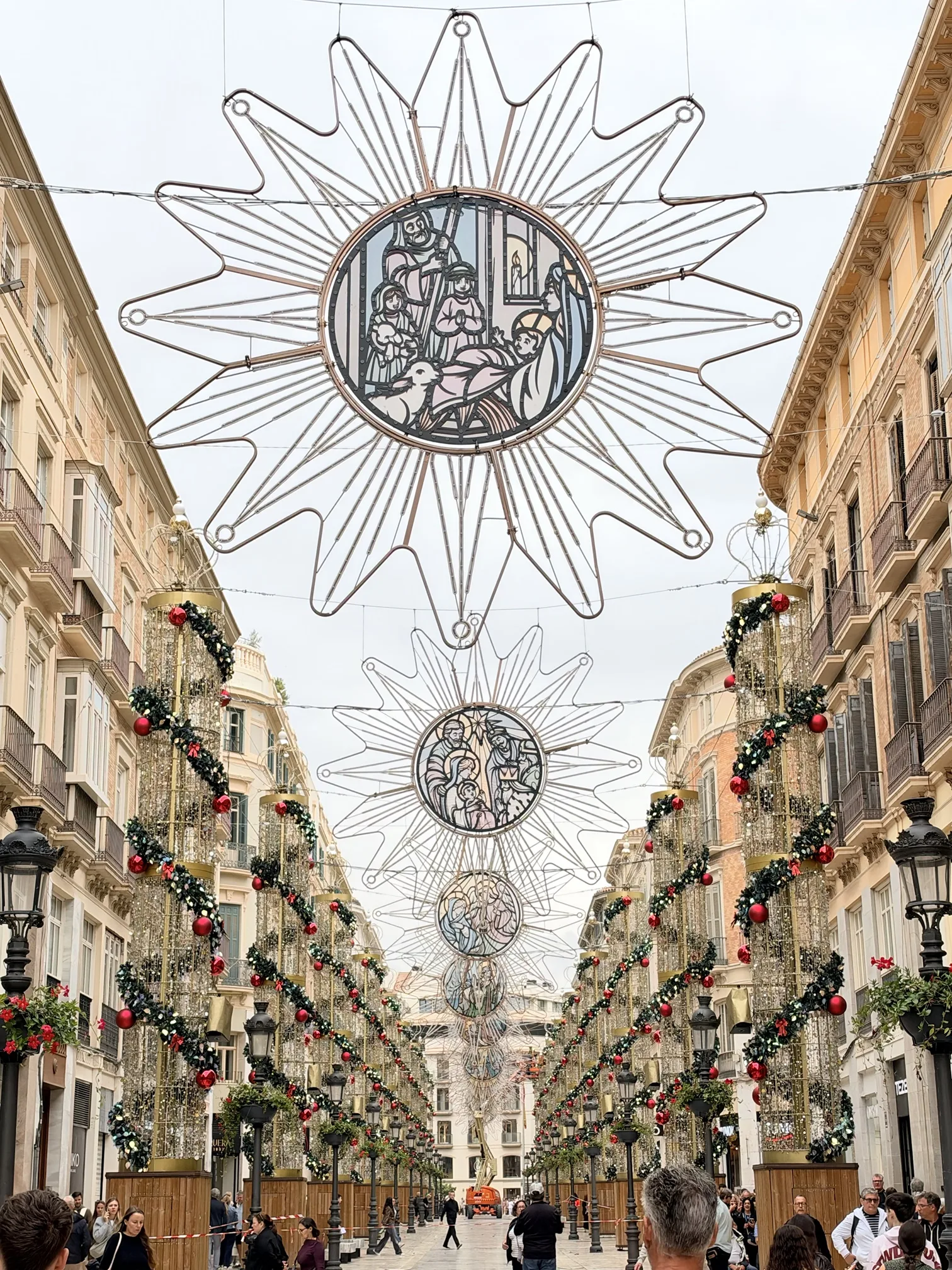
The Larios stars are going up
The stars are back over Calle Larios. I took this today while the crews were still installing, and you can see an orange lift parked at the far end of the street, with red and white tape still up around the bases of the columns.
The design is "Nativity of Light" again, with new colours and different scenes from the Christmas story in the medallions. In the closest star I can make out a family and shepherds gathered round the baby, with a lamb at the front. In the next one it's the Holy Family with the Magi and the star. The gold columns underneath are wrapped in green garland and red baubles.
The switch-on is on Friday 27 November, and the council has now confirmed the lighting details. The light-and-music show runs at 6:30pm, 8:30pm and 10pm from 27 November to 4 January, except 24 and 31 December.
The rest of the plan is in my Christmas in Málaga guide, and the November events guide covers what else is on around it.
Calle Marqués de Larios, 29005 Málaga
Read more: Christmas in Málaga, What's on in Málaga in November
Looking for a hotel right on the beach?
Gran Hotel Miramar GL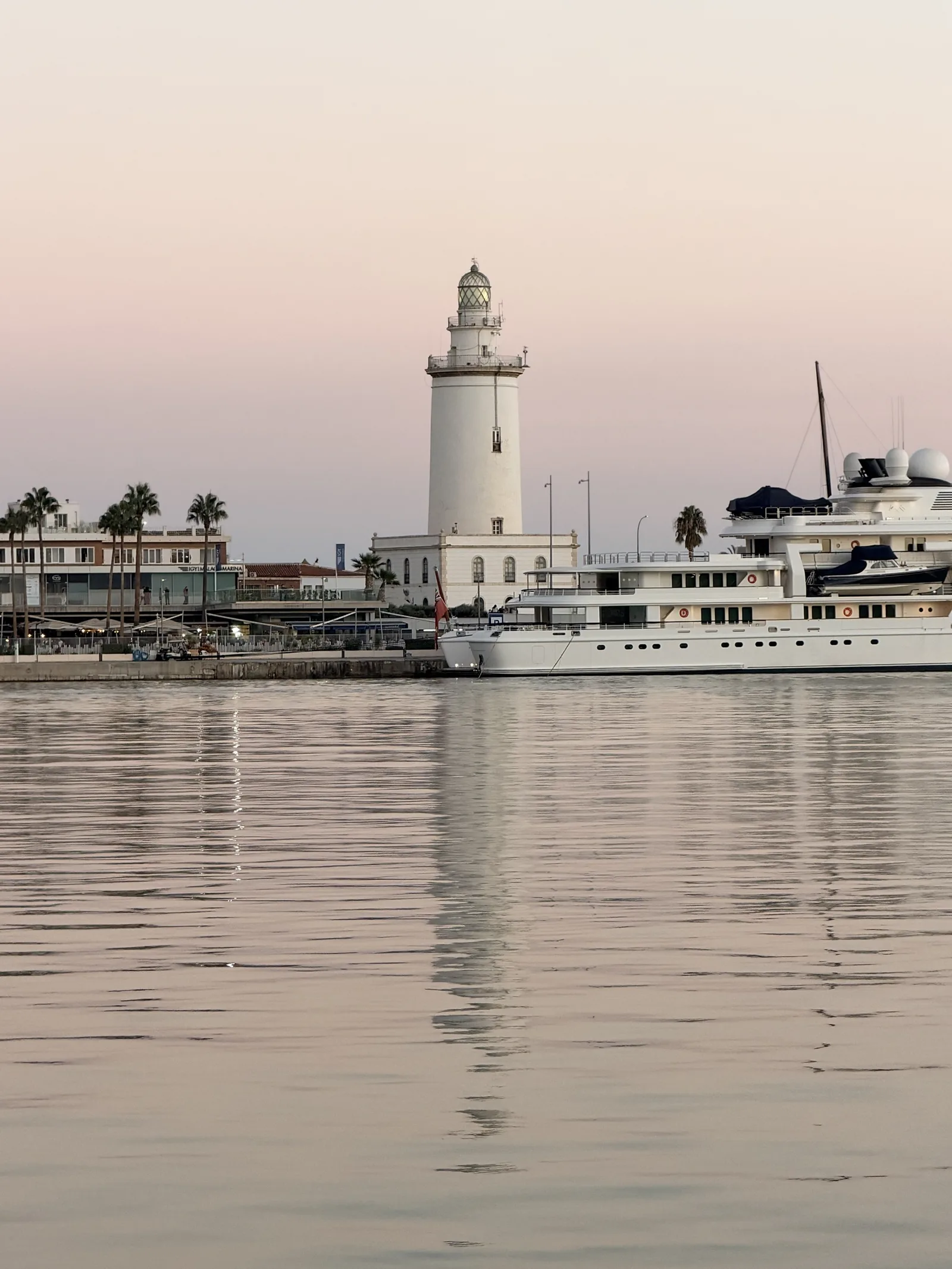
La Farola at dusk
I was standing just past the new statues at the port entrance, the two lions, Neptune and Venus, when I turned and took this. The sky had gone pink, the water was completely flat, and a big white yacht was moored beside her.
Engineer Joaquín María Pery built her. The 1884 earthquake knocked out part of her, and the last resident keeper left in 1993.
In the Civil War her light was switched off on 28 August 1936. She was painted earth colours to hide her from the navy and aircraft, then rebuilt in 1939 and painted white.
The statues are by Ginés Serrán. Neptune is about 10.5 m and Venus 8.5 m, both counting their pedestals. If you're walking out this way, it's one stop on my list of things to do in Málaga.
Paseo de la Farola, Muelle Uno, Port of Málaga
Read more: Things to do in Málaga

AlertCops: the free police app that translates for you
On Saturday night I came across people using drugs on the street. It's something I've been seeing more of lately when I walk my dog, and until now I would have called 112 every time. This time I tried AlertCops instead. I sent a photo of the street name along with the details, and the police wrote back asking for a bit more information. It was so much faster than calling, and I was impressed.
AlertCops is the official police app from Spain's Ministry of the Interior, and it's free. You message the police inside the app, and the chat translates automatically into more than 100 languages, so you can write in your own. It isn't only for residents either. Visitors can use it too, which is why I'd download it before you travel.
Registering only takes your phone number, and your name is optional. When you download it, check that the publisher is the Secretaría de Estado de Seguridad, so you know you've got the real one.
It does a few other useful things. Guardian shares your location during an event like a race or a concert, and Accompany me lets someone follow your journey live. There's a simulated call to help you step out of an uncomfortable situation, and if you have no signal the app offers to call the emergency services instead.
These are the emergency numbers worth saving: 112 for all emergencies from any phone, 091 for the Policía Nacional, 092 for the Policía Local, 062 for the Guardia Civil, 061 for an ambulance or medical emergency (112 also covers this), 080 for the fire brigade, and 016 for the gender violence helpline.
In a life-threatening emergency, call 112. AlertCops is another way to reach the police, not a replacement for the emergency numbers.
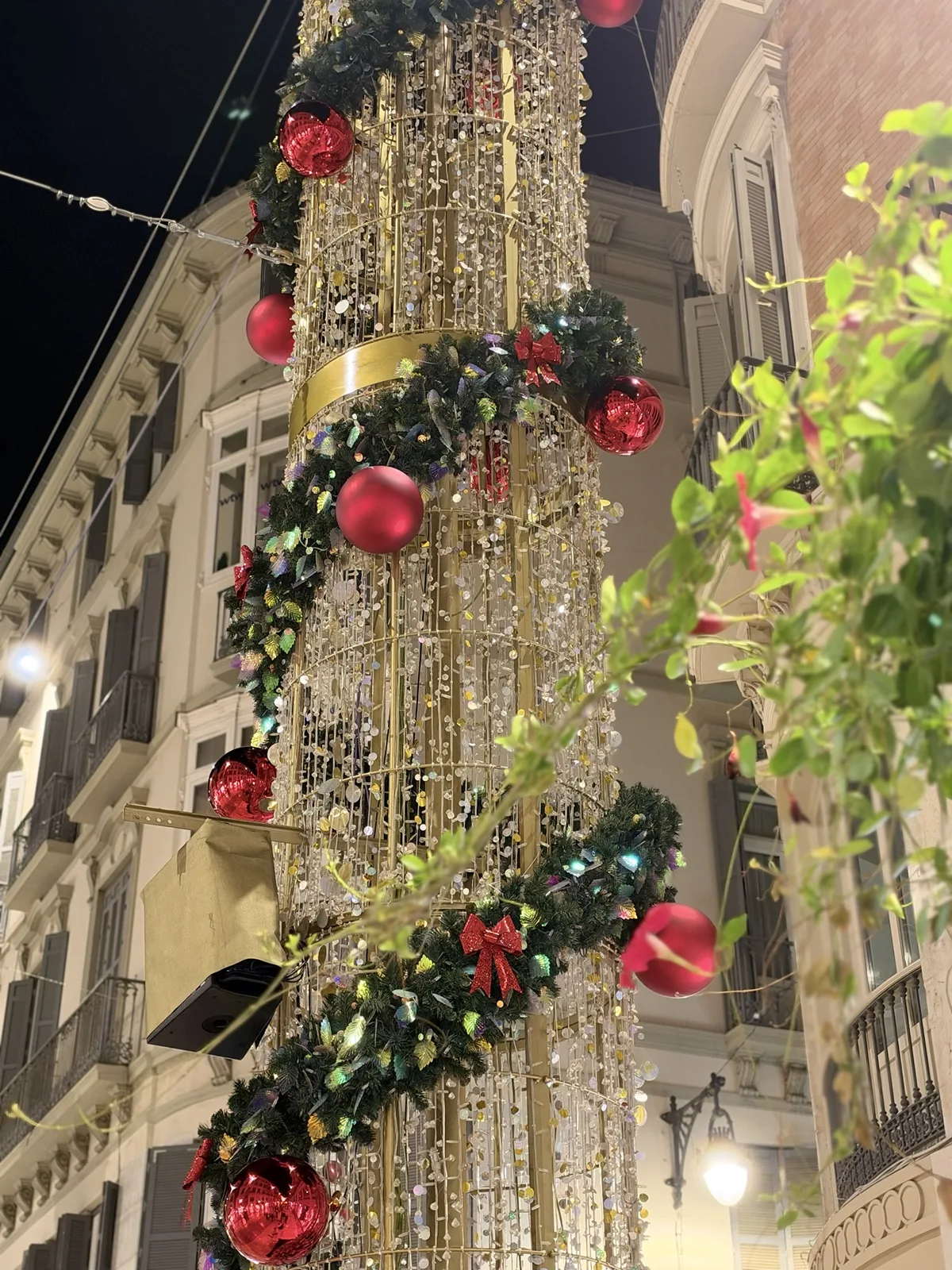
The red baubles are going up on Calle Larios
This is my 5th year of watching the Christmas lights come together in Málaga, and these red baubles are the first real colour of the season on Calle Larios.
They're wrapped around a tall gold column hung with sequins, with green garland and red bows in between. Look closely and you'll see a speaker already strapped to the side, wrapped in gold paper. The design for this year's lights hasn't been shown yet.
The switch-on is on Friday 27 November, and the council has now presented the design and the light show times.
Once the lights are on, Larios stays lit from 6:30pm to midnight most nights. That stretches to 2am from Thursday to Saturday and the night before a public holiday, and to 6am on 24 and 31 December. The light-and-music show runs three times a night, at 6:30pm, 8:30pm and 10pm, from 27 November to 4 January. The cathedral show starts on 28 November, and at 7pm it is about a five-minute walk away, so you can catch it first and still make the 8:30pm show on Larios.
The design changes, and it has a short history. A Christmas forest of arches lit Larios from 2019. Giant angels took over for three seasons, then "Nativity of Light" replaced them with glowing medallions timed to music. The lights come from Ximenez, a company from Córdoba founded in 1945 that began with one star made for the founder's appliance shop. The city uses 2.8 million LED points of light this year, and around 500 more streets are lit in the neighbourhoods.
I've mapped a 2.3 km walk linking eight of the displays in my Christmas in Málaga guide, and the November events guide has what else is on once the lights are up.
Calle Marqués de Larios, 29005 Málaga
Read more: Christmas in Málaga, What's on in Málaga in November
Want to wake up opposite the Cathedral?
Hotel Molina Lario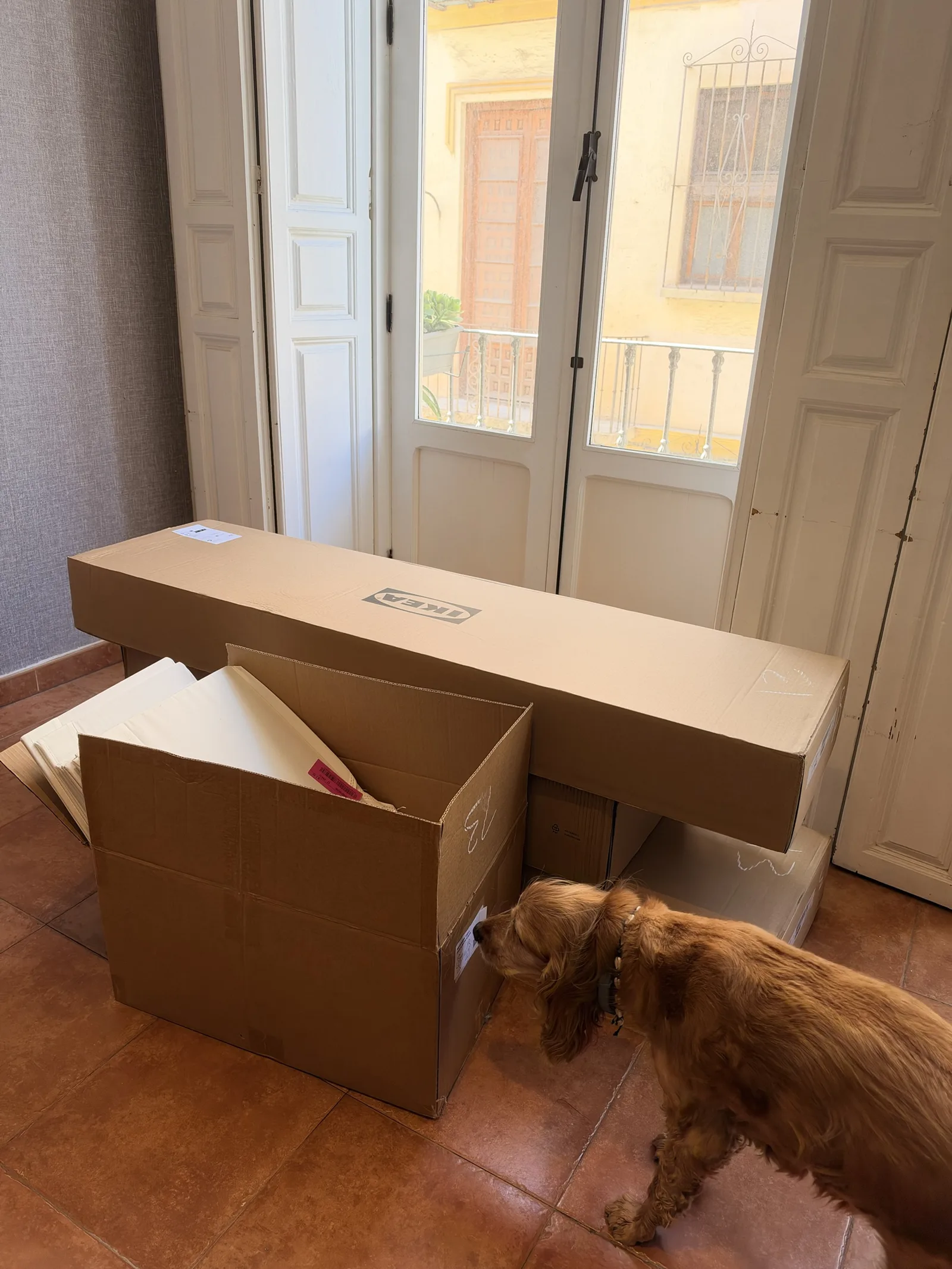
Flat-pack Kallax inserts and a quality control dog
Back in South Africa, furniture arrives already built. You pay, they carry it in, done. Here in Spain it comes in long flat boxes and you build it yourself.
I've just bought more white inserts for the Kallax shelves in the lounge, so guess who's being Bob the Builder this week?
Axel has already started his quality control inspection.
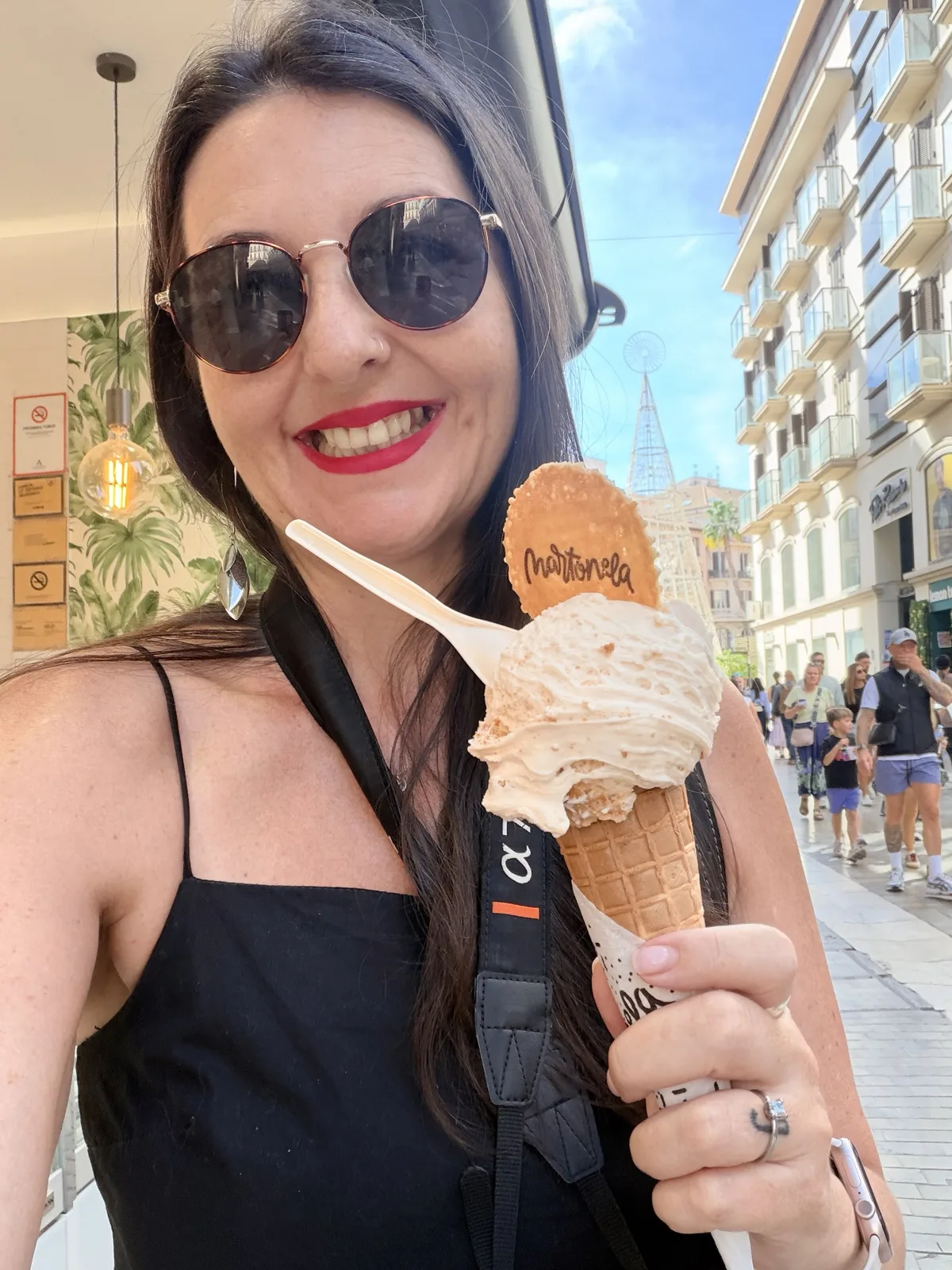
Ice cream in late October at Martonela, Calle Granada
It's the last week of October, the rest of Europe is already in jerseys and jackets, and I'm eating an ice cream in my sunglasses on Calle Granada. Down here in the south of Spain it's still lovely and warm.
Martonela stamps its name on the wafer, which is a nice touch. I went for the Málaga flavour, the city's own, which you won't find in every parlour. It's traditionally raisins soaked in sweet Málaga wine, usually Pedro Ximénez, in a creamy base. There's more about it in my Málaga old town guide.
Behind me, above the rooftops, you can see the Christmas tree frame, so the lights are coming whether it feels like it or not. I've put the details in my Christmas in Málaga guide.
In my one day in Málaga budget I put an ice cream at 2.50 to 4 euros, so check the board before you order. If you're visiting this month, my what's on in Málaga in October guide has the rest.
Read more: Málaga old town, Christmas in Málaga, One day in Málaga, What's on in Málaga in October
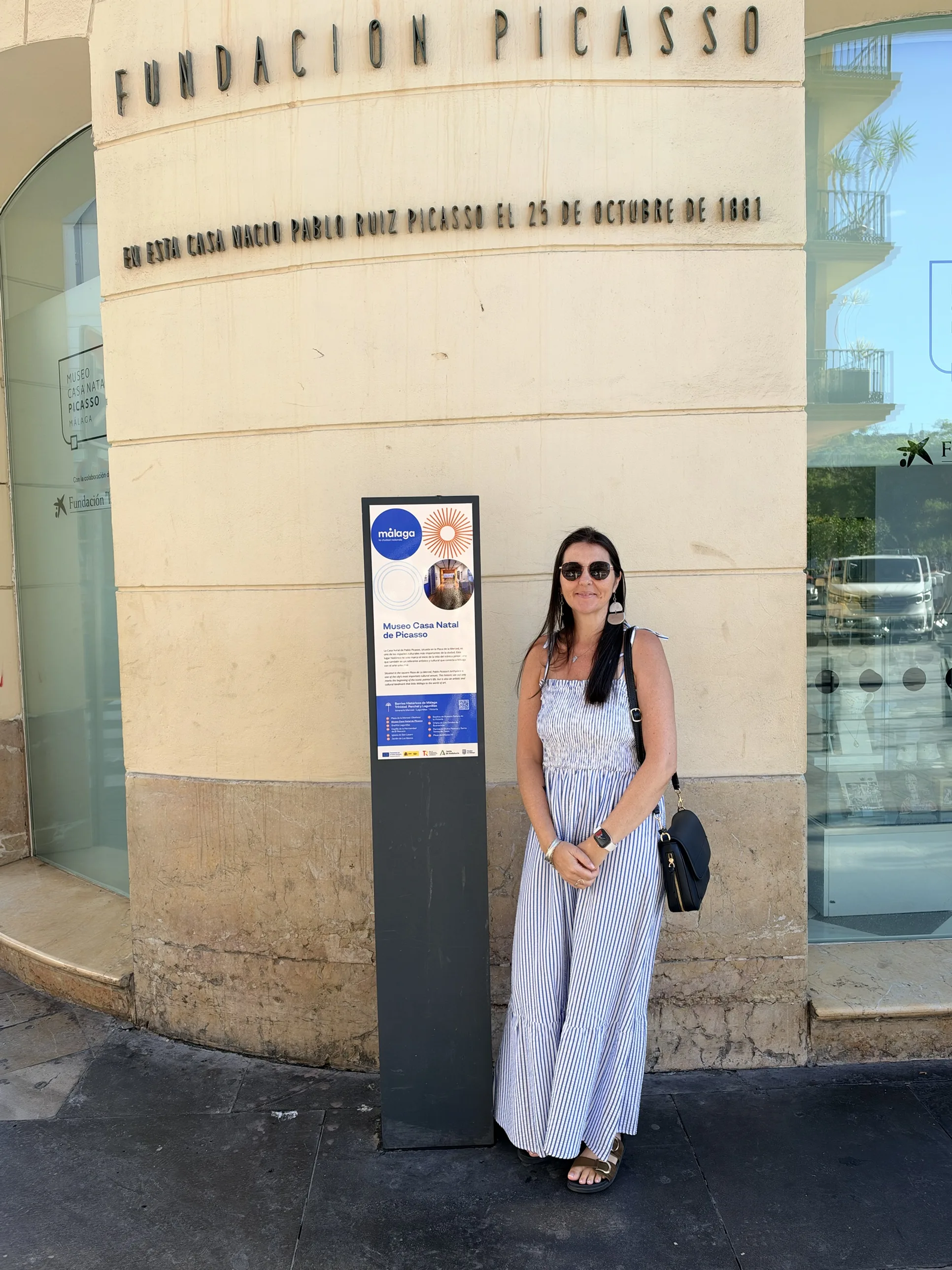
Picasso's 145th birthday at the Casa Natal
Picasso was born on 25 October 1881 in this house on Plaza de la Merced, and the plaque on the wall says so. Today he turned 145, so I came to stand outside it.
The story goes that he was born almost stillborn and wasn't breathing. His uncle blew smoke into his face, the reaction made him gasp, and that was his first breath. Right here in this house.
On an ordinary day it's usually €4, and it's free on Sunday afternoons, so check before you go. It's small, more like flicking through someone's drawers than a museum, which is why I like it better than the big one.
His bronze statue is on the bench in the middle of the square if you want a photo, and the Picasso Museum on Calle San Agustín is a few minutes' walk. I've listed every museum that goes free in my free things to do in Málaga guide, and there's more in my museums in Málaga guide.
Plaza de la Merced 15, 29012 Málaga
Read more: Museums in Málaga, Free things to do in Málaga, Málaga old town guide
Fancy staying in an 18th-century palace in the old town?
Palacio Solecio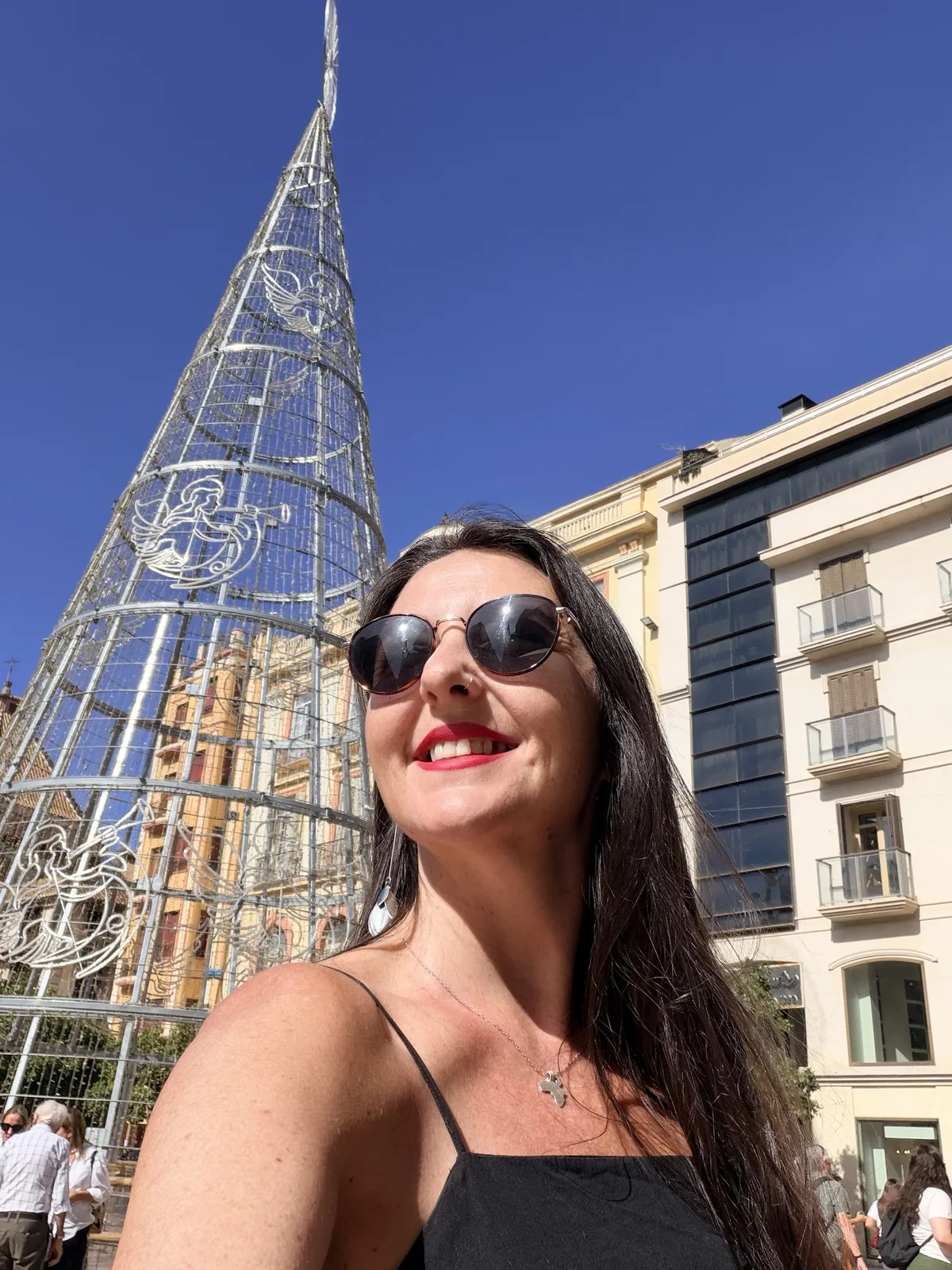
The Christmas tree is up in Plaza de la Constitución
Standing under it in the sunshine with my sunglasses on, it still felt like Christmas. It's a tall silver cone with angels worked into the frame, one of them blowing a trumpet.
The big switch-on is on Friday 27 November, and the council has now published the lighting details.
The light-and-music show on Calle Larios runs at 6:30pm, 8:30pm and 10pm from 27 November to 4 January. The plaza sits at the top of Larios, which makes it an easy place to start. I've mapped a 2.3 km route linking eight light displays in my Christmas in Málaga guide.
Plaza de la Constitución, 29005 Málaga
Read more: Christmas in Málaga, What's on in Málaga in November
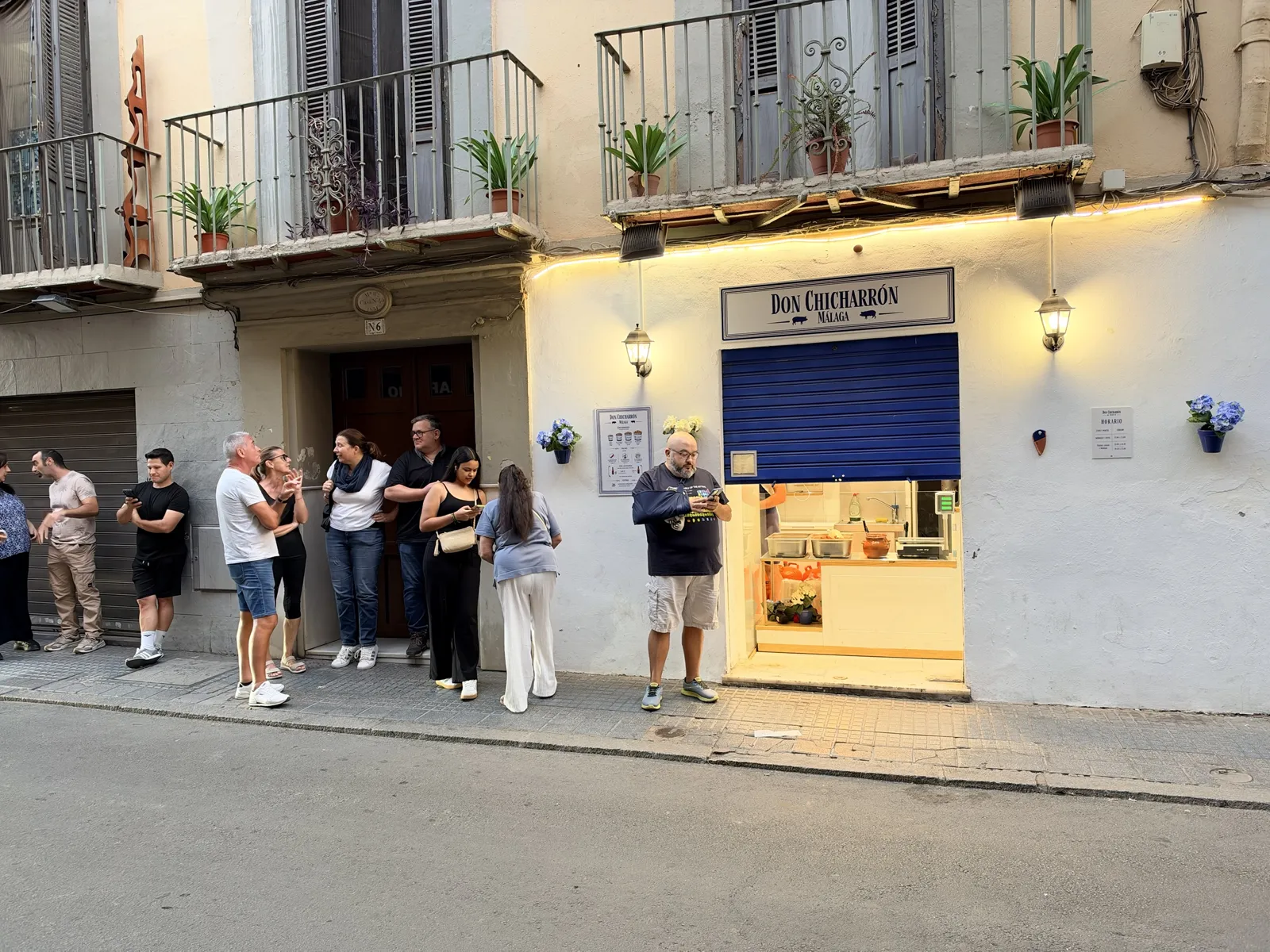
Don Chicharrón: is the queue worth it?
I've had it, and I agree with everyone in that line: it's worth the wait.
It's not a bar. You order at a little counter that opens onto the street, and the chicharrones come in tubs in four sizes, with three sauces you can add for a little extra.
The hours are short, and some days they sell out before closing time, so don't leave it late. The sign by the counter says closed Monday and Tuesday, 12:00 to 15:00 on Wednesday and Thursday, and on Friday, Saturday and Sunday 12:00 to 14:30 and again 19:30 to 22:00. That means the evening opening is weekends only.
It's at Calle Ollerías 6. If you want to sit down with a drink afterwards, La Tranca and the other bars on Calle Carretería are close by, and they're in my best tapas bars in Málaga.
Calle Ollerías 6, 29012 Málaga
Read more: Best tapas bars in Málaga, Cheap eats in Málaga
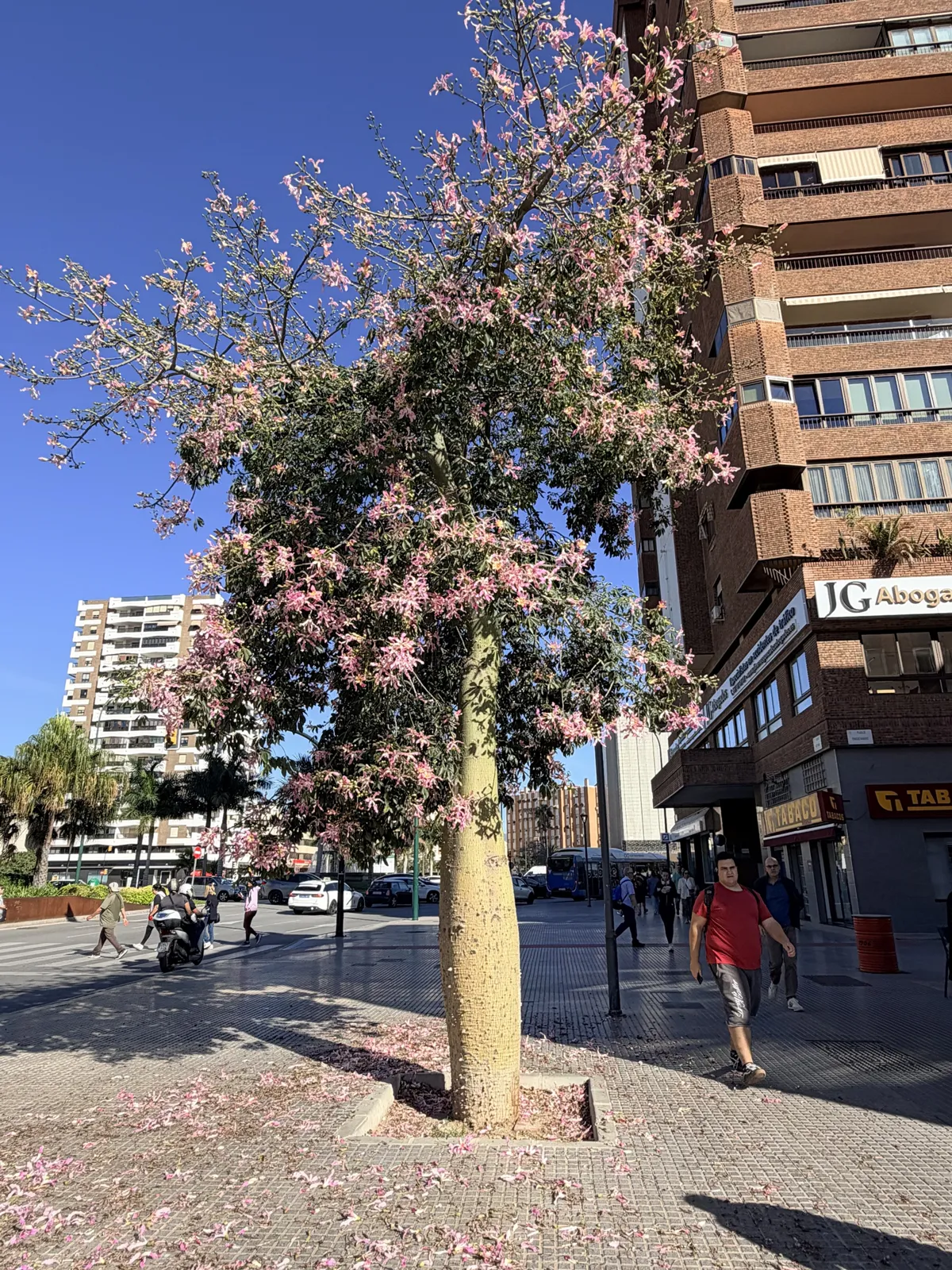
Not a baobab, but it fooled me
When I first saw this tree on my walk, I thought it was a baobab. That fat trunk, swelling out like a bottle, reminded me of home. I'm South African and I was born in Rhodesia, now Zimbabwe, so baobabs are a big part of where I come from.
It's actually a palo borracho, which means "drunken stick" in Spanish. In English it's called a silk floss tree. If you look closely, the trunk is green and bumpy with thorns, not smooth and grey like a baobab's.
At the moment it's covered in pink flowers, and the pavement underneath is full of fallen petals. Later on the pods split open and fluffy white stuff comes out, a bit like cotton wool. That's where the name silk floss comes from.
This one is on the corner of Glorieta Albert Camus and Avenida de la Aurora, across the road from El Corte Inglés. I passed it on my way to the shops.
I've seen them in Estepona too, in the little plaza on my Estepona poets route. They flower in October and November, so keep an eye out if you're in Málaga now.
Glorieta Albert Camus (corner of Avenida de la Aurora), 29002 Málaga
Read more: Estepona poets route, What's on in Málaga in October
Looking for good mid-range value near the Alcazaba?
Room Mate Valeria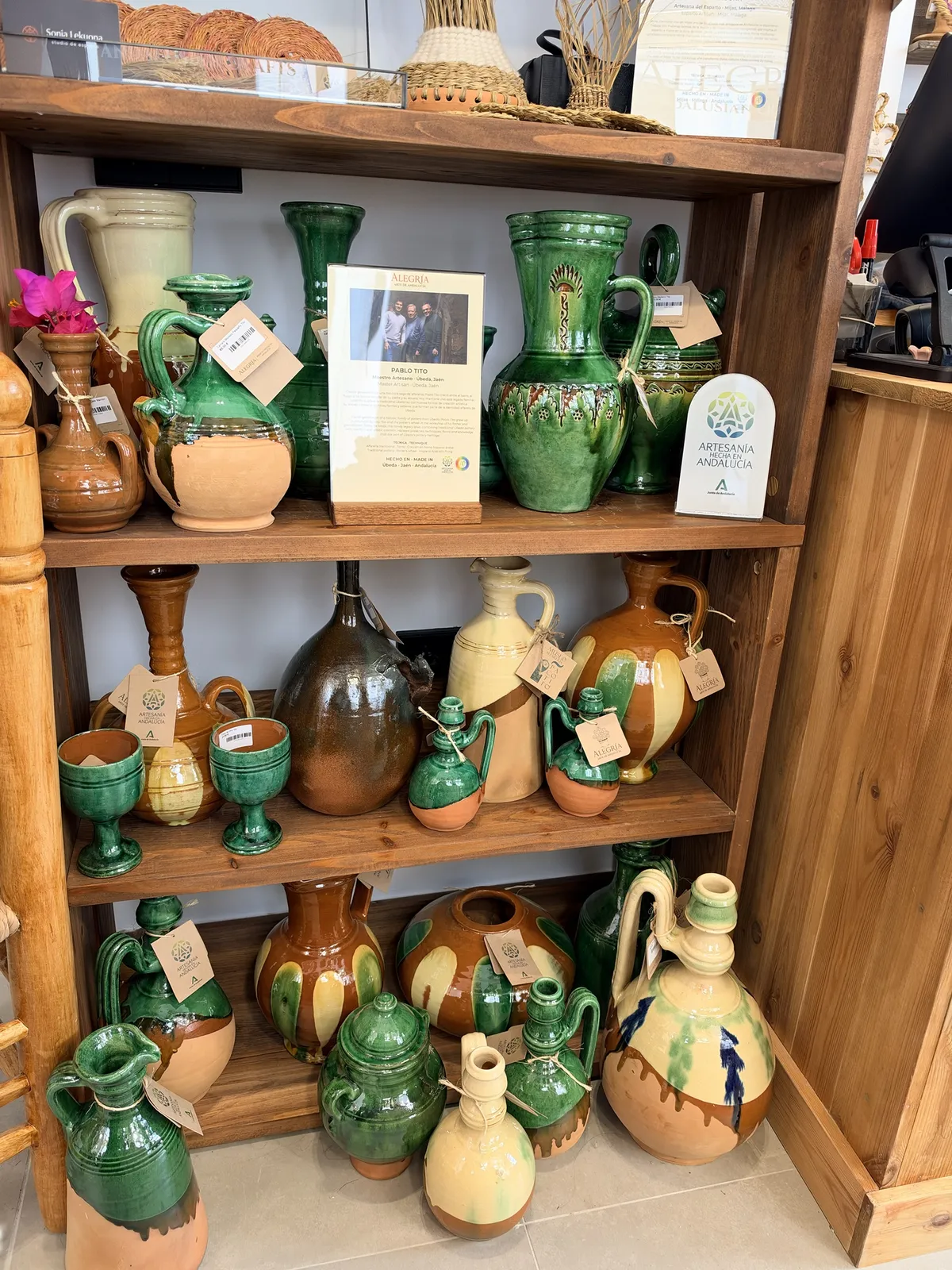
Pablo Tito's pottery at Alegría, Arte de Andalucía
Alegría opened on Calle Comedias this month. I popped in yesterday and got chatting to one of the owners. There are three of them, and they went all over Andalucía choosing the pieces themselves, straight from the people who make them.
The green pottery is by Pablo Tito from Úbeda, in Jaén. He's very well known here, and his family have been potters for four generations. That green glaze is what Úbeda is famous for. If you ever go, you can watch the potters at work in the workshops on Calle Valencia. It's in my day trips from Jaén.
They've also got handmade wooden chairs with woven seats. The owner told me the man who makes them is the last one in Andalucía still doing it by hand.
It's not the place for a cheap magnet. The hand-painted rooster botijo, a clay water jug, was €75, but there are smaller things too, like a little ceramic bell for about €15.
It's at Calle Comedias 13. I've added it to my souvenir walk through Málaga's old town as well.
Calle Comedias 13, 29008 Málaga
Read more: Unique souvenirs in Málaga, Day trips from Jaén
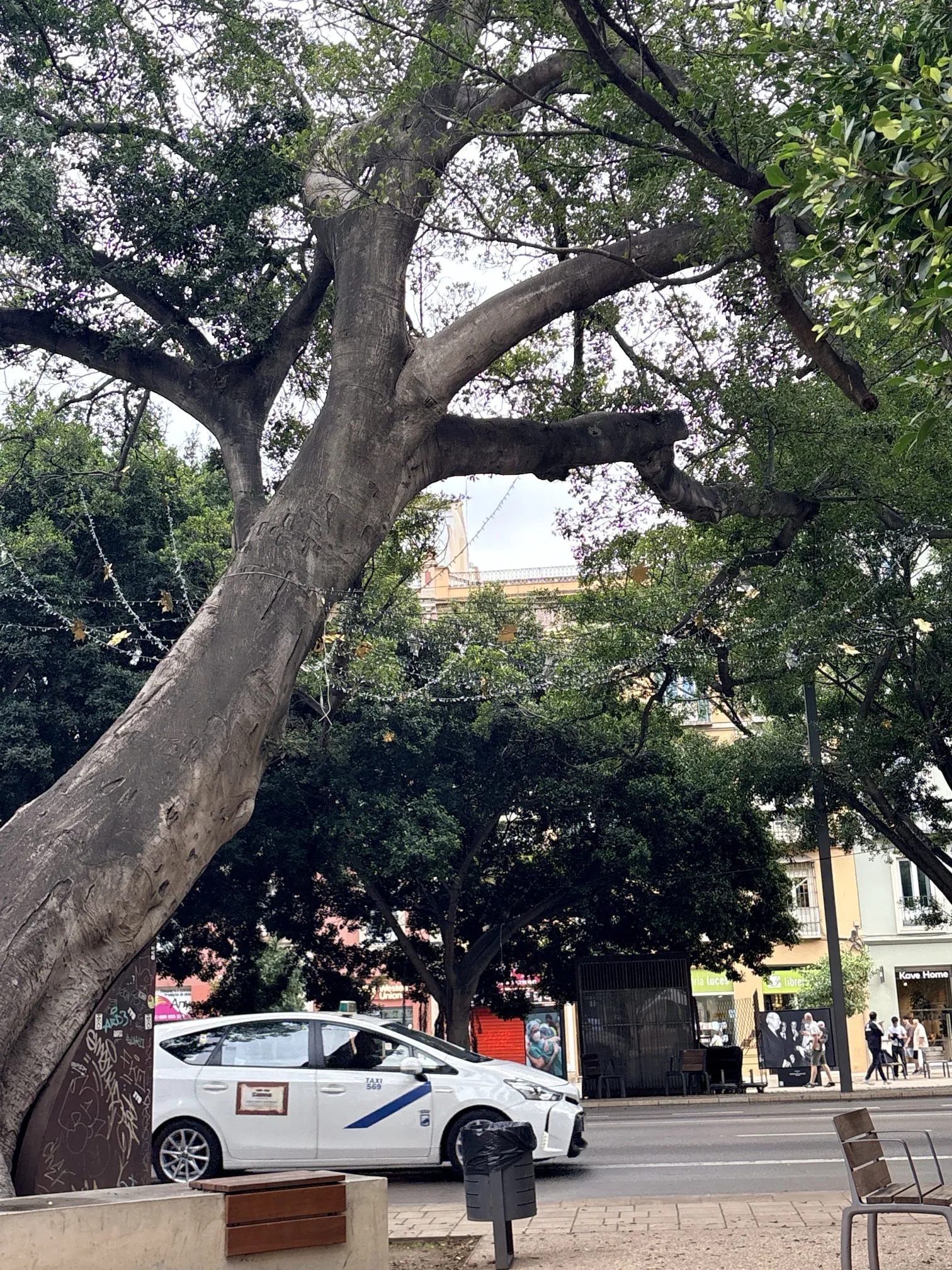
Christmas lights in the trees on the Alameda Principal
Those garlands hanging in the branches in my photo are part of the Alameda Principal's Christmas lights. The ficus trees along the avenue get wrapped in lights, so once they're switched on the whole avenue glows like a forest.
Málaga's Christmas lights switch on on Friday 27 November, and the council has now published the lighting details. The dates and show times are in my Christmas in Málaga guide.
Alameda Principal, 29005 Málaga
Read more: Christmas in Málaga, What's on in Málaga in December
Menú del día at Rita's Resto Bar
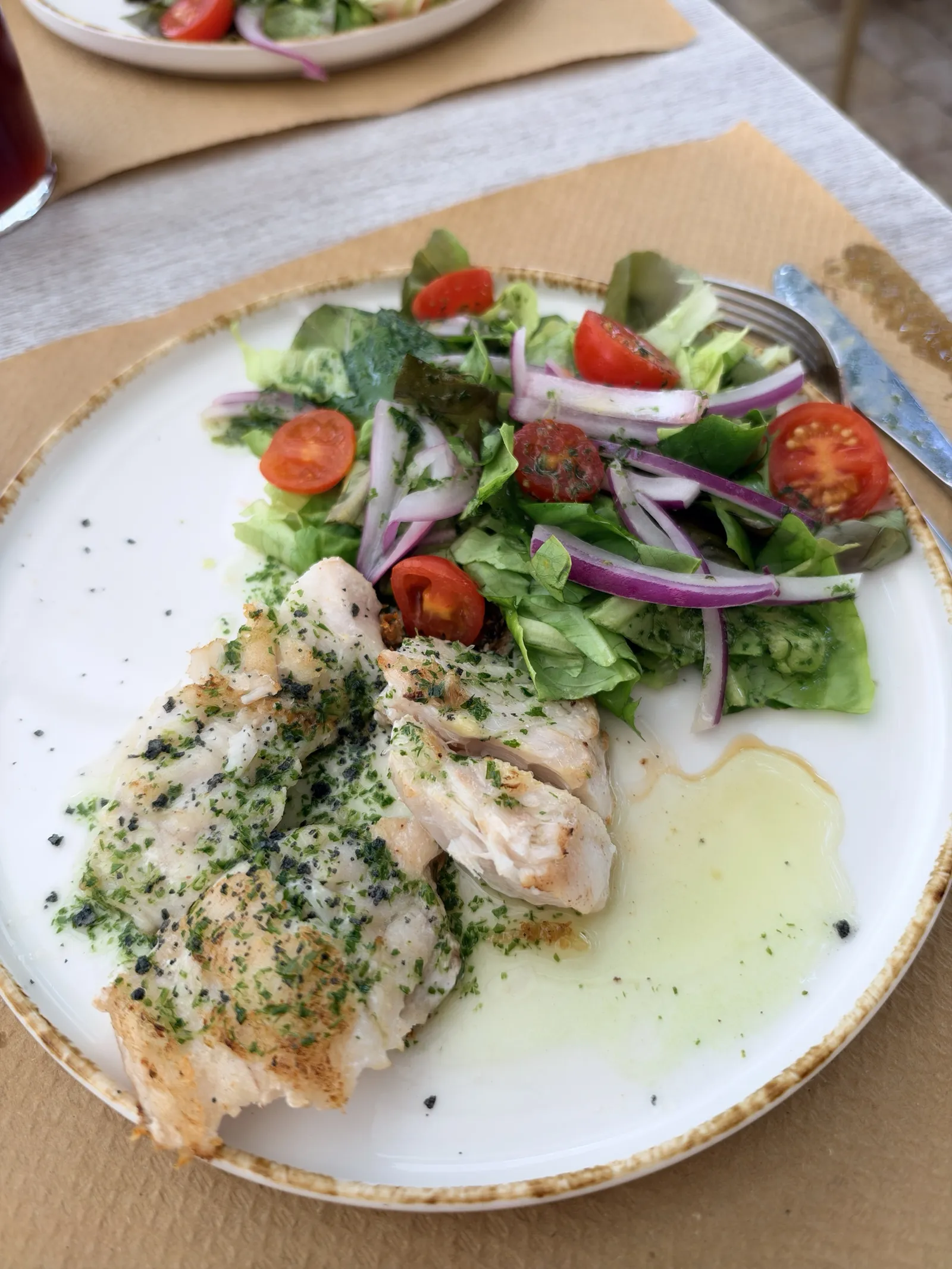
I love a good menú del día, especially when it's real value for money. Rita's on Plaza de la Merced does three courses for €13.50, served from 12:00 to 16:00.
I started with the tomato and avocado timbale and had a coffee instead of dessert.
One thing to know before you sit down: there's no drink or bread included in this one. Most places in Málaga fold both into the price, so budget a little extra if you want a glass of something with lunch.
They hand you a printed menu in English too, so no guessing from the chalkboard.
I've put eight menús del día side by side, with real prices, in my guide to the best menú del día in Málaga. Two more of them are on this same square.
Plaza de la Merced 20, 29012 Málaga
Read more: Best menú del día in Málaga, Cheap eats in Málaga
Want to stay right off Plaza de la Merced?
Anahita Boutique Hotel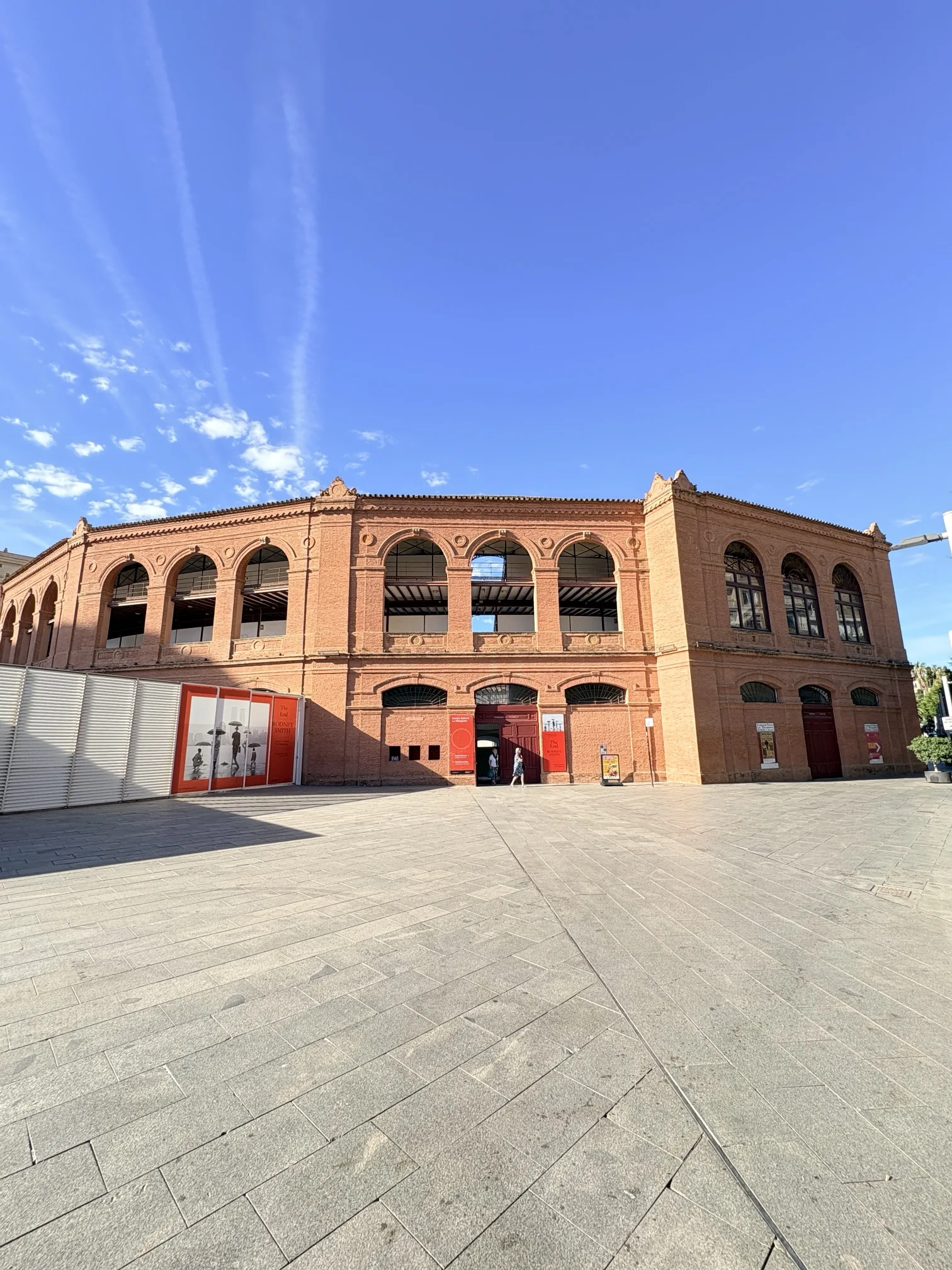
Why I always stop at La Malagueta
This afternoon the brick on La Malagueta looked almost orange against that blue sky, and the square in front was nearly empty.
It was designed by Joaquín Rucoba, the same architect behind the Atarazanas market hall, so if you've shopped there, you've already seen his work. You'll find it in my guide to markets in Málaga. It opened in 1876, in the neo-Mudéjar style: all red brick, rows of arches and little round details between the windows. It isn't actually round, either. Count the walls and you'll find 16 sides.
These days it's used as a cultural centre for most of the year. Right now there's a photography exhibition inside, The End by Rodney Smith, with 62 of his photos, 20 of them never shown in Spain before. Go in through Puerta 9 on Paseo de Reding, where the orange banners are in my photo. It's on until 31 January 2027.
To see the whole shape at once, walk up to the Gibralfaro viewpoint. From the top it sits like a neat brick ring between the park and the sea.
Paseo de Reding 8, 29016 Málaga
Read more: Best viewpoints in Málaga, Markets in Málaga, Museums in Málaga
Three cruise ships, seen from La Malagueta
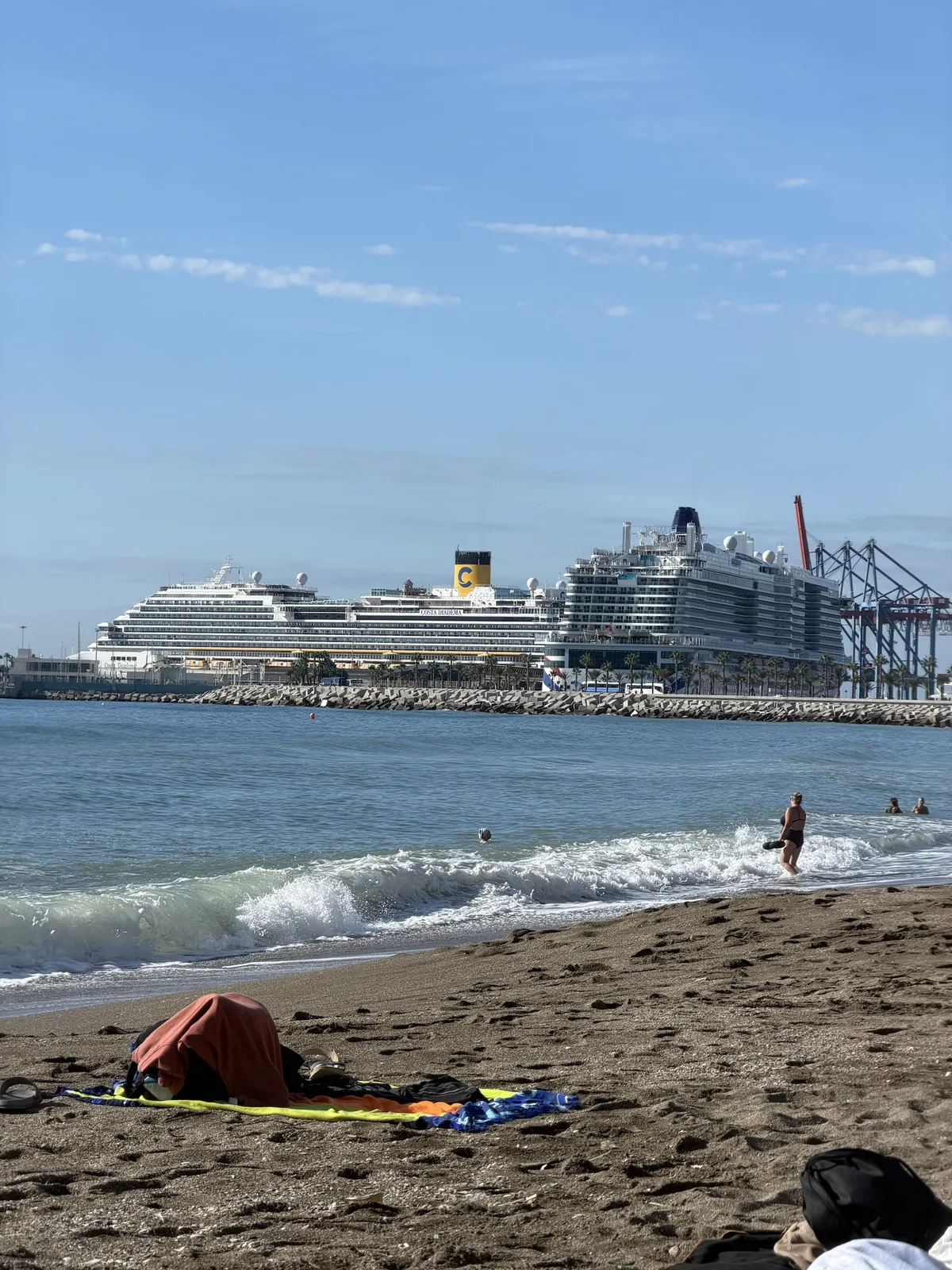
From the sand at La Malagueta yesterday, the port looked full. Two of the three cruise ships in Málaga that day lined up right behind the swimmers.
On the left is Costa Diadema, with the yellow C on her funnel. She's built for 3,724 passengers at normal occupancy, and close to 5,000 when every berth is taken. Next to her, with the dark blue funnel, is P&O's Arvia, which carries around 5,200.
The third ship was Hapag-Lloyd's Europa 2, just out of my shot. She's the small luxury one, with room for only 516 guests. Between them, the three could carry more than 9,400 people, and that's before you count the crew.
If you're arriving by ship, the old town is about a 15-minute walk from the port, and La Malagueta is even closer. The sea stays around 21°C in the first half of October in Málaga, so a swimsuit in your day bag isn't a silly idea. Today it's the turn of TUI's brand-new Mein Schiff Flow, built for almost 4,000 more.
Paseo Marítimo Pablo Ruiz Picasso, 29016 Málaga
Read more: Beaches in Málaga, What's on in Málaga in October, One day in Málaga
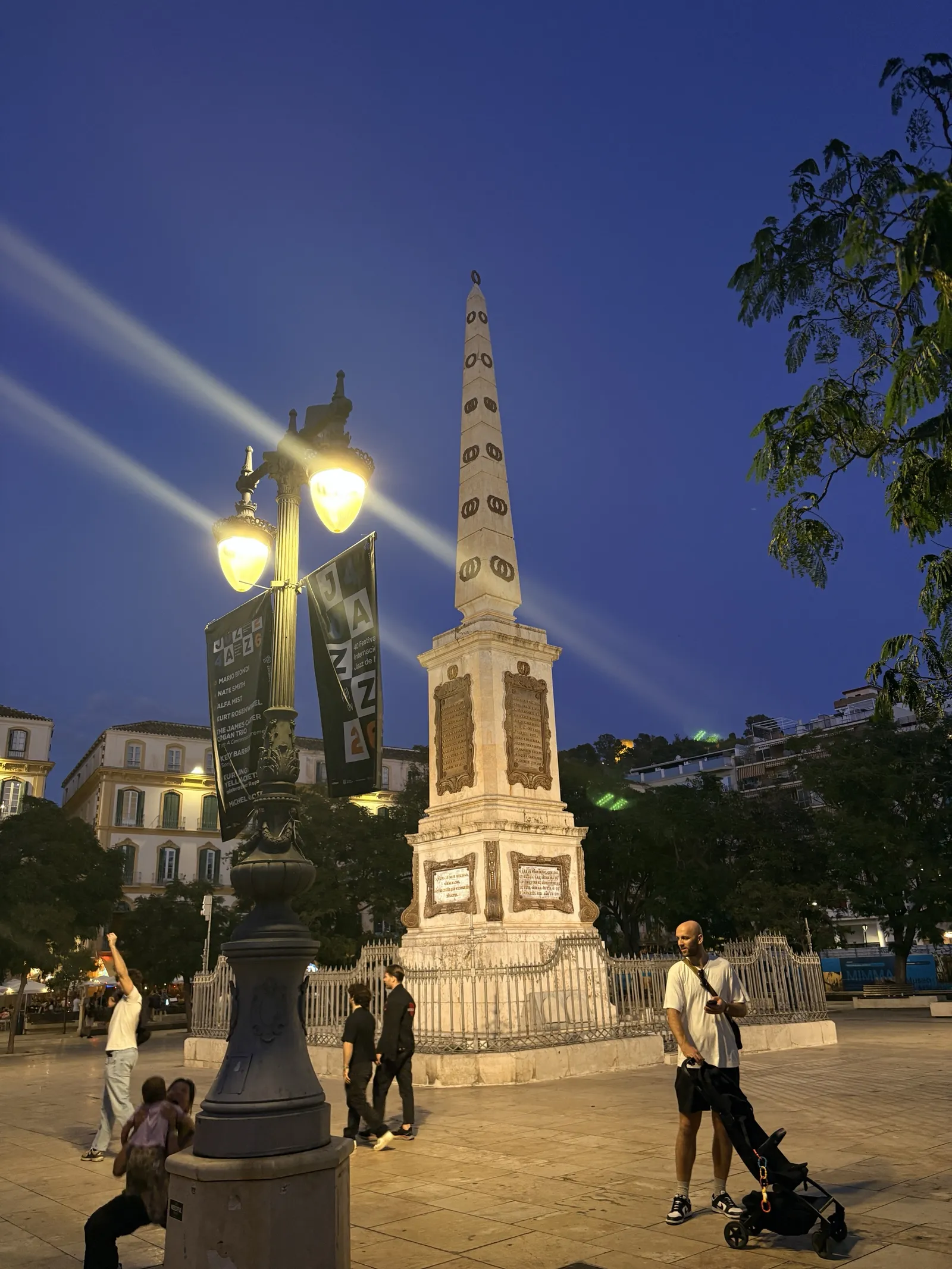
The obelisk in Plaza de la Merced is a grave
Crossing Plaza de la Merced this evening, I ended up rereading the history of the obelisk in the middle. So many people walk past it every day without knowing what it is.
It's the monument to General José María Torrijos and his men. In December 1831 Torrijos sailed over from Gibraltar to start an uprising for a constitutional, liberal Spain. The governor of Málaga had promised to support him. He didn't. It was a trap, and on 11 December Torrijos and 48 of his companions were shot by firing squad on a Málaga beach.
Eleven years later, on the anniversary, the city put up this obelisk, paid for by public subscription and raffles. Torrijos's remains lie in the crypt underneath, so it really is a tomb. The names of the dead are on the plaques around the base, and one of them is Robert Boyd, a British volunteer. Look up at the bronze wreaths climbing the stone: there are 49 of them, one for each man.
One more detail: an earthquake in 1884 knocked the top block slightly out of line, and later restorations deliberately left it that way.
Picasso was born in this same square fifty years after the executions, in the house on the north corner. And the banners on the lamp posts right now are for the 40th Málaga Jazz Festival, 3 to 10 November at the Cervantes.
Plaza de la Merced, 29012 Málaga
Read more: Málaga old town guide, Málaga on foot: a walking route, Museums in Málaga
Fancy a hotel with a drinks terrace?
AC Hotel Málaga Palacio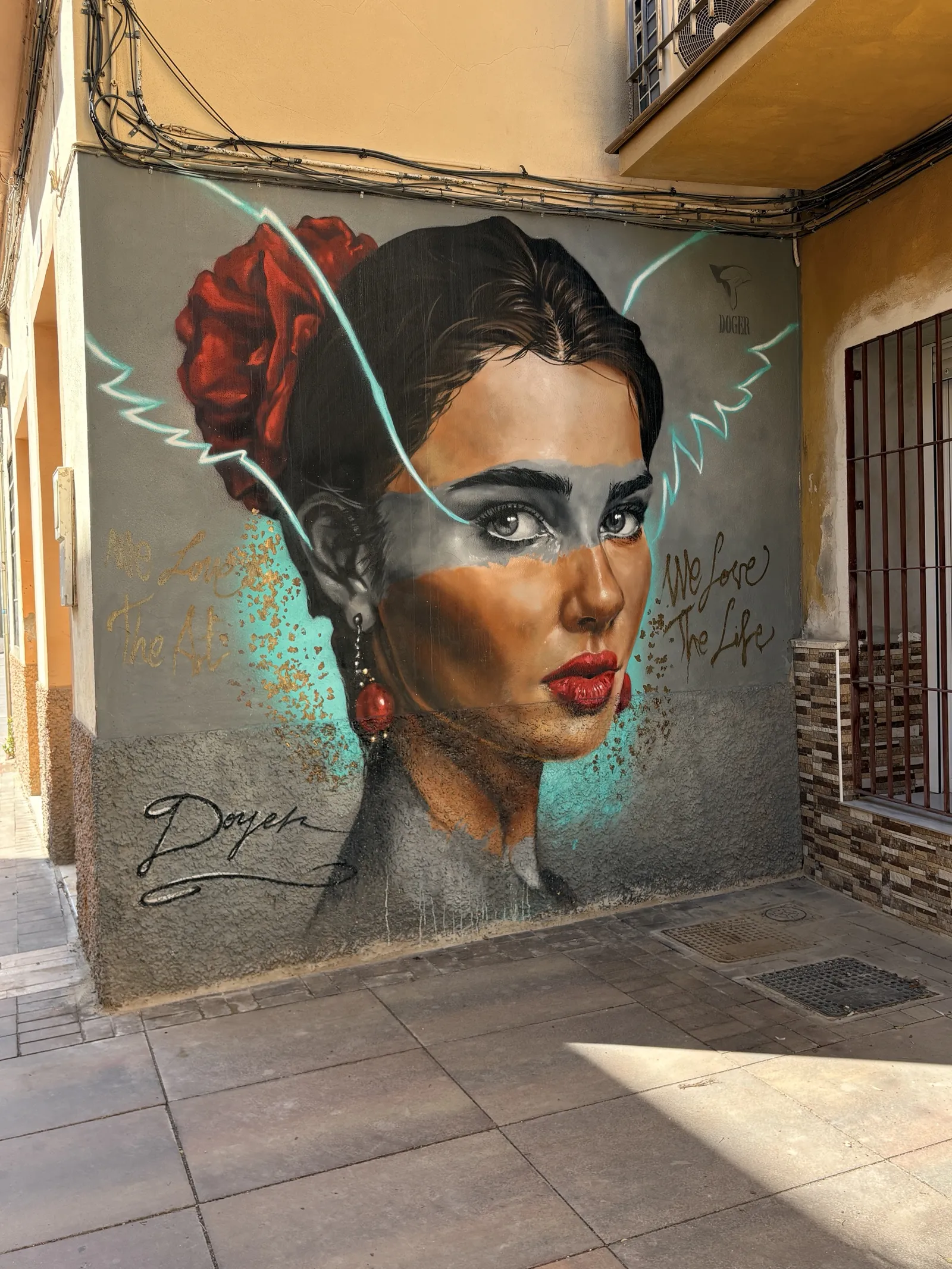
Doger's woman with the red rose, and the rest of Lagunillas
Lagunillas is the barrio just behind my home, and I often wander these streets to see the art. The woman with the rose is by Doger, which is Jonathan Morillas. He's from Zaragoza, has been doing graffiti since 1995 and has been painting here since 2015. It's mostly realistic portraits of women, so she's very much his style.
There's more of his around if you look. A bearded portrait of Miguel Ángel Chamorro in Plaza de la Esperanza, a violinist on Calle Lagunillas, and some children with a dinosaur at Calle Pinillos 2.
Chamorro was a painter. In 2005 he started an association called Fantasía en Lagunillas and painted the walls with kids from the neighbourhood. He died in 2017.
Before that, a renewal plan in the late 1990s stalled and left half-demolished buildings and empty lots, and a lot of residents moved out.
Further back it was a working neighbourhood outside the old city walls. The name means little ponds, because clay was dug here for bricks and tiles and the pits filled with rain. In 1753 there were 19 potteries and 11 tile works.
Over in Soho the MAUS project started in 2013 and brought in big names like Obey and D*Face. Here the artists mostly volunteered, and often paid for their own paint.
If you want to walk it, start at Plaza de la Merced. There are Picasso reproductions on a house front as you go in. Then head to Calle Lagunillas 20 for Lalone's #SiempreFuerte portrait of Pablo Ráez from 2018, which is the biggest mural in the barrio.
After that there's Calle Gigantes for Back To School by Lalone and El Alfil, the cultural centre on Calle Vital Aza that's covered in mosaics and old bicycle parts, and Plaza de la Esperanza. That used to be a car park and it's now a basketball court where the barrio meets. It's about an hour all in.
Go in daylight. Morning light's good for photos, and some streets feel a bit rough after dark.
People live here, so keep your voice down and buy your coffee or tapas locally. The murals change and some get painted over, so don't be surprised if a few are gone when you get here.
If you're still working out a base, here's my guide on where to stay in Málaga.
Barrio de Lagunillas, 29012 Málaga
Read more: Unusual things to do in Málaga, Free things to do in Málaga, Where to stay in Málaga
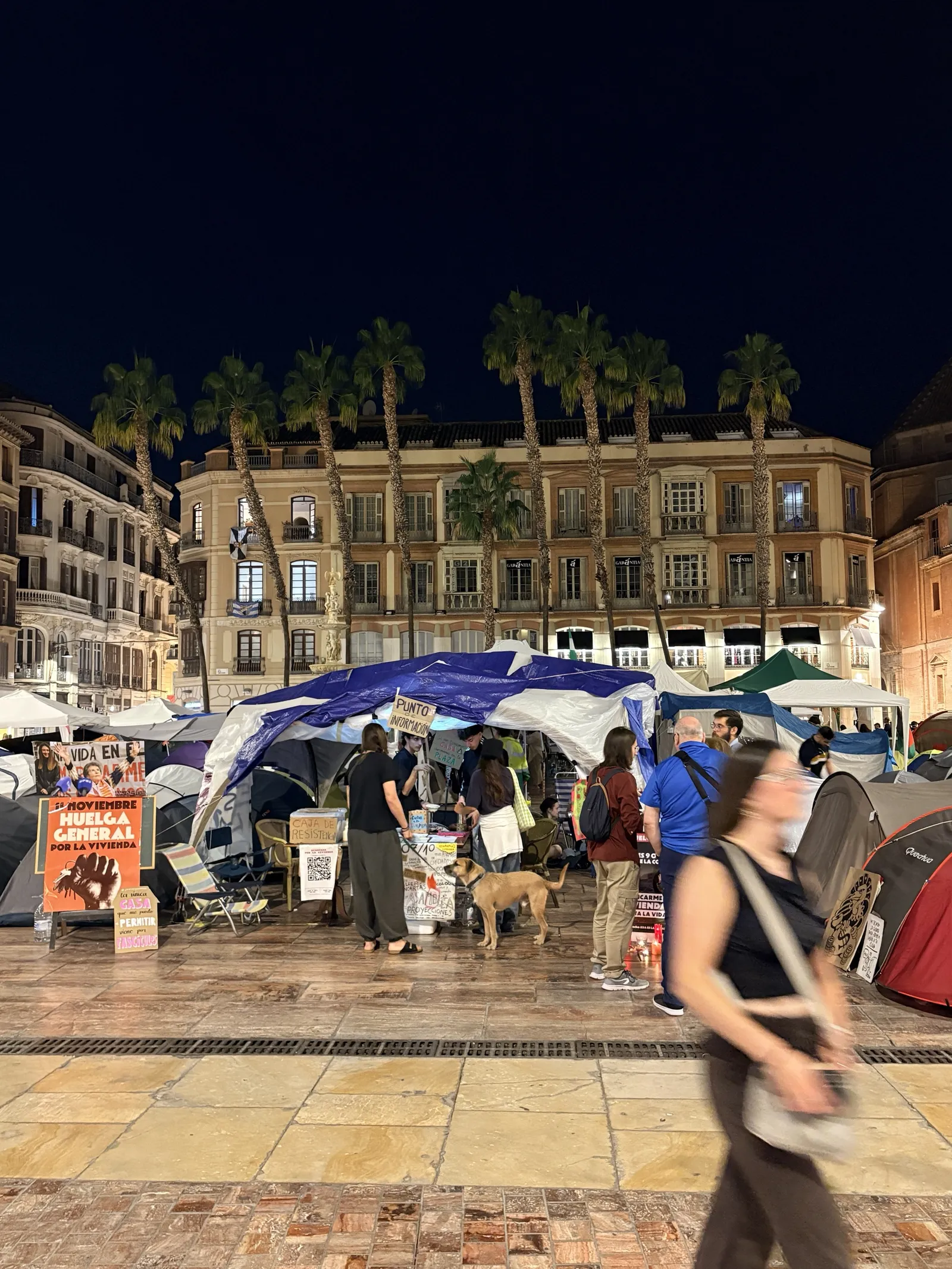
The tents stay in Plaza de la Constitución after Maricarmen's death
Maricarmen Abascal, the 87-year-old whose eviction in Madrid started the housing protests all over Spain, has died. She was taken to the Gregorio Marañón hospital on the day she was evicted, 23 September, from the flat she had lived in for about 70 years, and she died there on Wednesday 7 October.
I walked through Plaza de la Constitución tonight and the tents are still here. The camp has been up since 28 September. People are angry, and you can feel it in the square.
There's a sign with her name on it by the tents. The information point under the blue tarp is still running, with a box collecting money for the camp, and an orange poster calls a general strike for housing on 11 November.
The plaza is at the end of Calle Larios, so you can't really miss it if you're walking the old town. It was calm when I was there, people chatting and a dog wandering between the tents. If you're planning a trip around the strike date, keep an eye on my what's on in Málaga in November guide.
Plaza de la Constitución, 29015 Málaga
Read more: Málaga old town guide, What's on in Málaga in November

We caught a mouse in our Málaga flat. It was a shrew
The last thing I expected in the old town was a little animal crawling around on our floor. We caught it together, sure it was a mouse, and I was already worrying that there'd be a nest of babies somewhere and we'd need to call the exterminator.
When we looked at it properly, it didn't look like any mouse I've seen. Look at that long pointed snout and the tiny eyes. After some reading we realised it was a shrew.
Shrews aren't rodents. They eat insects, and from what we read they don't move in and breed in your walls the way mice do, so no exterminator needed.
This morning it came with us on Axel's walk, and we let it go in Plaza de la Merced, under the trees. Unfortunately there isn't much greenery in the old town, so that was the best we could do.
If you catch a "mouse" in Málaga, have a proper look at its face before you call anyone.
Plaza de la Merced, 29012 Málaga
Read more: Málaga on foot: a walking route, Málaga old town guide
Coming over Christmas and want the Calle Larios view?
SOHO Boutique Equitativa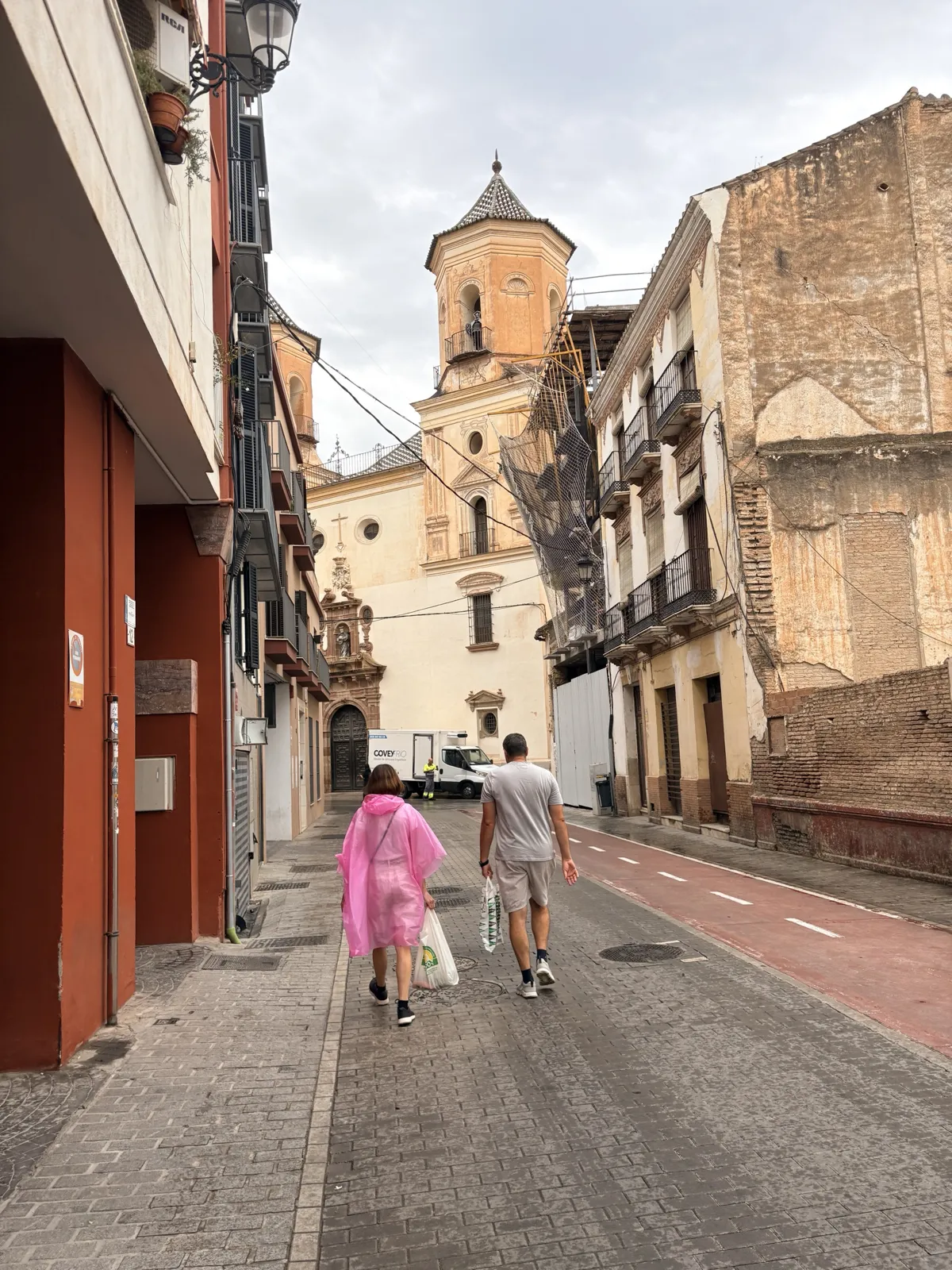
Rain in Málaga, and how rare it really is
I took this by the church of San Felipe Neri, a couple of minutes' walk from Plaza de la Merced, just after today's rain. The cobbles were still shiny.
So how rare is a day like this? Málaga averages about 42 days a year with at least 1 mm of rain, according to Spain's weather agency AEMET. October usually brings around four of them. For most of the year, rain here is something you notice.
I stopped checking the weather forecast a long time ago. Here, the sun is pretty much a given, which is exactly why a wet day still feels like an event.
If you're here when it rains, watch your step on the marble cobblestones around the Cathedral and along Calle Larios. They get really slippery when wet. And if it sets in for the afternoon, I've put together what to do in Málaga when it rains.
Calle Guerrero 6, 29012 Málaga
Read more: What to do in Málaga when it rains, Málaga old town guide
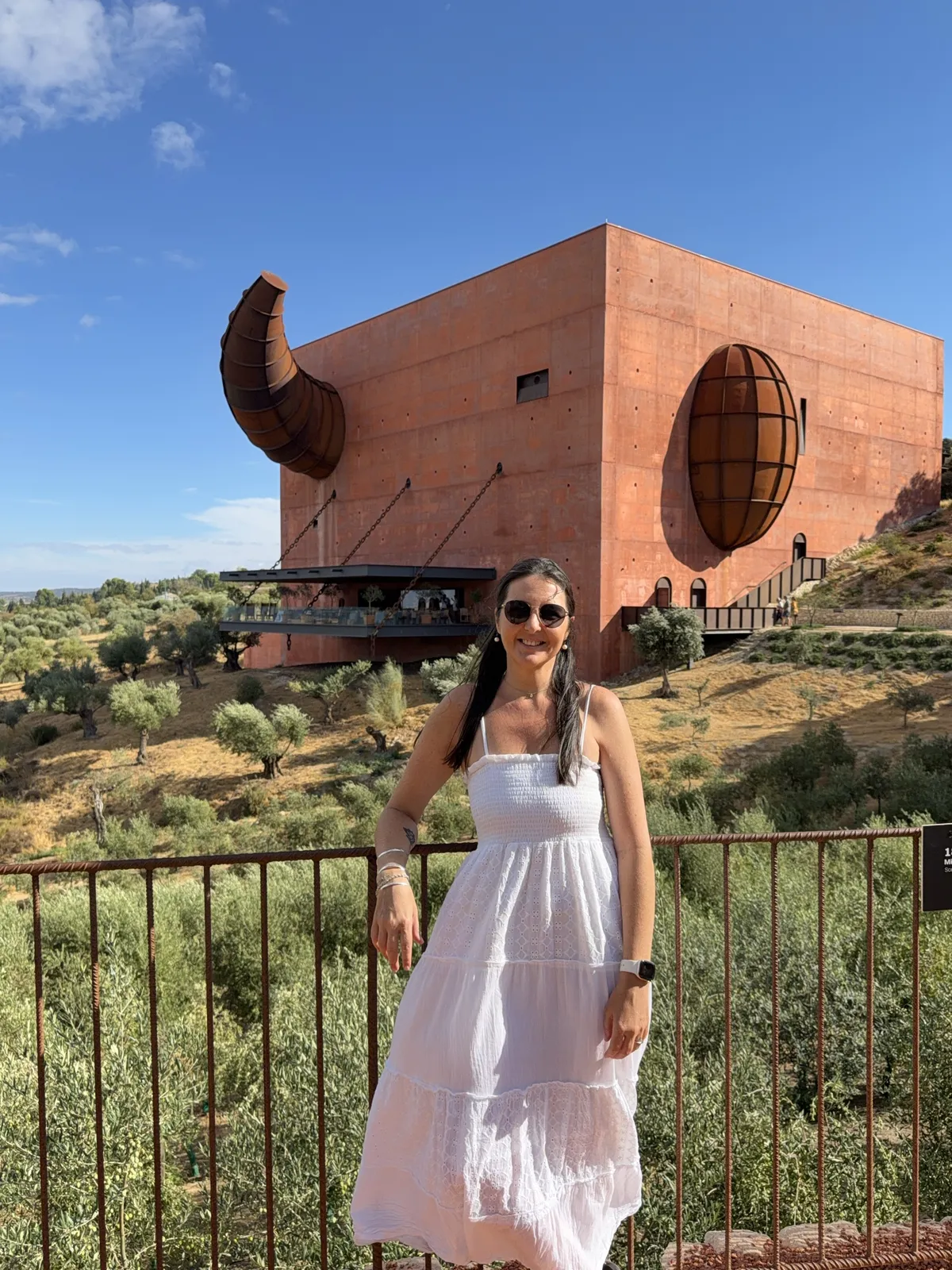
LA Almazara near Ronda: I expected more
After four years living in Málaga, today was my first visit to LA Almazara, the olive oil mill outside Ronda designed by Philippe Starck. It opened in October 2024, and TIME put it on its World's Greatest Places list for 2025, so I went in with high hopes.
I bought the museum ticket for €15. It includes a tasting of two olive oils in the shop and access to the mirador, which is where I took this photo of the red cube and its steel bull's horn. The museum itself is small. We were through it in about fifteen minutes, and after that we felt there was nothing left to do.
There are bigger tickets. The guided Premium visit starts from €28 for about an hour and a half, with a guide, a walk through the working mill and a proper olive oil tasting with mollete bread. Wine tasting is only offered as an option on the top Exclusive visit, and the booking site doesn't show that price. I haven't done the official tasting myself, and I've heard from others who did the group tour of the mill that it was pretty boring too.
So would I drive all the way out there again just for this? No, not unless I had something else planned nearby. Sorry to say it, but I was expecting more. If you're already spending a day in Ronda, it's on the A-367, the Ardales road just outside town, and the mirador does give you a great photo. Read where to park in Ronda before you head into the old town.
Carretera Ardales–Ronda A-367, km 39.5, 29400 Ronda, Málaga
Read more: Things to do in Ronda, The best month to visit Ronda
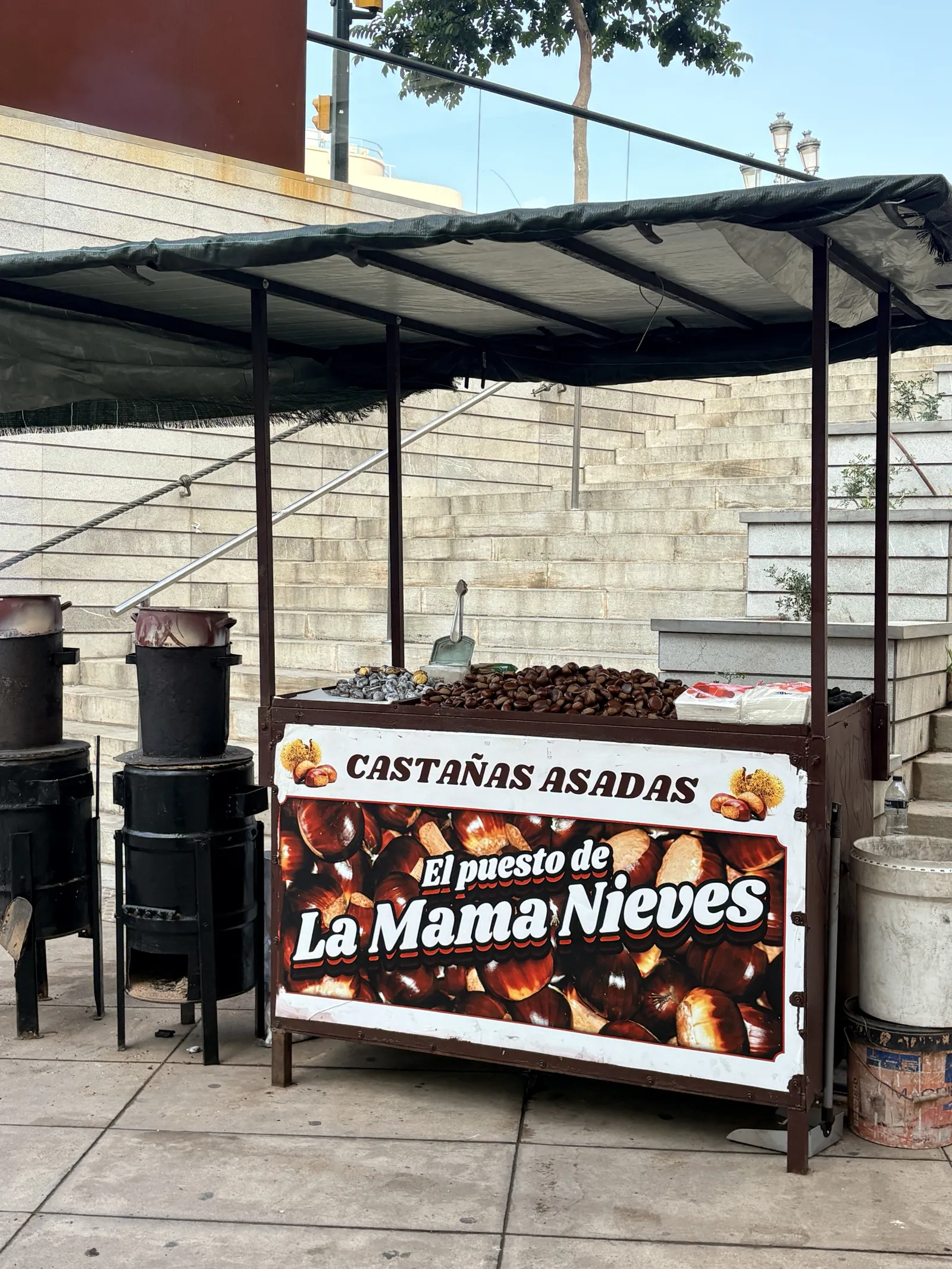
The chestnut stands are back in Málaga
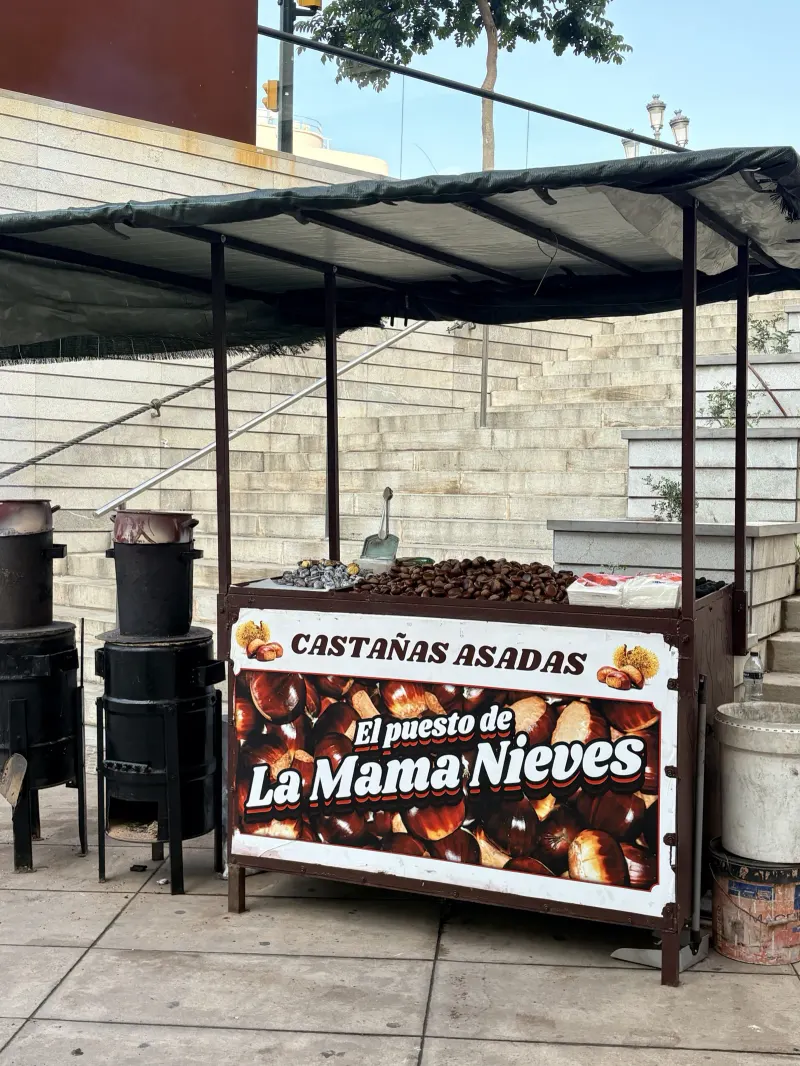
The castañas asadas stands are out on the streets again. This one is El puesto de La Mama Nieves, at the foot of the Tribuna de los Pobres steps where Calle Carretería meets the river, with the roasting drums standing ready beside the cart and chestnuts piled high on top. For me, that can only mean one thing: autumn is almost here in southern Spain.
I love walking past these stands in the middle of winter and catching the smell of the smoke.
And here's my confession: I've never actually tried them. I never have cash on me, and they don't take cards.
So if you want a cone of roasted chestnuts while you're here this autumn or winter, keep a few euros in coins in your pocket.
Tribuna de los Pobres, Calle Carretería (corner of Avenida de la Rosaleda), 29008 Málaga
Read more: What's on in Málaga in October, What's on in Málaga in November
Not sure where to stay yet?
Compare places on the map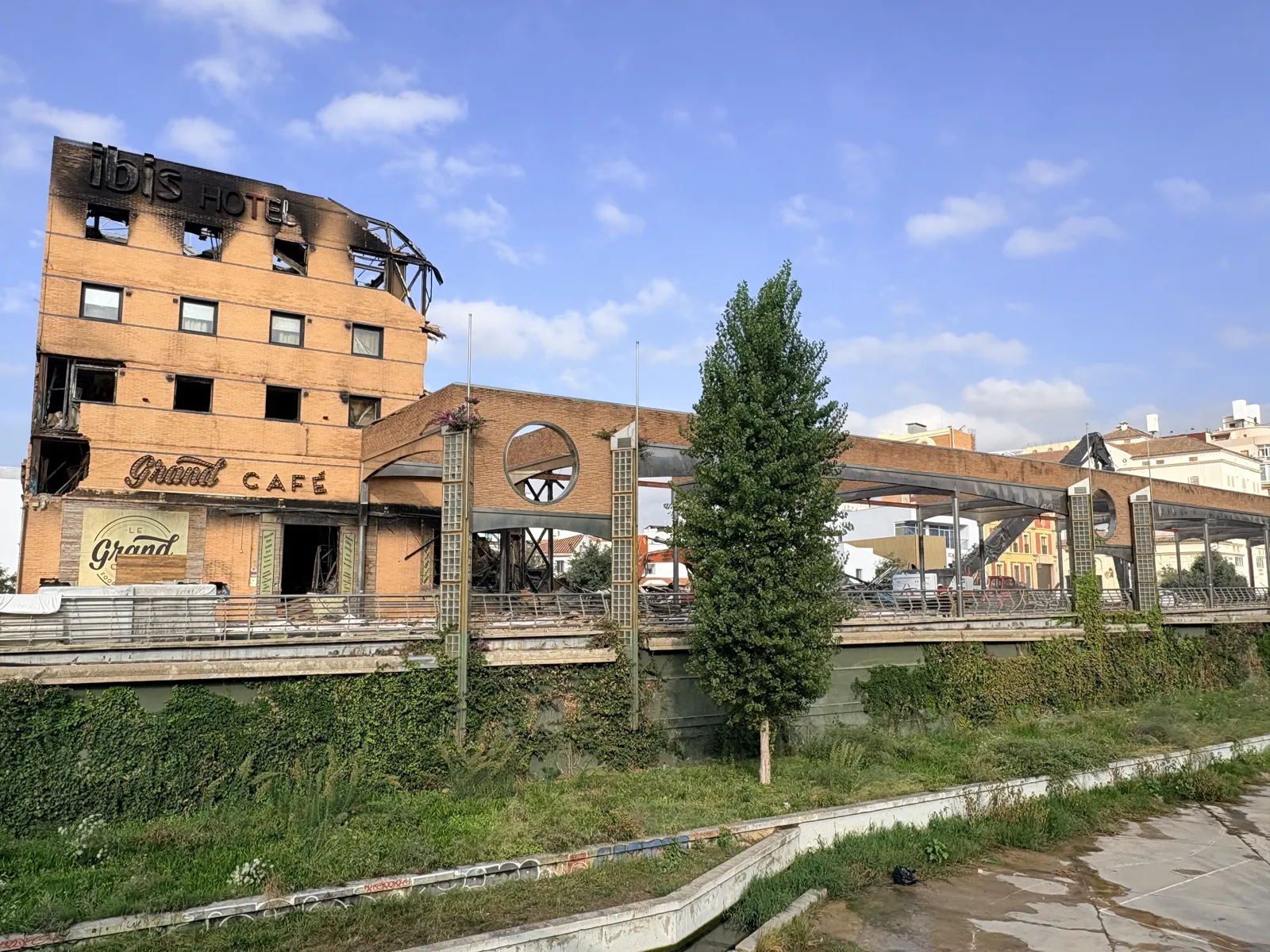
The burnt-out Ibis hotel by the river is nearly gone
The Ibis hotel on Pasillo de Guimbarda, the one right on the Guadalmedina riverbed, is almost gone. I took this from the riverbed this morning. The front with the ibis sign and the Grand Café is still standing, and the diggers are working through what's left behind it.
I live three blocks away. In May I saw the smoke, and we could smell it from our home.
The fire started in the early hours of 25 May in the café on the ground floor and spread into the hotel. Around 100 people were evacuated and nobody was hurt. It took weeks to put out completely. Firefighters only ended their watch on the site on 11 July.
Demolition started at the beginning of September and was planned to take about two months. If you stayed at the ibis Málaga Centro Ciudad, this was it, all 189 rooms.
If you're driving, the bus lane in the Pasillo de Guimbarda tunnel next to the hotel is closed while the work goes on. The car lane is open.
Pasillo de Guimbarda 5 (corner of Calle Cerrojo), 29007 Málaga
Read more: Where to stay in Málaga
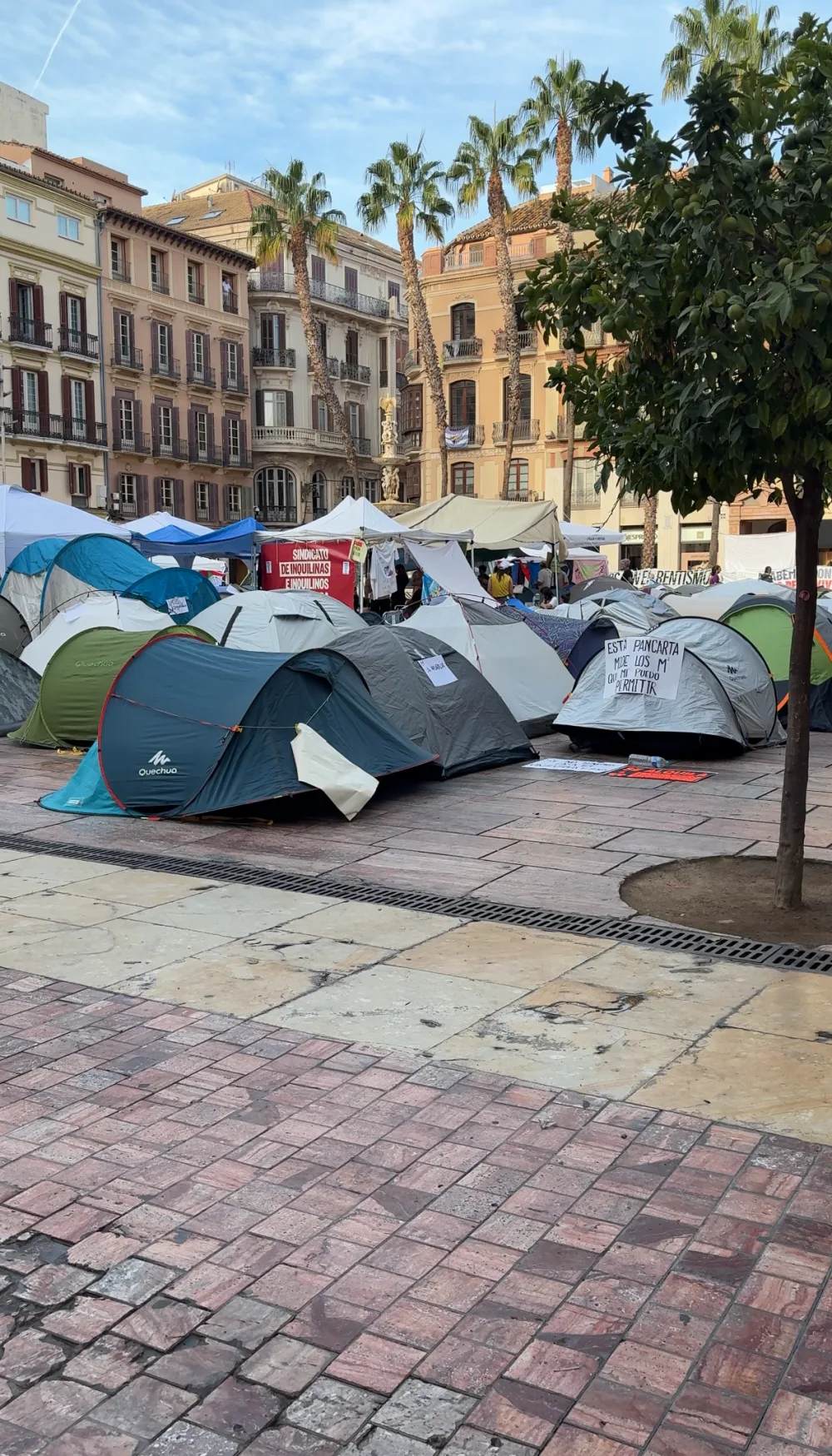
Tents in Plaza de la Constitución: what's going on
If you're wondering about the tents in Plaza de la Constitución, it's a housing protest. People have been camping in the square since the evening of Monday 28 September, after a march through the centre ended there.
It's organised by the Sindicato de Inquilinas e Inquilinos, the tenants' union, whose red banner is up in the photo, together with the platform Un Techo por Derecho. The signs are about what people can afford to pay for a home. One on a tent says the banner is the square metres the writer can afford.
Organisers have said there's no end date and that they're deciding day by day.
The plaza is at the end of Calle Larios, so if you're walking the old town you'll almost certainly pass it.
Plaza de la Constitución, 29015 Málaga
Read more: Málaga old town guide
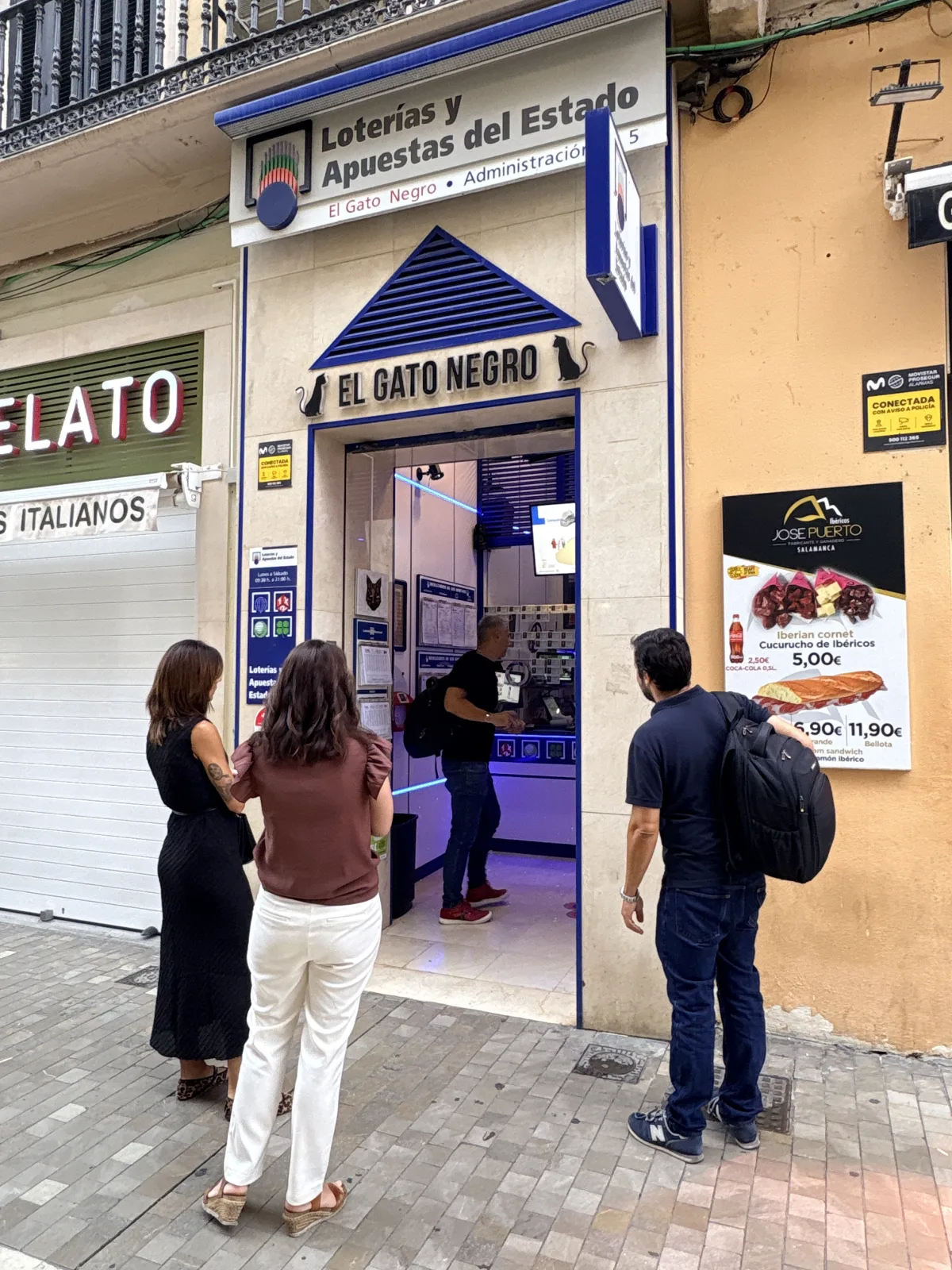
The queue at El Gato Negro for the Christmas lottery
El Gato Negro on Calle Granada is one of the most popular places in Málaga to buy lottery tickets. There's nearly always a little crowd outside.
It has been selling tickets in Málaga for over 100 years and has sold winning Christmas lottery tickets before. In Spain, a shop's luck counts for a lot.
From now until December the queues get longer. Everyone wants a décimo for the Christmas lottery, El Gordo, drawn on 22 December. A décimo is a tenth of a full ticket and costs €20. You don't pick your own numbers. You choose from the ones the shop has.
Families, friends, workmates and even the local bar often share tickets, so the whole office can win together.
The sign by the door gives the opening hours as Monday to Saturday, 9:30 to 21:00.
Read more: Christmas in Málaga, Málaga old town guide
Have you booked your Málaga accommodation yet?
See what is freeShowing 10 of 29 notes