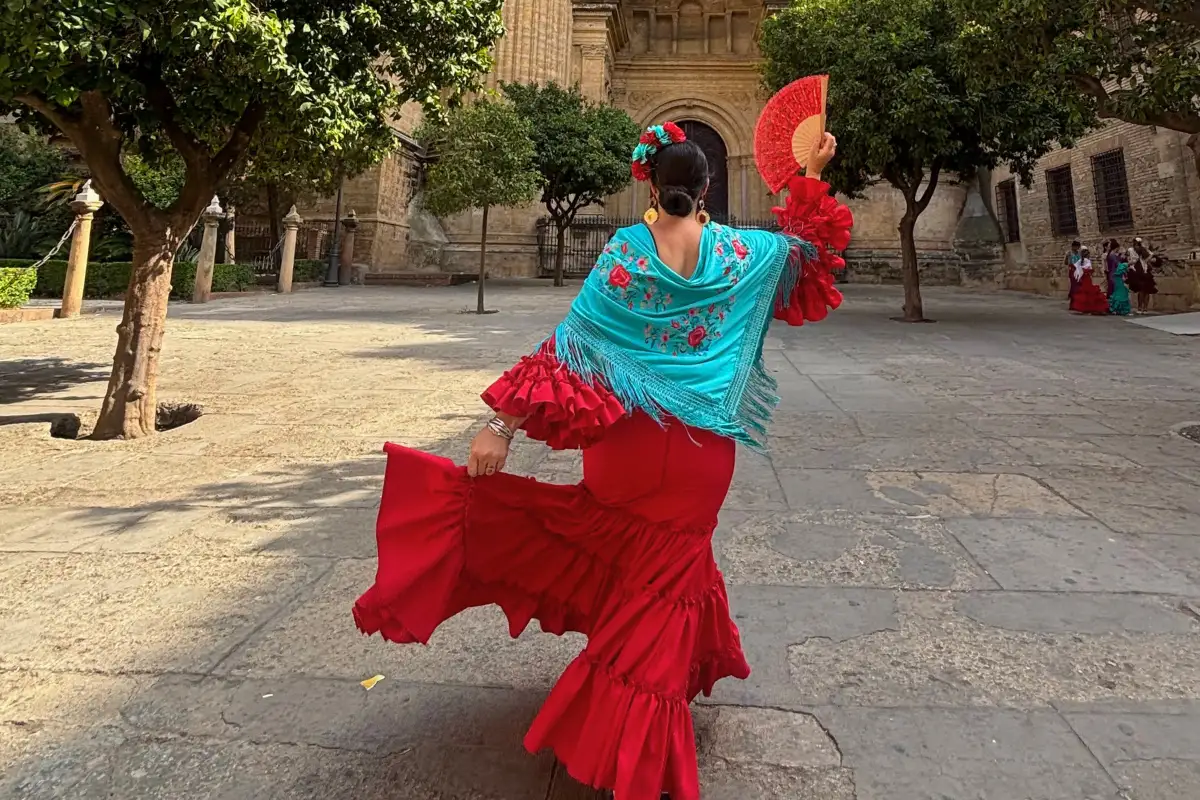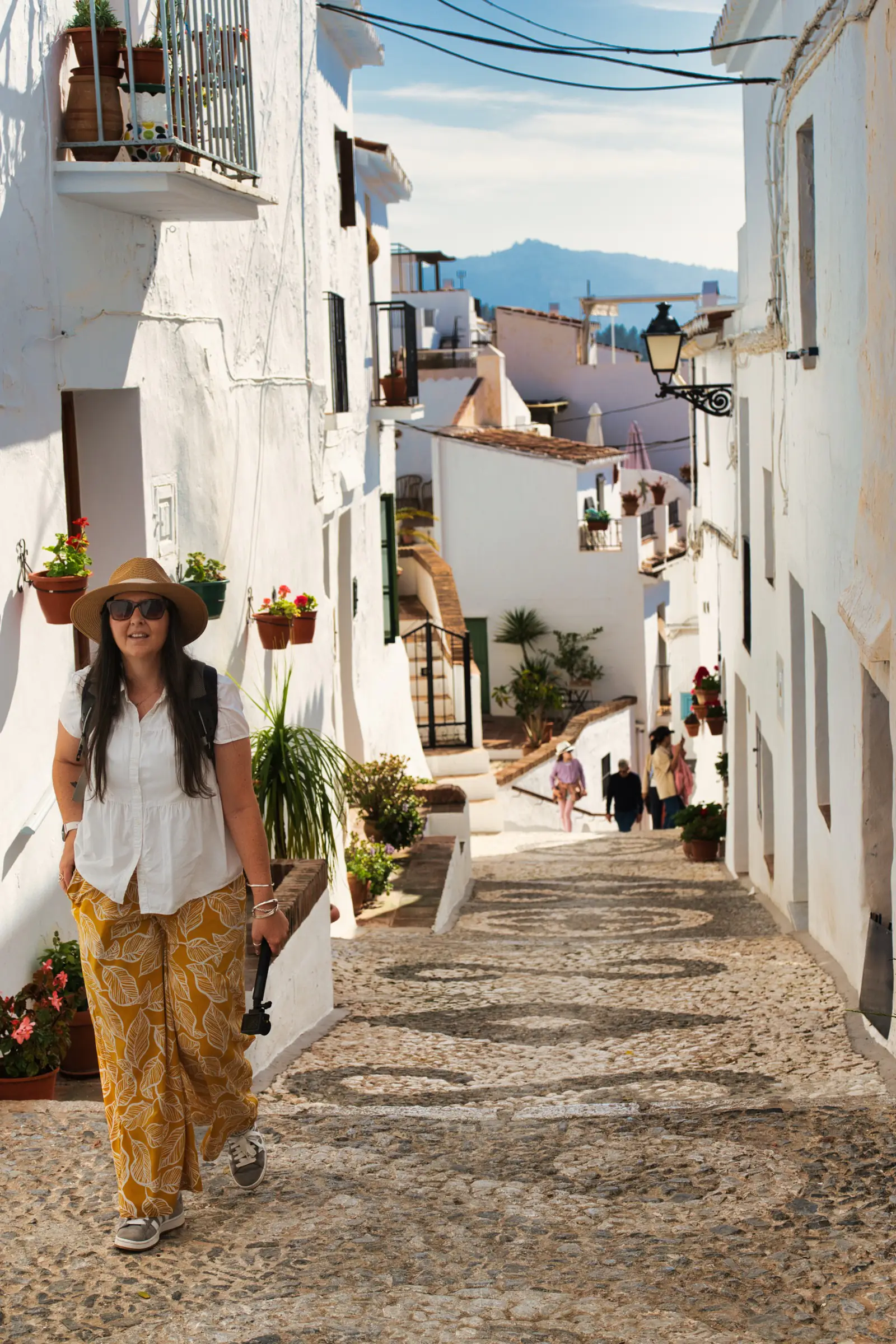
I didn’t expect the beach to become a normal part of my week. But I live in Málaga Old Town and have done for almost four years, and there’s something lovely about the sea being a ten minute walk rather than an outing you plan.
So I go the way other people go to the park, often, briefly, and usually without a plan. The beaches in Málaga make that easy, because they’re free, they’re sandy, and there are around 15 or 16 of them along about 14 km of coast.
Sitting on La Malagueta on a warm afternoon in the middle of March with something from a chiringuito is one of my favourite ways to spend a few hours here. The UV index sits at 5 to 6 in March, higher than most people expect, so sunscreen from midday is worth it even on the cloudy ones.
Baños del Carmen is my other favourite, and the only beach here I’d willingly set an alarm for.
Seven of them hold a Blue Flag in 2026, which is a lovely haul for one city.
I haven’t seen all of it, mind you. I’ve never been to the market in El Palo, though I’ve eaten espetos there and they’re as good as everyone tells you.
This guide runs through the city beaches, the ones you can reach on foot or on a bus, and then the ones out along the coast that are worth the drive.
How Far Is the Beach from Málaga City Centre
Not far at all, which is the happy answer, and it’s a big part of what Málaga is actually like to spend time in. Malagueta is 10 to 15 minutes on foot from the historic centre, and from anywhere in the old town a taxi gets you there in about 5 minutes.
Head further east and it stretches a little, though not in a way that should put you off. Pedregalejo and El Palo are a 15 to 25 minute drive, a 30 to 45 minute cycle along the coastal promenade, or buses 3 and 11, and that cycle is a gorgeous flat run if the day’s kind. The buses and metro cover this whole stretch cheaply.
Peñón del Cuervo is roughly 20 minutes east by car. The airport, going the other way, is 10 to 15 minutes from the centre, which is a great thing to know on a morning flight.
I’d do all of that without a car if I could, and I usually do. Parking in Málaga Old Town is honestly a nightmare, and it’s far easier and much happier to go car-free in the city and rent for the few days you want to get further out. If you’re bringing one anyway, I’ve mapped out where to actually park.
Case in point, we once spent 35 minutes circling El Ejido for a space. Term time, students all in class, and nothing frees up there.
The Málaga City Beaches
The beaches in Málaga city run west to east, and that’s how I’ve listed them, the way the coast actually unfolds from the port.
First, the sand, which is dark along this whole stretch and throws people who’ve only ever seen the brochure shots of somewhere else. I’ve lived ten minutes from it for almost four years and I stopped noticing a long time ago, and I’d say most people do by about day two.
Every city beach is sand rather than shingle, with one exception. Baños del Carmen is stones and gravel, and worth going to anyway. Seven of the beaches below carry a Blue Flag in 2026, and they’re spread along the run rather than bunched at one end, so wherever you end up you’re near a good one.
Playa de la Misericordia
Ask me where the city goes to move rather than to lie down and it’s this one, two thousand metres of dark sand and one of the largest and widest beaches Málaga has. The Paseo Marítimo Antonio Banderas runs the length of the back of it, and it’s a great flat straight run for walkers, runners and cyclists. Behind it stands the Chimenea de Los Guindos, red brick and unmissable, a lovely leftover from the working port.
It catches the best wind in the city, which is why the kitesurfers claim it, and there’s a surf school and paddleboards to hire if you’d like to be out on the water rather than looking at it.
In summer the Melilla ferry goes past and sends in a small wave everyone calls the Ola del Melillero, which is good fun to catch if you happen to be in it. Parque del Oeste is a short walk away and it’s an easy escape if the glare gets to be too much.
- Sand: dark, wide, roughly 2 km
- Water quality: Blue Flag
- Popular with: kitesurfers, cyclists, anyone with a route to walk
- Amenities: surf school, paddleboard hire, long promenade behind
- Parking: no car park I’d send you to
Playa de Huelin and San Andrés
Not everything has to be a postcard, and this one is lovely in the way a working neighbourhood is lovely. It’s about 1,500 metres of dark sand and gravel, a straightforward walk west of the centre, and it’s full of Malagueños all summer while the visitors stay put on Malagueta. Parque de Huelin runs alongside, and that bit of green counts for a great deal more than you’d think in August.
There’s a playground, there are restaurants, there are loungers, there’s grass to sit on. San Andrés carries a Blue Flag, and the whole stretch is honest about what it is.
I like it precisely because nobody’s trying to sell me anything much, which makes it an easy place to spend an afternoon. Come here when you want a swim and a sit down rather than an occasion.
- Sand: dark, mixed with gravel, about 1.5 km
- Water quality: Blue Flag at San Andrés
- Popular with: locals in summer
- Amenities: children’s playground, restaurants, sun loungers, green areas
- Parking: wouldn’t bank on it
Playa de la Malagueta
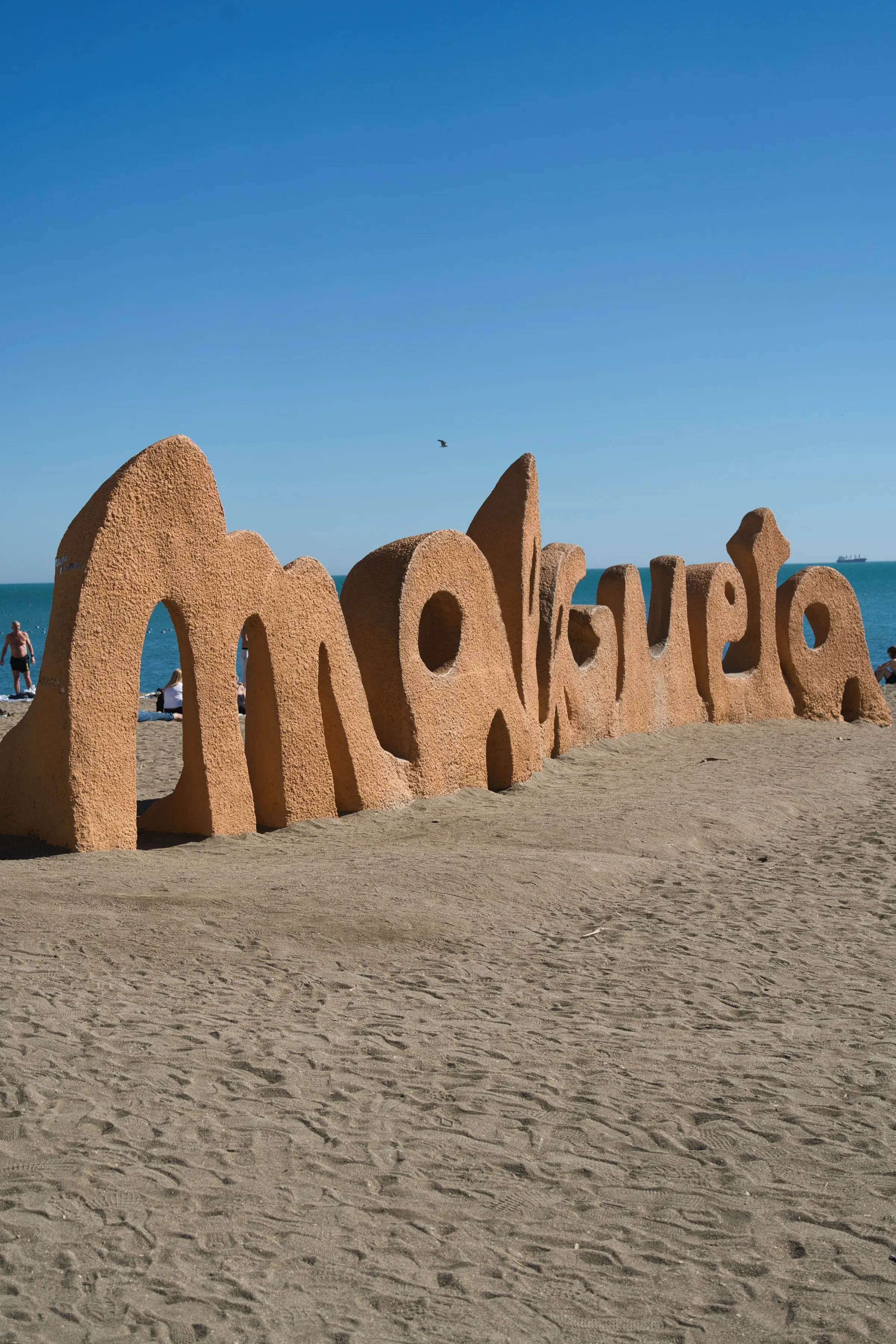
There’s a version of a perfect afternoon that costs almost nothing, and mine is this one. A warm afternoon in the middle of March, something from a chiringuito, and a few hours going nowhere in particular, which is about as good as this city gets.
Just don’t take March for granted. The UV index sits at 5 to 6, higher than people expect, so put sunscreen on from midday even when it’s cloudy.
The beach itself is the city’s main one, 1,200 metres long and 45 wide, dark sand, tucked between the port and Muelle Uno with La Farola lighthouse at the southwest tip. It’s 10 to 15 minutes from the historic centre on foot, which is exactly how you should arrive, and it’s a lovely walk in its own right. Half the things to do in Málaga are within twenty minutes of this sand.
Everything’s here, right down to a floating inflatable water park sitting offshore through the summer.
- Sand: dark, 1,200 m by 45 m
- Water quality: Blue Flag
- Popular with: everybody. It’s the one people mean
- Amenities: chiringuitos, lounger and umbrella hire, showers, toilets, playgrounds, outdoor gym, summer water park
- Lifeguard: on duty June to September
- Parking: limited and expensive. Muelle Uno has over 1,000 underground spaces, Plaza de la Marina 600. Bus 11 is easier
Playa de la Caleta
A kilometre of dark sand along the Paseo Marítimo Pablo Ruiz Picasso, sat between Malagueta and Baños del Carmen and quieter than either. It’s the calm middle of the walk between my two favourite beaches in the city, and I’d say I go through it more often than I stop on it, which is a shame because it’s a good beach. It’s known as a family beach and it has everything a family beach needs, plus water sports on top.
What I’d say is that it takes the pressure off. You get the full set of facilities without the churn of the main beach a few minutes west, and on a Sunday in July that’s well worth walking for.
- Sand: dark, roughly 1 km
- Water quality: Blue Flag
- Popular with: families
- Amenities: full facilities, water sports
- Access: straight along the promenade from Malagueta
- Parking: tight along this whole stretch
Los Baños del Carmen
This is the beach that alarm is for, though El Balneario no longer does breakfast (it opens at noon), so the coffee comes with you.
The restaurant sits on the terrace of a bathing pavilion from 1918, under gorgeous old eucalyptus trees that have watched the place change.
And change it has. Once an exclusive bathing club, it’s busy and young these days, on roughly 550 metres of stones and gravel rather than sand, about 2 km east of Malagueta, and it’s all the better for it.
El Balneario is where I’d start if you’re after eating with the sea in front of you, and there are more of those around the city than people realise. Further along the beach, Cerveceria Unterturkheim is my absolute favourite pit stop.
- Sand: none. Stones and gravel, about 550 m
- Water quality: not one of the seven Blue Flags
- Popular with: a young crowd, early risers
- Amenities: El Balneario, on the 1918 pavilion terrace
- Access: around 2 km east of Malagueta, easy on foot along the promenade
- Parking: hard
Playa de Pedregalejo
The breakwaters are the whole point, chopping the shore into a row of small bays where the water barely moves. That makes this the easiest place in the city to actually swim, which sounds like a minor thing until you’ve tried getting in somewhere with a shore break. The beach runs 1,200 m and it’s only about 20 m wide, so the sand fills up long before the sea does.
This is one of Málaga’s oldest fishing neighbourhoods and the chiringuitos still cook like it, fried fish and espetos and not much fuss about either, which is exactly the right amount of fuss.
It’s one of the city’s seven Blue Flag beaches, and it’s an easy fifteen minutes out from the centre on buses 3 or 11.
- Sand: dark, narrow strip
- Water quality: Blue Flag, calm inside the breakwaters
- Popular with: swimmers, long lunchers
- Amenities: showers, loungers, parasols, green areas
- Parking: some on site
Playa El Palo
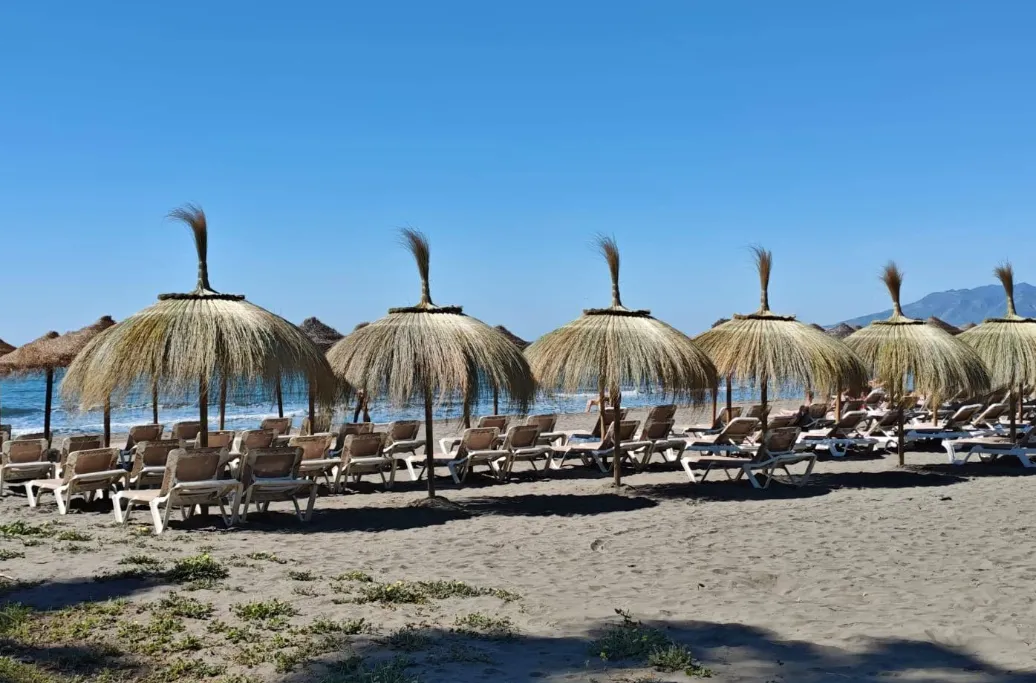
Here’s a gap I’ll own up to. I haven’t been to the market in El Palo, though I’ve eaten espetos there plenty of times and they’re brilliant, and the seafood does come in cheaper than anything you’ll pay in the centre.
The old fishing quarter still has boats drawn up on the sand, which I don’t think I’ll ever stop finding lovely.
It’s another 1,200 m of dark sand, a bit wider than Pedregalejo at 25 m, and the water sits calm and shallow for a long way out, which makes it an easy place to get in. There’s a palm grove behind if you want shade that isn’t a rented parasol, and on an August afternoon that’s worth a great deal.
Blue Flag too. Buses 3 and 11 again, same as its neighbour.
- Sand: dark, 25 m deep
- Water quality: Blue Flag, shallow and calm
- Popular with: families, locals eating late
- Amenities: toilets, showers, loungers, kayak and SUP hire, football and basketball courts, outdoor gym
- Parking: free on the street
Playa El Dedo
Most people don’t come here for the sand.
They come for El Tintero, which is far and away the most unusual place to eat in the city, because there’s no menu and no booking. Waiters walk laps of the room holding plates of fried and grilled seafood, calling out what they’ve got, and you put a hand up when something goes past that you want.
It’s chaos and it works, and it’s such good fun that I’d send anyone at least once.
The beach itself sits about 6 km east of the centre and holds a Blue Flag, which is not nothing when you consider it’s mostly known as somewhere to eat.
Go hungry, and don’t plan anything precise for afterwards.
- Water quality: Blue Flag
- Popular with: big groups, long Sunday lunches
- Amenities: El Tintero on the sand
- Access: about 6 km east of the centre
Playa Peñón del Cuervo (Raven Rock)
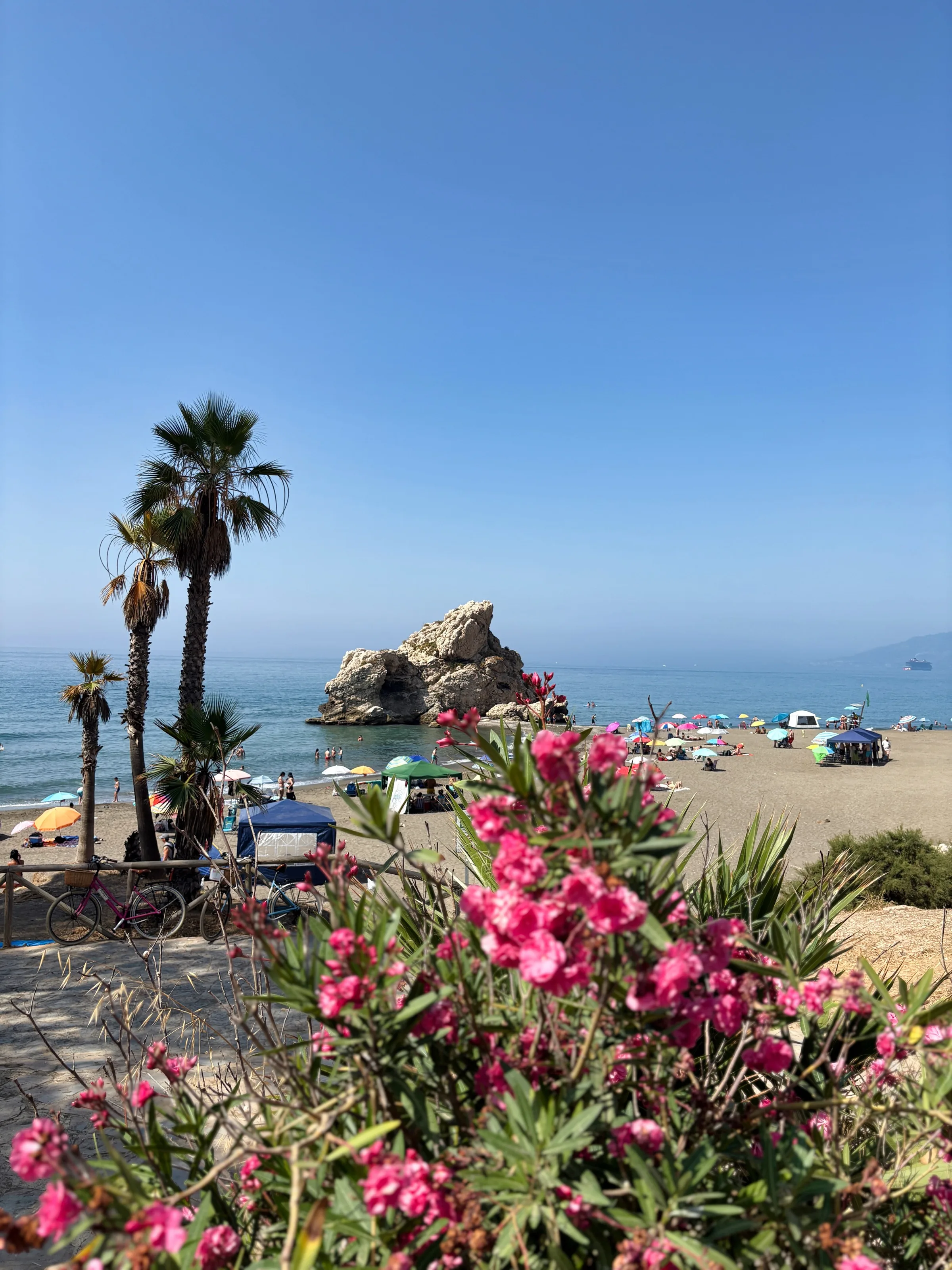
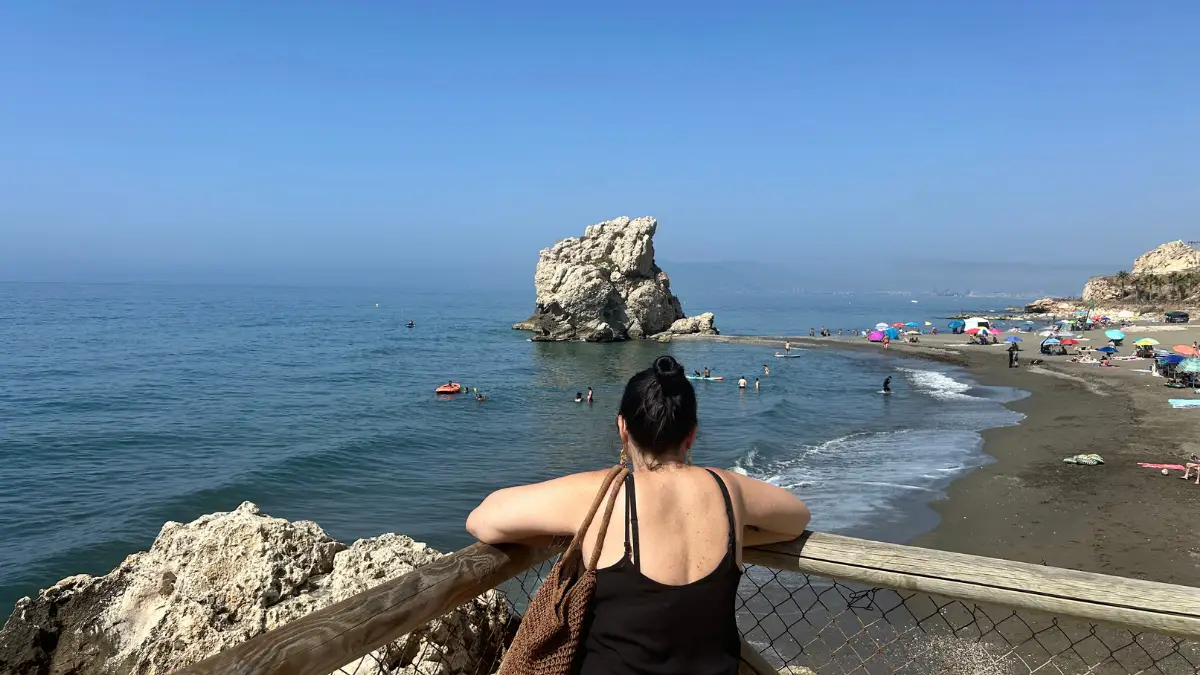
A slab of limestone sits in the middle of this one and splits it clean in two, which is where Raven Rock gets its name and why I love the look of it.
Out to the right of the rock, roughly 100 m from shore, there’s a small reef. Bring a mask, because that’s the best snorkelling you’ll find without leaving the city.
It’s small, 450 m long and 25 m wide, about twenty minutes east of the centre, and I’ve written more about swimming and snorkelling at Peñón del Cuervo if you want the longer version.
There are picnic tables and barbecues behind the sand, which is unusual here and makes it a proper day out rather than a swim. It’s my favourite of the city beaches to cycle out to, and it’s only 7 km along the coastal bike route.
- Sand: sand and small pebbles
- Water quality: very clean, small reef 100 m out
- Popular with: picnickers, snorkellers, cyclists
- Amenities: showers but no toilets, lifeguard, children’s playground, barbecues
- Parking: large free car park
- Access: cycle path from the city, about 7 km and 30 minutes by bike
Playa La Araña
You can see the cement works from the sand, and I’m not going to pretend otherwise.
It’s the easternmost beach in the city, 500 m of lovely golden sand rather than the dark stuff, running from Torre Paloma along to Cala del Moral. Twenty-five metres wide, so it never feels vast.
What earns it a place on the list is the dog section, and that’s a great deal more useful than it sounds, because most city beaches won’t have your dog in summer at all.
And then there’s the La Araña archaeological site right alongside, where people have been living for over 300,000 years. I find that wonderful and quite hard to hold in my head while I’m sitting on a towel.
- Sand: golden, not the usual dark
- Popular with: dog walkers, people who like a bit of history with their swim
- Amenities: dog-friendly section
- Access: coastal road heading east, next to a working cement plant
Playa de Guadalmar
The far western end of this one is the only official nudist area in Málaga city, and everywhere else it isn’t permitted, so if that’s what you’re after this is the address. It’s long at about 2,250 m and wide at around 50 m, which is why it never feels as busy as the central beaches even when it isn’t empty. That much room to yourself is a good thing to have on this coast in summer.
There are a few chiringuitos and not a lot else, and that’s most of the appeal.
- Sand: wide, roughly 50 m deep
- Water quality: can be affected briefly after rain
- Popular with: naturists at the western end, people avoiding crowds
- Amenities: a few chiringuitos, limited otherwise
The Best Beaches in Málaga for Swimming
Can you swim in Málaga? Easily, and for most of the year. If you only want one answer on where to swim in Málaga, it’s Pedregalejo, and it’s my favourite swim in the city by a long way. It’s a row of small bays separated by breakwaters, and the water inside them stays calm enough that you can actually swim rather than stand about in the shallows, which makes it the easiest place in the whole city for it.
La Malagueta is the safe default and a good one. The entry is shallow and gentle and there are lifeguards through the summer, so it’s the one I’d send you to if you want no surprises at all.
El Palo is the quieter version of the same idea, calm shallow water with fewer people standing in it, and I love it for exactly that.
None of those are what you’d call clear, though.
For clarity you’ve got to leave the city proper. Raven Rock, or Peñón del Cuervo if you’re reading a sign, is the best you’ll do inside the city limits, and there’s a small reef about 100 m out that’s well worth bringing a mask for. Cala del Cañuelo, out near Nerja, is the clearest water anywhere on this stretch of coast, clear in a way the city beaches never manage.
There’s a pattern in all of that, and it’s worth saying out loud. The further east you go, the fewer people there are and the clearer the water gets.
Lifeguards cover the main city beaches roughly June to September and they’re not on duty outside that, so swim accordingly in May or October.
One more thing, and it applies whichever beach you pick.
My favourite option is to get there early, really early, like 9am. You get the calm water, the empty sand and a good few hours before the heat turns into something you have to plan around, and those are honestly the loveliest hours of the day here.
Beaches Worth the Drive
Málaga city has plenty of good coastline of its own, and I could happily have stopped there. But Jethro and I keep ending up in the car anyway, east towards Nerja or south towards Tarifa, usually before the day has properly warmed up.
Writing about the best beaches on this stretch without a few of my own favourites from outside the city would have felt dishonest.
So here they are. One of them is an hour away and one of them is most of a morning’s drive, and all of them have pulled us out of the old town more than once, which is the best thing I can say about a beach. They all work as day trips from Málaga too.
Playa Burriana, Nerja
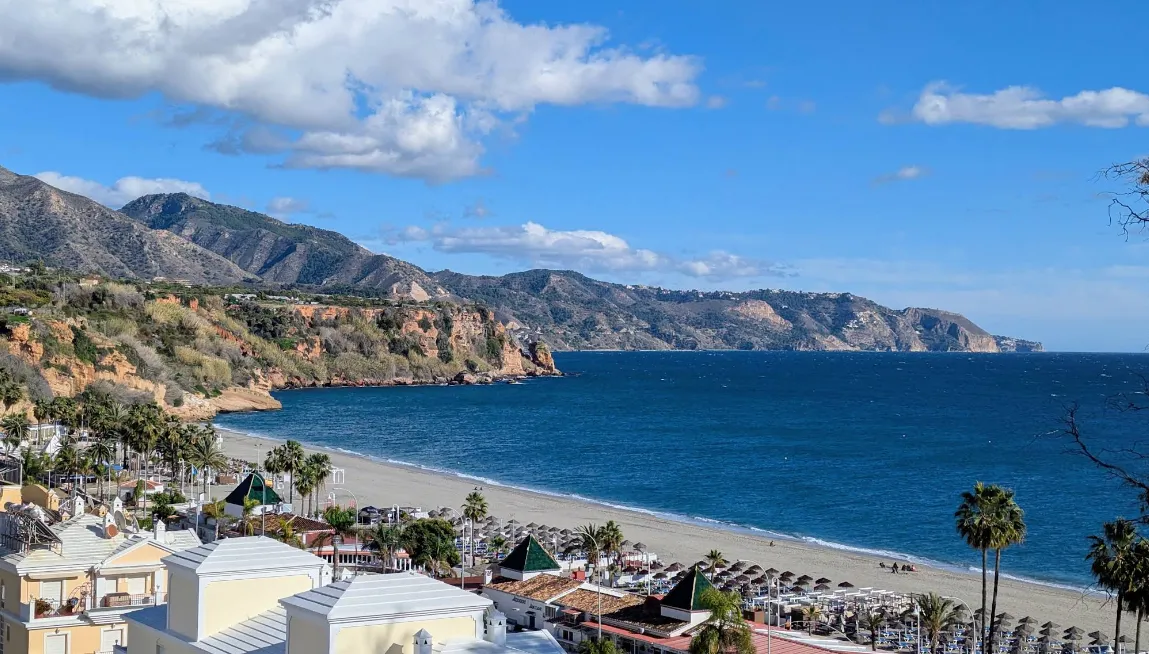
For most visitors, and honestly for me too, Burriana takes the top spot as the nicest beach in Nerja. It’s roughly 800 m of coarse golden sand with cliffs standing up behind it, and that backdrop is a big part of why I love it.
Ayo’s is the reason plenty of people come at all, and it’s a brilliant reason. They’ve cooked paella over a wood fire since the 1960s, served out of communal pans until it runs out, and when it’s gone it’s gone.
The catch is the car park. In August the Nerja car parks fill by around 11am, though it depends on the day and whether school’s out. There’s more on the rest of them in my guide to the best beaches in Nerja, and plenty more to do in the town itself once you’re out of the water.
- Sand: coarse, golden, about 800 m of it
- Water quality: excellent, clear Mediterranean
- Amenities: lifeguards, showers, toilets, sunbeds, kayak and SUP hire, playground, several restaurants
- Parking: paid, behind the beach, gone by late morning in August
- Distance from Málaga: about an hour east
Playa de Calahonda, Nerja
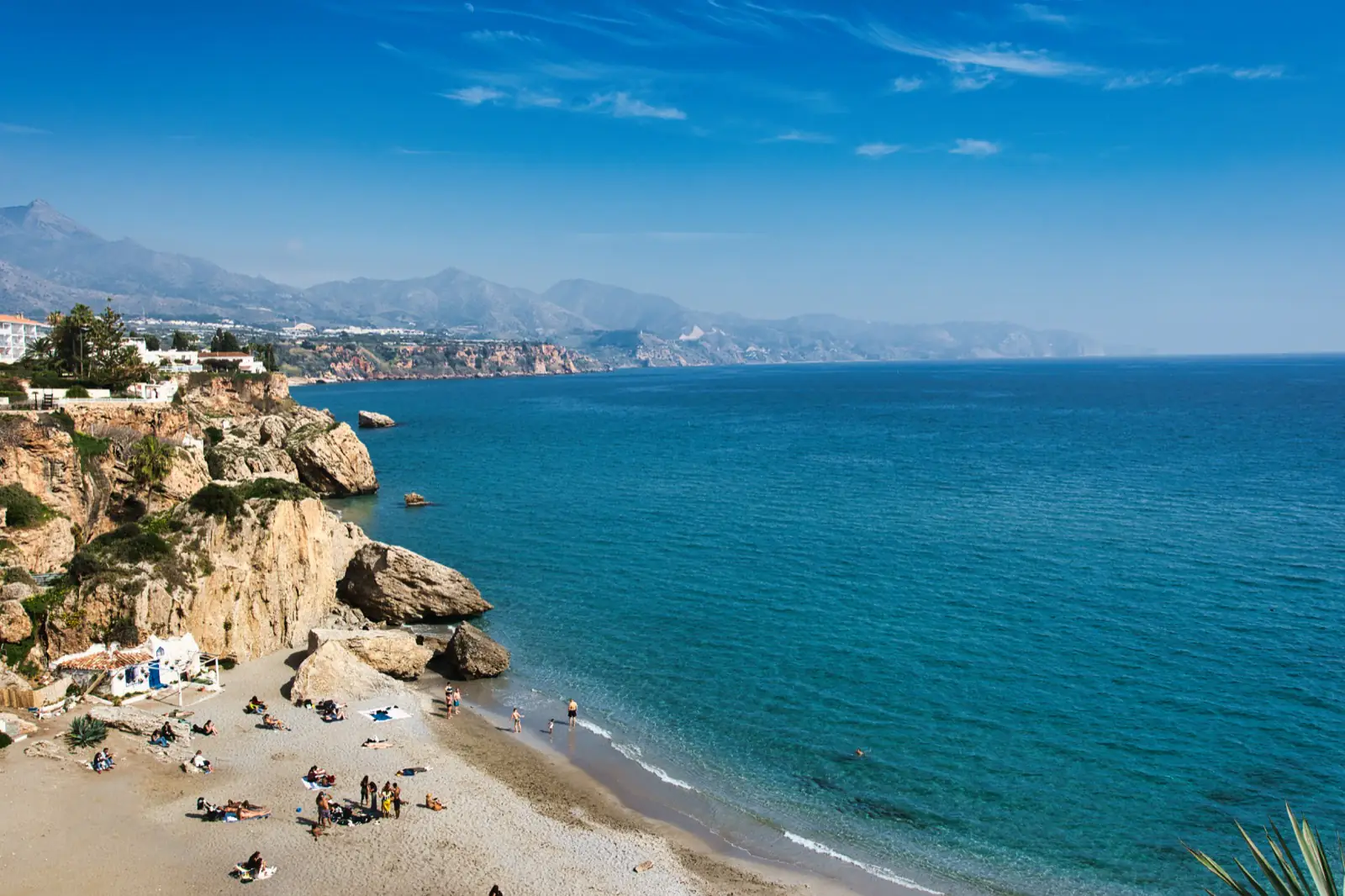
Half the people standing on the Balcón de Europa are looking straight down at this one, and it’s a gorgeous thing to be looking down at. It’s a small sheltered cove directly beneath it, reached by steep steps, and an awful lot of visitors lean on the railings above and never take them.
The headland on both sides keeps the water calm and clear, which is lovely right up until you realise everyone else worked that out too. It’s small and it fills fast.
My other favourite in Nerja is Playa Chica, a tiny cove tucked between cliffs, so clearly I have a type.
- Sand: golden sand, small cove
- Water quality: calm and clear, sheltered by headland on both sides
- Amenities: seasonal beach bar, showers
- Access: steep steps down from the Balcón de Europa promenade
Cala del Cañuelo, Nerja
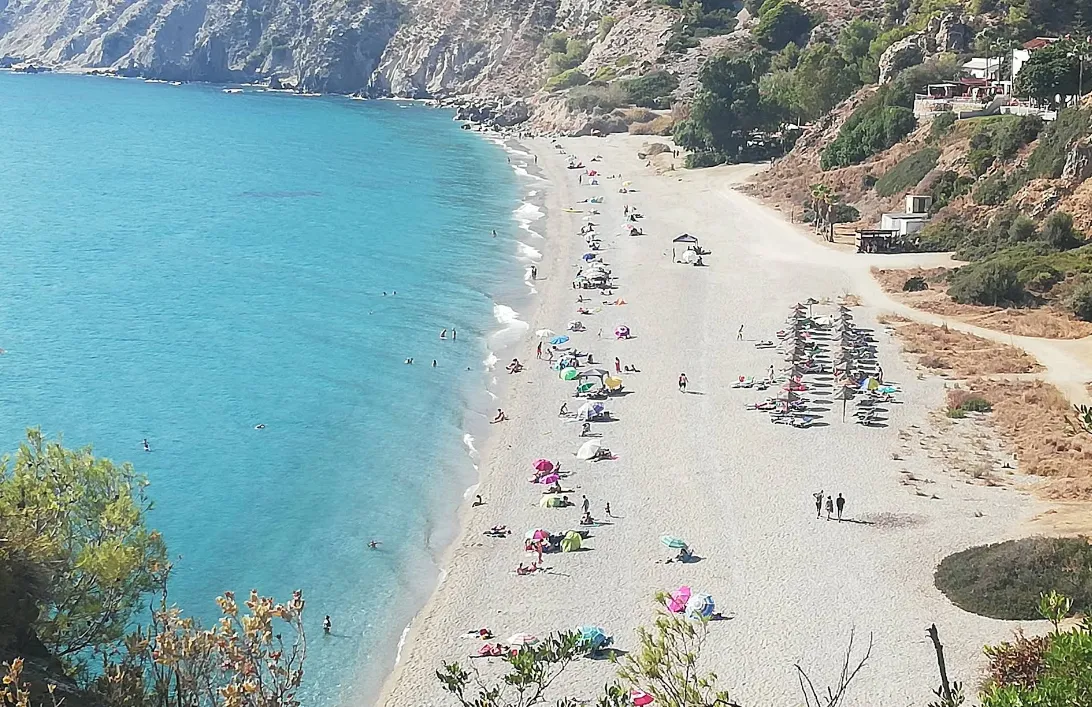
You have to want this one, and I mean that kindly. It sits along the coast near Maro, east of Nerja. The track down is rough, it’s about a 20 minute walk from where you leave the car, and there’s no facilities, no beach bar and no mobile signal at the bottom.
What you get for the effort is water inside the Maro-Cerro Gordo reserve with outstanding clarity, and the snorkelling along the base of the cliffs is the best reason to come. Burriana and Playa Chica are my two favourites in Nerja, so this isn’t the first cove I’d send you to, but that clarity is a good enough reason on its own.
Bring whatever you plan to eat and drink, because nobody down there is going to sell it to you.
- Sand: pebble and sand cove
- Water quality: outstanding clarity, excellent snorkelling along the cliff base
- Popular with: snorkellers and people avoiding beach bars
- Access: rough track, then roughly 20 minutes on foot
Las Calas del Pino
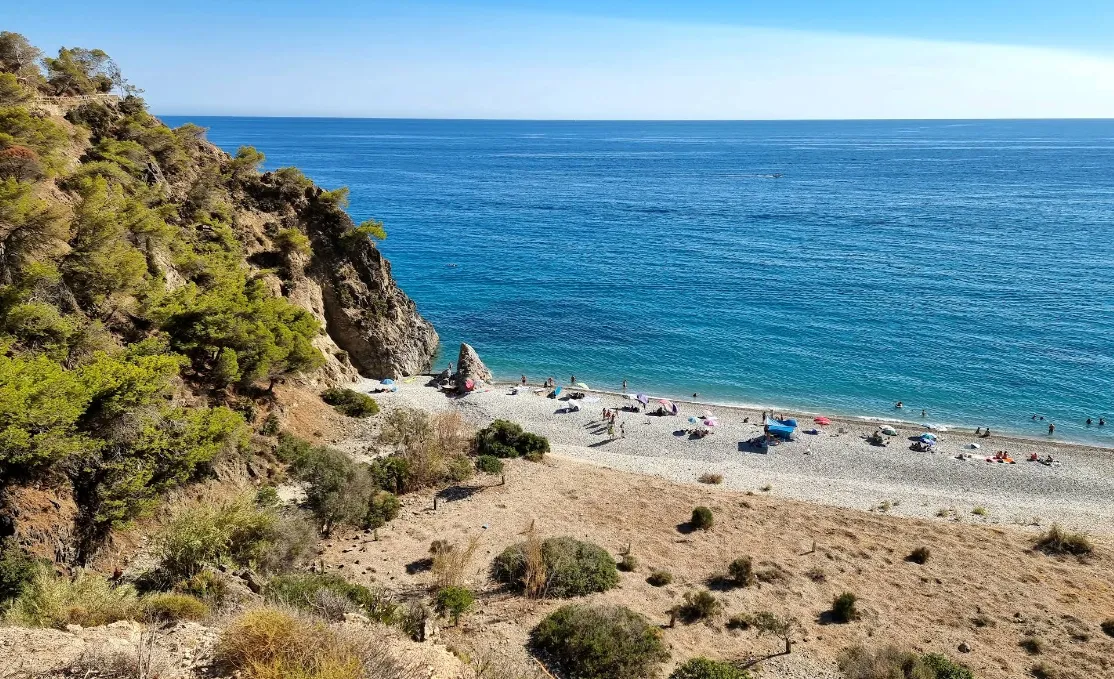
Small coves out on the eastern Costa del Sol, backed by pines, and the best-known naturist stretch in the province. That last part is worth knowing before you arrive with a cool box and a plan.
It’s kept its natural setting, the atmosphere is unhurried, and it’s used chiefly by locals in the know, which is a good part of the charm. The pines do most of the work that a parasol would do elsewhere, so the shade here is free and it’s lovely.
- Sand: fine sand in small pine-backed coves
- Water quality: clean and calm
- Popular with: naturists, this being the best-known stretch in the province
- Amenities: seasonal beach bar, basic facilities
- Parking: limited, arrive early in summer
Puerto Banús Beach, Marbella
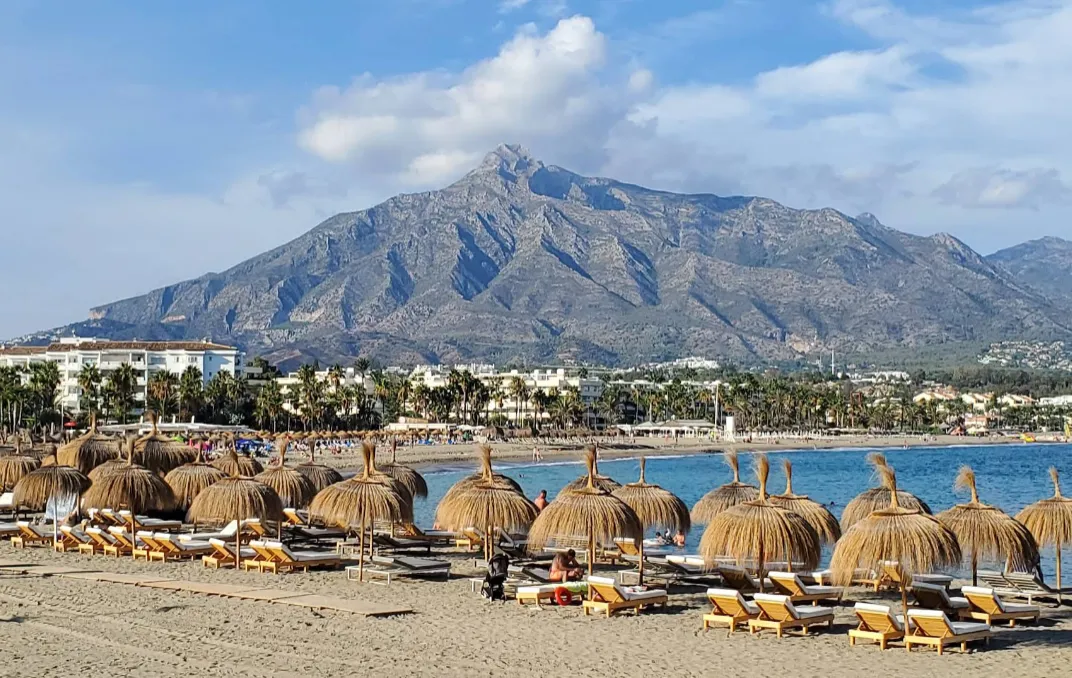
Here’s my honest confession. I’ve never spent a full day on a Marbella beach, though I’ve walked the San Pedro promenade at midday in July and still had stretches of sand to myself, which was a lovely surprise for July.
Puerto Banús Beach is the sand in front of the marina, soft and white and genuinely beautiful, and the beach clubs sitting on it are priced accordingly. At the western end there’s a free public section with the same sea and no price tag, and that’s the end I’d happily point you to.
When people want old Andalusia without that, I send them to Estepona’s beaches, 30 minutes west, and families get sent to Fuengirola, 30 minutes east. There’s a lot more to the town than loungers, which I’ve gone into in my guide to things to do in Marbella, and the sunset sails out of the marina do sell out in summer.
- Sand: soft and white, in front of the marina
- Water quality: clean, calm Mediterranean
- Popular with: beach club regulars, and anyone who found the free end
- Access: free public section at the western end
- Distance from Málaga: about 50 minutes by car
Playa de Bolonia, Tarifa
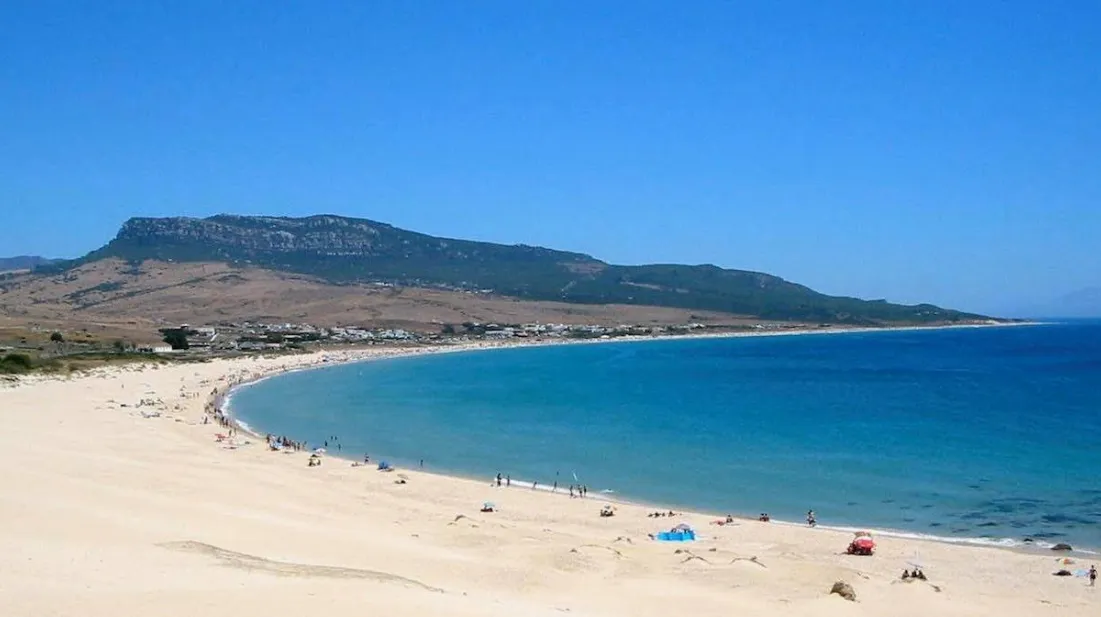
There’s a 30 m sand dune at one end of this beach and the Roman ruins of Baelo Claudia at the other, free to walk into, with 4 km of pale fine sand in between. The middle stretch is almost entirely undeveloped, and that empty middle is the best thing about the whole place.
It’s the Atlantic here rather than the Mediterranean, so the water is cooler and clearer than anything you’ll get at home in Málaga, clear in a way the Med never quite manages.
Two roads take you west. The free A-7 hugs the coast and some days we take it just for the scenic route past the resort towns, though it slows through every roundabout, and the AP-7 toll road is the faster option.
- Sand: pale and fine, about 4 km of it
- Water quality: Atlantic, cooler and clearer than the Med
- Amenities: chiringuitos at each end, showers, toilets, Roman ruins on site with free entry
- Parking: car park on site
- Distance from Málaga: about 2 hours 15 by car
More Beaches Along Málaga’s Eastern Coast
The city runs out before the coast does. Just past the eastern limits the sand keeps going, and there are two names worth knowing out there.
Rincón de la Victoria and La Cala del Moral sit side by side, and La Cala del Moral is the bigger of the two, over 1,300 m of dark sand with waves that actually move. Some people love that and some really don’t.
There are playgrounds, a floating water park, a designated dog area, and hire for paddle surf, kayak and windsurf, which is a good deal more going on than most of the city beaches manage. These are the beaches locals use, and visitors tend to skip them, mostly because nobody ever tells them they’re there. So I’m telling you.
Are Málaga Beaches Warm
Warm enough, but the sea takes its time getting there. June is already pleasant, July and August are the peak, and September often turns out to be the best of the lot, because the water is still holding its heat while the crowds have packed up and gone home.
Locals start swimming in May, and most visitors don’t get in until July.
| Month | Sea temperature |
|---|---|
| January | 15°C |
| February | 14°C |
| March | 15°C |
| April | 16°C |
| May | 18°C |
| June | 21°C |
| July | 23°C |
| August | 24°C |
| September | 23°C |
| October | 21°C |
| November | 18°C |
| December | 16°C |
If 18°C sounds acceptable to you, then May and October are genuinely good months to swim here, and far emptier than anything in between.
September is the month I’d actually book things in. I’ve had some of my best days on this coast in September, on a beach that was packed two weeks earlier and had quietly emptied out.
August is the other side of that coin. Walking around at midday in August is genuinely unpleasant, and I’ve learned to plan my days around the heat rather than pretend I can beat it.
So if you’re still choosing dates, it’s worth reading what I’ve written about the best month to visit Málaga before you book anything.
Things to Do on Málaga’s Beaches
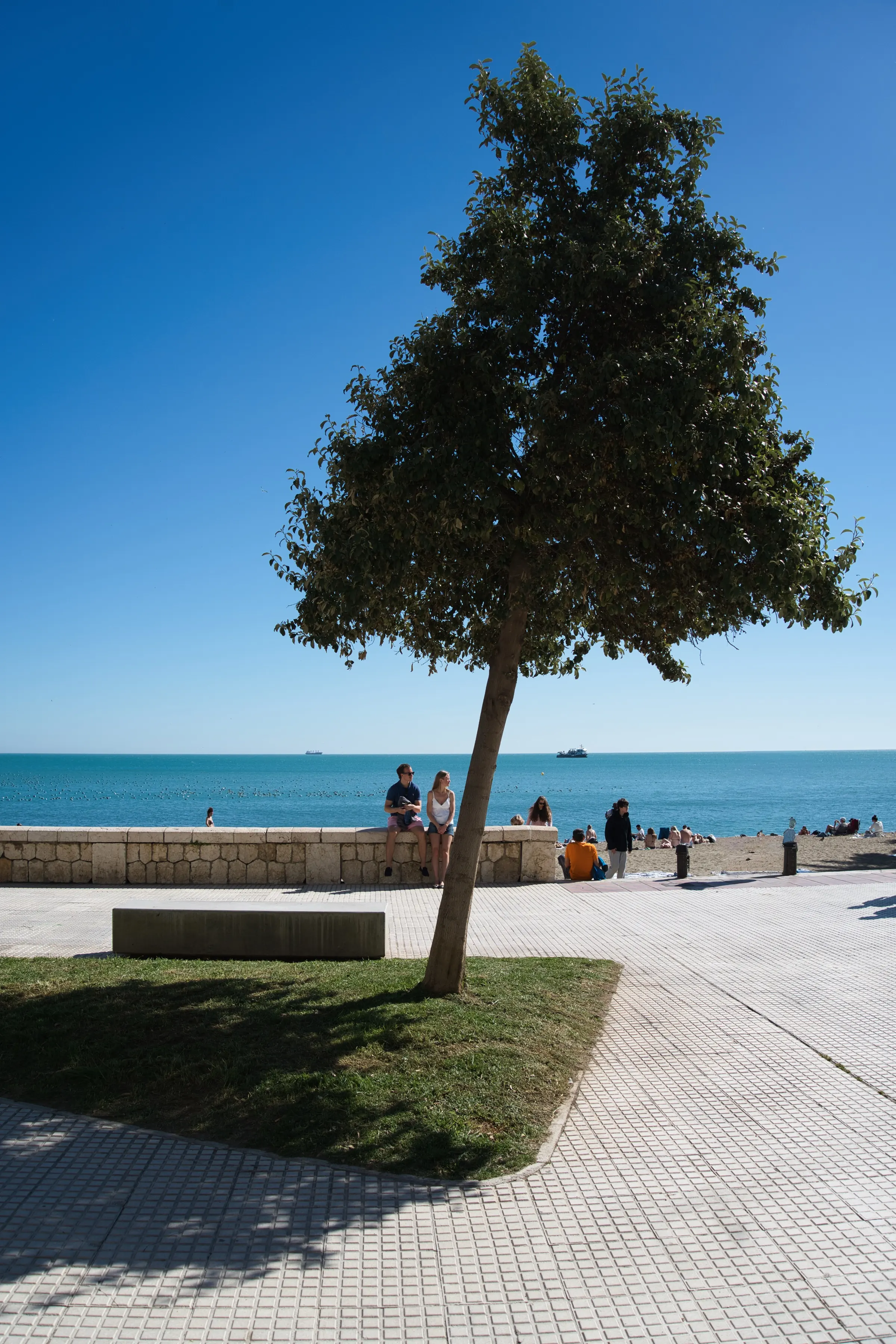
The culture on these beaches is eating, swimming and staying a very long time, and honestly that’s most of it.
You won’t find rows of jet skis and banana boats waiting for you, and if that’s what you’re after then you’re on the wrong coast. I’d say the same about a few other expectations people arrive with, which is roughly why I wrote up the things not to do in Málaga.
There is still plenty to do, though, if you want it.
- WaterFun Inflatables moors a floating inflatable water park just offshore at Malagueta in summer
- Boat trips run from the port, sunset runs included
- There’s a small reef about 100 m off Raven Rock Beach, and it’s good for snorkelling
- SUP and kayak hire at El Palo
- A surf school and paddleboards at La Misericordia
- A flat cycle lane runs the whole length of the eastern promenade, with bikes for hire near Malagueta
Do one of those in the morning and eat for the rest of the day. That’s the local method and it’s a good one, and it leaves the evening free for somewhere with a bit of romance to it or just a wander to watch the sun go down.
Beaches with Sunbeds
Almost every beach here rents sunbeds and umbrellas, hamacas, and they run roughly €6 to €10 a day including the umbrella, with the exact figure depending on the beach and on the season. It’s a small price for a shaded afternoon you don’t have to carry down to the sand yourself.
Malagueta and El Palo Beach have the longest rows and the most reliable table service, which is what you’re really paying for. Raven Rock has loungers too, without the crowds that come with them, and that’s a lovely trade.
But the choice of beach matters less than the hour you turn up. The good rows on the popular stretches are spoken for by late morning in August, and no amount of walking up and down fixes that, which is a large part of why I’d rather be on the sand early than hunting a lounger at noon.
How to Get to the Beaches
It’s all easier than you’d think, and the best part is that the central beaches barely need transport at all.
On foot: it’s 10 to 15 minutes from the old town to Malagueta if you go round the port promenade, and it’s a lovely walk in its own right. That’s the whole journey.
By bus: EMT bus 11 leaves from the Alameda Principal and runs east along the coast. Buses 3 and 11 both serve Pedregalejo and El Palo, about 15 minutes from the centre, which is a happy little ride for the money. Routes and times live on the EMT Málaga app.
By bike: there’s a flat dedicated cycle lane running the whole length of the eastern promenade, which makes for great easy riding, and you can hire bikes near Malagueta and at points along the route. Peñón del Cuervo is about 7 km out, roughly 30 minutes of gentle pedalling.
By car: most of the eastern beaches have free street parking, and in summer it’s gone by 10am. Parking in Málaga Old Town is honestly a nightmare, and I say that as somebody who lives in it.
So my system is simple, and it’s a good one. Do the city car-free and rent a car only for the days you’re heading further out.
If you’re coming straight from the plane, the airport is a handy 10 to 15 minutes from the centre, and the C1 train gets into Málaga-Centro Alameda in 12 to 18 minutes.
Which Beach Is Best for Kids
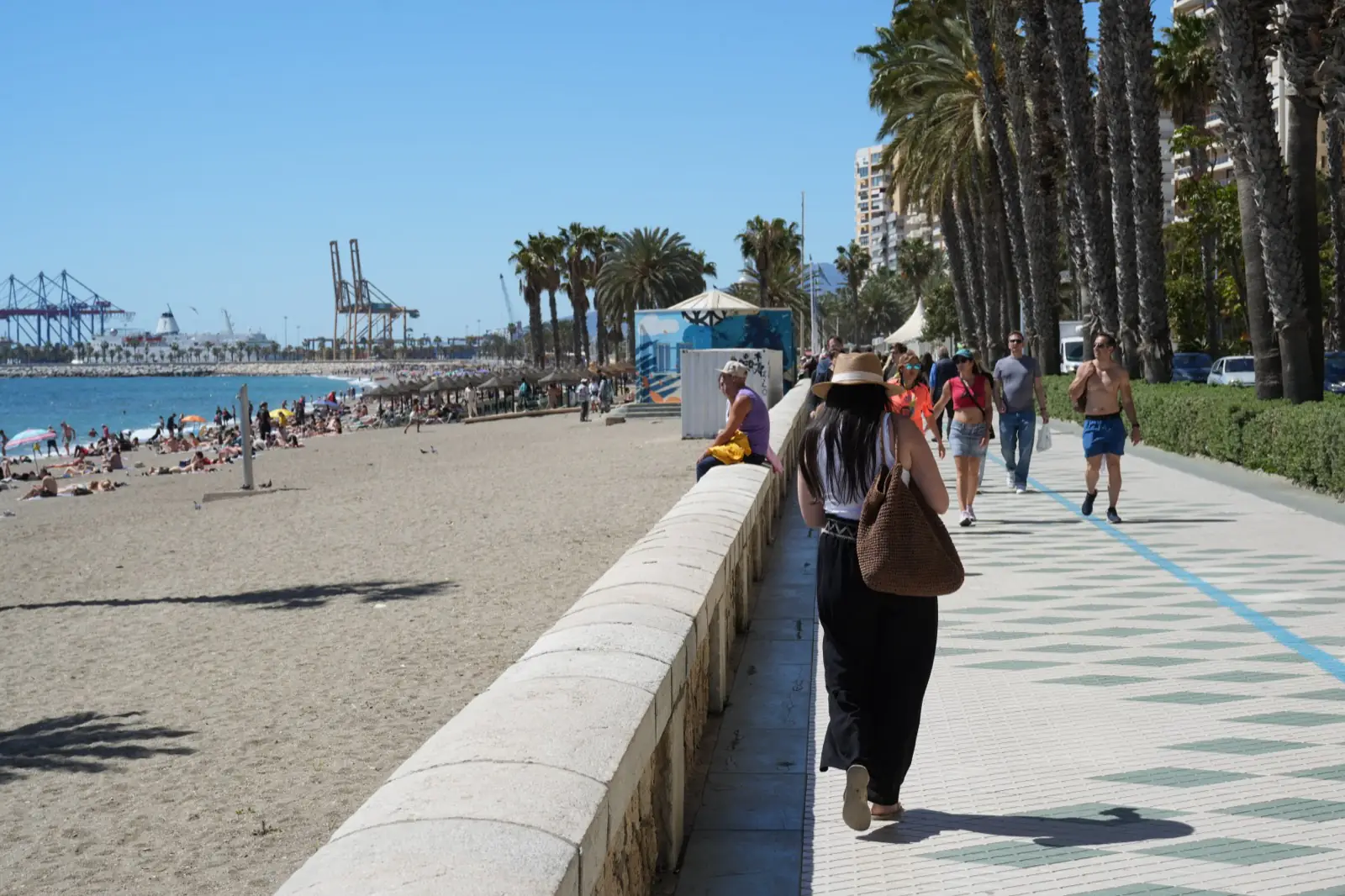
Malagueta, if you want the short answer, and it’s an easy one to give. The city is right there, the water near the shore is shallow and calm, and there’s a floating inflatable water park offshore in summer. Add lifeguards, playgrounds, showers and ice cream all within reach of a towel and you’ve got a very good day.
Let me be straight with you, though. My daughter is 28. I’ve never done any part of this coast with small children and I’m not going to pretend I have.
El Palo is the calmer option and lovely for it, with gentle water, play areas and far fewer tourists than you’d get further west. There’s more on Málaga with children away from the sand. La Misericordia is wide enough that you’re never squeezed, which is worth a lot in August, and it has playgrounds too.
If you don’t mind driving, Playa Burriana in Nerja is the one to look at.
When you’re done for the day and heading back into town, a lot of the best tapas bars in Málaga are within easy walking distance of Malagueta, and none of them will blink at a child at the table.
So take all of this as a local telling you which beaches are built for children. Not as a parent telling you which ones hold up on a Tuesday with two of them in tow.
Are Málaga Beaches Safe to Swim in
Yes, and happily so. Water quality is tested along this coast, and seven city beaches hold a Blue Flag in 2026, which are La Caleta, El Dedo, El Palo, La Malagueta, La Misericordia, Pedregalejo and San Andrés.
Lifeguards cover the main beaches from June to September.
The sea itself does most of the work, and it does it beautifully. Swimming in Málaga is about as undramatic as the Mediterranean gets, because there’s no surf to speak of on the city beaches and no rip current risk, so what you’re in is closer to a very large calm bay than an open coast.
Watch the flags anyway, because conditions do change. Green means it’s fine, yellow means take some care, and red means stay out of the water altogether.
Outside those summer months nobody’s on duty, which is worth remembering in May and October.
Are Málaga Beaches Clean
On the whole, yes. The main beaches are cleaned overnight through the summer and most of them carry Blue Flag accreditation, which brings water testing and a set of environmental requirements along with it.
Clarity is a different question from cleanliness, mind you.
That’s where the east comes in again, because the clearest water is always the water furthest from the city, and nothing inside Málaga beats Raven Rock for it. Go further out and it gets better still. Cala del Cañuelo and Bolonia are the two that stand apart from everything else on this coast, and neither of them is anywhere near a city.
Dog-Friendly Beaches in Málaga
Local bylaws keep dogs off the main city beaches right through the summer, so if you’re here in August with one, the beach isn’t happening. Two places have an actual designated dog section, which makes them the good news here. They’re Playa La Araña, the easternmost of the city beaches, and La Cala del Moral, just beyond the city limits.
Out of season, enforcement softens.
It softens fastest on the quieter beaches east of the city, and if you’re here with a dog outside the summer months, Raven Rock Beach and the emptier eastern stretches are your best bet. There’s lovely room out there and rarely anyone about to mind.
Just be honest with yourself about what that is. A bylaw that’s barely enforced isn’t the same thing as being allowed, and the difference only shows up on the one day it matters.
Is Skinny Dipping Illegal in Málaga
Not in the right places, and very much yes in the wrong ones. Nudity isn’t permitted on the general beaches, but there are designated areas. The western end of Playa de Guadalmar is the only official nudist area inside the city, and Las Calas del Pino sits out on the eastern Costa del Sol.
In those two spots, going in with nothing on is simply accepted, and that’s a happy thing. Nobody looks twice.
Guadalmar helps its own case here. It’s long and quiet and short on facilities, which is exactly what makes it work, so you’re not wandering into the middle of somebody’s family day out.
Everywhere else it falls under local bylaws, and those bylaws are barely enforced. That still isn’t the same as being allowed.
It’s a distinction you’d rather hear from me than from somebody in a uniform.
Are Beaches Better in Málaga or Marbella
The honest answer is that it depends on what you want out of the day, and the gap is a lot narrower than Marbella’s reputation would have you believe.
Marbella runs the more polished beaches. Around Puerto Banús Beach there are far more upscale beach clubs, and if a good day means luxury service and watching the world go by beside a row of superyachts, then that day belongs to Marbella and Málaga can’t sell it to you.
Where Málaga wins is character, and it wins it comfortably. The chiringuitos are better, the mood is more local, and the cooking is more authentic and a good deal cheaper, which makes for a very good afternoon. You’ll pay less for an identical sunbed and eat better while you’re sitting on it.
The same holds for the bars back in town and for the rooftops above them, and that’s worth knowing before you commit an evening in either direction. I’ve set the two cities against each other properly in Málaga versus Marbella.
Sand quality is a wash, and the sea is one sea. What actually differs is the crowd and what you hand over for a cocktail, and for what it’s worth, I get by on roughly €60 to €80 a day in Marbella against the €100 to €200 a mid-range trip runs to. You pay a heavy premium for the postcode if you let it, and a lot of people let it.
Final Thoughts
So is it worth it? Yes, and I’ll put my name to that. Málaga wins it, every time, for me, and I’m not going to pretend I’m neutral about a city I’ve lived in for almost four years.
Here’s the caveat, and it’s the only one I’ve got. If the beach clubs are the whole reason you’re coming, then I’d be steering you wrong, and that’s a fault in the brief rather than in the beach.
So this isn’t a trip for everyone. If a good day means a lounger and a cocktail in front of a marina, skip Málaga, book Marbella, and take nothing I’ve said here personally.
If that isn’t your trip, then the verdict is a happy one and you should book what you actually want.
And if you’re still picking dates, September is the month I’d genuinely book. The sea is still holding its summer heat when the crowds have gone, which makes for some of the loveliest days of the year here.
Between beach days there are plenty of free things to do in the city, which is where the sunbed money is better spent anyway. And if you haven’t booked yet, where you stay in Málaga decides how often you actually make it down to the sea.