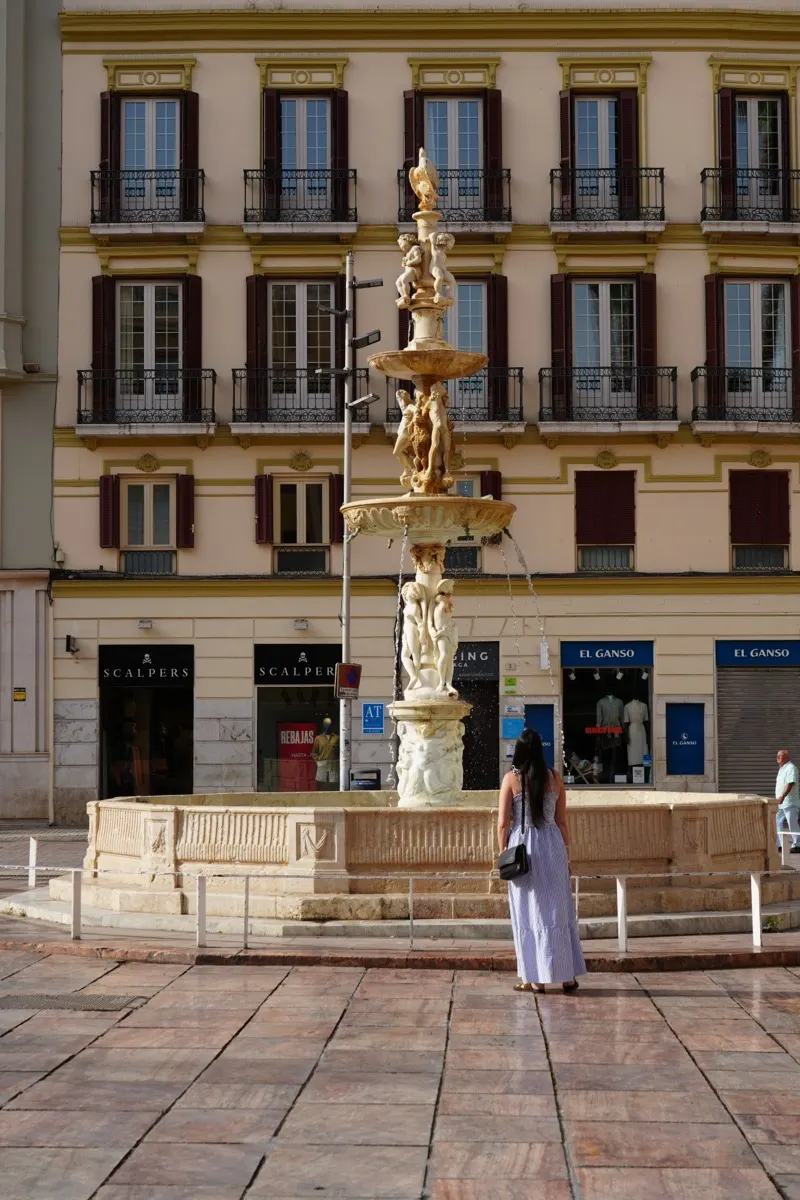
I live in Málaga, and it still catches me out how much of it costs nothing. Free museums, free beaches, a whole historic centre you can wander for hours without paying to walk into it.
The catch, if you can call it that, is timing. Some of this is free every single day, no ticket, no catch. The rest only opens up on a Sunday afternoon or a public holiday, so I’ve flagged which is which as I go.
Free every day, no catch
Atarazanas Market
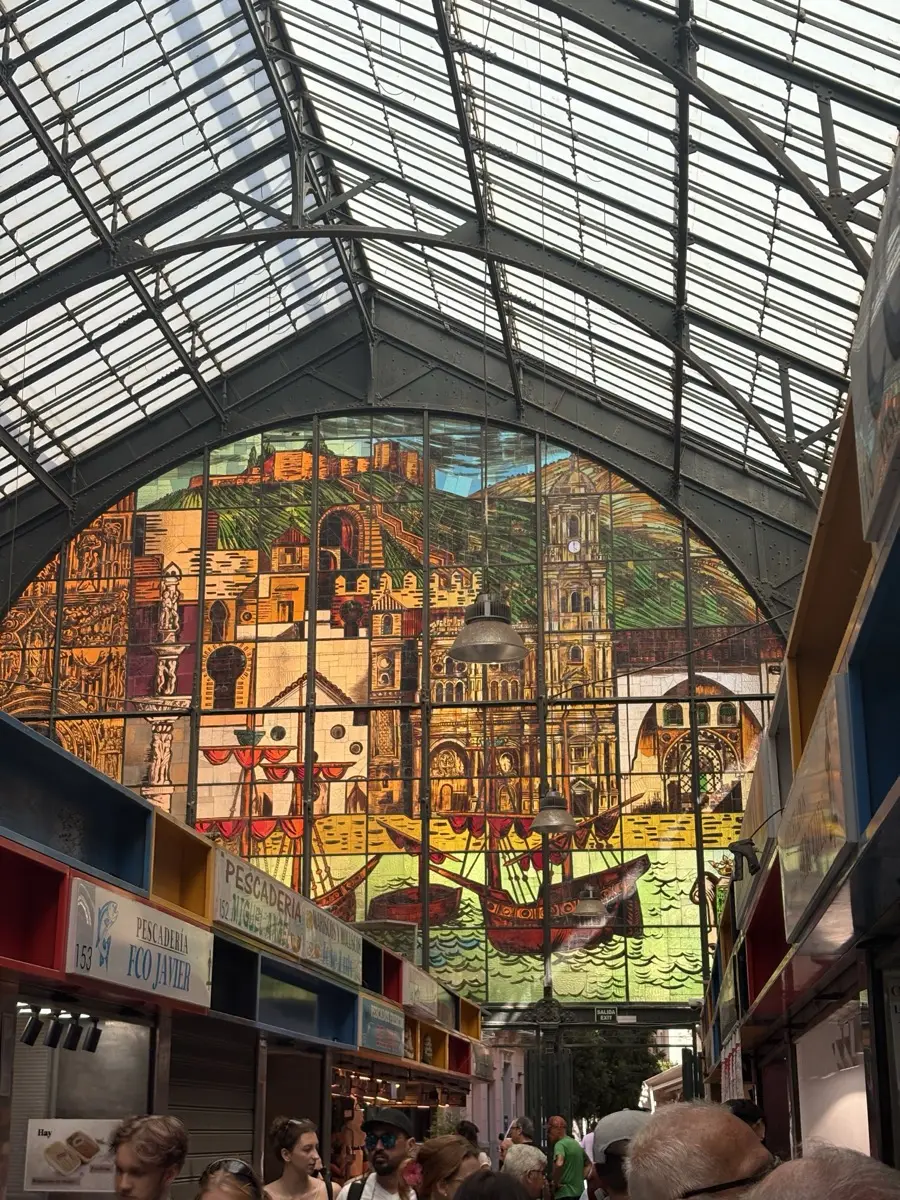
Atarazanas is where I actually do my grocery shopping, not just somewhere I send visitors. It went up in the 14th century as a Moorish shipyard, got restored in the 19th, and somewhere in that restoration somebody installed a stained-glass window running with boats, horses and fields that throws colour down over the produce stalls below. Walking in is free.
Grab a skewer of olives marinated in orange zest, a wedge of queso curado, or a paper cone of fried boquerones if you want the classic anchovy hit. If you’re cooking for yourself rather than snacking, this is proper grocery shopping too, meat, fish, vegetables, all fresh and cheap.
My tip: skip the front stalls and head to the back, where the standing tapas bars are. Order whatever the person next to you is having, it’s never wrong.
For more spots like this one, I’ve rounded up Malaga’s best markets in a separate guide.
⭐ Don’t miss >> Where to stay in Malaga, my neighbourhood guide
Picasso’s statue
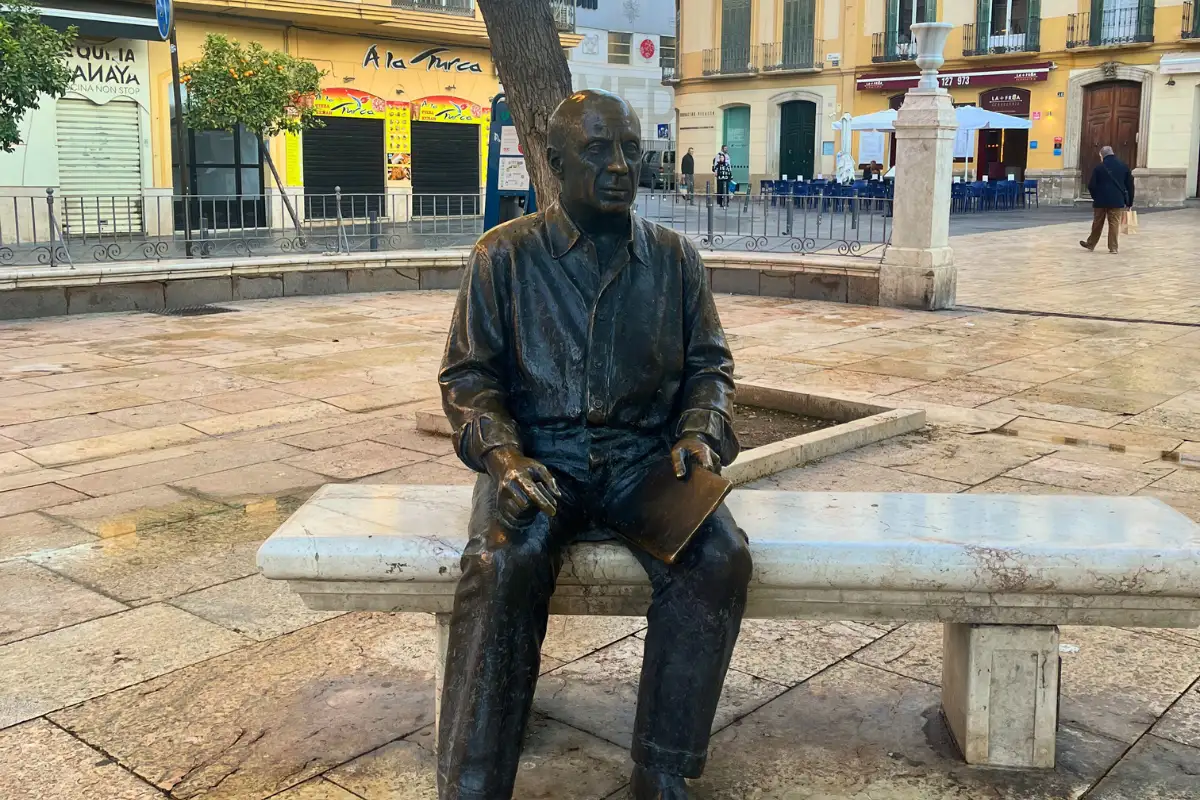
Picasso is basically my neighbour. I live about five minutes from the bench in Plaza de la Merced where he sits, bronze, sketchbook open on his knee, looking for all the world like he’s waiting for someone to sit down next to him.
I pass him more often than I’d like to admit, most days without even noticing. He’s easy to love and even easier to photograph, just perch yourself next to him on the bench and you’ve got your shot. It’s free to stop and take it. Do it.
Museo de Málaga
Step into the Palacio de la Aduana and you’re inside an 18th-century customs house that now holds two different museums under one roof. Somehow it never feels crowded, despite everything packed inside it.
Upstairs is Fine Arts, Sorolla and Murillo among the Spanish masters on the walls. Downstairs is archaeology, Phoenician to Islamic, centuries of the city laid out room by room.
My tip: start at the top and work your way down. It plays out like time travel in reverse, and it’s a far better way to end a visit than to start with pottery and finish with paintings. I’ve done it both ways, and this order wins every time.
It’s free for EU citizens, and just €1.50 if you’re not, maybe the best €1.50 you’ll spend in Málaga.
The climb to Gibralfaro Castle
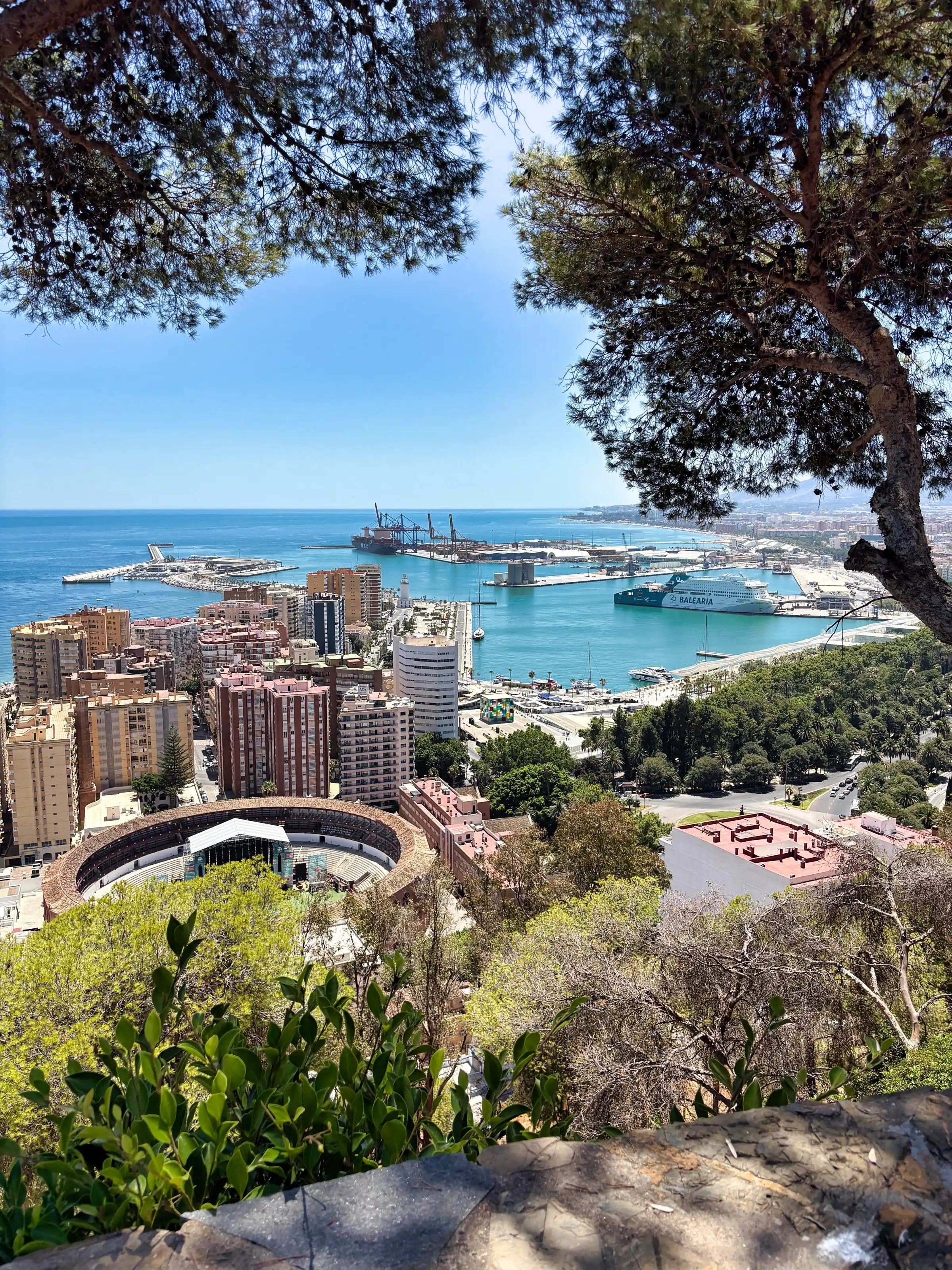
Gibralfaro is the view I send everyone to first, and I’ve made the climb enough times now to have a routine for it. The trail starts near the Alcazaba entrance and climbs through eucalyptus and pine, past plaques on the fortress’s military past, up to the 14th-century Moorish castle that once stood guard over the Alcazaba below.
I prefer to go up early mornings, as I get to enjoy the view of the entire city on my own. The later in the day you go, the more people you will encounter.
Want the scenic route instead of the direct one? Start at the Fuente Algeria Del Mar fountain. Either way, budget around 30 minutes to the top.
From up there you get the whole of Málaga at once, city and ocean both, easily one of the best viewpoints in Malaga. Wear proper shoes, bring water, and carry a little cash, someone occasionally sets up a cooler box of cold drinks near the summit, but I wouldn’t plan around it.
Once you’re up, the Parador de Malaga Gibralfaro is right there for a drink or a meal. The views from the terrace are nearly as good sitting down as they were on the climb.
Here are a few of my favourite places to stay near the sights on this list:
⭐ Old Town >> Palacio Solecio
⭐ Opposite the Cathedral >> Molina Lario
⭐ Soho, near the street art >> Room Mate Valeria
⭐ La Merced, near Picasso’s statue >> Anahita Boutique Hotel
Málaga’s historic centre
Let the old town swallow you for an afternoon and you won’t mind getting a little lost in it. Marble-paved alleys, medieval chapels tucked between shopfronts, wrought-iron balconies dripping with geraniums. It’s the kind of walking that doesn’t feel like sightseeing at all.
The cathedral anchors the whole area (I’ve given it a section of its own further down), but you’ll walk past it regardless.
Plaza de la Constitución sits right along Calle Larios, about as central as central gets. For something quieter, duck down Calle San Agustín, past the Picasso Museum, where the side streets still feel like hidden Málaga rather than a postcard of it. I love how different the two feel within five minutes of each other.
My honest tip: don’t rush this part. Walk slowly, stop for coffee, maybe ice cream, and let the streets do the rest.
I’ve mapped a full route through the old town if you want to follow it start to finish. Either way, there’s no wrong direction to wander in. If you’d rather have someone fill in the stories as you go instead of reading plaques, a guided old town tour covers the same ground with a lot more context.
Málaga Cathedral
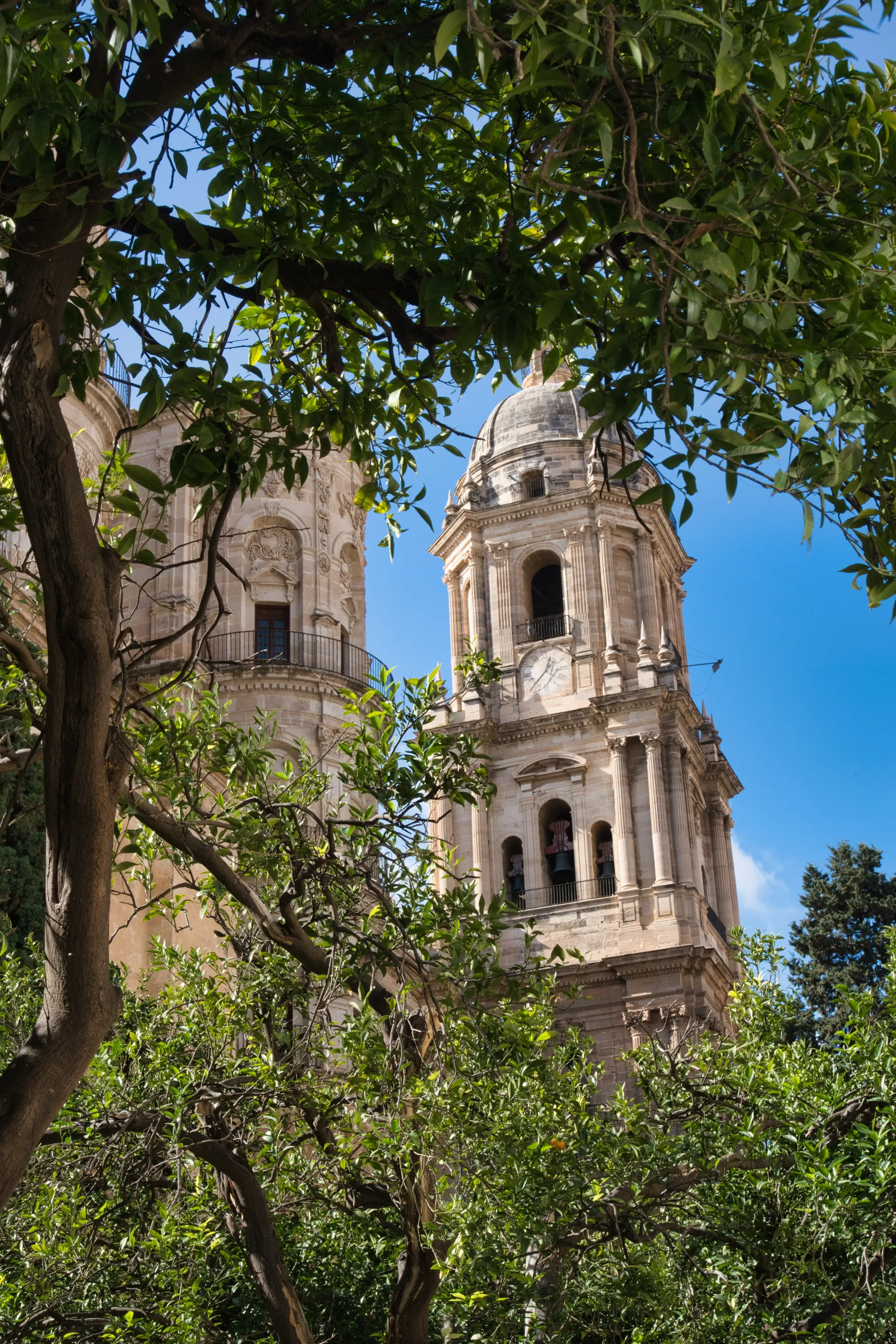
I’ve lost count of how many times I’ve been inside Málaga Cathedral, and I still say the same thing to anyone who’ll listen: pay for the audio guide, or you’re basically just walking around another cathedral. It’s not a soft “don’t miss it” kind of tip, it’s the real difference between understanding what you’re looking at and just looking at it.
There’s a free window, Monday to Saturday 8:30-9:00am, Sunday 8:30-9:30am, though the audio guide isn’t part of that deal.
If you want to see it properly rather than squeeze into the free slot, buy your ticket online in advance and walk straight past the queue. Everyone here calls it La Manquita, the one-armed lady, after the south tower that was never finished, and once someone points it out to you, you can’t stop noticing it.
🎟️ If the free 8:30am slot doesn’t fit your morning, book skip-the-line tickets with the audio guide included and go whenever suits you. I use GetYourGuide for this.
Which beach is actually right for you
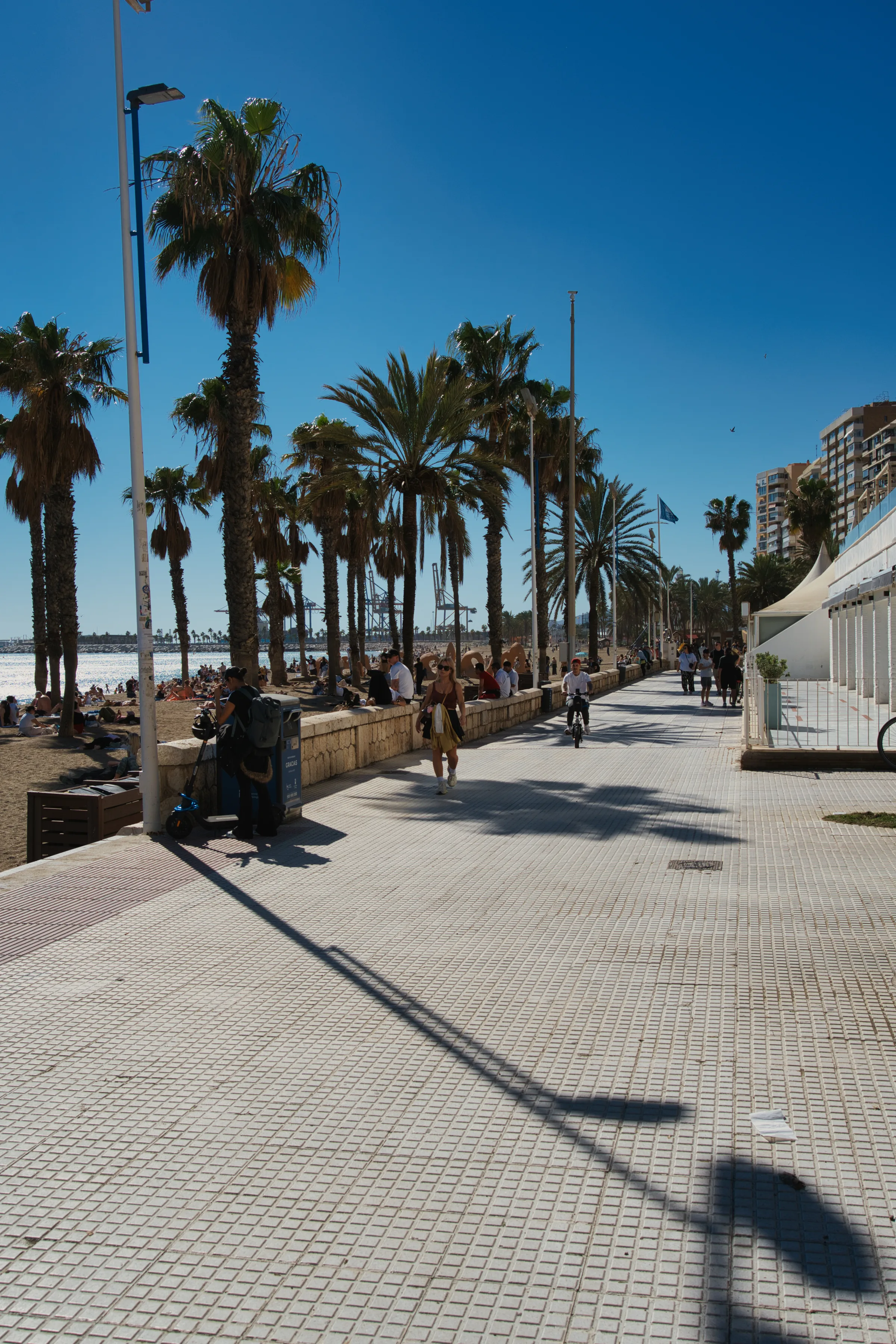
When someone asks me which beach to go to in Málaga, and people ask me this more than almost anything else, I always start with the same answer: La Malagueta.
It’s about 15 minutes on foot from downtown, it’s the famous one, and like every beach in the city, it’s free to use, year-round, whatever time of year you turn up.
It’s also the one with everything sorted for you: lifeguards, outdoor showers, loungers and umbrellas if you want to rent them, and restaurants, chiringuitos and bars all along the back of the sand.
I’ll usually pack a picnic and turn the whole thing into a lazy half-day, or grab a few drinks from the Carrefour across the road first. Go early, ideally before about 1pm, and you’ll dodge most of the crowds.
If you want to hear more about Málaga’s beaches, I’ve rounded them all up in my Malaga beaches guide.
The Roman Theatre
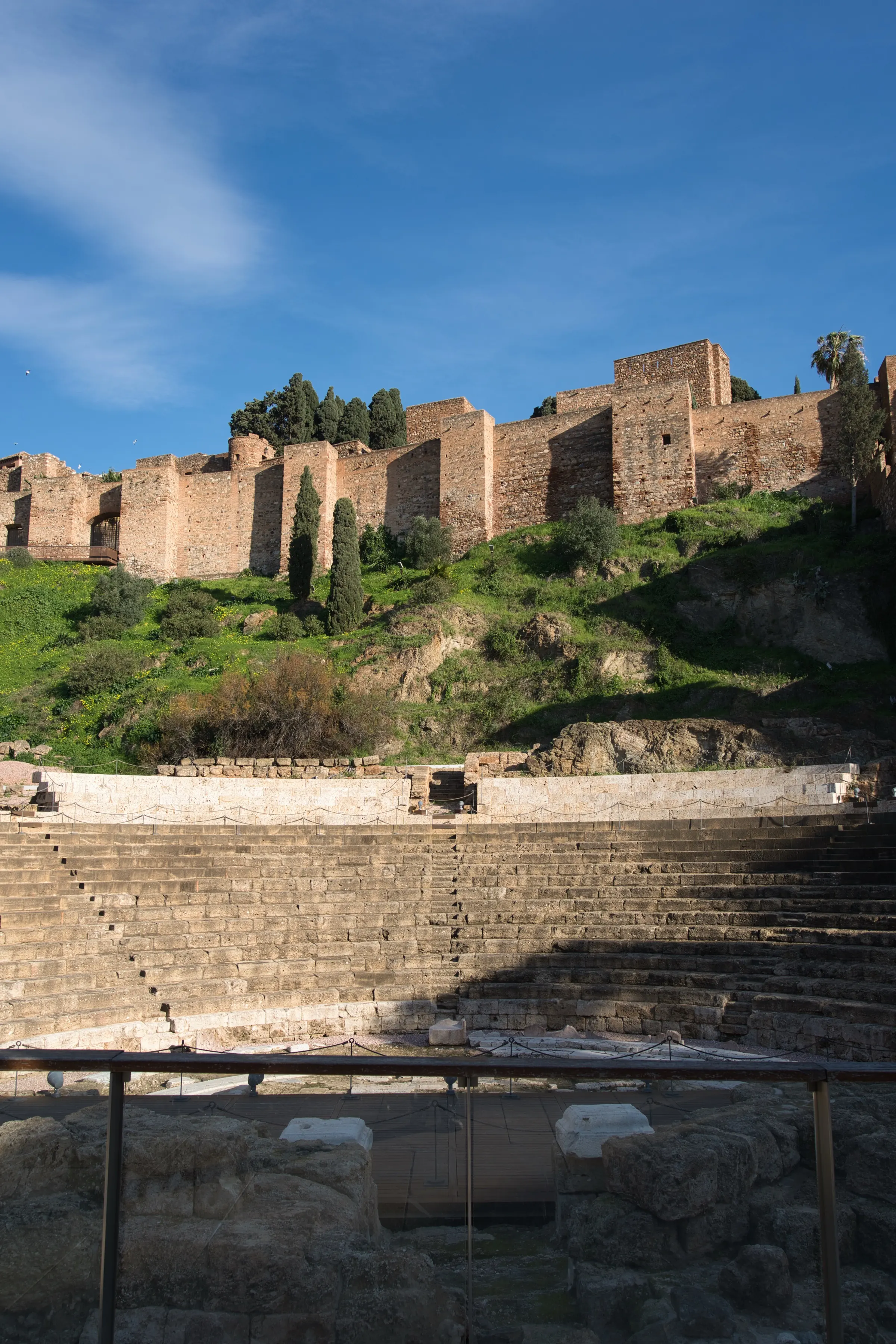
Most people walk straight past the Roman Theatre on their way into the Alcazaba, assuming they need a ticket to see it too. You don’t, you can walk straight in for free, no ticket, no queue, and hardly anyone seems to know it.
It was only discovered in 1951, though what’s actually sitting there dates back to the 1st century BC, right beneath the Alcazaba itself. Information panels around the site explain what it would have been used for in Roman civic life, and every so often it’s put back to work, hosting open-air performances and the odd classical concert right there among the ancient stones.
Muelle Uno
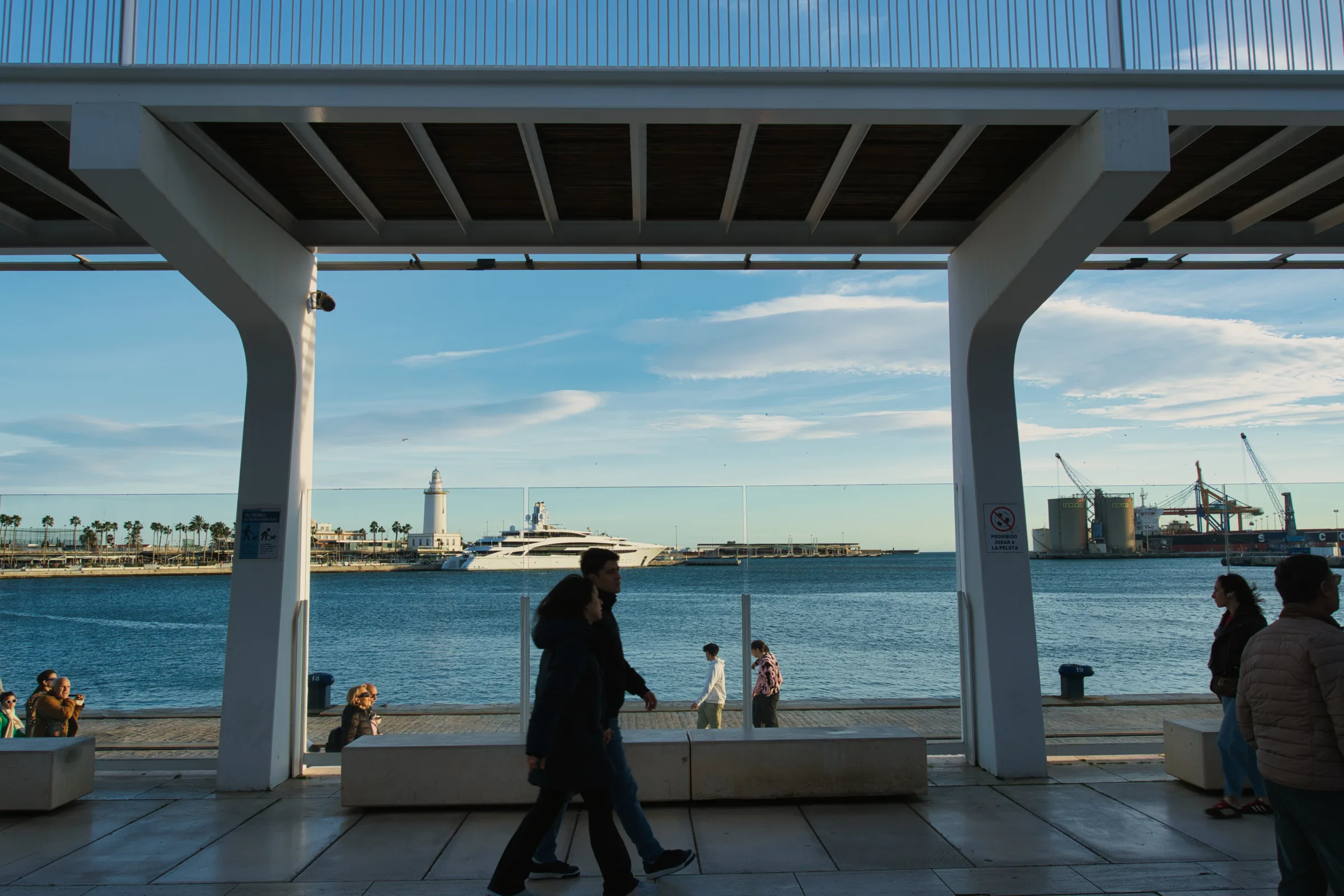
Muelle Uno pulls you in before you’ve decided to go there, marina on one side, boutiques and tapas bars on the other, and public art scattered along the way like someone left it out for you to find. It’s the kind of place you can lose an hour without meaning to.
The Pompidou Cube marks one end of it, and it’s worth the walk just to see it up close. Street musicians turn up some evenings, a temporary market appears out of nowhere on others, and the rotating art displays mean it’s never quite the same place twice.
Head all the way to the far end, to the Trocadero Casa de Botes, for the best view of the harbour, and time it for the sunsets here, genuinely worth building an evening around.
It’s free to wander the whole stretch. Just keep a few euros on you in case a souvenir or a riverside tinto de verano catches your eye. If you want to see the marina from the water instead of the boardwalk, a sunset catamaran cruise is a nice paid extra to bolt onto an otherwise free evening.
Soho’s street art (the MAUS district)
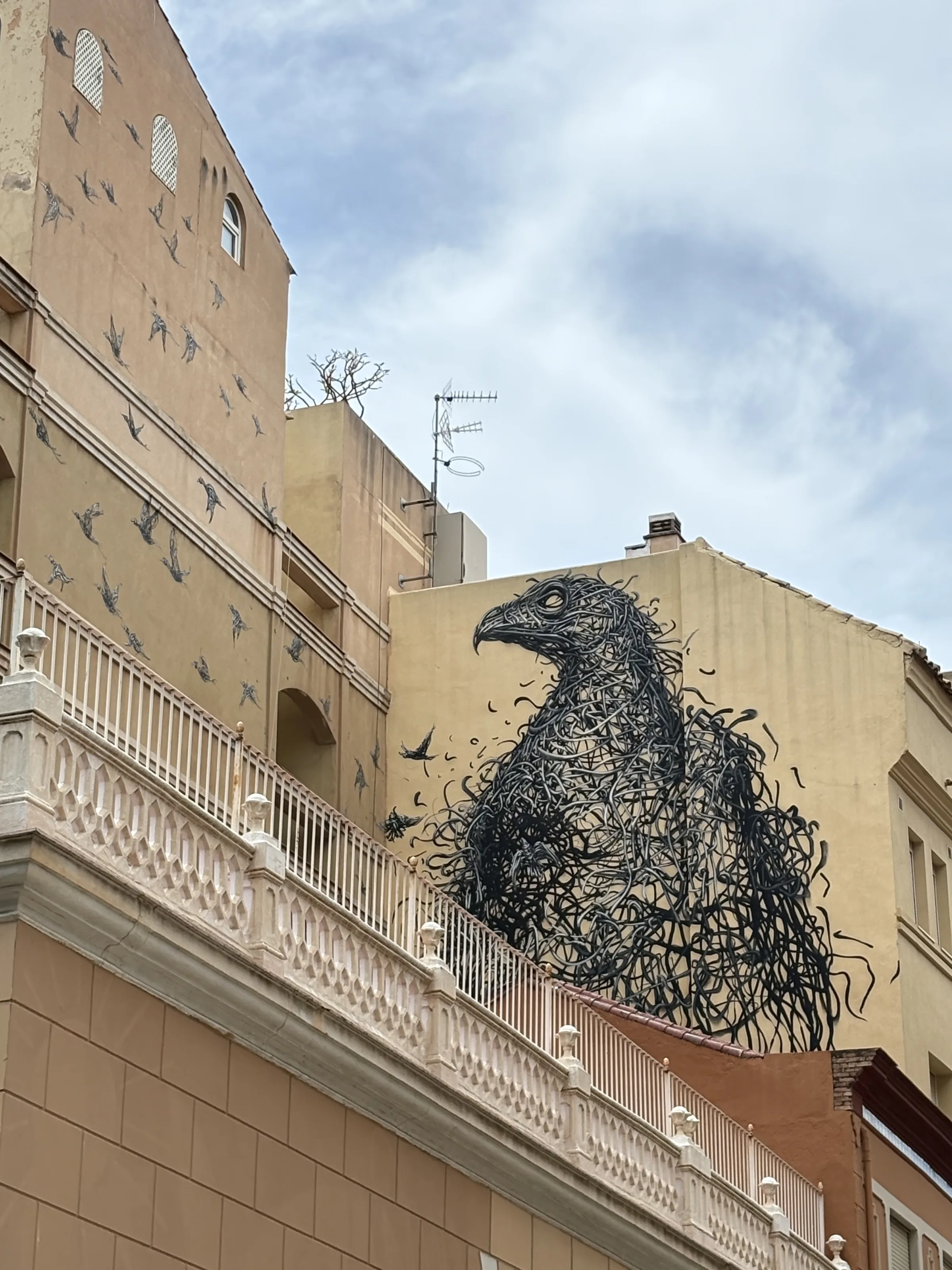
My favourite piece of street art in Málaga isn’t in a gallery, it’s on a wall in Soho. MAUS, short for Málaga Arte Urbano Soho, has turned this district into one continuous gallery, with murals from international names like Shepard Fairey (Obey) and D*Face sitting alongside work from local artists who keep adding to it.
Mine’s a great bird, its body woven from twisting twigs like a living nest, with smaller birds bursting free from it. I’ve walked past it a dozen times now and it still stops me.
Free tours run through SOHO, sometimes led by the artists themselves, so it’s worth booking ahead. Wandering on your own costs nothing either, unless art or tapas along the way tempts a few euros out of you.
Then get above it. Le Rooftop Mariposa gives you the murals from a completely different angle, up on the rooftop rather than down on the street.
A free walking tour
Head to Plaza de la Constitución and look for the umbrellas, colourful ones, held aloft by whichever guide is gathering a group that day. Join in and you’re in for an hour or two of stories you won’t find in any guidebook.
I’ll say this plainly: I’ve joined walking tours in plenty of cities, and Málaga’s has stood out more than most for its stories, real local legends, hidden alleyways, the kind of gossip that makes a city feel lived-in rather than visited.
You’ll pick up why Picasso refused to wear socks, which balcony local lore says Juliet leaned from, and where to find the best 2-euro vermouth in town.
It costs nothing to join, though they run on tips, 5 to 10 euros is customary if you enjoyed it, and most guides earn every cent of it.
🛡️ A city this cheap makes it easy to skip travel insurance, don’t. I use SafetyWing, an affordable subscription policy you can buy even after you’ve already left home.
Catch the sunset
Forget ground level. The best sunsets in Málaga are watched from up high, tinto de verano in hand, from one of the city’s rooftop bars, the light sliding slowly from gold to pink over the rooftops. It doesn’t take much, good timing, a decent view, and patience while the colour builds.
I’ve put together a full guide to where to find them, worth a scan before you head out for the evening so you know exactly where to go.
If a rooftop isn’t really the vibe you’re after, the port has its own charm at that hour too, street musicians often turn up to add a bit of music to the evening as the light fades.
La Térmica
Walk into La Térmica not knowing what’s on, and you’ll probably find something worth stopping for.
It’s had a few lives, an orphanage first, then a hospital, before landing as the cultural centre it is today, tucked well away from the bustle everyone else is fighting over in the centre.
There’s always something on, photography exhibitions, live music, indie markets, film screenings, the odd pop-up food event that catches you off guard. Most of it’s free, or close enough that it doesn’t matter, which makes it an easy stop to add without much planning.
Check the website before you go, the programme shifts constantly, and you might luck into something you’d never have planned for otherwise. The beach is a short walk away, so it’s easy enough to turn an afternoon of art into a sunset stroll.
READY TO PLAN THE REST OF YOUR TRIP TO MALAGA?
🎟️ Best guided tours: I use GetYourGuide
🏨 Accommodation: Find hotels in Malaga
🚆 Trains and buses: I book through Omio
🛡️ Travel insurance: I use SafetyWing
What you should know before you chase the Sunday discounts
Sunday afternoon is the sweet spot. Most museums drop to free entry for the last hour or two before closing, so timed right, you can string two or three together for nothing.
- Arrive 15-20 minutes early, Sunday afternoons pull a crowd and some museums cap numbers.
- EU citizens, bring photo ID, plenty of these places are free or discounted for you any day, not just Sundays.
- Public holidays are often free all day too (full list further down).
- No booking needed, you just queue.
The Picasso Museum queue gets properly long in July and August, even during the free window, I’ve stood in it. The Alcazaba and Gibralfaro rarely have that problem.
My trick: monuments go free from 2pm, museums from 4pm, so do the hilltop first and you’ve got two or three quiet hours before the museum rush. If the queue still looks brutal, just pay for a weekday visit instead, it’s calm and still cheap.
Museums that go free on Sundays
Picasso Museum Málaga
Free Sunday 4pm-6pm, regular price €13, and you still get the full 200-plus works spanning his career, early Cubist experiments through to the loose, playful ceramics. My favourite corner is the ceramics upstairs, bulls and faces glazed onto plates like doodles.
Arrive right at 4pm, it’s shoulder to shoulder by 4:30. If that sounds like too much of a scrum, pay the €13 on a weekday and see it properly instead, or book a skip-the-line ticket and go on any day you like.
Picasso Birthplace, Casa Natal
The actual apartment where Picasso was born in 1881, right on Plaza de la Merced, free Sunday afternoons (usually €4). Family photos, letters, childhood sketches, small enough to feel like flicking through someone’s drawers rather than touring a museum. Quieter and far more intimate than the main one, and I love it for that.
Carmen Thyssen Museum
A restored 16th-century Renaissance palace, free from 4pm on Sundays (regular €10), a courtyard that makes you stop and look up before you’ve seen a single painting. Inside, 19th-century Spanish painting, market scenes, flamenco dancers mid-turn. Head straight for the second floor, the Romantic coastal and bullfighting scenes are the ones I keep going back for.
Centre Pompidou Málaga
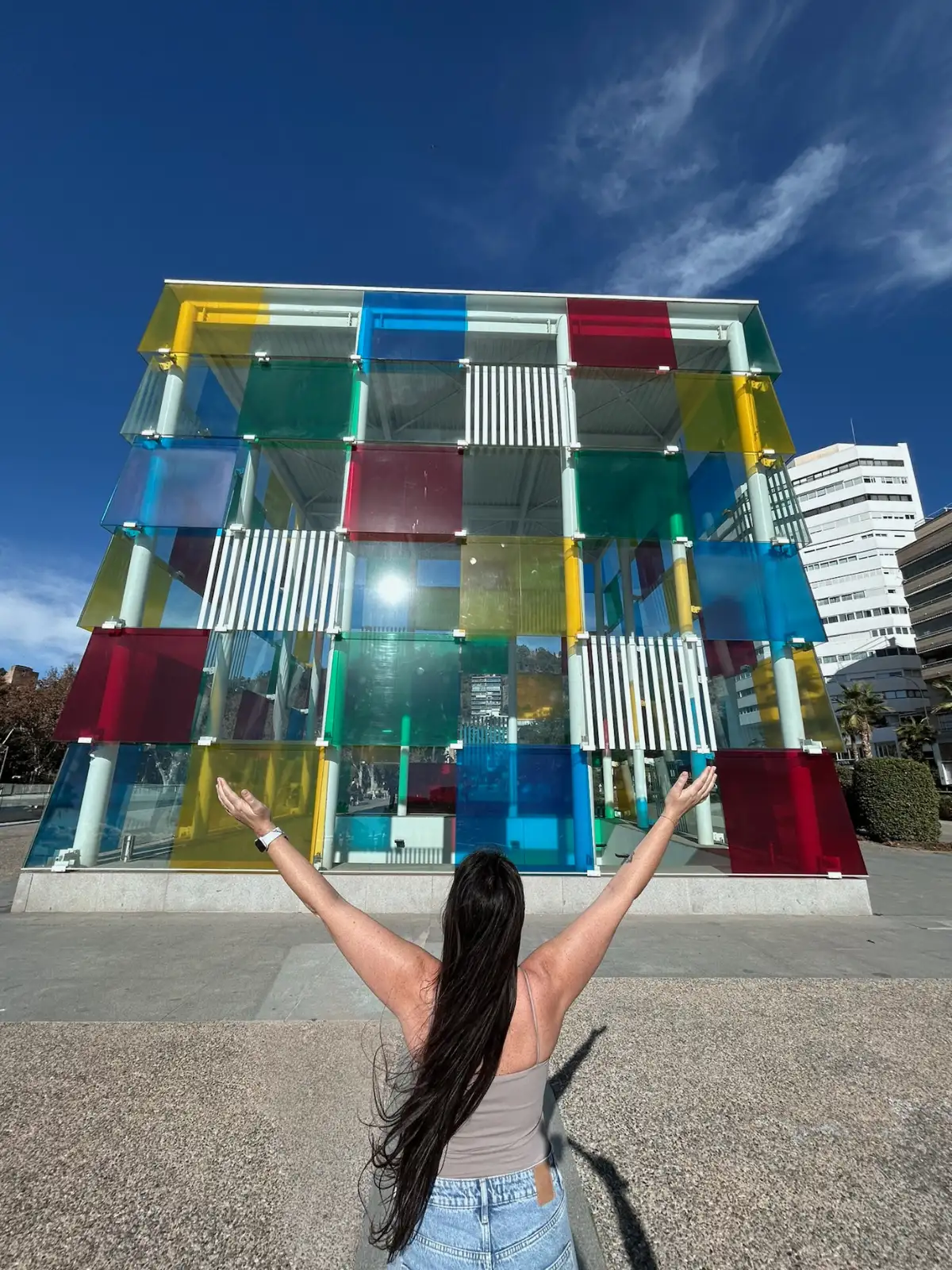
The rainbow glass cube at the port, free from 4pm on Sundays (regular €9), the only Pompidou outpost outside France. The 20th and 21st century collection rotates regularly, no two visits look the same, and the glass throws lovely broken light patterns across the floor. Don’t skip the terrace, some of the best port views in the city.
Russian Museum Collection
Tucked inside the old Tabacalera tobacco factory, Málaga’s outpost of St Petersburg’s Russian Museum, free 4pm to 8pm on Sundays (regular €8), a longer window than most. The exhibition rotates yearly, bold colour, religious icons, Soviet-era social realism, a genuinely strange contrast to the Spanish art everywhere else in the city.
Félix Revello de Toro Museum
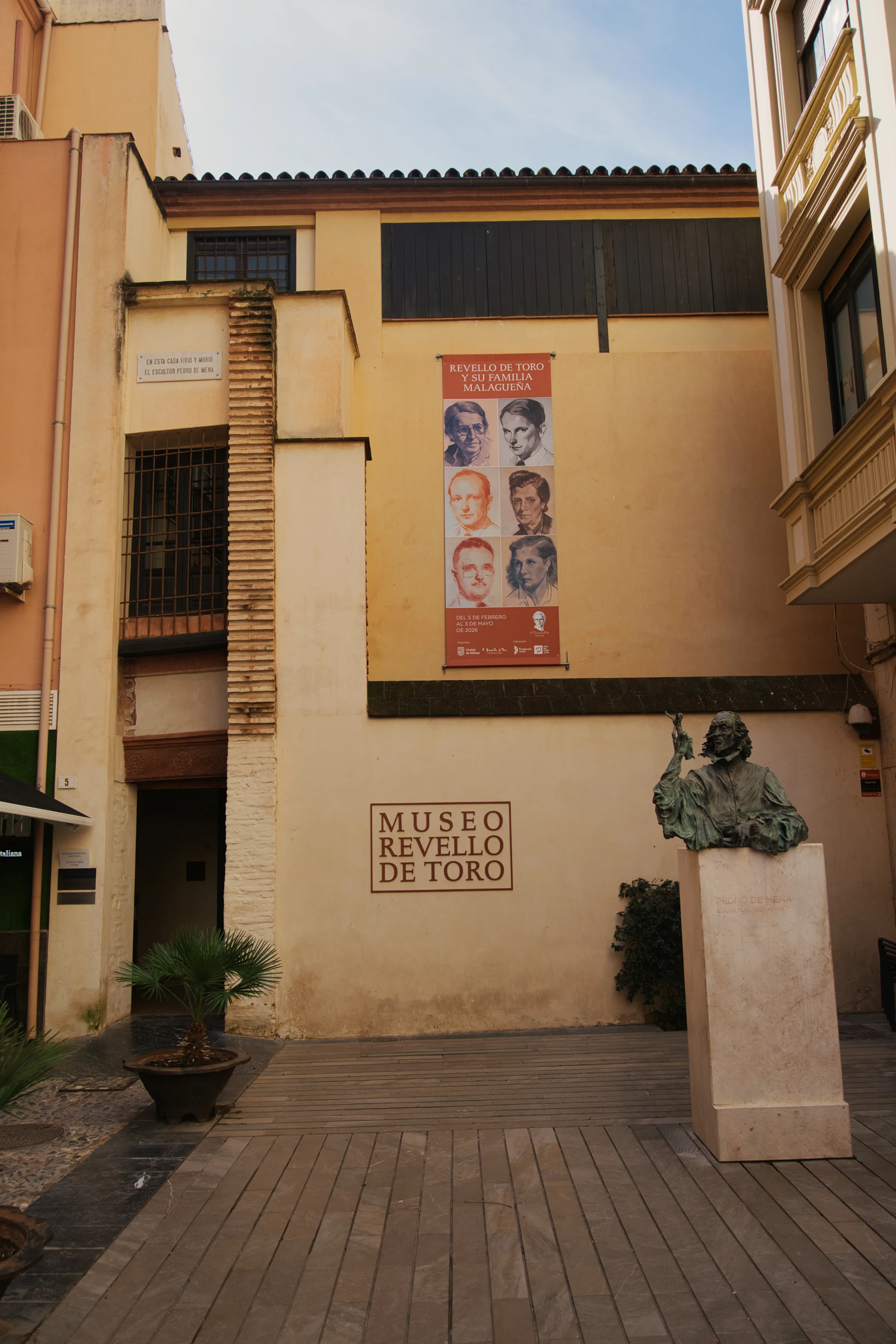
Almost nobody knows about this one, which is exactly why I love it. Free Sunday afternoons (usually €3), and you’ll practically have the rooms to yourself. Dedicated to Málaga-born portraitist Félix Revello de Toro, realistic oil paintings of elegant women and matadors with real warmth to them. Málaga’s most underrated museum, easily.
Museums that are always free
CAC Málaga (Contemporary Art Centre)
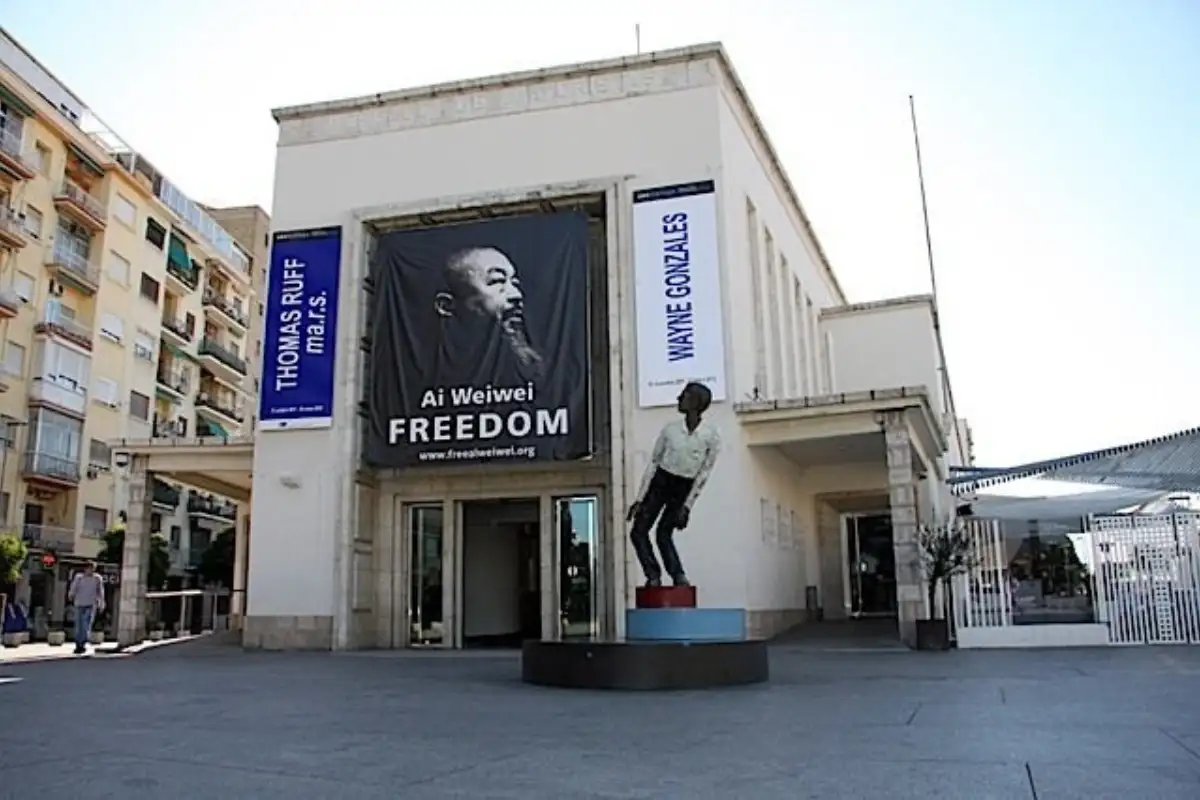
Always free, housed in a converted wholesale market building, all raw concrete and huge windows, in the Soho district. It rotates cutting-edge contemporary work from Spanish and international artists, installations, video art, the kind of experimental stuff that either delights you or leaves you cold. I fall firmly in the delighted camp. Currently closed for renovation, due back early 2026, check before you make a special trip.
Museum of Málaga
The largest museum in Andalusia, inside the 18th-century Palacio de la Aduana, free for EU citizens (bring photo ID) or €1.50 if you’re not. The archaeological floor is the real draw for me, Roman mosaics, Phoenician glass, Islamic ceramics, laid out so it actually makes sense of the city’s layered history. Upstairs, Spanish masters from the 15th to 20th centuries, Murillo and Ribera worth seeking out. Give it at least an hour.
Aeronautical Museum

Right next to the airport, free year-round, and better than it sounds. Vintage aircraft, flight simulators, old terminals, engine displays, and a DC-3 you can actually walk through, which I loved far more than I expected to. Good for killing a couple of hours before a flight, especially with kids.
Alcazaba and Gibralfaro Castle on a Sunday
Alcazaba
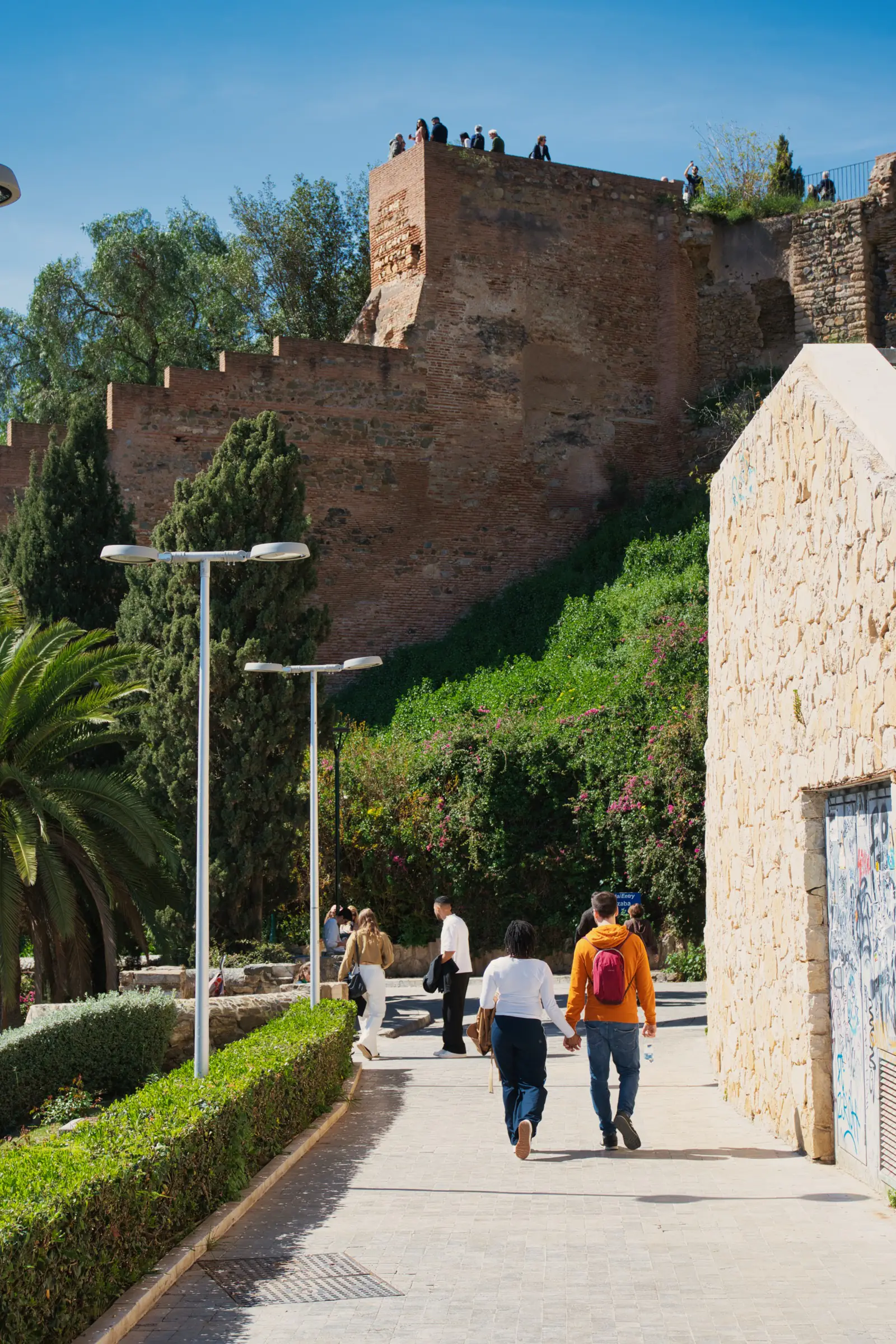
Turn up after 2pm on a Sunday and it’s free, one of the best tips I know in this city (regular entry €3.50, or €5.50 combined with Gibralfaro). An 11th-century Moorish fortress-palace, zigzagging defensive walls, horseshoe arches, courtyards with fountains still trickling in the heat.
Push up to the Nasrid Palace at the top, the tilework genuinely rivals the Alhambra in Granada with a fraction of the crowds, honestly one of my favourite half hours in Málaga. The upper terraces open onto sea and city views that make the climb worth it alone.
Castillo de Gibralfaro
Linked to the Alcazaba by a footpath, about twenty minutes’ walk, which makes pairing the two on a Sunday afternoon the obvious move. A 14th-century Moorish castle built purely to defend the Alcazaba below, ramparts you can walk, a small interpretation centre on its military history. Same pricing as its neighbour, €3.50 alone or €5.50 combined, free Sundays from 2pm.
The views are the real reason to come, a full 360 degrees, and on a clear day I’ve made out the coast of Africa from up there. One of those spots that makes you stop talking for a minute.
Parks and gardens
La Concepción Botanical Garden
Time it right and you walk through one of Spain’s best botanical gardens for free. Regular entry €5.50, but the last hour before closing costs nothing: from 3:30pm in winter (shuts 4:30pm, October to March), or 6:30pm in summer (shuts 7:30pm, April to September). A 19th-century garden, tropical palm forests, waterfalls, bamboo groves, over 2,000 plant species. The palm collection is world-class, and the elevated views over the city caught me completely off guard the first time.
Outside the centre, check the public transport guide, buses 2 or 91 get you close. An hour isn’t long, but it’s enough.
Parque de Málaga
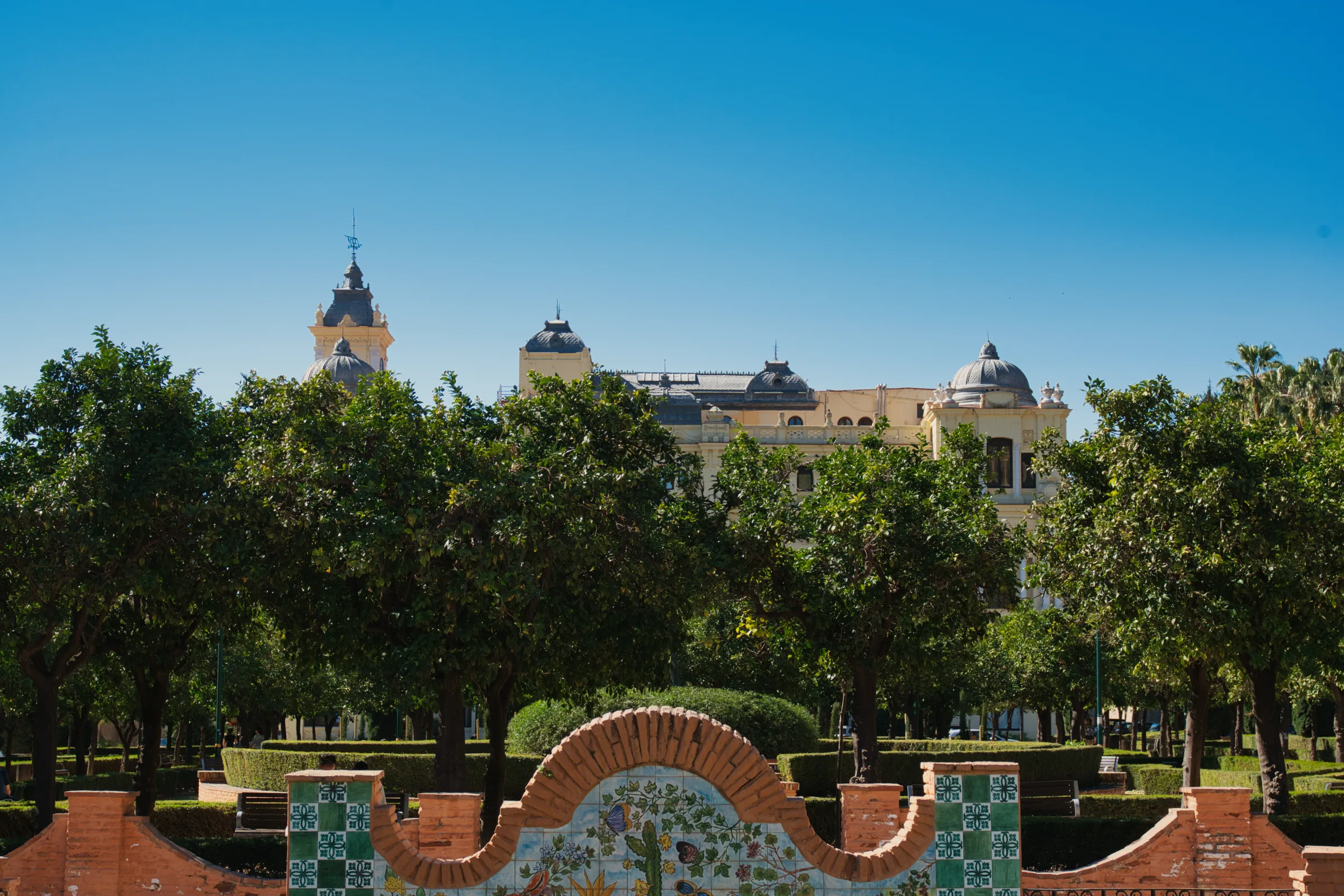
My shortcut between the old town and the beach, and I never mind that it’s longer than the direct route. Always free, running from Plaza de la Marina down to the port since the 1890s, exotic plants, ornate fountains, benches shaded under palms and jacarandas. Sunday mornings you’ll sometimes catch live music from the bandstand.
The free days that aren’t Sundays
Sundays get you in the door for free, but they’re not the whole story. Málaga hands out a few more free days across the year, and they’re worth marking down if your trip happens to overlap with one:
- 28 February: Andalusia Day
- 18 May: International Museum Day
- Late May: White Night Málaga (Noche en Blanco)
- 27 September: World Tourism Day
- 27 October: Picasso Museum Anniversary
Line any of these up with the regular Sunday hours and you’ve got free entry to almost every museum in the city, no ticket required.
Is Málaga actually this cheap?
Yes, and not by a small margin either, not against what the rest of Europe’s coastline charges. A full day of sightseeing here, planned properly, can cost exactly nothing.
Just the free Sunday museum circuit would set you back roughly €30-40 a person if you paid the standard entry fees for the lot. Add the free beaches, the free Roman Theatre, and a free walking tour or two, and the free version of a day in Málaga starts looking like the fuller one, not the compromise.
When you do want to spend something, it doesn’t ask for much. A menu del día gets you three courses for around €12-15, and a caña costs €1.50-2.50, closer to pocket change than a proper expense. Combine the free calendar with the cheap eats scattered around town and Málaga turns out to be one of the least punishing cities on this whole coast to actually enjoy.
I keep this page current as dates shift and museums change their rules, because a free day only helps if the information’s still true when you land. There’s more of the city worth reading beyond this list too: unusual things to do in Málaga if you’ve already ticked off the obvious stuff, the full things to do in Málaga guide if you haven’t, and what to do in Málaga when it rains for the one day the sky doesn’t cooperate.
Málaga never once asked me to spend more to like it more, and on a coastline built to do exactly that, I don’t take it for granted.