April is one of the best months for things to do in Malaga. The weather sits in a sweet spot that later months don’t: warm enough for full outdoor days, cool enough to walk the old town without stopping every ten minutes.
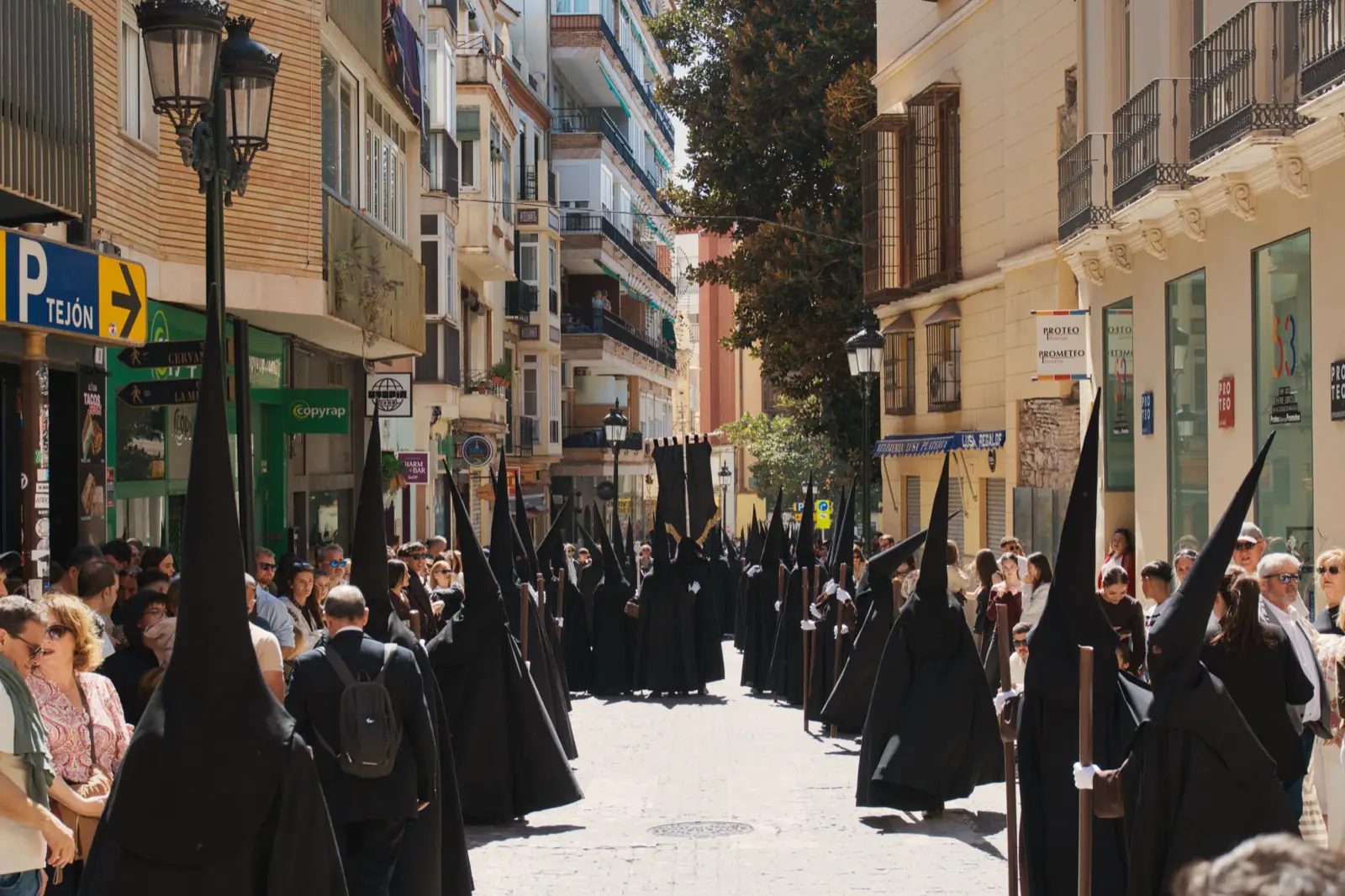
I’ve spent several Aprils here now, and the thing that still catches me out is how much the city changes character. If Easter falls in April, Semana Santa turns the historic centre into something I genuinely struggle to describe to people who haven’t seen it.
Even without it, April’s calendar is fuller than most visitors expect. In this guide I’ll cover everything worth doing: the monuments and museums at their best, the day trips that work in spring, the events, and the places that only hit their stride once the city warms up.
Is April a Good Time to Visit Malaga?
Honestly, yes. April is close to ideal for almost everything except guaranteed sunshine and warm sea swimming.
Daytime temperatures sit around 21°C, which is comfortable for long walks, outdoor dining, and day trips without the exhaustion July or August brings. There are usually five or six rainy days in the month, mostly short and passing, but worth keeping a layer handy for.
The city is noticeably quieter than summer. Hotels cost a fraction of peak prices, the monuments have real breathing room, and you can walk Calle Larios on a weekday without navigating tour groups.
The one exception is Semana Santa. If Easter falls in April, accommodation books out months ahead and the city centre gets genuinely packed on procession nights, so build that into your planning if your dates overlap.
For a month-by-month breakdown, my best time to visit Malaga guide has the full comparison.
Semana Santa in April
Semana Santa is Malaga’s biggest annual event, running from Palm Sunday through Easter Sunday with processions through the historic centre every day. Each one belongs to a different cofradía, a religious brotherhood, and involves a carved float called a trono carried through the streets by teams of costaleros.
In 2026 Holy Week ran from 29 March to 5 April, putting it mostly in March, but the dates shift each year and April catches at least part of it more often than not. Malaga has over 30 active cofradías, which means there are processions happening almost continuously through the week, morning and evening.
The tronos are extraordinary. Some weigh several tonnes and require up to 250 costaleros to carry them, moving entirely blind beneath the float, guided by a capataz who communicates by knocking.
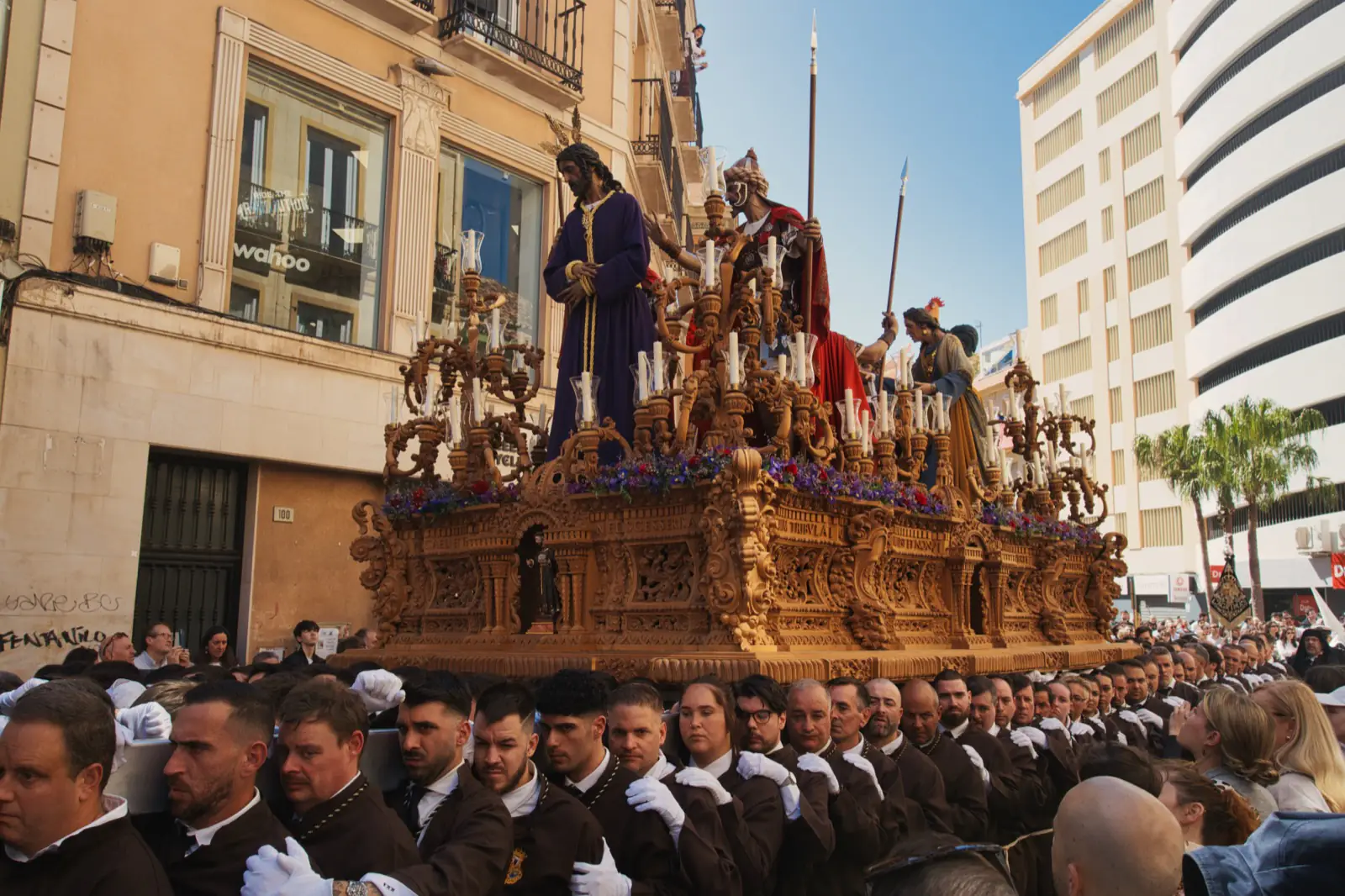
I’ve watched this from a few metres away and the effort is genuinely staggering. Nothing you read about it quite captures what it looks like in person.
What I wasn’t prepared for, the first time, was the sound. Brass bands, drums, the smell of incense rolling through a narrow street.
And then, occasionally, silence. Someone on a balcony breaks into a saeta, a spontaneous flamenco lament directed at the float below, and everyone around you stops.
If your trip overlaps with Semana Santa, book accommodation the moment you confirm your dates. The city fills entirely, and the best spots along the procession route fill up hours before the floats appear.
The Alcazaba and Gibralfaro Castle
Built in 1057 AD under the Zirid ruler Badis ibn Habus, the Alcazaba is the older of Malaga’s two hilltop fortresses and honestly the more interesting one to walk through. The layering of history is unusually visible: Roman columns repurposed as doorways, Moorish archways above Phoenician foundations.
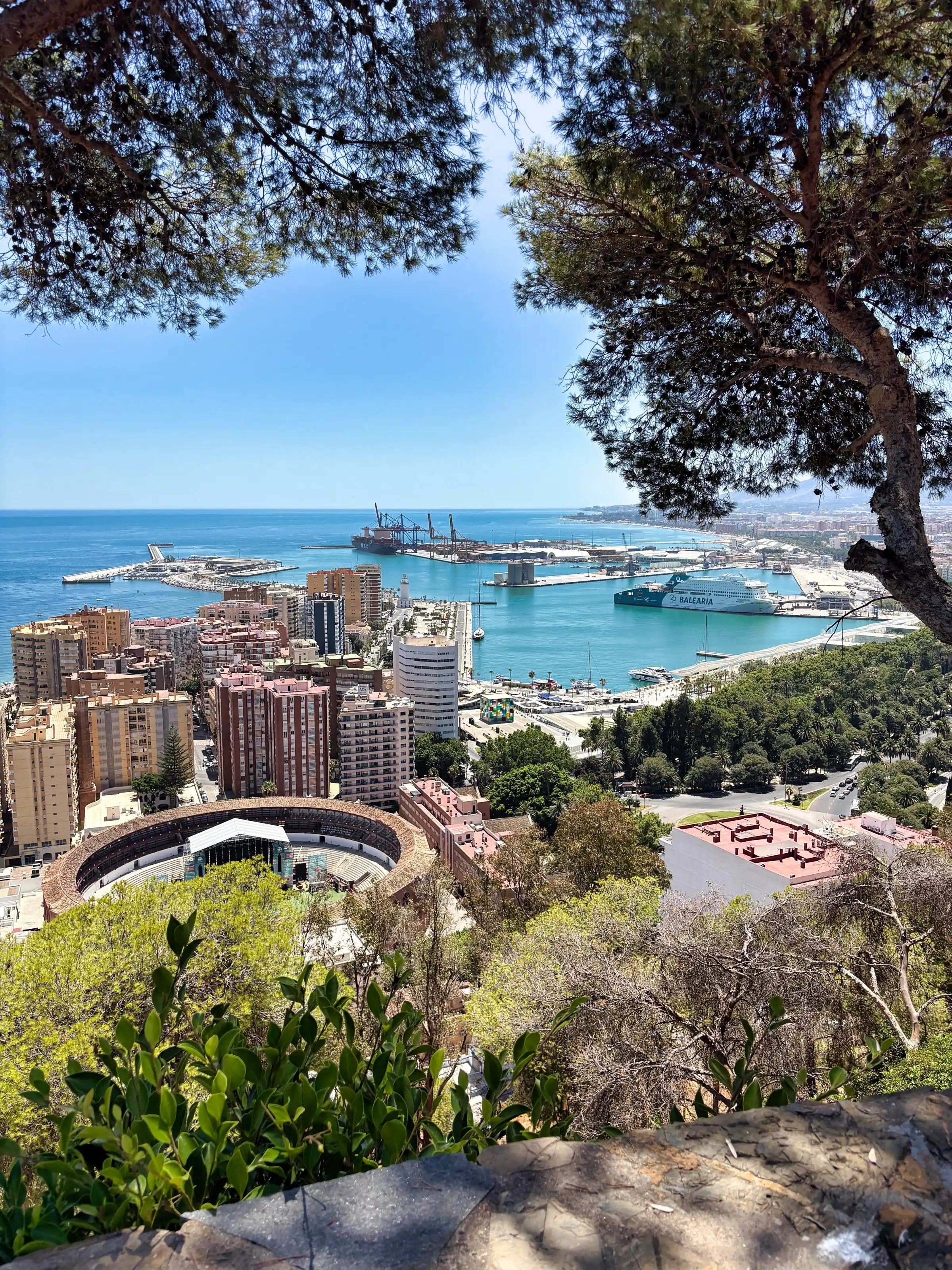
Gibralfaro sits higher up the hill, connected to the Alcazaba by a 15th-century coracha wall you can walk along between the two. The views from Gibralfaro’s ramparts over the port and the bullring are the best in the city.
Before you climb either, stop at the Roman Theatre at the base. It dates from the 1st century BC and is always free to enter.
Most people walk straight past it.
April is a good month for both. It’s warm enough to enjoy the open-air terraces without being so hot that the climb to Gibralfaro becomes a slog.
Both monuments are free on Sundays, and I’ve covered the timing details in my free things to do in Malaga guide. On paid days the combined ticket for both costs €3.50. Go before 11am to beat the group tours.
Botanical Garden La Concepcion in Spring
The wisteria pergola at the Botanical Garden La Concepcion is one of the most genuinely impressive things you can see in Malaga in spring, and it exists almost entirely outside the tourist conversation. The blooms last around three weeks, running from mid-March into mid-April, and the first ten days of April are typically the peak.
The garden covers 23 hectares of subtropical plants, towering trees, and formal paths that could absorb a full morning. The wisteria itself hangs in dense purple clusters along a long covered walkway, and the scent on a warm April morning is something I’d struggle to replicate anywhere else in the city.
The honest caveat is the timing. Come in the second half of April and the wisteria is gone, replaced by green leaves and a lot of other visitors who came for the same thing a week too late.
Check the garden’s social media before you go if you’re visiting close to the window.
It’s free on Sundays, which I mention in my free things to do in Malaga guide. On other days entry costs around €5.20.
Take the bus from the city centre rather than driving. Parking near the entrance is limited and fills quickly on sunny mornings.
Day Trips from Malaga in April
Few months work as well as April for getting out of the city. The temperature is comfortable for full days outdoors, the Andalusian countryside is at its greenest, and the roads are quiet compared to summer.
Ronda in Spring
Ronda is the most dramatic day trip from Malaga, and April is one of the better months to make it. The drive up through the mountains takes about 90 minutes, and the countryside along the way, rolling farmland, cork oaks, and the occasional herd of cattle, is at its best in spring.
The town sits above El Tajo, a gorge 120 metres deep, spanned by the Puente Nuevo, a bridge that took 42 years to complete and was finally finished in 1793. Standing on the bridge and looking down into the gorge is one of those moments that works exactly as well as everyone says it will.
A day is enough to walk the old town, cross the bridge, and have lunch. My full guide to things to do in Ronda covers everything in more detail.
Caminito del Rey
The Caminito del Rey is a 7.7km trail pinned to the cliffs of the Guadalhorce gorge, and it remains one of the most impressive walks in Andalusia despite being well known now. April is close to ideal: the gorge stays 5–8°C cooler than the city, which means real shade rather than the suffocating heat of July.
The daily visitor cap is 1,200 people, so book ahead. April is easier than summer for tickets, but not last-minute easy.
My Caminito del Rey guide has the full booking process and what to expect on the day.
Frigiliana or Nerja
These two are close enough to combine in a day if you want to, though I’d say each deserves its own visit if you have the time. Frigiliana is the white village, steep and flower-lined, about an hour from Malaga by bus, while Nerja is the coastal town next door, with the Balcón de Europa sitting 30 metres above the sea.
If you can only pick one, Frigiliana is the more striking experience in spring, when the bougainvillea and jasmine are coming into flower. My guide to things to do in Nerja covers both towns and the route between them.
City Walks, Parks, and Viewpoints
Walking is genuinely the best way to spend a few hours in Malaga, and April is when it works best. The old town covers roughly 1km², end to end in about 20 minutes at a stroll, but the interesting version takes most of a day.
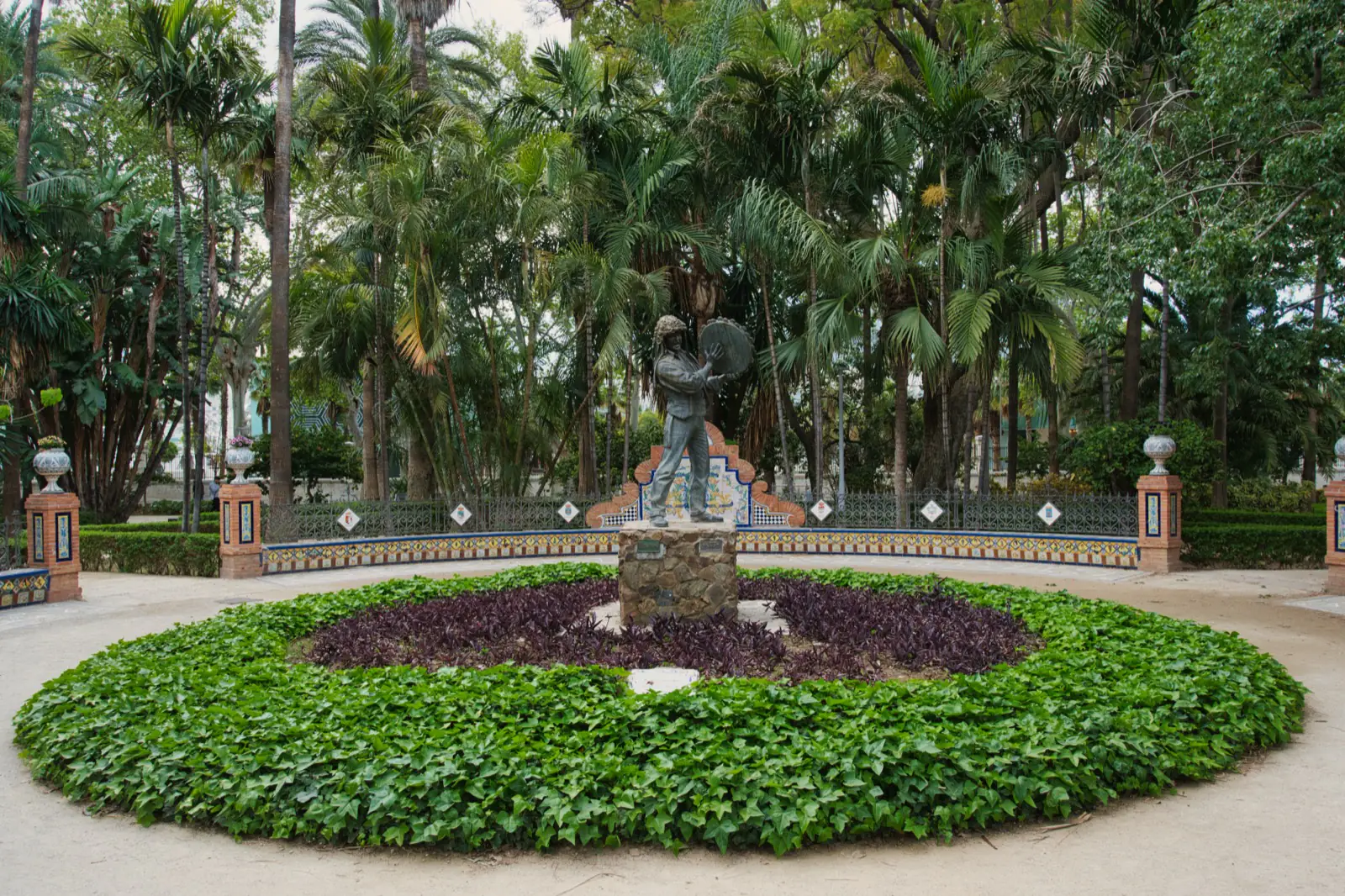
The Paseo del Parque is worth starting at. It’s the long tree-lined promenade between the port and the Alcazaba, running through Parque de Málaga, which has been here since 1897 and is one of the better public parks in the region.
In April it’s at its most lush, and the temperature makes walking it a pleasure rather than a test.
From there, Calle Larios leads into the historic centre and up to Plaza de la Constitución. I walk this more than any other route in the city, and the square is the part I never get bored of.
For viewpoints, Gibralfaro is the clear winner. But Muelle Uno on the port side gives a completely different angle, looking back at the city rather than down on it, and I’d do both on the same day if you have time.
For a proper walking route with timings and stops, my walking in Malaga guide covers the whole thing.
The Picasso Museum and Malaga’s Cultural Quarter
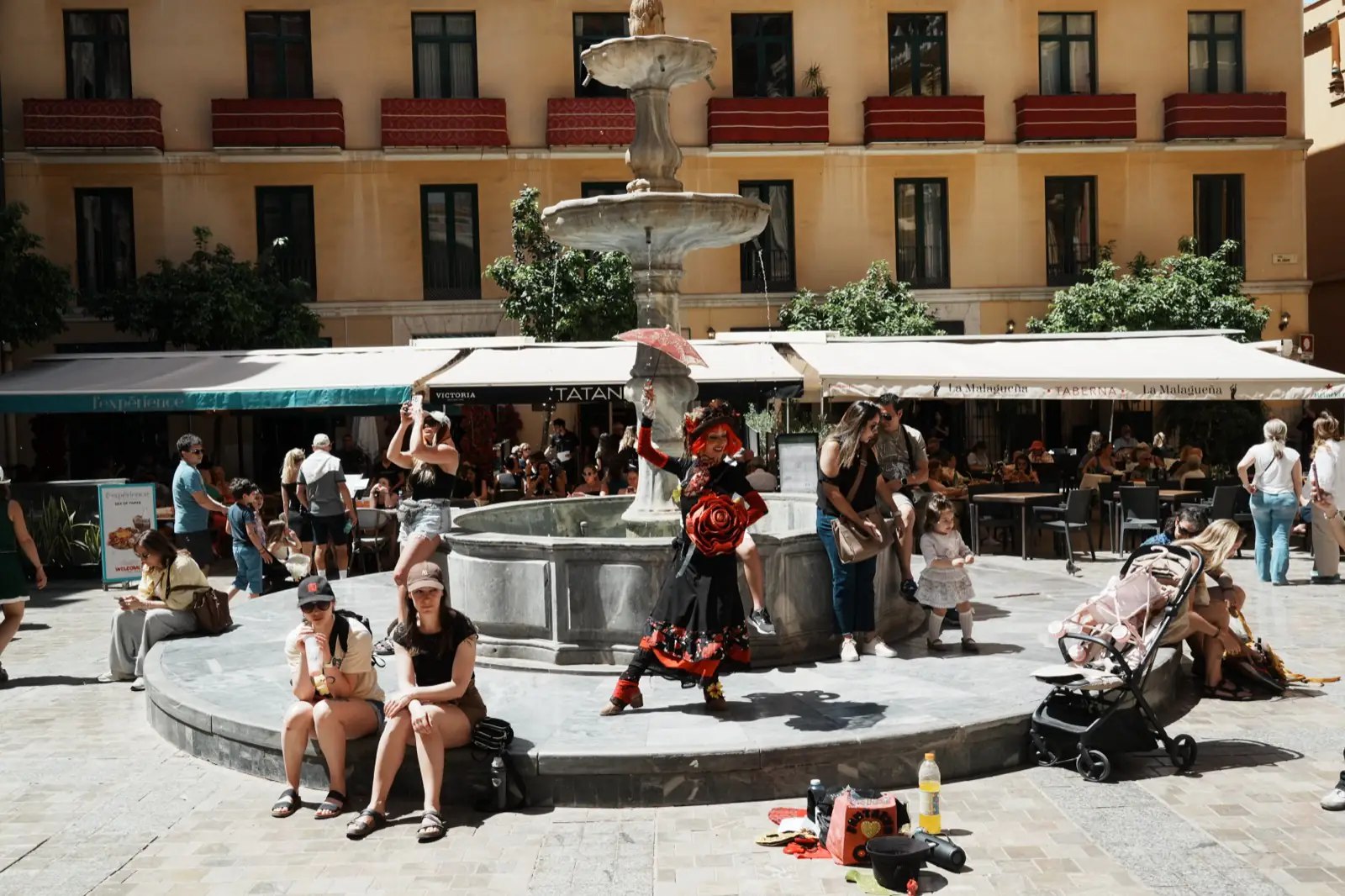
Malaga has more museums per square kilometre than most cities its size, and they’re concentrated in a small area of the historic centre that you can cover on foot in an afternoon.
The Picasso Museum is the flagship, housed in the 16th-century Buenavista Palace and holding 285 works spanning the full range of his career. It opened in 2003 and has been quietly one of the better art museums in southern Spain ever since.
Entry starts at €12, and in April the queues are manageable in a way they’re not in summer.
The piece most visitors miss is the Casa Natal. Picasso’s birthplace on Plaza de la Merced, it’s free to enter and often more interesting as an experience than the main museum.
A short walk away, the Carmen Thyssen Museum and the Centre Pompidou Malaga are both worth an hour each, covering Andalusian painting and international contemporary work respectively. The Cathedral sits between all of them.
My museums in Malaga guide covers entry prices, free hours, and which ones to prioritise if you’re short on time.
April Events Beyond Semana Santa
The calendar doesn’t stop at Semana Santa. These two are worth planning around if your dates overlap.
Cherry Blossom Festival in Alfarnate
Alfarnate is a village of about 900 people in the hills above Malaga, and for one weekend every April it becomes a surprisingly convincing tribute to Japanese spring. The Sakura Cherry Blossom Festival runs for two days, usually around 11–12 April, and draws the kind of crowd that makes the village feel completely different from its usual quiet self.
There are craft markets, origami workshops, martial arts displays, and food stalls serving Japanese dishes, all in the shadow of a white Andalusian church. It’s an odd combination that works better than it has any right to.
Alfarnate is about 45 minutes by car from Malaga. Most people make it a half-day and combine it with a drive through the Axarquía countryside.
Noche en Blanco
One evening in April, usually the second or third week, Malaga opens up after dark. Noche en Blanco is a free cultural night running across 40+ venues in the city, with museums, galleries, theatres, and open spaces hosting performances, exhibitions, and live music until late.
It’s one of the better nights of the year to be in the city. The streets fill from around 9pm and the historic centre has an energy that’s completely different from a normal evening.
Check the what’s on in Malaga April page closer to your trip for confirmed dates, as they shift slightly each year.
Beaches and Chiringuitos Opening for the Season
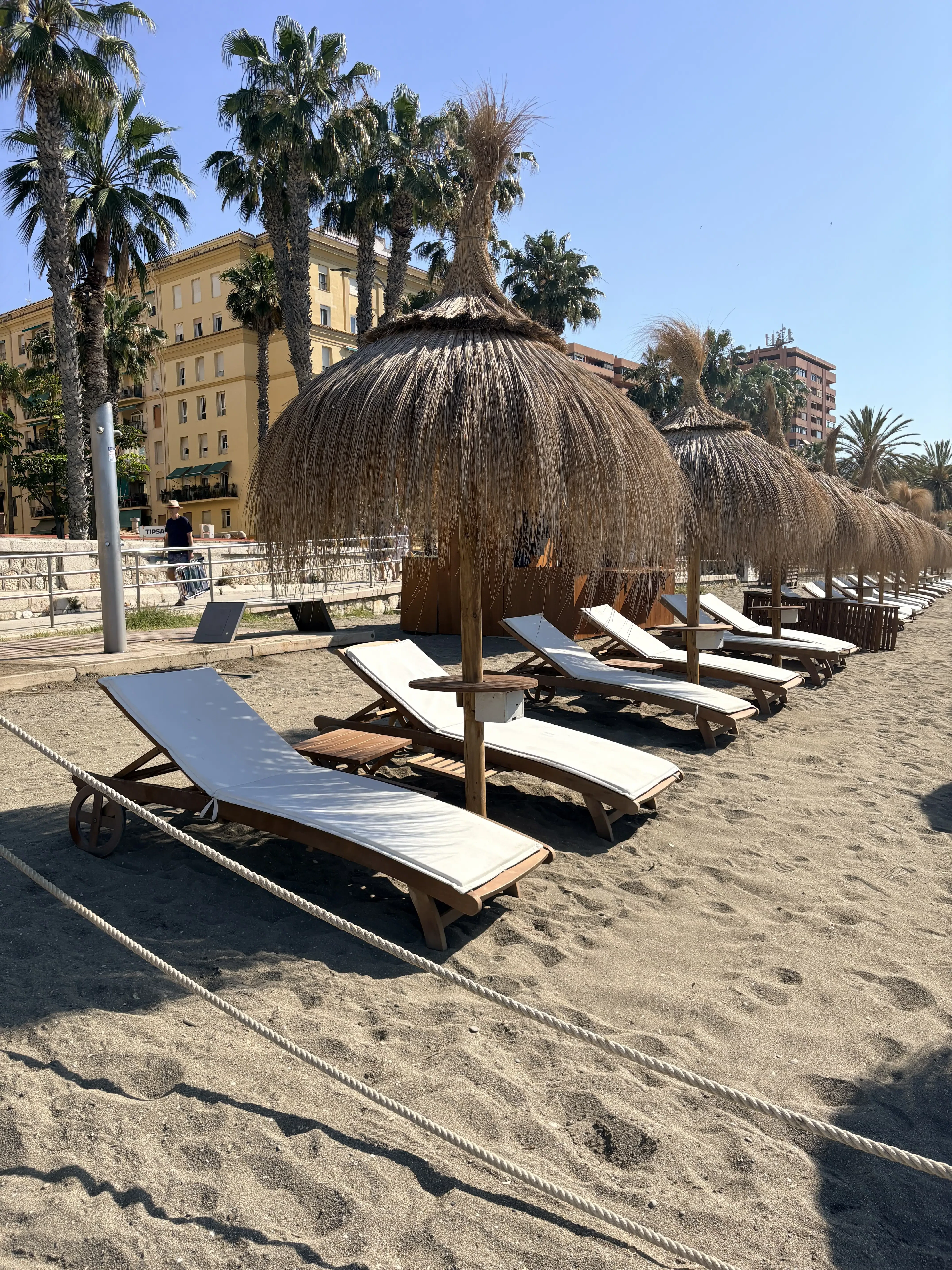
By April the chiringuitos are back. Most beach bars along the Malaga coast reopen between the 1st and 15th, which marks the unofficial start of beach season.
The sea sits at 16-17°C, which is cool enough to make most people think twice about swimming. Locals don’t generally get in until May or June.
Visitors from northern Europe sometimes take the plunge in April and I respect it. For most people though, April beach time is about sunbathing and cold drinks rather than sustained swimming.
La Malagueta is the main city beach, 1.2km of sand a short walk from the historic centre. Pedregalejo, a few kilometres east, is where I’d go on a warm April afternoon: smaller, less crowded, and more local in atmosphere.
My best beaches in Malaga guide covers all the options and what to expect by month.
Evenings: Tapas Terraces and Rooftop Bars
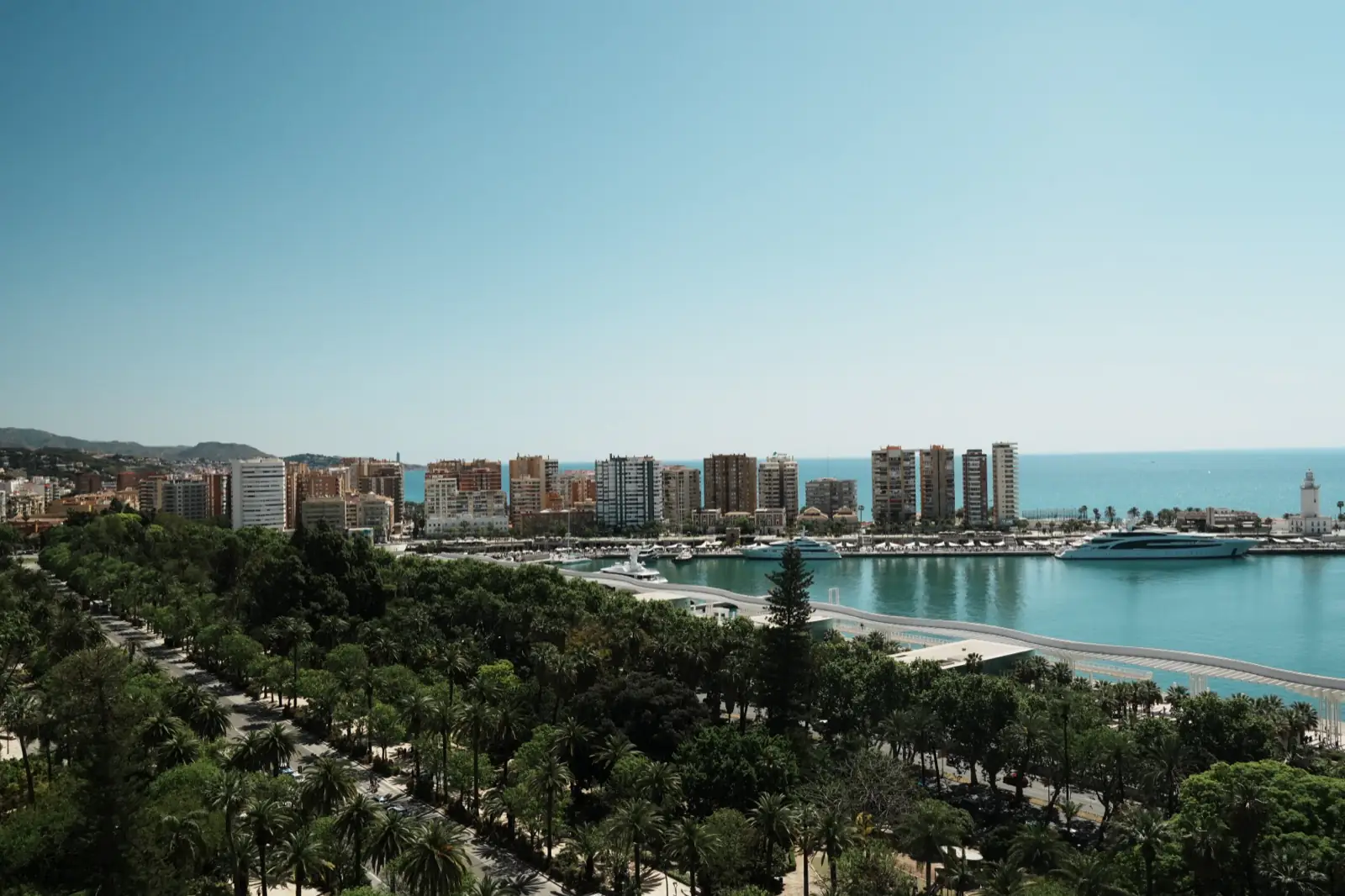
The evenings are one of the best things about April in Malaga. By late in the month you’re close to 14 hours of daylight, the sun doesn’t set until 8:30 or 9pm, and the terraces are full again.
Calle Granada is where I usually start. It’s one of the better tapas streets in the old town, lined with outdoor tables that fill from around 7pm, and the evening paseo runs right past it.
Calle Compañía and the streets around Plaza de la Merced work well too. You can drift between them without a plan.
The rooftop bars are good in April because they’re not yet overrun. The views are the same as August but you can actually get a table and hear the person next to you.
For tapas recommendations and the streets worth knowing, my best tapas in Malaga old town guide has everything.
Bring a light jacket for after 10pm. It cools faster than you’d expect once the sun is down.
Practical Tips for Visiting Malaga in April
Book accommodation the moment you confirm your dates if Semana Santa overlaps with your trip. Weeks ahead is not early enough for Holy Week.
Outside Easter, April is shoulder season. Mid-range hotels in the centre run €100-150 a night, and availability is good if you’re not travelling at Easter.
The historic centre sits inside a low emission zone (ZBE), which affects some vehicles. Check the ZBE guide before you drive in, or park on the outskirts and walk.
The centre is compact enough to walk everything. Public transport covers the airport, beaches, and train station without difficulty, and you don’t need a car for the city itself.
For a broader overview of when to go and what to expect from the weather, best time to visit Malaga has everything you need.
More Things to Do in Malaga Throughout the Year
- 15 Best Things to Do in Malaga in January
- 13 Things to Do in Malaga in February
- Things to Do in Málaga in March: Events, Hikes and Local Tips
- 15 Things to Do in Malaga in May (by a Local)
- Things to do in Malaga in June: what’s worth your time
- Things to Do in Malaga in July: What’s Actually Worth It
- 12 Things to Do in Malaga in August: my local picks
- Things to Do in Malaga in September: Events, Beaches and Day Trips
- 20 Things to Do in Malaga in October
- Things to Do in Malaga in November
- 12 Things to Do in Malaga in December