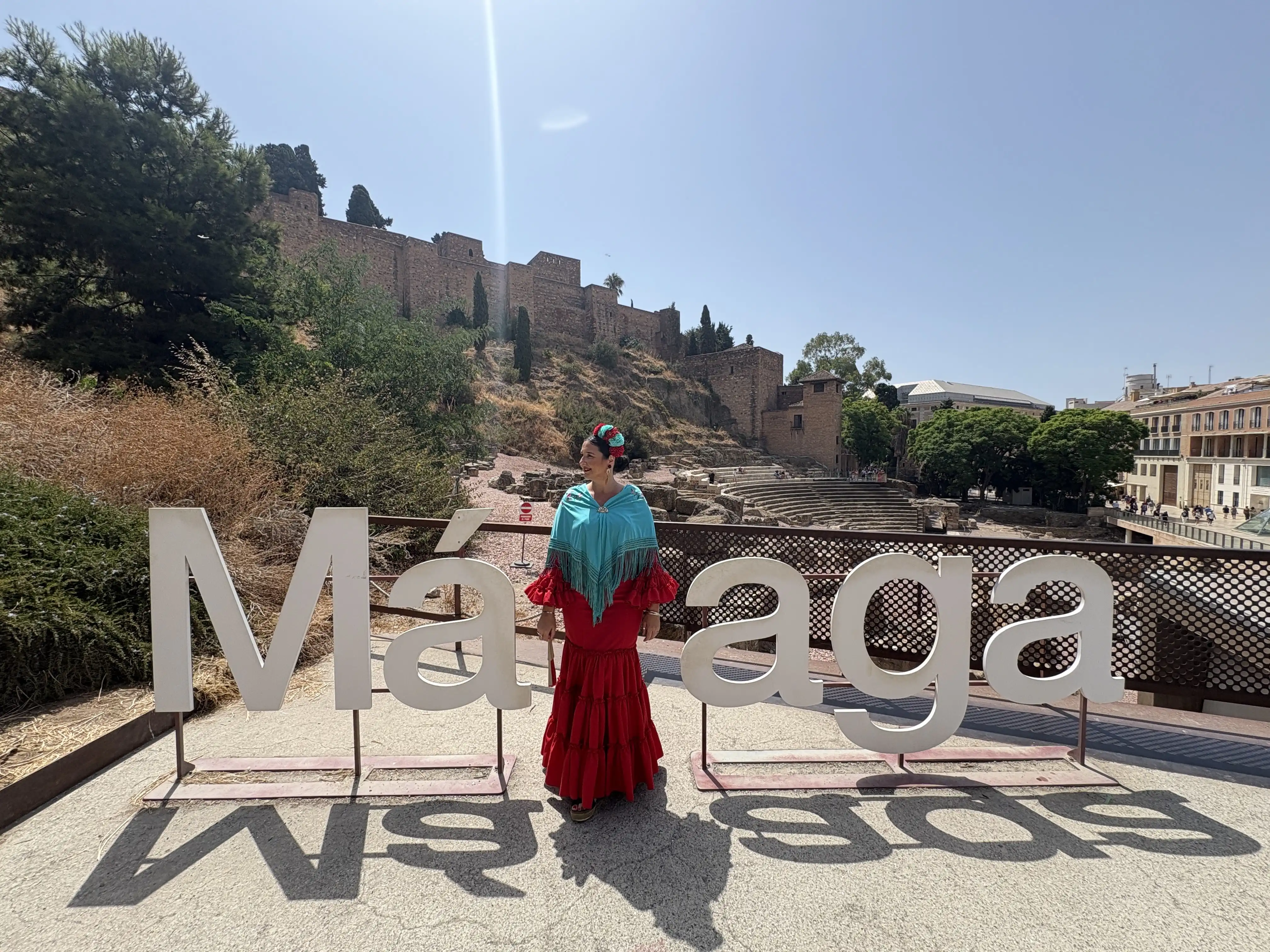
If you’re looking for things to do in Malaga in August, the short answer is: plenty. The longer answer is that August here is much more manic compared to the rest of the year, but once you understand it, this becomes the best month on the calendar.
My first summer living here, I spent the opening week fighting the heat. I tried to sightsee at noon, walked home dripping, and couldn’t understand why the streets emptied by 2pm.
Then the Feria de Malaga started, and I embraced it.
This city doesn’t resist August. It surrenders to it entirely: late dinners, free outdoor cinema, sea water at 25 degrees, and a week-long street party in the historic centre.
In this guide, I’ll show you what to do, what’s free, what to book months ahead, and how to make the heat work for you rather than against you.
Is August a Good Time to Visit Malaga?
Yes, if you can embrace the heat and work around it. Daytime temperatures hold steady at 31-35°C, the sea reaches 24-25°C, the city is at its busiest, and the whole place runs on a completely different timetable to every other month.
If you come expecting to sightsee at noon, you’ll find the city has other ideas. Streets empty by 2pm, beaches fill fast, and prices are at their highest of the year.
Follow the local rhythm instead: out early, a long rest through the heat of the afternoon, then back out from 7pm. August starts to feel like it was designed to be enjoyed.
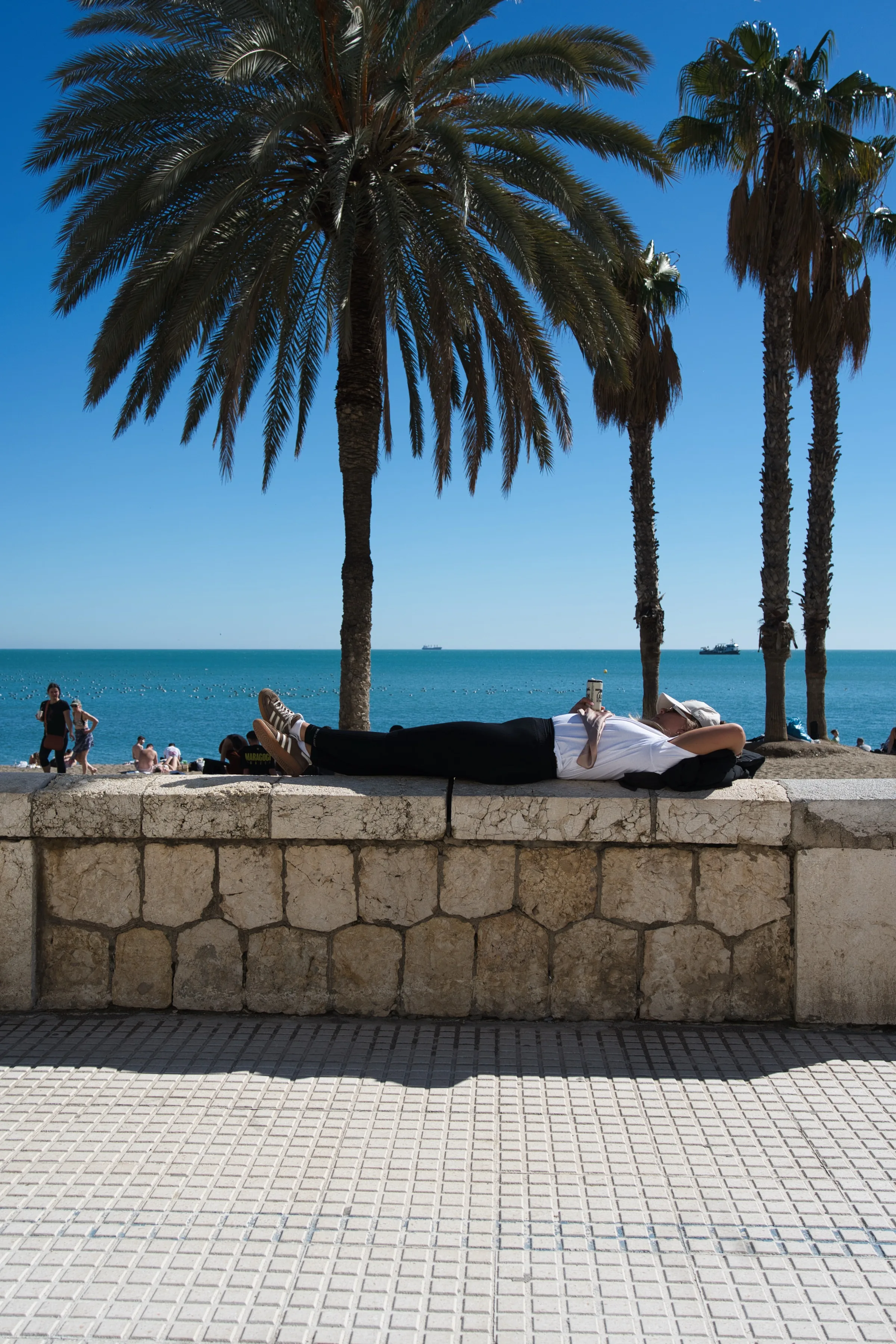
The Feria de Malaga falls mid-month and the sea is at its warmest. Book accommodation early.
For the full picture on weather and crowds, my best time to visit Malaga guide has it covered.
The Feria de Malaga
The Feria de Malaga is the city’s biggest annual celebration: nine days in mid-August when the historic centre becomes one enormous outdoor party and the fairground on the city’s outskirts runs until dawn every night. In 2026, it runs from 16 to 23 August.
If you’re anywhere near Malaga during those dates, you go.
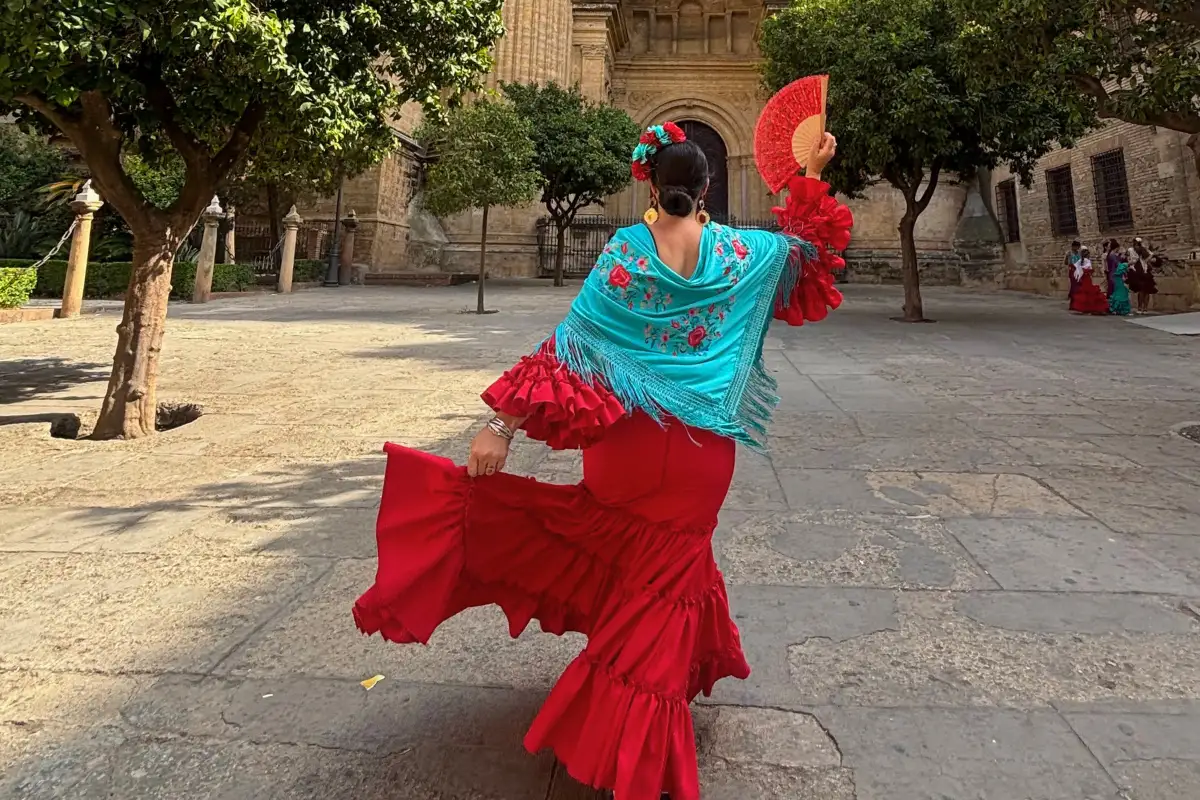
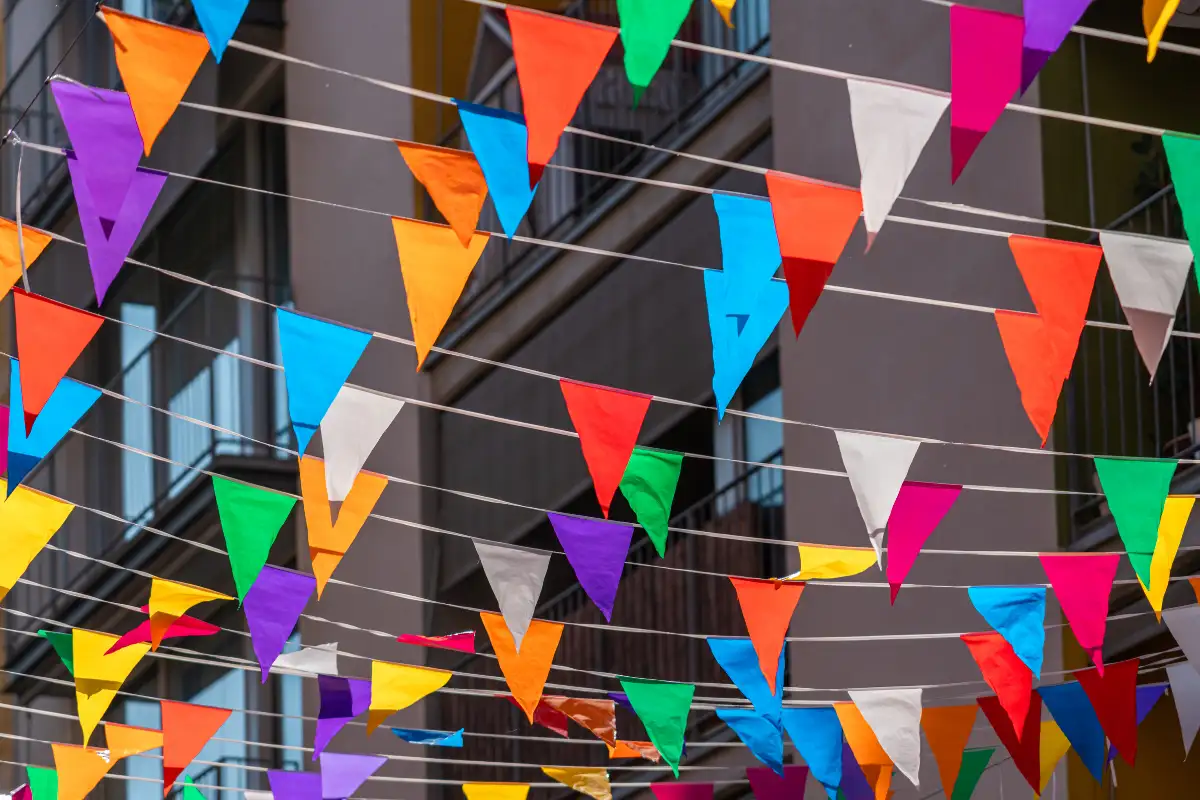
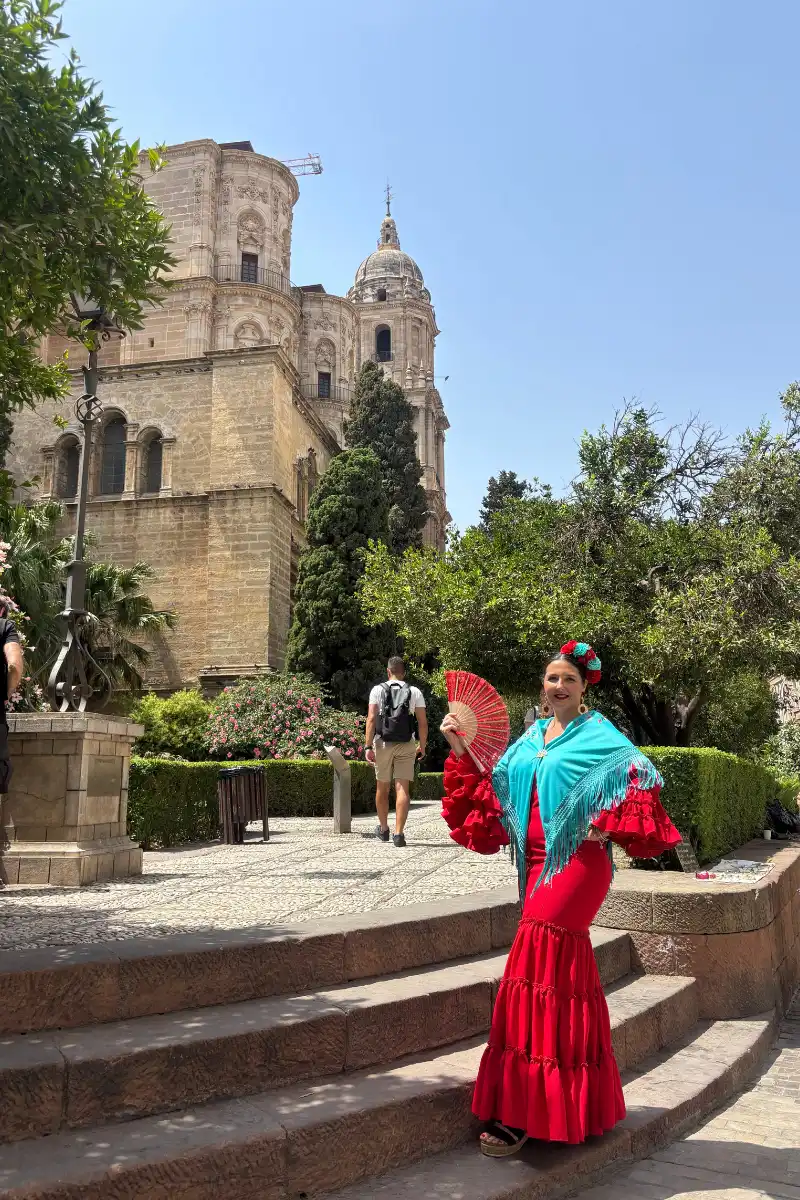
The daytime Feria takes over the centro histórico. Calle Larios and the streets around it fill with stalls, the sound of live music comes from every direction, and locals turn up in traditional flamenco dress for the horse and carriage parades.
Every bar sets up outside and serves rebujito, a mix of dry sherry and lemon soda that goes down very easily in 33-degree heat. The local wine to ask for is Cartojal, a sweet Malaga white that you’ll see everywhere during Feria week.
The nighttime Feria is a different experience entirely. The Recinto Ferial, out towards the east of the city, opens after dark and doesn’t close until five or six in the morning.
The casetas (large marquees, most of them belonging to local associations or political parties) are where the real dancing happens, with live music and free-flowing drinks all night. Entry to the Recinto itself is free.
My honest recommendation for first-timers: start with the daytime Feria in the centro, which is easier to navigate and genuinely electric even if you stay for just a couple of hours. Then go to the Recinto at least one evening, even if you don’t stay late.
Book accommodation for Feria week as early as you possibly can. Hotels within walking distance of the centre sell out months in advance, and prices double.
Free Things to Do in August
Yes, plenty. August is one of the better months for free activities in Malaga, which surprises most visitors who assume the whole city is just expensive peak season.
CineAbierto (Open Cinema) runs through the first half of the month, with free screenings on beaches, in parks, and across city barrios starting at 10:15pm. I’ve been to the beach screenings a few times and they’re exactly what August evenings in Malaga should look like (the free things to do in Malaga guide has the full year-round list).
The Museo Carmen Thyssen opens free on select Thursday evenings in summer, from 7pm until 11pm, with access to the permanent collection and the temporary exhibition. It holds one of the best collections of 19th-century Andalusian painting in Spain, inside a 16th-century palace, and getting in for free on a warm evening with the terrace bar open upstairs is one of the nicest ways to spend a couple of hours in the city.
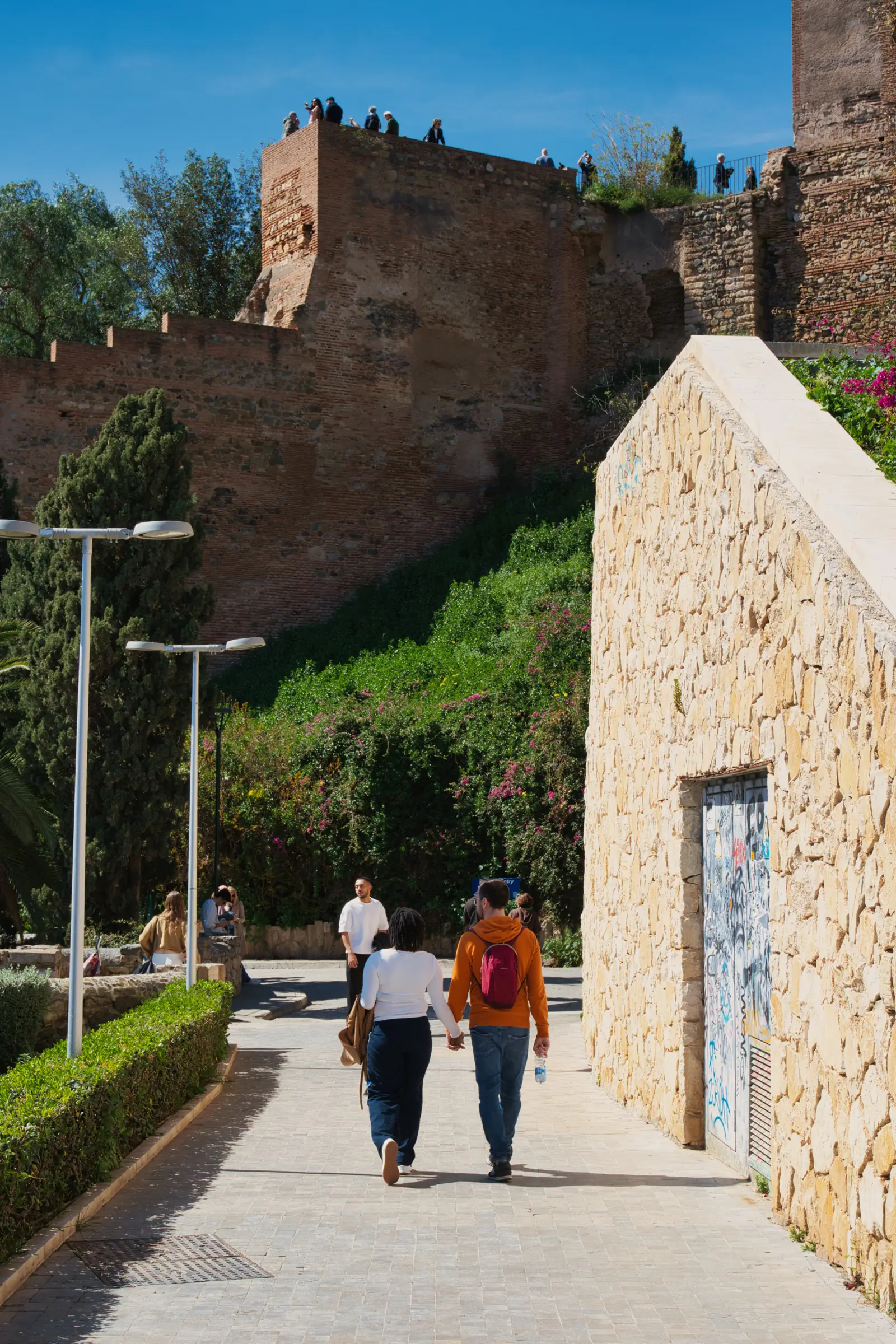
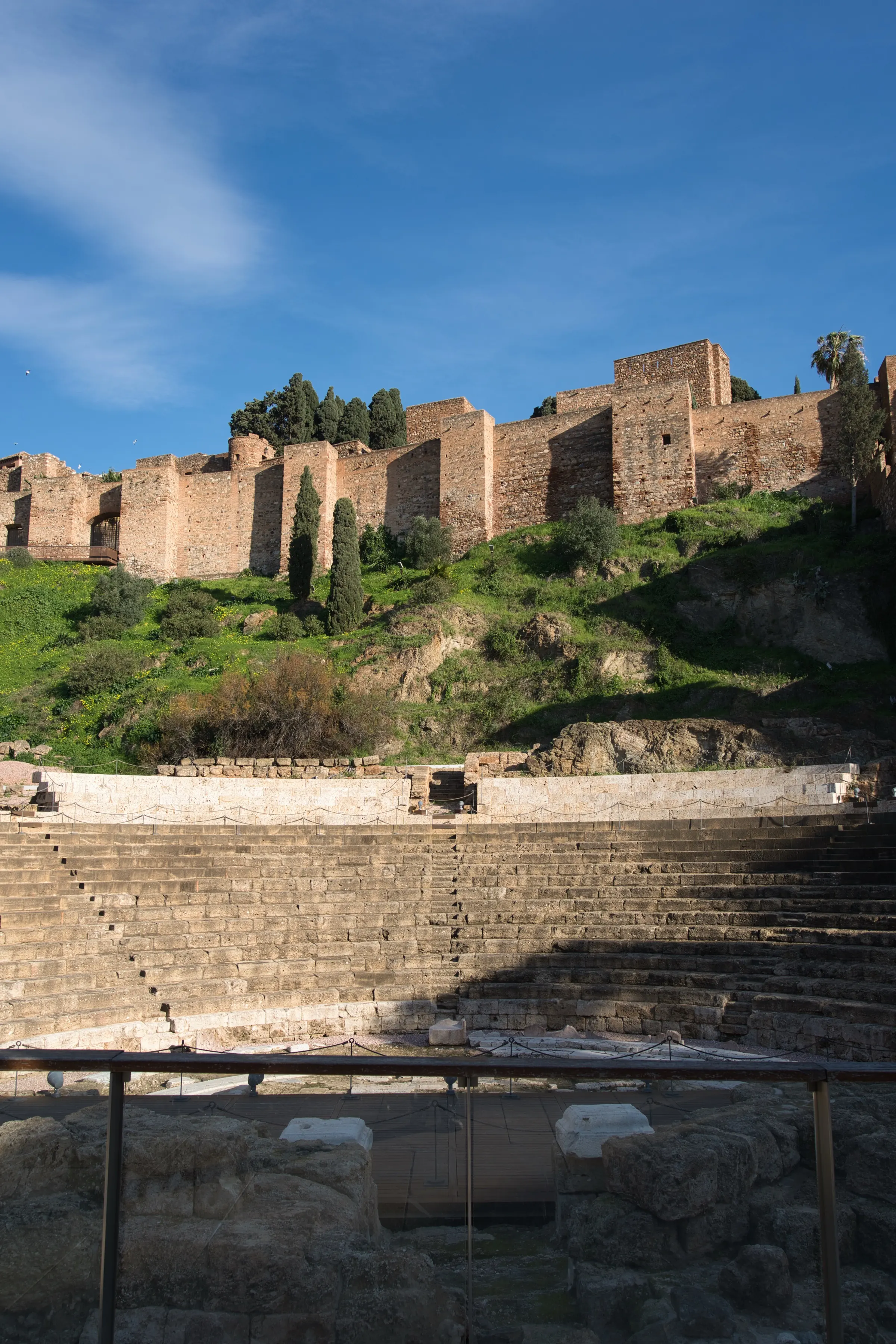
The Roman Theatre, just below the Alcazaba, is always free, and the Alcazaba and Gibralfaro Castle also drop to free entry on Sunday mornings, as do most of the city’s main museums. Arrive before 10am if you’re planning to use those slots.
The neighbourhood verbenas are worth seeking out too. Each barrio organises its own street party through August: live music, outdoor bars, and dancing in the local square, usually running until the early hours and costing nothing to attend.
Malaga’s Beaches in August
The beaches in Malaga are at their absolute best in August. The Mediterranean reaches 24-25°C, which sounds like marketing copy until you’re actually in it, and it really is that warm.
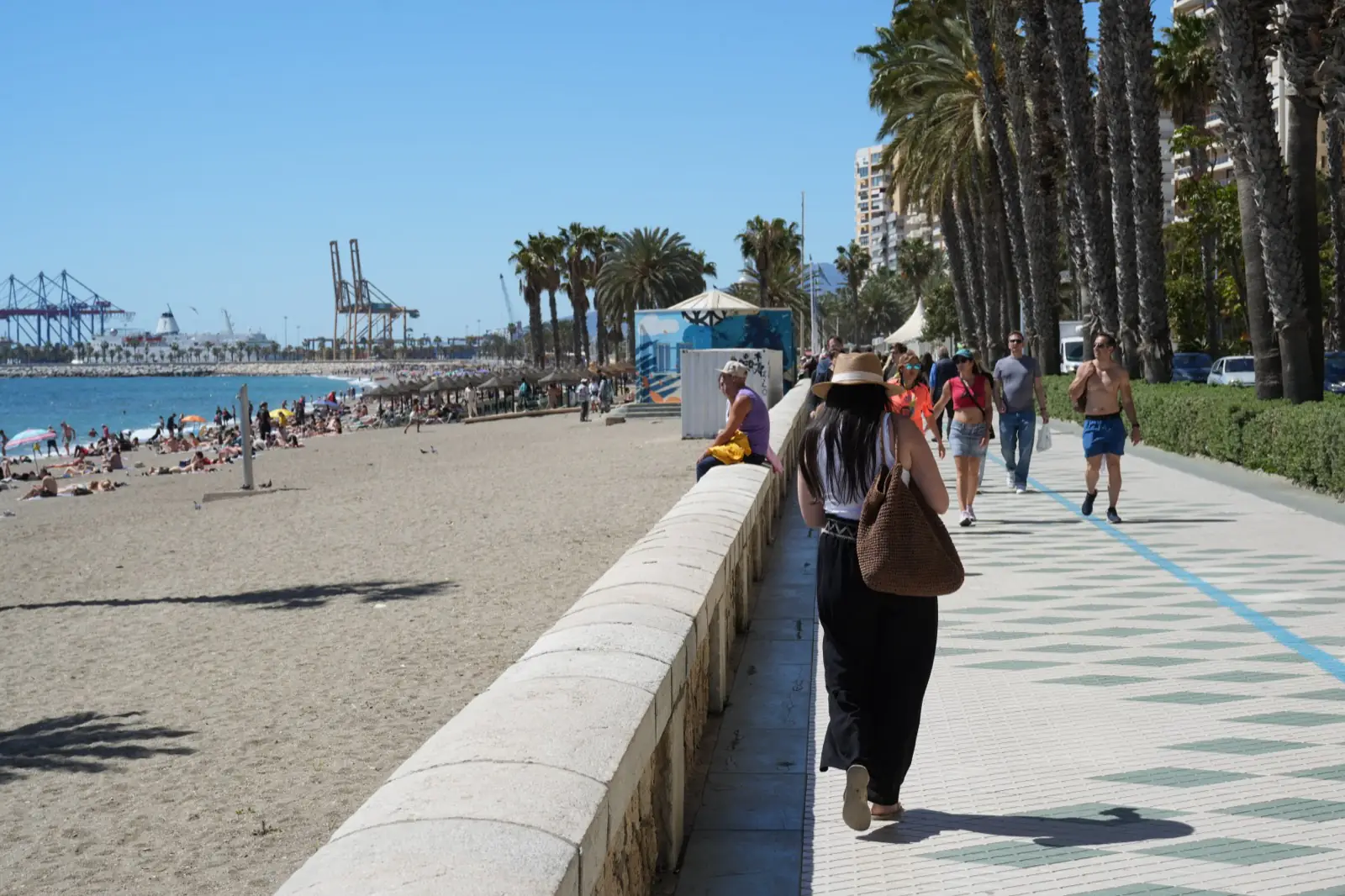
Playa de la Malagueta is the closest beach to the city centre and the most obvious choice, but by 10am in August it’s already very busy. I go early, before 9am, when there are still families having breakfast on the sand and the light is doing something beautiful over the water.
For a more local experience, head east to Pedregalejo or El Palo, residential barrios where the chiringuitos have been serving espetos to the same customers for decades. The beaches are slightly narrower than Malagueta but the atmosphere is different, less tourist-facing, and the coffee and toast at a beach bar at 8am is one of those simple things that makes August here feel worth the heat.
Playa del Penon del Cuervo, further east again, is my go-to when I want a quieter stretch. It’s rockier than Malagueta and less well-known, which in August is exactly the point.
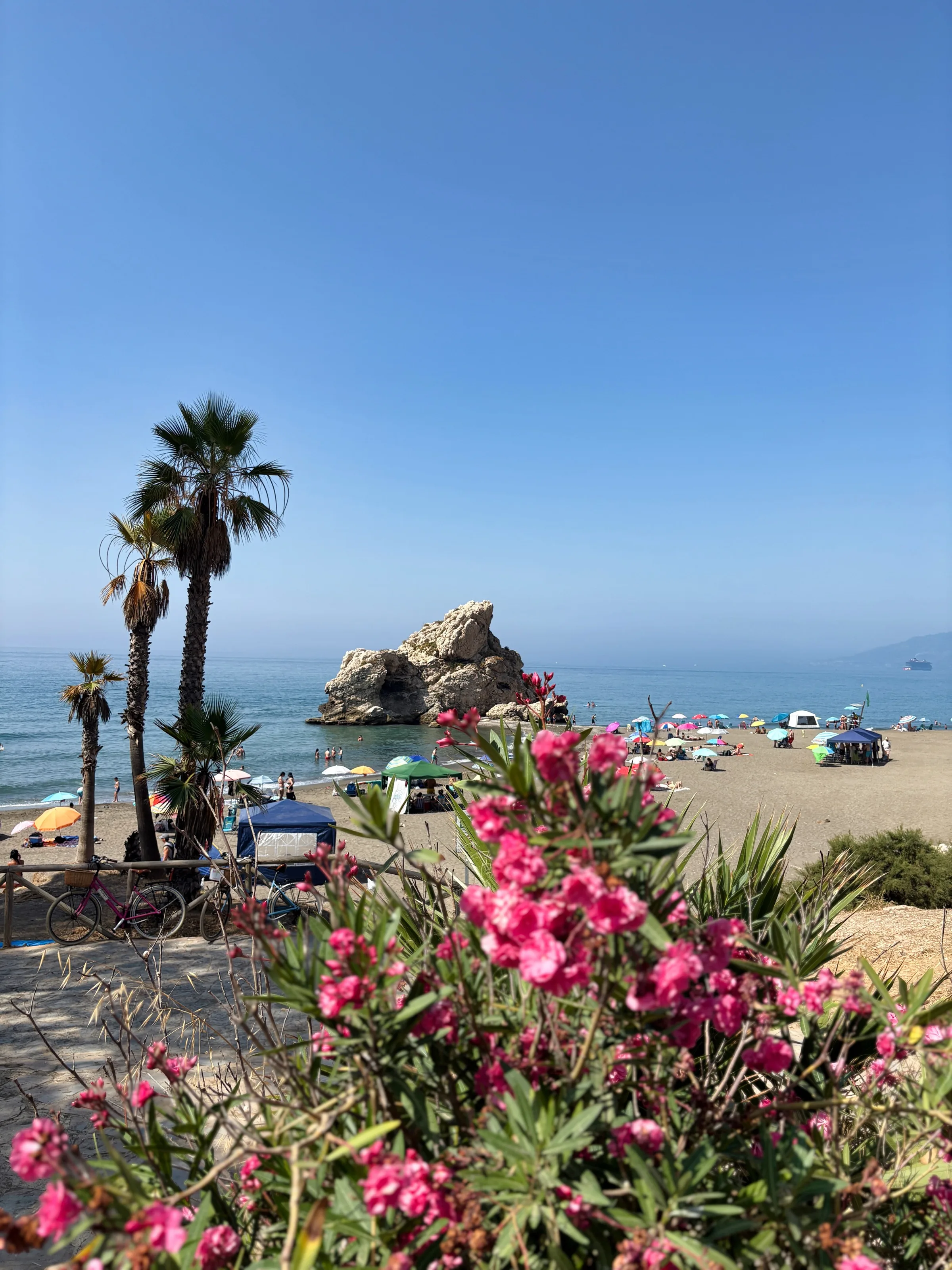
Whatever beach you choose, the rule is the same: go early or go late. The midday hours are punishing and the beaches are at their most crowded, but from around 7pm onwards, the temperature drops and everyone comes back.
Sunset swims are a genuine August pleasure here.
Museums and Indoor Escapes from the Heat
Malaga has more museums per square kilometre than almost any other city in Spain, which is genuinely useful in August when the alternative is standing in 35-degree heat. My guide to museums in Malaga covers them in full, but here are the ones worth prioritising.
The Picasso Museum is where most people start, and rightly so. The collection holds 236 original works donated by Picasso’s family, ranging from early student pieces to fully developed Cubist paintings, and in August you really should book tickets online to avoid the queue.
The one that surprises most visitors is the Centre Pompidou Malaga, one of only three Pompidou centres outside Paris (the others are in Brussels and Shanghai). The rotating contemporary collection is a completely different experience to the Picasso, and the building sits right on the port, which makes the combination of museum and harbour-side lunch a very good morning out.
The Museo Carmen Thyssen I mentioned in the free events section, but it’s worth paying for during the day too. The permanent collection covers 19th-century Andalusian painting in more depth than anywhere else in the region, and the temporary exhibitions tend to be better than you’d expect.
Less visited but worth your time is the Museo de Málaga, inside the Palacio de la Aduana on the plaza below the Alcazaba. It’s one of the largest fine arts and archaeology museums in Andalusia, consistently quieter than the Picasso in August, and usually free to enter.
For the Alcazaba itself, arrive before 11am. Built by the Hammudid dynasty in the early 11th century, it predates most of Malaga’s skyline by eight centuries, and the layering of Phoenician, Roman, and Moorish remains on the way up is the kind of history that’s hard to replicate.
Espetos, Chiringuitos and Eating in August
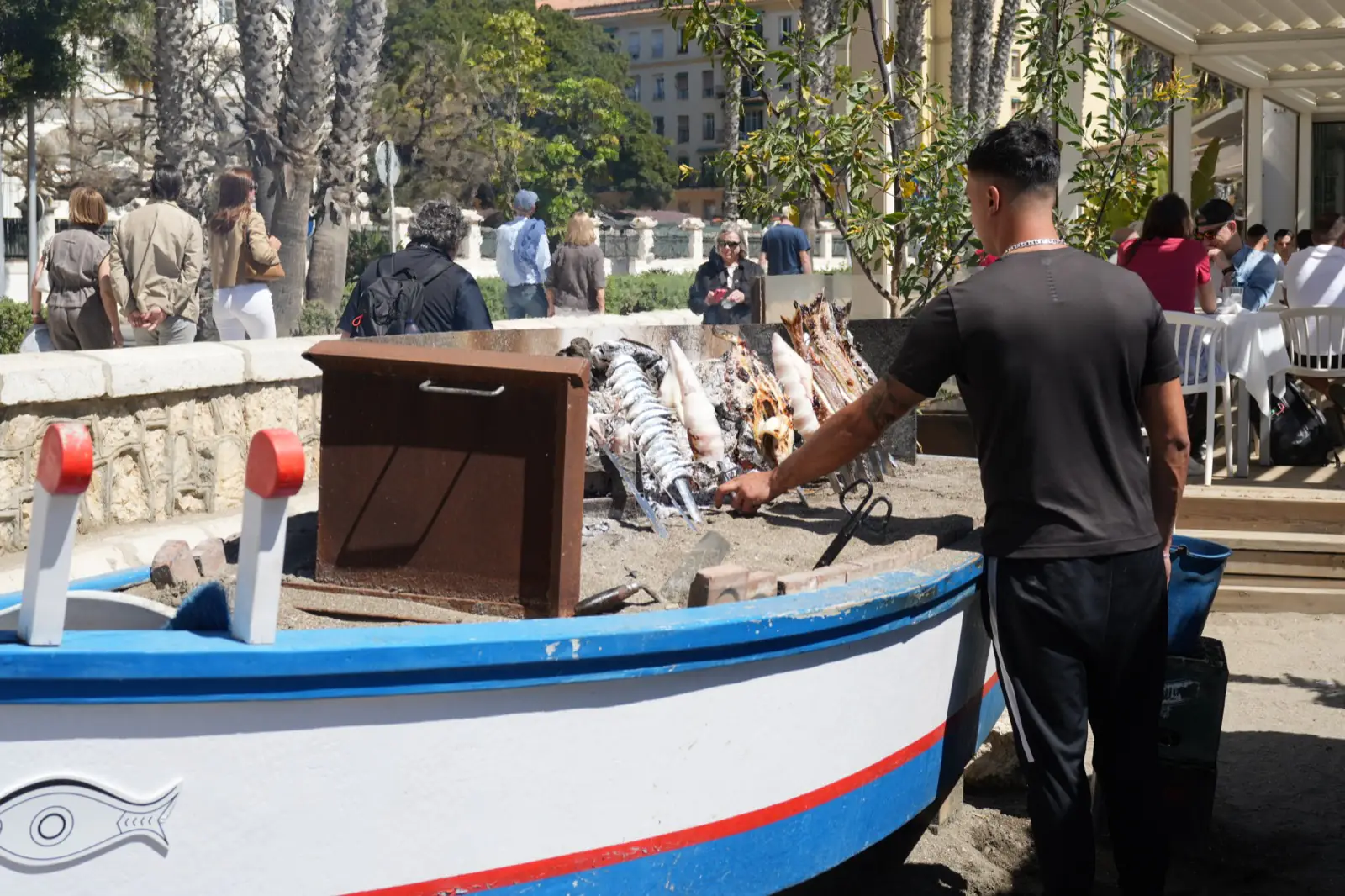
Eating in Malaga in August is an experience in itself, not just a necessity between activities. The rhythm is different: a proper long lunch at a chiringuito from 2pm onwards, dinner nowhere before 9:30pm, and the whole thing done at a pace that treats the heat as a reason to slow down rather than hurry.
Espetos de sardinas are the dish of August. Dating to the 1880s in the fishing barrios of El Palo and Pedregalejo, they’re sardines threaded onto skewers and grilled over a wood fire inside a sand-filled half-boat on the beach.
The best ones have a slight char you don’t get from an indoor grill. Order a plate with cold local wine and start with ajoblanco if they have it, a cold almond soup that’s as local to this coast as the espetos themselves.
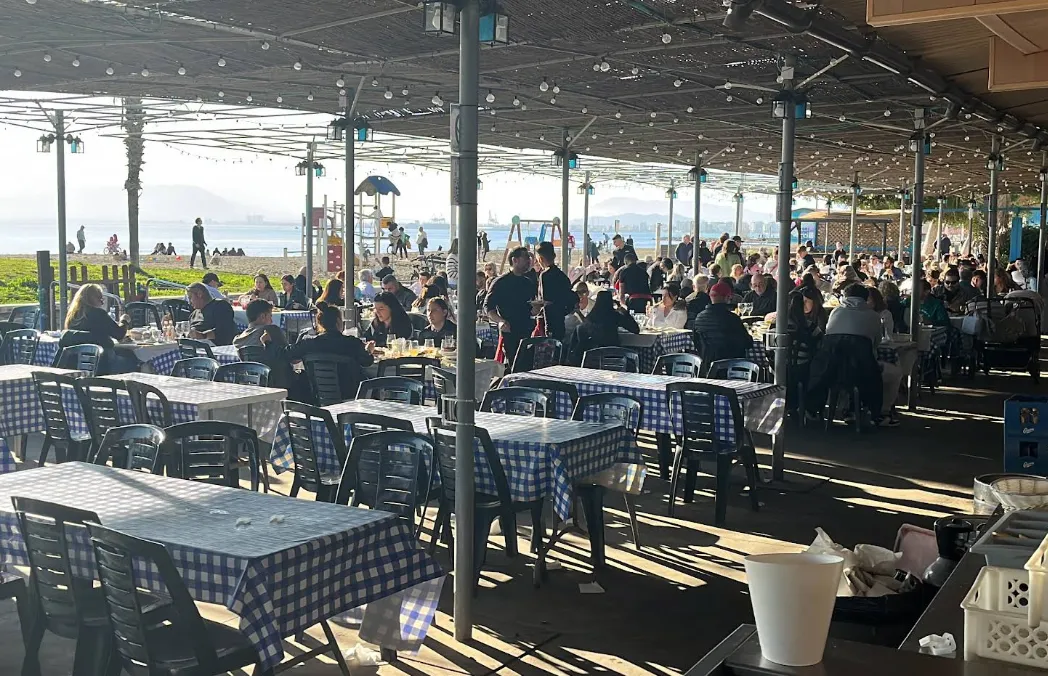
El Tintero, out in El Palo, is the place that always comes up. It’s a large, loud chiringuito where waiters carry plates around the room calling out what they have, and you flag them down for what you want.
Go at lunch rather than dinner and get there before 2pm. It’s worth having the experience, but it’s at its most chaotic in August, so set your expectations accordingly.
Beyond the beach, August evenings in the tapas bars of Malaga’s old town are worth making time for too. The city’s bar scene doesn’t peak until 11pm, and dinner at 10pm in August is normal, not late.
Evenings in Malaga in August
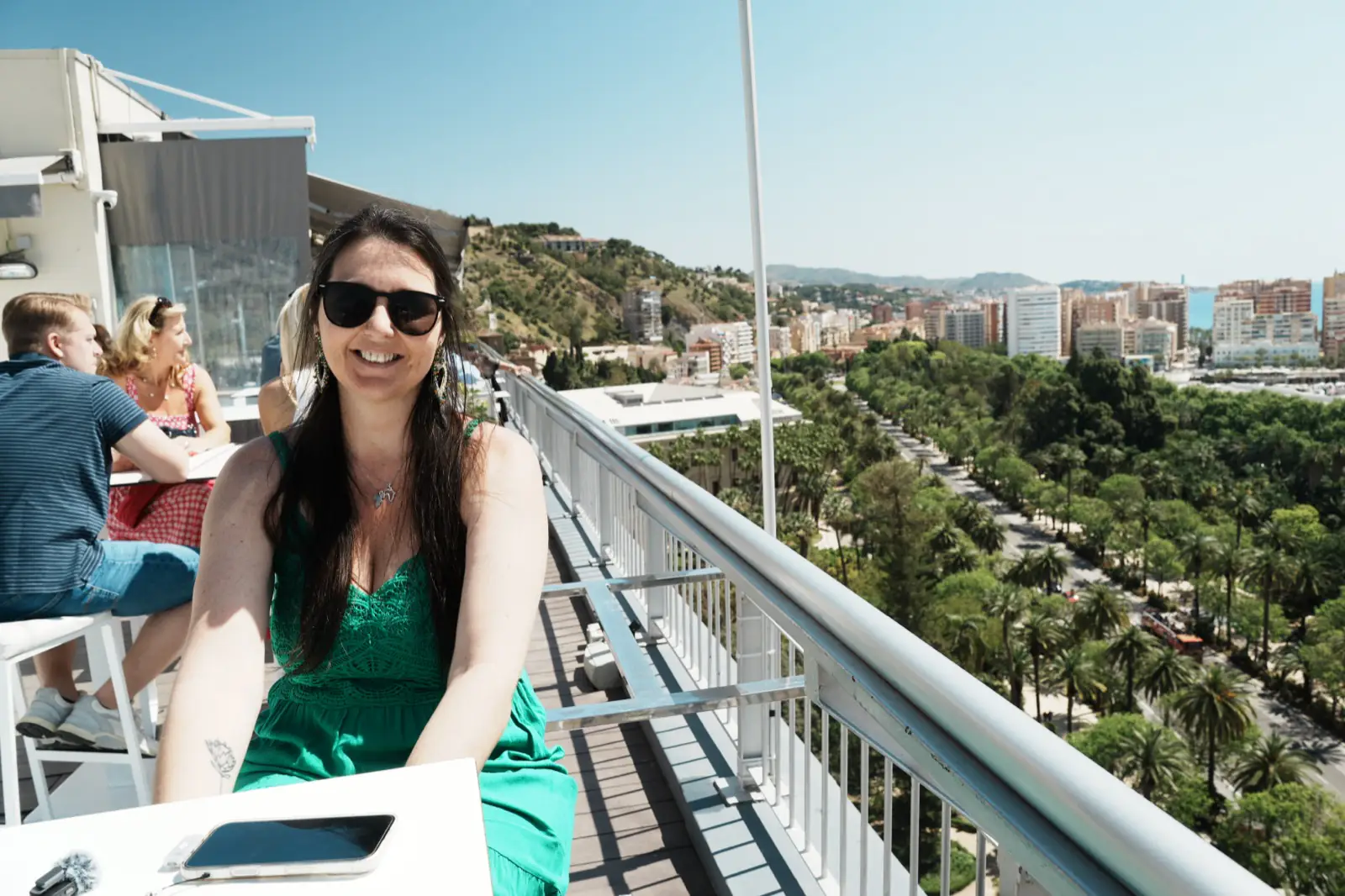
August evenings are when the city justifies everything the daytime put you through. The sun sets between 8:45pm and 9:20pm through the month, and the sky stays light well after that, which means you’re eating dinner in daylight and walking home in warm dark air.
The pattern I’ve settled into: out around 7pm when the heat has finally lifted, up to one of the rooftop bars for a drink while the light drops, then dinner somewhere in the old town from 9:30pm. The evening ends whenever it ends, which in August is usually later than you planned.
Worth walking in the early evening is the Paseo Maritimo, when the temperature has dropped enough to make movement pleasant again. It runs along the seafront from Malagueta beach eastward, and from around 8pm it fills with families and locals doing exactly what the heat wouldn’t let them do during the day.
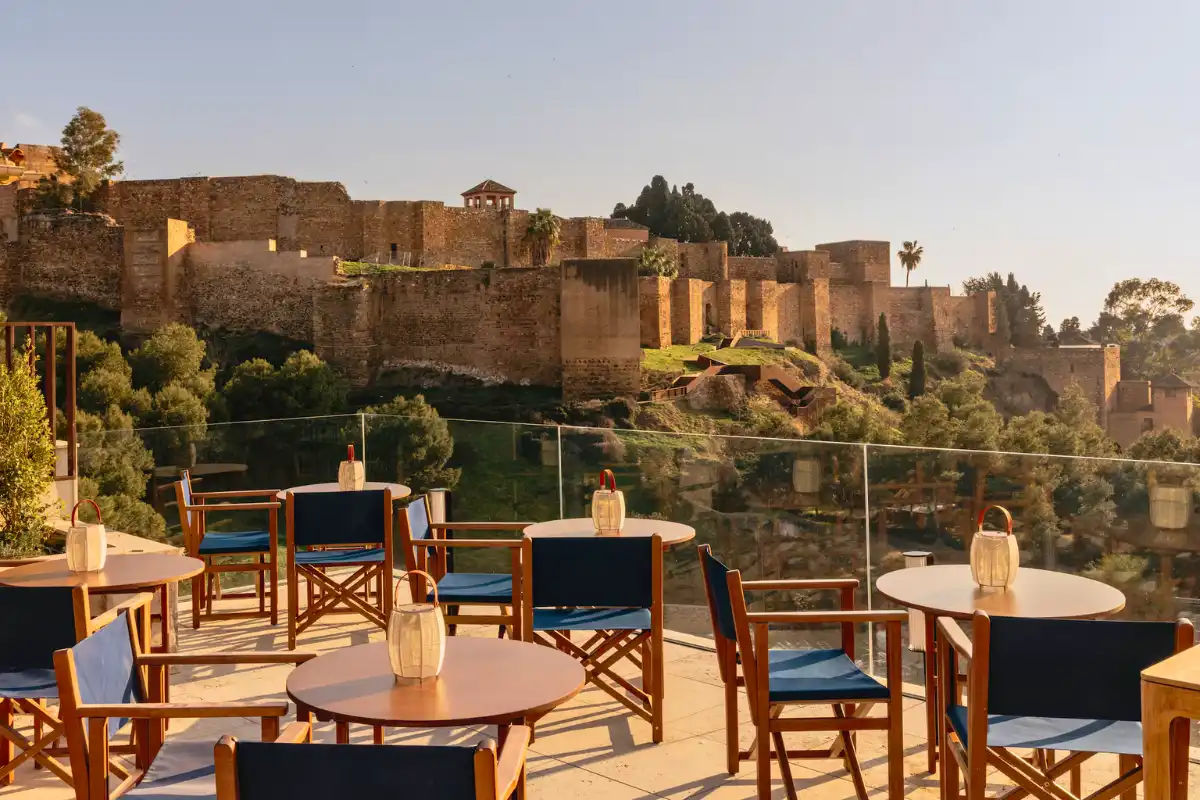
Muelle Uno, the port area just below the old town, is where a lot of the evening activity gravitates. The bars set up outside, the light off the water is good around sunset, and it’s more tourist-facing than the barrios, but on a warm August evening that’s easy to overlook.
The best spot I know for watching the sun go down is Gibralfaro hill, with the full panorama of the city and the bay. My sunset guide for Malaga has more options, but in August that 9pm light from up there is worth the climb.
Day Trips from Malaga in August
The logic for day trips in August changes slightly. The question isn’t just what’s worth visiting, it’s what’s worth visiting when the coast is at 34°C. Altitude and shade matter more than usual, and anything with an indoor component becomes more appealing.
My full day trips from Malaga guide covers the options in detail, but here’s how I’d approach them in August.
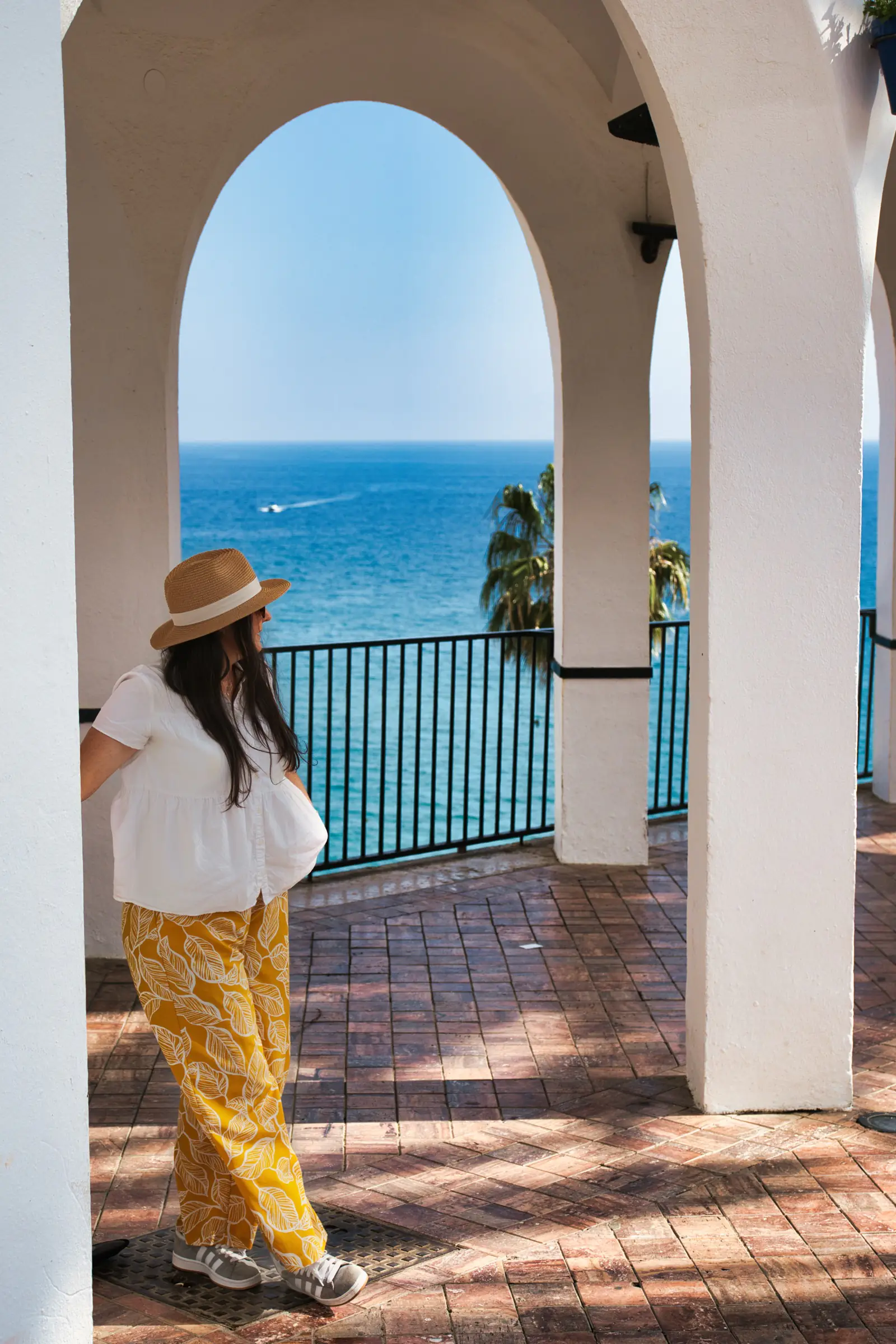
Nerja is the obvious first choice, and not just because it’s close. The Nerja Caves maintain a constant 18°C inside year-round, which after a morning on the coast feels remarkable. Things to do in Nerja go beyond the caves, but in August the combination of the caves in the morning and the old town’s balcony viewpoint in the early evening is hard to beat.
Ronda sits at 750m altitude, which puts it 5-8°C cooler than the coast on most August days. That gap is noticeable. The town is busy in peak season but the Puente Nuevo and the old town are genuinely worth the drive, and by August standards the air up there feels like a different climate.
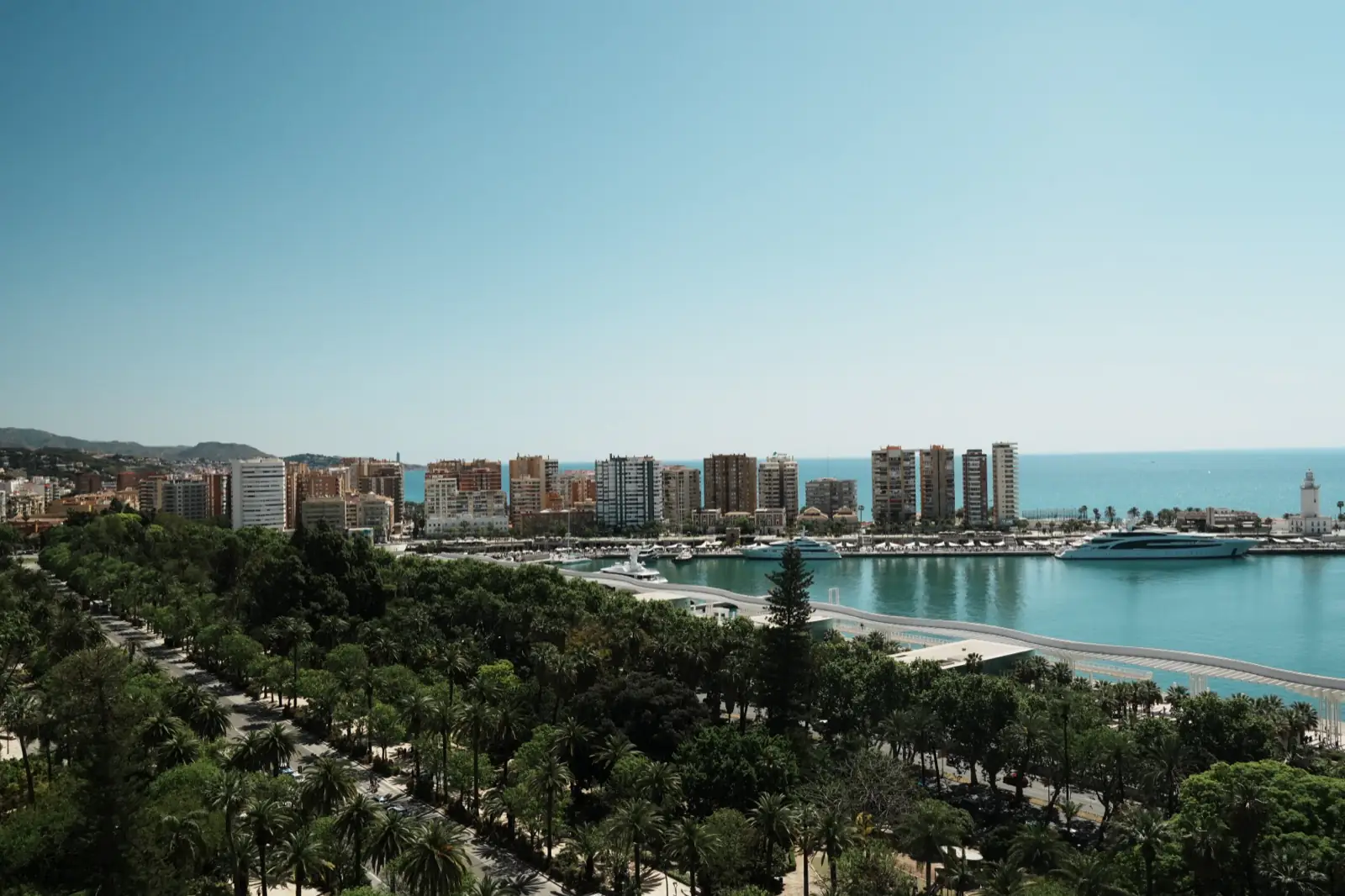
Frigiliana, at around 300m in the hills above Nerja, offers a similar effect at a smaller scale. The white village streets are narrow enough to stay in shade through most of the morning, and it’s one of those places that’s best explored slowly with no fixed plan.
Caminito del Rey is the exception worth flagging. The gorge walk is spectacular, but it’s largely exposed and the heat in August is punishing by midday. If you’re going, book the first morning slot (9am) and go on a weekday. It’s not the right choice for everyone in this month.
Surviving (and Enjoying) the August Heat
The heat in August is not subtle. Temperatures run at 31-35°C through the day, the UV index sits at 9-10 (among the highest anywhere in Europe), and unprotected skin can burn in under 15 minutes around midday.
Sunscreen is not optional. I use factor 50 on my face every single day in August, even for a ten-minute walk to the market.
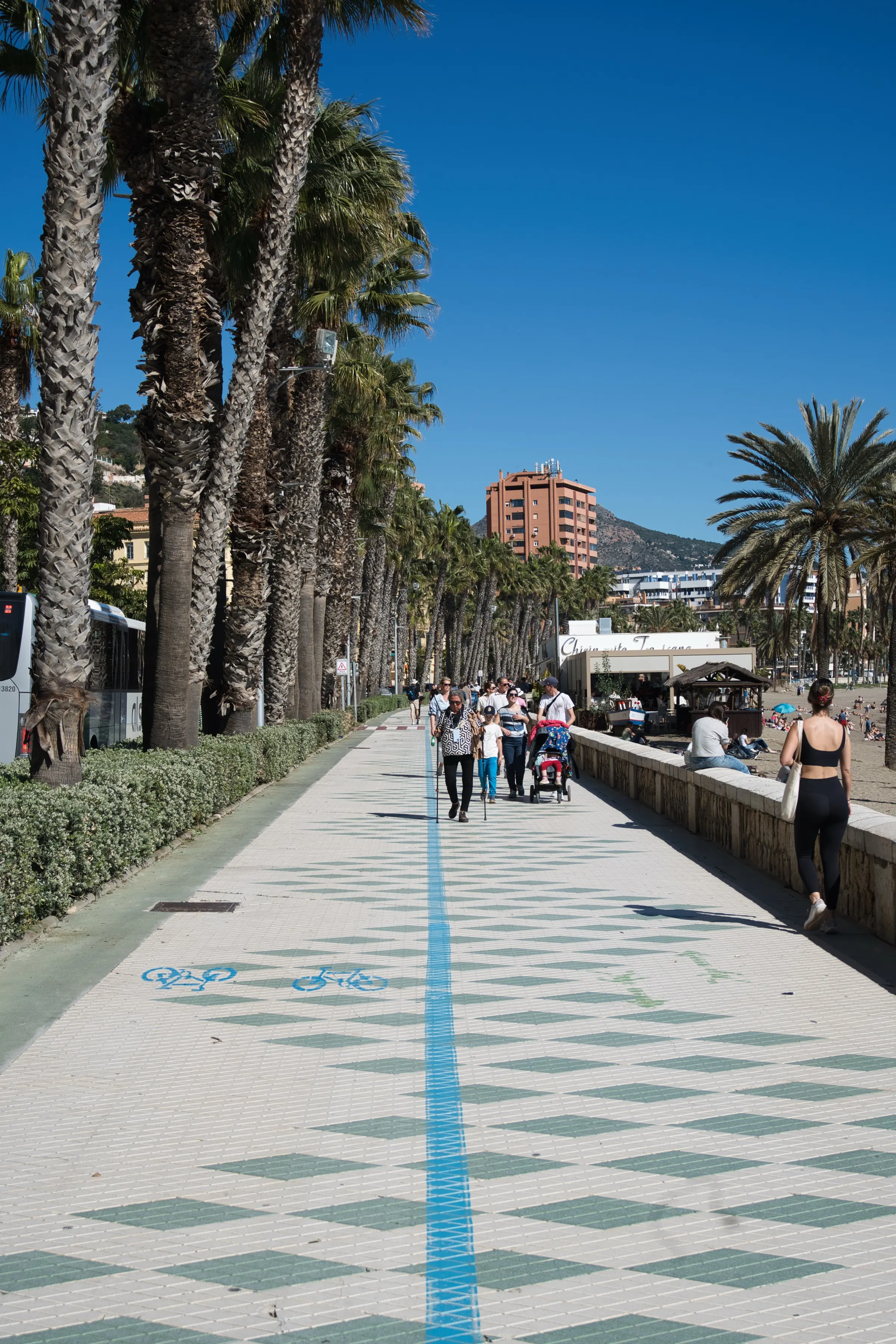
The local rhythm exists for a reason. Out before 10am, back indoors or somewhere cool between noon and 5pm, out again from 7pm when the air finally gives a little.
Carry water everywhere. I keep a bottle in every bag through summer and refill it at the drinking fountains scattered through the old town, which are free and genuinely cold.
The sea is your best ally. A swim at 7pm, when the beaches are beginning to empty and the water is still at 25°C, resets the whole day.
Loose linen, covered shoulders if you’re walking for more than an hour, and shoes you can actually move in. The cobbled streets around the Alcazaba are uneven and hold the heat, and sandals that seemed fine in the morning will punish you by noon.
More Things to Do in Malaga Throughout the Year
- 15 Best Things to Do in Malaga in January
- 13 Things to Do in Malaga in February
- Things to Do in Málaga in March: Events, Hikes and Local Tips
- Things to Do in Malaga in April (Including Semana Santa)
- 15 Things to Do in Malaga in May (by a Local)
- Things to do in Malaga in June: what’s worth your time
- Things to Do in Malaga in July: What’s Actually Worth It
- Things to Do in Malaga in September: Events, Beaches and Day Trips
- 20 Things to Do in Malaga in October
- Things to Do in Malaga in November
- 12 Things to Do in Malaga in December