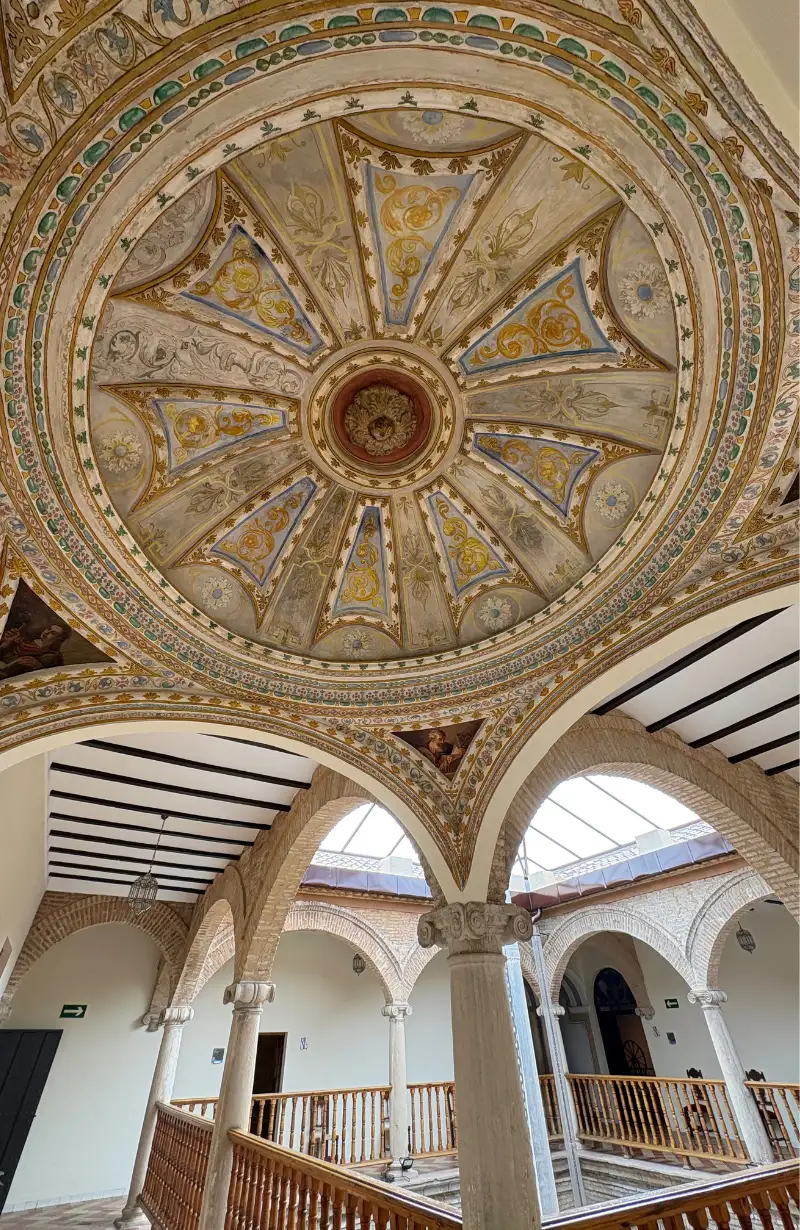
What is the architecture like in Jaén? It’s a layered mix of Moorish, Renaissance, and medieval styles, shaped by centuries of conflict on the frontier between Christian and Muslim Spain.
Most Andalusian cities are defined by one era: Roman Córdoba, Moorish Granada, Baroque Seville. Jaén has all of these layers compressed into a compact centre, none of them restored or prettied up for visitors.
Walking through it, I kept moving between centuries without any signage telling me so.
Read on and I’ll cover everything, or if you want the bigger picture first, see my things to do in Jaén guide.
Renaissance Architecture in Jaén
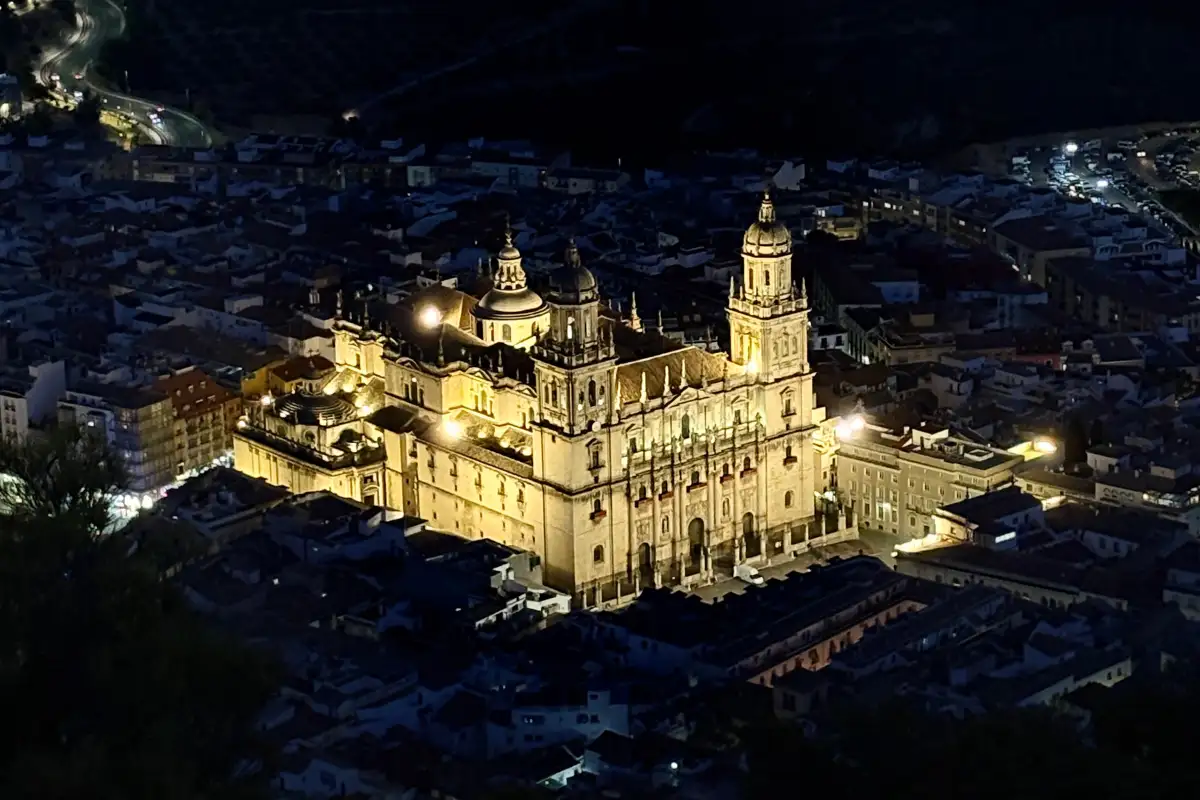
Jaén Cathedral is the centrepiece. Renaissance-era work on it began in 1548, and Andrés de Vandelvira took over as master builder in 1553; after he died in 1575, Eufrasio López de Rojas carried the project forward. It wasn’t finished until the early 1800s, more than two centuries after it began, and its design later influenced cathedral-building in Spain’s American colonies.
Vandelvira was born in Alcaraz, in what’s now Albacete province, and spent most of his career in Jaén province. His work in the nearby towns of Úbeda and Baeza earned them UNESCO World Heritage status. See my things to do in Baeza guide if you want to follow his buildings there, and if you visit both towns after the cathedral, you start recognising his hand everywhere.
Moorish Architecture in Jaén
The Arab baths beneath the Palacio de Villardompardo are the largest preserved in Spain, dating to the 10th or 11th century. Star-shaped skylights cut into vaulted brick ceilings throw spectacular geometric patterns of light across the stone below.
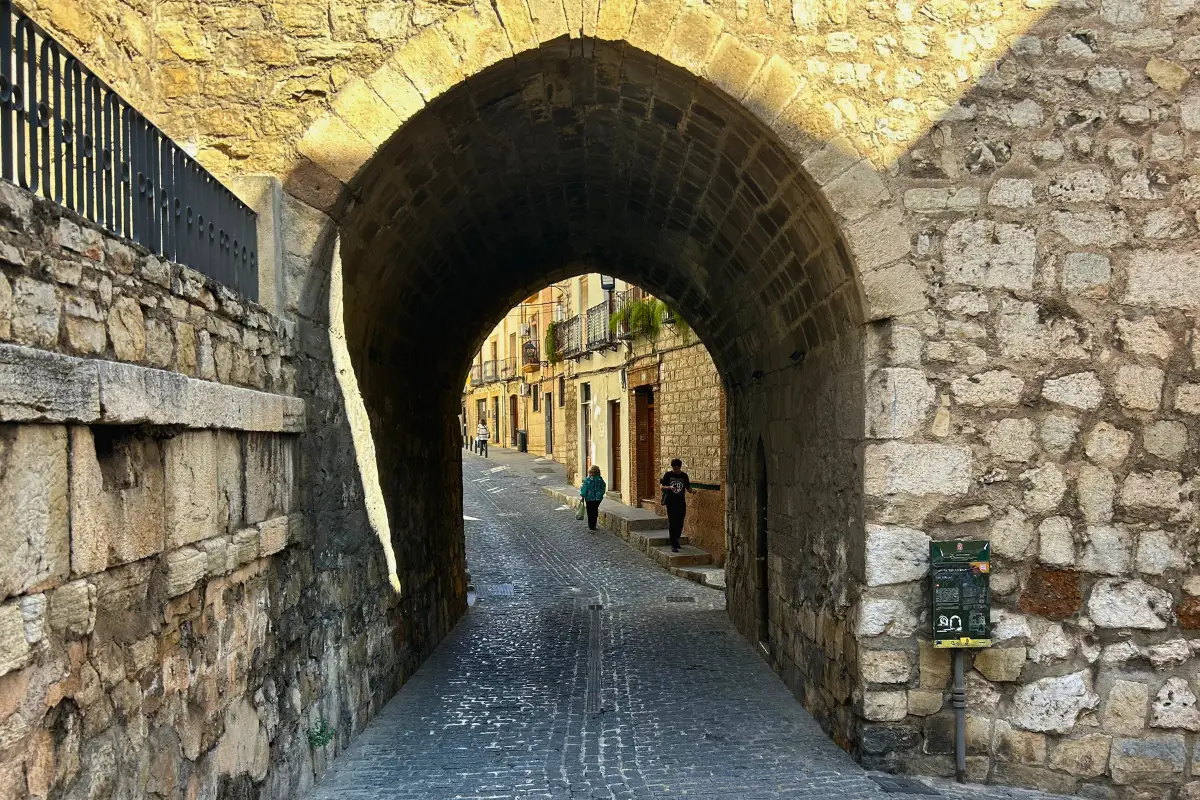
The city’s street layout in the older quarters (narrow, winding, and steep) is a legacy of Moorish urban planning. The La Magdalena neighbourhood was once densely Moorish, filled with mosques and hammams. I walked through it and kept finding fragments of that past in doorways and courtyard walls that no sign bothered to explain.
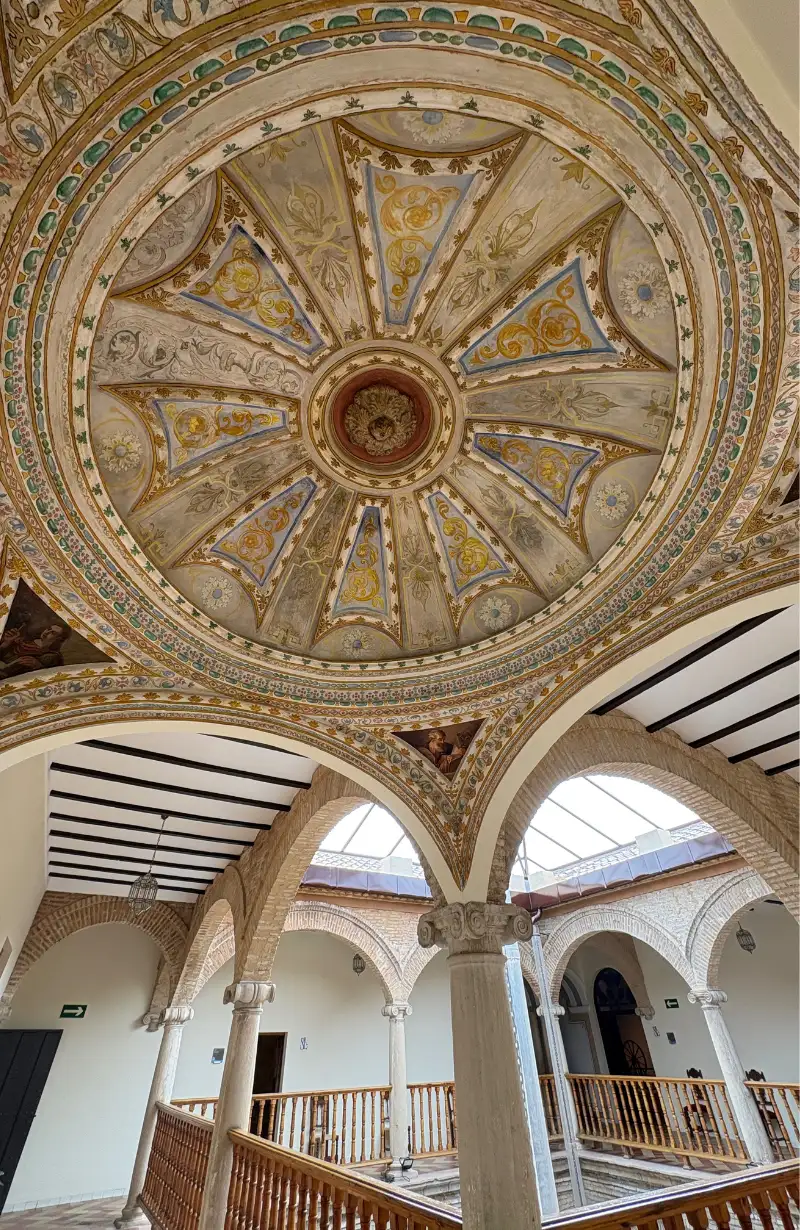
Medieval Castles
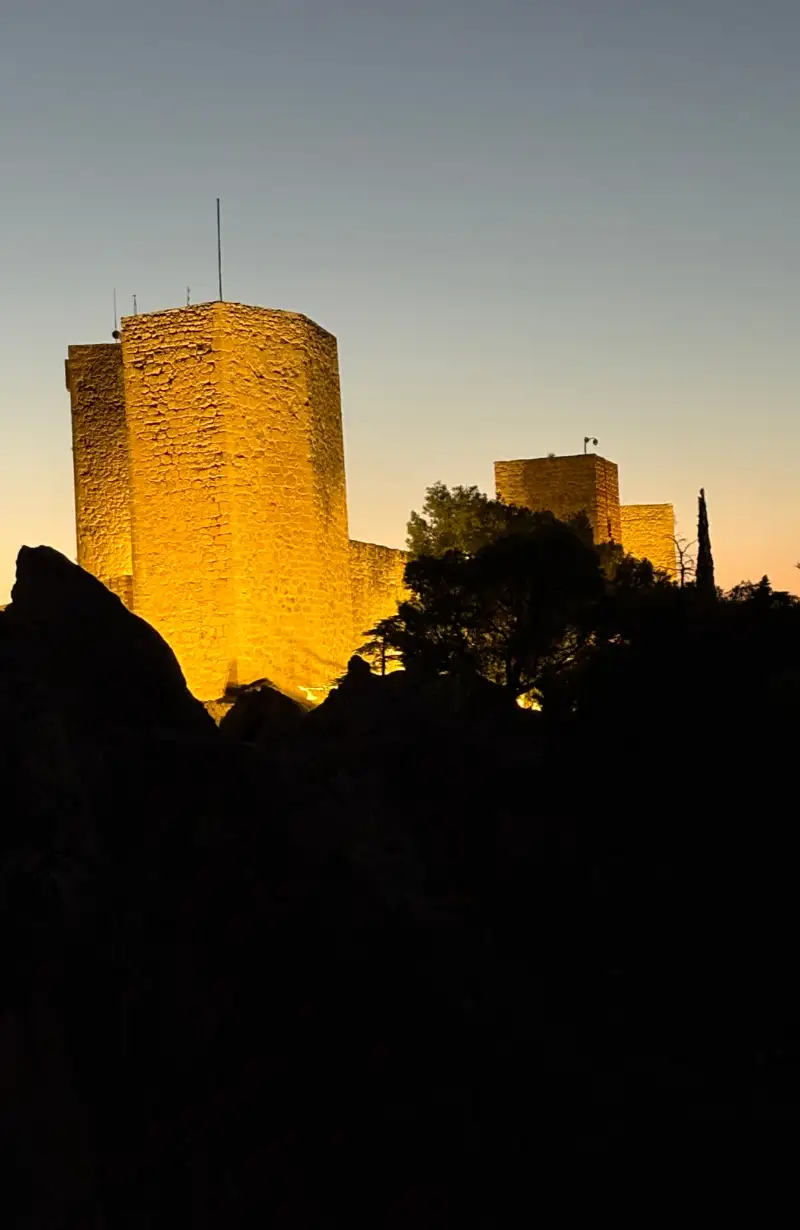
The Castillo de Santa Catalina watches over the city from a limestone ridge. Originally built in the 8th century by Moorish rulers, it was rebuilt by Ferdinand III after 1246 and now houses a Parador hotel. The province has around 90 surviving castles and watchtowers in total, the highest concentration of any province in Europe.
I came up to the castle twice, and I genuinely loved the second visit more. It was peaceful at night: the cathedral lit up below, olive groves fading into the dark, and the whole ridge to myself.
Forty minutes outside the city, Burgalimar Castle in Baños de la Encina dates to 968 AD, an impressive survivor with 14 original towers still largely intact. I had the entire place to myself.
Jewish Quarter
The Santa Cruz neighbourhood was once home to a significant Jewish community, including the scholar Hasdai ibn Shaprut. I walked through without realising where I was. It was only when I noticed the colourful chairs, painted signs on walls, and the decorative pottery and tile patterns that something clicked.
In 2006, workers renovating a building uncovered a 15th-century synagogue, the Sinagoga del Agua, complete with a ritual bath and women’s gallery. It’s one of the best-preserved synagogues found in Spain in decades.
Why Jaén Feels Different
Jaén doesn’t fit the usual Andalusian city blueprint.
There’s no flat old town you can circle on a map, no rooftop bar designed to catch tourists, no souvenir stalls. Everywhere I walked, daily life was just happening around me: people going about their day, completely oblivious that I was finding small, unique treasures in corners they probably consider perfectly ordinary.
One of the most striking examples is the Arab baths, covered above, sitting quietly beneath the Palacio de Villardompardo as if the largest surviving hammam in Spain were nothing unusual.
The rest of the questions people ask about Jaén are answered in facts about Jaén.