On a recent trip to Jaén, we took a detour and spent a full day in Baeza because so many of you recommended it. You said it was a town not to be missed for its beauty and rich history.
And you were right.
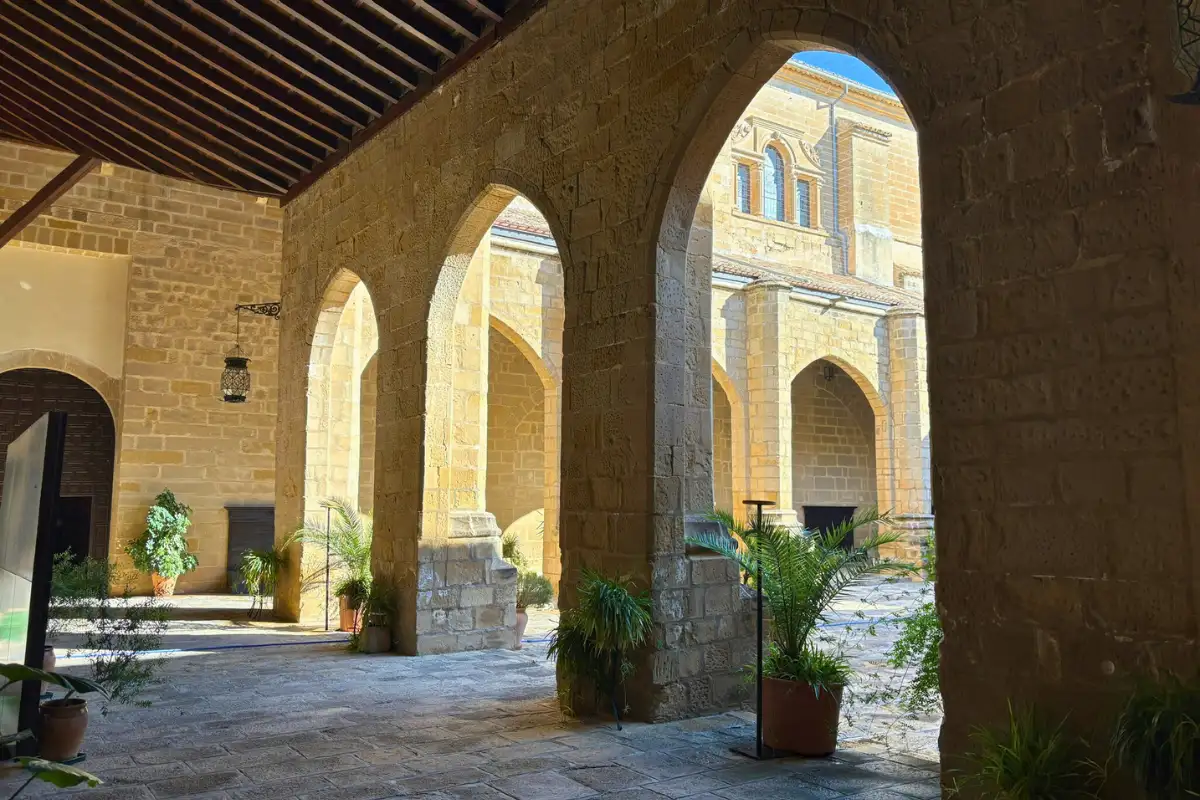
Wandering its cobbled streets feels like stepping into the Middle Ages. The historical centre has a timeless calm, and even the university, with its elegant stone façades, seems too beautiful to be real.
You’ll be tempted to ditch the map and simply wander. On our way to each attraction, we kept choosing side alleys and detours because of the stone archways and beautiful doors.
With Úbeda just 10 minutes away and Jaén down the road, Baeza makes for an easy and rewarding stop that offers far more than its size suggests. I wish we’d stayed longer.
⭐ Don’t miss >> Where to stay in Baeza, my hotel picks
What Is Baeza Famous for?
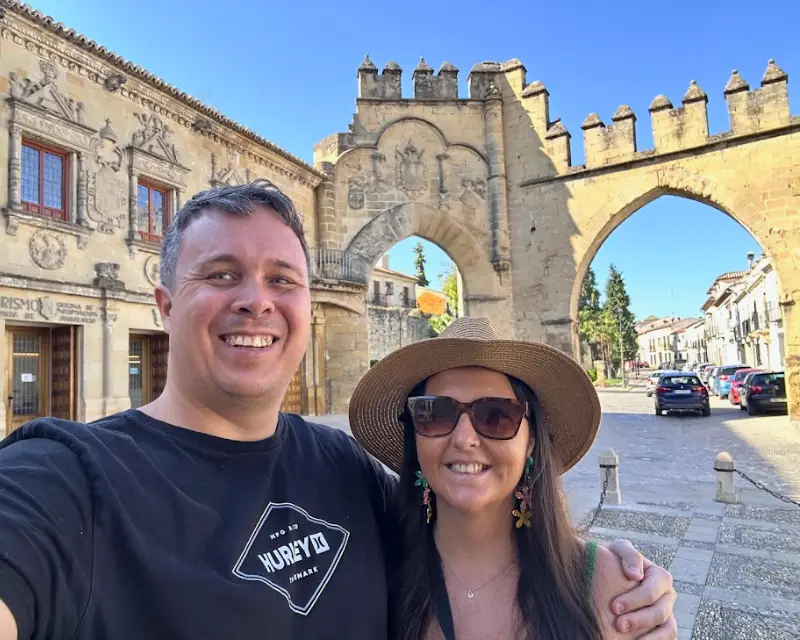
Baeza is best known for its Renaissance architecture, much of which was shaped by the architect Andrés de Vandelvira and his school. Vandelvira’s distinctive style, characterised by classical columns, medallions, and ornate façades, defines the city’s appearance.
The historic centre is filled with palaces, noble houses, and a cathedral that reflect the elegance of 16th-century design.
It’s also famous as the place where Antonio Machado, one of Spain’s great poets, taught French from 1912 to 1919 after the death of his young wife Leonor. Baeza even witnessed a historic meeting between Machado and Federico García Lorca when the younger poet visited as a student.
Beyond the buildings, Baeza is surrounded by fragments of its once great medieval walls and gates, reminders of its strategic importance centuries ago.
The city sits in Jaén province, at the heart of Spain’s olive oil industry. The province produces more olive oil than any country except Spain itself. You’re never far from the sea of olive trees that defines the landscape.
For many, the panoramic views from the Paseo de las Murallas are reason enough to visit. You can look out across the groves to the Sierra de Cazorla beyond.
Here are a few of my favourite places to stay in Baeza:
⭐ Plaza del Pópulo >> Hotel Puerta de la Luna, a 16th-century palace three minutes from the cathedral.
⭐ Historic centre >> Hotel Palacio de los Salcedo, the palace experience at a gentler price.
⭐ UNESCO quarter >> Hotel TRH Ciudad de Baeza, a converted convent with a pool, which matters here in August.
⭐ Easy parking >> Hotel Campos de Baeza, modern and straightforward if you’re driving.
12 Best Things to Do in Baeza
All the attractions in this guide are pinned below. Save it to your phone before you go.
1. Climb the Cathedral Bell Tower
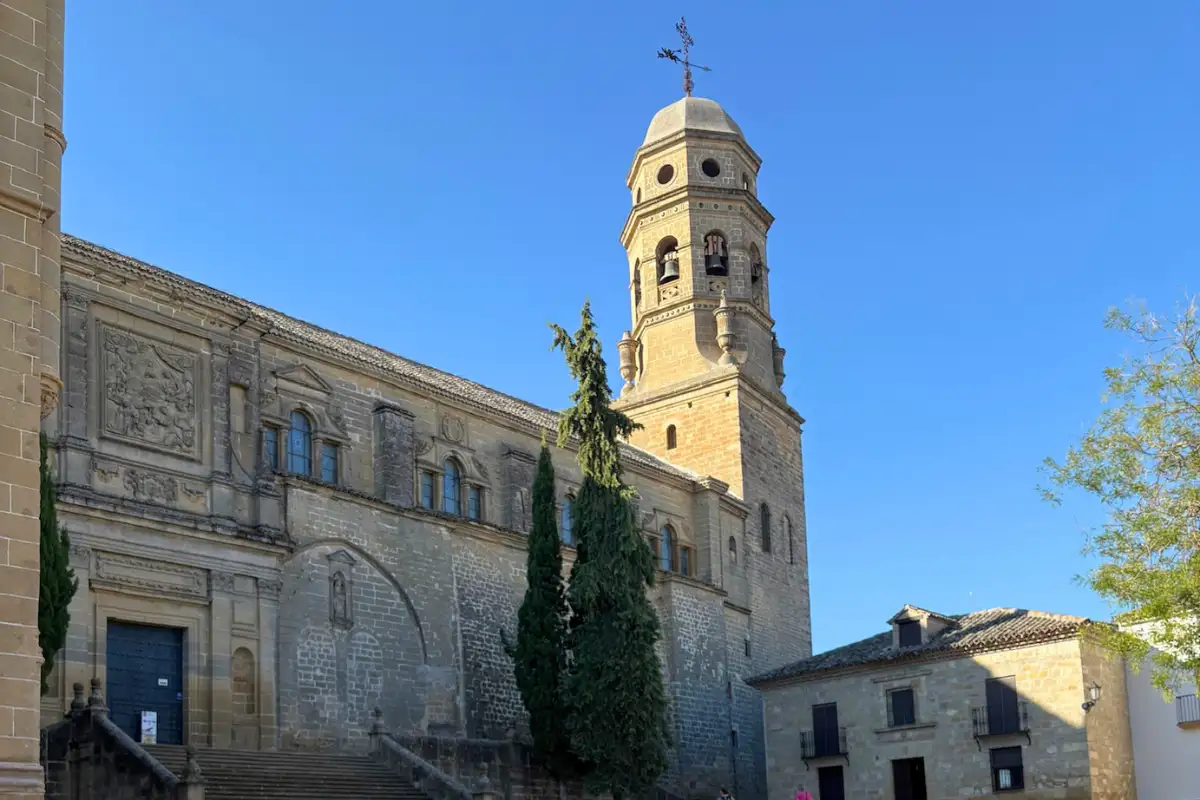
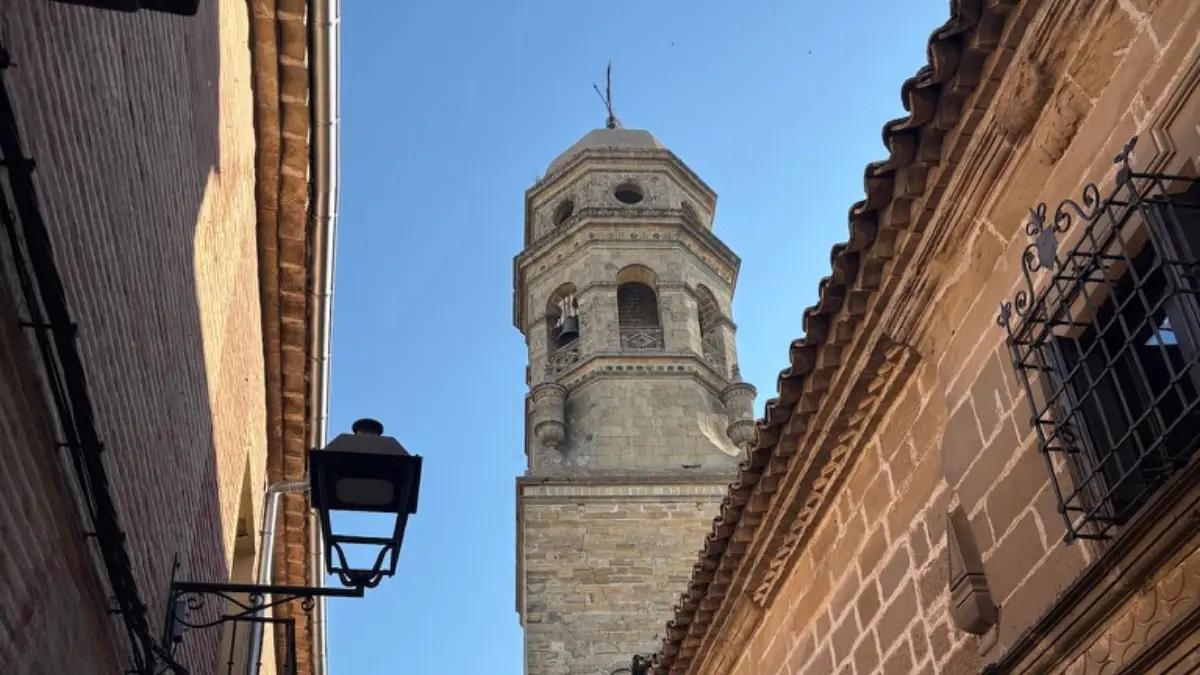
The Catedral de la Natividad de Nuestra Señora is undoubtedly Baeza’s most famous landmark, and for good reason.
The cathedral stands on layers of history. Roman ruins, a Visigothic church, and an Islamic mosque all preceded the current Renaissance structure. The 50-meter bell tower may have originally been a minaret.
We immediately went for the stairs, which felt like 100 of them, all the way to the top of the bell tower. From up there you get 360-degree views of the entire city and the olive fields stretching to the Sierra de Cazorla. I recommend attempting this early in the morning to avoid the heat.
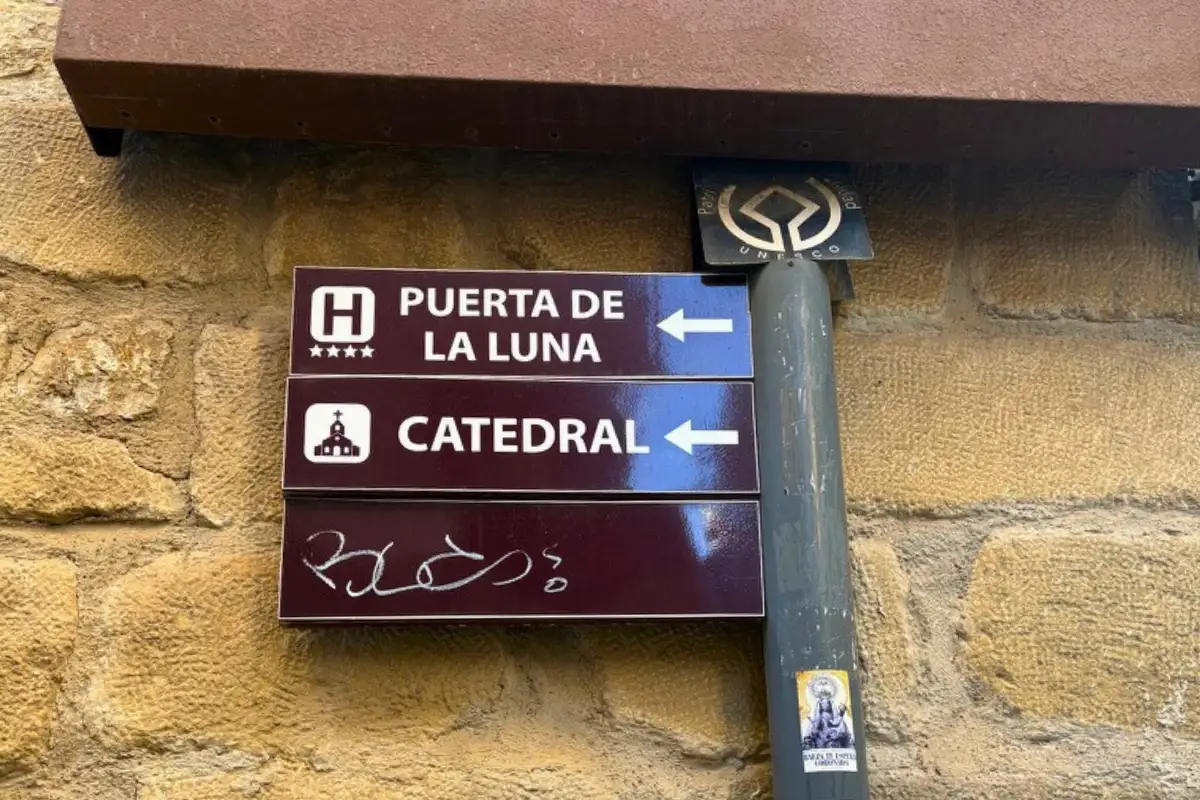
Inside, look for the Puerta de la Luna (Moon Door), a stunning Gothic-Mudéjar doorway that’s one of the cathedral’s finest details. The bronze crystal chandelier in the transept catches the light beautifully, and the Gothic cloister with its Mudéjar chapels is worth lingering in. There’s also a 360-degree VR experience at the entrance that shows Baeza as it looked centuries ago.
Tickets include the small museum. If you’re planning on visiting Jaén, you can buy a combined ticket and save 6 euros.
Check current hours at the Baeza tourism office. Expect to pay around €6-8 including tower access.
🎟️ A guided walk of the cathedral and the old town saves you queuing at the ticket desk, and the guide will get you into the chapels that are often shut when you turn up alone. I book Baeza tours through GetYourGuide.
2. Plaza del Pópulo and the Lions Fountain
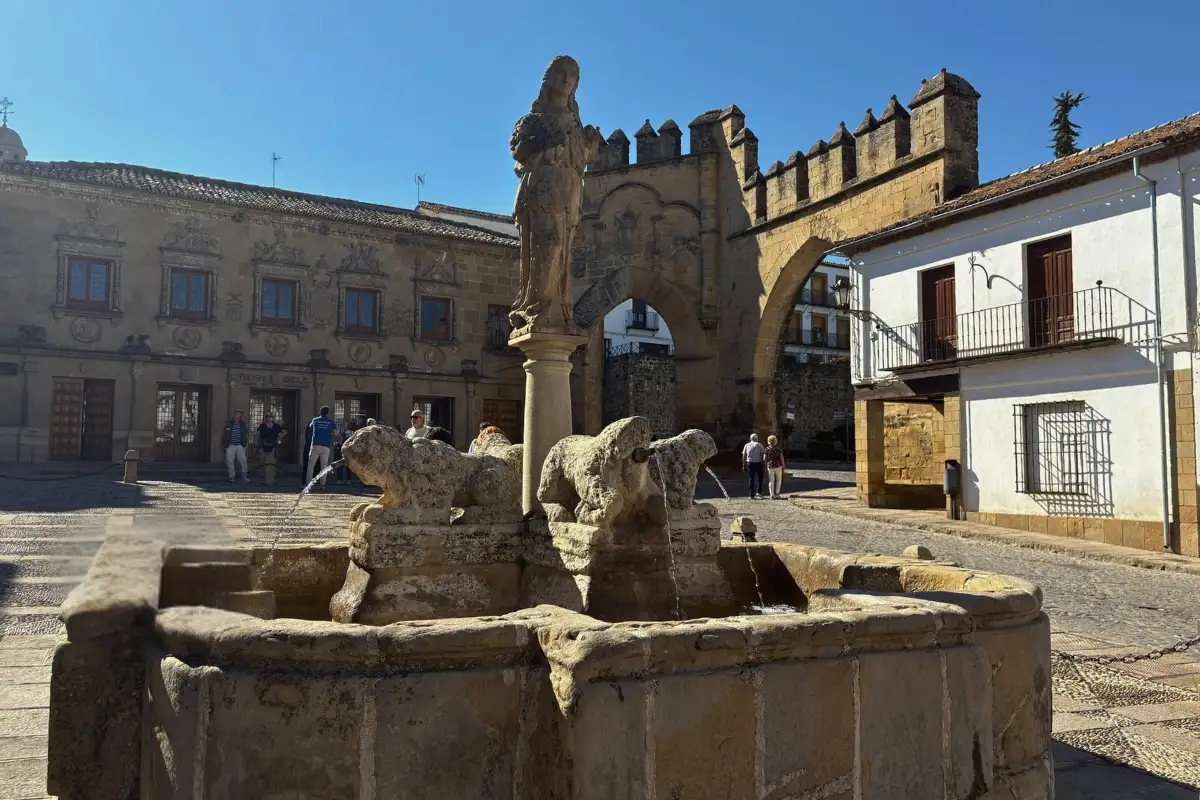
The square goes by two names, but everybody recognises the lions.
The Fuente de los Leones has a fascinating origin. The sculptures were brought from the ruins of Cástulo, an ancient Ibero-Roman city nearby. The central figure is said to represent Imilce, wife of Hannibal Barca.
The fountain has seen better days, with most of the lions now missing their faces, but it’s still beautiful and historically significant.
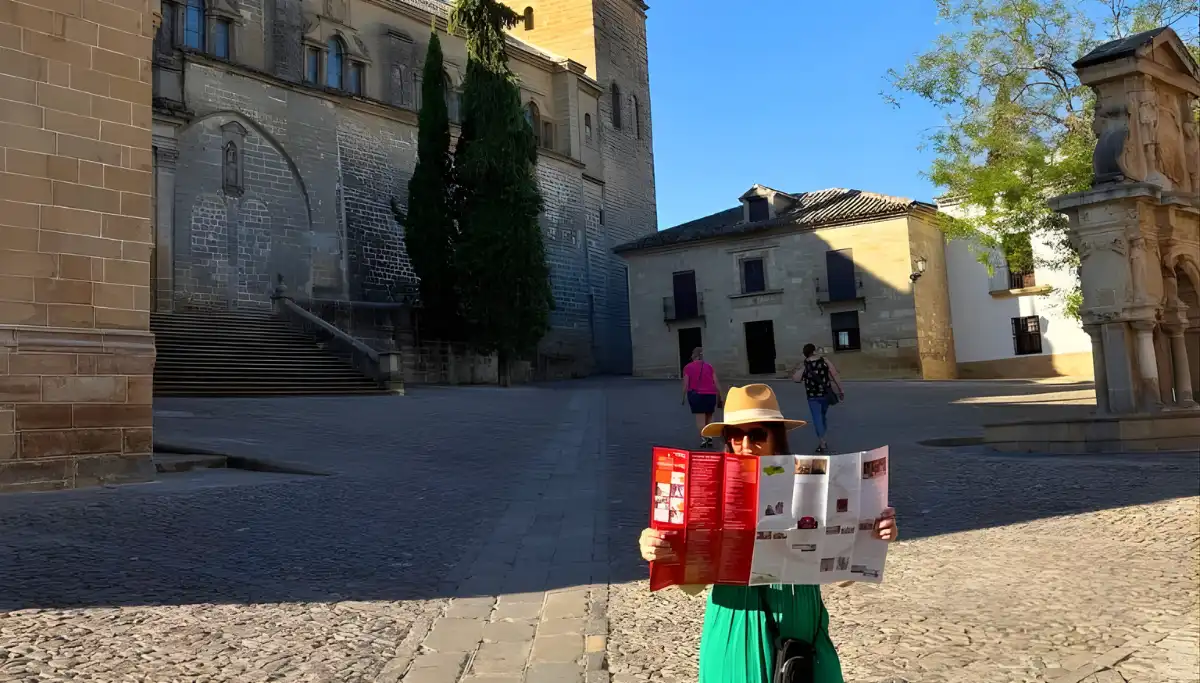
Around the square you’ll find the Antigua Carnicería (old Butchers’ building) with its elegant arcade, the Puerta de Jaén and Arco de Villalar commemorating the 1521 defeat of the Comuneros, and the tourist office where you can grab a paper map.
You’re also right at the centre plaza where all of the restaurants are. Remember this, because there aren’t many more in the area. For our restaurant picks, see my guide to eating in Baeza.
3. Paseo de las Murallas and Antonio Machado Viewpoint
Heidi and Jethro at the line of the vanished wall in Baeza
If you took the VR tour at the cathedral and saw the wall as it once was, here you can walk the line of the vanished walls and take in the views from atop them.
To your left, the city. To your right, an endless checkerboard of olive trees stretching to the Guadalquivir valley.
A bronze statue of Antonio Machado marks the route. He famously walked here and wrote about these views. This would be a fantastic sunset spot if you time it right.
🚗 Baeza rewards a car. Úbeda, the olive museum out at Hacienda La Laguna, and the Sierra de Cazorla are all short drives, and none of them are easy without one. I book through Discover Cars, which compares the small Jaén agencies against the big names.
4. Paseo de la Constitución
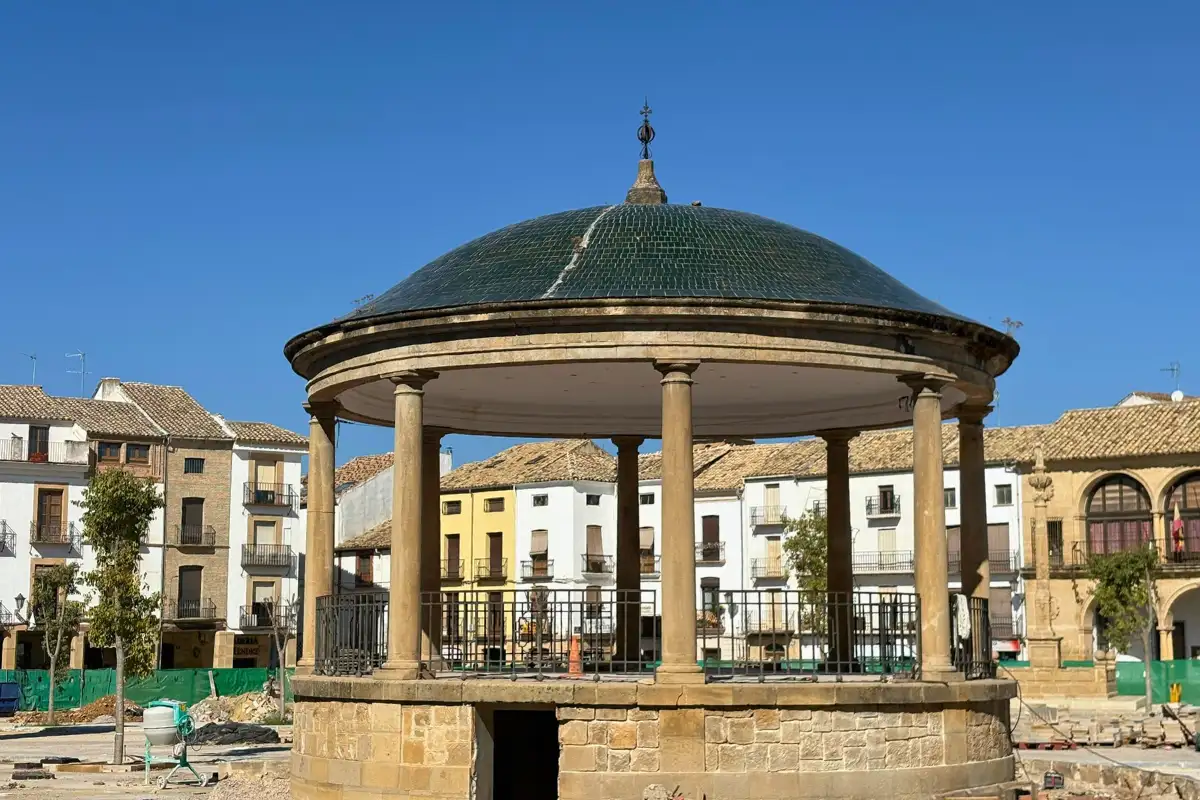
Sadly, the plaza was undergoing construction when we visited.
Paseo de la Constitución is Baeza’s social spine, a generous, arcaded promenade lined with bars, bakeries, and everyday life. This was once the market space, and it’s what pulls the whole city together.
Look up at the Torre de los Aliatares (Clock Tower), a 25-meter medieval fortification dating from Al-Andalus that still presides over the square.
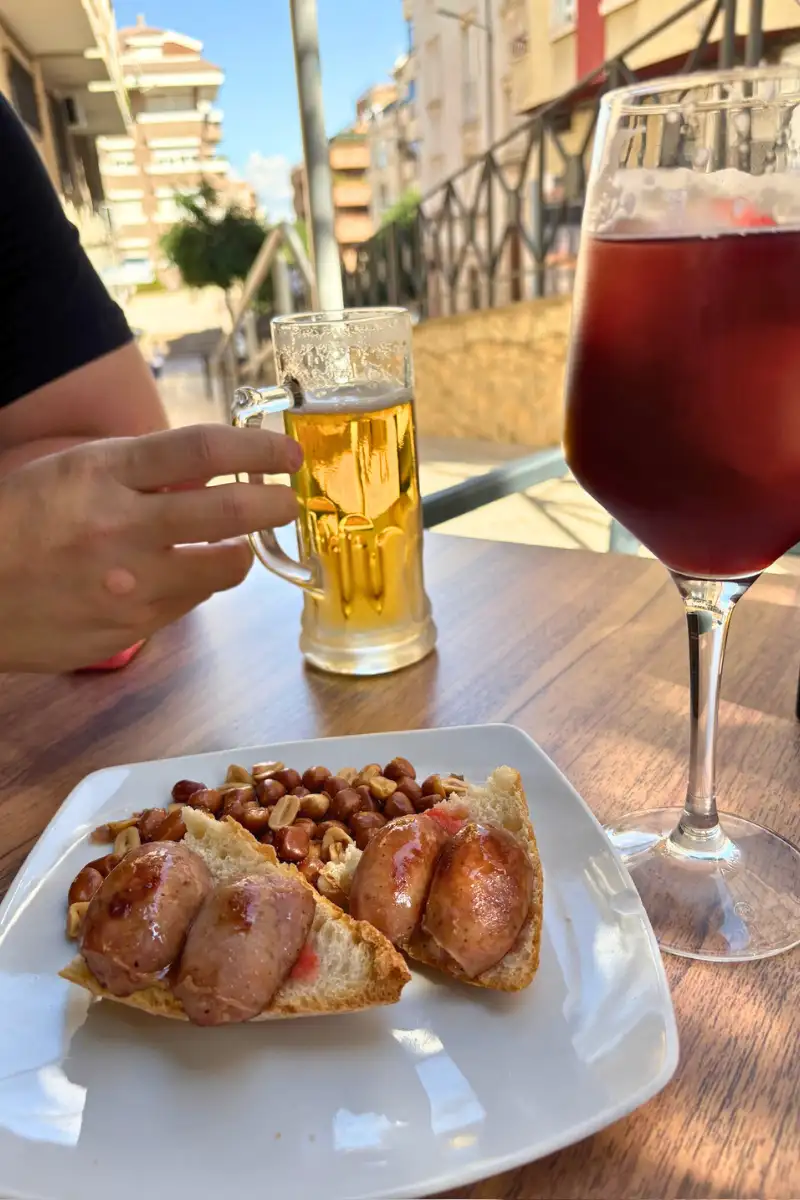
This was where we decided to have our brunch. We asked the owner to bring us something local, and we ended up eating Pork Espetada (grilled pork skewer) with chips.
If you want to try something local, an ochío roll should be on your list. It’s a traditional bread tinted and scented with local olive oil and a whisper of anise. You’ll find it in bakeries around the square.
5. Palacio de Jabalquinto
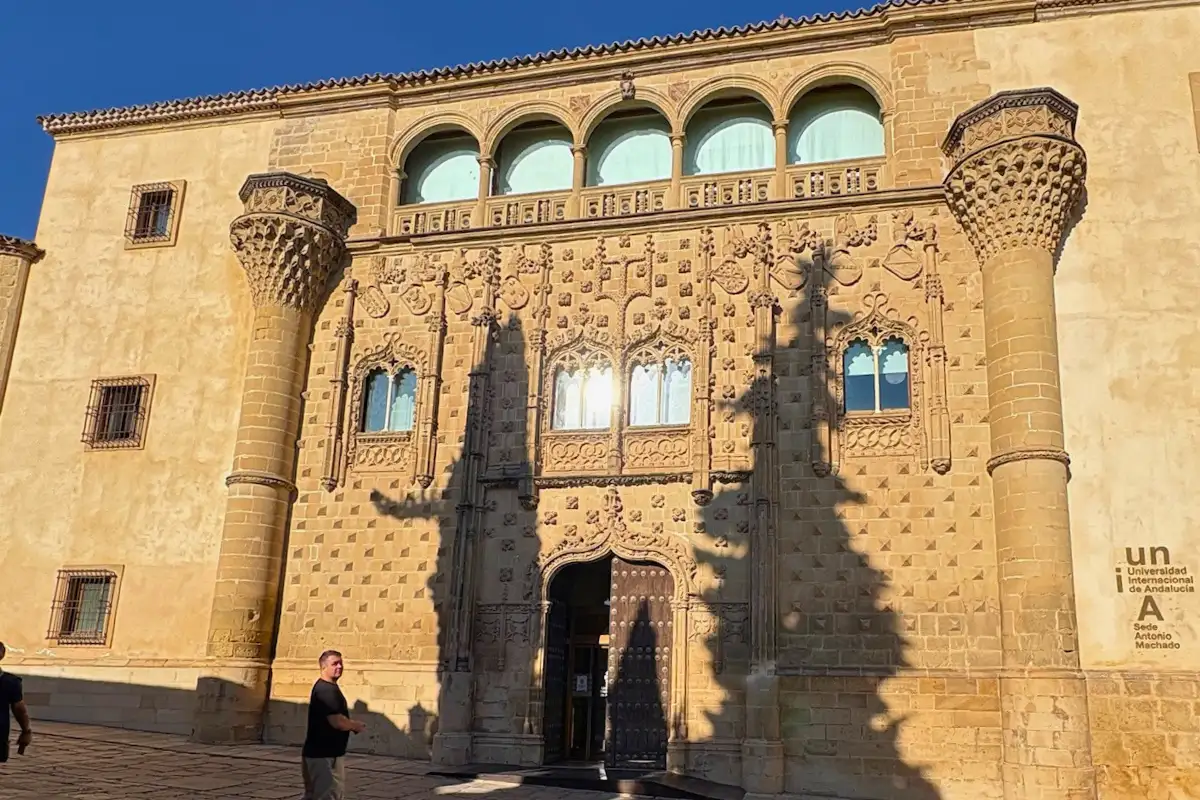
The façade alone is worth the detour, and many consider it one of the most beautiful in all of Spain. It’s all diamond points and pinched ornament in the Isabelline Gothic style (late 15th century), bordering on lacework carved in stone.
Inside is a Renaissance courtyard with clean lines and a graceful staircase, a perfect contrast to the ornate exterior.
The building now houses the headquarters of the Universidad Internacional de Andalucía, so you’ll often see students drifting through the historic halls. The courtyard is usually accessible during opening hours.
🛡️ A reminder to sort travel insurance before you fly. I use SafetyWing, an affordable subscription policy you can buy even after you’ve already left home.
6. Iglesia de Santa Cruz
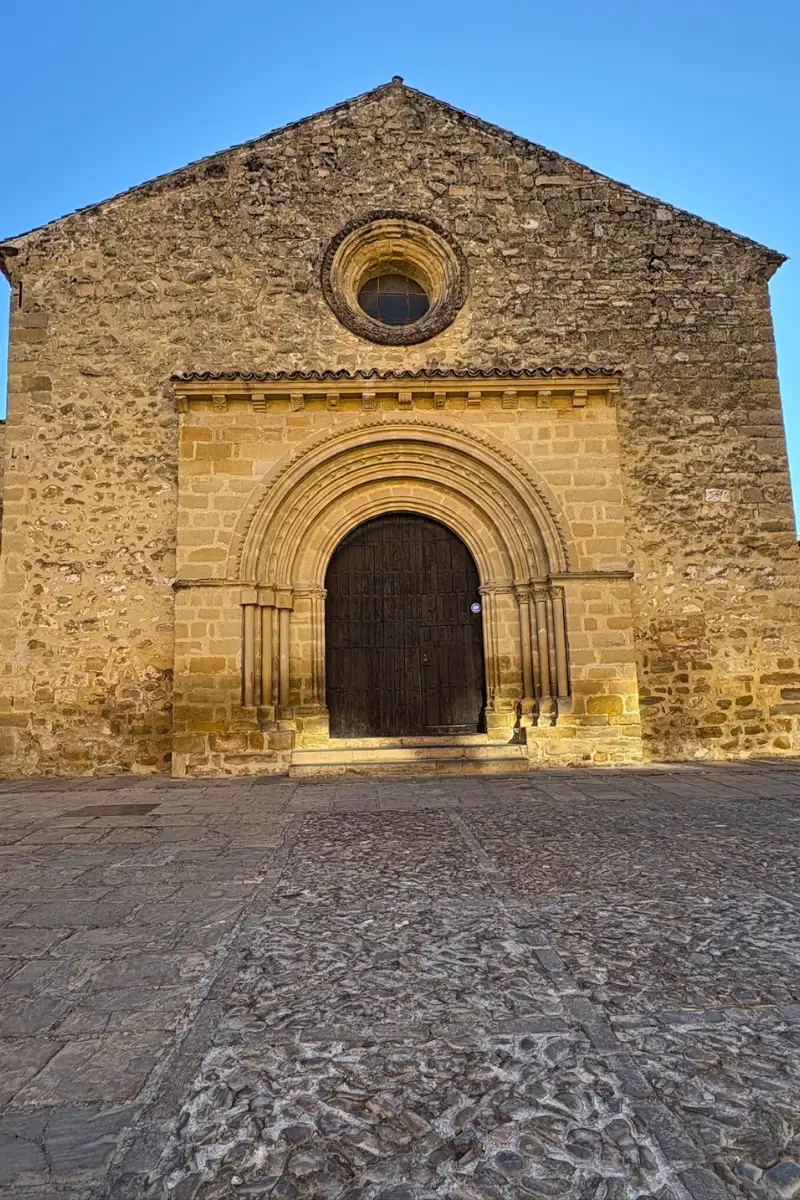
Another landmark we weren’t able to enter because we lingered too long elsewhere. This church is one of the very few Romanesque churches in Andalucía, as most were rebuilt in later styles.
Modest, sturdy, and deeply photogenic.
Inside, you’ll find a semicircular apse and faint traces of early 16th-century frescoes. It sits directly opposite the Palacio de Jabalquinto, creating a striking contrast between Romanesque simplicity and Gothic exuberance.
The south door is still the original door, hundreds of years old and remarkably preserved.
📖 Read next >> The best restaurants in Baeza, my honest picks
7. Seminario de San Felipe Neri and the Vítores
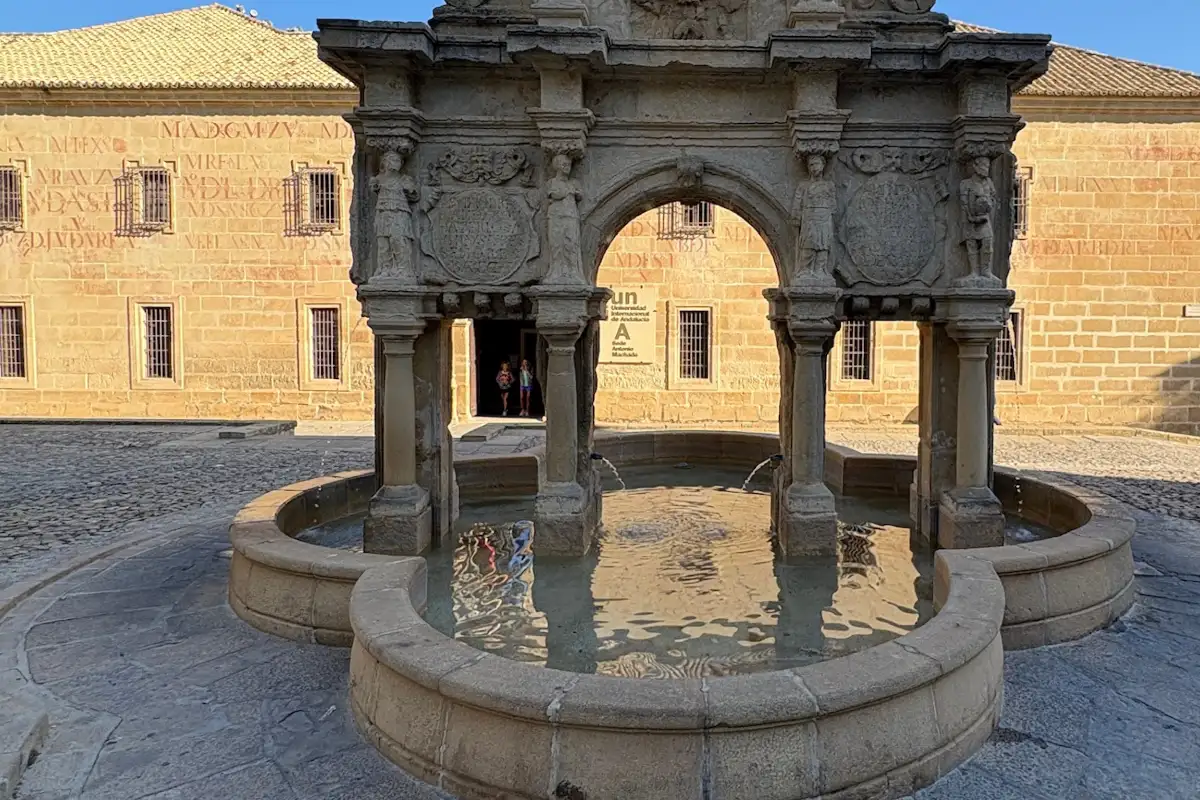
Red letter inscriptions, vítores, on the seminary façade
Built in 1660, this former seminary now forms part of the International University of Andalusia. I still can’t believe students get to study in these historic halls.
Its façade is marked with vítores, red-letter inscriptions painted by university students to commemorate graduations, academic honours, or sometimes cheeky social critiques and inter-city rivalries with Úbeda.
They might look like graffiti at first glance, but they’re part of a long-standing academic tradition. Many have survived for centuries. Look closely and you’ll see different styles and dates.
If the building is open, it’s worth a peek inside.
⭐ Worth booking ahead >> Olive oil mill visits and tastings around Baeza. The small family mills take only a handful of people at a time, and they fill up during the November harvest.
8. Medieval Gates: Puerta de Úbeda and Torre Albarrana
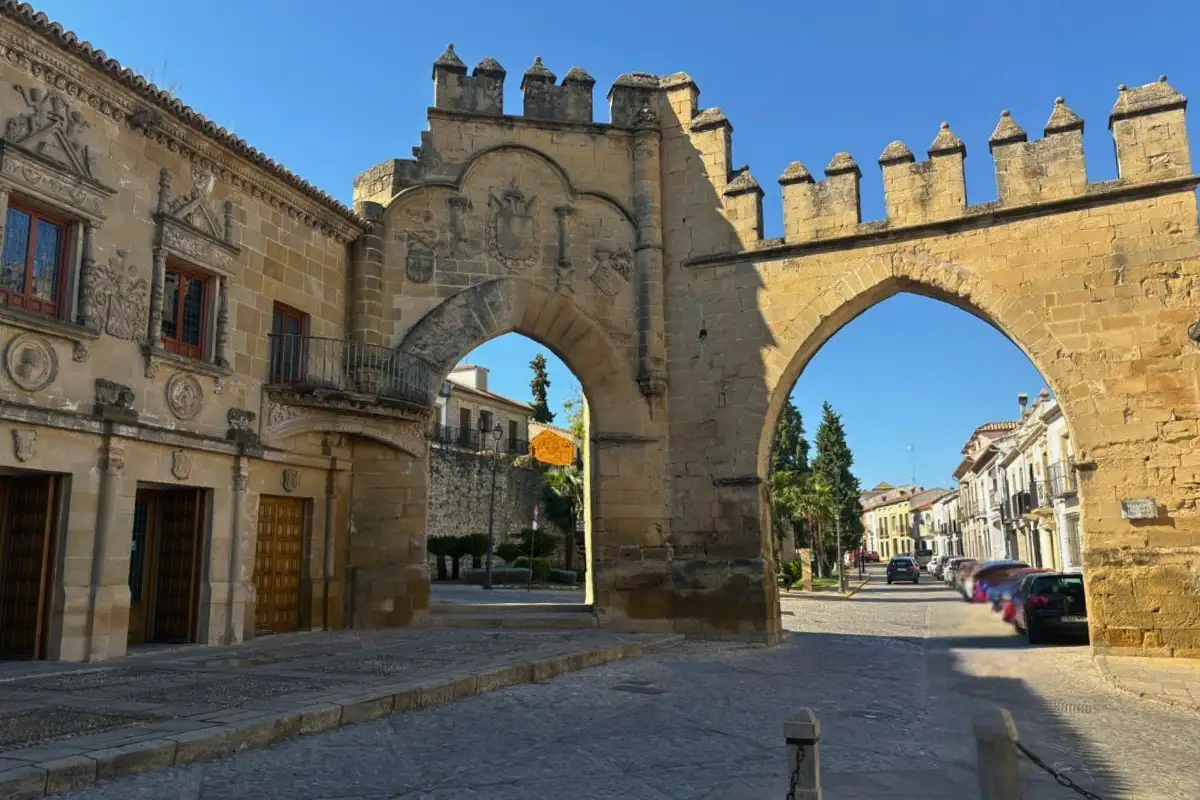
The city gates are some of the oldest parts of Baeza, remnants of its 12th-century Almohad fortifications.
The Puerta de Úbeda features the impressive Torre Albarrana, which now houses the Medieval Interpretation Centre. This museum provides excellent context for understanding how formidable Baeza’s defenses once were, something you can visualise more clearly after the cathedral’s VR tour.
The Puerta de Jaén and Arco de Villalar commemorate Charles V’s victory over the Comuneros revolt in 1521.
If you love ruins, swing by the remains of the Convento de San Francisco (designed by Vandelvira) and the old market site.
9. Antonio Machado Classroom and Literary Trail
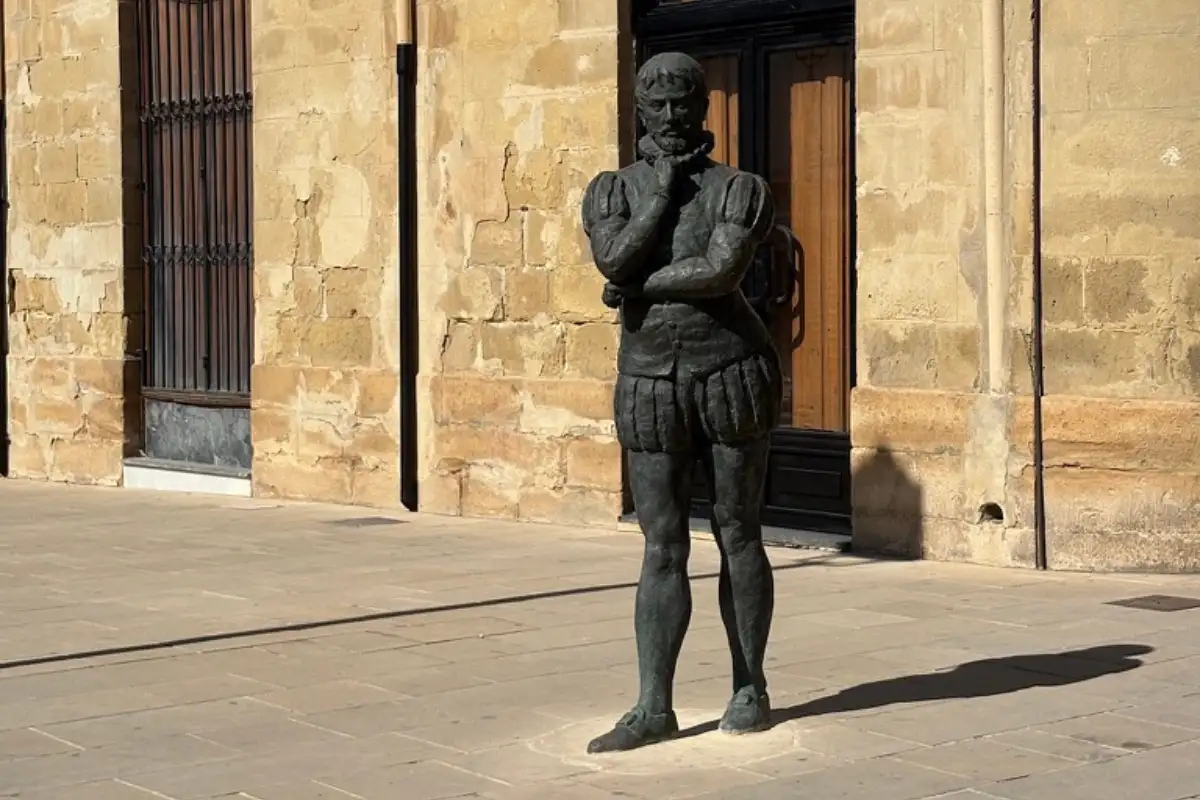
The poet came to teach French in 1912, seeking solace after his young wife Leonor died of tuberculosis. He stayed until 1919, and during this time wrote “Campos de Castilla” and his “Complete Poems.”
Baeza has honoured him by preserving his teaching space in the Antigua Universidad, one of Spain’s main universities from 1542 to 1825. You can visit the preserved classroom to see wooden desks, inky maps, and the original chalkboard.
Following the Machado trail through Baeza is one of the nicest ways to see the city. Start at his preserved classroom in the old university, then walk to the bronze statue of Machado on a bench along Paseo de las Murallas. Plaques marking his residence on Calle San Pablo are easy to spot, and the café where he wrote (now a cultural space) is worth a stop.
Baeza also witnessed a historic meeting between Machado and a young Federico García Lorca, who visited as a student. Two of Spain’s greatest poets, connected by this small town.
READY TO BOOK YOUR TRIP TO BAEZA?
🚗 Rent a car: I use Discover Cars
🎟️ Best guided tours: I use GetYourGuide
🏨 Accommodation: Find hotels in Baeza
🚆 Trains and buses: I book through Omio
🛡️ Travel insurance: I use SafetyWing
10. Plaza de Santa María
The most monumental of Baeza’s three main squares, Plaza de Santa María is dominated by the cathedral and the beautiful Fuente de Santa María (1564), considered one of the most beautiful Renaissance fountains in Andalucía.
The square also features the Seminario de San Felipe Neri (mentioned above) and several historic buildings with royal coats of arms. It’s the perfect place to sit and absorb the Renaissance atmosphere.
11. Olive Oil Tasting
You can’t visit Baeza without tasting the local extra virgin olive oil. Jaén province produces more olive oil than any country except Spain itself, and the oils here are exceptional.
You don’t need a full mill tour if time is tight. Many shops near Paseo de la Constitución offer tastings where you’ll learn the difference between fruity, bitter, and peppery profiles. Ask for a flight that includes an early-harvest picual, the dominant local variety.
Take tins rather than glass bottles for the journey home. If you’re self-driving, call ahead to small family mills for private tastings. On labels, look for Denominación de Origen Sierra de Cazorla as a mark of quality.
12. Museo de la Cultura del Olivo
For a deeper dive into olive culture, visit the Museo de la Cultura del Olivo at the historic Hacienda La Laguna, about 5km outside town.
The museum has a garden with over 30 olive tree varieties from around the world, original 19th-century production equipment, a working mill demonstration, and a wine cellar with tastings.
It’s a worthwhile detour if you have your own transport and want to understand why this region calls itself the “world capital of olive oil.”
Best Restaurants in Baeza
Extra virgin olive oil is the star of Baeza’s cuisine. Look for local dishes like lomo de orza (preserved pork), bacalao a la baezana (local-style cod), and hearty stews like potaje and andrajos.
Taberna Xavi is great for tapas and local wines. Café Enoteca Aliatares is a solid wine bar with quality nibbles. La Clave Music Bar has a relaxed atmosphere with good food, and El Trillo Restaurante does traditional Andalusian cuisine well.
Don’t miss the sweet side either. Try ochío bread from local bakeries, or even olive oil ice cream if you can find it.
For more detailed recommendations, see our full guide to eating in Baeza.
If you’re hopping to Úbeda for dinner, plan a late reservation. Kitchens here run on Spanish time (lunch 2-4pm, dinner from 9pm).
Where to Stay in Baeza
Hotel Puerta de la Luna is tucked near the cathedral in a historic palace, with classic rooms and a courtyard to unwind.
TRH Ciudad de Baeza is a former convent turned comfortable mid-range stay. It’s walkable to everything.
Budget guesthouses cluster around Plaza de España or San Pablo. Family-run, clean, and close to cafés.
Stay central in the historic centre if you can. If you’re visiting both Baeza and Úbeda, consider staying overnight in one town for sunset views and an evening stroll, then exploring the other the next morning before the heat builds. The 8.5km bike path between them is a lovely way to travel if the weather cooperates.
For more options, see our full guide to staying in Baeza.
Day Trips from Baeza
Úbeda (10 Minutes)
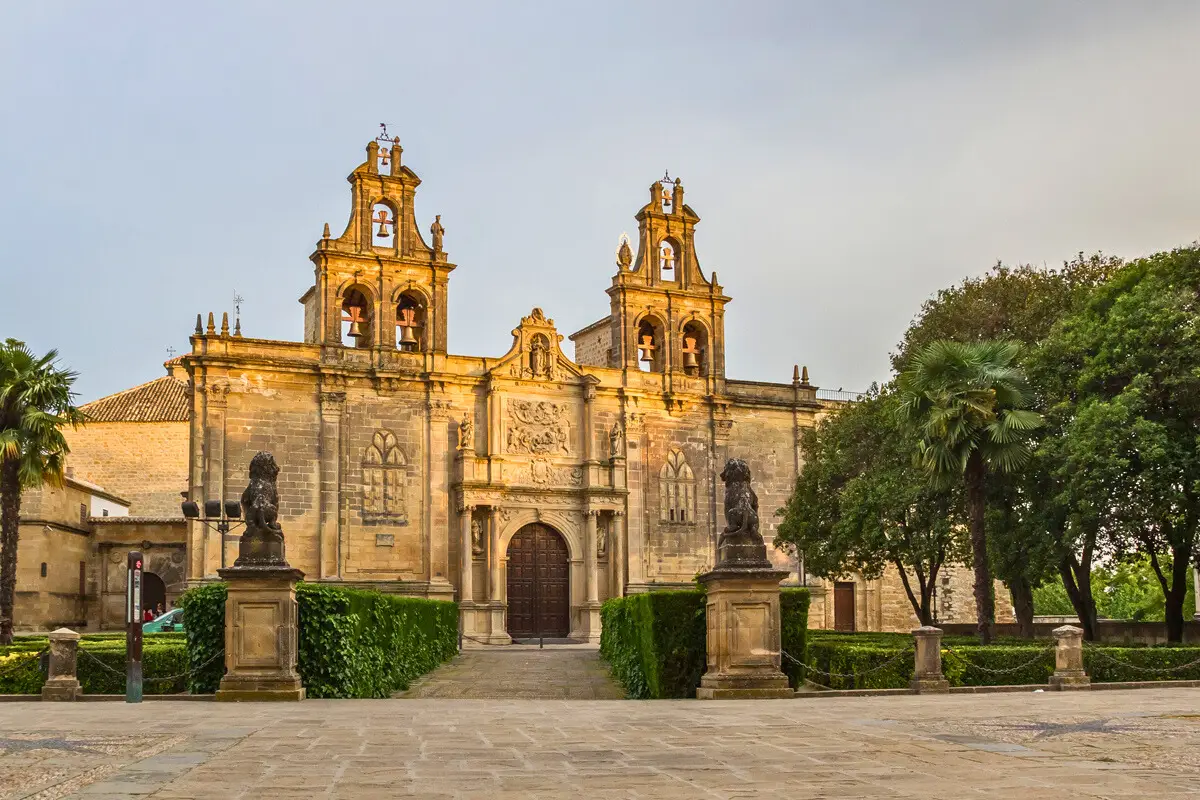
Sister city and the perfect pairing. They share UNESCO World Heritage status for good reason. Just 10km away, you can cycle between them on a dedicated 8.5km path, or drive in under 15 minutes.
In Úbeda, you’ll find the stunning Capilla del Salvador, palatial façades, artisan pottery workshops, and an even stronger dining scene. Many visitors do both towns in a long day, but an overnight allows you to enjoy each at a relaxed pace.
Jaén (50km)
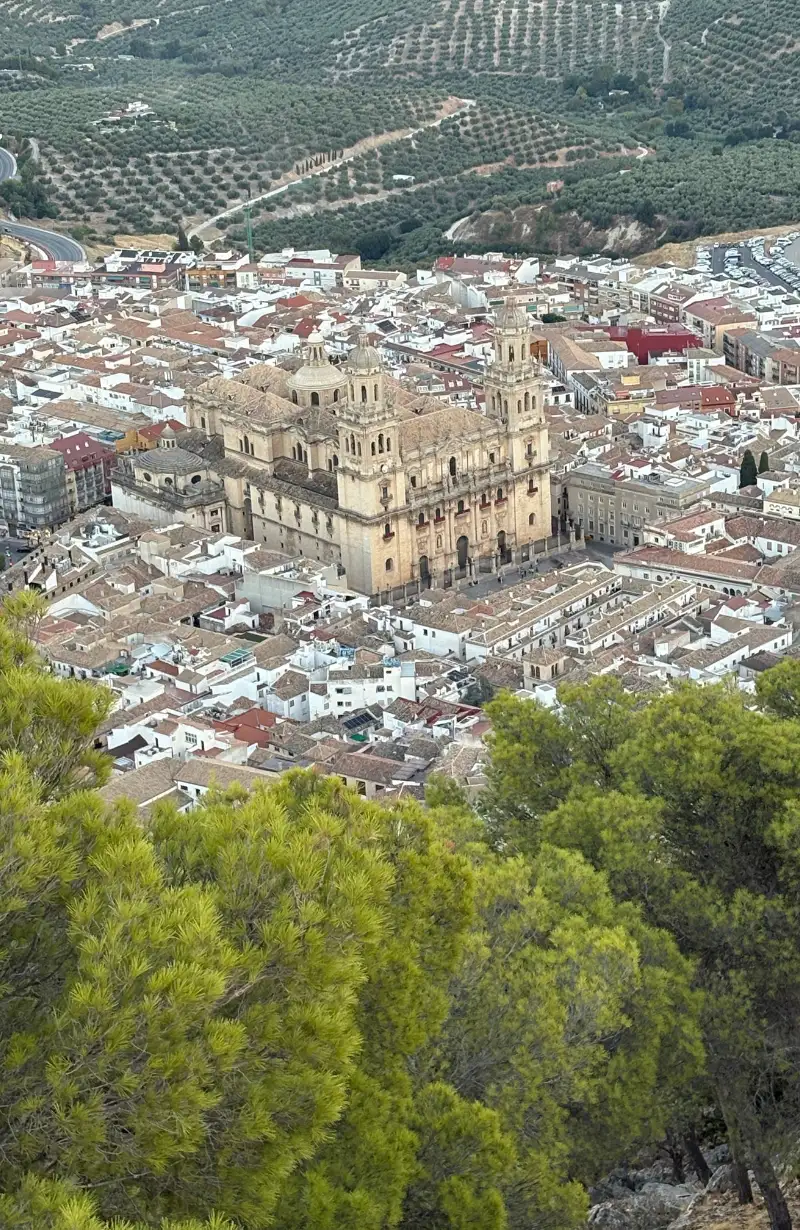
I wrote a full guide to things to do in Jaén. In the provincial capital, you’ll discover a grand cathedral, the largest Arab Baths in Spain at Villardompardo, and the hilltop Castillo de Santa Catalina with views that stretch for days. It’s an easy 45-minute bus or 30-minute car ride from Baeza.
Castillo de Burgalimar (40 Minutes)
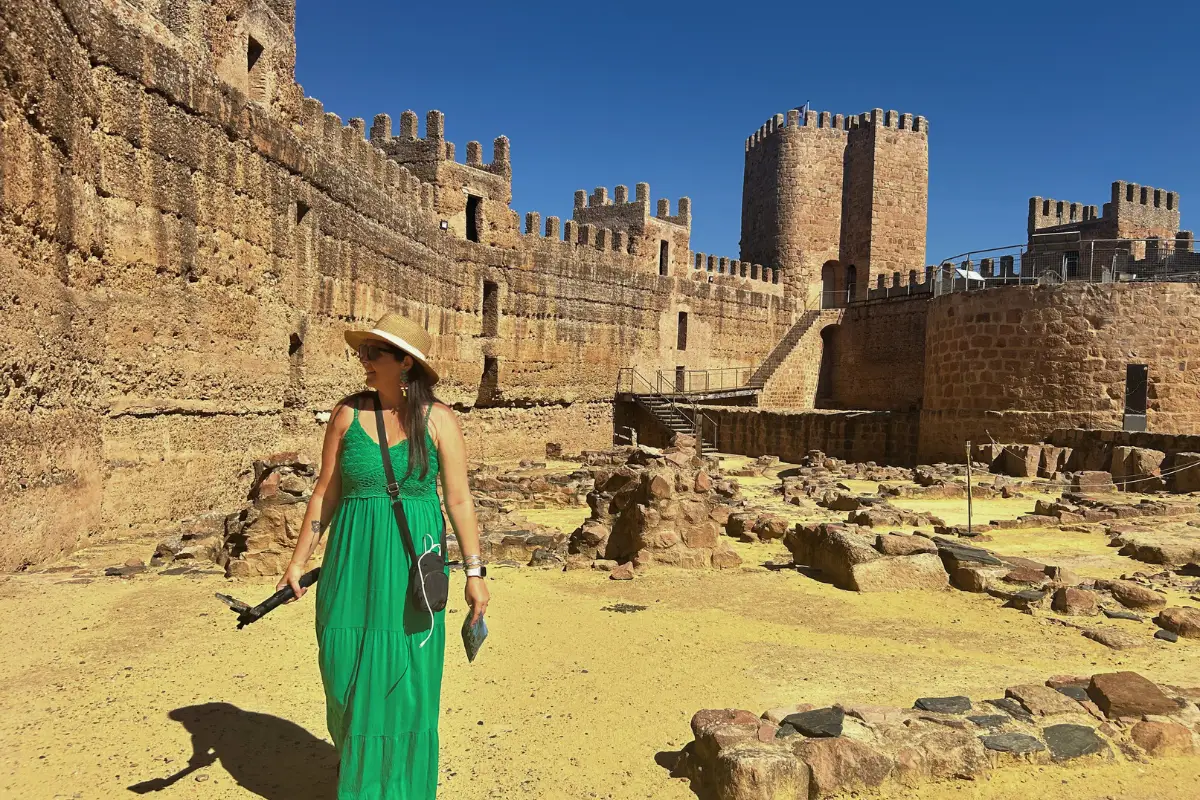
We made the trip to Castillo de Burgalimar in Baños de la Encina on the way back to Jaén. It added 40 minutes to the journey, but it was totally worth it.
This is Spain’s oldest castle, a 10th-century Caliphate fortress with fifteen stout towers and almost no crowds.
Parque Natural de Cazorla
Baeza sits at the edge of Spain’s largest protected natural area.
The Sierra de Cazorla, Segura y Las Villas offers stunning mountain scenery, forested river valleys, and excellent hiking. It’s about 45 minutes to the park entrance, worth a full day if you have time.
Festivals in Baeza
Timing is everything, so check dates locally. These are notable festivals in Baeza:
- Semana Santa (March/April), processions wind through stone lanes with candles and drums
- Corpus Christi (June), floral carpets and ceremony in the historic centre
- Feria de Baeza (August), the main summer fair with bullfighting, music, and celebrations
- National Jumping Competition (August), equestrian events
- Virgen de la Yedra Pilgrimage (first Saturday in September), local religious tradition
- Festival de Música Antigua de Úbeda y Baeza (late autumn), world-class early music shared between the two towns
How to Get to Baeza
The nearest train station is Linares-Baeza, about 15km away. Buses connect the station to Baeza town centre.
ALSA runs bus services from Jaén (45 minutes), Granada (2.5 hours), Madrid (4 hours), and Málaga (3.5 hours). The bus station is on Alcalde Puche Pardo, roughly a 10-minute walk to the old town.
If you’re driving, take the A-316. Park on the edges and walk in, because the streets are narrow and prettier without your bumper. Free parking is available near the bullring and at the edges of the historic centre.
The nearest airports are Granada (150km), Málaga (250km), and Madrid (340km).
Everything in the historic centre is walkable. Bring comfortable shoes, because cobblestones are unforgiving by hour six.
How Long Do You Need in Baeza?
A full day is ideal to see the main attractions at a relaxed pace. If you’re combining Baeza with Úbeda, plan for a long day or, better yet, stay overnight in one of the towns. They’re just 10km apart, and you can cycle between them on the dedicated path or grab a taxi from Plaza de España.
When Is the Best Time to Visit Baeza?
Spring (April to May) and autumn (September to October) offer the best weather for walking. Summer can be very hot. Semana Santa brings atmospheric processions, and the Festival de Música Antigua in late autumn features world-class early music.
Final Thoughts
Baeza surprised us with its scale of detail.
You think “small town,” then you cross Plaza de Santa María, glance up at the cathedral, and realise the city wears a bigger history than its map suggests.
Between cathedrals and cafés, gates and viewpoints, it offers a full day that feels unhurried by tourist crowds. The free tapas tradition is alive, the olive oil is exceptional, and the architecture genuinely stops you in your tracks.
If you’re road-tripping through Andalucía, give Baeza the better part of a day. Pair it with Úbeda and Jaén for one of the best inland routes in southern Spain. And for the full picture of the region, don’t miss my guides to where to eat in Baeza and where to stay in Baeza.