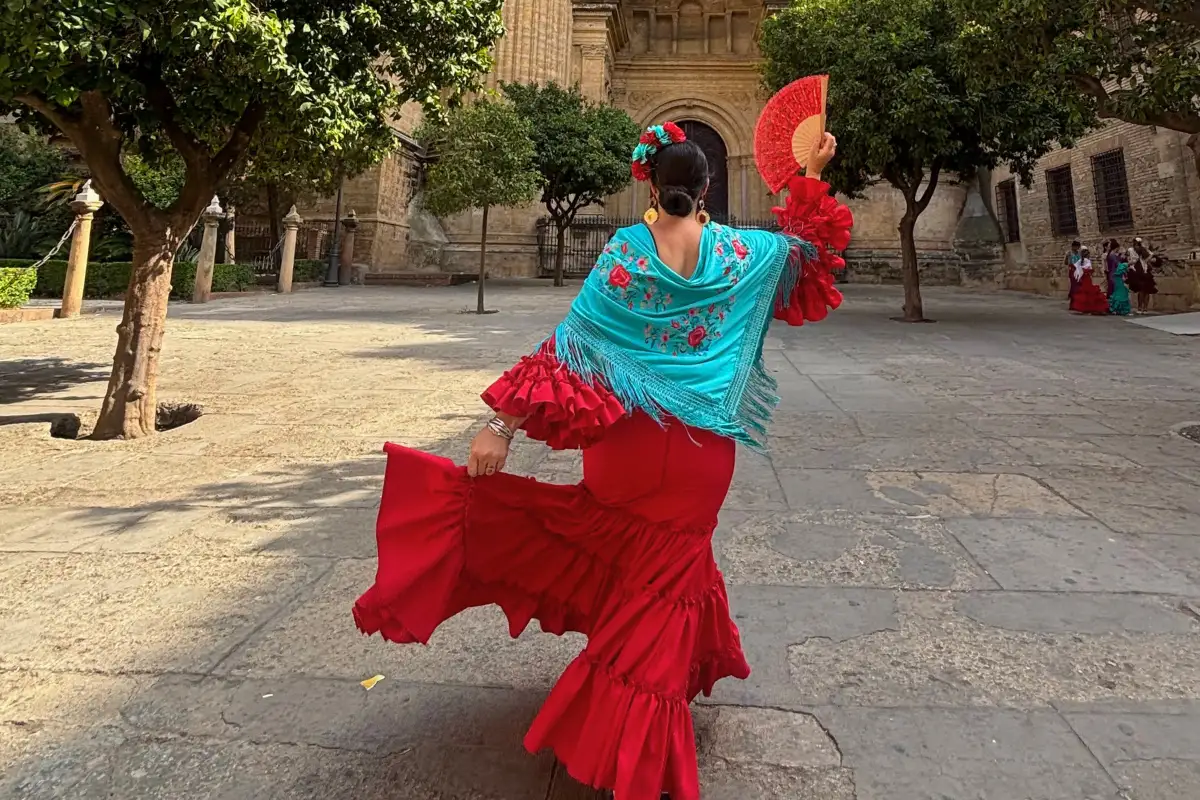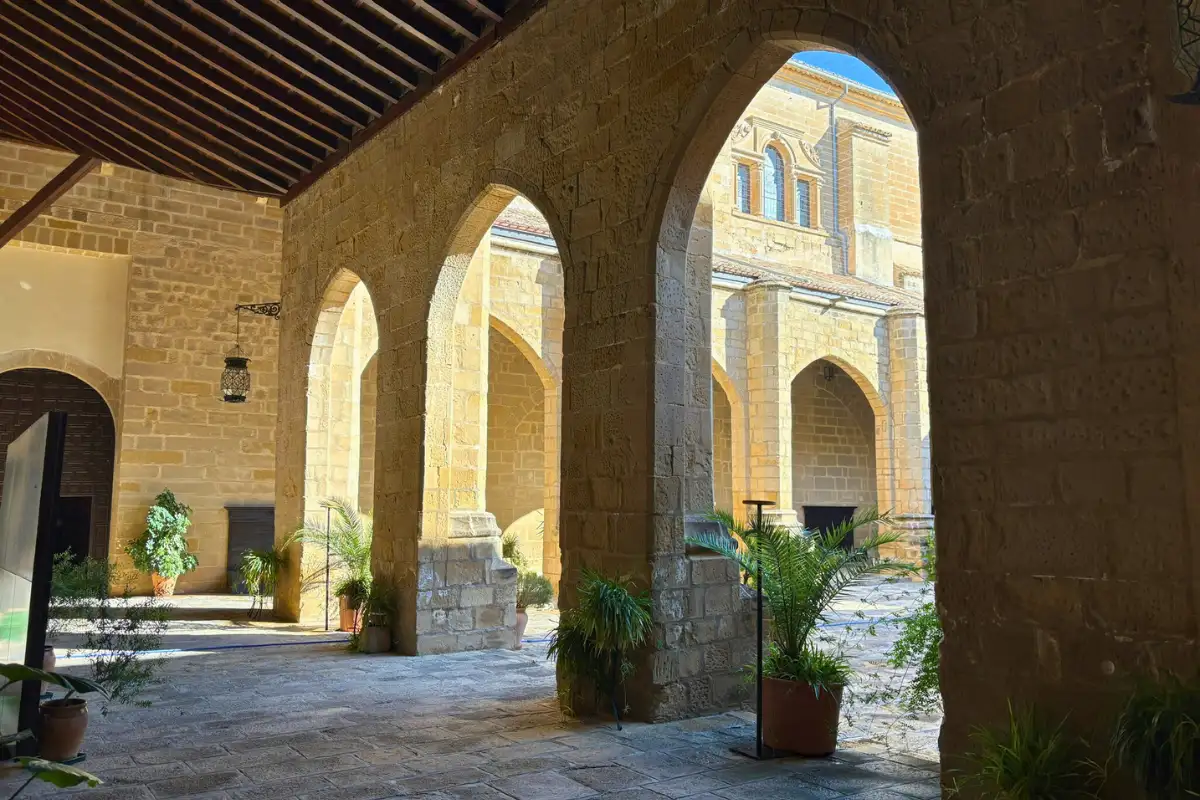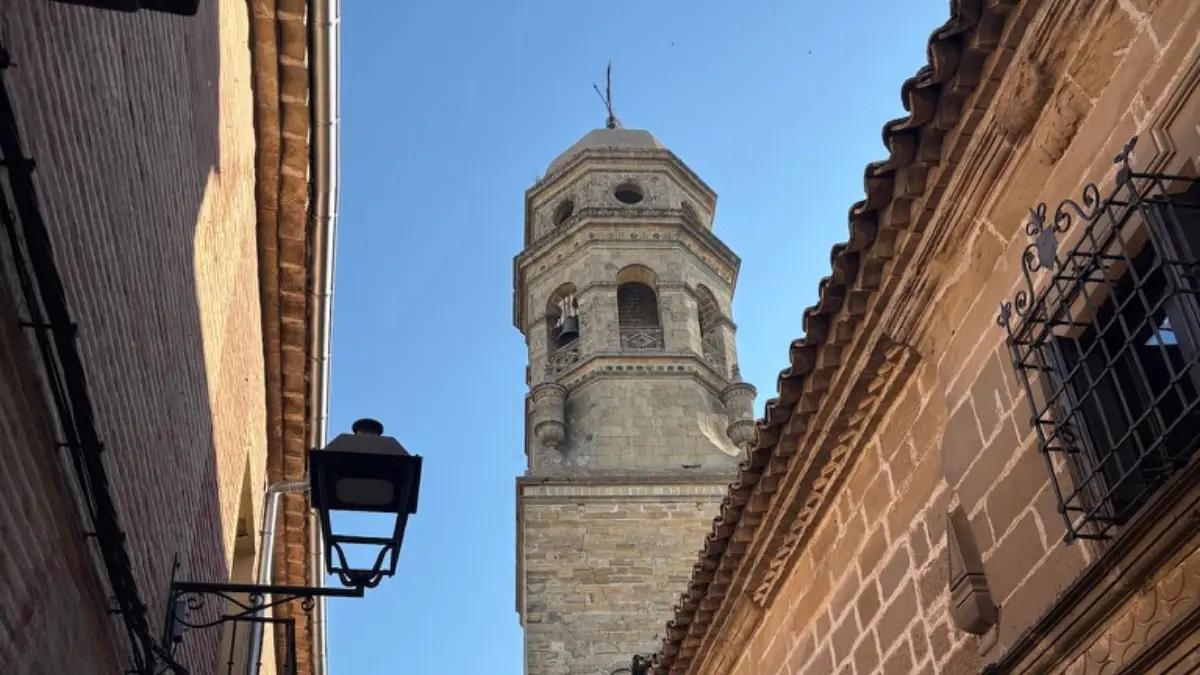
Most visitors treat Baeza as a day trip from Granada or Cordoba. They arrive mid-morning, wander the Renaissance squares, photograph the cathedral, and leave by 4pm.
They miss everything.
When the tour buses depart, the town belongs to its 16,000 residents. The golden stone glows in sunset light.
Locals gather in the plazas for evening drinks. The restaurants fill with people who actually live here.
The silence of night in a UNESCO World Heritage town is something no day trip can capture.
Here are my top picks.
⭐ Want to see everything at once >> Browse all the hotels in Baeza on a map. The town is small enough that anywhere inside the walls is walkable.
Hotel Puerta de la Luna
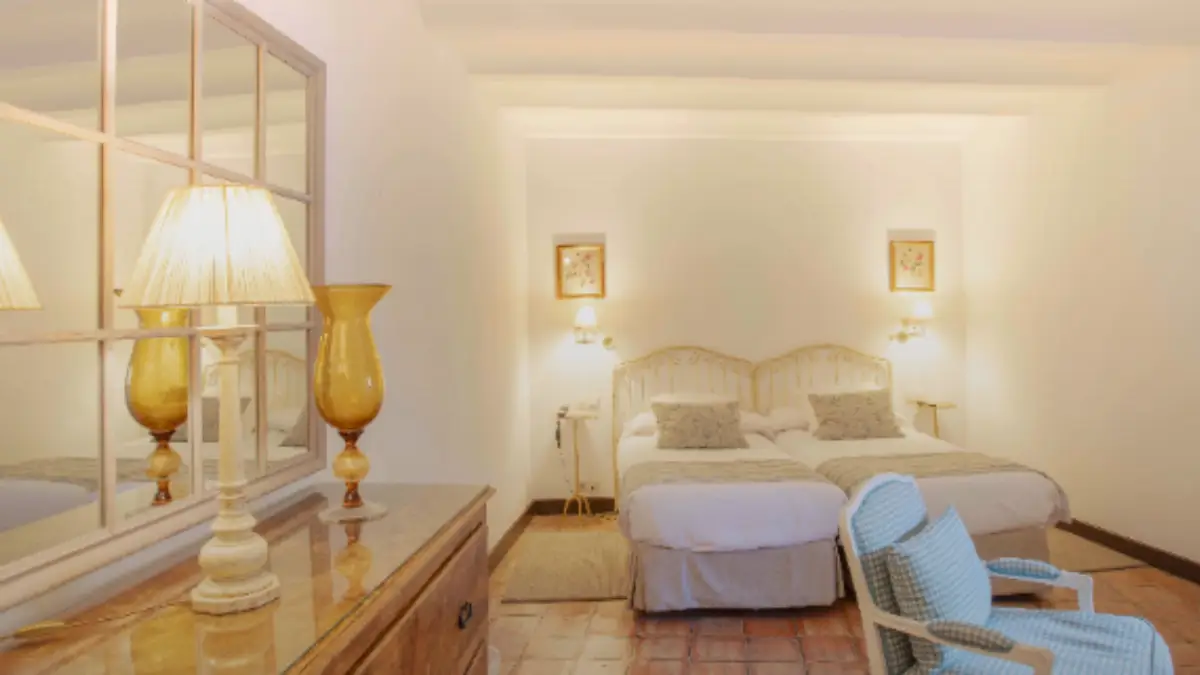
Hotel Puerta de la Luna is the right choice for most visitors. It combines everything that makes staying in this UNESCO town special: a genuine Renaissance palace, an unbeatable location, and staff who genuinely care about your experience.
The building dates to the 16th century and sits directly on Plaza del Populo, one of Baeza’s most beautiful squares. Step outside and you’re immediately in the heart of the historic centre. The cathedral is a three-minute walk.
Rooms are individually decorated with antiques, local artwork, and period furniture. The central courtyard is where guests gather for evening drinks, surrounded by Renaissance arches and the sound of a fountain. It feels more like staying in a wealthy family’s home than a commercial hotel.
The staff know Baeza intimately. They’ll point you to restaurants locals frequent, olive mills that welcome visitors, and the quiet corners of town that most tourists miss. Breakfast includes excellent local olive oil on toast, the proper Andalusian way to start the day.
Rooms run around 90 to 150 euros per night.
🏨 Baeza only has a handful of hotels, so the dates that matter go early. Semana Santa fills months ahead for the processions, and the November to January olive harvest brings in the food crowd. Check what’s still free for your dates before you commit to the trip.
Hotel Palacio de los Salcedo
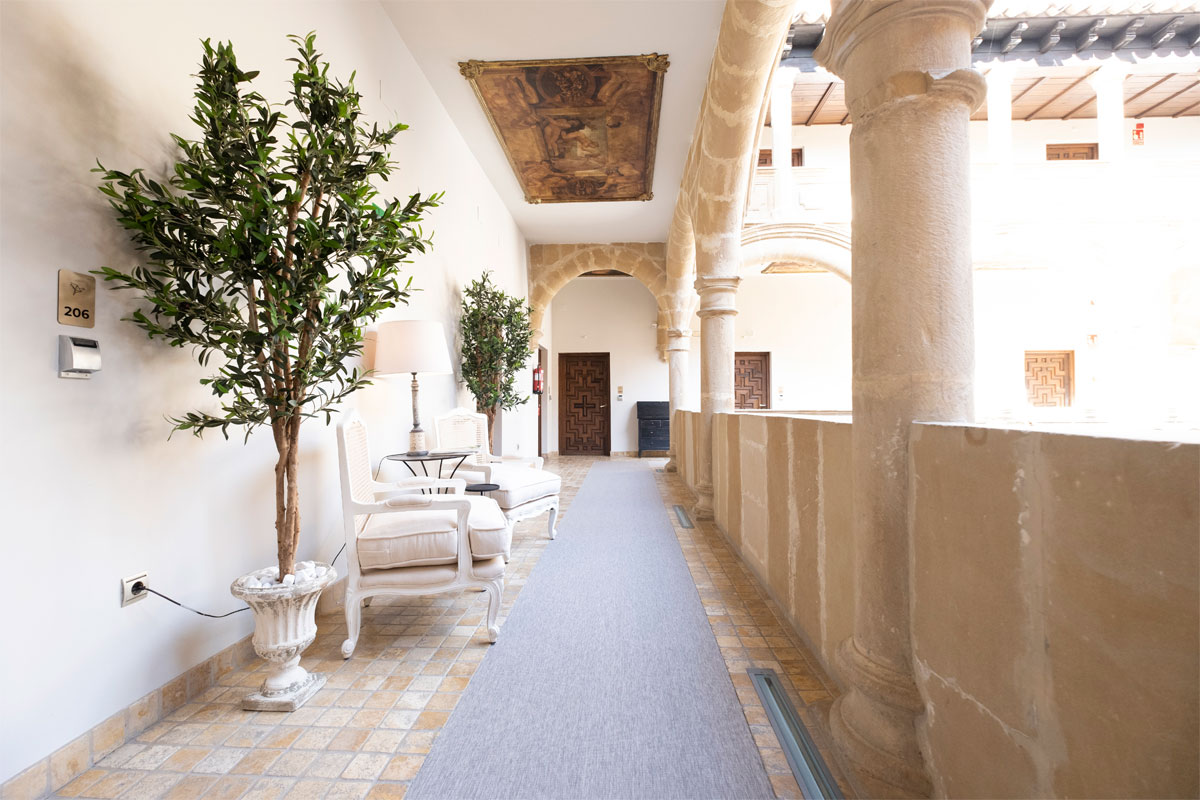
Hotel Palacio de los Salcedo is another beautifully restored palace in the historic centre.
The hospitality here feels genuinely warm. The courtyard is elegant without being stuffy, and the rooms blend period features with modern comfort.
It’s central enough that everything in Baeza is within a 5 to 10 minute walk. If you want the palace hotel experience at a slightly lower price than Puerta de la Luna, this is the one.
Expect to pay around 75 to 110 euros per night.
🛡️ A reminder to sort travel insurance before you fly. I use SafetyWing, an affordable subscription policy you can buy even after you’ve already left home.
Hotel TRH Ciudad de Baeza
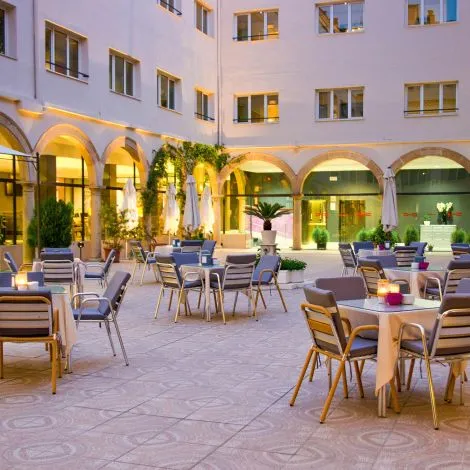
Hotel TRH Ciudad de Baeza is a 16th-century convent converted into a comfortable 4-star hotel.
The pool is a real bonus in summer, when Baeza regularly hits 40 degrees. The peaceful courtyard still has that convent atmosphere, and the rooms are modern and reliable.
The location in the UNESCO quarter puts you within easy reach of everything. For the combination of historic setting, pool, and price, this is the best value in Baeza.
Rooms range from 55 to 85 euros per night.
⭐ Once you’ve booked a bed >> Baeza tours, olive mill visits and tastings. Staying overnight is what makes these possible, because the mills run on their own hours and the day-trip crowd never gets to them. For the full list, see 12 things to do in Baeza.
Hotel Campos de Baeza

Hotel Campos de Baeza suits travellers who prefer modern amenities over historic atmosphere.
The building is contemporary, the rooms are straightforward and reliable, and parking is easy. That’s a real advantage if you’re driving through Andalusia.
The location is slightly outside the historic core but still walkable. You trade the Renaissance setting for practical convenience and lower prices.
Rooms cost around 55 to 80 euros per night.
Which One to Choose
For the best overall experience: Hotel Puerta de la Luna. Renaissance palace, perfect location on Plaza del Populo, staff who know the town inside out.
For a palace at a lower price: Hotel Palacio de los Salcedo. Warm hospitality, elegant courtyard, central location.
For value with a pool: Hotel TRH Ciudad de Baeza. Converted convent, modern comfort, the best price-to-quality ratio.
For easy parking and practicality: Hotel Campos de Baeza. Modern, reliable, no-fuss.
READY TO BOOK YOUR TRIP TO BAEZA?
🏨 Accommodation: Find hotels in Baeza
🚗 Rent a car: I use Discover Cars
🎟️ Best guided tours: I use GetYourGuide
🚆 Trains and buses: I book through Omio
🛡️ Travel insurance: I use SafetyWing
How Many Nights Should You Stay in Baeza?
One night is enough to experience the evening magic and morning quiet. Two nights lets you explore Ubeda properly and visit an olive mill without rushing.
This is the heart of the world’s olive oil capital. Staying overnight means you can visit nearby olive mills, taste fresh-pressed oil, and explore Ubeda just 9 kilometres away.
Should You Stay in Baeza or Ubeda?
The twin Renaissance cities are just 9 kilometres apart. Both are UNESCO World Heritage sites. Both have excellent accommodation.
Baeza is smaller and quieter, with fewer tourists and a more intimate feel. The restaurant scene is surprisingly good for its size.
Ubeda has more accommodation options, grander architecture, and more shopping. Its Parador is also impressive.
My recommendation: stay in Baeza for a quieter, more authentic experience. Visit Ubeda for a half-day. Or stay one night in each to experience both properly.
Baeza doesn’t have a Parador. If you want that experience, consider the Parador de Ubeda, just 15 minutes away.
When to Book
Easter week (Semana Santa) fills up fast. Baeza’s processions are famous, so book months ahead.
The olive harvest from November to January is popular with food tourists. Book early if you’re visiting then.
Summer is extremely hot, regularly above 40 degrees. Make sure your hotel has air conditioning. All the hotels recommended above do.
Midweek in the off-season is rarely busy. You can often book same-day.
Getting to Baeza
Baeza has no train station. You’ll almost certainly need a car to get here, and having one makes exploring the area much easier.
From Granada, it’s about 130 km and 1.5 hours by car. From Cordoba, roughly the same distance and time. From Jaen, it’s just 48 km and 45 minutes.
ALSA operates buses from Granada, Cordoba, and Jaen, but schedules are limited. Check times carefully if you’re relying on public transport.
If you’re driving, note that the historic centre has very limited street parking. Most hotels either have their own parking or arrangements with nearby car parks. Ask when you book.
What to Do While You’re Here
The advantage of staying overnight is having time to explore properly.
In the morning, visit the Cathedral and the old university where Antonio Machado taught. Wander the Renaissance squares when they’re quiet.
In the afternoon, drive or take a taxi to Ubeda. It’s 15 minutes away, with an even larger collection of Renaissance architecture.
In the evening, return to Baeza for the magical hours when tourists leave. Dine at a local favourite like Casa Juanito or Vandelvira. Walk the empty streets under starlight.
The next morning, visit an olive oil mill. Several near Baeza offer tours and tastings, especially during harvest season from November to January.
Ask your hotel to arrange it. They often have connections with small producers who don’t advertise but welcome guests.
If you’re planning your wider trip, check my guides to things to do in Baeza and where to eat in Baeza.