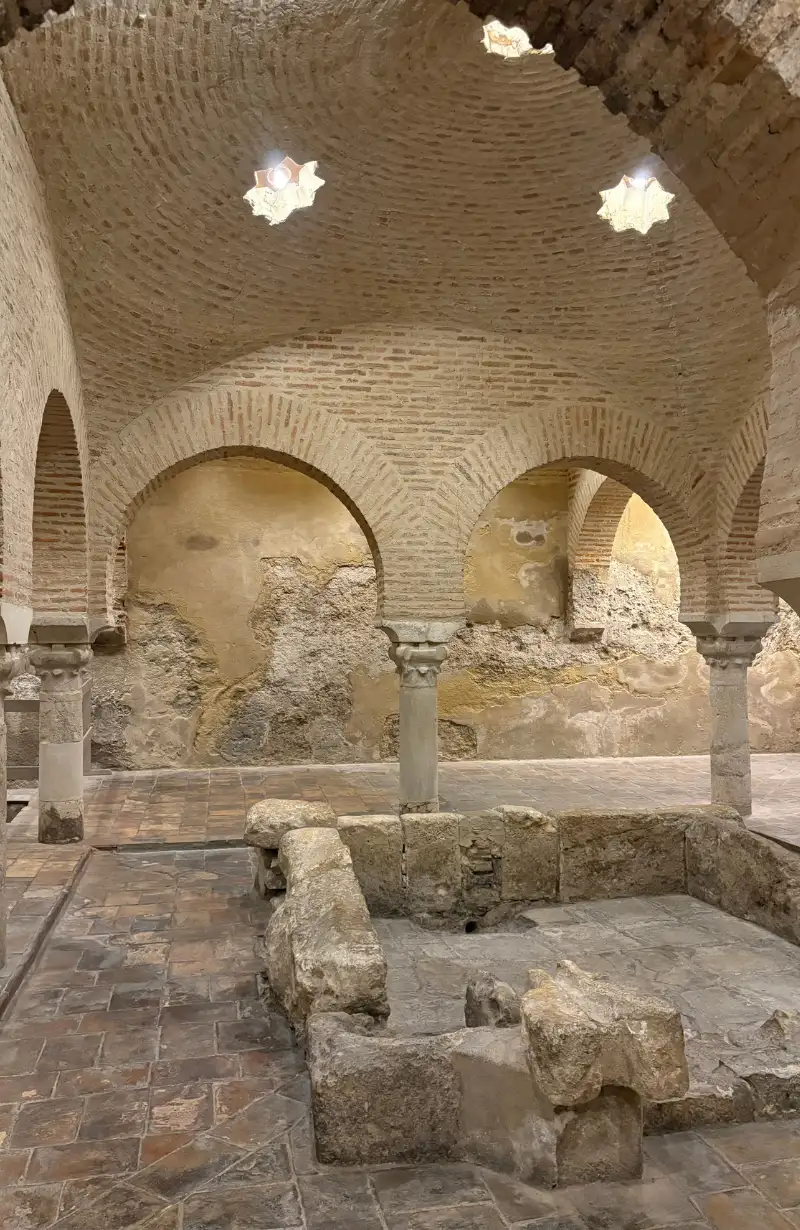
An Arab bath, also called a hammam, was a communal bathhouse built during the Moorish period in Spain. They served as public bathing houses and social gathering places across Al-Andalus from the 8th to the 15th centuries, using a sequence of hot, warm, and cold rooms borrowed from the Roman bathing tradition.
Keep reading for the full story, or go straight to my guide to Jaén.
How Did Arab Baths Work?
Bathers moved through three rooms in order:
- Cold room (bayt al-barid): where you entered and cooled down
- Warm room (bayt al-wastani): a transitional space
- Hot room (bayt al-sajun): the steam room, heated from below
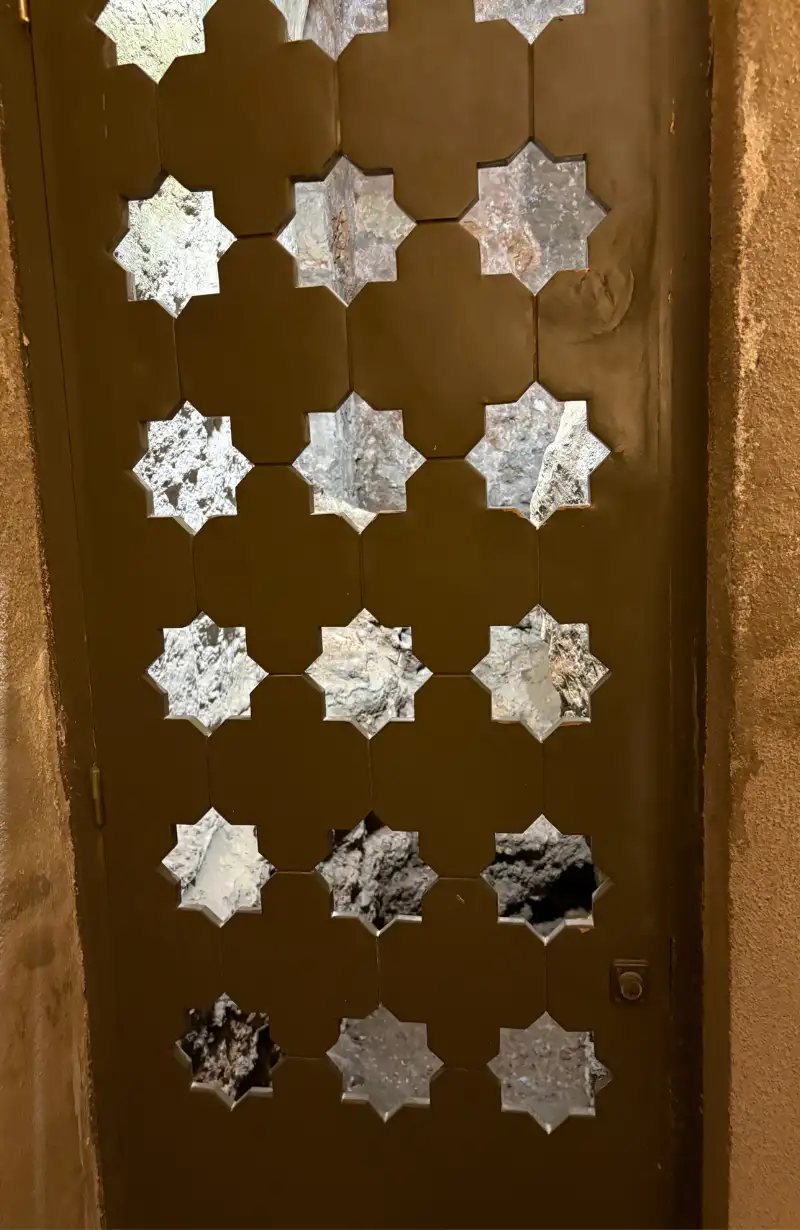
Star-shaped skylights in the vaulted ceilings let in light while keeping the interior private.
What Is a Hammam in Spain?
A hammam in Spain refers to the same thing, a Moorish-era bathhouse. The word comes from Arabic and means “spreader of warmth.” In modern Spain, you’ll also see commercial “hammam” spas that recreate the experience with hot pools, steam rooms, and massage. These are inspired by the historical baths but aren’t the same thing.
The historical baths that survive in cities like Jaén, Granada, Córdoba, and Ronda are architectural sites, not functioning bathhouses. They’re empty stone rooms today, not places where anyone actually bathes.
The Arab Baths of Jaén
Jaén has the largest preserved example: 450 square metres beneath the Palacio de Villardompardo, the biggest Moorish bathhouse in Spain. Free entry, and my where to stay in Jaén guide covers the best areas to base yourself.
They were built in the 10th or 11th century and buried for centuries under accumulated building work. They were only fully uncovered and opened to the public in the 1980s.
I got turned around inside. Even without the steam that once filled these rooms, it’s hard to tell which direction you came from.
The rooms stretch much further than the entrance suggests, and the star-shaped skylights throw geometric patterns of light across the stone below. I kept thinking about how they built something this intricate over a thousand years ago, when the best we can manage today is a sauna at a hotel.
Above the baths, the Palacio opens into a multi-storey folk-art museum with vivid, almost psychedelic colours, exhibition rooms, and halls full of equipment from a different era entirely. When you eventually reach the top, there’s a rooftop terrace with views across the old town. It’s a genuinely surprising end to a visit that started underground.
Where Else Can You See Arab Baths in Spain?
Other notable examples survive in Granada (Bañuelo), Ronda, and Córdoba, but none match the scale of the Jaén baths. The baths are part of what makes the city’s architecture so layered, sitting beneath a Renaissance palace in a city where Moorish, medieval, and Christian history overlap in almost every street.
If Moorish history interests you, the province also holds the oldest castle in Spain, built a century before these baths.
The rest of the questions people ask about Jaén are answered in facts about Jaén.