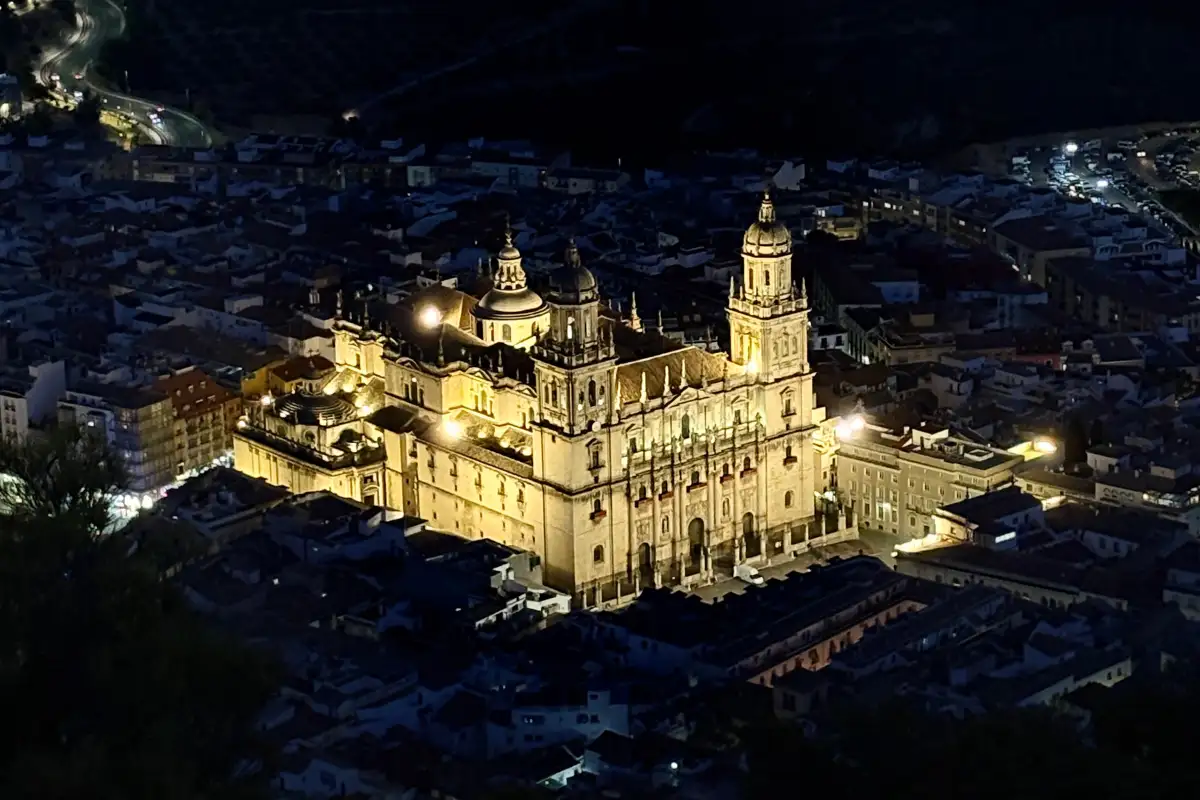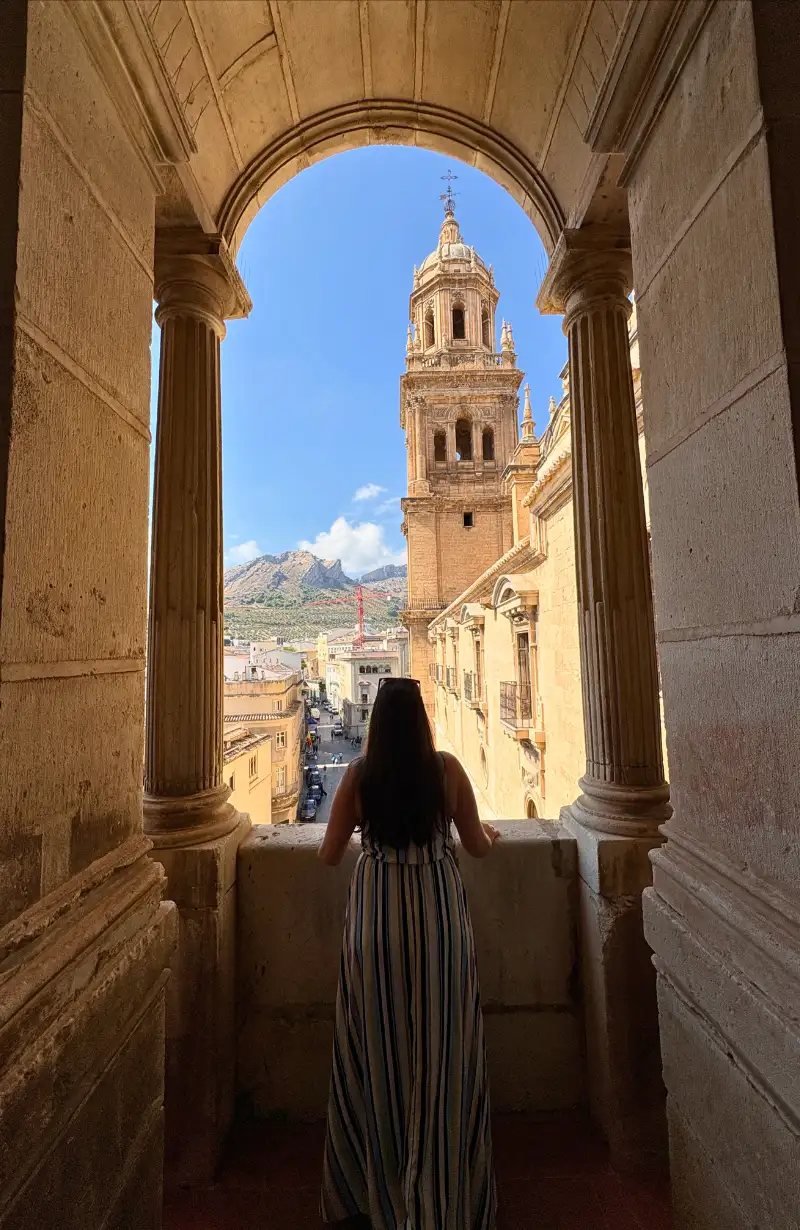
When was the Cathedral of Jaén built? Jaén Cathedral’s present building broke ground around 1551, to a design by the Renaissance architect Andrés de Vandelvira, and wasn’t finished until 1801, a span of roughly 250 years. It was consecrated far earlier, in 1660, once the crossing and dome were complete.
The site itself goes back much further, to a mosque that stood here until Jaén fell to Christian forces in 1246, ending Moorish rule of the city, and to two failed Gothic cathedrals that rose and were torn down again before Vandelvira’s design finally broke ground.
You’ll see other dates attached to this cathedral, 1548, 1724, even 1249, and they’re not simply wrong, they’re each describing something else. I’ve untangled which is which below, and if you’re already sold on visiting, my things to do in Jaén guide covers the rest.
Who Designed Jaén Cathedral?
Andrés de Vandelvira designed it. He won the competition to become the cathedral’s master architect in 1548, beating out three other Renaissance heavyweights for the job, then spent the rest of his career on the project until his death in 1575.
Ground didn’t actually break for another three years, in 1551. Vandelvira designed the interior along with the finest buildings in Úbeda and Baeza, the reason those twin towns received UNESCO World Heritage status in 2003.
His disciple Alonso Barba carried the plan forward after him, and Juan de Aranda Salazar finished the crossing and dome that let the cathedral be consecrated in 1660. The façade came later still, designed by Eufrasio López de Rojas and not completed until 1688.
Vandelvira’s influence extended far beyond Spain, too: his floor plan for Jaén informed cathedrals built across Spain’s American colonies, including remarkable ones in Lima, Cusco, Puebla, and Mérida.
The Veil of Veronica
Inside, the cathedral holds a relic said to be the Veil of Veronica, known locally as the Santo Rostro, the cloth that according to Christian tradition was used to wipe Christ’s face on the road to Calvary. Tradition holds that King Ferdinand III brought it to Jaén after the 1246 conquest, and that it was later recovered by Bishop Nicolás de Biedma, the same bishop who broke ground on the first Gothic cathedral here in 1368.
It’s displayed to the public every Friday, and in a beautiful side chapel the rest of the week, drawing pilgrims who travel specifically to see it.
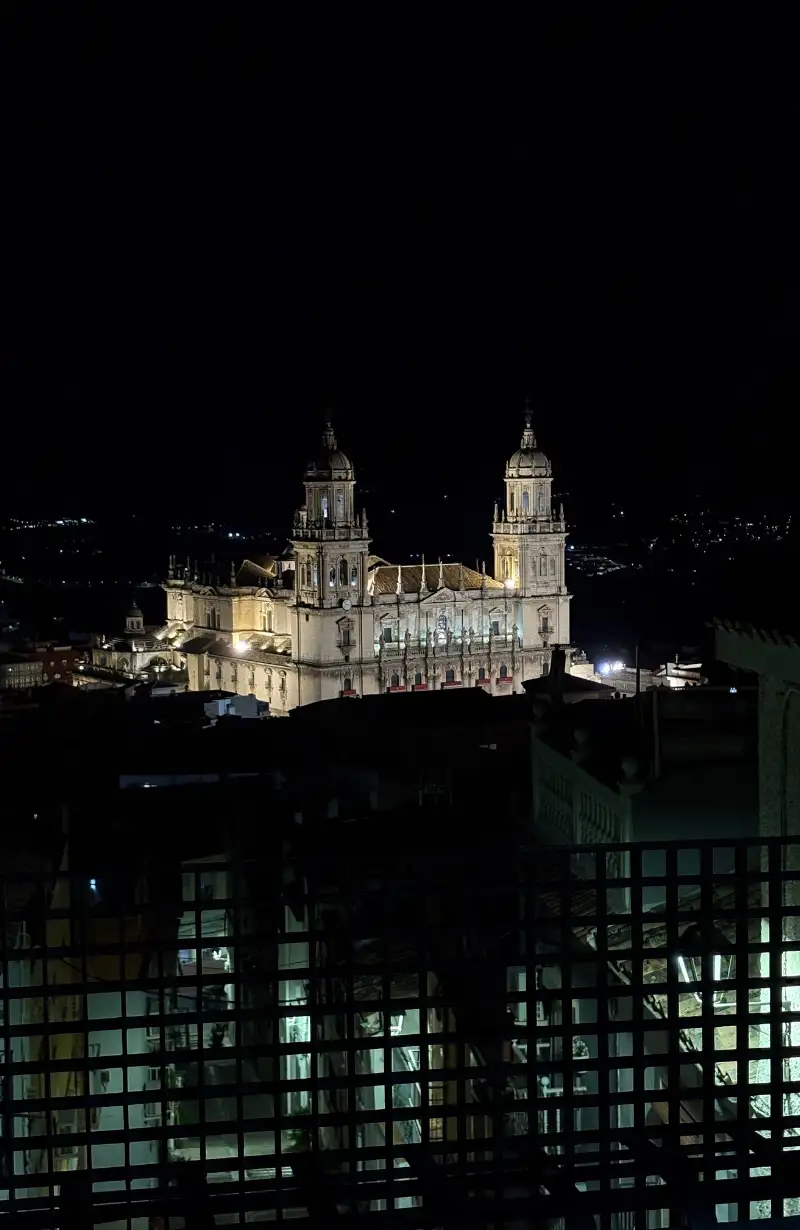
What to See Inside
I’ve been inside a lot of Spanish cathedrals. None had a crypt quite like this one.
Beneath the main floor, a genuinely impressive treasury of gold and silver relics sits inside an actual vault. You walk into it, not past it through glass, and it takes a moment to register how much is in there.
The climb to the tower is worth doing separately. At the top, a small exhibit with 3D goggles lets you fly over the cathedral and the beautiful castle ridge behind it, and I loved it enough to stay up there far longer than I’d planned.
One photo from that visit ended up on Jaén’s official tourism page. Find it on Instagram at @turismodejaen.
Book a combined tower and crypt ticket online before you go, since the queues build by mid-morning.
Is Jaén Cathedral the Biggest in Spain?
No. Seville Cathedral is the largest in Spain and the largest Gothic cathedral in the world. Jaén’s is still sizeable, around 100 metres long, but it’s significant not for its scale but for its architectural influence and the remarkable quality of its Renaissance design.
Jaén Cathedral is one piece of a much larger architectural story. More on what the architecture in Jaén looks like and how centuries of conflict shaped the city.
The rest of the questions people ask about Jaén are answered in facts about Jaén.