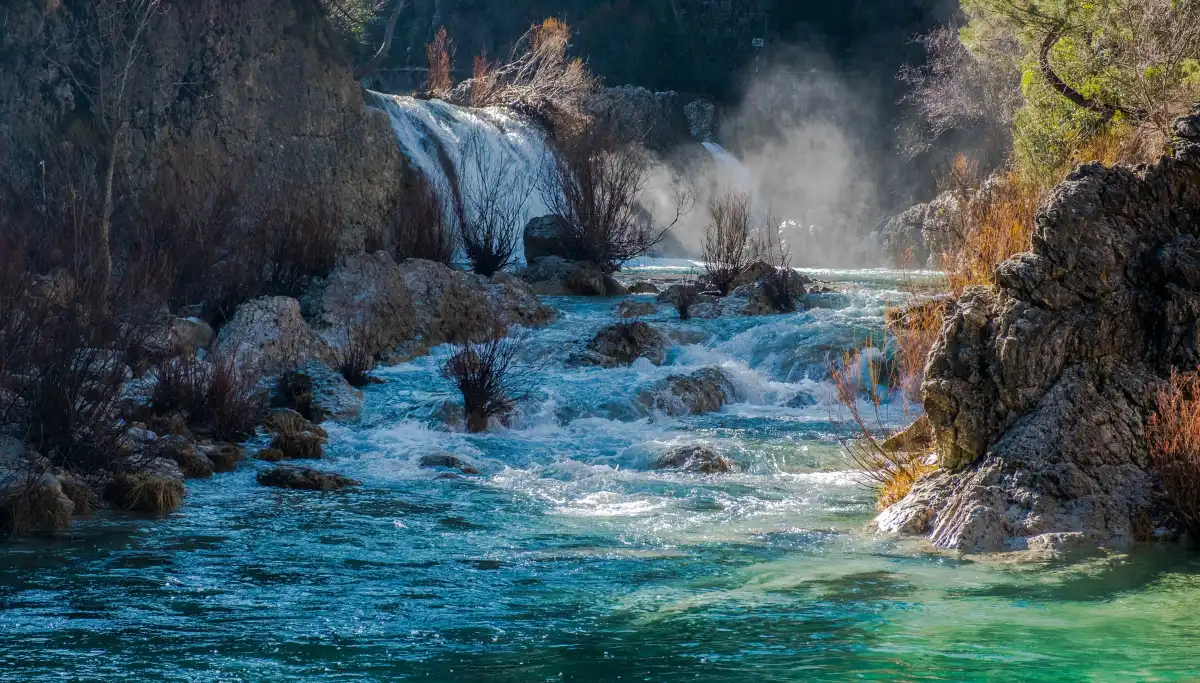
Yes. The Sierras de Cazorla, Segura y Las Villas Natural Park is Spain’s largest protected area and the second largest in Europe, covering 214,300 hectares of mountains, pine forests, and deep river valleys.
It’s also a UNESCO Biosphere Reserve, which tells you something about the quality of what’s inside. It’s technically a natural park, not a national park, but the scale of the landscape rivals anything with national park status.
The Guadalquivir, Spain’s great southern river, begins here as a spring in the mountains above Cazorla town before flowing 650 kilometres west to the Atlantic. When I visited Jaén province, the Sierra de Cazorla was the part that felt the most unlike anywhere else I’d been in Andalusia.
In this guide I’ll cover what’s inside the park, the best trails, wildlife, food, and how to get there.
I’ll go through it all below. If you’re already planning, my day trips from Jaén guide is the next step.
How Many Days Do You Need in Cazorla?
Two days is the minimum to get a proper feel for the park. One day lets you do a single trail and see Cazorla town, but the park covers 214,300 hectares and the distances between trailheads are longer than you’d expect.
With two days you can do the Río Borosa gorge walk on day one and explore the Guadalquivir source trail, Cazorla town, and the Tranco de Beas reservoir on day two. Three days gives you breathing room to drive to the higher viewpoints like Puerto de las Palomas at 1,565 metres, or to explore the smaller villages of Hornos de Segura and Segura de la Sierra.
Cazorla town makes a good base. There are a few rural hotels inside the park as well, but options are limited and book up in spring and autumn.
Can You Visit Cazorla Without a Car?
Technically yes, but it’s difficult. ALSA runs two buses daily from Jaén bus station to Cazorla town, which gets you to the village.
From there, reaching the trailheads and viewpoints inside the park without a car is the problem. There’s no public transport network within the park itself.
Some visitors arrange taxis from Cazorla town to the Río Borosa trailhead, but it’s not cheap and you’re relying on the driver to come back for you. A car gives you the freedom to fill a day properly.
For more on getting to Jaén and around the province, the getting around Jaén guide has the full breakdown.
What’s Inside
Mountains, pine forests, river gorges, and medieval villages with almost no tourist infrastructure. This is wilderness on a scale most people don’t anticipate until they’re already inside the park.
The Río Borosa gorge walk is the most popular trail, a 14-kilometre return route following the river through a narrow limestone canyon on wooden boardwalks before reaching a pair of glacial lakes. Allow four to five hours.
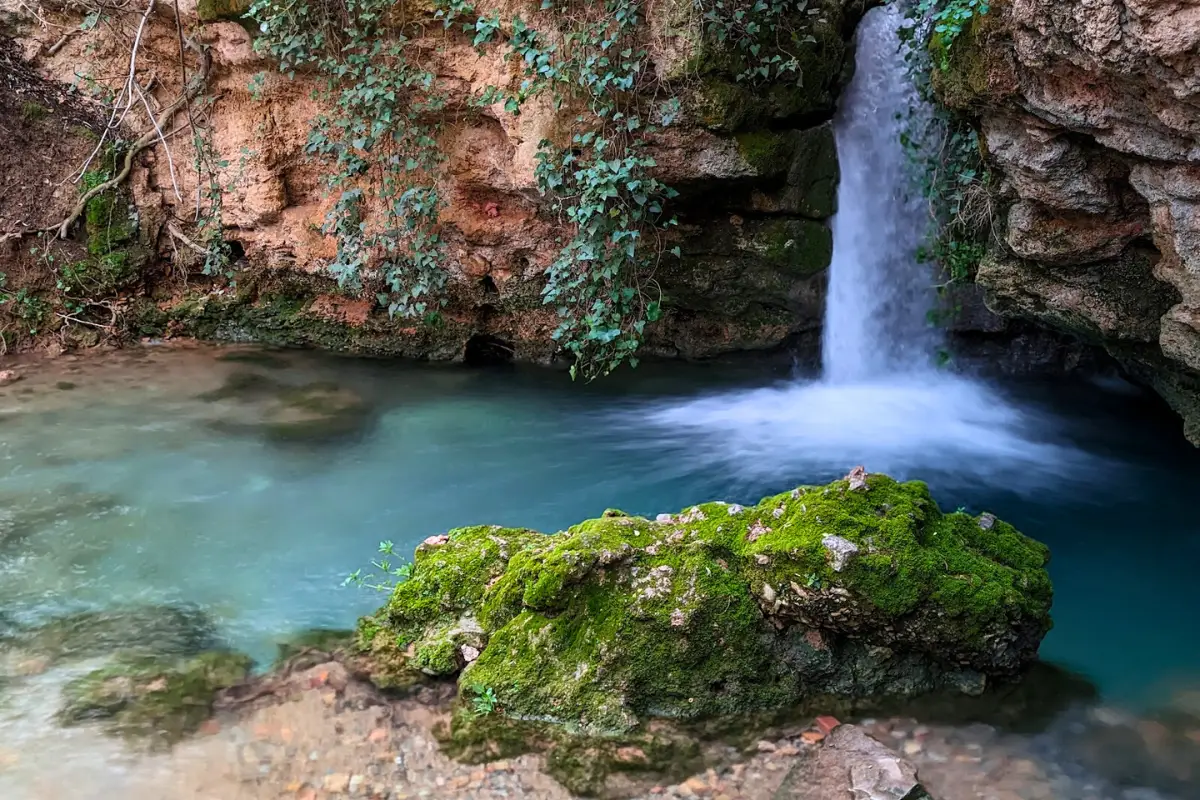
A shorter option is the Cerrada del Utrero, a signposted loop that takes about an hour and passes the Cascada de Linarejos waterfall. The walk to the Guadalquivir source, where the river begins as a spring at around 1,400 metres altitude, is another half-day option.
Beyond the trails, the Tranco de Beas reservoir holds over 500 million cubic metres of water and sits deep inside the park, surrounded by pine forest. The Torre del Vinagre visitor centre is worth a stop for maps and orientation, especially if it’s your first visit.
Above Cazorla town, the ruins of Iruela Castle sit on a rocky outcrop with views across the valley.
Wildlife
The park is home to red deer, wild boar, Spanish ibex, griffon vultures, and reintroduced bearded vultures. It’s one of the few places in Spain where Iberian lynx have been reintroduced, though sightings are rare and mostly happen at dawn or dusk near water sources.
Raptor watching is excellent throughout the park. Golden eagles and Egyptian vultures nest in the gorge walls, and you’ll often spot griffon vultures circling above the Borosa valley without even trying.
The Torre del Vinagre visitor centre has information on recent sightings and can point you to the best spots for the season you’re visiting.
Food in Cazorla
The food leans heavily on game and mountain cooking. Venison stews, wild boar, local cheeses, and freshwater trout from the park’s rivers are the staples.
If you’ve eaten in Jaén city, where free tapas come with every drink, the restaurants here are a different style: sit-down meals with proper portions rather than bar-hopping. The restaurants around the main square in Cazorla town are reliable, nothing fancy but honest portions at fair prices.
The village of Arroyo Frio, deeper inside the park, has a handful of restaurants that serve game dishes sourced from the surrounding mountains. Roast lamb and wild mushrooms in autumn are particularly good.
When to Visit
Spring (April to June) is the best window. The wildflowers are out, the rivers run full, and hiking temperatures sit between 15 and 25 degrees.
Autumn (September to October) is nearly as good, with warm days, fewer visitors, and the deer rut adding a soundtrack to the forests. Summer can hit 40 degrees in the lower valleys, and while the higher trails stay cooler, it’s not comfortable for long hikes.
Winter brings snow above 1,500 metres and temperatures drop below freezing at altitude from December through February. The park stays open year-round, but some access roads close after heavy snowfall.
How to Get There
About 1.5 hours from Jaén city by car, heading northeast on the A-316 and then the A-319 into the park. Fill the tank before you enter.
There are no petrol stations inside and mobile signal drops out once you pass the first valley.
ALSA runs two buses daily from Jaén bus station to Cazorla town, but you’ll still need a car to reach the trailheads (see above). From Granada the drive is roughly two hours, and from Córdoba around two and a half.
For planning your base in the city, the where to stay in Jaén guide covers honest hotel picks by area. And if you’re curious about the province’s cultural side, see what famous people are from Jaén.
The rest of the questions people ask about Jaén are answered in facts about Jaén.