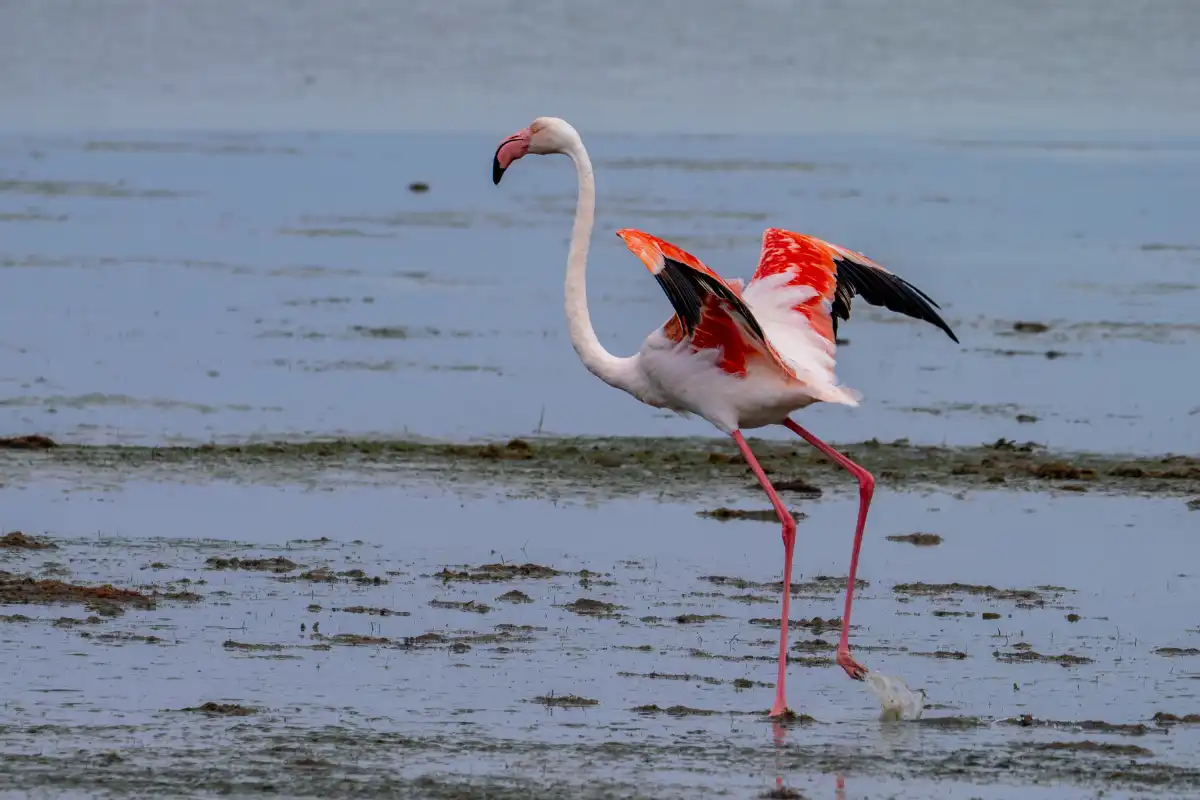
I drove out to Laguna de Fuente de Piedra without much of a plan, just curious to finally see it for myself.
Everyone I mentioned it to had the same reaction: July? Really?
Fair enough, spring is when this place turns vivid pink, when the shallow water fills with tens of thousands of birds and the whole lagoon looks unreal in photos. Early July, apparently, is the wrong month entirely.
I went anyway. And yes, there were fewer flamingos than the postcards promise, and yes, it was hotter than I expected standing out there with no shade. But there were still birds, still that flash of pink against the water, and honestly, it was still a lovely morning.
This is the largest natural lake in Andalusia, so even a quieter day out there is worth talking about. Below is everything I picked up: when to go, how to get there, where to stand for the best view, what it costs, and whether it’s worth it outside of spring.
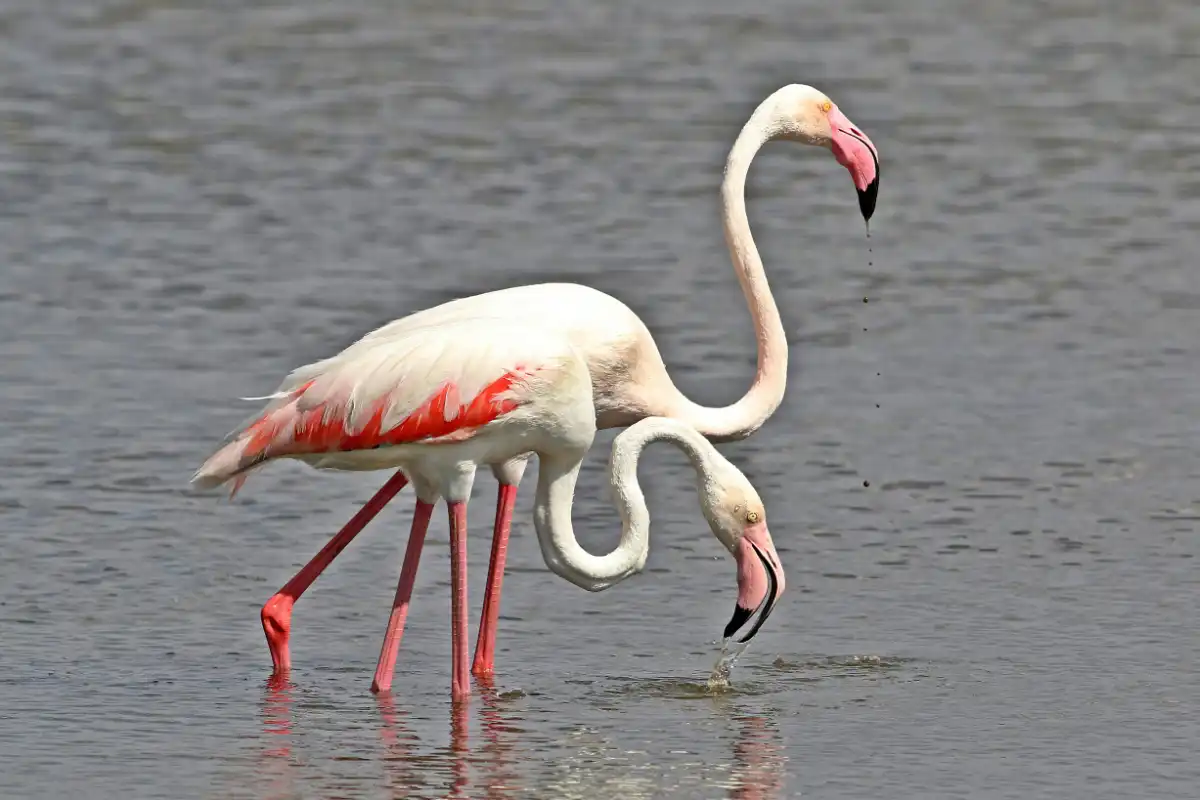
⭐ Don’t miss >> Where to stay in Antequera, my honest hotel picks
When Is the Best Time to See Flamingos at Fuente de Piedra?
The breeding colony peaks in April and May, but really any time between March and June will get you a real look at what this place is famous for.
Flamingos start drifting back from the end of January, as soon as the winter rains have refilled the lake, and pairs spend around 29 days incubating their eggs through spring. By late spring, the colony’s full, adults mixed in with grey chicks all over the shallows.
None of it’s fixed though, rainfall decides everything. Twenty thousand breeding pairs is possible after a wet winter. After a dry one, plenty of birds don’t bother nesting at all.
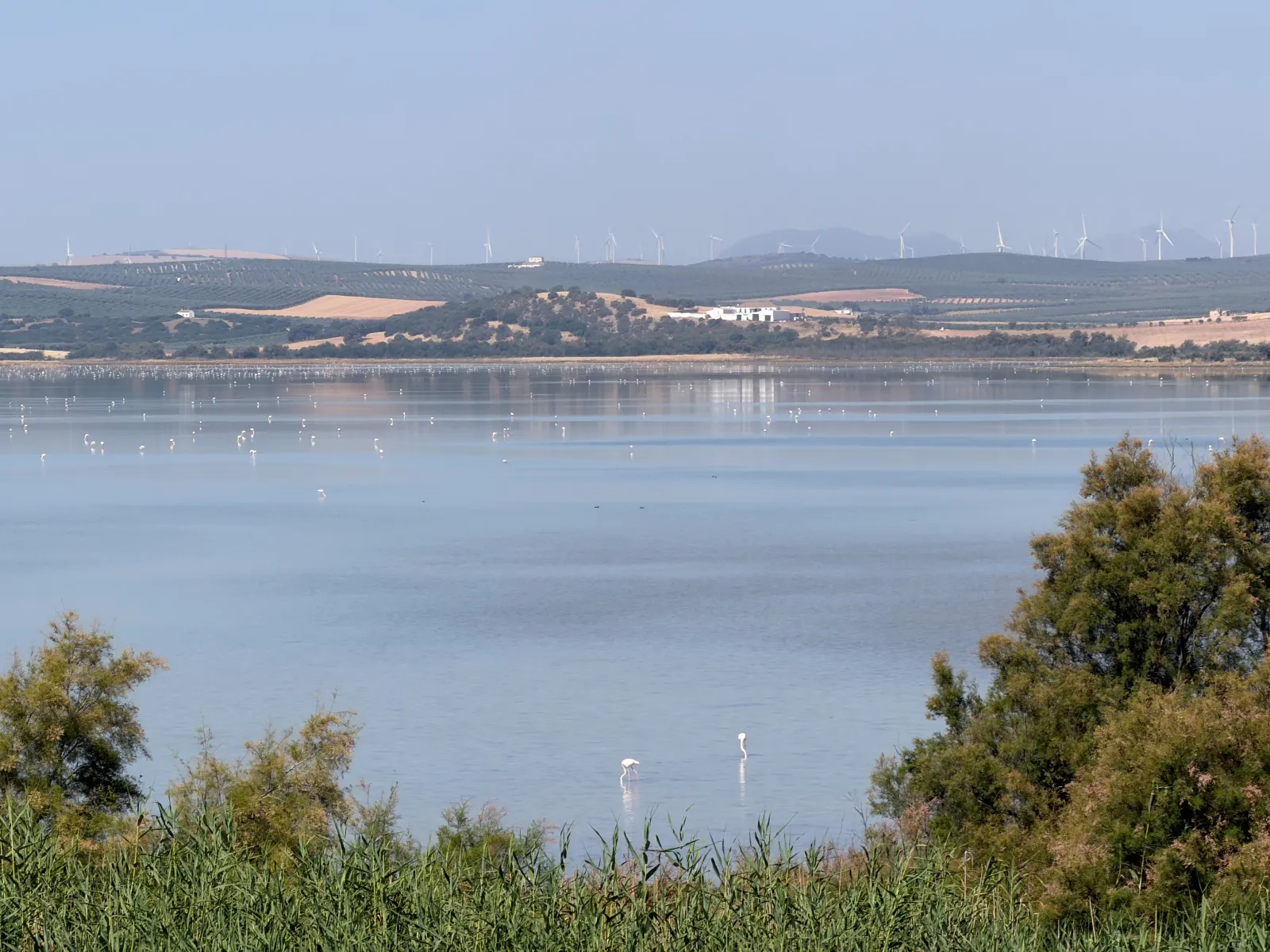
Then summer hits and things fall away fast. The water drops, July and August bring serious heat, and a good number of the adults clear out.
We were there right at the start of July, and I expected next to nothing, but there were still plenty of flamingos out on the water, which surprised me more than I can say. It had been a decent winter, so the lake hadn’t dropped much yet and the birds were still hanging around.
The heat was another story. We got there at 10:30 in the morning and it was already brutal, and there’s next to no shade anywhere along the paths.
My advice, if you’re going in late spring or summer: get there early, before the worst of the sun, or wait for late afternoon. Both ends of the day give you softer light for photos, and the birds themselves seem calmer too.
The lagoon is at its best first thing, which is an argument for sleeping 20 minutes away in Antequera rather than driving up from the coast. These are the places I’d book:
🏛️ Best value in the old town >> Hotel Coso Viejo, a restored building steps from Plaza de San Sebastián.
🌄 Best views >> Parador de Antequera, with a terrace and pool over the vega and the dolmens.
🏊 For boutique style >> Hotel Infante Antequera, a rooftop pool over the old town rooftops.
💶 On a budget >> Hotel Plaza San Sebastián, right on the main plaza.
How to Get to Fuente de Piedra
The lagoon sits right beside the village of Fuente de Piedra, about 20 kilometres (20 minutes) northwest of Antequera and roughly 75 kilometres from Málaga, which is under an hour by car. The visitor centre also has its own train station and the village is on a bus route, so you can reach it without driving.
By Car
Driving is easily the simplest way to come, and it’s how we did it. We just followed Google Maps straight from Málaga and the whole trip took a little under an hour on the A-45 and A-92 motorways. If you need wheels for the trip, I book rentals through Discover Cars, which compares the major companies for the best price.
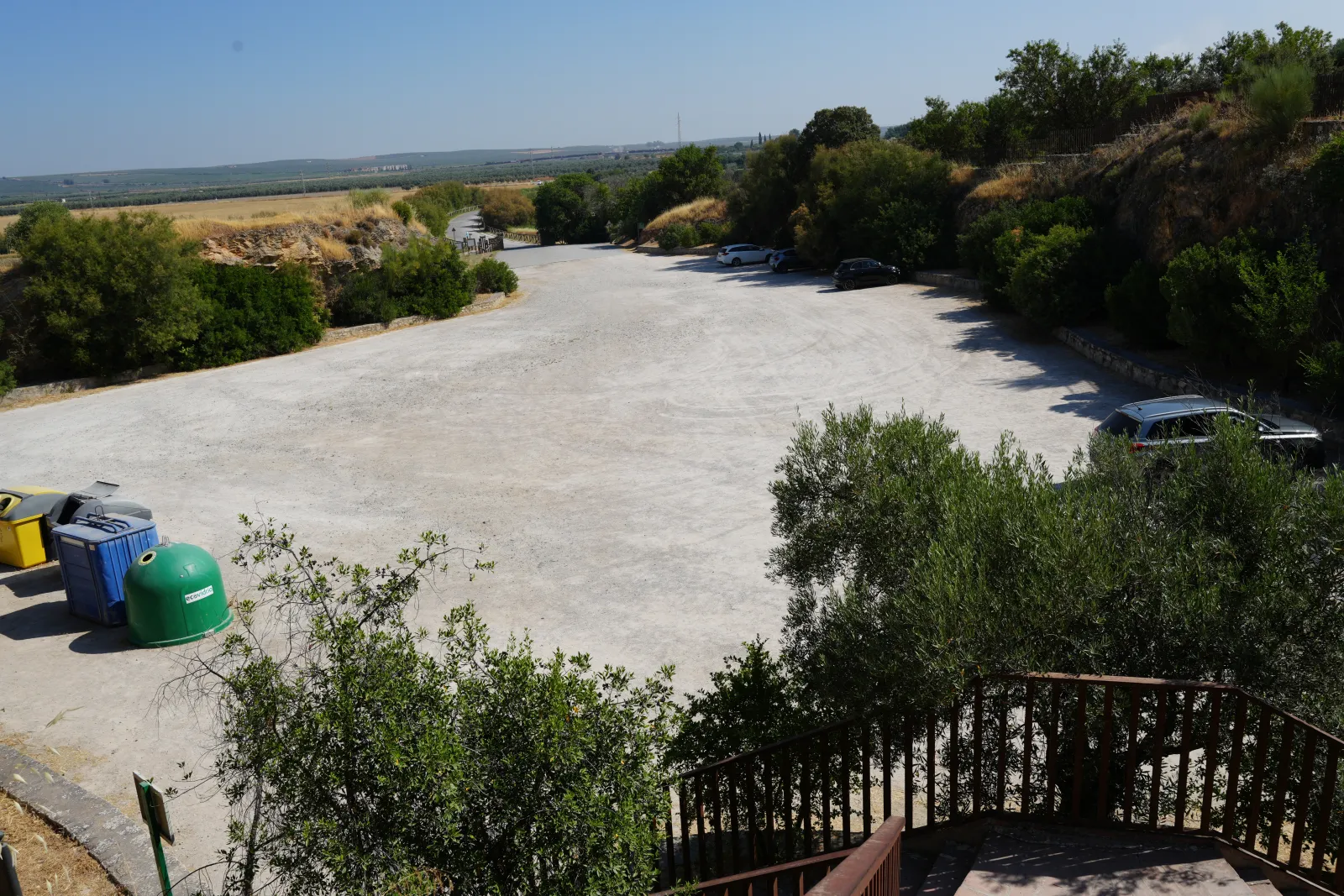
There’s a huge free car park right at the visitor centre, and even arriving mid-morning in July we had no trouble at all finding a space. If you’re building a fuller day out, the lagoon pairs naturally with the things to do in Antequera, a 20-minute drive south.
By Train
Fuente de Piedra has its own small station on the Córdoba and Seville line, and the visitor centre is just 500 metres away on foot. That makes this one of the few flamingo trips in Andalusia you can do without a car.
Direct trains run from Málaga several times a day, with fares starting around 7 euros. I book these through Omio, which shows every departure time in one place. Don’t confuse this stop with the Antequera-Santa Ana high-speed station, which is about 11 kilometres away with no bus link, so you would need a taxi from there.
By Bus
ALSA runs buses to Fuente de Piedra village on the Málaga to Seville route. From Málaga there are around three direct services a day, taking roughly an hour and twenty minutes, with tickets from about 7 euros.
From Antequera the connection is better, with around 15 buses a day covering the short hop in about 35 minutes. The catch is the finish: from the stop in the village it’s a 20-minute walk of around 2 kilometres to reach the lagoon itself.
READY TO PLAN YOUR ANTEQUERA DAY OUT?
🚗 Rent a car: I use Discover Cars
🏨 Where to stay: Find hotels near Antequera
🎟️ Guided tours: I use GetYourGuide
🚆 Trains and buses: I book through Omio
🛡️ Travel insurance: I use SafetyWing
The Lagoon and Why It Turns Pink
I walked to the water’s edge expecting to see the far shore. I never did, not even close, this lake is genuinely huge, roughly 6.5 kilometres long and 2.5 kilometres wide, with the reserve around it running past 1,300 hectares.
Around the water, it’s all olive groves and a low ridge lined with old windmills, which is a nice frame for something this flat and open. There’s no river running into it, which surprised me. It’s a salt lake, shallow, fed by nothing but rainfall and underground springs. That salinity is the whole secret, actually: it feeds huge colonies of brine shrimp, and it’s the pigment in those shrimp that gives the flamingos their colour.
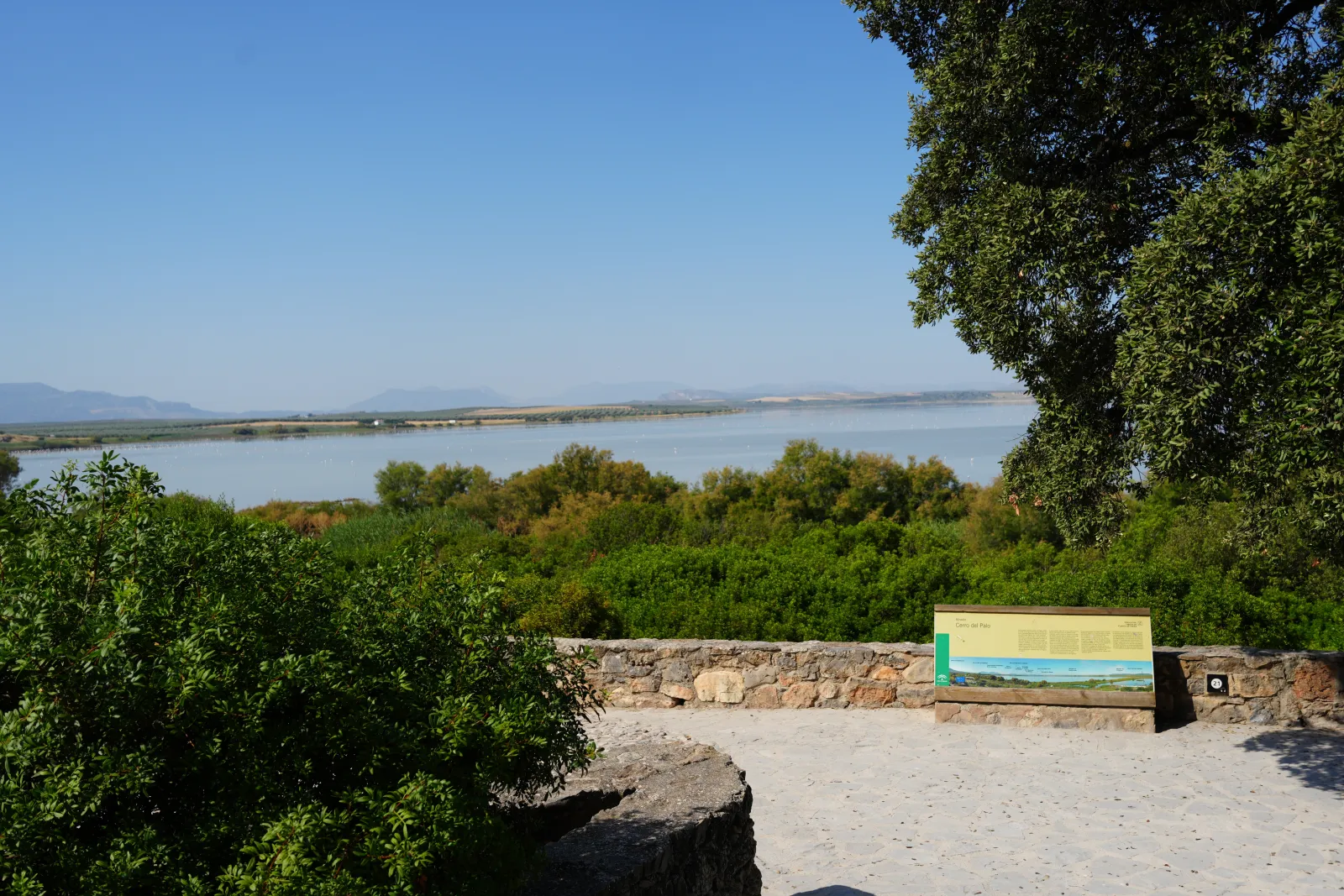
At first all I could make out in the middle of the lake was a pale pink smudge, so distant I thought I might be imagining it. I got closer, and closer, and the smudge slowly resolved into thousands of individual flamingos, standing in the shallows like they owned the place. I stood there grinning like an idiot.
Because I’d come at the start of summer rather than spring, most of the birds had retreated toward the middle of the water rather than gathering near shore. In spring, from what I understand, the colony crowds right into the shallows and the whole edge of the lagoon turns pink. This is Spain’s most important breeding site for greater flamingos, one of only a handful in all of Europe, and in a wet year more than 20,000 pairs nest here alongside over 170 other recorded bird species.
I grabbed a paper map at the visitor centre before setting off, and I’d say don’t skip it, the trails and viewpoints are hard to find on your own once you’re away from the building.
The Visitor Centre, Cost and Dogs
The best thing about Fuente de Piedra is that the whole visit is free. There’s no entry fee for the reserve, no charge for the visitor centre, and the large car park costs nothing either.
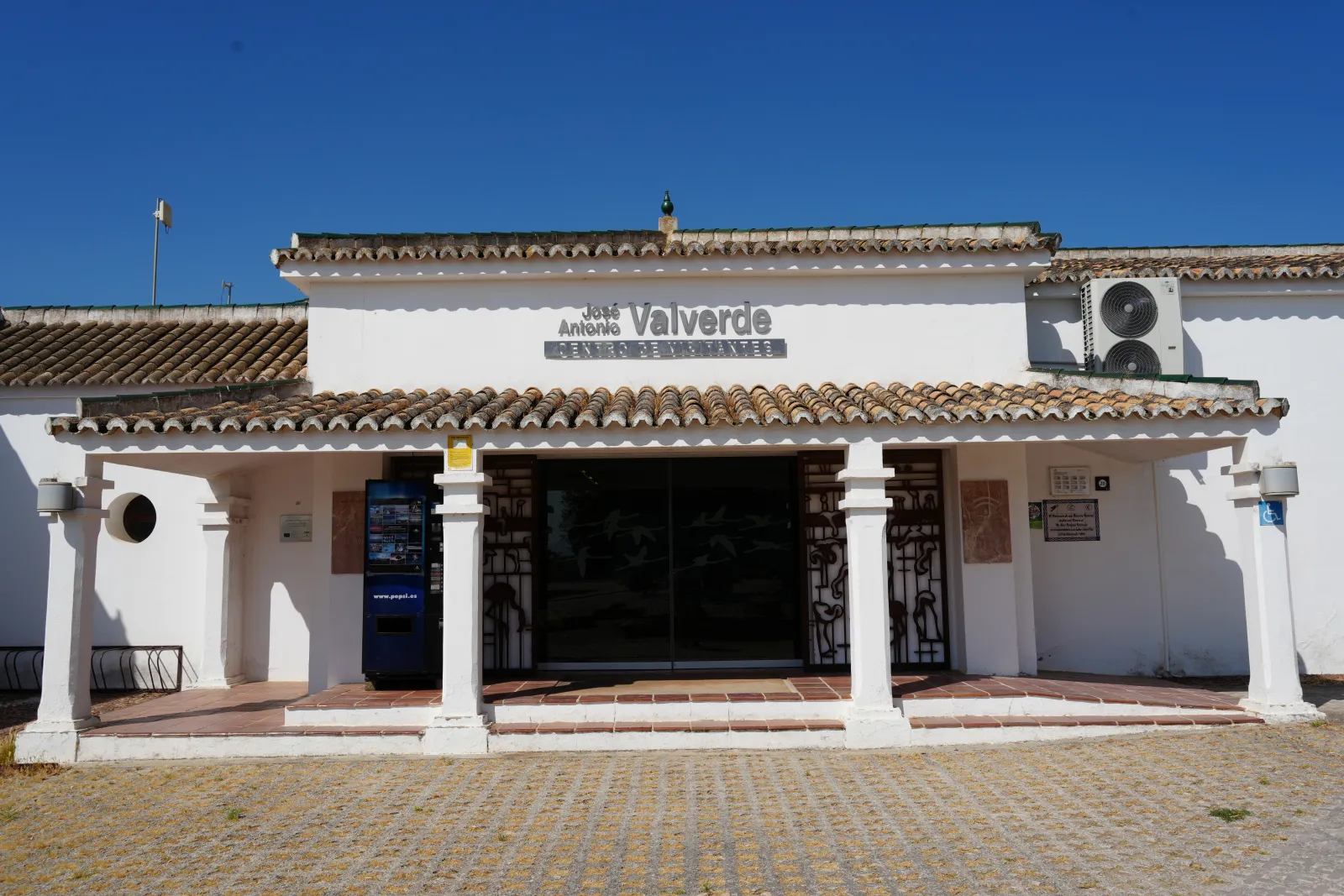
The Centro de Visitantes José Antonio Valverde sits right at the entrance, and it’s where I’d start any visit. There were staff at the desk handing out information when we arrived, and a lovely little shop selling souvenirs, cold drinks, and bird guides.
Inside there’s a small museum about the lagoon and its flamingos. I’ll be honest, I found the exhibit itself a little dull, but the paper map I collected here was genuinely useful once we were out on the trails.
The centre keeps seasonal hours, roughly 10am to 2pm and again in the late afternoon, with longer mornings in August, so it’s worth checking before you make a special trip.
You can rent binoculars and bikes at the centre, and some of the bikes come with child trailers attached. If you have small children, or you simply want to cover the longer trails without walking in the heat, that’s a smart way to do it.
Guided visits are also available from around 6 euros for a two-hour tour, which you can book through visitasfuentepiedra.es if you want an expert to point out the best spots. For most visitors the free trails and hides are more than enough on their own.
Dogs are welcome, which isn’t always the case at a nature reserve. A sign at the entrance makes the rules clear: because this is a protected reserve, dogs must stay on a lead and you have to keep to the marked paths.
🎟️ The reserve itself is free, so the only thing worth paying for here is a guide who knows where the birds actually are on the day. Organised trips out from Málaga and Antequera also save you arranging the driving, and you can see what’s running on GetYourGuide.
Best Trails and Viewpoints for Seeing the Flamingos
Fuente de Piedra basically splits into a short route and a long one, and it’s the short one that puts you closest to the flamingos. Start at the visitor centre either way, that’s where all the trails and viewpoints are marked out.
The Easy Boardwalk Trail (Sendero del Laguneto)
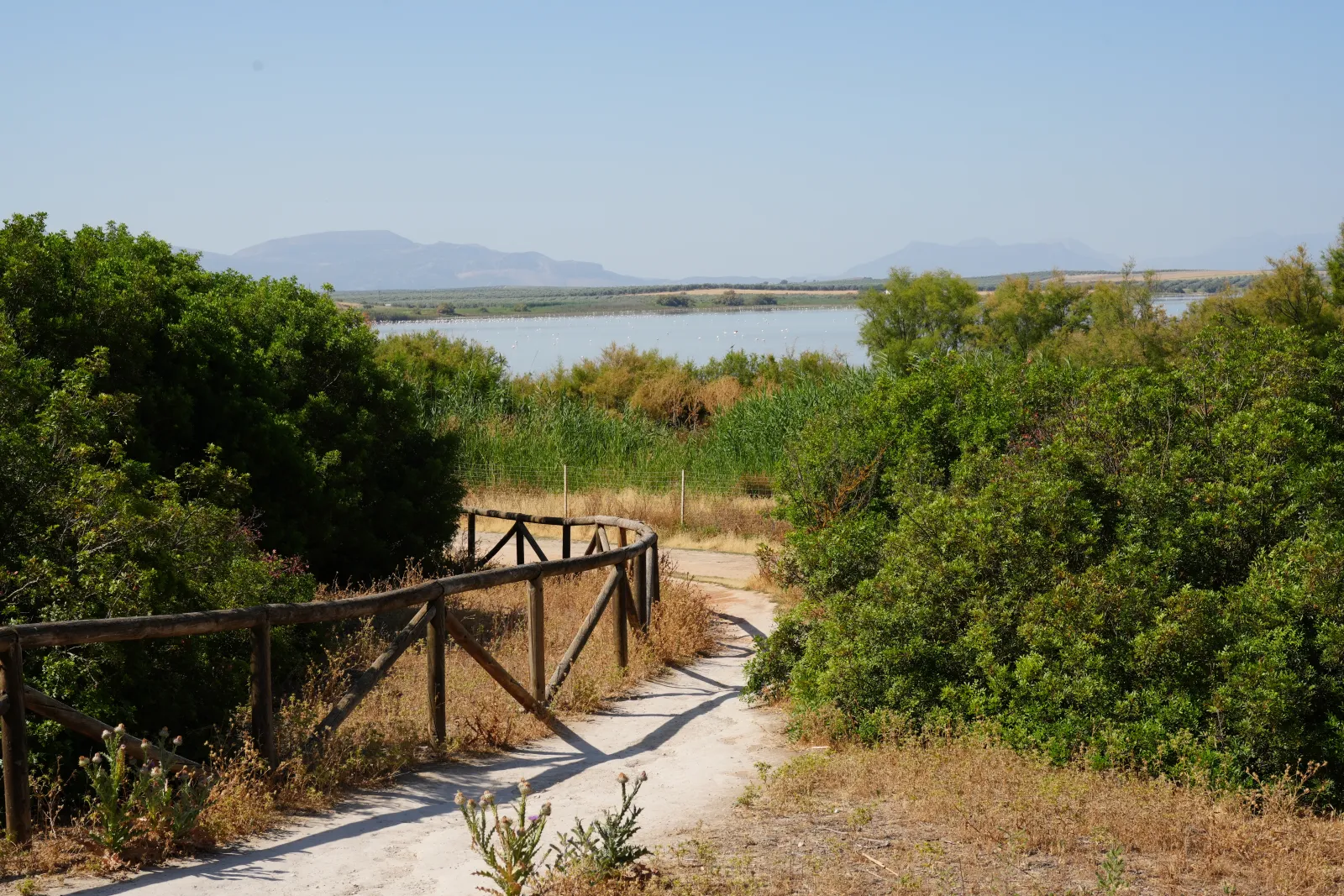
This is the one most people end up walking. It’s flat and easy to follow, about 1.5 kilometres from the visitor centre along the edge of the lagoon, part gravel, part raised wooden boardwalk. It brings you to the best viewpoints and a few bird hides tucked along the shore, so you can watch the flamingos up close without spooking them.
Flat ground the whole way means a pushchair’s no problem, and there are bikes for rent back at the centre if you want to cover it faster. With kids, or on a hot day, this is the trail to pick.
Cerro del Palo Viewpoint
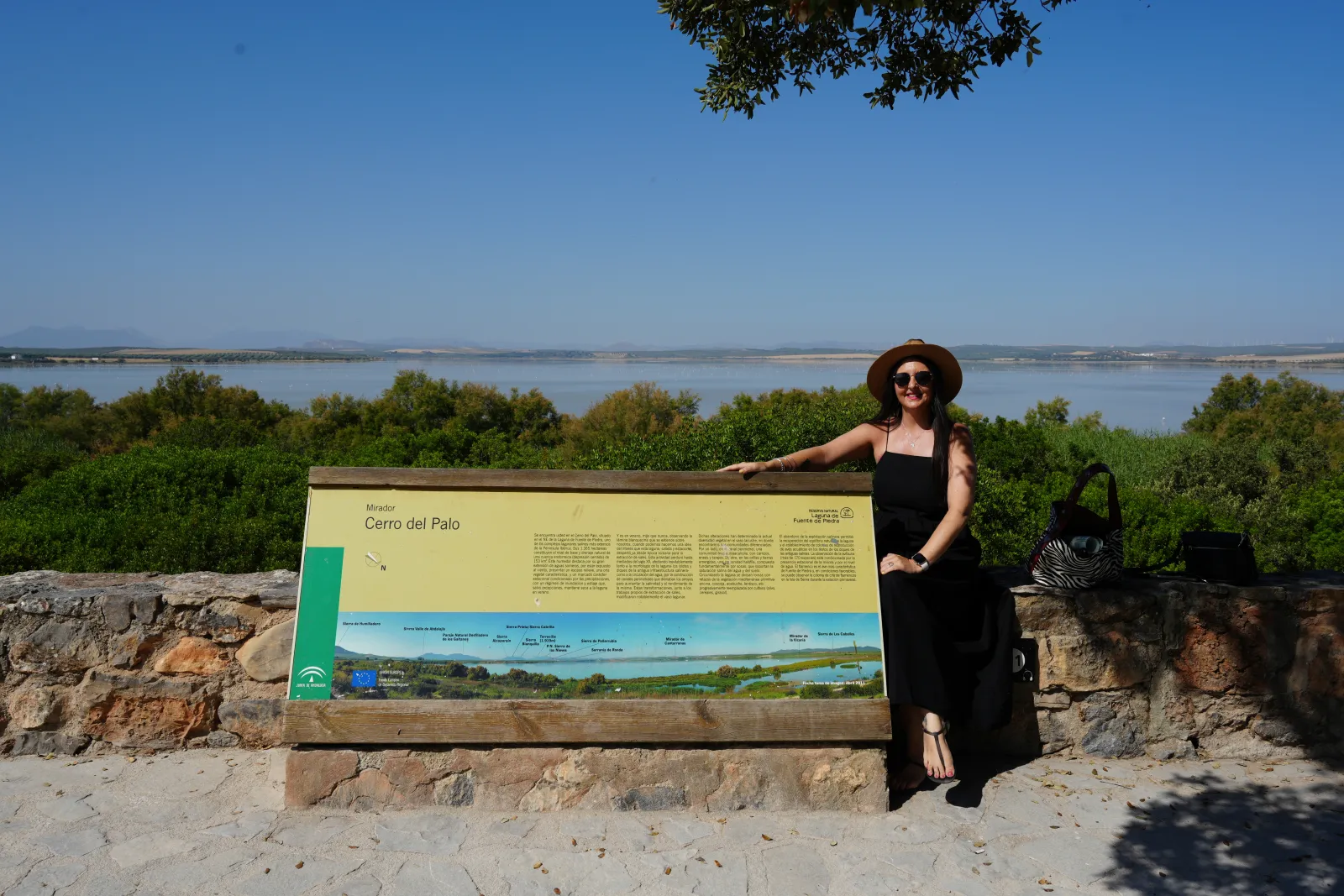
The main viewpoint, a low hill just up from the visitor centre. Once you’re up there the lagoon spreads out in front of you and you actually get how big it is, which you can’t really tell from ground level. The climb is short and easy. This is where I took almost all my photos.
There are information boards at the top too, which helped me work out what I was actually looking at.
The Full Loop for Keen Walkers
There’s a longer loop as well, 13 to 16 kilometres through olive groves and open farmland, and for part of it you’re walking the Gran Senda de Málaga, the long-distance route that loops around the whole province.
Probably beautiful outside summer. I went in July and one look at the open, shadeless ground was enough to put me off. If you’re going to do it, get moving early and bring far more water than feels necessary.
🛡️ A 13-kilometre loop with no shade in Andalusian heat is exactly how people end up needing a doctor abroad. I use SafetyWing, an affordable subscription policy you can buy even after you’ve already left home.
Other Birds You’ll See
There’s birdsong coming at you from every direction here, even when the heat is at its worst, and somehow we still saw more than we’d planned for. Bringing our own binoculars turned out to be the best decision of the morning, what should’ve been a quick stop stretched into hours of just standing and looking.
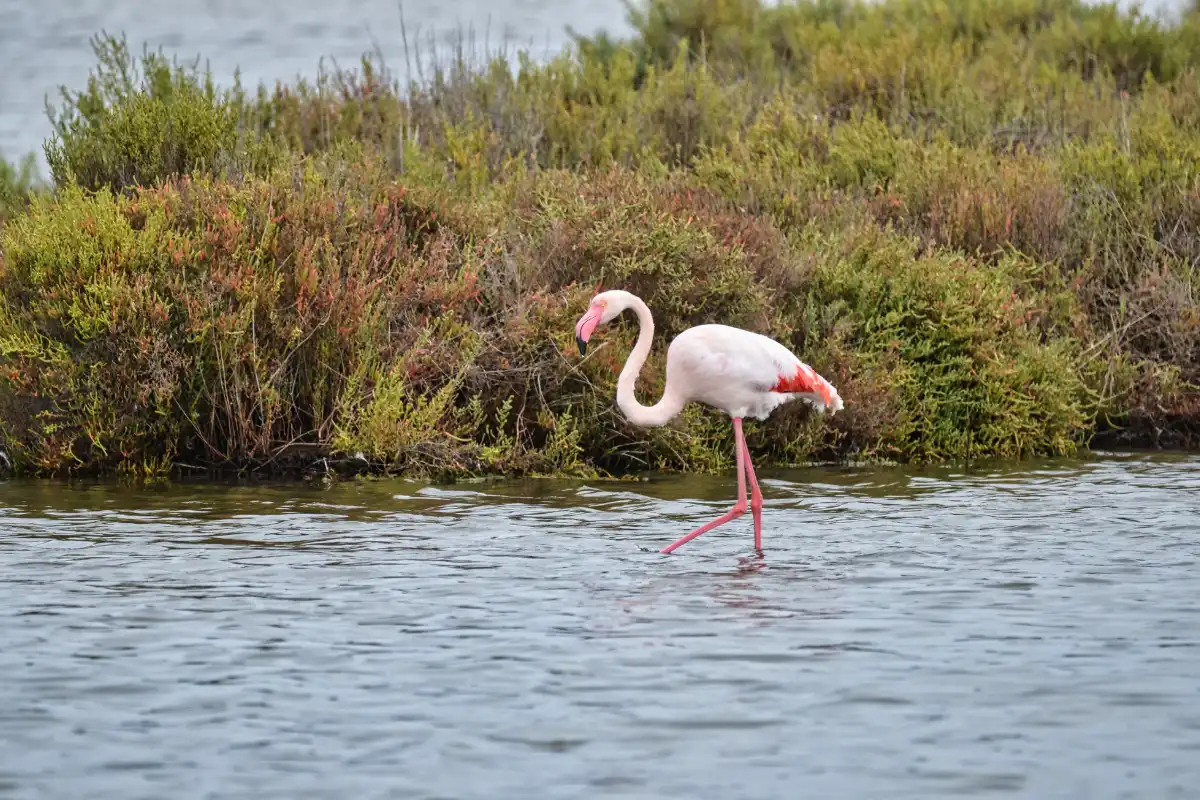
Flamingos might draw the crowds, but they’re really only part of the story, Fuente de Piedra is home to over 170 bird species across the lagoon and the wetland surrounding it, one of the richest patches of birdlife anywhere in this part of Spain.
Who you’ll actually spot changes with the calendar. Stilts and avocets wade the shallows, shelducks and gulls settle into the reed beds, and marsh harriers hunt low over the surface, quiet and patient. Little egrets pick their way along the edges, winter brings the ducks in, and every so often a crane shows up to join them. Then spring and autumn roll around and the waders pass through on migration, so the reserve never quite looks the same twice.
Pack binoculars, or rent a pair at the centre if you forget, most of the good stuff happens far out on the water. The hides along the boardwalk are your best bet for sitting quietly and letting it come to you.
And if you’re not the type to care about species names, that’s fine too, the sheer volume of life out there does the talking.
📖 Read next >> The quirky three-stop day trip near Antequera, which pairs the lagoon with Spain’s largest hedge maze and a nativity museum with a Star Trek scene in it.
Tips for Photographing the Flamingos
Photographing the flamingos is rewarding but tricky, because the birds spend most of their time well out on the water, far from the paths. A phone will capture the pink haze and the setting, but it won’t get you a frame-filling flamingo.
For close-up shots you need a proper zoom, so a camera with at least a 30x optical zoom or a long telephoto lens makes all the difference.
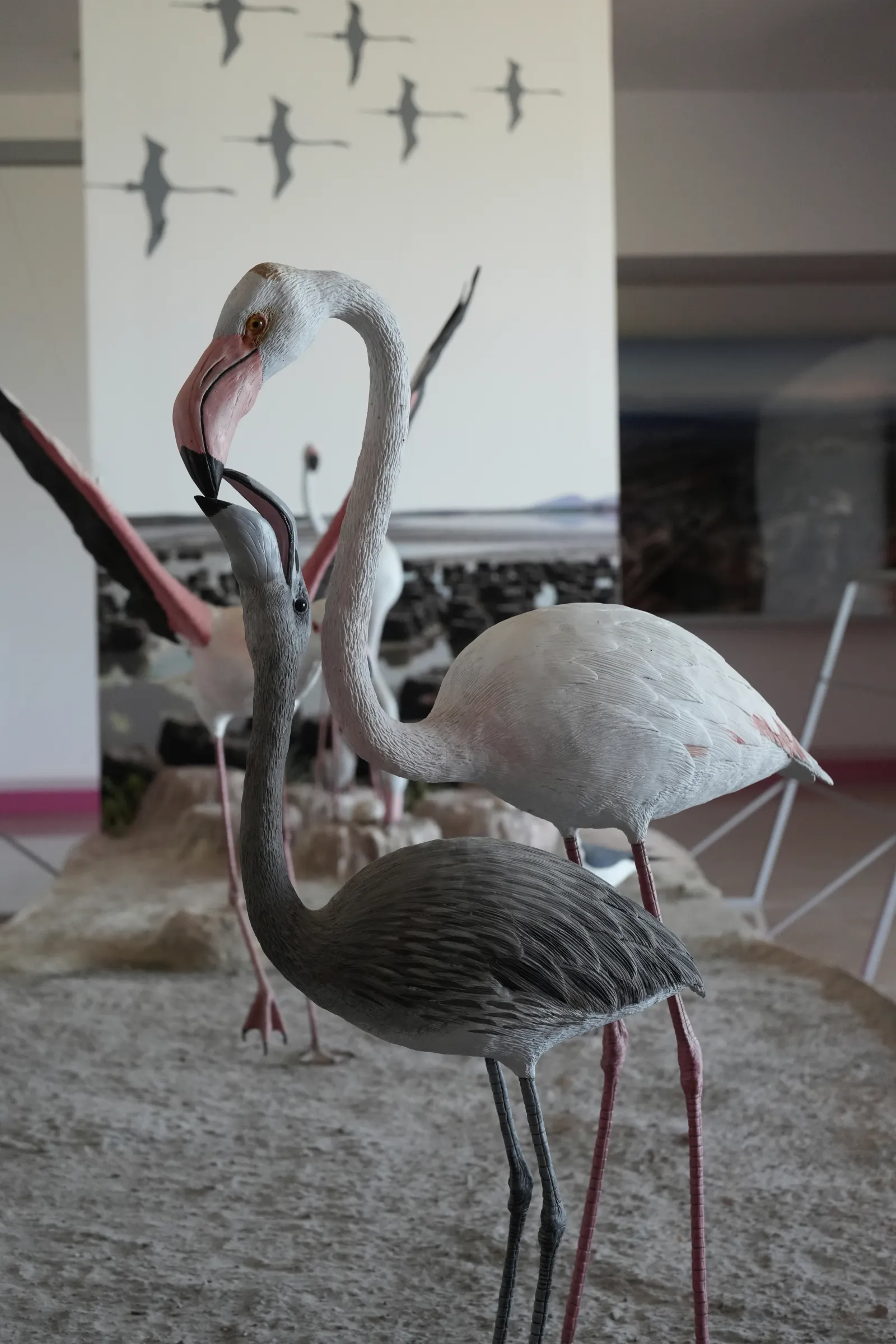
A few things that help:
- Go early morning or late afternoon, when the light is soft and the heat haze over the water is weakest.
- Rest your camera or phone on a hide window ledge to steady those long shots.
- Shoot from the bird-watching hides, which let you photograph without spooking the birds.
- Bring binoculars anyway, so you can enjoy the flamingos your lens can’t quite reach.
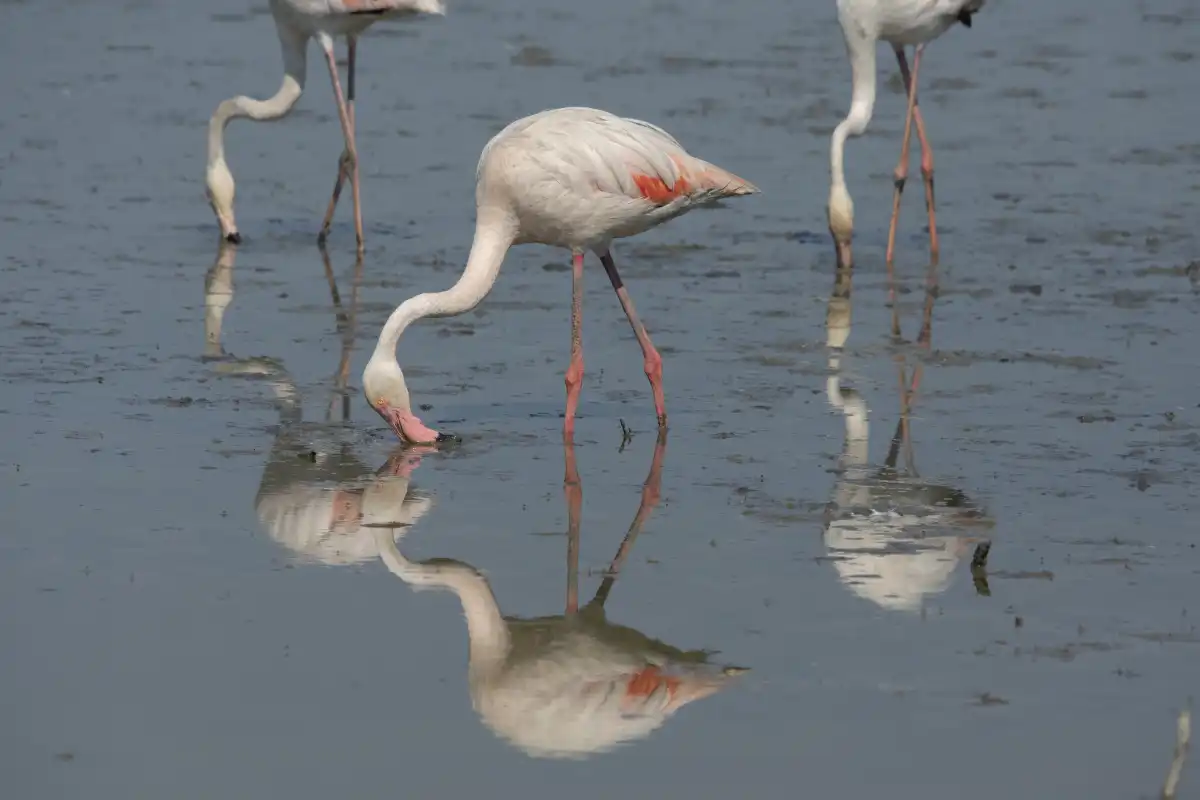
In the middle of a hot summer day the haze shimmering off the lake softens everything in the distance, so your sharpest images will come at the cooler ends of the day. Manage your expectations and enjoy the scene as much as the photos.
The Flamingo Sculpture Trail in Fuente de Piedra Village
Driving into the village turned into its own little adventure before we’d even reached the lagoon. Fuente de Piedra has leaned hard into its most famous residents, and life-size flamingo statues turn up all over town, nine of them in total, with a cluster of the best ones near Plaza de la Constitución.
No two are alike. One’s got a little suitcase, ready to travel, another’s holding up a pair of binoculars like it’s the one doing the birdwatching for once.
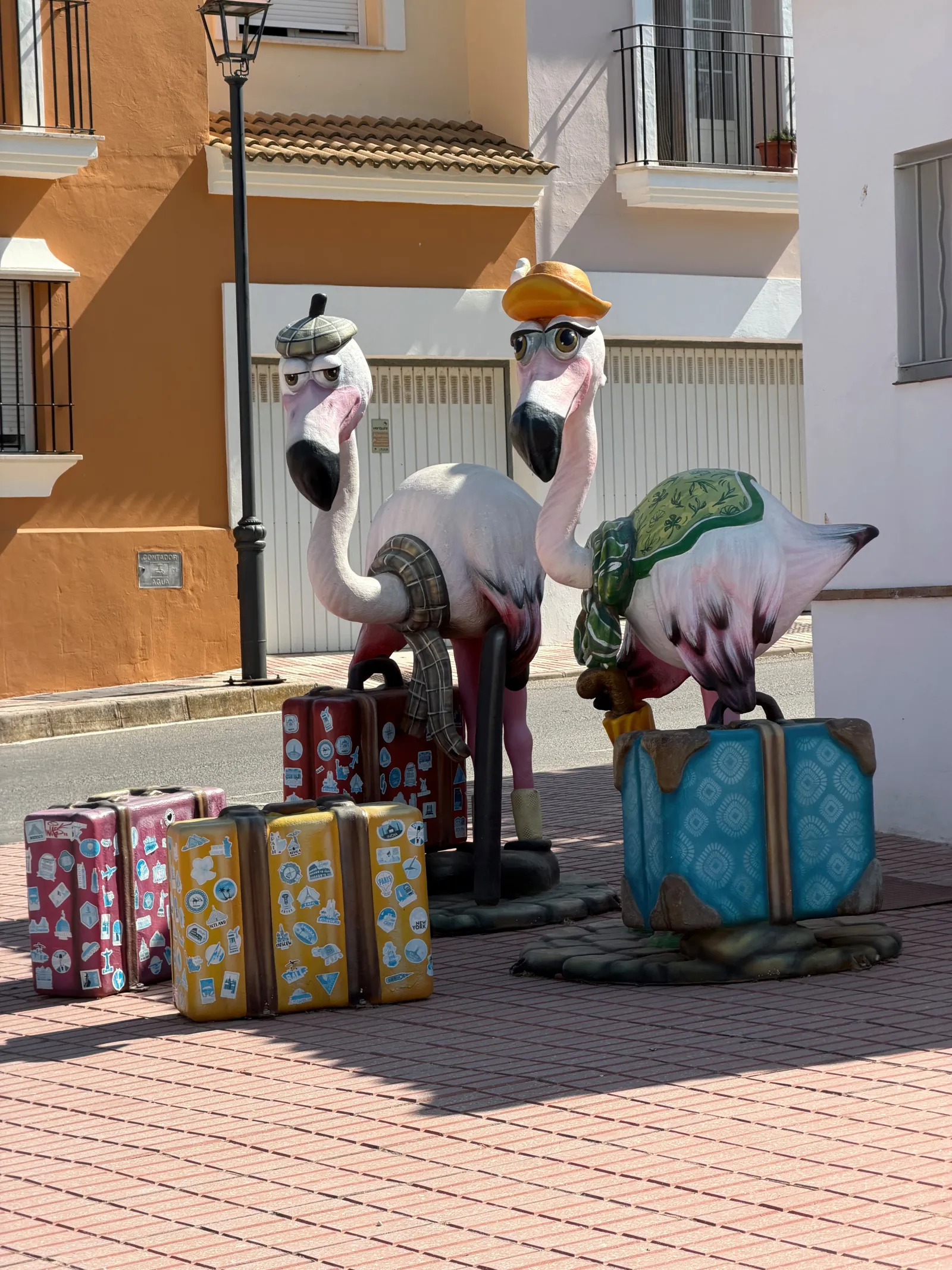
We spotted them one after another from the car window on the way through.
The one with the binoculars was my favourite, hands down.
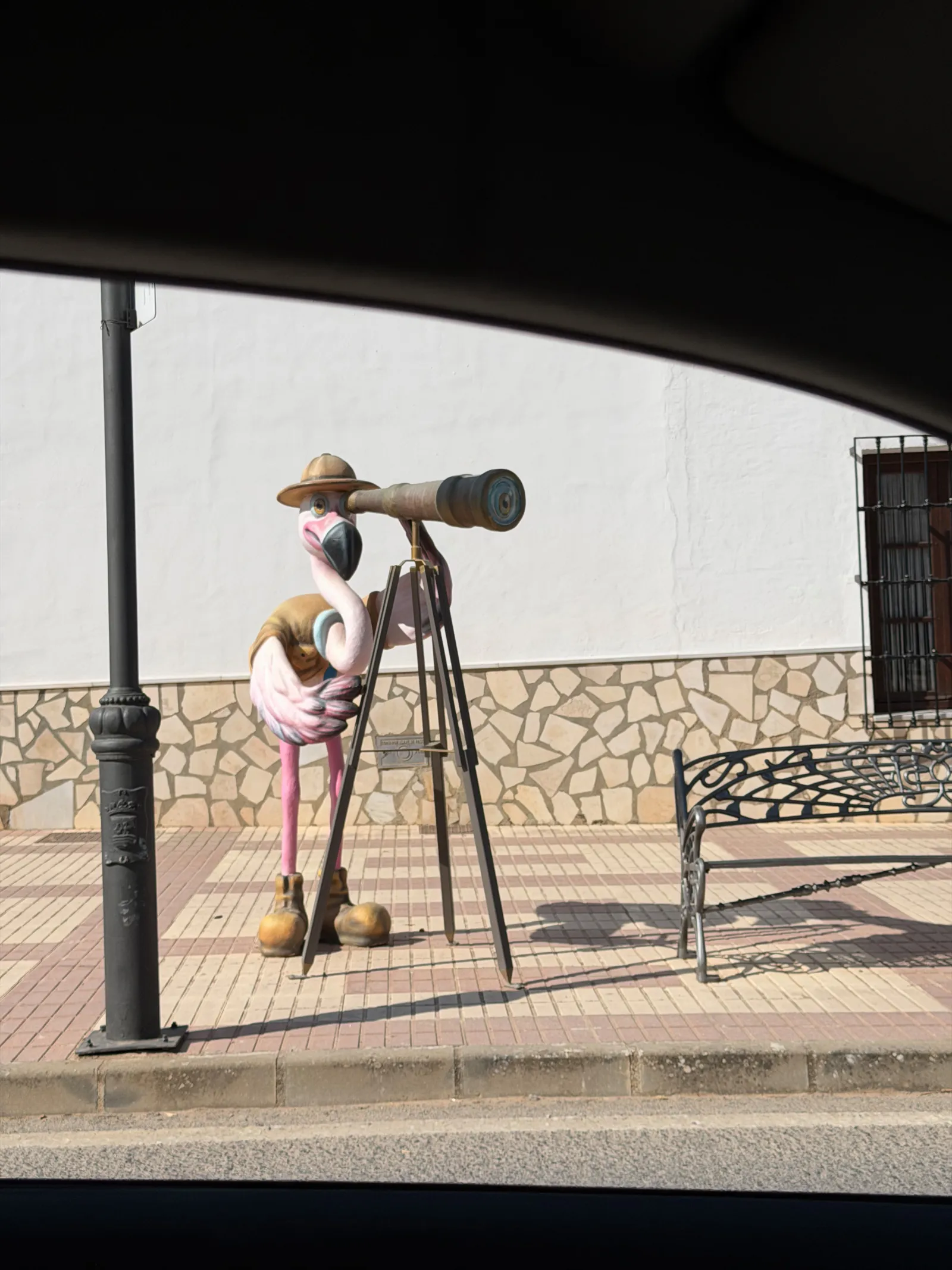
Worth pulling over for, honestly, especially with kids in tow, they’re built for photos, and children will happily race off to find every last one. What could’ve just been a drive to the car park turned into part of the day itself, and a genuinely fun one at that.
Combining Fuente de Piedra with Antequera, El Torcal and Caminito del Rey
The lagoon only takes two to three hours to enjoy, so it works best as one stop on a bigger day out rather than a trip on its own. Antequera is the obvious base, just 20 minutes south and full of things to see and good places to eat.
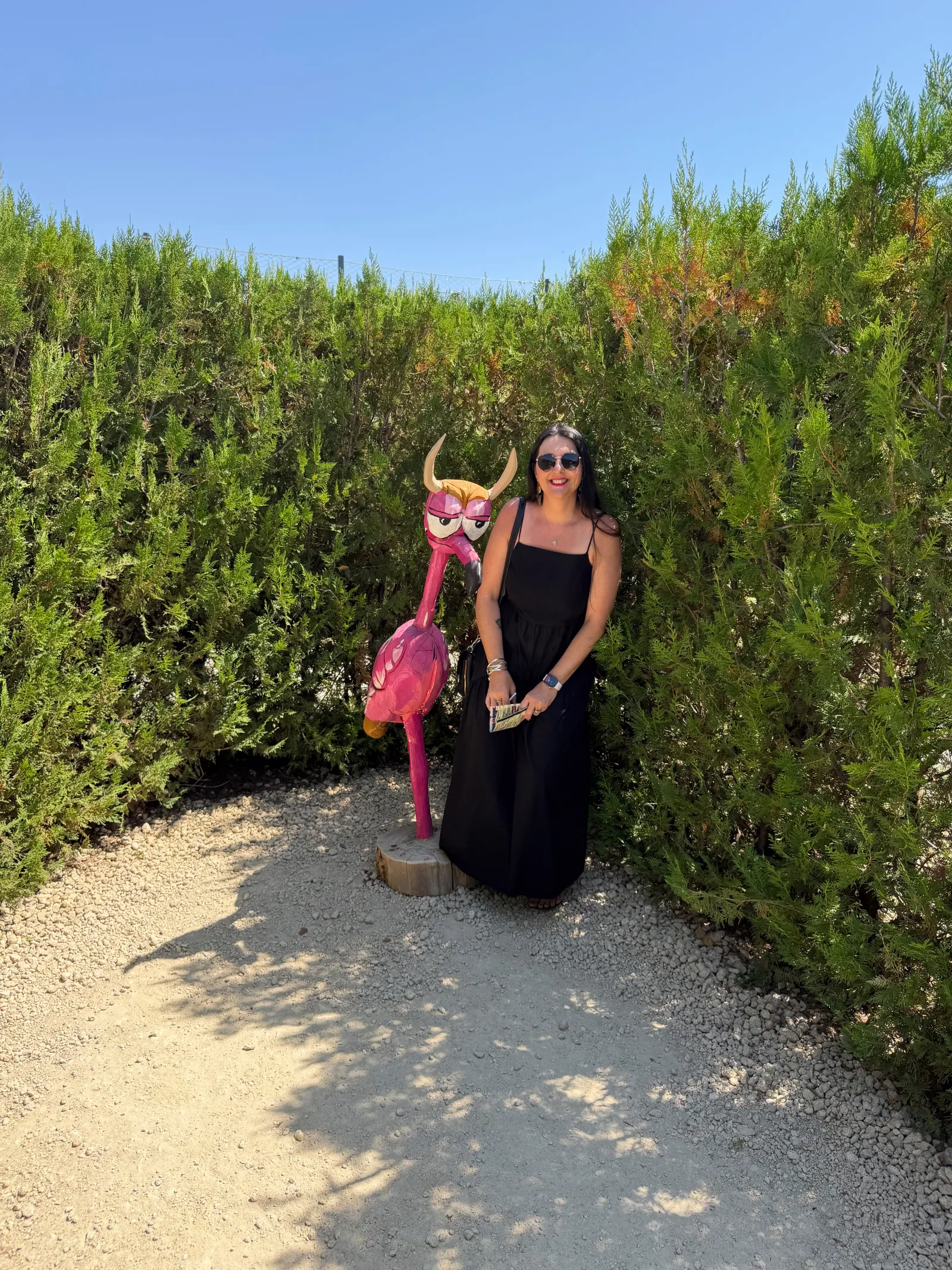
We built our day around the flamingos in the cooler morning, then drove on to explore more of the area. We visited Laberintus, a huge hedge maze that’s great fun with children, and the International Nativity Scene Museum at nearby Mollina, before stopping in Antequera for a long, late lunch. If you want a proper meal afterwards, my guide to where to eat in Antequera covers my favourite spots in town.
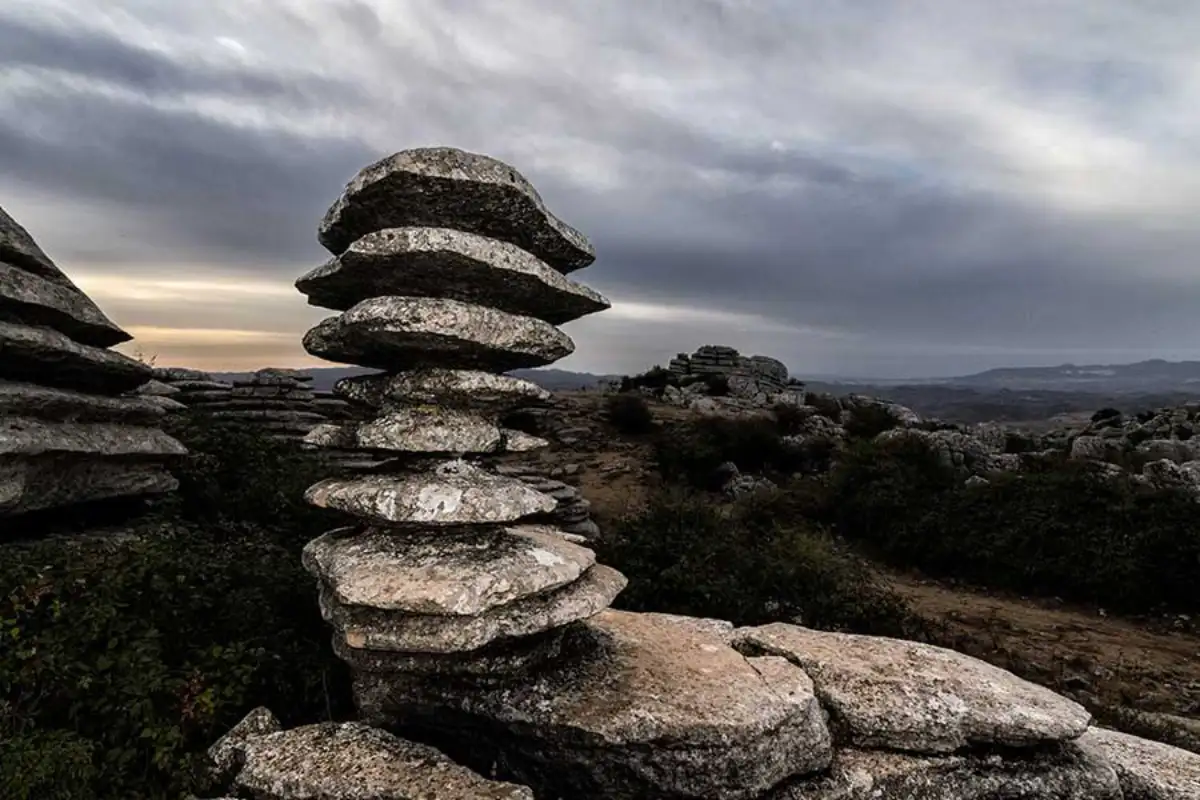
For nature lovers, El Torcal de Antequera is around 40 minutes away, a surreal landscape of weathered limestone pillars that pairs perfectly with a morning at the lagoon.
The other classic combination is the Caminito del Rey, the cliffside walkway about 45 minutes from the reserve. You need to book the Caminito well in advance and start early, and I book mine through GetYourGuide, but flamingos at dawn and the gorge in the afternoon make for an unforgettable day.
I’ve written up this exact route, flamingos, Laberintus and the Belén museum, as its own day trip near Antequera, so follow that if you want to copy it step by step.
Is Fuente de Piedra Worth Visiting?
Yes. It’s worth the trip, more so if you can get there in spring. It only takes two or three hours, it costs nothing to get in, and there’s nowhere else in Spain where you’ll see flamingos breeding in these numbers.
I was there at the start of July, and even though I enjoyed it, the birds stayed far off and the heat never really broke, so I know what I saw was only a small piece of what spring visitors get. Go between March and June and the shallows by the visitor centre are packed with pink, the noise of the colony carrying across the whole reserve.
I’d go back, and next time I want April, full colony, higher water.
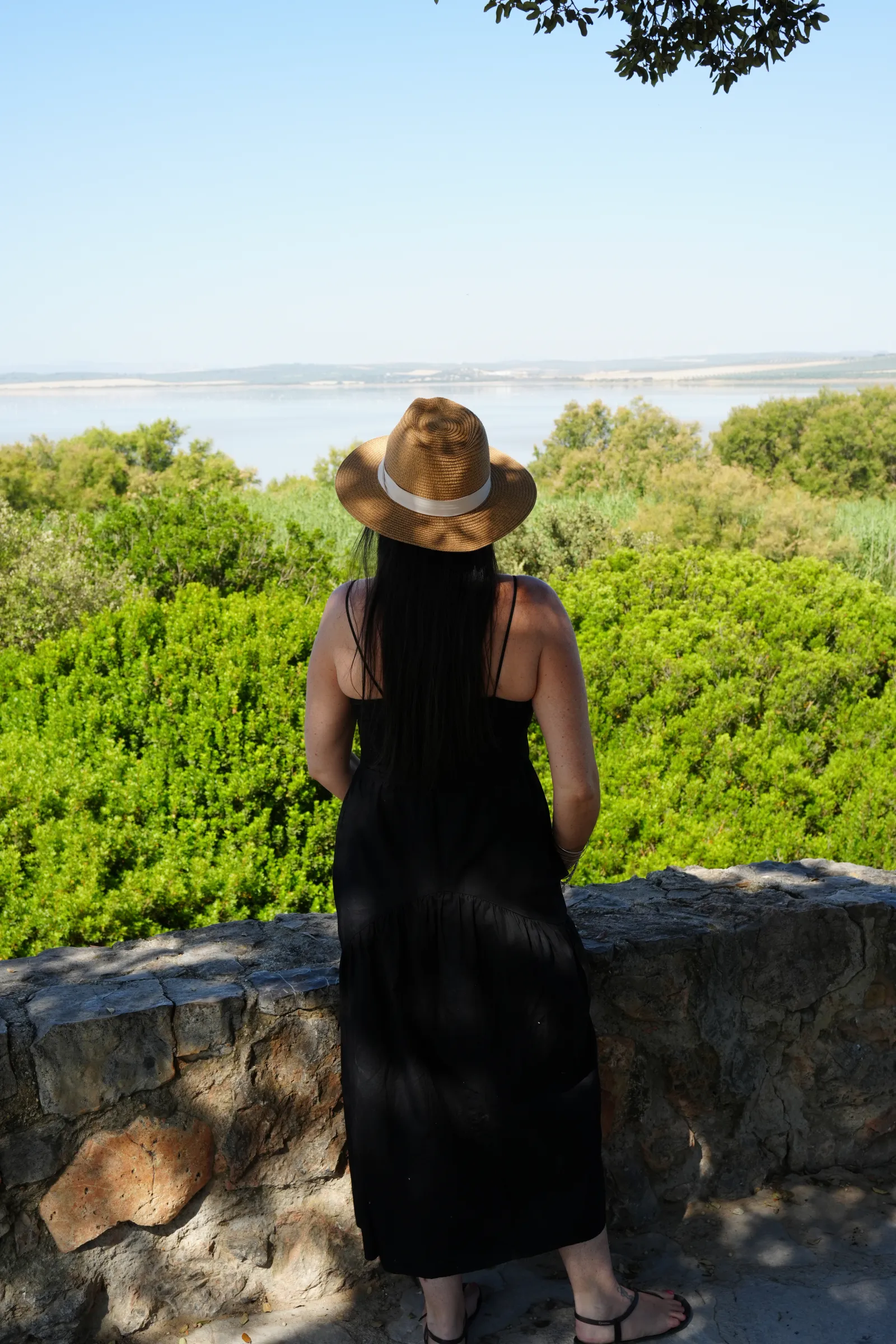
Looking out over the lake, so wide you lose the far shore, with thousands of flamingos shimmering across it, that was a genuine privilege to stand and watch. It’s an easy, cheap half day if you’re anywhere near Antequera or Málaga. Just bring water, a hat, and binoculars.