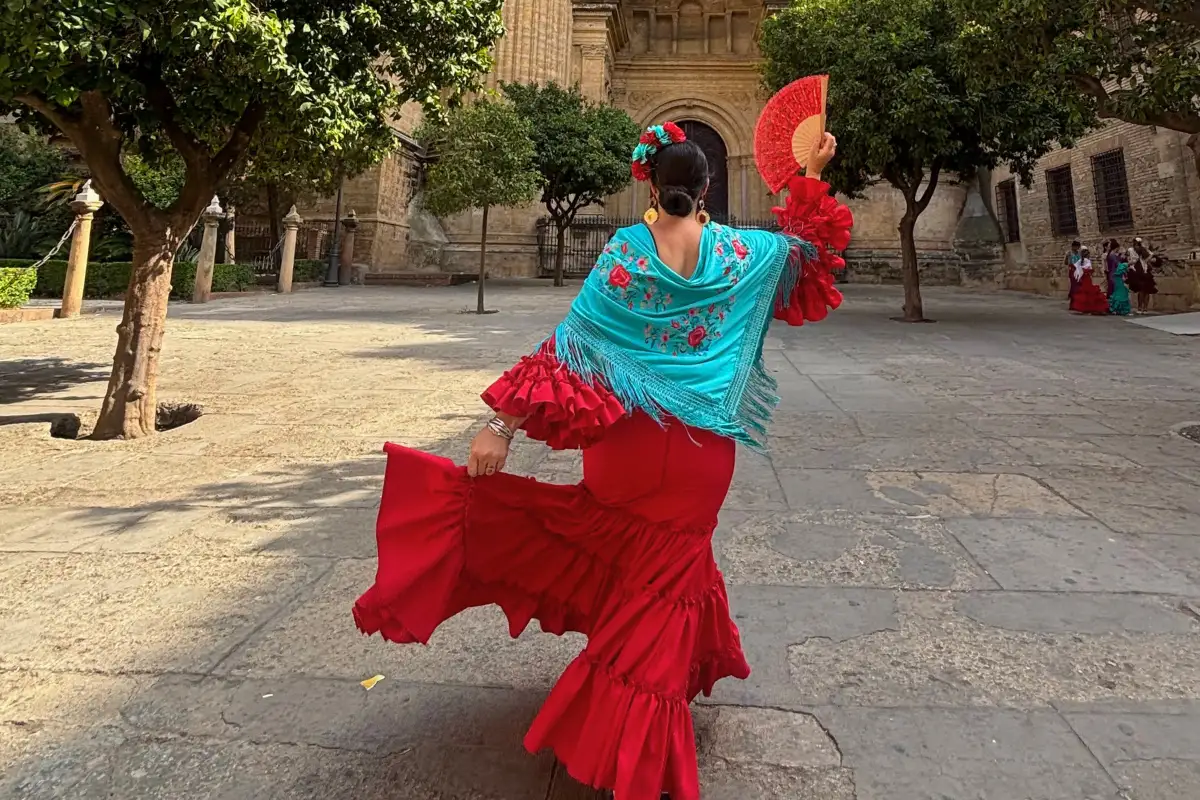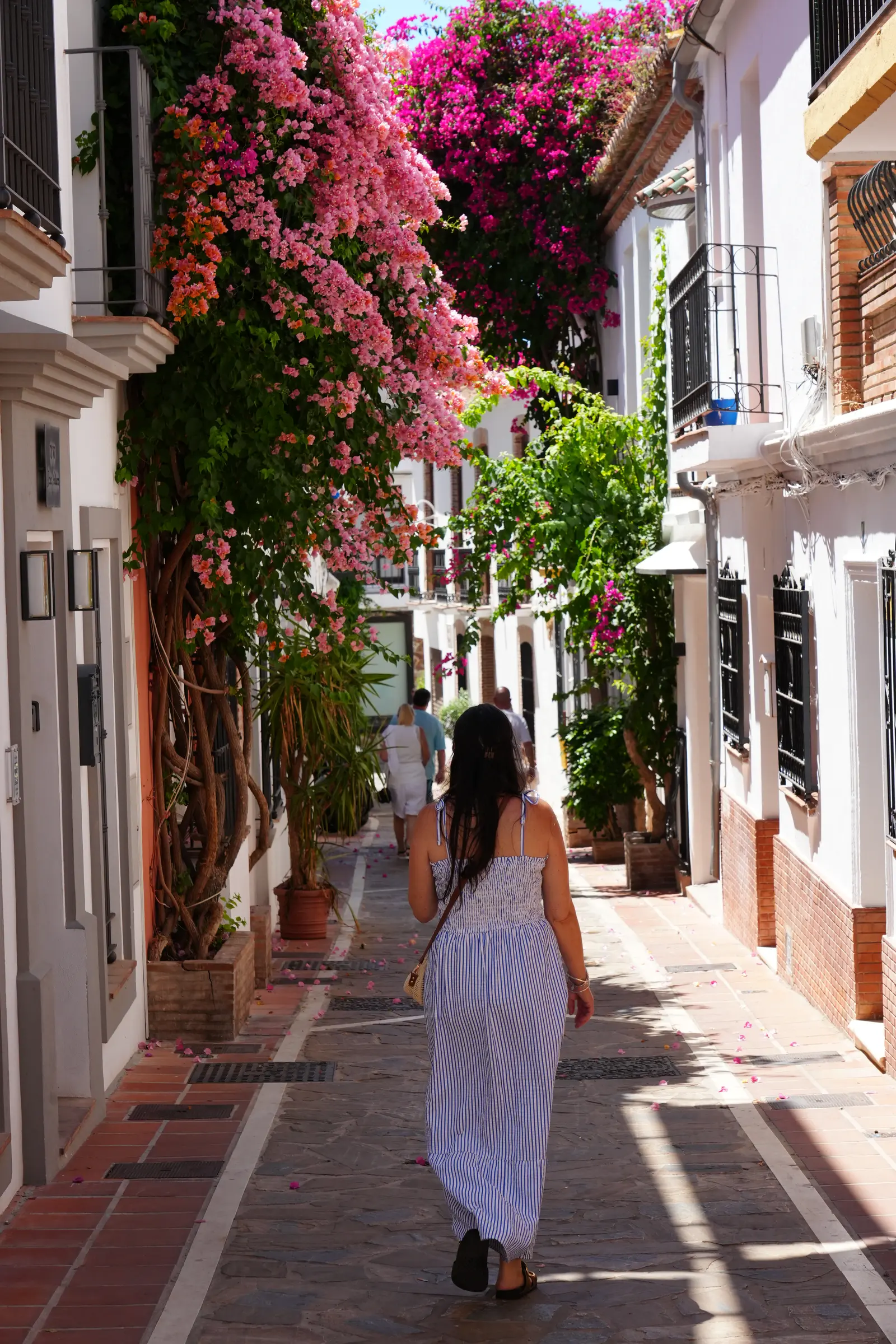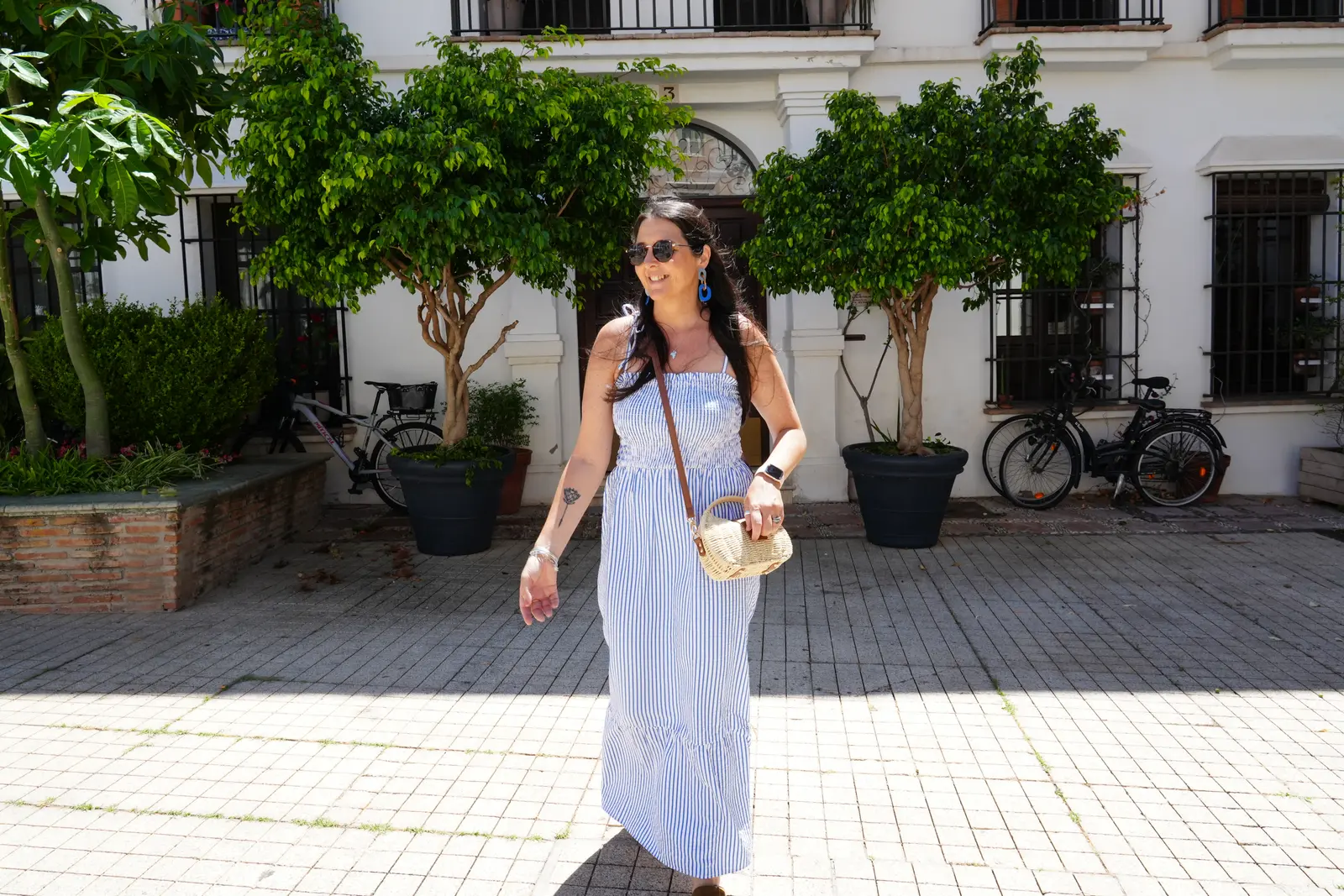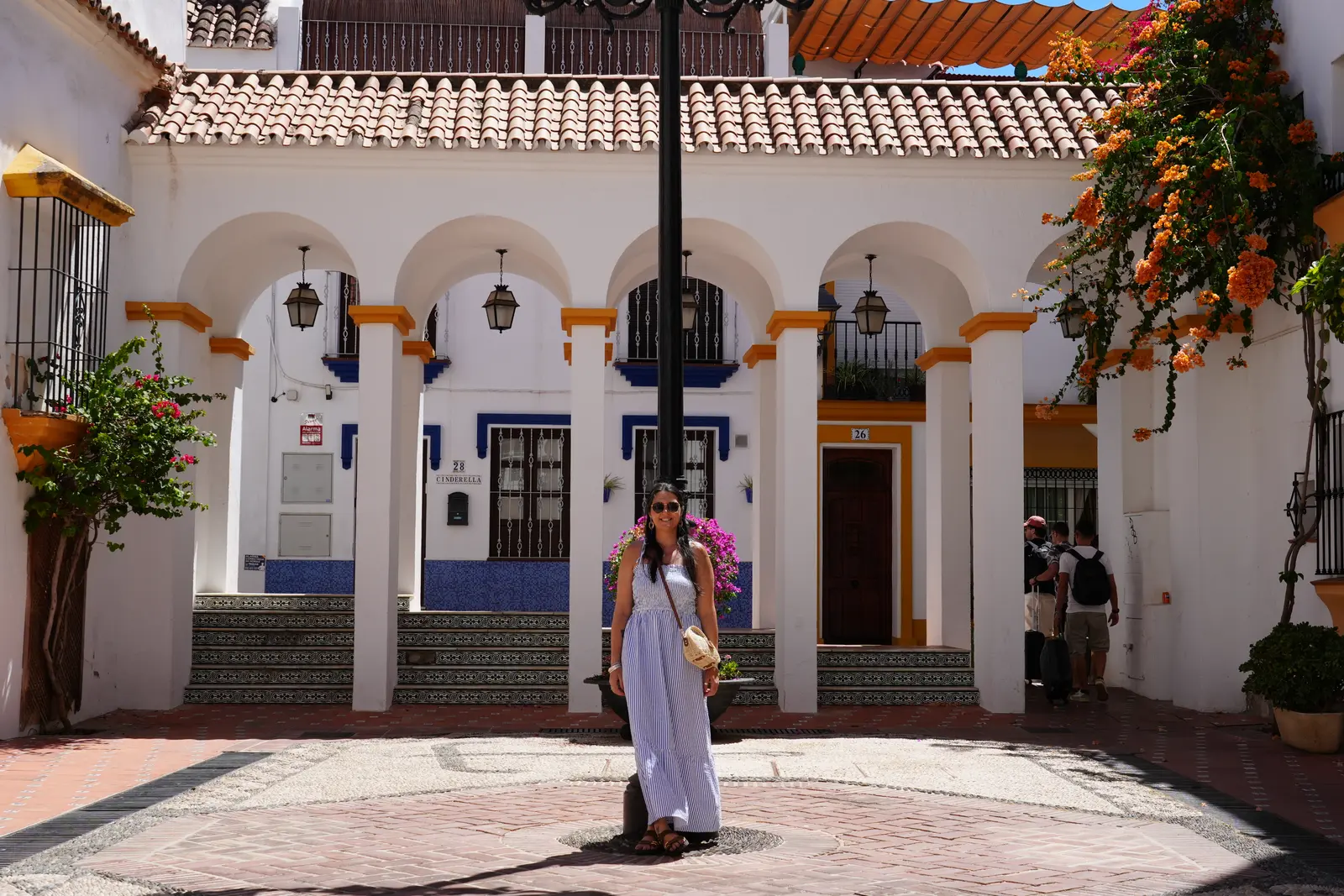
The most beautiful streets in Marbella are all concentrated in the Old Town, a compact maze of whitewashed alleys where every turn seems to produce another wall of blue flower pots or a burst of bougainvillea overhead. I’d walked past Marbella’s Old Town entrance dozens of times before I actually slowed down enough to explore it properly.
I’d assumed it was a quick loop around a central square and nothing more. I was wrong.
There are streets in here that most visitors never reach because they stop at the first photo spot and turn back the way they came.
In this guide, I’ll walk you through the prettiest streets in Marbella Old Town, the ones worth photographing and the ones worth finding for quieter reasons, plus a suggested route so you can see them all in one go. If you’re looking for more to fill your day, I have a full guide to things to do in Marbella.
⭐ Don’t miss >> Where to stay in Marbella, my honest area-by-area picks
What Is the Main Strip in Marbella Called?
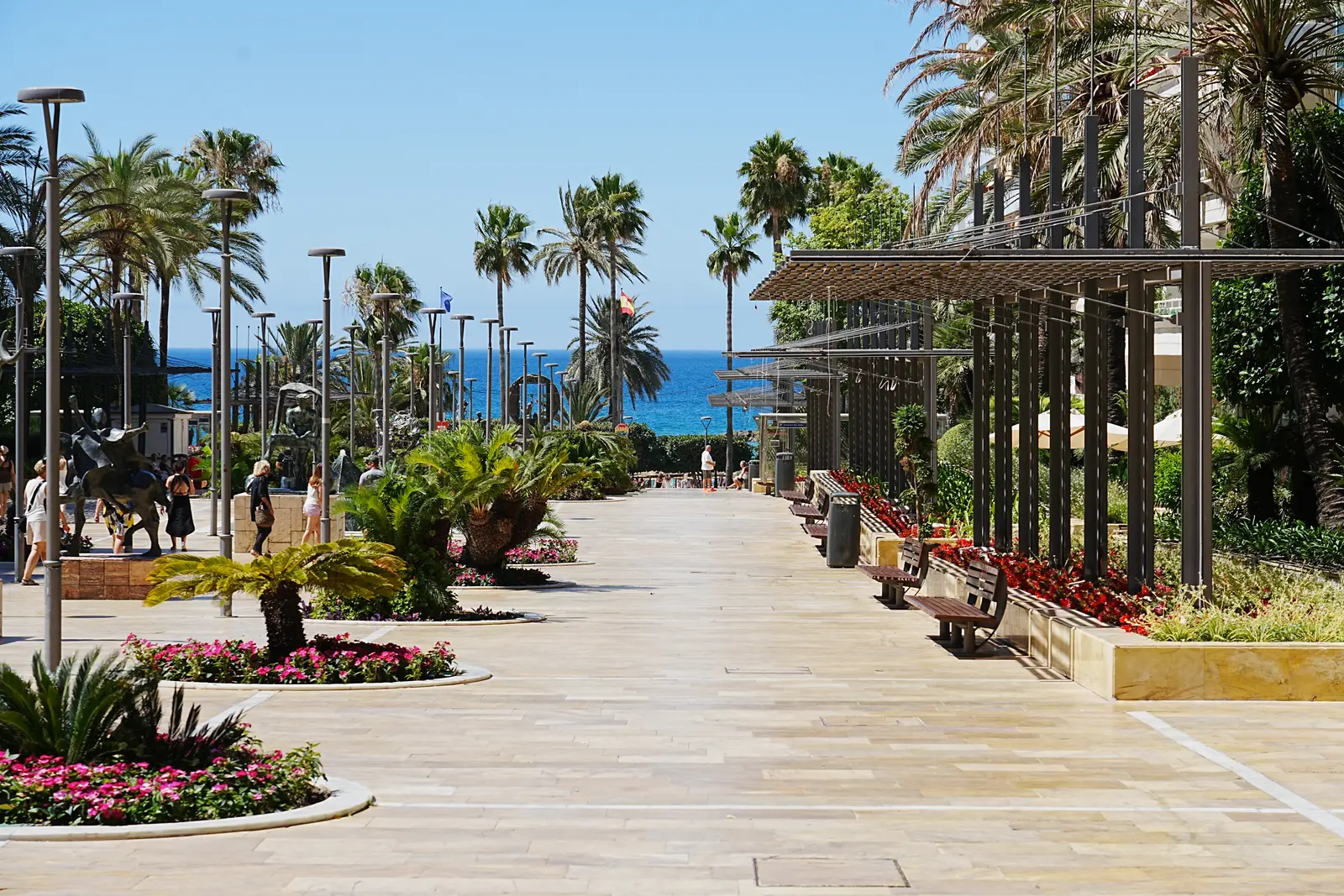
The main strip in Marbella is called the Golden Mile. It runs roughly 4km along the coast between central Marbella and Puerto Banus, lined with luxury hotels, gated communities, and a handful of beach clubs.
The Golden Mile isn’t in the Old Town. It’s a modern, car-centric stretch of the N-340 coastal road, and while the name sounds glamorous, much of it feels like a regular dual carriageway with high walls on either side.
The seafront promenade, the Paseo Maritimo, runs parallel to it and is the part actually worth walking.
If you’re picturing a pedestrian boulevard with shops and cafes, you want the Old Town instead. That’s where the beautiful streets are.
Every street on this list is a two-minute walk from an Old Town bed, which is the whole argument for staying inside the walls. These are my picks:
🏘️ Old Town >> Hotel Claude, a boutique conversion inside a 17th-century townhouse, right in the lanes.
💶 Better value >> Hotel Lima, between the Old Town and the beach.
🏖️ Beachfront >> Gran Meliá Don Pepe, a five-star on the sand and still walkable to the plaza.
⭐ Golden Mile >> Marbella Club Hotel, the original 1954 resort, if you want the other Marbella.
What Is the Most Famous Street in Marbella?
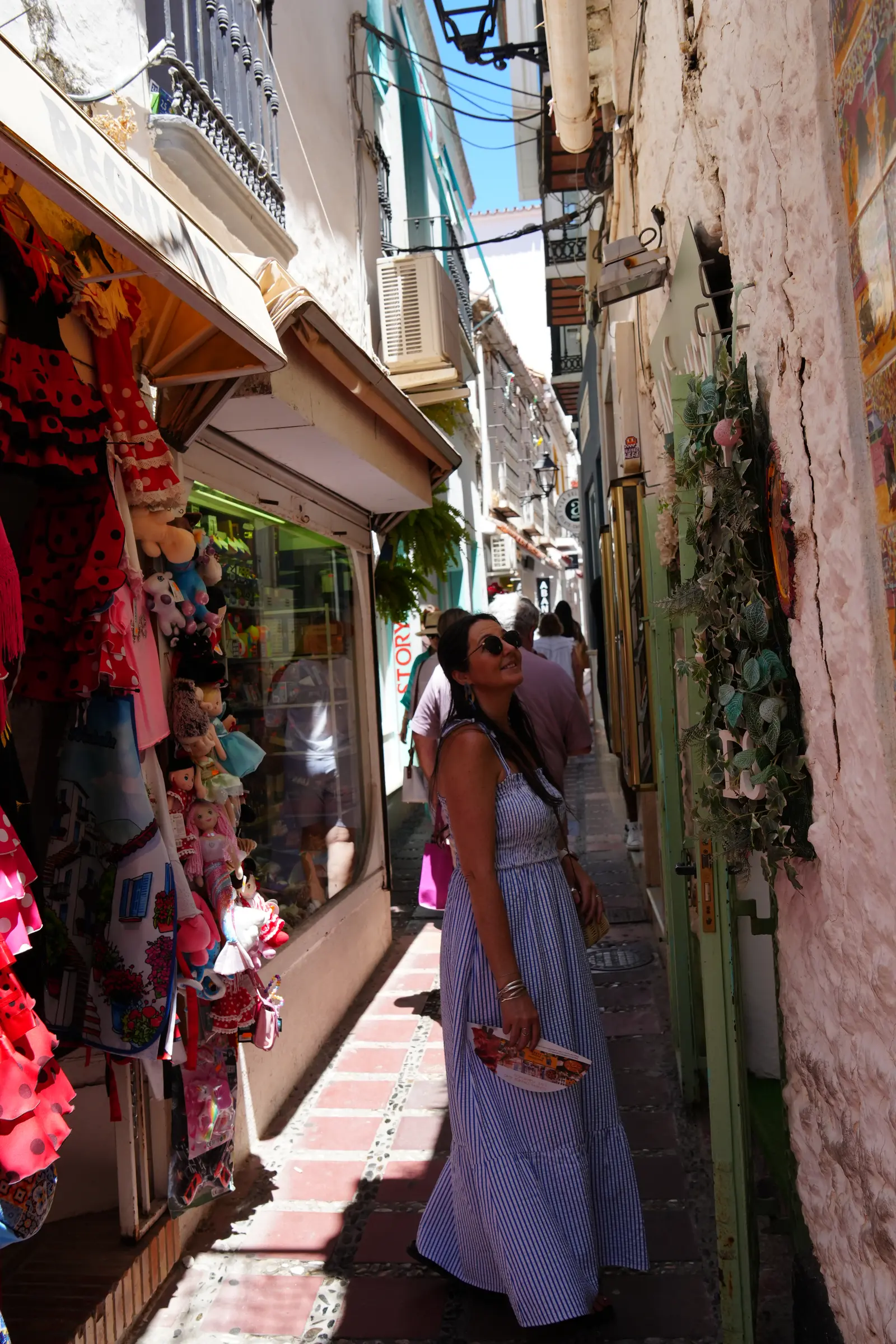
The most famous street in Marbella is Calle Nueva. It earned that title after the oversized white “MARBELLA” letters were installed beneath a canopy of bougainvillea around 2019, turning it into the single most-photographed spot in the Old Town.
Before the letters went up, Calle Carmen held the top spot and still competes for it. Both streets are within a two-minute walk of each other, and on any given afternoon you’ll see people queuing for photos at both.
If you only have time for one street, Calle Carmen is the more photogenic of the two. But most visitors end up seeing both because they’re so close together.
Calle Carmen
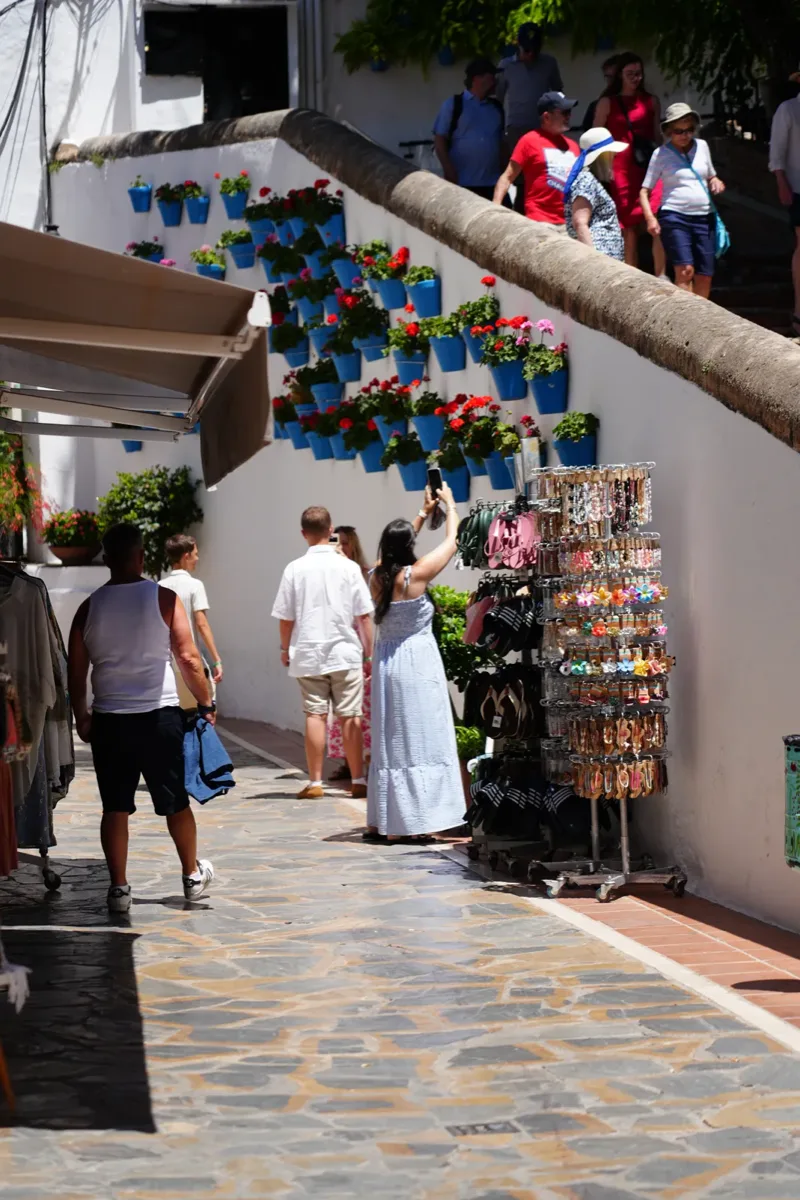
This is the street that made Marbella’s Old Town famous on social media. The entire wall of one building is covered in bright blue ceramic pots holding red and pink geraniums, set against a freshly whitewashed facade.
At the far end, the bell tower of the 17th-century Iglesia de la Encarnacion rises into the frame, which is why every photo of this street looks so perfectly composed.
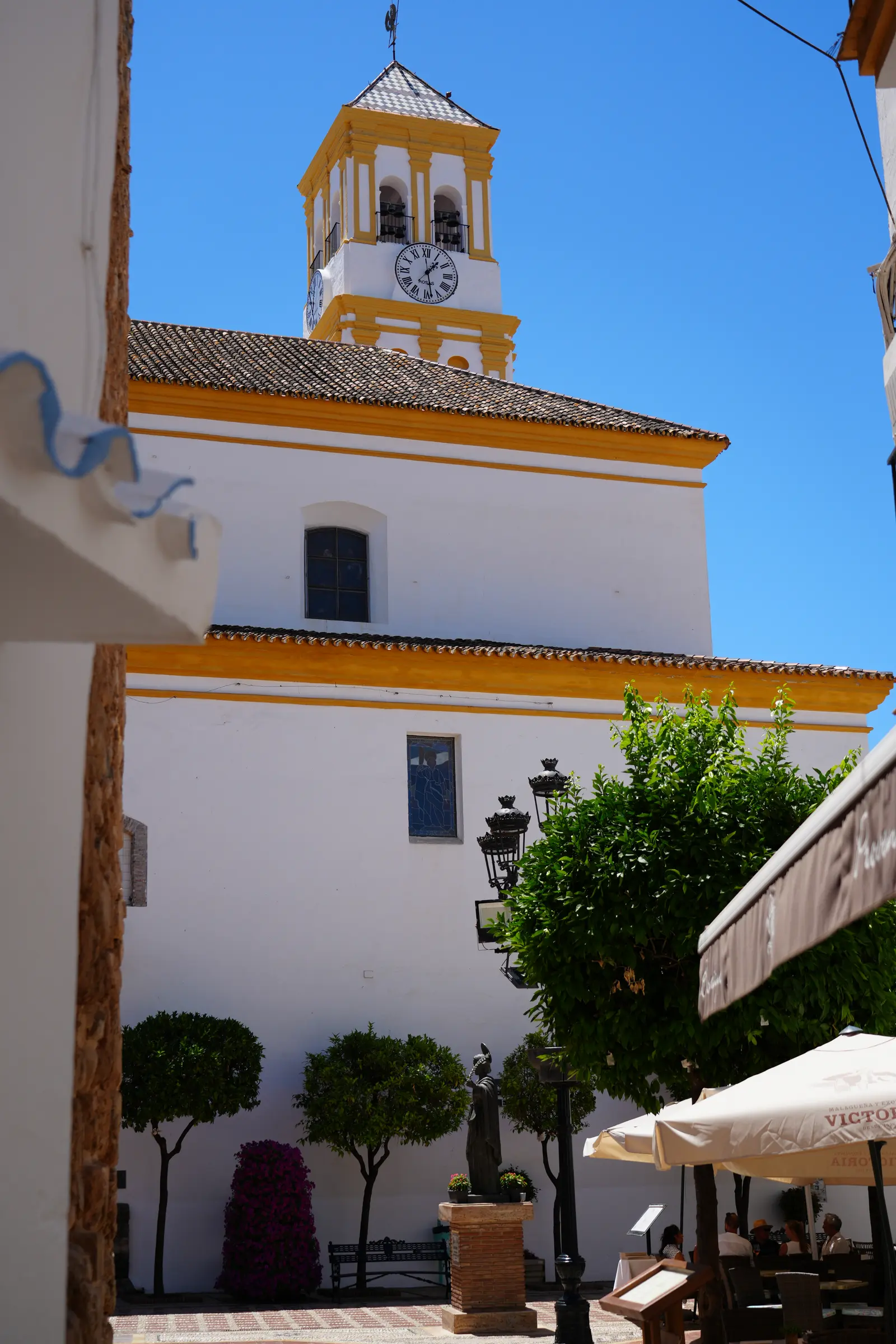
The blue-pot display was part of a municipal beautification project that borrowed from the Cordoban patio tradition. It worked.
I walked past it three times before I got a clear shot without other people in the frame.
The best time for photos is before 10am or after 6pm. Midday light washes out the blue pots, and by early afternoon there’s almost always a queue of people waiting for their turn to pose.
🎟️ You do not need a guide to walk these streets, and I’d rather you didn’t pay for one. Where a guide does earn its money in Marbella is the flamenco and the boat trips, both of which sell out in summer. You can see what’s running on GetYourGuide.
Calle Nueva
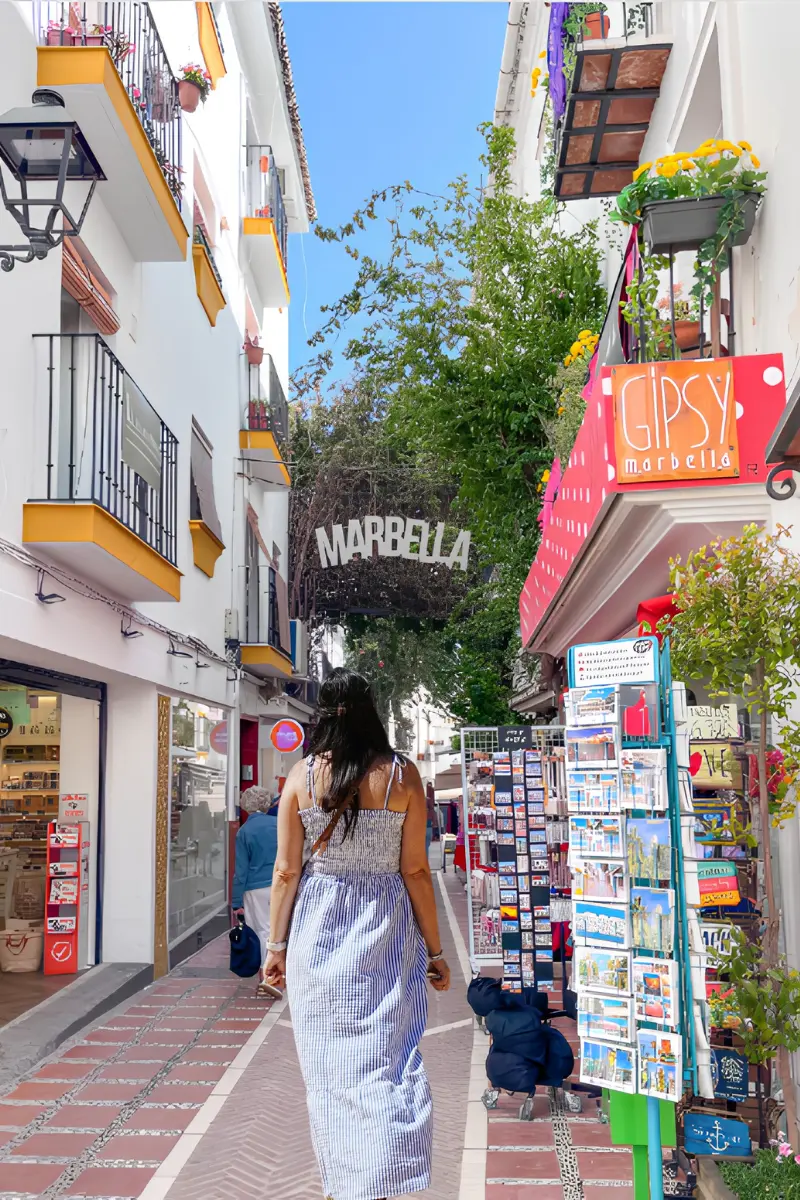
From Plaza de los Naranjos, Calle Nueva heads south towards the edge of the Old Town. Both sides are lined with small boutiques selling leather goods, olive oil, and handmade jewellery, and overhead the bougainvillea has been trained into a natural arch that filters the light.
The famous MARBELLA letters hang from a metal frame beneath this canopy. Historically, Calle Nueva was one of the first commercial streets established after the Reconquista in 1485, and it still functions as a shopping street today.
I found it more interesting for the shops than the letters.
There’s a leather workshop halfway down on the left that sells hand-stitched bags, and the quality is noticeably better than what you find in the tourist shops near the plaza.
Expect to spend 5-10 minutes here if you’re shopping, less if you’re just after the photo.
Plaza de los Naranjos
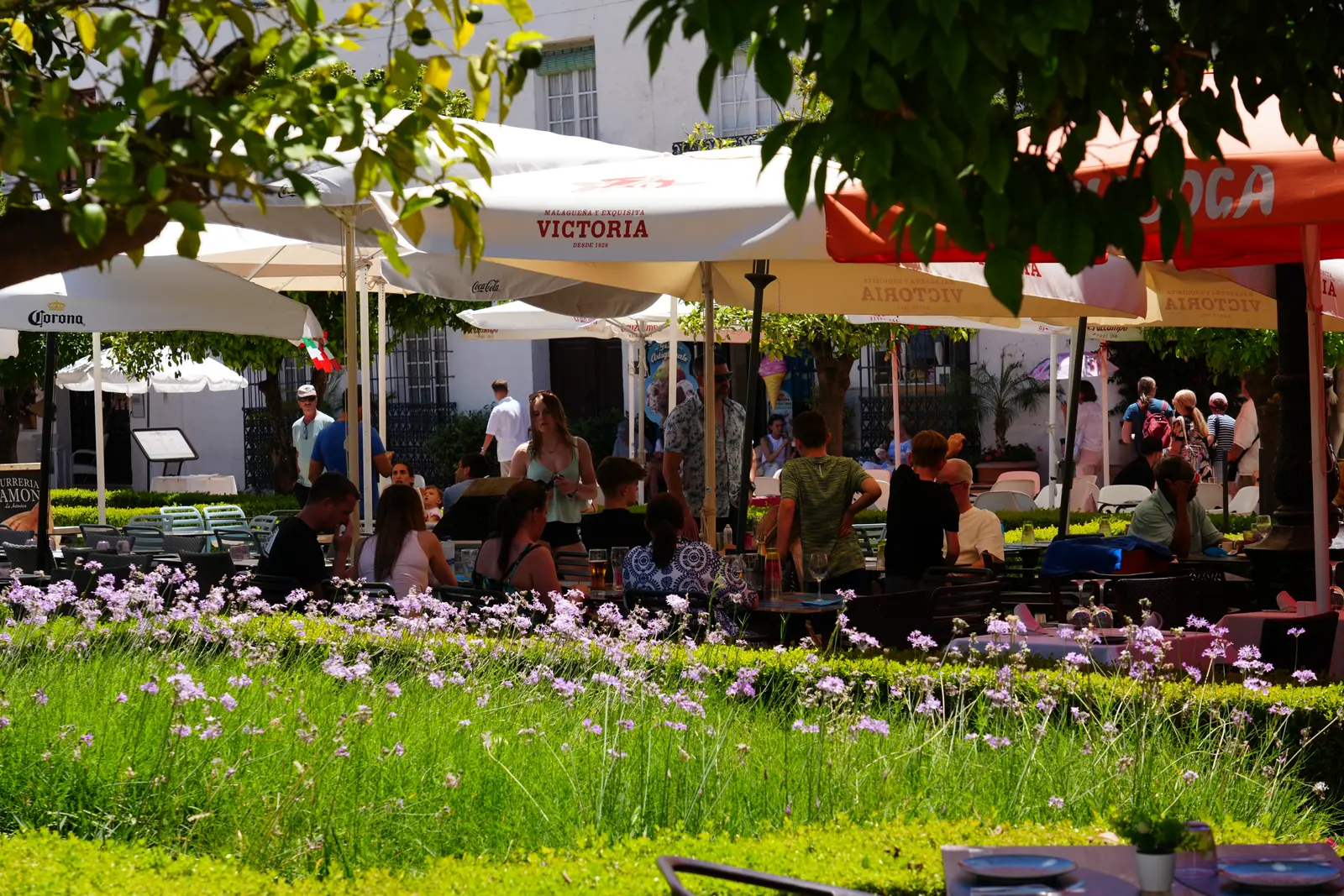
The heart of the Old Town isn’t a street but a square, and it would be dishonest to leave it out. Plaza de los Naranjos was laid out in 1485 immediately after the Catholic Monarchs took Marbella from the Moors, and three of the buildings surrounding it are original to that period.
The Casa del Corregidor, the magistrate’s house built in 1552, still stands on the north side with its Renaissance stone facade. The Ermita de Santiago, one of Marbella’s oldest churches, faces it from across the square.
Orange trees fill the centre, which is where the name comes from.
I sat here with a coffee and watched the square for about twenty minutes.
It’s surrounded by restaurants, and the prices reflect the location, so I wouldn’t recommend eating a full meal here. A coffee is fine.
If you’re planning a full day, my one day in Marbella guide covers where to eat for better value.
Plaza de la Iglesia
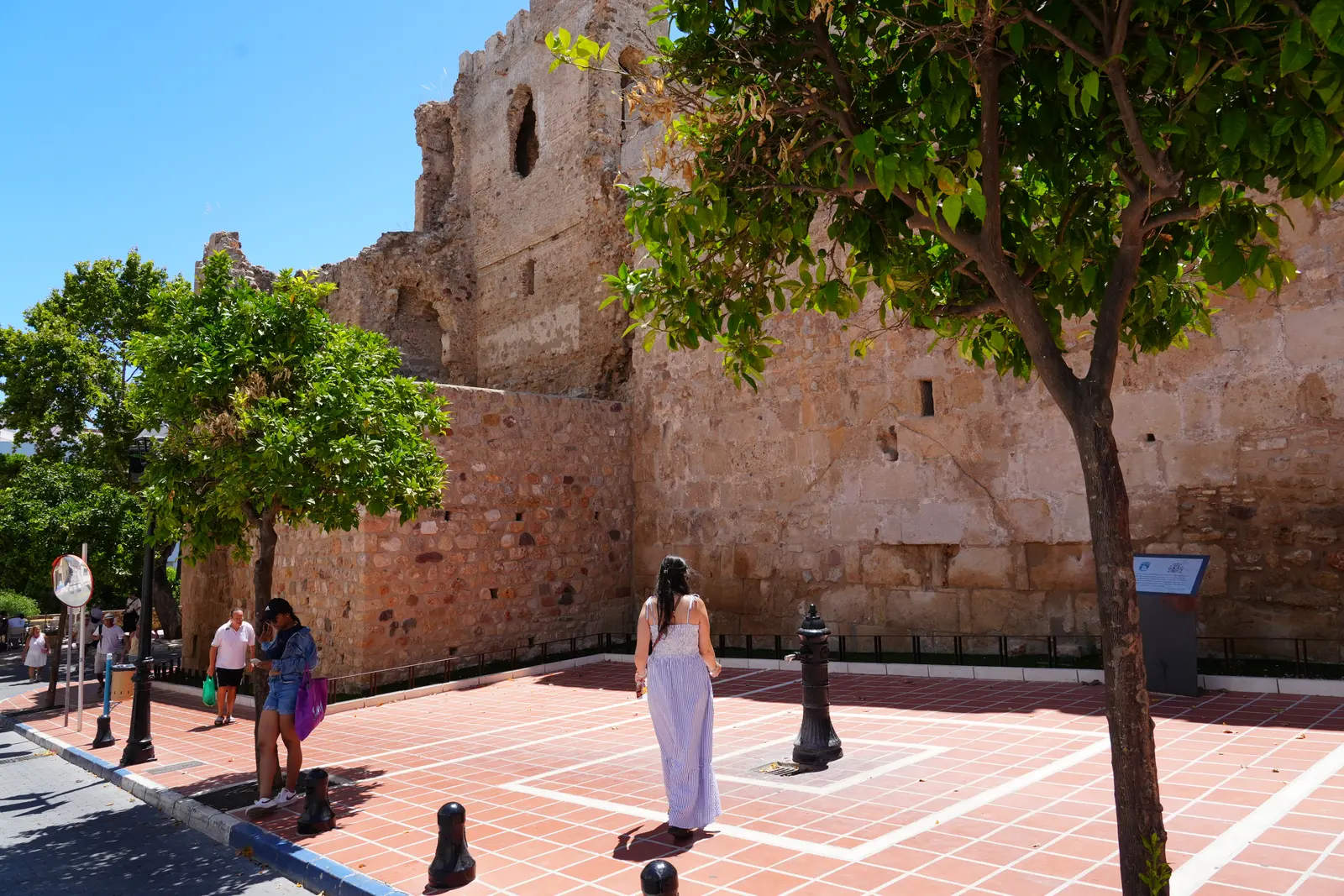
A short walk from Plaza de los Naranjos, a second square opens up against a wall of enormous stone blocks. This is a surviving stretch of Marbella’s old castle wall, and Plaza de la Iglesia runs right along the foot of it.
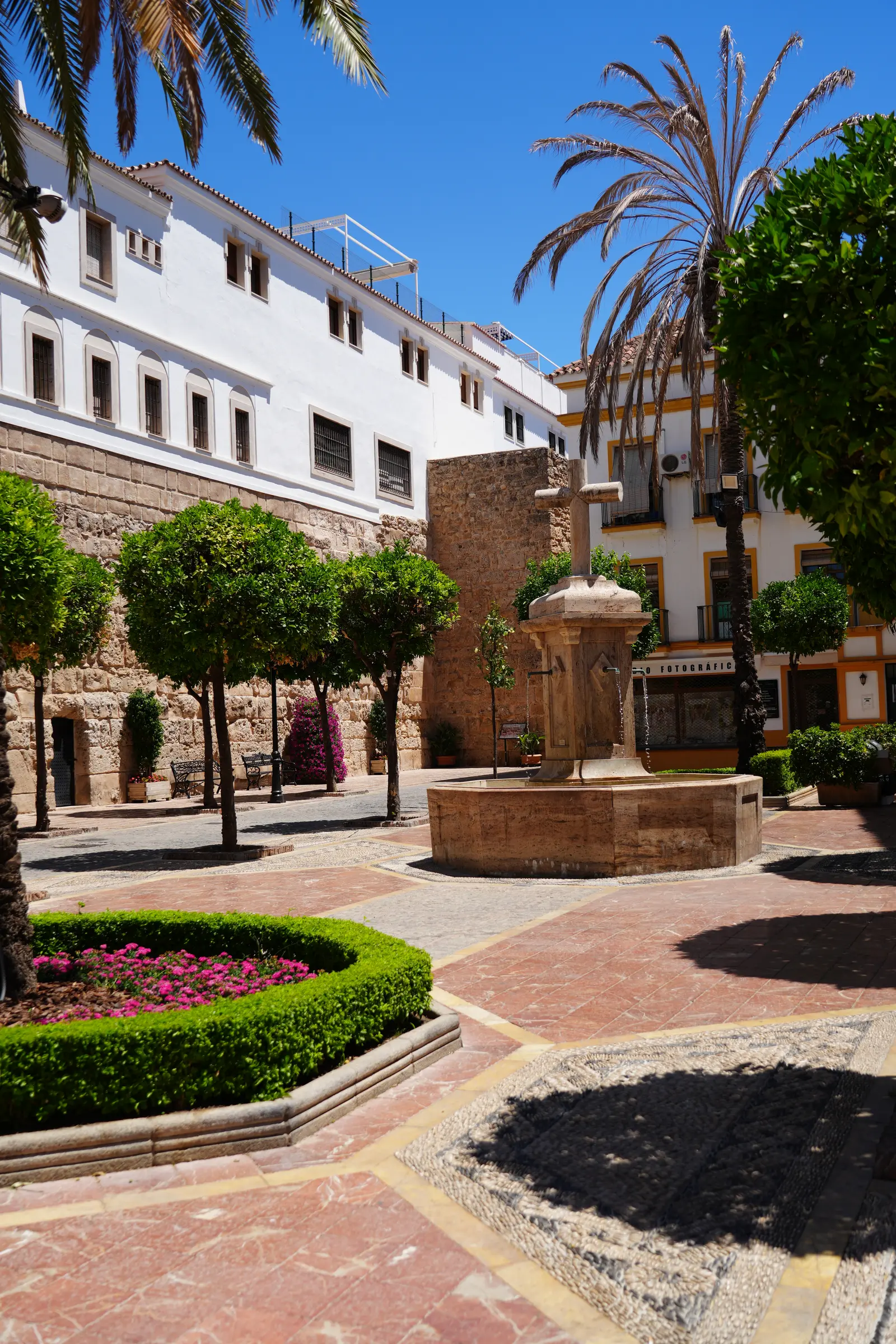
Orange trees are planted in a line at the base of the wall and clipped into neat globes, with bougainvillea climbing the stone behind them. A fountain topped with a stone cross sits in the middle of the square.
The church here’s Nuestra Senora de la Encarnacion, the one whose bell tower closes the frame at the end of Calle Carmen. Stand in this square and you finally see the building that tower belongs to.
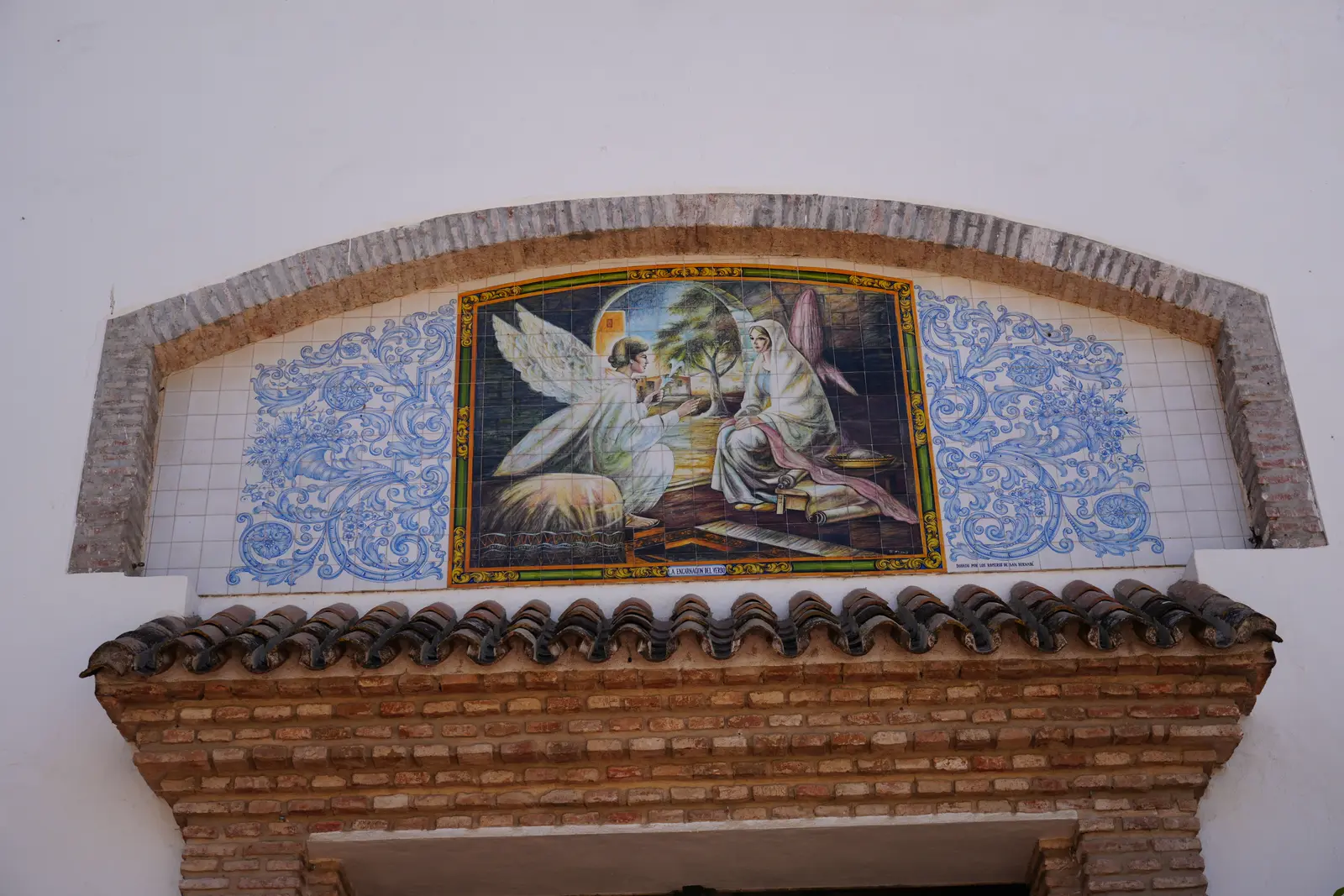
Above one of the doors, a hand-painted ceramic mural shows the Annunciation, framed in blue and yellow scrollwork. It’s titled La Encarnacion del Verbo, and a line along the bottom records that it was donated by the Romeros de San Bernabe.
Look up for it. Almost everyone walks under it without noticing, and it’s the one thing in this square you can’t see from anywhere else in the Old Town.
Depending on the season, oranges and flowers gather around the church’s side door.
This is the quietest of the three main squares and the one with the most history sitting in plain view. Come around midday, when the orange trees throw enough shade to sit in and the square is usually empty.
READY TO PLAN YOUR TRIP TO MARBELLA?
🏨 Where to stay: Find hotels in Marbella
🎟️ Guided tours: I use GetYourGuide
🚗 Rent a car: I use Discover Cars
🚆 Trains and buses: I book through Omio
🛡️ Travel insurance: I use SafetyWing
Calle Ancha
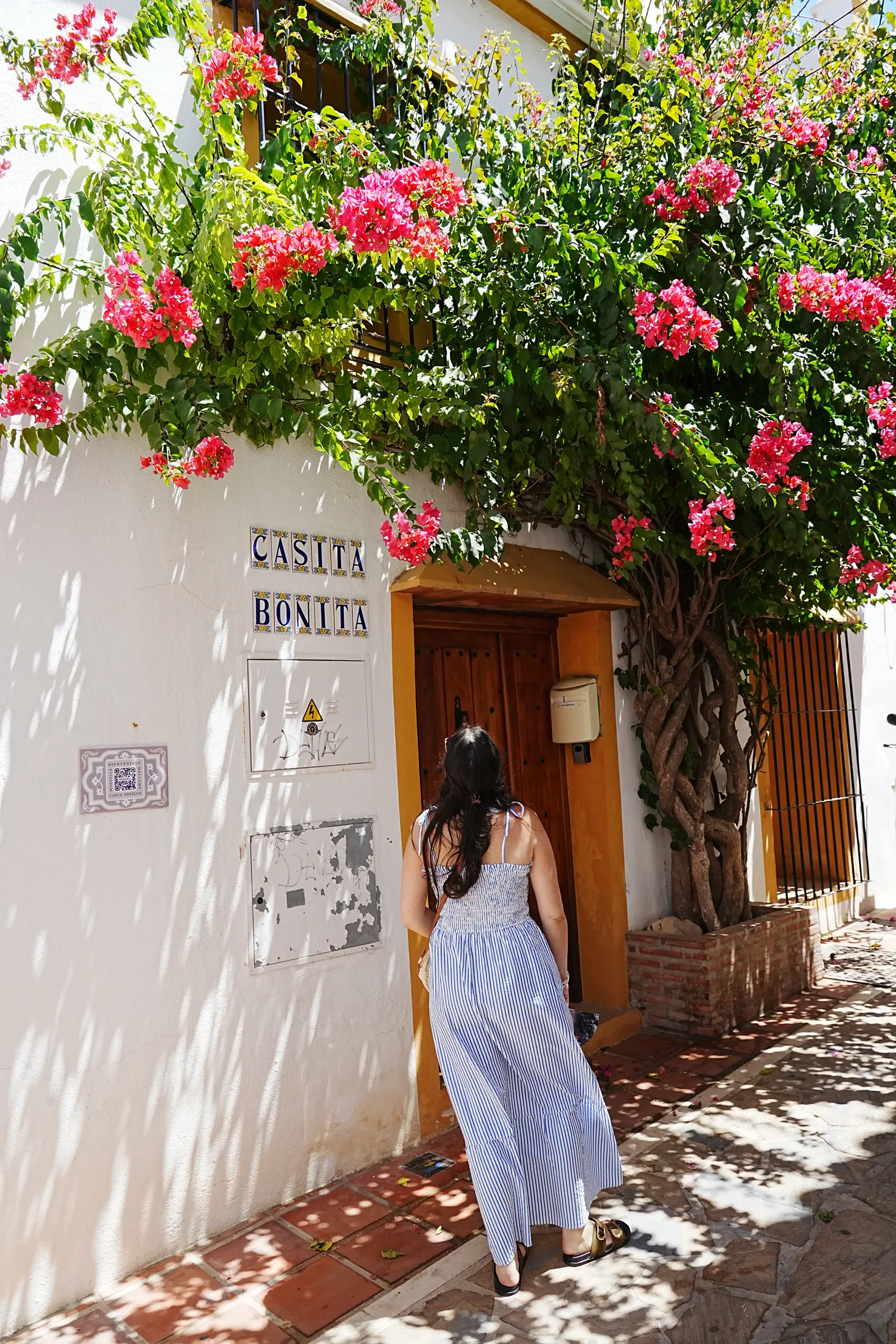
“Ancha” means “wide” in Spanish, and that’s exactly what sets this street apart. While most Old Town alleys are barely wide enough for two people to pass, Calle Ancha was deliberately built broader to serve as the main commercial artery.
It still is. The street is lined with independent clothing shops, shoe stores, and a few cafes with tables spilling out onto the pavement.
I noticed a vintage shop called Deja Vu about halfway down that had a well-curated window display, and the whole street had a less frantic feel than the area around Plaza de los Naranjos.
If you’re looking for actual shopping rather than souvenir browsing, this is the street.
Most shops open by 10:30am and close for a couple of hours in the early afternoon.
Plaza Santo Cristo and the Callejon Behind It
Walk to the top of Calle Ancha and the street opens out into a small square built around a chapel and a fountain. Plaza Santo Cristo is the kind of place people cross without stopping, which is a shame.
The Ermita del Santo Cristo is the reason to pause. It dates from the 16th century, which makes it one of the oldest religious buildings in Marbella, and it has a blue-and-white tiled spire above a sandstone entrance that looks far older than anything around it.
A flamenco tavern with a yellow facade anchors one side of the square, and the rooftop terrace at La Fonda Heritage Hotel looks down over the whole thing.
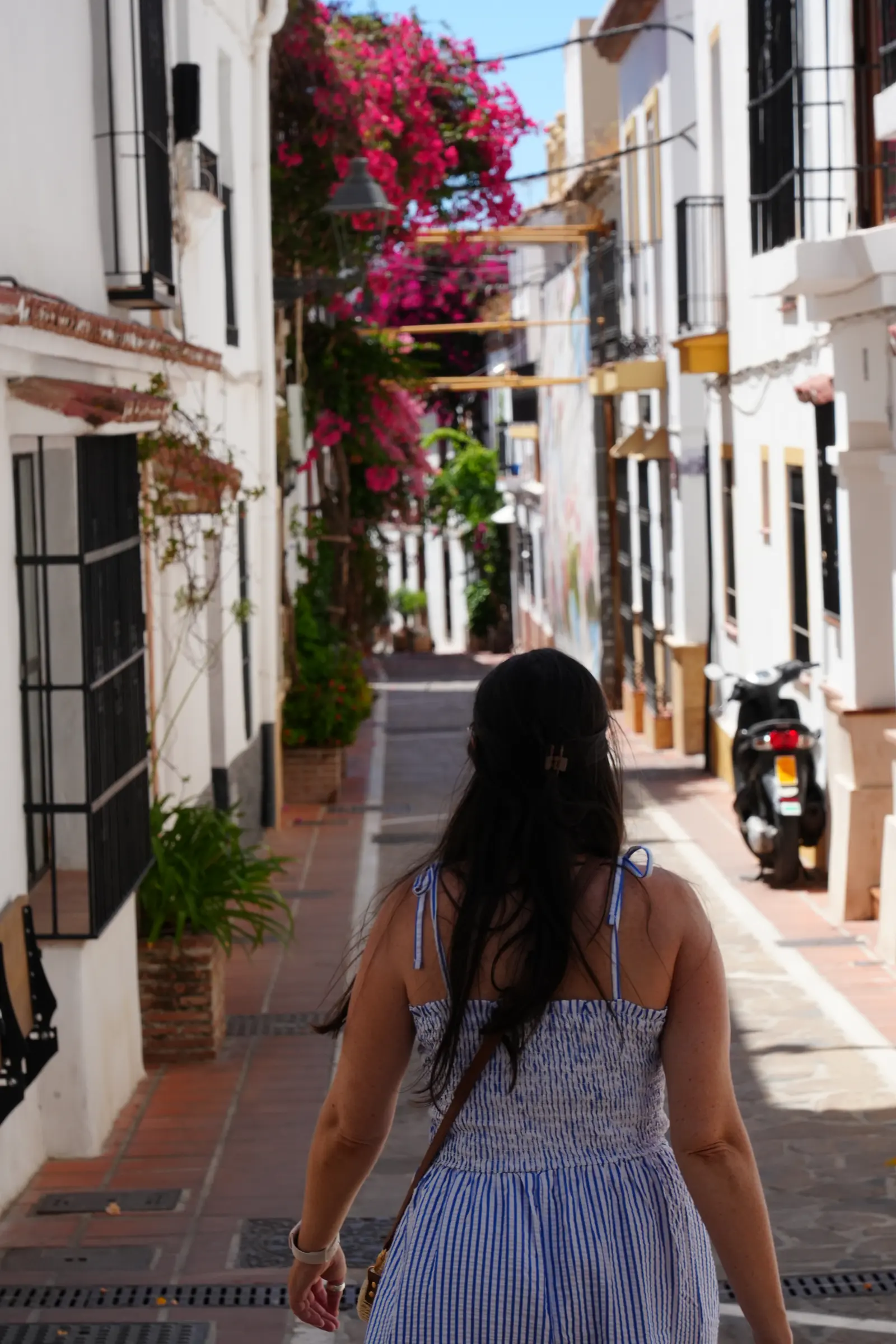
The part almost nobody finds is behind the chapel. A narrow alley, the Callejon del Santo Cristo, disappears into what feels like a jungle.
It runs no more than 30 metres, but the plants on both sides are so dense that they almost meet overhead. It’s the kind of spot you would never come across if you stuck to the main routes.
I walked it early on a weekday morning and had it entirely to myself. It’s not a destination so much as a reward for wandering in the right direction.
Come in the early evening for the square itself. The white walls take the last of the light, and it fills with people heading out to eat rather than tourists passing through.
Calle Caballeros
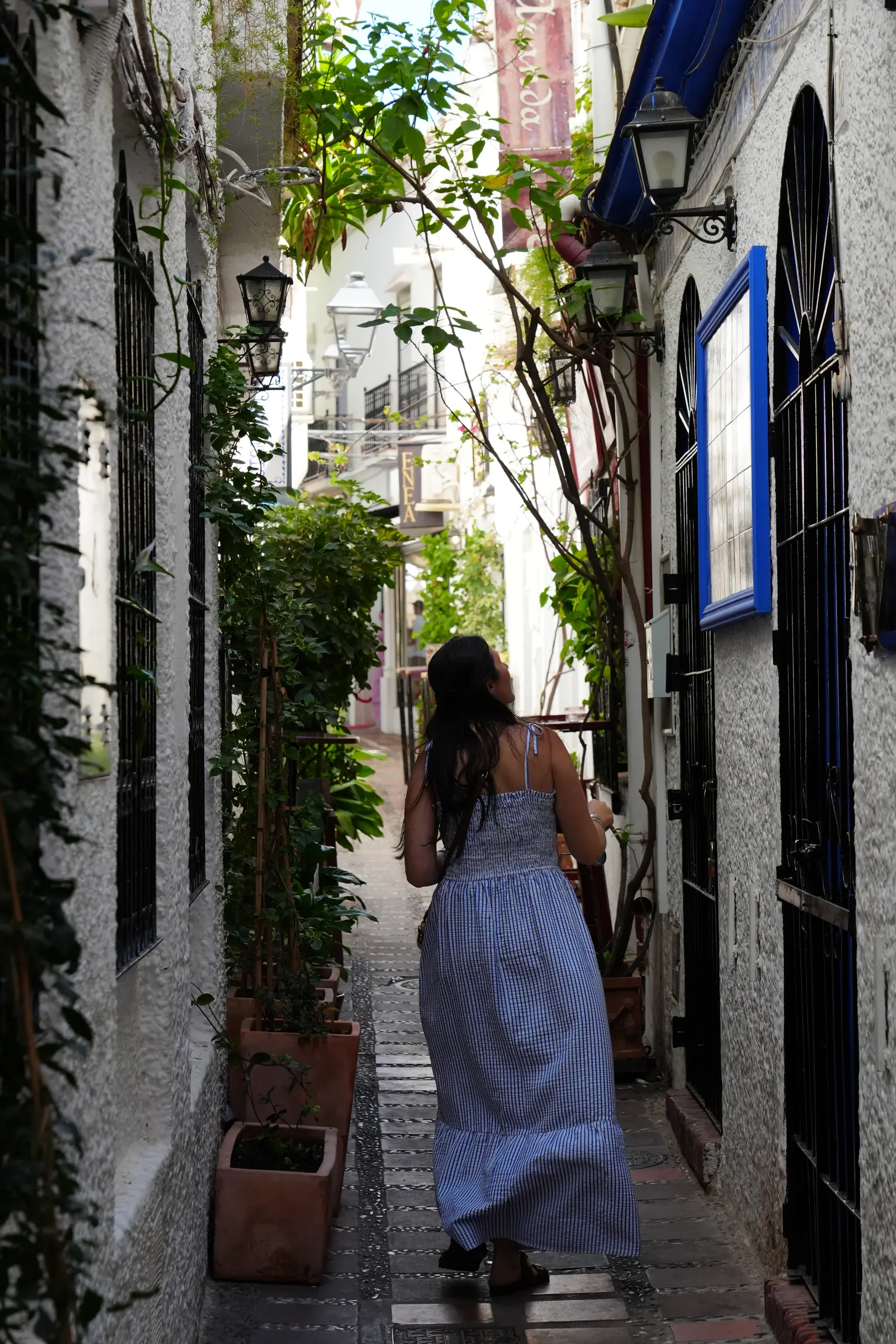
One of the narrowest streets in the Old Town, Calle Caballeros runs through the centre of the original medieval quarter. The name translates to “Street of the Knights” and refers to the knights of the Catholic Monarchs who paraded through here after the 1485 reconquest of Marbella.
What makes it stand out is the stone archway that spans the street about two-thirds of the way along. Walking through it feels like stepping into a different century entirely, and the arch frames the alley ahead in a way that photographs well from either direction.
The street is residential, so it’s quieter than the more commercial roads nearby.
I walked it in under two minutes, but the arch alone made the detour worth it.
🚗 The Old Town is the one part of Marbella that genuinely doesn’t need a car. The moment you want Cabopino, Ronda or a white village, that changes. I book through Discover Cars, which compares the major companies for the best price.
Calle Ortiz de Molinillo
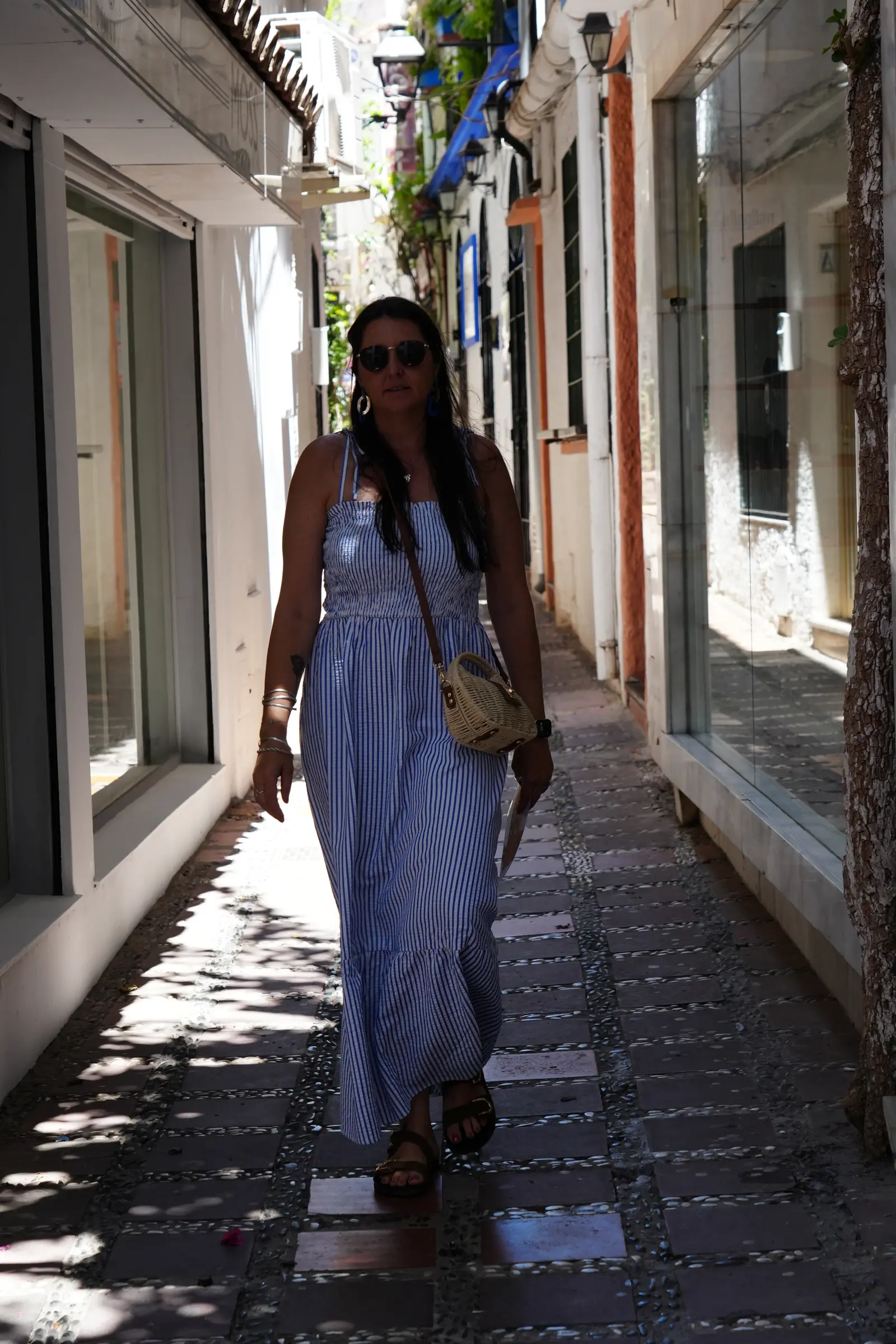
This is the street that people miss because it sits right next to Calle Carmen. Most visitors turn left towards the blue pots and never come back to check what is around the corner to the right.
Calle Ortiz de Molinillo has an almost identical look, the same whitewashed walls, blue ceramic pots and trailing greenery. The difference is that it’s usually empty.
I stood here for a full minute on a Saturday afternoon and not a single person walked past.
If you want the same aesthetic as Calle Carmen without waiting for other visitors to clear the shot, this is the one. It connects through to a quiet residential section of the Old Town that feels genuinely untouched by tourism.
Calle Lobatas
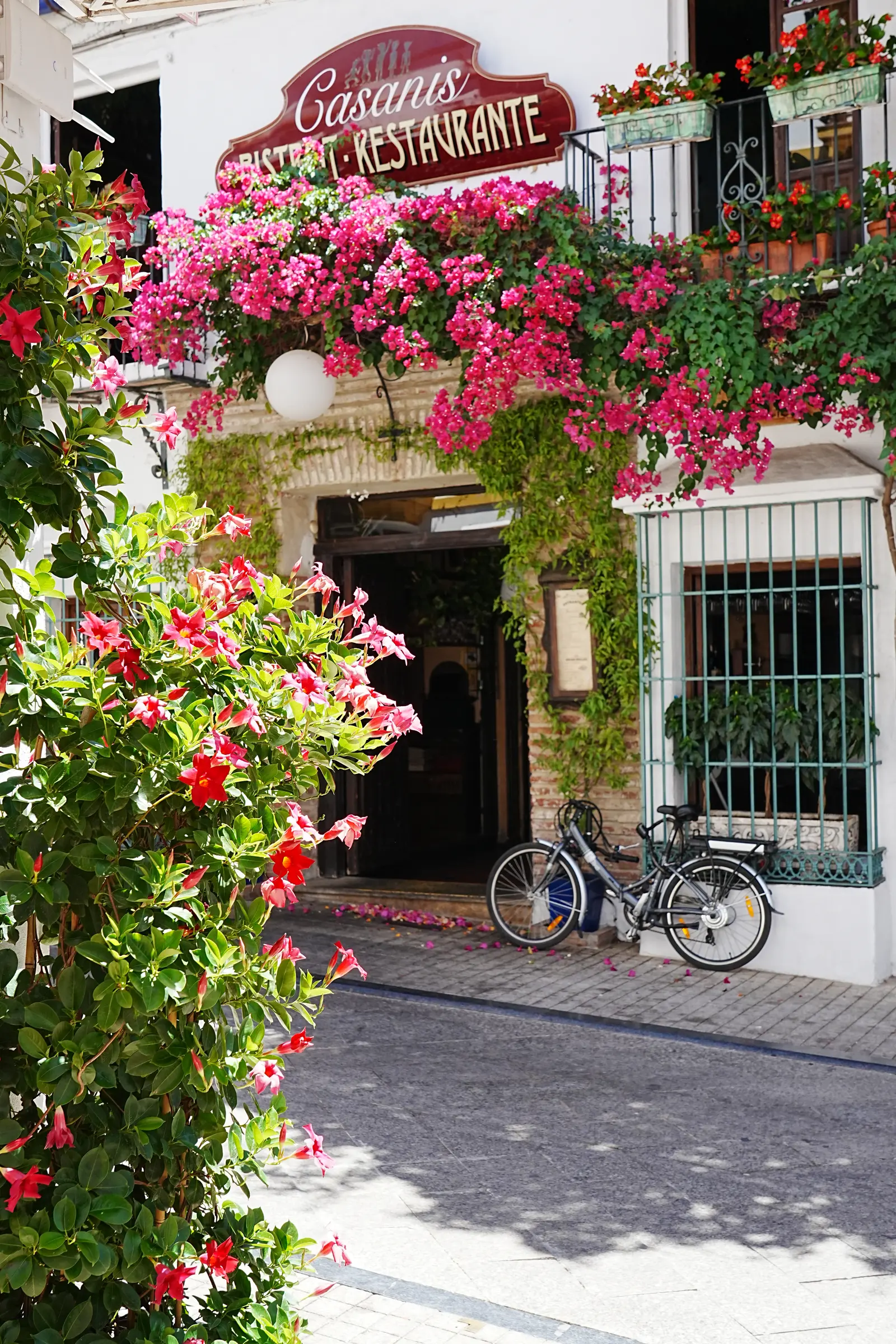
One of the longest streets within the old walls, Calle Lobatas runs roughly north to south through the residential heart of the Old Town. This isn’t a tourist street.
People live here, and it shows in the best possible way.
The flower pots here aren’t the uniform blue of Calle Carmen. They come in yellow, green, red, orange and terracotta.
Bougainvillea grows wild overhead, and the overall effect is less curated but more genuine than the streets closer to the plaza.
I liked this street more than the famous ones, honestly. It felt like seeing how the Old Town actually works when nobody is trying to impress visitors.
Give it a slow walk. Five minutes is enough, but there’s no rush.
📖 Read next >> My one day in Marbella itinerary, which builds these streets into a full day, and where to watch the sunset once you’ve walked them.
Calle Gloria
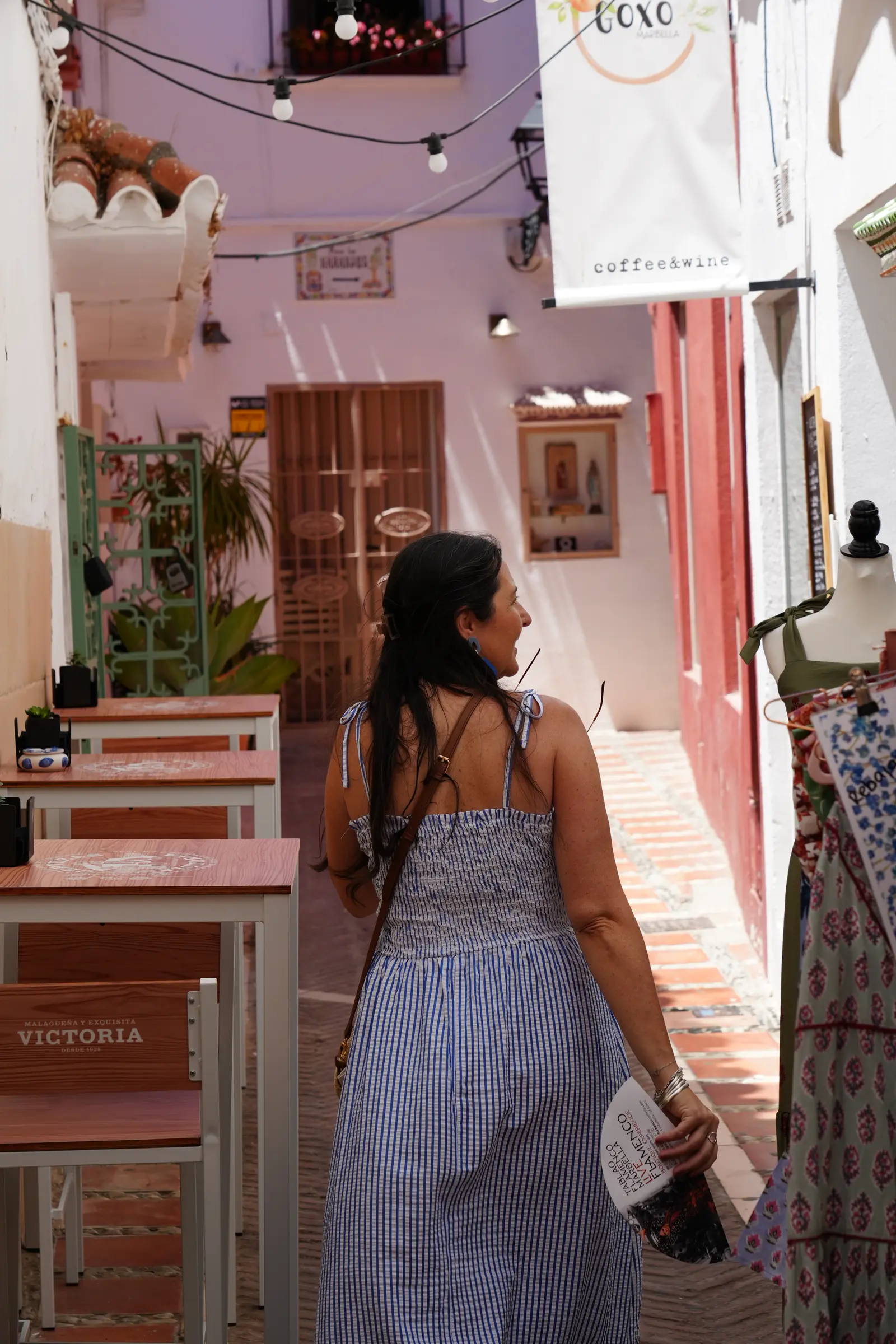
Calle Gloria connects the upper section of the Old Town down to Calle Carmen, and because it’s not on the typical loop from Plaza de los Naranjos, it sees very little foot traffic. The street is narrow and slopes gently downhill, with the same whitewashed walls and wrought-iron balconies as the more famous streets.
What I noticed here was the quiet.
Two streets away, people were queuing for photos. On Calle Gloria, a cat was sleeping in a doorway and an elderly woman was watering her window box.
That contrast is part of what makes the Old Town interesting. The famous streets and the forgotten ones are never more than a turn apart.
Calle Valdes
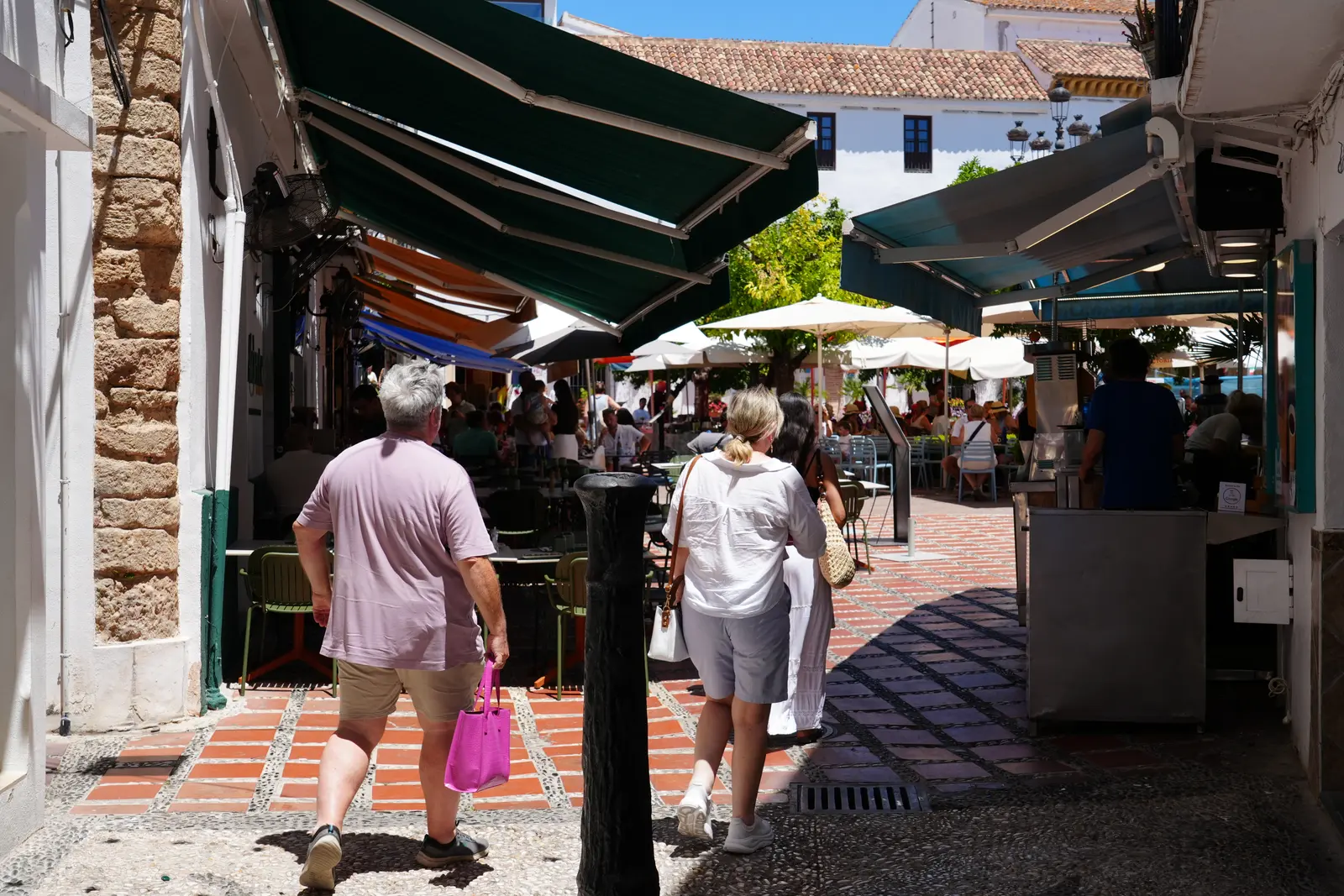
Running off Plaza de los Naranjos and crossing Calle Gloria, Calle Valdes is narrow enough that two people pass each other with care. What sets it apart is on the walls rather than in them.
Ceramic tiles are set into the whitewash along the street, each one illustrating a scene or a traditional object. They turn a two-minute walk into something you slow down for.
I stopped to read them rather than photograph them, which isn’t something I usually do.
Halfway along, La Dolceria by Aroma makes gelato worth breaking the walk for. The flavours run past the usual, with salted caramel, lavender and peanut butter all on the counter.
Take this street on the way from the square towards Calle Gloria and you pick up both in one go.
Calle San Lazaro
One of the narrowest lanes in the Old Town, Calle San Lazaro is also one of the greenest. Plants and bushes crowd in from both sides along its whole length.
The effect is that it barely gets direct sunlight, even in the middle of a Marbella summer. That makes it one of the few streets here you can walk comfortably at midday, when everywhere else is punishing.
Bar El Estrecho has been serving on this lane since 1954, which makes it one of the oldest bars in Marbella. The name means “the narrow one”, and it’s barely wider than the alley it spills into, with stools and tiny tables pushed up against the wall.
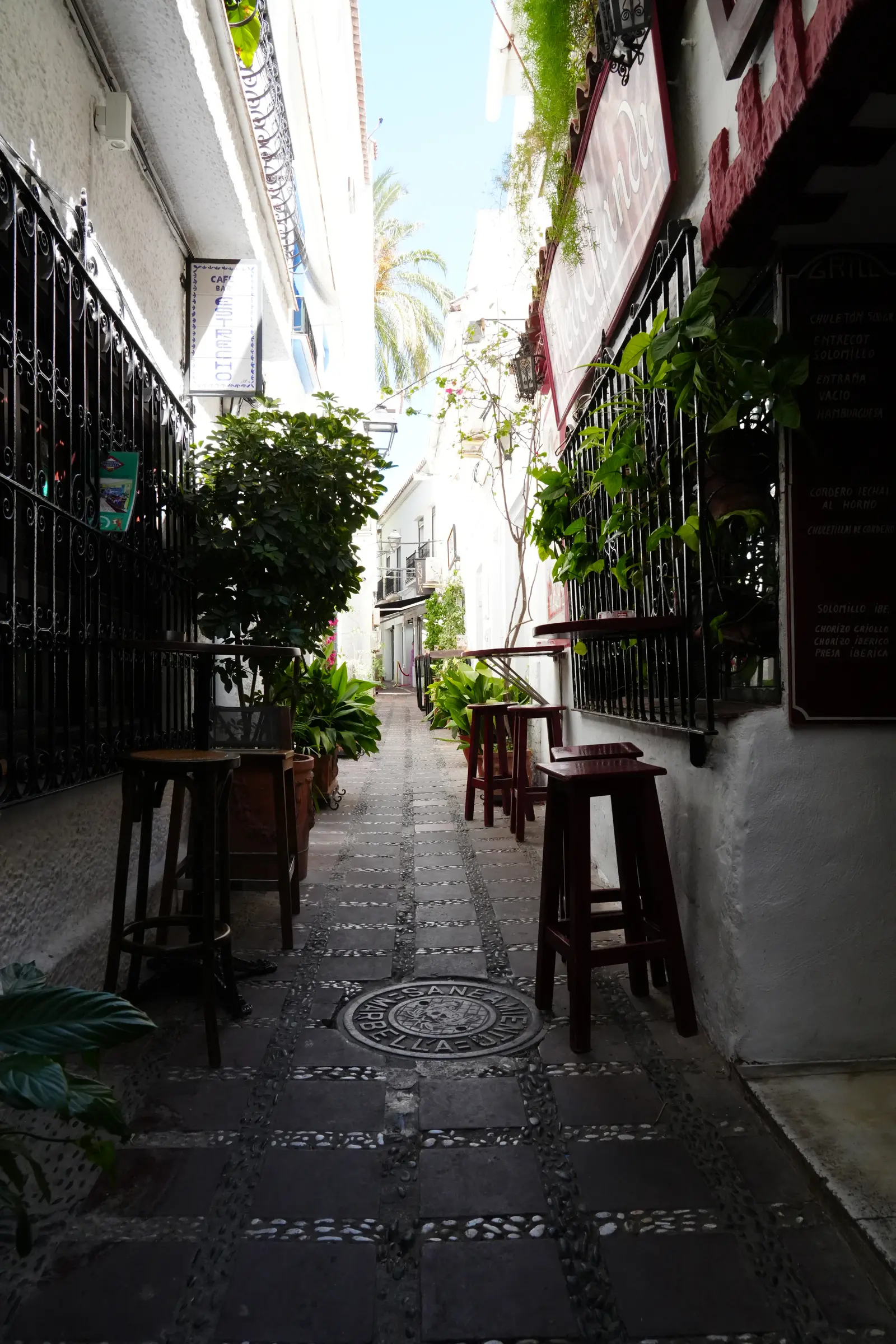
I stopped in for a tinto and a few tapas. It had been on my list for a while.
It’s nothing special to look at, and I’d rather tell you that than pretend otherwise. But the tapas are genuinely good, and it’s worth going in once so that you can say you’ve been.
Go for lunch rather than photos. The light is too low for good pictures, which is precisely why the street is pleasant to be on.
Plaza de la Victoria
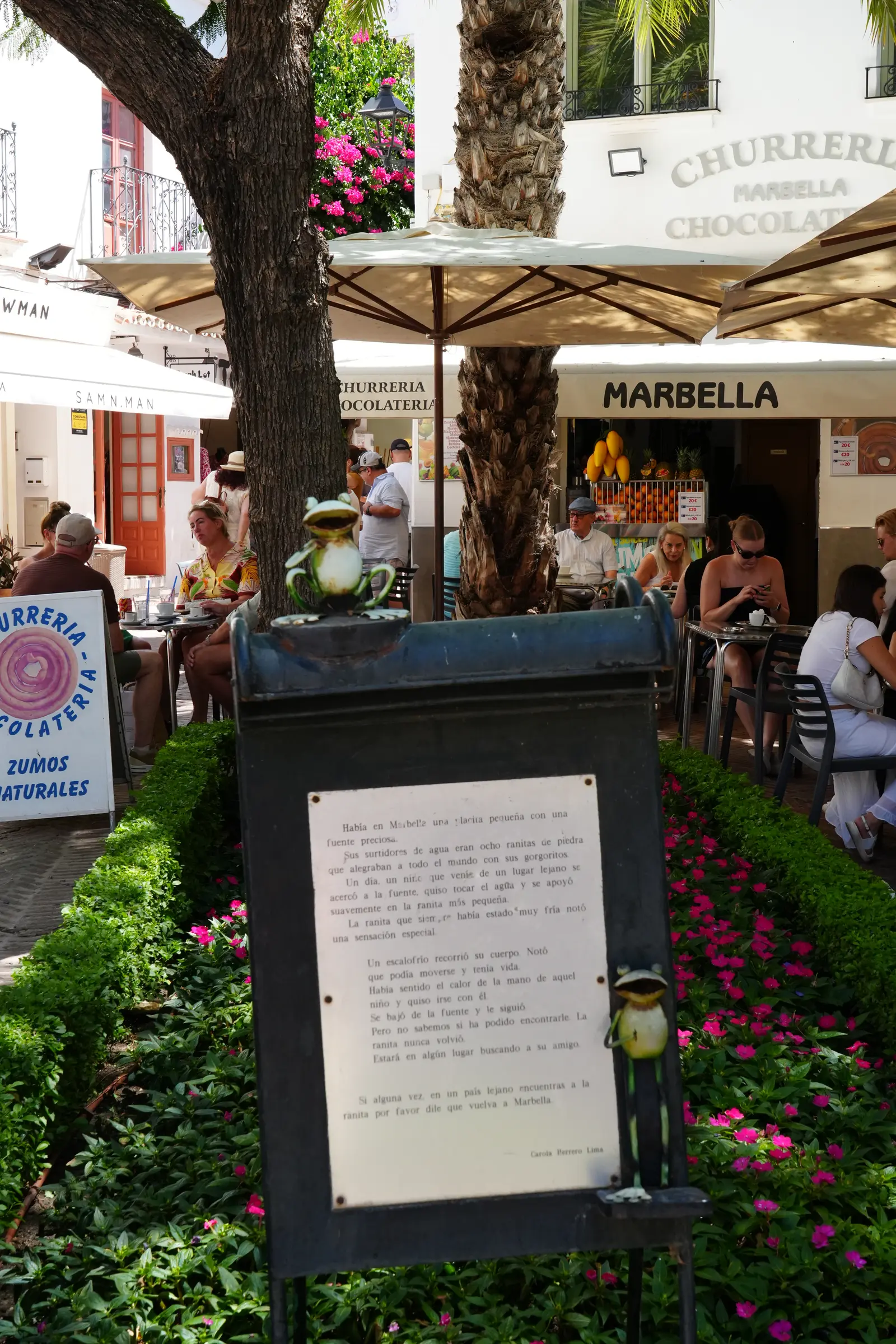
The water spouts on the fountain in Plaza de la Victoria are stone frogs. A plaque beside it says there were eight of them, and then tells you, in Spanish, where the missing one went.
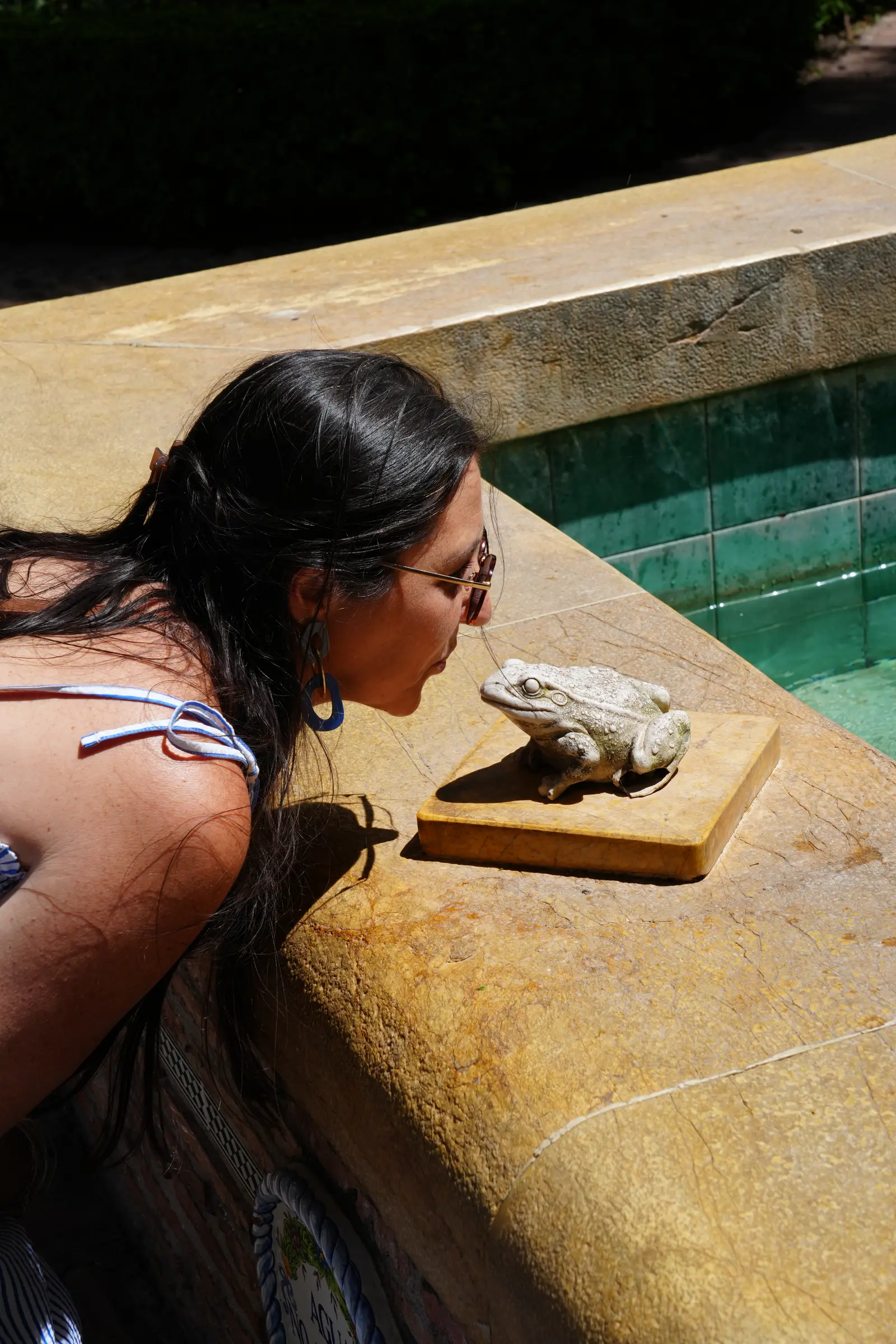
The story goes that a boy from a faraway place once leaned on the smallest frog while reaching for the water. She had always been cold, and the warmth of his hand brought her to life.
She climbed down from the fountain and followed him, and she never came back.
The plaque ends by asking that if you ever find her, in some faraway country, please tell her to come home to Marbella. It’s signed by Carola Berrero Lima, and it’s the sweetest thing I’ve read on a street corner in Spain.
I didn’t know any of that when I arrived. I leaned over and kissed the frog, because that’s what you do with a frog, and waited for a prince who very much didn’t turn up.
Time your visit for the end of May and the square changes completely. The jacarandas come into bloom and drop a purple canopy over the whole space.
Churreria Marbella does churros con chocolate a few steps from the fountain, and Taberna La Nina del Pisto is under a minute on foot if you would rather eat properly.
Sit on the fountain wall with the churros and read the plaque before you kiss anything. If you’re pacing a full day around the Old Town, my one day in Marbella guide slots it in.
Calle Principe
In the eastern part of the Old Town, Calle Principe runs past a mix of residential doorways and the occasional small gallery or craft shop. The street takes its name from a royal connection, like several in this part of the old quarter, where street names were assigned to honour the monarchy after the Reconquista.
It’s not as photogenic as Calle Carmen or Calle Nueva, and that’s precisely the point. If you have already seen the main streets and want to keep exploring, Calle Principe gives you a reason to walk the eastern edge of the old walls where the architecture is less polished but more honest.
The ornate stone doorways along this stretch are some of the best-preserved in the Old Town. Look for the studded wooden doors with carved coats of arms above them.
Most of them stay firmly shut. One was standing open as I walked past, and I got this photo before anyone could tell me not to.
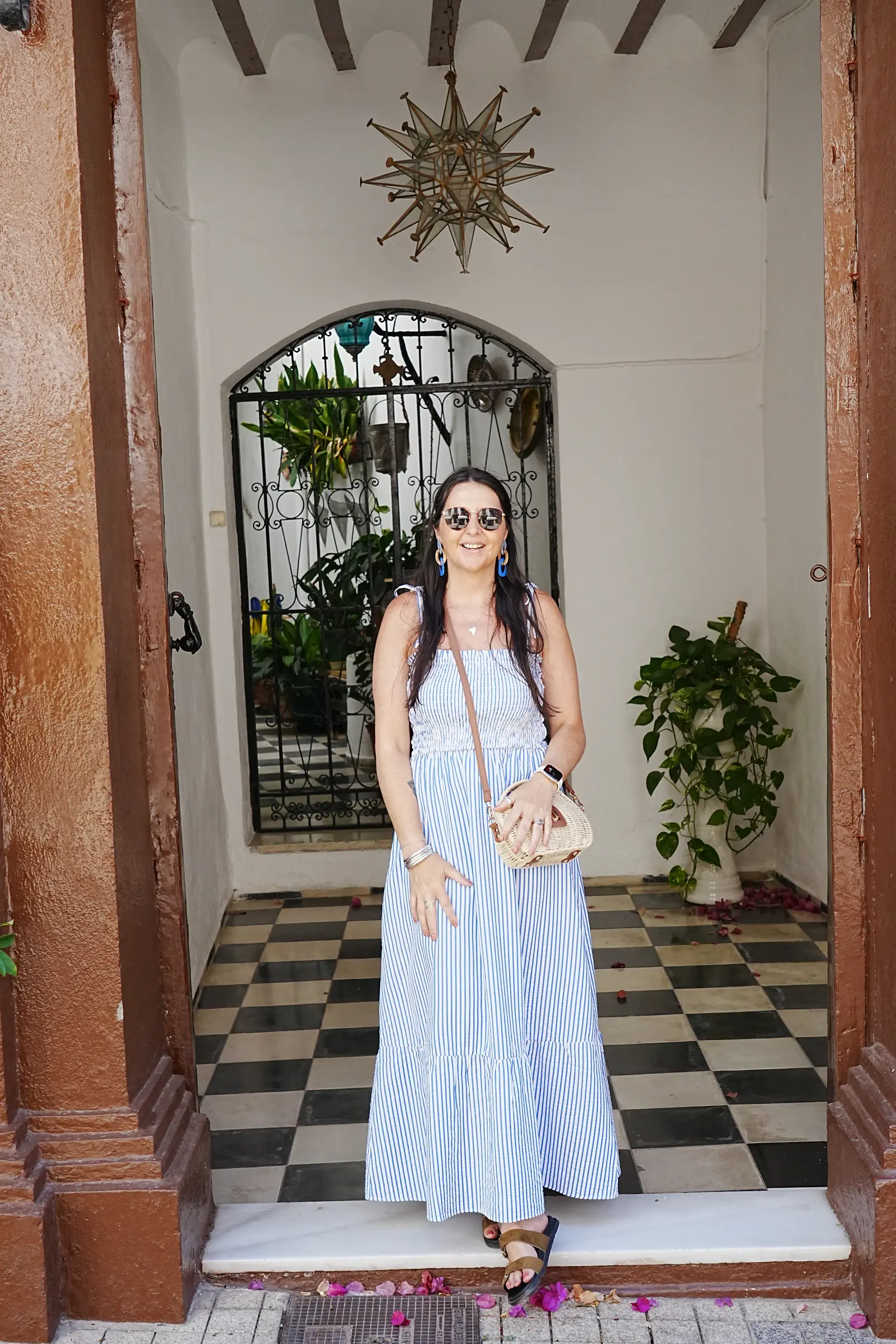
Behind it was a private entrance hall with a star-shaped lantern hanging from the beams, a black-and-white chequerboard floor, and a wrought-iron gate leading through to a green inner patio.
That’s what sits behind most of these facades, and you almost never get to see it. Walk this street slowly and hope for an open door.
How to Walk These Streets (a Suggested Route)
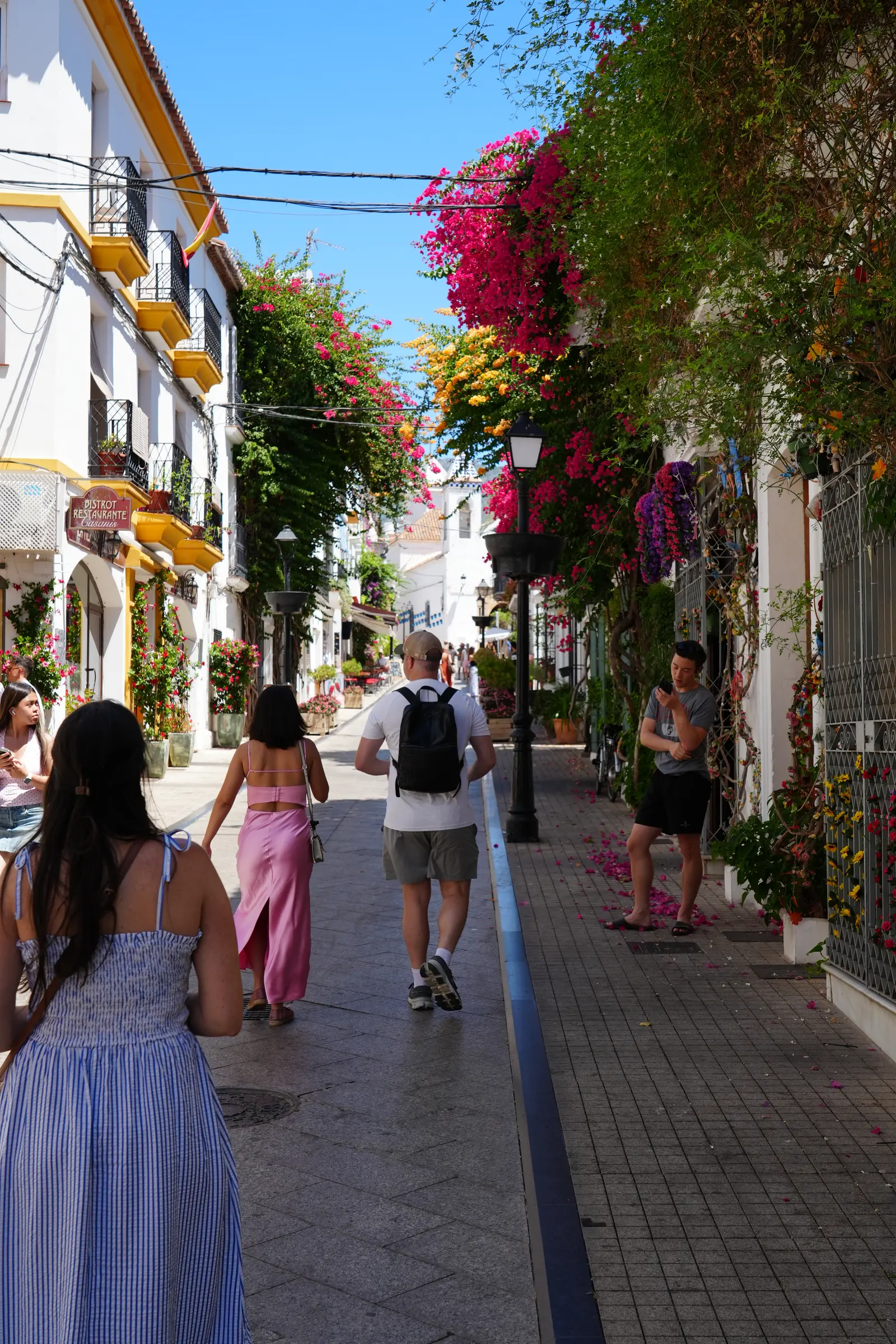
The entire Old Town is compact enough to cover on foot in under an hour. I’d start at Plaza de los Naranjos, which is the natural centre point and easy to find from any direction.
From the plaza, walk south along Calle Nueva to see the MARBELLA letters and the bougainvillea canopy. At the end, double back and take Calle Carmen for the blue flower pots and the church tower view.
From Calle Carmen, turn right into Calle Ortiz de Molinillo for the quieter version of the same scene.
Head north through Calle Caballeros to see the stone archway, then loop east along Calle Lobatas for the colourful residential stretch. Come back down Calle Valdes for the tiles and the gelato, and finish at Plaza Santo Cristo and the alley behind the chapel.
If you have time to spare, add Calle San Lazaro for the shade and Plaza de la Victoria for the fountain. Both sit a couple of minutes off the main loop.
The full loop is roughly 1.5km and takes 45-60 minutes at a slow pace with photo stops.
If you want to explore whether Marbella’s Old Town works as a car-free destination, I have a separate guide on whether Marbella is walkable. And if you’re watching your spending, walking these streets is completely free, which fits well with my tips on visiting Marbella on a budget.
The best time is before 10am or in the late afternoon after 5pm. Midday in summer is too hot for comfortable walking, and the light is harsh for photos.
Early evening gives you the warmest colours on the whitewashed walls.