Is Marbella walkable? Yes, in the parts most visitors actually care about.
The Old Town is fully pedestrianised, the Paseo Marítimo is flat and palm-lined, and Puerto Banús is easy to explore on foot once you’re there. Most people visit Marbella for these three areas, and all three work well on foot.
The catch is what sits between them. Marbella stretches across kilometres of mainly residential neighbourhoods, and getting from one highlight to the next on foot isn’t practical.
To see everything Marbella has to offer, you’ll need a bus, taxi, or car for the gaps. In this guide I’ll break down exactly what you can cover on foot and where you’ll want wheels instead.
⭐ Don’t miss >> Where to stay in Marbella, my honest area-by-area picks
How Walkable Is Marbella?
Yes, Marbella is walkable in its centre, but not from end to end. The Old Town, the marina, and the seafront promenade all link up on foot, so if you stay central you can happily leave the car parked for days.
The catch is scale. Marbella is a city of around 160,000 people strung along some 27km of coast, and its main areas sit far apart.
The whitewashed Old Town is one world. Puerto Banús, the Golden Mile, and San Pedro are separate hubs, each a real journey from the last rather than a stroll.
On the ground it felt bigger than the map suggested, and I kept assuming the next district was walkable before ending up on a bus timetable instead.
Stay central and Marbella is one of the easiest towns on the Costa del Sol to explore on foot. Spread your days across Puerto Banús and beyond, and you’ll be mixing walking with buses, taxis, or a hire car.
Whether Marbella is walkable comes down almost entirely to where you sleep. Stay in the Old Town and the answer is yes. These are my picks:
🏘️ Old Town, walk everywhere >> Hotel Claude, a boutique conversion right inside the pedestrianised lanes.
💶 Better value, still central >> Hotel Lima, between the Old Town and the beach.
🏖️ Beachfront, promenade at the door >> Gran Meliá Don Pepe, and you can still walk into the Old Town.
🛥️ Puerto Banús, its own bubble >> Hotel PYR Marbella, walkable to the marina but cut off from the Old Town.
Walking Marbella Old Town (Casco Antiguo)
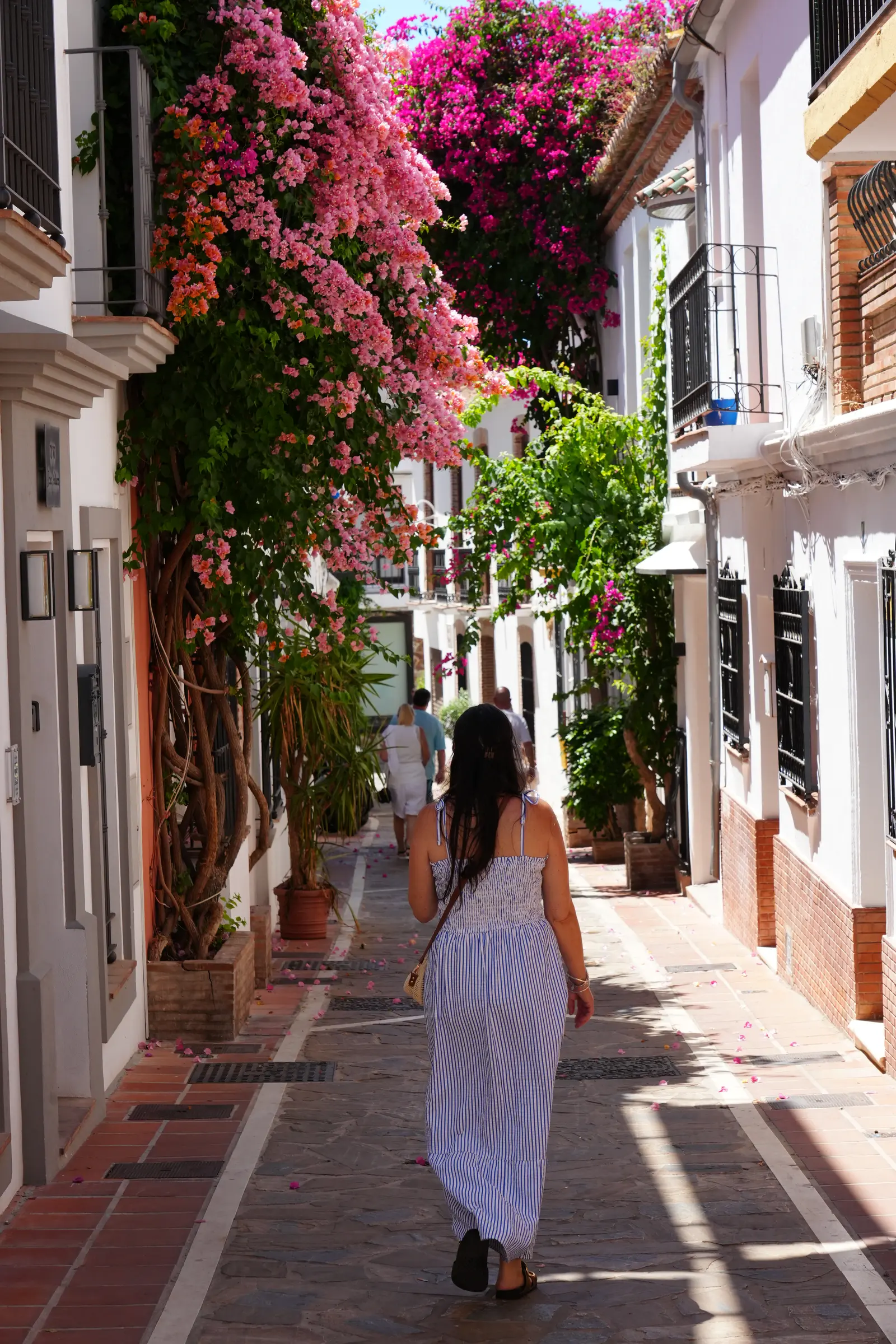
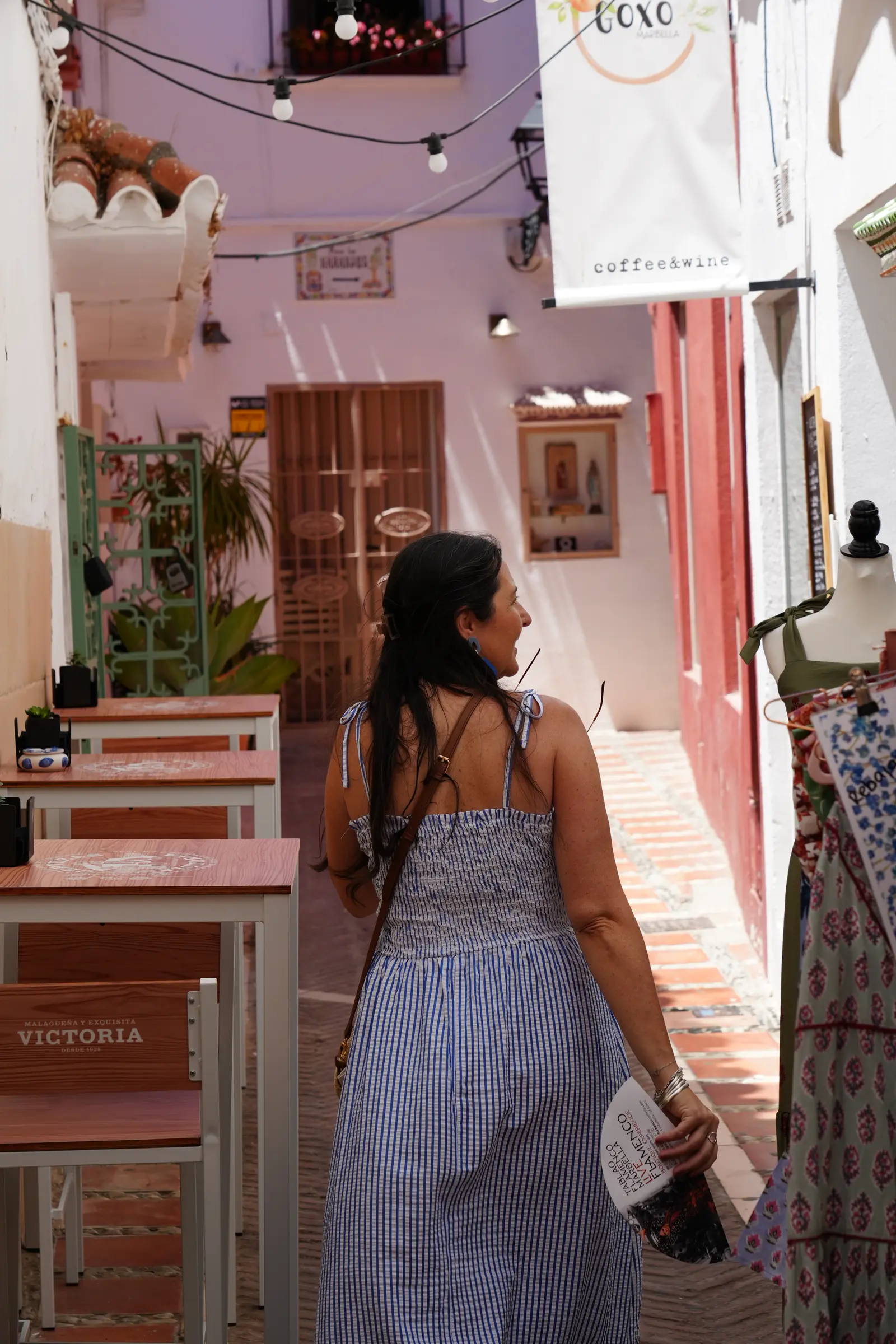
Marbella’s Old Town is fully pedestrianised. No cars, no scooters, just whitewashed lanes and the sound of your own footsteps on original cobblestone.
In July the whole quarter is draped in bougainvillea. I kept stopping for the colours alone, bright orange, deep magenta, and the palest pink all spilling over white walls in the same narrow street.
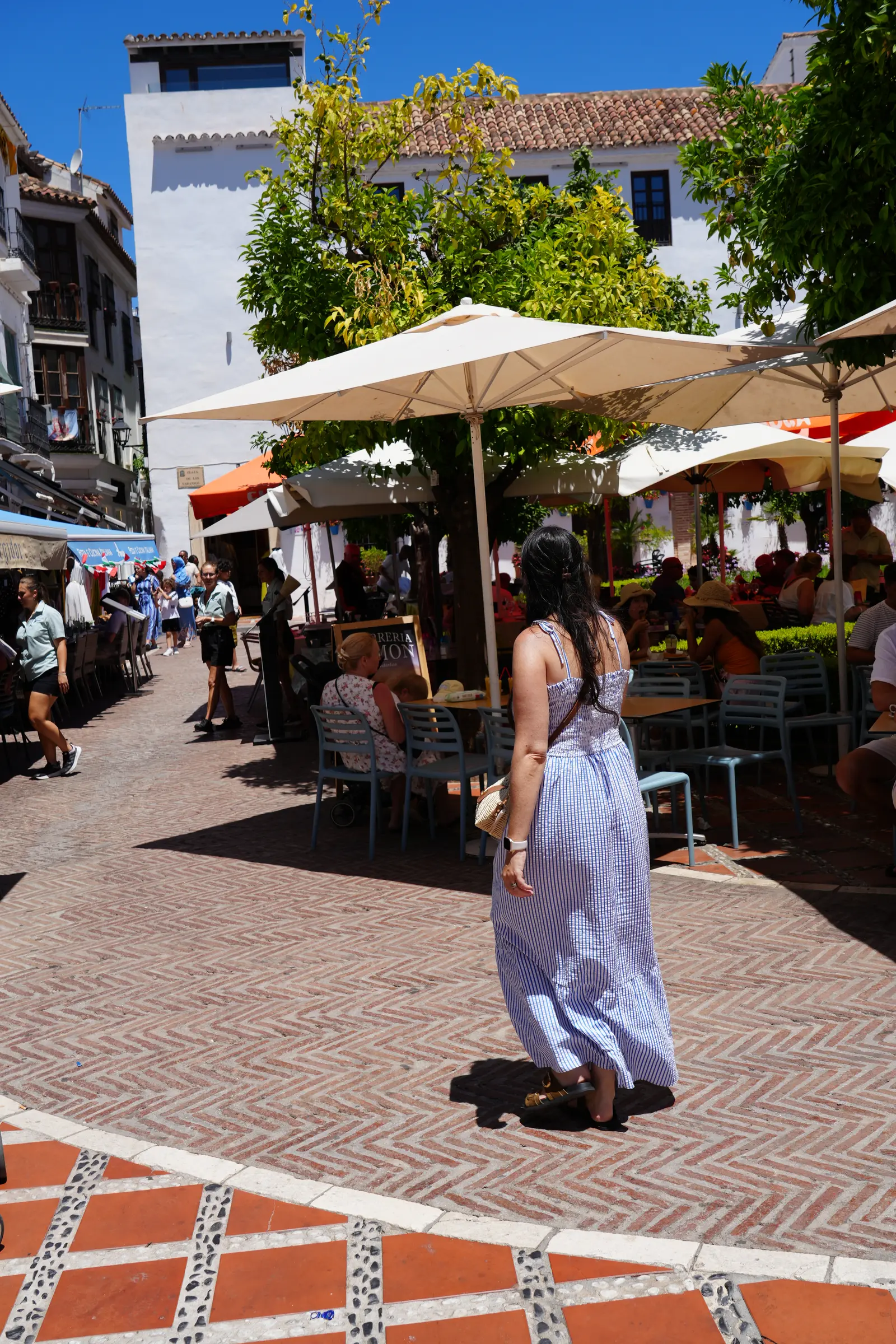
At the heart sits Plaza de los Naranjos, the orange-tree square, ringed with café terraces and a town hall built in the 1560s. From there Calle Ancha and Calle Nueva branch into quieter lanes, and a short walk brings you to the Iglesia de Nuestra Señora de la Encarnación, a 17th-century church with a gilded interior worth ducking into.
I covered every street on the map in about an hour and a half. Our last trip was a photo mission, but even then it felt unhurried.
The Old Town is more about slow travel than sightseeing, and that’s the part I liked best about it.
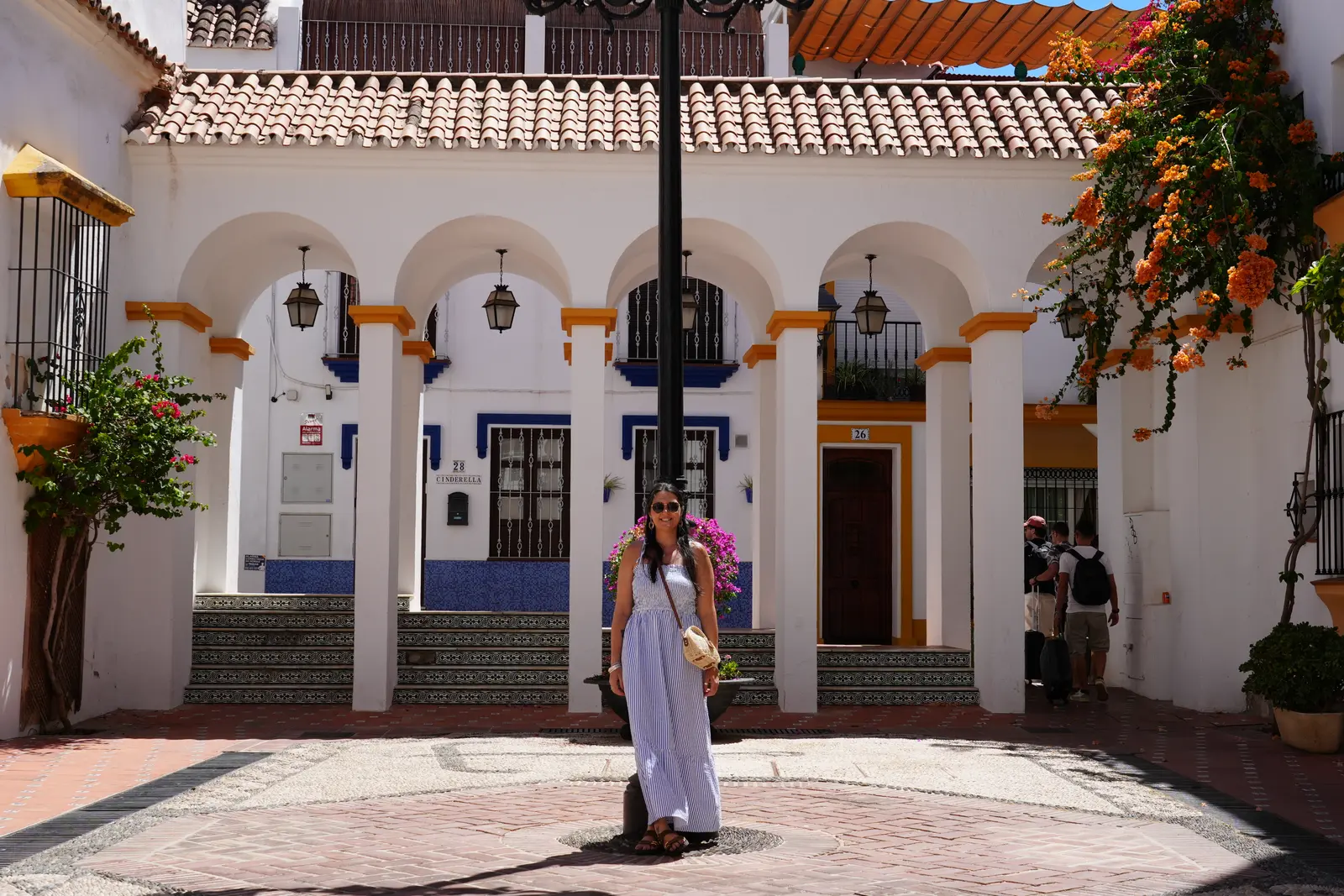
My favourite corner is a tiny flower-filled lane I know as Cinderella. Easily the cutest street in the old quarter.
If that is the part you are here for, I have mapped the rest of the most beautiful streets in Marbella and how to walk them in one go.
The Museo del Grabado Español Contemporáneo, a printmaking museum tucked near the plaza, is one of the few stops worth going inside for. Check the hours before you head over. I arrived just as it was closing.
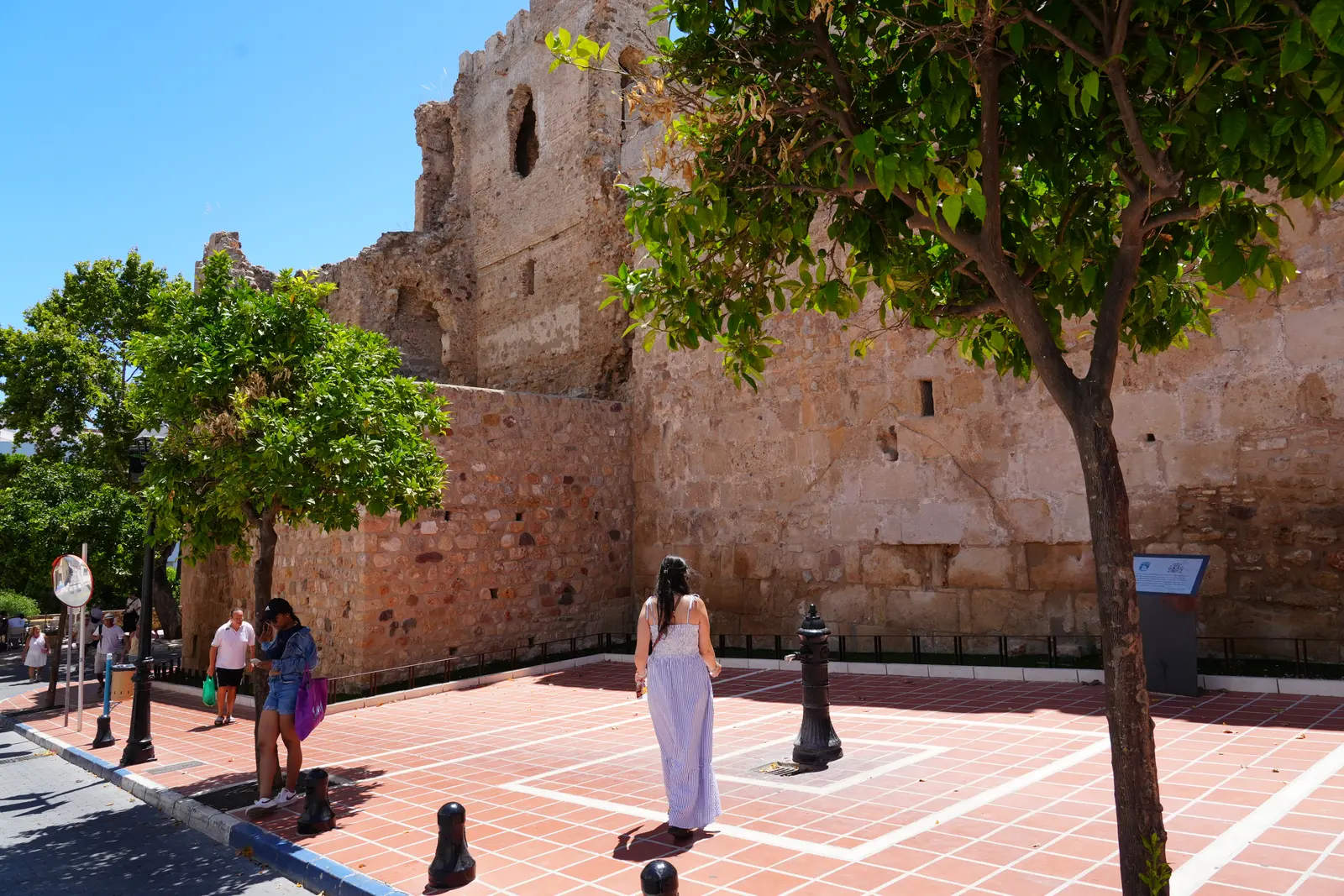
Many of the cobblestones are the originals, and I never had any issues walking on them. It’s still an old city though, with some uneven patches, so watch your step in the narrower lanes.
If you want to build a fuller day around it, my guide to things to do in Marbella picks up where the Old Town ends.
READY TO BOOK YOUR TRIP TO MARBELLA?
🏨 Accommodation: Find hotels in Marbella
🚗 Rent a car: I use Discover Cars (free cancellation, no hidden fees)
🎟️ Best guided tours: I use GetYourGuide
🚆 Trains and buses: I book through Omio
🛡️ Travel insurance: I use SafetyWing
The Seafront Promenade: Marbella’s Best Walk
The Paseo Marítimo is Marbella’s best walk and the one I’d send anyone on first. It’s completely flat, palm-lined, and runs right along the sand, so you can stroll as far as your legs fancy and turn back whenever.
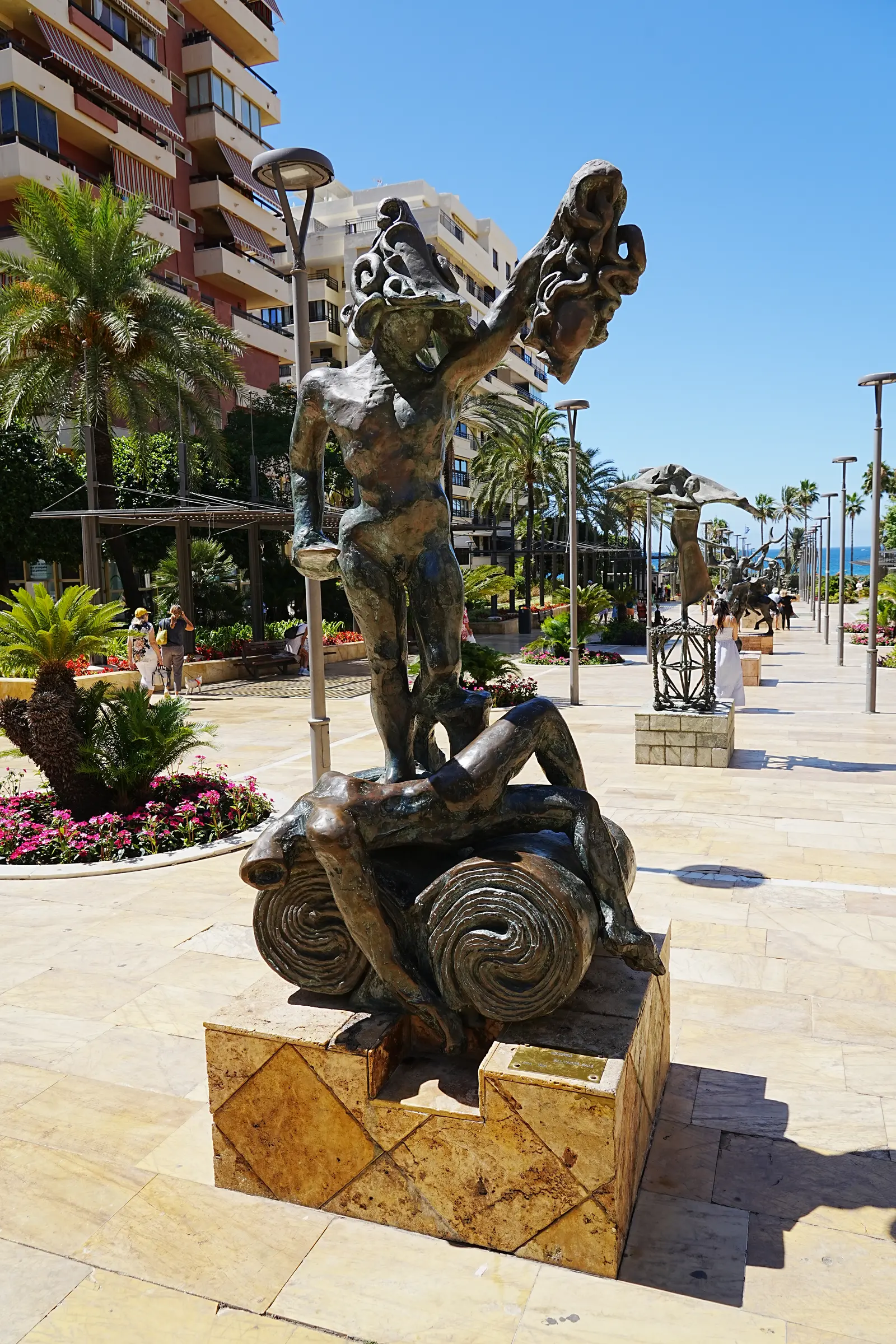
The prettiest stretch begins inland at Alameda Park, a shady garden of tiled benches and fountains I happily lingered in. From there, Avenida del Mar leads down to the sea past ten original bronze Salvador Dalí sculptures, cast in Verona and set along a marble walkway.
Those Dalí figures were the highlight for me, all long-legged horses and surreal shapes rising between the fountains. It’s a short walk from park to beach, and one of the few places where Marbella’s glamour and its art actually meet.
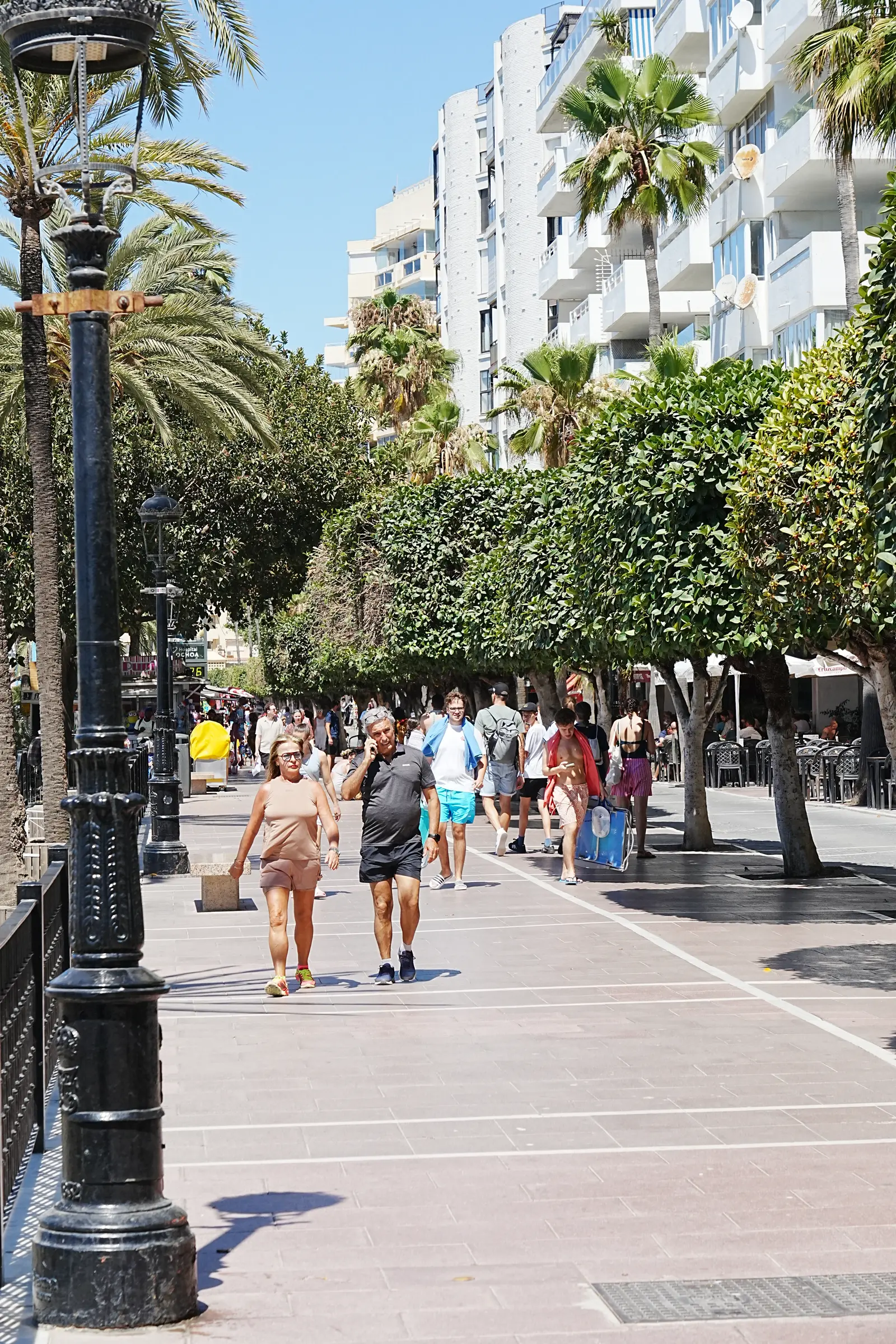
Keep going and the promenade forms part of the Senda Litoral, the coastal path that runs roughly 7km west to Puerto Banús, a walk of around 1.5 to 2 hours each way. I didn’t go far, since I’d parked nearby and wanted the Old Town, but the near stretch alone is worth the detour.
If you’re plotting a full day on foot, my one day in Marbella itinerary threads the park, promenade, and Old Town together.
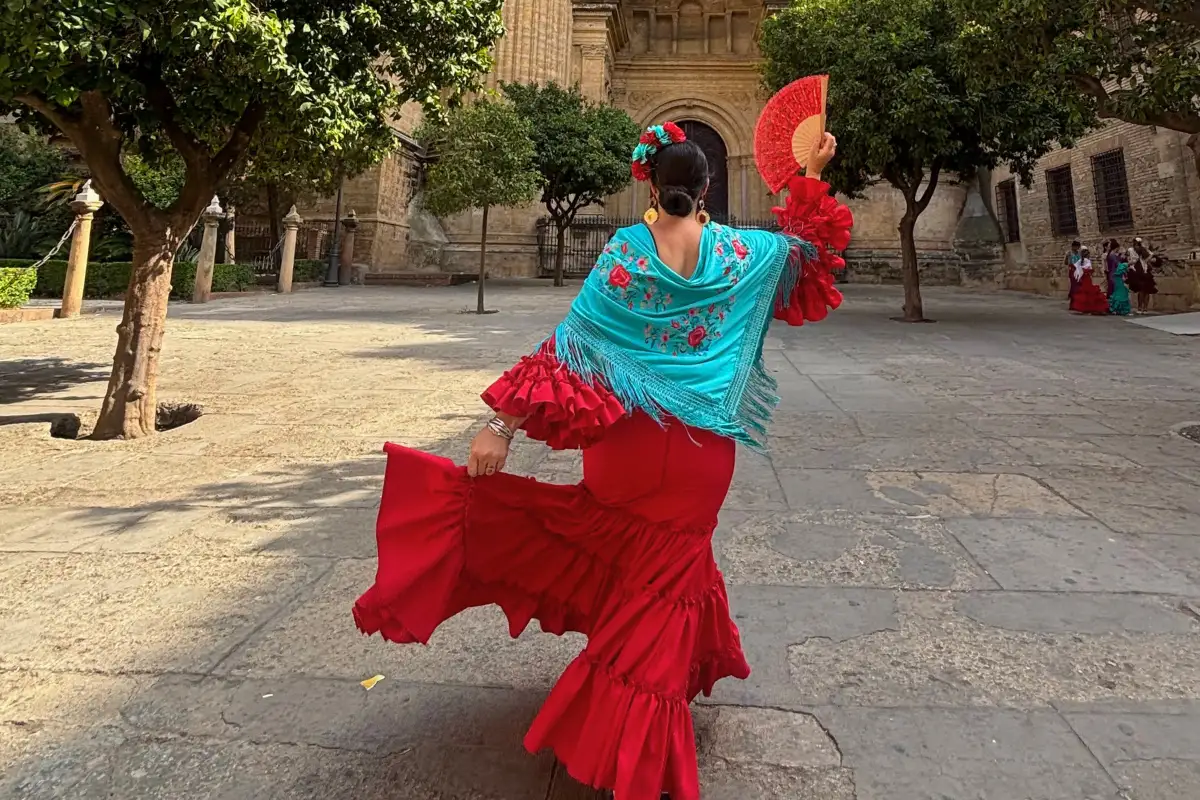
🎟️ Walking is free and always will be. The two things worth actually paying for in Marbella are the flamenco in the Old Town and a sunset sail out of Puerto Banús, and both fill up in summer. You can see what’s running on GetYourGuide.
Is It Worth Renting a Car in Marbella?
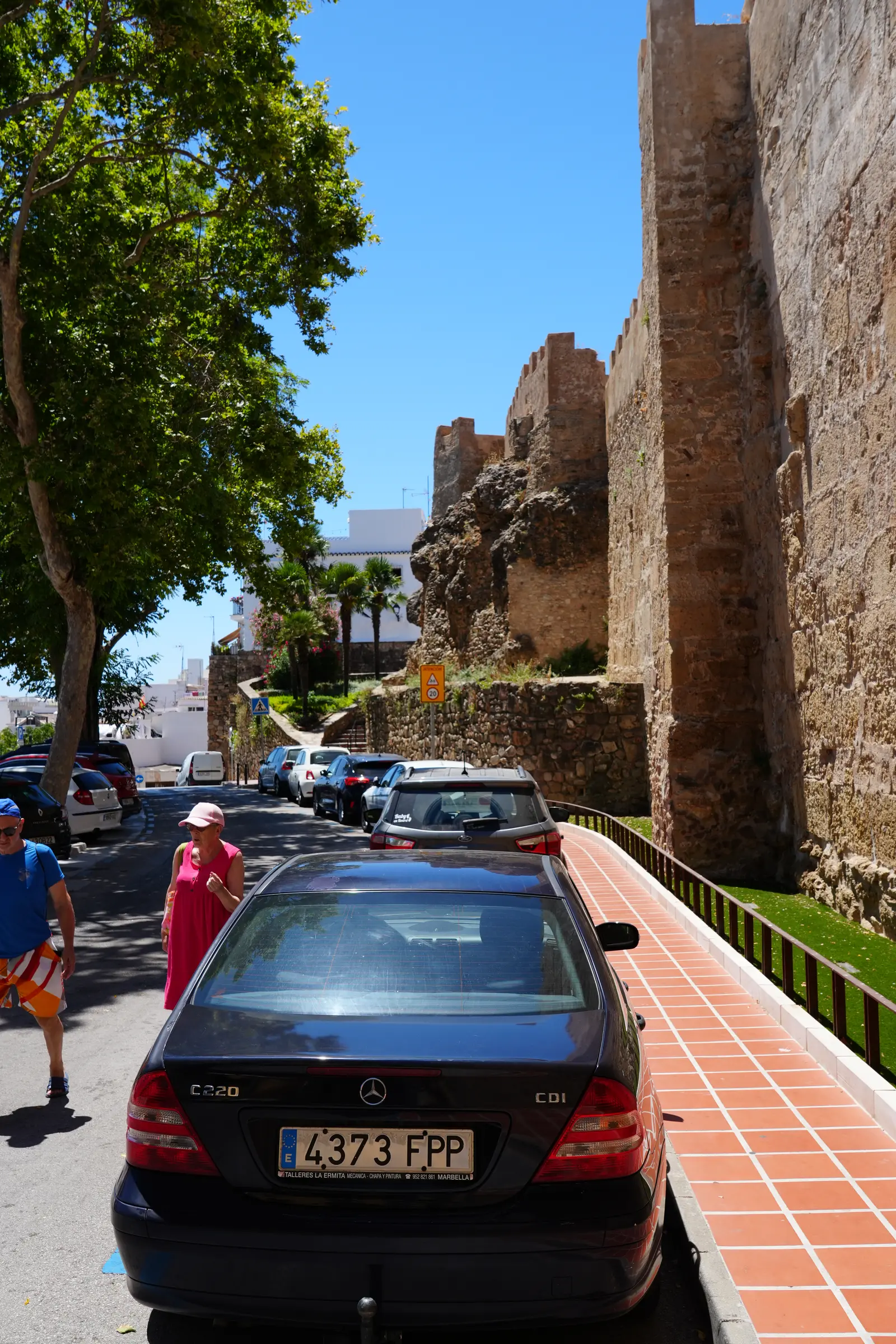
Yes, if you’re staying more than a day or two. The Old Town and promenade fill a good half-day on foot, but there is so much worth seeing nearby, Mijas Pueblo, Benalmádena, Ronda, that you’ll regret not having wheels when you want to branch out.
Taxis are readily available and will get you anywhere within the city. But once you see what a taxi or Uber costs for a day trip from Marbella, the hire car pays for itself.
For shorter hops without driving, the local DAMAS buses cover Marbella and its neighbours across more than 20 lines, running every 15 to 30 minutes at peak. A single fare is around €1.20 and an all-day ticket about €4.50, which my guide to Marbella on a budget breaks down further.
My daughter, who’s 28, has taken them plenty and swears they’re cheap and easy, especially if you’ve had a drink or don’t fancy hunting for a parking space.
The trade-off is parking. Central spaces fill fast, so I tend to leave the car by Alameda Park and walk in from there. My where to stay in Marbella guide covers which areas let you walk from the door.
🚗 This is the honest answer to the question in the heading. Stay central for two days and you’ll never want a car. Stay a week, or want Ronda and the white villages, and you’ll want one from day three. I book through Discover Cars, which compares the major companies for the best price.
How to Get Between the Old Town, Puerto Banús, and the Beaches
Marbella works like a string of separate hubs, and each one is walkable once you arrive; it’s the gaps between them that need wheels. The Golden Mile sits between the town centre and Puerto Banús, roughly 7km west, while beaches like Cabopino and Artola stretch out to the east.
Puerto Banús rewards the trip, and by car it’s barely ten minutes from the centre. I drove over and spent a happy hour on foot among the superyachts and shop windows, ice cream in hand, which is really the way to do it.

You’ve got options for the hop. A taxi from central Marbella to Puerto Banús is quick and easy, the DAMAS bus is the cheap route, and in summer the Fly Blue catamaran glides between the two in about 30 minutes.
If you’d rather stay on the flat, bike hire runs around €10 to €15 a day, with stands dotted along the beachfront. Cycling the seafront path is a good way to cover the distance most walkers skip.
For the eastern beaches like Artola and Cabopino, though, I just drove. They’re too far out for a casual walk and easiest with your own car.
🛡️ Marbella is a walking town, and walking towns are where people turn ankles on old cobbles. I use SafetyWing, an affordable subscription policy you can buy even after you’ve already left home.
Where to Stay If You Want to Walk Everywhere
If you want to walk everywhere, the best thing you can do is stay central. Marbella Old Town is the perfect fit. The promenade is right there, and you can just pick left or right and start exploring.
From the centre the beach is about ten minutes on foot, the tapas bars and squares are on your doorstep, and Alameda Park is a short walk away. Rooms in the Old Town itself are limited, and some lanes are car-free, so you may be wheeling a suitcase over cobbles.
Puerto Banús works as a base too, but treat it as its own bubble. You can walk to its marina, beaches, and restaurants easily, yet you’re cut off from the Old Town without a bus or taxi.
For couples and first-timers I’d pick the centre every time, close enough to walk home from dinner without once thinking about parking. My where to stay in Marbella guide runs through each area with honest picks by budget and trip.
Is Marbella Safe to Walk at Night?
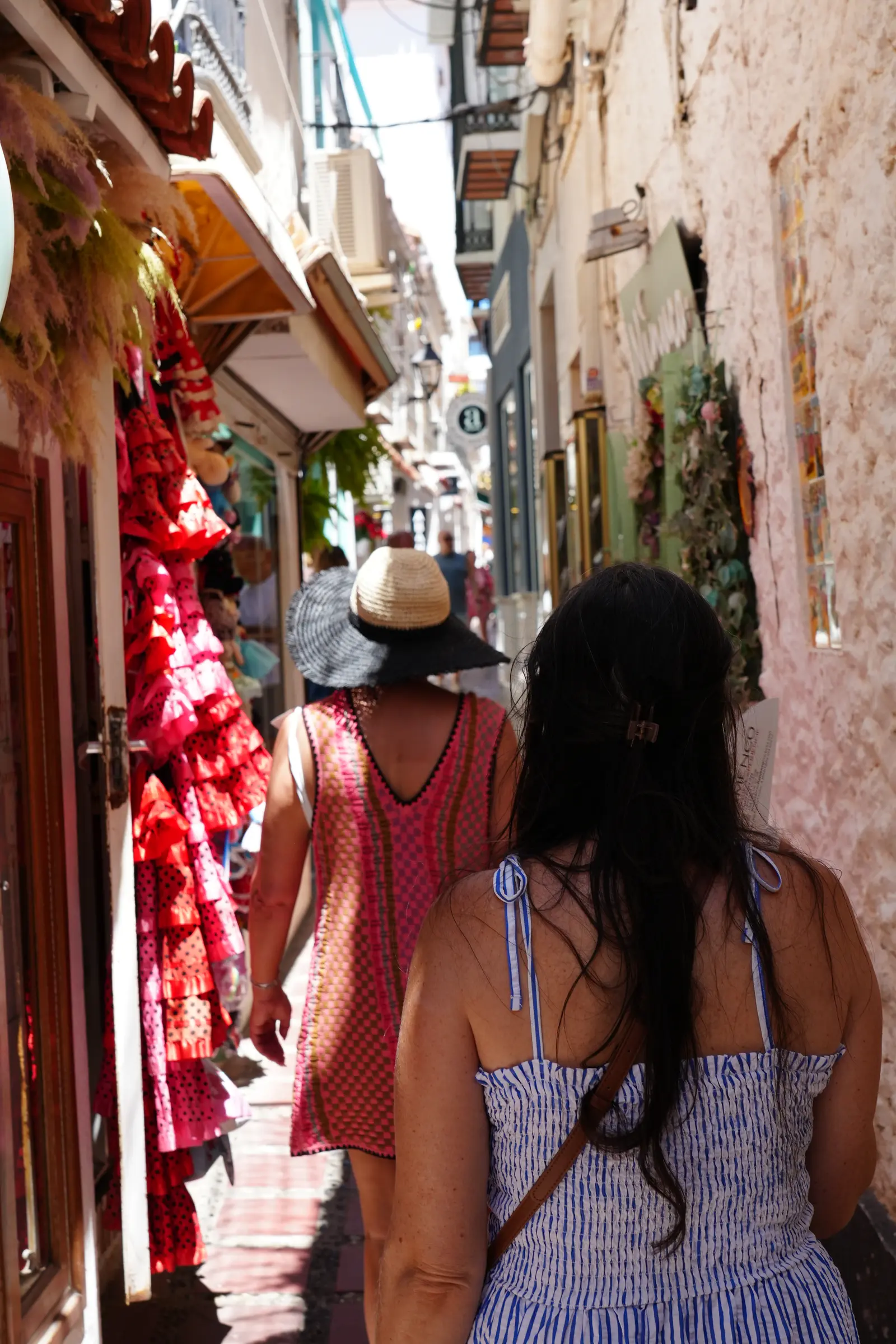
Yes. Marbella is safe to walk at night, and I never felt uncomfortable in the Old Town, along the promenade, or on the beaches after dark. The streets stay lively well into the evening, especially in summer when locals eat dinner at 10pm and the squares are still buzzing.
The one area worth being aware of is the club district around Puerto Banús, where there have been a few recent reports of fights. This is the exception rather than the rule, but if you’re out late in that area, keep your wits about you. The rest of Marbella, including the beaches and Old Town, is exceptionally safe for walking at any hour.