One day in Marbella is absolutely enough, and it’s a trip I make several times a year. I live 45 minutes up the coast, so this is a Malaga to Marbella day trip for me rather than a holiday, and that is how the day below is built.
Moorish castle walls, 16th-century churches and the Dalí sculptures are what make the drive worth it for me. The super yachts at Puerto Banús, the whitewashed alleys of the Old Town and the 27 kilometres of golden beaches are what bring most readers.
The good news on how to spend a day in Marbella is that the best of it is free. The Old Town is compact and walkable, and only the beach clubs will really cost you. If you’re weighing the two cities up, there’s my Málaga vs Marbella comparison, and if you’re staying over, where to stay in Marbella.
⭐ Don’t miss >> Where to stay in Marbella, my honest area-by-area picks
Getting to Marbella from Málaga
Marbella has no train station, so it’s a car, the bus, or a tour.
By car, the AP-7 toll motorway takes 45 to 50 minutes for about 6.50 euros in tolls. The free A-7 coast road is slower at 60 to 75 minutes and a great deal more scenic. Park under Avenida del Mar for the Old Town, around 2 euros an hour or 19 to 33 euros for a full day.
By bus, Avanza runs from Málaga bus station roughly every 30 to 60 minutes from around 6am, and the journey takes anywhere from 45 minutes to an hour and 35 depending on how many resorts your service stops at. Check the timetable and avoid the slow one. Tickets are 8 to 10 euros each way.
Marbella bus station is a 20 to 25 minute walk from the Old Town. It’s downhill on the way in and a steep climb on the way back, which is worth knowing before you decide to walk it twice.
Organised day trips from Málaga run from around 40 to 60 euros and usually bundle Marbella with Puerto Banús and sometimes Mijas or Ronda.
Getting around once you’re there is simple, because the Old Town is entirely walkable, and there’s more on what you can cover on foot in a separate guide. For Puerto Banús, it’s a taxi (10 to 15 euros, 10 minutes), the local bus, or Uber.
One Day in Marbella, Hour by Hour
Here’s how Jethro and I would spend a full day in Marbella. The shape of this Marbella itinerary is the one every local guide lands on, which is two to three hours in the Old Town in the morning, lunch, then two to three hours working down to the coast and along to Puerto Banús.
9.00am Churros and chocolate at Churreria Ramon, or coffee at Mia Cafe. Both are in the Old Town.
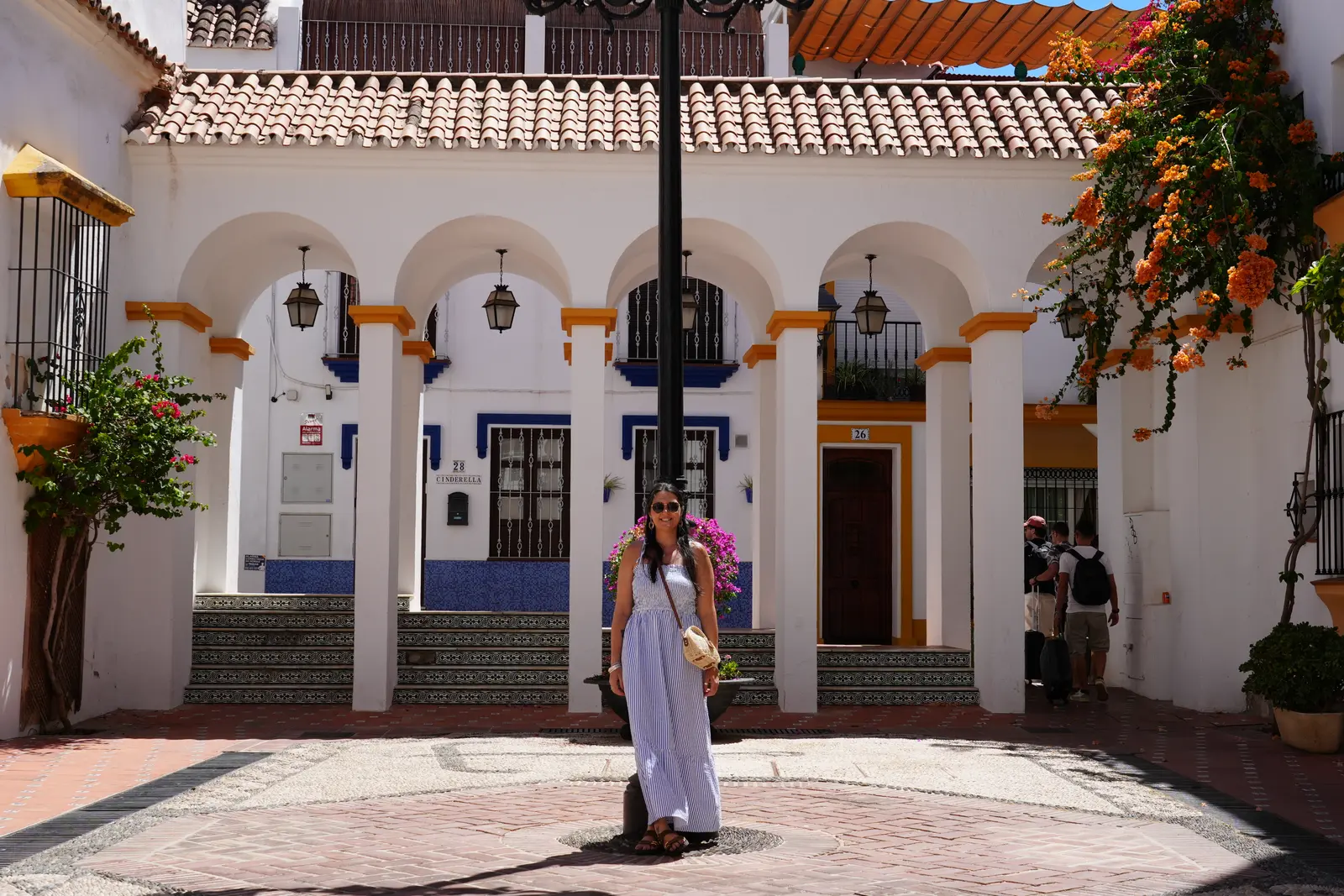
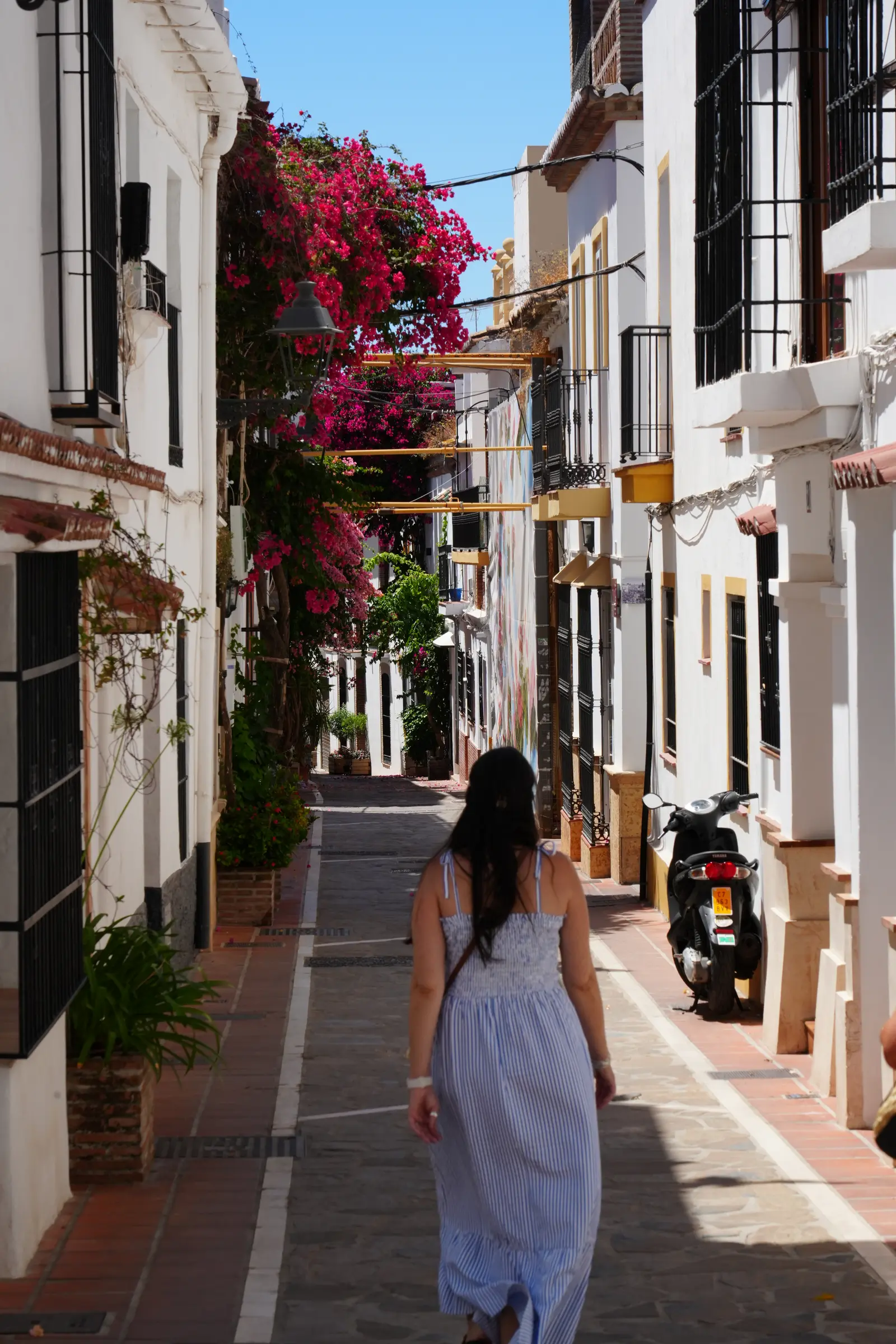
10.00am Two hours in the whitewashed streets. Plaza de los Naranjos, the Iglesia de la Encarnacion, and the old castle walls, with time to get lost in between.
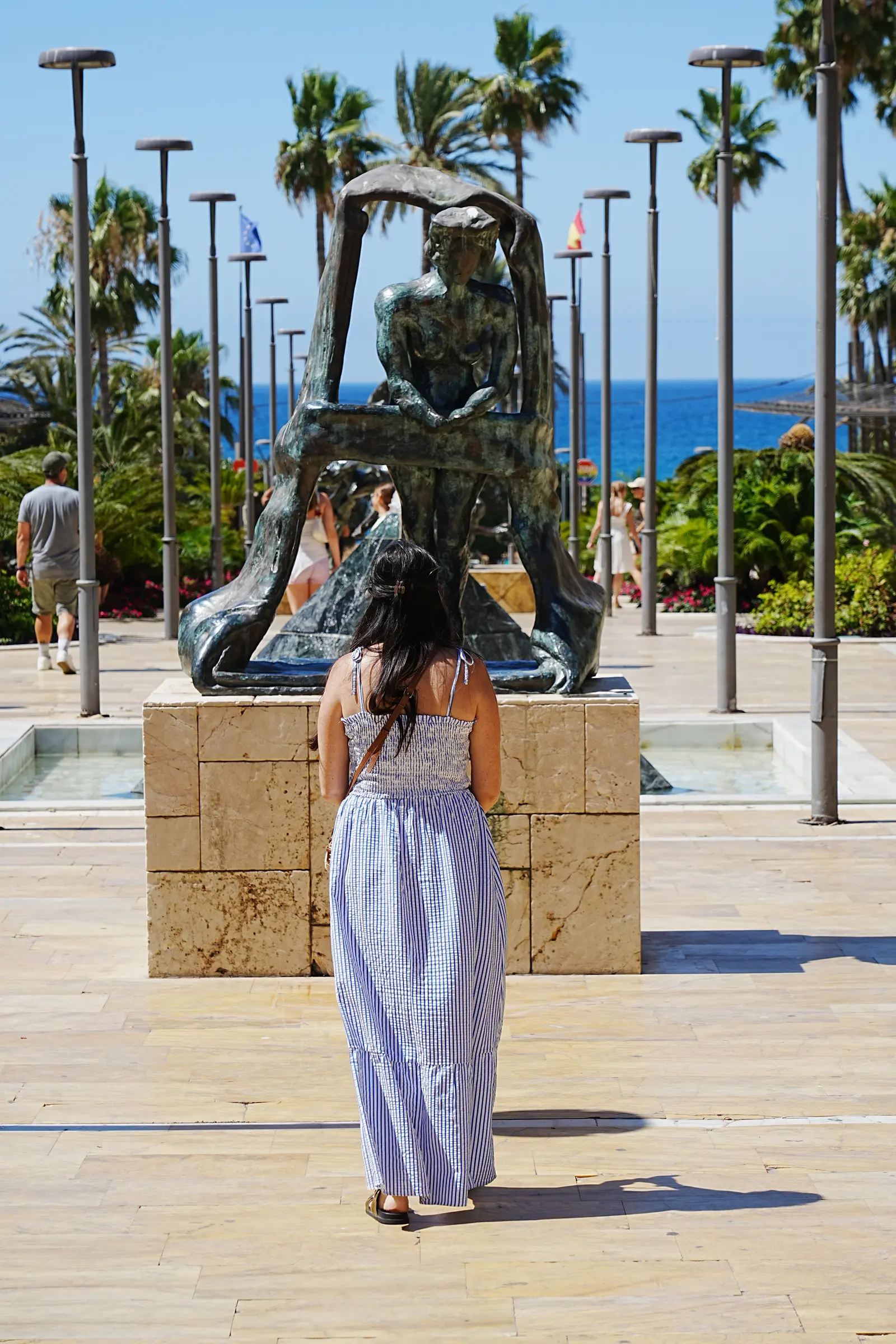
12.00pm Walk down through Alameda Park and along Avenida del Mar to the Dalí sculptures, then out onto Playa de Venus. About 30 minutes, and the chiringuitos at the bottom do good fried fish.
2.30pm Back up for lunch at Taberna La Nina del Pisto. The flamenquin and salmorejo are excellent, and a full meal runs 15 to 25 euros a head.
4.00pm Taxi to Puerto Banús, ten minutes. Walk the marina, look at the yachts, have a coffee.
6.00pm Sunset from the Belvue rooftop at the Amare hotel, or cocktails in the marina. More options in my guide to sunset spots in Marbella.
8.30pm Dinner back in the Old Town at Tragabuches or Casa Blanca. Book ahead in summer.
10.30pm Clubs like Bonbonniere and La Suite if you’re staying late, or the 45-minute drive back to Malaga if you’re not.
This day runs a lot better if you don’t have to drive back at 11pm. These are my picks by area:
🏘️ Old Town >> Hotel Claude, a boutique conversion inside a 17th-century townhouse, right in the lanes.
🏖️ Beachfront >> Gran Meliá Don Pepe, a five-star on the sand and walkable to the Old Town.
⭐ Golden Mile >> Marbella Club Hotel, the original 1954 resort.
🛥️ Puerto Banús >> Hotel PYR Marbella, the best value near the marina.
Where Is the Nicest Part of Marbella?
The Old Town is the nicest part of Marbella. The Old Town’s lovely whitewashed streets are still largely residential, so even in peak season you won’t feel crammed between restaurant tables or pushed along by crowds, and unlike Puerto Banús it costs nothing to enjoy.
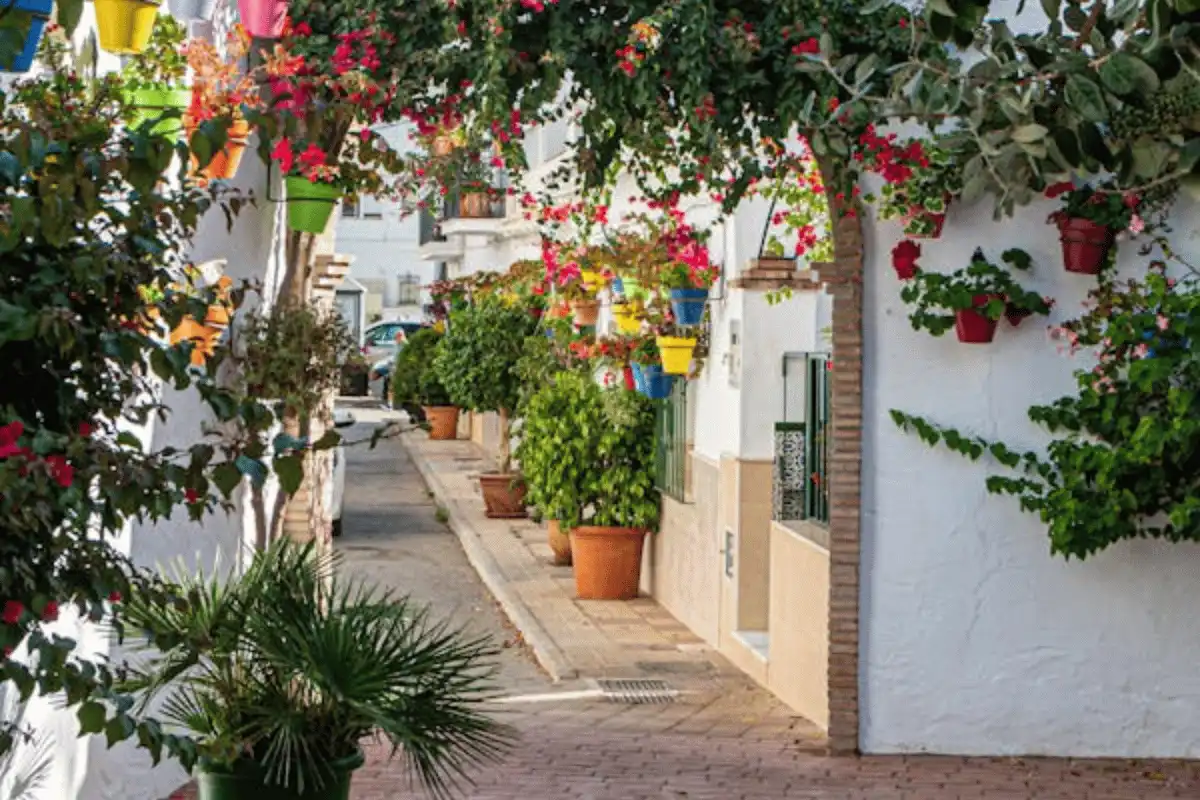
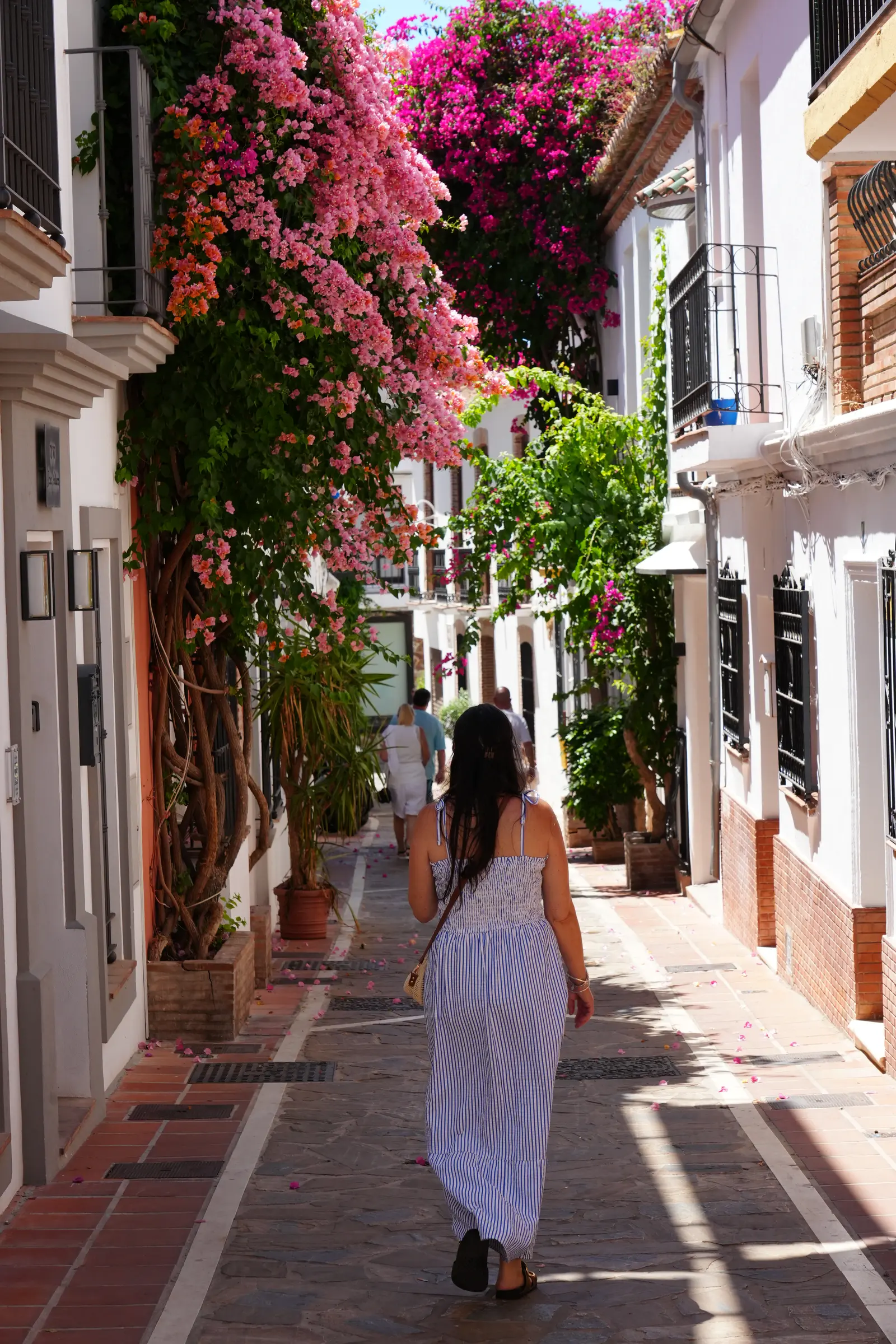
The most photographed street in it is Calle Carmen, where residents hang bright blue, yellow and green pots of red geraniums from the whitewashed walls. The pretty lane frames the bell tower of the Iglesia de la Encarnacion at one end, which is why there is usually a small queue of people waiting to take the same photograph.
Come in spring or early summer when the bougainvillea is out, and if you are still choosing dates there’s my guide to the best month to go to Marbella. I have never once walked through it quickly.
The Morning in Marbella Old Town
The Casco Antiguo (Old Town) is the heart of Marbella and where you should spend most of your time. Give it two to three hours, and go early. Before 11am the lanes are largely empty, and by noon in summer they are not.
The spine of it is Calle Ancha, the main thoroughfare where most of the Old Town’s restaurants, boutiques and small hotels sit. Walk it end to end and let the Old Town’s side streets take you off it, rather than trying to tick off sights in order.
For a full list of things to do, see my Marbella guide.
Plaza de los Naranjos
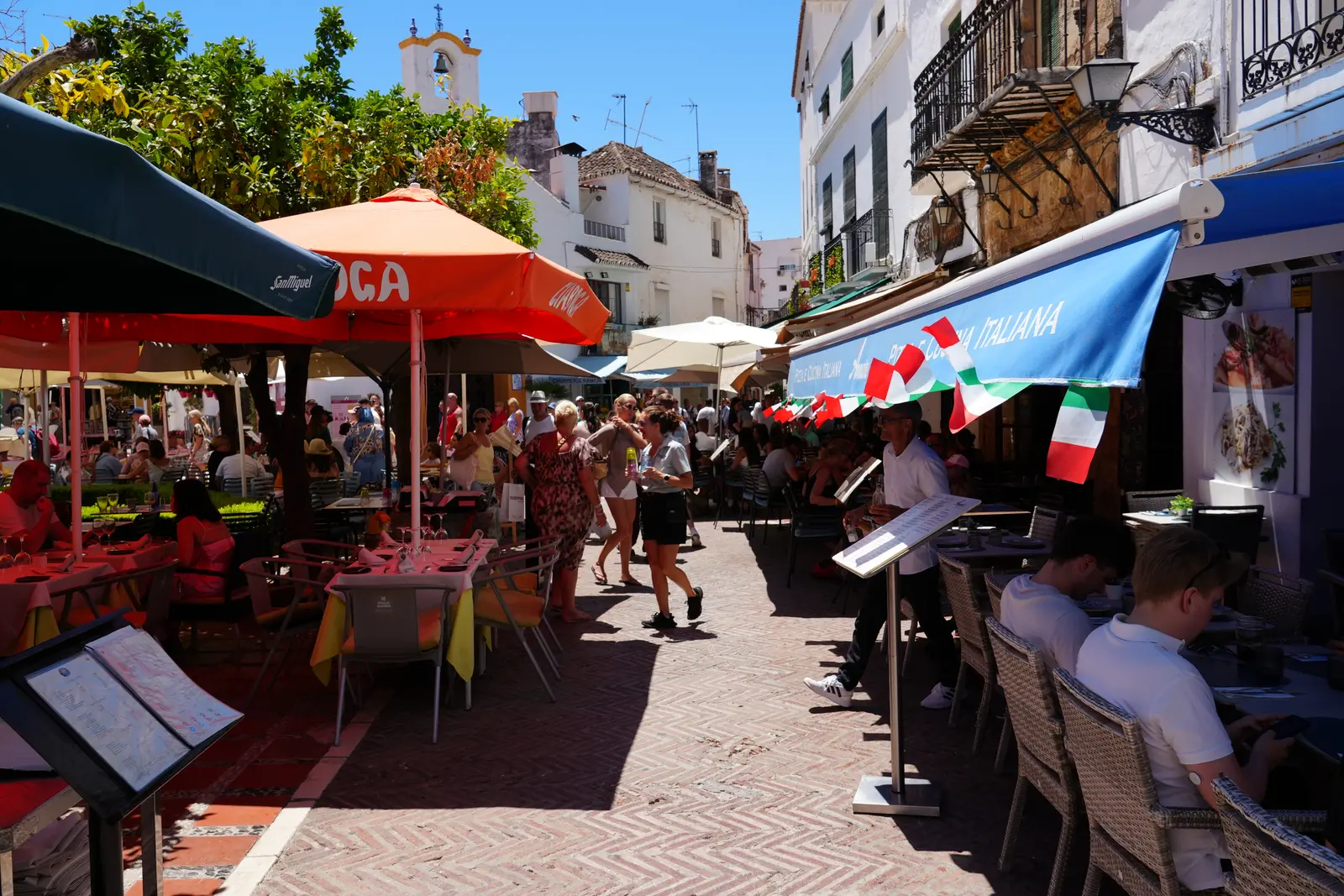
The main square was laid out after the Christian reconquest of 1485, when the Catholic Monarchs took Marbella from the Moors.
Today, fragrant orange trees shade cafe tables, and the beautiful Renaissance town hall and Casa del Corregidor frame the lovely plaza. Grab a table at one of the terraces for people-watching and coffee.
The square is best early morning before the tour groups arrive, or late afternoon when the light is golden.
Don’t eat here. Every local guide to Marbella says the same thing and they are all right. The terraces on this square charge for the setting, and better food is two streets away.
Plaza de Iglesia
If the orange square is heaving, walk round to Plaza de Iglesia beside the church. Same orange trees, a fountain and almost nobody, which honestly makes it the nicer of the two. Fragments of the medieval walls run from here up towards the Muralla del Castillo, which is the better way to reach them than looking for a signposted entrance.
Iglesia de la Encarnacion
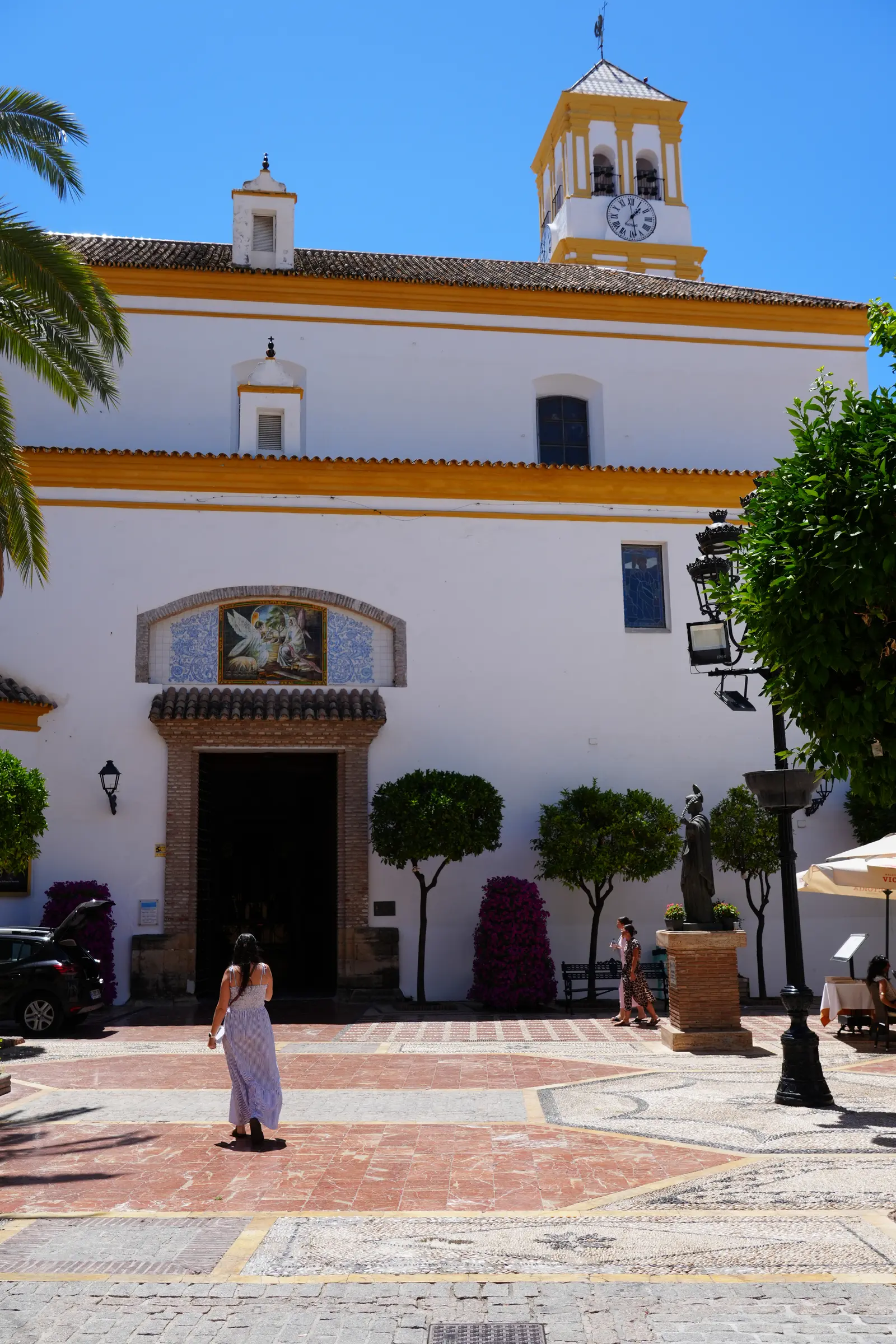
This 17th-century Baroque church was built on the site of a mosque, converted after the Catholic Monarchs reconquered Marbella in 1485, and the red stone facade dates from 1756. Inside there are gorgeous gilded altarpieces and the impressive Sol Mayor Organ, installed in 1972 with 5,000 pipes and considered the most important organ built in Spain in the last 150 years.
Free to enter, and worth ten minutes.
The Rest of the Old Town, in the Order You’ll Meet It
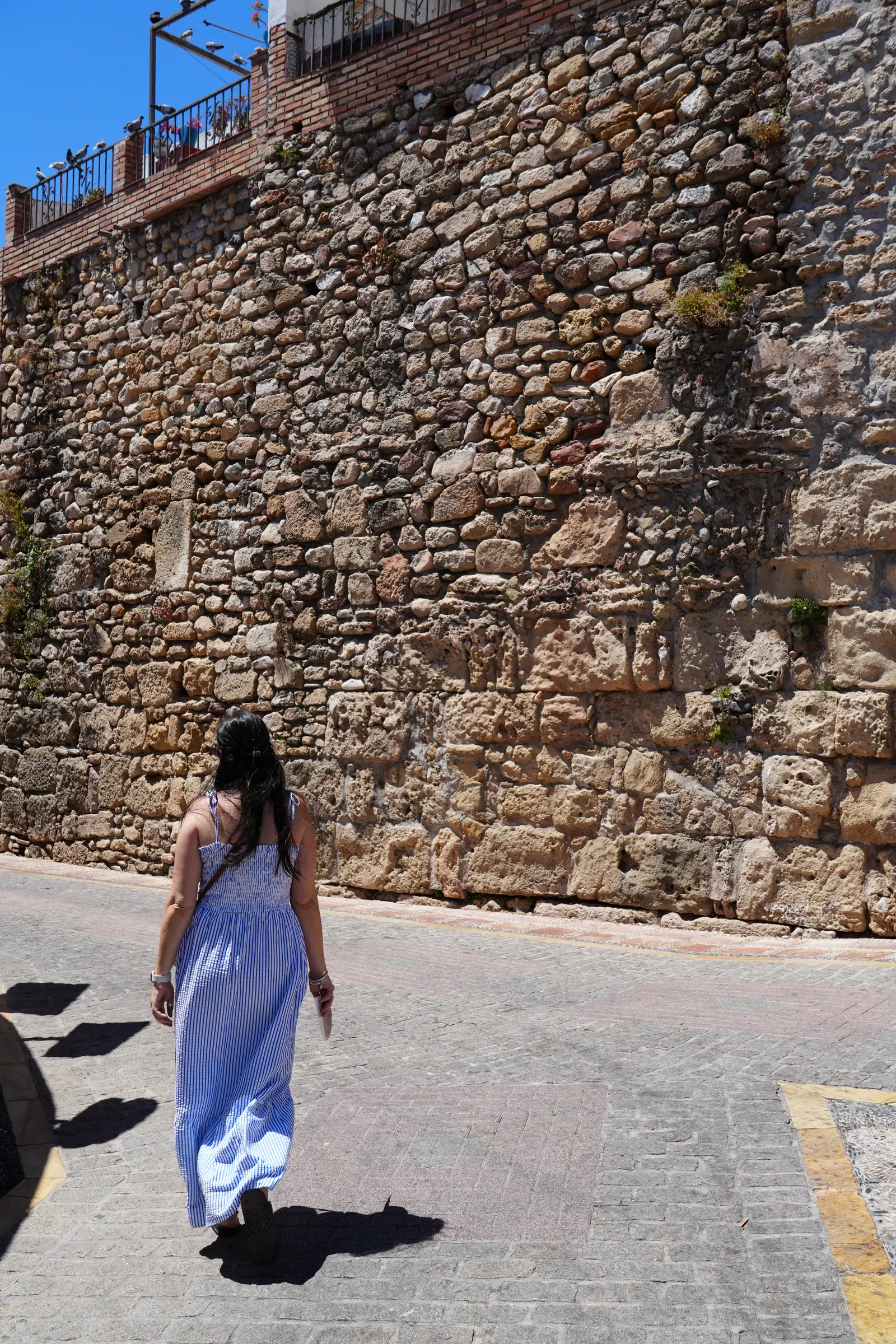
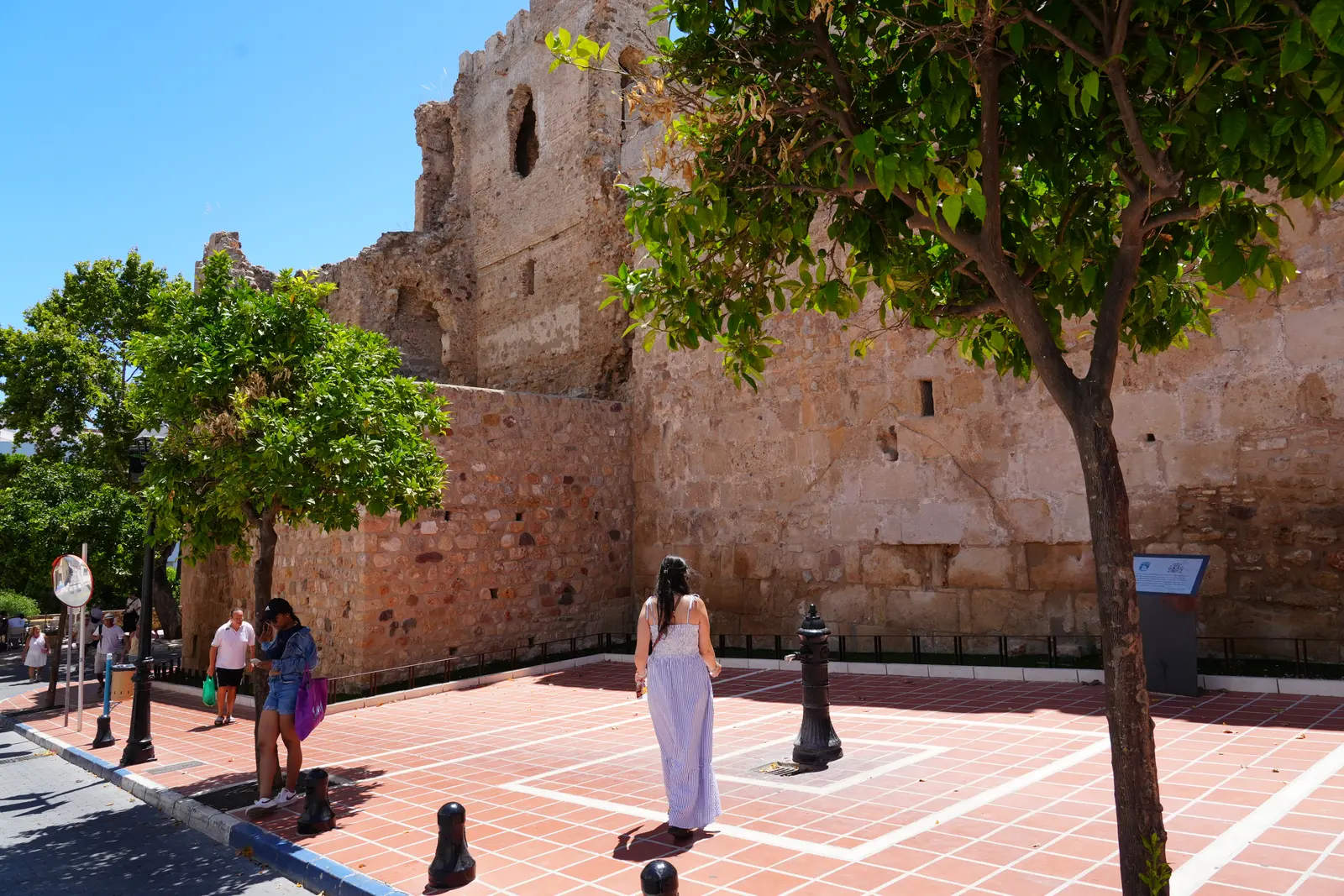
The remains of the 10th-century Moorish Muralla del Castillo are tucked into the lanes off Calle Trinidad, and most visitors walk straight past them. They are the only real trace of the fortified Arab town Marbella used to be, and they give the rest of the morning some context.
A few streets on, the Ermita del Santo Cristo de la Vera Cruz is a small 15th-century hermitage and one of the oldest buildings in town. It is usually locked, but the peaceful corner it sits in is really worth the detour anyway.
If it’s hot, the Museum of Spanish Contemporary Engravings is the place to lose half an hour. It’s in a 16th-century building on Calle Hospital Bazán, it holds an impressive collection of Picasso, Miró and Dalí, and entry is €5. It’s closed on Sundays, which catches people out.
The artisan shops in between sell handmade ceramics, leather and local crafts at prices that are honest by Marbella standards, and considerably better than anything you’ll see later in Puerto Banús.
Is Puerto Banus Worth Visiting?

Puerto Banús is worth seeing once, and once is the right number. The marina is 6 km west of the Old Town, super yachts sit in the water while Ferraris cruise past Dior and Rolex, and the people-watching is the entertainment.
The restaurants are overpriced and summer crowds can be overwhelming, but it lacks nothing in spectacle. Walk the marina, window-shop, and find the Walk of Stars on Avenida José Banús, where handprints from Antonio Banderas and Julio Iglesias are set into the pavement.
Allow an hour or two, and don’t feel obliged to eat here. It’s 10 minutes from the Old Town by taxi at 10 to 15 euros, or 15 by local bus, and there’s an underground car park at the marina if you drive.
🎟️ The boat trips leave from this marina, and the sunset sails genuinely do sell out days ahead in summer, which is the one thing on this itinerary I’d lock in before arriving. You can see what’s running on GetYourGuide.
Best Beaches in Marbella for a Day Trip
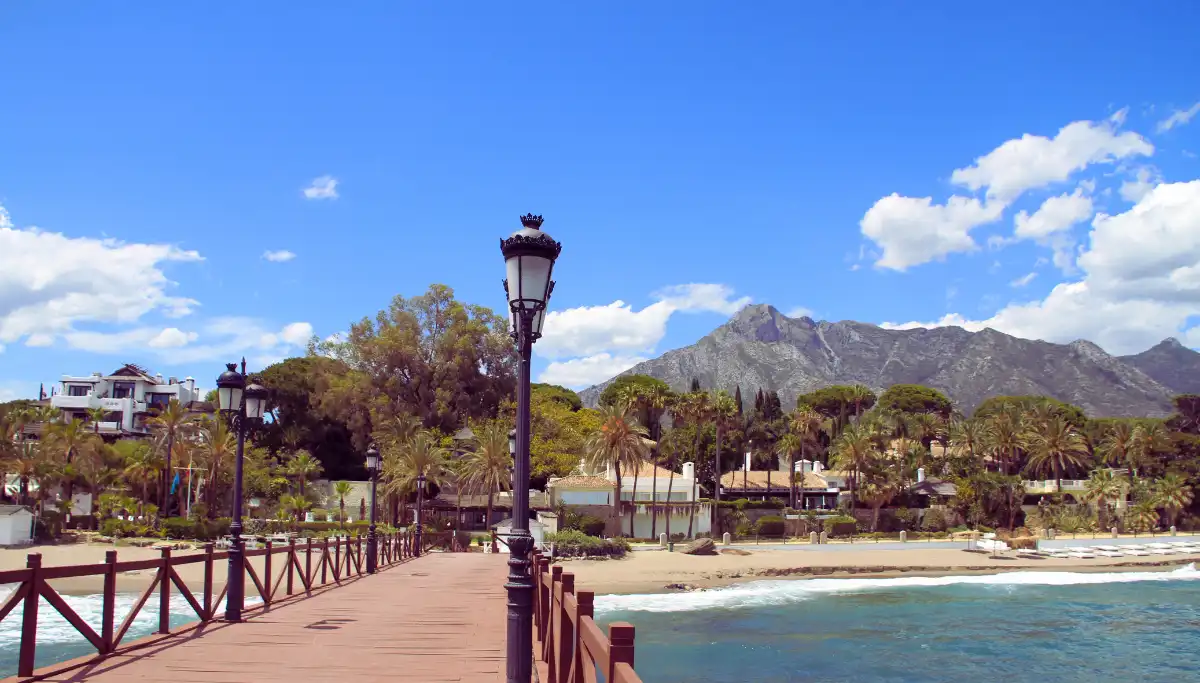
Marbella has 27 km of coastline and over 20 excellent beaches, and for one day only three of them matter. Gibraltar is visible from most of them on a clear morning.
Playa de la Venus and Playa de Fontanilla are the closest to the Old Town, with lovely golden sand, sunbed rental and relaxed chiringuitos, joined by the promenade so you can walk between them. Playa de Nagueles, out near Puerto Banús, is where the upmarket beach clubs sit, with a more glamorous crowd and higher prices.
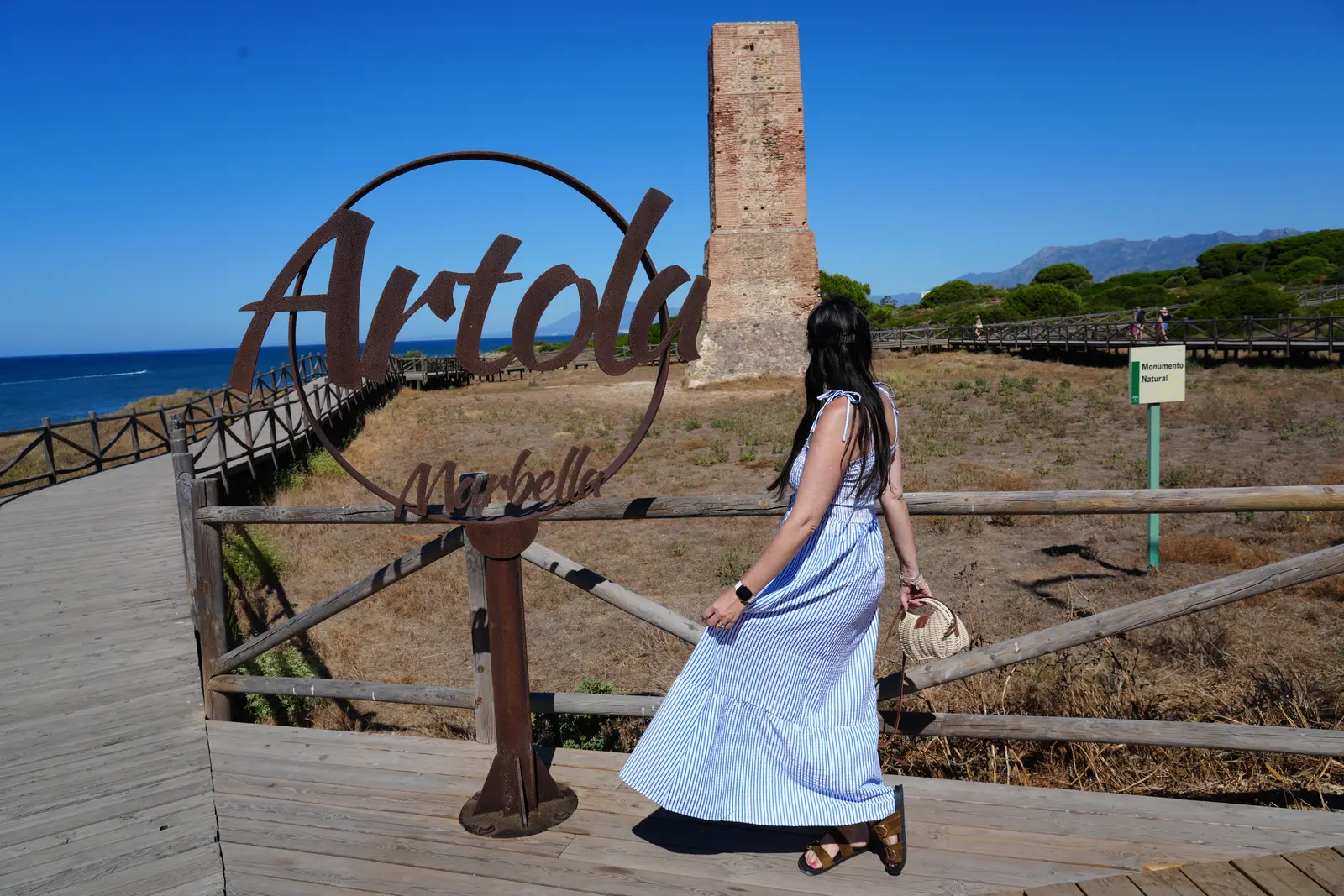
Twelve kilometres east, Playa Artola-Cabopino is the best natural beach on this stretch, backed by the beautiful protected Dunas de Artola. A flat, accessible trail runs through the dunes and it’s excellent for birds and wild orchids in spring. Worth the drive if the day is going slowly.
The beach clubs are the other option and the one I’d skip on a single day. Ocean Club, Nikki Beach and Opium all want 50 to 150 euros for a day bed plus food and drink, and a reservation in summer. That’s an afternoon and a chunk of the budget gone, and there’s more on keeping costs down in Marbella on a budget.
🚗 Artola-Cabopino is 12 km east and La Concha and Ojén are inland, so the moment you want anything beyond the Old Town and the marina you want a car. I book through Discover Cars, which compares the major companies for the best price.
Where to Eat in Marbella
Both of the local guides I trust on Marbella say the same thing about lunch, so I’ll repeat it. Eat away from Plaza de los Naranjos.
Taberna La Nina del Pisto is the one I’d send you to, a lovely small place doing proper Andalusian cooking, and the flamenquin is the order. Casa Blanca near Alameda Park is the fallback if it’s full.
For breakfast, Churreria Ramon does churros with thick chocolate, cash only, and Mia Cafe is the specialty-coffee alternative. If you’re staying for dinner, Tragabuches does modern Andalusian by a Michelin-starred chef and needs booking, and any chiringuito on the Paseo Maritimo will do you pescaito frito and a cold beer without ceremony.
READY TO PLAN YOUR DAY IN MARBELLA?
🏨 Where to stay: Find hotels in Marbella
🎟️ Guided tours: I use GetYourGuide
🚗 Rent a car: I use Discover Cars
🚆 Trains and buses: I book through Omio
🛡️ Travel insurance: I use SafetyWing
The Afternoon, from Alameda Park Down to the Sea
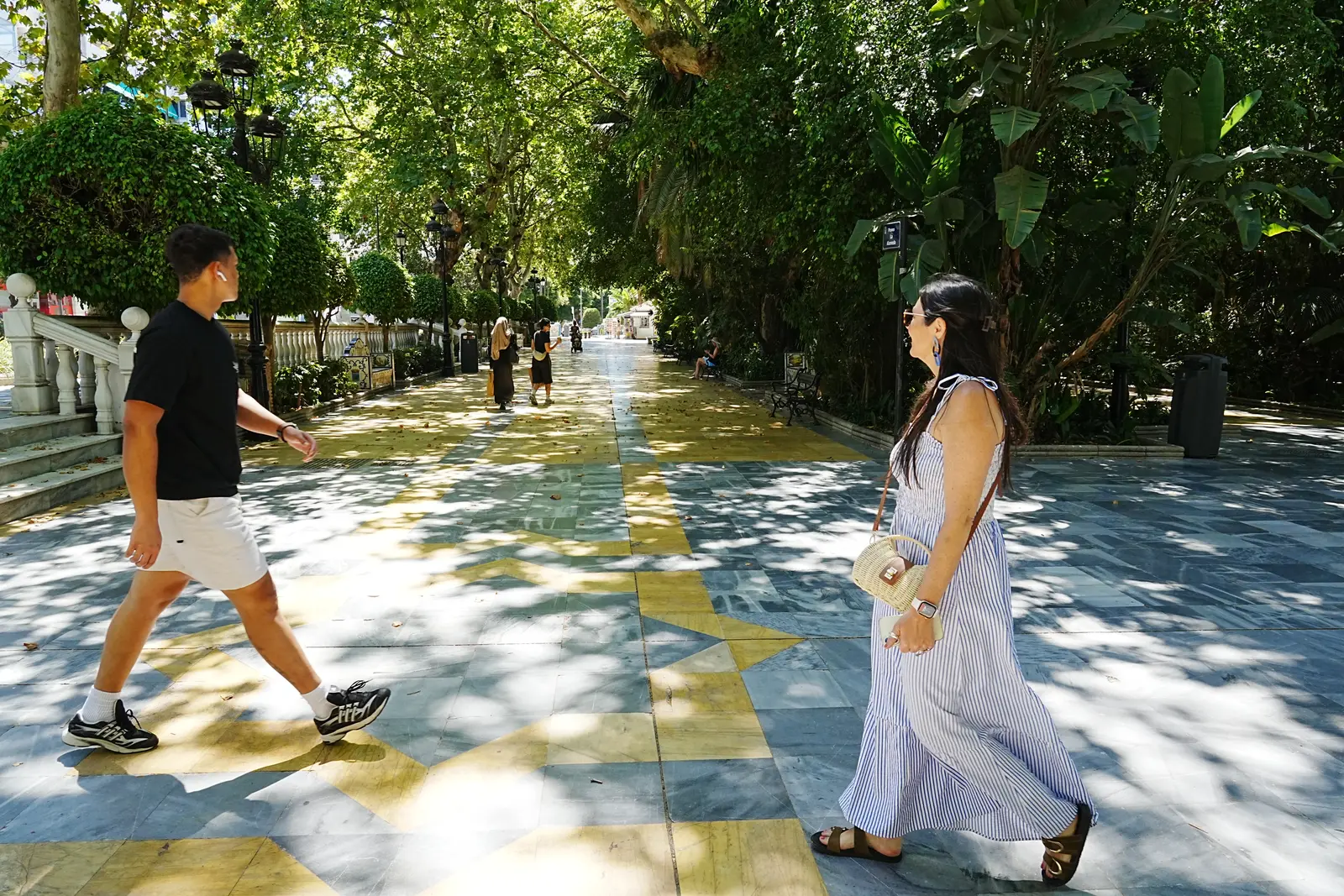
The afternoon is a straight line downhill, and it takes two to three hours if you let it. Start in the Parque de la Alameda, just below the Old Town, where there has been a park since the 18th century and the central fountain, the Fuente Virgen de Rocío, is lit at night.
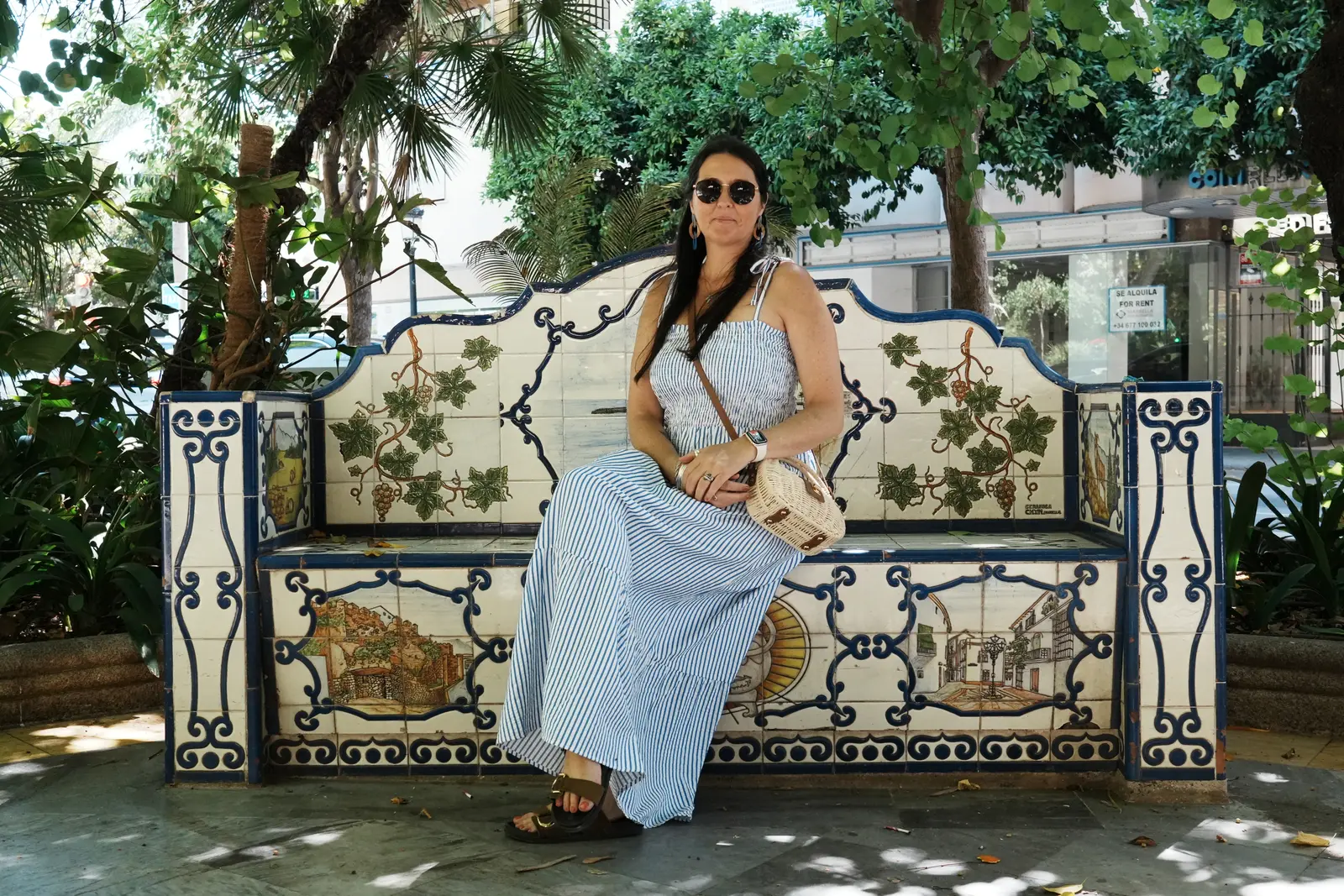
The gorgeous tiled Andalusian benches under the exotic trees are just about the best free seat in Marbella on a hot afternoon, and Alameda Park is where I always end up when the Old Town gets too warm.
From the bottom of the park, Avenida del Mar runs down to the sea as an open-air gallery of ten bronze sculptures. They are attributed to Salvador Dalí, and it’s only fair to say the attribution is disputed, because the city bought the works rather than commissioning them. They are still worth the fifteen-minute walk.
At the bottom you come out at Playa de la Venus, sometimes written Playa de Venus, the beach closest to the Old Town, with the fishing harbour of Marina La Bajadilla a short walk east.
West of here the Paseo Maritimo runs for kilometres along the front towards Puerto Banús, past chiringuitos the whole way. On a clear day you can see Gibraltar from it and the Rif mountains of Morocco behind, with La Concha rising 1,215 metres directly behind you the other way.
The 5 km stretch flanked by the grand resorts is the Golden Mile, and walking the whole Mile takes about an hour. The Marbella Club at its heart, opened in 1954 by Prince Alfonso von Hohenlohe, is the hotel that put Marbella on the international map.
Is One Day Enough for Marbella?
Marbella in one day is enough, and that is not a consolation prize. Marbella doesn’t have the museum list of a big Andalusian city, so a day trip to Marbella covers the lovely Old Town properly, gives you time on the sand and still gets you to Puerto Banús before dinner.
What one day can’t do is the beach-club version of Marbella, which eats an afternoon on its own.
Final Thoughts
If you only do one thing here, spend the morning in the Old Town and go early. It’s the part of Marbella I actually love, it costs nothing, and by eleven the charm is competing with a tour group.
The caveat is Puerto Banús. It’s genuinely impressive and it is also the reason a lot of people come away thinking Marbella is nothing but money and a view of Gibraltar from the good tables, so give it an hour and go back to the beach. The people who should skip a day trip entirely are the ones who came for beach clubs and golf, because both need two days and an overnight.
For anything beyond the centre, San Pedro de Alcantara is ten minutes west and has free Roman ruins, Estepona is 25 minutes west, and Ronda an hour north. Tangier, in Morocco, is a long day by ferry rather than a short one. The full list is in my guide to day trips from Marbella.