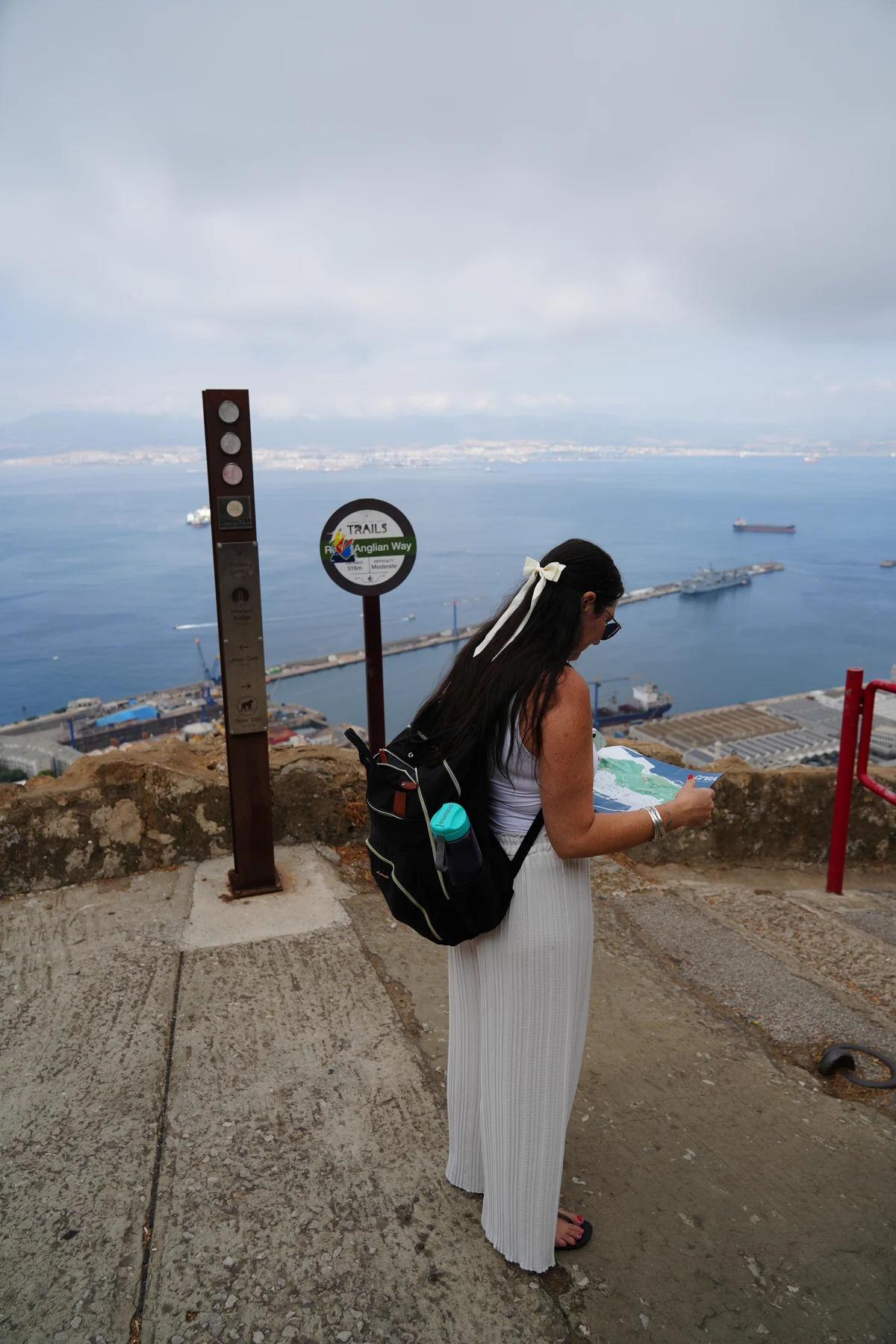
Two of us did a full day of getting around Gibraltar for under a fiver, and then very nearly handed over £60 to go up one hill.
That’s the whole story of transport here, really. The town is walkable, the buses are cheap and good, and the moment you look up at the Rock the pricing goes strange.
We walked over to the taxi rank and asked for a lift to the Nature Reserve gate. They don’t sell that.
What they sell is a guided tour, quoted to us at £60, which dropped to £40 the second we said our entry was already booked.
We said no to both and got up the hill on a bus ticket instead. So here’s what the buses and the taxis really cost, and how to reach the top without paying £60 for a hill you can walk yourself.
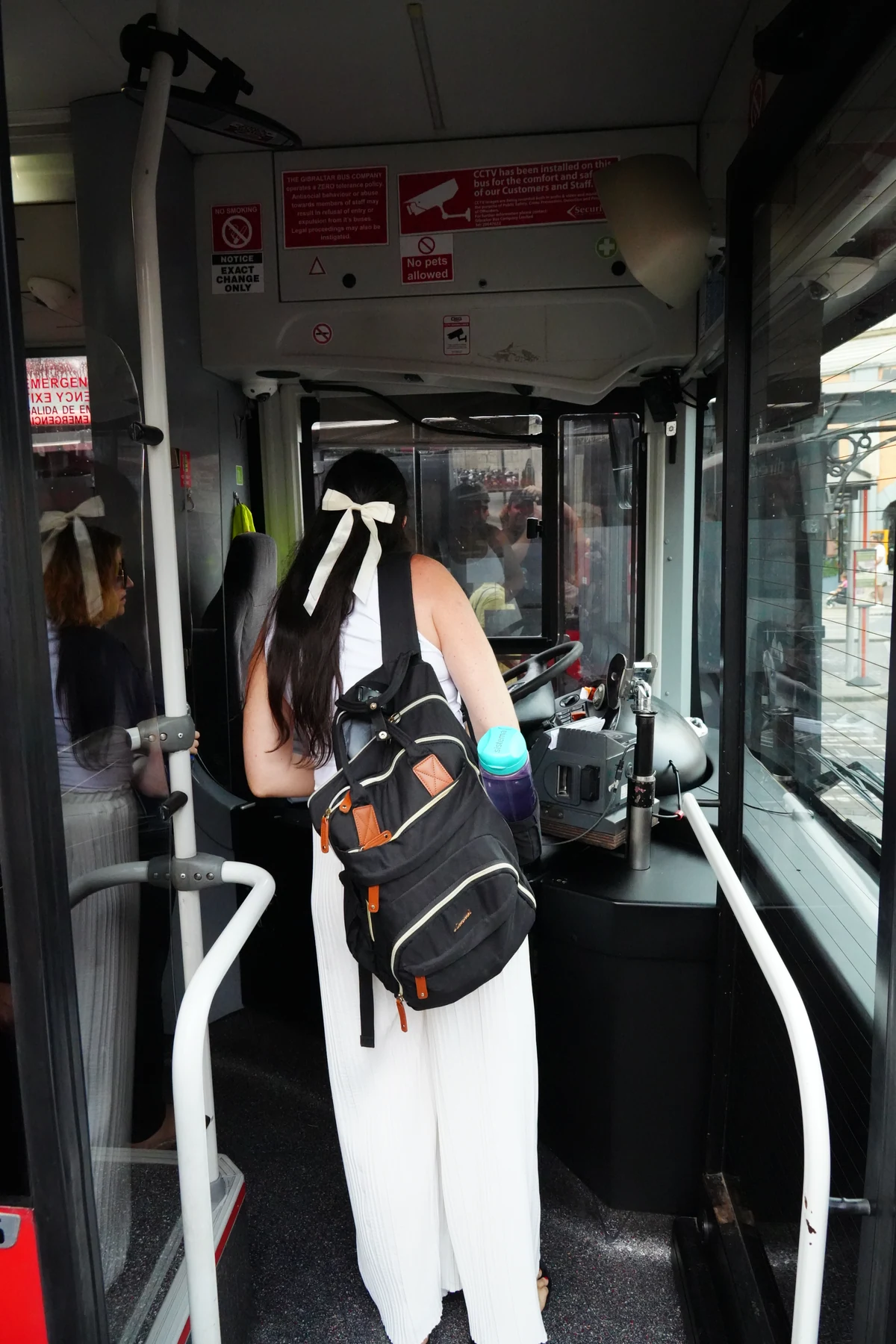
What Is the Cheapest Way to Get Around Gibraltar?
Walk. Honestly, it isn’t even a close contest.
The whole territory is 6.7 square kilometres, and you can cross the town centre end to end in about twenty minutes on roads that are properly surfaced, with no big cobbles and nothing loose underfoot. The Rock’s a different case entirely, because the time up there goes on the up and down rather than the distance.
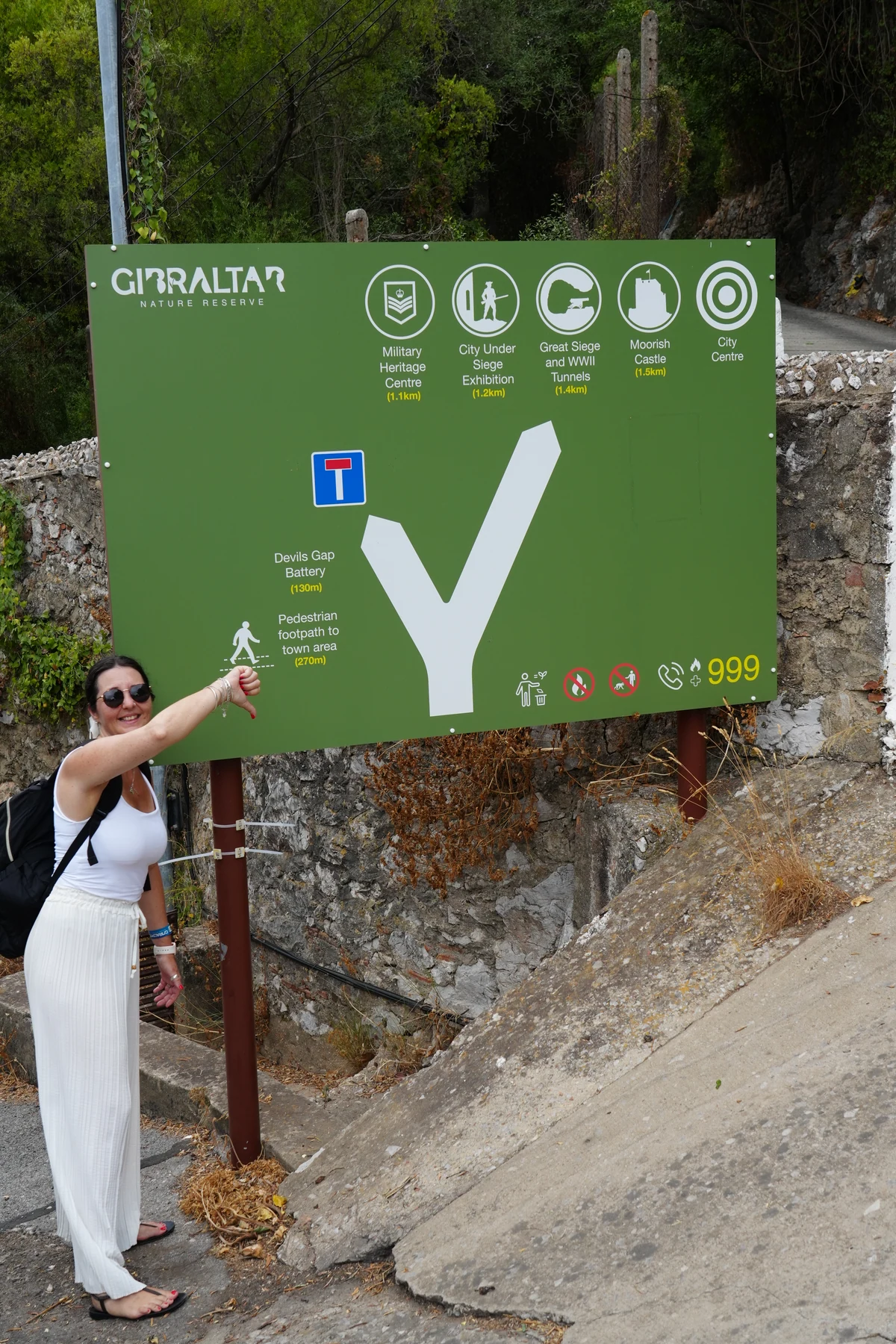
I did two full days here in flats and only regretted it once, on a rocky stretch at called the Devil’s Gap.
Walking is also how you start noticing whether Gibraltar is more British or Spanish, because the streets keep flipping between the two the whole way round. That’s my favourite thing about the place, and you only get it on foot.
For anything further out, take the bus. It’s £1.80 a single and it reaches almost everywhere except the Upper Rock, so between walking and that, the two of us did a full day for under a fiver. That fare’s in sterling, mind, and euros are a shops and restaurants thing here rather than a transport one.
If you’re coming over the frontier on foot or by bus, it’s worth reading how long it takes to cross the Gibraltar border before you build a day around it.
Then there’s the Rock, which is where all the money goes and where the pricing gets really quite creative. Your legs are the cheap way up, though a free walk up doesn’t get you as far as you’d think. Check whether the Gibraltar cable car is open before you plan anything around it.
Gibraltar’s Bus Routes
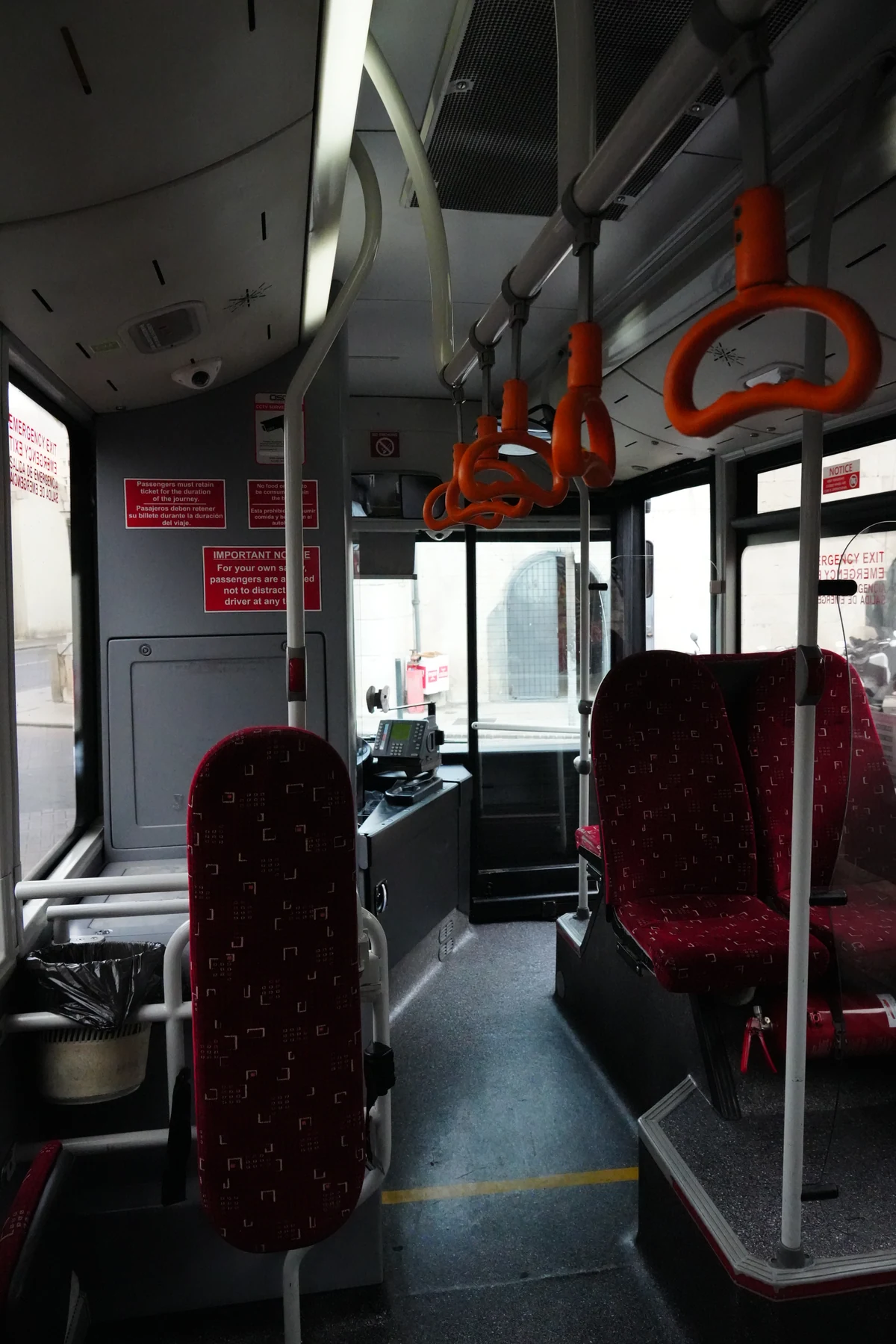
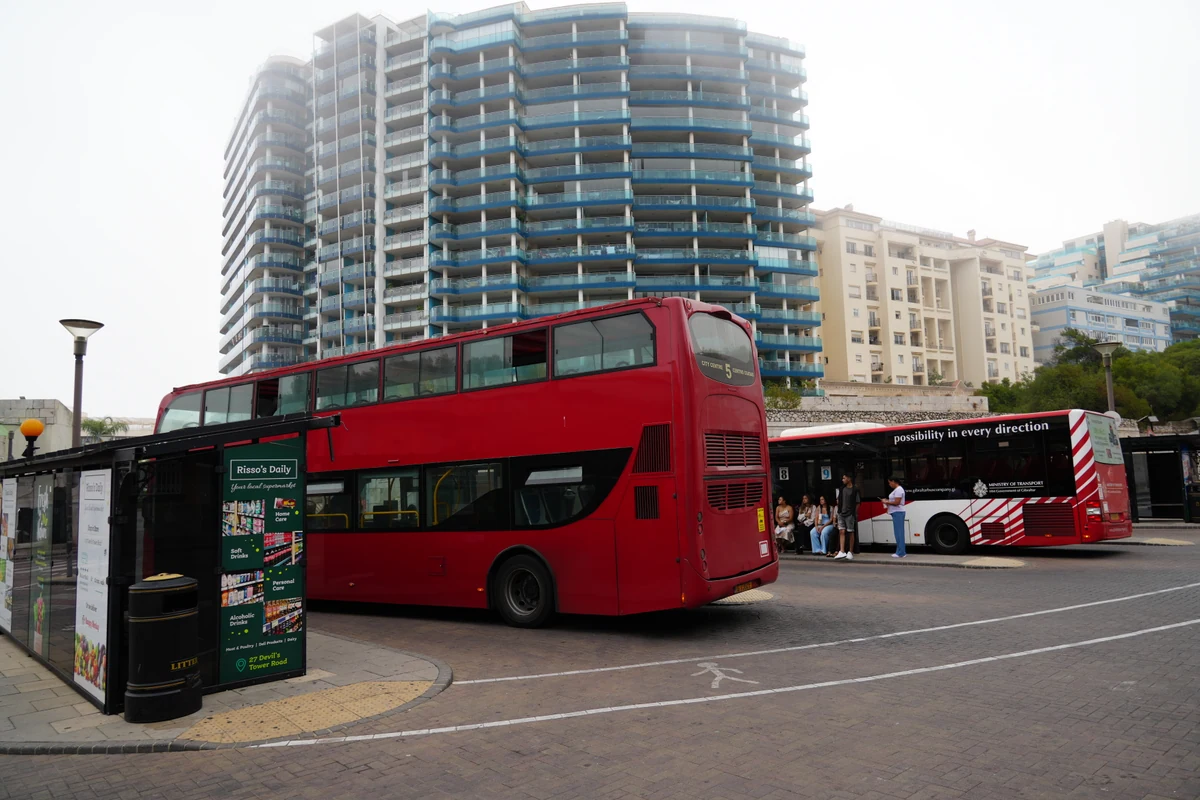
There are five routes in total. Four belong to the Gibraltar Bus Company, and route 10 is run by Calypso’s on a fleet of older red double deckers that look exactly the way you’d hope they would.
- Route 2, Referendum House to Willis’s Road
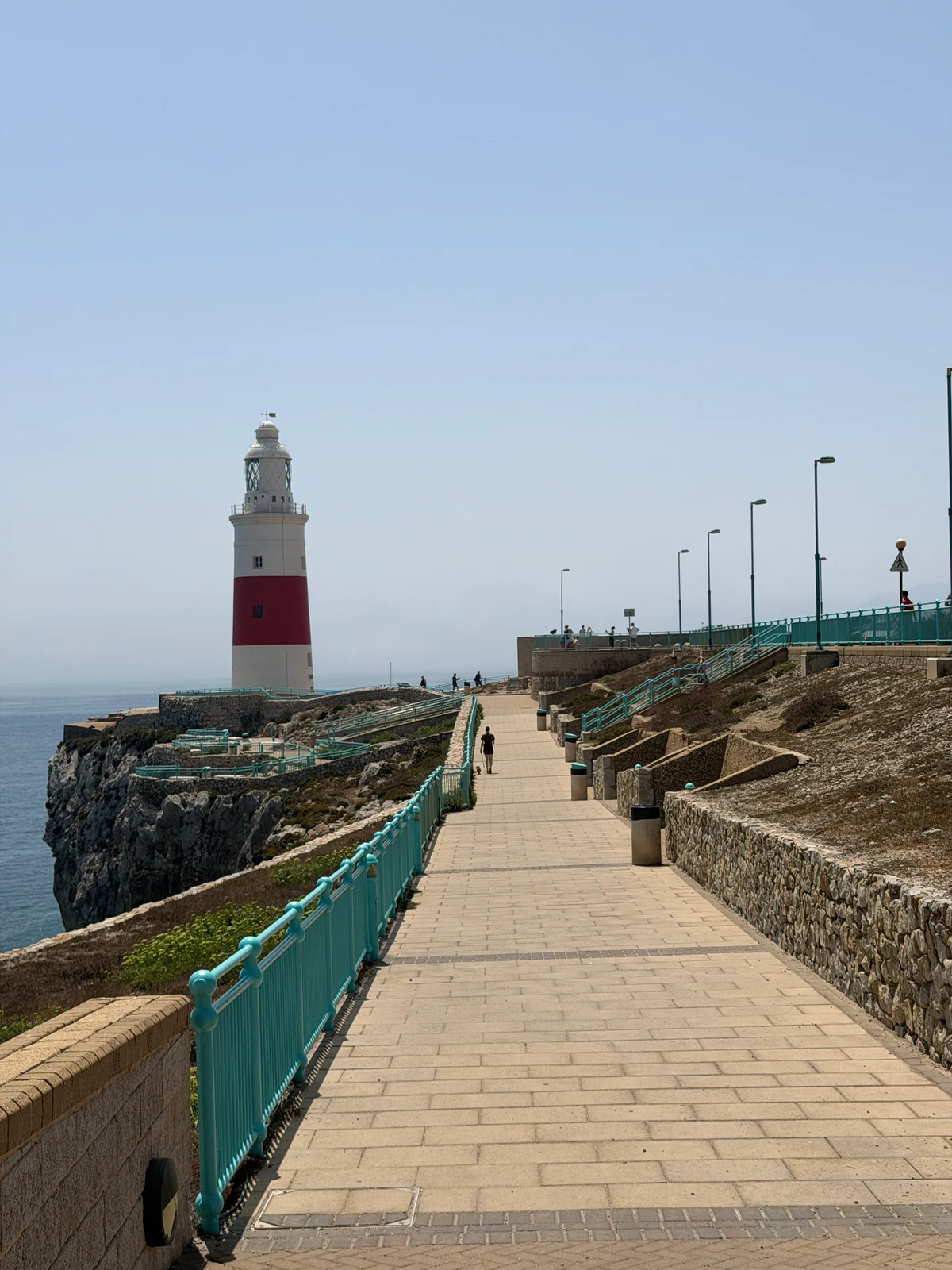
- Route 3, the Air Terminal down to Europa Point
- Route 4, Rosia to Both Worlds
- Route 9, the Air Terminal to Market Place
- Route 10, the Calypso’s red double deckers
Weekday services run from roughly 6.45am until 9.15pm, and the weekend timetable is thinner. At peak times you’ll wait about fifteen to twenty minutes on most routes.
What the bus actually costs
Fares are in sterling, and the same ticket carries a euro price if euros are what you’ve got in your pocket. Current prices from the Citibus fares page:
- Single: £1.80 adult, £1.50 child, £1.20 pensioner
- Return: £2.40 adult, £2.00 child, £1.60 pensioner. Buy this one if the Rock is on your list, for reasons I’ll get to
- All-day Hopper: £8.80 adult, £5.50 child, and pensioners ride free on a pass
Staying a few days? There are multi-journey books as well, £10 for ten trips, £20 for twenty, £30 for thirty and £37 for forty.
We each bought a return at £2.40 and that was our travel for the day sorted. Great value for what it covers.
You can tap a card on board. That’s how we paid, and we never once needed coins, which is lovely if you’ve walked over the frontier carrying nothing but euros.
I’d still keep a bit of cash on you as a fallback, because I only tried it on the routes we happened to use.
The Hopper needs five journeys before it pays for itself. In a place you can walk across in twenty minutes, that’s more than most of us will manage. It’s good from 08:00 to 21:00 on the day you redeem it, on both Citibus and Gibraltar Bus Company routes.
What it won’t do is take you up the Rock. I want to be really clear about that, because it’s sold with macaques and St Michael’s Cave printed on it.
It only covers the lower ground, so the town, the beaches, Europa Point and the marinas. No ordinary route crosses into the Nature Reserve, and no ticket on the public network will get you through those gates.
There is a bus that goes up, and it isn’t one of these. The Nature Reserve shuttle runs from Market Place to Queen’s Balcony and sells for £40 with your reserve entry built in. That’s a separate purchase from everything on the fares list above, and I’ve covered it properly further down.
Route 2 is your bus if you’re heading up the Rock. We rode it to the last stop it serves, which left us about 240 metres from the Nature Reserve entrance, and that really is as close as public transport gets. It’s a short flat walk to the gate from there.
The other one I’d actually use is route 3 down to Europa Point, which is the reason you don’t need a car to reach the southern tip.
One honest warning. By the second afternoon we were completely wrung out, so we went looking for a bus or a taxi to get us back along Main Street, waited a good while and found neither, and ended up walking the thirty minutes anyway.
Don’t assume something will turn up when you want it to.
Does Gibraltar Have Hop On Hop Off Buses?
Not in the open-top sightseeing sense you’re picturing, no. What you get instead are the Upper Rock tour minibuses, which loop the reserve and stop at the main sights, plus the five ordinary public routes covering everything below the gates.
Those minibuses are the closest thing to it, and there’s a proper Nature Reserve shuttle now too, sold from the kiosk beside Grand Casemates Gates with your entry bundled in for £40.
Take one if you’d rather not walk the mountain, skip it if you would. The town is twenty minutes end to end on foot, so there’s really nothing down there for a sightseeing bus to do.
How to Get Up the Rock Now the Cable Car Is Closed
The cable car shut on 18 November 2025 for a full rebuild and isn’t due back until 2027. It was still very much closed when we went in August 2026, and almost every guide online still cheerfully tells you to ride it to the top.
That gap is exactly why the pricing at the bottom is such a mess. You’ve got four ways up, and they cost wildly different amounts for the same hill.
The prices we were actually quoted
We’d pre-booked our Nature Reserve entry online at £30 each and felt quite pleased with ourselves.
Then we got there and worked out that entry and transport are two completely separate purchases, and holding one does nothing at all for the other.
Adults are £30, children aged 5 to 11 are £22, and under fives go free, all bookable from the official Nature Reserve site. That single ticket gets you everything inside the boundary, which is good going for £30.
Booking online doesn’t mean walking straight in. You scan your booking at a ticket office to pick up a wristband and a map. There are four offices to choose from, at Jews’ Gate by the Pillars of Hercules, the Moorish Castle, Devil’s Gap, and the Market Place bus station in town.
That last one is the useful one, because you can collect in town before you set off rather than at the foot of the climb.
And leave the wristband on. The QR code is what gets you through the cave door, and staff check them at random inside the reserve.
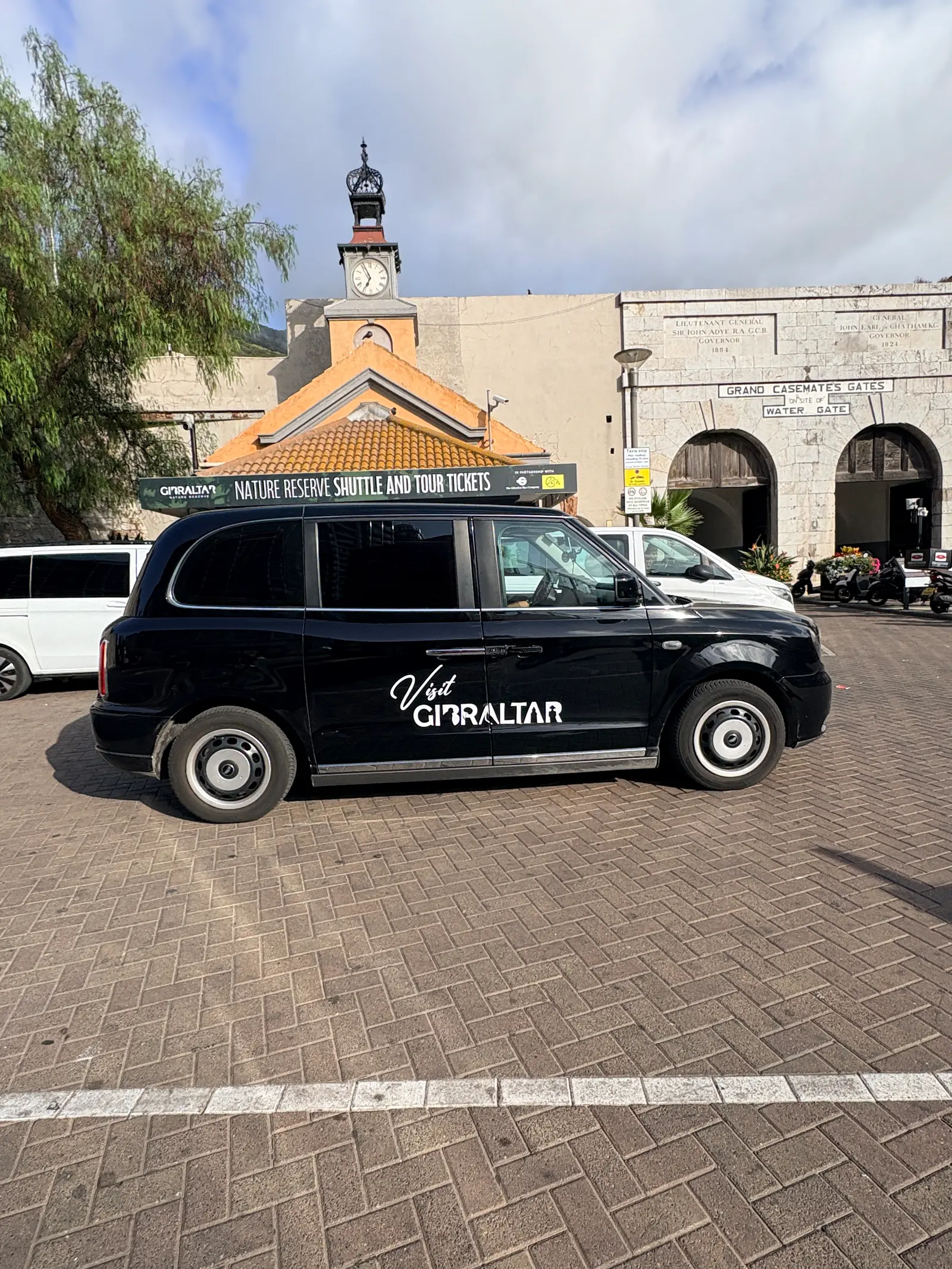
That’s the kiosk, under the clock tower beside Grand Casemates Gates, with Nature Reserve Shuttle and Tour Tickets across the awning. The black cab parked out front is the other option. Here’s what each one costs, in the order we came across them:
- £40 for the Nature Reserve shuttle with your entry ticket built in. Against the £30 you’d pay for entry alone, the ride is costing you £10.
- £60 from the taxi rank, a guided tour with the entry ticket included. Against the £40 shuttle bundle, that’s £20 more for the same day.
- £40 from the same rank once we mentioned our entry was already booked. Still the guided tour, just with nothing bundled in.
Three prices for one hill, all inside about an hour!
We turned down all three and caught the bus, which was £1.80 a single and £2.40 for the return we actually bought.
What I’d do differently
I’d sort the ride up at the same time as the ticket, from home. Once you’re standing at the bottom of that hill in the heat with no plan, you’re negotiating from the worst position going, and the prices know it.
And then I’d walk down, which is the real tip here.
The Rock is so much better in the downhill direction and you’ll see a lot more of it.
The four options
- Bus then walk. Route 2 to the last stop, 240 metres to the entrance, then up you go. Cheapest by miles and a proper effort in summer heat.
- The Nature Reserve shuttle. From the Market Place ticket office, £40 with your entry included. Every half hour from 09:30 to 16:00, up to Queen’s Balcony, with the return pickup at the Queens Road picnic area near Charles V Wall. This is the sensible one.
- Taxi. £60 for the guided tour, or £40 if you’ve already got entry. They won’t do a plain lift, so ask what you’re buying before you get in.
- Walk the whole thing. Free once you’ve got your entry ticket, and about 30,000 steps across the day if you do it the way we did.
⭐ The transport problem this page exists to solve >> Book the ride up with your entry. The shuttle and ticket together is £40. The taxi rank wanted £60 for the same pair, hill and ticket both, with a guide attached whether you want one or not.
Walking the Rock: the Route That Works
Don’t expect one smooth walk up. The attractions zigzag all over the mountain instead of sitting neatly on a single path, so there’s no climbing and ticking them off in order.
We came through the entrance, started up, and almost immediately had to go back down again to reach the Windsor Suspension Bridge.
The views from that bridge were some of the best of the whole day, and I’d have gone up for those alone.
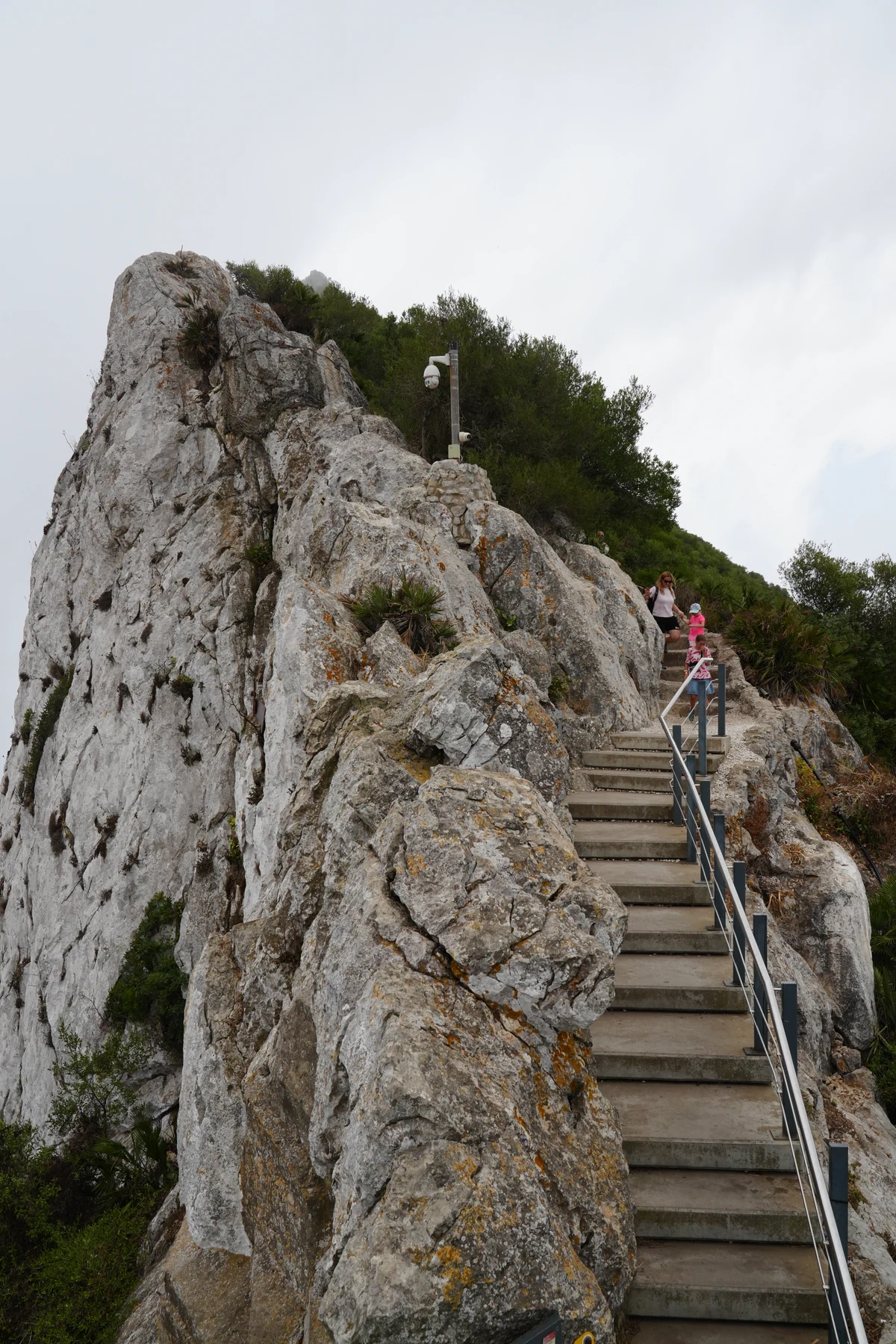
From there you get a choice. Either the very, very steep staircase running along the old cable car line, or the road, which crisscrosses up more gently towards the beautiful St Michael’s Cave.
Take the road up, and take the stairs down.
I really can’t say this loudly enough. We came down those steps and my legs hurt for days, and I do wish I’d looked at them properly before we set off.
Going up them would have finished the trip off entirely.
As a fast way down they’re brilliant, and there are macaques lining the whole descent, including a lovely little pool on the right hand side where the babies swim. That pool was my favourite few minutes on the Rock.
About halfway down the macaques stop, and that’s roughly where places to sit and eat start appearing.
You’ll also pass batteries with old turrets and cannons all the way up and down, which make for great photos.
Devil’s Gap Battery sits just before the park entrance, off to the side with a cannon and lovely views, and we watched local kids drive up to sit there with their drinks and food. That’s a good sign of a good spot.
At the bottom you can either carry on down into town or continue roughly another kilometre inside the reserve to the Military Heritage Centre, City Under Siege, the Great Siege Tunnels, the World War Two tunnels and the Moorish Castle.
We were far too tired and went down instead, and that’s the bit I’d go back for, honestly.
Do check on the castle before you walk out that way, because it was closed for renovation when we visited in August 2026.
The final stretch is the Devil’s Gap path, rocky for about two hundred metres before it drops you into the town centre. This was the one part of the day that punished me for wearing flats.
There’s a bus stop sitting right at the bottom of those steps, and after that descent it felt like the kindest thing in the whole territory.
It ran us straight back to Market Place, and since we’d bought returns that morning it cost us nothing extra. Best £2.40 of the trip.
So if you’re planning to walk up and walk down, buy the return, not the single. You will not want to be thinking about tickets by the time you reach the bottom.
Taxis in Gibraltar
In two full days here, we never took one. That’s the honest version, and it says far more about how small Gibraltar is than it does about the taxis. Between walking the town and the bus, a taxi never turned out to be the answer.
You’ll find ranks at the frontier, Casemates Square, the cruise terminal and the old cable car station.
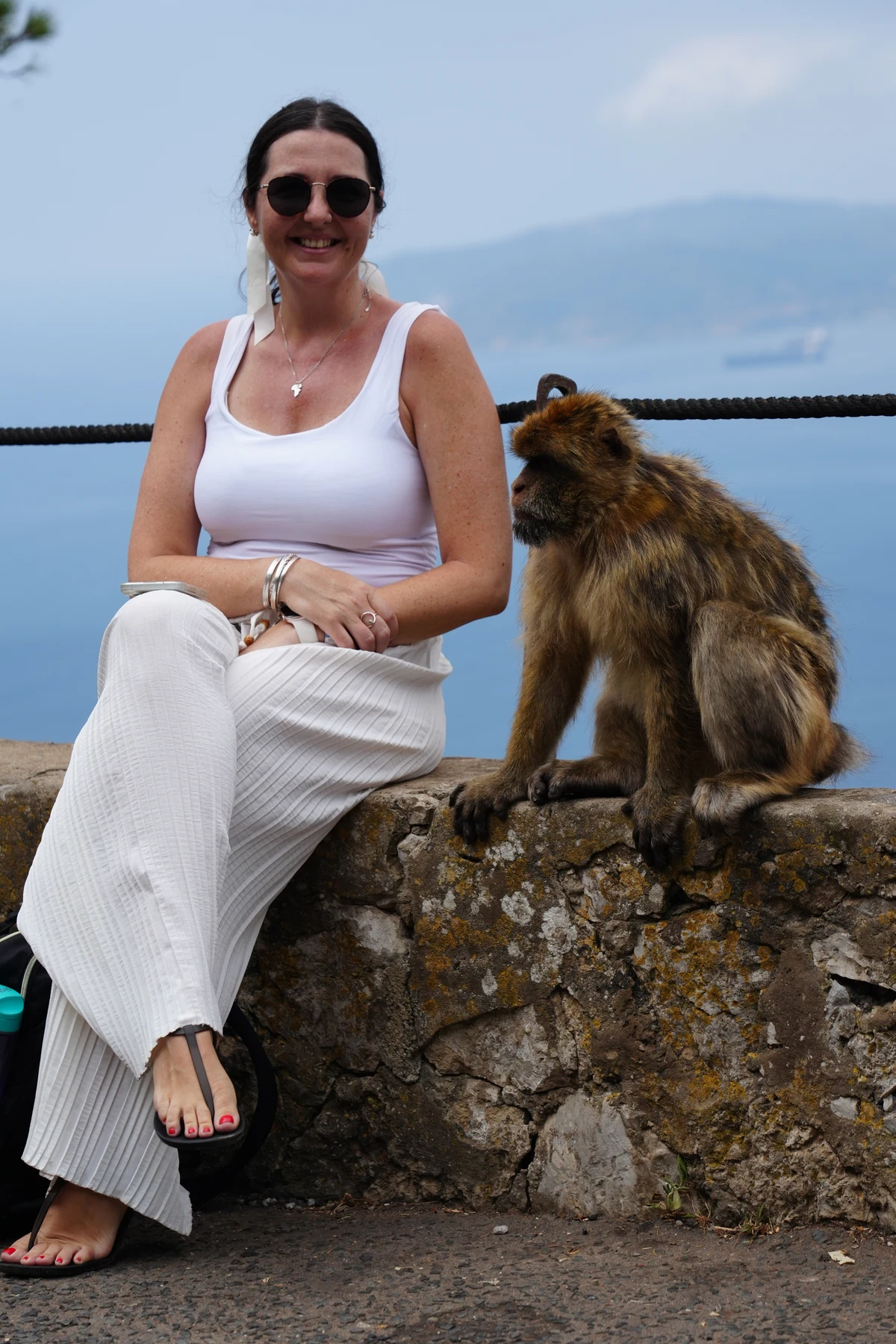
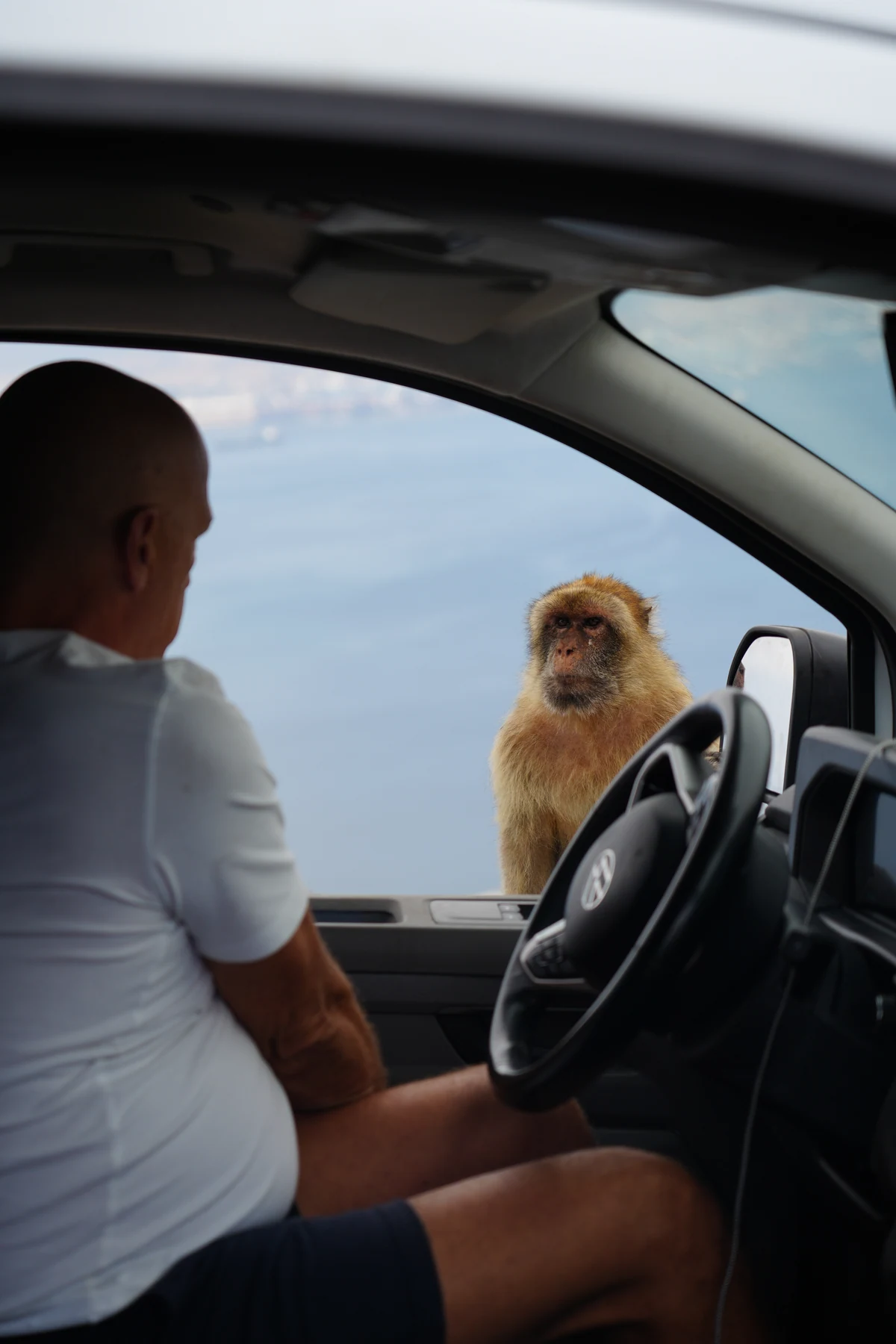
Up top they queue and they wait. Leaving the Skywalk we saw a long line of them backed up on the road with nowhere to go, and one macaque who’d jumped into a driver’s car and flatly refused to get out, going through everything inside it.
Funniest thing I saw all day, and I wasn’t the one driving. They get cheeky around the vehicles up there, not just around your bag.
The Rock is the exception to all of this. A taxi won’t sell you a plain lift to the Nature Reserve gate, so there’s no fare to haggle over and no meter to watch.
What’s on offer is a guided tour at £60, or £40 if your entry is already booked.
That’s a perfectly good thing to buy if you want a guide and would rather not walk. It’s an expensive thing to buy by accident, because you assumed you were paying for a drive.
E-Scooters and Walking
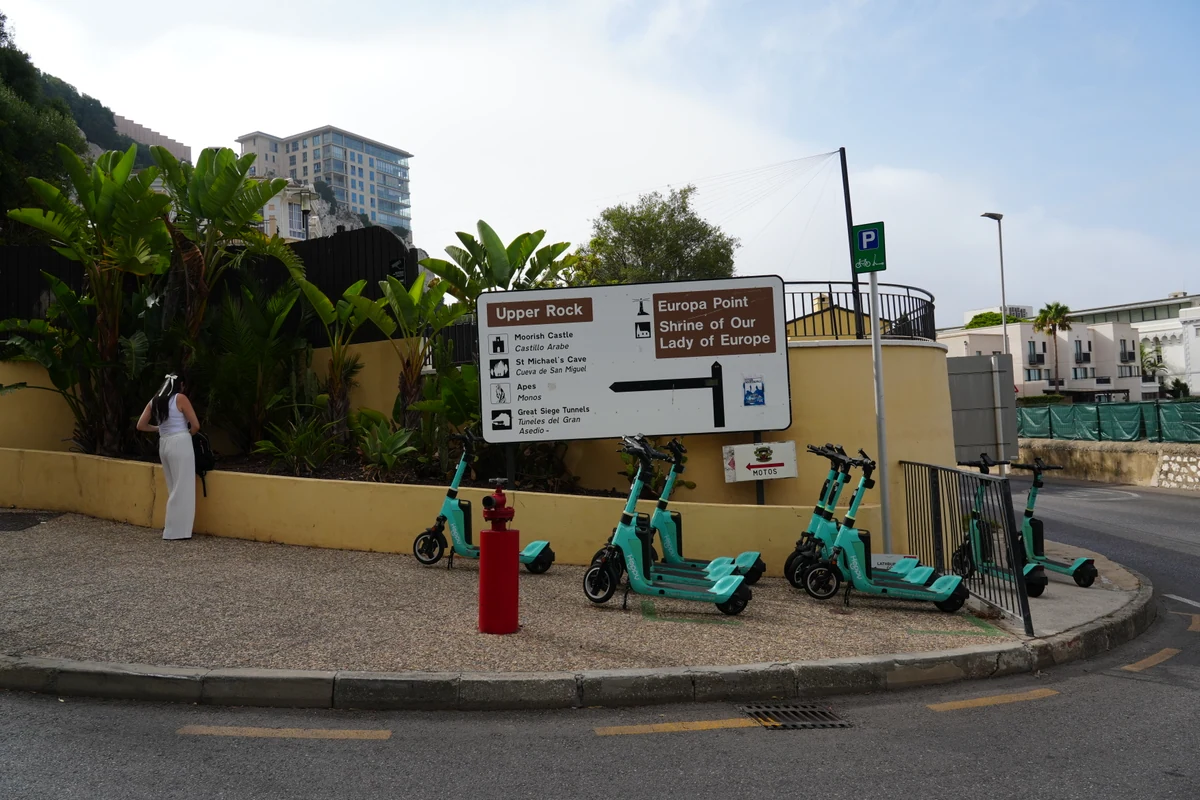
E-scooters are around, and they’re a perfectly sensible way to cover the flat coastal stretches. They’re restricted on the Upper Rock though, with signage about it as you climb, so honestly don’t plan on riding one to the top.
For everything else, just walk. The roads are lovely and even, there’s nothing rough underfoot in town, and I got through two full days in flats without regretting it once.
The walk across the airport runway is worth doing on foot for its own sake, car or no car.
It’s genuinely brilliant, it’s ten minutes from Casemates, and you can stand at the fence and watch aircraft come in right over your head.
Check the arrivals board first, though. We rocked up at 6pm for an 8pm landing and stood at that fence for nothing, because hardly any flights use Gibraltar in a day.
Do You Need a Car in Gibraltar?
No. We drove down from Málaga, so ours was with us the whole time and it did make the second day quicker. But every single place we used it for turns out to be on a bus route.
What it bought us was less waiting around, because it didn’t get us anywhere we couldn’t have reached otherwise.
Not for the Rock or the town. Between your own feet and the £1.80 bus, you can do the headline version of Gibraltar without a car at all.
Not for the coast either, which did surprise me. The southern end is the part most day trippers never bother with, and I’d assumed that was because you need a car. You don’t.
Route 3 goes to Europa Point. Routes 4 and 9 drop you at Rosia Plaza, which is the way into the 100 Ton Gun and a short walk from Napier of Magdala Battery.
From Rosia it’s a couple of minutes through the first tunnel to Camp Bay and through the second to Little Bay, and those two little bays are worth the bus on their own.
The catch is how often they run rather than where they go. Route 4 is roughly every 45 minutes, so the southern end wants planning around a timetable in a way the town never does.
So the car bought us time, and not access. If you’re already driving down from the coast the way we were, bring it and enjoy the afternoon it saves you.
If you’re arriving on foot or by bus, don’t hire one on our account, because the £8.80 Hopper would have covered exactly the same ground.
Parking came in cheaper than I’d expected. It was £8.50 for eight hours beside Casemates Square, and £20.10 overnight at Ocean Village.
You pay and top up from your phone through the Gibraltar Car Parks portal instead of trekking back to a machine, which really matters here, because the Rock always takes longer than you think it will.
Where to park in Gibraltar covers the other car parks and the one beach you shouldn’t try to drive to.
For what to actually do once you’re moving, there’s the best things to do in Gibraltar and the free things to do in Gibraltar. And if the fares here caught you out, the rest of what a day costs is over on facts about Gibraltar.
Coming over for the day from the coast? The same guide for Málaga is the Málaga public transport guide.