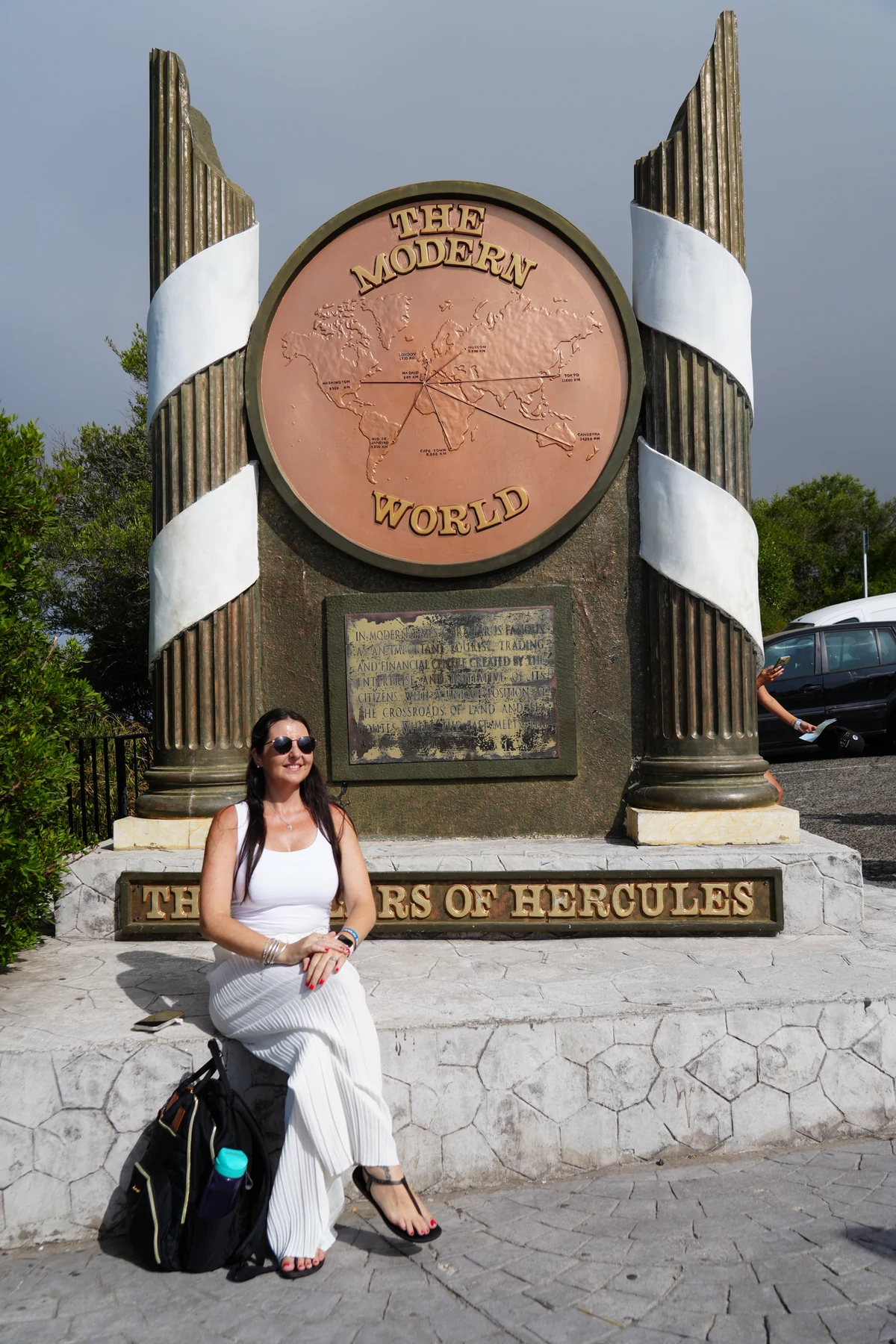
The best month to visit Gibraltar is September, with May, June and October close behind it, and I picked the worst possible month instead and would still tell you the trip was lovely.
Here’s the whole year in three lines:
- September, if you only want one answer. Warm sea, walking weather that won’t finish you off, and everyone who came in August has gone home.
- May, June and October, every bit as good, and quieter again.
- Any month you like, as long as you go up the Rock after midday, because of the levante cloud that sits on the summit.
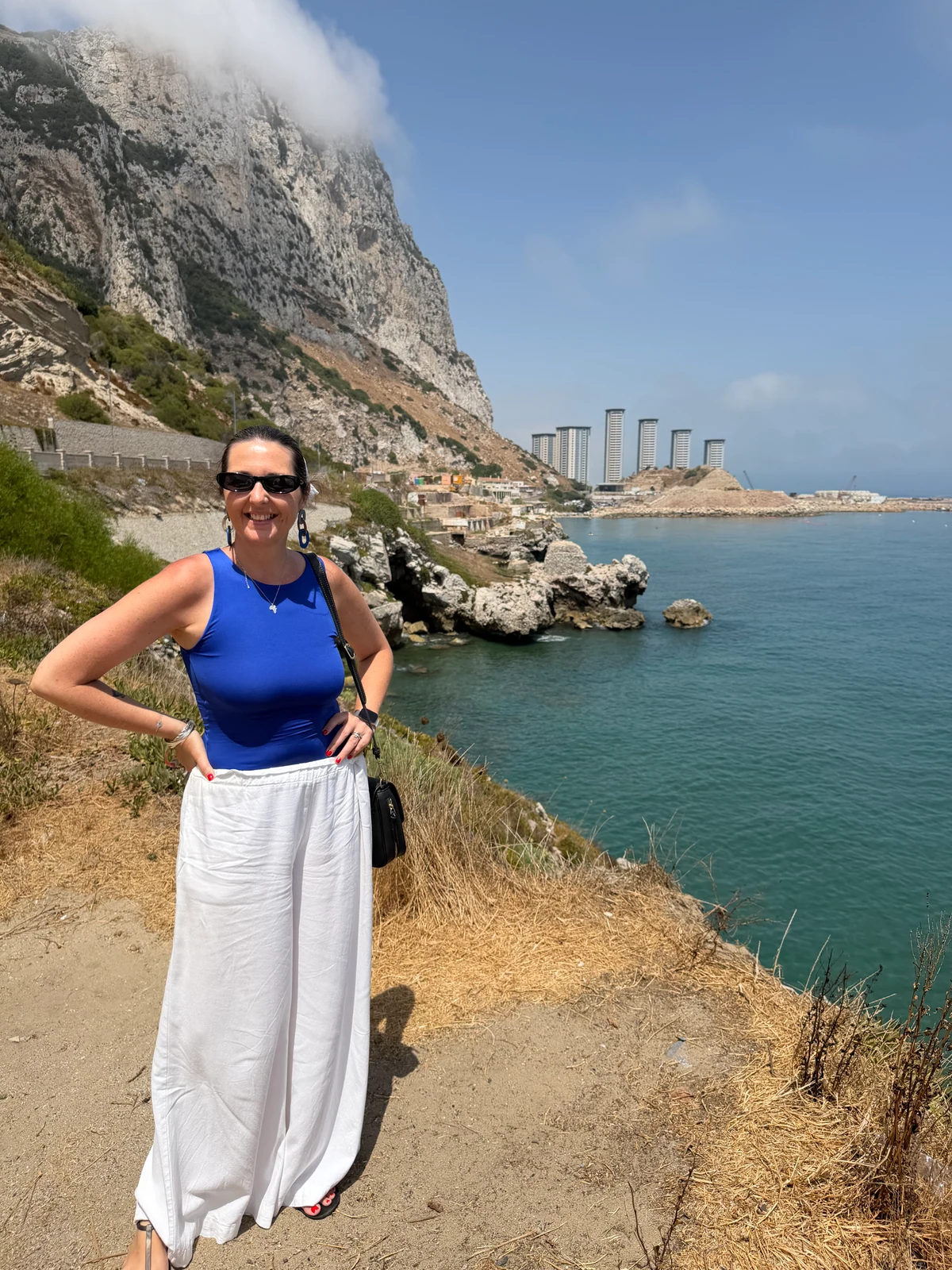
We went in the middle of August. Peak heat, peak cruise ships, and a grey cap of cloud sitting on the summit that had me convinced on the first morning we’d booked the wrong week entirely.
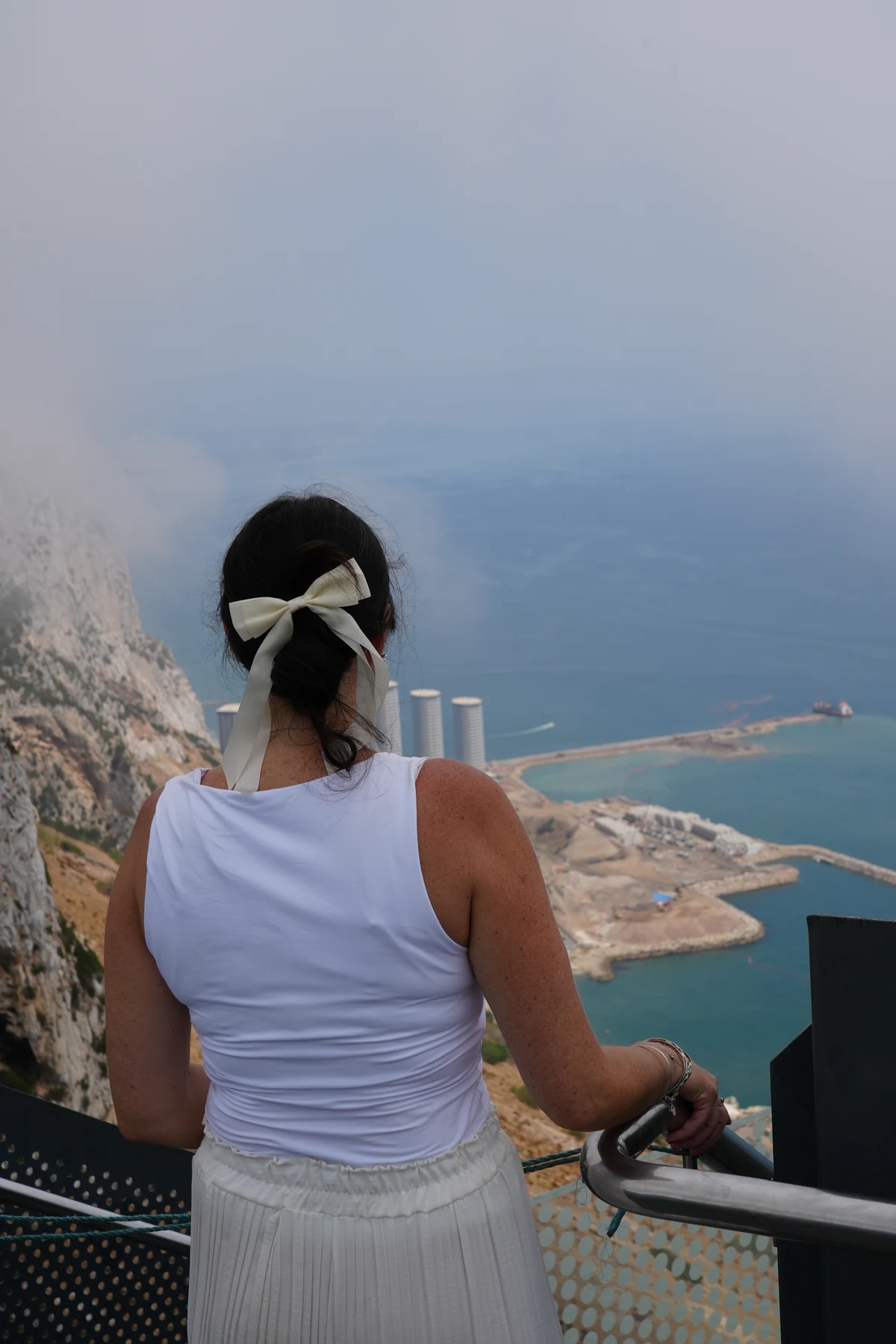
The coast behind us was in full sun. Just the top of the Rock, the exact bit we’d driven over for, was inside a cloud.
Nobody had warned us about the levante, and no forecast you’ll look up for Gibraltar mentions it either.
It matters far more to how your trip goes than the temperature does, so it’s what most of this page is about.
Which Months Are Worth It, and Which to Avoid
May, June, September and October. You’ll get sea that’s warm enough to get into, walking weather that won’t finish you off on the way up the Rock, and none of the summer cruise crush.
Honestly, any one of the four is a lovely time to be here.
Pushed to name one, I’d say September. The sea has had the whole summer to heat up, the walking is just right, and everyone who came in August has gone home.
I’d swerve July and August if you’ve got any say in it. We went at the height of August and it was a mistake, though not quite in the way you’d guess. More on that further down.
The Levante: the Thing No Weather Table Shows
This is the bit I really wish somebody had told me before I booked, because it would have saved me a fairly miserable morning.
The levante is an easterly wind coming in off the Mediterranean. It runs into the Rock, gets pushed upward, cools as it climbs and condenses into cloud that parks itself on the summit like a lid. Locals call the thing it makes the levanter cloud.
So the town, the port and the whole coastline can be sitting in gorgeous clear sun while the top of the Rock, the Skywalk and the entire reason you came are wrapped in grey.
It’s a very strange thing to stand and watch.
We got it on both our mornings. Thick mist the first day, and then it rolled back in overnight and was there again the second.
When it lifts
Here’s the useful part, and the bit that finally stopped me panicking.
Both mornings it began to break up around 11am and had gone by about half twelve. Which was such a relief.
By early afternoon we could see the ocean, the whole ridge, the beaches down the east side, the lot. The second day it burned off into proper full sun and the view was just incredible.
Which means the levante isn’t a ruined trip. It’s a timing problem, and that’s a much easier thing to solve.
So don’t put yourself at the top of the Rock in the morning. Save the Skywalk and the viewpoints up there for after lunch.
And if you’re off a cruise ship with three or four hours in port, all of them before midday, just know that your photos are a genuine gamble and there’s nothing you can do about it on the day.
Why the Mist Is a Gift in Summer
In August, that grey cap is honestly the only thing making the first half of the day survivable.
It kept our mornings cool and pleasant. We were out early on both days walking under grey and it was fine, really comfortable even, and then midday arrived with the sun and absolutely flattened the pair of us.
Without the levante, an August day up there would have been so much worse.
So the mist is on your side if you’ve come in high summer, and very much not on your side if you’ve come for the photographs.
Gibraltar Month by Month
Here’s how the year shakes out, with the caveat that August is the only one of these I’ve seen for myself.
- January to March: wet, but mild with it, somewhere around 12C to 17C. Flights and hotels are at their cheapest, which is a good chunk of the appeal. Fine for a town day, not much good for the Rock
- April: warming up, wildflowers all over the Upper Rock and low crowds. A quiet, lovely choice, and the one I’d pick if I wanted the place to myself
- May: one of the very best. Warm, sunny, around 20C to 23C, and barely any rain to speak of
- June: warm and dry, the sea just about swimmable, and you’re still ahead of the July rush, which is worth a great deal
- July and August: hot, 28C to 30C and up, sticky, and packed with cruise passengers. You’ll have to start early, there’s no way around it
- September: the single best month, and a really lovely one. Warm sea, thinner crowds, 24C to 27C. If you only go once, go then
- October: still warm, almost nobody about, and great walking weather
- November and December: mild, wetter, quiet. Christmas in the town is genuinely lovely
We turned up at the very worst point on that list and still had a good time, so please read it as a guide rather than a rule. The frontier doesn’t follow this list either, because how long you sit at the crossing comes down to the day and the hour far more than the month.
Jethro coped with the August heat a lot better than I did, and even he was completely finished by mid afternoon. Any month you pick, the Rock is a full day on your feet, so the cooler ones buy you more than just comfort.
Whatever month you land in, it’s worth knowing if can you use euros in gibraltar before you set off, and if you’re driving over from Spain, have a look at is there passport control between spain and gibraltar too. A Christmas trip is also a good excuse to work out what food is gibraltar known for, because a fair bit of it leans festive.
Why August Was a Mistake, Specifically
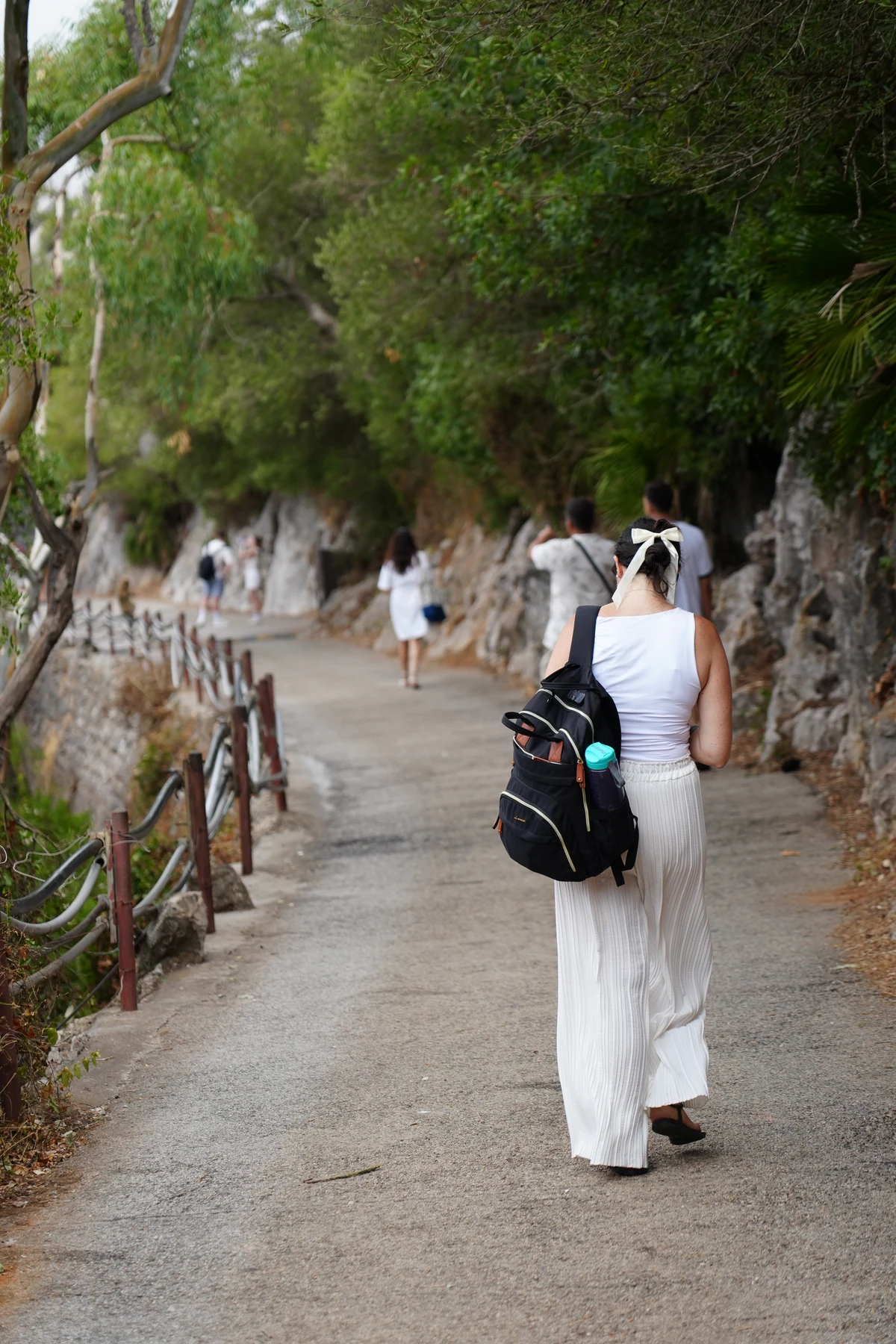
Not for the obvious reason. Thanks to the levante the mornings were perfectly manageable.
What did us in was the sheer amount of walking.
The Upper Rock is no gentle stroll. Everything worth seeing is scattered in a zigzag right across the mountain, so there’s no climbing up once and ticking it all off from the top.
We did something like 30,000 steps and sweated through every stitch we had on.
We should have taken electrolytes and not just water. By mid afternoon plain water had stopped doing anything for us, and there’s a long stretch of the reserve where you can’t buy a thing.
If you’re coming in July or August:
- Be there when it opens and be off the exposed bits by 2pm.
- Carry more water than feels sensible, and something with salts in it.
- Put on shoes you could walk in all day. The reserve roads are properly surfaced and I did them in flats quite happily, but the rocky Devil’s Gap path down at the bottom found every flaw in them.
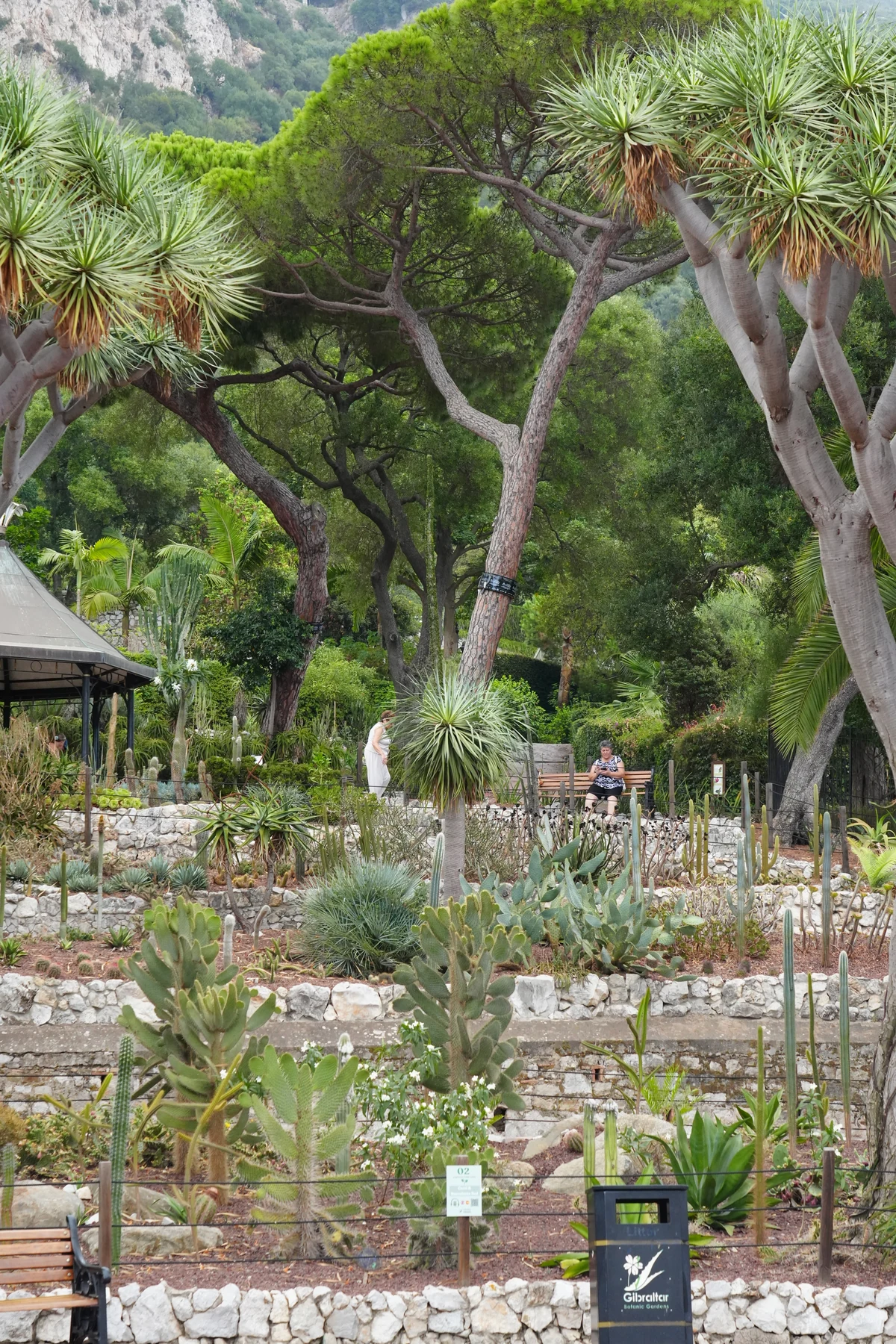
- Save the shaded treats, like St Michael’s Cave and the botanic gardens, for the worst of the afternoon heat.
When Is Gibraltar Busiest?
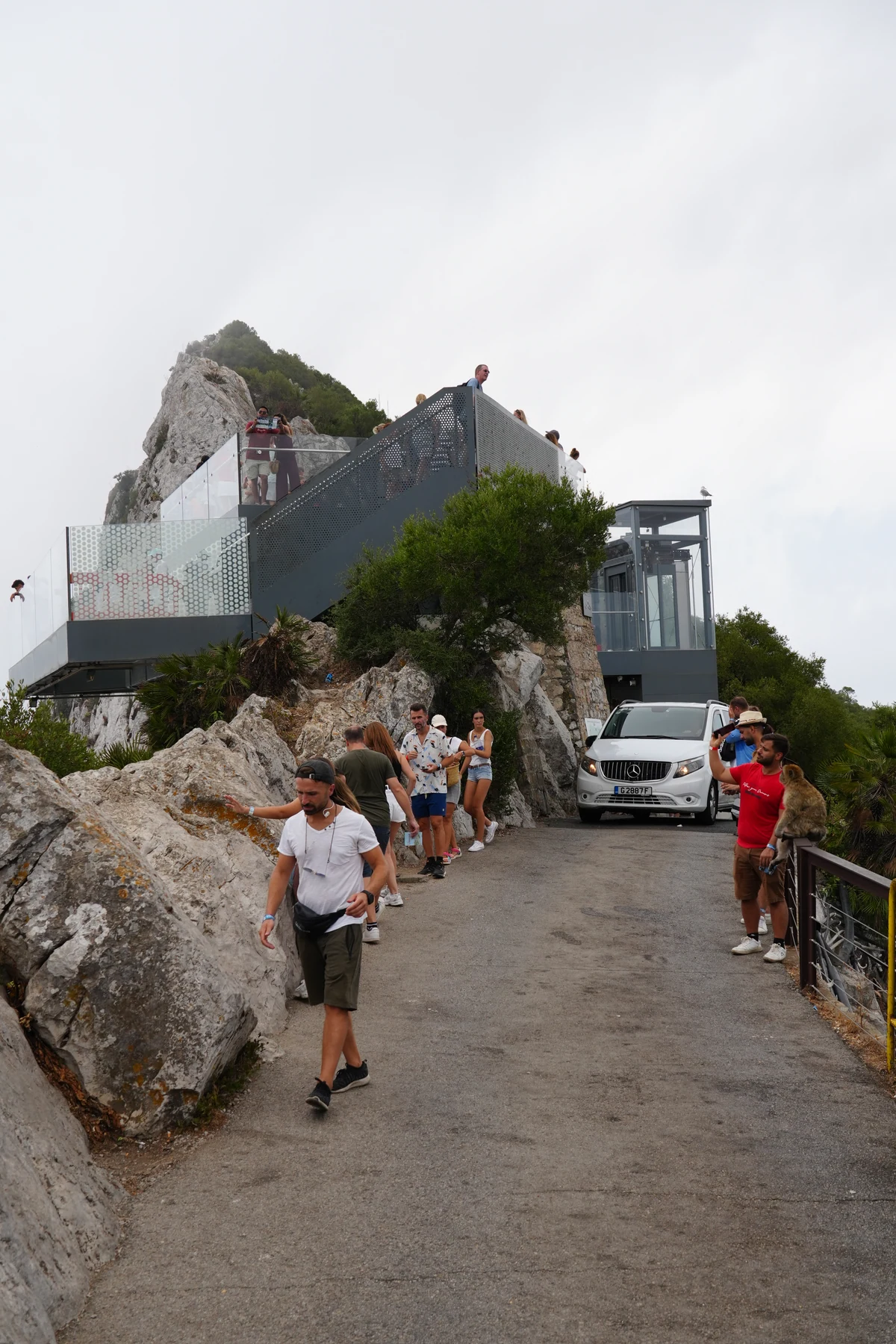
July and August, and really any day at all with cruise ships in port.
It isn’t the town that jams up, it’s the top of the Rock. The Skywalk is where everyone is heading and it backs up badly, with people stacked on the platform and a queue of taxis sat on the road behind it.
We watched a long line of them just waiting there with nowhere to go.
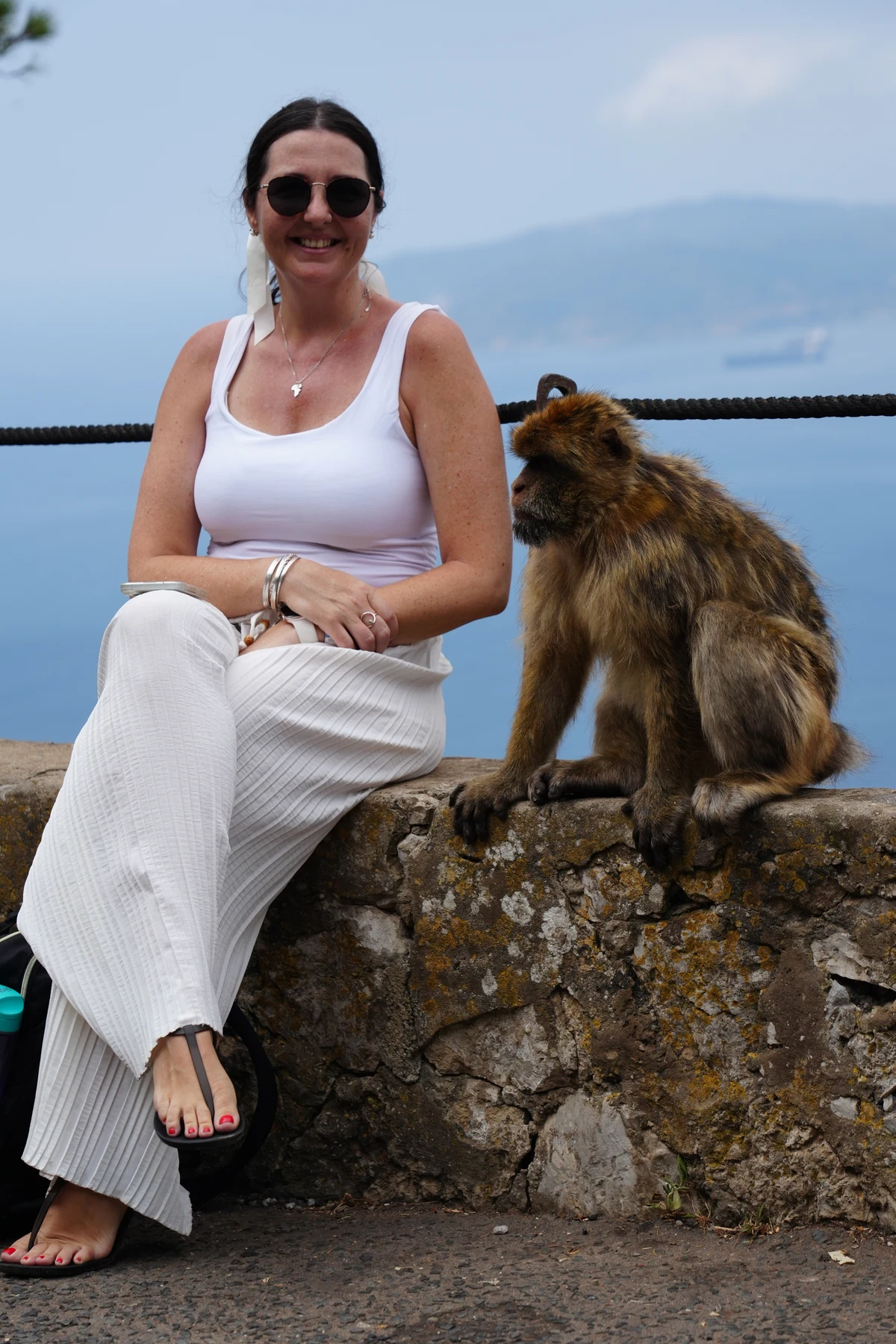
The macaques have the timing worked out too. A group had claimed the ledge at the Skywalk entrance and were blocking the way completely, and one of them was kicking a bottle about, quite obviously holding out for somebody to hand something over.
It was great fun to watch, though put a crowd around it and it gets slow and a bit chaotic.
Which is another argument for going up after lunch. Cruise passengers are on the clock, so they tend to come and go in the morning.
What About the Border in Peak Season?
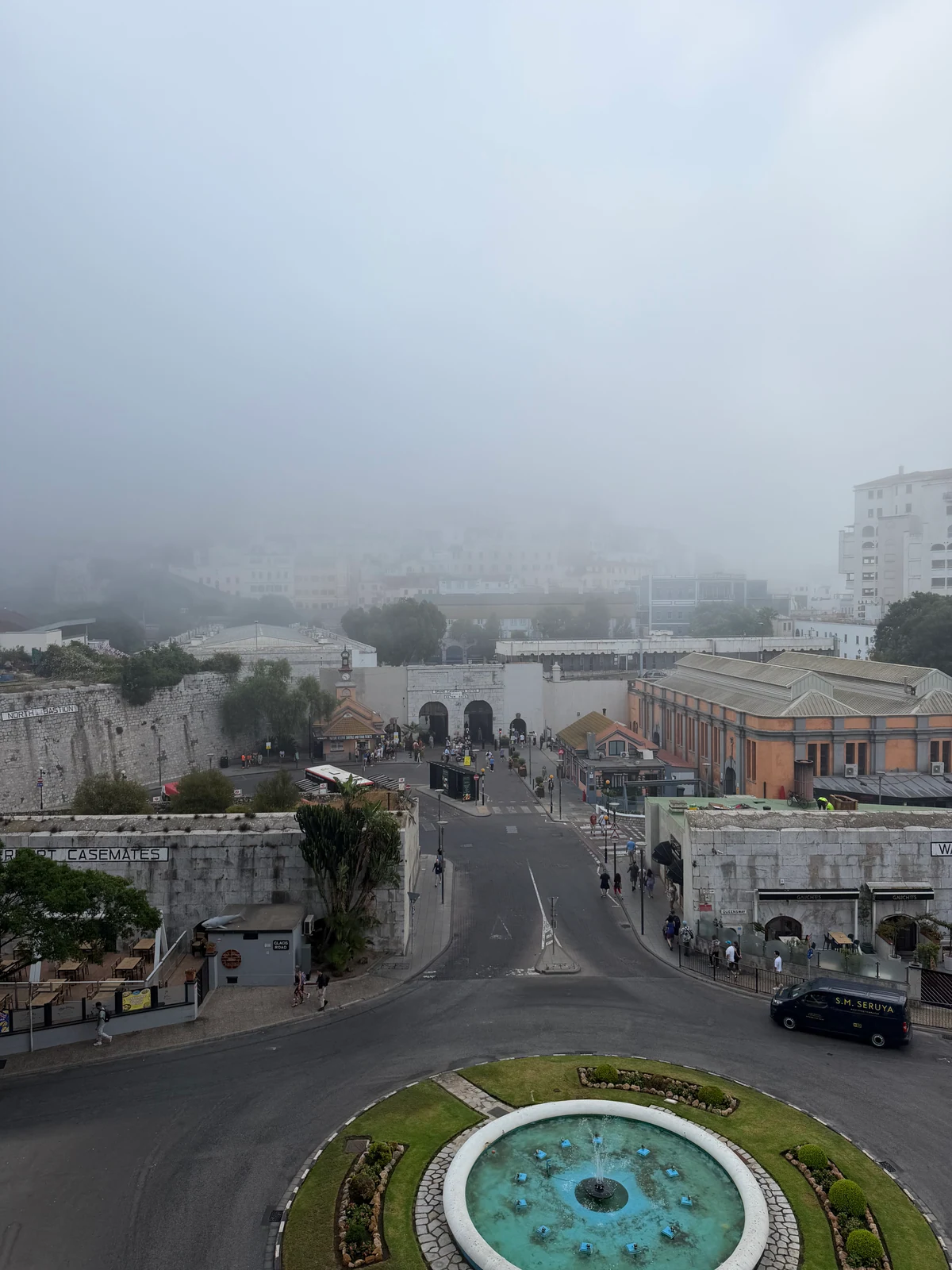
Coming in, we drove through in about ninety seconds. Nobody in the booth, nobody on the road, no queue.
I had my South African passport ready with my Spanish residency card and not a soul wanted to see either of them.
Getting out is the direction that varies. The old zigzag lanes are still physically there from the days of proper checks, so the traffic crawls through them whether anyone’s on duty or not. Going out on a Friday at 3pm cost us roughly two extra minutes.
That was a good day, mind. At the end of a summer weekend it can be a lot worse than that, and you can’t see any of it coming from the Spanish side.
If you’ve got a flight out of Málaga, give yourself far more time than the drive looks like it needs. There’s more on all of this in where to park in Gibraltar.
⭐ Once you have picked your month >> Places to stay in Gibraltar. Staying the night is what lets you go up in the afternoon instead of the misty morning, which is the whole argument of this page.
Best Month for Swimming
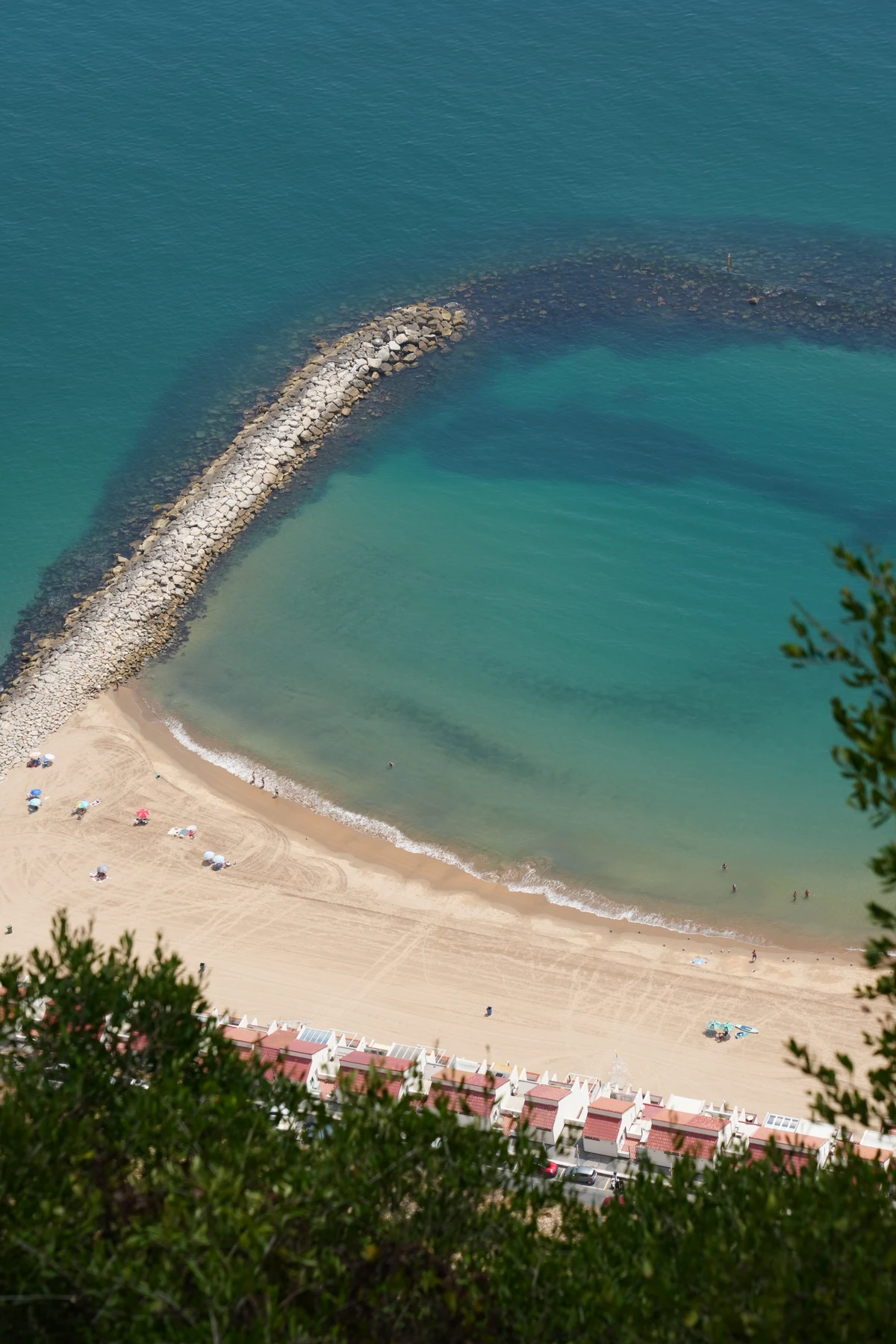
July through September. September’s the obvious one, because by then the sea has had all summer to warm through and it’s genuinely lovely.
The two bays over on the west side are the easiest choice. Both have pools, cafes and bars, and they’re very good places to end up when you’re tired or you’ve had enough of the sea.
One’s free and one you pay for, and the paid one is the one with the waterfall next to it.
I’ll admit I didn’t expect either of them to have parking going spare in the middle of August, and they did!
Catalan Bay on the east side is prettier again, and busier with it. Sandy Bay looks more beautiful than the lot of them from up on the Skywalk, and it’s far harder to get to by car than it looks from there.
There’s nowhere to leave the car and what does exist is residents only. We’d bought a takeaway specifically to eat down there and had to give up on it.
Best Month for the Hike
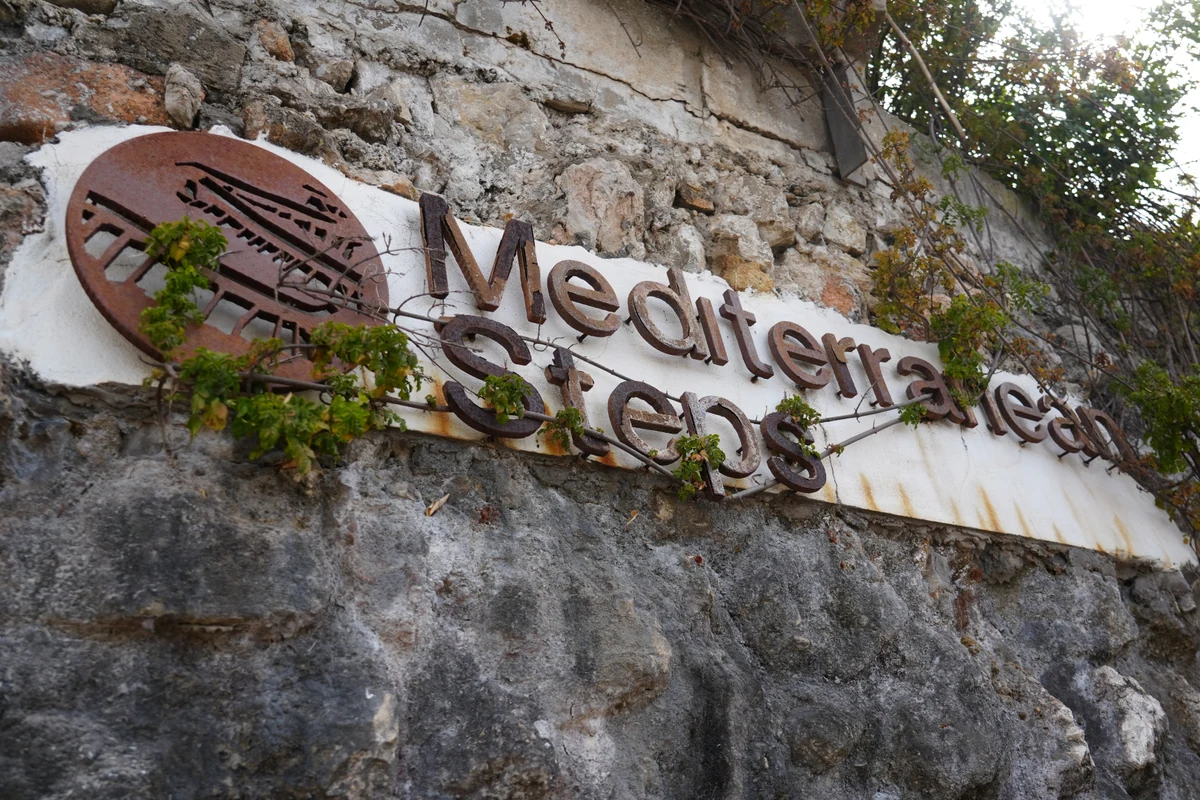
April, May and October. Cool enough to do the whole Upper Rock properly, Mediterranean Steps and all.
We stood and looked at those steps longingly and didn’t go near them, because we hadn’t turned up dressed for a hike of that sort.
That’s my one real regret from the trip, and it’s the main reason I want to go back. If you want the Rock as a proper walk rather than a day of sightseeing, come in spring or autumn and bring decent shoes. Budget for the ticket while you’re at it, because the Steps sit inside the reserve and the free walking stops at the gate.
So When Should You Go?
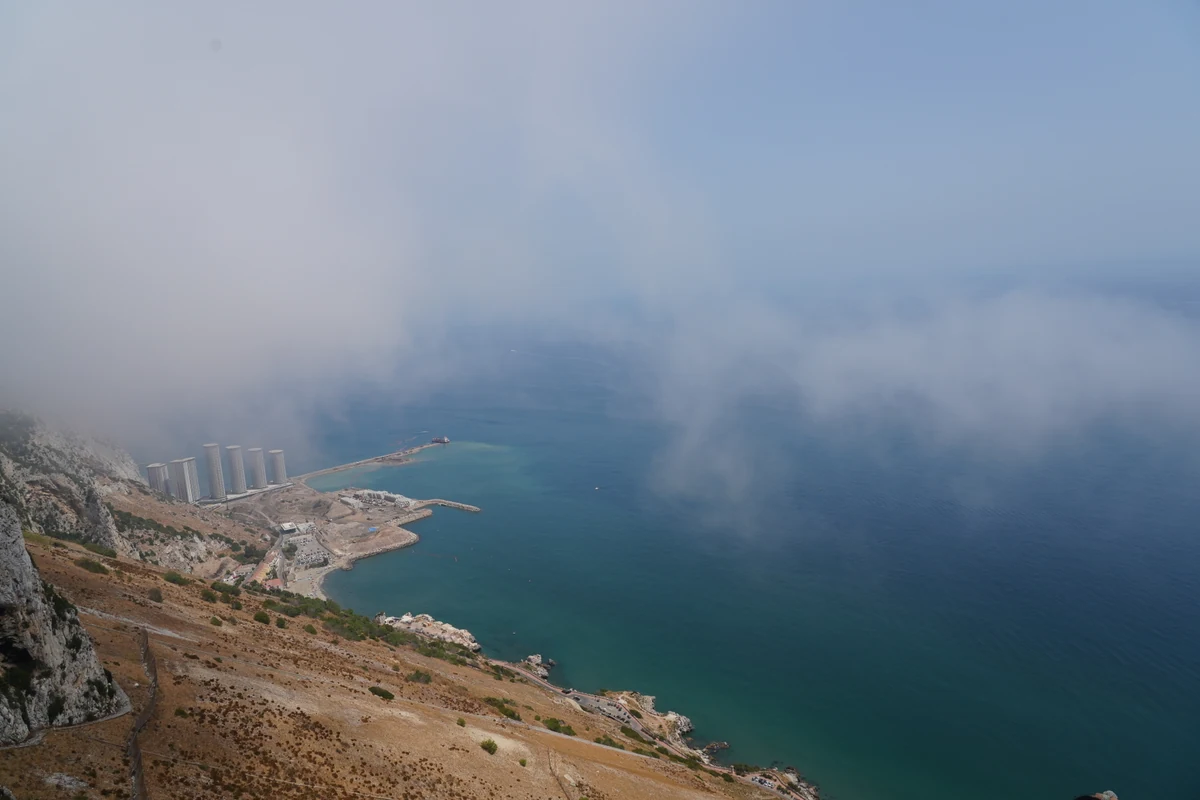
September, if you just want one answer. Warm sea, lovely walking weather, fewer people in your way.
May or October if you’d rather have the Rock more or less to yourself and aren’t fussed about swimming.
Or honestly any month you like, as long as you go up after midday. That’s the decision that actually decides whether you see anything.
We came at the worst time of year and still got two genuinely lovely days out of it, mostly because the cloud shifted right on cue and we just moved things around it.
Gibraltar’s forgiving like that, once you know what the grey lid is and that it isn’t staying.
With your month picked, the best things to do in Gibraltar covers what to put in it, and free things to do in Gibraltar covers the half that won’t cost you anything. Still weighing up whether to come at all? Facts about Gibraltar answers the rest in a line each.
And if you’re choosing between here and the Spanish coast for the same trip, I’ve written about the best month to go to Marbella as well.