You can find free things to do in Gibraltar almost across the whole territory, just stay away from the rock.
Below are thirteen Gibraltar free attractions, roughly in the order they make sense on foot, followed by the part that does charge you and whether it’s worth it.
If you want the short version of things to do in Gibraltar for free, it’s the runway, the gardens and the coast road.
What Is Free in Gibraltar?
Most of Gibraltar costs nothing. The paid part is the Upper Rock Nature Reserve, and everything else on this list is open, free and walkable in a day. The town, the seafront, the gardens, the churches, the memorials and two of the beaches don’t ask you for anything at the gate.
Getting around is nearly free too. Parking is on the Spanish side or in a public car park just inside, and the number 2 bus is £1.80 a single and £2.40 return with a card tap on board. Two of us did a full day of buses for under a fiver, and the town takes about twenty minutes to cross on foot anyway.
If you’re going to be on and off buses all day, the all-day Hopper is £8.80 and covers every public route in the territory. Worth knowing is that the Hopper stops dead at the Nature Reserve boundary, so it buys you no part of the Upper Rock.
Fares and online tickets are on the Citibus site.
1. Walk Across the Airport Runway
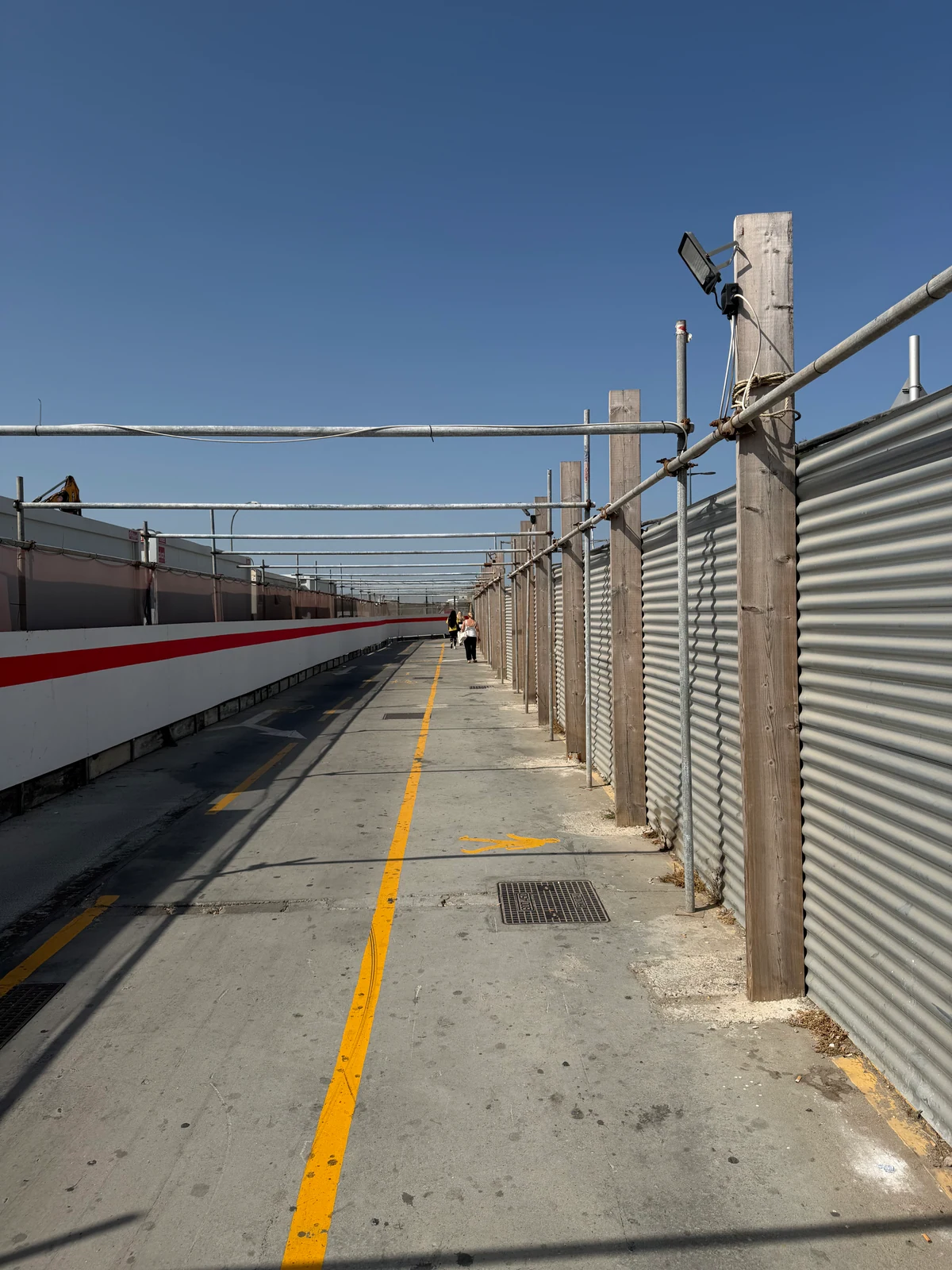
You walk into Gibraltar across a live airport runway, and it’s genuinely brilliant and worth doing at least once regardless of the queue. Traffic lights and barriers hold everyone back when a plane is due, then the barriers lift and the crowd just strolls across the tarmac.
A road tunnel opened in 2023 for cars, but pedestrians and cyclists still go over the top, and it’s a genuinely great way to arrive.
If you want the photo of a plane landing behind you, check the arrivals board before you go. We walked over at 6pm assuming planes arrive the way they do at Málaga, found the next one wasn’t due until 8pm, and stood looking at an empty runway.
Very few flights use Gibraltar in a day, and it’s about ten minutes on foot from Casemates Square. The frontier queue took us under two minutes on the way in.
At the far end of the runway there’s a low stone slab called the Cradle of History Monument, with the facts of the place laid out across it.
2. Casemates Square
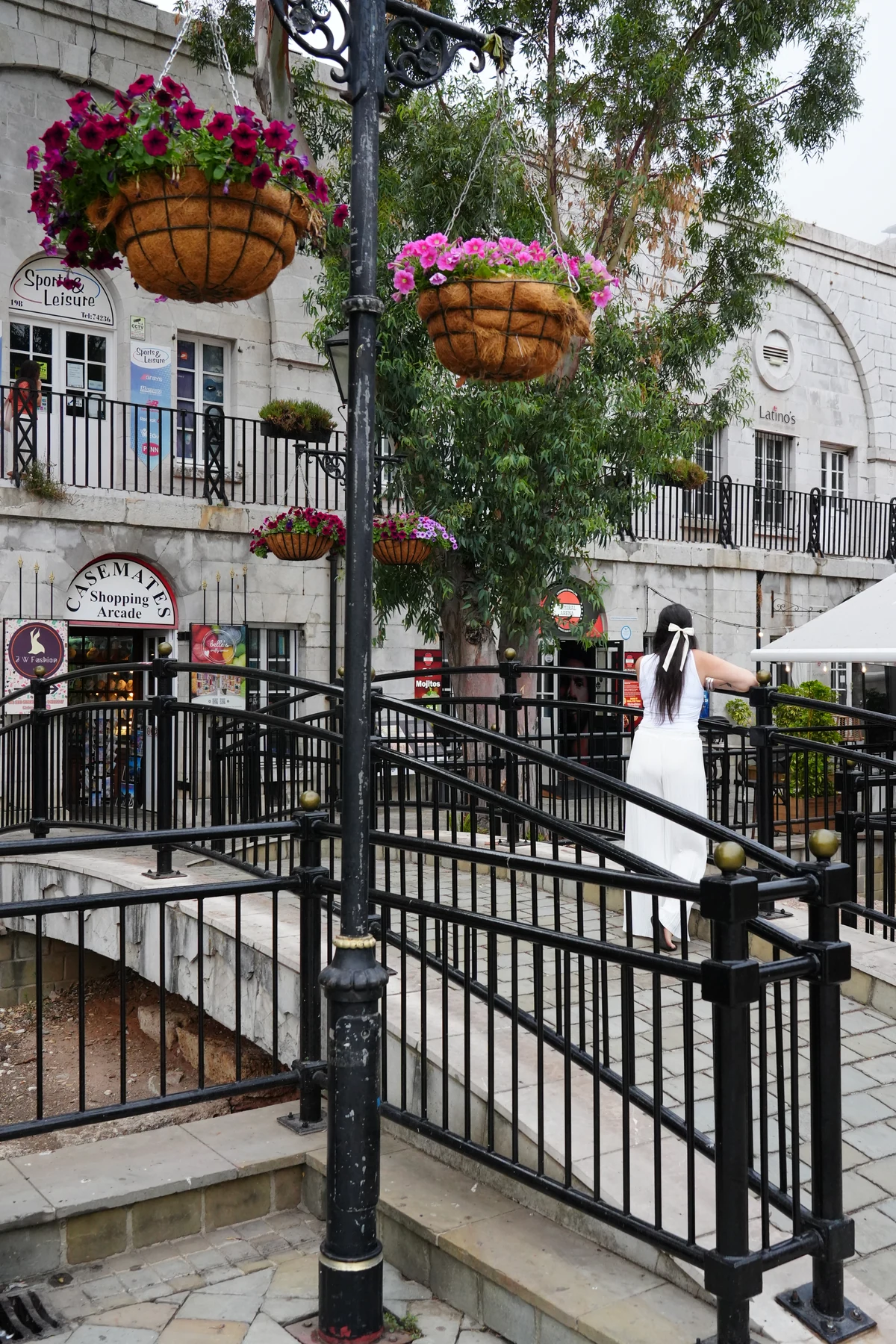
Everything funnels into Casemates, and the moment you’re in it the tour operators and taxi touts start working on you. It’s where the whole up-the-Rock trade is based, so it’s very easy to get sucked in before you’ve had a chance to look around. I liked it more than I expected to, which isn’t something I say about many main squares.
The old 18th century military buildings around the edges are restaurants and pubs now, several of them built back into the honey coloured town walls, with hanging flower baskets strung along the arcade. A lot of them run deals, two for one and cocktail offers, and I couldn’t find a single page online listing them.
Walk Casemates Square once and note what you want before you pick, rather than taking the first place you see. They’ll take your euros, though at a rate you won’t love, so pay by card if you can. It’s a lovely square after dark too, warm and busy and lit right up under the Rock, and the whole Square feels safe at night.
3. Main Street and the Old Lanes
Main Street was the biggest disappointment of the trip, so I’d rather tell you that now than let you find out at the far end of it. It’s a busy shopping strip of ordinary chain stores, very touristy, and there was far less that felt properly English than I expected.
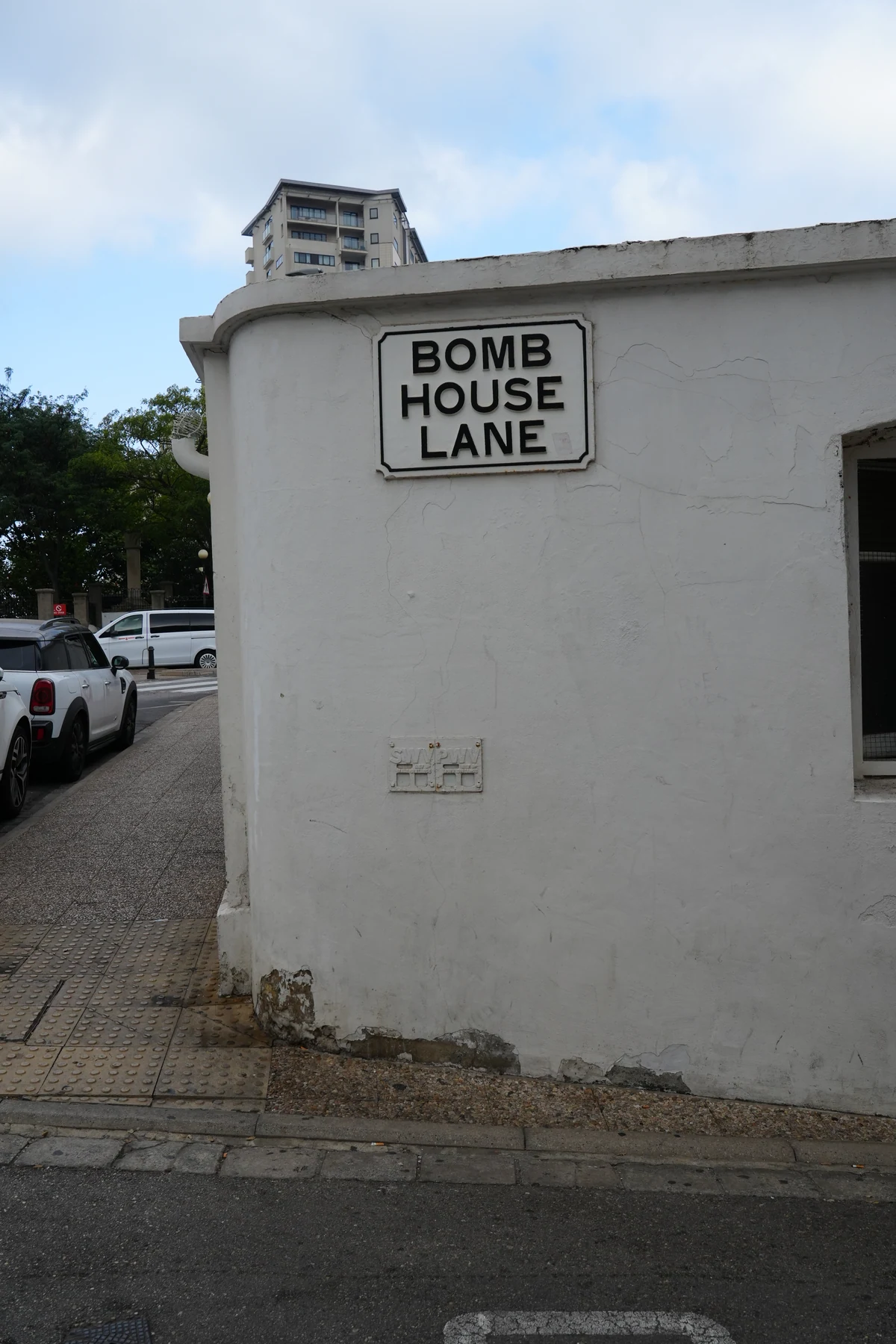
The things worth stopping for are beside it rather than on it. There are painted macaque sculptures on the corners, a stone chair with John Lennon carved into it, and side lanes with better names than anything on the main drag. Bomb House Lane and Secretary’s Lane.
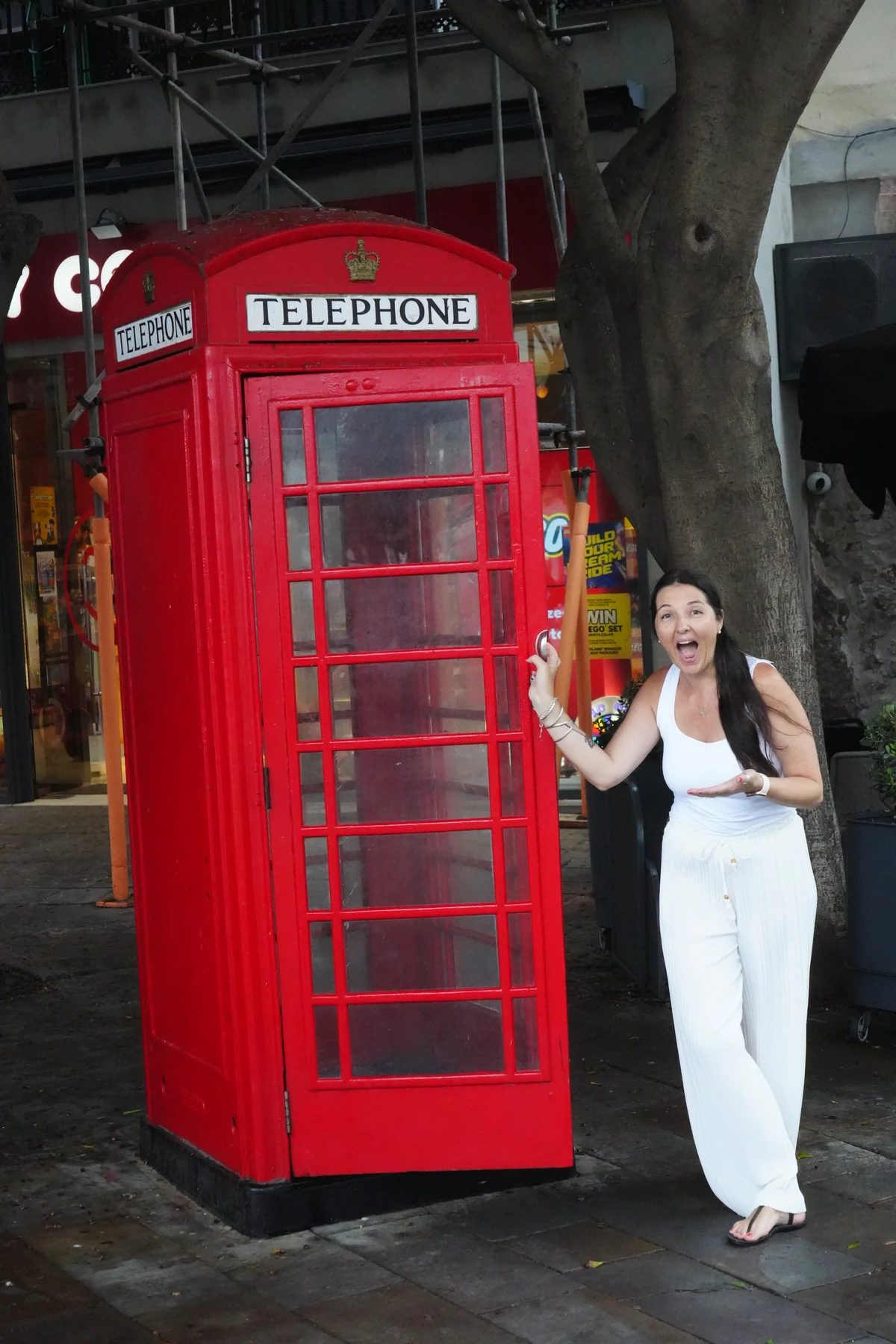
Go into those lanes and you get the old red pillar boxes you see in films, a former nunnery, a frames gallery, and a huge stern old building that’s now a karate shop. Modern apartments sit right alongside prettier old ones with everyone’s laundry hanging outside.
4. The Convent and the Changing of the Guard
If you’re on Main Street and you see soldiers in ceremonial uniform, you’ve found The Convent. It’s been the Governor’s official residence since 1728, having started life as a Franciscan friary in 1531, and the guards outside it are the Royal Gibraltar Regiment.
The changing of the guard happens outside, and it’s a smaller, more intimate ceremony than the iconic London version. It isn’t daily, so check the Royal Gibraltar Regiment’s own listings or the tourist office before you build a morning around it. Ceremonies happen a few times a year on special occasions, plus at regular duty changes.
The building itself only opens to the public on certain days, but the Georgian and Victorian frontage is the part you came for, and you can stand and look at it for nothing.
5. The Cathedral of St Mary the Crowned and King’s Chapel
The Catholic cathedral has beautiful blue patterned tiles outside that are worth a photograph, and they’re the reason I stopped. Inside it’s quaint and small, with lovely stained glass. It sits just off the walk along the coastline that runs parallel to Main Street, so you’ll pass it without trying.
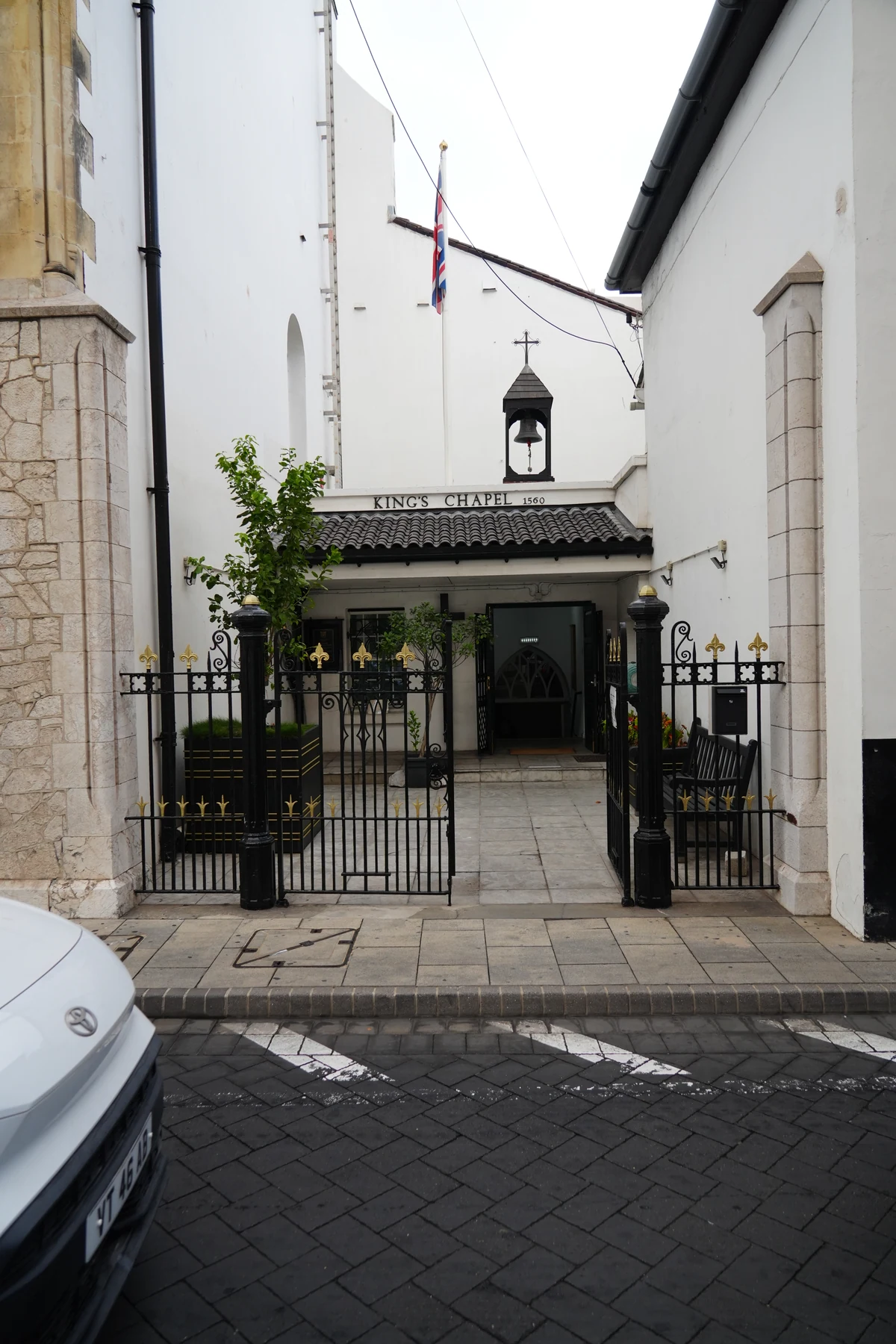
King’s Chapel is a short walk away, next door to The Convent, and it’s also free and open to the public. It was built in 1560 as part of the same Franciscan complex and became the garrison church after the British took over.
You go in through a small gated entrance and then down a steep staircase to reach the church itself, which catches people out.
Holy Trinity, the Anglican cathedral, is the third of the free churches and reads as unmistakably British inside. All three sit on the walk between Casemates and the botanic gardens, so the Catholic cathedral, Holy Trinity and King’s Chapel cost you nothing but a few metres of detour each.
6. Trafalgar Cemetery
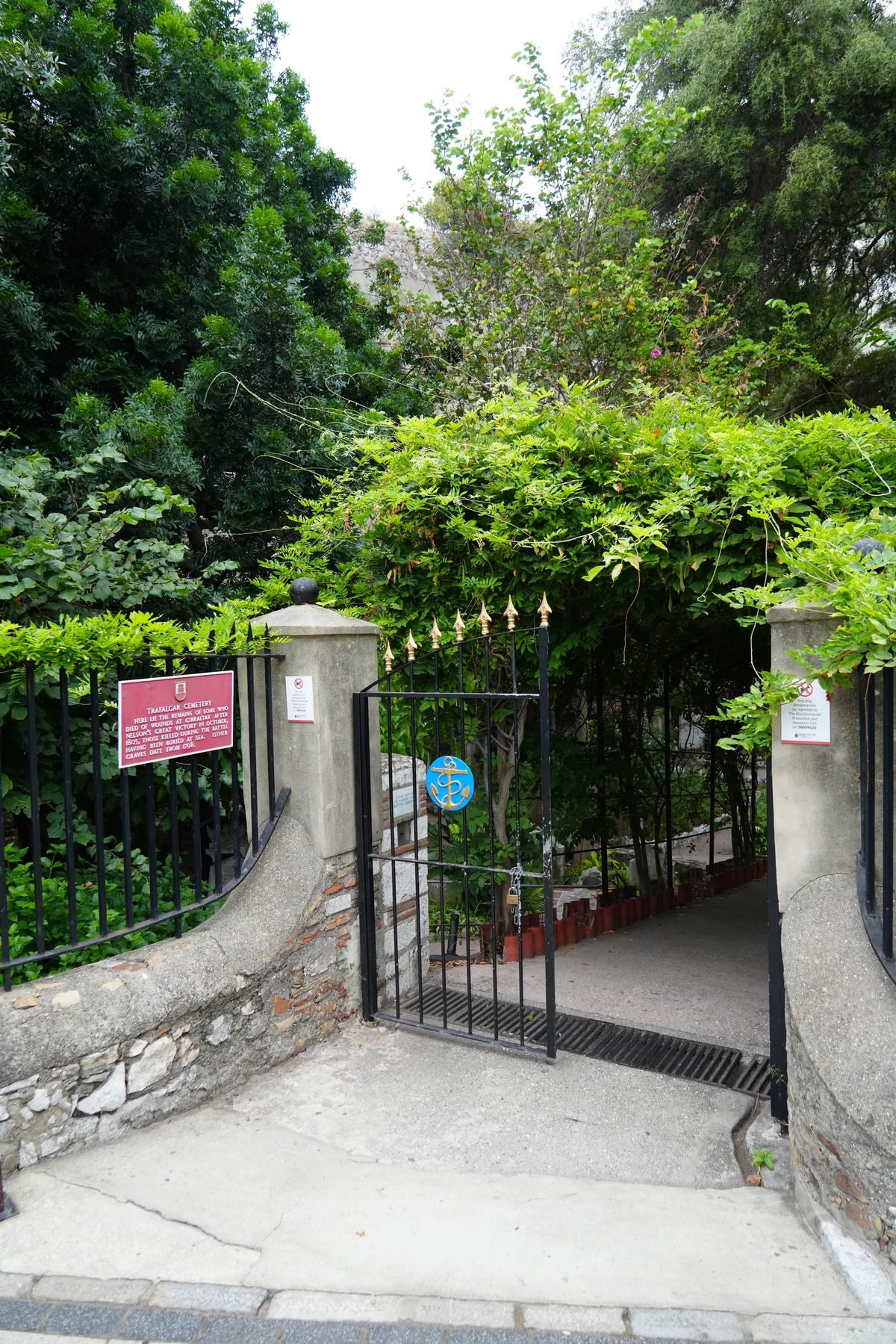
We didn’t stay long here, and I don’t think you will either. It’s small, it’s peaceful, and most of the headstones have weathered to the point where you can’t read them any more, which is either the whole appeal or the reason you walk back out.
Give it ten minutes on your way past rather than making a trip of it. The Alameda Gardens are right beside it, so the two go together and the cemetery is the shorter half of that pairing.
7. The Alameda Botanic Gardens
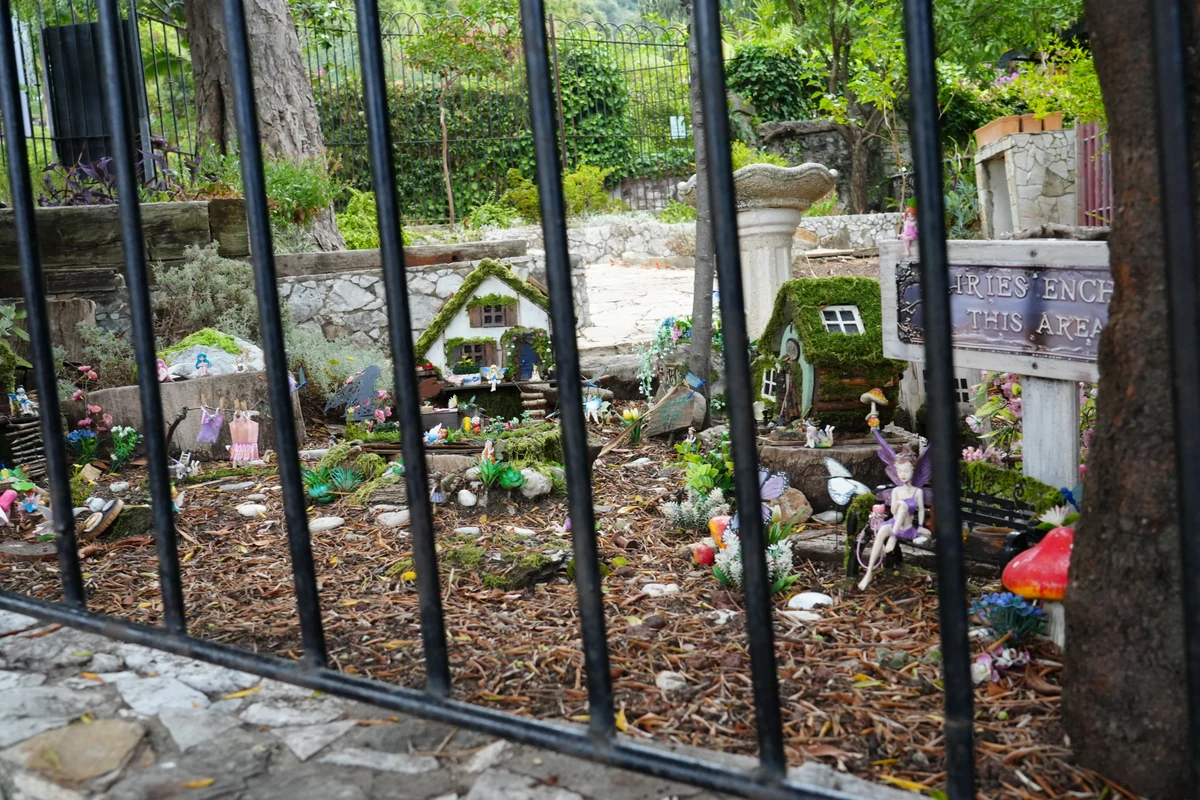
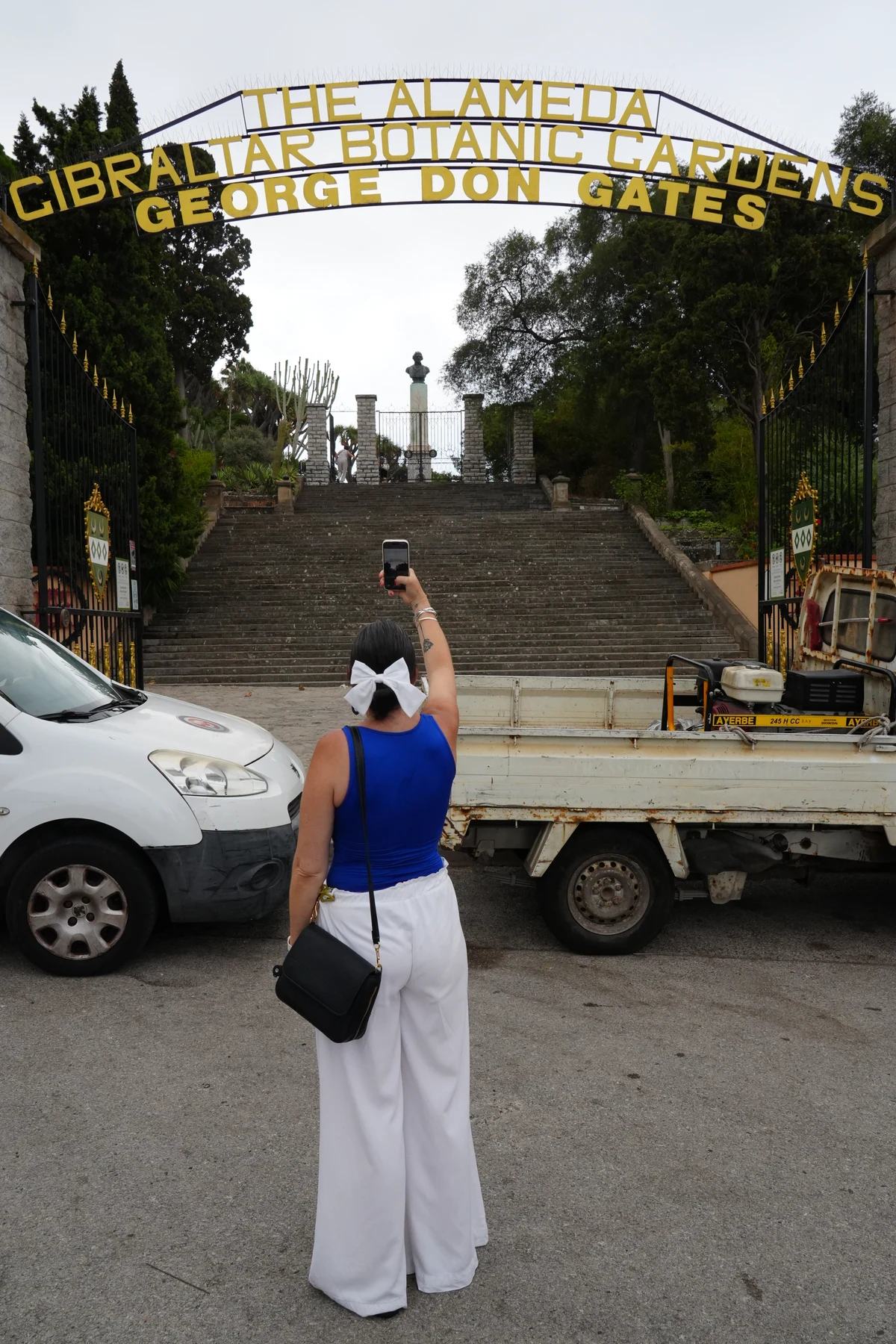
The Alameda Botanic Gardens were my favourite stop of the whole trip, and they’re free. Small, deeply shaded and wonderfully cool even in August, and Jethro and I walked the entire thing comfortably in half an hour without rushing. There’s a gorgeous ornate iron gate at the entrance, wild looking dragon trees, cactus beds and tall umbrella pines, and a delightful tiny fairy garden tucked along one edge.
The Botanic Gardens open from sunrise to sunset every day, and no dogs are allowed inside. They started in 1816 as somewhere for the British garrison to relax, which explains the layout once you notice it.
Along the side of the gardens is the fire station with all the fire trucks, which is a fun stop in itself if you’ve got children with you.
8. Europa Point
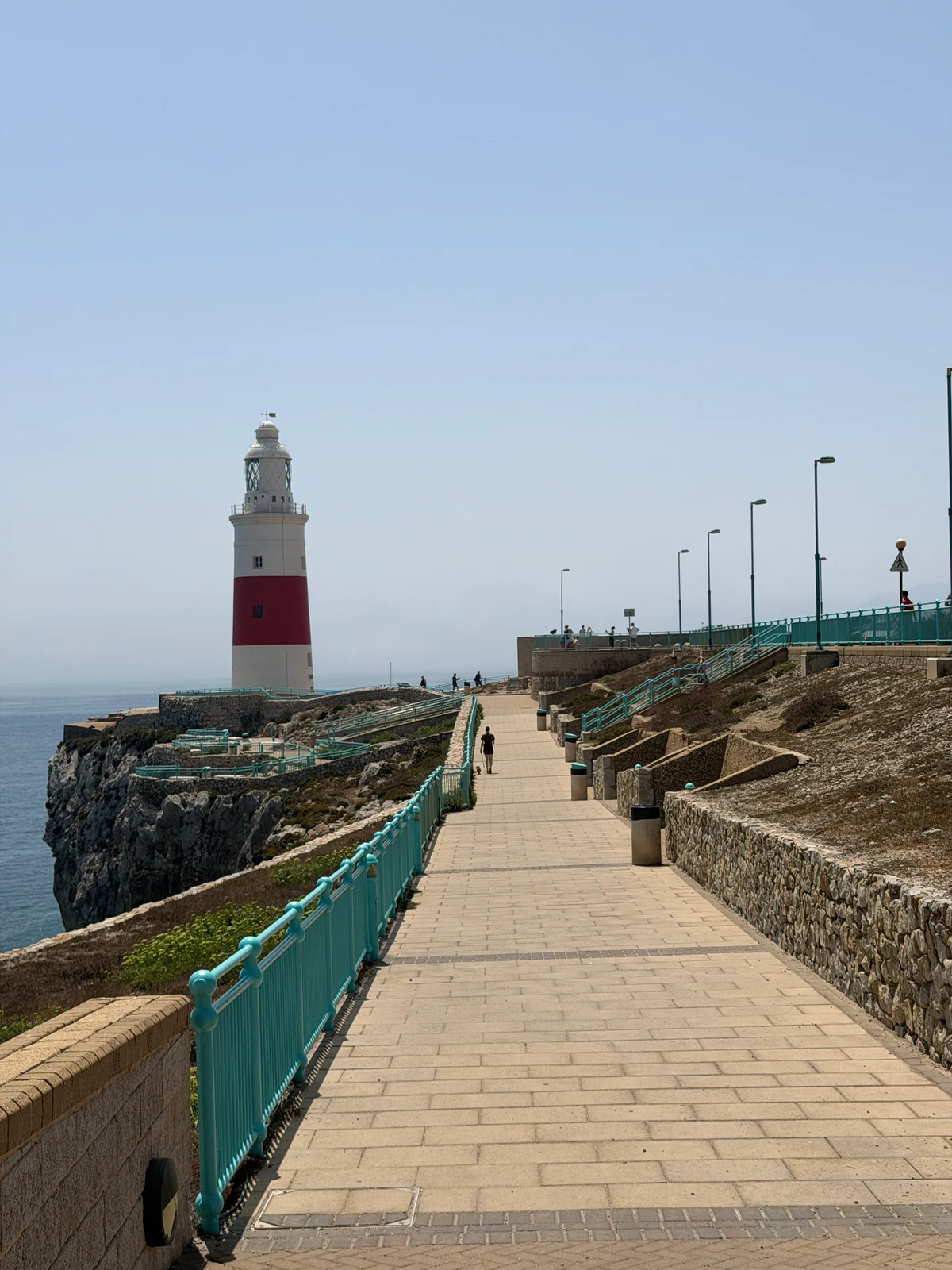
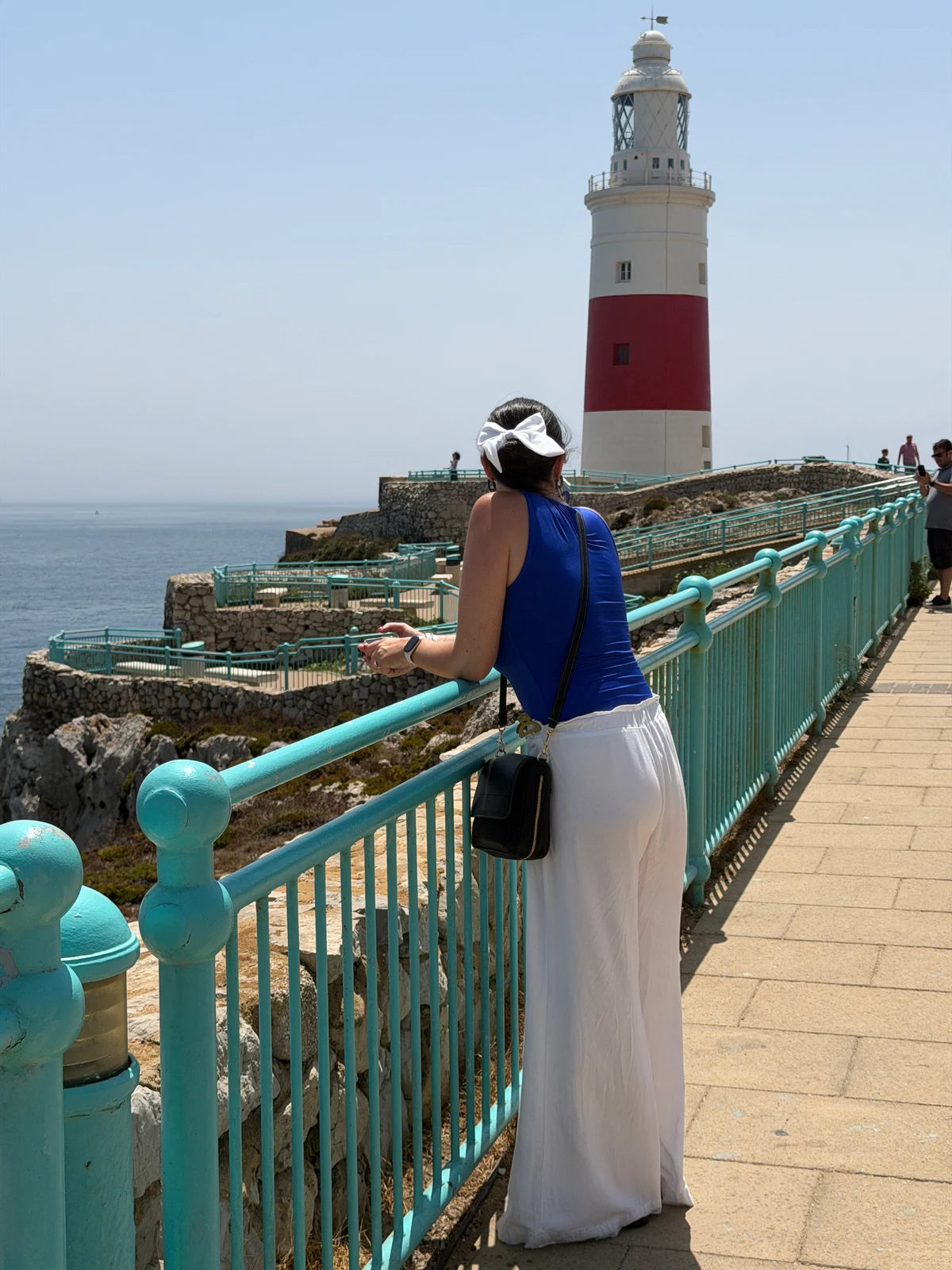
You go through two tunnels to reach Europa Point, and then the walk out to the lighthouse is framed by turquoise railings which make it far prettier than it has any right to be. We could hear ships out in the mist honking at each other, which was strange and rather magical. Most of the site itself is manufactured, a stadium and some buildings, so it’s the edges and the rocks that are worth your time rather than the middle.
This is the southern tip, looking across the strait to Morocco about 21 kilometres away. The lighthouse is called La Farola in Llanito, the Spanish and English mix people speak here.
The Pillars of Hercules monument stands out on the point, the Rock being the northern pillar of the legend, and nearby is the Sikorski Memorial to the Polish prime minister in exile who died in a plane crash off Gibraltar in 1943.
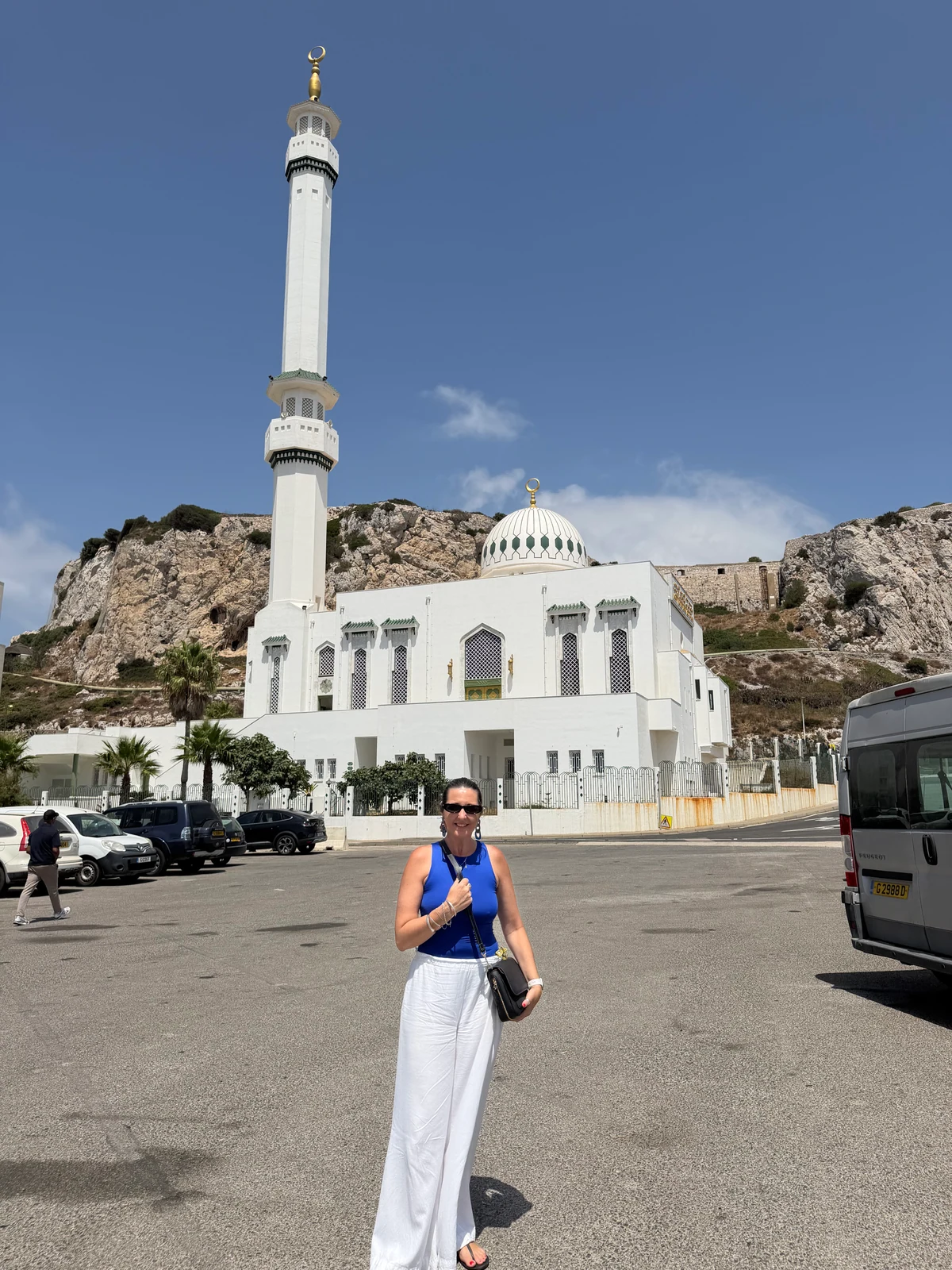
9. The Ibrahim-al-Ibrahim Mosque
We photographed it from outside and then ran out of time to actually go in, which I’d file under things to do properly next time. It’s right there at Europa Point, so you’ll be standing in front of it whether you planned to or not.
It’s the southernmost mosque in Europe and one of the largest in a country without a Muslim majority. Entry is free between 11am and 3pm, outside prayer times, so it wants a bit of planning rather than a wander past at the wrong end of the afternoon.
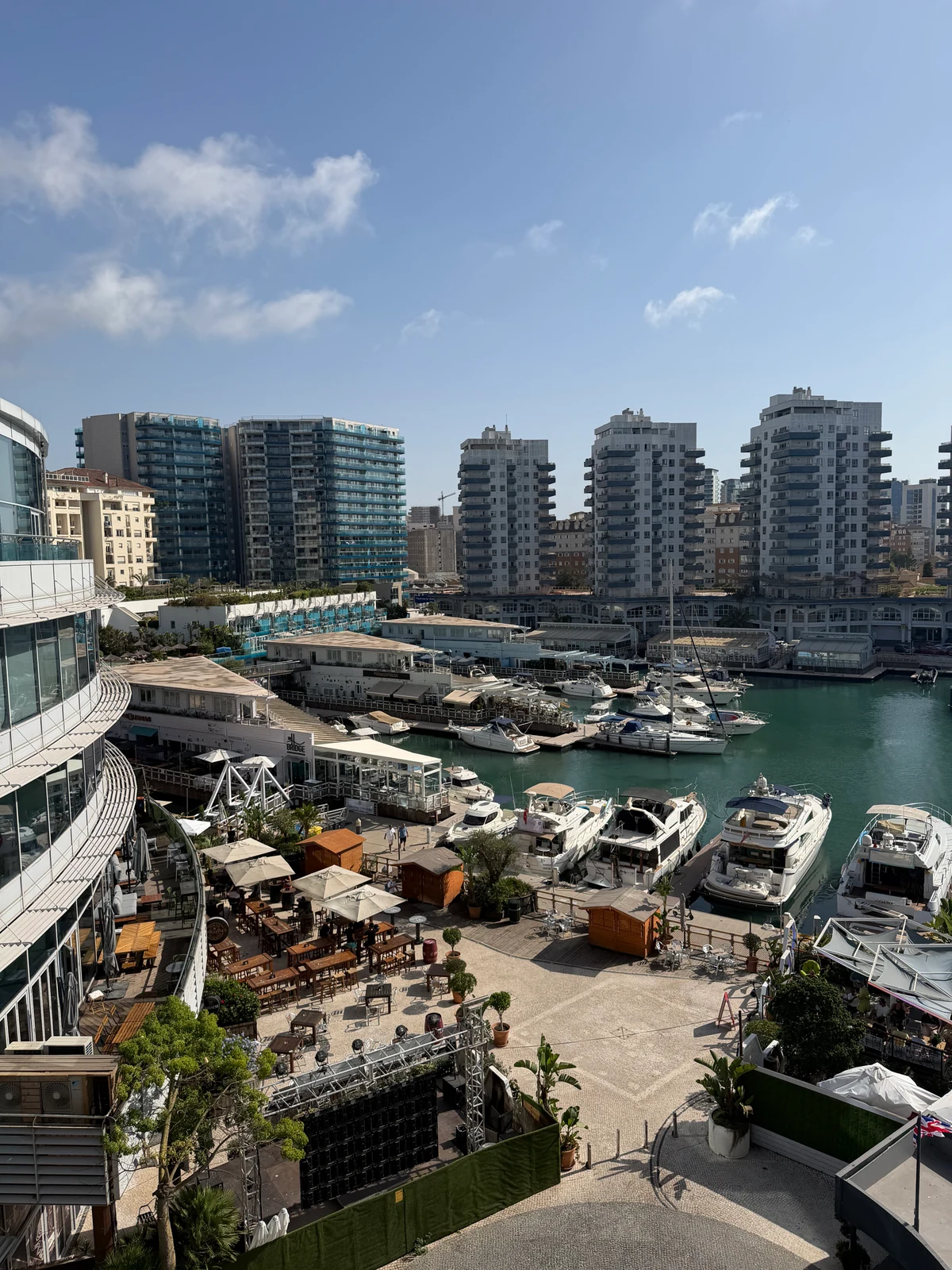
10. Ocean Village Marina
Walking the pontoons at Ocean Village costs nothing, and it’s the one part of Gibraltar that looks like money. Two marinas sit either side of the development with the Rock standing straight up behind them, and the superyacht hotel moored there is an impressive sight in itself.
The bars, restaurants, casinos and the territory’s only nightclub are all here, so you can pay as much as you like once you stop walking. The water in front of you is the Bay of Gibraltar with Algeciras on the far side, which is worth knowing when you’re trying to work out what you’re looking at.
It’s a few minutes’ walk from Casemates, and the public car park there lets you stay past ten, unlike the one at Casemates. That’s the useful bit if you’re hunting for a space in town in the evening.
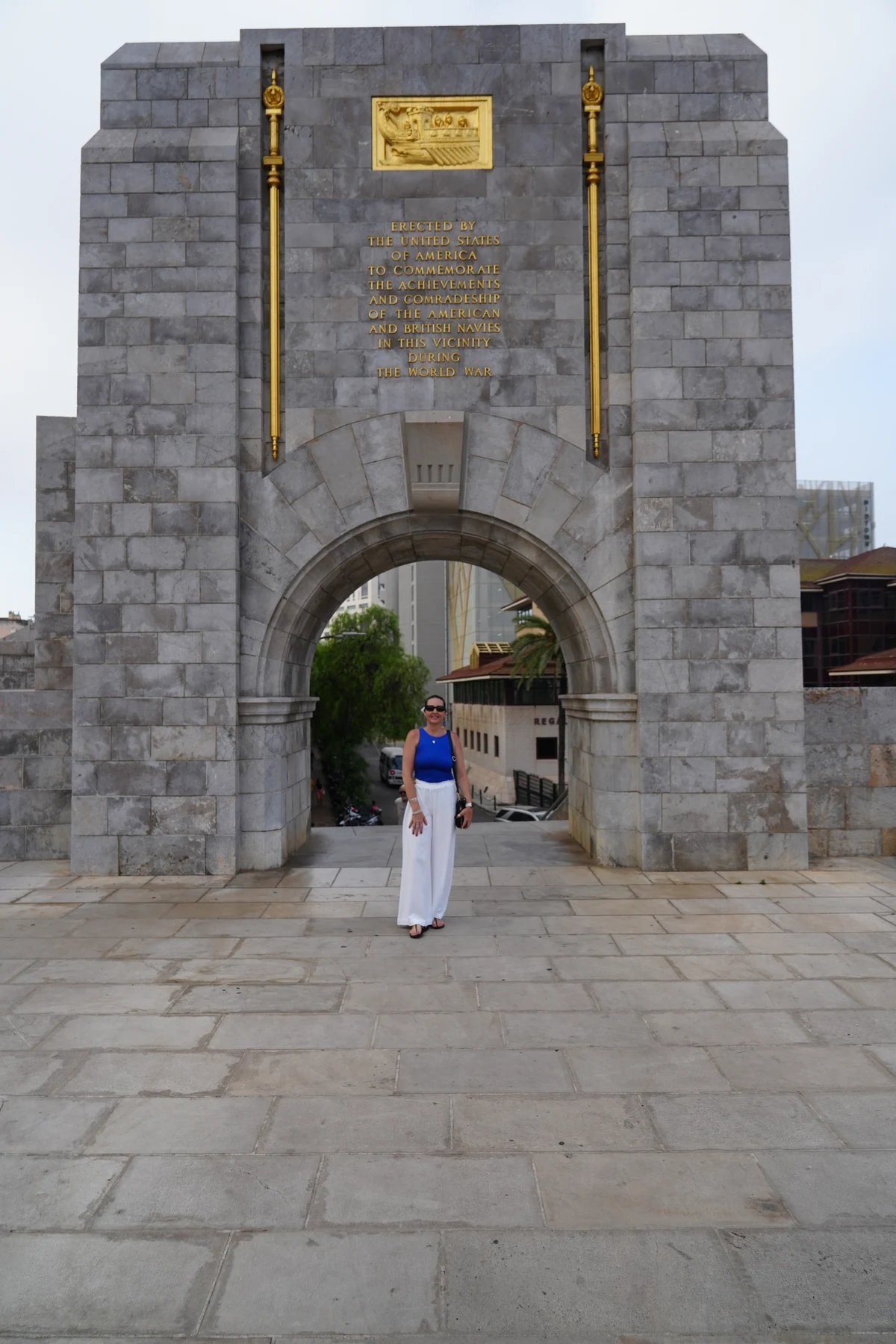
11. The American War Memorial
Ten minutes here and you’ll have seen all of it, and it’s still worth the detour for the peaceful little lookout at the top. It’s a small site with an arch, some very well preserved cannons, and steps with gold plates set into them at the top. You can walk up to a lookout at the end.
It’s the first thing we did on our second morning, before heading along the coastline parallel to Main Street. It isn’t a big area but it’s great for photographs, and it sets you up nicely for the walk into the back streets afterwards.
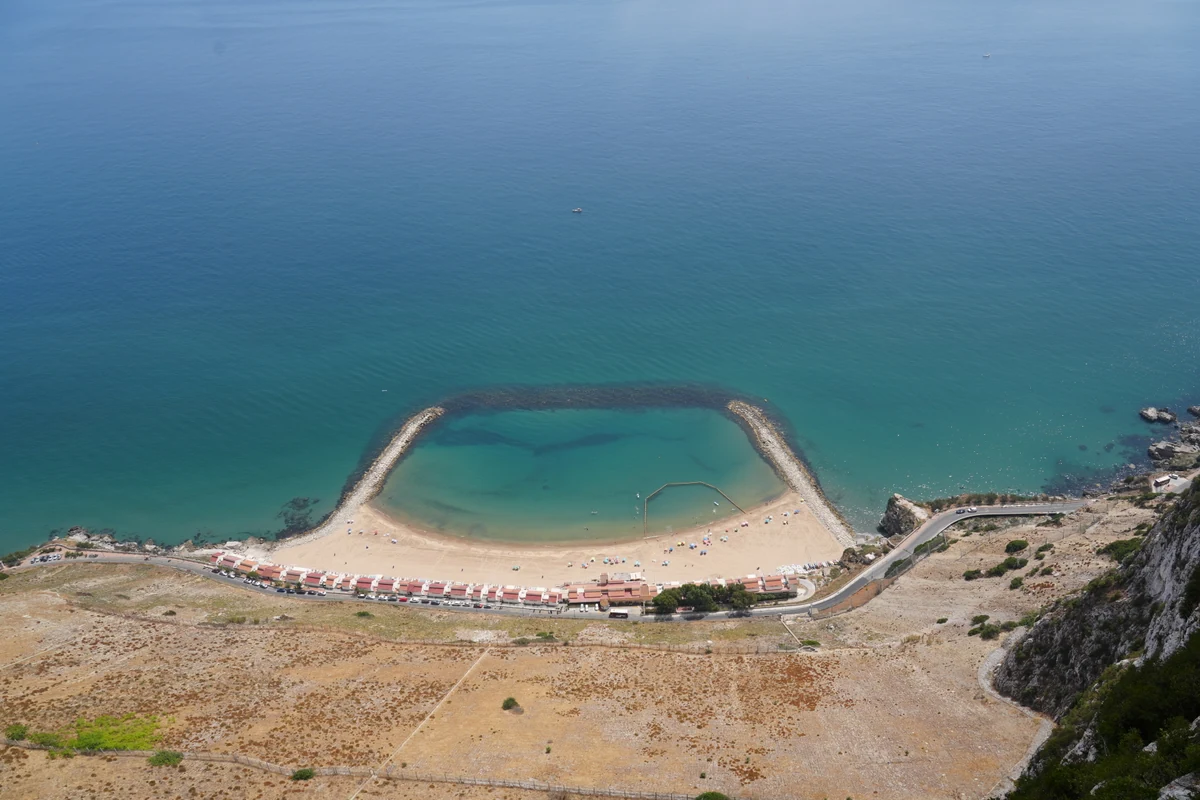
12. Catalan Bay
Come round to the eastern side and you find a row of brightly painted pink and yellow houses backed hard against the sheer grey Rock, which is not what the rest of Gibraltar looks like. There’s a car park above with steps down to the sand, and the road sits high enough that the beach below stays quiet.
Genoese fishermen settled Catalan Bay in the 17th and 18th centuries and the village kept its own character afterwards, down to its own small church. It’s free, it’s properly sandy, and this is the prettiest stretch of coast in Gibraltar. It fills up in summer while staying fairly empty out of season.
13. Camp Bay and Little Bay
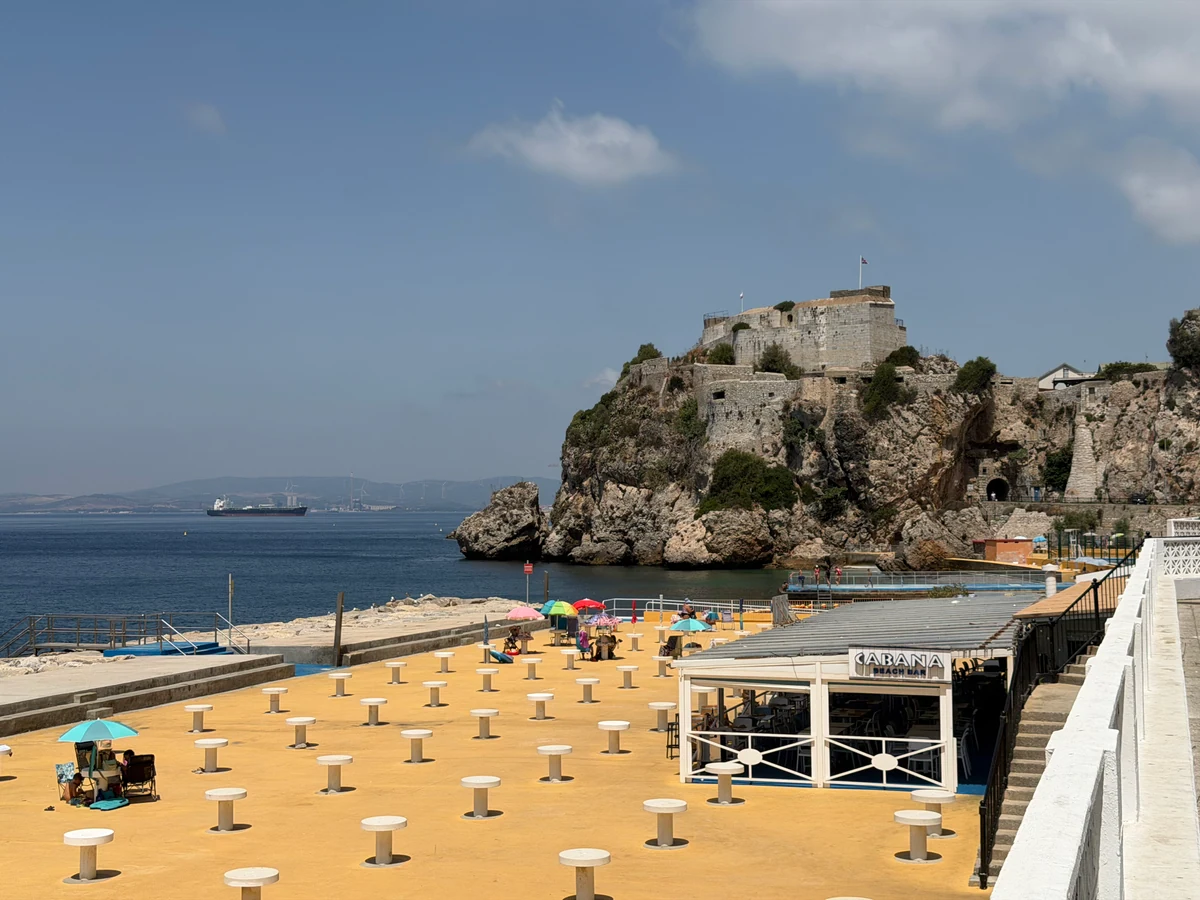
By the time we reached the west side our legs had given up, and Camp Bay and Little Bay were exactly where we needed to land. Both have pools, cafés and bright sun terraces, and they’re a perfect stop for when you’re tired or when the open sea feels like too much effort.
One of the two is free and one charges, and the paid one is the one with the waterfall. I still have no idea where that water comes from, on a territory this small.
Parking at Camp Bay is the good news. There’s plenty at both, and we went in peak summer and still found space without circling.
What Costs Money on the Rock
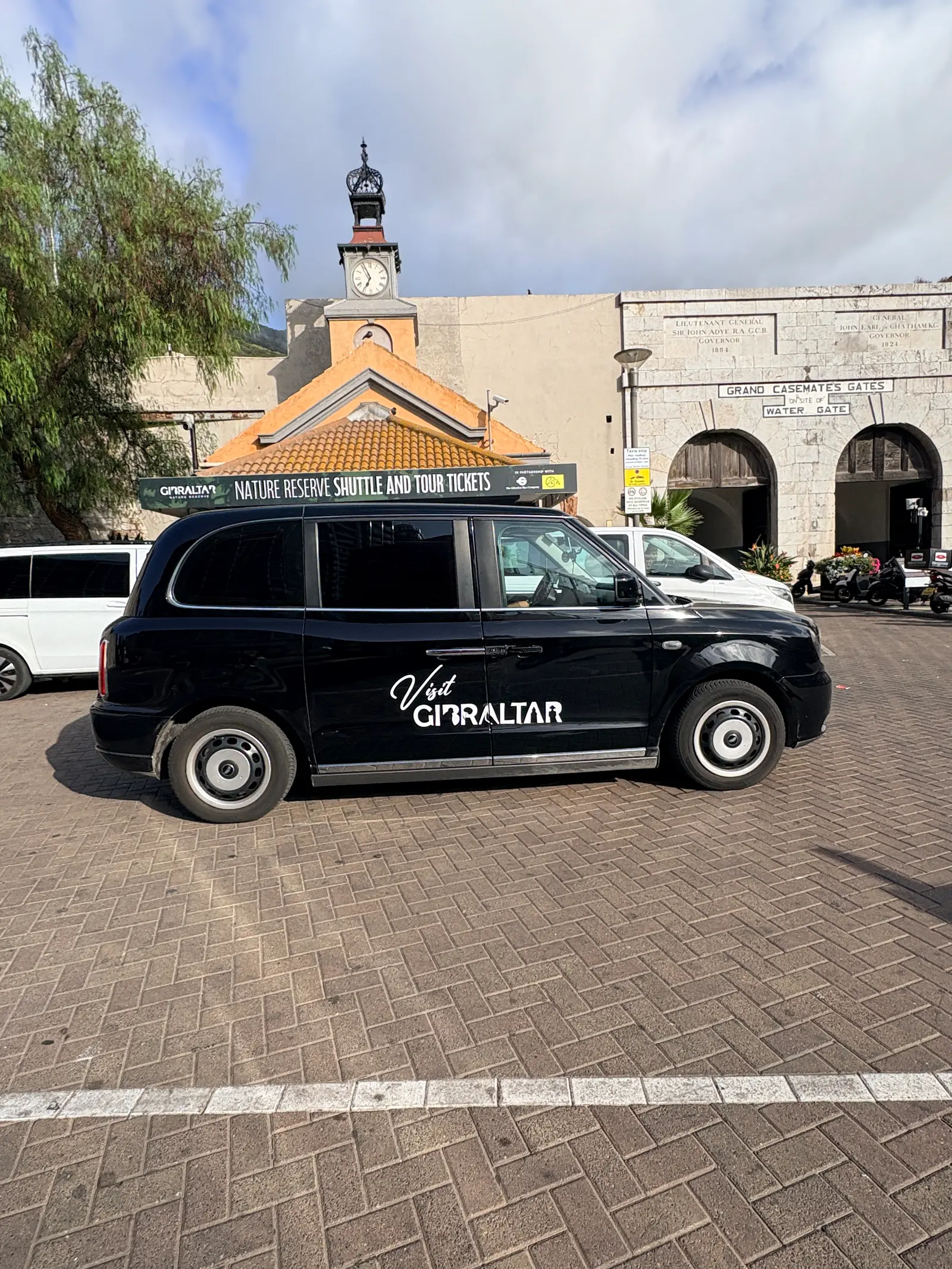
We pre-booked our Upper Rock entry from home, felt very organised about it, and then found out at the bottom of the hill that getting up there is a separate purchase entirely. The ticket and the shuttle sold together is what we should have bought, and we worked that out standing in the sun holding a booking that only opens a gate. That’s the one place Gibraltar gets genuinely expensive.
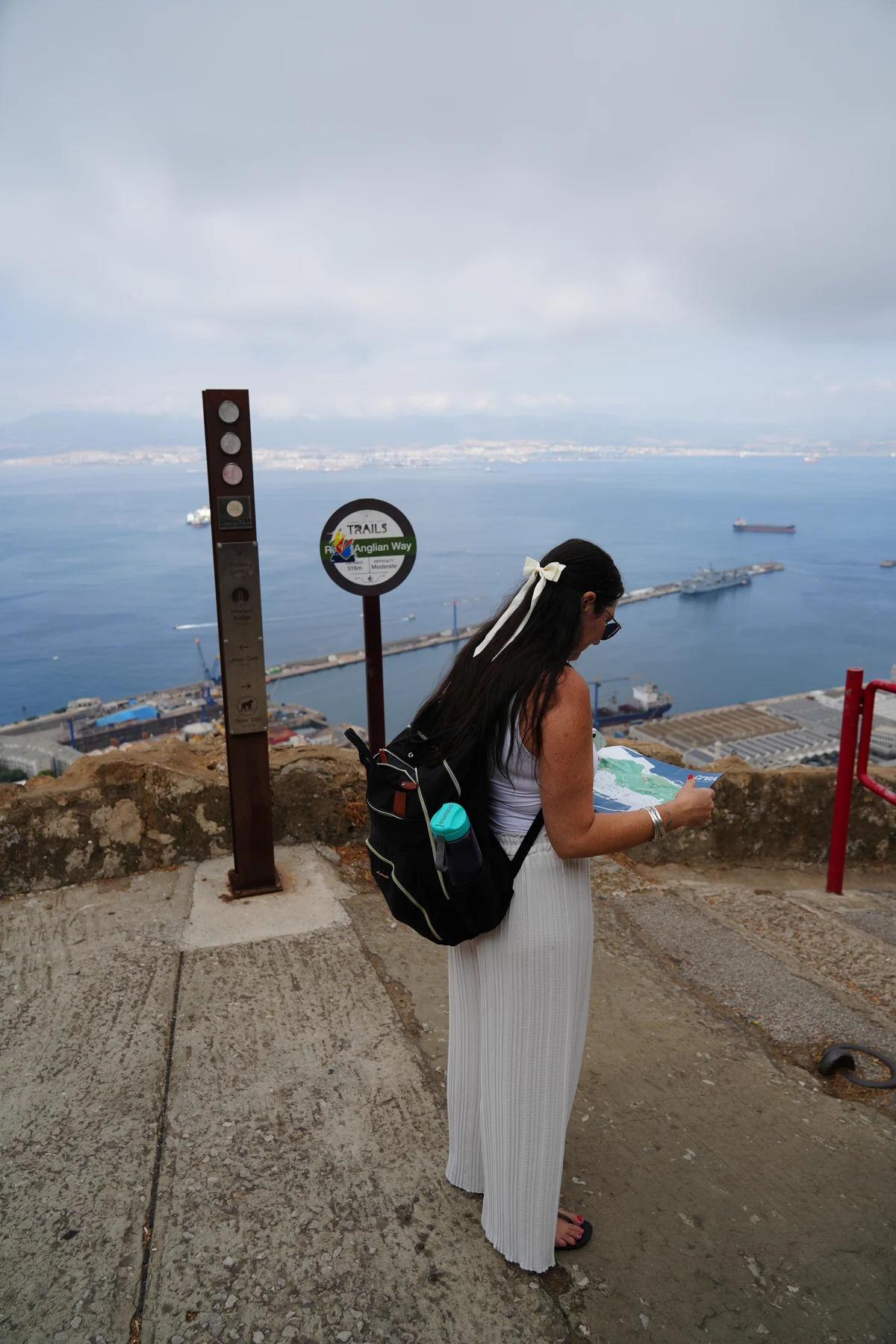
Almost everything Gibraltar is famous for sits inside the Upper Rock Nature Reserve, and the Nature Reserve has three pedestrian gates with no way around them. They’re Jews’ Gate on the southern approach, the Moorish Castle on the northern one, and Devil’s Gap somewhere in between, and each has a ticket office waiting for you. Believe me, I went looking for a free route up the Rock.
Getting up is its own problem now that the cable car has gone. It closed in November 2025 for a complete rebuild and isn’t expected to run again until 2027, though almost every guide online still tells you to ride it. The main pedestrian route is the steep staircase beside the old line, which is punishing upward and much better used as a fast way down.
St Michael’s Cave turned out to be far bigger and more spectacular than we expected, with sections lit to pick out shapes, one of which looks like an angel. The light show is just coloured lights, and the exit routes you straight through St Michael’s Cabin, so the café has you captive and the prices reflect that.
The Skywalk is where everybody goes and it backs up badly, both with people on the glass platform and with a queue of taxis on the road behind it, waiting with nowhere at all to go. I’ve got a bad fear of heights, and my favourite photo of the whole trip is me at the edge of that balcony looking genuinely terrified.
Go to the Skywalk early or late if you can. The Windsor Suspension Bridge gave us the best views of the whole day, a thin span slung across a green gorge with the bay glittering behind it.
We never made it to the Great Siege Tunnels or the World War Two tunnels, because by then we were too tired to keep going. I’m told they’re the most impressive history on the Rock, which is exactly why we’ll go back. The Moorish Castle was closed for renovation when we went, with work under way on the Tower of Homage and no reopening date announced, so check rather than plan your walk around it.
The Mediterranean Steps are the other thing behind those gates that I didn’t do. We looked at them longingly and didn’t attempt them, because we hadn’t come prepared for a hike of that kind, and that’s my one real regret from the trip.
⭐ If you break the free day for one thing, break it for this >> Upper Rock entry. The macaques live on the paid side of the boundary and there is no free route to them.
Can You See the Macaques for Free?
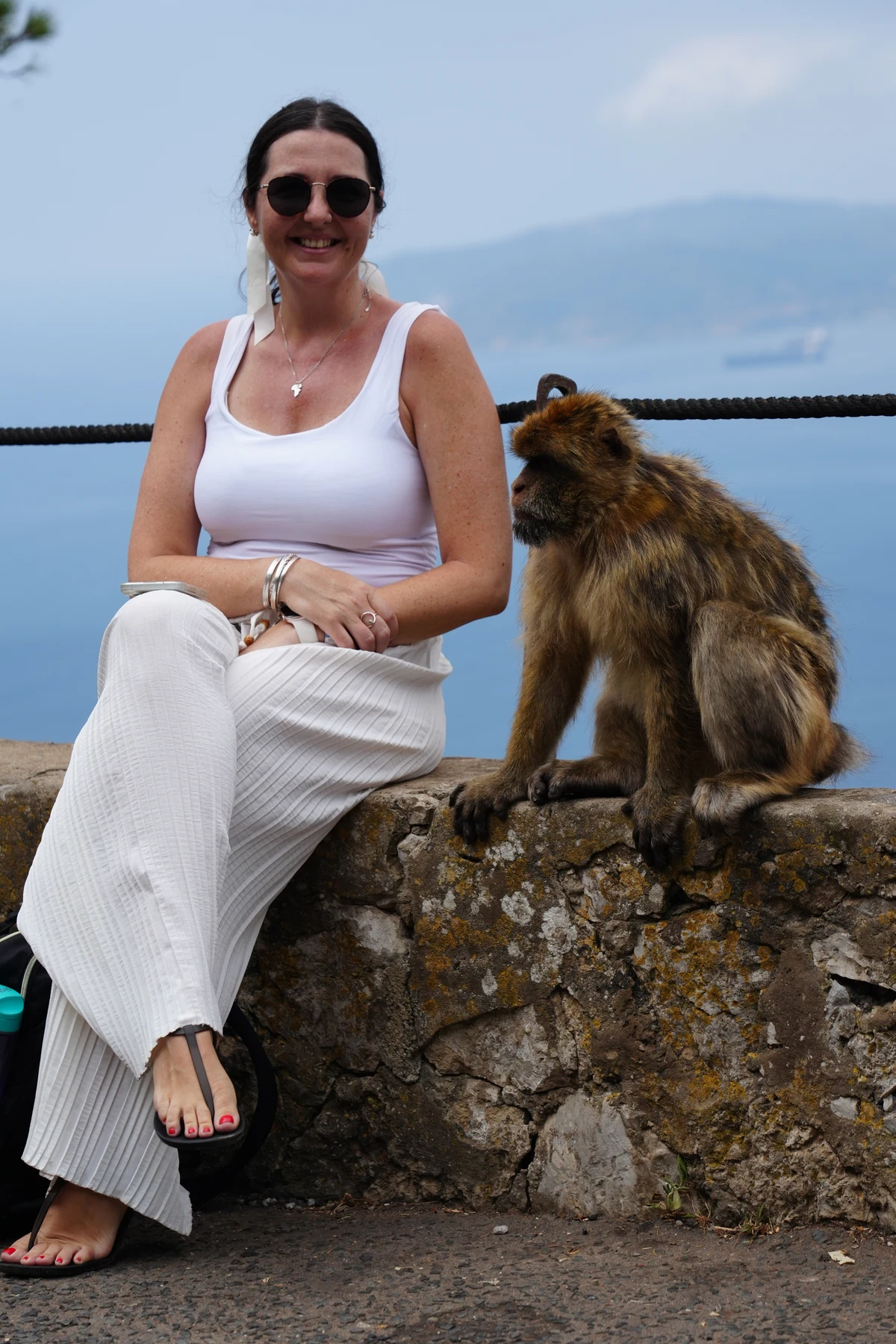
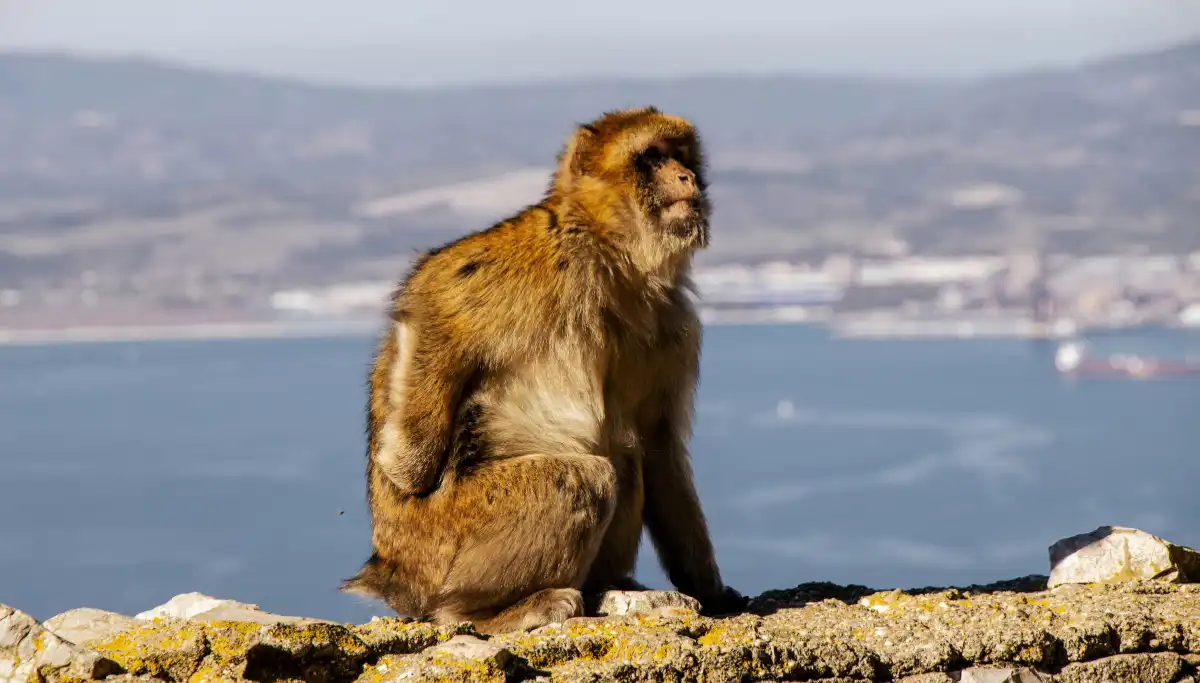
No, you can’t, because the Barbary macaques live inside the paid Upper Rock Nature Reserve and its gates have no way around them on foot. Europe’s only wild monkey population is the most memorable thing about Gibraltar for me, and it sits behind a wristband like everything else up there.
We saw our first Barbary macaque at the mouth of St Michael’s Cave and then plenty more all the way down the steps, sprawled along warm limestone walls with the whole hazy bay behind them. On the right hand side of those steps there’s a small pool where the babies swim, which is where most of the young ones were, and halfway down they stop entirely.
The rule that matters is about where your bag is. On your back they’ll look and assess, in your hand they’ll go for it, and on the ground they will absolutely take it. One walked up to me on the staircase and studied my bag without opening it, then another went straight for it when I tried the same pose a second time.
Don’t feed them. It carries a £500 fine, and the Government of Gibraltar is clear about why, since human food disrupts their natural diet and can give them diseases including diabetes.
A Free Day in Gibraltar That Works
Walk in across the runway, then start at the American War Memorial and pick up the coastal walk running parallel to Main Street. That brings you past the cathedral and into the old lanes, which is the right way round, because you get the good part before Main Street disappoints you.
Give the Trafalgar cemetery its ten minutes and then spend proper time in the lovely Alameda Gardens next door, since that’s the stop worth slowing down for. If you’ve still got an afternoon, take the bus out to Europa Point and go for the edges rather than the middle. The rest of the routes are over in getting around Gibraltar.
That’s a great day out, and it’s genuinely better than I expected a free day here to be. It suits you if you’re arriving on foot for one day and what you want is the sunlit town, the shaded gardens and the coastline, and it also works for the few hours you’ve got left at the end of a trip, when your legs have gone completely.
The one caveat is the heat. In August the free version means walking all of it in full sun, and if you’re doing this in July or August you’ll want to start early and treat the gardens as a midday stop rather than an afternoon one.
If you came for the macaques or for the hike, and those are honestly the only two reasons I’d tell anyone to come to Gibraltar at all, skip it. The free day is not worth doing as your only day here. Book the reserve entry and the way up together from home, give the Rock the whole day, and read the best things to do in Gibraltar instead.
P.S.
If you’re still working out when to come, the best month to visit Gibraltar explains the morning mist that caught us out on both days. And if you’re doing this sort of day elsewhere, I’ve written the same guide for the city I actually live in, free things to do in Málaga.