Featured Event
Feria de Abril Seville 2026: The Complete Survival Guide
📅
When
Tue 21 Apr - Mon 27 Apr
📍
Where
Real de la Feria, Los Remedios
💶
Price
Free entry
This post may contain affiliate links, which means I earn a small commission, at no extra cost to you. It helps keep the blog alive, and we really appreciate your support!

Feria de Abril runs from 21 to 27 April 2026, with the Alumbrado opening ceremony on the night of Monday 20 April.
For the complete guide to dates, public casetas, dress code, budget, and getting there from Málaga, read our Feria de Abril Seville guide.
That is the first thing to understand. The second is that it does not matter, because what spills out into the streets of Seville during the last week of April is one of the most extraordinary spectacles in Spain, and you do not need a caseta invitation to experience it.
In 2026, the Alumbrado opening ceremony takes place on the night of Monday 20 April. The fair runs Tuesday 21 to Monday 27 April.
Feria de Abril Seville 2026: Quick Facts
Getting There from Málaga
The AVE high-speed train from Málaga María Zambrano to Seville Santa Justa takes around 90 minutes and is comfortably the best way to travel. During Feria week, trains fill up fast, so book through Renfe as early as possible. Tickets typically go on sale 60 days in advance.
For day-trippers from the Costa del Sol, an early morning train gets you there by 9am. The last train back to Málaga runs late evening, which works well for a full day and early evening at the fair. If you are staying overnight in Seville, the fair genuinely does not get going until midnight on the big nights, so a return the following morning makes more sense.
Driving is possible but adds the challenge of parking in a city where every hotel has its own advice about where to leave the car. The train removes the problem entirely.
Where to Stay
Seville during Feria is the most expensive time of year to visit the city. Hotels inside or near the Barrio Santa Cruz and the Triana neighbourhood fill up months in advance, and prices can triple compared to a normal week.
Book as early as you can. If you are planning to attend in 2026, the hotels worth having are already filling. For a full breakdown of the best areas and what each one is like during Feria, see our where to stay in Seville guide.
One practical note: the Real de la Feria is in the Los Remedios neighbourhood, on the opposite bank of the Guadalquivir from the historic centre. If you can find a hotel in Los Remedios or Triana, the walk to the fairground is short. Staying in Barrio Santa Cruz means a 20-minute walk or a taxi.
What the Feria Actually Is
The Real de la Feria is a purpose-built fairground that goes up each year in the Los Remedios district, across the river from the historic centre. For one week it becomes a temporary city, with more than 1,000 casetas lining streets named after famous bullfighters, flamenco artists, and local landmarks.
A caseta is a striped marquee tent, typically 10-20 metres long, containing a bar, a kitchen, a dancefloor, and enough chairs for the family, friends, or colleagues who own it. Around 98 percent of casetas are private, belonging to families, businesses, political parties, neighbourhood associations, or social clubs. You need to know someone inside to get through the door.
The remaining 17 to 20 casetas are public, and these are where visitors spend their time.
The Alumbrado: Opening Night
The fair officially opens at midnight on Monday with the Alumbrado, the lighting of the Portada. The Portada is the vast ornamental entrance gate at the bottom of Calle Antonio Bienvenida, and it is redesigned from scratch every year to a different theme. When the lights across the entire fairground switch on simultaneously, it is a genuine spectacle and worth planning around if you are arriving at the start of the week.
The 2026 Portada design has not yet been announced at time of writing. The Ayuntamiento typically reveals it a few weeks before the fair opens.
Public Casetas: Your Best Options
With around 17 to 20 public casetas spread across the Real, these are the places to head. The atmosphere varies between them, and some are better suited to visitors than others.
Caseta de Turismo (C/ Pascual Marquez, 225) is specifically designed for visitors, with multilingual staff and a welcoming setup for anyone who does not have a private invitation. It is the sensible first stop.
Caseta Municipal (C/ Pepe Luis Vazquez, 53) is the largest public caseta, run by the city council. It has the best capacity and usually the most active dancefloor during the big nights.
Distrito Triana-Los Remedios (C/ Pascual Marquez, 153) tends to have a more local feel than the others, less tourist-facing, and generally a livelier atmosphere once the evening gets going.
Arrive at public casetas early in the evening if you want a table. By 10pm on Thursday, Friday, and Saturday they are standing room only.
Day vs Night: Two Completely Different Fairs
Most visitors who come for one day make the mistake of arriving in the evening and wondering why it feels chaotic and impenetrable. The day and night versions of the Feria are genuinely different experiences.
During the day, from around 1pm to 7pm, the Real is at its most photogenic and its most accessible. The horse parade is in full flow, with hundreds of riders on horseback and horse-drawn carriages moving through the main street of the fairground. Women in traje de flamenca (flamenco dress) walk alongside them. The light is good. The atmosphere is festive rather than frenetic. This is the best time to explore, eat, photograph, and understand what the Feria actually is.
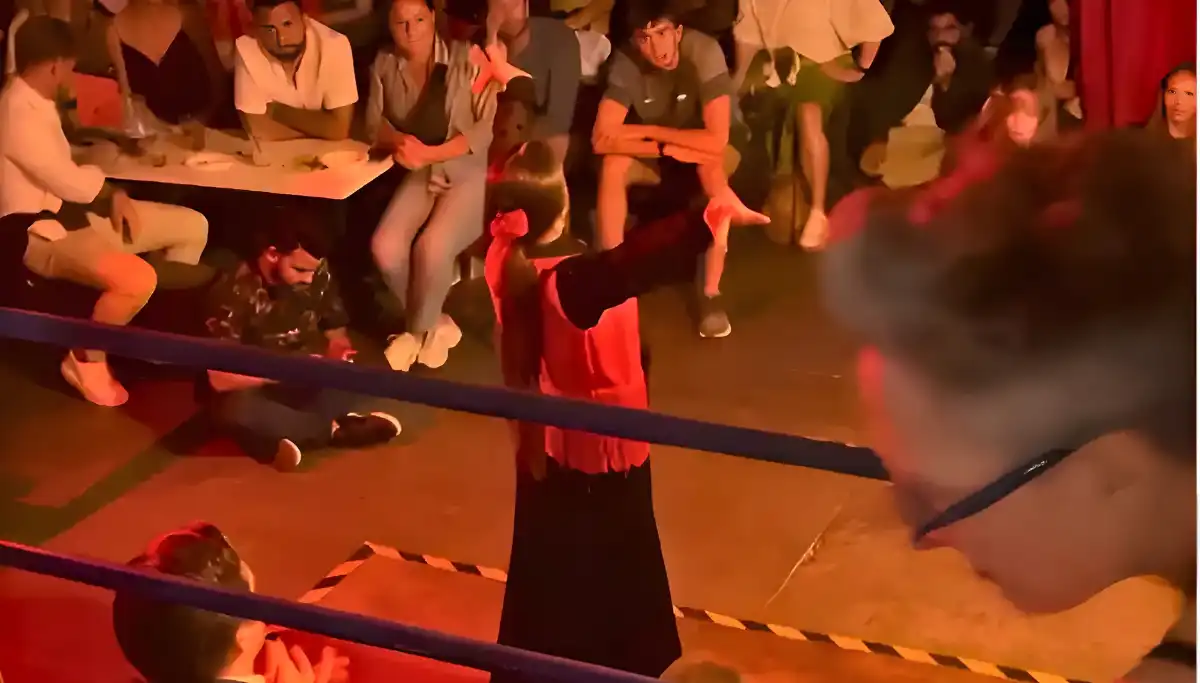
At night, from around 10pm onwards, the dynamics shift. The carriages stop. The lights come into their own. The dancing in the public casetas intensifies. The crowds thicken. The queue for the toilets becomes a real issue. This is the version that goes until 6am and requires both stamina and a clear plan for getting home.
If you are a day-tripper from Málaga, the daytime fair is the one to plan around. You will see more and feel less overwhelmed.
The Horse Parade (Paseo de Caballos)
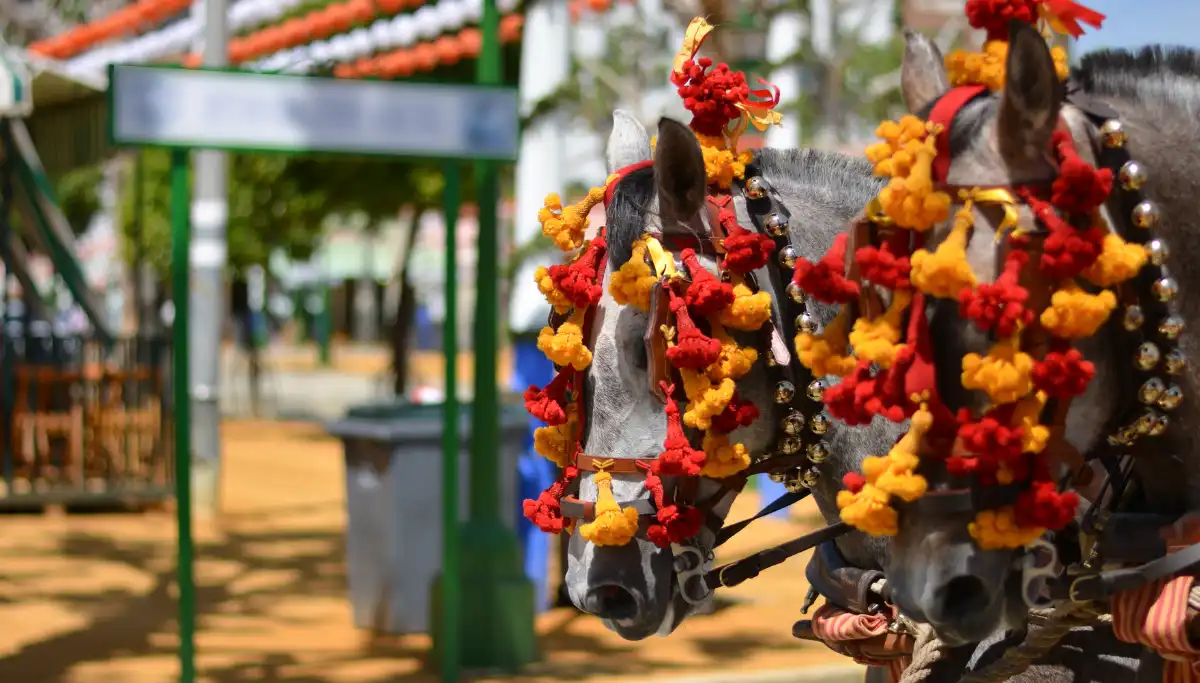
The Paseo de Caballos runs through the central avenue of the fairground each morning and afternoon, roughly from 1pm to 7pm. It is one of the defining images of the Feria, hundreds of riders dressed in traditional Andalusian costume on horseback, alongside ornate carriages pulled by matched pairs.
The best place to watch is from the central avenue (Calle del Aire). Arrive before 1pm to get a position, and give yourself time to take it in properly. It is considerably more impressive in person than in photographs.
What to Eat and Drink
Rebujito is the drink of the Feria. It is manzanilla sherry mixed with Sprite or 7Up, served by the jarra (pitcher). It is cold, light, and deceptively drinkable in the April heat. A jarra in a public caseta typically costs between 14 and 16 euros and is designed to be shared. Order one between two or three people.
The food at the Feria centres on a few traditional dishes. Pescaito frito (fried fish, usually a mix of prawns, squid, and small fish) is the staple, and a ración costs around 15 to 18 euros in a public caseta. Caracoles (snails in spiced broth) are everywhere and extremely popular. Jamon iberico by the plate is available but quality varies significantly between casetas. The private casetas typically have much better food than the public ones.
For a proper sit-down meal before the fair, eat in the Triana neighbourhood. The restaurants there are excellent and significantly cheaper than anything you will find inside the Real.
Cash matters. The signal inside the fairground is notoriously bad because of the density of people and the temporary infrastructure. Many caseta card machines fail during peak hours. Bring 20-euro notes.
Dress Code
This is not optional. The Feria has a dress code, and it is enforced by social pressure if not always by a doorman.
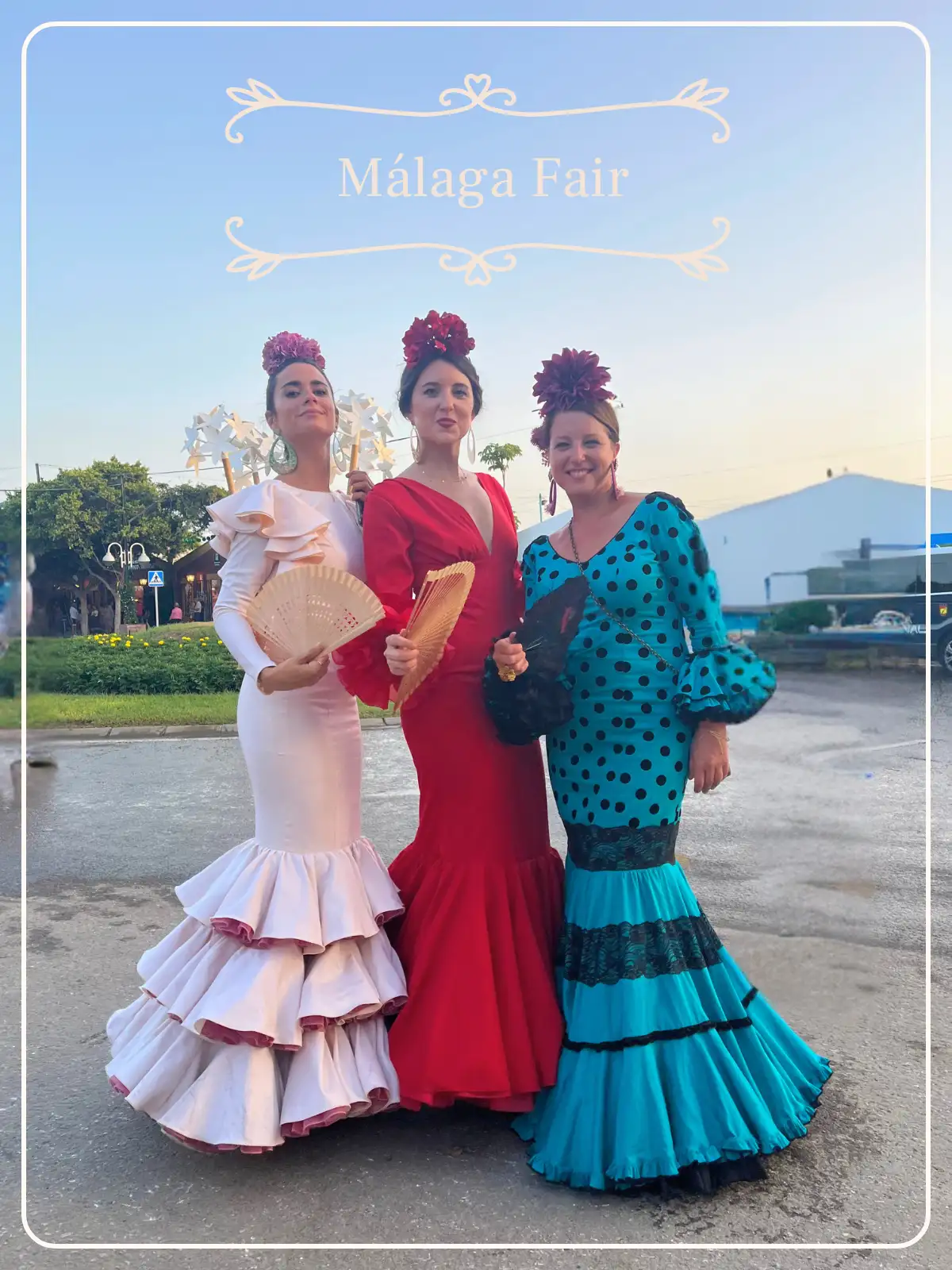
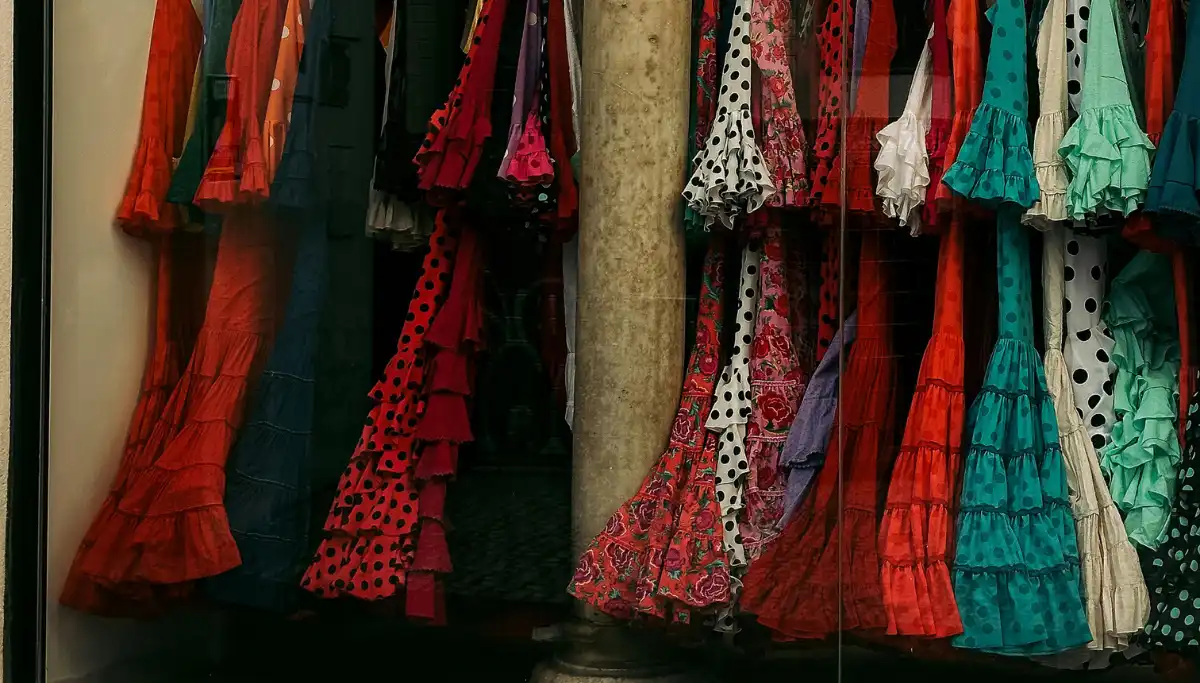
Women wear either a traje de flamenca (the traditional Feria dress, with ruffles, polka dots, and a flower in the hair) or a smart, formal dress or jumpsuit equivalent to what you would wear to a wedding. Flat shoes or low heels are strongly advisable given the cobbled surface of the Real. If you choose to wear a flower in your hair, it goes on the crown of the head, not behind the ear.
Men wear, at minimum, a button-down shirt, smart trousers, and a jacket or blazer. In the heat of an April afternoon this feels excessive until you look around and realise everyone else is doing the same. No trainers. No shorts. No exceptions at the casetas that matter.
Coming underdressed does not prevent you from entering the fairground, but it marks you out immediately and limits access to some private casetas even if you know someone inside.
If you want to hire a traje de flamenca for the day, there are numerous hire shops in Seville. Book well in advance for the 2026 Feria.
Sevillanas: Do You Need to Know How to Dance?
No. But it helps.
Sevillanas is the dance of the Feria, a four-part structured folk dance performed in pairs. Every Spanish person at the Feria knows it. Most learned it as children. The dancefloors of the casetas are full of it from about 11pm onwards.
You do not need to participate, and nobody expects a visitor to. But if you want to join in, there are sevillanas classes available in Seville throughout the year, and some hotels offer short sessions during Feria week for exactly this reason. Even knowing the basics makes the experience considerably more involving.
The Timeline of the Week
Monday night (April 20): Alumbrado. The fair opens at midnight with the lighting ceremony. Go if you are arriving at the start of the week.
Tuesday and Wednesday: Quieter days. Good for orientation, exploring at your own pace, and getting a feel for the fair without peak crowds.
Thursday: The first major night of the week. Public casetas get busy from 10pm.
Friday and Saturday: The peak nights. The Real is at its most intense, most crowded, and most alive. This is when the dancing goes until dawn.
Sunday afternoon: A more relaxed, family feel returns. Many Sevillanos spend Sunday afternoon at the fair with elderly relatives and young children before the final night.
Sunday into Monday (early hours): The fair officially closes. The lights go off for the last time.
With Children
The Feria works well for families during the day. The Calle del Infierno, a full amusement park running along one side of the fairground with over 400 attractions, keeps children occupied for hours. Rides cost roughly 4 to 7 euros each.
The quietest time for the rides is between 1pm and 4pm, when the adults are in the casetas for lunch and the queues are at their shortest.
As soon as you arrive, find the Caseta de Ninos Perdidos (Lost Children Tent) near the main entrance. They provide free wristbands where you can write your phone number. Do it before anything else.
For 2026, the fair maintains designated quieter periods on certain days. Specific details will be published closer to the event on the official Seville city website.
Practical Tips
Toilets are one of the genuine challenges of the Feria. Inside the Real there are public facilities but queues are long and the state of them after midnight on a Friday is best left undescribed. The casetas have their own toilets for members and guests. For visitors, the best strategy is to use facilities at the hotels or restaurants in the Triana neighbourhood before entering the fairground, and to go again whenever you pass somewhere that is not a queue.
Getting around the Real requires some orientation. The fairground is approximately one kilometre long and laid out on a grid. The streets are named after famous bullfighters, Curro Romero, Manolete, Gitanillo de Triana, and the best way to navigate is by looking for the blue and white street signs at each intersection. They are easy to spot once you know to look for them.
The main entrance (Portada) is at the bottom of the map on Calle Antonio Bienvenida. This is the most recognisable landmark in the fair and the best meeting point if you are visiting as a family or group.
Calle Pascual Marquez is the street to head for first. This is where the public casetas are concentrated, including the Caseta de Turismo (numbers 225-229) and several of the district tents. If someone in your group gets lost, this is the street to name as a rendezvous point.
Calle del Infierno, the amusement park, runs along the right side of the fairground and is physically separated from the caseta grid by a fence, with several gates between the two areas. It is easy to move between them once you have your bearings.
One practical note: the official printed guide listing all 1,000-plus casetas by name and street number is published by the Ayuntamiento de Sevilla roughly two weeks before the fair opens. It includes the full index of who owns which tent. Pick one up at the Caseta de Turismo when you arrive, or check the Seville city website in the days before you travel.
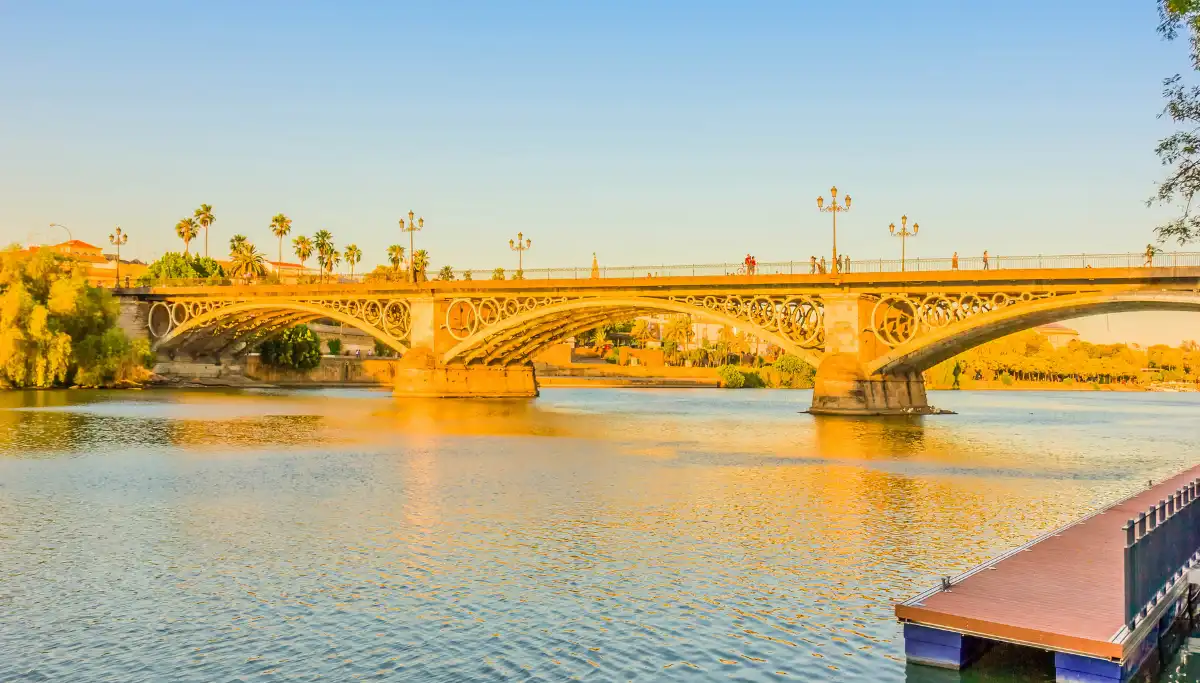
Getting home in the early hours requires a plan. Taxis are available but demand is high after midnight on the main nights. Agree a price before you get in. The walk back to the Triana and Los Remedios hotels is straightforward. For central Seville, the Triana Bridge takes you across the river in about 15 minutes on foot.
Noise is constant and significant from about 10pm onwards. If you or anyone in your group has sensory sensitivities, the daytime fair between 12pm and 6pm is considerably more manageable.
Budget: What to Expect in 2026
Seville during Feria week is the most expensive time to visit the city. Hotels, transport, and food all cost more than normal. The fairground itself is free to enter.
Inside the Real, a reasonable budget for a full day is 60 to 80 euros per person, covering lunch, drinks, and the odd ride or attraction. An evening out at the public casetas from 9pm onwards will cost around 40 to 60 euros per person depending on how much you drink.
| Item | Estimated cost | Note |
|---|---|---|
| Jarra of rebujito | 14 to 16 euros | Share between 2-3 people |
| Racion of pescaito frito | 15 to 18 euros | Staple dish, share it |
| Plate of jamon iberico | 22 to 28 euros | Quality varies in public casetas |
| Fairground ride | 4 to 7 euros | Per person, per ride |
| Taxi from central Seville | 8 to 15 euros | Higher after midnight |
Interactive Map
While You Are in Seville
If you are staying in Seville for more than the Feria itself, the city has plenty to fill the rest of your time. The Real Alcazar requires an advance booking, particularly during April. The Cathedral and Giralda tower are the obvious starting points. The Triana neighbourhood, directly across the river from the historic centre, is where most locals eat and drink and is considerably less crowded than the tourist areas.
For a complete guide to making the most of a few days in the city, see our Seville guide.
More Andalusia Events

Essential Seville & Andalusia Guides
- Things to Do in Seville, full guide to the city's best attractions
- Where to Stay in Seville, neighbourhood breakdown and hotel recommendations