things-to-do
21 Things to Do in Ronda: Spain's Most Dramatic Town
This post may contain affiliate links, which means I earn a small commission, at no extra cost to you. It helps keep the blog alive, and we really appreciate your support!

A 100-metre gorge slices through the town, an 18th-century bridge, and ancient history await.
Ronda is most famous for El Tajo gorge, and its iconic bridge, but you'll be really surprised by how much there is to see here.
Everyone comes to see the bridge, but after 20 minutes, you look at each other and wonder: "What's next?"
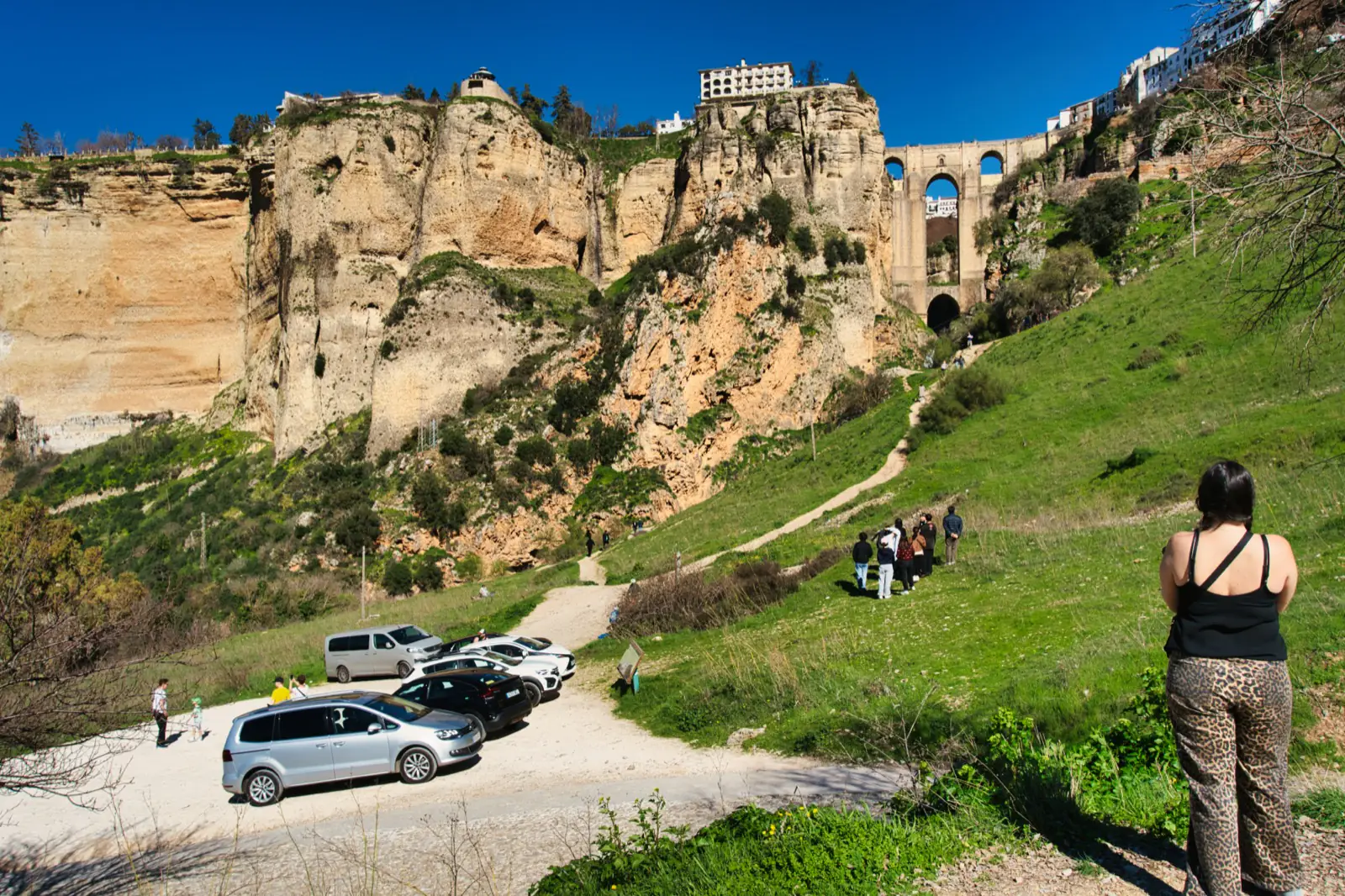
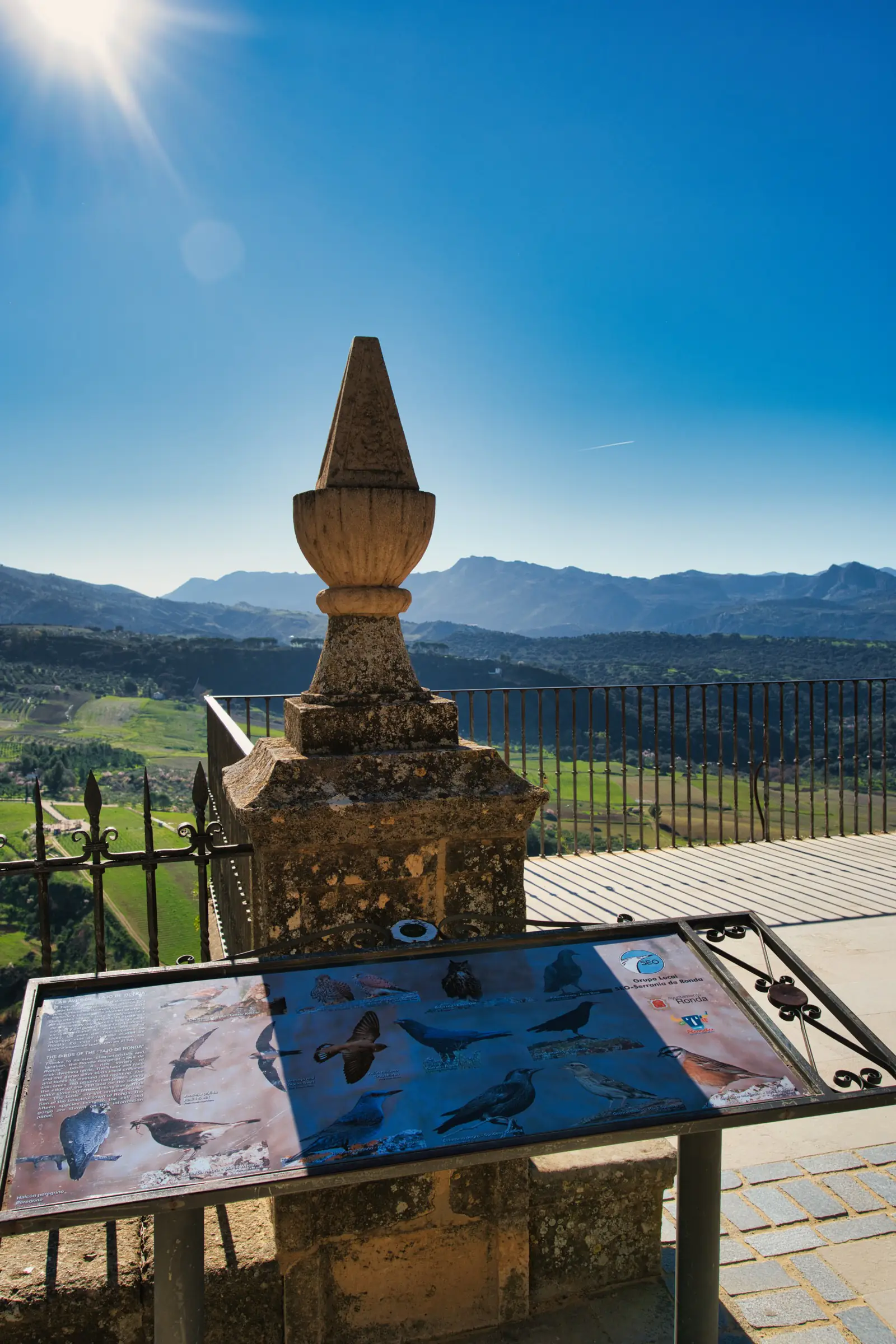
What's next is beautiful lookout points(and birds), palaces, churches, plazas, a beautiful Old Town, restaurants, and so much more.
Enough to have one or several amazing days exploring.
This guide covers all the best things to do in Ronda, including some of my favourite nearby attractions.
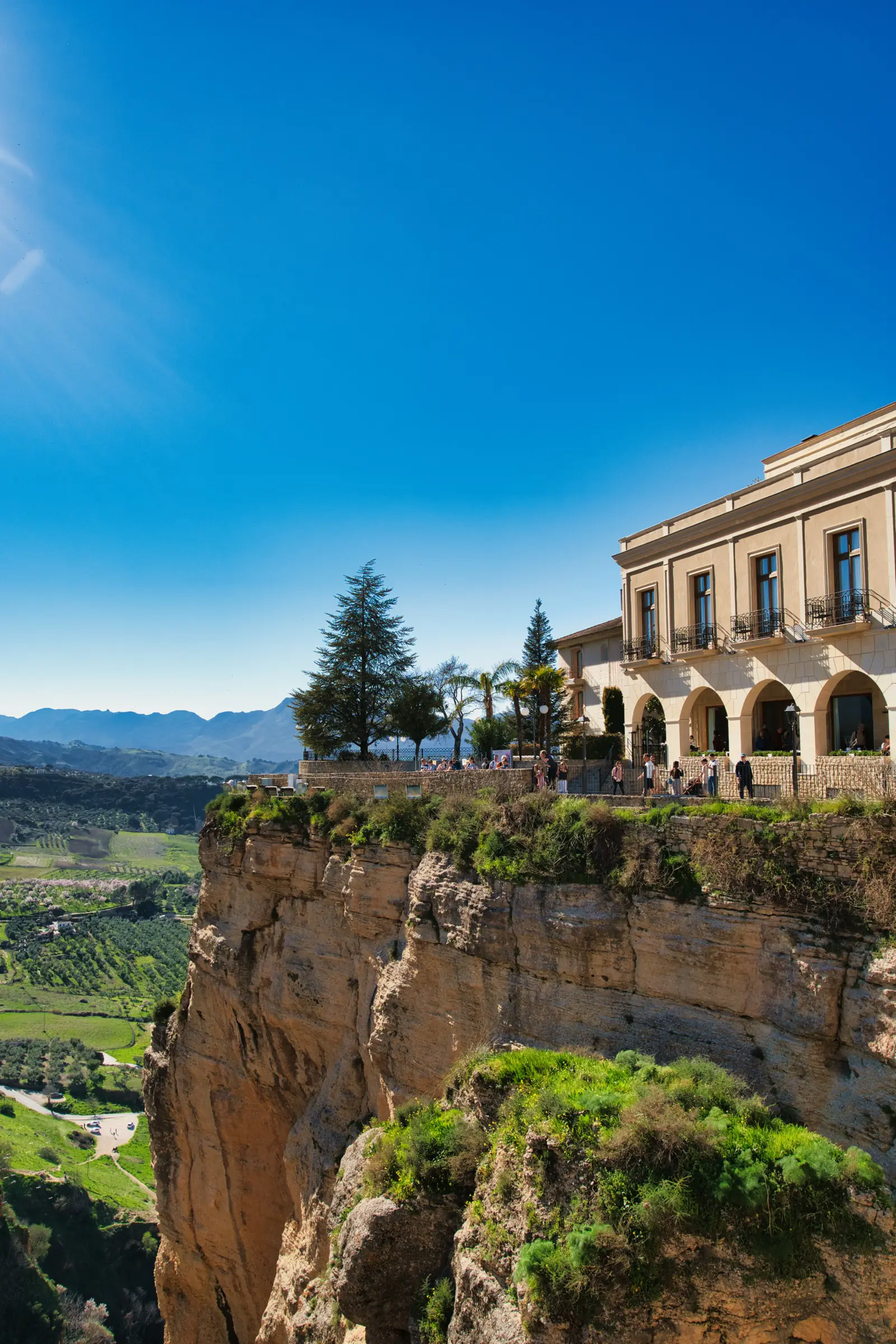
If you're thinking of visiting for more than a day, the Parador de Ronda is as iconic as it gets.
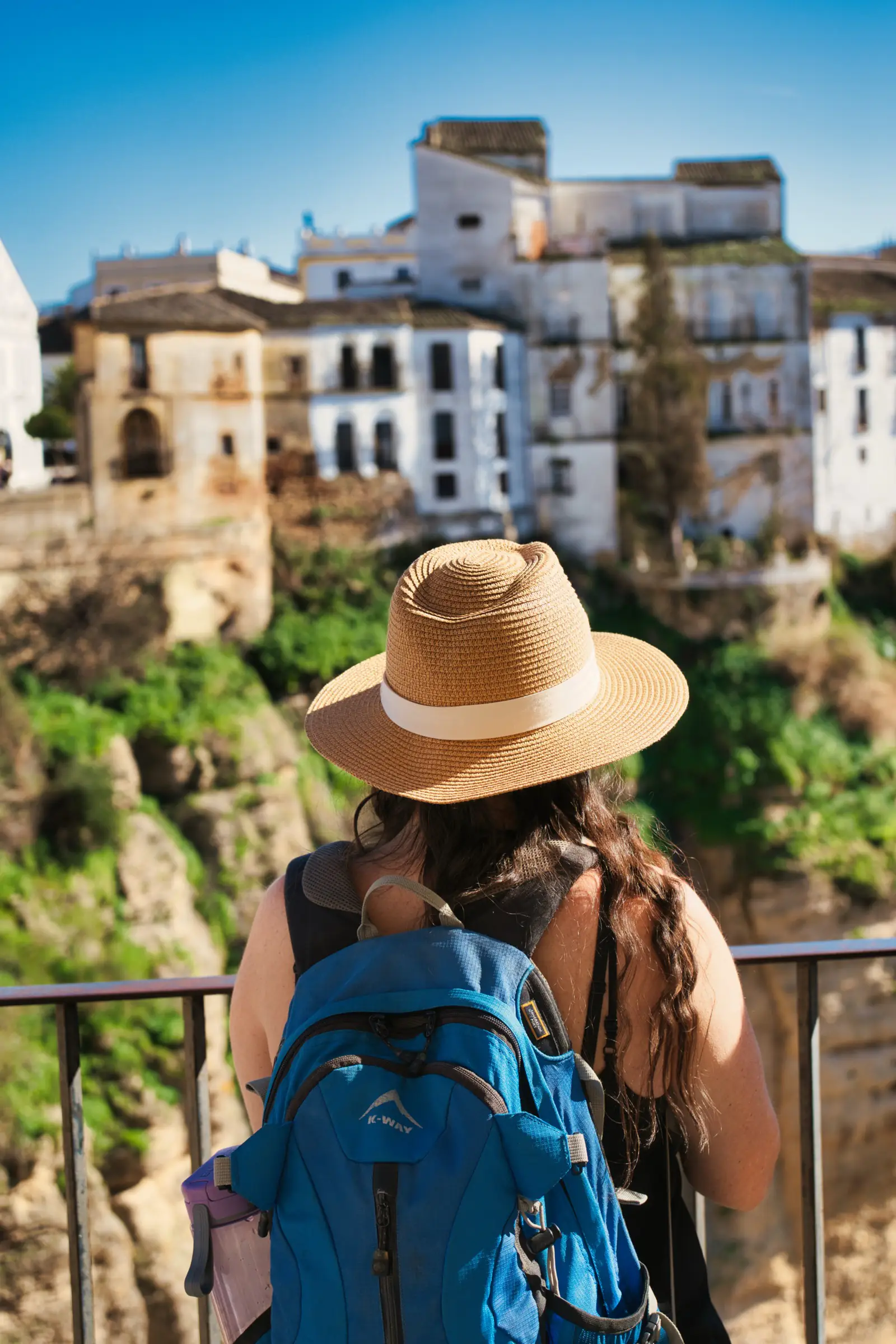
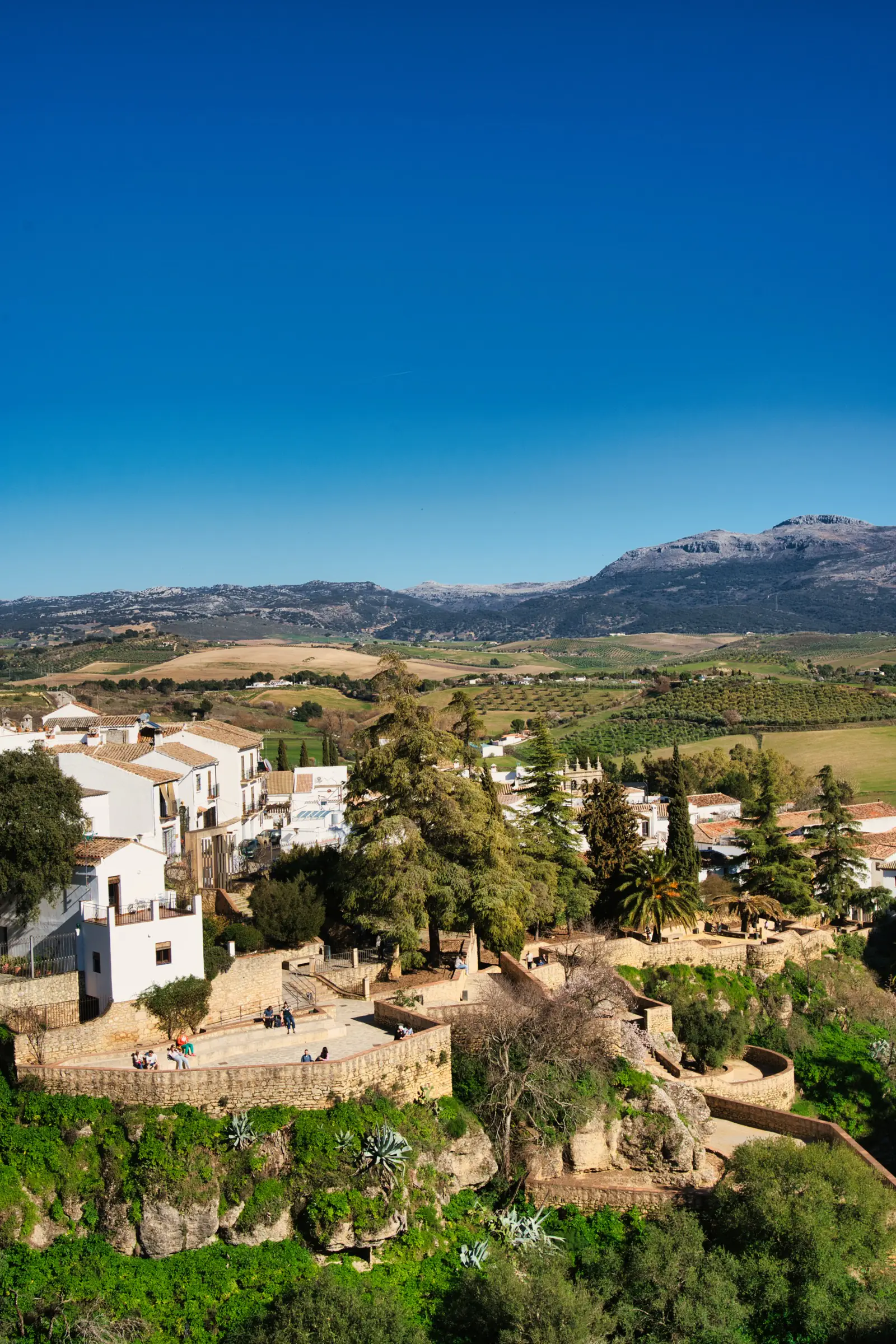
Ronda is one of the more famous "pueblos blancos" (white villages) in the Serranía de Ronda, with amazing views of the surrounding countryside.
It's one of Spain's oldest towns, and lately, one of its most visited too.
Originally settled by the Celts in the sixth century, it's now a tourist hotspot
Only 65 km from Malaga by car, it makes for a perfect day trip, and is often paired with Setenil de las Bodegas (the city in the caves).
Where to Park
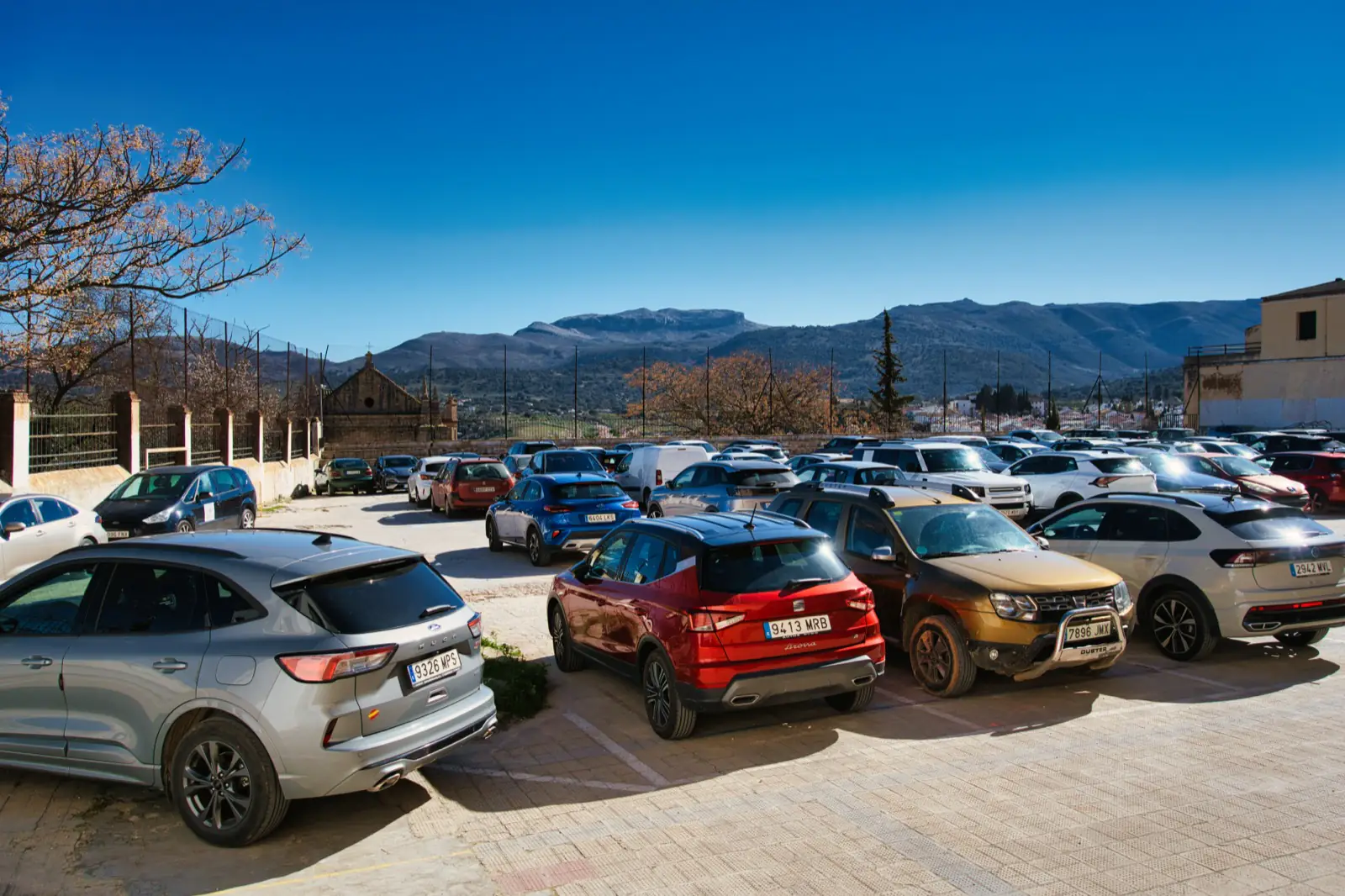
Navigating the tight winding roads, crossing Puente Nuevo, and dodging tourists staring at their phones can be nerve-wracking.
The prospect of walking forever because you put the wrong parking spot into your GPS isn't the best either.
The best parking is at the Santuario de Maria Auxiliadora.
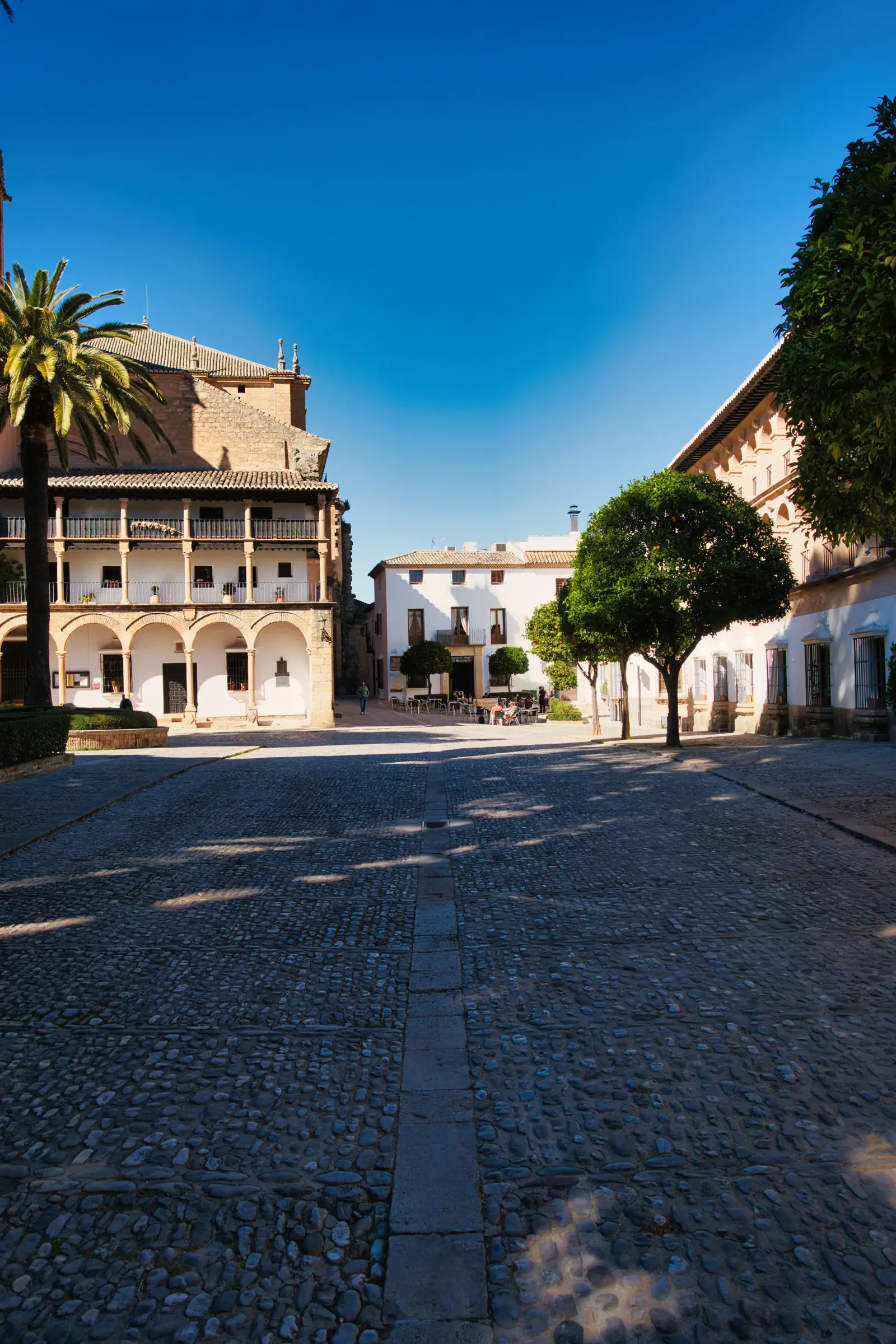
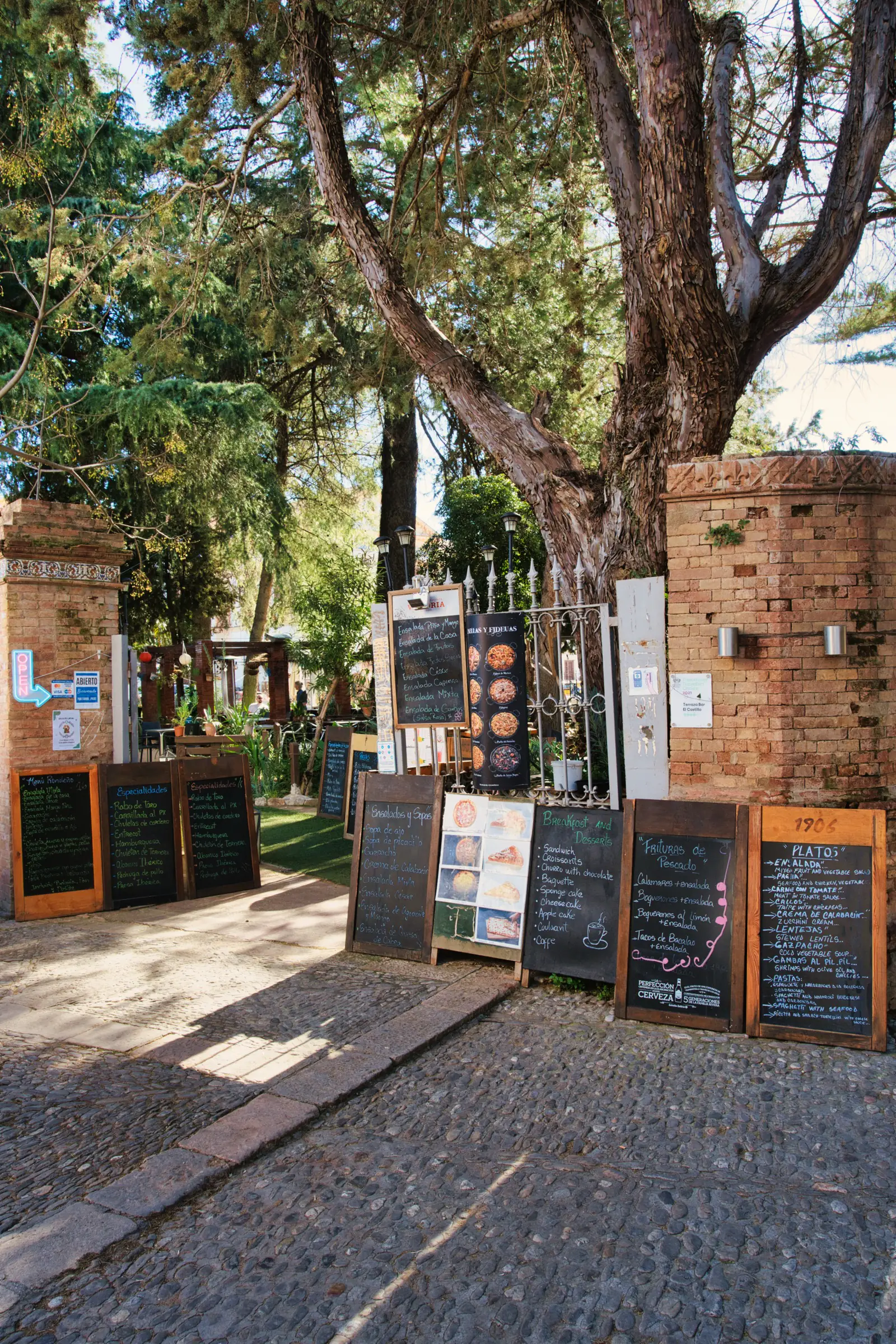
Not only is there always space, but it's right next to Plaza Duquesa de Parcent, the Hermandad de los gitanos, and so much more. It even has a beautiful restaurant for the trip back.
Read more about all parking in Ronda.
1. Cross the Puente Nuevo
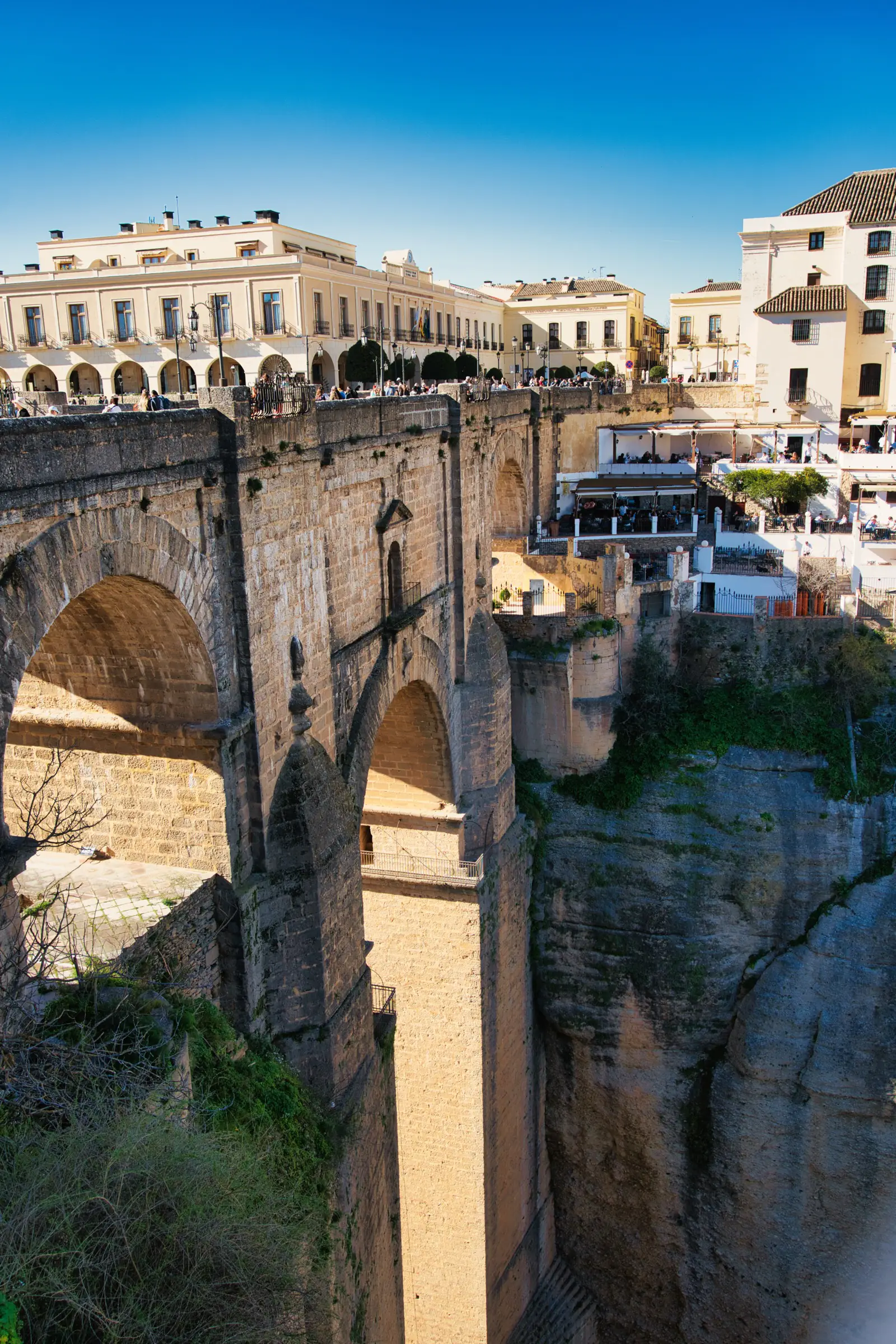
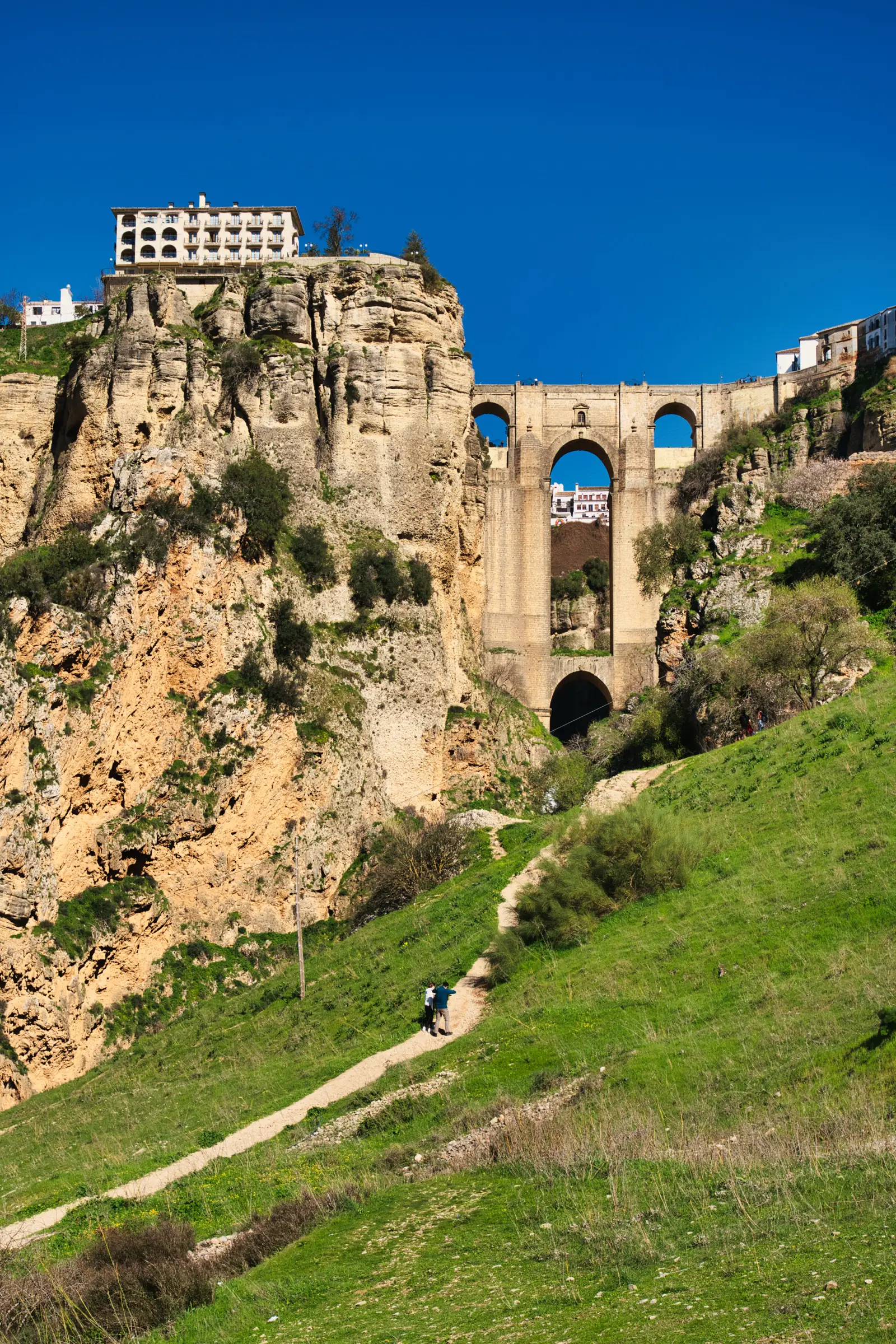
The Puente Nuevo is why everyone comes to Ronda. An 18th-century stone bridge spanning a 100-metre gorge, it took 42 years to build.
Looking down from the railings, you'll understand why. The drop is dizzying.
The bridge connects the old Moorish town (La Ciudad) with the newer district (El Mercadillo). Most people cross in a few minutes, but it's worth lingering to watch for griffon vultures circling below.
Inside the bridge, there's a small exhibition space that was once a prison. I haven't been yet, but the entrance is 3 euros.
For the brave, there's the via ferrata below the bridge, where you walk on rope bridges and climb ladders in the rockface.
Puente Nuevo
Ronda's iconic 18th-century bridge spanning the 100-metre El Tajo gorge.
2. Get the Classic Bridge Photo
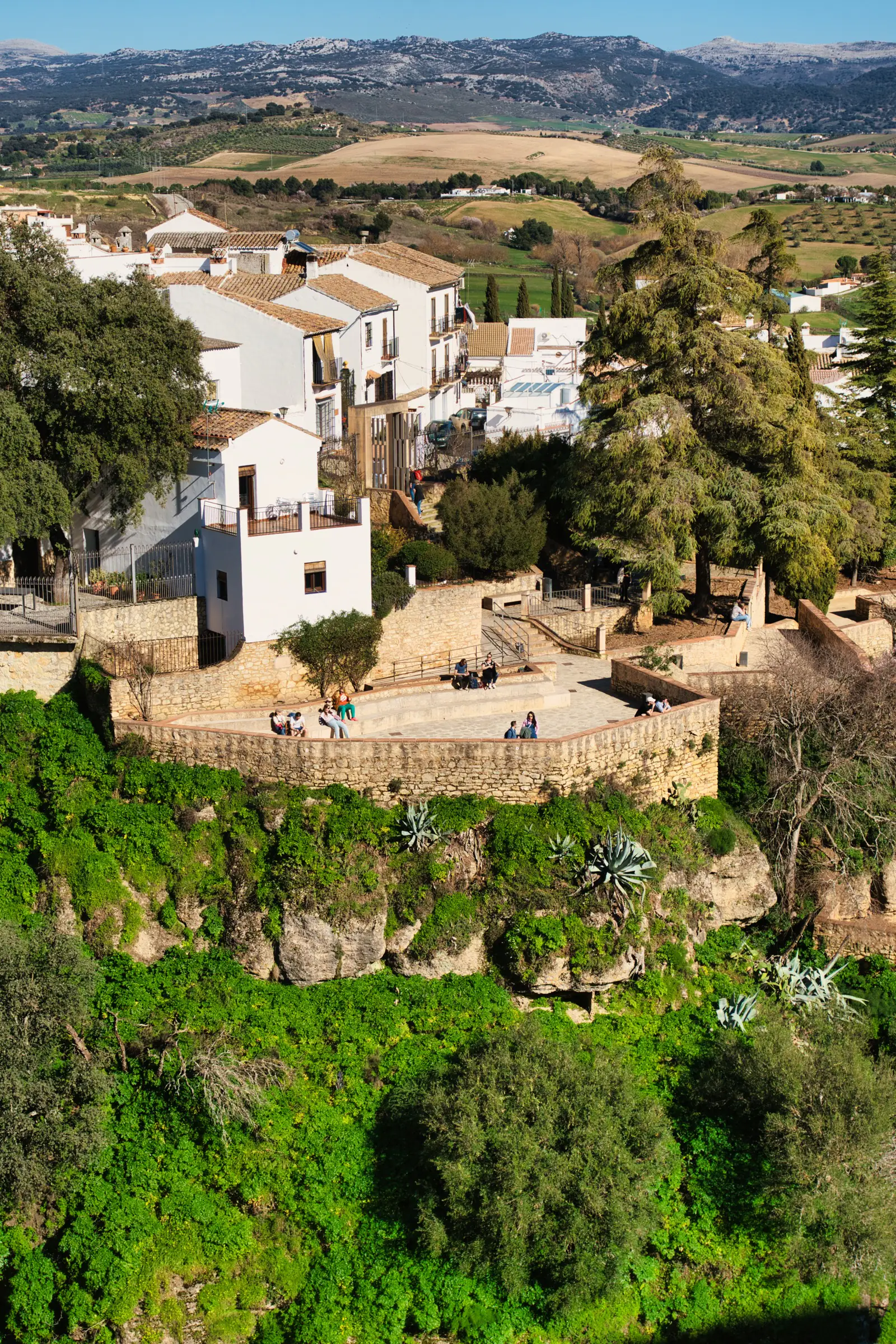
The most famous photograph of Ronda shows the Puente Nuevo from below, the bridge arcing across the gorge with buildings clinging to the cliff edge.
This view comes from the Mirador del Puente Nuevo, accessed via a steep path that descends from near the Parador hotel.
It costs €5, and they give you a hard hat (required). The path is steep, but the views from below the rock wall are spectacular.
Morning light is best when the sun illuminates the bridge face. By afternoon, it's in shadow.
Mirador del Puente Nuevo
moderateThe classic viewpoint for photographing the Puente Nuevo from below.
3. Walk into the Gorge
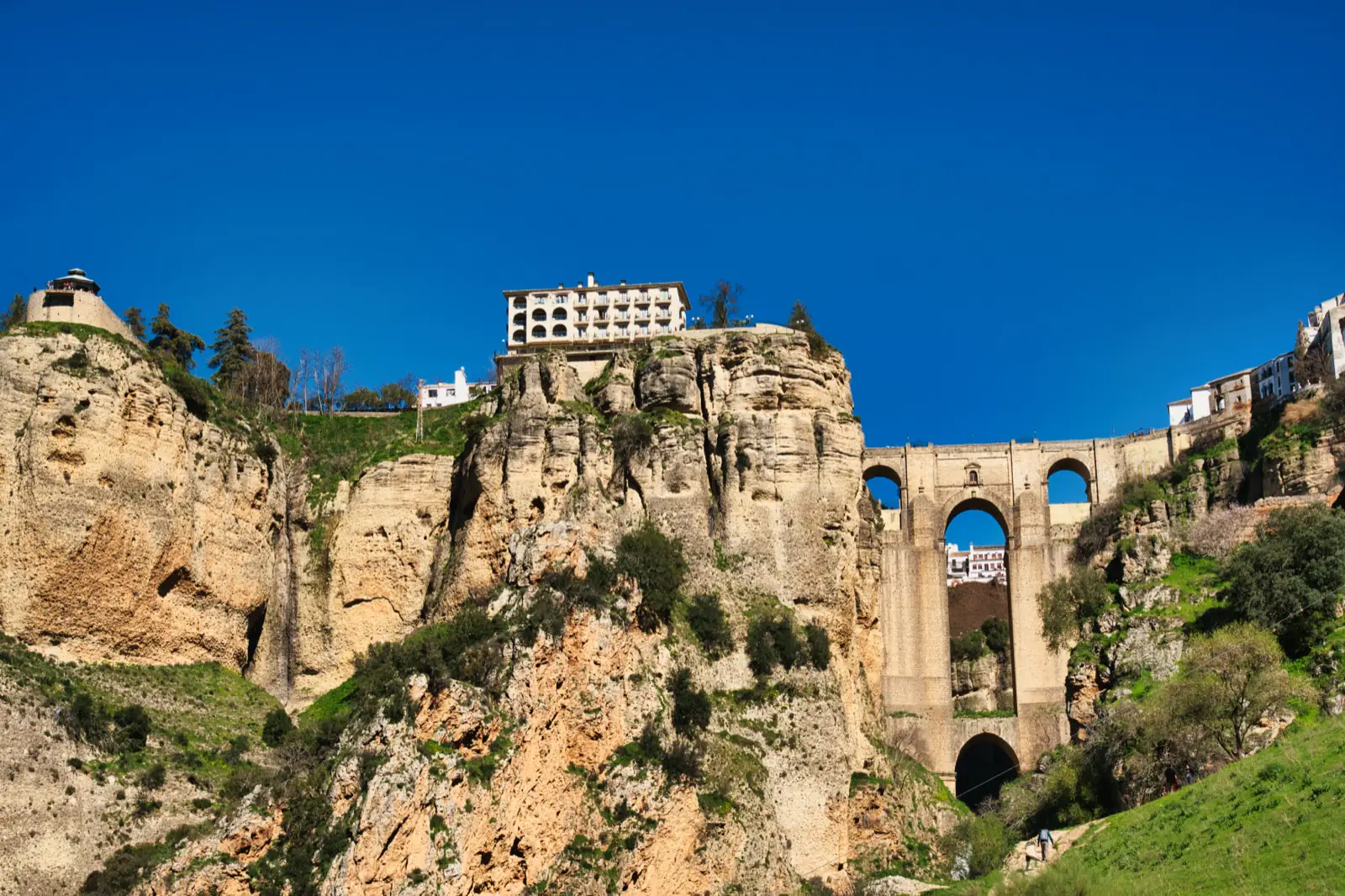
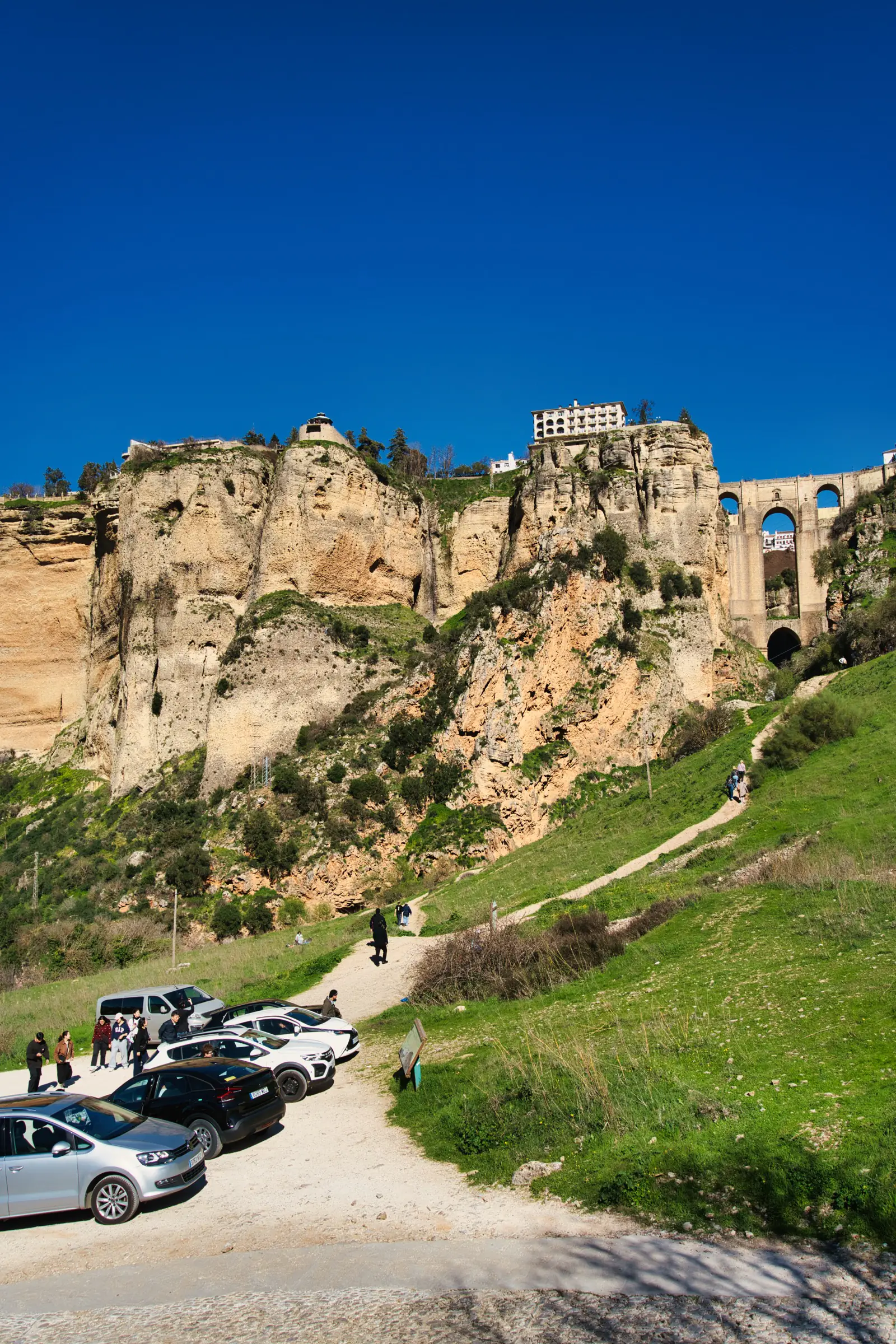
For the adventurous, trails descend into the El Tajo gorge itself.
The main route is the Camino de los Molinos (Mill Path), starting near the Arab Baths. It passes old flour mills that once used the river's power and continues down to the gorge floor. There are actually several old mills in this valley that have been converted into beautiful hotels, like Alavera de los Baños right at the start of the trail, where you can actually stay if you want that 'bottom-up' view of the cliffs.
From down there, looking up at the bridge and the town perched on the cliffs above is something else entirely. The scale only makes sense when you're at the bottom.
The path is well-maintained but steep with steps in places. Bring water.
Or, if you're like us, it's a short 5-minute drive to the lookout point in the pictures above.
El Tajo Gorge Hike
moderateDescend into the gorge past old flour mills for views looking up at Ronda and the Puente Nuevo.
4. Visit the Other Bridges
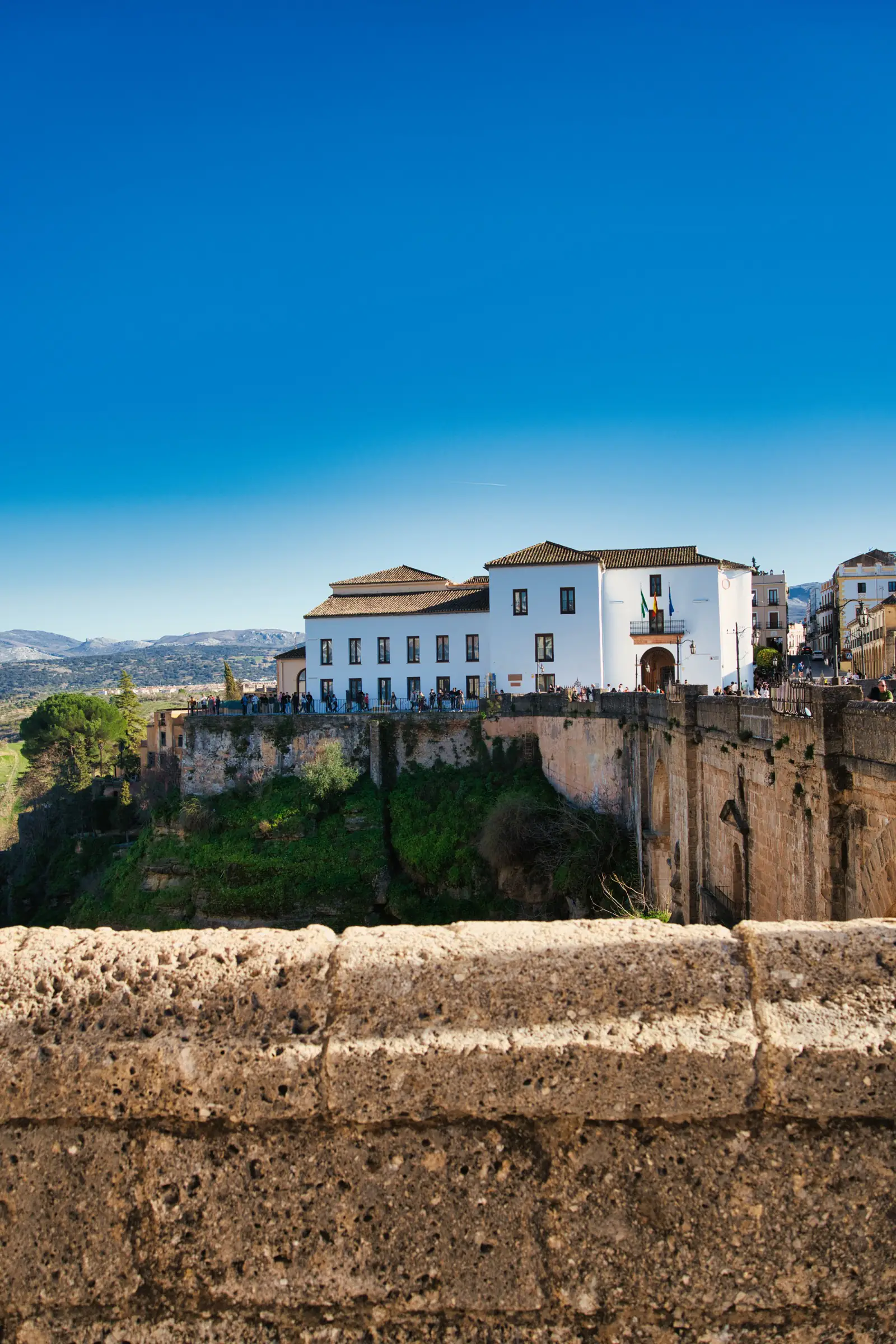
Ronda has two more historic bridges that most visitors miss entirely.
The Puente Viejo (Old Bridge) and the Puente Árabe (Arab Bridge) are smaller and quieter, offering different perspectives on the gorge without the crowds.
The walk between them is pleasant, and you'll likely have them mostly to yourself.
5. Explore the Moorish Quarter
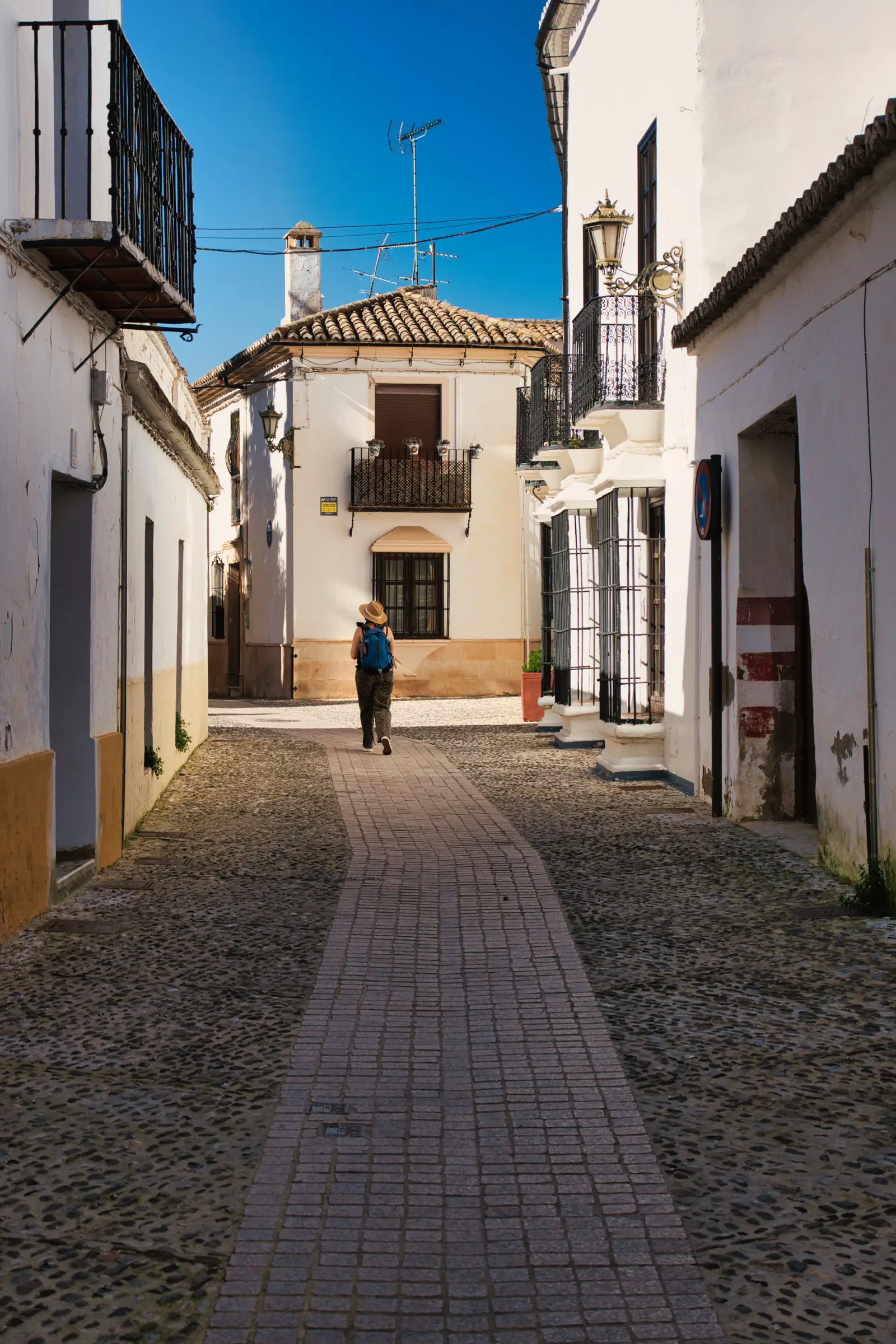
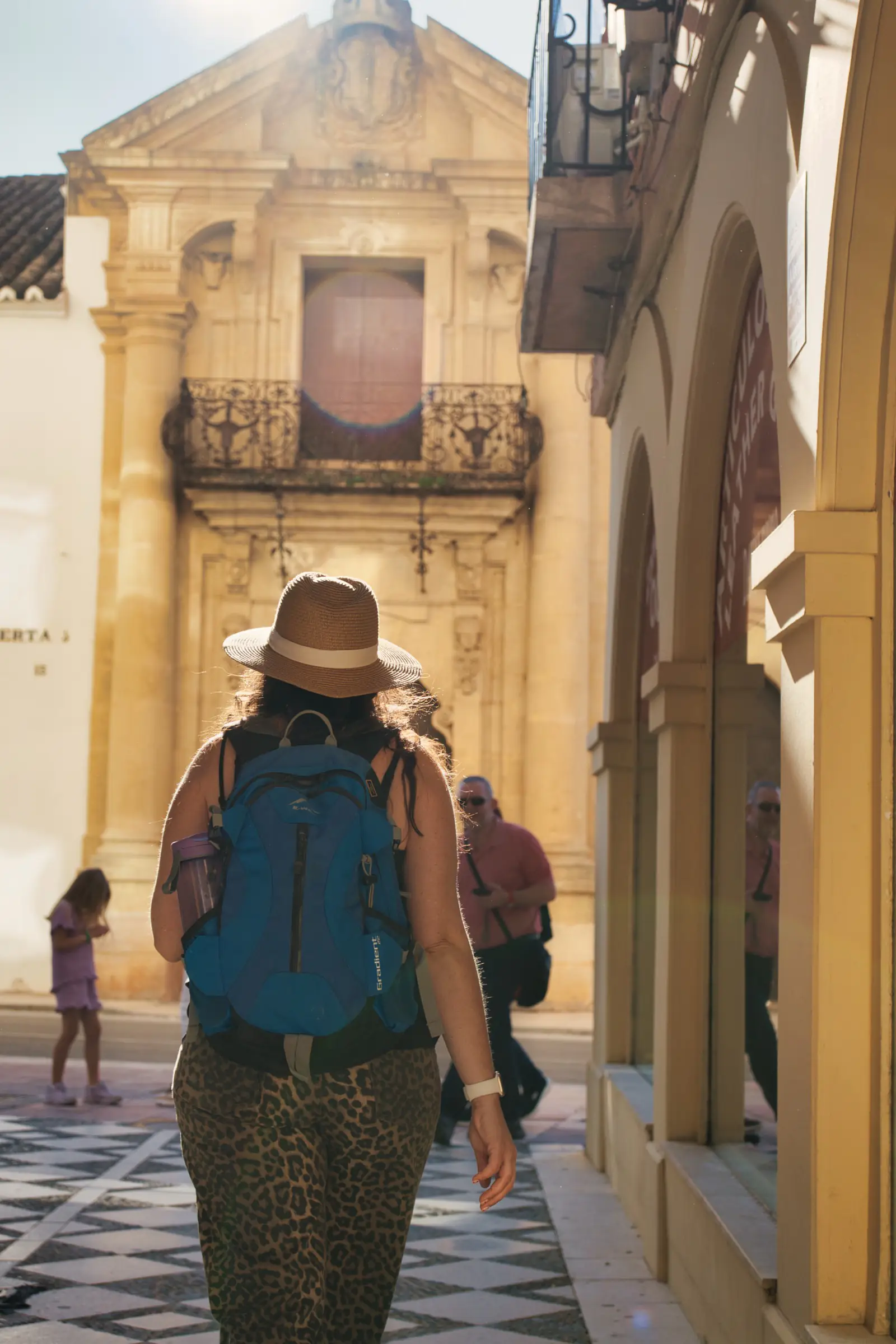
La Ciudad is Ronda's ancient Moorish heart, a maze of narrow streets, whitewashed houses, and hidden plazas. This was Islamic Ronda for 700 years, and you can feel it.
Wander without a map.
The side alleys lead to unexpected viewpoints and quiet corners that the tour groups never find. The pace is slower here than around the bridge.
La Ciudad (Moorish Quarter)
Ronda's ancient Moorish quarter. Narrow streets, whitewashed houses, and panoramic viewpoints.
6. Descend the Casa del Rey Moro
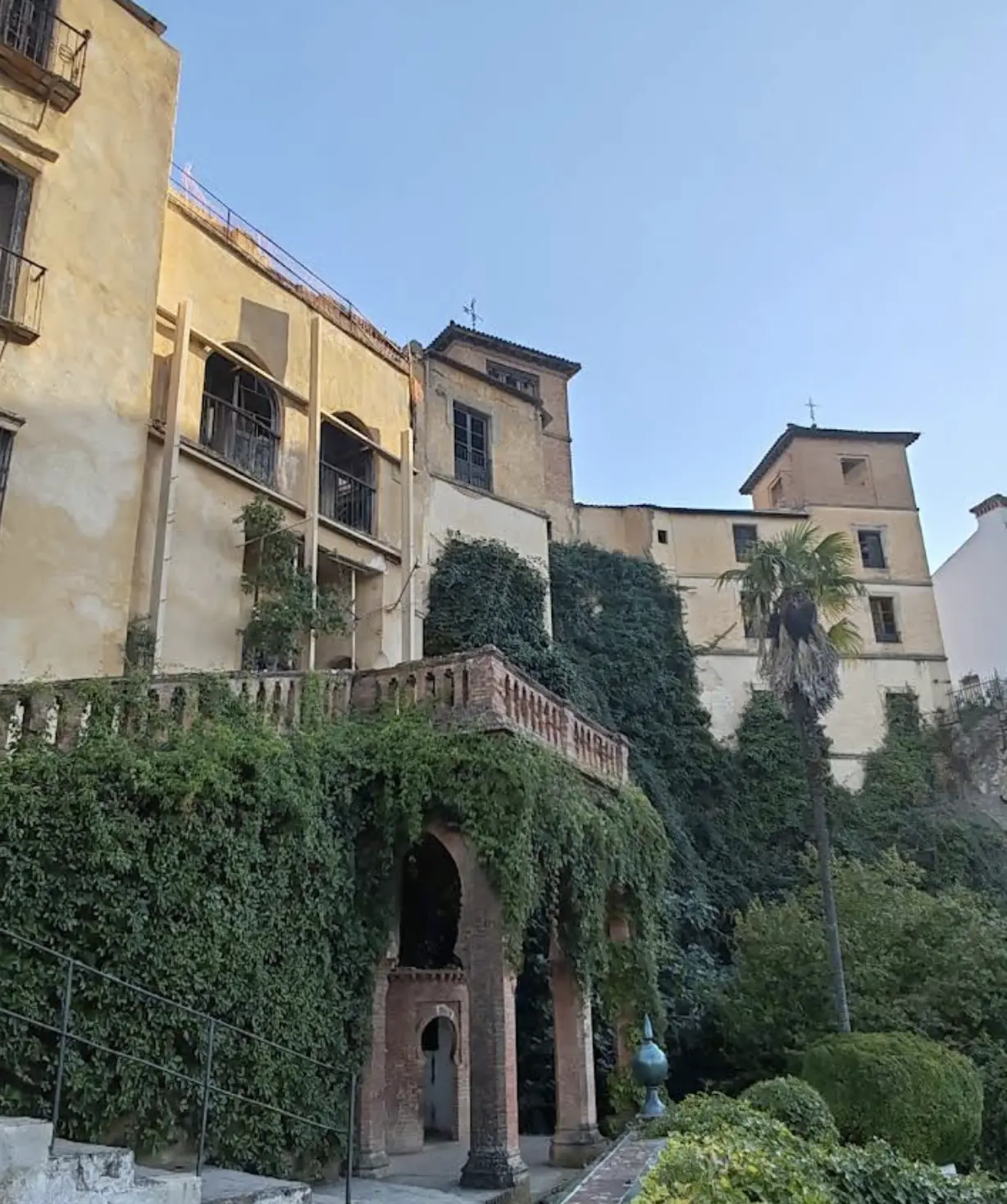
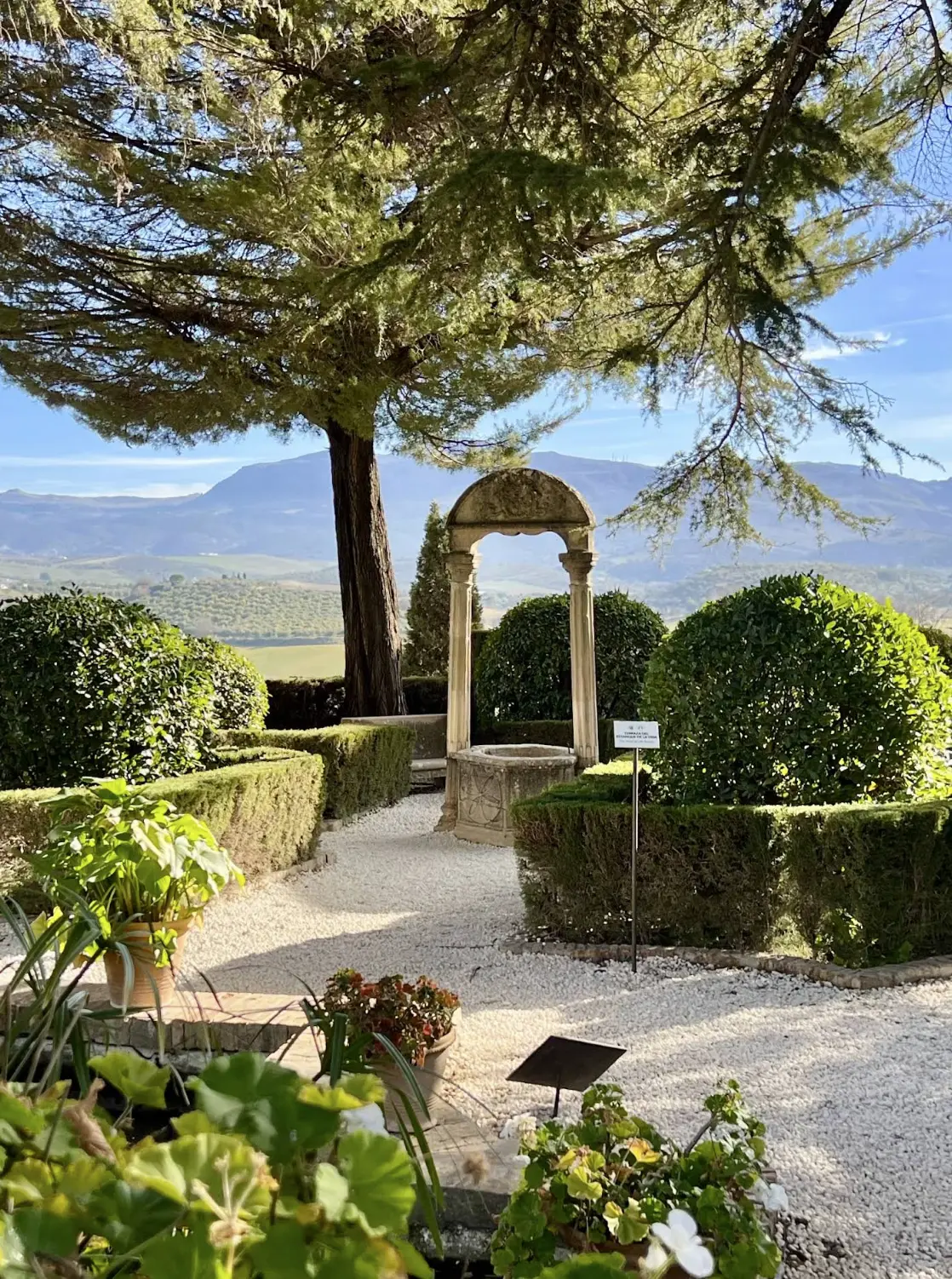
The Casa del Rey Moro (House of the Moorish King) has beautiful hanging gardens designed in 1912, but the real attraction is underground.
La Mina is a 14th-century water mine cut directly into the rock face. It descends over 200 steps to the river at the bottom of the gorge. Slaves carved it by hand so the city could access water during sieges.
It's dark, steep, and claustrophobic in places. Not for everyone, but genuinely impressive.
If you don't fancy the descent, you can enjoy views across the gorge to the gardens from the rose garden on the opposite side, which is free.
Casa del Rey Moro
strenuousHistoric house with hanging gardens and a 14th-century water mine descending 200+ steps to the river.
7. Visit the Arab Baths
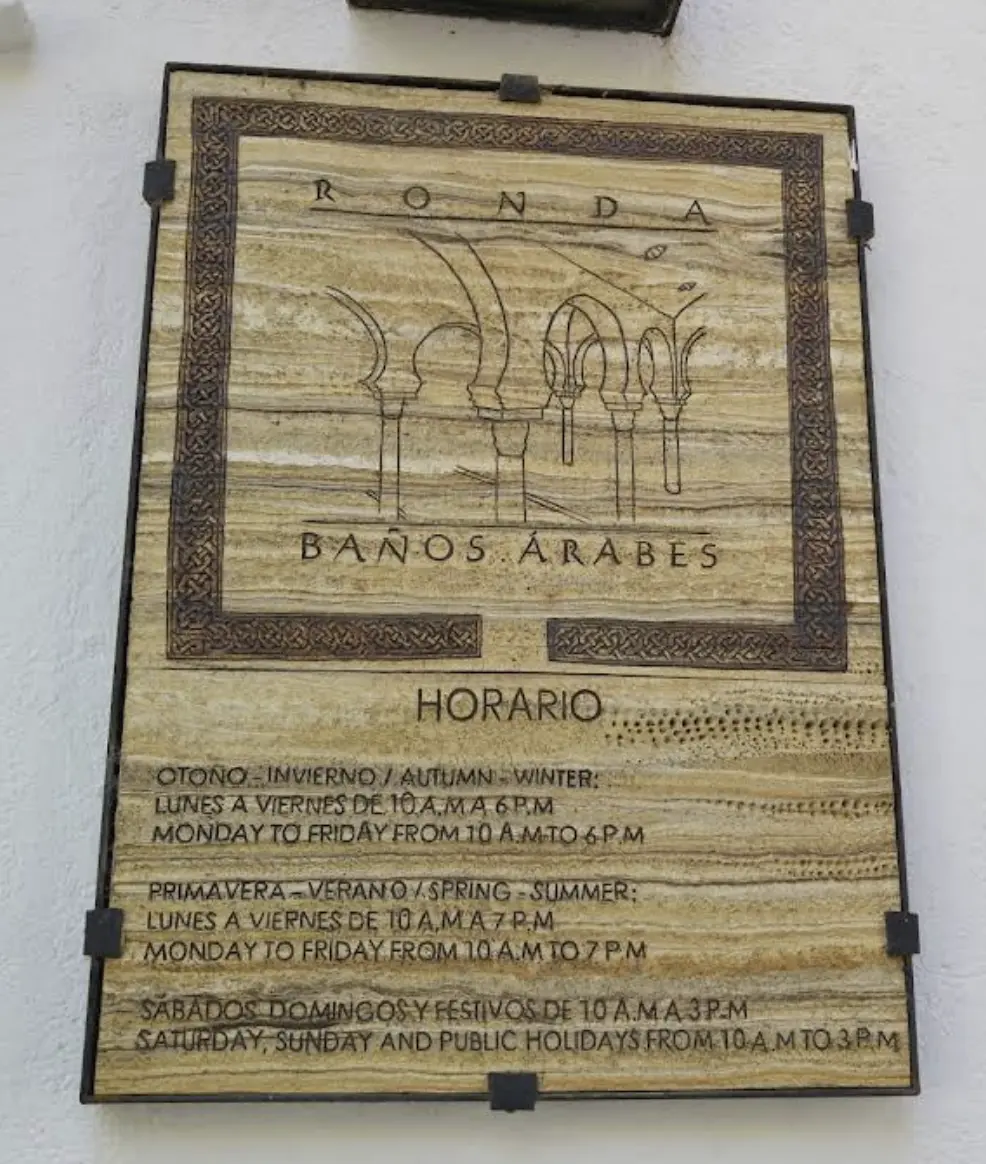
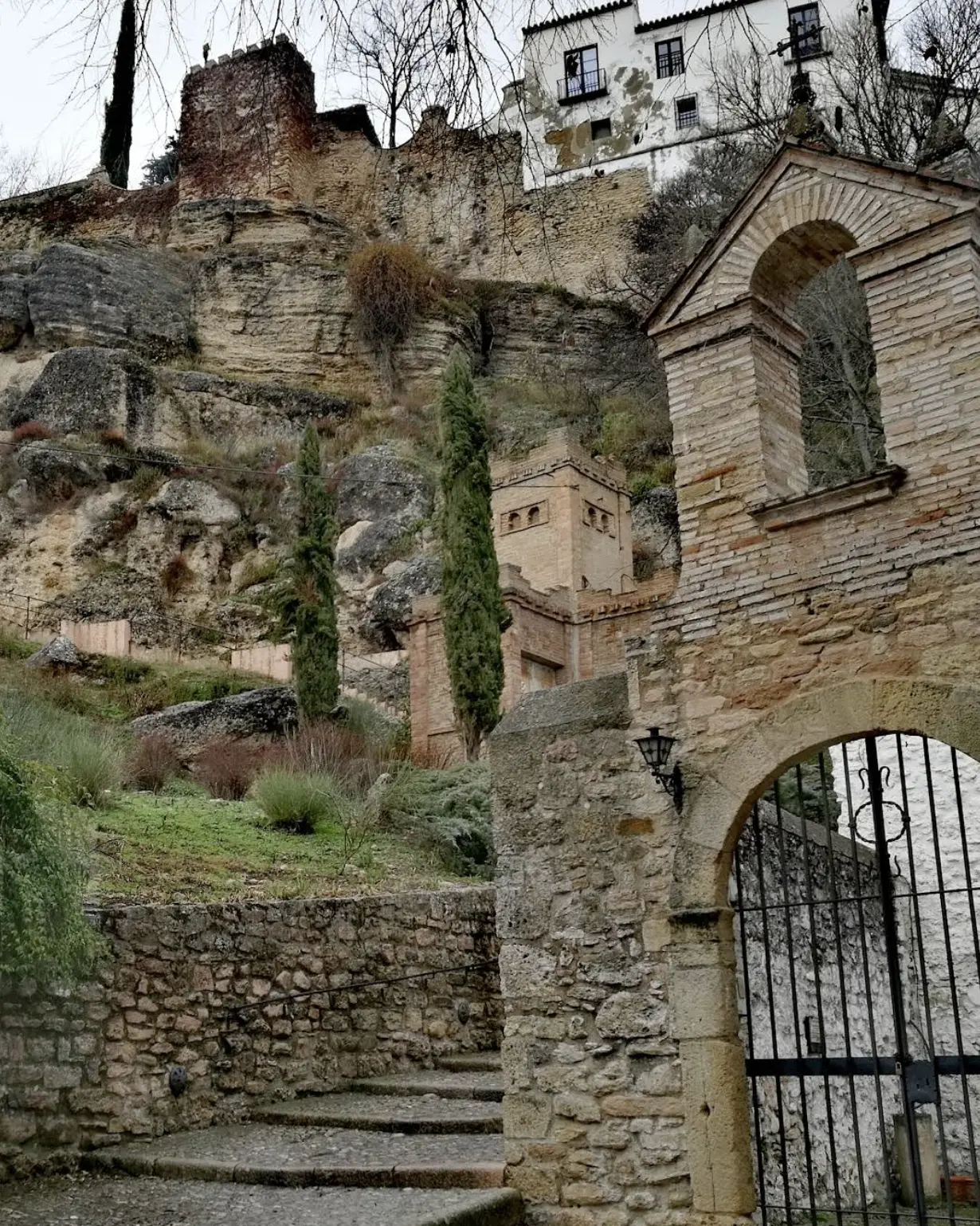
The Baños Árabes are among the best-preserved Moorish baths in Spain. Built in the 13th century, these underground chambers give a genuine glimpse into medieval daily life.
Star-shaped skylights, brick arches, and separate temperature rooms show how the baths functioned. A video explains the rituals of the hammam.
The baths are cool inside, a relief on hot days.
Arab Baths (Baños Árabes)
Exceptionally well-preserved 13th-century Moorish baths with atmospheric underground chambers.
8. See the Palacio de Mondragón
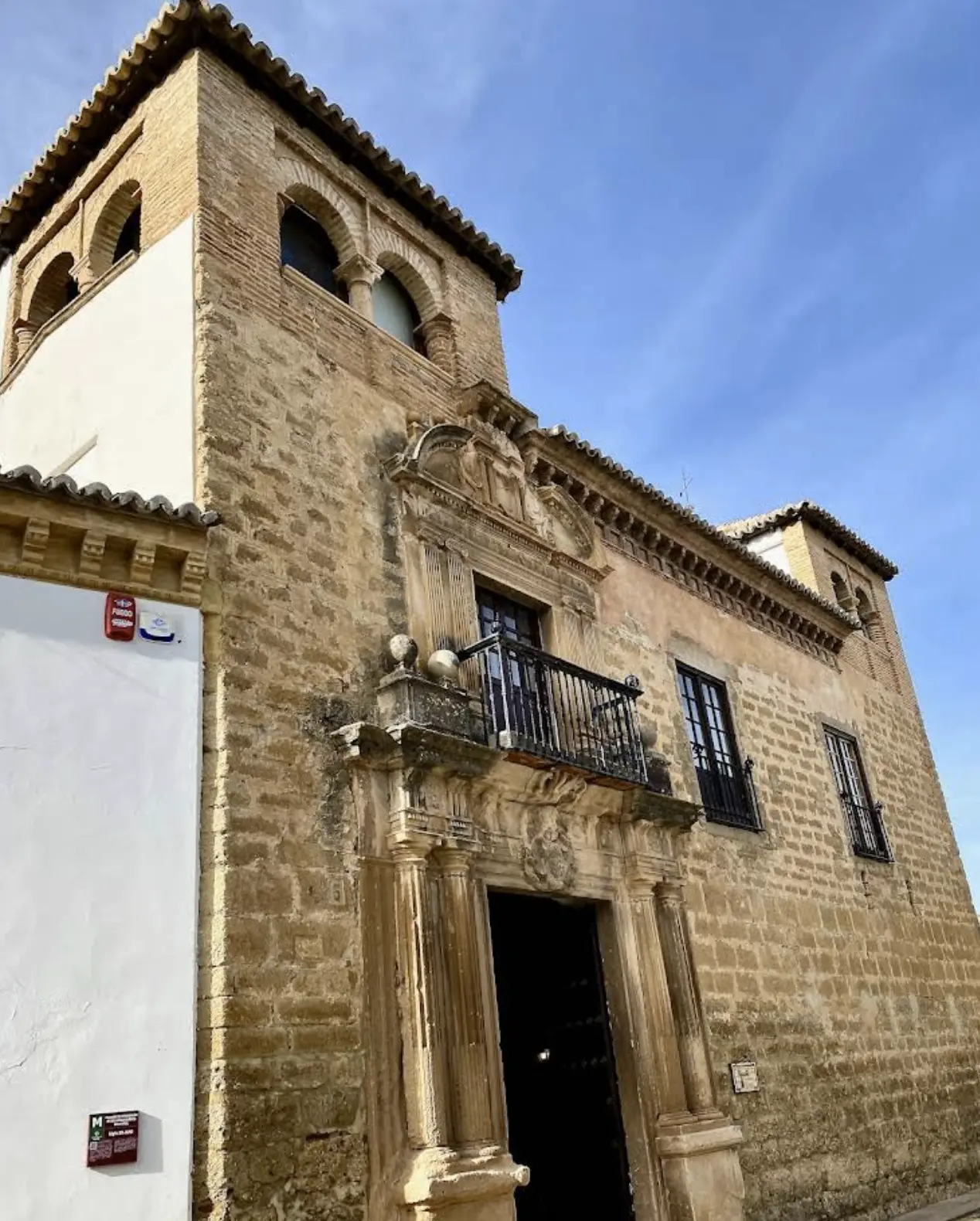
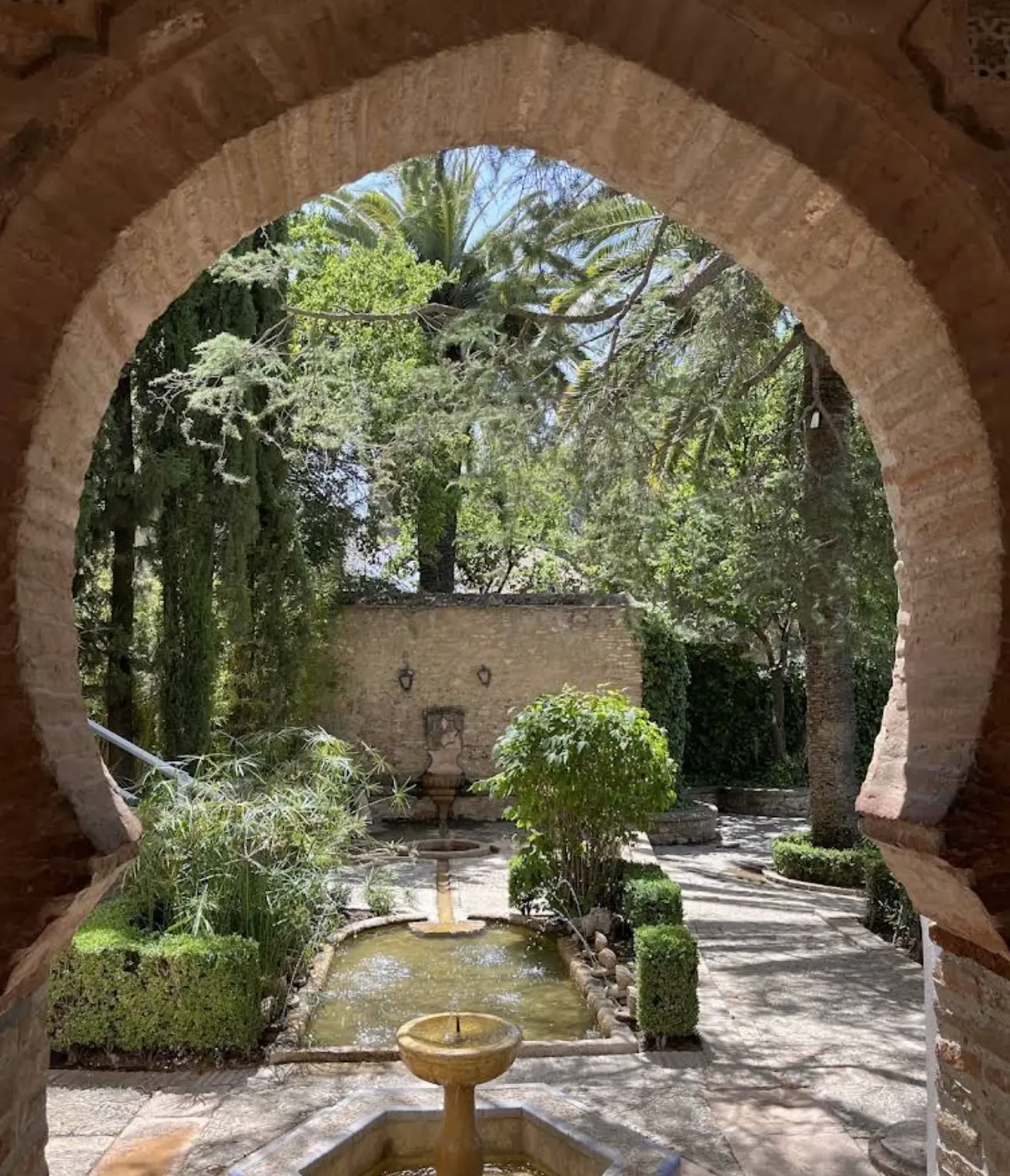
The Palacio de Mondragón is Ronda's most impressive historic mansion, parts dating to Moorish times with later additions after the Christian conquest.
The Moorish gardens are the highlight: peaceful courtyards with fountains, arches, and views over the gorge and mountains beyond. The museum inside covers Ronda's history from prehistoric times.
If you want to stay near the palace, we recommend the SOHO Boutique.
Palacio de Mondragón
Historic palace with Moorish gardens, patios, and a museum of Ronda's history.
9. Visit Santa María la Mayor
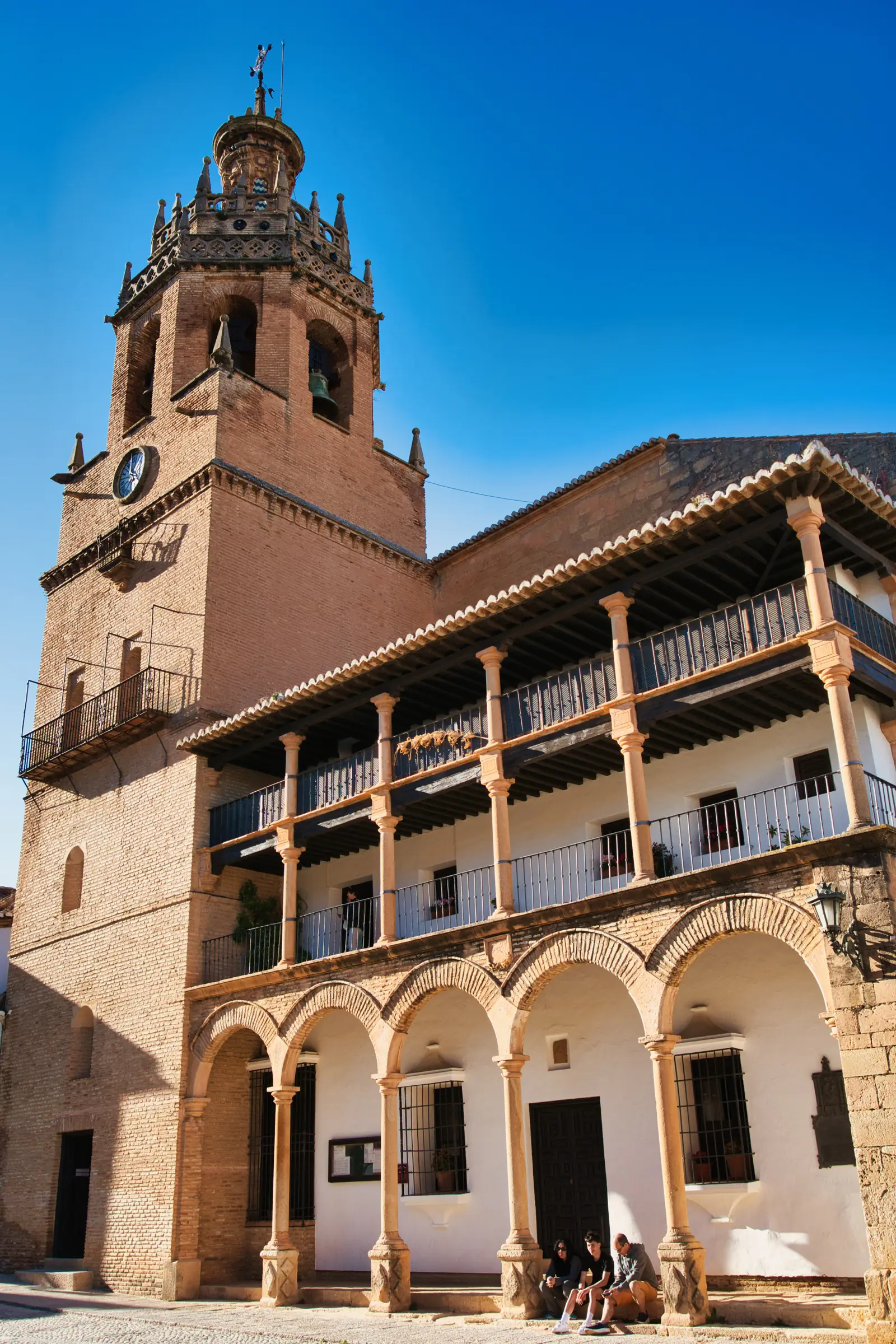
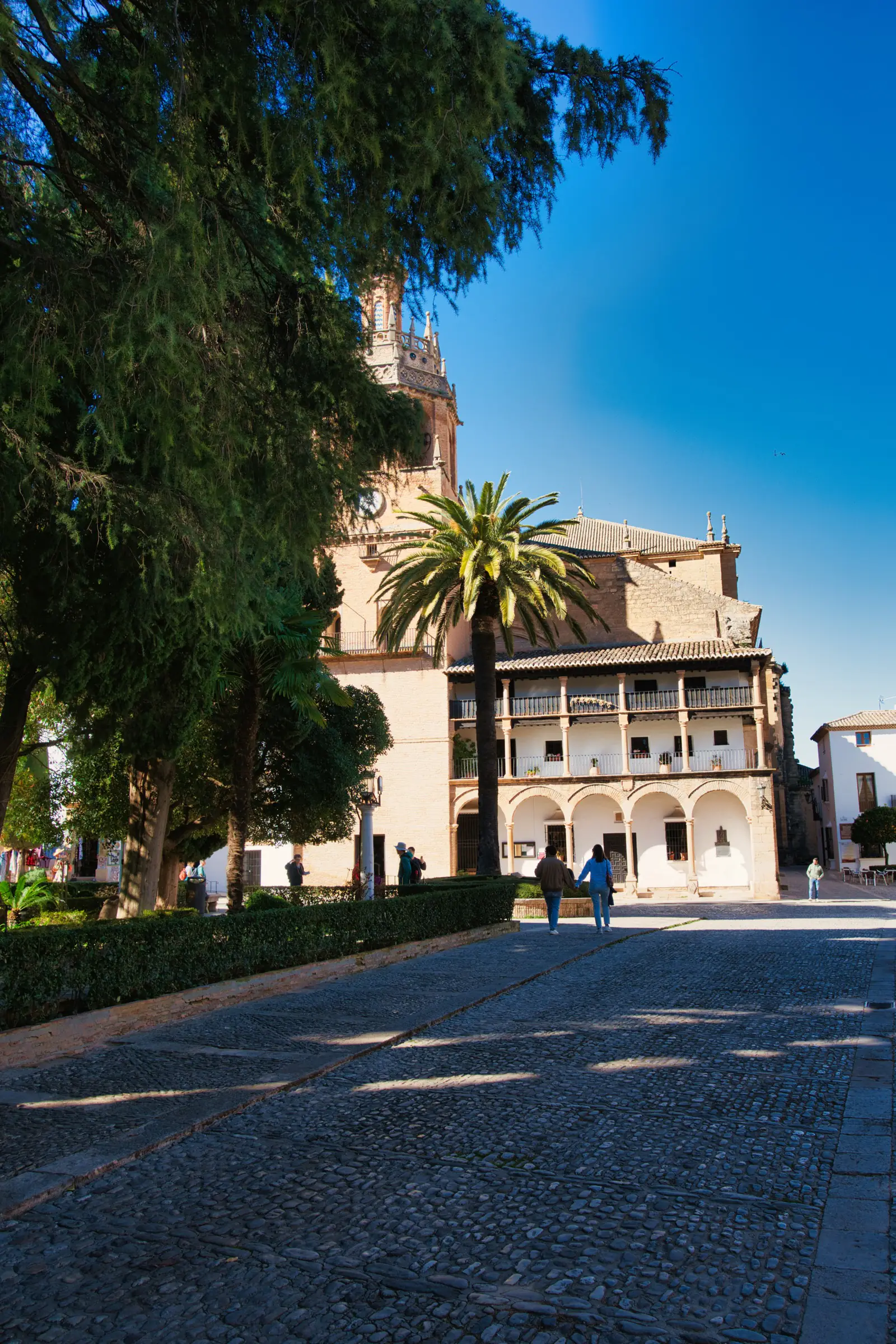
The Iglesia de Santa María la Mayor was built on the site of Ronda's main mosque. The minaret base became the bell tower.
Inside, the mix of Gothic, Renaissance, and Baroque styles reflects centuries of additions. Look for the Moorish prayer niche (mihrab) that survives in one wall, a physical record of Ronda's transition from Islamic to Christian rule.
Church of Santa María la Mayor
Historic church built on a mosque site. Mix of architectural styles and surviving Moorish elements.
10. Tour the Plaza de Toros
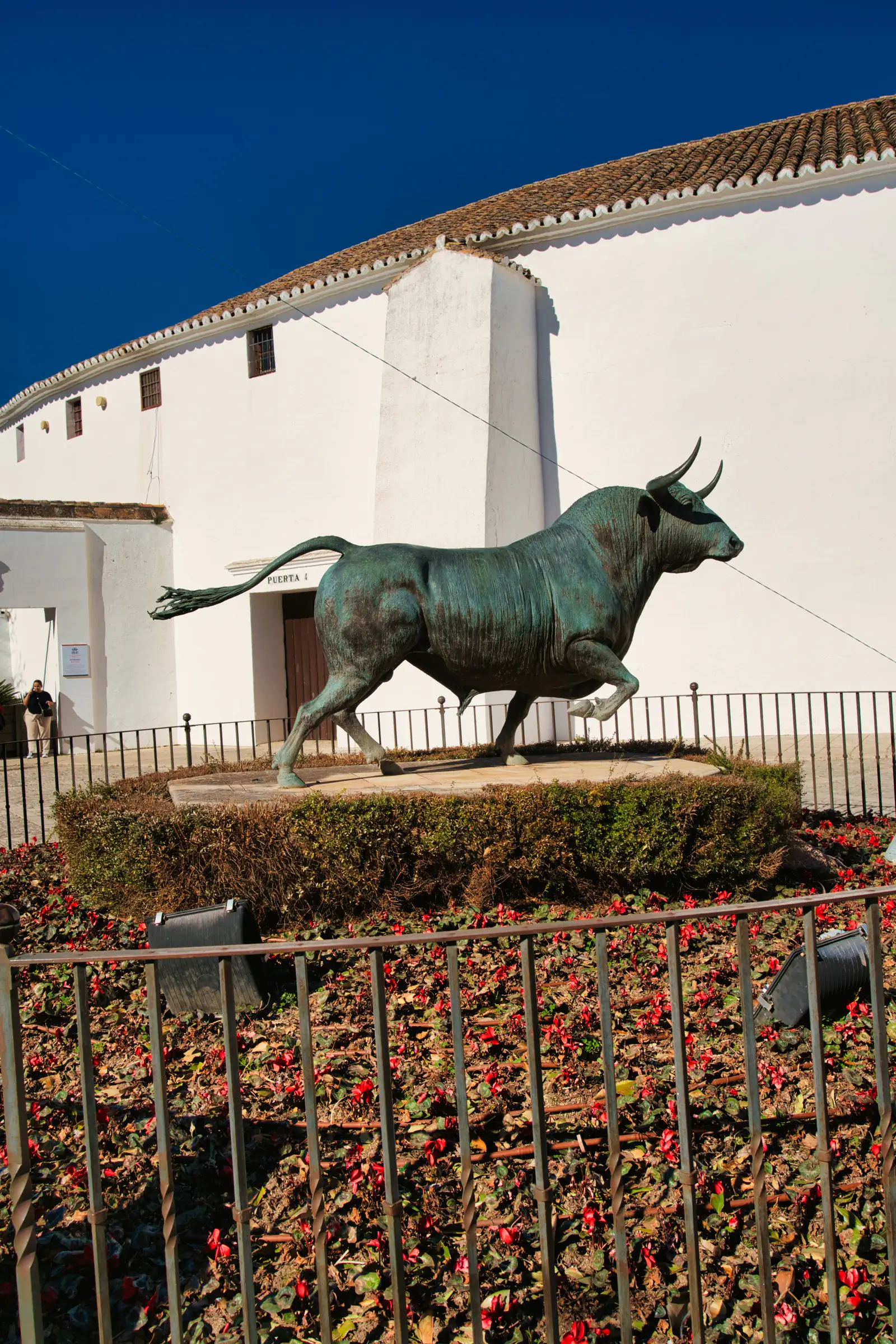
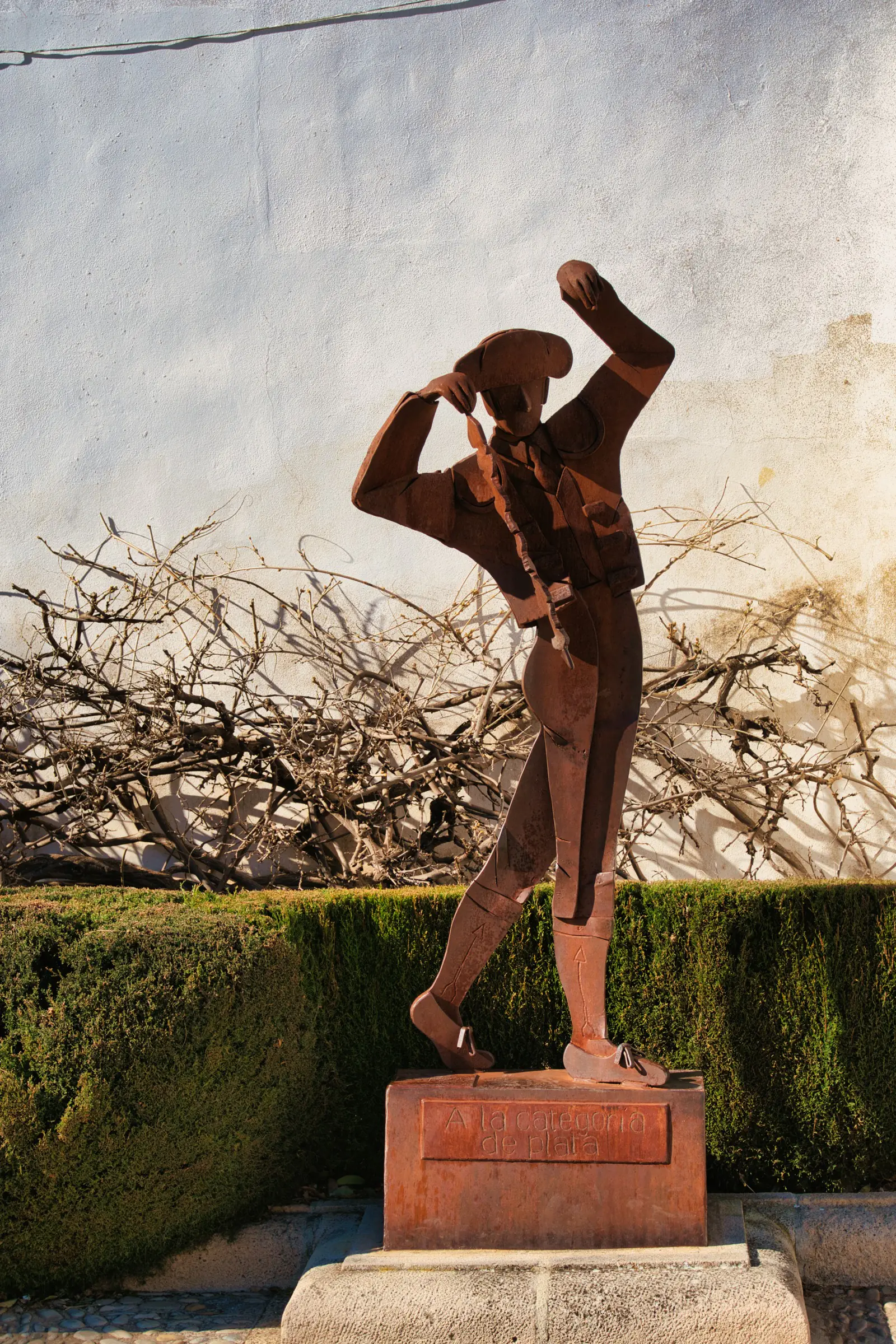
Ronda's Plaza de Toros is one of the oldest and most beautiful bullrings in Spain, dating from 1785. Even if bullfighting isn't your thing, the architecture and history are remarkable.
The museum tells the story of Ronda's bullfighting dynasty, the Romero family. Pedro Romero, born here in 1754, is credited with developing modern bullfighting techniques. The arena hosts only one fight per year, during September's Feria, performed in historic costume.
Free view tip: The Catalonia Ronda Hotel's fourth-floor rooftop is open to non-guests and overlooks the entire ring.
Plaza de Toros
One of Spain's oldest and most beautiful bullrings, with museum and arena access.
11. Stroll the Alameda del Tajo
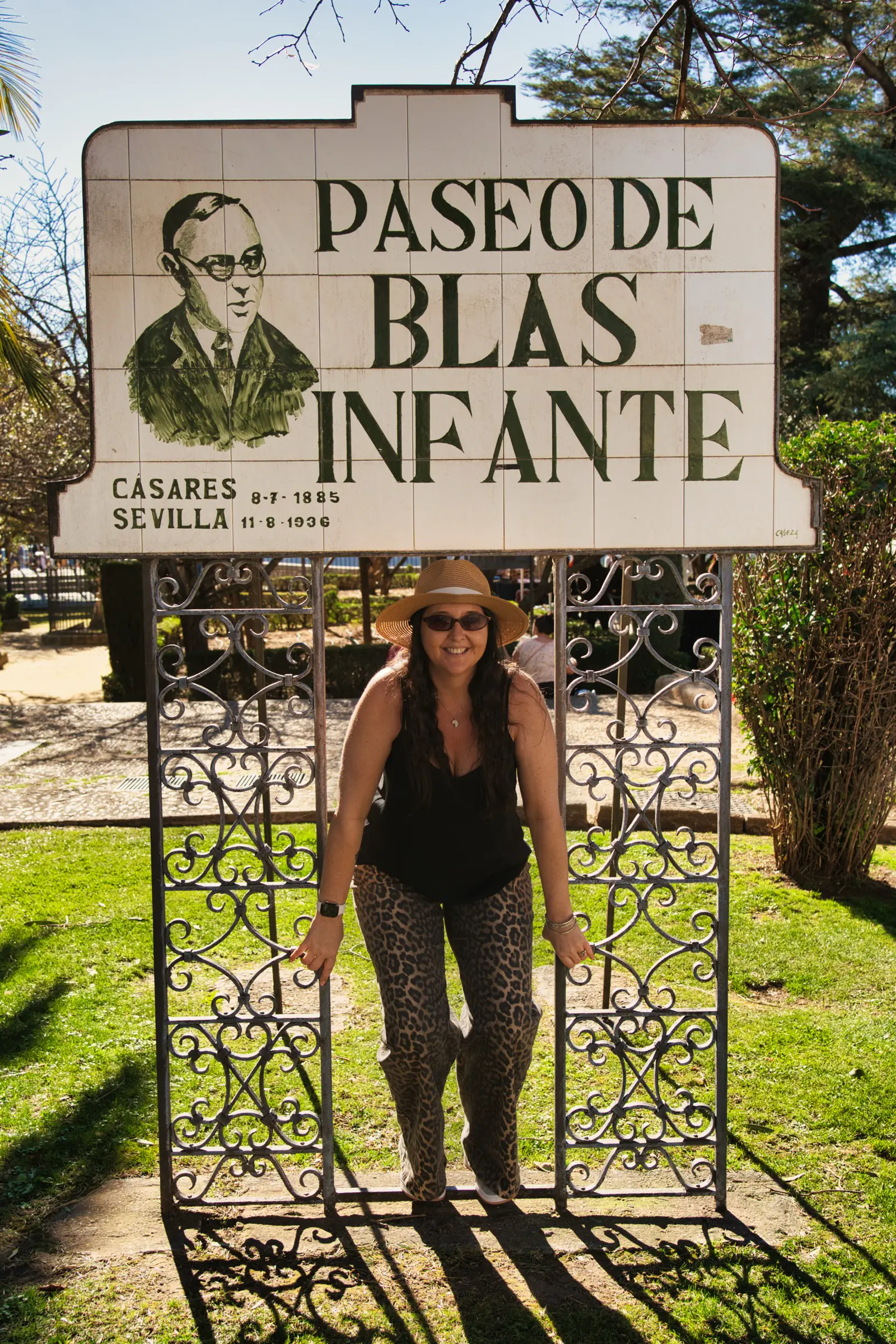
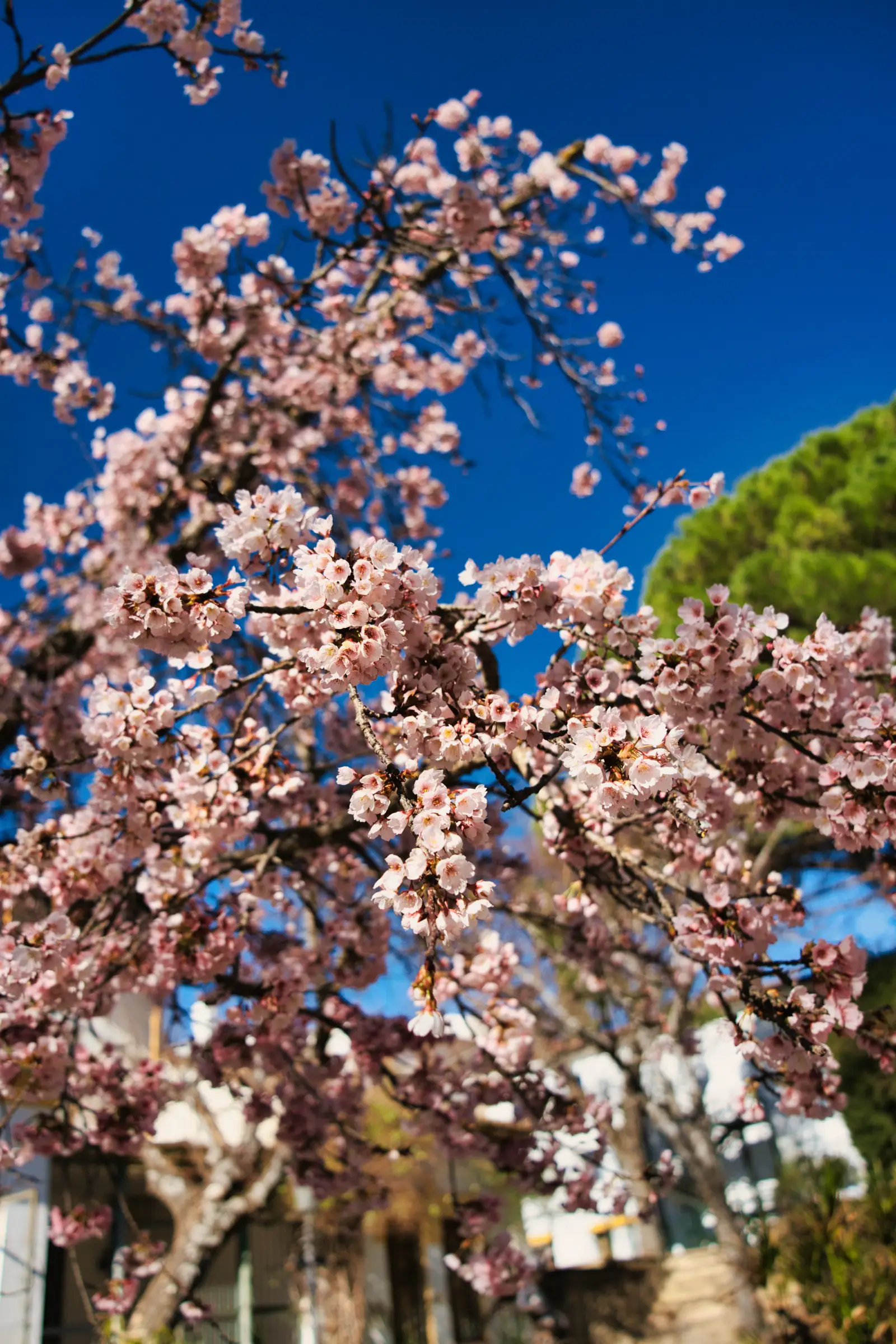
The Alameda del Tajo is a beautiful clifftop park with spectacular views over the gorge, the countryside, and on clear days, the coast and even Africa.
Tree-lined paths, benches, and a peaceful atmosphere. Perfect for a late afternoon stroll or a picnic while watching the sunset.
The Paseo de Ernest Hemingway connects nearby, another cliff-edge path worth walking.
Alameda del Tajo
Beautiful clifftop park with panoramic views over the gorge, mountains, and distant coast.
12. Find the Mirador de Aldehuela
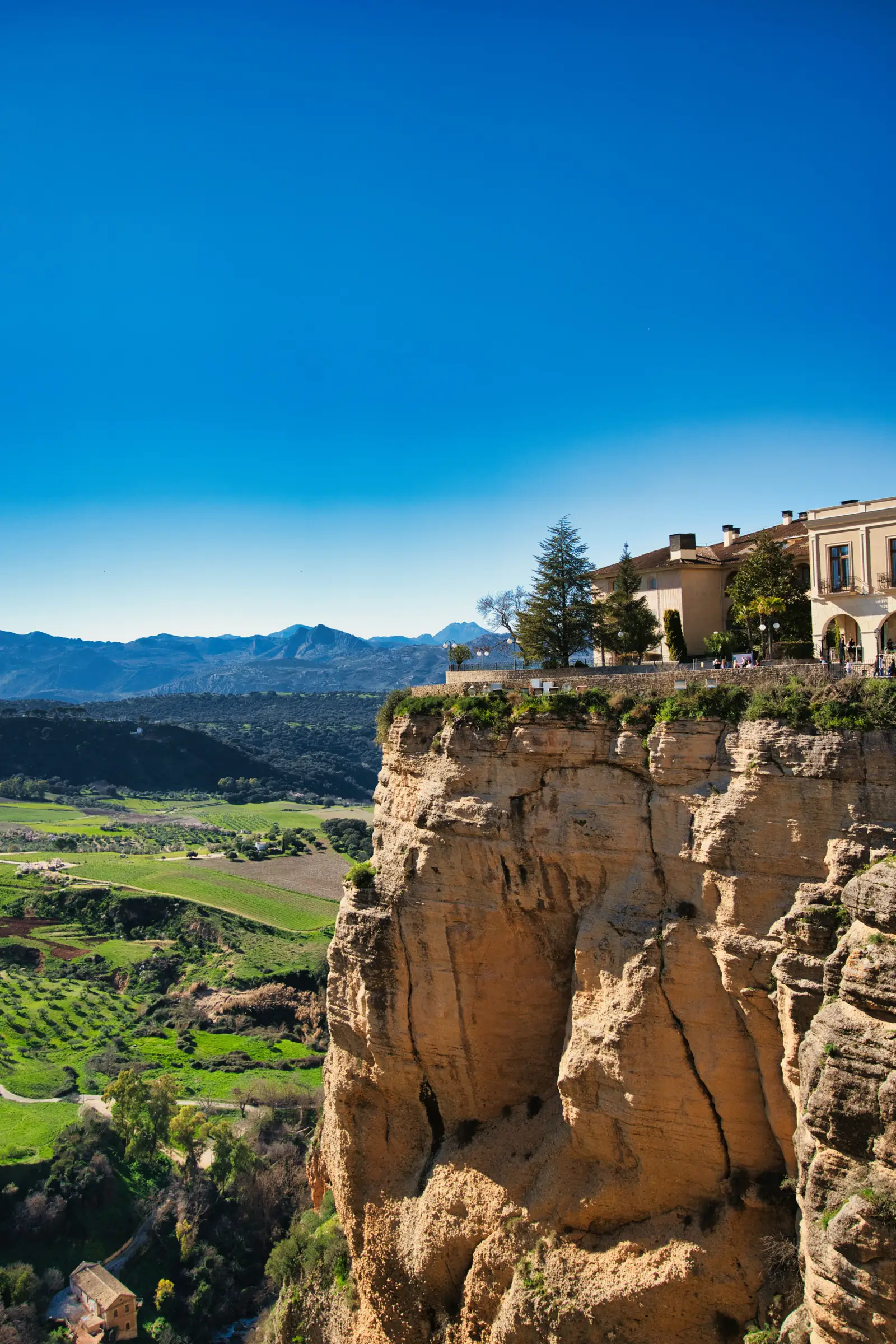
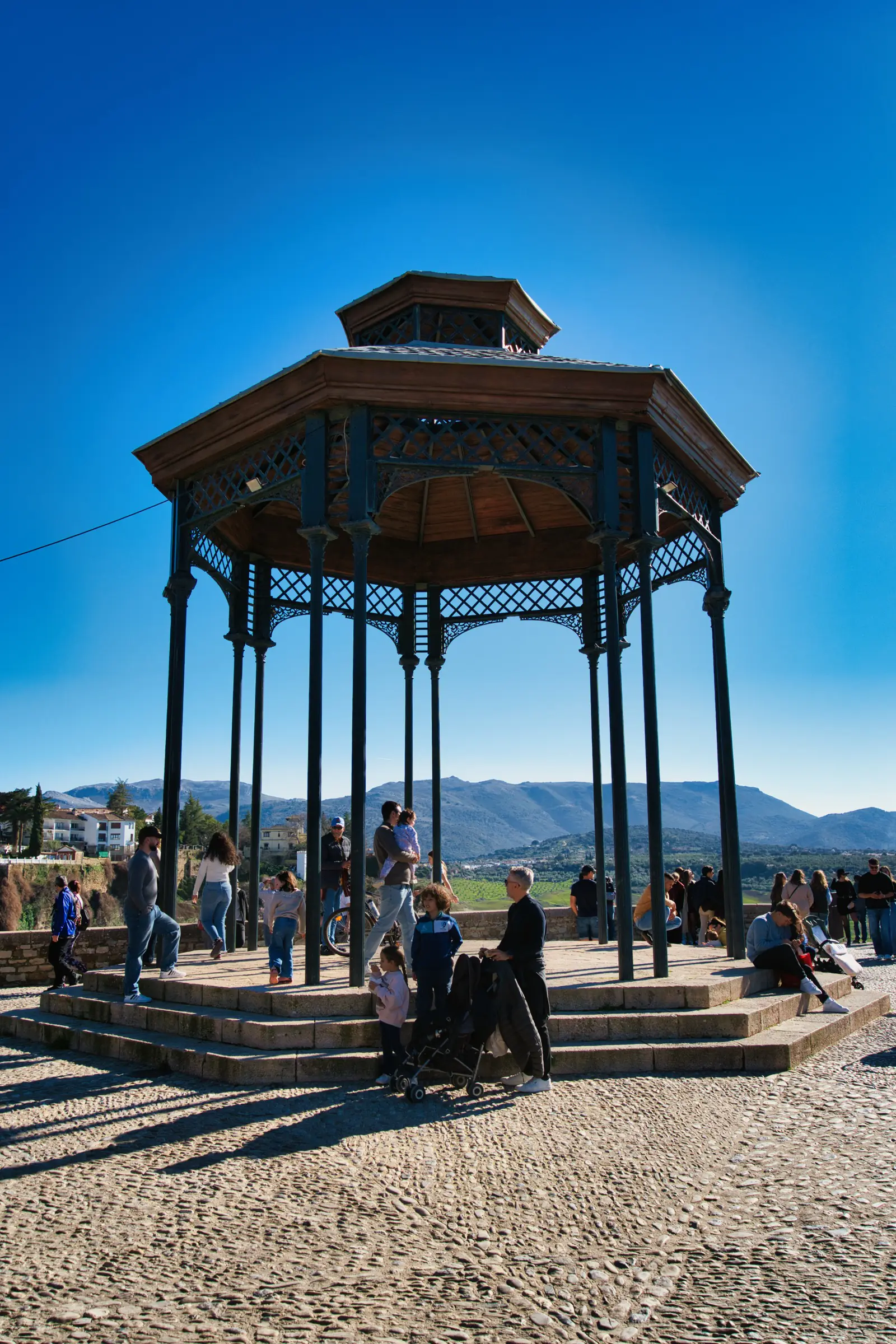
The Mirador de Aldehuela offers one of the best views in Ronda, looking across the gorge to the Puente Nuevo and the old town beyond.
Less crowded than the viewpoints below the bridge and much easier to access. Located near the Alameda, it's perfect for afternoon photography.
13. Explore the City Walls
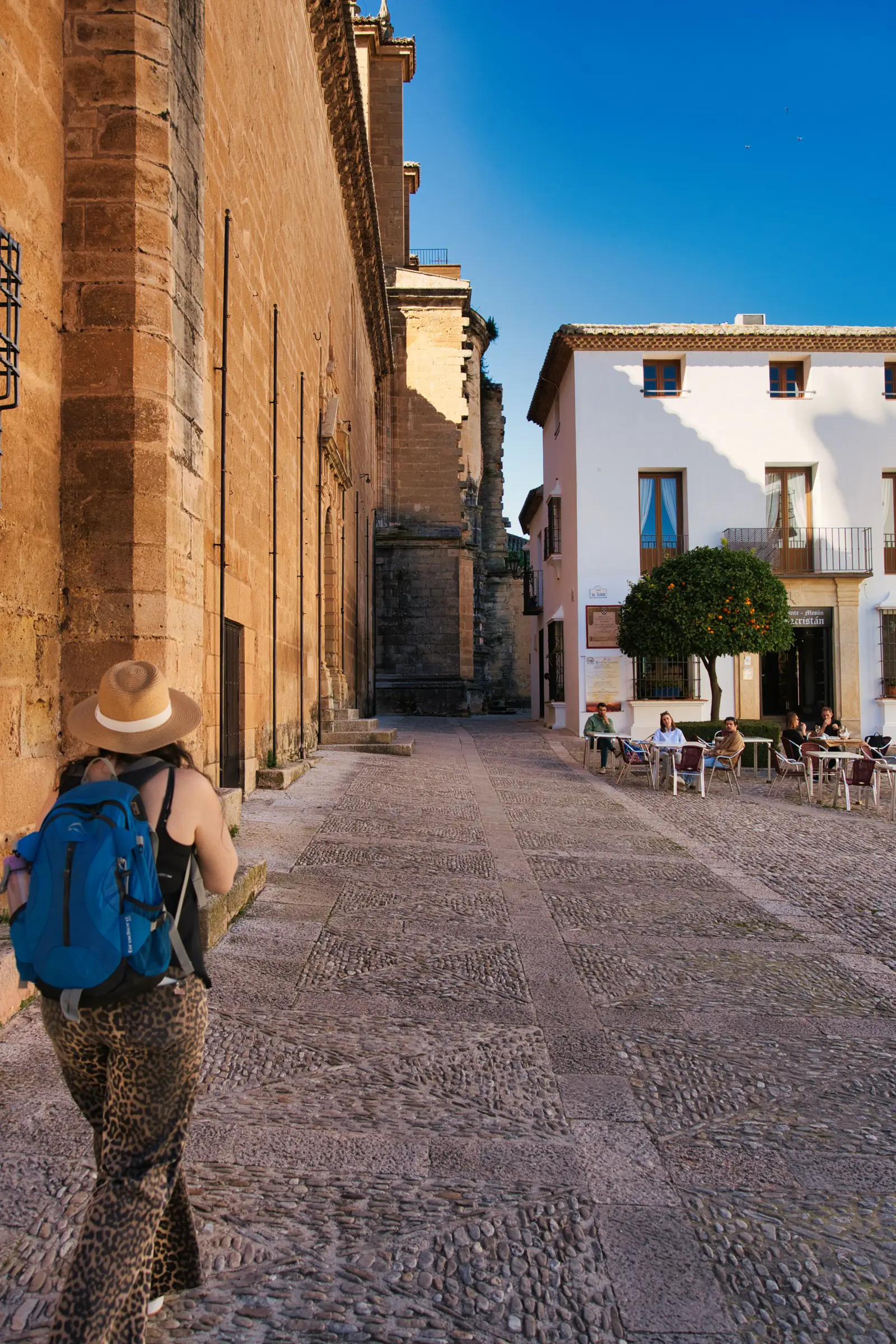
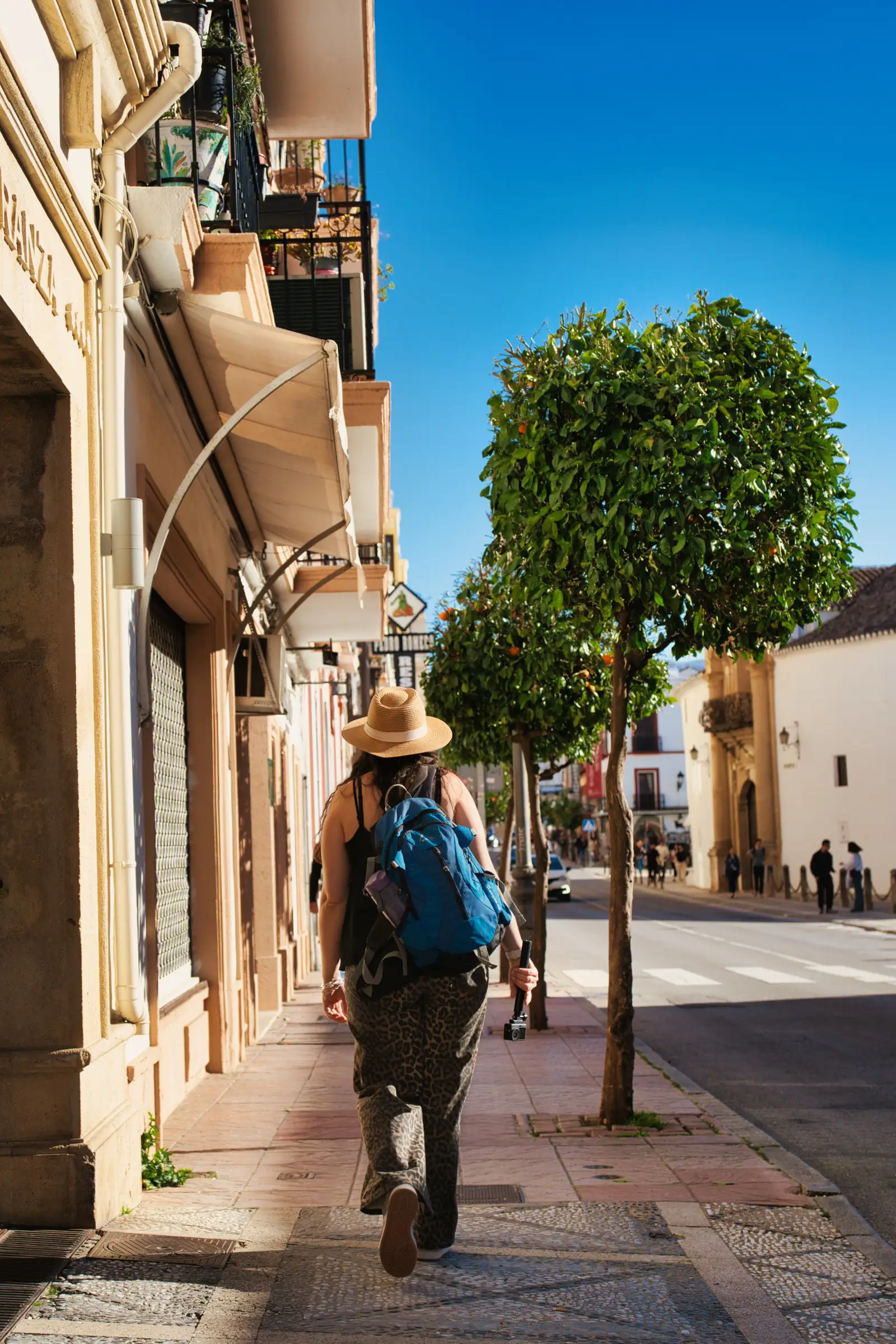
Sections of Ronda's medieval city walls survive around the old town, some dating to Moorish times.
The Puerta de Almocábar, the main gate, is particularly impressive and marks the entrance to the old quarter. Walking the walls offers both history and unusual views.
14. Walk the Bridge at Night
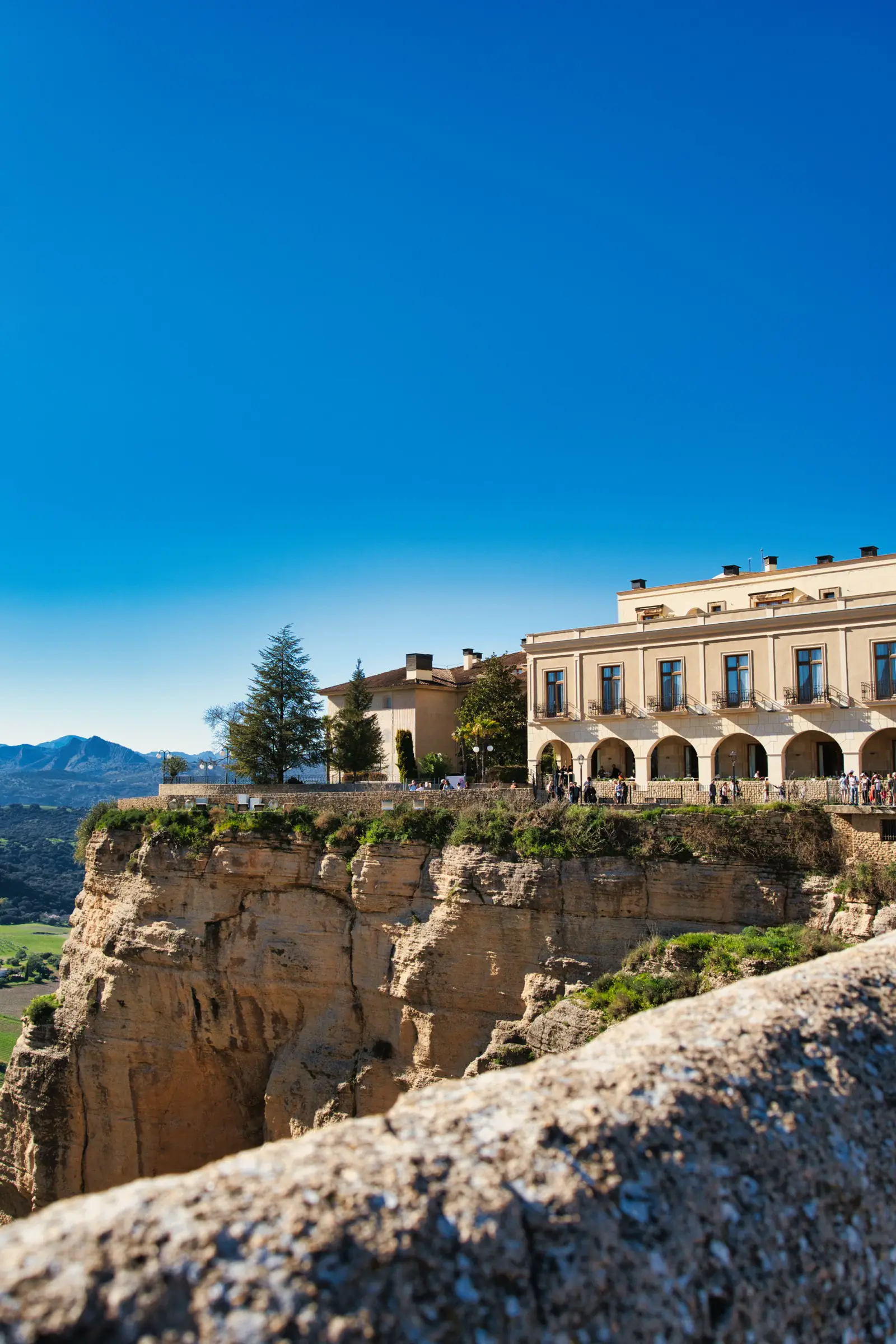
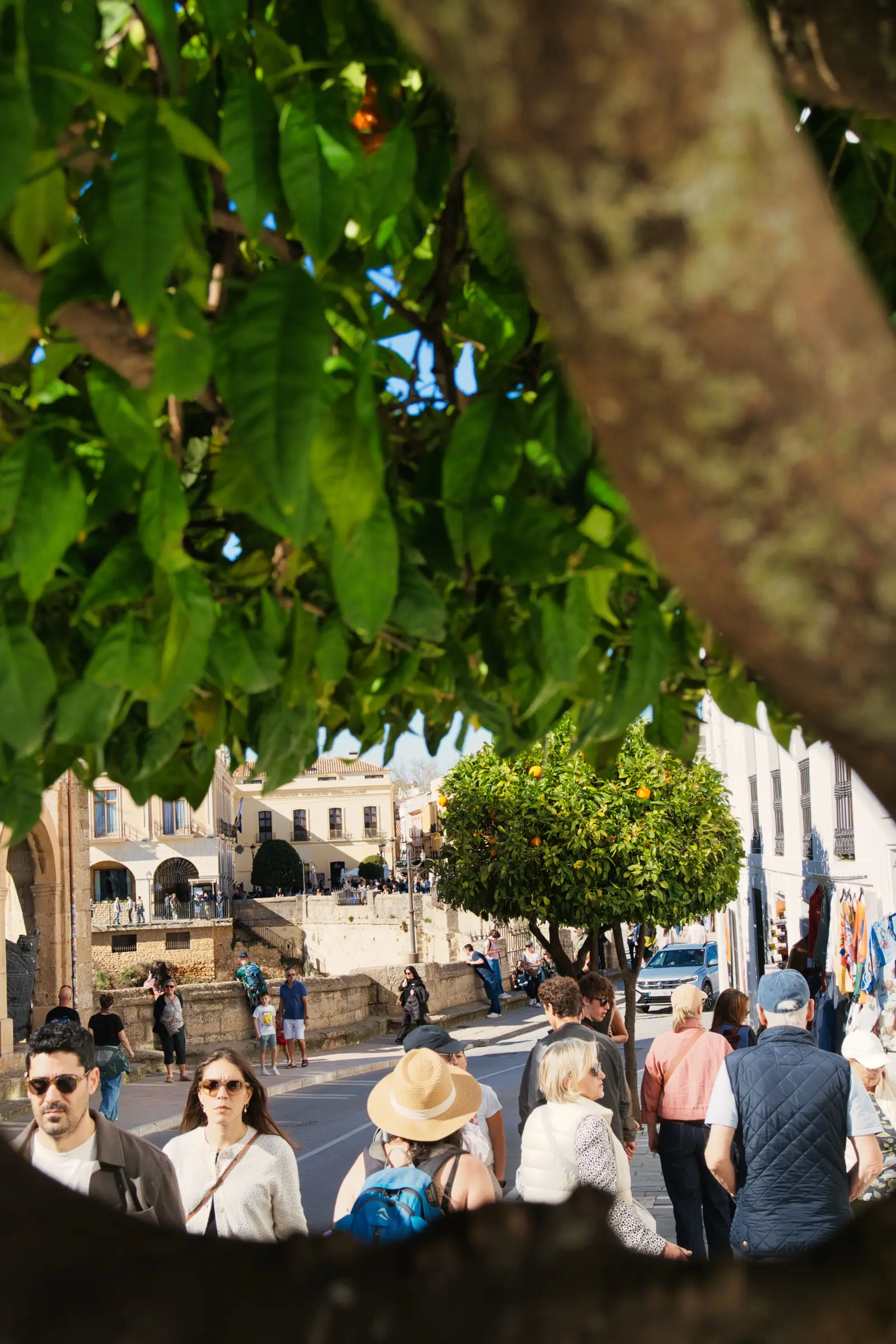
I wish I had photos of this; these are my "Normal day photos".
Here's something most day-trippers miss entirely.
After dark, the Puente Nuevo is beautifully lit and far quieter than during the day. The gorge below disappears into blackness, making the bridge feel even more dramatic.
This alone is worth staying overnight in Ronda.
15. Have a Drink with a View
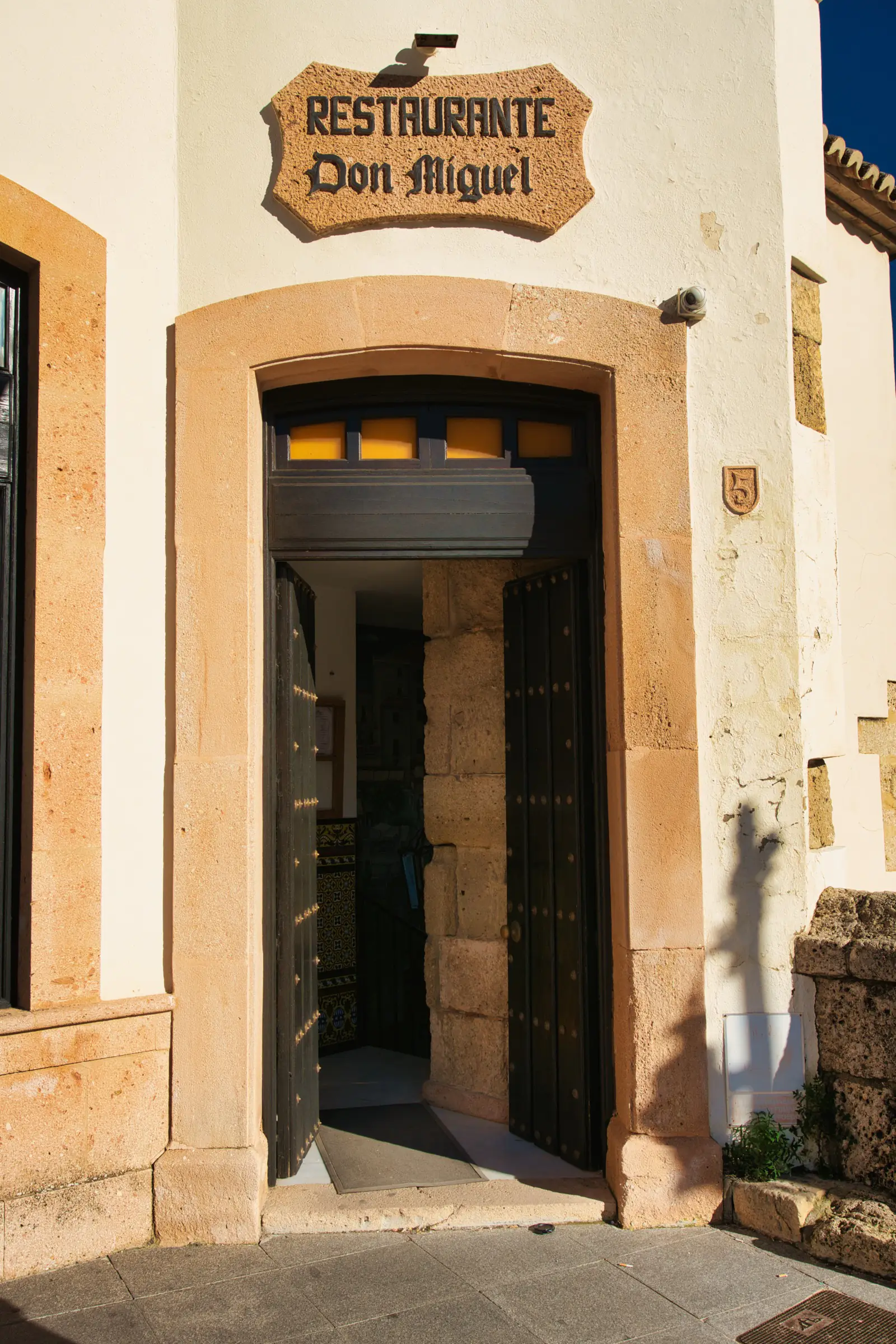
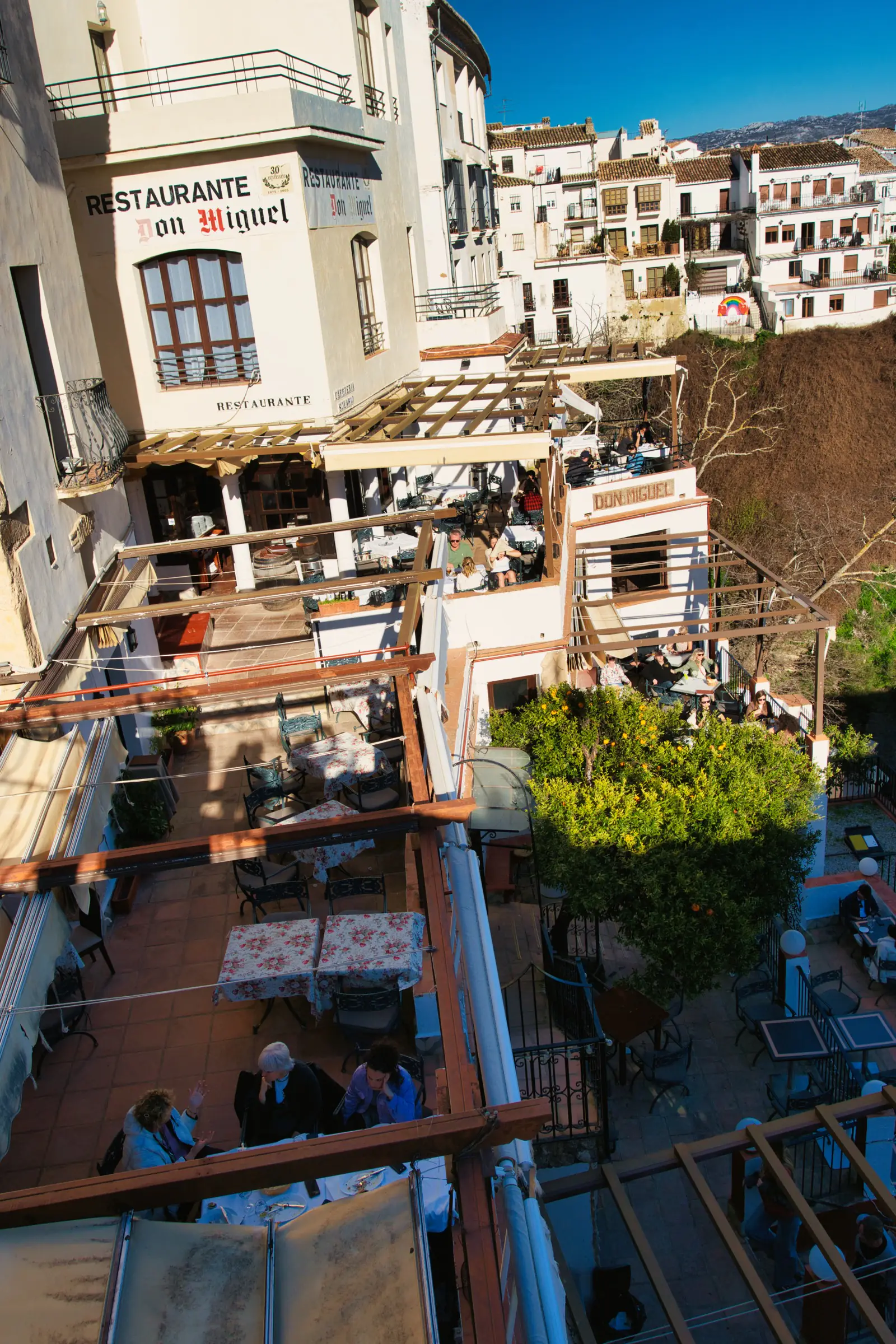
Ronda has some excellent rooftop spots.
Catalonia Ronda Hotel has a fourth-floor terrace overlooking the bullring and countryside. Open to non-guests.
Sky Lounge at Hotel Don Miguel looks out over the gorge. Also open to non-guests.
Café Don Miguel has a terrace overlooking the bridge viewpoint. The coffee isn't great, but the view is.
16. Spot the Street Art
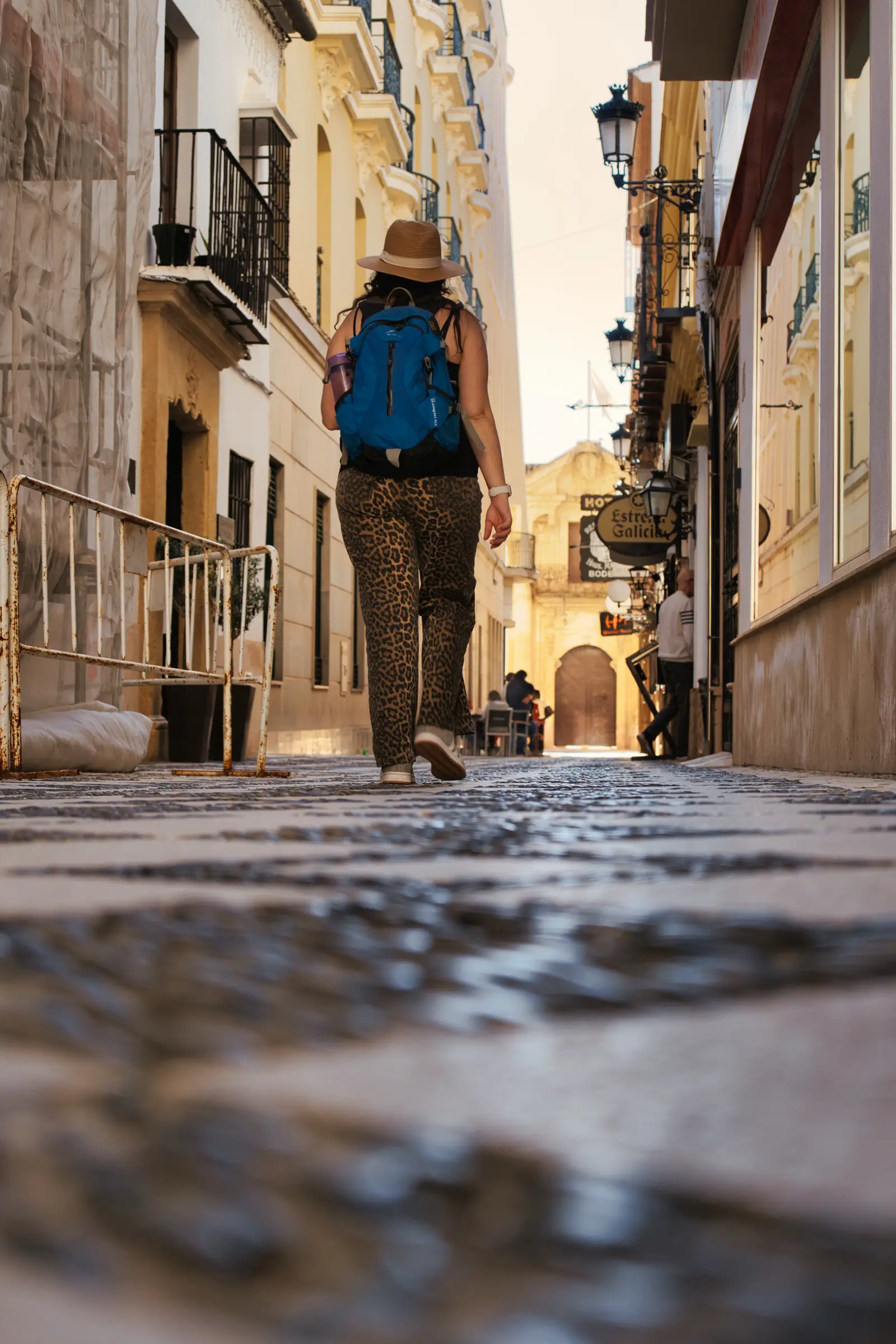
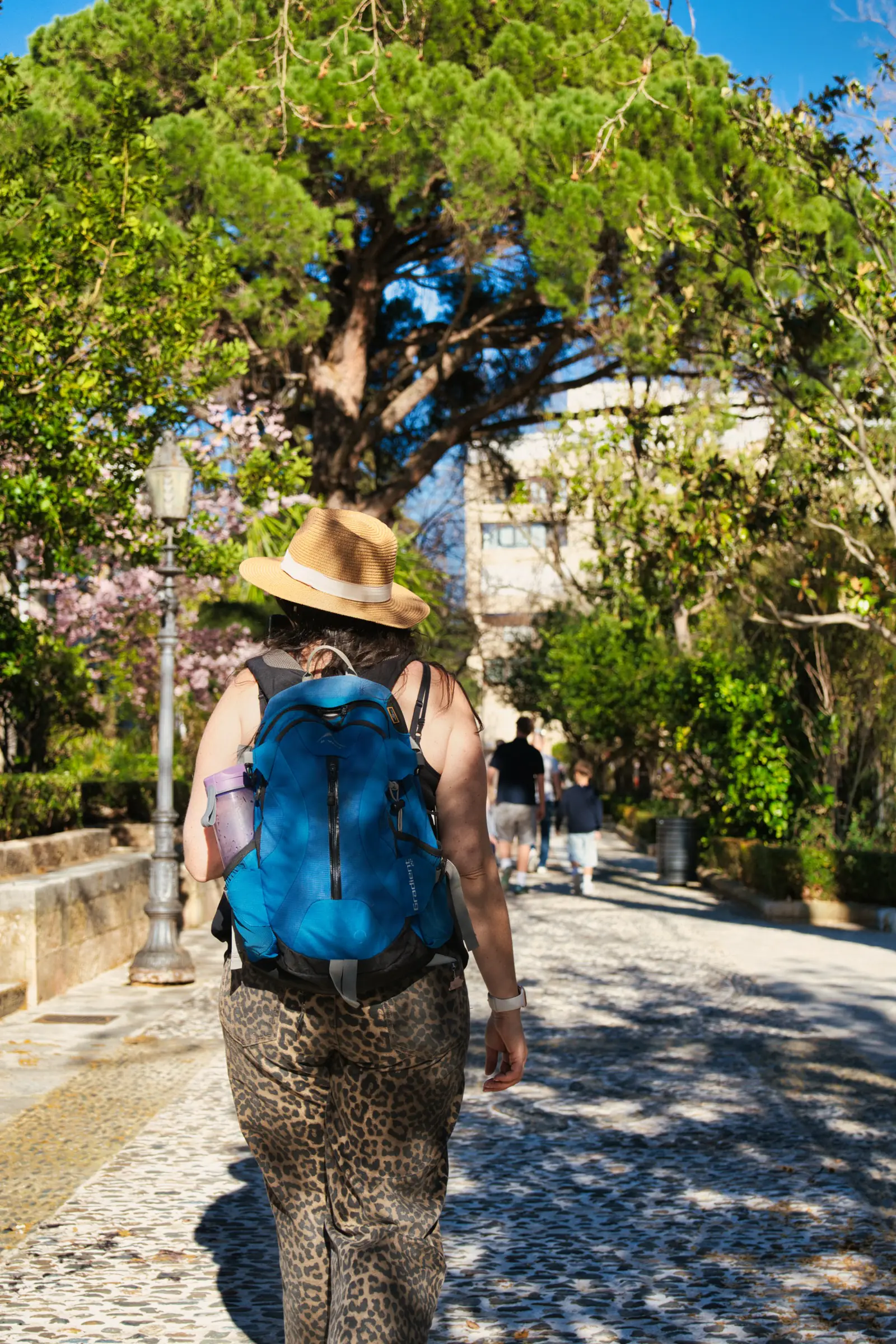
The newer parts of town have some striking murals that add unexpected colour against all the whitewashed buildings.
Not a major attraction, but worth noticing as you explore.
17. Shop on Calle Carrera Espinel
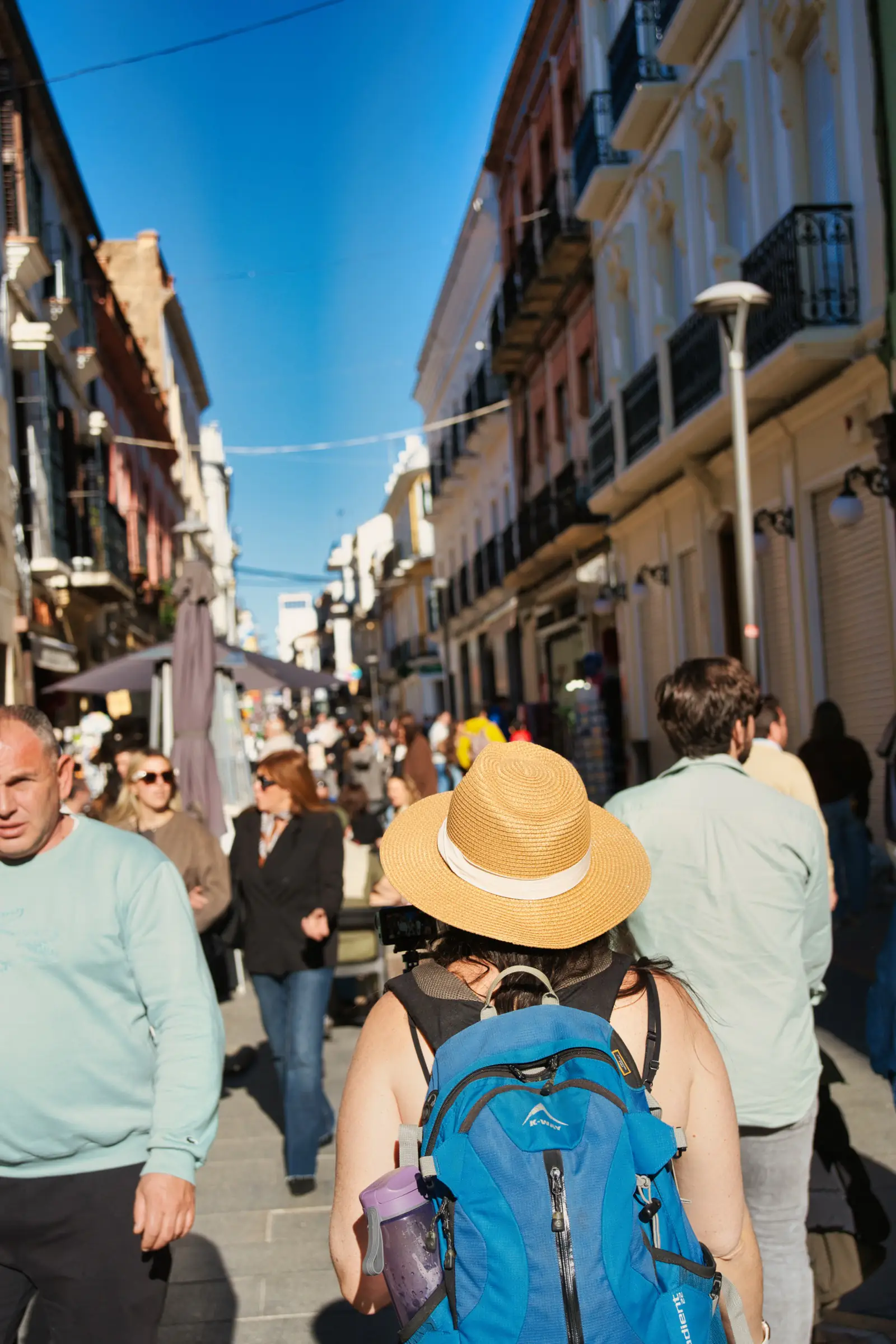
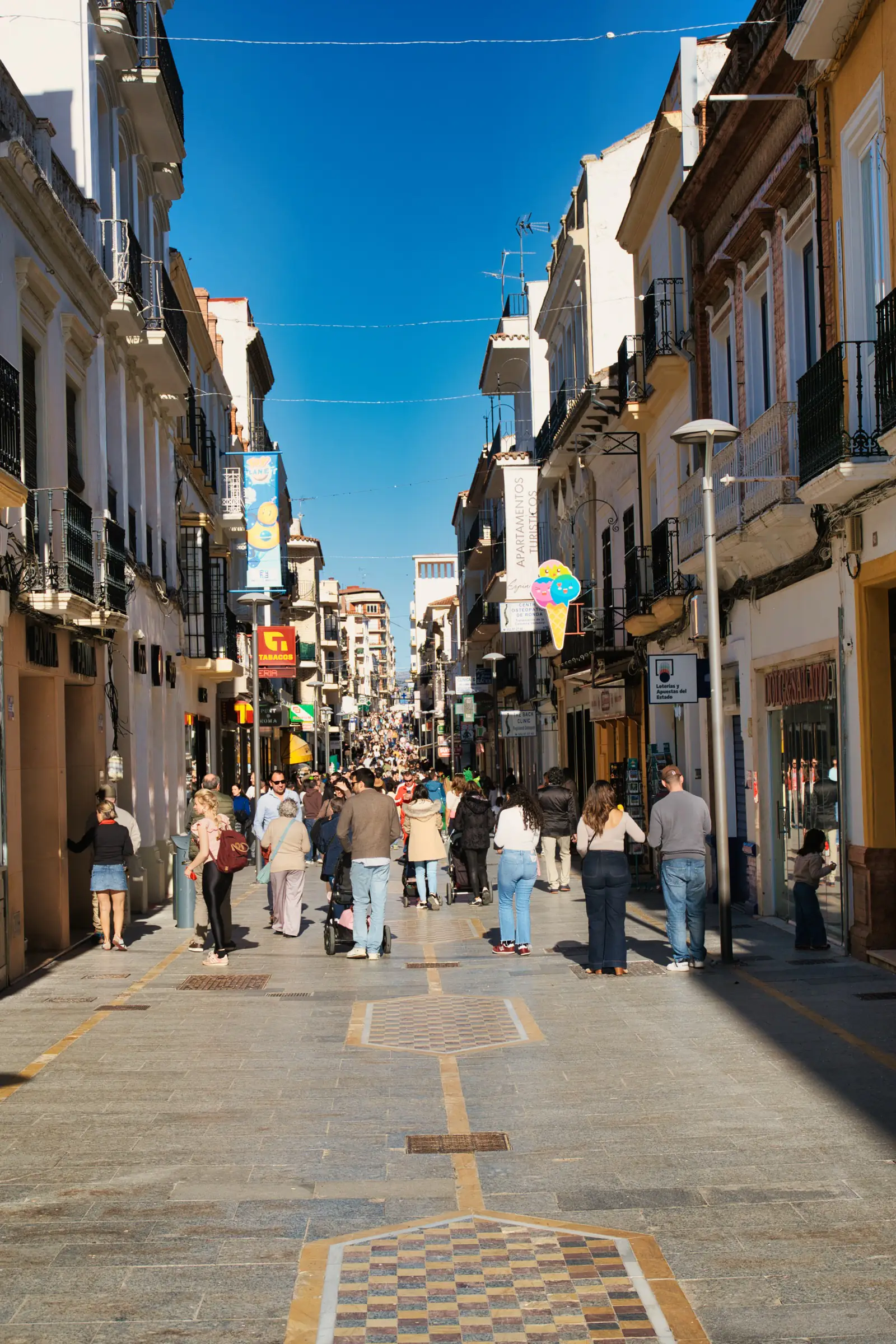
Calle Carrera Espinel (also called Calle de la Bola) is Ronda's main pedestrian shopping street. It's the heart of the new town and perfect for an evening paseo.
The cafes here are tourist-oriented but convenient, and the street has a pleasant buzz in the early evening when locals come out to walk.
18. Try Rabo de Toro
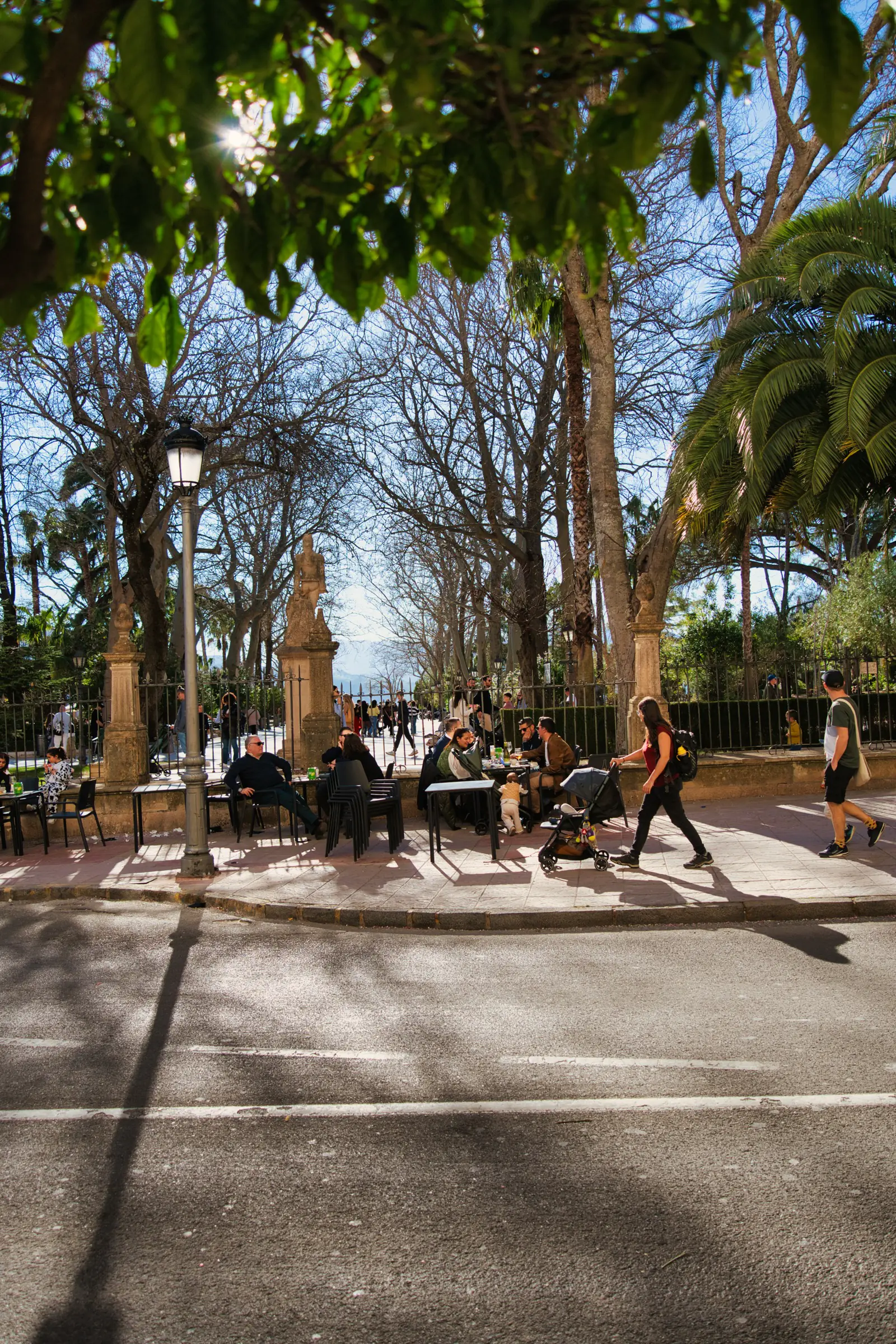
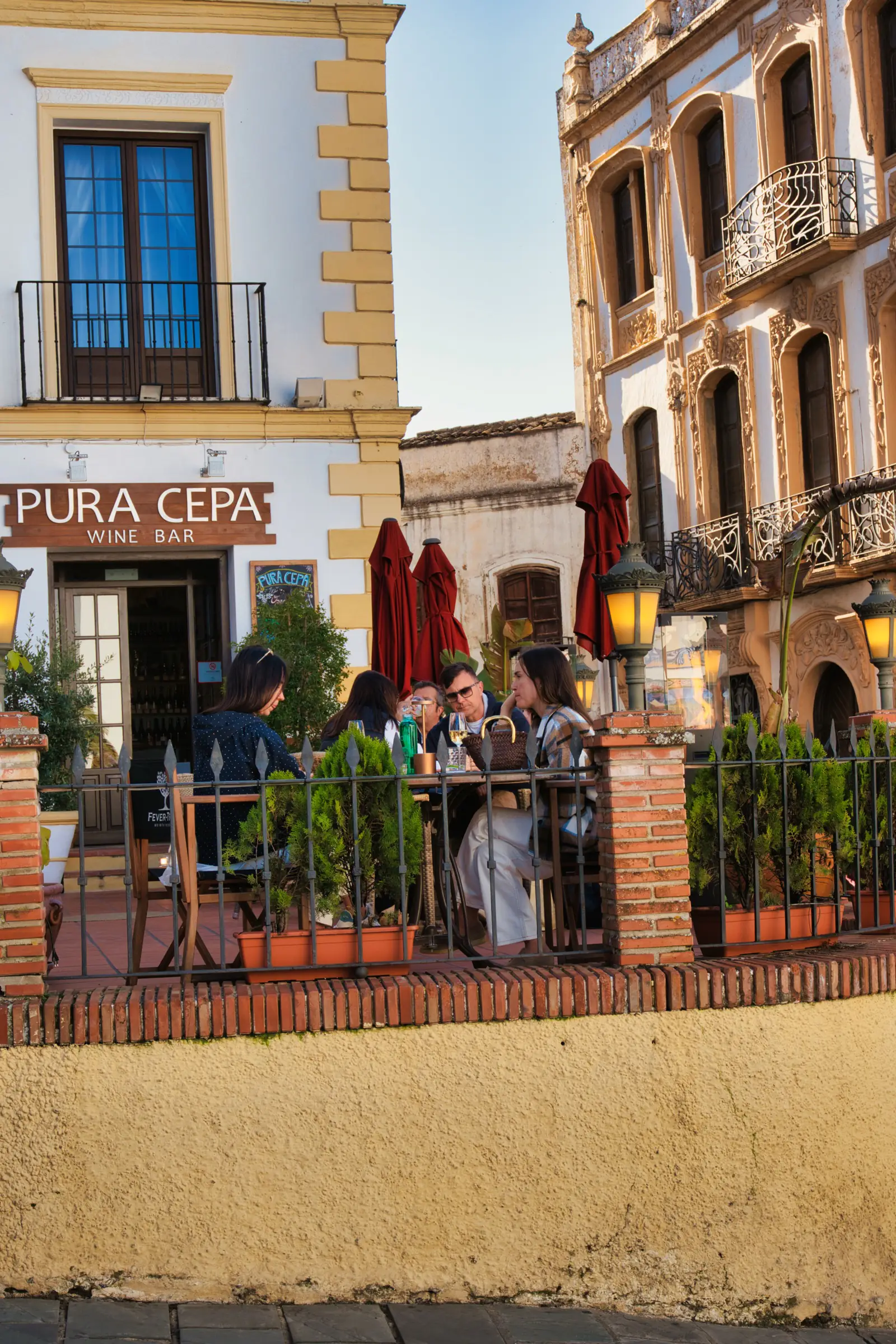
Rabo de toro (oxtail stew) is Ronda's signature dish, slow-cooked until the meat falls off the bone in a rich wine sauce. It's on most menus and worth ordering once.
Other local specialities: migas (fried breadcrumbs), wild mushrooms in season, and game from the surrounding hills.
Local Ronda Cuisine
€€Traditional AndalusianHearty mountain cooking
Must try: Rabo de toro (oxtail), migas, wild mushrooms
19. Visit a Bodega
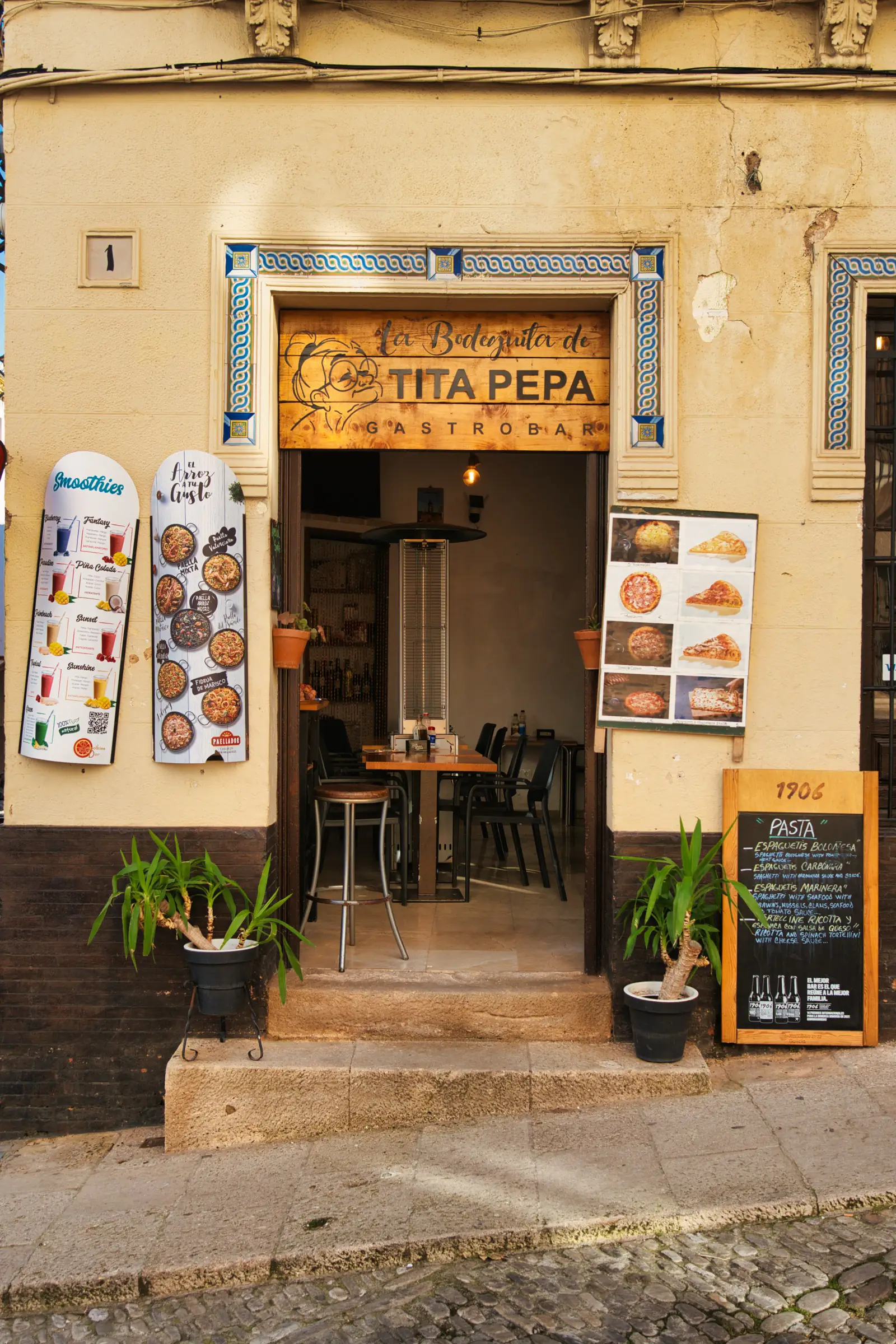
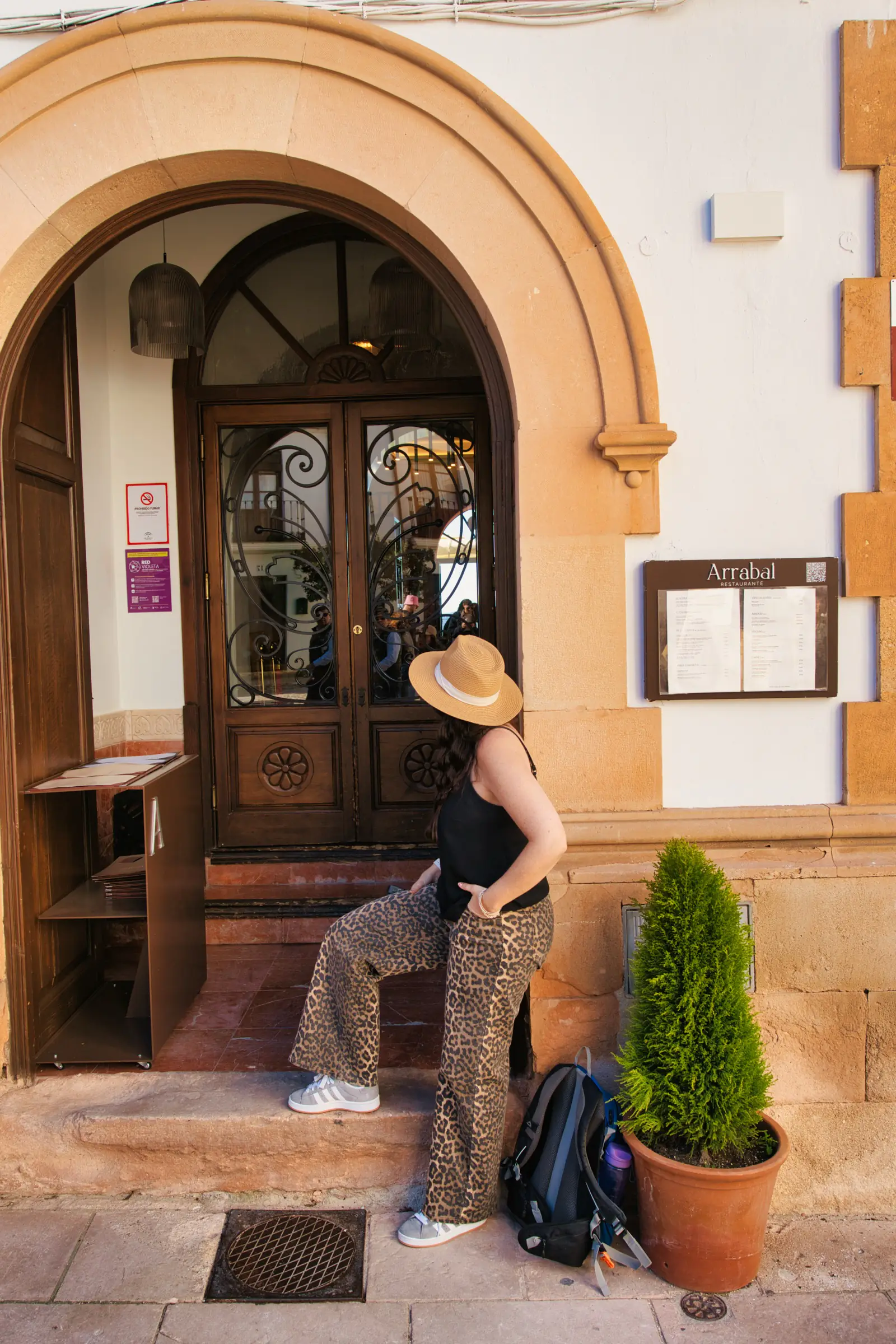
Ronda has a growing wine scene. Vineyards in the surrounding hills produce increasingly respected wines, and several bodegas offer tastings and tours.
Descalzos Viejos and Bodega La Sangre de Ronda are popular choices. Wine tourism here is less developed than elsewhere in Spain, which means a more personal experience.
Ronda Wine Tasting
Visit local bodegas to taste wines from Ronda's emerging wine region.
20. Attend the Feria de Pedro Romero
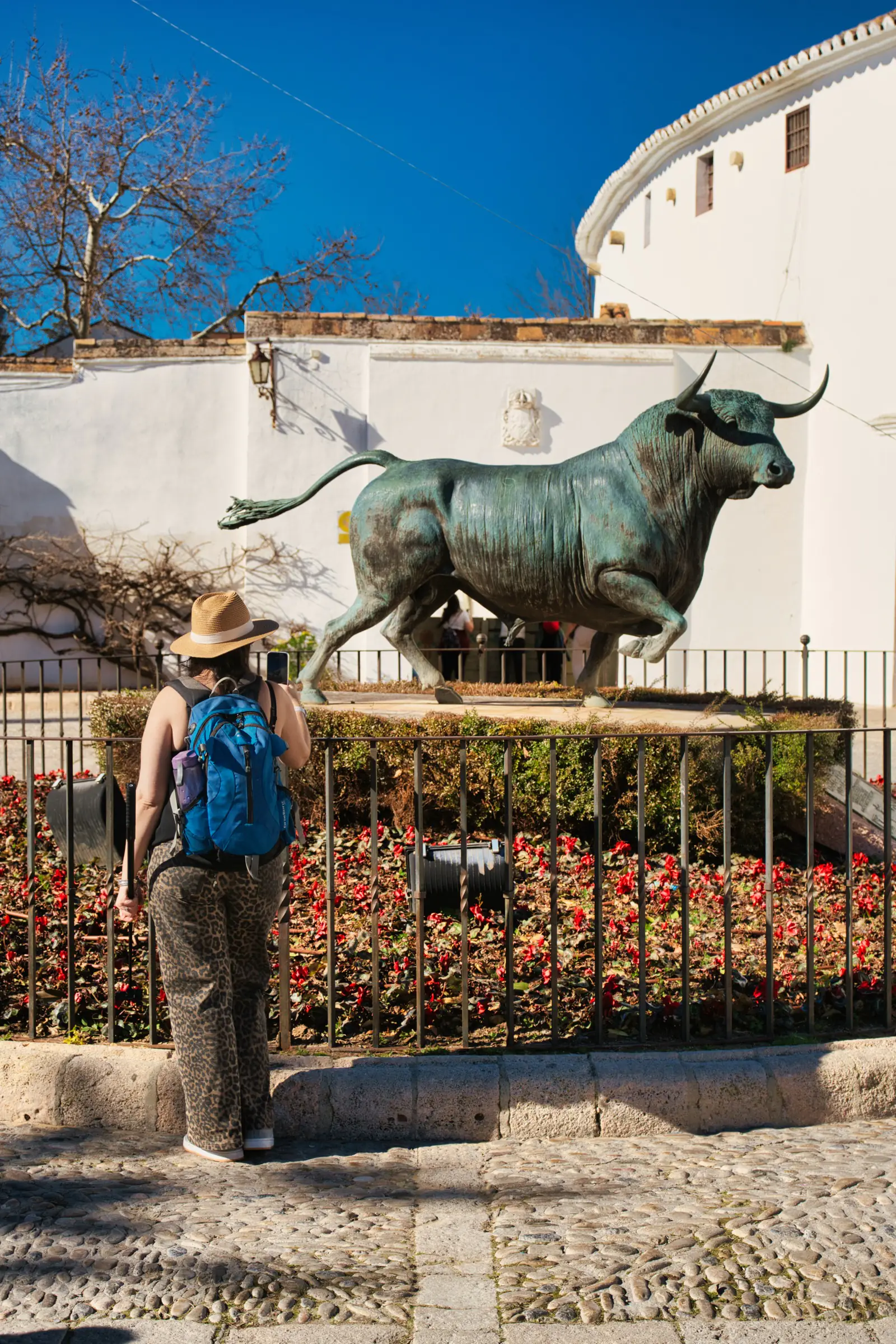
If you're visiting in early September, the Feria de Pedro Romero is Ronda's biggest celebration.
Named for the famous bullfighter, it features the year's only bullfight (in historic costume), flamenco, music, and general festivities. The town fills with visitors and accommodation books up months ahead.
21. Day Trip to the White Villages
Ronda is the gateway to the pueblos blancos (white villages) of the Serranía de Ronda. These whitewashed mountain villages are among the most picturesque in Andalusia.
Setenil de las Bodegas has houses built into rock overhangs.
Zahara de la Sierra has a dramatic hilltop setting. Grazalema is the gateway to the natural park.
All within easy driving distance. Rent a car and allow a full day for two or three villages.
How to See the Most
All of the sights are along the main road, Calle Arminan, or just a street to the side, aside from the Old Town.
If you want to get the most out of your trip, then your itinerary must include covering this road all the way from Castillo del Laurel to Alameda del Tajo Park.
If you've followed my advice on where to park, then you're in the perfect position to see everything, which just leaves the Old Town.
How to Get to Ronda
By Car
Before we bought our car, we would generally hire a car through Discover Cars. Ronda is about 90 minutes from Malaga via the A-357 and A-367. The route climbs through mountains and olive groves, with increasingly dramatic views as you approach. From Seville, it's around 2 hours via the A-376 through Utrera.
If you're staying on the Costa del Sol near Marbella, the A-397 takes about 45 minutes, but be warned: this is a genuinely challenging mountain road with hairpin bends and steep drops. Beautiful, but not for nervous drivers.
Once in Ronda, don't try to drive into the old town. The streets are narrow, and parking is impossible. Instead, park on the outskirts near the train statio,n where you'll find secure parking (Parking Martinez Astein) and free street parking with white lines. It's a flat 15-minute walk to the centre.
By Train
The train from Malaga to Ronda takes about 2 hours and is one of the most scenic rail journeys in southern Spain. The route winds through mountains, past fields of sunflowers, and through the dramatic Vulture's Canyon. Sit on the right-hand side heading towards Ronda for the best views.
Trains cost €15-20 and run several times daily, though less frequently than buses. Check current times on Trainline or Rail Europe.
The station is a 15-minute walk from the centre, downhill on the way in.
By Bus
Buses from Malaga run several times daily, taking around 2 hours and costing €12-15. This is often the most practical option if you don't have a car. Services depart from Malaga bus station and arrive at Ronda's Estación de Autobuses on Calle de José Maria Castello Madrid.
Check prices and timetables on Omio.
For a complete guide to navigating Ronda once you arrive, see getting around Ronda.
Best Time to Visit Ronda
- Spring (March-May): Wildflowers bloom, pleasant temperatures, green countryside. Excellent.
- Summer (June-August): Hot, especially midday. Visit early morning or late afternoon. The gorge stays cooler.
- Autumn (September-November): Harvest season, mild weather, September brings the Feria. Excellent.
- Winter (December-February): Cool but often sunny. Quietest time. Occasional snow on the surrounding peaks.
How Long do You Need?
Half day (3-4 hours): Enough to see the bridge, the bullring, and walk through the old town. Fine for a day trip, but rushed.
Full day (6-8 hours): Time to explore properly, descend into the gorge, have a leisurely lunch, and visit museums. Ideal for a day trip.
Overnight: Experience Ronda in the evening after the day trippers leave and in the early morning before they arrive. The town transforms when it's quiet. Strongly recommended.
2+ days: Time for wine tours, white village day trips, and hiking in the surrounding mountains. For those who want to explore the region.
Local tip
Staying overnight in Ronda is the secret to experiencing it properly. By 6 pm, the tour buses have left, and the town belongs to its residents and overnight visitors. Early morning, before 10am, is equally magical. The midday crush is not the real Ronda.
Where to Stay in Ronda
If you want this stunning bridge view, then we recommend staying here. Or if you prefer staying in the old town, this is one of our favourite choices.
Is Ronda Worth Visiting?
Ronda is one of Spain's essential destinations.
The setting is genuinely spectacular, unlike anything else in Andalusia. The gorge, the bridge, the clifftop views, the Moorish history: it all combines into something unforgettable.
The main challenge is the crowds.
Between 11 am and 4 pm, day trippers from the coast pack the streets around the bridge. Visit early morning or late afternoon, or better yet, stay overnight to experience Ronda at its most magical.
If you're visiting Andalusia, Ronda belongs on your itinerary. It's one of those places that lives up to its reputation and then exceeds it.
Ready to Visit Ronda?
Watch the sunset paint the cliffs golden.
Walk the gorge path at dawn.
Explore the Old Town.
This is one of Spain's great towns. Come see why.

Hola! I'm the researcher, walker, and co-founder behind Spain on Foot. I help travellers experience Spain authentically, through in-depth guides, locals-only knowledge, and cultural stories you won't find in guidebooks. You can reach me at heidi@spainonfoot.com
Planning a trip to Ronda?
Explore Ronda Guide→