getting-around
Malaga Public Transport Guide: How to Use the Bus, Metro, and Tickets
This post may contain affiliate links, which means I earn a small commission, at no extra cost to you. It helps keep the blog alive, and we really appreciate your support!

After living in Spain for years, here's how we approach public transport in Malaga.
Public transport in Malaga is a breeze, thanks to its reliable, affordable, and easy-to-navigate network.
Although you might not need public transport in the heart of Malaga, you'll soon find your feet getting tired the further you explore.
Compare hotel prices in Málaga
Find the best deal across booking sites
What is the Cheapest Way to Get Around Malaga
The cheapest way to get around Malaga is by bus, although with the city centre so compact, walking is usually the only transport you really need within the city.
Here's a quick overview of ticket costs for the metro, train and bus.
- City Bus: €1.40 for unlimited stops, with lower prices for bonobus card holders.
- Metro: €1.50, with higher prices depending on the number of stops
- Train: €2-€5 depending on the station and the number of stops
How to Pay For Public Transport in Malaga
Málaga uses a mix of tickets and rechargeable cards, depending on how and how often you’re getting around. These are the main options you’ll come across.
- Single tickets. You can buy single tickets for buses, metro, or trains if you're only making an occasional trip. For buses, these are purchased directly from the driver (cash). For metro and trains, you'll use ticket machines at stations.
- Bonobus (EMT bus card). This is a rechargeable card for city buses only. It's cheaper per ride than single tickets, can be shared between multiple people, and includes free transfers within a set time window. It's the best option if you plan on using buses more than once.
- Metro de Malaga rechargeable cards. The metro uses rechargeable cards that reduce per-ride costs and can be used by multiple people travelling together. These are bought and topped up at metro stations.
- RENFE Cercanias tickets and passes. Local trains use their own ticketing system. You can buy single tickets, return tickets, passes such as Bonotren, and monthly cards at station machines. For trips to and from the airport on the C1 line, you can also tap a contactless credit or debit card at the barriers.
- Transport Consortium Card (Tarjeta Monedero del Consorcio). This is the most flexible option if you're mixing transport. The Consorcio card works across multiple modes, including city buses, metro, and interurban buses, and offers discounted fares and lower transfer costs. It's handy if you're staying longer or moving between different types of transport regularly.
Malaga Metro
Málaga’s metro is small but handy. There are two lines, and both funnel through El Perchel, the main interchange.
The way we use it most is for the “not-quite-walkable” trips, like heading towards Huelin or down to Palacio de los Deportes, or cutting across town when there's a procession blocking the streets.
Quick “is it worth it?” test:
- Yes, if you're staying near a metro stop, visiting Palacio de los Deportes, or commuting towards Universidad / Andalucia Tech.
- Maybe not, if you're doing a classic old-town day (cathedral, Alcazaba, tapas crawl). You'll likely walk it faster once you're in the centre.
Malaga Metro Map
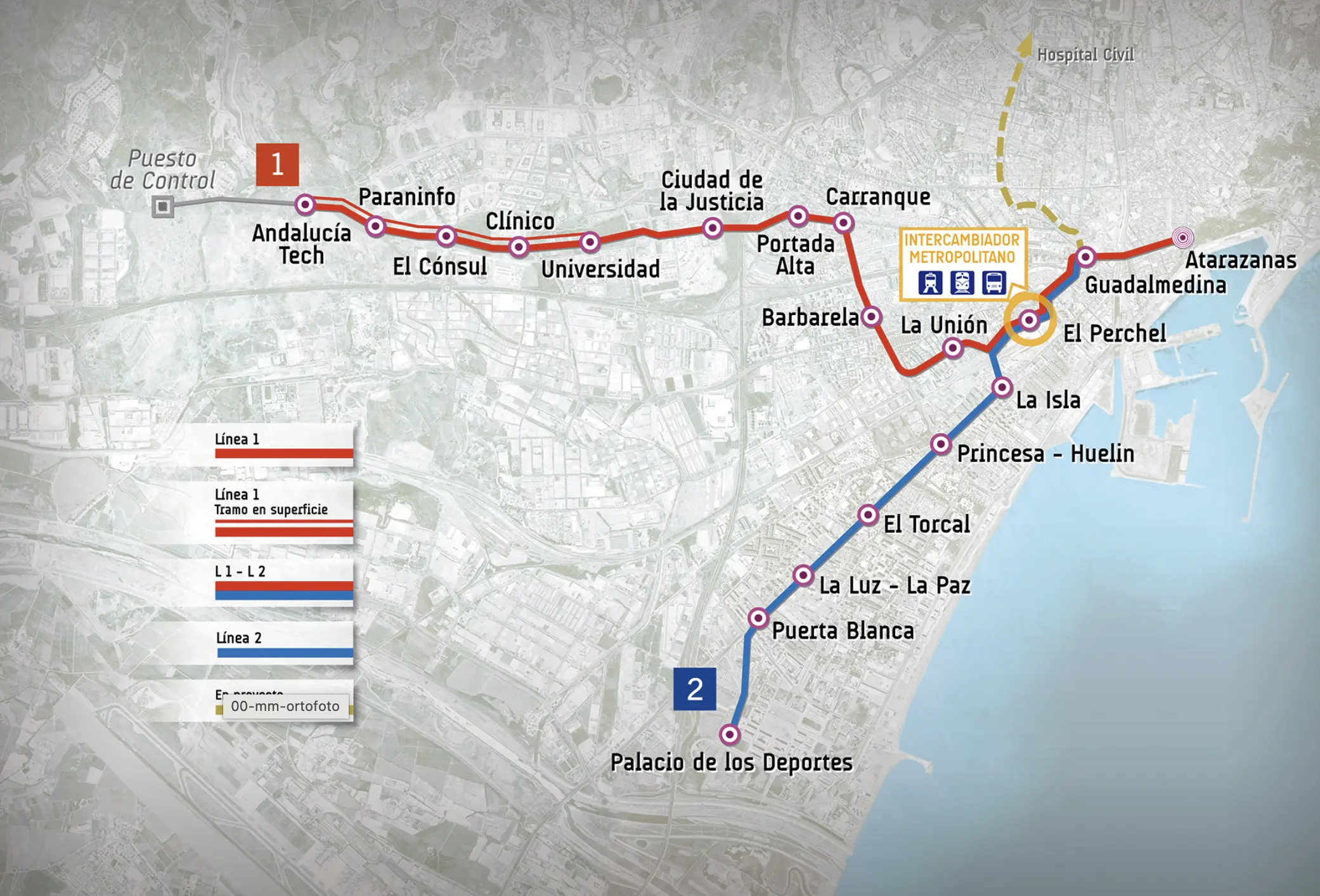
How much does it cost to use Málaga’s metro?
Málaga’s metro is genuinely cheap, especially if you’re doing more than a couple of rides.
- Single one-way (Billete ocasional): €1.35 per trip, plus €0.30 for the rechargeable paper support.
- Metro de Málaga rechargeable card (Tarjeta Monedero): €0.82 per trip
- Transport Consortium card (Tarjeta Monedero Consorcio): €0.82 per trip, and €0.65 if you're transferring from a city or interurban bus.
Small but useful detail: the metro “monedero” style tickets/cards can be used by up to 9 people on the same card (so families and groups don’t need to buy multiple separate tickets).
How do you pay for the Metro?
This is the part people overthink.
-
If you’re only hopping on once or twice, grab the Billete ocasional (cheap, simple, rechargeable paper support).
-
If you’re taking multiple rides over a few days, choose a Tarjeta Monedero option (Metro or Consorcio) to lower your per-ride price.
-
If you’re using the bus and metro, the Consorcio card is usually the smarter choice due to the transfer discount.
You can buy the paper (billete ocasional) card or the more durable plastic card at any metro station, so there's no need to plan.
I've lost my paper card a few times on the metro. If this happens to you, don't worry, there's always someone at the gate, and they are very understanding and will let you through without any hassle.
Malaga Trains
If you’re heading beyond the city or just trying to reach the airport without paying taxi prices, trains are one of the easiest ways to get around Málaga.
The system is run by RENFE, Spain’s national rail company, and it’s reliable, cheap, and straightforward once you know which line you need.
For most visitors, this section really comes down to two local train lines, one coastal and one inland.
Malaga Train Station Map
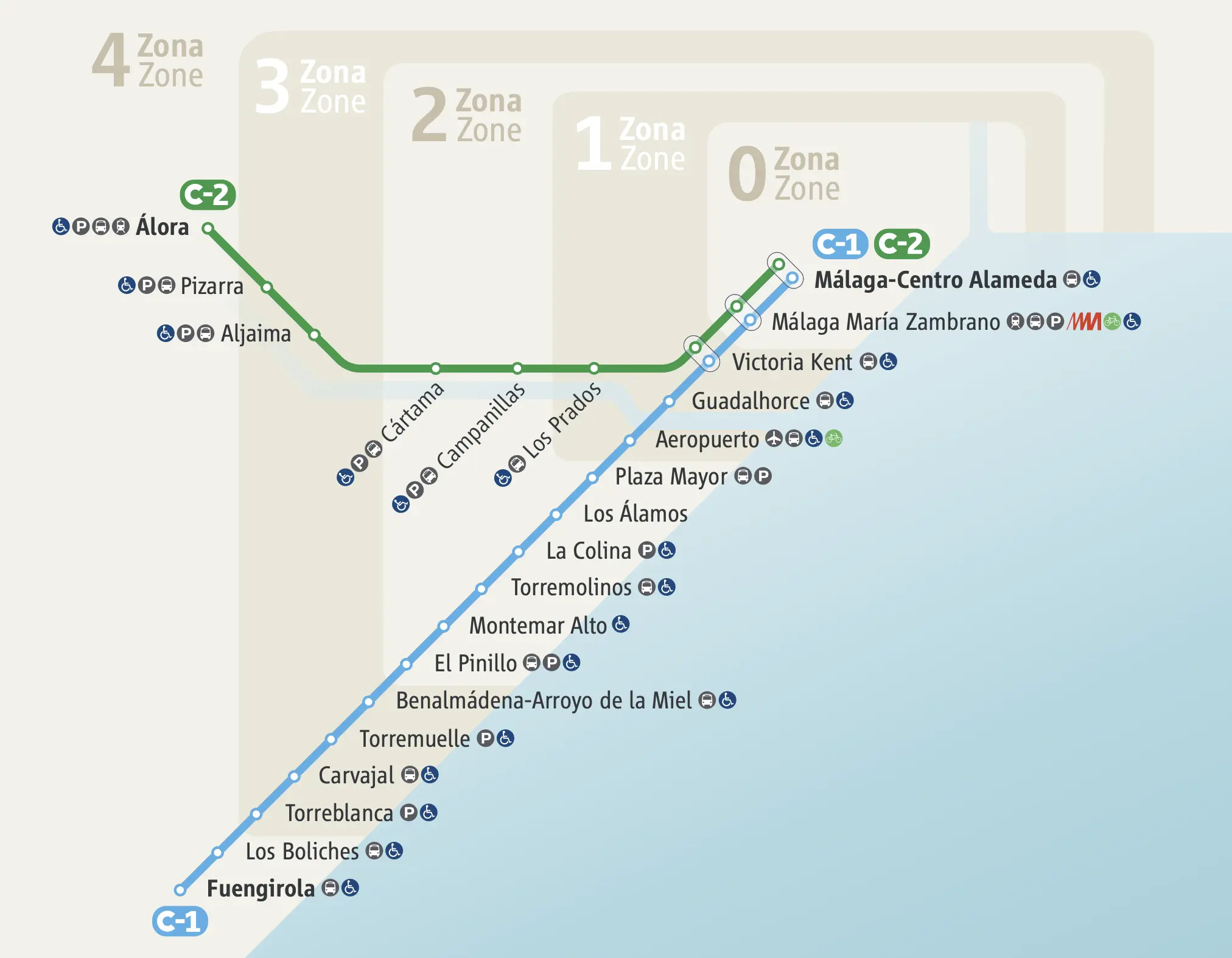
How Much Does the Train Cost in Malaga
Train prices in Málaga are zone-based, meaning the cost depends on how far you travel.
If you just need to make a trip or two, then these are the rates you can expect to pay.
| Zones Crossed | Single | Return |
|---|---|---|
| 1–2 | €1.80 | €3.60 |
| 3 | €2.05 | €4.10 |
| 4 | €2.70 | €5.40 |
| 5 | €3.60 | €7.20 |
Quick Tips:
-
Once you buy your ticket, you’ve got up to 2 hours to start your journey. Return tickets are same-day only, so do not save them for tomorrow.
-
Kids under sixtravel free, with up to two children per adult ticket. Handy if you’re travelling as a family.
-
Groups of up to 10 people get solid discounts:
30% off one-way tickets
-
40% off return tickets
-
Children under 12 get an even bigger 50% discount
Get a Discount by Using Passes
If you're staying for longer and plan on using the train frequently, then you might want to take advantage of these offers and save some of that hard-earned cash!
| Card Type | Validity | Price (Zone 1–2) |
|---|---|---|
| Limited Monthly Pass | 2 trips/day | €35.80 |
| Unlimited Monthly Pass | Unlimited trips | €47.85 |
| Bonotren (10 trips) | 1 month | €11.95 |
| Student Trimester Pass | 3 months | €89.60 |
You'll find more details in my guide to getting around Malaga by Train.
How to Pay for the Train in Malaga
In most cases, paying for trains in Málaga is straightforward: you buy a ticket or use a RENFE travel card before boarding.
Ticket machines are available at every Cercanías station, accept cash and credit or debit cards, and offer English-language options. You’ll need a physical ticket or RENFE card to pass through the barriers.
That’s how payment works for standard Cercanías journeys, Bonotren passes, monthly passes, and any discounted or group tickets.
There’s one notable exception.
If you’re travelling on the C1 line to or from Málaga Airport, you can tap a contactless credit or debit card directly at the barriers.
Apple Pay and Google Pay also work, provided NFC is enabled. No ticket purchase is needed, and the system automatically charges the single-journey fare.
Train Timetable
Here's a link to the Renfe timetable to view the latest times and dates.
Taking the Bus in Malaga
Málaga’s buses are one of the most reliable and affordable ways to get around the city, especially once you venture beyond the historic centre.
EMT Málaga runs them, covers the entire city, and comes often enough that you rarely need to plan around a strict timetable.
We mainly use buses for trips that are just a bit too far to walk comfortably, beach hops, or when the metro doesn’t quite go where we need it.
How Much Does the Bus Cost in Malaga
| Ticket Type | Price |
|---|---|
| Single Ticket | €1.40 |
| 10-Trip Bonobús Card | €8.40 |
| Monthly Pass | €39.95 |
| Student Monthly Pass | €27.00 |
| Airport Express (Line A) | €3.00 |
The Bonobús is the option most visitors should consider. It costs less per ride, can be shared by multiple people, and includes free transfers within 60 minutes of your first tap.
Malaga Bus Route Map
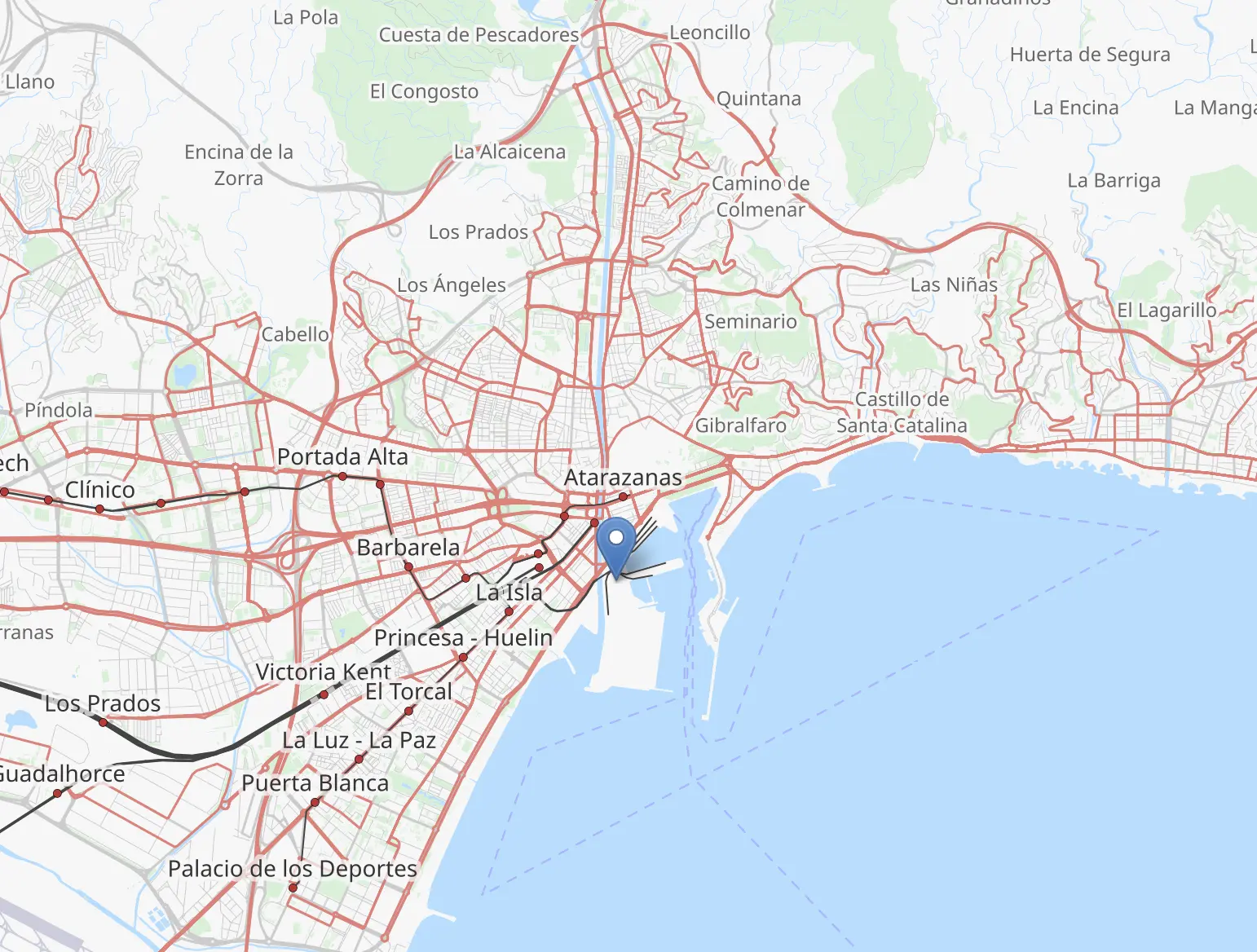
The bus network is way too extensive to be able to view here, but you'll find all of the maps of bus routes in Malaga here.
How to Pay for the Bus in Malaga
Paying for the bus is easy, but there are a couple of things worth knowing before you step on.
You can purchase a single ticket directly from the driver in cash. This works fine for one-off trips, but it’s the most expensive way to ride.
If you plan to use buses more than once, get a Bonobús. It’s a rechargeable card that:
- Can be used by more than one person
- Includes unlimited transfers for one hour
- Works across the entire EMT bus network
You can buy and top up Bonobús cards at kiosks, tobacco shops, and EMT sales points around the city.
For planning routes and checking stops, the EMT Málaga app is genuinely helpful. It shows routes, nearby stops, and arrival times, and saves you from guessing which bus is coming next.
Cycling in Malaga
Unfortunately, Malaga Bici, a public bicycle system, no longer operates in Malaga.
Many blogs still mention this as an option, but it has been discontinued. You can still rent one, and there are many options available in the city.
You'll find bicycle rentals available in SOHO, around Muelle Uno, and all along the promenade.
They're a great way to see more of the beach and visit beautiful locations like Pedregalejo, which are a little far to walk.
Renting Scooters in Malaga
Electric scooters have quietly become one of the easiest ways to get around Málaga, especially for short hops where walking feels too slow and public transport feels like overkill. They’re everywhere, app-based, and surprisingly handy once you know the rules.
You’ll spot scooters from providers like Lime, Bird, Dott, and a few local operators scattered around the city, all unlocked and paid for through their own mobile apps.
We use them most when we want to skip a short metro transfer, cruise along the seafront, or bounce between neighbourhoods without waiting around for a bus.
Where to Find Scooter Rentals in Málaga
Scooters operate on a dockless system, meaning there are no fixed stations. You locate, unlock, and end your ride directly through the provider’s app using GPS.
Availability is best in:
- The city centre
- Along the promenade and beach areas
- Around metro stops and busy neighbourhoods
Outside central zones, scooters thin out quickly, so it’s worth checking the app before committing to a longer ride.
How Much Do Electric Scooters Cost in Málaga?
Pricing is broadly similar across providers.
Most charge:
- A small unlock fee, usually around €1
- A per-minute rate once you start riding
If you plan to use scooters more than once in a day, some apps offer daily or multi-ride passes, which can work out cheaper than paying per minute each time.
Always check the price breakdown in the app before you unlock. Rates can vary slightly by time of day or provider.
We often use scooters to skip short metro transfers or explore beachside neighbourhoods without the hassle of parking or delays.
Other Ways to Get Around
While public transport in Malaga is excellent, sometimes you don't want to wait. If you're in a rush or don't want the hassle, taxis or car rental might be the right option for you.
Taxi
Taxis in Málaga are easy to find, reliable, and metered, making them convenient for short trips or late-night travel. You can hail one on the street, head to a taxi rank (common at train stations, airports, and major squares), or book through a local taxi app like Pidetaxi or TaxiClick.
Ride-sharing services like Uber and Bolt also operate in the city. They’re often slightly cheaper than traditional taxis, especially during off-peak hours.
We tend to stick to ride-sharing apps like Uber, but when it’s busy, taxis are often available and worth the extra cash to save waiting for a ride.
We wrote a taxi guide for Malaga. If you want to know the specifics, like fare prices, surcharges, and more.
Rent a Car
We usually recommend going car-free in the city, then renting a car for a few days when it’s time to head further afield.
Where to Rent a Car in Málaga
Most visitors pick up their car either at Málaga Airport or at María Zambrano train station, both of which have a wide range of rental companies on-site.
We’ve had good experiences with Clickrent, but there are plenty of solid options depending on availability and timing. Airport rentals tend to offer the widest choice, while city pickups are convenient if you’re already settled in Málaga and only need a car later in your trip.
Requirements and What You’ll Need
Car rental rules vary slightly by company, but the basics are consistent.
Drivers usually need to be at least 21 years old and hold a valid EU or international driver’s licence. Some companies require drivers to be 25 or older, or charge a young driver fee if you’re under that age.
You’ll need to bring:
- A passport or a valid ID
- Your driver's licence
- A credit card in the driver's name
Most rental companies place a security hold on your credit card for the duration of the rental.
Getting to and From the Airport
Just 8 km from the centre, Málaga-Costa del Sol Airport is well-connected.
- Commuter Train: Fast and affordable (12 min, approximately €2.30).
- A Express Bus: A direct 25-minute ride (~€3).
- Taxi/VTC: Convenient, with prices ranging from €20 to €25.
Read our complete guide on how to get from Malaga Airport to the City Centre for step-by-step instructions.
Conclusion on Malaga's Public Transport
We only just bought a car after years of living in Malaga, so we can start exploring further afield.
Public transport is all you need to get around Malaga city, and honestly, you won't even need it that much because it's so compact and walkable!

Hola! I'm the researcher, walker, and co-founder behind Spain on Foot. I help travellers experience Spain authentically, through in-depth guides, locals-only knowledge, and cultural stories you won't find in guidebooks. You can reach me at heidi@spainonfoot.com
Planning a trip to Málaga?
Explore Málaga Guide→