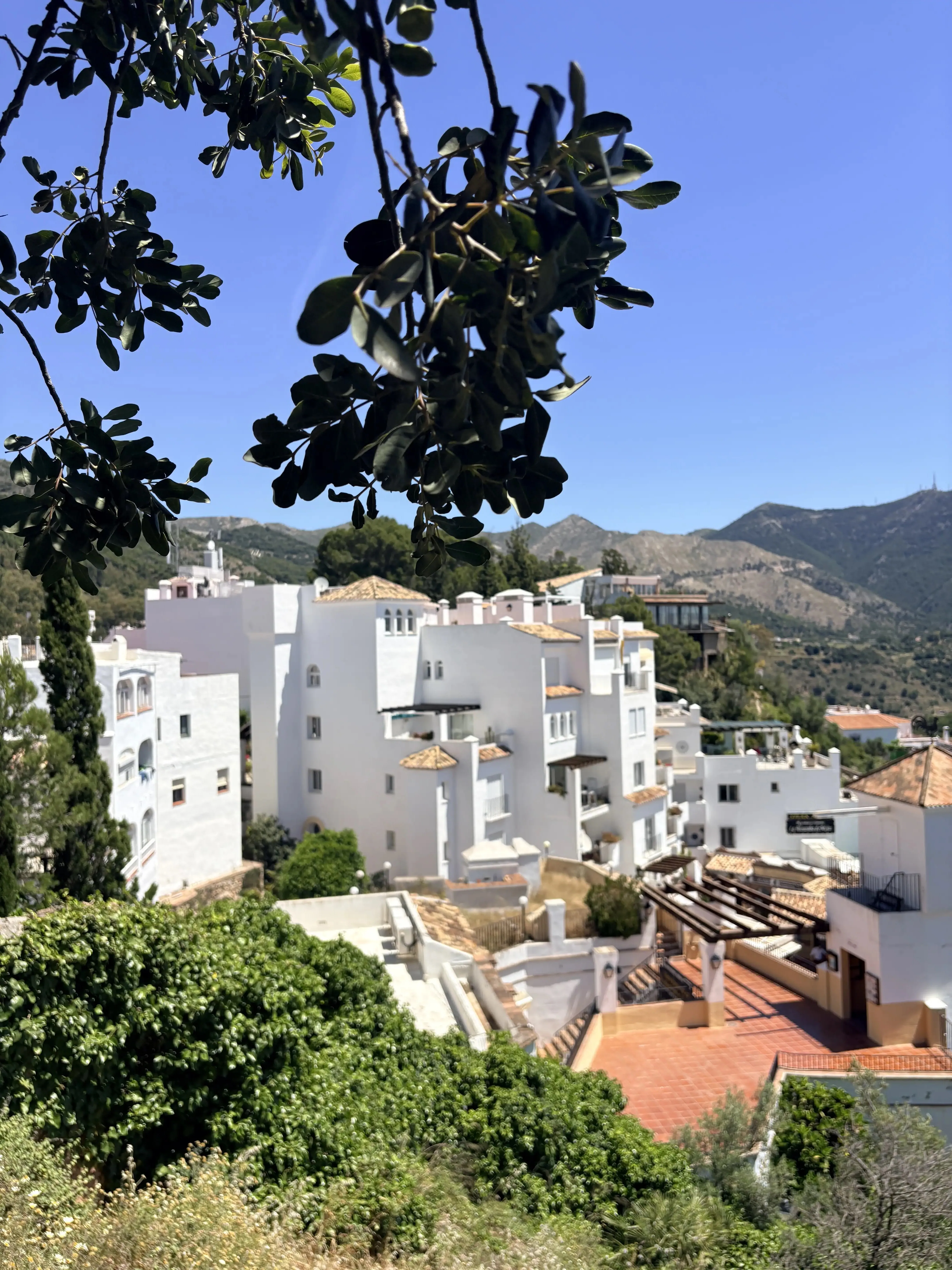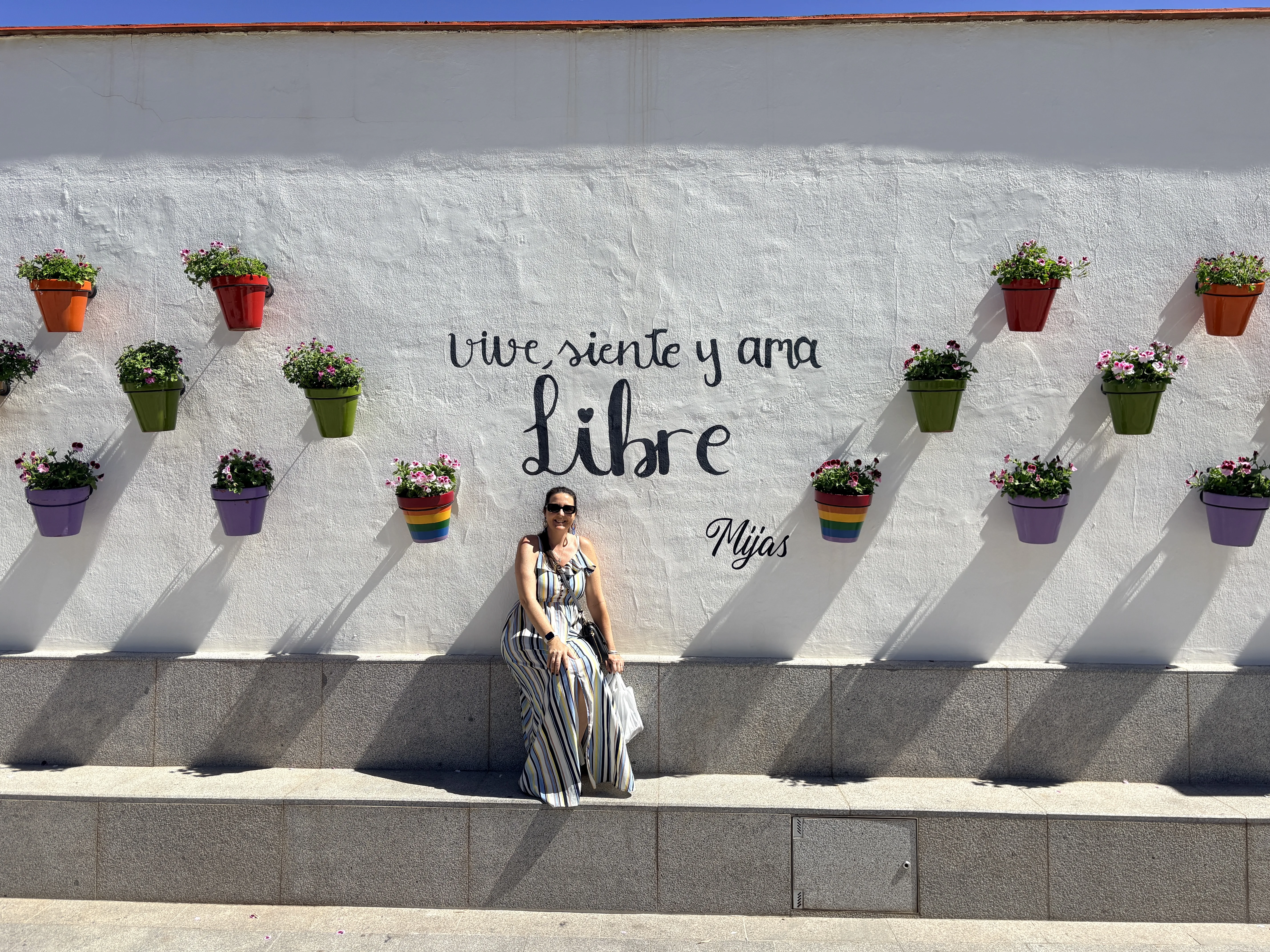
There’s a reason Mijas Pueblo ends up in so many Instagram feeds. The village sits 430 metres above the coast, whitewashed walls and geraniums spilling from terracotta pots, with views over the Mediterranean that appear without warning at the end of every other street.
I thought a full day would be enough. I parked at the main car park near the entrance and walked in, and within thirty seconds there was a flower heart on a wall, a plaza with people eating outside in the sun, and a market full of handmade goods I hadn’t expected. I was still finding new spots at 5pm.
The ones that photograph best aren’t always the obvious ones. Some are hidden inside restaurants.
One is inside a shop you’d walk straight past. This guide covers everything I found: what’s worth waiting for, what to skip, and when to go for the best light.
⭐ Don’t miss >> Where to stay near Mijas, my Benalmádena hotel picks
Is Mijas Pueblo Worth Visiting for Photography?
Yes, genuinely. It’s one of the most photogenic villages on the Costa del Sol, and unlike some white villages where the good shot is one plaza and then you’re done, Mijas keeps delivering.
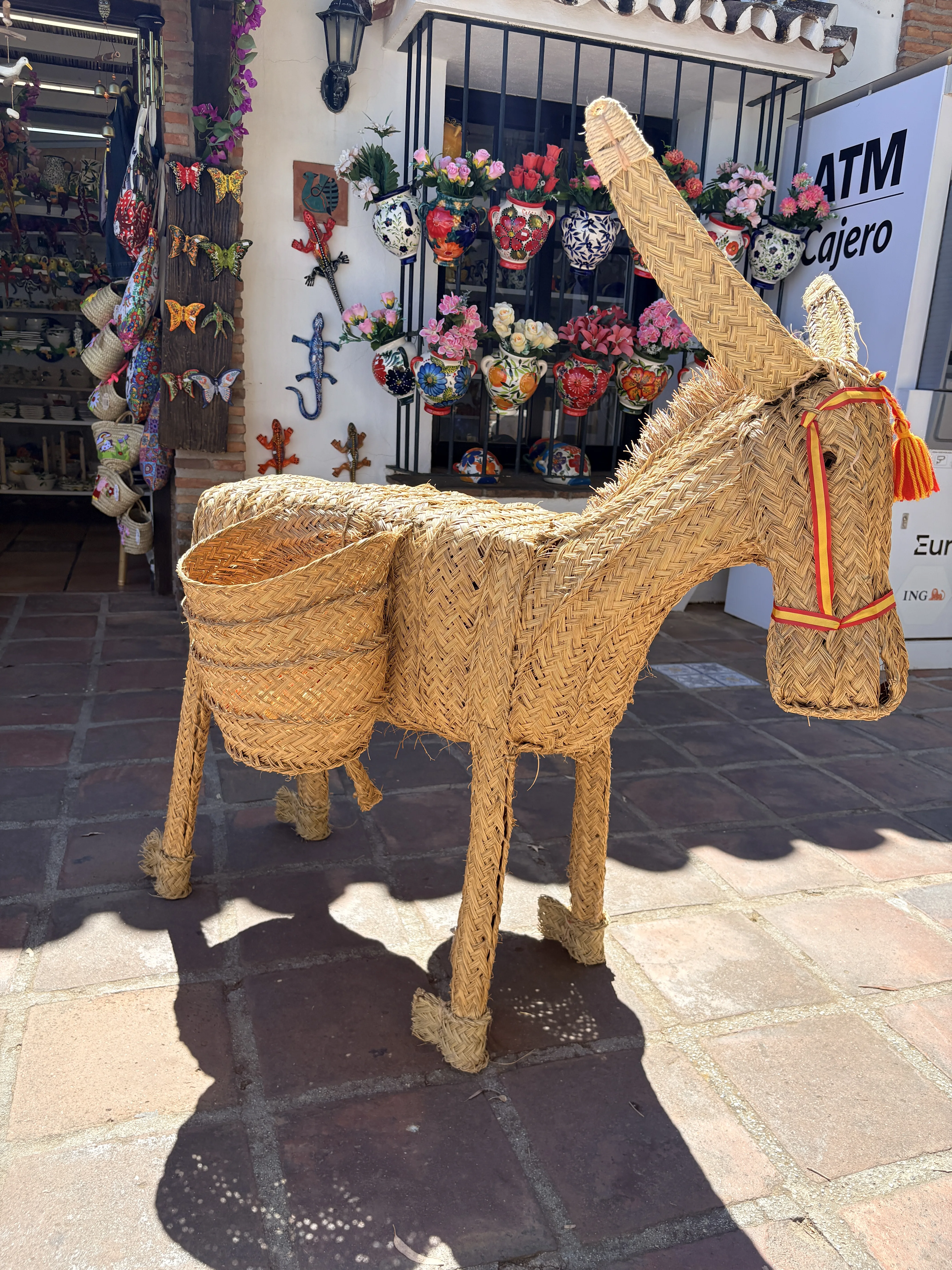
Flower-covered walls, coastal views framed by arches, a famous donkey statue, hidden gardens inside shops and restaurants. The variety is what makes it worth a full day rather than an hour.
Plan for more time than you think you need. If you want the early and late light without a long drive each way, it’s worth basing yourself in the village.
Getting There and Where to Park
From Málaga the drive takes about 30 minutes on the A-7 toward Fuengirola, then up into the hills on the A-368. Having your own car makes Mijas and the coast around it far easier to explore at your own pace, so I always rent one through Discover Cars.
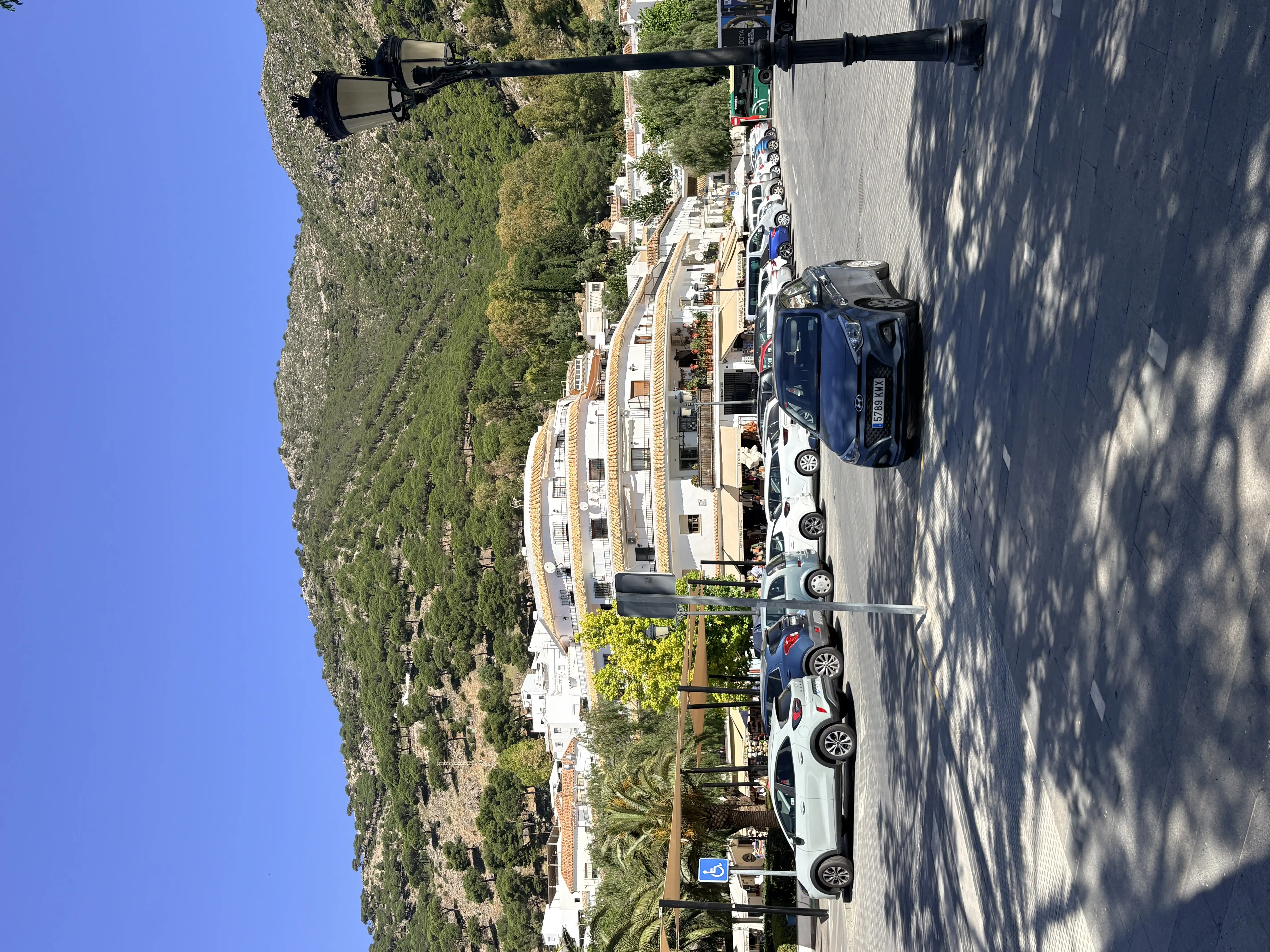
I parked at the main public car park right at the village entrance, which is the obvious choice and costs around €2 for a full day. It puts you exactly where you want to start.
For the full breakdown of where to park and what each car park costs, see the parking in Mijas Pueblo guide.
🎟️ I always find it easier to book the Mijas and Costa del Sol experiences ahead. Browse tours and tickets on GetYourGuide.
The Heart of Flowers
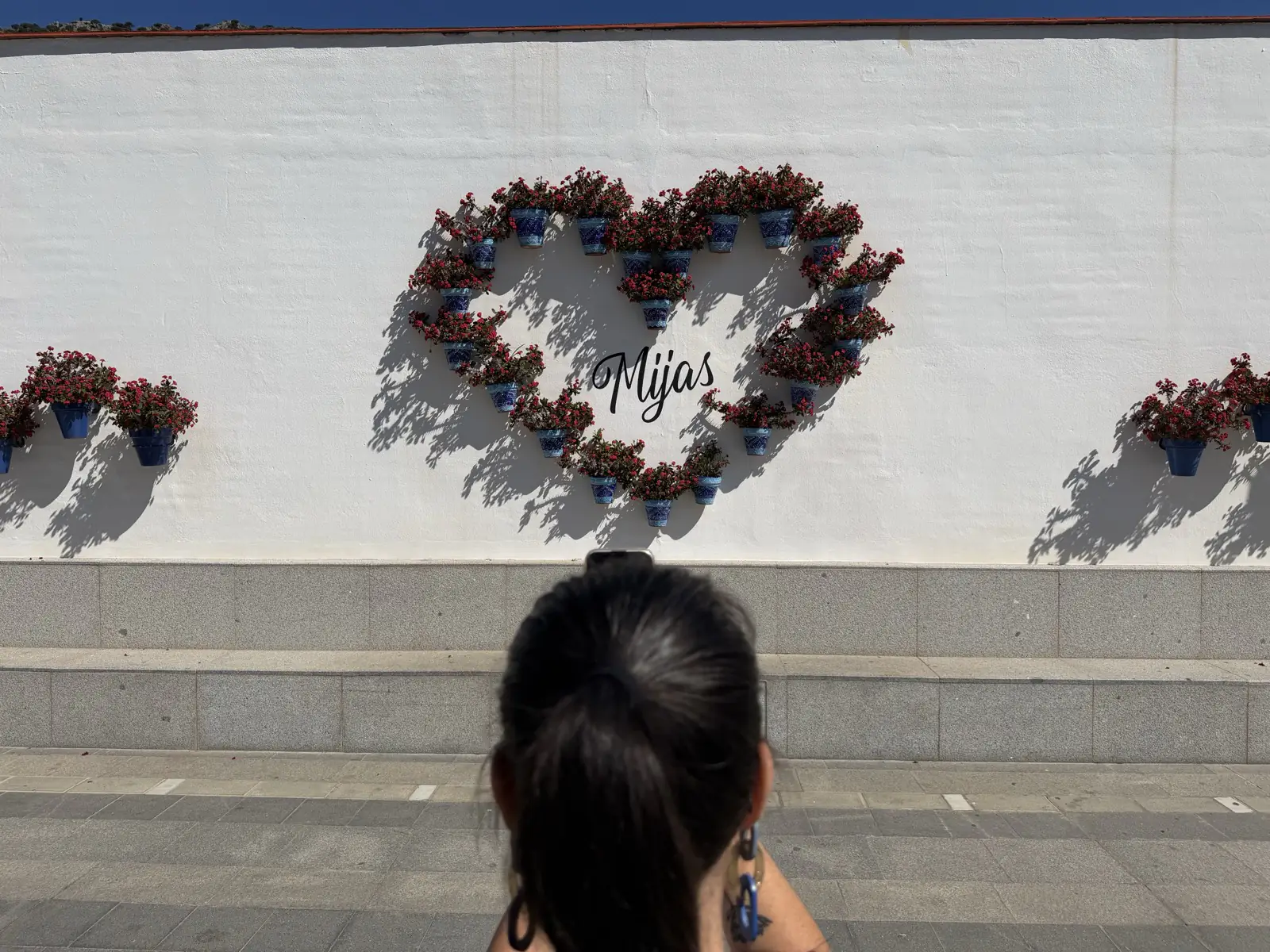
At the entrance to the village, right by the main car park, a heart-shaped display made from plants and flowers covers one of the walls. It’s the first photo spot you’ll hit before you’ve even properly started, and it sets the tone for what follows.
It’s one of the most-photographed details in the village, so you may have to wait for a gap. Thirty seconds of patience and you’ll have it to yourself.
The Blue Chairs with Flower Pots
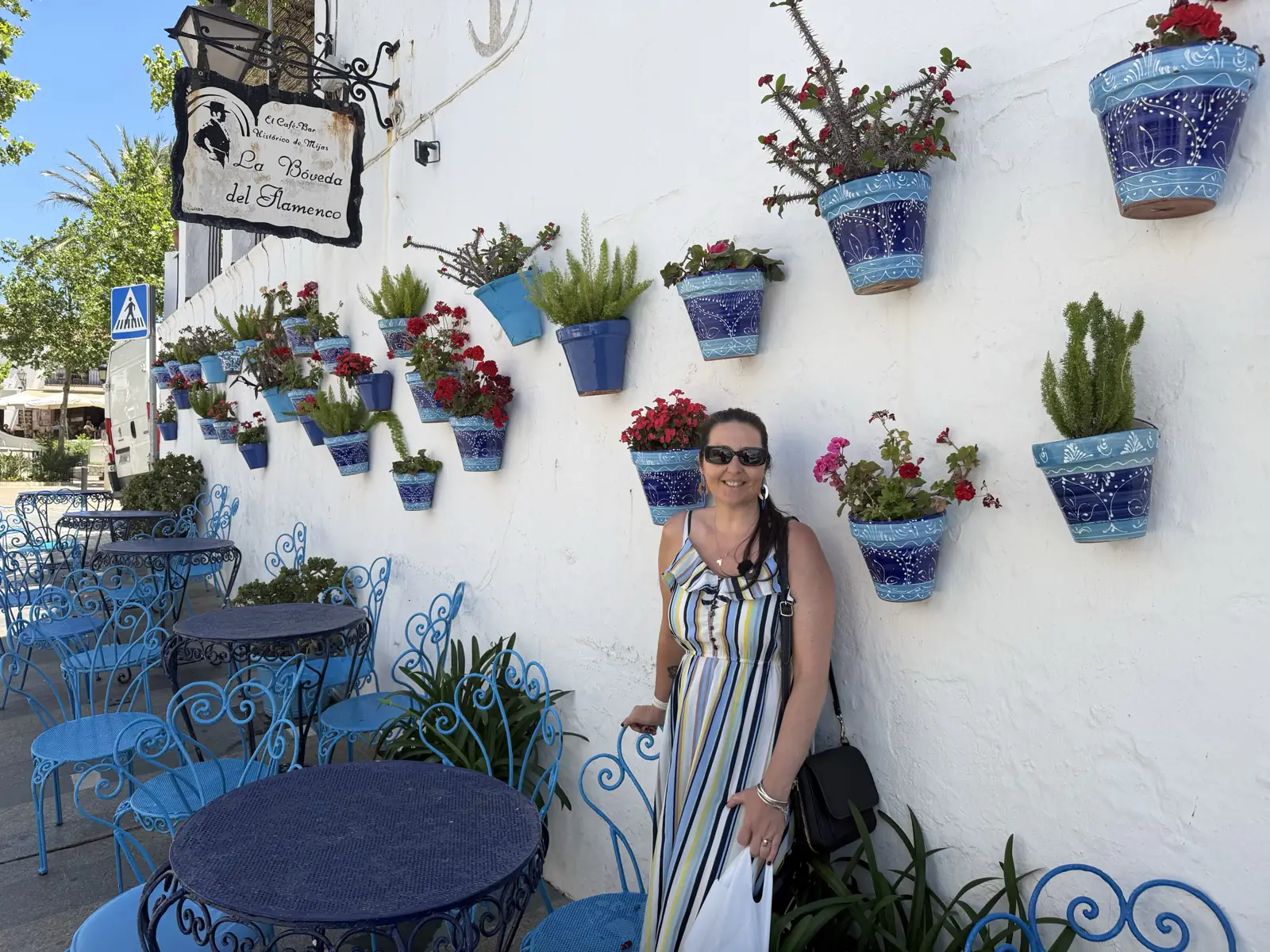
The row of blue chairs backed by terracotta pots overflowing with colour is the shot most people come to Mijas for. It’s deliberate, set up for photographs, and it does exactly what it promises.
You’ll find it in the upper part of the village near the Paseo de la Muralla. The spot faces west, so afternoon light is what you want here.
The colour in the pots comes alive when the sun hits from the right angle. I ran out of time and took my photos around 2pm, which is fine, but after 4pm is when the light is genuinely good.
Arrive early in the day and plan to come back here last.
📖 Read next >> The best things to do in Mijas Pueblo
The Donkey Statue
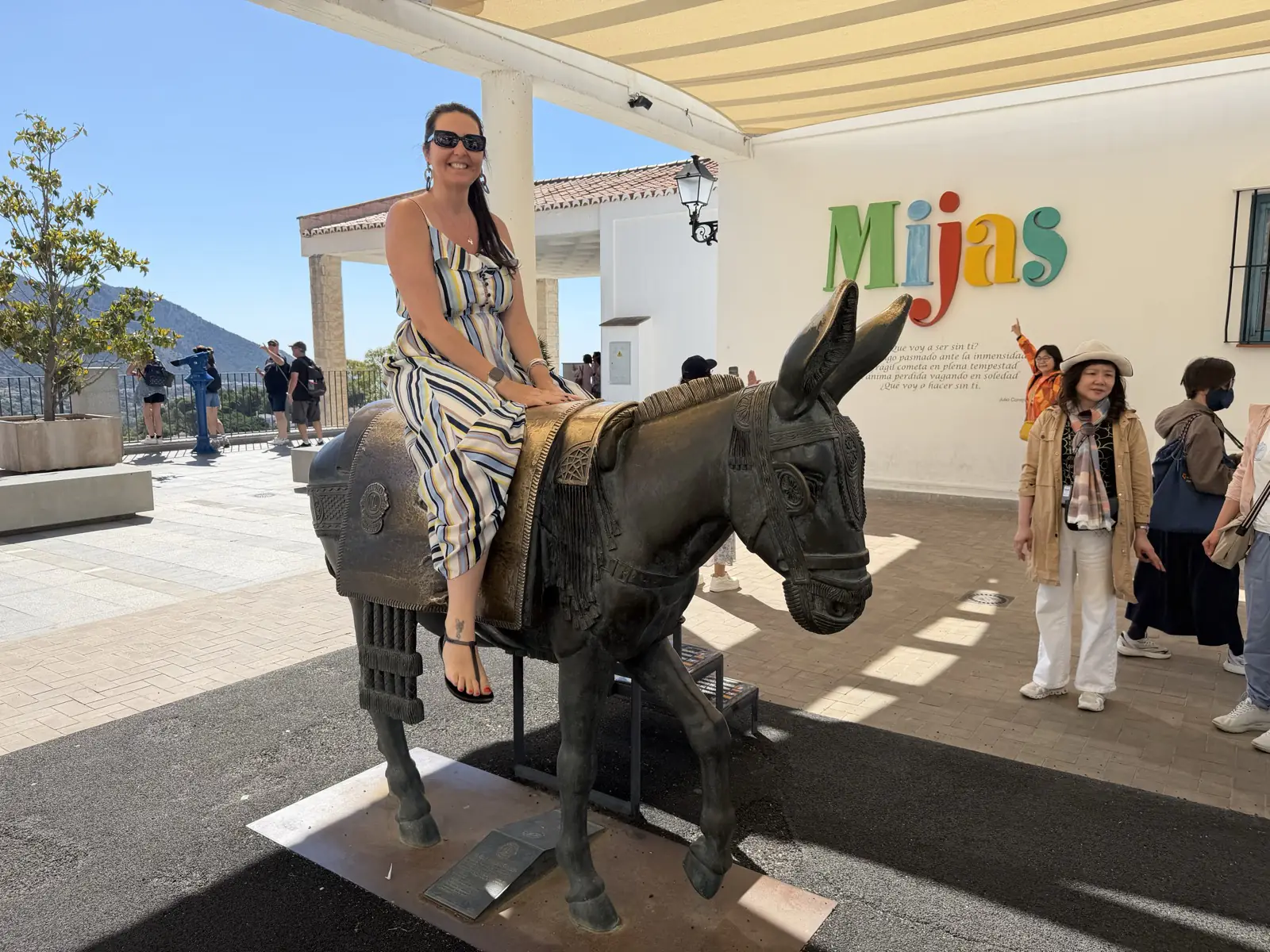
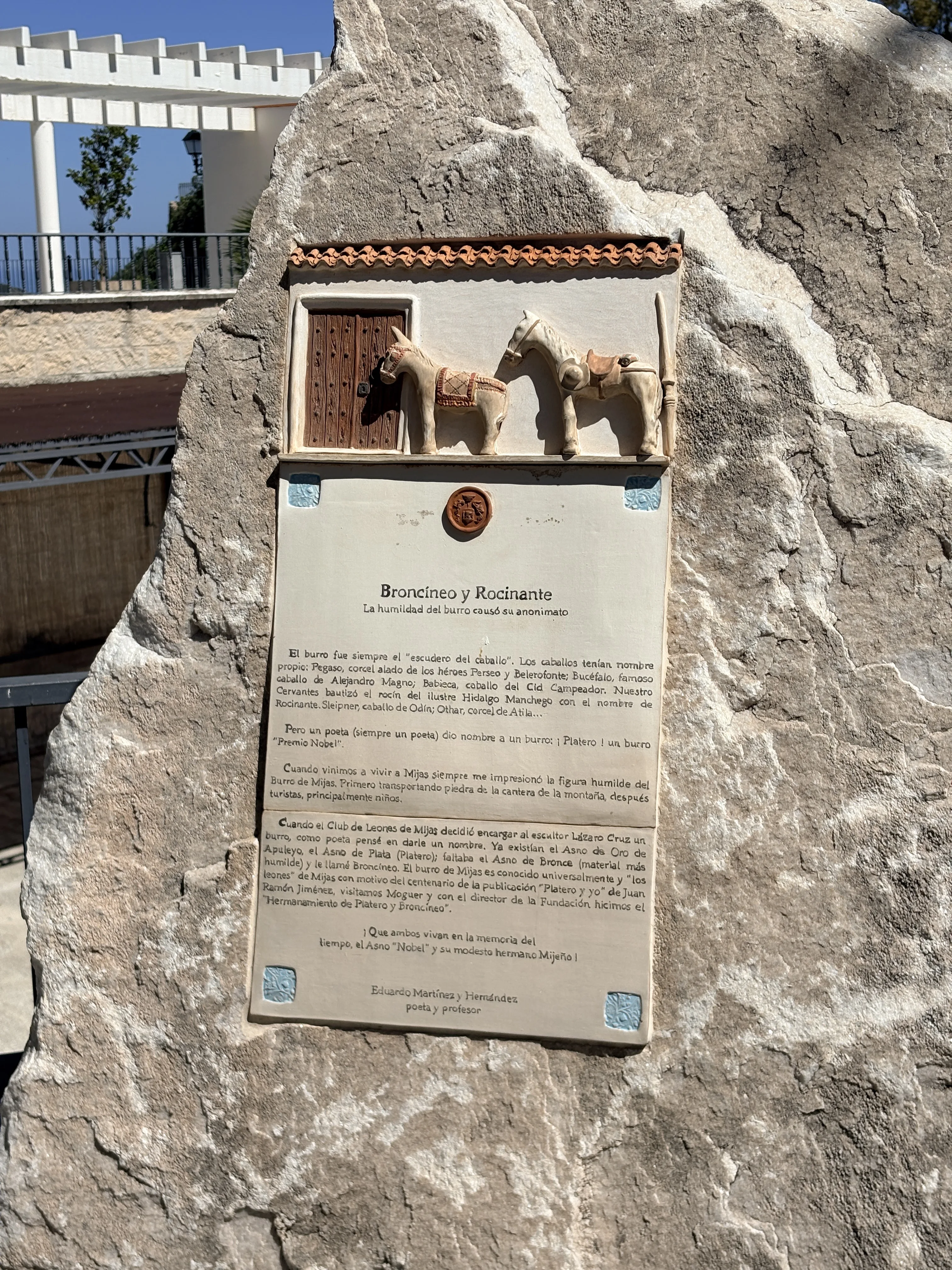
Mijas built its identity around donkey taxis, which carried visitors through the village streets for decades. The bronze statue near the village entrance is a nod to that history, and it’s genuinely one of the most-photographed spots in the village.
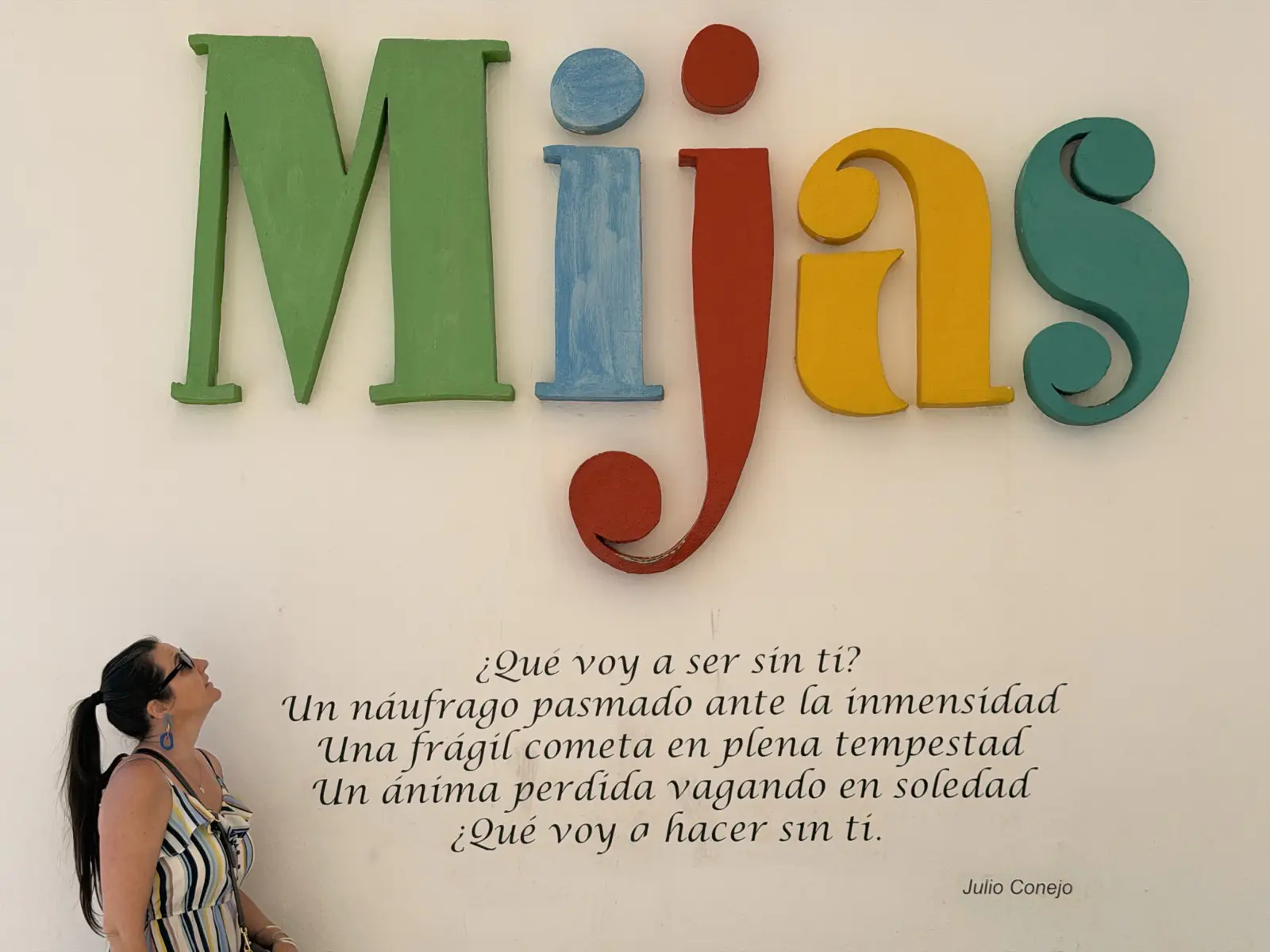
Behind the statue, the bold Mijas sign in painted letters makes a strong background. The mistake most people make is queuing right at the steps leading up to the donkey, which cuts the sign out of the shot.
Get the photographer to step back and move to the side. That’s the angle that gets both the statue and the sign in the frame at once.
Here are a few of my favourite areas to stay near Mijas:
⭐ Mijas Pueblo >> Stay up in the white village
⭐ La Cala de Mijas >> Beachfront on the Mijas coast
⭐ Fuengirola >> The nearest big resort town
⭐ Benalmádena >> Family-friendly coast nearby
The Tunnel
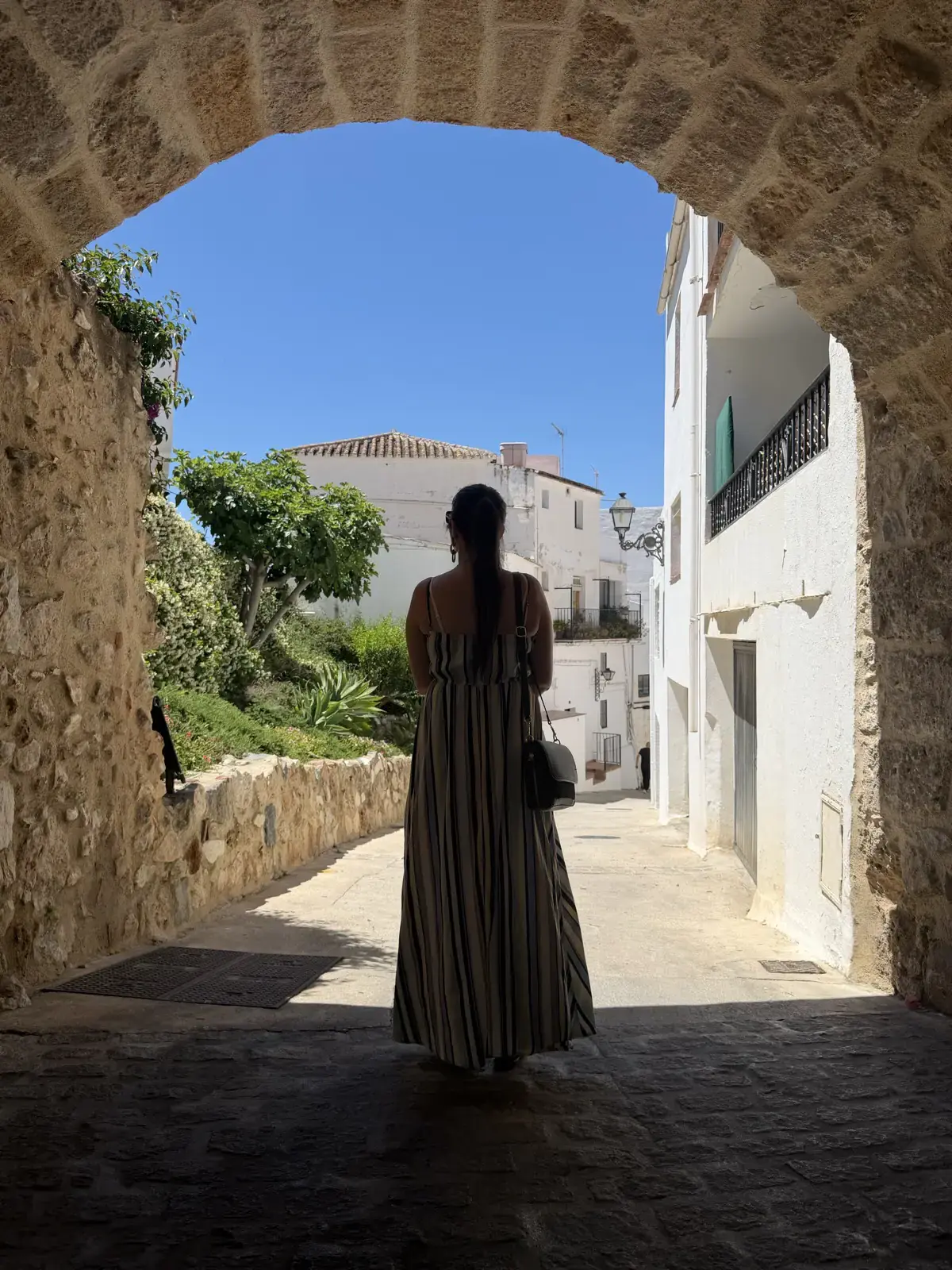
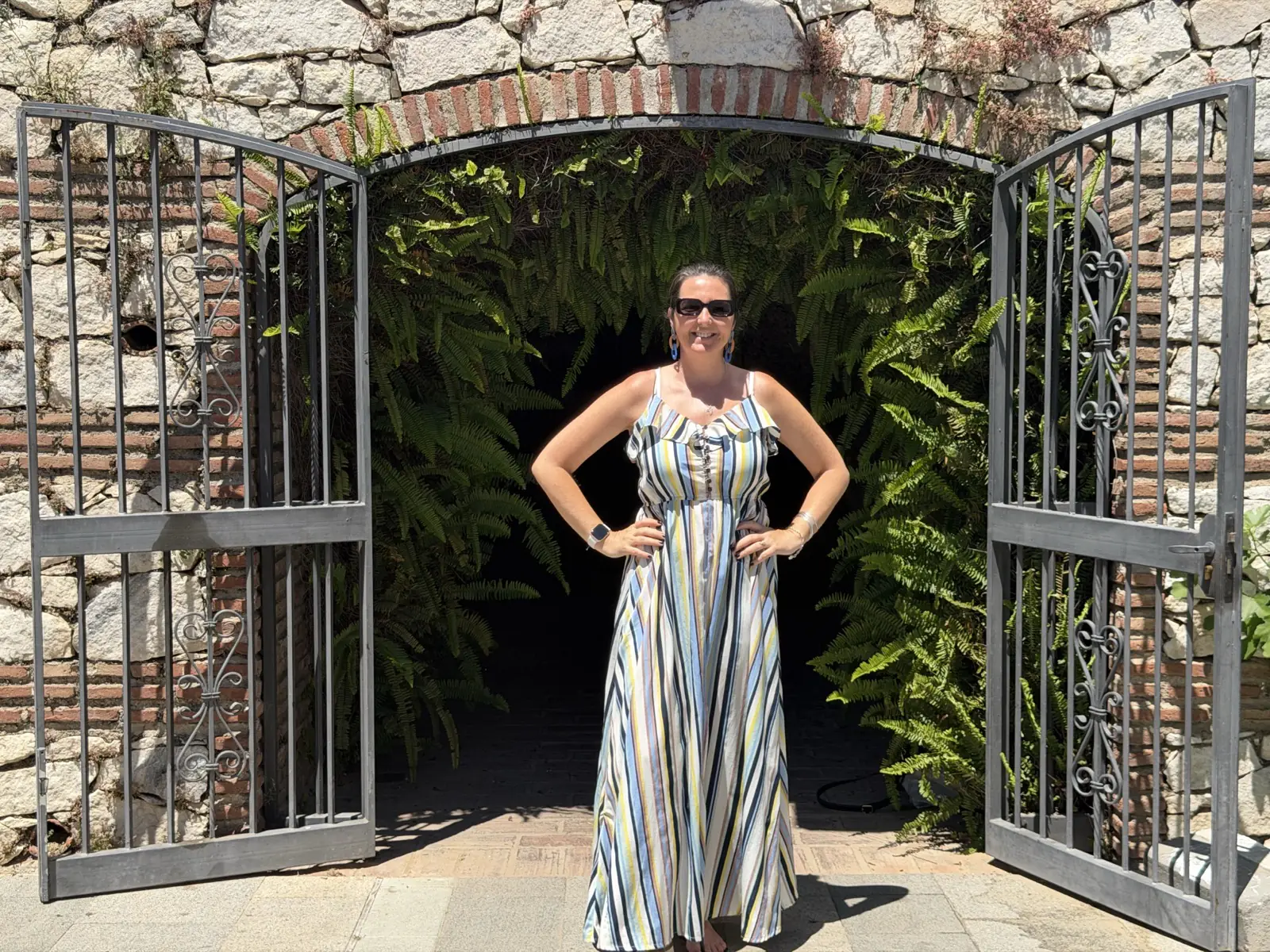
Cut through solid rock, the short stone tunnel in the village is one of the better framing devices you’ll find. Stand at one end and shoot toward the arch of light at the exit, or step inside and shoot back the way you came.
It’s less well-known than the blue chairs spot, which means it’s usually empty. The stone walls soften the direct light, so it works at almost any time of day. Worth trying from both ends before deciding which direction gives the better shot.
The Arch Viewpoint
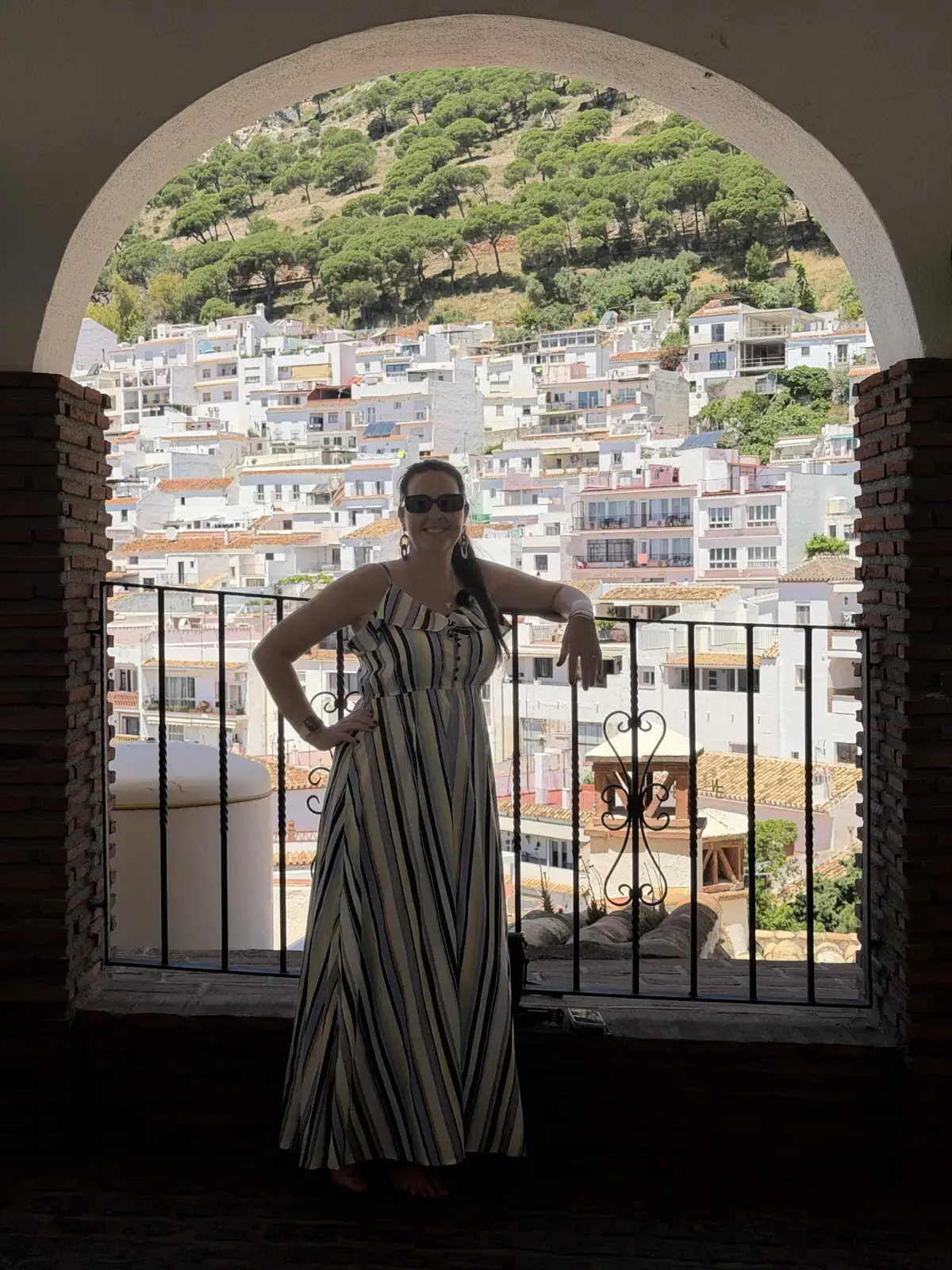
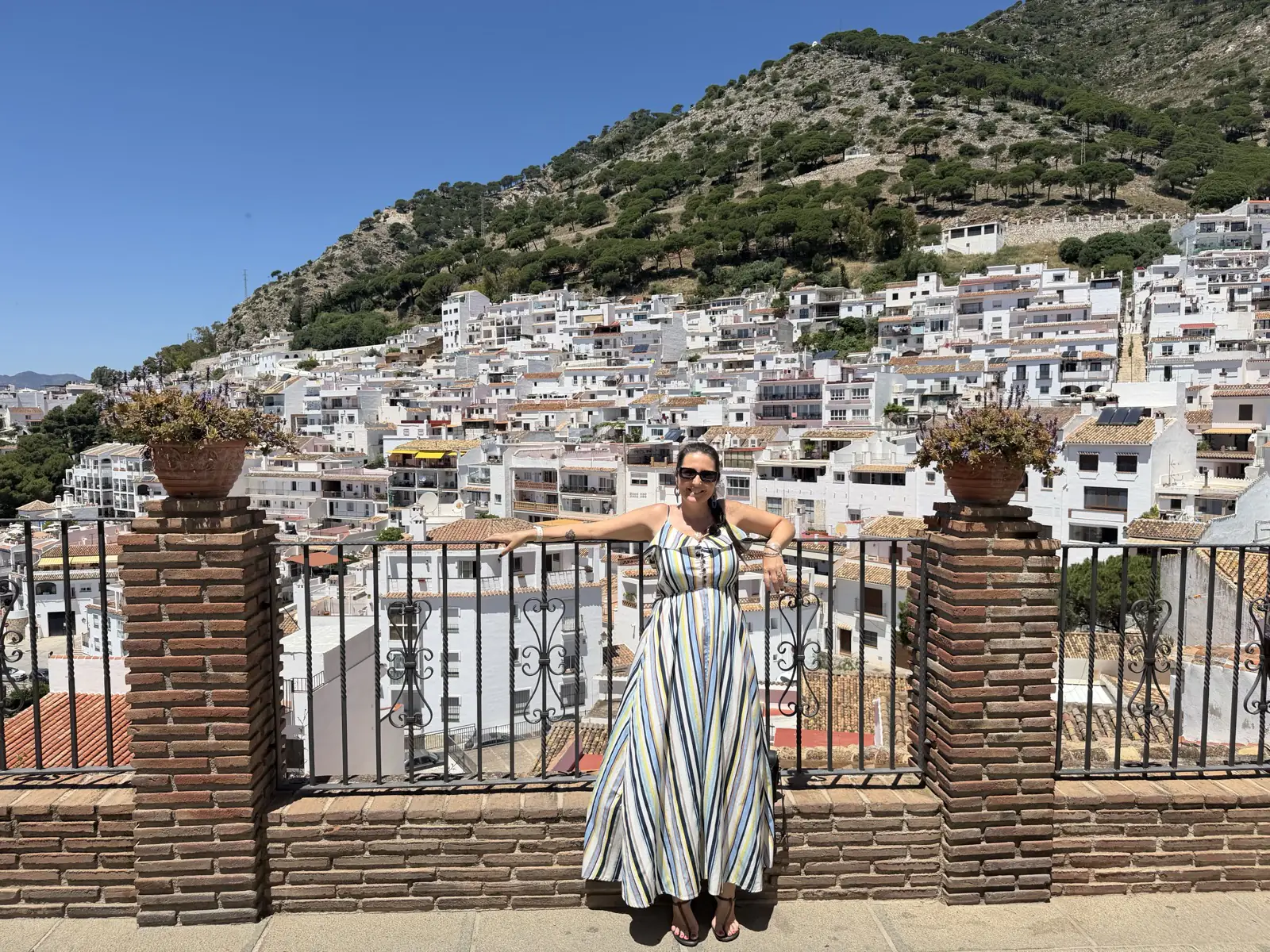
One of the arch openings in the village frames the whitewashed walls and rooftops behind it in a way ground-level shots can’t match. Shoot through the arch for depth and texture, or stand in the opening and let the white village fill the background behind you.
Move around a little before you commit to the shot. A foot either side changes the composition significantly.
READY TO BOOK YOUR TRIP TO MIJAS?
🎟️ Best guided tours: I use GetYourGuide
🚗 Rent a car: I use Discover Cars
🏨 Accommodation: Find hotels near Mijas
🚆 Trains and buses: I book through Omio
🛡️ Travel insurance: I use SafetyWing
The Flower-Covered Streets
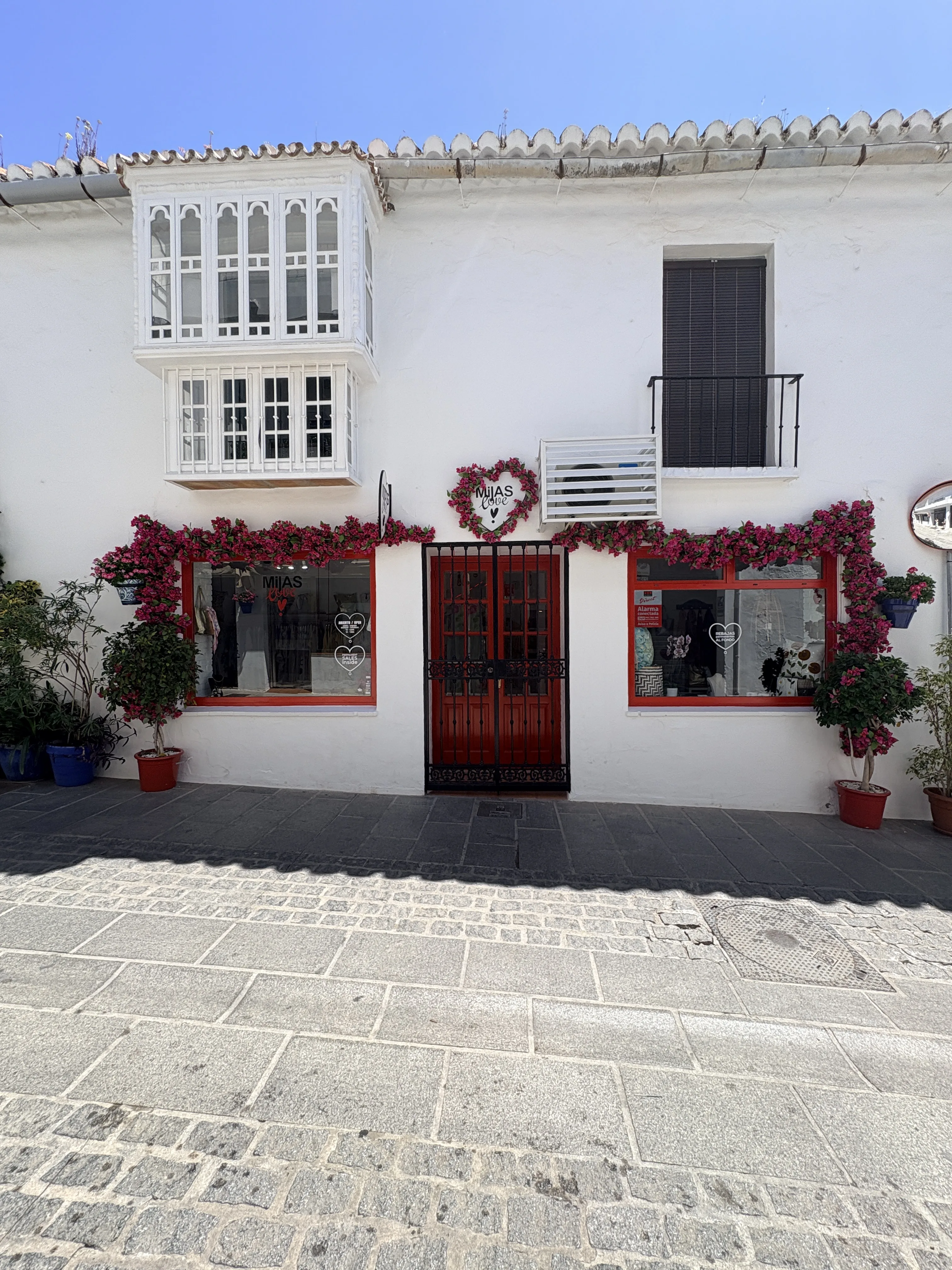
The streets in Mijas aren’t all equal. Some are deliberately decorated for photographs, with overhead flower canopies, painted pots, and cobblestones that catch the morning light. Others are quieter and better for it.
Calle San Sebastián
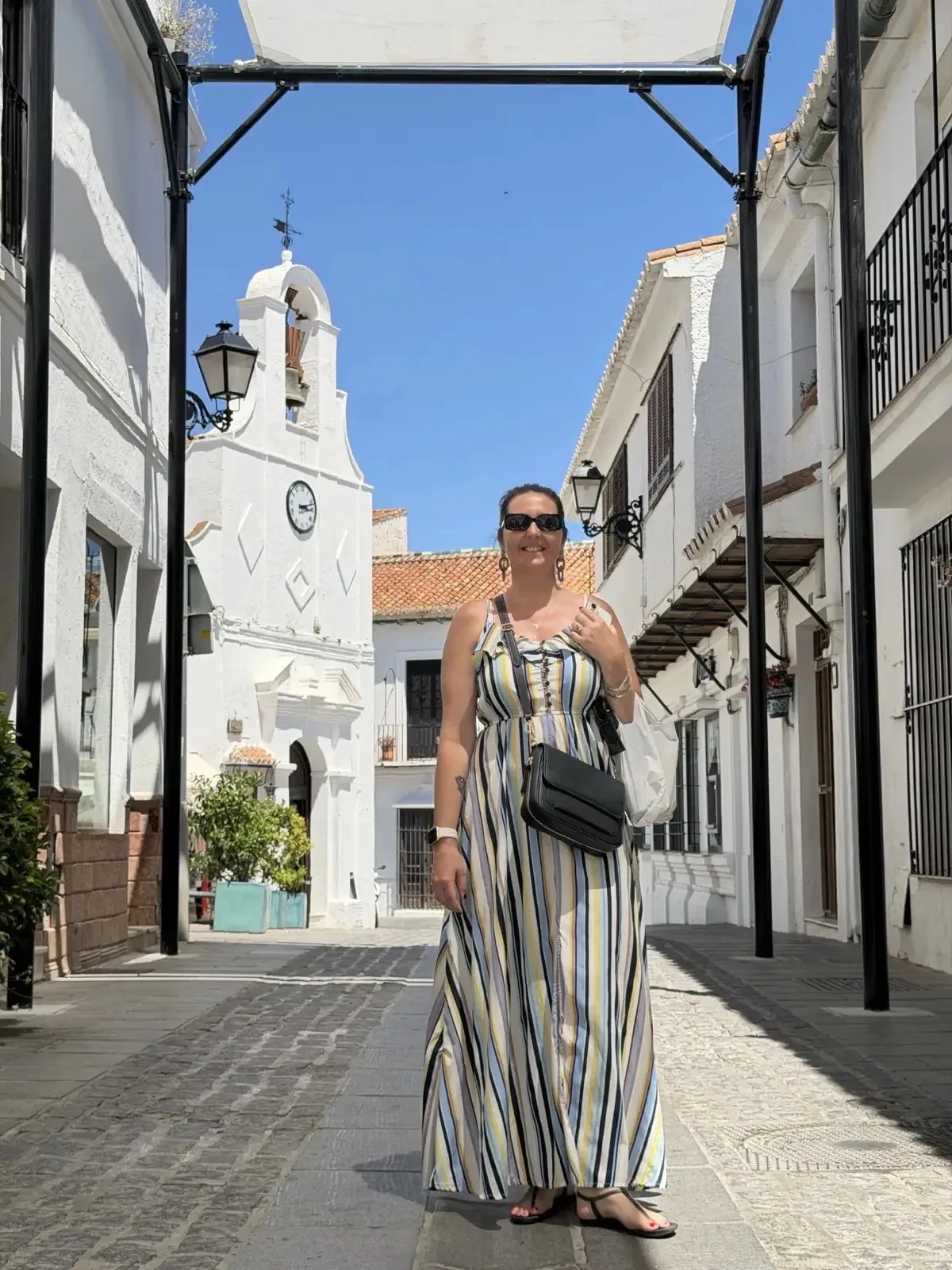
Calle San Sebastián is the most-photographed street in the village. The cobblestones, the white houses on each side, and the 17th-century church rising at the top give you a natural frame that most visitors come to Mijas specifically to shoot. Morning light hits it from the best angle.
Calle Calvario
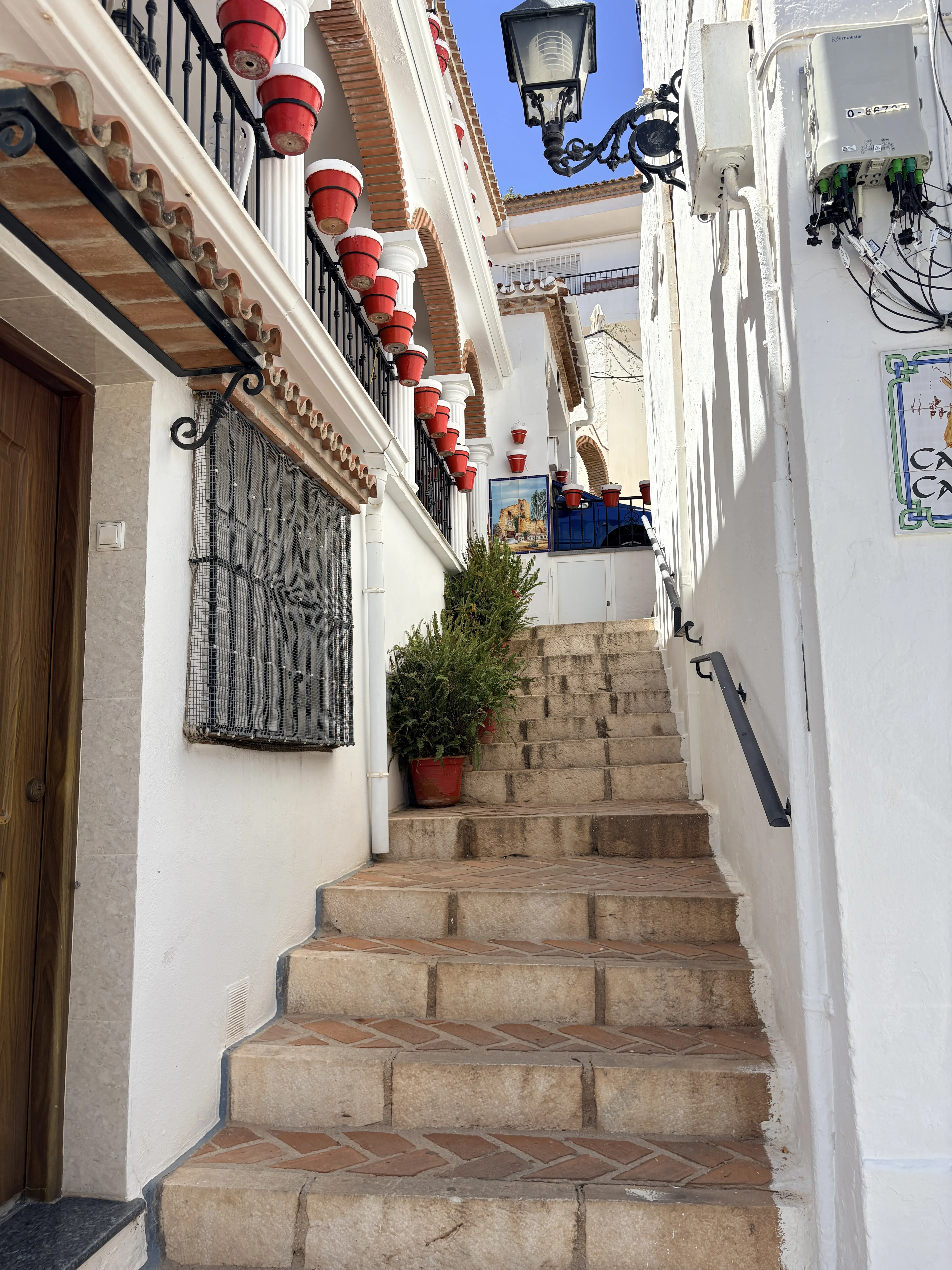
Calle Calvario in the upper village has one of the most densely flower-decorated stretches in Mijas. Hundreds of geraniums cover the walls, arches, and terraces along here. It’s a ten-minute walk from the main square and significantly quieter than the streets near the entrance.
Calle Muro
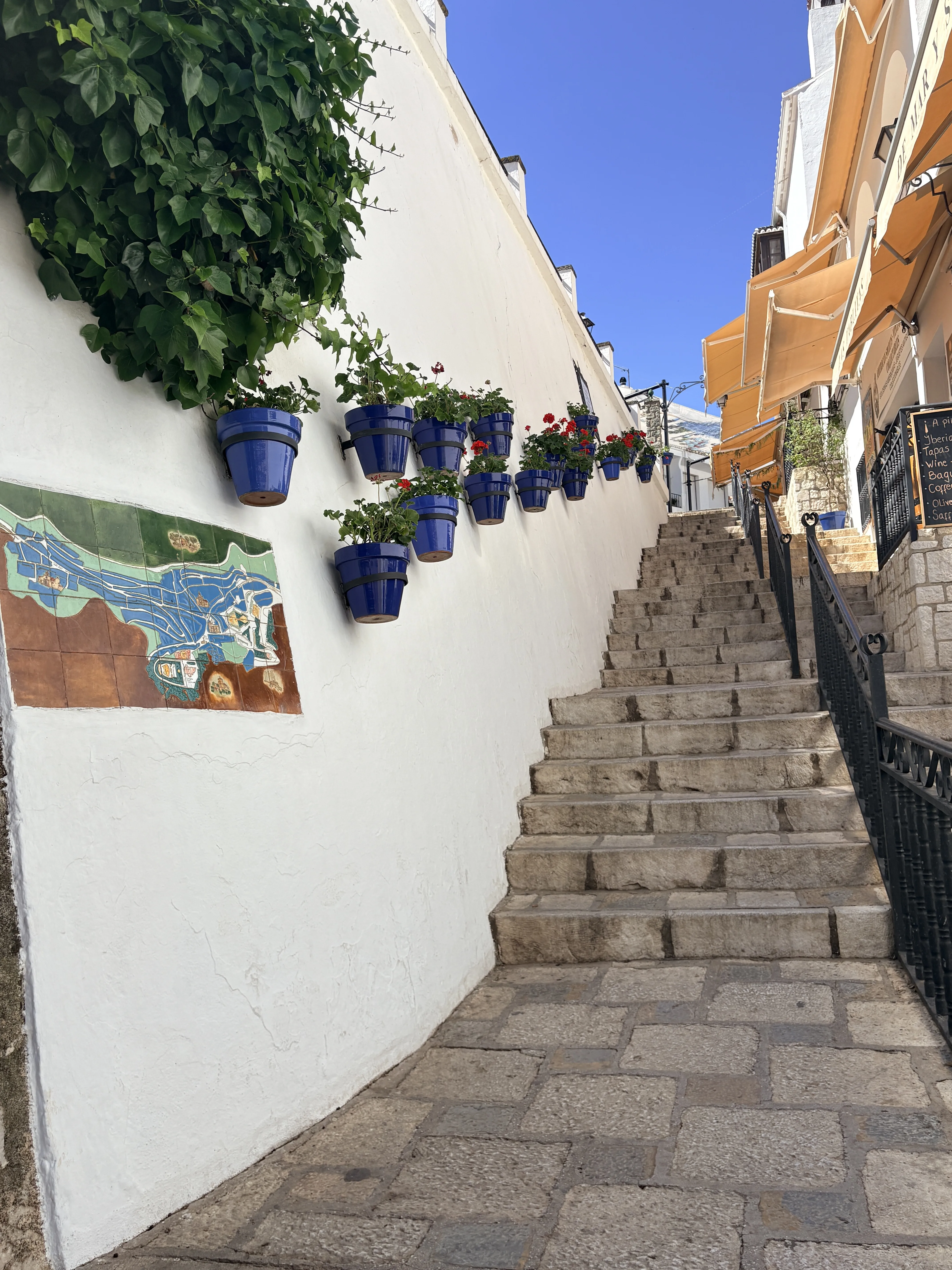
Calle Muro runs along the old Moorish walls and gives you a stretch of whitewashed houses with the coast appearing in the distance at the far end. The combination of village above and sea below is what makes this one worth finding.
Calle Algarrobo
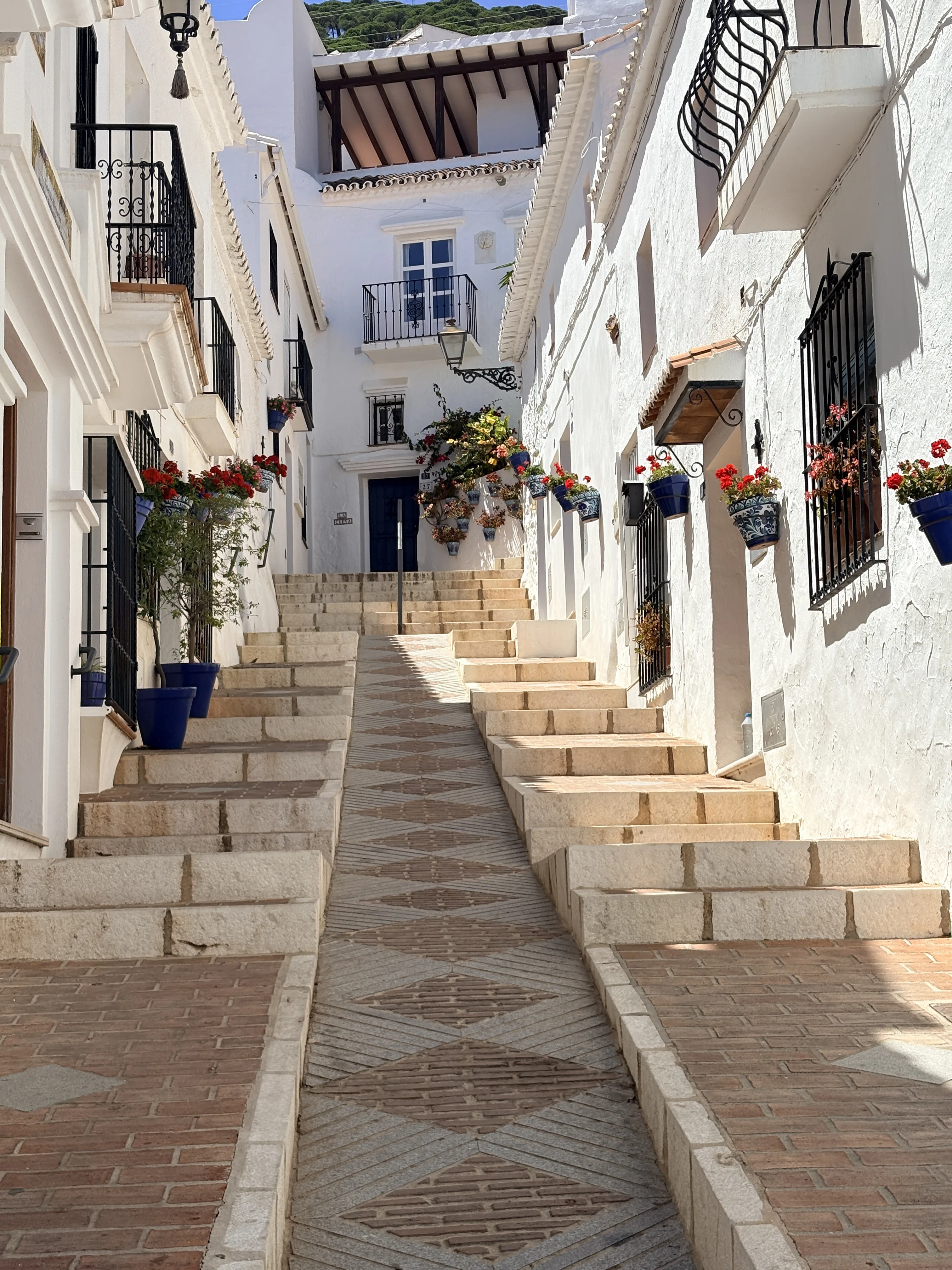
Calle Algarrobo is one of the less obvious finds. A staircase off the main route leads down to the Plaza Virgen de la Peña, with a small balcony overlooking the square.
Most visitors miss it entirely. Worth the detour if you’re exploring beyond the main circuit.
The Pretty Stairways
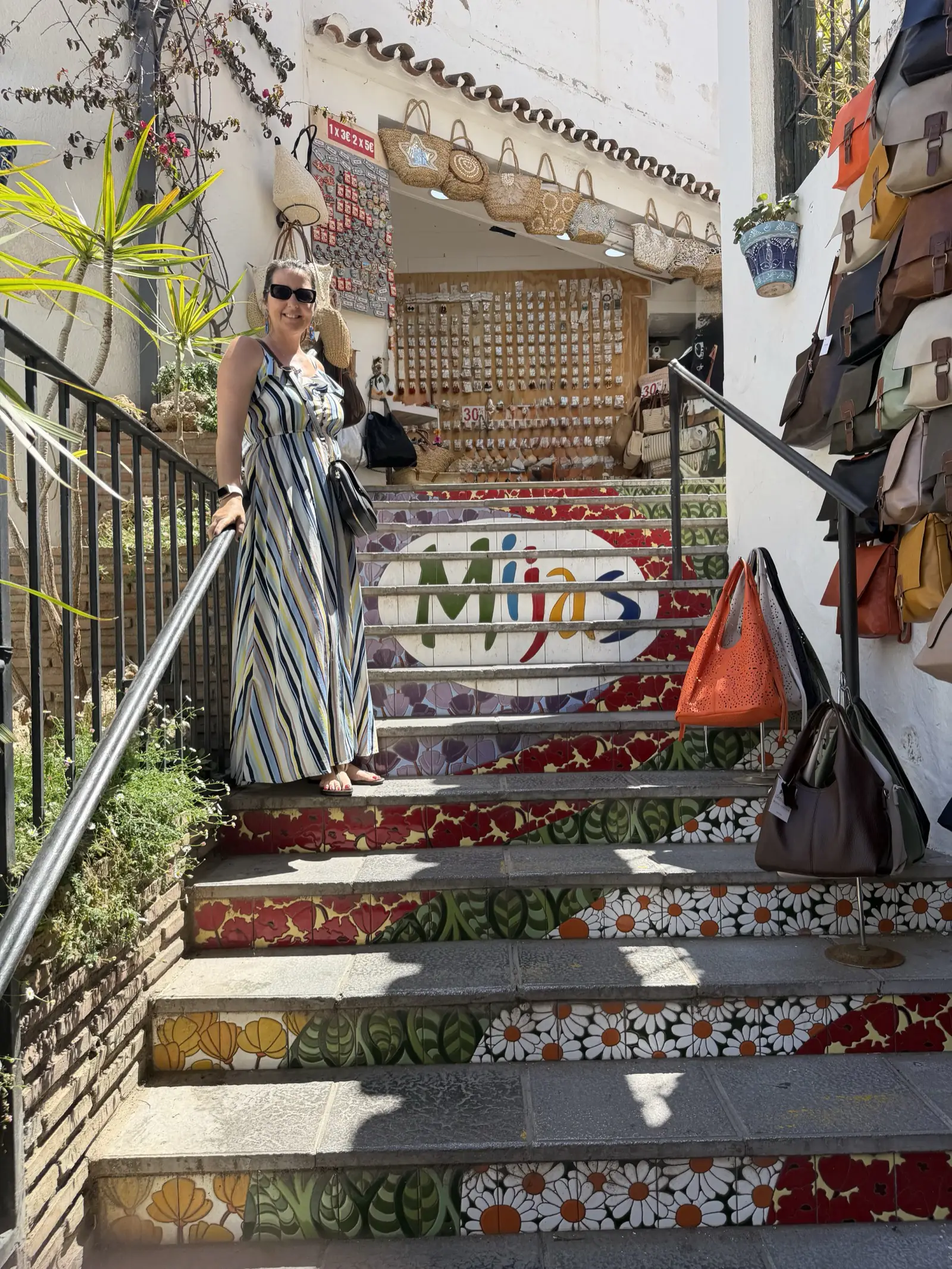
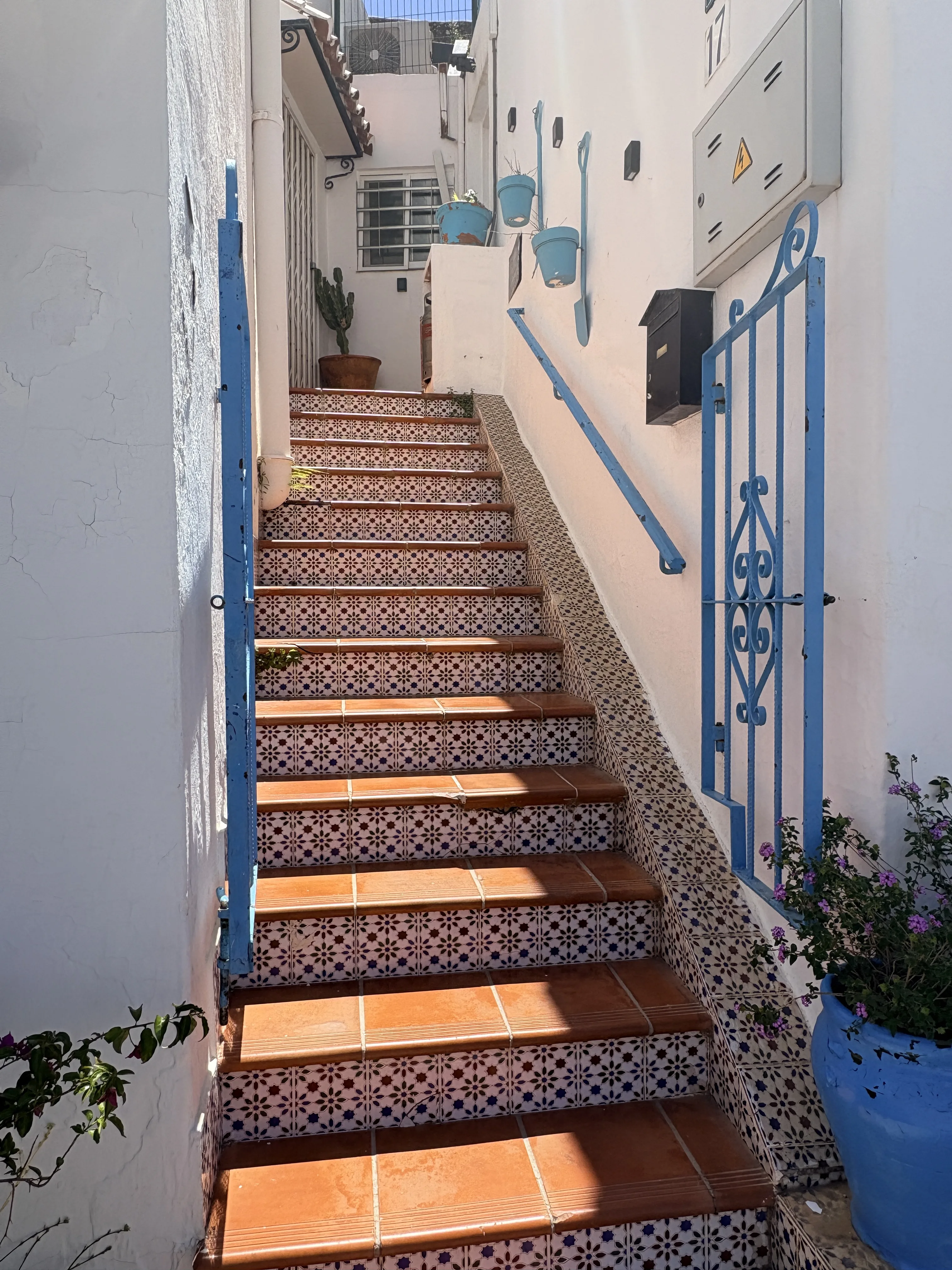
Several sets of steps in the village work as photo spots in their own right: tiled, flower-bordered, with views opening at the top. The steps off the ruta turística are the most accessible. Shoot from the bottom looking upward for the full frame of flowers and tiles, or from the top for the view behind you.
The Viewpoints
Paseo de la Muralla
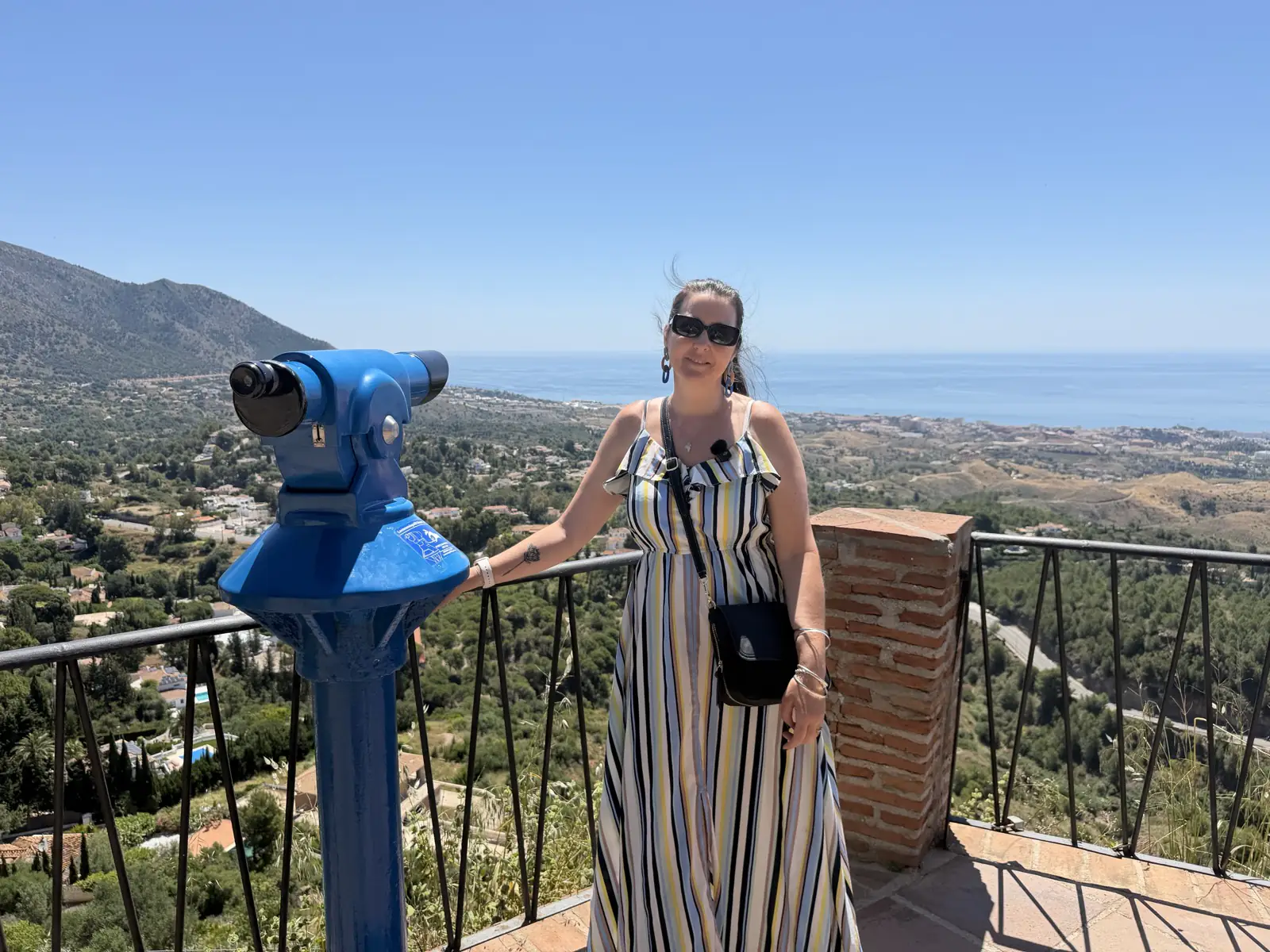
The Paseo de la Muralla is the terraced garden walk built along the old Moorish walls, and the view framed through the trees toward the coast is one of the best backgrounds in the village. Every plant along the walk is labelled with its name and origin, so it doubles as a botanical trail, though most people come for the sea view.
On a clear day you can see across to the mountains of Morocco on the horizon. Morning is the best time here. The light comes from behind you, the sea is sharp, and the gardens are usually quiet before 10am.
Mirador del Compás
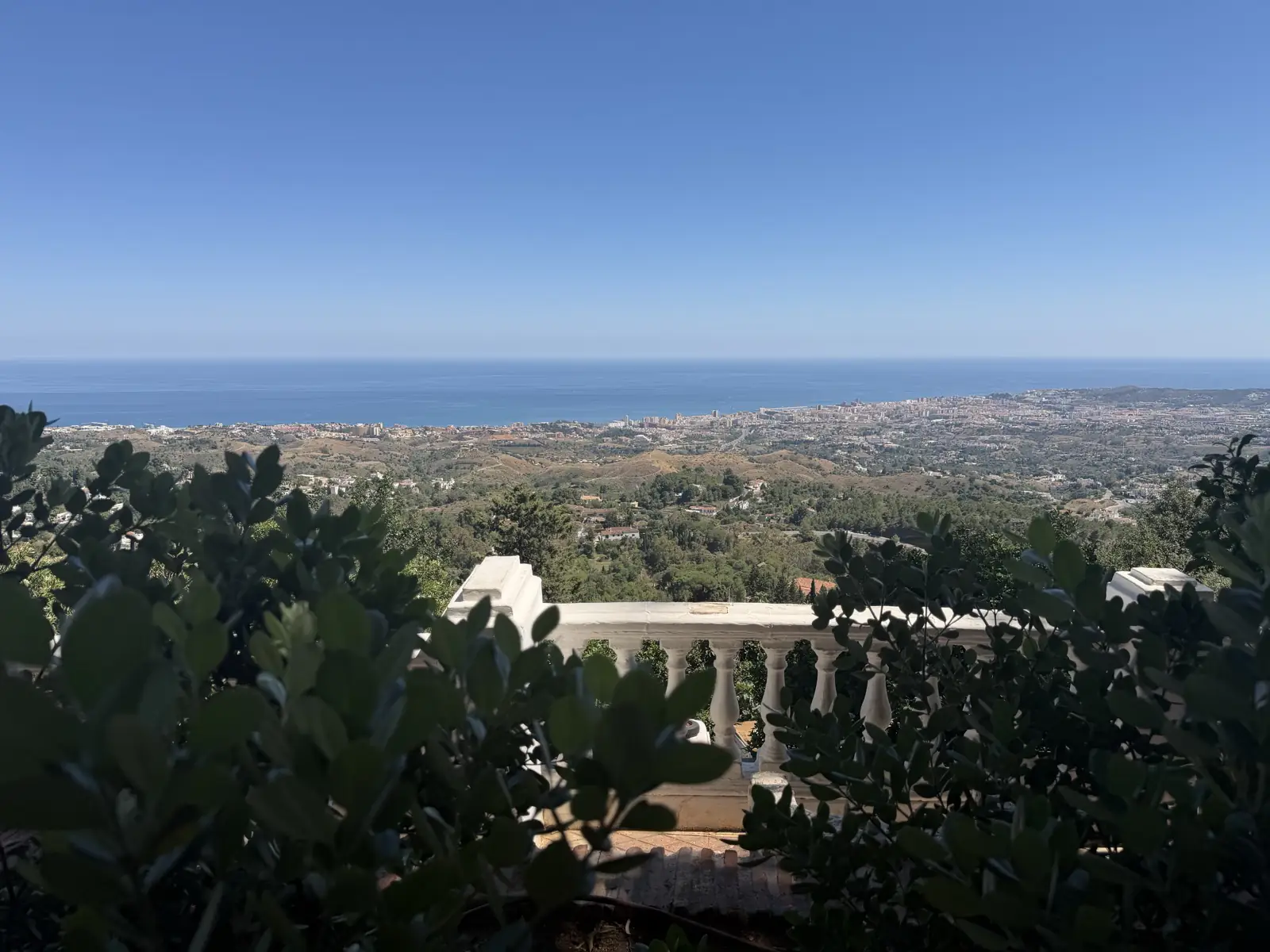
Just past the Paseo de la Muralla, the Mirador del Compás is a named viewpoint that gives you a wider angle over the coast and the rooftops below. It’s less visited than the gardens and the view is better, with nothing between you and the sea.
The Observation Tower
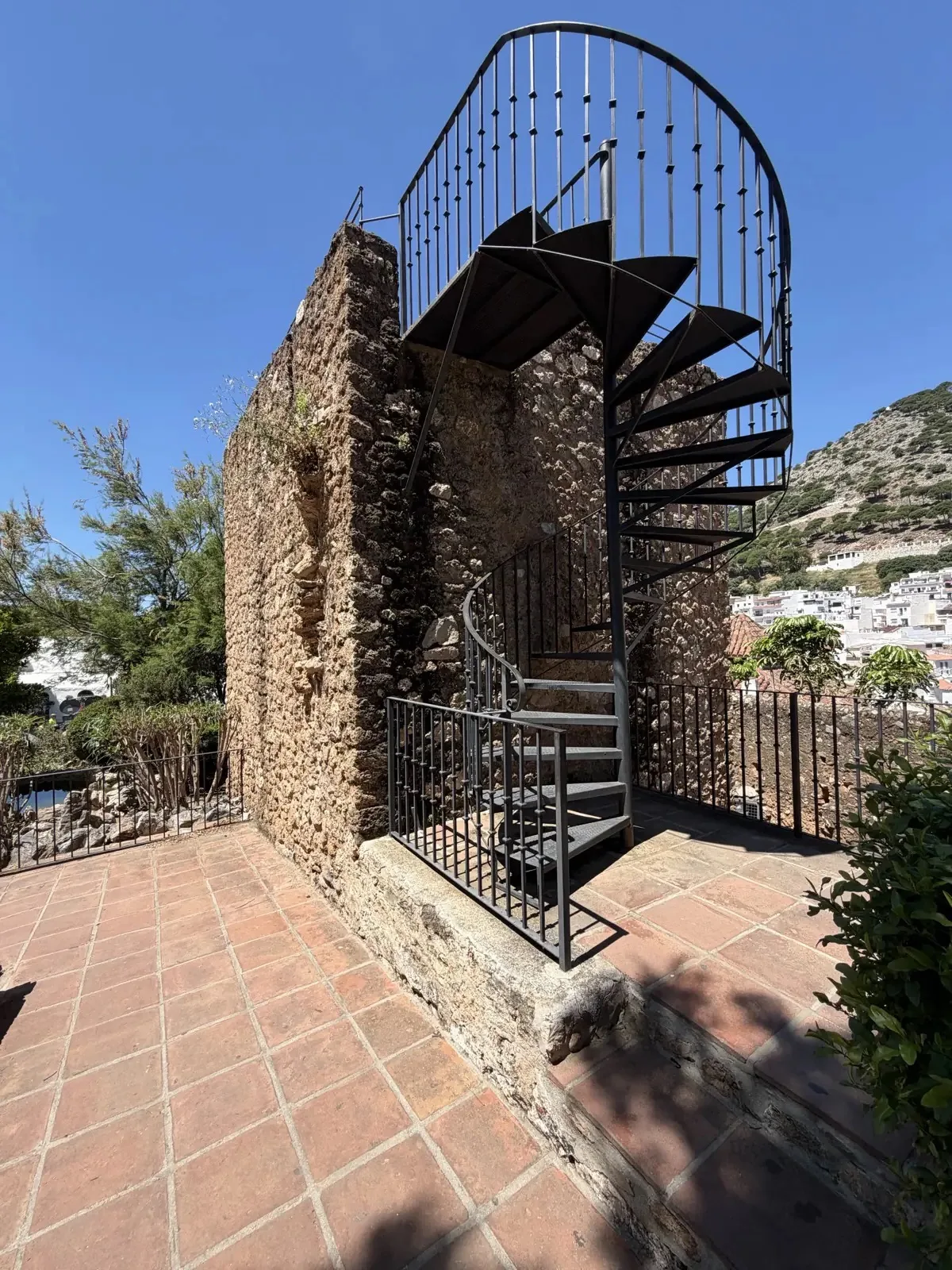
The observation tower near the gardens is the highest point you can reach in the village. The view from the top takes in the full sweep of the Costa del Sol, from the coast to the mountain ridge behind. Free to climb and two minutes up.
The Hidden Gardens
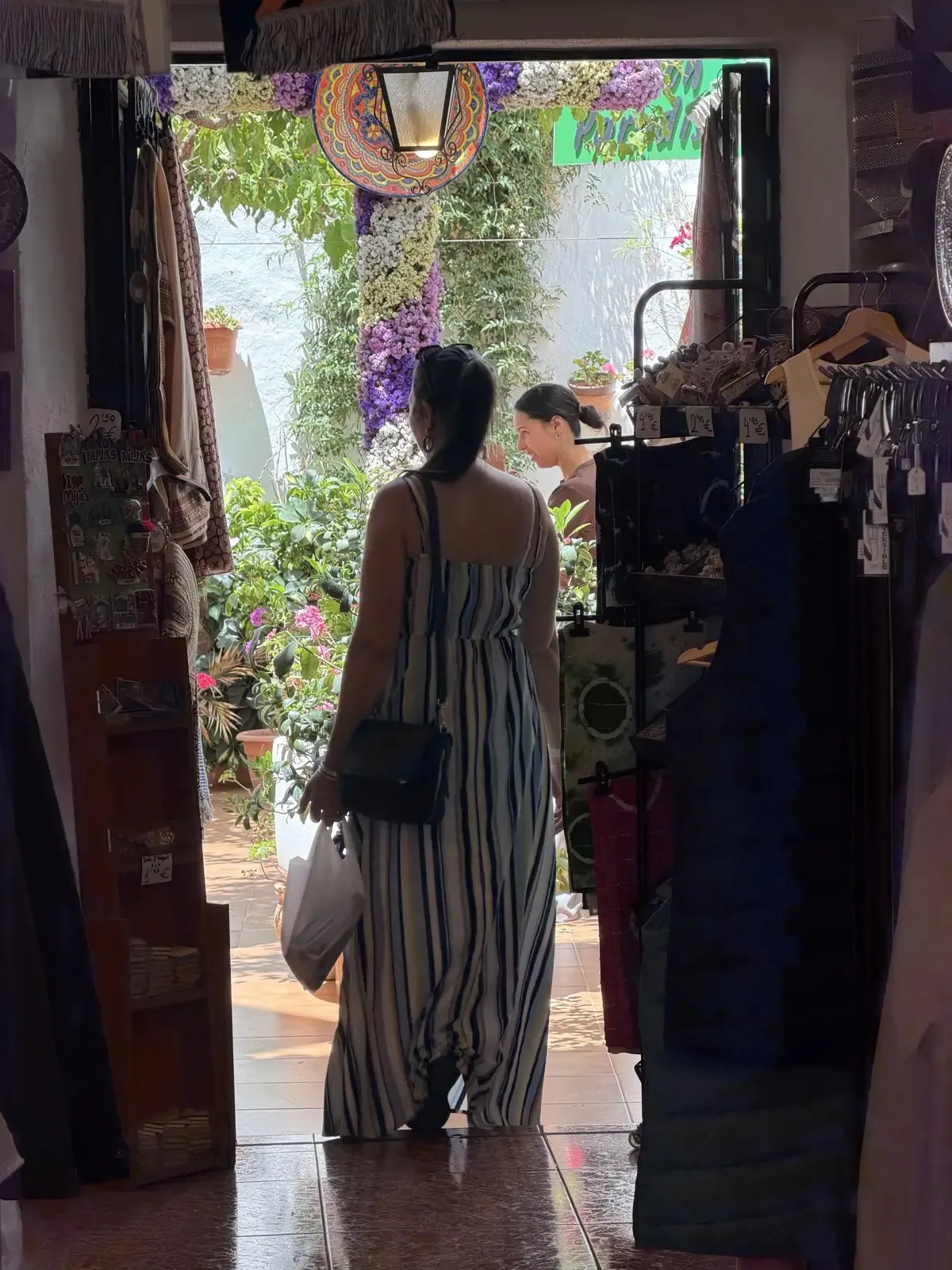
The best find of my visit wasn’t on any map. Several shops and restaurants in the village have gardens hidden behind their front rooms, and you’d walk straight past without knowing.
Cotton Paradise is one of them, a shop whose interior opens onto a garden courtyard filled with plants and a stone cross. It’s quiet, completely unexpected, and photographs beautifully.
The Secret Garden is the named one, a café with a garden interior that has been drawing visitors for years. Go in for a drink if nothing else.
The garden is the reason people recommend it. For more places to eat and drink in the village, see where to eat in Mijas Pueblo.
The Santuario de la Virgen de la Peña
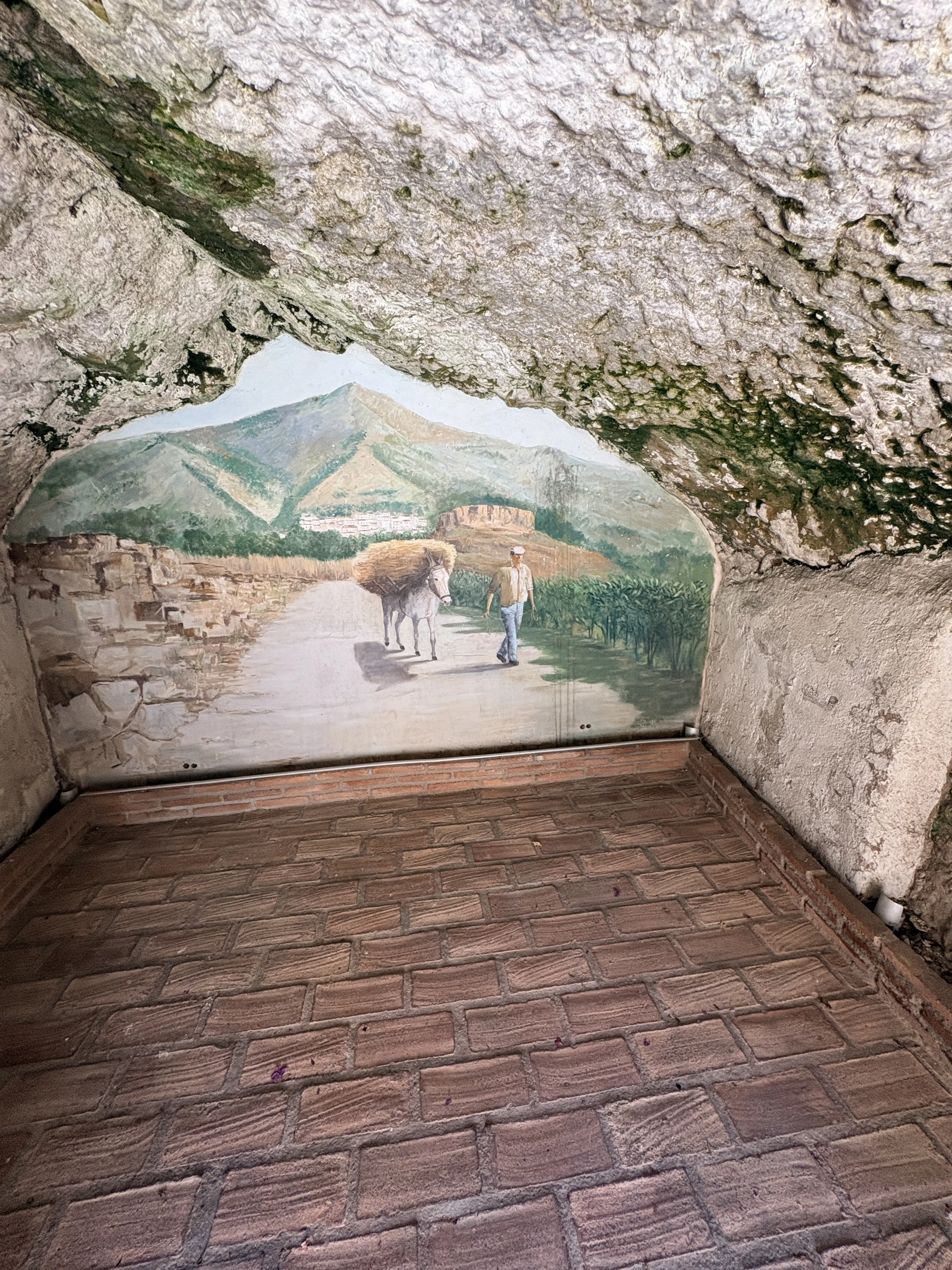
Carved directly into the rock face, the Santuario de la Virgen de la Peña is one of the most unusual things in the village. The cave entrance is narrow and dark, with the shrine inside lit by candles and votive offerings covering the walls. It’s been a place of pilgrimage since the 15th century.
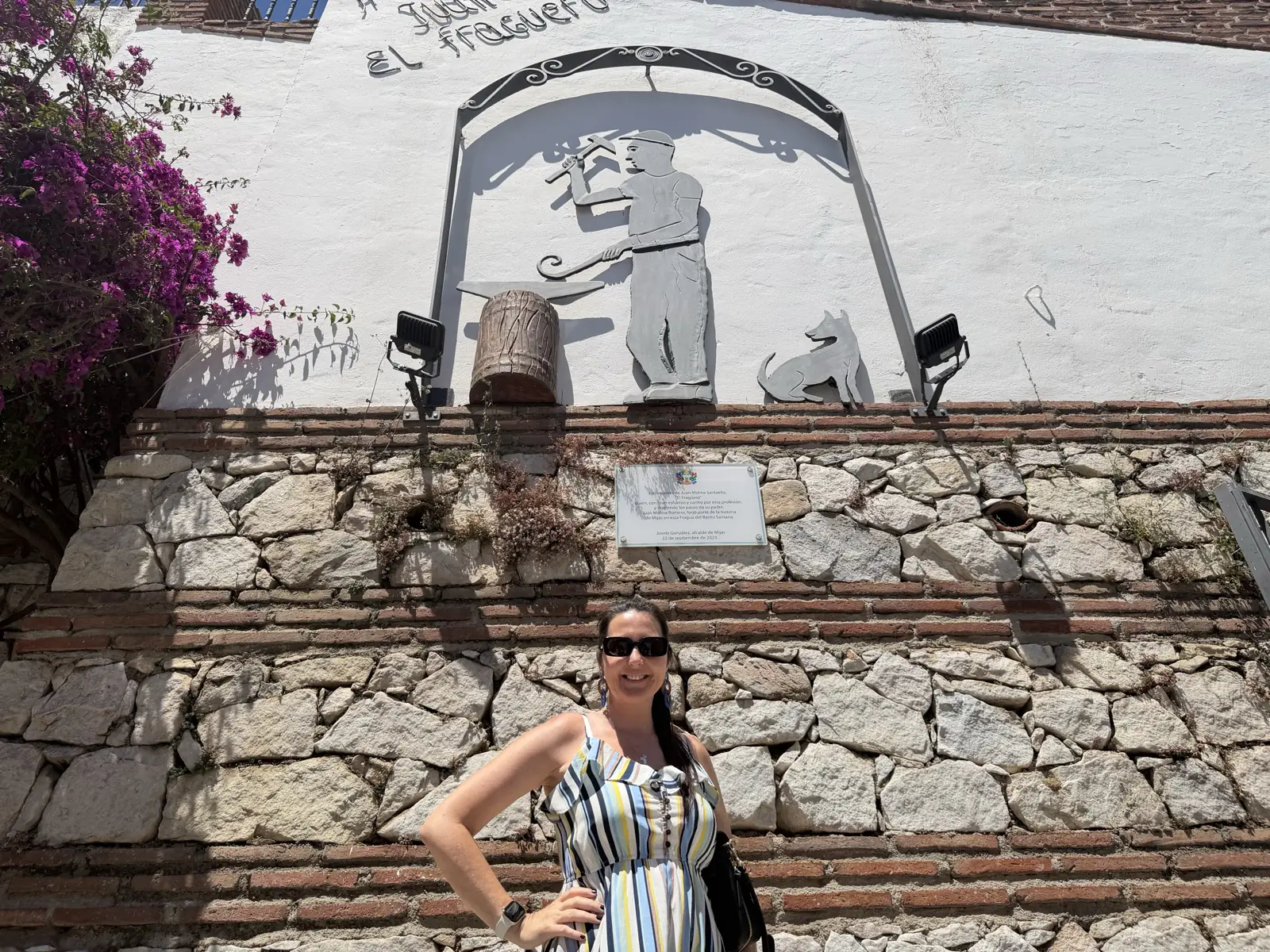
The exterior shot, with the carved rock frame around the entrance, is the one most people go for. Go early and you can get it without anyone else in the frame.
The Bullring
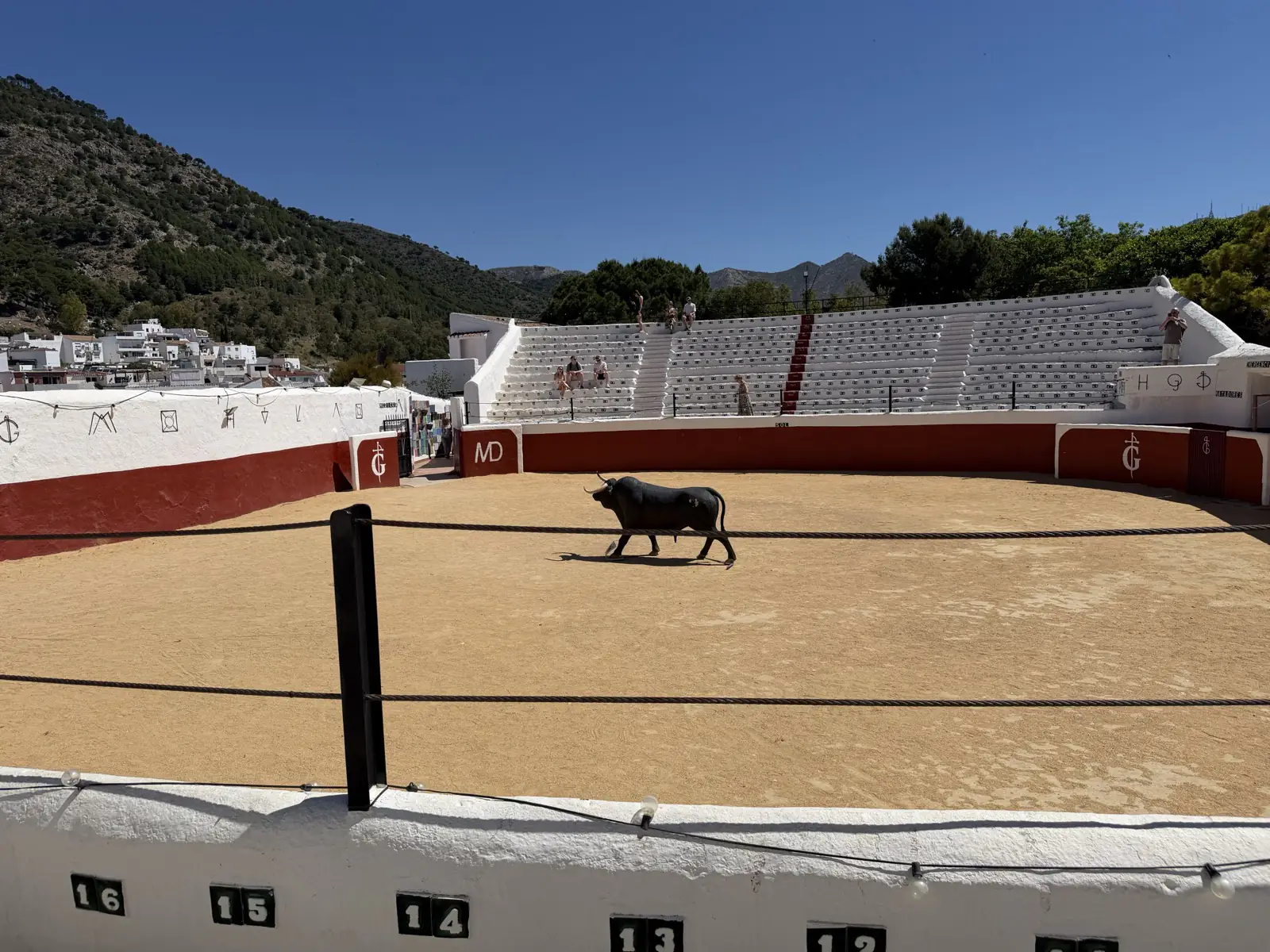
The Plaza de Toros de Mijas is one of only a handful of oval bullrings in Spain. Most are circular; this one isn’t, and the shape gives the interior a noticeably different look and feel. Entry costs €3 and covers the ring itself, the chapel where matadors prayed before fights, and a small museum.
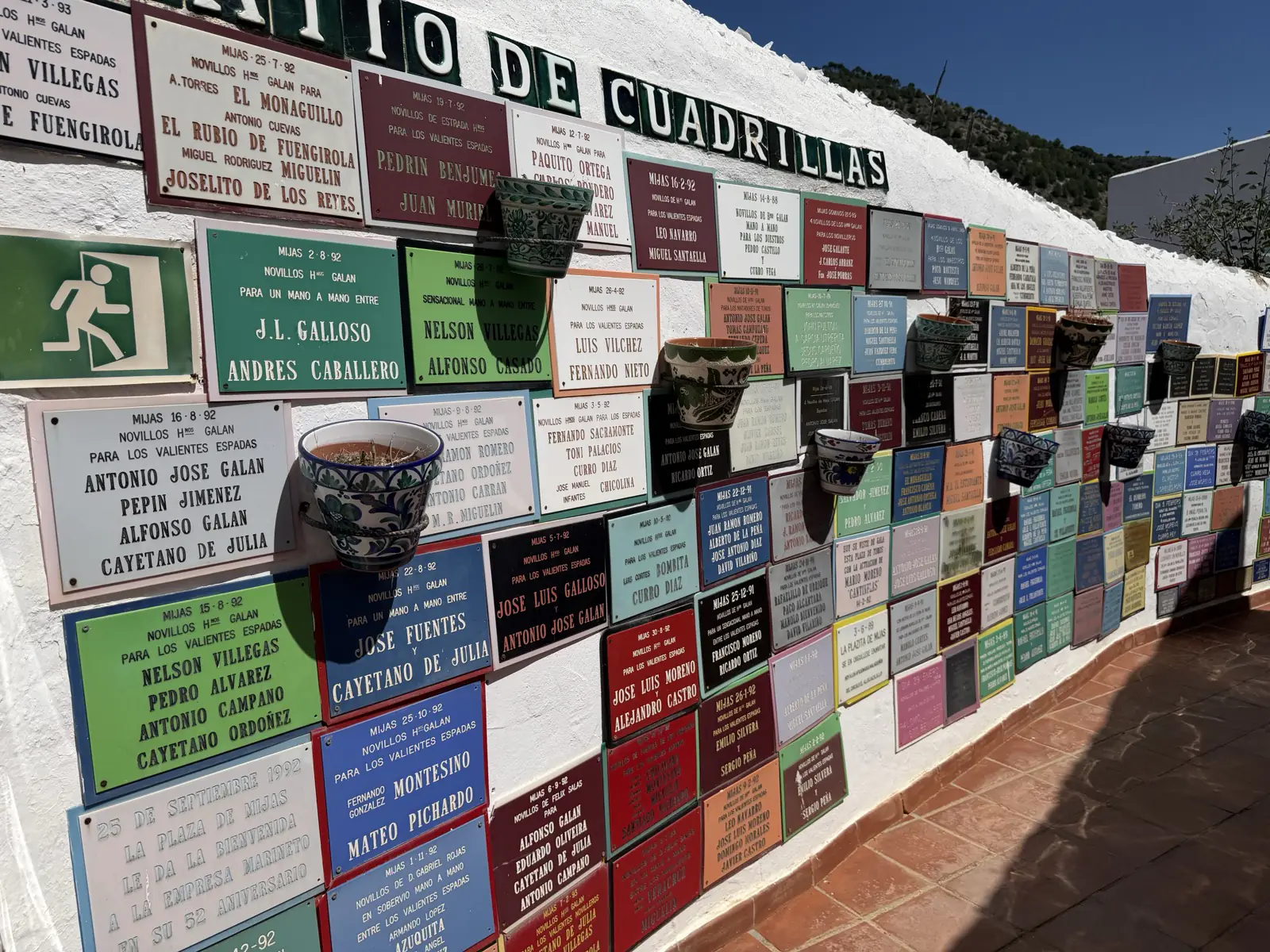
The plaques covering the interior walls are the detail most people miss. Each one is hand-painted and dedicated to a bull or a fight, and they photograph extremely well up close. The matador costumes on display are another good shot.
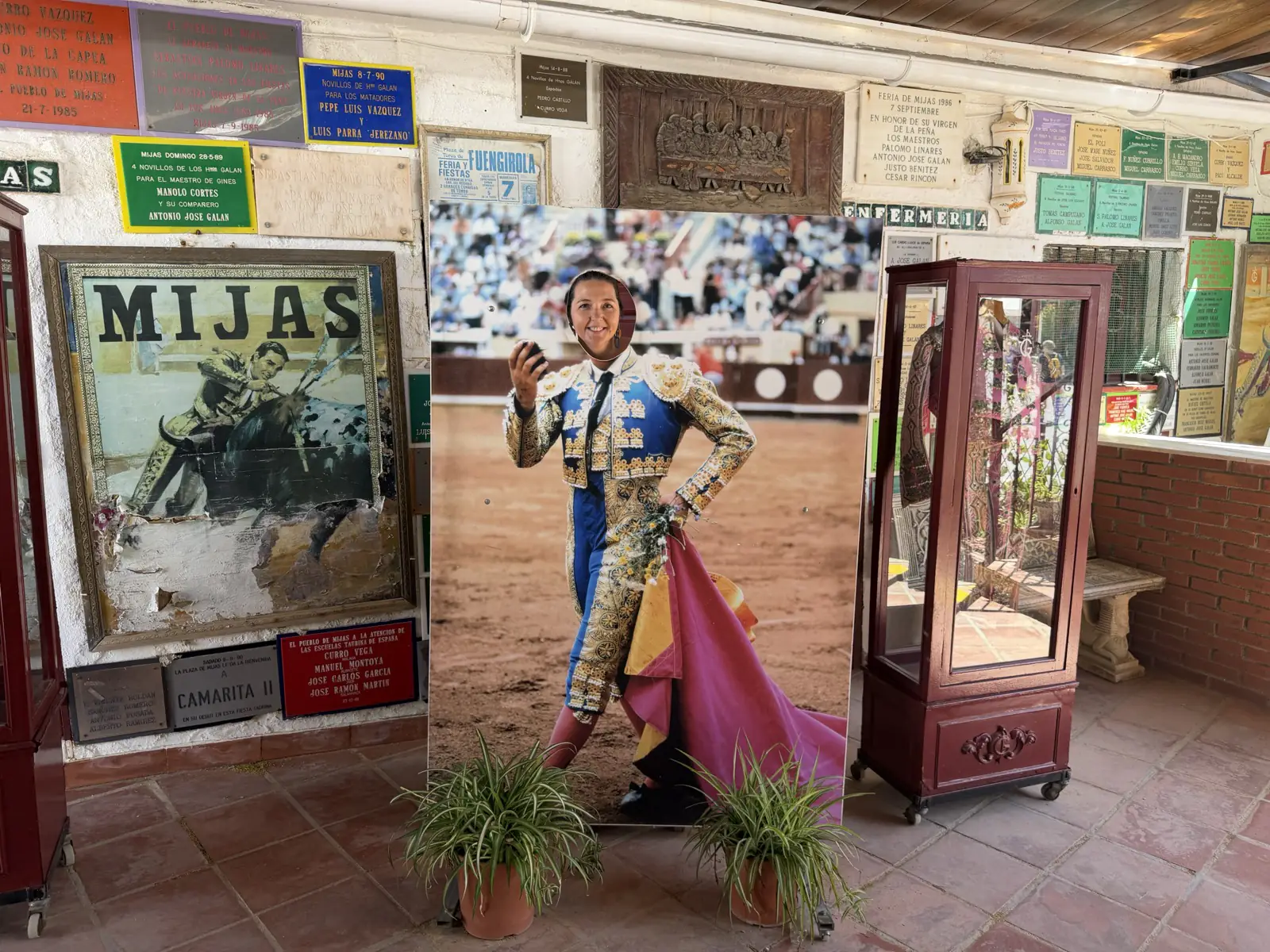
Give it twenty minutes inside. It’s one of the better €3 you’ll spend in the village.
The View from the Street End
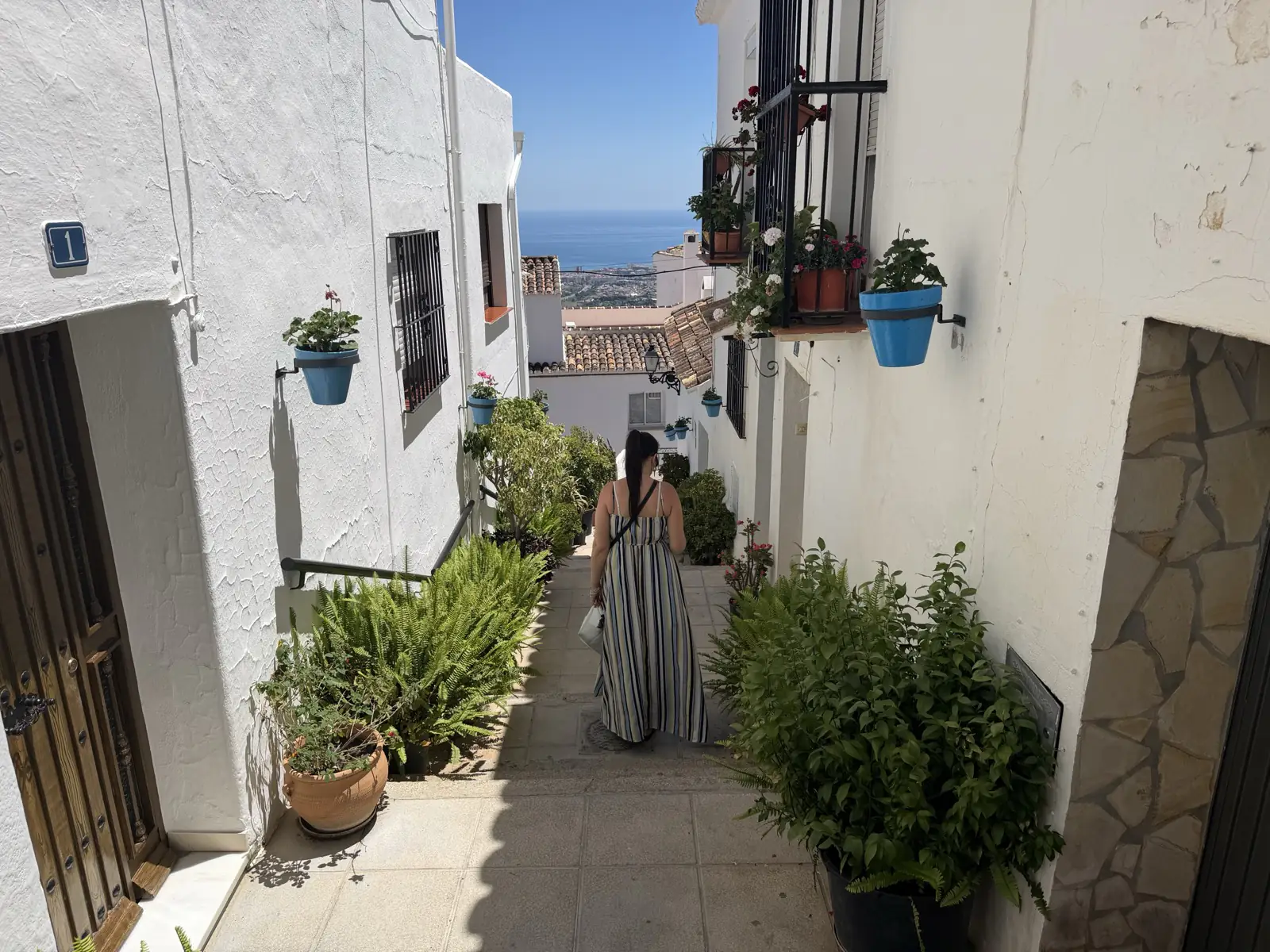
Several streets in the village run straight toward the coast so the sea fills the gap at the far end. Walking down with white walls on both sides and the Mediterranean ahead is one of the most satisfying things about the layout of Mijas.
These shots work best from further back, with a longer focal length so the sea fills the frame properly rather than appearing as a thin strip.
When to Photograph Mijas Pueblo
Shoot before 10am or after 4pm. Between those hours in summer, the main spots have queues and the midday light is flat and unflattering.
Early morning hits the white walls from a low angle and gives everything texture. Late afternoon turns the walls golden.
The blue chairs spot faces west and is better in the afternoon. The Paseo de la Muralla faces south and works well in the morning.
Spring and early autumn give you the best combination of light and empty streets. In July and August, mornings before 9am are quiet.
Midday in high summer is genuinely not worth trying. If village rooms are booked up, staying down in Fuengirola puts you about twenty minutes from the village entrance.
For the full guide to visiting, see things to do in Mijas Pueblo.