food-drink
How to Order Coffee in Málaga Like a Local
This post may contain affiliate links, which means I earn a small commission, at no extra cost to you. It helps keep the blog alive, and we really appreciate your support!

Forget the tourist menus. Here's where to eat like a local in Málaga.
When we first moved to Málaga, we thought we knew how to order a coffee.
"Un café con leche, por favor," we'd say with a confident grin.
We'd tamed our accents and become masters of 6 Spanish words.
However, in Málaga, your morning brew is practically a language of its own. One that involves sombras, nubes, largos, and cortos, not to mention a mysterious "pitufo" that, as it turned out, was food.
This is the only guide you'll need to decipher the city's quirky café culture and order like a local who's lived here for years.
P.S. Find the perfect coffee shops in Malaga or just place to eat or drink in our Malaga Food Guide.
Compare hotel prices in Málaga
Find the best deal across booking sites
What Makes Coffee in Málaga So Unique?
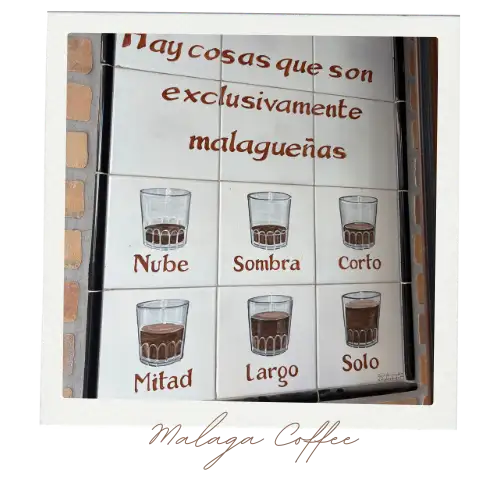
If Spain runs on coffee, then Málaga is the control room.
What sets this city apart is its nine-tiered coffee system, born from local flair and post-war practicality. Elsewhere in Spain, you ask for a cortado or café con leche. In Málaga? You specify the exact proportion of coffee to milk, down to the last drop.
This ritual originated in Café Central, located directly off the Plaza de la Constitución.
Owner José Prado Crespo noticed his regulars always customised their drinks. So, in the 1950s, he formalised it. A simple chart, nine names, and a movement were born.
The 10 Official Málaga Coffee Types (And What They Actually Mean)
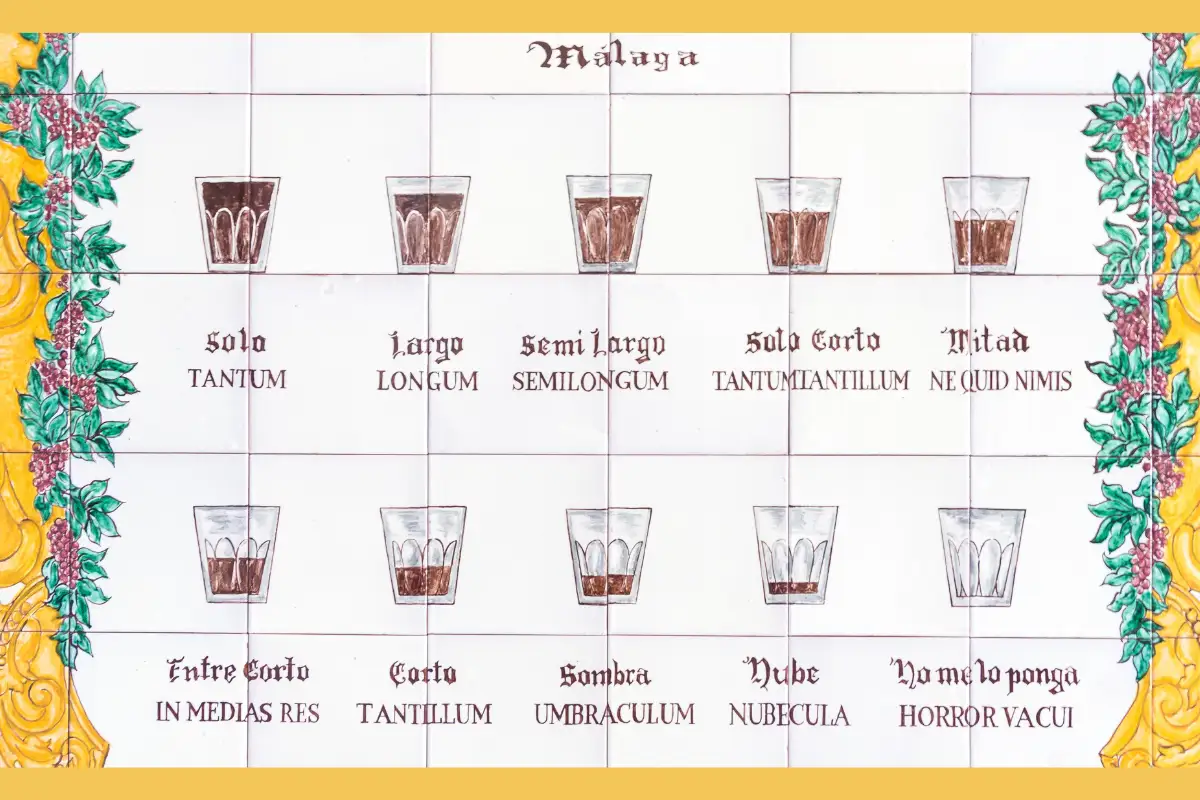
Here's the full lineup, from strongest to lightest. Think of it as your local caffeine spectrum.
-
Café Solo: 100% Coffee / 0% Milk. Pure espresso, strong and undiluted, is nothing but the essence of coffee.
-
Café Largo: 90% Coffee / 10% Milk. Bold with just a hint of milk to take the edge off.
-
Café Semilargo: 80% Coffee / 20% Milk. A Málaga favourite; smooth yet still strongly coffee-forward.
-
Café Solo Corto: 60% Coffee / 40% Milk. A middle-ground drink with noticeable coffee and gentle creaminess.
-
Café Mitad: 50% Coffee / 50% Milk. The standard café con leche in Málaga is equal parts comfort and kick.
-
Café Entrecorto: 40% Coffee / 60% Milk. Softer than mitad, with milk starting to lead the flavour.
-
Café Corto: 30% Coffee / 70% Milk. A gentle, creamy start to the day for those easing into their morning.
-
Café Sombra: 20% Coffee / 80% Milk. A "shadow" of coffee under mostly milk, more about ritual than buzz.
-
Café Nube: 10% Coffee / 90% Milk. "Cloud" in a cup. Barely any coffee, just a comforting milk-based sip.
Bonus: Café no me lo ponga
Málaga humour. Translates to: "Don't serve me a coffee at all." Yes, it's a real thing people say as a joke.
How to Order Like a Malagueño (Without Looking Confused)
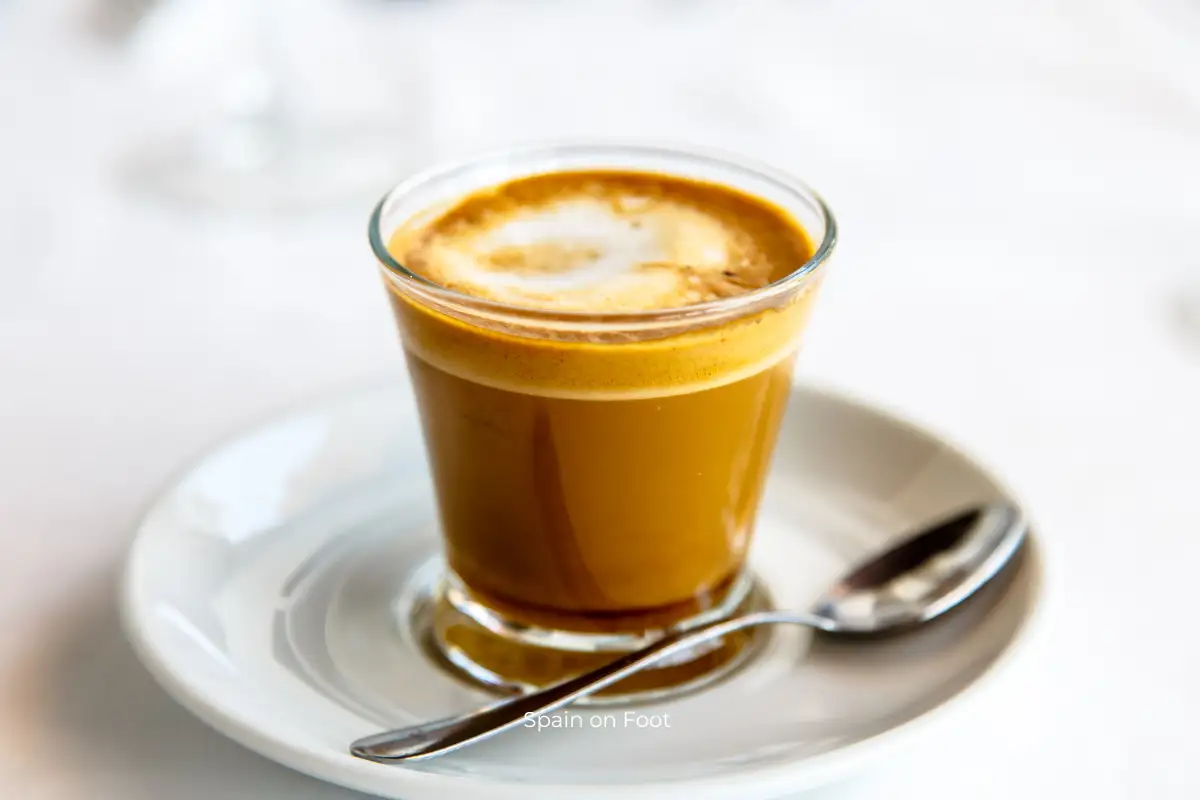
The real trick isn't knowing the words; it's saying them like you mean it.
If you want to fit in:
-
Be direct: “Un sombra, por favor.” Not "Could I maybe get…"
-
Practice your pronunciation: "nube" is "NOO-beh", "mitad" is "mee-TAHD"
-
Pair it with a pitufo: That's a small sandwich, not a Smurf
Want your drink to go? Ask for café para llevar.
Prefer a mug? Say en taza. Want to channel your inner abuela? Go for en vaso, coffee in a glass.
The History Behind Málaga's Coffee Code
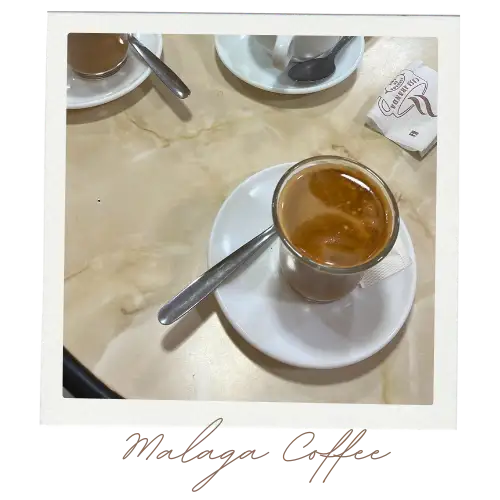
Café Central started it all.
Don José Crespo's legendary poster still hangs inside, mapping out the proportions like a periodic table of caffeine. In the years after Spain's civil war, coffee was scarce. Too much waste from bad orders and a bar could lose money.
So, he standardised the system, named each type, and locals quickly adopted the terminology. Later, Cafés Santa Cristina, a local roaster, utilised the system in their marketing efforts, and the rest is history.
Today, it's a badge of honour. Walk into any bar in Málaga and confidently ask for a "mitad," and you'll get a subtle nod of respect.
Where to Practice: The Best Spots for Local Coffee in Málaga
These are our go-to places to get it just right:
-
Café Central: The original, still family-run. Sit inside and study the wall chart.
-
Santa Coffee: Speciality beans, smooth barista brews, multiple locations.
-
Bertani Café: Stellar beans and a cute storefront on Calle San Juan.
-
La Bella Julieta: Fast service, comfy seats, and good sombra with churros.
-
Señor Lobo: This trendy little spot in Soho is for people-watching and Americanos.
Avoid the chains (unless you're craving a caramel frappuccino) and look for a chalkboard menu and clinking saucers; that's where the good stuff lives.
Tips for Tourists (Avoid These Rookie Mistakes)
-
Don't ask for a latte or flat white. They'll smile politely, then give you a mitad.
-
Don't overpronounce. It's "SOHM-brah", not "Sohm-BRAH."
-
Don't expect exact measurements. One bar's nube might be another's sombra.
-
Always say **"**por favor". It goes a long way.
Why Is Coffee in Málaga Often Served in a Glass Instead of a Cup?
In Málaga, it's common to be served your morning café sombra or nube in a glass (vaso) rather than a traditional ceramic cup. This isn't just a quirky tradition; it's tied to both history and practicality.
Historically, serving coffee in a glass became popular across Andalusia because glassware was cheaper and more readily available than mugs after the Spanish Civil War.
In local bars, it was also easier to gauge the exact proportion of milk to coffee, a key feature of Málaga's unique coffee system. You can see the sombra.
Culturally, the glass has stuck around. Some locals claim the flavour is better, while others enjoy the nostalgia.
If you prefer your coffee in a cup, say: "En taza, por favor." And if you're after takeaway, ask for "café para llevar."
Bonus: What's a "Pitufo"? And Other Local Breakfast Add-Ons
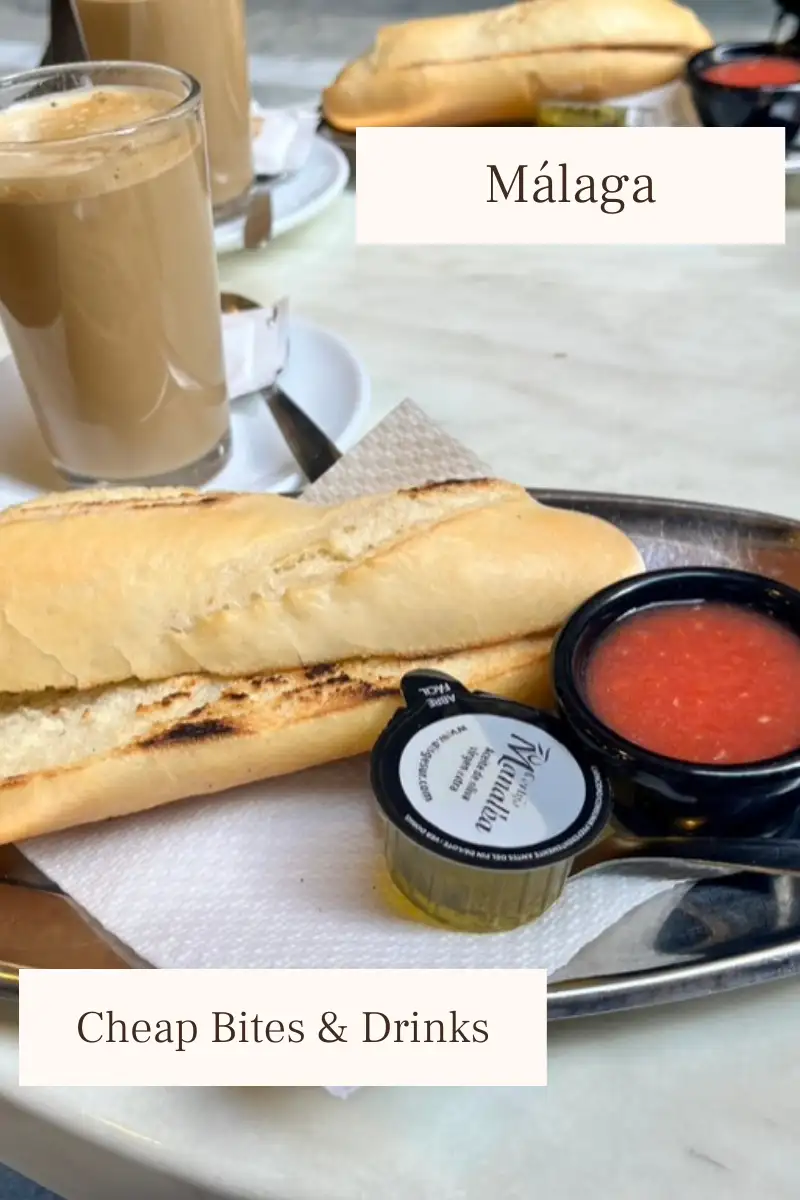
A pitufo is a mini bread roll, typically featuring ham, cheese, or tomato, often accompanied by olive oil.
The classic combo? A sombra and pitufo mixto. You'll find it in every café in the city before 11 a.m.
Other options:
-
Mollete: Soft round bread from Antequera. Toasted with tomato and jamón.
-
Tostada: Open-faced toast with any combo of olive oil, tomato, avocado, or tuna.
The bread in Spain is often hailed as much healthier than its Western counterparts!
Yes, you can order decaf coffee in Málaga by asking for “descafeinado.” Most places will serve instant unless you request it “de máquina” for machine-brewed decaf.
No, the coffee naming system with terms like sombra, nube, and mitad is unique to Málaga. Other cities in Spain typically use standard terms like café con leche or cortado.
A typical coffee in Málaga costs between €1.20 and €1.80.
In tourist areas, prices can range from €2 to €3. It’s still much cheaper than international coffee chains.
Final Thoughts: Coffee as a Window to Málaga
Mastering Málaga's coffee lingo isn't just about the caffeine. It's a local code, a subtle linguistic handshake that shows you belong.
So next time you're standing at the bar, don't freeze.
Just order a sombra, grab a pitufo, and know that, for a few minutes at least, you're not just a visitor. You're part of the morning rhythm.

Hola! I'm the researcher, walker, and co-founder behind Spain on Foot. I help travellers experience Spain authentically, through in-depth guides, locals-only knowledge, and cultural stories you won't find in guidebooks. You can reach me at heidi@spainonfoot.com
Planning a trip to Málaga?
Explore Málaga Guide→