getting-around

Getting Around Seville: Walking, Metro, Tram, Bikes & Buses

By HeidiPublished Updated

This post may contain affiliate links, which means I earn a small commission, at no extra cost to you. It helps keep the blog alive, and we really appreciate your support!

Getting Around Seville: Walking, Metro, Tram, Bikes & Buses

Seville is a big city that feels small once you know how it works.

The historic centre is compact and walkable. You can cross it in 20 to 30 minutes, and most of the big sights sit within that core.

But Seville spreads out. The train station, the airport, the neighbourhoods across the river, the parks to the south. For those, you have a metro, a tram, an excellent bike share, and a bus network that fills in the gaps.

The good news is that it all connects simply, and you won't need a car unless you're leaving the city.

Is Seville Walkable?
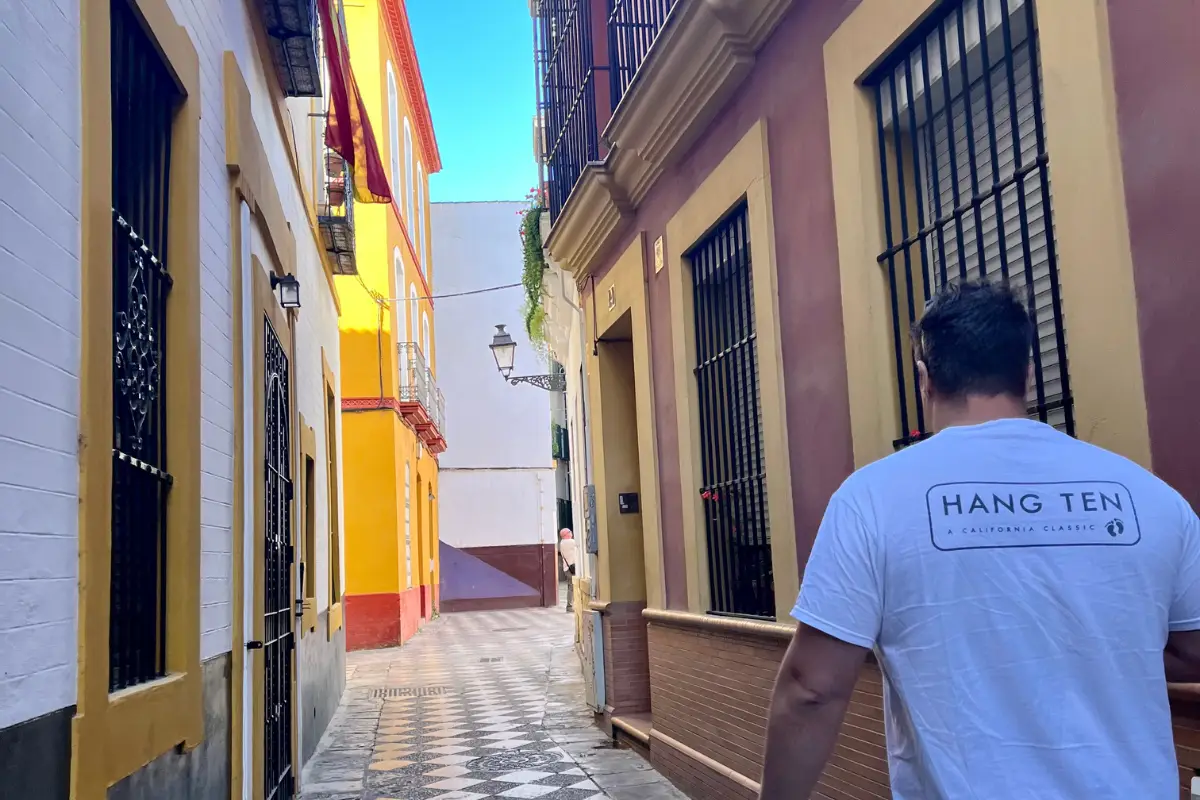
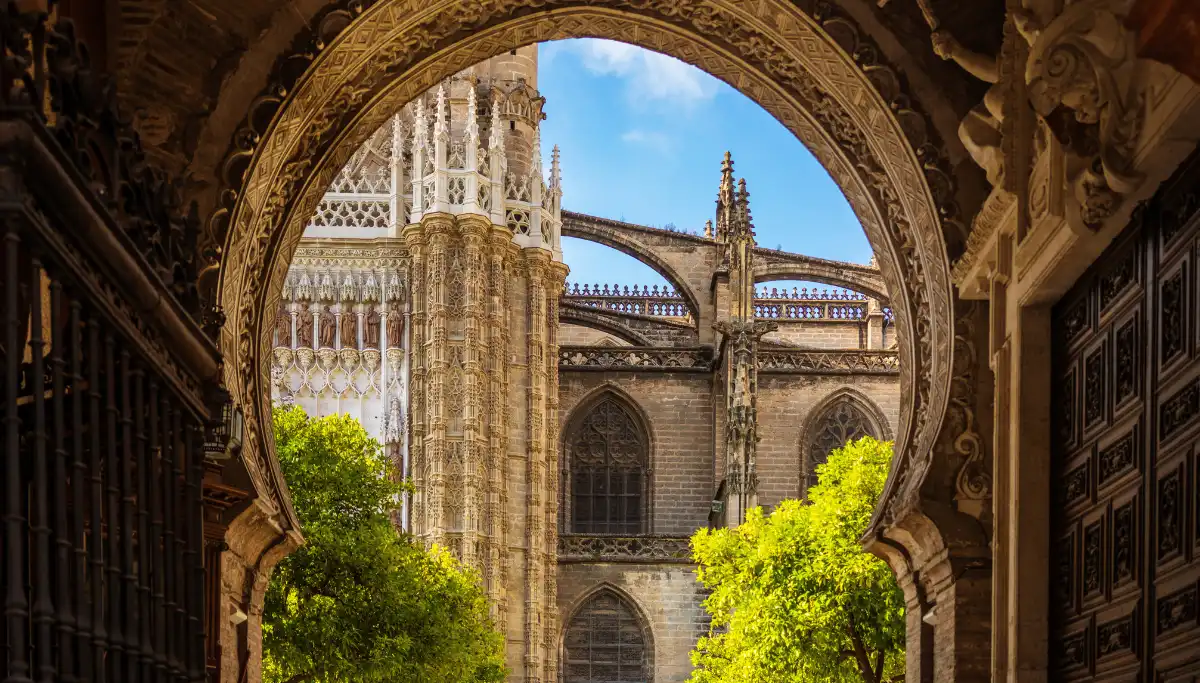
Street scene near Seville cathedral

Very. The tourist centre is one of the most walkable in Spain.

Most of the streets around the cathedral are pedestrianised. The main attractions are clustered together. And the riverside promenade connects everything on a flat, shaded path.

The only thing that slows you down is the heat. In July and August, midday walking is miserable. You'll want to be out early or late, and use transport or find shade between about noon and five.

Evening is when Seville comes alive on foot. The streets cool down, the tapas bars fill up, and locals don't eat dinner until nine or ten.

Where is Everything?

Plaza de Espana in Seville

Seville divides into distinct neighbourhoods, and knowing where they sit saves a lot of confusion.

Santa Cruz is the old Jewish quarter, a maze of narrow lanes and hidden plazas right next to the Alcazar and Cathedral. This is where most visitors spend the most time.

El Arenal sits between the cathedral and the river. The bullring is here, along with the Torre del Oro and the waterfront restaurants.

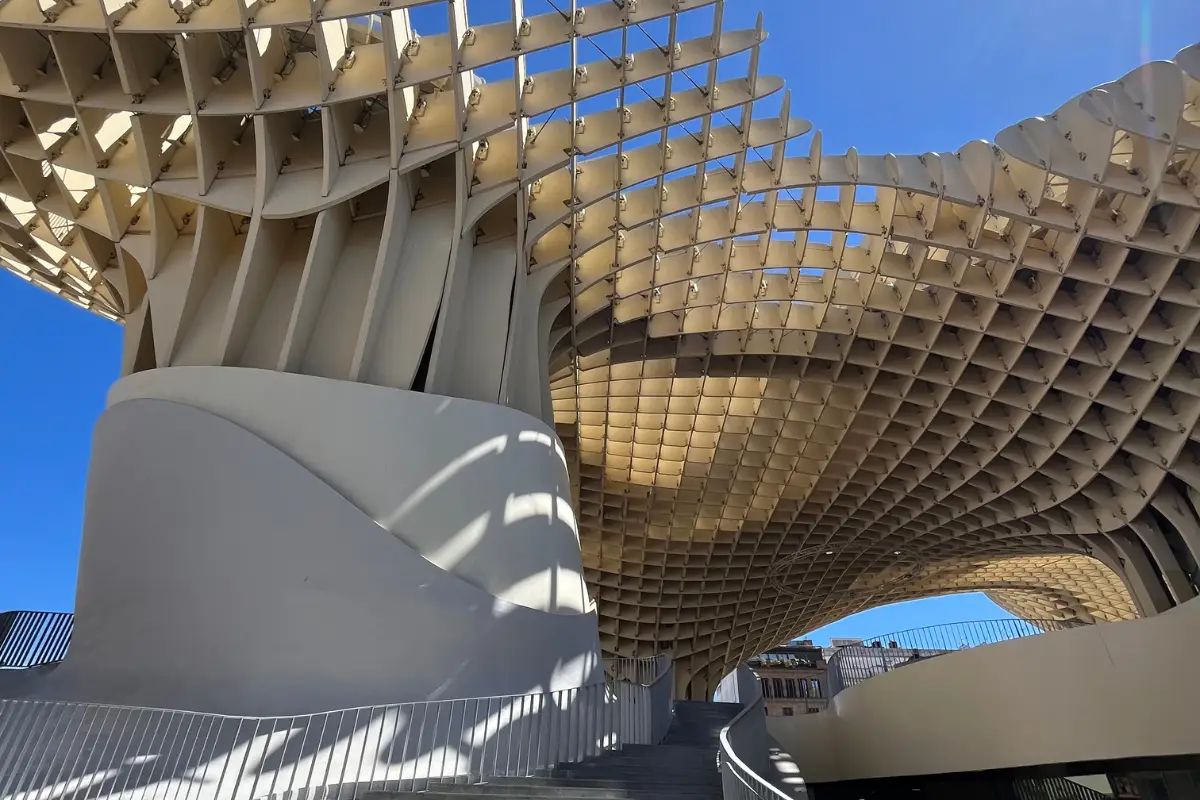
Centro is the commercial heart, full of pedestrianised shopping streets. The Metropol Parasol is the landmark.

Triana is across the river. Ceramic workshops, tapas bars, and a more local feel. It's a 15-minute walk from the cathedral over the Puente de Isabel II.

La Macarena is the northern old town. Less touristy, more residential, and home to one of Seville's most famous churches.

All of these are walkable from each other. The river crossings add variety to your routes, and the bridges have good views.

FromToWalking Time
CathedralAlcazar2 min
CathedralPlaza de Espana15 min
CathedralTriana (Puente de Isabel II)15 min
CathedralMetropol Parasol10 min
Santa Justa StationCathedral25 min

On Foot

Walking through Seville's old town

Walking is how you should see central Seville.

Not because there's no alternative, but because the city deserves it. The streets in Santa Cruz are too narrow and beautiful to experience any other way. The viewpoints along the river need you to stop and look.

Local tip

The best walking route starts at Plaza de Espana, passes through Maria Luisa Park, crosses the river into Triana, and returns via the Torre del Oro and the Cathedral. Time it for late afternoon when the light softens and the heat breaks.

Wear comfortable shoes. The cobblestones in Santa Cruz are uneven, and you'll cover more ground than you expect. Carry water, especially in summer.

The Metro

Seville cityscape

Seville has one metro line. It's modern, air-conditioned, and most useful for getting between the centre and the train station.

Line 1 runs from Ciudad Expo in the west through the centre to Olivar de Quintos in the east. The stations you're most likely to use are Puerta de Jerez (edge of centre, near the river), Prado de San Sebastian (near Plaza de Espana and the bus station), Nervion (shopping mall, football stadium), and San Bernardo (close to Santa Justa train station).

A single ticket costs around 1.35 euros. You can also get a rechargeable card for multiple trips, and contactless payment works at the gates.

Trains run from about 6:30am to 11pm, with later services on weekends. During peak hours they come every four to seven minutes.

The most practical journey is Puerta de Jerez to San Bernardo. It takes about five minutes and saves a 25-minute walk with luggage.

The Tram

Seville's riverside and historic buildings

The MetroCentro tram runs through the pedestrian shopping district, from Plaza Nueva near the town hall to San Bernardo near the train station.

It passes right by the Cathedral and Alcazar, stopping at Archivo de Indias between them. Other stops include Puerta de Jerez (where it connects with the metro), Prado de San Sebastian (the bus station and Maria Luisa Park), and San Bernardo.

The tram uses the same ticket system as the metro. It runs every five to ten minutes.

Honestly, the route is short enough that walking is often just as quick. But it's handy when you're tired, carrying shopping bags, or need to reach the bus station at Prado de San Sebastian without the walk.

Buses

Triana neighbourhood across the river

Seville's bus network, run by Tussam, covers the whole city. It reaches neighbourhoods and attractions that the metro and tram don't serve.

The circular routes C3 and C4 are the most useful for visitors. C3 loops through the old town and up to La Macarena. C4 crosses the river to Triana and Los Remedios. You can hop on either without studying a route map, ride until you see something interesting, and hop off.

Route 5 connects Plaza Nueva to Nervion and Santa Justa station. Route 27 goes to the Expo site for Isla Magica. And the EA is the airport express.

A single ticket costs about 1.40 euros. You can pay the driver in cash or use a rechargeable card. The same card works on buses, metro, and tram.

Services run from early morning until around 11:30pm. Night buses continue until 2am.

The EA airport bus runs between Seville Airport and Plaza de Armas bus station, stopping at Santa Justa train station along the way. It costs about four euros, runs every 15 to 30 minutes, and takes 30 to 40 minutes depending on traffic.

Sevici Bike Share

Maria Luisa Park in Seville

This is one of the best things about getting around Seville. The city is flat, the bike lane network is extensive, and cycling is genuinely practical here.

Sevici has over 250 stations across the city, with distinctive green bikes available 24 hours a day. You register online or at a station with a credit card, pick up a bike from any station, and return it to any station.

A short-term weekly subscription costs about 13 euros. An annual subscription is around 33 euros. The first 30 minutes of each trip are free with either subscription, and additional time costs one to two euros per hour.

The trick is to dock the bike at an intermediate station before the 30 minutes are up, then take a new one. This resets the clock and keeps your rides free.

The best cycling is along the river, where there's a flat, dedicated path with great views. Maria Luisa Park is car-free and beautiful on two wheels. Triana is an easy ride across the bridge from the centre.

Avoid cycling through the narrow streets of Santa Cruz, where you should walk your bike, and the pedestrianised shopping centre, where bikes aren't allowed. Summer midday is too hot for comfortable cycling, so ride early morning or evening.

Taxis

Evening street scene in Seville

Seville's taxis are white with a diagonal stripe. They're metered and reasonably priced compared to most European cities.

You'll find taxi ranks at major squares, outside hotels, at the train station, and at the airport. You can also hail one on the street when the green light is on, or call Radio Taxi Sevilla.

Cabify and Uber both operate in Seville. They often show a fixed price that can be cheaper than the meter, especially during busy periods. Worth comparing before you book.

A ride from the city centre to the airport costs 25 to 35 euros. Centre to Santa Justa station is about 8 to 12 euros. Cathedral to Plaza de Espana is around 5 to 7 euros.

Most taxis accept card payment. There are supplements for airport trips, luggage, nights, and holidays. If you have an early morning flight, book the night before.

Driving and Parking

Seville's streets and architecture

You don't need a car in Seville. In fact, driving in the centre is something you should actively avoid.

The historic centre is a restricted traffic zone. Cameras enforce it automatically, and the fines arrive weeks later. Many streets are pedestrianised or one-way in confusing patterns. Summer traffic makes everything worse.

If you're renting a car for day trips, pick it up on the day you leave the city and return it when you get back. You'll save on parking and stress.

Underground car parks in the centre cost 20 to 30 euros per day. Street parking in blue zones outside the restricted area costs one to two euros per hour. Hotel parking varies but usually runs 15 to 25 euros per night. Park-and-ride near metro stations is cheaper, especially combined with a metro ticket.

Car rental agencies operate at the airport and Santa Justa station. A car is useful for Ronda, the white villages, and Donana. But for Cordoba and Granada, the high-speed trains are often faster and less hassle.

Getting to Seville
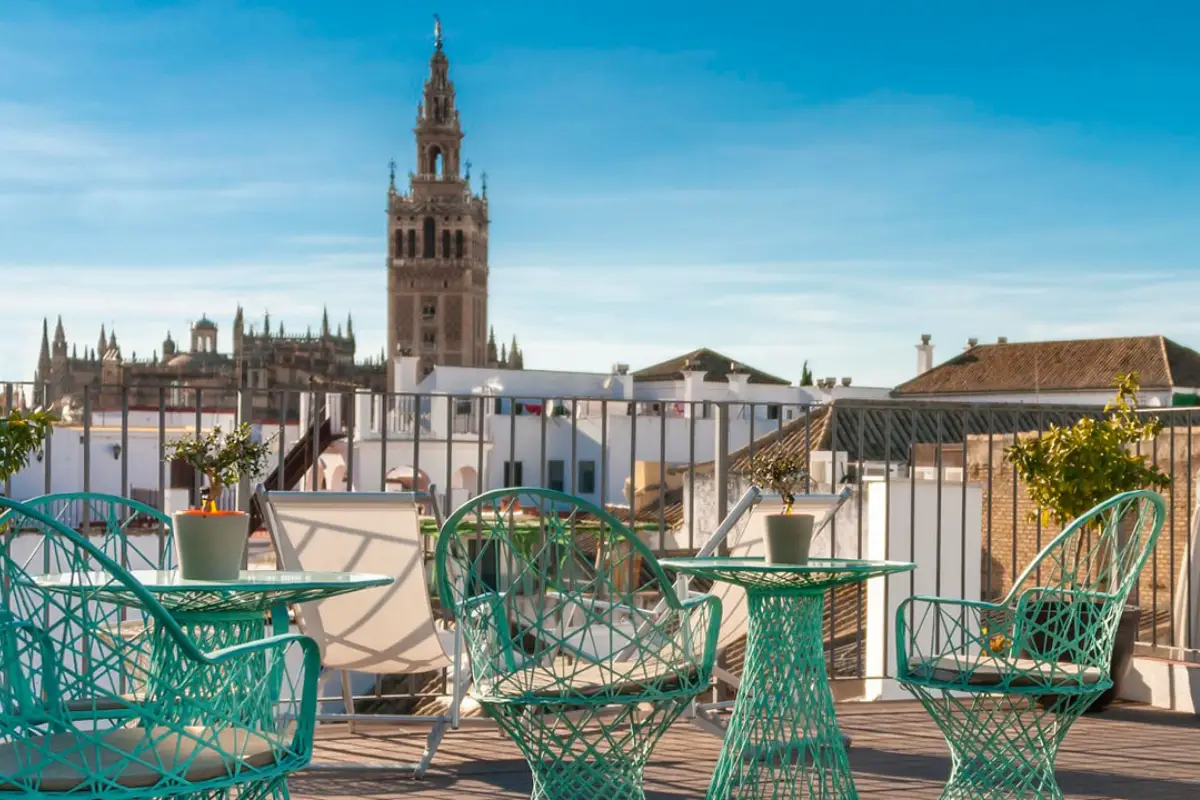
Seville river and Torre del Oro

Seville Airport is about 10km from the centre. The EA bus is the simplest option at four euros, running every 15 to 30 minutes and taking 30 to 40 minutes. It stops at Santa Justa station before reaching Plaza de Armas, so if your hotel is near the station, get off there.

A taxi from the airport costs 25 to 35 euros. Private transfers run 30 to 50 euros but are door to door.

Santa Justa is the main train station, with excellent connections across Spain. The AVE high-speed train reaches Madrid in 2.5 hours and Cordoba in just 45 minutes. Malaga is about 2 hours, Granada 2.5 to 3 hours, and Cadiz 1.5 to 2 hours. The station connects to the centre by metro at San Bernardo and by tram.

DestinationTrain TypeJourney Time
MadridAVE high-speed2.5 hours
CordobaAVE high-speed45 min
MalagaAVE/Avant2 hours
GranadaMD2.5-3 hours
CadizMD1.5-2 hours

Plaza de Armas is the long-distance bus station, near the river. From here you can reach Ronda (2 to 2.5 hours with Comes), Huelva (1.5 hours with Damas), and Portugal via ALSA or EVA.

What if You Can't Walk Too Far?

Riverside promenade in Seville

The metro and tram are fully accessible with lifts and ramps. Most buses are low-floor vehicles. The riverside walks are flat and paved. The Cathedral and Alcazar have accessible routes.

The harder parts are Santa Cruz, where the streets are narrow, cobbled, and sometimes stepped, and some of the older neighbourhoods where surfaces are uneven.

If mobility is a concern, focus on the areas around Avenida de la Constitucion and the riverside, which are flat and well-paved. The tram covers the main sights along that corridor. Taxis fill the gaps easily and cheaply.

Sevici bikes aren't adapted for mobility needs, but the city's flat terrain makes wheelchair navigation manageable outside the historic core.

Final Thoughts
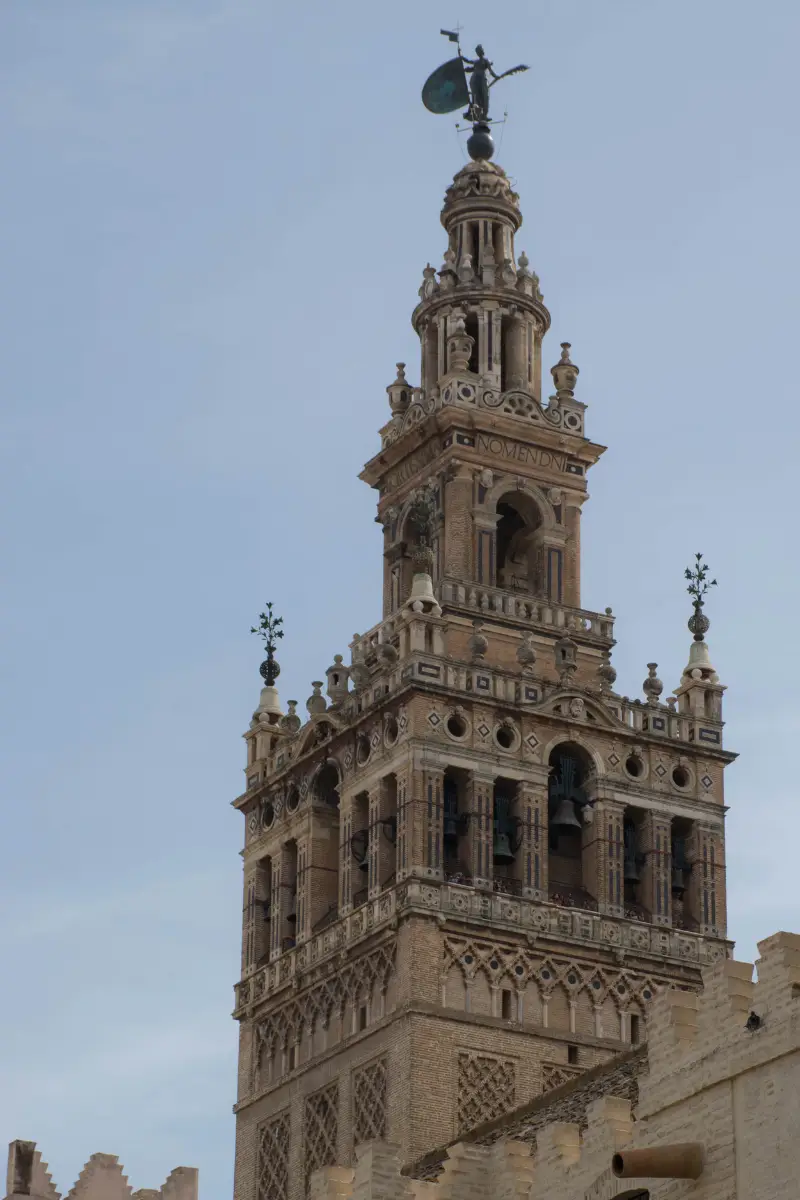
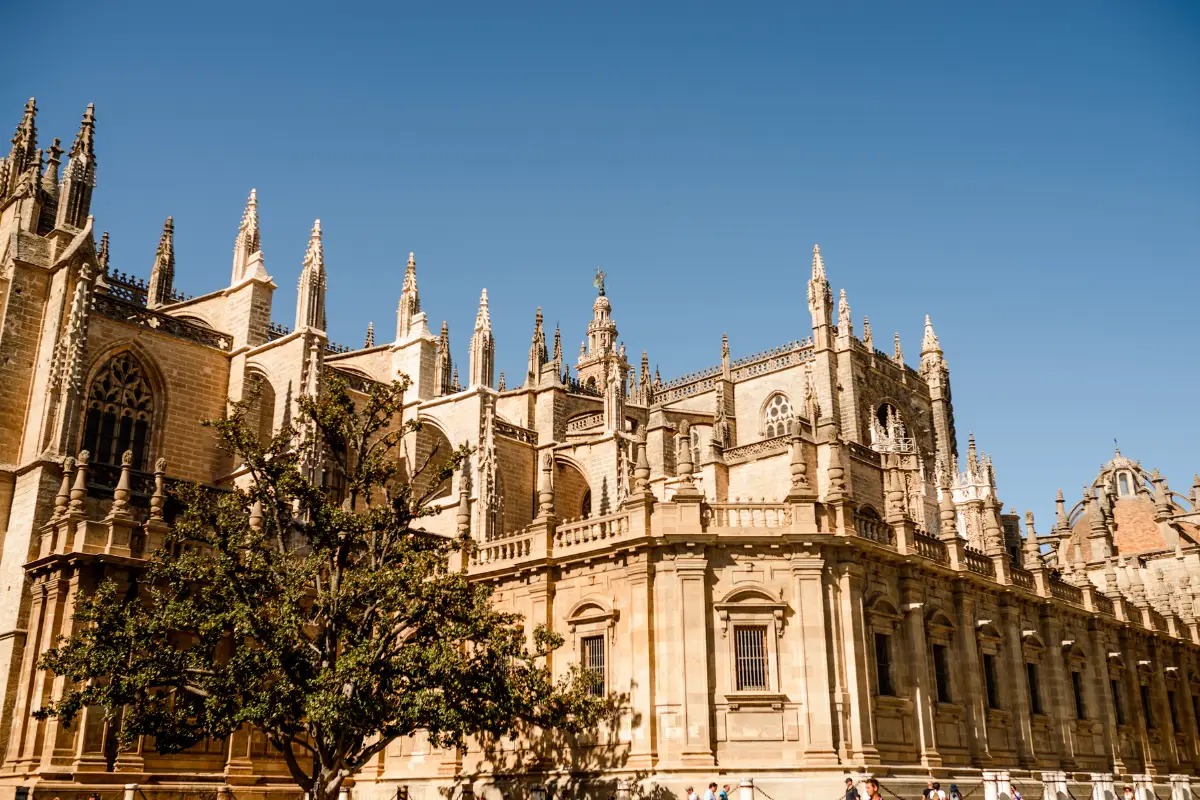
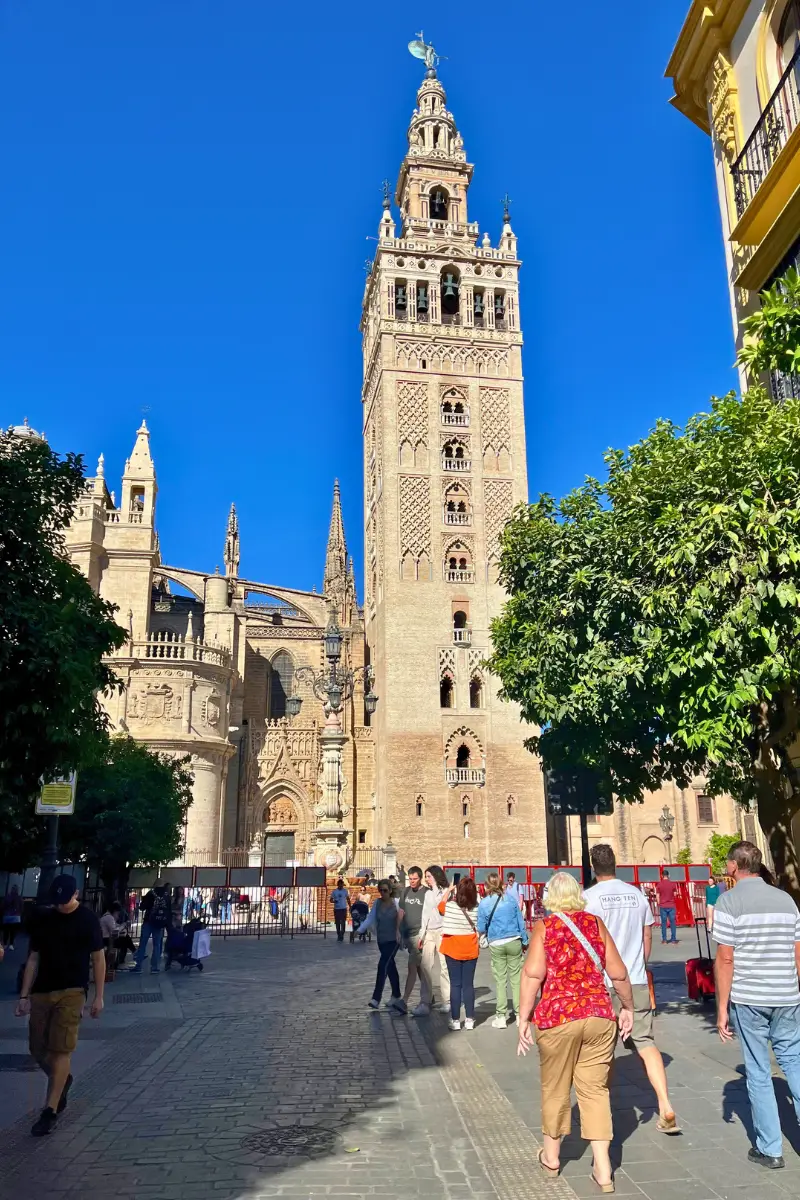
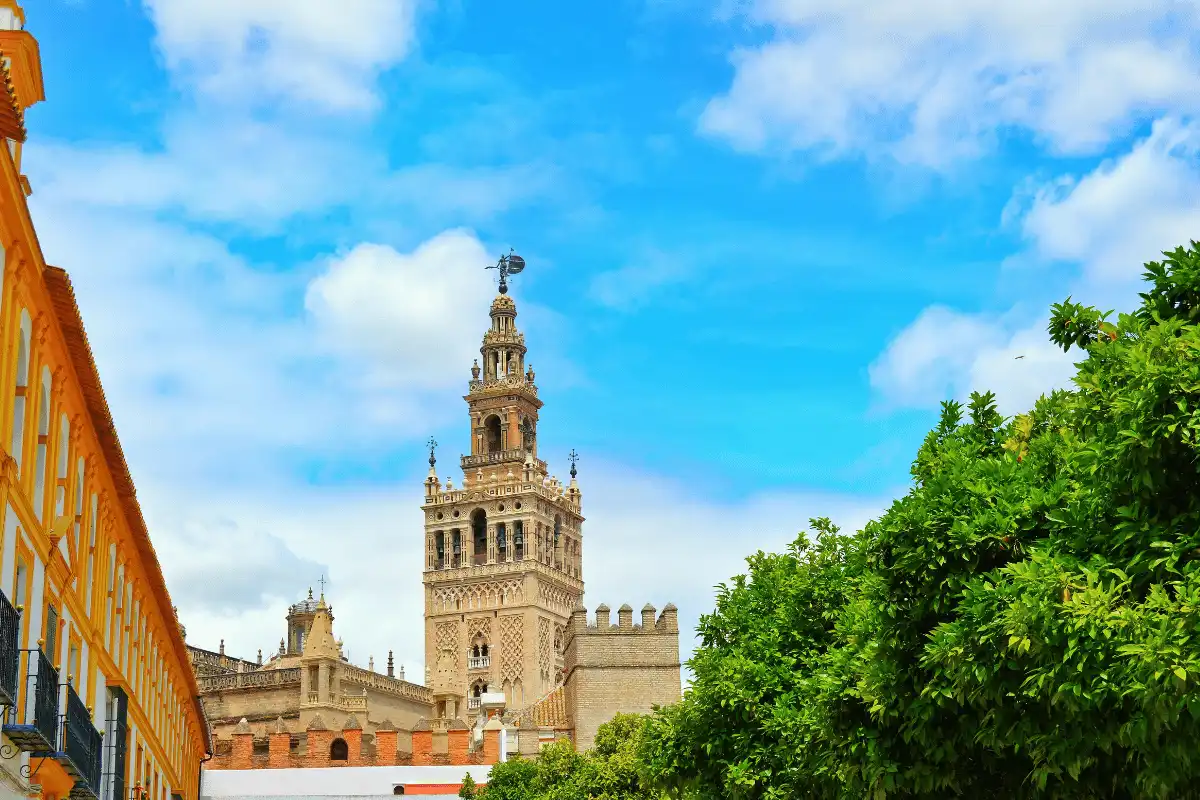
Seville cathedral and Giralda tower

Walk the centre. Bike along the river. Take the metro to the train station. Save taxis for airport runs or late nights.

Seville is a city that reveals itself slowly, and the best way to experience it is at walking pace. The streets in Santa Cruz, the bridges over the Guadalquivir, the parks and plazas, none of them work from behind a windscreen.

If you're planning your trip, have a look at my guide to things to do in Seville and the best day trips from Seville. Cordoba is 45 minutes by fast train. Ronda and the white villages are an easy drive. And the city itself has enough to fill a week without trying.

Heidi

Hola! I'm the researcher, walker, and co-founder behind Spain on Foot. I help travellers experience Spain authentically, through in-depth guides, locals-only knowledge, and cultural stories you won't find in guidebooks. You can reach me at heidi@spainonfoot.com

Planning a trip to Seville?

Explore Seville Guide